
Primitive Winged Insects
Order Coleoptera
The Primitive Winged Insects (Order Coleoptera) includes 15,720 species across 160 families and 3,716 genera in our directory.
About Primitive Winged Insects
Coleoptera is the largest order of insects with over 400,000 described species, representing ~25% of all known animal species and ~40% of all insects. In the U.S. alone, nearly 30,000 beetle species have been identified.
Economic Impact
Beetles have major economic significance: leaf beetles (Chrysomelidae) and weevils (Curculionoidea) are among the most destructive agricultural pests globally, costing billions annually, while predatory species like ladybugs provide natural pest control.
Ecological Role
Beetles are prominent decomposers, especially in forests, breaking down dead wood and recycling nutrients. As predators, they reduce populations of pest insects. Many species are also important pollinators of flowering plants.
Families in Coleoptera (160)
Species in Coleoptera (15,720)
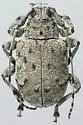
Thryallis undatus
Thryallis undatus
Common in the sabal palm grove. Vogt collected one specimen near Mission, Hidalgo Co., the only Texas specimen collected outside of the palm grove.
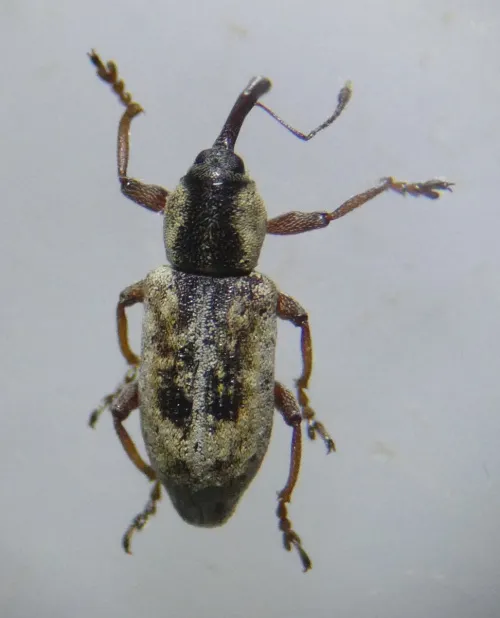
Thryogenes nereis
Thryogenes nereis
3 to 4.5mm. A rather variable wetland weevil. The elytra usually have a rather mottled appearance, but may range from greyish, to brown or greenish in colour. It is usually found on Spike-rush, Eleocharis palustris Other Thryogenes species are very s
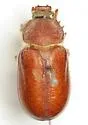
Thyce squamicollis
Thyce squamicollis
Hardy recorded this species from El Paso, Reeves and Nueces counties in Texas. Riley & Wolfe collected this species in El Paso County. Given that all other localities are from far westem Texas and New Mexico, the Nueces County record seems doubtful.
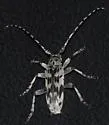
Tigrinestola tigrina
Tigrinestola tigrina
Type Locality: Carr Canyon, Huachuca Mountains, Arizona.
Tile-horned Prionus
Prionus imbricornis
Identification: Antennae with 16–23 segments in ♂, 15–21 in ♀ On mid-summer nights, these hit lighted windows so hard at my house in Durham, NC, that I fear the glass will break. Mostly males come to lights.
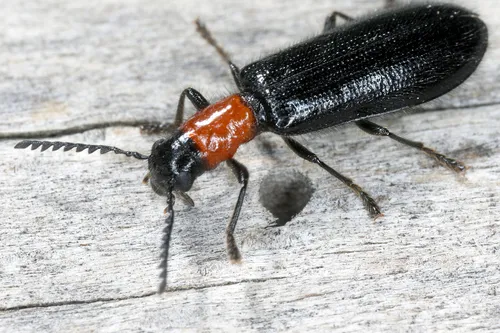
Tillus elongatus
Tillus elongatus
7-10mm. A distinctive species that is elongate and superficially like a soldier beetle. Males are all black but females have a bright red pronotum. Long but sparce hairs cover most of the dorsal surface. Both sexes have long, serrated antennae. A goo
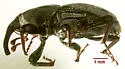
Timothy Billbug
Sphenophorus zeae
Identification: very large punctures along striae of elytra; beak humped at base
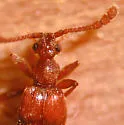
Tmesiphorus carinatus
Tmesiphorus carinatus
Identification: Similar to T. costalis , except pale reddish-brown, densely punctate. Pubescence short, appressed. Vertex with median frontal groove broader, not connected by branches with the fovea . Basal abdominal tergite with a median ridge, as w
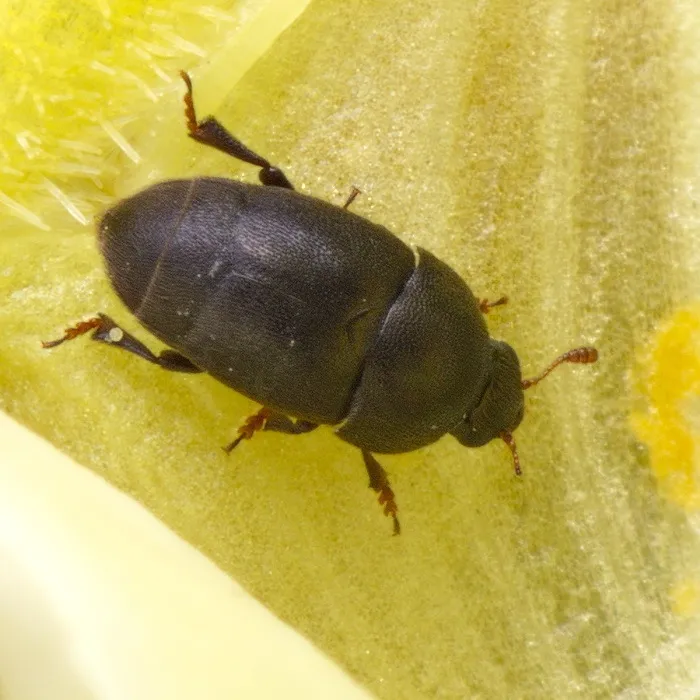
Toadflax Flower-eating Beetle
Brachypterolus pulicarius
may have been introduced with imported toadflax plants (first NA record: NY 1919) ; now used to control its host plant
Tobacco Weevil
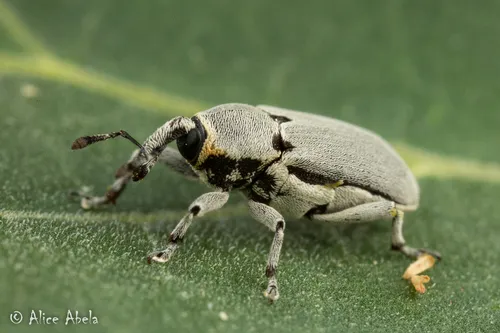
Trichobaris mucorea
Lee et al. examined the host-selection behaviours of two sympatric weevils, the Datura (Trichobaris compacta) and tobacco (T. mucorea) weevils in field and glasshouse experiments... Adult females of both species strongly preferred to feed on D. wrigh
Tomarus subtropicus
Tomarus subtropicus
Identification: frontoclypeal tubercles transverse and low; pronotal punctures small; pronotal tubercle small but visible in lateral view; pronotal fovea shallow and narrow (⅓ as wide as interocular distance); protibia tridentate, rarely with an addi
Tomentous Soldier Beetle
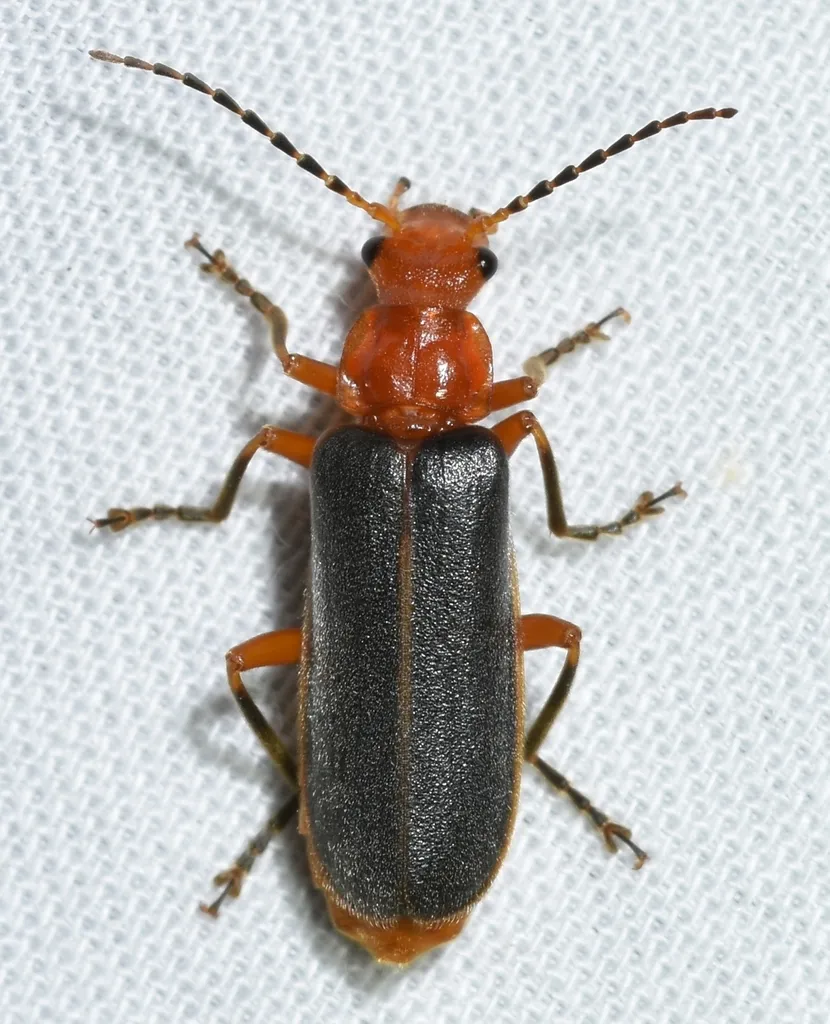
Podabrus tomentosus
Podabrus tomentosus is a species of soldier beetle in the family Cantharidae. It is found in North America.
Toothed Flea Beetle
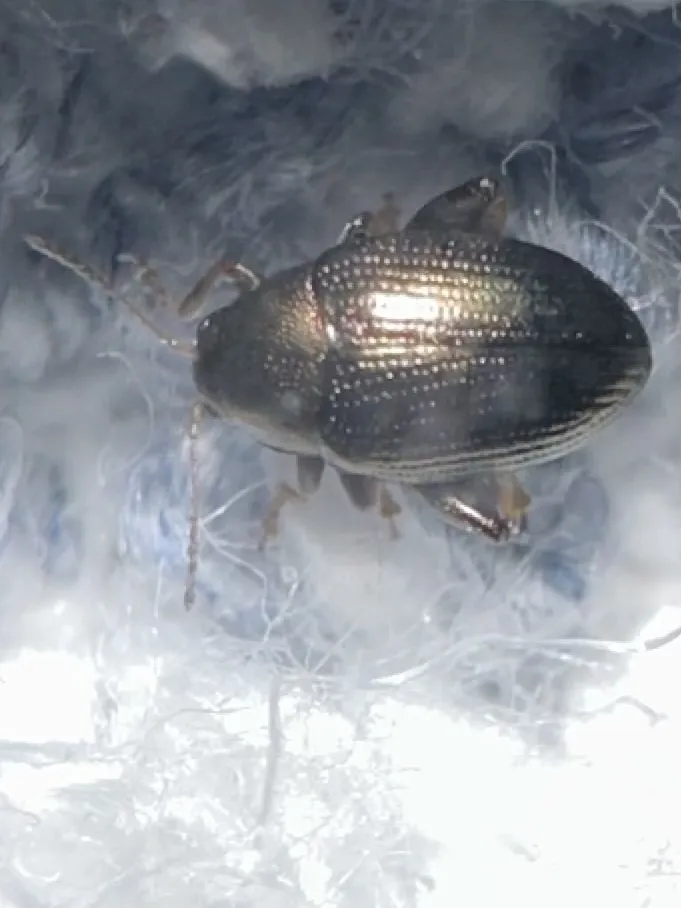
Chaetocnema denticulata
Chaetocnema denticulata, the toothed flea beetle, is a species of flea beetle in the family Chrysomelidae. It is found in North America.
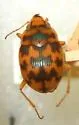
Toothed Round Sand Beetle
Omophron dentatum
Identification: Pronotum with an irregular transverse band, pale area on front weakly M-shaped dorsal habitus photos: Erwin | Brett
Toramus bisignatus 0
Toramus bisignatus
Identification: Pale fusco-testaceous, each elytron with a small piceous spot centrally placed, form of pulchellus but somewhat more acute behind, surface with moderately coarse pubescence.
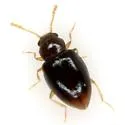
Toramus chamaeropis
Toramus chamaeropis
Texas considers this to be a "Species of Greatest Conservation Need" (SGCN) ( 4 ) Type Locality: Brownsville, Cameron Co., Texas
Toramus hirtellus 0
Toramus hirtellus
Identification: Syntype - MCZ, Harvard Type Locality: Tampa
Toramus obsoletus 0
Toramus obsoletus
Type Locality: Tucson, Gila Valley, Pima Co., Arizona
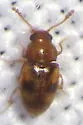
Toramus pulchellus
Toramus pulchellus
Identification: elytra with a broad band behind the middle-both reddish-testaceous and indistinctly defined common at lights
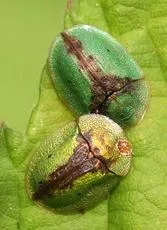
Tortoise Beetle
Cassida vibex
One of several similar beetles with flat, rounded bodies. It is pale golden green with a darker central band on its back. Amongst vegetation on roadsides and field margins etc. It is often found on Thistles and Yarrow in summer. Found mainly south of
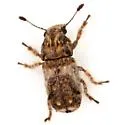
Toxonotus bipunctatus
Toxonotus bipunctatus
Identification: Distinguished from any of our species by the black spots near basal angles of thorax, the divergent thoracic lines and the basal fascia extending along the sides to the middle of elytra. (Schaeffer 1904) Type Locality: Esperanza Ranch
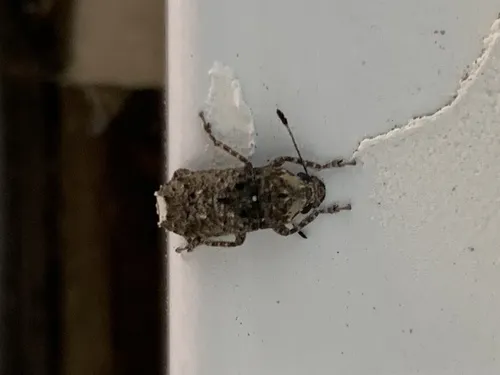
Toxonotus fascicularis
Toxonotus fascicularis
Toxonotus fascicularis is a species of fungus weevil in the beetle family Anthribidae. It is found in the Caribbean Sea and North America.
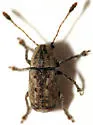
Toxonotus lividus
Toxonotus lividus
Identification: Pronotum, elytra, and tibiae without erect tufts or fringes Det. v belov, 2021 Type Locality: One specimen Lake Harney, Florida, coll'ed by Messrs Hubbard and Schwarz
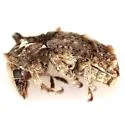
Toxonotus penicellatus
Toxonotus penicellatus
Type Locality: Espranza Ranch, Brownsville, Texas Relatively rare (Barry Valentine, pers. comm. =v=) Texas considers this a "Species of Greatest Conservation Need" (SGCN) ( 3 )
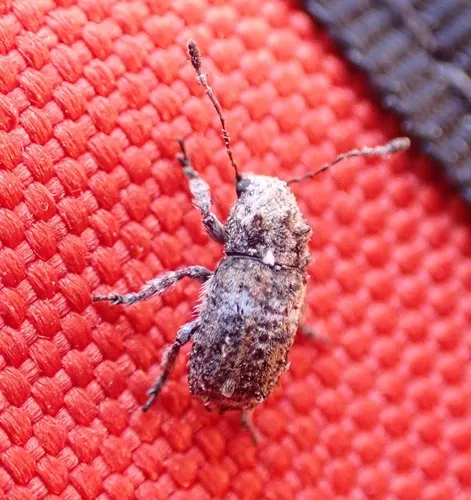
Toxonotus vagus
Toxonotus vagus
First US record: Arizona, Santa Cruz Co., Santa Rita Mountains, 24-VI-39, D. J. & J. N. Knull Collrs., [OSUC]
Toxotopsis cinnamopterus
Toxotopsis cinnamopterus
Identification: uniformly brownish, with small vut distinct lteral pronotal tubercles, and rounded elytral apices comes to lights
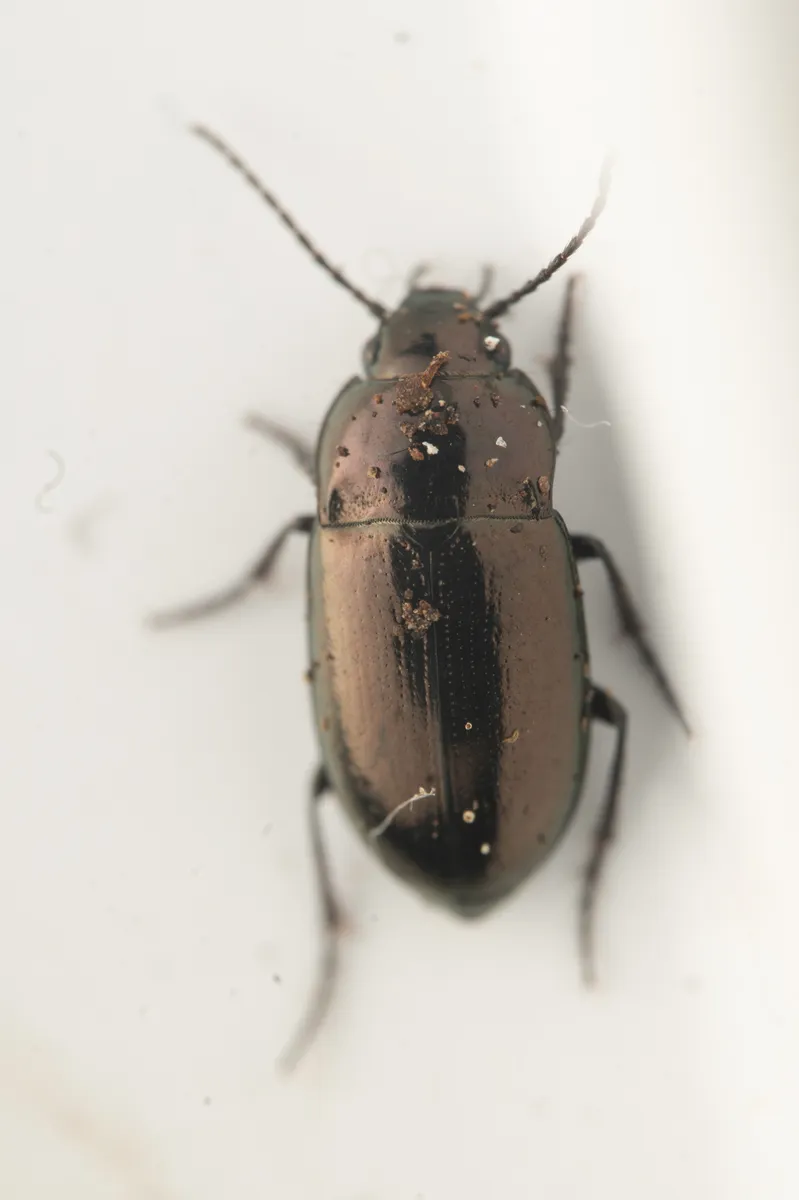
Trachypachus gibbsii
Trachypachus gibbsii
Identification: Holotype Generally larger and broader than T. holmbergi , and less shiny due to stronger microsculpture. Prothorax less narrowed basally, transverse impression obsolete at middle. Elytral punctures arranged into more regular rows, les
Trachysida aspera
Trachysida aspera
Identification: In T. aspera the whole elytra are dull and the punctures are regular in size, small and very dense. Robert Androw
Trachysida mutabilis
Trachysida mutabilis
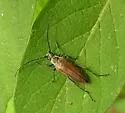
Identification: In T. mutabilis , the basal part of the elytra are more shining than the apical, and the punctures are larger at the base, with shining spaces between them. ( Robert Androw )
Tragidion annulatum
Tragidion annulatum
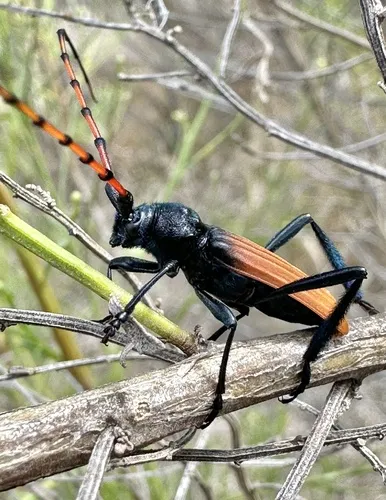
Tragidion annulatum is a species of beetle in the Cerambycidae family. It was described by LeConte in 1858.
Tragidion coquus
Tragidion coquus
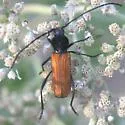
Identification: amount of orange on the elytra highly variable One hundred and eighty-seven specimens examined from north-central TX ( 4 )
Tragidion deceptum
Tragidion deceptum
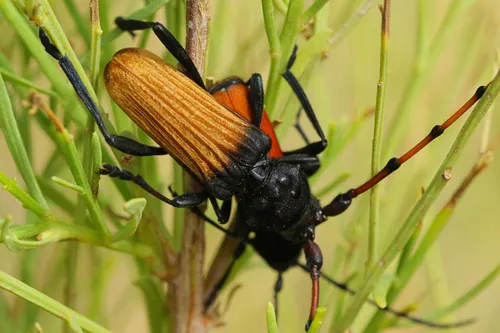
Tragidion deceptum is a species of beetle in the Cerambycidae family. It was described by Swift & Ray in 2008. The adult is black with orange-yellow on the whole of the elytra except for the parts nearest the thorax. The insect is native to the south
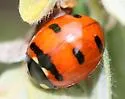
Transverse Lady Beetle
Coccinella transversoguttata
Identification: Gordon's Figures Numbers of this species are declining throughout its range, perhaps due to competition from introduced species such as the Seven-Spotted Lady Beetle ( Coccinella septempunctata ) and Multicolored Asian Lady Beetle ( H
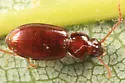
Trechus apicalis
Trechus apicalis
Identification: Normal last maxillary palpomere (unlike Bembidion), paler brownish elytra, and pronotum with straightish (non-sinuate) sides are helpful clues.
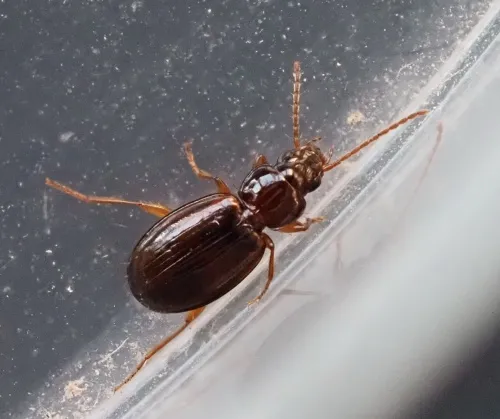
Trechus obtusus
Trechus obtusus
Small (3.5 to 4 mm) brown or dark brown ground beetle. Found in a variety of habitats, including agricultural fields, hills and gardens. Widespread and fairly frequent in Britain.
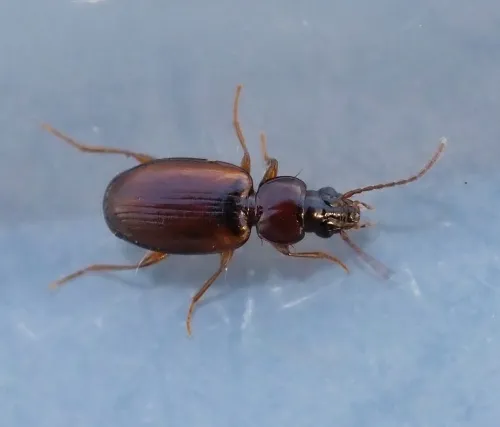
Trechus quadristriatus
Trechus quadristriatus
A small (about 4 mm) orange / brown ground beetle; the head and sometimes the pronotal disc being darker. It is a broad and flat species with weakly rounded and somewhat parallel elytra. The head is shiny black. It is very similar to Trechus obtusus
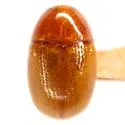
Triachus postremus
Triachus postremus
Identification: Prothorax with a row of punctures at base, which is finely but distinctly margined; oval, convex, testaceous, elytra clouded with brown; Texas. (LeConte 1880)
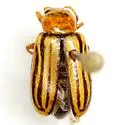
Triariodes vittipennis
Triariodes vittipennis
Type Locality: “Occurs in southwestern Texas, precise region unknown.” (Horn 1893)
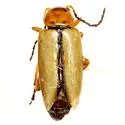
Triarius lividus
Triarius lividus
Identification: quite variable in appearance. Future study may well prove that multiple true species are involved. ( 3 ) Type Locality: Arizona
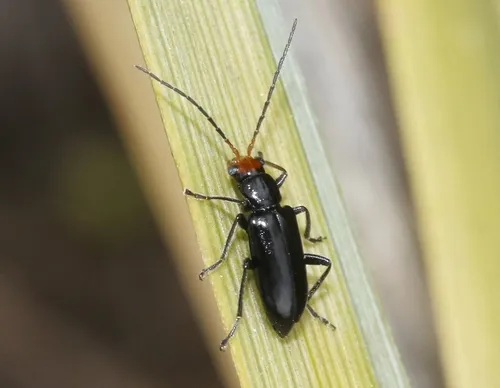
Triarius nigroflavus
Triarius nigroflavus
Identification: sexually dimorphic (BG images show males); females are larger, with orange head and pronotum and a yellow elytra border with black and a longitudinal black stripe in the middle of each elytron. I have only seen records from Orange Cou
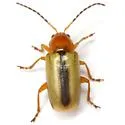
Triarius texanus 0
Triarius texanus
Identification: tarsal claws appendiculate; head and metasternum yellow. The elytra are yellow, except for a narrow, dark brown sutural stripe [likely misidentified as T. lividus in some collections] (emphasis added) Holotype male: TEXAS: Brewster Co
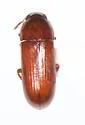
Tribolium setosum
Tribolium setosum
Tribolium setosum (Tribolium setosum) is a species in the family Tenebrionidae, commonly known as darkling beetles, belonging to the order Coleoptera (Beetles). It is classified within the subfamily Tenebrioninae, tribe Triboliini, suborder Polyphaga
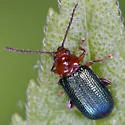
Trichaltica scabricula
Trichaltica scabricula
at high risk of endangerment due to the EAB ( 8 ) Type Locality: Texas (Belfrage)
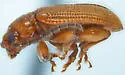
Trichaltica tibialis
Trichaltica tibialis
Trichaltica tibialis is a species of flea beetle in the family Chrysomelidae.
Trichapion disparatum
Trichapion disparatum
Identification: male rostrum distad of antennal insertion yellow
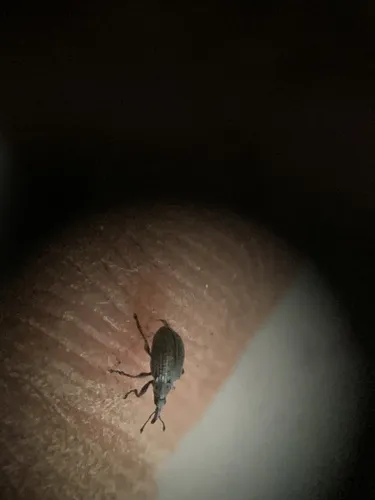
Trichapion proclive 0
Trichapion proclive
Identification: easily recognized by the dentate mucrones on male meso- & metatibiae; narrow frons; and abruptly declivitous dorsal margin of head above the posterior margin of eyes abundant
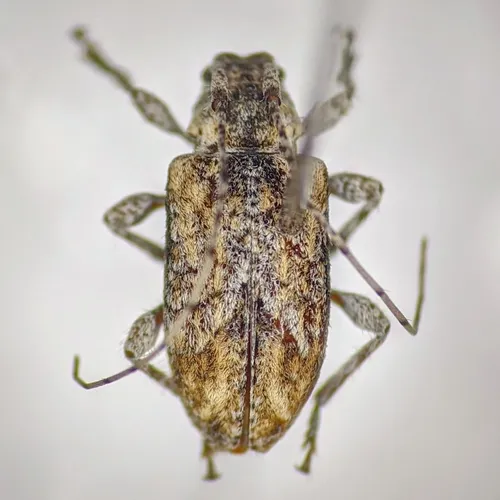
Trichastylopsis albidus
Trichastylopsis albidus
Trichastylopsis albidus is a species of longhorn beetles of the subfamily Lamiinae, and the only species in the genus Trichastylopsis. It was described by LeConte in 1852.
Trichiotinus bibens
Trichiotinus bibens
Identification: Elytra brown with greenish tinge. Pygidium lacks obvious chalky marks, or they are obscured by hair: More uniformly hairy on elytra, etc. than T. lunulatus . Head lacks V-shaped callus, present on T. lunulatus .
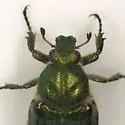
Trichiotinus lunulatus
Trichiotinus lunulatus
Identification: Usually green, occasionally coppery or even blue. Similar to T. bibens , but more southeastern. Generally less hairy, has V-shaped callus on head. Legs usually green or dark. Cretaceous (chalky) spots on pygidium not usually concealed
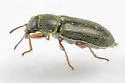
Trichochrous erythropus
Trichochrous erythropus
Identification: a common spring species in South Texas, the Hill Country, and the Llano Estacado Det. M. L. Gimmel, 2022
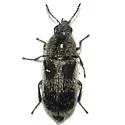
Trichochrous insignis
Trichochrous insignis
Trichochrous insignis (Trichochrous insignis) is a species in the family Melyridae, commonly known as soft-winged flower beetles, belonging to the order Coleoptera (Beetles). It is classified within the subfamily Dasytinae, tribe Listrini, suborder P
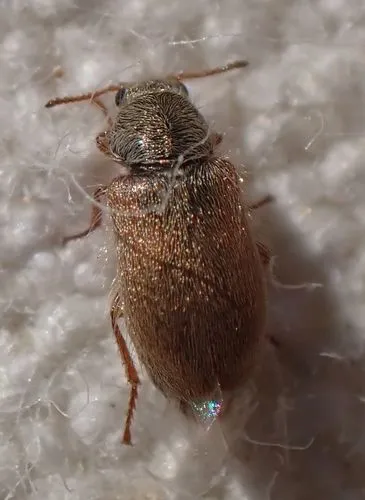
Trichochrous pallescens
Trichochrous pallescens
Identification: In some specimens the elytra at base and along the suture may be more or less piceous
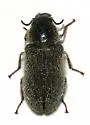
Trichochrous rufipennis
Trichochrous rufipennis
Trichochrous rufipennis (Trichochrous rufipennis) is a species in the family Melyridae, commonly known as soft-winged flower beetles, belonging to the order Coleoptera (Beetles). It is classified within the subfamily Dasytinae, tribe Listrini, subord
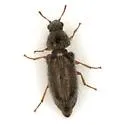
Trichochrous texanus
Trichochrous texanus
Identification: body black, legs rufous or testaceous, strong punctuation of the head and thorax; the antennae are shorter than the head and thorax, with the third joint slender, and the fourth not as wide as the fifth. uniformly olivaceous above hig
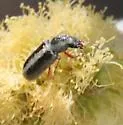
Trichochrous varius
Trichochrous varius
Identification: A very distinct form, represented before me by numerous specimens displaying considerable variation, the central dark area of the pronotum being wholly obliterated in some cases. Type Locality: Benson, Cochise Co., AZ
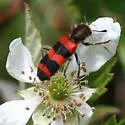
Trichodes apivorus
Trichodes apivorus
Trichodes apivorus (Trichodes apivorus) is a species in the family Cleridae, commonly known as checkered beetles, belonging to the order Coleoptera (Beetles). It is classified within the subfamily Clerinae, suborder Polyphaga, superfamily Cleroidea.
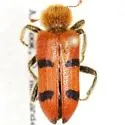
Trichodes bicinctus
Trichodes bicinctus
Type Locality: 20 mi. s. of Marfa, Brewster Co., Texas (Green 1917)
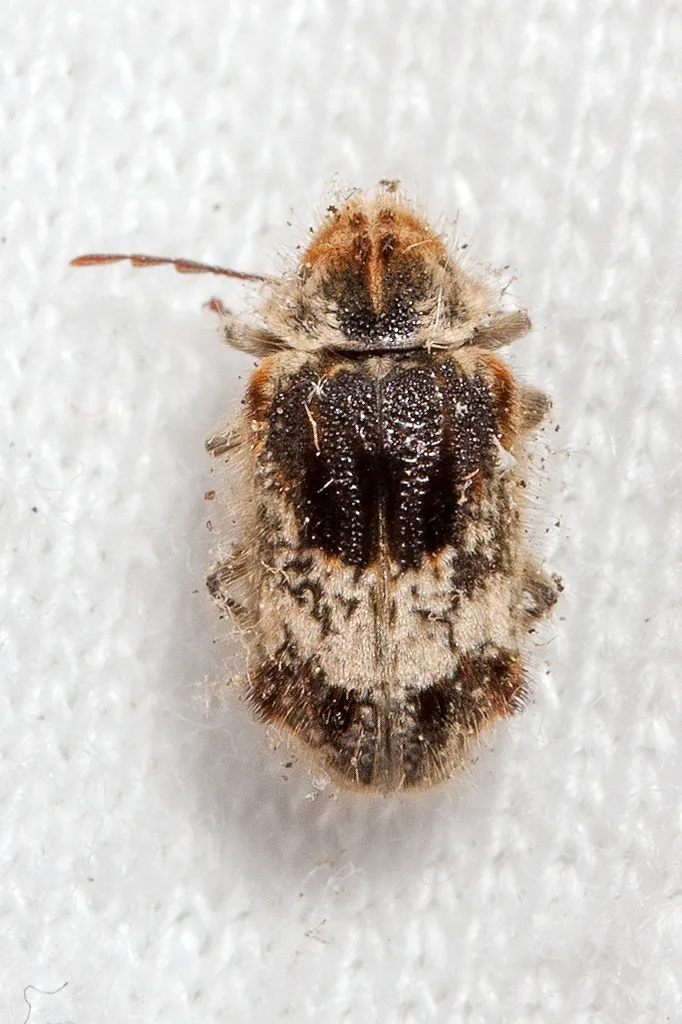
Trichodesma gibbosum
Trichodesma gibbosum
Identification: Elytra with a large basal dark patch, otherwise densely covered with pale recumbent hairs; tufts of dorsal surface almost black (combination is diagnostic)
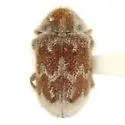
Trichodesma pulchellum
Trichodesma pulchellum
Identification: "...a narrow strongly dentate median band and apex with a denser white pubescence." (Schaeffer 1903) Det. E. G. Riley Type Locality: Esperanza Ranch, near Brownsville, Cameron Co., TX. (Schaeffer 1903) Texas considers this sp. a SGCN
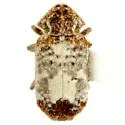
Trichodesma texanum
Trichodesma texanum
Type Locality: Esperanza Ranch, nr. Brownsville, Cameron Co., TX (Schaeffer 1903)
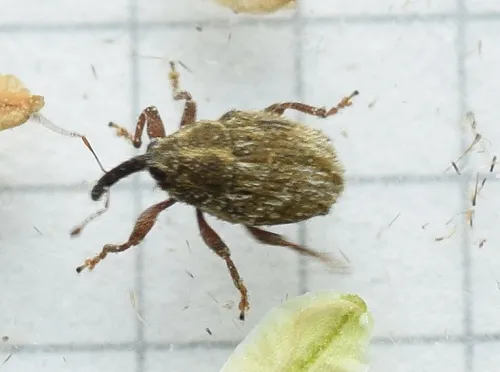
Trichosirocalus troglodytes
Trichosirocalus troglodytes
A very small weevil of about 3.5 mm length. It is pale brown (sometimes slightly reddish) with a few paler whitish markings. Orange-brown legs, brown body. Angular rear, patch of warts on rear of each wing-case. Erect oval scales on wing-cases. Rathe
Trichoton sordidum
Trichoton sordidum
Identification: apically bent protibia is a distinctive characteristic
Tricorynus texanus
Tricorynus texanus
Texas considers this a "Species of Greatest Conservation Need" (SGCN) ( 5 )
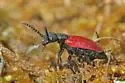
Tricrania sanguinipennis
Tricrania sanguinipennis
Identification: Body black with abundant hairs (setae), elytra red. Wings reduced--flightless . The only eastern Tricrania .
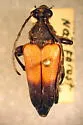
Trigonarthris atrata
Trigonarthris atrata
Identification: more weakly pubescent pronotum , elytral coloration tends to be slightly more reddish-orange, and the body slighly broader , pronotum with distinct angles at middle of side
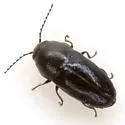
Trigonogya reticulaticollis
Trigonogya reticulaticollis
Identification: Det. E. G. Riley, 2009 Type Locality: Brownsville, Cameron County, Texas Texas considers this a "Species of Greatest Conservation Need" (SGCN) At high risk of endangerment due to the EAB
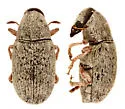
Trigonorhinus griseus
Trigonorhinus griseus
Identification: Each elytron without a prominent discal brown spot; sometimes a dark sutural stripe present
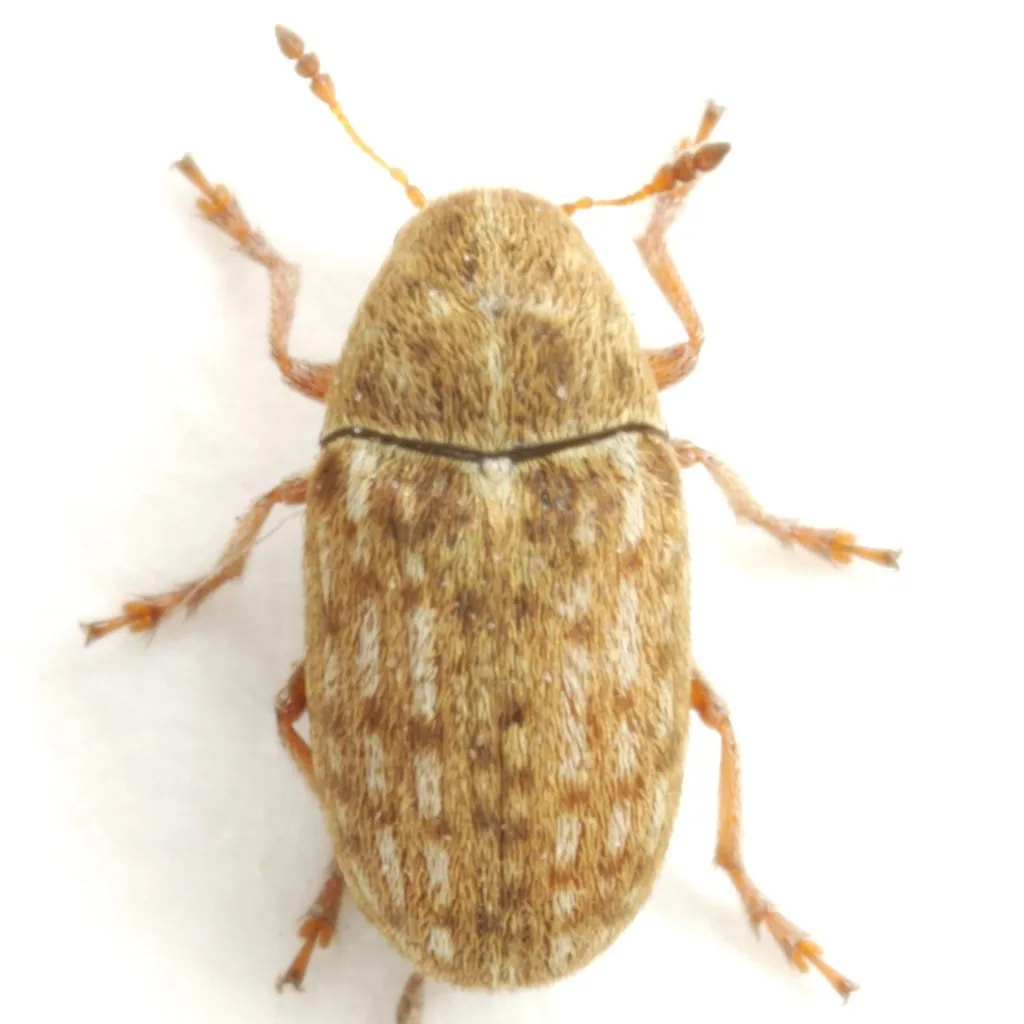
Trigonorhinus limbatus
Trigonorhinus limbatus
This sp. is being slowly reduced to isolated populations by competition with a related phenotype - T. l. vestitus (Say). I believe vestitus emerged from a hybrid stew ( limbatus x griseus (LeC.) originating in Texas, spreading and out-competing the t
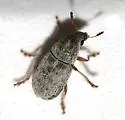
Trigonorhinus riddelliae
Trigonorhinus riddelliae
Barry Valentine, pers. comm. to =v=, 2009: "The Arizona Trigonorhinus was named riddelliae by Schaeffer, 1906. Based on the female ovipositor, I have considered it a subspecies of T. griseus (Leconte) described from Colorado, but have no proof that t
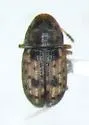
Trigonorhinus sticticus
Trigonorhinus sticticus
Identification: Each elytron with a prominent discal brown spot Det. V. Belov, 2020
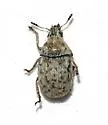
Trigonorhinus tomentosus
Trigonorhinus tomentosus
Identification: Species shows a great deal of variation (leading to multiple synonyms) "due to geographic and seasonal variation involving clines from north to south, east to west, and summer to fall."
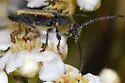
Triodoclytus lanifer
Triodoclytus lanifer
Identification: This specimen has the typical transfer ivory band on the elytra. … Dennis Haines, 23 July, 2008
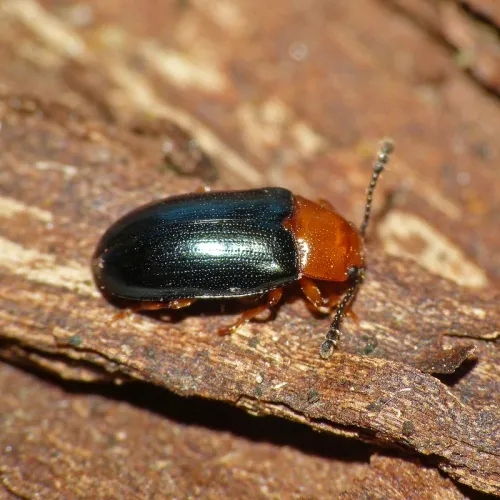
Triplax aenea
Triplax aenea
A small (about 6 mm) and colourful beetle with greenish elytra studded in rows, and with orange head, pronotum and legs. Associated with fungi and can be found in numbers on large bracket fungi soon after they open. Widespread in the southern half of
Triplax errans
Triplax errans
Identification: elytra and scutellum orange red to brilliant strongly nitidous red (except in tenerals) Det. Paul Skelley, 2009 Type Locality: Brownsville, Cameron Co., Tex.
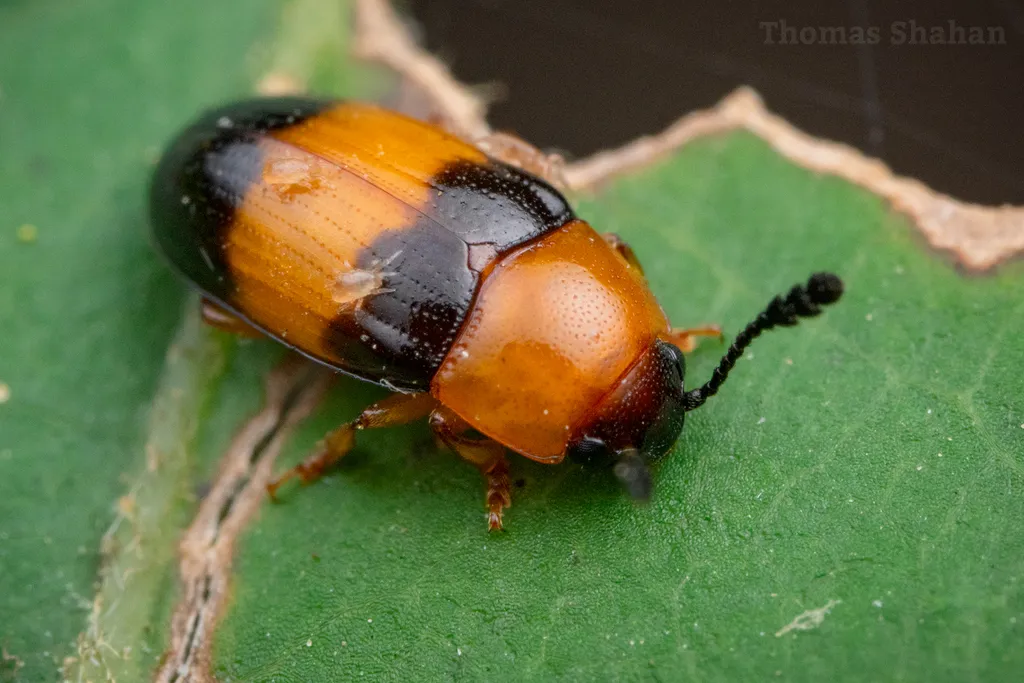
Triplax festiva
Triplax festiva
Identification: color pattern unique among our erotylids
Triplax frosti
Triplax frosti
infrequently collected, perhaps due to the cryptic nature of the host fungus
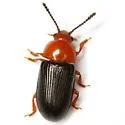
Triplax marcescens
Triplax marcescens
Identification: Dulled elytra, from Arizona (Paul Skelley, 12 August, 2013) "...elytra entirely dull, contrasting rather strongly with the nitidous pronotum." Another 'rare' erotylid form southern Arizona. I'm sure these are all more common, we just
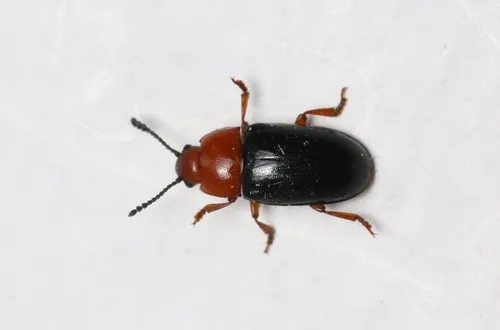
Triplax russica
Triplax russica
5 to 6.5 mm. Elongate-oval, forebody and legs orange, elytra, scutellum and antennae black, underside extensively orange. Please provide photograph to support records. Typical habitats are deciduous woodland and parkland with plenty of mature trees i
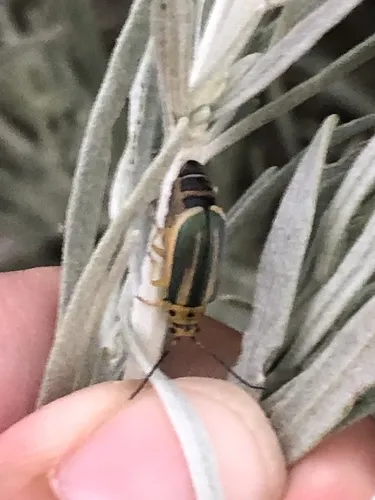
Trirhabda attenuata
Trirhabda attenuata
Trirhabda attenuata is a species of skeletonizing leaf beetle in the family Chrysomelidae. It is found in North America.
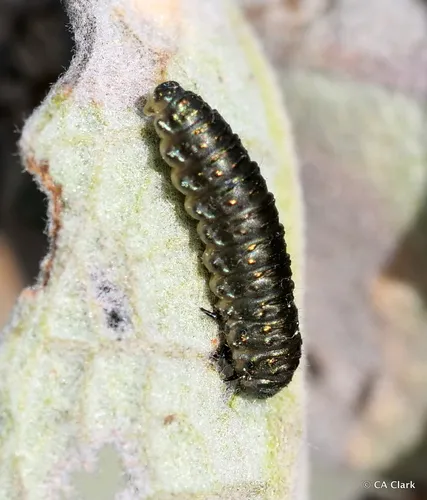
Trirhabda diducta
Trirhabda diducta
Identification: Compared to T. eriodictyonis (the only other congener feeding on Eriodictyon ), T. diducta typically have wider, well-defined sutural vittae. The pronotal spots and the occipital spot tend to be noticeably larger in T. diducta
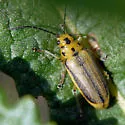
Trirhabda eriodictyonis
Trirhabda eriodictyonis
Other than T. eriodictyonis and T. diducta , only T. flavolimbata from coastal CA has been reported on Eriodictyon , considered an accidental occurrence
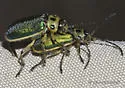
Trirhabda flavolimbata
Trirhabda flavolimbata
Identification: T. labrata is a lookalike which also feeds on Baccharis pilularis • other congeners in CA that may be mistaken for T. flavolimbata are T. luteocincta & T. sericotrachlya (both on Artemisia californica ); and T. confusa & T. manisi (b
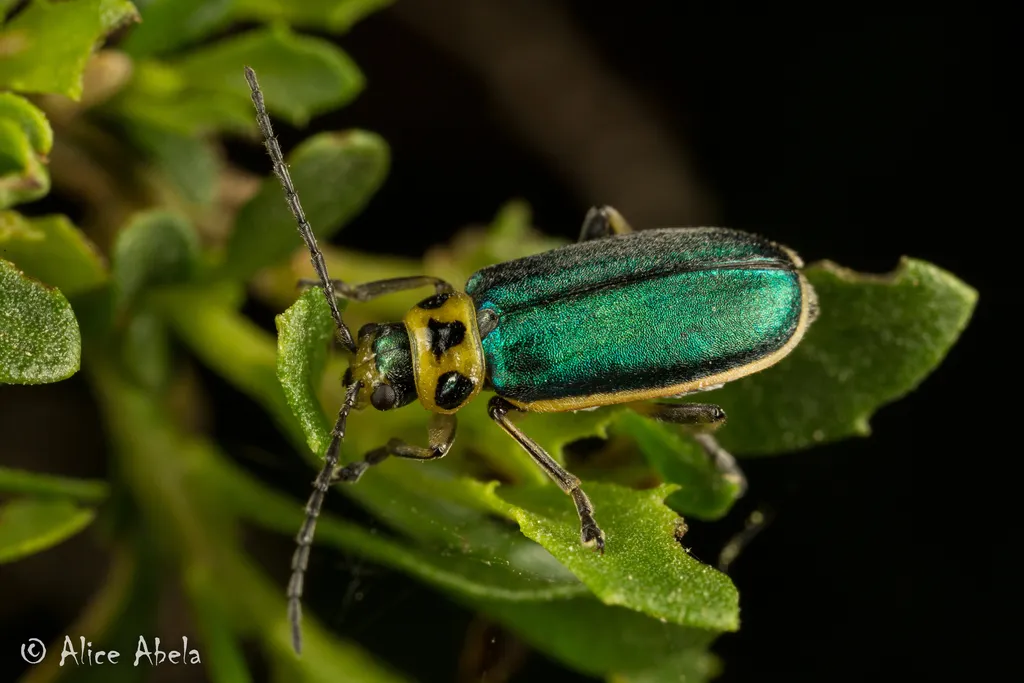
Trirhabda labrata
Trirhabda labrata
Identification: syntype • pronotal spots large; elytra entirely bright-green to blue-green except for thin pale margin, with sparse, inconspicuous pubescence T. labrata and T. flavolimbata are the only Trirhabda species reported to use the common coa
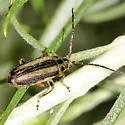
Trirhabda lewisii
Trirhabda lewisii
Identification: (Characters above culled from Blake, Wilcox, and Swigoňová & Kjer)
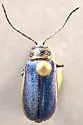
Trirhabda luteocincta
Trirhabda luteocincta
Identification: Elytra frequently metallic green, blue, purple or purple-black, infrequently vittate. Underside of abdomen dark (green) with metallic luster, densely hairy. Pronotal spots large, with metallic luster, median spot wedge-shaped. Occipit
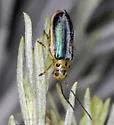
Trirhabda manisi
Trirhabda manisi
Identification: The following description for T. manisi is quoted from the 1970 Ph.D dissertation of S. M. Hogue : Medium-sized; elytra metallic blue-green or green, non-vittate. Head with moderately dense, appressed hairs; epicranium alutaceous; pla
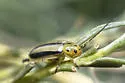
Trirhabda nitidicollis
Trirhabda nitidicollis
Identification: (Characters above culled from Blake, Wilcox, and Swigoňová & Kjer)
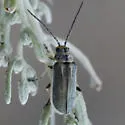
Trirhabda pilosa
Trirhabda pilosa
Identification: [Above culled from key and description in Blake (1931)]
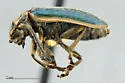
Trirhabda pubicollis
Trirhabda pubicollis
Blake's detailed original description from 1951 can be read at: http://biodiversitylibrary.org/page/39697232 .
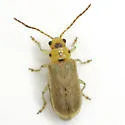
Trirhabda schwarzi
Trirhabda schwarzi
Original description and reference Fig. 7 from Blake
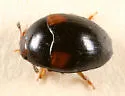
Tritoma humeralis
Tritoma humeralis
Identification: similar to T. biguttata but venter dark except tip of abdomen. The reddish humeral spots are also described to be farther apart than T. biguttata in (Boyle, 1956). The body is also elongate-oval, slightly pointed posteriorly.
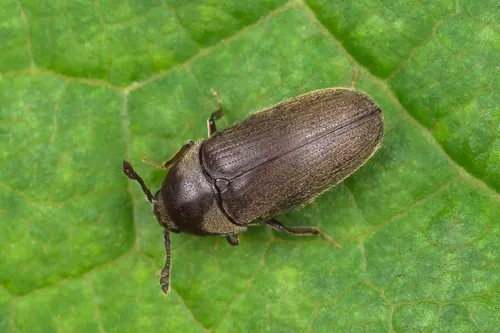
Trixagus dermestoides
Trixagus dermestoides
A very small, brown beetle measuring just 2.75 mm. It is the commonest of the Throscidae beetles, which are closely related to the more familiar Click Beetles (Elateridae). Unless identified by a recognised expert, a photo is required and the specime
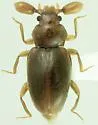
Trochoideus desjardinsi
Trochoideus desjardinsi
a widespread and commonly collected species in the Old World tropics (Skelley and Burgess, 1995)
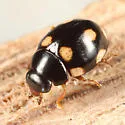
Troglodyte Lady Beetle
Hyperaspis troglodytes
Identification: Gordon's figures Det. R. Gordon, 1986 Black with 5 pale spots on each elytron (wing cover) Male with pale pronotal margin, female with entirely black pronotum Hyperaspis troglodytes is so rare in collections that the possible range of
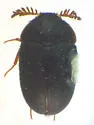
Trogoderma ballfinchae
Trogoderma ballfinchae
Identification: male antenna flabellate; female antenna pectinate
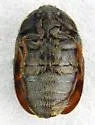
Trogoderma simplex
Trogoderma simplex
Identification: images antennal cavity entirely punctate (except a small shining basal spot), punctures much larger than eye facets. Similarly patterned congeners have smooth regions and much smaller punctures in antennal cavity.
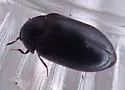
Trogoderma sinistrum
Trogoderma sinistrum
Identification: Holotype Common in granaries throughout the Prairie Provinces
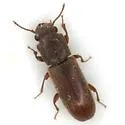
Trogoxylon aequale
Trogoxylon aequale
Identification: dorsal pubescence fine/silky, vertex without tubercle, postclypeal and frontal lobes not strongly reflexed, pronotum quadrate, acutely rounded prothoracic anterior angles
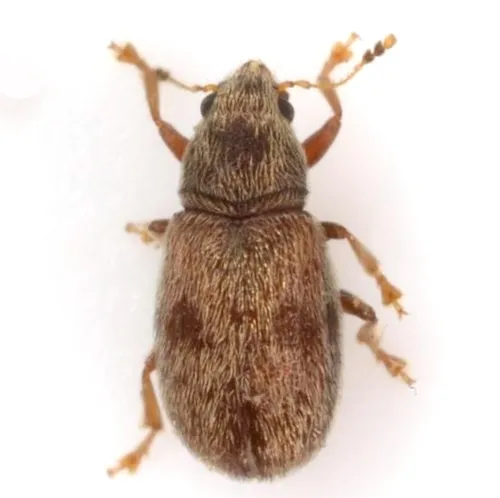
Tropical Coppery Fungus Weevil
Neoxenus versicolor
Identification: Cuticle and pubescence with unusually variable colors and patterns; cuticle from pale honey-brown (? teneral) to reddish brown to dark brown, sometimes with the anterior 1/4 and/or the declivity redder or paler, appendages paler than
Tropicus minutus 0
Tropicus minutus
Identification: Type - MCZ, Harvard tiny thing i see every once in a while at my porch lights; will post pics (=v=) Type Locality: Luling, TX.