
Family Blister Beetles (Meloidae)
Meloidae is a family in the order Coleoptera. Browse 246 named species recorded in this family, or open an individual profile for its available identification and natural-history information.
Species in Meloidae (246)
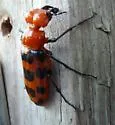
Cissites auriculata
Cissites auriculata
First U.S. Record TEXAS: Brewster Co., Big Bend Nat'l Park, 1988
Cordylospasta fulleri
Cordylospasta fulleri
Identification: Unique among nearctic Meloidae in having antennae with 8-10 segments
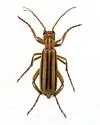
Epicauta abadona
Epicauta abadona
Identification: Each elytron with 2 well-defined black stripes, marked in ground color and pubescence, on a luteous background Det. Salvador Vitanza, 2022 Scarce. Most frequently taken at light
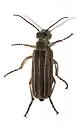
Epicauta alastor
Epicauta alastor
Identification: Though a member of Macrobasis , the first antennomere is not conspicuously modified even in males. Similar to E. hirsutipubescens/virgula , but antennomere 3 much longer than 2, and antennae relatively longer Type Locality: Florence,
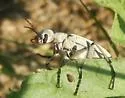
Epicauta albida
Epicauta albida
Identification: ant. pale basally, esp. in the male, and by the dark maculae on the abdomen medially like many meloids, this sp. has periodic outbreaks
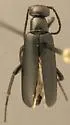
Epicauta alphonsii
Epicauta alphonsii
Horn's original usage was alphonsii which he continued in subsequent publications so clearly the spelling was intentional. Subsequent authors have continued with that same spelling. The name was in honor of a Mr. Alphonse so, true, we currently wou
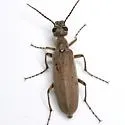
Epicauta arizonica
Epicauta arizonica
Identification: Legs brown, not contrasting with rest of body; male antennomeres 1 & 2 elongate, but together shorter than 3 thru 11; female antennomeres 1-2 with some cinereous pubescence may be common at light
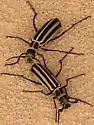
Epicauta atrivittata
Epicauta atrivittata
Identification: Elytra cinereous-pubescent, with two wide black stripes down each, these connected behind ( 3 ) Det. J. C. Abbott, 1993 generally rare in Arizona. ( 3 )
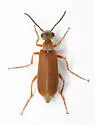
Epicauta batesii
Epicauta batesii
Identification: Pubescence as thin as in most E. pruinosa , a bit condensed at elytral margins, not much affecting colour of integument. Body tan to brown (head darker), legs even paler, eyes very large. • Holotype
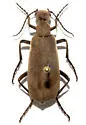
Epicauta brunnea
Epicauta brunnea
Identification: large eyes, form of the ant., and brown color
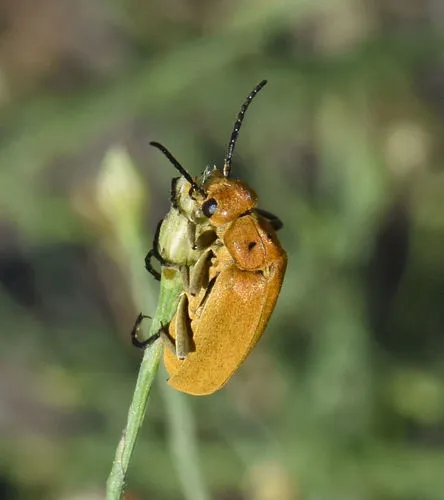
Epicauta callosa
Epicauta callosa
Identification: distinguished at once by the two glabrous callosities on the pronotum v belov, 22 August, 2020
Epicauta cazieri
Epicauta cazieri
Identification: closely related to E. maculata , it differs in the protibial spurs and maxillary palpi being unmodified in the male and in the maculae of the head and pronotum being densely placed, as well as in having the tibiae and tarsi pale.
Epicauta cicatrix 0
Epicauta cicatrix
Identification: "distinguished from the other members [of the caviceps -group], and from all other Nearctic and Neotropical members of Epicauta , by the form of the second antennal segment (see fig. 5)." Type Locality: Presidio, Texas, Nov. 14, 1944,
Epicauta conferta
Epicauta conferta
Identification: Elytra short, leaving the tip of the abdomen exposed, separately rounded. Wingless. Det. v. belov, 2019 Type locality: "Council Bluffs, Iowa and near the Rocky Mountains." Say's type lost. Neotype locality: Dallas, Texas.
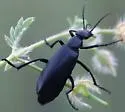
Epicauta corvina
Epicauta corvina
Identification: black, feebly shiny; pubescence moderately dense and black. Posterior tibial spurs spiniform. ( 3 )
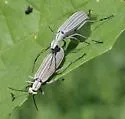
Epicauta costata
Epicauta costata
Identification: head and pronotum with narrow glabrous midline; elytra with the suture, side margins and four ridges on each sharply elevated; male with antennal segments 3-5, and to a lesser extent 2, elongate, slender, and shiny above. Det. Salvado
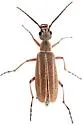
Epicauta crassitarsis
Epicauta crassitarsis
Identification: Male with basal segment of middle tarsi inflated (diagnostic). Ground color often uniformly tan but sometimes with head and pronotum clouded with brown to dark brown.
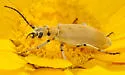
Epicauta diversipubescens
Epicauta diversipubescens
Identification: pubescence yellowish, some dark ventral maculation. Pubescence denuded at pronotal front angles (less so behind angles), resulting in darker spots. ( E. rileyi may show a similar pattern but have a very distinct pit at inner eye margi
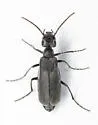
Epicauta excavatifrons
Epicauta excavatifrons
Identification: Head deeply impressed in middle to look deformed; base of elytra also depressed in a triangle
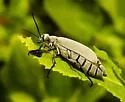
Ashgray Blister Beetle
Epicauta fabricii
Identification: To distinguish E. murina , see under E. murina ; E. flavocinerea , a rare species, has 1st segment in male not very modified, 2nd and 3rd subequal in female, pubescence yellowish
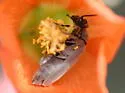
Epicauta fortis
Epicauta fortis
Populations of E. fortis in SE Texas are disjunct from the main range of the species. Besides distribution these populations differ slightly morphologically and occur later in the year. (J.D. Pinto, pers. comm. to =v= 6.xi.2010)
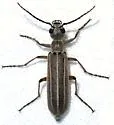
Epicauta hirsutipubescens
Epicauta hirsutipubescens
Epicauta hirsutipubescens (Epicauta hirsutipubescens) is a species in the family Meloidae, commonly known as blister beetles, belonging to the order Coleoptera (Beetles). It is classified within the subfamily Meloinae, tribe Epicautini, suborder Poly
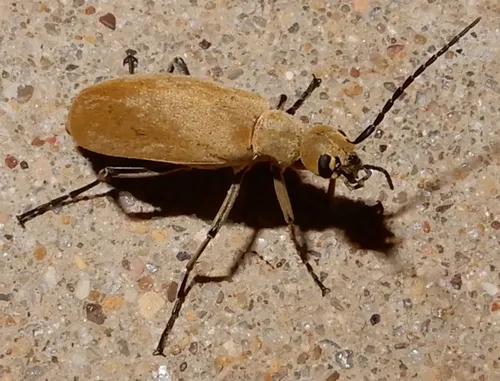
Epicauta immaculata
Epicauta immaculata
Identification: Dets. John D. Pinto Larson reports finding the remains of 94 individuals of E. immaculata in the course of examining the stomach contents of 100 individuals of the toad Bufo americanus Holbrook, taken in potato fields at Fort Thompson
Epicauta lauta
Epicauta lauta
Identification: Legs partly black, in contrast with body. Basal antennal segments not enlarged in either sex and without cinereous pubescence
Epicauta liebecki
Epicauta liebecki
Identification: elytra brown, with paler margins; legs rufous with black tips to segments. male antennal segments 1 and 2 together longer than 3 to 11 together Det. Boris Büche, 2021
Epicauta maculifera
Epicauta maculifera
Identification: our only maculate member of this subgenus
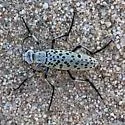
Epicauta magnomaculata
Epicauta magnomaculata
Identification: distinguished from other maculate species by the more slender form and a pair of small denuded callosities on the pronotum
Epicauta mimetica
Epicauta mimetica
Identification: Labrum deeply incised - the giveaway character. Antennae slender, scape in male just reaching beyond eye, in female, almost so; pedicel half as long as scape in either sex; A3 2× as long as pedicel in female, ⅔ as long in male. • Synt
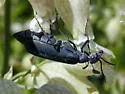
Dark Blister Beetle
Epicauta murina
Identification: E. murina vs E. fabricii : Male: antennomere 2 almost as long as 3-5, ~⅔ as long as 1 // clearly shorter, ~½ as long as 1 ////////////////////////////////// Female: antennomere 2 almost as long as 3+4 // 2nd slightly longer than 3 //
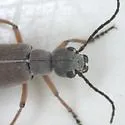
Epicauta nigritarsis
Epicauta nigritarsis
Identification: in part: light-colored elytral suture; distinct patch of dark setae on humeri; legs mostly orangish except black tarsi. Det. E. G. Riley, 2010 Key to species in Pinto Type Locality: Mexican Boundary
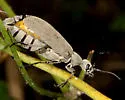
Epicauta obesa
Epicauta obesa
Identification: Most resembles E. cinerea , vestiture always in one colour (grey - brown - black); male antennae without long hairs within, shorter than in the other sp.. Dark abdominal spots in some males.
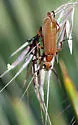
Epicauta ochrea
Epicauta ochrea
Identification: bright ferruginous with moniliform (beaded) antennae ( 3 ) Det. E. G. Riley, 2004 head and pronotum often darker than elytra male, female
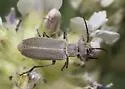
Epicauta oregona
Epicauta oregona
Identification: Maculate; vestiture rather thin, thus usually dark grey in colour; dotting small, or even indistinct. Male antennae wider, and flattened in the basal half (ensiform). belongs to the E. bispinosa -group
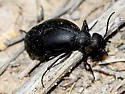
Epicauta parvula
Epicauta parvula
Identification: Easily mistaken for a Meloe by shape, and unusually strong, and spaced punctures flightless
Epicauta polingi
Epicauta polingi
Identification: a pair of black spots on the elytral bases, plus the elytra are generally of a different shade of gray from that of the head and pronutum, males have thickened ant. basal segments male, female Type Locality: Davis Mtns, TX
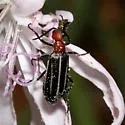
Epicauta sanguinicollis
Epicauta sanguinicollis
Identification: distinctive: head and pronotum red, elytra black with white stripes (if just the head is red, then it's a var. of E. atrata )
Epicauta sericans
Epicauta sericans
Identification: uniform pubescence, lack of dark elytral markings, broad pronotum, short ant. which widen apically, and large eyes
Epicauta strigosa
Epicauta strigosa
Identification: unicolorous spmns can be identified by large eyes, broad head, thick antennae, simple spurs, and dark legs
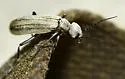
Epicauta sublineata
Epicauta sublineata
Identification: This is one of the most variable species of the genus as to color pattern. Head and pronotum always largely grey; elytra either black with grey margin, cloudy grey on disc, or with vague striping when largely grey. Type Locality: Eagl
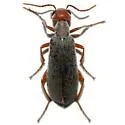
Epicauta tenella
Epicauta tenella
Identification: one of the few spp. in which the elytra are darker than the head and pronotum. head, pronotum and legs rufous, elytra with moderately sparse cinereous pubescence head, pronotum and appendages rufous, elytra pubescence sparse, cinereou
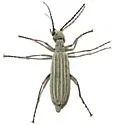
Epicauta tricostata
Epicauta tricostata
Identification: Suture, side margins and three, instead of four, ridges on each elytron strongly elevated. Male with antennal segments 2-5 shiny and somewhat elongate, but not as extremely as in costata Det. Blaine Mathison, 2010
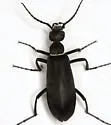
Epicauta valida 0
Epicauta valida
Identification: Selander & Mathieu, 1969; key p. 106: Body (including elytra) entirely black except, usually, for white fringing on pronotum (emphasis added), metathorax, coxae, and abdominal sterna Type Locality: Texas; lectotype.
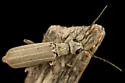
Epicauta virgulata
Epicauta virgulata
sometimes fairly common at light Type locality: San Jose del Cabo, Lower California
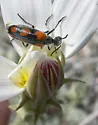
Eupompha elegans
Eupompha elegans
Identification: Black head & thorax; elytra may be variably marked with black and orange, some dark blue populations. (Evans & Hogue, description and photo )
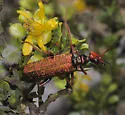
Eupompha fissiceps
Eupompha fissiceps
Identification: elytra can be coppery (or blue): head can be dark: Can be locally abundant but spotty and not seen every year. (E.G. Riley, pers. comm. to MAQ)
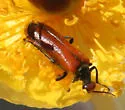
Eupompha schwarzi
Eupompha schwarzi
Identification: "The color varies quite a bit in this species -- the pronotum and head go from almost entirely orange to entirely black -- more orange in AZ and NV than CA." - John Pinto
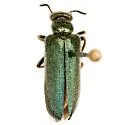
Eupompha viridis
Eupompha viridis
Identification: Whole body and elytra metallic green. Elytra with intervals not raised. ( 3 ) Type Locality: New Mexico not treated in Dillion (1952) ( 6 )
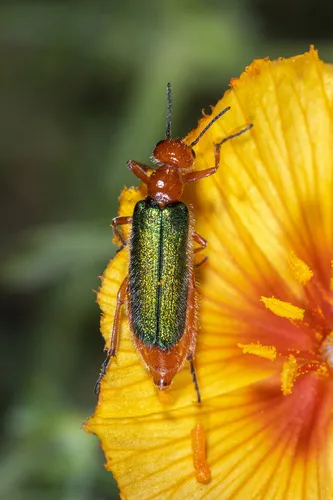
Eupompha wenzeli
Eupompha wenzeli
Identification: Head, thorax, and legs red; elytra metallic green or blue, elytra with "a scintillating appearance" Dets. F. Werner, 1976 rare in collections, Pinto made repeated attempts to discover E. wenzeli in the field from 1971-78 and was final
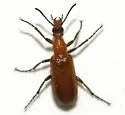
Gnathium francilloni
Gnathium francilloni
Identification: most easily identified by the dark head and elytra Det. E. G. Riley, 2011
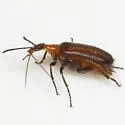
Gnathium minimum
Gnathium minimum
Identification: elytra broadly infuscated [brown tinged] on sides and narrowly along suture Det. John Pinto, 2009 Type Locality: Arkansas (Territory?)
Gnathium politum
Gnathium politum
Identification: superficially greatly resembles G. nitidum , but is at once distinct in the very long maxillary filaments and in having a head of normal length. differs from other Texan spp. in the smooth, shining elytra, which are nearly impunctate
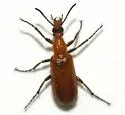
Gnathium texanum
Gnathium texanum
Identification: relatively short head, the pronotum no longer that wide and densely punctate, and the densely punctate elytra
Linsleya compressicornis 0
Linsleya compressicornis
Identification: Brilliant blue sometimes slightly violet. Head entirely blue, very coarsely but sparsely punctured. Thorax narrower than the head, sub-quadrate, feebly narrowed at base, moderately convex, with few coarse irregularly placed punctures.
Linsleya convexa
Linsleya convexa
Identification: Holotype easily recognized by its color: black; elytra dark metallic blue or greenish blue
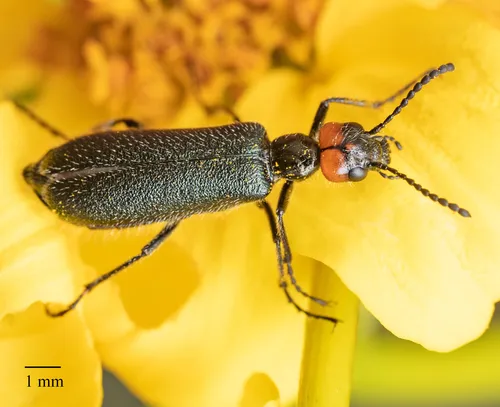
Lytta auriculata
Lytta auriculata
Identification: Det. M. A. Quinn, 2015 Type locality: Kern River region, California.
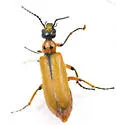
Lytta biguttata
Lytta biguttata
Identification: Pinto: the elytra can be immaculate in this sp.
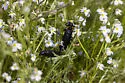
Lytta childi
Lytta childi
Identification: pronotum usually red and black; variation black, to red except the posteriour margin black, primary red maculae near anteriour angles L. molesta is similar
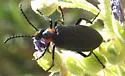
Lytta cribrata
Lytta cribrata
Identification: Pronotoum black at center, broadly orange at sides; head with a diamond-shaped orange frontal spot. Det. E. G. Riley, 1996
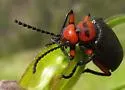
Lytta deserticola
Lytta deserticola
Identification: Tibiae black, femora rufous across middle. Elytra finely reticulate (emphasis added). Tarsi with pads. Rare forebody shiny, elytra subopaque and with fine raised reticulations; head, pronotum and fernora except for base and tip reddis
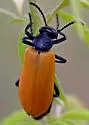
Pricklypoppy Blister Beetle
Lytta fulvipennis
One AZ record (Thomas Robbins, 2013 pers. comm. to MAQ)
Lytta hoppingi 0
Lytta hoppingi
Identification: Head with red frontal spot; may also have red temples. Pronotum red, with black anteriour margin and median stripe, ±narrowing behind. Voucher specimen habitus: dorsal • lateral
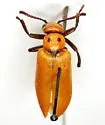
Lytta lecontei
Lytta lecontei
Identification: Head and pronotum orange, pronotum with two black spots Det. R.B. Selander, 1953 Type Locality: One specimen, Mexican Boundary; collected by Mr. Clark, under Col. J. D. Graham.
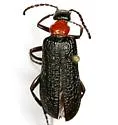
Lytta mirifica
Lytta mirifica
Identification: Mirifica and arizonica only species of Lytta possessing combination of black head, orange pronotum, and reticulate elytra. elytra coarsely reticulate, most cells at least .5 mm. in diameter. Rio Grande region near El Paso, Texas PARAT
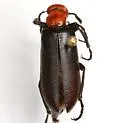
Lytta mutilata
Lytta mutilata
Identification: Prothorax widest before middle, not angulate. Head between eyes, and all of dorsum of pronotum rufous. Male with antennal segments 4 and 5 distorted. Elytra finely rugose, not reticulate. Werner et al. list Lytta mutilata as 'abundant
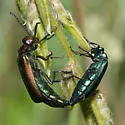
Nuttall's Blister Beetle
Lytta nuttalli
Identification: variable first collected by Say along the Colorado Front Range where some of the local bushes "were loaded" with this sp.
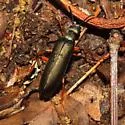
Lytta unguicularis
Lytta unguicularis
Identification: Legs orange, except for the tip of tarsi, claws (hence the name), and knees. Males with modified front and hind legs; females differ from L. aenea in the short and sparse pubescence on head and pronotum, and lack of a colour contrast
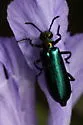
Lytta viridana
Lytta viridana
may co-occur with L. nuttalli on same plants (in SK)
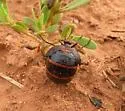
Megetra punctata
Megetra punctata
Identification: Head and pronotum relatively smooth, without clearly visible microreticulation at 32X magnification. Dorsal surface of elytra are coarsely punctate (not reticulate as in M. cancellata and vittata ). Elytra are rounded from top to side
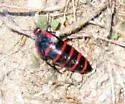
Megetra vittata
Megetra vittata
Identification: Dorsal surface of the elytra are finely, but irregularly reticulate, with punctures of varying size. Elytra are abrubtly deflexed down the side, producing a well-defined edge, a character shared with M. cancellata , but not punctata .
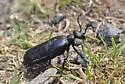
Meloe bitoricollis
Meloe bitoricollis
Identification: pronotum with region of anteriour angles strongly inflated, edgy to subconical
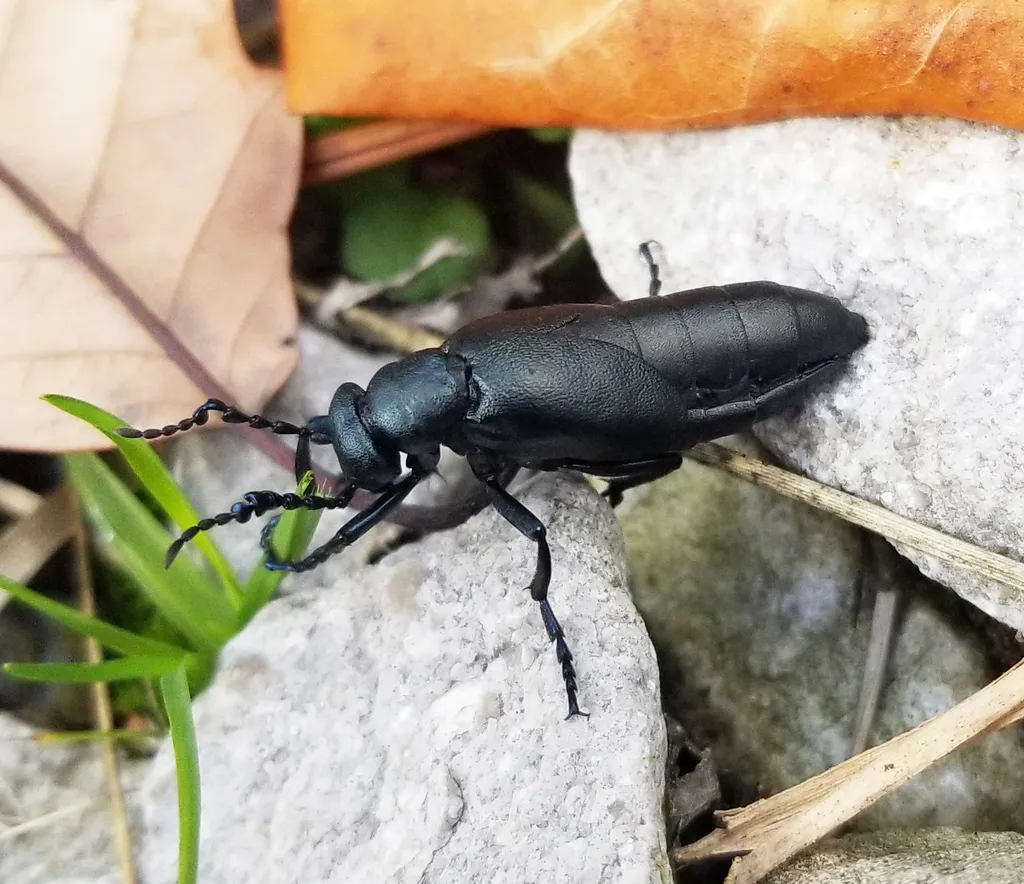
Meloe campanicollis
Meloe campanicollis
Identification: Like in most American Meloe , apical antennomeres shorter than 2x their width, unlike in M. americanus/impressus , but not M. angusticollis . A greenish/olive tint is common and quite diagnostic, if there (can be black/blue). Pronotum
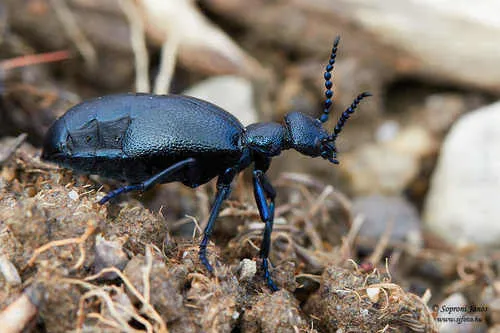
Black Oil-beetle
Meloe proscarabaeus
A large (~30mm) shiny black beetle with a straight base to the thorax and a very small rounded tooth at the base. Detailed photos showing key features required. Unimproved grassland, occasionally woodland sites. Found throughout the UK, less common i
Meloe strigulosus
Meloe strigulosus
Identification: Antennomere 4 slightly shorter than 3rd and 5th
Nemognatha bifoveata
Nemognatha bifoveata
Identification: Allied to N. piazata but readily distinguished from that species by its shorter galeae, shorter metatibial spurs, erect elytral pubescence and sparser punctation, different color pattern, and deep, elongate oval foveae on the fourth a
Nemognatha explanata
Nemognatha explanata
Identification: Resembles N. lutea but differs markedly in its reddish color; expanded posterior angles of the pronotum . (emphasis added) Body surface moderately shining, reddish head and pronotum and reddish-testaceous elytra Det. Boris Büche, 2025
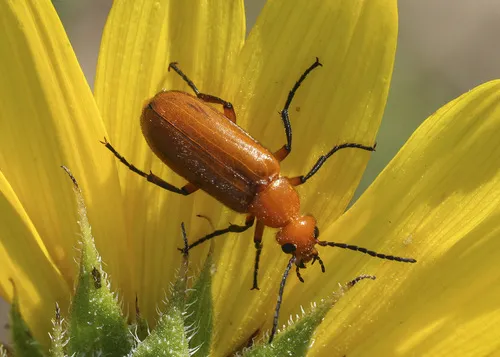
Nemognatha lurida
Nemognatha lurida
Identification: Specimens from opposite extremes of the range, however, may be separated as follows: Pronotum usually densely punctate, punctures laterally on disk often contiguous; anterior angles moderately abrupt; pubescence pale or dark; pronotal
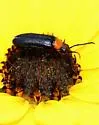
Nemognatha nemorensis
Nemognatha nemorensis
Identification: head occasionally pale like some of the western spp.
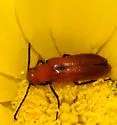
Nemognatha nigripennis
Nemognatha nigripennis
Identification: Pronotum scarcely wider than long, not oval; abdomen usually reddish, rarely fuscous; western US Head and pronotum orange; femora excl. tips orange; elytra either orange, with darker tips, or black . (empaphsis added) pale forms usual
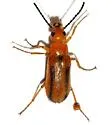
Nemognatha nitidula
Nemognatha nitidula
Identification: Related to and resembling N. lutea but readily distinguished by its reddish-testaceous ground color, usually vittate elytra, pale golden pubescence, more densely punctate pronotum and elytra. Body surface shining. Color uniformly redd
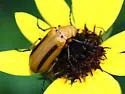
Nemognatha punctulata
Nemognatha punctulata
Identification: John Pinto, pers.comm.: "Problem with the inflated head feature is that the difference is not qualitataive -- the temples are rather inflated in piazata , and many other Nemognatha , also, only somewhat less so -- so one needs to look
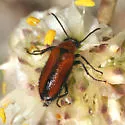
Nemognatha scutellaris
Nemognatha scutellaris
Identification: Entire ventral surface shining piceous; head piceous except vertex triangularly pale; elytra flavous or somewhat rufous usually with sutures and margins piceous at least apically (last key couplet) (Piceous is a glossy, brownish-black
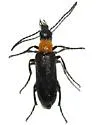
Nemognatha selanderi
Nemognatha selanderi
Identification: Elytra finely punctate or rugose; pronotum finely to moderately coarsely punctate, immaculate; sw U. S.
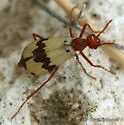
Pleuropasta mirabilis
Pleuropasta mirabilis
Pleuropasta mirabilis (Pleuropasta mirabilis) is a species in the family Meloidae, commonly known as blister beetles, belonging to the order Coleoptera (Beetles). It is classified within the subfamily Meloinae, tribe Eupomphini, suborder Polyphaga, s
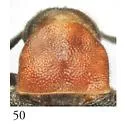
Pseudozonitis dianae
Pseudozonitis dianae
Identification: distinguished by its relatively small eyes, uniformly colored elytra and uniformly dark legs, pronotal dimensions, mandibular structure and color, and male genitalia. Elytral color and presence of a black macula on the pronotum vary i
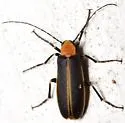
Pseudozonitis florida
Pseudozonitis florida
Types - Holotype ♀. USA. Florida: Port Saint Lucie (St Lucie Co.); v-22-2009; Lindgren Funnel Trap, ‘w/Manuka oil & etoh’; B. Saunders, collr.
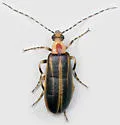
Pseudozonitis longicornis
Pseudozonitis longicornis
Identification: characterized by its vittate elytra, reddish macula on the pronotum (Fig. 41), and large eyes ( 3 ) mostly collected at lights, no plant records ( 3 )
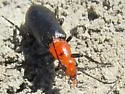
Pseudozonitis maculicollis
Pseudozonitis maculicollis
Identification: colouration: Head and pronotum orange, elytra dark; a pair of spots on anteriour half of pronotum, and a small frontal macula dark, the latter sometimes missing.
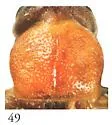
Pseudozonitis martini
Pseudozonitis martini
Identification: non-bulged, relatively small eyes, uniformly colored elytra, transverse pronotum, uniformly dark mandibles and light-colored body setation separate P. martini from congeners. It is closest to P. dianae , with which it has been confuse
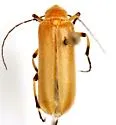
Pseudozonitis pallida
Pseudozonitis pallida
Identification: The generally pallid coloration, large size and extension of the moderately curved mandibles beyond the labrum (Fig. 23) characterize this species. ( 5 ) The elytra of P. pallida are weakly vittate in some individuals. This vittation
Pseudozonitis roseomaculatis
Pseudozonitis roseomaculatis
Identification: distinguished by the large reddish subtrapezoidal macula on the pronotum (Fig. 51) and the relatively small eyes (Fig. 18) which do not reach the inner margin of the maxillae on the underside of the head. In addition, the femora usual
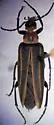
Pseudozonitis schaefferi
Pseudozonitis schaefferi
Identification: pronotal markings and small eyes distinguish it from all congeners
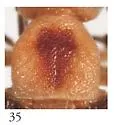
Pseudozonitis stroudi
Pseudozonitis stroudi
Identification: distinguished by its pronotal features which include the usual presence of a median red elongate pronotal macula, and relatively uneven discal surface with coarse, partially confluent punctures which are of similar size laterally and
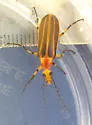
Pseudozonitis vaurieae
Pseudozonitis vaurieae
Identification: enlarged eyes coupled with the cruciform maculation (Figs 37, 38) distinguishes Form A of P. vaurieae from congeners. See below for further separation from Form B. mostly at lights, no plant associations
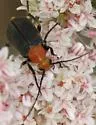
Pseudozonitis vigilans
Pseudozonitis vigilans
Identification: Elytral color pattern is the most obvious feature which varies. Figs. 2. P. vigilans (pallid form); 3. P. vigilans (vittate form)
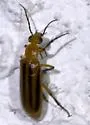
Pseudozonitis vittipennis
Pseudozonitis vittipennis
Identification: not likely to be confused with any other species. It is the only species with shiny rugulose and obsolescently punctate elytra (Fig. 58). In all other species the elytra are distinctly, densely punctate (Fig 57). The uniformly yellow-
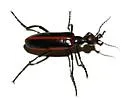
Pyrota akhurstiana
Pyrota akhurstiana
Identification: Shiny, brick red and black, the elytra black, each completely margined with brick red (last couplet)
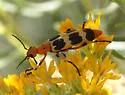
Pyrota concinna
Pyrota concinna
Identification: The basal black elytral band tends to be longer and more frequently divided into elongate spots
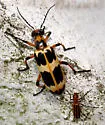
Pyrota deceptiva
Pyrota deceptiva
Identification: Medium orange; elytra usually paler than head and pronotum, varying to orange or orange-yellow, never ivory or cream colored. Head almost invariably with occiput black, usually with a pair of black spots between eyes, often with black
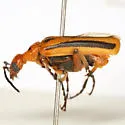
Pyrota discoidea
Pyrota discoidea
Identification: pale head, legs and scutellum Det. E. G. Riley, 2004 Type Locality: Platte River
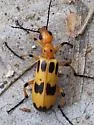
Pyrota fasciata
Pyrota fasciata
Identification: background color of Pyrota fasciata is [nearly] uniform vs. two toned in Pyrota punctata Det. E.G. Riley, 2004 coll'ed at lights