
Tropical Coppery Fungus Weevil
Neoxenus versicolor
This record describes Neoxenus versicolor (species). Recorded family: Anthribidae. Recorded order: Coleoptera.
Identification and Appearance
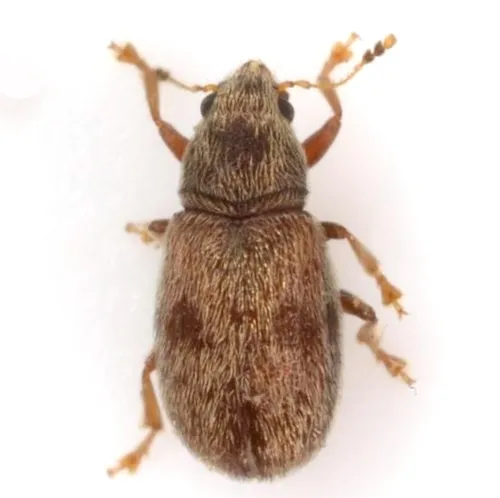
Cuticle and pubescence with unusually variable colors and patterns; cuticle from pale honey-brown (? teneral) to reddish brown to dark brown, sometimes with the anterior 1/4 and/or the declivity redder or paler, appendages paler than body, femora darker than tibiae; dorsal pubescence usually silvery gray with a vague, irregular brown antemedian discal spot on each elytron, rarely entirely gray or brown spot more extensive. ( 3 ) Det. M. A. Quinn, 2017 Holotype: male, Texas, Cameron Co., Audubon Sabal Palm Grove 25-vii-1993 B. & B. Valentine colls. The type was taken beating recently dead fronds of Sabal texana (Cook) Becc., still hanging on the trees. ( 3 ) Remarks: The type series was swarming on the undersides of recently dead palm fronds still hanging on the trees. My wife and I counted 75 specimens on one frond, and with continued collecting we could have taken thousands. At the time, the Sabal Sanctuary was very dry; we found only 19 other beetles of 12 species. It is hard to believe that anthribids outnumbered all other Coleoptera 15:1. ( 3 ) Since the Brownsville area has been carefully collected by experts for 100 or more years, with no specimens of Neoxenus spp. in any of the many collections studied, I suspect this species had just arrived from Mexico, or farther south, and was exploding in a new habitat when we arrived in July. Subsequent collecting in October of the same year by Shawn Clark and Bob Androw and September, 1996, by Shawn Clark, has yielded only a few specimens. ( 3 )
Wikipedia reference for Neoxenus versicolor: https://en.wikipedia.org/wiki/Neoxenus versicolor.
Classification
- Kingdom
- Animalia
- Phylum
- Arthropoda
- Class
- Insecta
- Order
- Coleoptera (Beetles)
- Suborder
- Polyphaga
- Superfamily
- Curculionoidea
- Family
- Anthribidae (Fungus Weevils)
- Subfamily
- Choraginae
- Tribe
- Araecerini
- Genus
- Neoxenus
Imported taxonomy record. Source availability varies; see the source references and editorial policy below.
Habitat and Range
Habitat
among the most common beetles in the sabal palm forest, Brownsville, TX ( 6 )
Geographic Range
southmost TX (Cameron Co.) / e. Mex. (Tamaulipas, San Luis Potosi, and Oaxaca), and Panama - Map ( 4 ) ( 5 )
Seasonal Activity
March-October ( 4 ) (BG data)
Additional species information
Species notes from the sources
Etymology: Neoxenus versicolor Valentine 1999
About Primitive Winged Insects: the wider group
Order-level background for Coleoptera, the group containing Neoxenus versicolor. Species-specific details appear above.
Group overview
Coleoptera is the largest order of insects with over 400,000 described species, representing ~25% of all known animal species and ~40% of all insects. In the U.S. alone, nearly 30,000 beetle species have been identified.
Ecological role of the group
Beetles are prominent decomposers, especially in forests, breaking down dead wood and recycling nutrients. As predators, they reduce populations of pest insects. Many species are also important pollinators of flowering plants.
Economic and practical significance of the group
Beetles have major economic significance: leaf beetles (Chrysomelidae) and weevils (Curculionoidea) are among the most destructive agricultural pests globally, costing billions annually, while predatory species like ladybugs provide natural pest control.
Recorded sources for this group: Britannica, Smithsonian, NCSU Entomology. Imported estimates may describe particular regions or reporting periods.
Photos of Tropical Coppery Fungus Weevil (3)
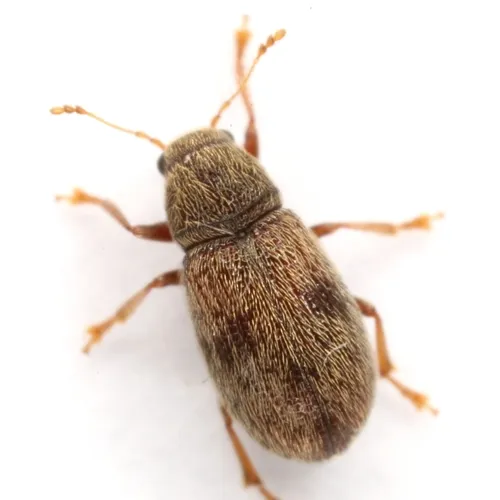
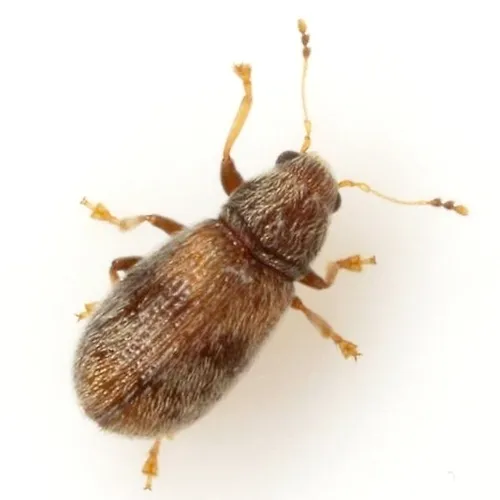
Photo credits: (c) Mike Quinn, San Marcos, some rights reserved (CC BY-NC), uploaded by Mike Quinn, San Marcos | Contributed by Mike Quinn
Frequently Asked Questions About Tropical Coppery Fungus Weevil
What is Tropical Coppery Fungus Weevil?
Tropical Coppery Fungus Weevil (Neoxenus versicolor) is a species in the family Anthribidae, within the order Coleoptera.
How big is Tropical Coppery Fungus Weevil?
length (head excluded) 2.0-3.2 mm ( 3 )
How do you identify Tropical Coppery Fungus Weevil?
Cuticle and pubescence with unusually variable colors and patterns; cuticle from pale honey-brown (? teneral) to reddish brown to dark brown, sometimes with the anterior 1/4 and/or the declivity redder or paler, appendages paler than body, femora darker than tibiae; dorsal pubescence usually silvery gray with a vague, irregular brown antemedian discal spot on each elytron, rarely entirely gray or brown spot more extensive. ( 3 ) Det. M. A. Quinn, 2017
Where is Tropical Coppery Fungus Weevil found?
| Feature | Details |
|---|---|
| Habitat | among the most common beetles in the sabal palm forest, Brownsville, TX ( 6 ) |
| Range | southmost TX (Cameron Co.) / e. Mex. (Tamaulipas, San Luis Potosi, and Oaxaca), and Panama - Map ( 4 ) ( 5 ) |
When is Tropical Coppery Fungus Weevil active?
Tropical Coppery Fungus Weevil: seasonal activity - March-October ( 4 ) (BG data).