
Family Leaf Beetles (Chrysomelidae)
Chrysomelidae is a family in the order Coleoptera. Browse 1,349 named species recorded in this family, or open an individual profile for its available identification and natural-history information.
Species in Chrysomelidae (1,349)
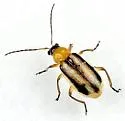
Acalymma blandulum
Acalymma blandulum
Identification: pale below Det. E. G. Riley, 2009 Type Locality: New Mexico
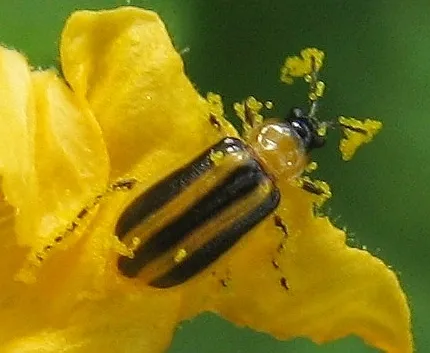
Acalymma gouldi
Acalymma gouldi
Acalymma gouldi is a leaf beetle species in the genus Acalymma found in North America.
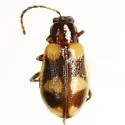
Acalymma peregrinum
Acalymma peregrinum
Identification: Det. E. G. Riley, 2010 described from Guerrero, Mexico, from a single specimen (Schaeffer 1905) First reported for the US by Schaeffer (1905) from a small number of specimens taken near Brownsville, Texas.
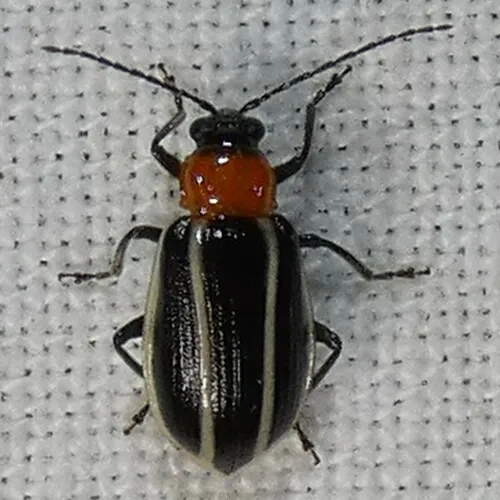
Narrow-lined Cucumber Beetle
Acalymma vinctum
Acalymma vinctum is a species of leaf beetle in the family Chrysomelidae. It is found in North America.
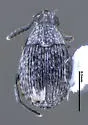
Acanthoscelides atomus
Acanthoscelides atomus
Identification: Of eastern species, the combination of minute size, ocellate elytral vestiture, and lack of lateral and ventrolateral tibial carinae is diagnostic Type deposited in MCZ - Images here
Acanthoscelides calvus
Acanthoscelides calvus
Acanthoscelides calvus is a species of leaf beetle in the family Chrysomelidae. It is found in North America. Larvae feed on Crocanthemum seeds.
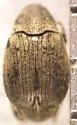
Acanthoscelides chiricahuae
Acanthoscelides chiricahuae
Identification: Distinguishing characters are the evenly distributed body setae, the prominent raised denticles at the bases of striae three and four, the telescoped abdominal sterna, and the radiating lines on the metacoxal face. Type Locality: Chir
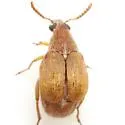
Acanthoscelides flavescens
Acanthoscelides flavescens
Identification: reddish-brown integument, yellowish vestiture, prominent frontal carina, and male genitalia are characters to separate this species
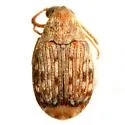
Acanthoscelides macrophthalmus
Acanthoscelides macrophthalmus
Identification: red integument, eyes strongly enlarged in both sexes, narrowly divided on midline in male, frons carinate and narrowed, third and fourth striae ending in denticles on a gibbosity, and female pygidium with paired, curvate maculae. Type
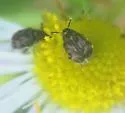
Acanthoscelides pallidipennis
Acanthoscelides pallidipennis
Identification: Several color forms: bright golden yellow, dense yellow, or all white.
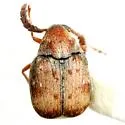
Acanthoscelides pectoralis
Acanthoscelides pectoralis
Identification: Distinguishing characteristics for this species are body largely red with black frons and vertex, thoracic sterna, legs, and elytral border; dorsal vestiture yellowish; and mucro short. Type Locality: Texas
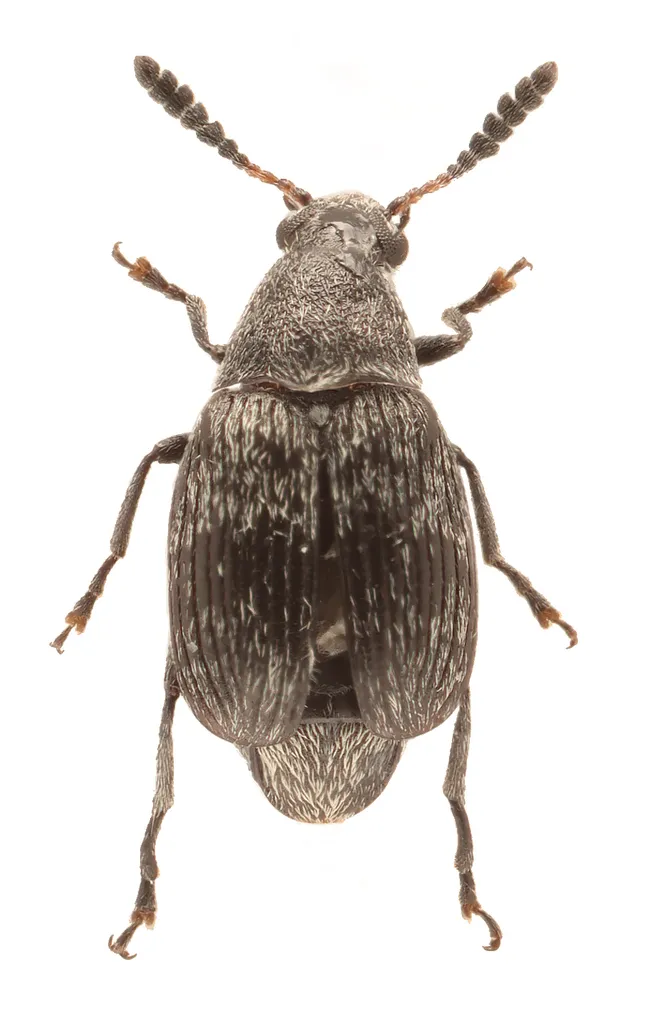
Acanthoscelides perforatus
Acanthoscelides perforatus
Acanthoscelides perforatus is a species of leaf beetle in the family Chrysomelidae. It is found in North America.
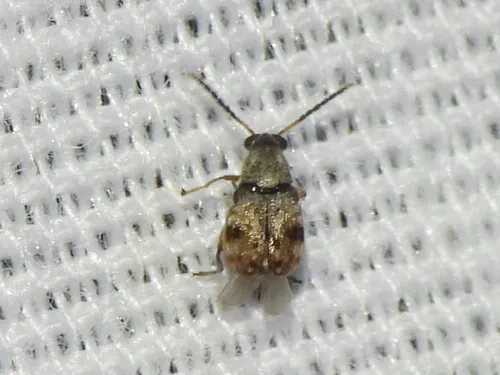
Acanthoscelides prosopoides
Acanthoscelides prosopoides
Identification: Salient characters are the color pattern, the elongate scutellum, subconical pronotum, and especially the laterally deflected 3rd and 4th strial bases ending in a carinate or toothed subbasal ridge. Color: Body dark red to piceous; ap
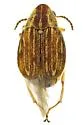
Acanthoscelides quadridentatus
Acanthoscelides quadridentatus
Identification: straw yellow color with dark brown dorsal markings, pronotum broadly striped and pygidium usually narrowly striped, elytral striae parallel, femoral pecten with one long and four shorter denticles, mucro short, and male genitalia dist
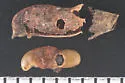
Acanthoscelides submuticus
Acanthoscelides submuticus
Identification: the only elable way of separating from A. floridae (Horn) is by examining male genitalia
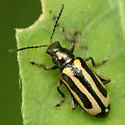
Alligatorweed Flea Beetle
Agasicles hygrophila
extremely effective as biocontrol agent in coastal se. US first released in the US: 1964, CA & SC; later, in several other states (TN-NC-FL-TX) (Buckingham, 2002)
Alder Leaf Beetle
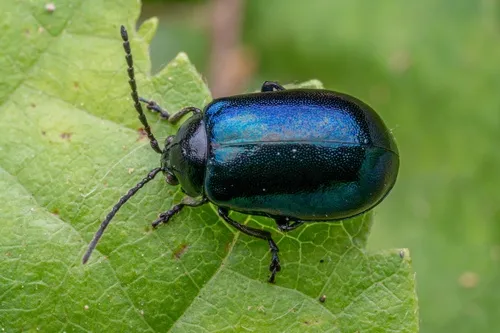
Agelastica alni
Agelastica alni is a distinctive, dark metallic blue coloured species measuring around 7mm in length. It feeds mainly on Alder but is occasionally found on other deciduous trees such as Beech, Hazel and Hornbeam. The black larvae can be found in July
Algarobius bottimeri
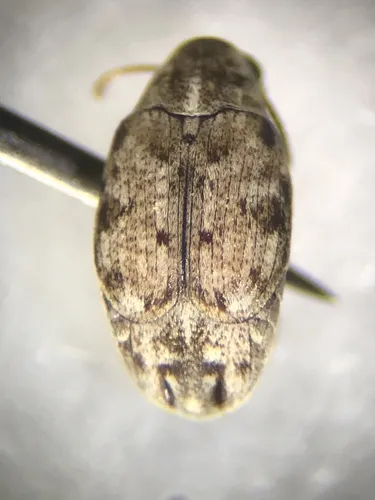
Algarobius bottimeri
Identification: male Algarobius spp. lack sulci and are externally indistinguishable from ea. other females w/ sulci centered one-third from apex Type locality: Bentsen-Rio Grande Valley State Park , Hidalgo Co., Texas Both Algarobius bottimeri and A
Algarobius prosopis
Algarobius prosopis
Identification: male Algarobius spp. lack sulci and are externally indistinguishable from ea. other female w/ sulci nearly confluent with apical margin Type locality: California, Colorado Desert
Apple Flea Beetle
Altica foliaceae
In recent years, several outbreaks of this insect have occurred throughout Colorado.
Strawberry Flea Beetle
Altica ignita
Identification: Shining metallic blue, with purple reflections, or more nearly completely metallic purple. Prebasal pronotal impression deep across pronotum. Elytra moderately coarsely punctate, sides usually with faint submarginal plica. Species rea
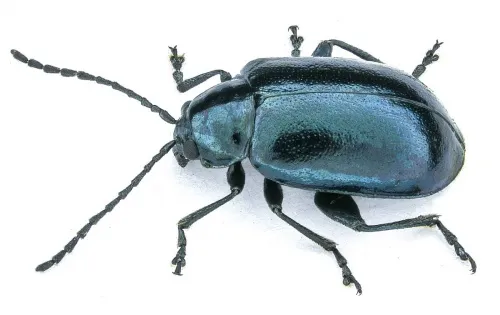
Altica lythri
Altica lythri
This flea beetle is almost identical to other Altica species and they can only be distinguished by dissection, preferably from a male. Like other 'flea' beetles it has powerful back legs enabling it to jump. There are seven native Altica species and
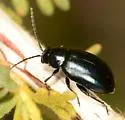
Altica obliterata
Altica obliterata
Identification: subopaque, colour dark blue to almost black; basal depression on pronotum superficial, fading to the sides (thus the name) Holotype
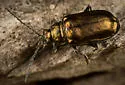
Altica prasina
Altica prasina
Identification: elytra with lateral plica (as member of bimarginata-group), and long intrahumeral depression (as A. ambiens ); colour frequently green (name),but variable.
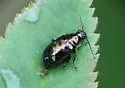
Altica probata
Altica probata
Identification: resembles A. rosae (its western vicariant)
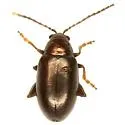
Altica texana
Altica texana
Type Locality: Esperanza Ranch, Brownsville, Cameron Co., TX (Schaeffer 1906)
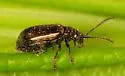
Altica tombacina
Altica tombacina
Identification: brassy to purplish species; habitus not very convex, surface with reduced sheen (alutaceous); transverse furrow of pronotum ends into a +/- triangular depression at about 3/4 to side margin.
Altica torquata
Altica torquata
Identification: usually polychrome - elytral margins, and pronotum behind transverse furrow (name!) coloured in a different tone than elytral disc. Monochrome individuals identified by dissection only. the name 'Steel-blue Grapevine Flea Beetle' is m
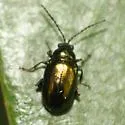
Altica viridana
Altica viridana
Identification: Differs from A. kalmiae in golden green colour Description in Bulletin of the Brooklyn Entomological Society 27: 240
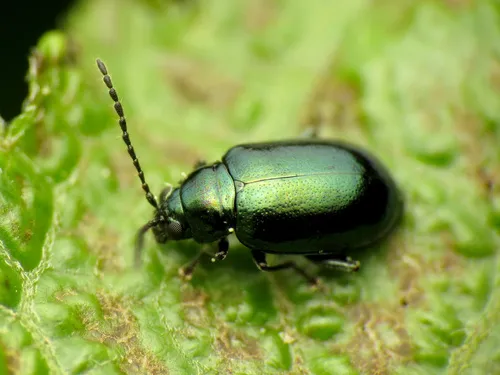
Altica woodsi 0
Altica woodsi
Altica woodsi is a species of flea beetle in the family Chrysomelidae. It is found in North America. It feeds on Vitis riparia and Virginia creeper....
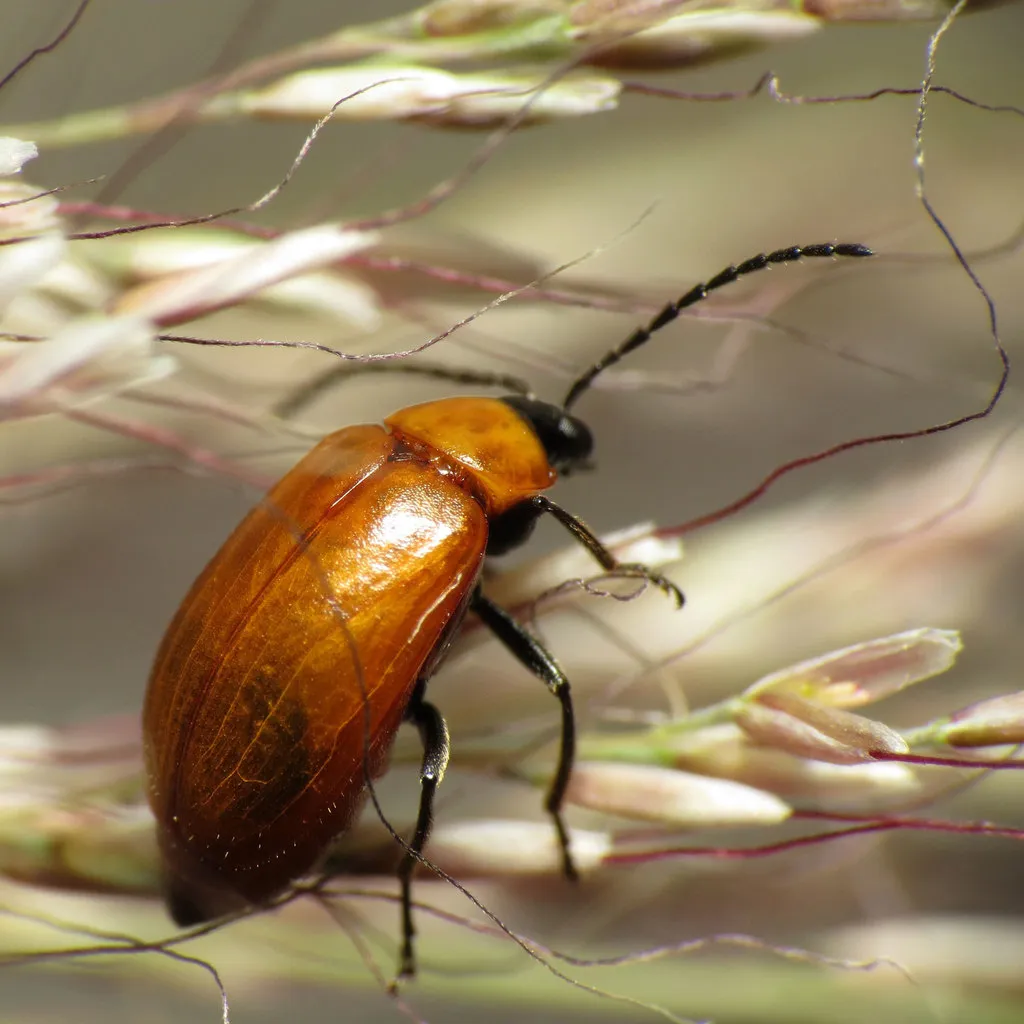
Androlyperus fulvus
Androlyperus fulvus
Identification: Color orange, including pronotum; Head, antennae, mesosternum, metasternum, legs and apex of abdomen are dark, scutellum brownish yellow. The broad, reflexed lateral edge (epipleuron) of the elytra extends to the incision in males,
Androlyperus incisus
Androlyperus incisus
Identification: Elytra entirely black Type locality. Quartzside [Quartzsite, Yuma Co.], Arizona.
Androlyperus maculatus
Androlyperus maculatus
Identification: As in some of its congeners, the sexual dimorphism is remarkable in this species. In addition to the modifications on the terminal sternite and at the posterolateral angles of the elytra, males have opaque rather than shining elytra.
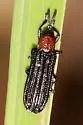
Anisostena ariadne
Anisostena ariadne
Identification: Head blue-black, strongly alutaceous, frons with deep, median, vertical depression, and thin carina between antennae. Eyes with deep vertical sulcus on mesal border. Antennae black, apical 5 segments with brown pubescense. Pronotum or
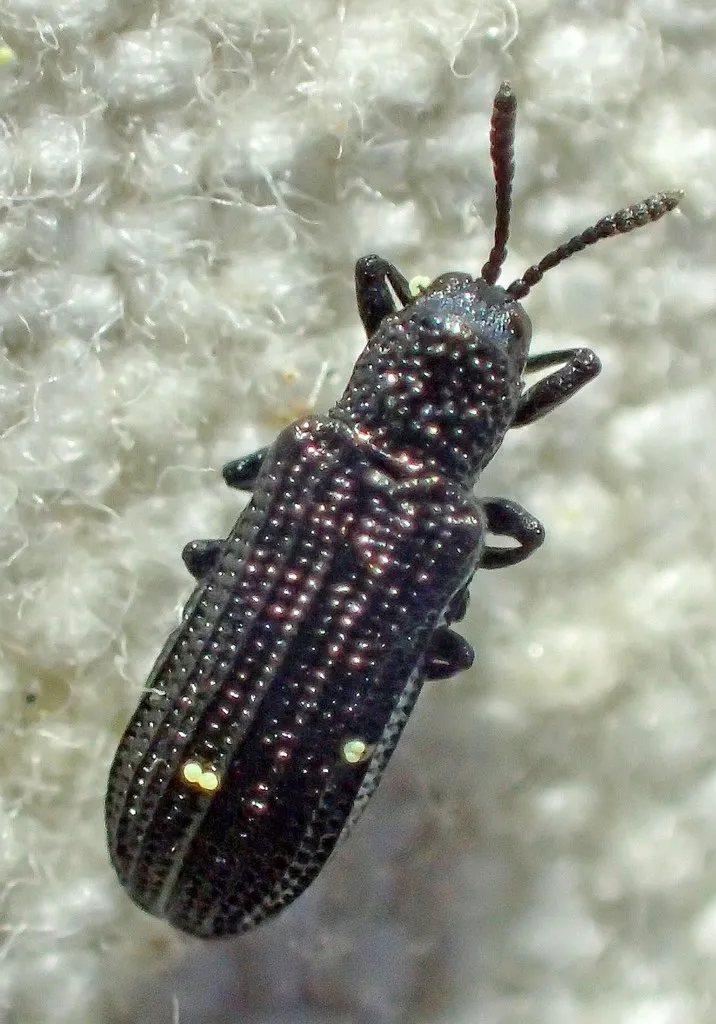
Anisostena californica
Anisostena californica
Anisostena californica is a species of leaf beetle in the family Chrysomelidae. It is found in North America.
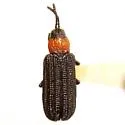
Anisostena lecontii
Anisostena lecontii
very rarely collected (E.G.Riley, 2013 pers. comm. to MAQ)
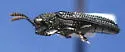
Anisostena nigrita
Anisostena nigrita
Most widely dist. member of this genus , but apparently uncommon(???) per GBIF data
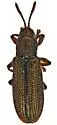
Anisostena nunenmacheri
Anisostena nunenmacheri
Identification: in N.America, unicolorous dorsum , mesofemur not serrate on inner margin, and pronotum without basal impression key to this this species.
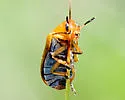
Anomoea flavokansiensis
Anomoea flavokansiensis
Identification: The dorsum being completely flavous with all femora also flavous/fulvous is distinct for US species. --John Watts, 8.vii.2008
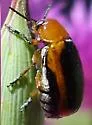
Clay-colored Leaf Beetle
Anomoea laticlavia
Identification: Fairly large leaf beetles, reddish yellow with variable amounts of black, esp. black along midline of elytra.
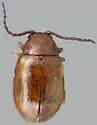
Brown Dot Leafy Spurge Flea Beetle
Aphthona cyparissiae
common in ND ( 4 ) Introduced from Europe 1986 to control Euphorbia , esp. E. cyparissias (Leafy Spurge)
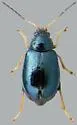
Aphthona czwalinai
Aphthona czwalinai
Identification: Shiny metallic black. Adults indistinguishable from A. lacertosa common in ND ( 3 ) Introduced to control Euphorbia (leafy spurge) in 1987
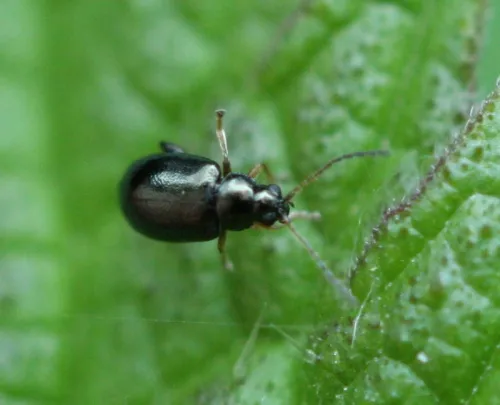
Large Flax Flea Beetle
Aphthona euphorbiae
1.5 to 2.4 mm. Black but may have a metallic greenish or bronze tinge. The elytra are coarsely punctate and in a confused pattern. Antennae are yellow at the base and becoming black apically. Legs are yellow but with dark femora. As with all Apthona,
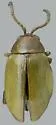
Aphthona flava
Aphthona flava
Identification: orange or orange-brown. Typically adults hop rather than fly images: 1 | 2 In some states, adults may be obtained at no cost from state weed management agencies.
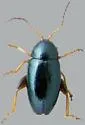
Aphthona lacertosa
Aphthona lacertosa
Identification: Shiny, metallic black common in ND ( 3 )
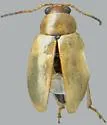
Aphthona nigriscutis
Aphthona nigriscutis
Identification: Gatunek obejmujący zasięgiem południowo-wschodnią i środkową część Europy, granica północna rozmieszczenia przebiega od dorzecza Łaby przez środkową część Polski, Wołyń i dorzecze dolnego Dniepru po przedgórza Kaukazu. W Polsce chrząs
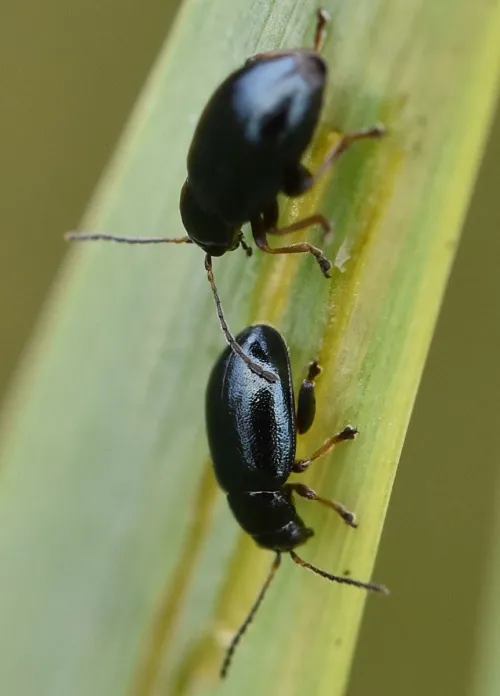
Iris Flea Beetle
Aphthona nonstriata
At 2.5 to 3 mm this is the largest member of the genus. It is more or less unicoloured - a dark metallic blue, green or bronze. The elytra have 'shoulders'. The antennae are dark apically but segments 2, 3 and the apical part of 1 are paler. The legs
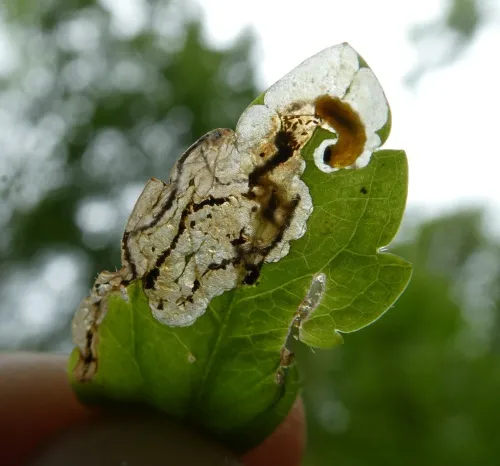
Apteropeda orbiculata
Apteropeda orbiculata
Adults are about 2.5 mm and may be dark metallic green, bronze, copper, blue or violet. The larvae mine the leaves of various plants, and are short, yellow, and with a black head. Adult and Leafmines: Unless identified by a recognised expert, a photo
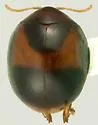
Argopistes scyrtoides
Argopistes scyrtoides
It is not uncommon in the salt marshes south of Vero Beach in Indian River Co., S of Vero Beach, sweeping, 16-VII-1975; 28 VII-1975; 7-XI-1975; 19-111-1976, MCT [FSCA].
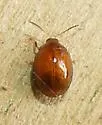
Argopistes tsekooni
Argopistes tsekooni
Identification: see first US record from Atlanta, Georgia, April, 2023
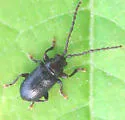
Aulacothorax copalina
Aulacothorax copalina
Identification: ------- male ------- and ------ female ------ , can also be all black: Dets. E. G. Riley
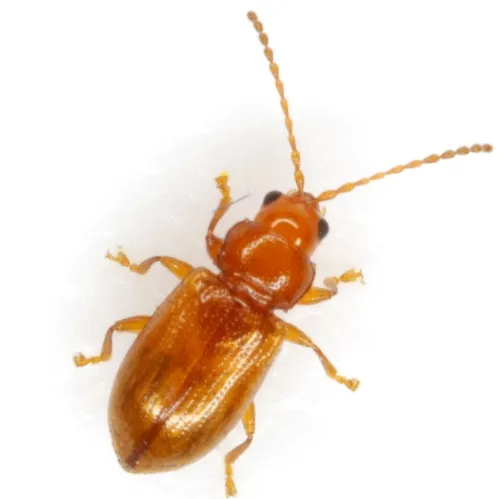
Aulacothorax melina
Aulacothorax melina
Aulacothorax melinus, the poison ivy leaf beetle, is a species of leaf beetle in the family Chrysomelidae, formerly in the genus Orthaltica. It is found in North America.
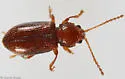
Aulacothorax parkeri 0
Aulacothorax parkeri
Type Locality: Globe, Gila Co., Arizona, IV-25-1933, on Rhus , by Mr. F. H. Parker five paratypes w/ the same data
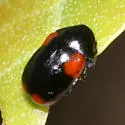
Eastern Babia
Babia quadriguttata
Identification: This is the only black and red Clytrini in e. US. The short serrate antennae and shiny, feebly punctate upper surface will separate it from other black and red Cryptocephalinae. Det. M. A. Quinn, 2010
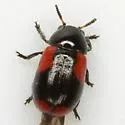
Western Babia
Babia tetraspilota
Identification: Western sp. ---------- Eastern sp. B. tetraspilota --------- B. quadriguttata CA-TX-NE-WY / Mex. = NM-FL-NY-MN / Can. Both spmns Det. E. G. Riley Both spmns coll. at the same site in Austin, TX
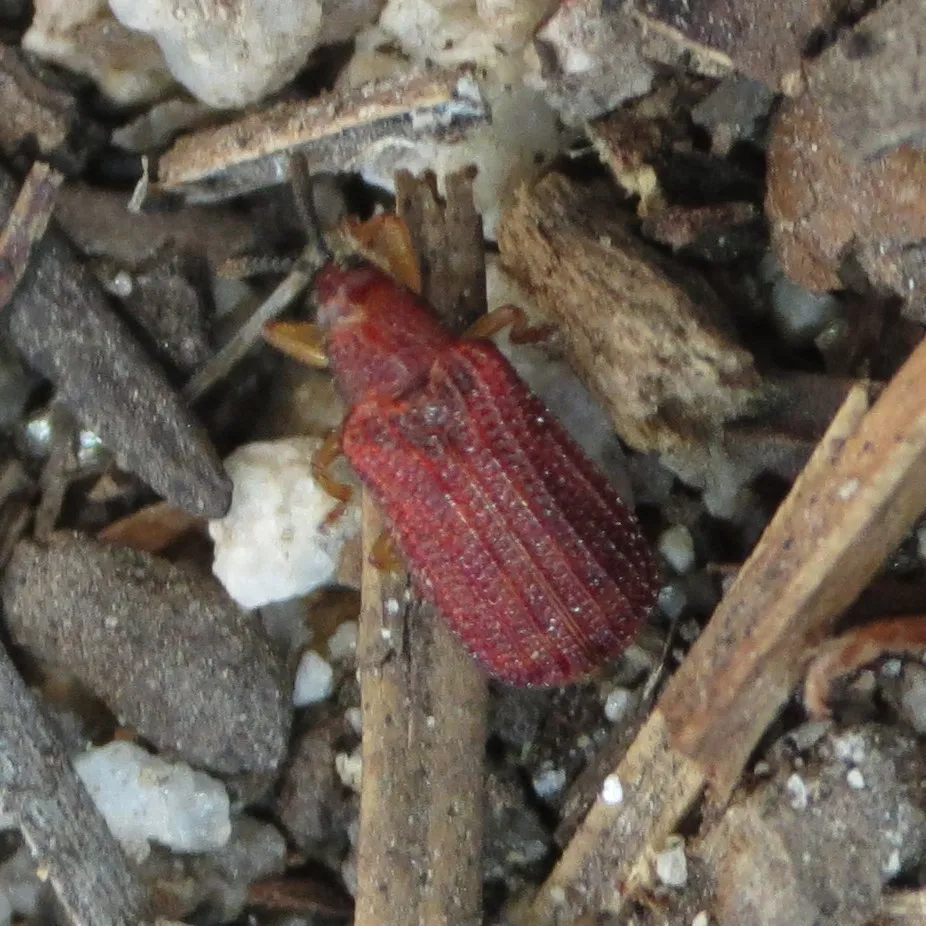
Baliosus ferrugineus
Baliosus ferrugineus
Baliosus ferrugineus is a species of leaf beetle in the family Chrysomelidae. It is found in North America.
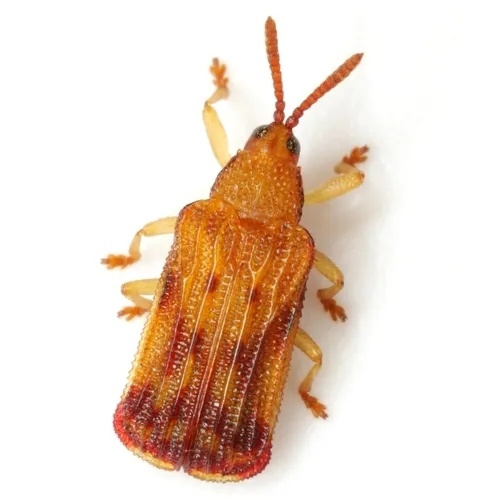
Basswood Leaf Miner
Baliosus nervosus
Basswood Leaf Miner (Baliosus nervosus) is a species in the family Chrysomelidae, commonly known as leaf beetles, belonging to the order Coleoptera (Beetles). It is classified within the subfamily Cassidinae, tribe Chalepini, suborder Polyphaga, supe
Baliosus randia
Baliosus randia
Identification: HOLOTYPE Texas considers this a SGCN
Bassareus brunnipes
Bassareus brunnipes
Identification: Bassareus brunnipes (Olivier) Det. E. G. Riley
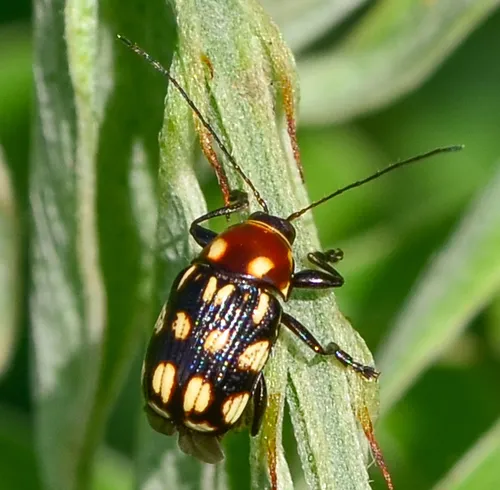
Bassareus clathratus
Bassareus clathratus
Identification: Det. E. U. Balsbaugh, Jr. 1977 MO: Randolph Co. Type Locality: Pennsylvania
Bassareus detritus
Bassareus detritus
Identification: The only species in the genus with an opaque pronotum. Det. A. Deczynski, 2011
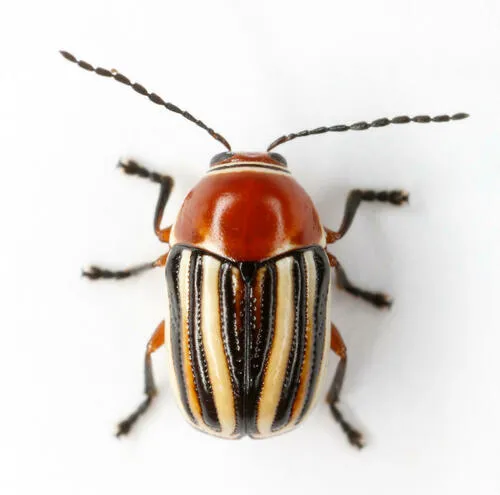
Bassareus lituratus
Bassareus lituratus
Bassareus lituratus is a species of case-bearing leaf beetle in the family Chrysomelidae. It is found in North America.
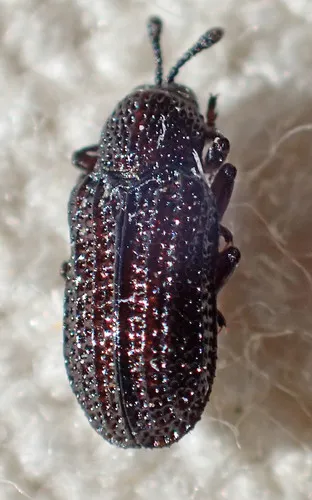
Brachycoryna dolorosa
Brachycoryna dolorosa
Identification: Three color forms (shiny black, reddish-brown, or yellow), not considered subspecies, all of which can be found in a single population.
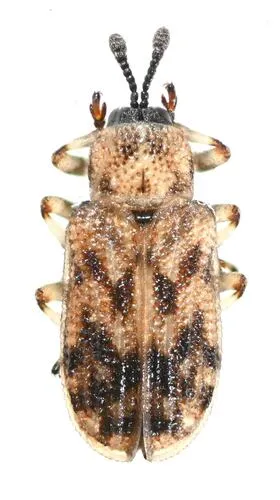
Brachycoryna hardyi
Brachycoryna hardyi
Brachycoryna hardyi is a species of leaf beetle in the family Chrysomelidae. It is found in Central America and North America.
Brachycoryna pumila
Brachycoryna pumila
Identification: Elytra brownish with vague darker spots Det. E. G. Riley, 2009
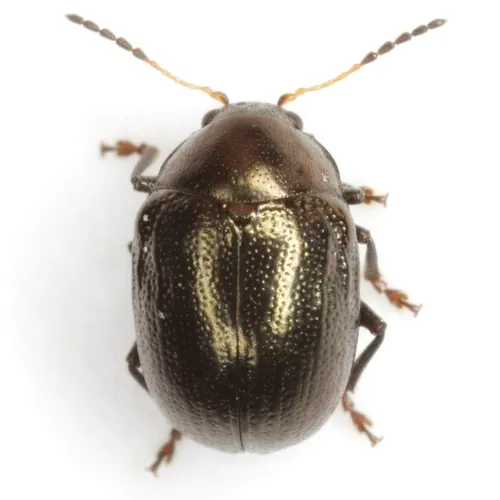
Texas Live Oak Leaf Beetle
Brachypnoea lecontei
Identification: body color metallic purple, green, indigo, or brown; legs can be pale or black; five terminal antennal segments dark, prominent and uniform, basal ant. segments generally pale, punctations coarse on elytral, fine on pronotum. Type col
Brachypnoea margaretae
Brachypnoea margaretae
Identification: See apparently does not come to lights
Brachypnoea rotundicollis
Brachypnoea rotundicollis
Type Locality: Esperanza Ranch and S. Tomas [Sabal Palm Grove], Brownsville, Cameron Co., TX apparently does not come to lights
Brachypnoea texana
Brachypnoea texana
Rarely comes to lights Type Locality: Brownsville, Cameron Co., Texas E. G. Riley, pers. comm. to MAQ, 2010: "This one is a mystery. It seems Schaeffer is the only person to ever collect this common species in the LRG. On this one, I think Schaeffer
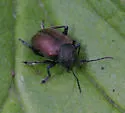
Western Grape Rootworm
Bromius obscurus
Can be a pest on grapes ( Vitis ). Practical importance probably low, because the species usually is rare to absent in regions where grapes are cultivated (true also in Eurasia)
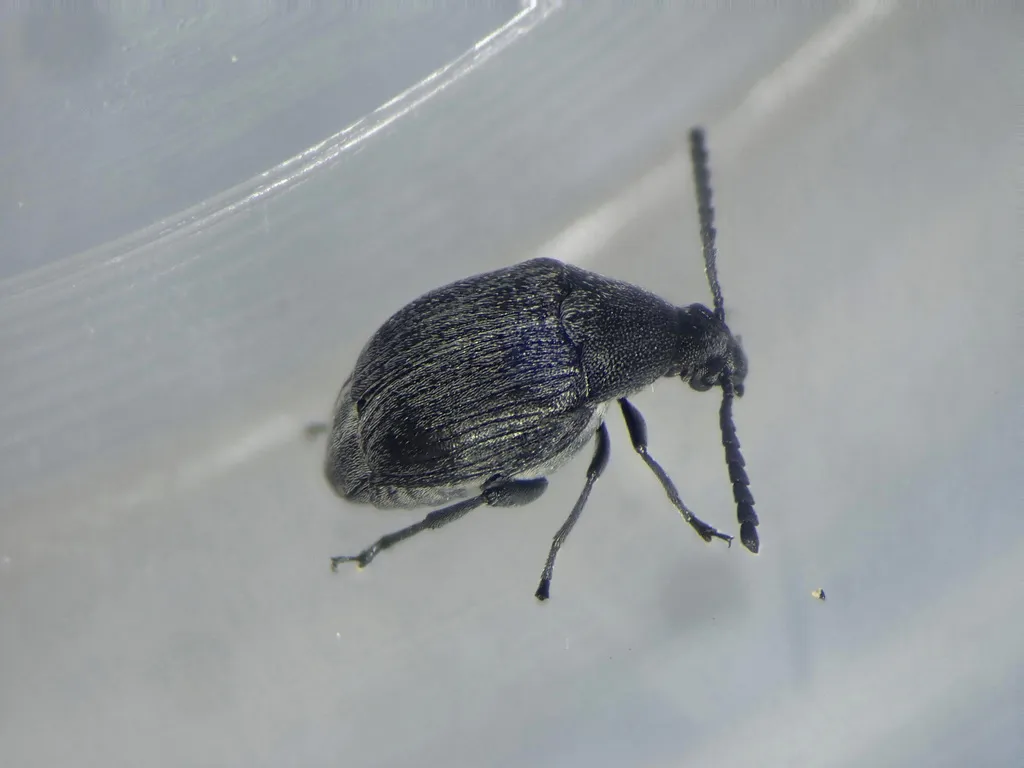
Bruchidius cisti 0
Bruchidius cisti
Bruchidius cisti is a species of leaf beetle in the family Chrysomelidae. It is found in Europe and Northern Asia (excluding China) and North America.
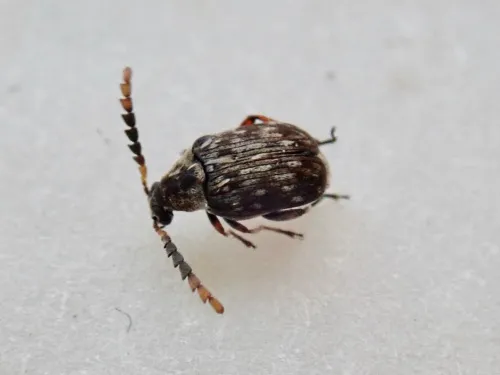
Bruchidius varius
Bruchidius varius
2.5 to 3.0 mm. Body black with characteristic pattern of pale grey or golden brown scales. Head densely punctured and sparsely scaled, with a shiny raised longitudinal ridge between eyes. Eyes prominent, with a deep narrow incision which is visible f
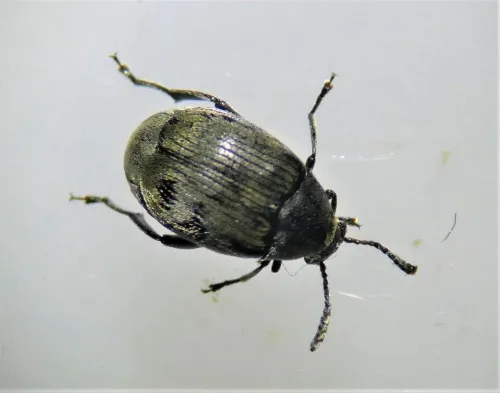
Bruchidius villosus
Bruchidius villosus
Adult - a photo is required and the specimen should be examined with a microscope and key feature photogrpahed. In the comments box, state the key or ID method used and describe the size and identifying characters. Larval stage: photograph the mined
Bruchus affinis
Bruchus affinis
Identification: most resembles B. rufimanus , differs in: - lateral tooth on pronotum more anteriour in position (at about 1/3); - pygidium with conspicous dark spots, similar as in B. pisorum ; - last 1/4 of elytra black, usually each with a curved
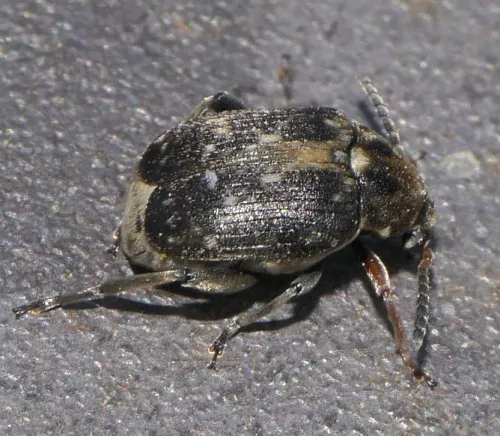
Bruchus atomarius
Bruchus atomarius
2.5-3.6mm. Dense pale patch at rear of pronotum and centrally on suture of elytra. Several other smaller pale patches. Leg colour is same as the basic colour except front femur and tibia which are orange.Males possess a sub-apical tooth on the mid ti
Vetch Bruchid
Bruchus brachialis
Identification: pattern: mottled with fine pale spots, the only conspicous a prescutellar on pronotum. male frontlegs inflated (name!), antennae all yellow in male, mostly dark on female, terminal segment frequently red again. Det. Brad Barnd, 2013 (
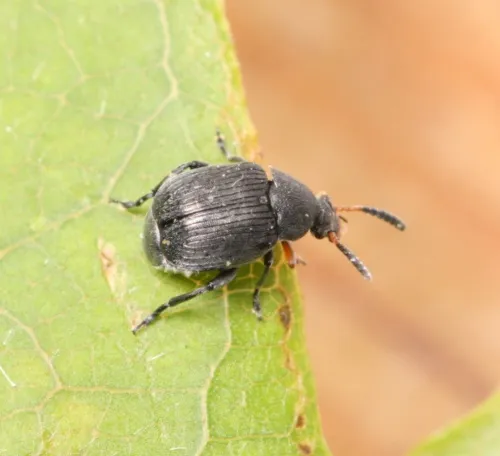
Bruchus loti
Bruchus loti
1.7 to 2.5 mm. A grey seed eating leaf beetle. The basal part of the antenna is pale brown as is most of the foreleg. Unless identified by a recognised expert, a photo is required and the specimen should be examined with a microscope. In the comments
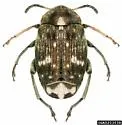
Pea Weevil
Bruchus pisorum
Identification: anteriour femora are completely dark. conspicous white pattern elements: prescutellar triange on pronotum; spots on 3rd interval at 2/5th / 4/5th downwards; outwardly slanting row on intervals 5, 7, 9, at about 2/3rds length of elytro
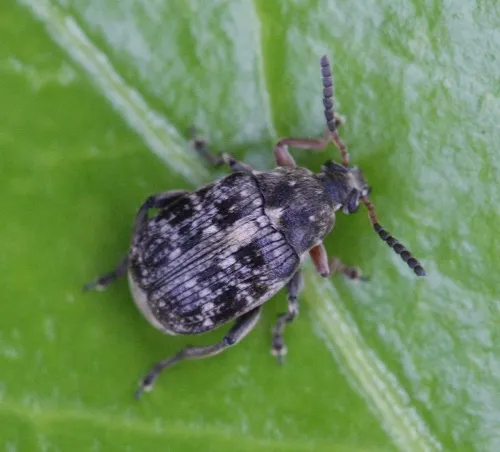
Bruchus rufimanus
Bruchus rufimanus
Sometimes known as the Broad Bean Weevil (or Broad Bean Beetle). At 3.5-5 mm, this is the largest species in the genus Bruchus . The elytra are grey-brown, flecked with white, and are shorter than the body. The antennae are orange at the base, and wh
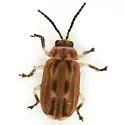
Brucita marmorata
Brucita marmorata
Identification: This is a highly distinctive chrysomelid not likely to be confused with other Lower Rio Grande Valley species. ( 3 ) Texas considers this a SGCN ( 5 )
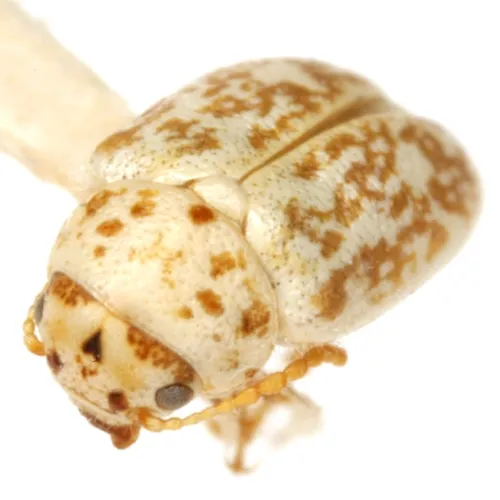
Cadiz hardyi
Cadiz hardyi
Cadiz is a genus of leaf beetles in the subfamily Chrysomelinae, found in North America. It contains only one species, Cadiz hardyi, which was described from the Cadiz Dunes in San Bernardino County, California.
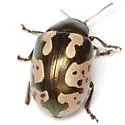
Calligrapha ancoralis
Calligrapha ancoralis
Identification: In the typical pattern, the humeral moon-shaped macula is narrowly seperated from both the enclosed dark spot, and the subsutural band (on 2nd. interval). The rear end of dark 3rd. interval is bending outwards, turning forward and may
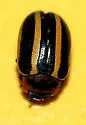
Calligrapha californica
Calligrapha californica
Identification: The black-headed larvae have a dark brown rotund body twice as wide as the head and three times as long. The adult is a dark beige beetle approximately 6 mm long with 3 black stripes on its back.
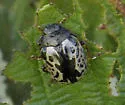
Calligrapha confluens
Calligrapha confluens
Identification: Distinguished by the narrow pale area near the suture on the apical declivity of elytra. Species is polymorphic for this feature, however. (Dr. Gomez-Zurita's comments here and here )
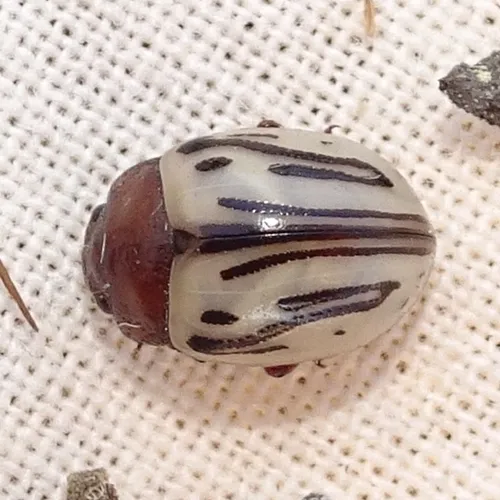
Disrupted Leaf Beetle
Calligrapha disrupta
Calligrapha disrupta is a species of leaf beetle belonging to the family Chrysomelidae, in the subgenus Zygogramma, which was formerly a genus.
Calligrapha diversa
Calligrapha diversa
Identification: Elytra pinkish to red (yellowish in death) with many dark spots; in intensively coloured specimens, dark pattern elements usually bordered with white. Sides of elytra without dark spot, subsutural band near base divergent from sutural
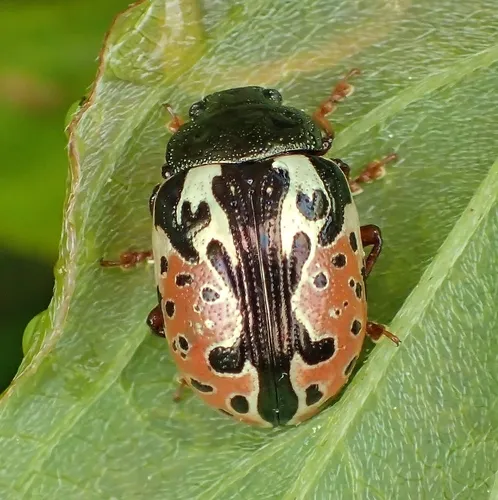
Calligrapha knabi
Calligrapha knabi
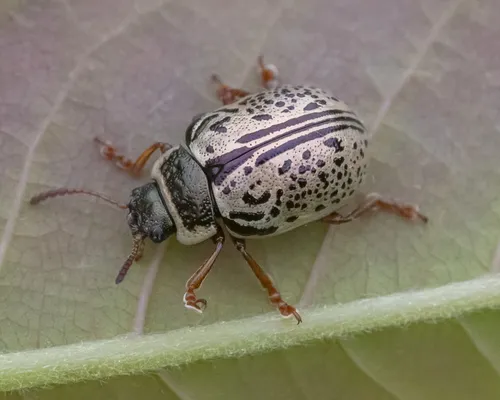
Identification: can be distinguished from C. rowena (a similar dogwood-feeding species) by the apical part of the arcuate band connected to the sutural vitta (e.g., the posterior V-shaped spot connected to the black longitudinal area where the elytra
Common Willow Calligrapha
Calligrapha multipunctata
Identification: differs from C. philadelphica primarily in having the pronotum light with some large dark areas, rather than uniformly dark. Also, dark areas including spots are more likely to be dark metallic green in C. philadelphica vs black in C.
Elm Calligrapha
Calligrapha scalaris
has become less common due to its main host, the American Elm , being devastated by Dutch Elm Disease
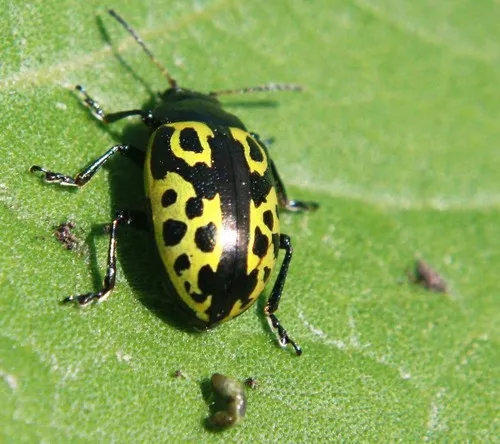
Calligrapha signatipennis
Calligrapha signatipennis
Calligrapha signatipennis is a species of leaf beetle belonging to the family Chrysomelidae, in the subgenus Zygogramma, which was formerly a genus. It is found in Central America and North America.
Ragweed Leaf Beetle
Calligrapha suturalis
Identification: Easily distinguished from C. bidenticola by the form of the tarsal claws or color of the epipleuron. C. bidenticola is slightly more elongate than C. suturalis but otherwise very similar. Do not try to separate the two based on whethe
Calligrapha suturella
Calligrapha suturella
Identification: Specimens like this, coming from NE North America can be found in many collections mingled with C. multipunctata , for they share the pale margins of pronotum and the lack of a diagnostic spot laterally on elytra. However, it is a dif
Calligrapha verrucosa
Calligrapha verrucosa
Identification: habitus photos showing variability in
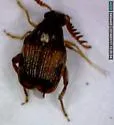
Southern Cowpea Weevil
Callosobruchus chinensis
widely used as lab model for research ( 3 ) ; may severely damage stored pulses of legumes ( 4 )
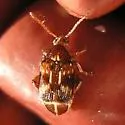
Cowpea Weevil
Callosobruchus maculatus
Identification: variable in coloration, leading to confusion with other species of Callosobruchus . Part of the variation is due to the presence of “two distinct adult forms, which differ not only in their morphology, but in physiology, behaviour, et
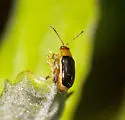
Capraita circumdata
Capraita circumdata
=v='s avis: Anthony Deczynski told me that "none of the [photos] IDed as Capraita thyamoides are correct. C. thyamoides lacks humeral callosities, which appear in all the images. Most of them are probably C. circumdata , although some other species h

Capraita flavida
Capraita flavida
Identification: Quite narrow, all pale; underside, scutellum and terminal part of antennae only slightly darker.
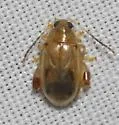
Capraita nigrosignata
Capraita nigrosignata
Type Locality: Esperanza Ranch, Brownsville, Cameron Co., TX
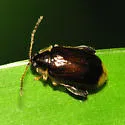
Capraita obsidiana
Capraita obsidiana
Identification: Typical colour form brown, with only pronotal side margin and elytral apex yellowish. The extreme pale form (var. flava ) has dark colour reduced to two bands on pronotum, and a variable pattern of up to three fasciae on elytra (close
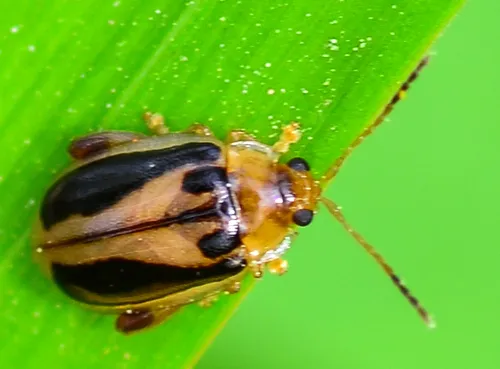
Capraita pervittata
Capraita pervittata
Identification: C. pervittata C. subvittata C. pervittata has been separated from C. subvittata mainly on grounds of the very bold, and well defined elytral pattern. The above individual demonstrates it perfectly. Note: in C. subvittata , if not larg