
Family Fungus Weevils (Anthribidae)
Anthribidae is a family in the order Coleoptera. Browse 68 named species recorded in this family, or open an individual profile for its available identification and natural-history information.
Species in Anthribidae (68)
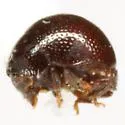
Acaromimus americanus
Acaromimus americanus
Identification: color ranges from dark reddish-brown to deep shining black. ( 4 ) Type Locality: Mobile, Alabama ( 6 )
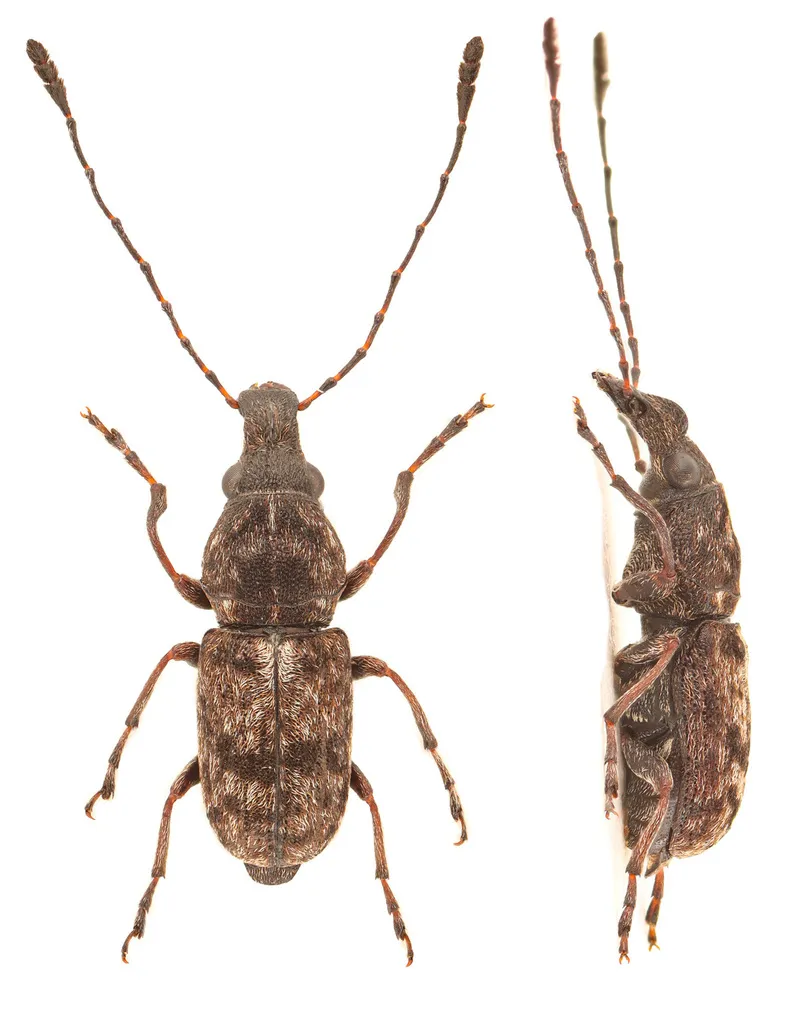
Allandrus bifasciatus
Allandrus bifasciatus
Allandrus bifasciatus is a species of fungus weevil in the beetle family Anthribidae. It is found in North America.
Allandrus populi
Allandrus populi
Identification: There are undescribed species out west which look very similar (and which I have not been able to work out). Males have much longer antennae; in A. bifasciatus antennae are even longer (in some males, longer than the body). (Barry Val
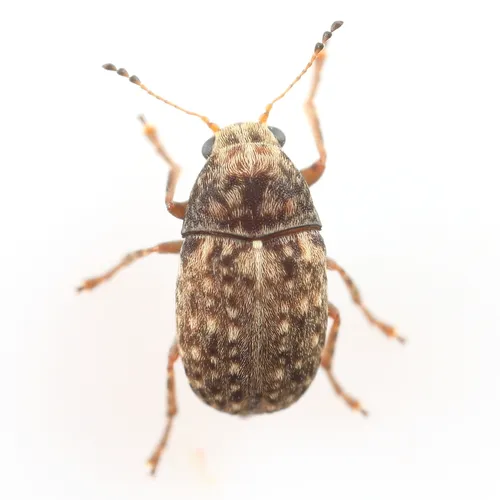
Coffee Bean Weevil
Araecerus fasciculatus
Identification: tibiae with three pale rings is diagnostic
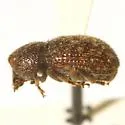
Brachycorynus hirsutus
Brachycorynus hirsutus
Identification: The only described species with long, semi-erect setae on the body. ( 3 ) Holotype: "Texas, Hidalgo Co., Bentsen-Rio Grande State Park, 19-iv-1974." ( 3 )
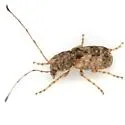
Discotenes nigrotuberculata
Discotenes nigrotuberculata
Identification: Det. E. G. Riley, 2009 Described from three specimens collected near Brownsville, Texas (Esperanza Ranch and San Tomas). (Schaeffer 1904)
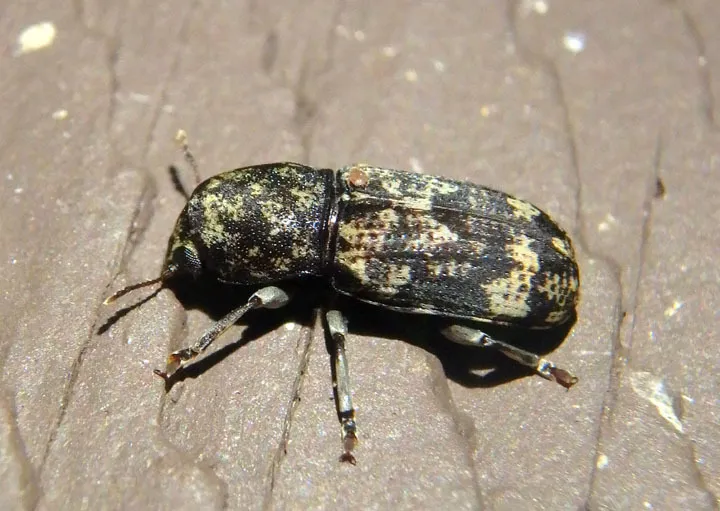
Eugonus bicolor
Eugonus bicolor
Eugonus bicolor is a species of fungus weevil in the beetle family Anthribidae. It is found in Central America and North America.
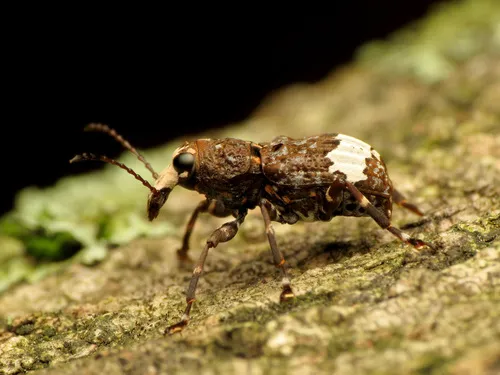
Eurymycter fasciatus
Eurymycter fasciatus
Eurymycter fasciatus is a species of fungus weevil in the family of beetles known as Anthribidae. It is found in North America.
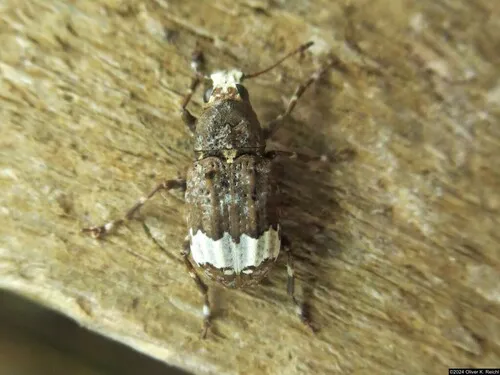
Eurymycter tricarinatus
Eurymycter tricarinatus
Eurymycter tricarinatus is a species of fungus weevil in the beetle family Anthribidae. It is found in North America.
Eusphyrus eusphyroides
Eusphyrus eusphyroides
Identification: Pronotum reticulate-punctate, the raised rims darker than the depressed areas Type Locality: Esperanza Ranch, Brownsville, Texas (Schaeffer 1906)
Eusphyrus rectus
Eusphyrus rectus
Identification: Holotype Type Locality: Brownsville, Texas (Schaeffer 1906)
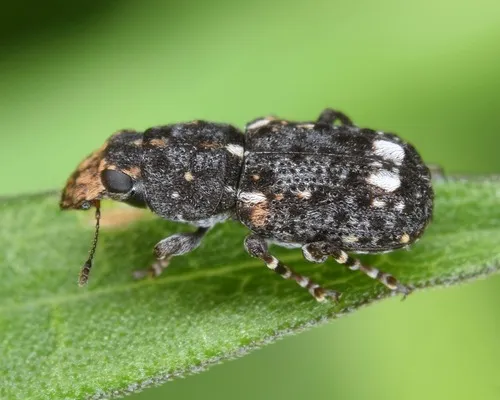
Apical-spotted Fungus Weevil
Goniocloeus bimaculatus
Goniocloeus bimaculatus is a species of fungus weevil in the beetle family Anthribidae. It is found in North America.
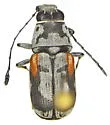
Gymnognathus chiricahuae
Gymnognathus chiricahuae
Type Locality: Onion Saddle, Chiricahua Mts., Ariz. VIII-2-52, DJ & JNK. in (OSU). Allotype same data in (OSU). Fifteen paratypes
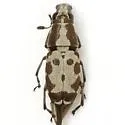
Gymnognathus triangularis
Gymnognathus triangularis
Type Locality: Texas, San Patricio County., 2 mi. N.E. Sinton, 15-x-1993, S. M. Clark Dr. Shawn Clark collected the holotype sweeping and beating grass and small roadside trees and shrubs, mostly mesquite and Baccharis along U.S. route 77 Jonathan Ki
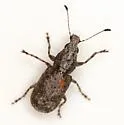
Meconemus infuscatus
Ischnocerus infuscatus
collected by beating, under bark, at light, in Steiner and ethanol/turpentine traps ( 5 )
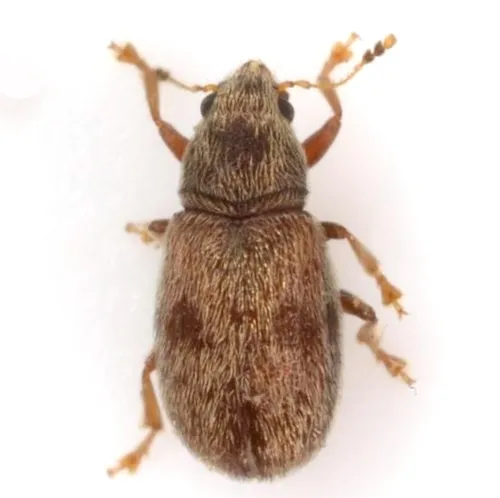
Tropical Coppery Fungus Weevil
Neoxenus versicolor
Identification: Cuticle and pubescence with unusually variable colors and patterns; cuticle from pale honey-brown (? teneral) to reddish brown to dark brown, sometimes with the anterior 1/4 and/or the declivity redder or paler, appendages paler than
Ormiscus albofasciatus
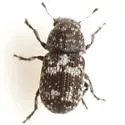
Ormiscus albofasciatus
Identification: The nearly black pubescence of the upper surface and the well defined, narrow, arcuate, white post-basal fascia render the recognition of this species easy. The form is also slightly shorter and a little more robust than pusillus , an
Ormiscus fasciatus
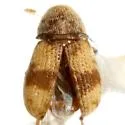
Ormiscus fasciatus
Identification: black densely clothed with cinereous pubescence. Elytra with a broad black transverse band. Antennae, tibiae and tarsi testaceous. One spmn coll'ed during two yrs of arboreal surveys in c. TX Type Locality: Columbus, Austin Co., Texas
Ormiscus irroratus
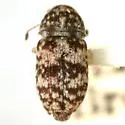
Ormiscus irroratus
Identification: The amount of variation in this species' pattern is unclear at the present time. The specimens under this name in the USNM general collection could include multiple species. Only those few that closely match the syntypes of Schaeffer
Ormiscus mitchelli
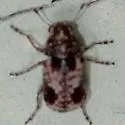
Ormiscus mitchelli
Identification: marked principally by two dark basal spots on the elytra and two dark lateral spots at the middle of the elytra; antennae with first joint light Det. Boris Büche, 2025 Described from 41 specimens bred from stems of cocklebur ( Xanthiu
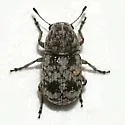
Ormiscus quercus
Ormiscus quercus
Type Locality: Huachuca Mountains, Arizona (Schaeffer 1906)
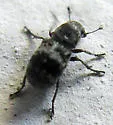
Ormiscus saltator
Ormiscus saltator
Identification: quite distinctive: antennal club with 3 articles fused into one; color pattern also distinctive (Barry Valentine, pers. comm. to VB)
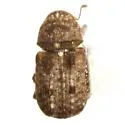
Ormiscus sextuberculatus
Ormiscus sextuberculatus
Type Locality: Enterprise, Volusia Co., FL, coll'ed by Ottomar Dietz ( 3 )
Ormiscus solidus 0
Ormiscus solidus
Identification: prothoracic carina (fig. 21) is sinuate or roundingly emarginate. The tarsal claws are cleft or toothed. Figure 22 illustrates the posterior tarsal claw. based on a spmn coll'ed at Brownsville, Tex., by C. R. Jones and F. C. Pratt, Ma
Ormiscus submetallicus 0
Ormiscus submetallicus
Identification: Blackish brown with a slight metallic tinge on elytra, clothed with brown, fulvous and white pubescence, the white forming a not clearly defined arcuate fascia near base and irregular fascire at apex. Head densely punctured, densely c
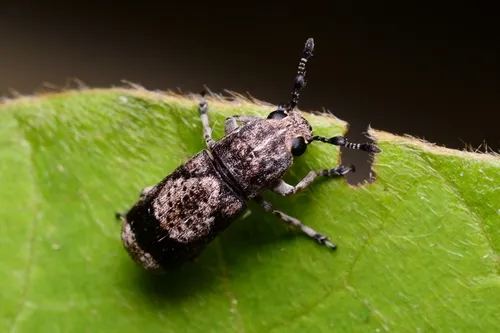
Japanese Fungus Weevil
Ozotomerus japonicus
i found one of these familiar-looking anthribids (i've seen a lot in the Far East) in Essex Co., NJ before i joined BG and became familiar with the nearctic fauna. i didn't think much of it: after all, many genera exhibit the E Asia + e NA distributi
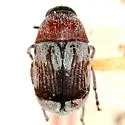
Phaenithon platanum
Phaenithon platanum
Identification: TYPE: USNM, Smithsonian Coll. A very distinctive member of the fly-mimicking complex described by Hespenheide (1973).
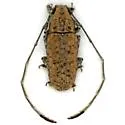
Phoenicobiella schwarzii
Phoenicobiella schwarzii
Identification: The male antennae can be quite long, extending to nearly twice the body length. The antennae of the female are much shorter extending from 1/2 to 3/4 the body length. Texas considers this sp. a SGCN Type Locality: Brownsville, Cameron
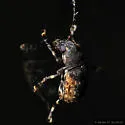
Piesocorynus lateralis
Piesocorynus lateralis
Identification: yellow pubescence of the elytra is concentrated on the sides Det. V. Belov, 2018 Type locality: Panama, Volcan de Chiriqui (Champion); paratypes from Guatemala and Mexico.
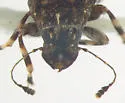
Piesocorynus mixtus
Piesocorynus mixtus
Identification: Antennae very slender; prothorax without impressions or elevations; pubescence mottled yellow brown and black Det. E. G. Riley, 2011
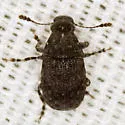
Piesocorynus moestus
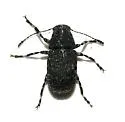
Piesocorynus moestus
Identification: Antennae very slender; prothorax without impressions or elevations; pubescence nearly black Det. Tim Moyer, 2023
Piesocorynus tesselatus
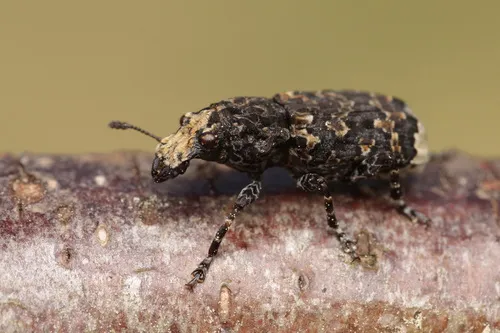
Piesocorynus tesselatus
Identification: Frons and rostrum with derm equally dark; male mid legs not modified; male sternite 2 without a tubercle Type Locality: Huachuca Mts., Arizona, collected by Mr. Gustav Beyer
Scarce Fungus Weevil
Platyrhinus resinosus
This is truly an odd looking creature and could hardly be confused with anything else, except perhaps the Platystomos species. The mix of dark and light areas on the elytra may vary, but the general appearance does not - the 'face' is always lighter
Platystomos albinus
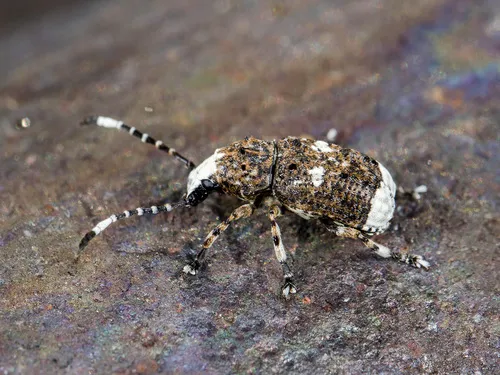
Platystomos albinus
Length 7 to 10 mm. There is strong sexual dimorphism with the male having antennae as long as the body, but these are shorter in the female. There may also be variation in colour from grey to fawn and brown. The white markings vary in size and may be
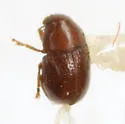
Pseudochoragus nitens
Pseudochoragus nitens
Valentine (1991) examined 63 spmns, 3 from Mass. and 60 coll'ed by Karl Stephan from Latimer Co., Okla.
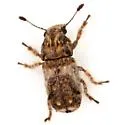
Toxonotus bipunctatus
Toxonotus bipunctatus
Identification: Distinguished from any of our species by the black spots near basal angles of thorax, the divergent thoracic lines and the basal fascia extending along the sides to the middle of elytra. (Schaeffer 1904) Type Locality: Esperanza Ranch
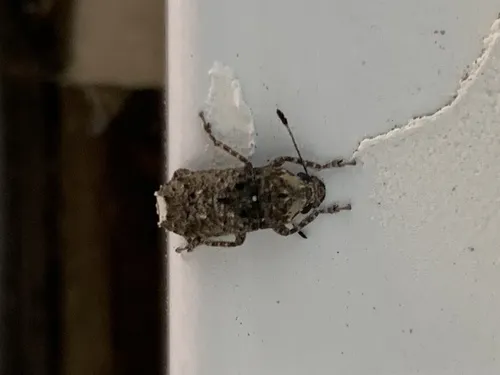
Toxonotus fascicularis
Toxonotus fascicularis
Toxonotus fascicularis is a species of fungus weevil in the beetle family Anthribidae. It is found in the Caribbean Sea and North America.
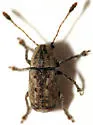
Toxonotus lividus
Toxonotus lividus
Identification: Pronotum, elytra, and tibiae without erect tufts or fringes Det. v belov, 2021 Type Locality: One specimen Lake Harney, Florida, coll'ed by Messrs Hubbard and Schwarz
Toxonotus penicellatus
Toxonotus penicellatus
Type Locality: Espranza Ranch, Brownsville, Texas Relatively rare (Barry Valentine, pers. comm. =v=) Texas considers this a "Species of Greatest Conservation Need" (SGCN) ( 3 )
Toxonotus vagus
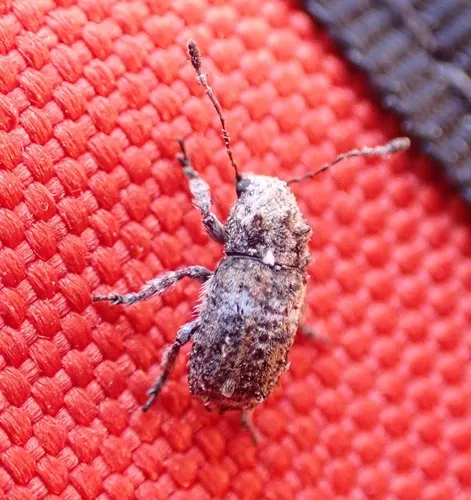
Toxonotus vagus
First US record: Arizona, Santa Cruz Co., Santa Rita Mountains, 24-VI-39, D. J. & J. N. Knull Collrs., [OSUC]
Trigonorhinus griseus
Trigonorhinus griseus
Identification: Each elytron without a prominent discal brown spot; sometimes a dark sutural stripe present
Trigonorhinus limbatus
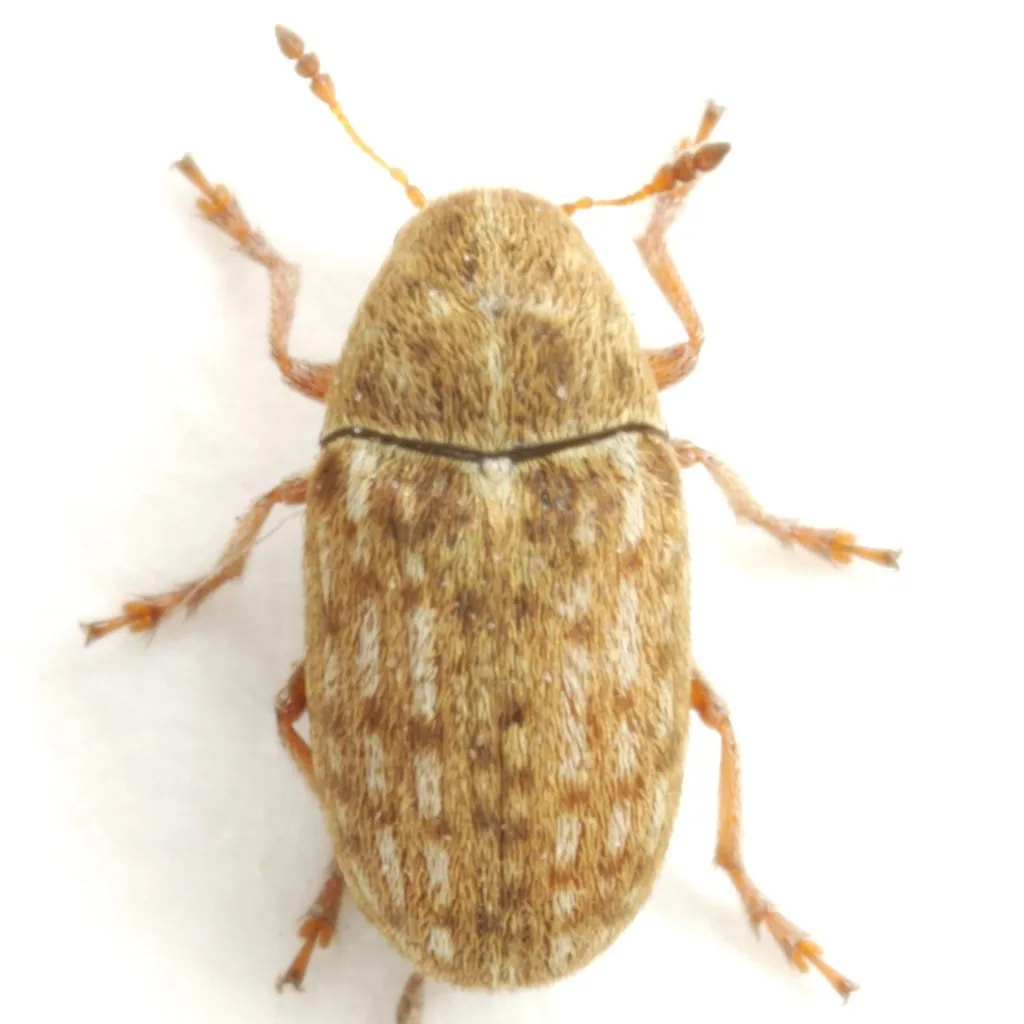
Trigonorhinus limbatus
This sp. is being slowly reduced to isolated populations by competition with a related phenotype - T. l. vestitus (Say). I believe vestitus emerged from a hybrid stew ( limbatus x griseus (LeC.) originating in Texas, spreading and out-competing the t
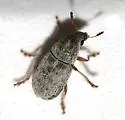
Trigonorhinus riddelliae
Trigonorhinus riddelliae
Barry Valentine, pers. comm. to =v=, 2009: "The Arizona Trigonorhinus was named riddelliae by Schaeffer, 1906. Based on the female ovipositor, I have considered it a subspecies of T. griseus (Leconte) described from Colorado, but have no proof that t
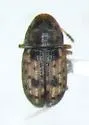
Trigonorhinus sticticus
Trigonorhinus sticticus
Identification: Each elytron with a prominent discal brown spot Det. V. Belov, 2020
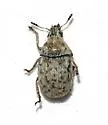
Trigonorhinus tomentosus
Trigonorhinus tomentosus
Identification: Species shows a great deal of variation (leading to multiple synonyms) "due to geographic and seasonal variation involving clines from north to south, east to west, and summer to fall."
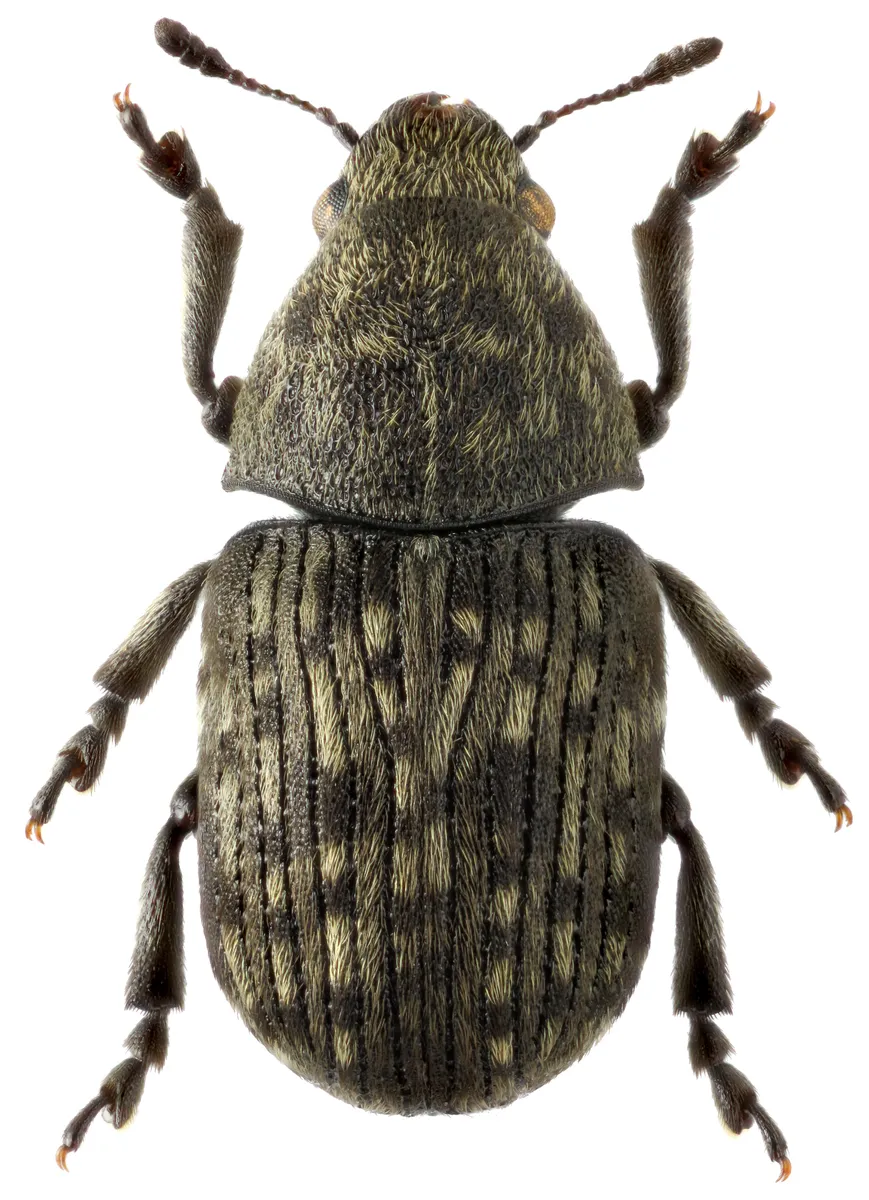
Anthribus nebulosus
Anthribus nebulosus
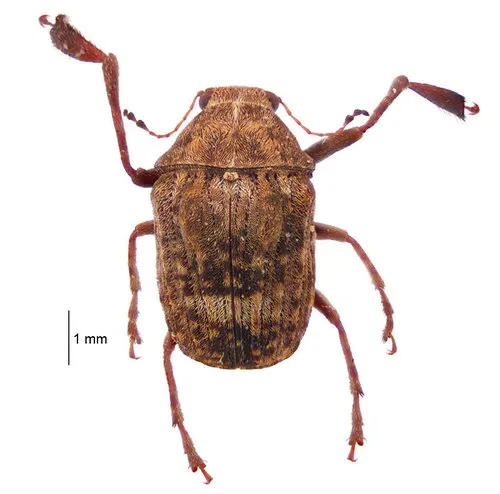
Araecerus palmaris
Araecerus palmaris
Brachycorynus rectus
Brachycorynus rectus
Choragus harrisii
Choragus harrisii
Choragus sayi
Choragus sayi
Choragus zimmermanni
Choragus zimmermanni
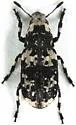
Euparius lugubris
Euparius lugubris
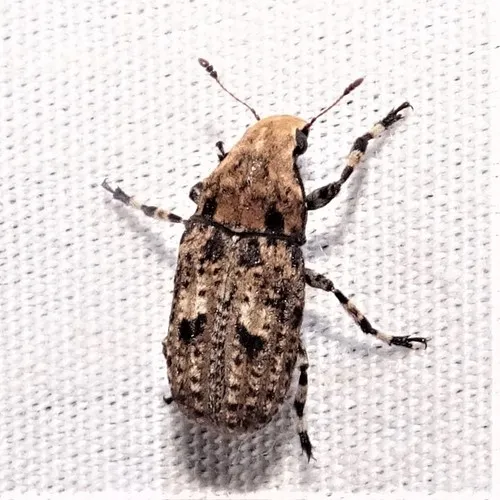
Fungus Weevil
Euparius marmoreus
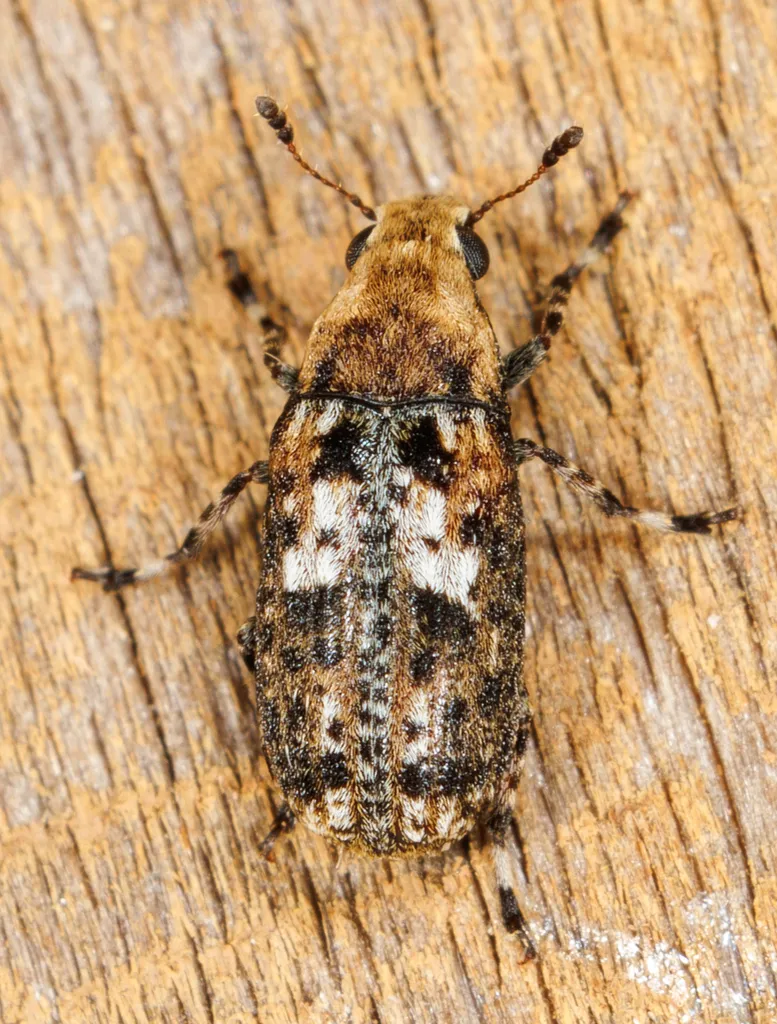
Euparius paganus
Euparius paganus
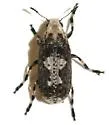
Euparius pictus
Euparius pictus
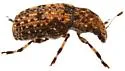
Euparius subtesselatus
Euparius subtesselatus
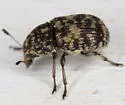
Eusphyrus walshi
Eusphyrus walshi
Euxenus punctatus
Euxenus punctatus
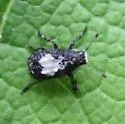
Gonotropis dorsalis
Gonotropis dorsalis
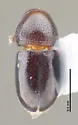
Habroxenus politus
Habroxenus politus
Ormiscus pusillus 0
Ormiscus pusillus
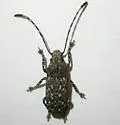
Phoenicobiella chamaeropis
Phoenicobiella chamaeropis
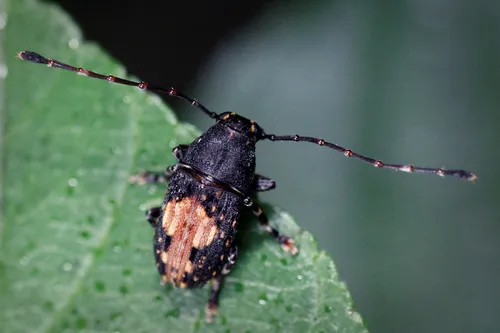
Piesocorynus plagifer
Piesocorynus plagifer
Sicanthus rhizophorae
Sicanthus rhizophorae
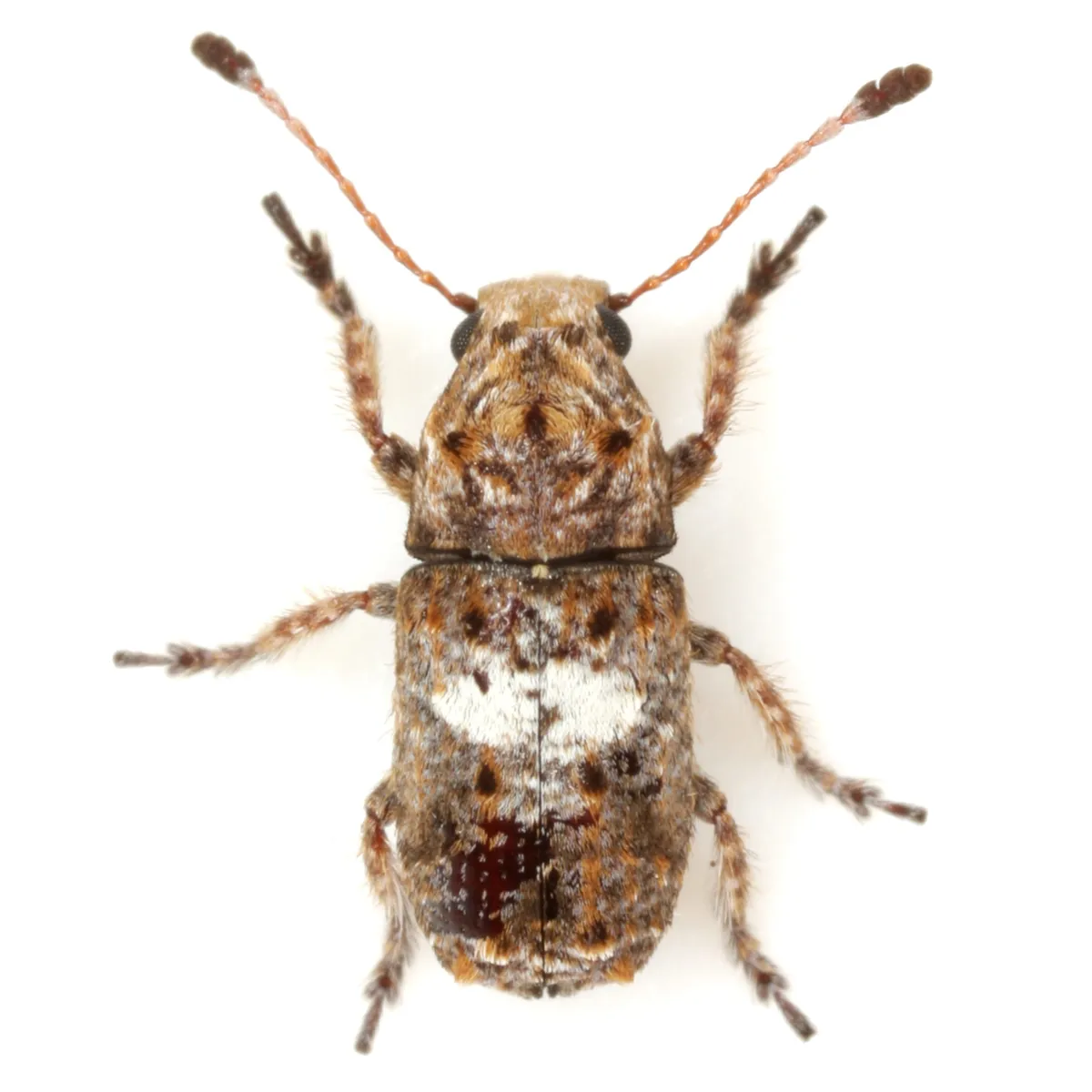
Toxonotus cornutus
Toxonotus cornutus
Trachitropis arizonicus
Trachitropis arizonicus
Trigonorhinus alternatus
Trigonorhinus alternatus
Trigonorhinus rotundatus
Trigonorhinus rotundatus