
Family Rove Beetles (Staphylinidae)
Staphylinidae is a family in the order Coleoptera. Browse 1,235 named species recorded in this family, or open an individual profile for its available identification and natural-history information.
Guides
Species in Staphylinidae (1,235)
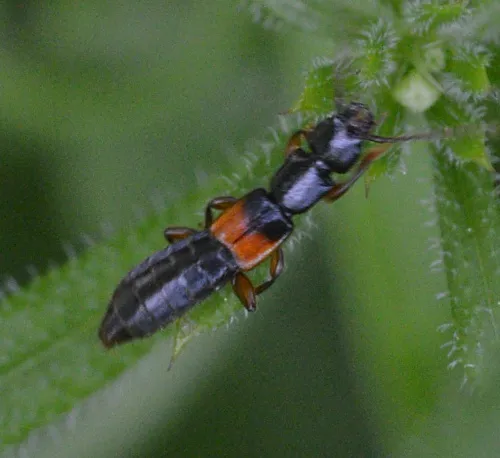
Achenium depressum
Achenium depressum
Length 7.5 to 10 mm. This rove beetle has quite a distinctive combination of bi-coloured elytra and a distinctively shaped thorax with very sharp anterior angles. Good quality photograph required to support records please. Often found in damp areas o
Achenomorphus corticinus
Achenomorphus corticinus
Identification: Det. E. G. Riley, 2010 Comes to UV lights
Acidota crenata
Acidota crenata
Identification: Generally larger than the other species in the genus
Acylophorus flavicollis
Acylophorus flavicollis
Identification: "Very easy to recognize among the North American species of the genus by the coloration of the pronotum."
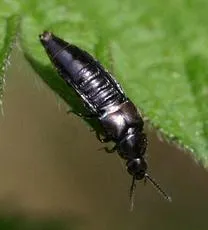
Aleochara bipustulata
Aleochara bipustulata
Length 2 to 4.5 mm. A blackish coloured Rove Beetle with two orangey yellow spots - one on each wing case. Various habitats, but particularly associated with Cabbage plants it has also been found in moss and flood refuse. Most records are between Jan
Aleochara castaneimarmotae
Aleochara castaneimarmotae
Identification: Very similar to A. castaneipennis, but differ from this species by coarser pronotal ponctuation, and the sinuate apical half of the tubus
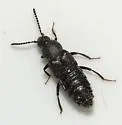
Aleochara depressa
Aleochara depressa
Identification: Pronotum opaque due to dense microsculpture; usually all black, legs and elytra may be partly paler. Antennae slender for genus.
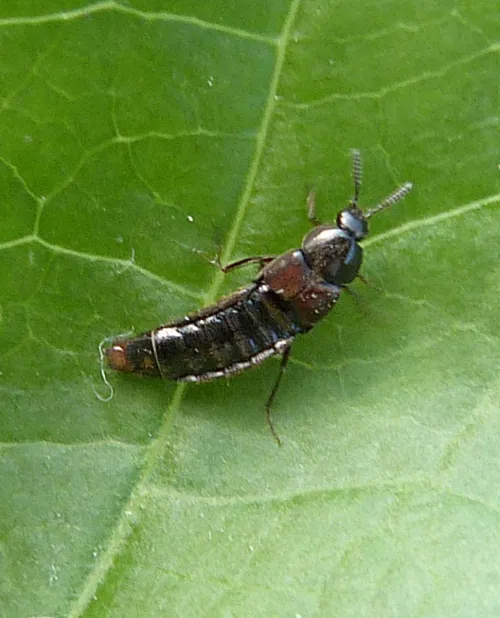
Aleochara lanuginosa
Aleochara lanuginosa
Length 3.5 to 5 mm. A dark blackish rove beetle, the elytra may show a varying amount of red. Found in various habitats including in dung, on carcasses and in grass tussocks. Aleochara larvae feed in the puparia of suitable species of flies, killing
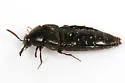
Aleochara lata
Aleochara lata
Identification: very robust, black species with strongly transverse antennomeres 5‒10
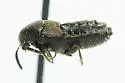
Aleochara lustrica
Aleochara lustrica
Identification: Elytra with orange band from humerus to sutural angle, sutural triangle and region of posteriour angles dark. This colour pattern, within subgenus, shared by A. centralis only [southern AZ], which has male tergum VIII (= visible VI) s
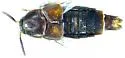
Aleochara puberula
Aleochara puberula
Identification: Puncturation dense, associated setae depressed, giving the beetle a silky sheen. Elytra usually with a pale band from hind margin to about base, curving to shoulders sometimes; terminal segment of antennae frequently lighter. Basal fu
Aleochara taeniata 0
Aleochara taeniata
Identification: Elytra with orange band from humerus to sutural angle, sutural triangle and region of posteriour angles dark. This colour pattern shared by A. puberula only, which has furrows on tergites 1 - 3 shallower, their lateral rims not reachi
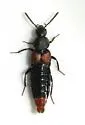
Aleochara valida
Aleochara valida
Identification: the largest of nearctic species, pronotum opaque; tip of abdomen always, elytra usually reddish. Head not wider than long, antennae with segments 6‒10 slightly transverse. A. opacella Sharp [s.AZ‒CA] is similar, but head transverse, a
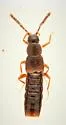
Amarochara forticornis
Amarochara forticornis
Identification: Easily recognized among Canadian congeners by the distal antennomeres <2× as wide as long. Unique within the genus by having a distinct basal impression on abdominal tergite VI.
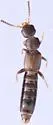
Anomognathus cuspidatus
Anomognathus cuspidatus
Identification: penultimate tergite with long median and a pair of shorter lateral spines
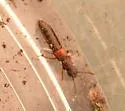
Anotylus insecatus
Anotylus insecatus
Identification: primarily subterranean, in dung and other decaying organic matter, incl. plant bulbs/roots infested with dipteran larvae; also at sap flows introduced ca. 1950s
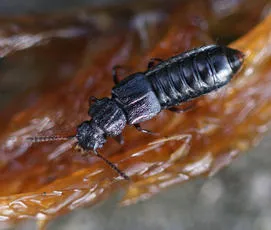
Anotylus rugosus
Anotylus rugosus
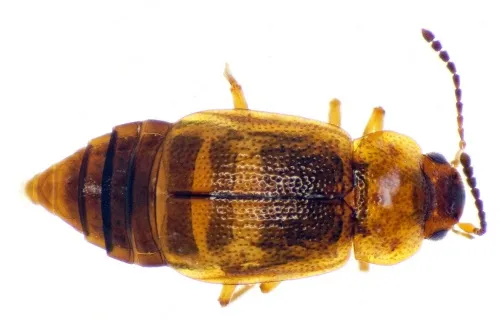
A small black rove beetle with studded holes on both the short elytra and thorax area. Able to adapt to a wide range of environmental conditions and might be found in all kinds of decaying matter, waterside mud and leaf litter. All year round but mos
Anthobium atrocephalum
Anthobium atrocephalum
A small (3 to 3.5 mm) rove beetle with a broader shape than the typical Staphylinidae. Identification is difficult – see ‘Recording Advice’. Unless identified by a recognised expert, a photo is required and the specimen should be examined with a micr
Apocellus analis
Apocellus analis
Identification: last key couplet: Sides of head parallel behind; base broadly truncate; prothorax trapezoidal [emphasis added] Rufo-testaceous, shining, smooth, last two dorsal segments of abdomen blackish [e. a.]. Head large, sides parallel behind t
Apocellus niger 0
Apocellus niger
Identification: Moderately robust, convex; upper surface intense black throughout, except the elytral suture which is dark piceo-testaceons; antennas piceo-testaceous toward base, black toward tip; legs pale luteo-testaccous, femora shaded piceous in
Apocellus sphaericollis
Apocellus sphaericollis
Identification: The only described species in eastern North America [except one FL endemic], though others probably remain undescribed. Genus needs revision. Varies greatly in color, and somewhat in the form of the prothorax, which is occasionally ne
Apocellus stilicoides 0
Apocellus stilicoides
Identification: Head and prothorax opake; head large, truncate behind, prothorax trapezoidal
Arianops kingi
Arianops kingi
Identification: Distinguished in Barr's key in part by the shape of the abdomen: "with sides subparallel along first tergite, then rather abruptly convergent to apex."
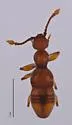
Arianops norithe
Arianops norithe
Described from a single male specimen. This species is very similar to henroti . As Barr states, the two may be conspecific .
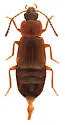
Arpedium angulare
Arpedium angulare
Identification: "Based on the general shape and body length, A. angulare is similar to the Nearctic A. cribratum (...) It is more related to A. cribratum, from which can be distinguished by the shape of slightly broadened pronotum, and significantly
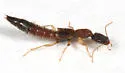
Astenus americanus
Astenus americanus
Astenus americanus (Astenus americanus) is a species in the family Staphylinidae, commonly known as rove beetles, belonging to the order Coleoptera (Beetles). It is classified within the subfamily Paederinae, tribe Lathrobiini, suborder Polyphaga, su
Astenus binotatus 0
Astenus binotatus
Identification: Body very slender and parallel, pale ochreo-testaceous in color, the head, a spot on each elytron somewhat variable in size but situated at the external margin behind the middle, and last two ventrals, black (emphasis added), in the l
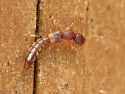
Astenus cinctus
Astenus cinctus
Identification: Prothorax unusually small, much narrower than the head. Body moderately slender, black or piceous-black throughout, the elytra pale in apical two-fifths at the sides and half at the suture, the legs and antennae pale flavotestaceous;
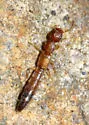
Astenus discopunctatus
Astenus discopunctatus
Identification: "the only NE Astenus with a pale head."- Adam Brunke (BG comm., 2008) no specimen ever has the head in the least dusky SPMN - Spencer Entomological Museum
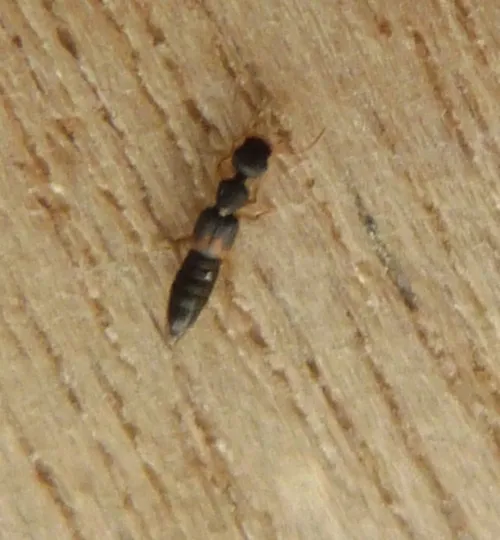
Astenus lyonessius
Astenus lyonessius
A species of extensive habitats on warm, dry soils, exposed to the sun. All year round, but most likely to be encountered between April and September. Most British records come from south of a line between the Humber and the Severn. No additional ima
Astenus prolixus 0
Astenus prolixus
Identification: feebly shining, black throughout, and legs and antennae pale, the elytra pale in apical fourth, the pale area increasing in length inwardly, occupying almost apical half on the suture (emphasis added) and extending feebly along the la
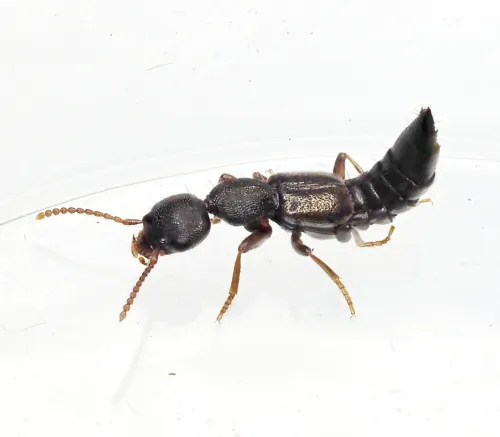
Astenus pulchellus
Astenus pulchellus
3.5 - 4.5mm. Generally black (but can be paler brown) and usually with yellow extending variably upwards from the end of the elytra either side of the suture. The head and pronotum are heavily punctured such that the spaces between them appear as ret
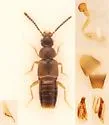
Atheta capsularis
Atheta capsularis
Can be confused with Atheta terranovae , but is larger, have the elytra yellowish, and by the male tergite and the shape of the median lobe
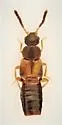
Atheta frosti
Atheta frosti
Prior to 2003, North American specimens of Atheta frosti were identified as A. nigritula (Grav.)
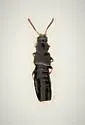
Atheta giguereae
Atheta giguereae
Initially described in the subgenus Dimetrota but was retracted in Klimaszewski et al. . Might probably belong to another genus, but was left in Atheta for now.
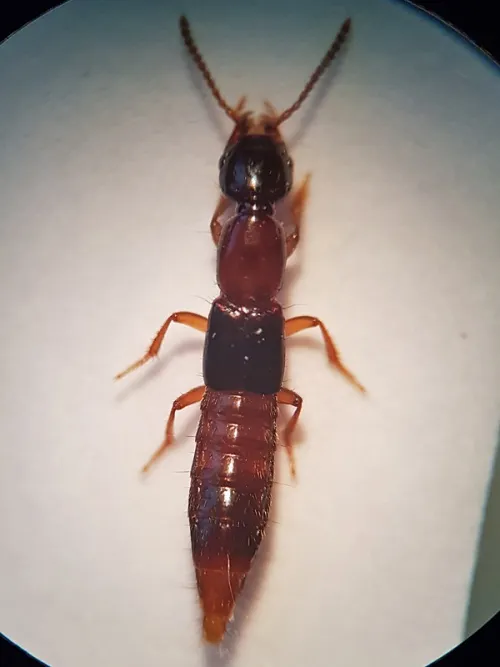
Atrecus affinis
Atrecus affinis
Length 7 mm. This is a distinctive Rove Beetle with a rather elongated body. The abdomen is a reddish brown, with short, dark blackish elytra. Usually found under bark, but sometimes in decaying wood. Sometimes congregate into small groups in spring.
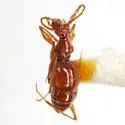
Coffin Cave Mold Beetle
Batrisodes texanus
Identification: Batrisodes texanus can only be distinguished from other pselaphid beetles by a qualified systematist upon microscopic study. Type Specimen: Male holotype from Inner Space Cavern , Williamson County, Texas, May 23, 1965. Collected by W
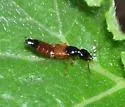
Belonuchus rufipennis
Belonuchus rufipennis
Identification: Black, with elytra and first four abdominal tergites reddish-yellow or reddish-brown. Labial and maxillary palpomeres long and narrow. Pronotum longer than wide, with rows of 4–5 punctures on top, 5-6 on sides. Largest lateral pronota
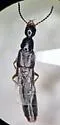
Bisnius hesperidum
Bisnius hesperidum
Identification: Member of the Albionicus group, in which there are 2 species (this and B. albionicus (Mannerheim)) in North America . The 2 species are most reliably distinguished via study of the male genitalia .
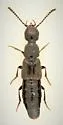
Bisnius siegwaldii
Bisnius siegwaldii
Identification: Easily recognizable amongst the genus: Head punctures arranged in "V", irregular dorsal row of punctures of pronotum, greenish metallic elytra, and the unique shape of the genitalia
Bledius actitus
Bledius actitus
Identification: apex of elytra yellow Type Locality: Copano Bay, 9 miles north of Rockport, Aransas Co., Texas, from a sand flat near the beach. Paratypes: 40 females and 33 males, with same collection data as holotype.
Bledius albonotatus
Bledius albonotatus
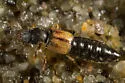
Identification: variable, but usually characteristic colour pattern on elytra (pale yellow / black); abdomen with pubescence inclined posteromedially in middle, posterolaterally in lateral portions. Elytra, left, variation of color pattern. - FIGS. 3
Bledius cognatus 0
Bledius cognatus
Identification: Color reddish brown. Head dark reddish brown, dorsum often paler. Pronotum orangish brown to pale orange, darker than elytra. Elytra, legs, and antennae pale orange to yellowish brown, elytral epipleuron and disk concolorous. Abdomen
Bledius dissimilis
Bledius dissimilis
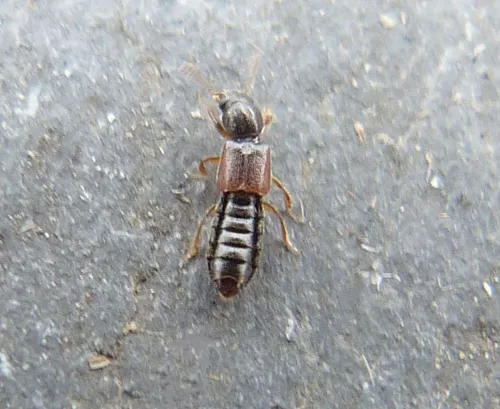
A small (3.5 to 4 mm) rove beetle. The short elytra and legs are orange. Unless identified by a recognised expert, a photo is required and the specimen should be examined with a microscope. In the comments box, state the key or ID method used and des
Bledius emarginatus
Bledius emarginatus
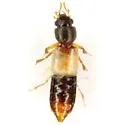
Identification: Color black, reddish brown, and yellowish brown. Head black to dark reddish brown. Pronotum and abdomen dark reddish brown to pale reddish brown. Elytra yellowish brown with broad, diffuse, pale reddish brown sutural stripe; epipleuro
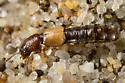
Bledius fenyesi
Bledius fenyesi
Identification: resembles B. monstratus, but elytra longer, 1.17 - 1.36 times as long as pronotum [monstratus: 0.86 - 1.14]; frequently darker in colour
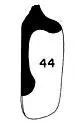
Bledius forcipatus
Bledius forcipatus
Identification: VARIATION: The subapical, brown sutural spot of the elytra is occasionally enlarged posterolaterally into a triangular, obliquely transverse stripe. Increased size of the elytral spot is more prevalent in the populations from Yuma, Ar
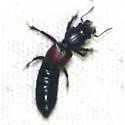
Bledius fortis
Bledius fortis
Identification: the only one in the mandibularis group that is black with bright brownish red elytra. Type Locality: Galveston, TX
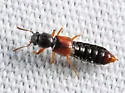
Bledius gallicus
Bledius gallicus
Identification: Males have an emargination of the 7th sternite which is filled by a membranous lobe. This emargination is not flanked by spinous processes. Well-developed longitudinal groove on pronotum. see also earliest record in our area: before 1
Bledius litoreus
Bledius litoreus
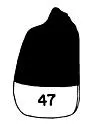
Identification: Elytron with basal two-thirds bright reddish brown; apical third pale brownish yellow (fig. 47). - left elytron Type Locality: Pass-a-Grille, Pinellas County, Florida, in beach sand, collected by J. C. Bradley on February 26, 1937 Par
Bledius mandibularis
Bledius mandibularis
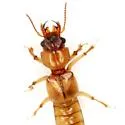
Identification: Elytra yellow to reddish yellow; remainder of body brownish black to brown to yellow Det. E. G. Riley, 2009
Bledius pallipennis
Bledius pallipennis
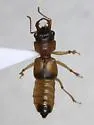
Identification: DIAGNOSIS: easily separated from nearly all individuals of all species of the mandibularis group by the color pattern of the elytra (fig. 234); the apex and suture are black to reddish black, the remainder yellowish brown to pale redd
Bledius playanus
Bledius playanus
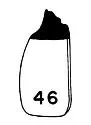
Identification: elytra with less than basal half brown (fig. 46) Type Locality: Oklahoma, Alfalfa County, 6 miles east, 3 miles south of Cherokee, Great Salt Plains National Wildlife Refuge, on the salt flats, collected by Lee H. Herman, Jr. on June
Bledius rubiginosus 0
Bledius rubiginosus
Identification: the only species of the semiferrugineus group in the US that has the head notably darker than the pronotum. The head is reddish black to reddish brown and the pronotum usually reddish orange or occasionally reddish brown. In instances
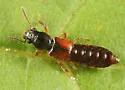
Bledius semiferrugineus
Bledius semiferrugineus
Identification: Chestnut-brown, shining, elytia paler, legs yellow-brown. Head coarsely punctured, with a smooth space on the vertex, in the middle of which is a large deep puncture. Prothorax nearly globose, truncate in front, coarsely rather densel
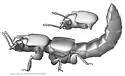
Bledius susae
Bledius susae
Identification: Color reddish brown and yellowish brown. Head and abdomen dark reddish brown. Prothorax reddish brown. Elytra and legs yellowish brown. Type Locality: Texas: Aransas County: 4 miles S Rockport, route 35, April 27, 1981, sand flat near
Bledius suturalis
Bledius suturalis
Identification: There are no unique features by which this species may be separated from all other bidentate members of the annularis group so a combination of characters must be used. The species is small, has bicolored elytra (figs. 175-177) with a
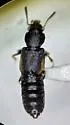
Bledius tarandus
Bledius tarandus
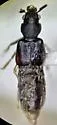
Identification: Pronotum with front angles rounded, constricted basally, with rectangular hind angles. Elytra bicolored, with a yellow to reddish spot that can vary in size (absent in some individuals). Labrum deeply emarginate; mandibles bidentate.
Bledius zophus
Bledius zophus
Identification: Pronotum strongly constricted in the basal third, with rectangular hind angles. Elytral pubescence medially directed towards midlateral side. Overall color dark reddish brown to black to metallic blue. Labrum deeply emarginate, bident
Girdled Lordithon
Bobitobus cinctus
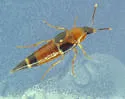
Identification: body shaped like an elongate football (from the midpoint, tapering continuously to a point, anteriorly and posteriorly); elytra short, about 1/4 body length, widest at posterior margin - which is widest part of body; pronotum narrower
Lordithon quaesitor
Bobitobus quaesitor
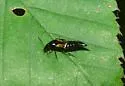
Identification: It has a relatively long thin head, the body is shining black with the golden blotches on the elytra - D.S. Chandler one of the potential old-growth indicators in the Northeast; it is a species proposed for threatened/endangered lists
Brachygluta abdominalis
Brachygluta abdominalis
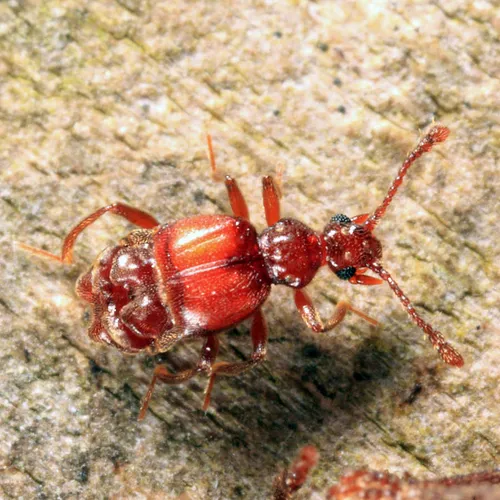
Identification: Uniformly reddish brown, with head and pronotum each with three pits; pronotal pits about equal in size, pubescent. Head squarish, wide as prothorax, with antennae half as long as body. Pronotum not very convex, widest at middle, with
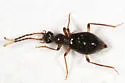
Brathinus varicornis
Brathinus varicornis
Identification: The white tipped antennae separate it from B. nitidus (all brown antennae) - D.S. Chandler
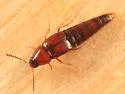
Bryoporus rufescens
Bryoporus rufescens
Identification: well-organized punctures of the pronotum. Color is highly variable between this species pair (i.e. the species names are misleading). … Adam Brunke, 11 April, 2010 - 12:42pm
Cafius canescens
Cafius canescens
Identification: useful in photo discrimination of C. canescens/seminitens is the nature of acrocostal sutures on abdomen (the fine line bordering the anteriour margin of terga): straight in C. canescens , wavy in C. seminitens ; well seen: (different
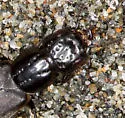
Cafius seminitens
Cafius seminitens
Identification: useful in photo discrimination of C. canescens/seminitens is the nature of acrocostal sutures on abdomen (the fine line bordering the anteriour margin of terga): straight in C. canescens , wavy in C. seminitens ; well seen: (different
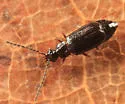
Carcinocephalus flavidus
Carcinocephalus flavidus
"Only males of the long-winged form are known so far - all females and some males are short-winged, with short elytra, antennae, tarsi, and smaller eyes! The species does seem to be a typically cool-active one. (See Thayer, M. K. 1992. Discovery of s
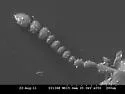
Carpelimus pertenuis
Carpelimus pertenuis
Type Locality: "Tex.: Austin; on the Colorado River above Columbus, Travis, Texas, United States" Note, the type series of this sp. was collected by Schwarz who collected in and around Austin County, Texas. Schwarz is not known to have ever visited t
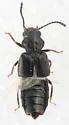
Carpelimus quadripunctatus
Carpelimus quadripunctatus
Identification: pronotum hexagonal, with 4 impressions around middle
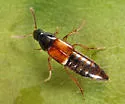
Carphacis effrenatus
Carphacis effrenatus
Identification: Females can't be confidently separated from the unicolorous nepigonensis unless associated with a male. Males have scale-like modified 8th sternite, such as: The two other NA species have setae-like modified 8th sternite.
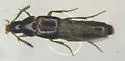
Carphacis nepigonensis
Carphacis nepigonensis
Identification: Unicolorous female can't be confidently separated from effrenatus unless associated with a male
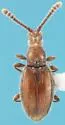
Chevrolatia amoena
Chevrolatia amoena
Identification: Dorsal ridge of longitudinal carina at posterior margin of pronotum blunt or slightly expanded Det. Don Chandler, 2018 Type locality: New York A total of 233 specimens were examined by O'Keefe
Chevrolatia occidentalis 0
Chevrolatia occidentalis
Identification: Median longitudinal carina of pronotum nearly 1/3 length of pronotum Type Locality: Koppe's Bridge, 5 mi. SW College Station, Brazos Co., Texas
Coenonica puncticollis 0
Coenonica puncticollis
Identification: Pronotum with deep dorsal impression adult habitus
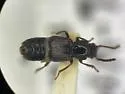
Coprophilus castoris
Coprophilus castoris
Identification: Similar to C. striatulus , which has the posterior portion of the elytra much more rugose. Holotype
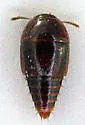
Coproporus laevis
Coproporus laevis
Identification: More or less unicolorous, pronotum smooth (lacking punctures & microsculpture), elytra with deep impression laterally and mostly impunctate except around the lateral impression.
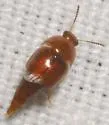
Coproporus rutilus
Coproporus rutilus
Type locality. - Originally cited from "Americae ins. Puerto Rico et St. Thomae, in Columbia." (Blackwelder 1938)
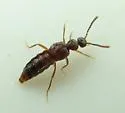
Cordalia obscura
Cordalia obscura
Identification: see earliest record in our area: PA before 1906
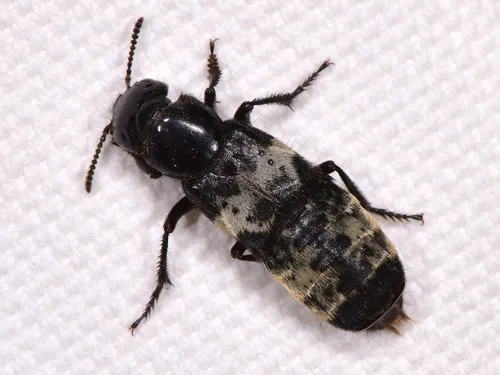
Hairy Rove Beetle
Creophilus maxillosus
15 to 22 mm. The large size and stout build, coupled with the distinctive pattern of creamy grey hairs on an otherwise dark body will identify this beetle. The shiny thorax is free from hairs. It has a habit of curling up when it feels threatened, an
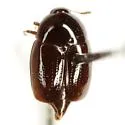
Cyparium ater
Cyparium ater
Type Locality: Brownsville, Cameron Co., Texas (Casey 1900)
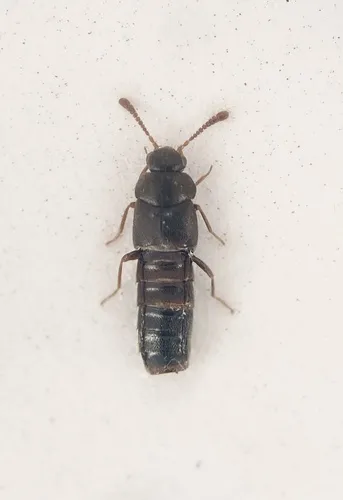
Cyphea wallisi
Cyphea wallisi
Refered as Cyphea curtula (Erichson) in , but was clarified in . The Palaearctic C. curtula does not occur in NA.
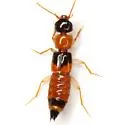
Dacnochilus angularis
Dacnochilus angularis
Identification: colour pattern diagnostic apparent New U.S. Record
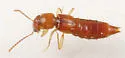
Dacnochilus laetus
Dacnochilus laetus
Identification: No teeth on labrum. Pronotum not as transverse as in other US species. • syntype Western populations lighter in colour; eastern morph with elytra brown in basal half
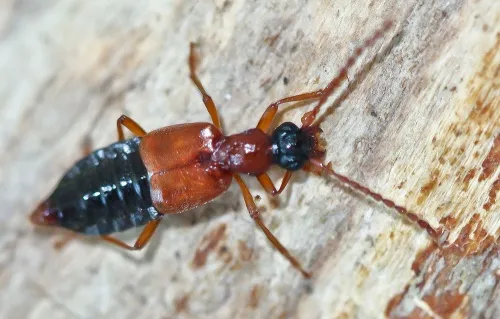
Deleaster dichrous
Deleaster dichrous
Length 7 to 8 mm. This is a distinctive rove beetle. It has a dark head but the antennae and legs are orange. The elytra are also orange, but the abdomen is dark brown-black. Flies well and sometimes visits light traps. Widespread but uncommon in Bri
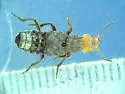
Dinothenarus (Dinothenarus) capitatus
Dinothenarus capitatus
the only representative of the nominate subgenus in our fauna
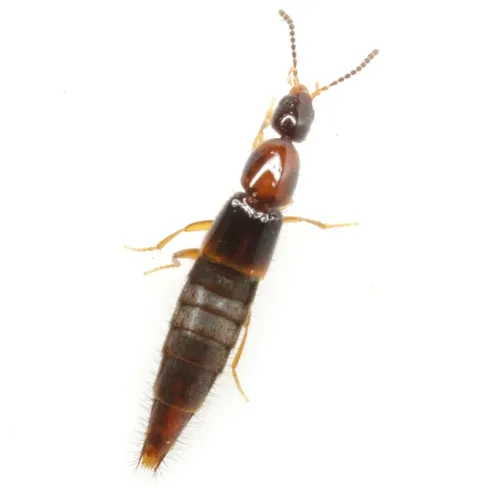
Diochus schaumi
Diochus schaumi
a widespread and variable species --Adam Brunke, 16.xi.2009
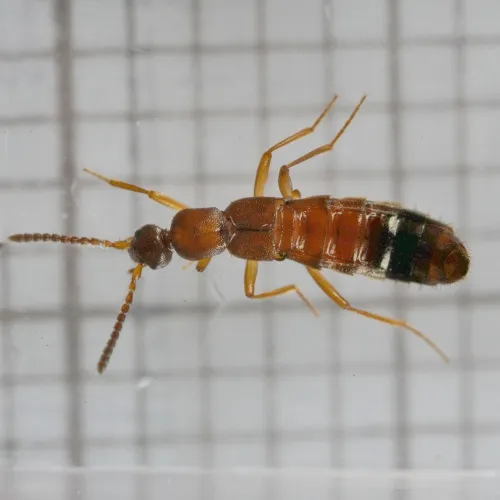
Drusilla canaliculata
Drusilla canaliculata
A small (about 5 mm), slender rove beetle. It is predominantly reddish brown but the rear of the abdomen is darker than the rest of the body. The legs are reddish-yellow and rather long. Abdomen is broadest in the middle. Found in a wide range of hab
Ephelinus guttatus
Ephelinus guttatus
Identification: Differs from notatus by the spot being larger and posterior to the middle of the elytra. Det. Brad Barnd, 2025
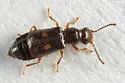
Ephelinus notatus
Ephelinus notatus
Identification: Differs from guttatus by the spot being smaller and not posterior to the middle of the elytra. Det. Margaret Thayer, 2013 Type Locality: Pennsylvania
Ephelinus pallidus 0
Ephelinus pallidus
Identification: The fuscous marks of the elytra consist of a sinuated vitta extending from the humerus to the tip near the suture; the external margin is also dark. Type Locality: Kansas
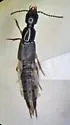
Erichsonius nanus
Erichsonius nanus
Externally similar to the European E. cinerascens (Gravenhorst); best distinguished via male genitalia
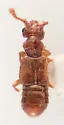
Euplectus acomanus
Euplectus acomanus
Identification: DS Chandler: "Looks about the same as E. duryi . When a male specimen is before me, duryi has a smaller impression on a shorter sternite VI, acomanus with an impression maybe twice as wide and a bit longer ventrite VI." Aedeagus disti
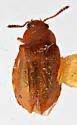
Eusphalerum aurifluum
Eusphalerum aurifluum
Identification: Elytra long, esp. in female; antennae darker to tip. Differs from other such spp. in having a long last tarsomere.
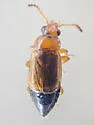
Eusphalerum californicum
Eusphalerum californicum
Identification: Male penultimate ventrite characteristic; very variable in colouration
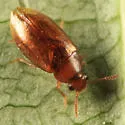
Eusphalerum convexum
Eusphalerum convexum
Identification: the only eastern species with really long elytra, almost covering abdomen in female; pale colouration, abdomen dark in males; a variation with head + pronotum dark brown.
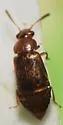
Eusphalerum pothos
Eusphalerum pothos
Identification: pronotum usually has a median groove, at least anteriourly (not sufficient alone)
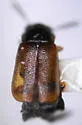
Eusphalerum rugulosum
Eusphalerum rugulosum
Identification: pronotum dull, puncturation +/- obscured by microsculture, but well impressed
Eusphalerum swauki
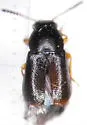
Eusphalerum swauki
Identification: protibia with angular dilation, and pronotum longer than usual in male (E. tibiale-group); of dark colouration. similar only E. diversicolle : CA; tibiale : AZ-NM-CO
Eusphalerum torquatum
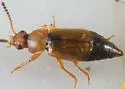
Eusphalerum torquatum
Identification: Head with weak transverse furrow behind, delimiting neck area earliest NA record: NF 1965
Flohria subcoerulea
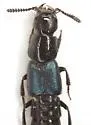
Flohria subcoerulea
Identification: The punctures of the head, thorax, and elytra are furnished with short hairs; those of the abdomen with longer ones; the antennae are one-fourth longer than the head, and considerably thickened externally, the outer joints being fully