
Family Scarab Beetles (Scarabaeidae)
Scarabaeidae is a family in the order Coleoptera. Browse 896 named species recorded in this family, or open an individual profile for its available identification and natural-history information.
Guides
Species in Scarabaeidae (896)
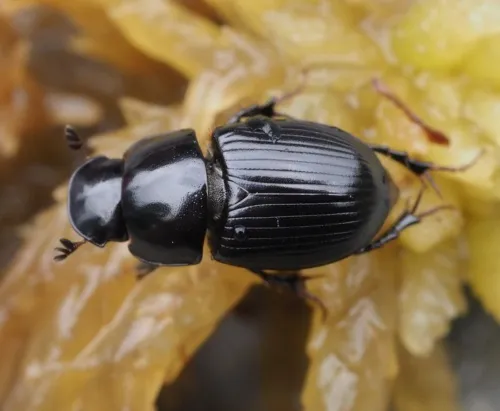
Acrossus depressus
Acrossus depressus
This dung beetle is about 6 mm long and can be very variable in colour, ranging from specimens with rust red elytra and black thorax, to all black forms. The top of the pronotum is evenly covered with fine punctures. Unless identified by a recognised
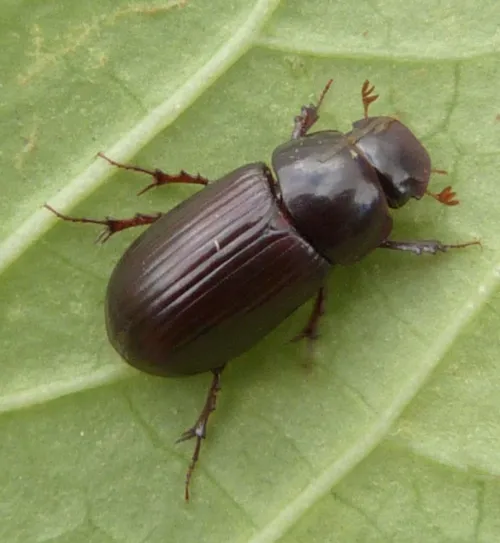
Acrossus rufipes
Acrossus rufipes
9-13mm. Dark brown to black dung beetle. The scutellum is an equilateral triangle. The pronotum has a few large punctures amongst an even covering of fine punctures - a key ID feature when combined with the large size. A good quality photo + a note o
Aegialia nana
Aegialia nana
Rarely collected; probably not rare only very local
Agoliinus sigmoideus
Agoliinus sigmoideus
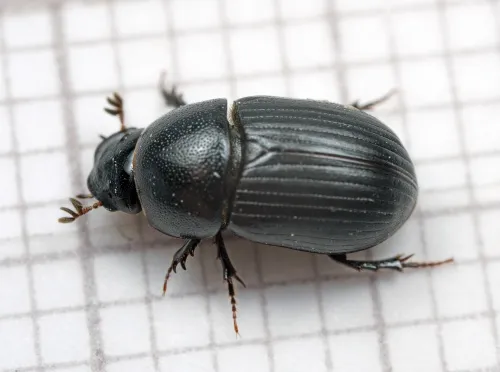
one of the larger species in the genus; local to the Olympics and Cascades; generalized dung feeder ( Richard Zack )
Agrilinus ater
Agrilinus ater
4 to 6 mm. Head black, narrowly expanded laterally in front of eyes, evenly rounded then sinuate to front angles, front margin distinctly curved. Pronotum black, very convex and shining, finely bordered, evenly punctured throughout with large and sma
Aidophus parcus
Aidophus parcus
Identification: lectotype Not found in dung, most records from lights
Alloblackburneus cavidomus
Alloblackburneus cavidomus
Identification: Hind tibiae superior apical spur long as half of first tarsal segment; latter as long as following three combined; elytral striae rather deeply punctured, feebly crenulate; interstriae subapically alutaceous thus weakly shiny. Pale re
Alloblackburneus troglodytes
Alloblackburneus troglodytes
Identification: first metatarsomere really long. --Paul Skelley, 27.vi.2011 threatened sp. , considered by FL to be a "Species of Greatest Conservation Need" (SGCN)
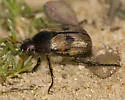
Anomala binotata
Anomalacra binotata
Identification: suture and outer margin brown to black, sometimes very broadly so; almost always with a strong central dark spot on each elytron MAQ, pers. obs.: the thick black sutural line apppears to be more consistant character than the elytral s
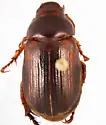
Anomala castaniceps
Anomalacra castaniceps
the only representative of the subg. Bucaphallanus Ramírez-Ponce & Morón 2012 in our fauna
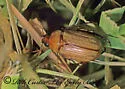
Anomalacra cavifrons
Anomalacra cavifrons
Identification: Det. E. G. Riley, 2009 Type Locality: Two males and a female collected on the Smoky Hill river, KS.
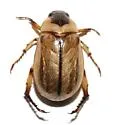
Anomala delicata
Anomalacra delicata
Identification: Pronotum with 5-sided dark brown macula, often slightly incised laterally, rarely enlarged and complete to base Det. A. Evans, 2016 Type Locality: Cochise Co., Arizona
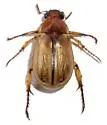
Anomala digressa
Anomalacra digressa
Identification: Elytra with only sutural margin narrowly dark brown; slender to moderately robust, subparallel to somewhat cuneate
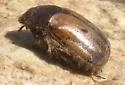
Anomala ellipsis
Anomalacra ellipsis
Identification: elytra immaculate, with fine binotate spots or rarely with a little fine streaking Can be relatively common in spring, feeding on flower buds of Quercus turbinella and other oaks. --W.B. Warner
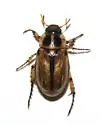
Anomala flavilla
Anomalacra flavilla
The US thing currently goes under this name, but Bates' type is from fairly far south in Mexico, so this may eventually end up under a different name currently in synonymy. ―W.B. Warner, 30.ix.2010
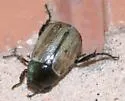
Anomalacra flavipennis
Anomalacra flavipennis
Identification: extremely variable in color and pattern last key couplet: Head and pronotum red-brown, dark brown, greenish- or brownish-black or black; clypeus more than twice as wide as long; labrum appressed to anterior face of clypeus, not porrec
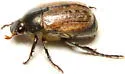
Anomala foraminosa
Anomalacra foraminosa
Identification: Lateral margins of elytra with only short dark brown or blackish band from humeral angle, extending only briefly beyond umbone Det. E. G. Riley, 2010
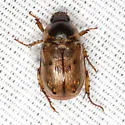
Anomalacra innuba
Anomalacra innuba
Identification: Elytra immaculate to spotted, banded or black (emphasis added) [recommend largely ignoring the elytral spot pattern, except for the apical umbone - MAQ] pronotal macula triangulate with waist-like constriction near anterior margin (e.
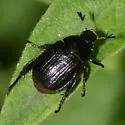
Anomalacra lucicola
Anomalacra lucicola
Identification: Dull yellow to completely black, pronotum with or without black spot or pair of spots. Labrum moderately emarginate, extended only slightly beyond nearly vertical anterior face of clypeus; elytra commonly with intervals 7 and 9 only m
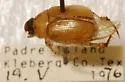
Anomalacra schaefferi
Anomalacra schaefferi
Identification: By the unusually short and broadly dilated hind tibiae this species is easily distinguished from all our species. known from two spmns, the female holotype from 'Texas,' and a specimen collected on Padre Island, Kleberg Co., Tex, V-19
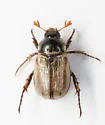
Anomalacra semilivida
Anomalacra semilivida
Identification: Elytra straw to pale brown, rarely 3rd and 5th intervals streaked darker brown; pronotal macula variable in size, but if complete to base, enclosing pale area mediobasally
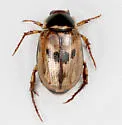
Anomala undulata
Anomalacra undulata
Identification: mostly March-May (emphasis added) Elytral maculation similar to innuba (e. added) [recommend ignoring the elytal patterns of both spp., except for the apical umbone - MAQ] Pronotal macula commonly complete to basal margin, but if not,
Anoplognatho dunnianus
Anoplognatho dunnianus
Identification: Antenna with 9 segments but can appear to have 10 because sometimes the 5th segment is subdivided. It can be difficult to spot so be careful and check other generic characters. Mandibles are large and semicircularly rounded.
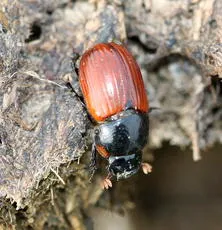
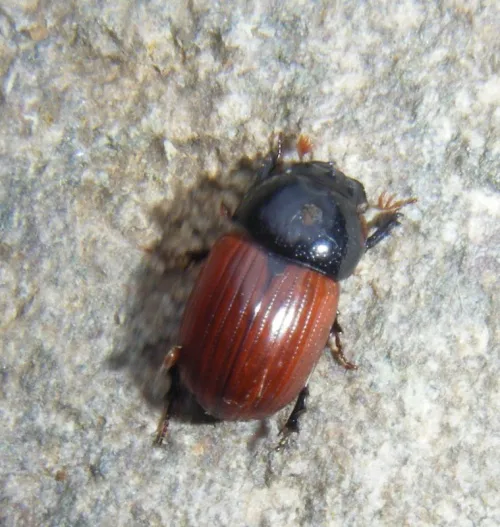
Aphodius fimetarius
Aphodius fimetarius
This rather cylindrical looking Dung Beetle has an orange-red ribbed elytra with a black head and thorax. There are other similar species but A. fimetarius has an even border around the thorax which also has yellow side patches. Females are larger th
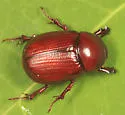
Aphodius pedellus
Aphodius pedellus
One of several similar dung beetles with orangey elytra and black head and pronotum. Found around dung and in pastures used by cattle. Throughout the year peaking April to October. British status is unclear as the species has been split and it is dif
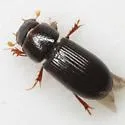
Aphonus castaneus
Aphonus castaneus
Identification: Small (12.2 mm or less), clypeo-frontal carina lacking, clypeus punctate-rugulose, subapical carina of clypeus with middle tooth reduced or lacking, prosternum small/triangular.
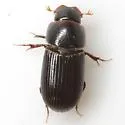
Ataeniopsis figurator
Ataeniopsis figurator
among the most common beetles at lights at Laguna Atascosa NWR, TX ( 3 )
Slender Dung Beetle
Ataenius cognatus
Identification: Holotype • most similar to A. strigatus and A. spretulus , but lacks posterior femoral lines and has significantly shallower punctures on pronotum
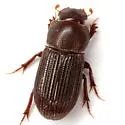
Ataenius confertus
Ataenius confertus
Identification: Det. B. Warner, 2013 Type Locality: San Jose del Cabo, Baja California Sur, Mexico
Ataenius desertus
Ataenius desertus
Identification: Ferruginous or pale castaneous, oblong oval, shining.
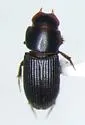
Ataenius exiguus
Ataenius exiguus
Identification: Very small, denticulate clypeus, clypeus smooth medially with distinct band of larger punctures across the top of the head.
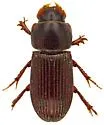
Ataenius hesperius
Ataenius hesperius
Identification: similar to A. texanus but pronotum more uniformly punctuate with fewer fine punctures anteriorly at middle and the suture between sterna IV & V narrovs laterad. Ranges farther west than A. texanus .
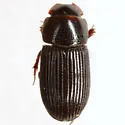
Ataenius inquisitus
Ataenius inquisitus
commonly coll'ed in pitfall traps at Laguna Atascosa NWR, Cameron Co., TX • our only representative of the neotropical A. nugator -group
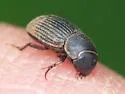
Ataenius miamii
Ataenius miamii
nearly all known spmns taken at lights, single spmn at watermellow ( Citrullus vulgaris )
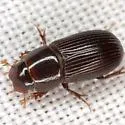
Ataenius platensis
Ataenius platensis
Identification: Ataenius sp. nr. platensis (Blanchard) Det. Paul Skelley, 2009 Type Locality: Argenina
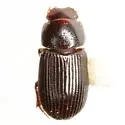
Ataenius setiger
Ataenius setiger
Identification: vs A. hirsutus : clypeal margin rounded , elytral setae much less conspicuous, no coarse punctures on sutural interval near scutellum, discal intervals nearly flat common in pitfall and light traps at Laguna Atascosa NWR, Cameron Co.,
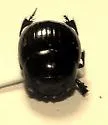
Ateuchus histeroides
Ateuchus histeroides
Identification: note shape of clypeus and flaired tibia Det. E. G. Riley, 2012 base of pronotum descends below the level of the base of the elytra
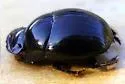
Ateuchus lecontei
Ateuchus lecontei
Identification: base of the pronotum does not descend below the level of the base of the elytra Practically nothing has been published on the habits of this sp. ( 7 )
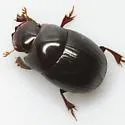
Ateuchus texanus
Ateuchus texanus
Identification: see genus page for details on separating spp. Det. M. A. Quinn, 2013 among the most common pitfall trap coll'ed beetle sp. at Laguna Atascosa NWR, Rio Hondo, Cameron Co., TX ( 3 )
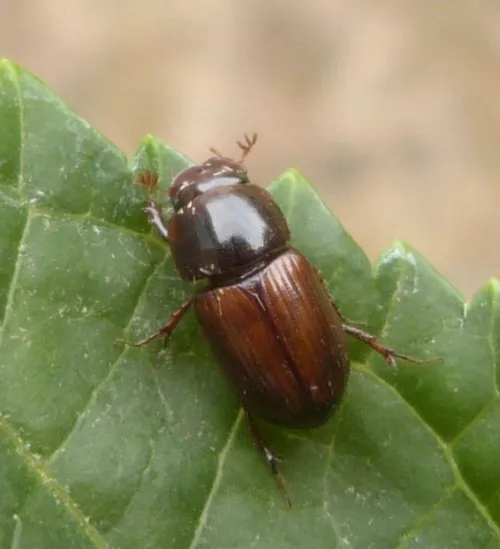
Bodilopsis rufa
Bodilopsis rufa
Length 5 to 7 mm. The pronotum usually has a paler lateral margin and the elytra colour can vary. It can resemble several other species in the tribe Aphodiini , and detailed examination is necessary. A late summer/autumn species late June to early
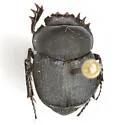
Boreocanthon ebenus
Boreocanthon ebenus
Identification: "distinguished from all other Canthon in NE by the lack of a marginal line on the anteroventral surface of the posterior tibia, a deep indentation betw. the clypeus and gena, and presence of large granules on the elytra." Det. C. S. W
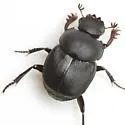
Boreocanthon lecontei
Boreocanthon lecontei
Identification: pronotal sculpturing unique, consists of double granulation. The larger granulation is very fine and densely coalescent, producing an even, rather finely granulorugose surface no close affinity within genus
Boreocanthon praticola
Boreocanthon praticola
Identification: "similar in to B. probus. B. praticola has granules of two sizes on the promotum, elytra, and pugidium, whereas B. probus has granules of one size only. Large spmns of B. practicola approach small spmns of B. ebenus in size, but B. eb
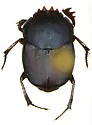
Boreocanthon puncticollis
Boreocanthon puncticollis
Identification: has a tubercle beneath the anterior pronotal angle (lacking in C. simplex )
Boreocanthon simplex
Boreocanthon simplex
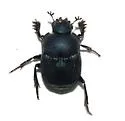
Identification: pronotal hypomeron beneath the anterior pronotal angle without tubercle ( C. puncticollis has the tubercle)
Calamosternus granarius
Calamosternus granarius
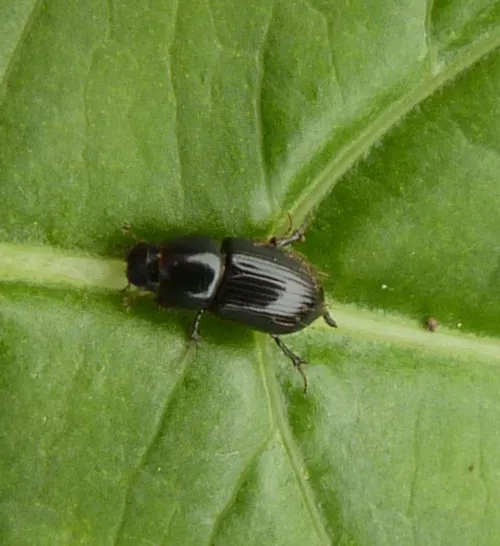
A small species, with a length of around 4mm it is dark brown or blackish and resembles several other members of this family. Common across southern England becoming scarcer in the north. No additional images available for this species.
Callistethus marginatus
Callistethus marginatus
Identification: Elytra brownish, with a green tint. Head and pronotum darker, pronotum may have paler sides
Canthon cyanellus
Canthon cyanellus
Identification: note two narrow clypeal teeth; color variable
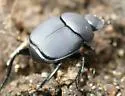
Canthon floridanus
Canthon floridanus
Identification: Dorsum with intense purpleblue sheen; clypeal edge slightly sinuate on each side of anterior rounded clypeal teeth, median emargination acutely angular and arcuate; elytral granulation finer and flatter; metatarsus with a single row o
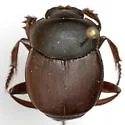
Canthon humectus
Canthon humectus
Identification: protibial teeth equidistant; dorsum without shiny spots/granules
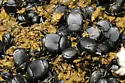
Canthon imitator
Canthon imitator
Identification: Dark blue to brownish-coppery. note clypeus
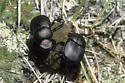
Canthon pilularius
Canthon pilularius
Identification: generally dull black, southern specimens often green. narrow eyes, shallow clypeal emargination, and the two sizes of granule on the body surface will serve to separate this sp. from other Canthon spp. in NE det. D.Edmonds 2024: 'eyes
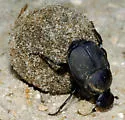
Canthon vigilans
Canthon vigilans
Identification: eyes large (for this genus), about half as wide as long. Clypeus toothed.
Canthon (Glaphyrocanthon) viridis
Canthon viridis
Identification: two 'clypial teeth', color variable our only representative of the subg. Glaphyrocanthon Martínez 1948
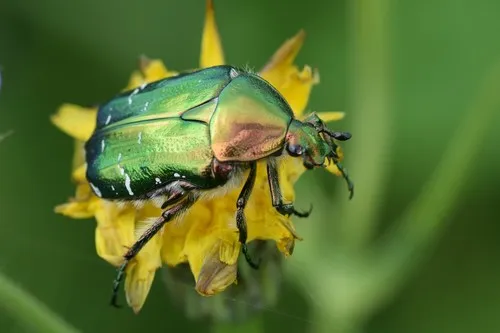
Rose Chafer
Cetonia aurata
Length 14 to 20 mm. This beautiful iridescent beetle can occur in a variety of colours; the wing cases or elytra are typically bright green, but they may be darker, variegated or golden. The white marks on the elytra are also highly variable between
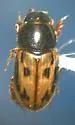
Chilothorax distinctus
Chilothorax distinctus
Identification: elytral markings variable earliest NA record: MD before 1845
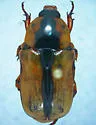
Chlorixanthe propinqua
Chlorixanthe propinqua
Type Locality of Synonym: Big Bend National Park, Brewster Co., TX, June 17, 1937, Rollin H. Baker (Cartwright, 1939); Chisos Mountains, BBNP, 4000' to 6400', on Opuntia and sotol: Panther Junction & Green Gulch, H. Howden (Howden, 1960); Pine Canyon
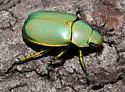
Chrysina woodi
Chrysina woodi
Identification: purple tarsi are unique to C. woodii apparently diurnal, although some individuals are attracted to lights at night. considered by New Mexico to be a SGCN ( 3 )
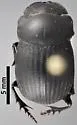
Copris howdeni
Copris howdeni
Identification: males hornless; elytral intervals flat, more densely punctate than in C. fricator (punctures separated by about their diameter) Mostly collected at lights
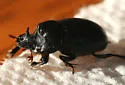
Small Black Dung Beetle
Copris minutus
Small Black Dung Beetle (Copris minutus) is a species in the family Scarabaeidae, commonly known as scarab beetles, belonging to the order Coleoptera (Beetles). It is classified within the subfamily Scarabaeinae, tribe Coprini, suborder Polyphaga, su
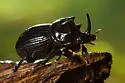
Copris remotus
Copris remotus
Identification: syntype Protibial apical spur abruptly bent inward just before apex (Kohlmann et al. 2003)
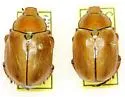
Cotalpa conclamara
Cotalpa conclamara
Identification: PARATYPES Type Locality: Gus Engeling Wildlife Management Area, Anderson Co., Texas (Young, 2003). Texas considers this a "Species of Greatest Conservation Need" (SGCN) ( 5 )
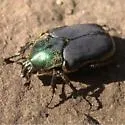
South Texas Coastal Cotinis
Cotinis boylei
Type Locality is Bastrop State Park . ( 3 ) Texas considers this to be a "Species of Greatest Conservation Need" (SGCN) ( 4 )
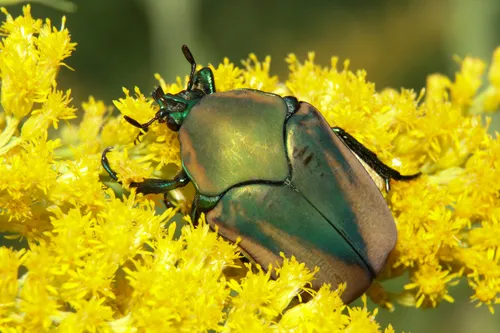
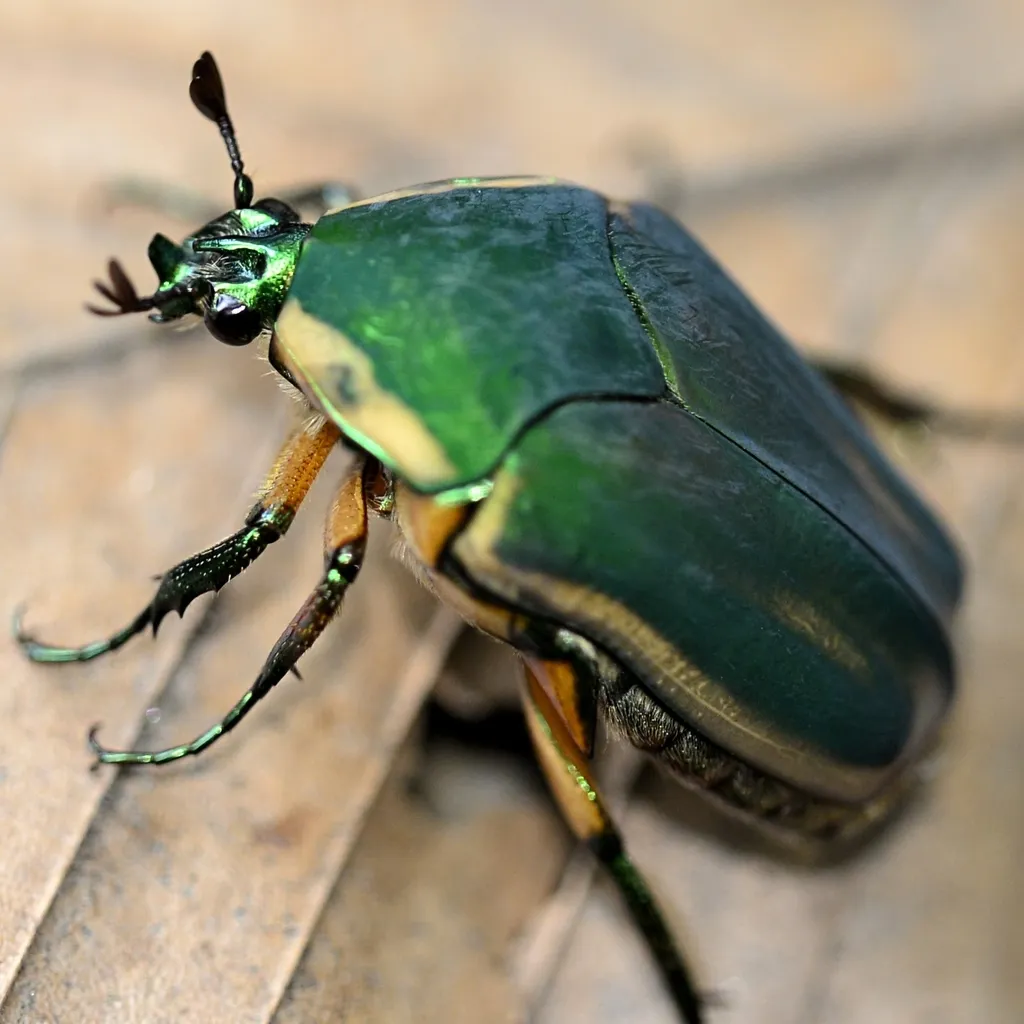
Green Fig Beetle
Cotinis mutabilis
Identification: the most widespread and variable species within the genus, with dozens of forms, some quite different in appearance, throughout its range ...though metafemora may be partially pale: ...but may be bicolored, too:
Green June Beetle
Cotinis nitida
Identification: Overall size generally smaller than mutabilis , but variable, averaging larger in the south and west. Pygidium bicolored; basal portion green, apical portion testaceous. Hind femora usually pale, distinctly lighter in color than remai
Cremastocheilus planipes
Cremastocheilus planipes
Identification: The broad, flat tibiae are diagnostic for this C. (Trinodia) species. (comment per Wm B. Warner, 2018)
Cryptoscatomaseter rossi
Cryptoscatomaseter rossi
The type locality is Somerset (Bexar County) were it was taken from nests and refuse chambers and trapped in bait traps placed in burrows of the pocket gopher Geomys breviceps atwateri Merriam (Cartwright, 1944).
Cyclocephala melanocephala
Cyclocephala melanocephala
Cyclocephala melanocephala (Cyclocephala melanocephala) is a species in the family Scarabaeidae, commonly known as scarab beetles, belonging to the order Coleoptera (Beetles). It is classified within the subfamily Dynastinae, tribe Cyclocephalini, su
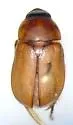
Cyclocephala parallela
Cyclocephala parallela
Identification: similar to C. borealis and C. lurida , but clypeus is smaller with margins more reflexed. Also the elytra are shinier with less reticulation. Type Locality: Jacksonville, Duval Co., Florida
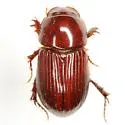
Dellacasiellus kirni
Dellacasiellus kirni
the most frequently collected scarab in Geomys breviceps burrows in Louisiana ( Tishechkin & Cline 2008 )
Humpback Dung Beetle
Deltochilum gibbosum
Identification: ♂ [prominent hump on each elytron] ♀ [no humps] Protarsi absent. Clypeus with 2 pairs of teeth, the inner ones pointy, the outer rounded:
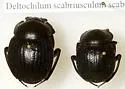
Deltochilum scabriusculum
Deltochilum scabriusculum
First U.S. report of this sp. appears to be from Leng (1920) who cites "Tex" as the range of the species. ( 6 ) Texas considers this to be a "Species of Greatest Conservation Need" (SGCN) ( 7 )
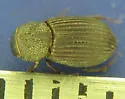
Dialytes striatulus
Dialytes striatulus
Identification: neotype Easily distinguished by the pronotum with coarse punctures and median groove; elytra with prominent elevated striae.
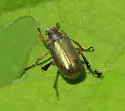
Dichelonyx linearis
Dichelonyx linearis
Identification: Morphological differences between D. linearis and D. elongatulus are not well defined. Brown (1946) ( 3 ) species concepts and geographic ranges are followed here: D. linearis occurs inland; D. elongatulus , in coastal areas (roughly
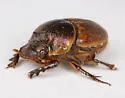
Gazelle Scarab
Digitonthophagus gazella
Identification: brown elytra often has cloudy markings, male with two short horns. ventrally distinctive femora: ♀ ♂ first released in Texas in April 1972 in Victoria County (R. R. Blume, personal communication). In July 1972, an additional release w
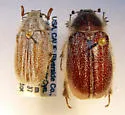
Dinacoma caseyi
Dinacoma caseyi
First collected in the City of Palm Springs, California, in 1916, and was later described by Blaisdell on California's "Special Animals" List.
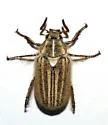
Dinacoma sanfelipe
Dinacoma sanfelipe
Identification: Male lacks a distinct third (basal) outer tooth on the anterior tibiae ( D. marginata with three distinct external teeth); have acuminate and outwardly directed anterior clypeal angles (Not so in D. marginata ); have distinct elytral
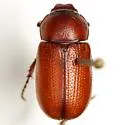
Diplotaxis beyeri
Diplotaxis beyeri
Identification: The elongate, nearly parallel sided form and the large clypeus distinguish this species. The head, basal margin and suture are generally slightly darker. (Schaeffer 1907) Type Locality: "Brownsville, Texas (Esperanza Ranch)"
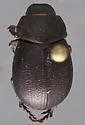
Diplotaxis connata
Diplotaxis connata
Identification: "The ovate and apparently connate [united] elytra and the absence of wings will readily distinguish this from the North and Central American Diplotaxis ." (Schaeffer 1905) Type Locality: Palmerlee, Cochise Co., Arizona
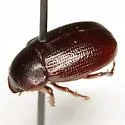
Diplotaxis curvaticeps
Diplotaxis curvaticeps
Identification: syntype common at UV lights at Laguna Atascosa NWR, Cameron Co., TX
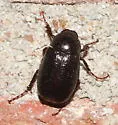
Diplotaxis lengii
Diplotaxis lengii
Identification: Det. E. G. Riley, 1998 Type Locality: LA
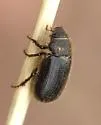
Diplotaxis mimosae
Diplotaxis mimosae
Identification: syntype • very similar to cribulosa but smaller (the two can co-occur)
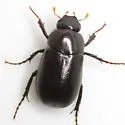
Diplotaxis pubipes
Diplotaxis pubipes
Identification: The distinct antescutellar thoracic and circumscutellar elytral impressions, together with the densely pubescent tarsal joints , render the recognition of this species easy. (Schaeffer, 1907) Type Locality: Esperanza Ranch, Brownsvill
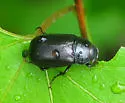
Diplotaxis punctatorugosa
Diplotaxis punctatorugosa
Identification: Easily distinguished by the dense punctuation, frontoclypeal ridge, pronotal shape and location. The labrum is flat. ‒W.B. Warner, 9.x.2010
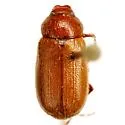
Diplotaxis rex
Diplotaxis rex
Type Locality: Norias Division, King Ranch, Kleburg County, Texas. Only one spmn in the TAMUIC ( 3 ) (as of July 2016) potential SGCN
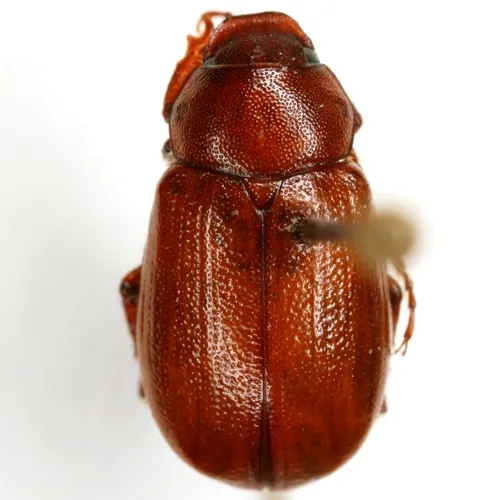
Diplotaxis schaefferi
Diplotaxis schaefferi
Identification: Per Vaurie: Small (7.5 to 8 mm), pronotum flat, narrow; elytra so densely and irregularly punctured that costae and intervals are confused, not distinct (only three specimens examined) Per Fall: In the male the tarsal claws are relati
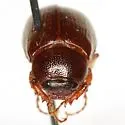
Diplotaxis simplex
Diplotaxis simplex
common at lights at Laguna Atascosa NWR, Cameron Co., TX ( 3 )
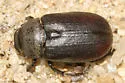
Diplotaxis sordida
Diplotaxis sordida
Identification: Generally dull, punctate habitus and completely clothed in yellowish setae
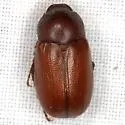
Diplotaxis thoracica
Diplotaxis thoracica
the most common scarab at lights at Laguna Atascosa NWR, Cameron Co., TX ( 3 )
Diplotaxis truncatula
Diplotaxis truncatula
Identification: Holotype • extremely variable common at lights Mar―May in Nuevo Leon and so.TX
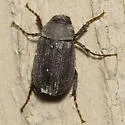
Diplotaxis vandykei
Diplotaxis vandykei
Identification: similar to D. sordida , which is much more widespread, but has the anterior pronotal angles drawn forward & acute rather than just truncate/rounded. (W.B. Warner, 9.x.2010) rare in collections
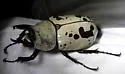
Grant's Hercules Beetle
Dynastes grantii
Identification: Distinctive in its Southwestern range. Dynastes grantii is the largest scarab in the w. US, and is relatively common in Arizona. but is considered by New Mexico to be a "Species of Greatest Conservation Need" (SGCN) ( 3 ) at high risk
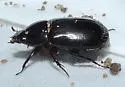
Dyscinetus laevicollis
Dyscinetus laevicollis
Identification: Pronotum nearly impunctate; rugose clypeus Adults attracted to lights
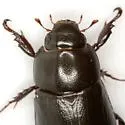
Rice Beetle
Dyscinetus morator
Identification: Brownish with a greenish tinge above. Front tarsi and claw in male thickened, as in Cyclocephala Det. E. G. Riley, 2009 does little, if any, damage to crops
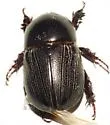
Sugarcane Beetle
Euetheola rugiceps
Identification: elytral striae distinctly punctate; clypeus with two blunt teeth. Hind tarsi differentiate it from Dyscinetus morator Syntype Locality: Louisiana
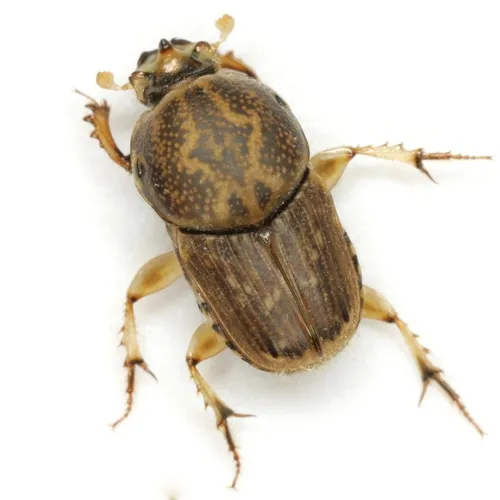
Euoniticellus intermedius
Euoniticellus intermedius
Identification: males armed, color varies from straw to dark brown Det. M. A. Quinn, 2011 Intentionally introduced from Africa into Texas during the early 1970s for dung removal
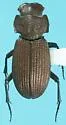
Euparixia duncani
Euparixia duncani
Identification: Pronotum constricted only in posterior one- third, the posterior angles prominent and acute Type Locality: Globe, Arizona
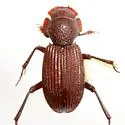
Euparixia moseri
Euparixia moseri
Type Locality: Melder, Louisiana; Label: 2' deep in nest of Atta texana ; collected by John C. Moser.
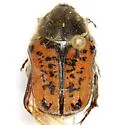
Euphoria anneae
Euphoria anneae
Type Locality: Holotype, male, two miles south Olmos Creek and U.S. Rt. 77, [Kenedy Co.], Texas, May 31, 1954. H. F. Howden and W. Cloyd. (Type deposited in U.S. National Museum.) Paratype, male, same data as type (Howden collection). (Howden 1955)
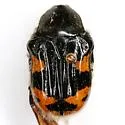
Euphoria basalis
Euphoria basalis
Identification: difficult to confuse with any other sp. of Euphoria considered a pest of cotton, melon, pumpkin, and sunflower in Mex. "I see it a few times a year heading our way as a truck hitchhiker from Mexico." (J. Leavengood, pers. comm. to MAQ