
Primitive Winged Insects
Order Coleoptera
The Primitive Winged Insects (Order Coleoptera) includes 15,720 species across 160 families and 3,716 genera in our directory.
About Primitive Winged Insects
Coleoptera is the largest order of insects with over 400,000 described species, representing ~25% of all known animal species and ~40% of all insects. In the U.S. alone, nearly 30,000 beetle species have been identified.
Economic Impact
Beetles have major economic significance: leaf beetles (Chrysomelidae) and weevils (Curculionoidea) are among the most destructive agricultural pests globally, costing billions annually, while predatory species like ladybugs provide natural pest control.
Ecological Role
Beetles are prominent decomposers, especially in forests, breaking down dead wood and recycling nutrients. As predators, they reduce populations of pest insects. Many species are also important pollinators of flowering plants.
Families in Coleoptera (160)
Species in Coleoptera (15,720)
Tropicus niger 0
Tropicus niger
Identification: Uniformly brown to black. Genitalia distinctive. Tropicus nigrellus King and Lago, 2012 may be a synonym of this species, as illustrations of the genitalia are remarkably similar. Both species were described from specimens collected i
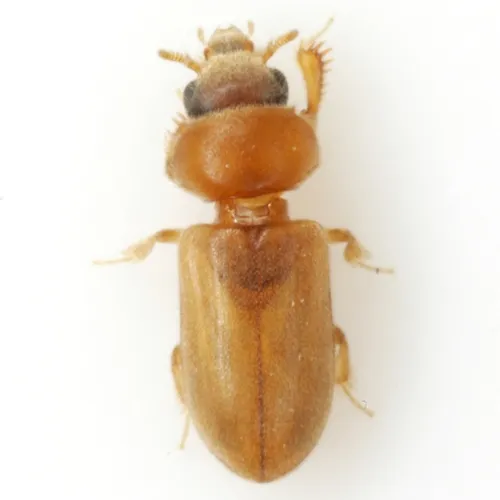
Tropicus pusillus
Tropicus pusillus
Identification: the elytra are orange laterally and share a faint medial brown stripe that covers about one-third of the surface; easily distinguished from other se.US heterocerids by color pattern one of the most common and widespread heterocerids i
Tropisternus columbianus
Tropisternus columbianus
Identification: nearly identical to a couple other species with current sources not reliably separating them in any way except for male genitalia
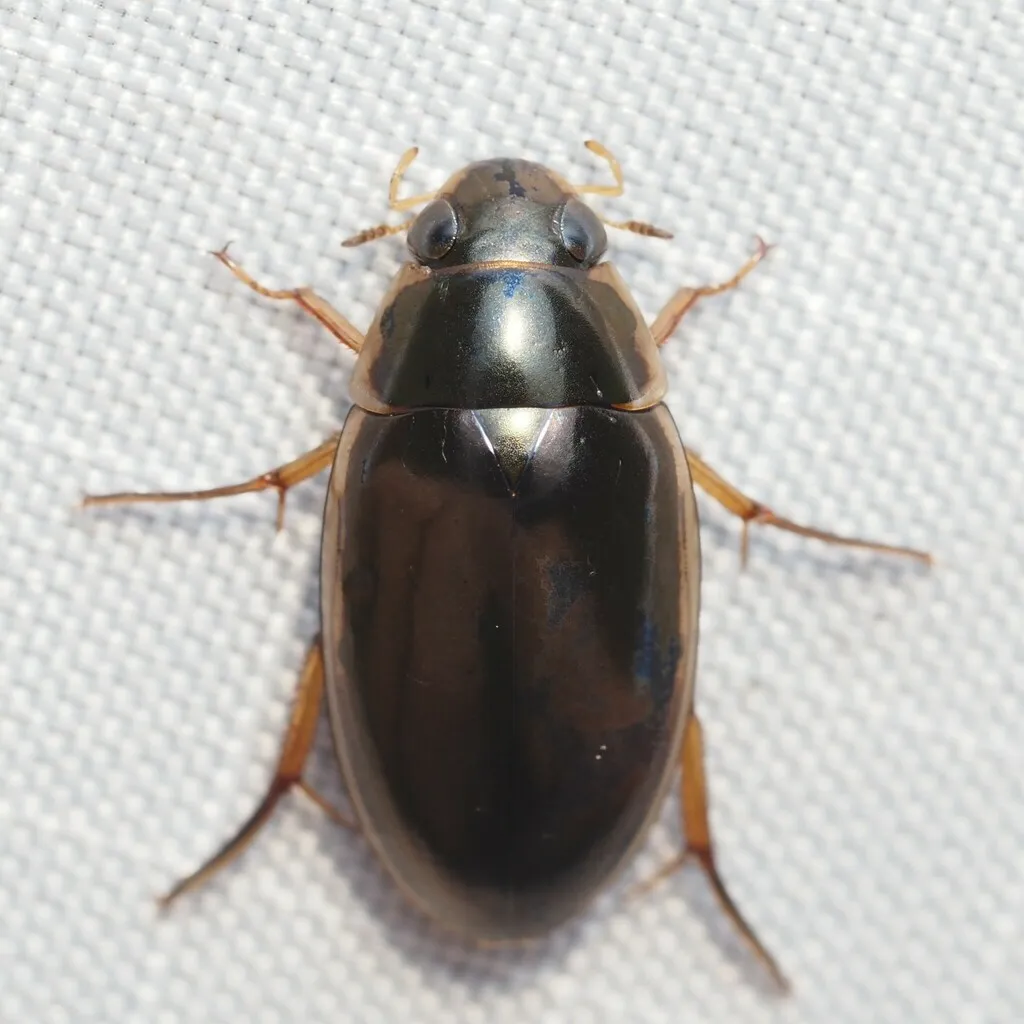
Tropisternus lateralis
Tropisternus lateralis
Identification: Head, pronotum and elytra with yellow border (though the border can be quite narrow)
Tropisternus natator
Tropisternus natator
Identification: widely confused with T. glaber and existing sources may not adequately diagnose the species
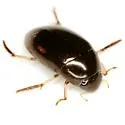
Tropisternus quadristriatus
Tropisternus quadristriatus
Identification: Uniformly dark, legs pale, metafemur with large basal pubescent patch • syntype
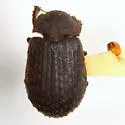
Trox affinis
Trox affinis
Identification: Male genitalia with apices of lateral lobes needle-like but broader at base Trox aequalis • Trox affinis Differs from aequalis and other spp. of the scaber group in larger size and male genitalia
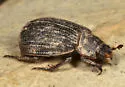
Trox atrox
Trox atrox
Trox atrox (Trox atrox) is a species in the family Trogidae, commonly known as hide beetles, belonging to the order Coleoptera (Beetles). It is classified within the subfamily Troginae, suborder Polyphaga, superfamily Scarabaeoidea. This species belo
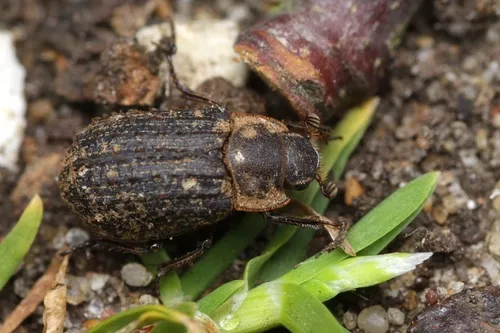
Trox scaber
Trox scaber
Roughly sculptured elytra and pronotum, with bristly scales on the elytral ridges. In the nests of certain birds such as owls and jackdaws. April to August. It is not often seen due to its lifestyle but is occasionally attracted to light although it
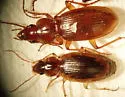
Tule Beetle
Tanystoma maculicolle
Wings are dimorphic. At dusk, usually after rain in the fall, beetles may enter houses in large numbers.
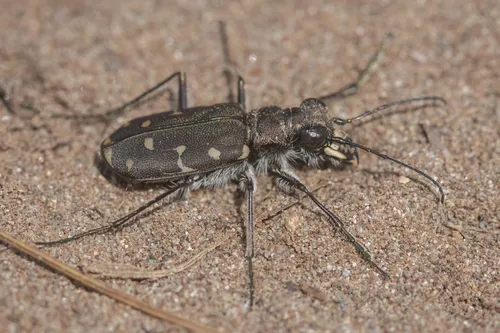
Twelve-spotted Tiger Beetle
Cicindela duodecimguttata
Identification: The usual bands are often broken into spots - 12 spots on some individuals. On other individuals, the bands may be more intact and there will be fewer than 12 spots or marks. The shoulder marking (humeral lunule), whether entire or br
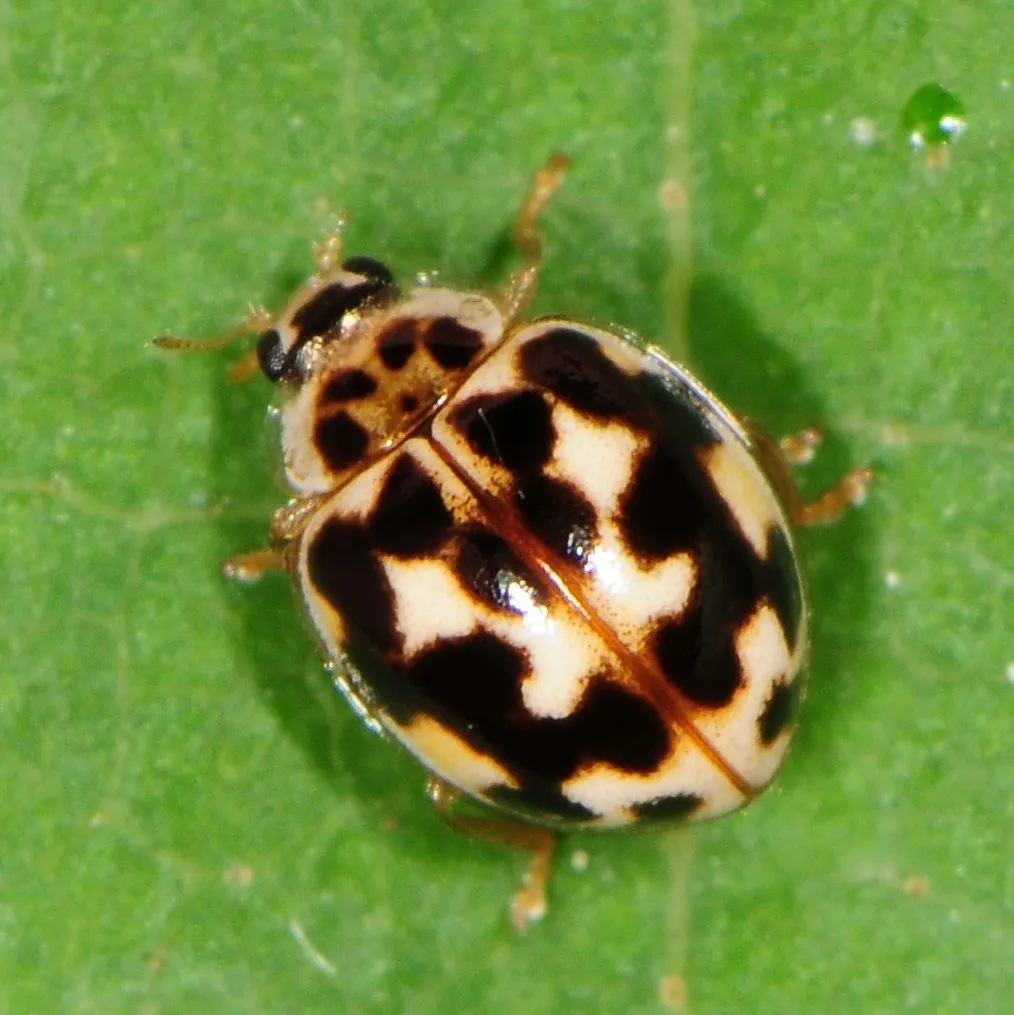
Twenty-Spotted Lady Beetle
Psyllobora vigintimaculata
Identification: Gordon's Figures Pronotum with 4 dark spots; elytron usually with 9 spots, spots partially confluent, pattern variable; the dorsal pattern will usually separate this species from other nearctic spp. The base color is always pale (whit
Twice-struck Lady Beetle
Axion plagiatum
Identification: Gordon's figures uncommon example of Axion plagiatum (Olivier) w smaller dorsal spots, similar to Chilocorus stigma (Say), see below: = Det. James Bailey, 2015
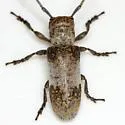
Twig Girdler
Oncideres cingulata
Twig Girdler (Oncideres cingulata) is a species in the family Cerambycidae, commonly known as longhorn beetles, belonging to the order Coleoptera (Beetles). It is classified within the subfamily Lamiinae, tribe Onciderini, suborder Polyphaga, superfa
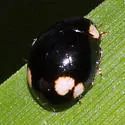
Twin-spotted Lady Beetle
Hyperaspis gemina
Identification: Gordon't figures distinctive apically bi-spotted elytra, yellow head (both sexes), and broad lateral yellow area on the pronotum (both sexes). Gordon also states that "this rarely collected species is unusual in having the clypeal ape
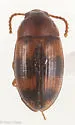
Two-banded Fungus Beetle
Alphitophagus bifasciatus
Two-banded Fungus Beetle (Alphitophagus bifasciatus) is a species in the family Tenebrionidae, commonly known as darkling beetles, belonging to the order Coleoptera (Beetles). It is classified within the subfamily Diaperinae, tribe Diaperini, suborde
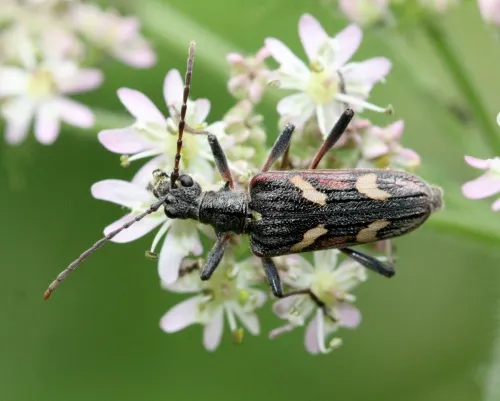
Two-banded Longhorn Beetle
Rhagium bifasciatum
A large species of longhorn beetle that may reach 22 millimetres long and can be distinguished by the two prominent pale yellow bands on each elytron. The adults are commonly found on tree trunks, often in woodland and occasionally on low vegetation.
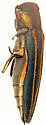
Two-lined Chestnut Borer
Agrilus bilineatus
Larvae are a major mortality agent of stressed oaks, particularly red oaks (Muzika et al. 2000)
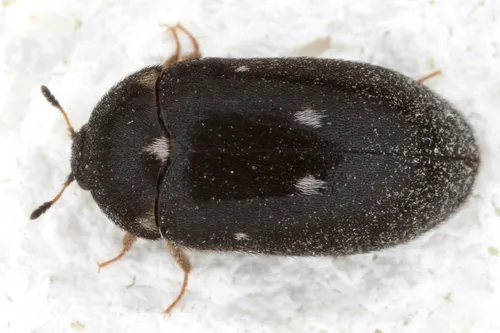
Two-spotted Carpet Beetle
Attagenus pellio
Length 3.5 to 5.5 mm. A small, black, oval shaped beetle with two distinctive white marks on the elytra. Found in homes and offices, living in carpets and infesting woollen products and any materials of animal origin. Also found in birds nests.
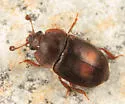
Two-spotted Sap Beetle
Nitidula bipunctata
earliest record in our area: ID 1878 (which suggests it's not adventive)
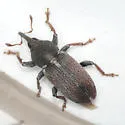
Tychius cuprifer
Tychius cuprifer
Identification: front tibia with a distinct tooth ( T. meliloti males also have it, but the body is not nearly as slender) ( R.S. Anderson's comment )
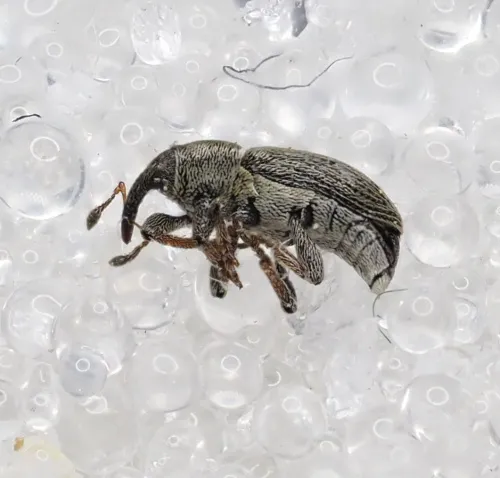
Tychius picirostris
Tychius picirostris
Length 1.8-2.4 mm. The upperside is covered in grey hair-like scales but if worn the black body beneath darkens the appearance. Distinguished from other species in the genus by the antennal funiculus having only 6 segments (7 in other Tychius species
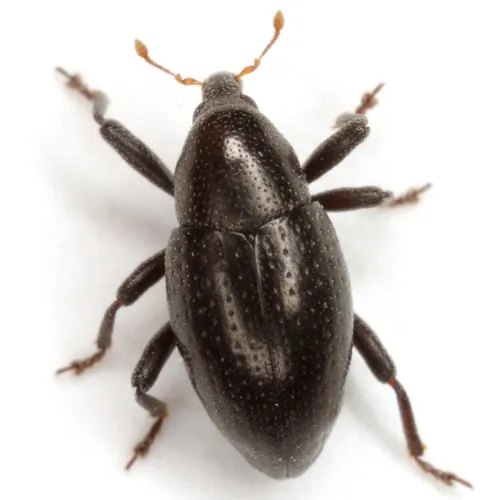
Tyloderma baridium
Tyloderma baridium
Identification: Elytral humeri very narrowly exposed at base. Oval, gradually pointed behind. Black, feebly tinged with bronze; finely alutaceous. Beak and head rather finely and deeply punctate; frontal fovea small, feeble. Thorax slightly wider tha
Tylonotus masoni
Tylonotus masoni
very rare sp. , attracted to UV lights Type: female, labeled Edgebrook, Illinois, June 18, in the collection of the author, paratype: female, labeled Edgebrook, Illinois, Aug. 5, E. Liljeblad collector, in the collection of the late Mr. F. R. Mason a
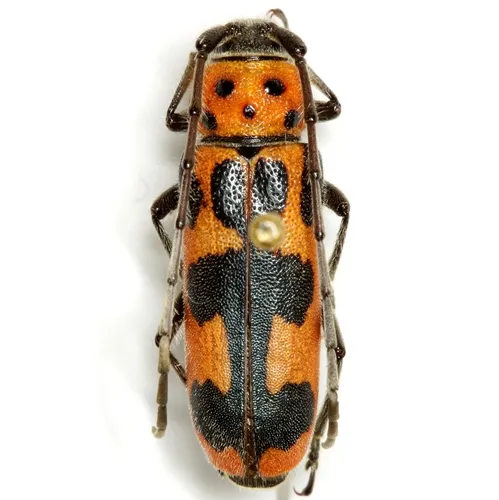
Tylosis jimenezii
Tylosis jimenezii
Tylosis jimenezii is a species of beetle in the Cerambycidae family. It was described by Dugès in 1879.
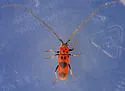
Tylosis maculatus
Tylosis maculatus
Identification: highly variable in size and pattern Type Locality: west of Santa Fé, New Mexico
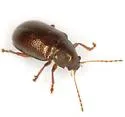
Tymnes metasternalis
Tymnes metasternalis
Identification: Sides of metasternum densely, coarsely punctate Det. E. G. Riley, 2012
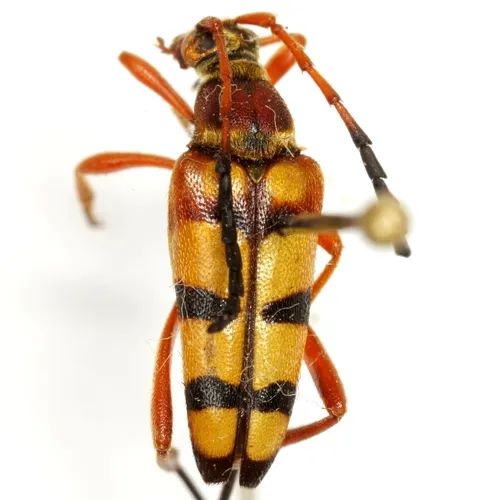
Typocerus balteatus
Typocerus balteatus
Typocerus balteatus is a species of flower longhorn in the beetle family Cerambycidae. It is found in North America.
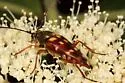
Typocerus deceptus
Typocerus deceptus
Identification: Resembles T. velutina , but pattern on elytra is very weak. (pattern is variable in T. velutina ; T. acuticauda is similar)
Typocerus fulvocinctus
Typocerus fulvocinctus
Identification: The coarse punctures of pronotum together with black pubescence and [yellow] markings will distinguish this species from any of our described forms. (Knull 1956) Det. Robert Androw, 2020 Type Locality: Sebring, Fla., April, 1954, by L
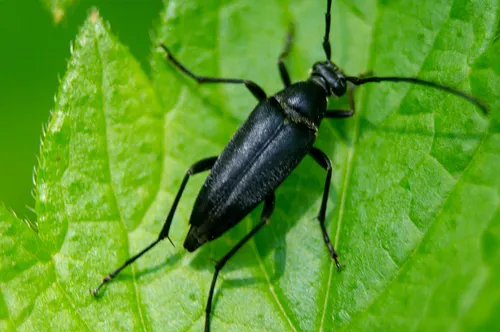
Typocerus lugubris
Typocerus lugubris
Typocerus lugubris (Typocerus lugubris) is a species in the family Cerambycidae, commonly known as longhorn beetles, belonging to the order Coleoptera (Beetles). It is classified within the subfamily Lepturinae, tribe Lepturini, suborder Polyphaga, s
Tyrtaeus rufus
Tyrtaeus rufus
In spite of small size, easily seen when present because its bright reddish color reflects like a garnet when the light hits it
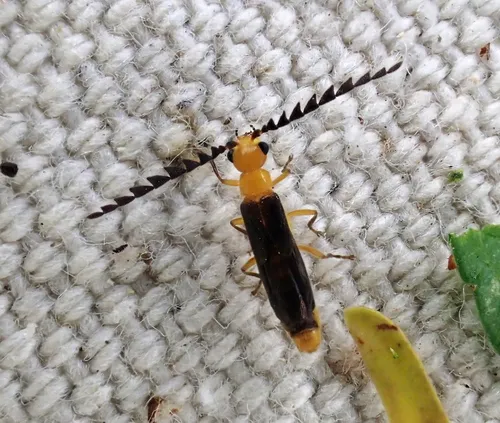
Tytthonyx ruficollis
Tytthonyx ruficollis
Tytthonyx ruficollis is a species of soldier beetle in the family Cantharidae. It is found in North America.
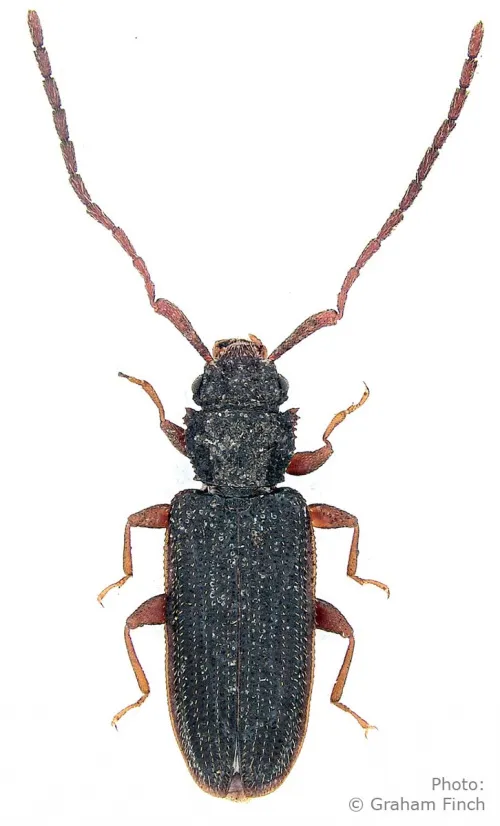
Uleiota planatus
Uleiota planatus
Length 4.5-5.5mm. A conspicuously flat beetle, matt black to brown in colour, with antennae as long as the body. Unless identified by a recognised expert, a photo is required and the specimen should be examined with a microscope. In the comments box,
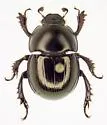
Ulke's Earth Boring Beetle
Geotrupes ulkei
Identification: Elytra with striae obsolete, suture fused.
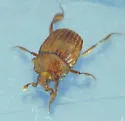
Ulkeus intricatus
Ulkeus intricatus
In subfamily Hetaeriinae. All Hetaeriinae are myrmecophiles, hence their weirdness (hairiness, color, etc.). They're all pretty rare. - Michael Caterino
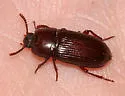
Uloma impressa
Uloma impressa
Identification: apical antennomere rounded at tip; elytral intervals rather densely punctulate, middle plate of mentum elongate-oval (not transverse, as in U. punctulata or U. imberbis )
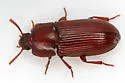
Uloma punctulata
Uloma punctulata
Identification: profemora grooved inside for the entire length, apical antennomere rounded at tip, elytral striae deeply punctate, intervals slightly convex and minutely, sparsely punctulate; middle plate of mentum oval, transverse
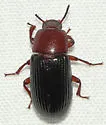
Uloma retusa
Uloma retusa
"We have had it from the southeast coast for several years. Yours was the first from the west coast and the first of the red-pronotum color form." --M.C. Thomas, 2012
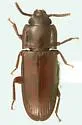
Ulomina carinata
Ulomina carinata
Ulomina carinata (Ulomina carinata) is a species in the family Tenebrionidae, commonly known as darkling beetles, belonging to the order Coleoptera (Beetles). It is classified within the subfamily Tenebrioninae, tribe Triboliini, suborder Polyphaga,
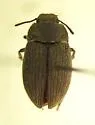
Ulus maritimus
Ulus maritimus
Ulus maritimus (Ulus maritimus) is a species in the family Tenebrionidae, commonly known as darkling beetles, belonging to the order Coleoptera (Beetles). It is classified within the subfamily Blaptinae, tribe Opatrini, suborder Polyphaga, superfamil
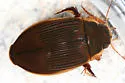
Understriped Diving Beetle
Dytiscus fasciventris
Identification: only the anterior and lateral margins of pronotum are bordered by a broad pale stripe (posterior margin not bordered); lateral margin of elytron bordered by broad pale stripe on basal half only remainder of dorsal surface brown, brown
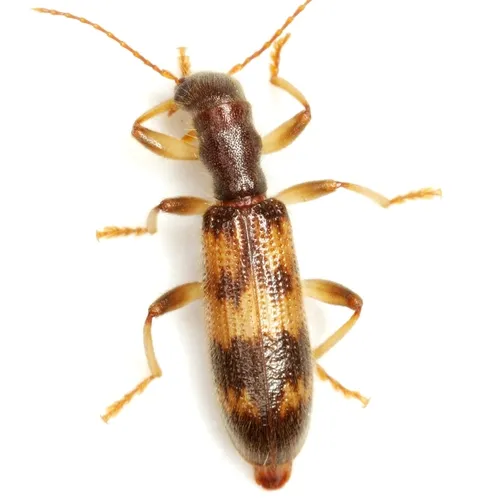
Undulate Checkered Beetle
Cymatodera undulata
Identification: four black undulating bands, elytral apex dark Det. A. Burke, 2017 comes to lights
Undulate Lady Beetle
Hyperaspis undulata
Identification: Gordon's figures - Form elongate, oval, moderately convex. Elytron black with complete, irregular, lateral villa, or with vitta broken to form apical spot. Type locality: "Missouri"
Uneven Billbug
Sphenophorus melanocephalus
Identification: Note apical expansion of the fore tibiae. ‒C.W. O'Brien, 7.iv.2010
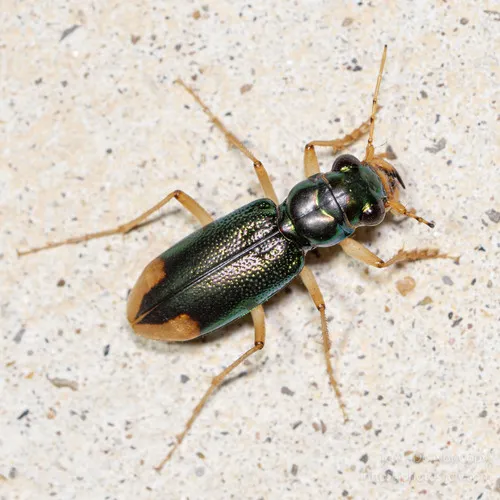
Upland Metallic Tiger Beetle
Tetracha impressa
Identification: The "apical lunule" (white area on the tips of the elytra) is fairly straight and constant in width. Rest of body blackish green, somewhat duller than T. carolina . In T. carolina , the white apical lunule gets distinctly wider toward
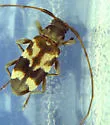
Urgleptes facetus
Urgleptes facetus
Identification: Dark elytral tips distiguish this species from small individuals of Urgleptes querci .
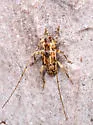
Urgleptes sandersoni
Urgleptes sandersoni
reared from deadwood from Key Largo about 10 years ago, but has not been formally recorded from the United States (Josef Vlasak, pers. comm.); common in Puerto Rico and other parts of the West Indies. -Robert Androw's comment
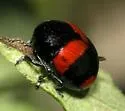
Urodera crucifera
Urodera crucifera
Type Locality of Urodera texana : Fort Brown, Brownsville, Cameron County, Texas
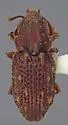
Usechus nucleatus
Usechus nucleatus
Identification: elytral base with an abruptly raised, forward-projecting tubercle
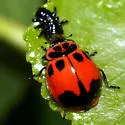
V-marked Lady Beetle
Neoharmonia venusta
Identification: Gordon's figures for N. venusta venusta ( 3 ) Gordon's figures for N. venusta ampla ( 3 ) Subspecies can be separated by range in most areas, but overlap in eastern Texas.
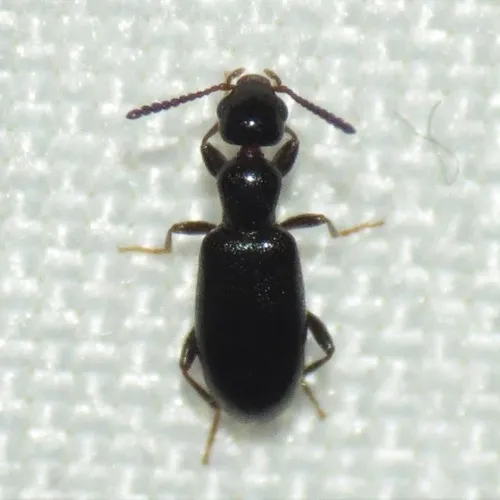
Vacusus confinis
Vacusus confinis
Identification: Det. M. A. Quinn, 2012 Common at lights; perhaps the most commonly collected anthicid in the Southwest (D.S. Chandler, 27.viii.2006)
Vacusus species
Vacusus species
it may be an undescribed species (or confinis ), but in order to be sure I would have to see the relative lengths of the elytral tactile setae. … Donald S. Chandler, 6 January, 2023
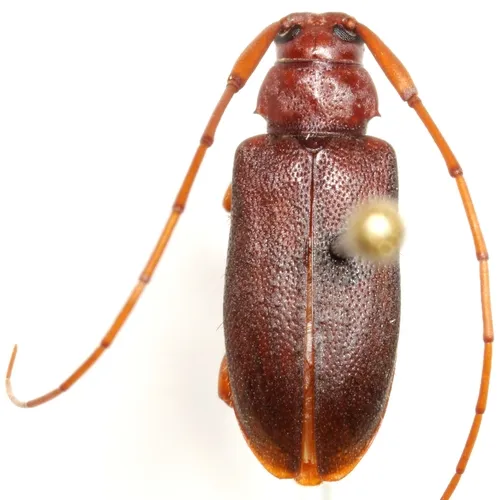
Valenus inornatus
Valenus inornatus
Valenus inornatus is a species of longhorn beetles of the subfamily Lamiinae, and the only species in the genus Valenus. It was described by Casey in 1892.
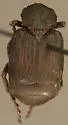
Valgus californicus
Valgus californicus
Type Locality: A single specimen was found at Fort Crook, Cal., during July, caught in a spider's web.
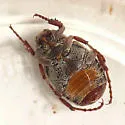
Valgus canaliculatus
Valgus canaliculatus
Identification: integument usually lighter than in V. seticollis but telling the two apart from above may be difficult; see key in Males have a dense patch of ochre scales on the ventral side of abdomen: Females have a long process on the pygidium :
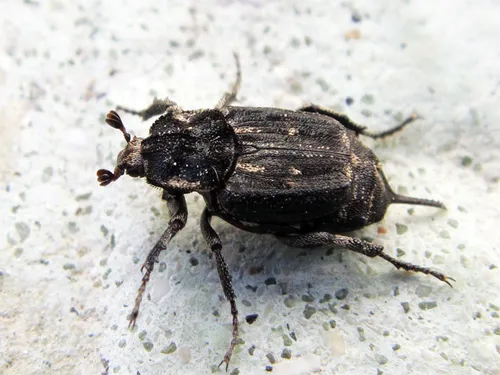
Valgus hemipterus
Valgus hemipterus
Identification: Integument black, scales black and white, never brownish; the midline of propygidium bears white scales to variable extent. (more black scales in females generally) Female with long spine on pygidium, this finely serrate. (no spine in
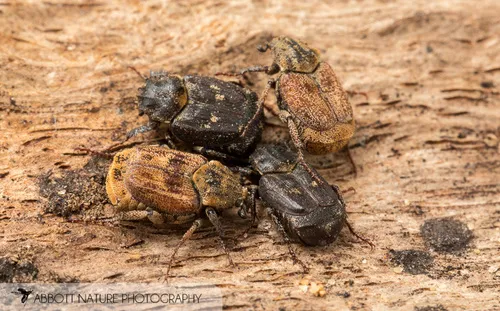
Valgus seticollis
Valgus seticollis
Identification: Male ventral vestiture on abdomen uniform and moderately dense Female pygidium lack a spiniform process. Dosal sex differences: in V. seticollis , scales along midline of propygidium are finer and pale; scales do not form a dark centr
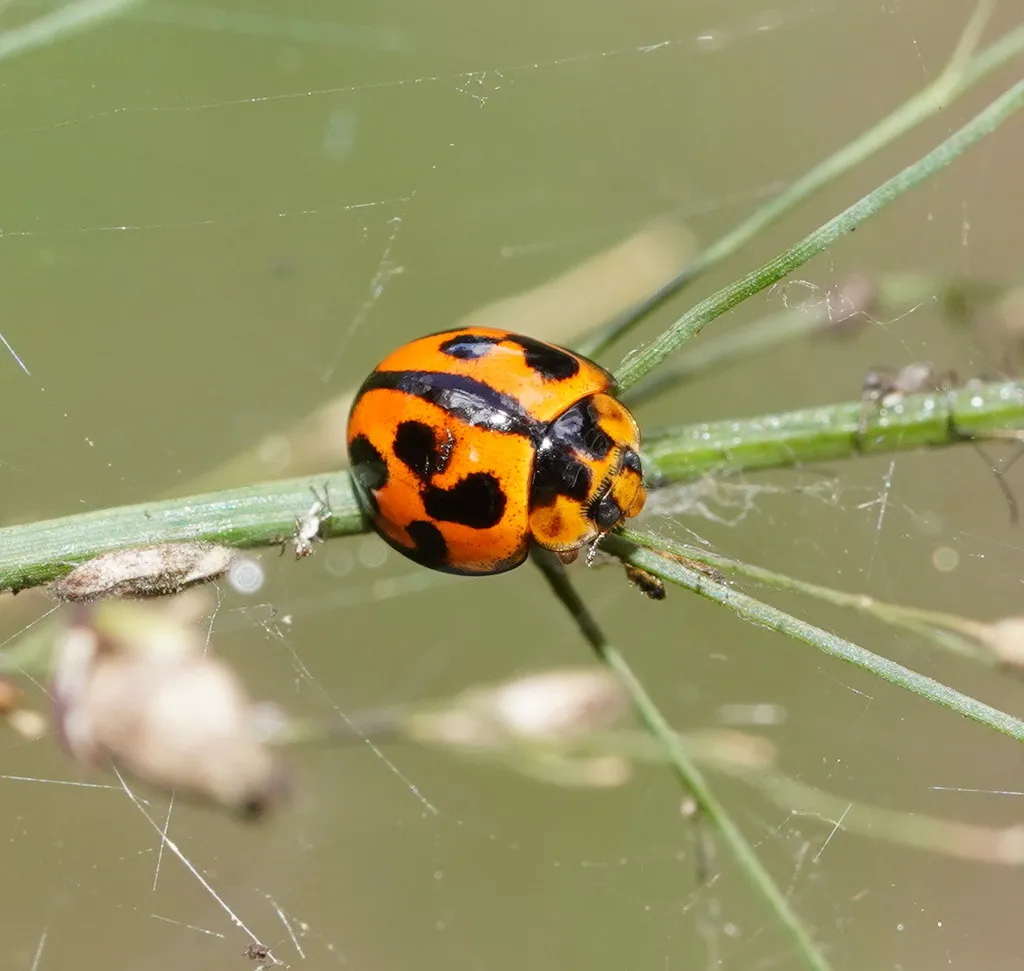
Variable Lady Beetle
Coelophora inaequalis
Identification: Gordon's Figures - Introduced to Florida from Hawaii via Puerto Rico to control the yellow sugarcane aphid - Sipha flava (Forbes).
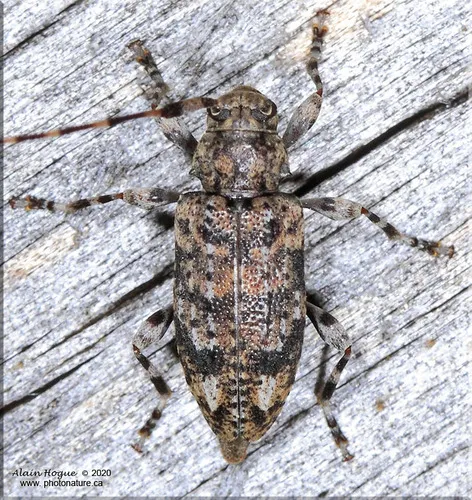
Variegated Longhorned Beetle
Astyleiopus variegatus
Astyleiopus is a genus of beetles in the family Cerambycidae. It is monotypic, being represented by the single species, Astyleiopus variegatus.
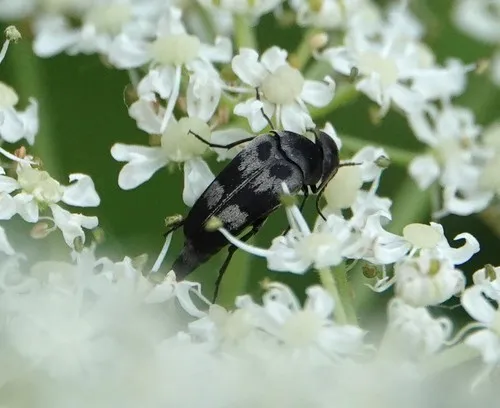
Variimorda villosa
Variimorda villosa
A tumbling flower beetle has blackish elytra with very visible paler patches. They are sometimes known as pintail beetles, because of the elongated and pointed abdominal tip which aids them with tumbling movements to escape predators. Can be found on
Vasaces elongatus
Vasaces elongatus
Identification: Second antennal segment nearly as long as third; body slender; eyes nearly entire; pronotum with nearly parallel sides; uniformly dark, metallic in color. Type Locality: Chisos Mtns of Big Bend NP, Brewster Co., TX
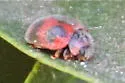
Vedalia Beetle
Novius cardinalis
Identification: Life cycle photos - Natural History of Orange Co., University of California The vedalia beetle, Rodolia cardinalis , is the most famous introduced beneficial insect in history. Introduced from Australia to control Cottony Cushion Scal
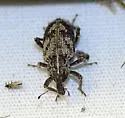
Vegetable Weevil
Listroderes difficilis
Identification: nearly identical in all external characters to L. costirostris ; males are "readily distinguished" by ædeagus but extremely rare earliest record in our area: MS 1922
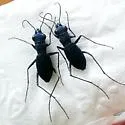
Velvet Tiger Beetle
Dromochorus velutinigrens
Identification: elytra without small pits, labrum dark Type locality: 10 km east of Riviera, Kleberg Co., Texas
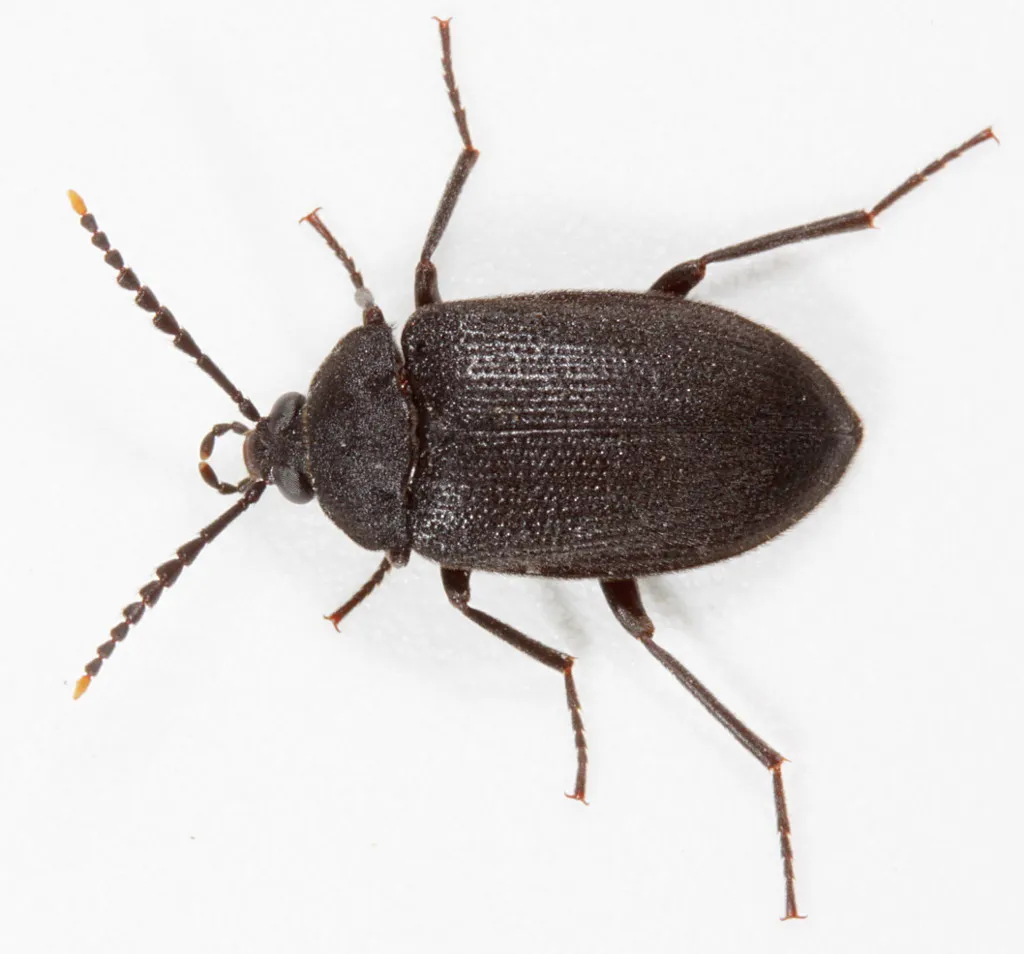
Velvety Bark Beetle
Penthe pimelia
Identification: Looks like a Darkling Beetle: broad, flattened, very dark, in velvety pile; scutellum dark (orange in P. obliquata ) Adults come to lights ; fairly common
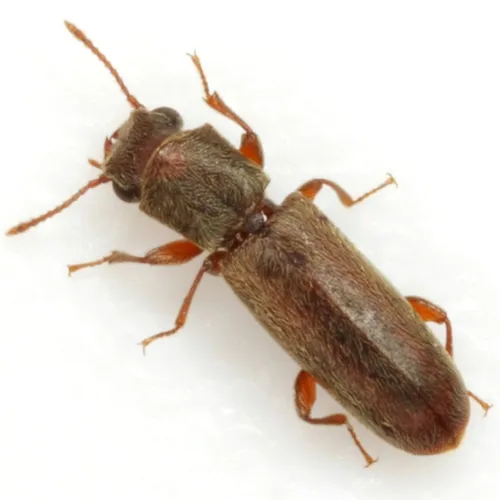
Velvety Powderpost Beetle
Trogoxylon parallelipipedum
Identification: anterior pronotal angles prominent, acute; post-clypeus rounded, depressed; antennal club abruptly expanded Det. M. A. Quinn, 2012
Veraphis capitata
Veraphis capitata
Identification: From Casey's key ... -Elytra finely punctulate; pronotum with short transverse impressed line at base -Head not carinate -Rufo-testaceus -Prothorax wider than long -Eyes small, tempora behind them subparallel and as long as eyes Appar
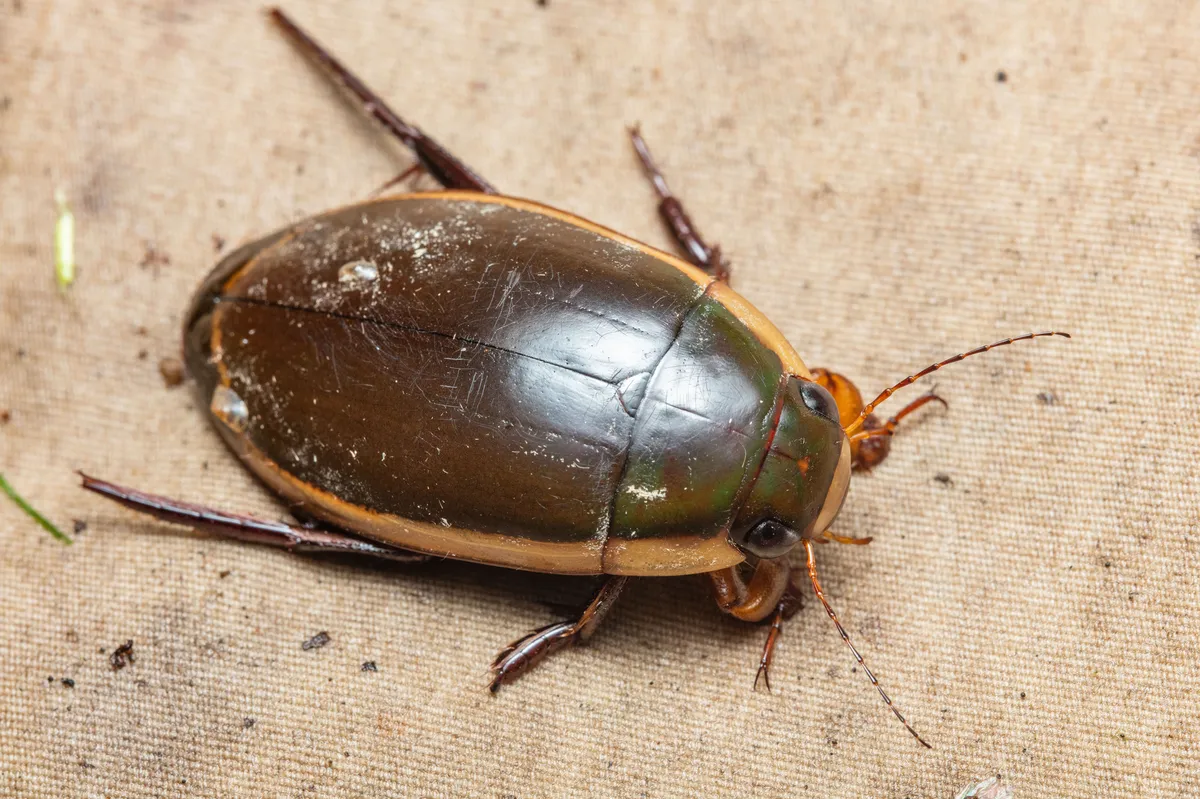
Vertical Diving Beetle
Dytiscus verticalis
Identification: Adult: pronotum with yellow border on lateral margins only; yellow lateral margin of elytra continues as an oblique line across apex; two tibial spurs on hindleg are approximately equal in size North Carolina State U. has 7 specimens
Vetch Bruchid
Bruchus brachialis
Identification: pattern: mottled with fine pale spots, the only conspicous a prescutellar on pronotum. male frontlegs inflated (name!), antennae all yellow in male, mostly dark on female, terminal segment frequently red again. Det. Brad Barnd, 2013 (
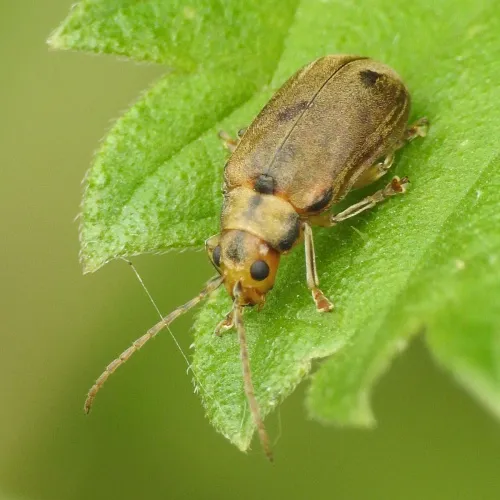
Viburnum Beetle
Pyrrhalta viburni
A small golden brown beetle (about 5 mm long), nearly always associated with plants of the Viburnum family. On Viburnum plants, such as Guelder Rose, but also feeds on the Wayfaring Tree and garden varieties. Adult beetles emerge in July and August.
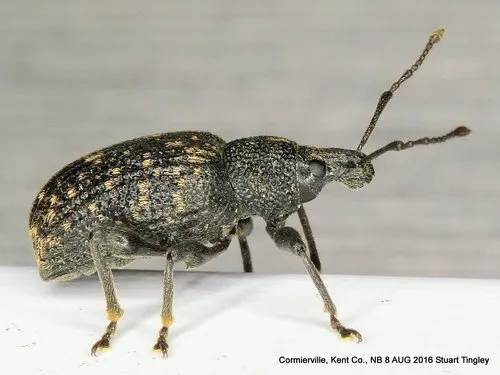
Vine Weevil
Otiorhynchus sulcatus
Length Adults about 10 mm. Elytra black mottled with small brown patches, grooved, not shiny. Antennae relatively long. Pronotum pebbly in texture. Unless identified by a recognised expert, good photos are required that show the key ID features. Also
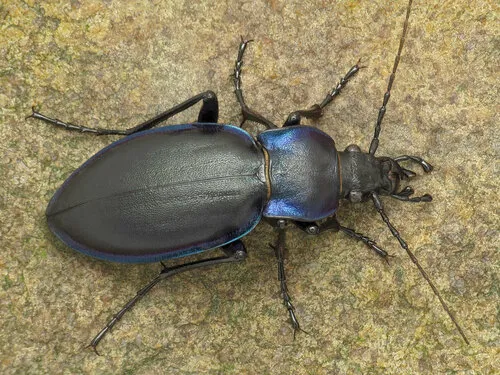
Violet Ground Beetle
Carabus violaceus
One of the largest species in the UK, measuring about 20-30mm in length. It is similar to Carabus problematicus but the elytra of Carabus violaceus are smoother with fewer dimples and ridges. Often found by day under logs and stones. Most of the year
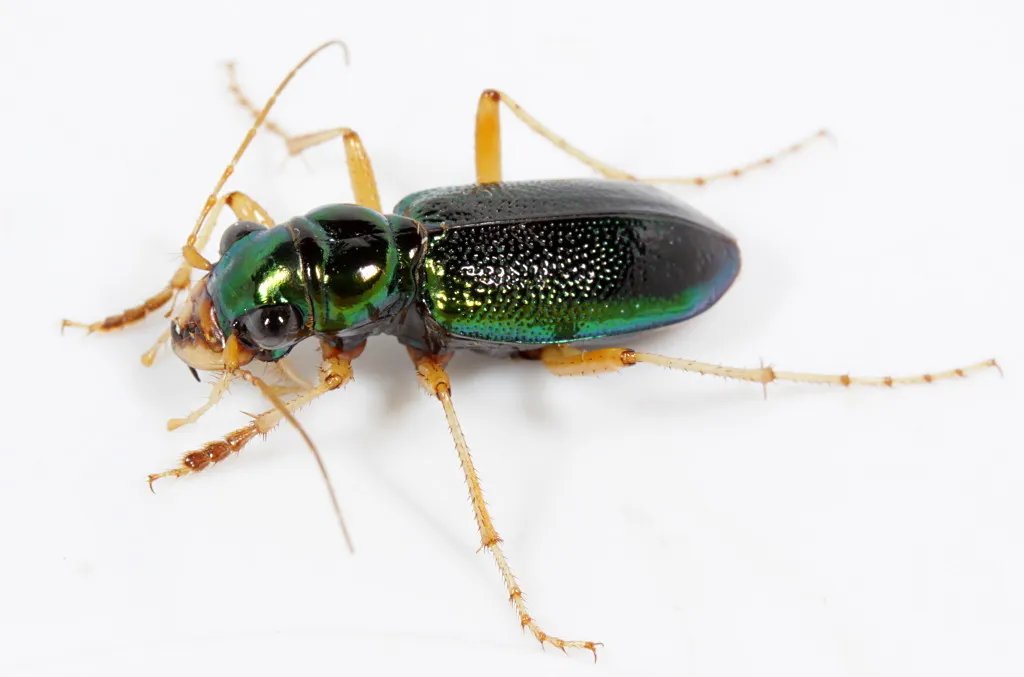
Virginia Metallic Tiger Beetle
Tetracha virginica
Identification: Adult Tetracha virginica is easy to recognize, as its elytra are entirely green, lacking the apical tan marks of the other three species. Differentiation of larvae of T. virginica vs. T. carolina may be possible. Quoting from Hamilton
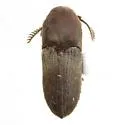
Vitellius texanus
Vitellius texanus
Identification: See Knull (1957) Type Locality: Bentsen-RGV State Park (Knull 1957) Holotype in collection of author, collected March 26, 1954, in Bentsen, Rio Grande Valley State Park, Hidalgo Co., Tex., by D. J. and J. N. Knull.
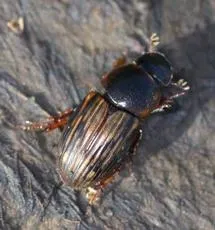
Volinus sticticus
Volinus sticticus
Around 5mm with characteristic black streaks on yellow/brown elytra. The pronotum generally has yellow side borders and a very fine beaded margin along the base. Fields where horses and cattle are kept. Breeds on dung, particularly from cows and hors
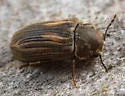
Vrilletta decorata
Vrilletta decorata
Identification: Elytra with several yellow stripes (if reduced, then the most conspicuous spot is on interval 3)
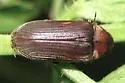
Vrilletta murrayi
Vrilletta murrayi
Identification: Elytral pattern as in V. blaisdelli , but pronotum orange at least in basal 2/3
Walterianella durangoensis
Walterianella durangoensis
Identification: Det. E. G. Riley 2009 A second Walterianella ? This similar species, also found in AZ, has been tried if it is one known from Mexico - unsuccessfully. It probably is undescribed, and has even larger eyes, and wider pronotal margin tha
Warehouse Beetle
Trogoderma variabile
Identification: Sexual dimorphism: antennal club 6- or 7-segmented in males, 4-segmented in females minor pest in Canada; in other parts of the world (incl. Europe) may be a major/serious pest of stored products (esp. seeds, cereals, legumes, nuts, a
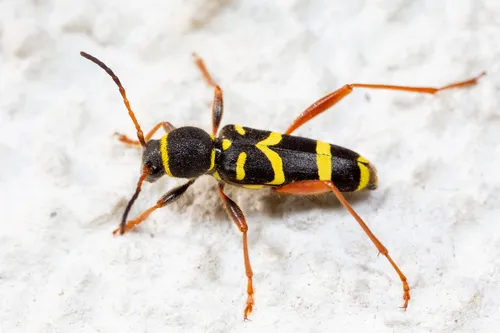
Wasp Beetle
Clytus arietis
Though this beetle mimics a wasp, in both colouration and movement, this black and yellow beetle is totally harmless. On hedgerow vegetation and in well wooded areas. It breeds in the decaying wood of deciduous trees. It can often be found in clear v
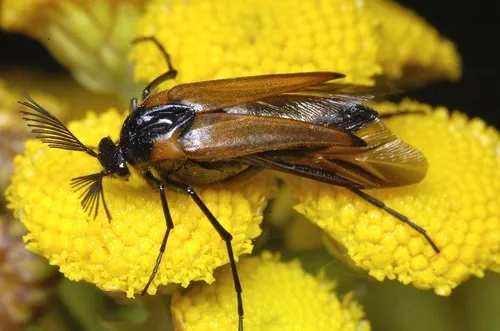
Wasp Nest Beetle
Metoecus paradoxus
This is a rather odd-looking, almost fly-like, insect about 10 mms long with narrow pointed elytra which do not completely cover the wings or abdomen. It has feathery antennae and is a parasite of wasps' nests. Normally associated with underground wa
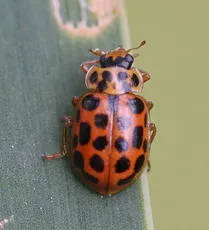
Water Ladybird
Anisosticta novemdecimpunctata
The Water Ladybird (also known as the 19-Spot Ladybird although the number of slots on the elytra may vary between 15 and 21) changes colour in autumn from red to beige/ochre colour, which may prove misleading when comparing specimens for identificat
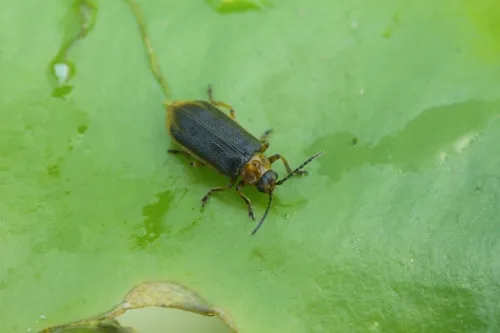
Water-lily Leaf Beetle
Galerucella nymphaeae
Size: 4 to 8 mm. Basic colour varies from yellowish brown to brick-red and the elytra usually have a paler margin. Galerucella nymphaeae is almost identical to G. sagittariae and they cannot easily be distinguished, though the food plant helps with s
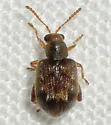
Waterfern Flea Beetle
Pseudolampsis guttata
Identification: Fuscous, densely clothed with fine short pubescence, legs and elytra paler, the latter are twice as wide as the prothorax, impressed behind the base; strife well impressed finely punctured, each with three dark spots, the first and th
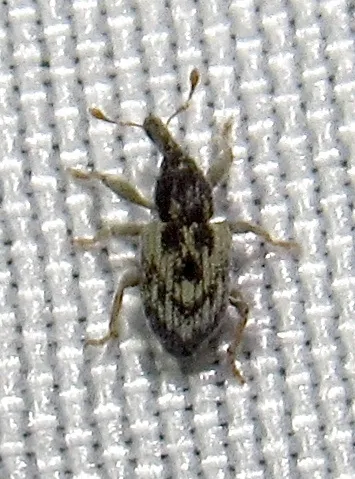
Waterlettuce Weevil
Neohydronomus affinis
used to control its host, an invasive aquatic plant
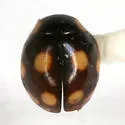
Weise's Lady Beetle
Hyperaspis weisei
Identification: Gordon's figures LECTOTYPE Described by Schaeffer from two specimens, both females, collected by Ottomar Dietz at Brownsville, Cameron Co., TX.
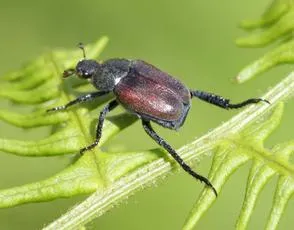
Welsh Chafer
Hoplia philanthus
Length 8-9 mm with a black head and thorax and reddish brown wing cases. It is usually seen in meadows and along hedgerows and woodland edges. The adult beetle can be seen from June to August. The beetles are active during the day, particularly in Ju
Western Ash Bark Beetle
Hylesinus californicus
at high-moderate risk of endangerment due to the EAB
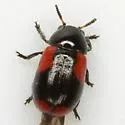
Western Babia
Babia tetraspilota
Identification: Western sp. ---------- Eastern sp. B. tetraspilota --------- B. quadriguttata CA-TX-NE-WY / Mex. = NM-FL-NY-MN / Can. Both spmns Det. E. G. Riley Both spmns coll. at the same site in Austin, TX
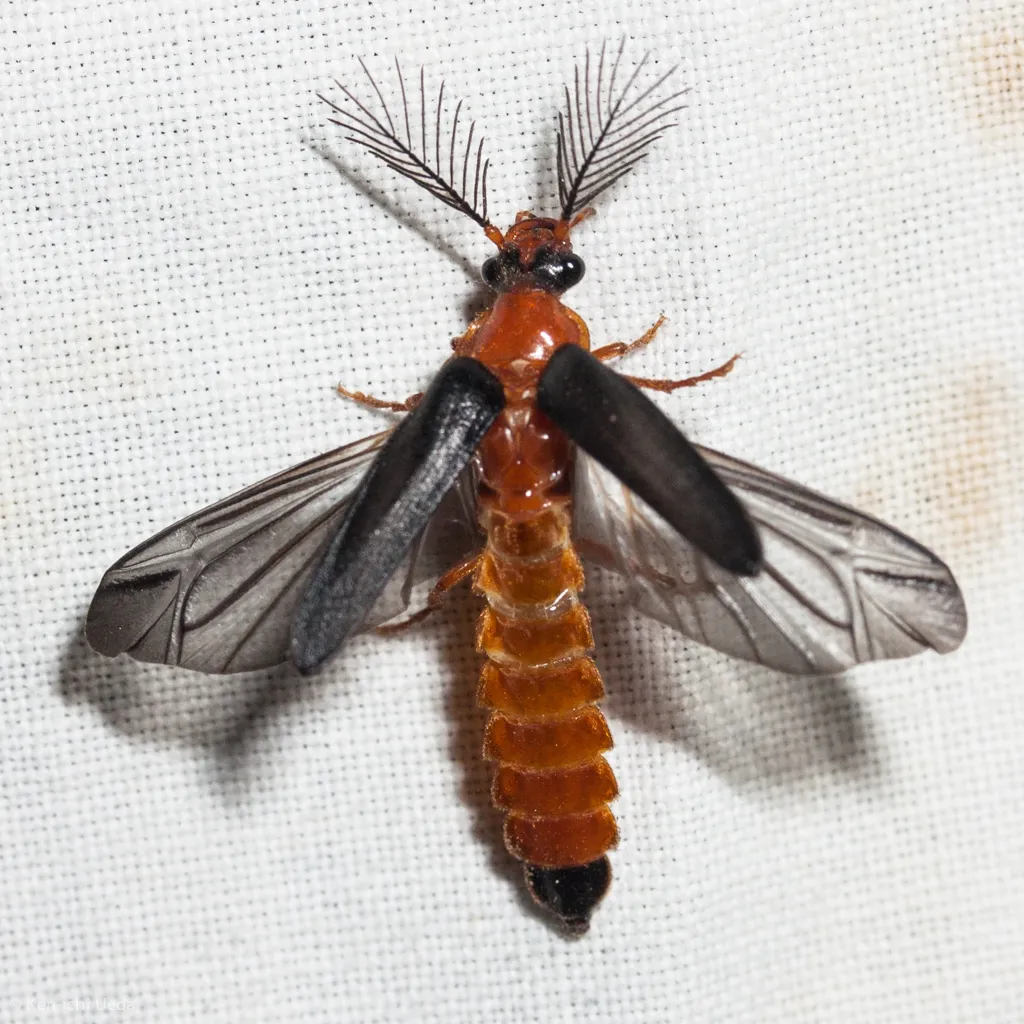
Western Banded Glowworm
Zarhipis integripennis
Female adults are larviform (as in all Phengodidae ) and are much larger than the males...see the images here and here .
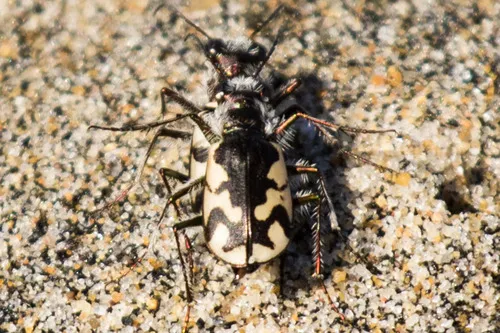
Western Beach Tiger Beetle
Cicindela latesignata
Cicindela latesignata is a ground beetle in the genus Cicindela ("common tiger beetles"), in the subfamily Cicindelinae ("tiger beetles"). Common names are "western beach tiger beetle" and "angel's tear". The distribution range of Cicindela latesigna
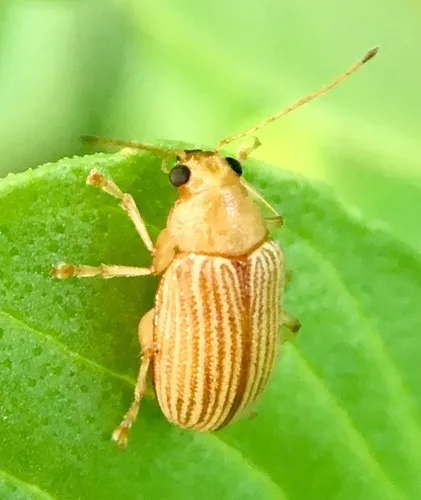
Western Brown Colaspis Leaf Beetle
Colaspis hesperia
Identification: A close relative of C. brunnea (e.NA), but differs in being generally a little larger with longer elytra and more coarsely punctate pronotum. It is yellow brown without dark margins or all dark undersurface, only the sides of the abdo
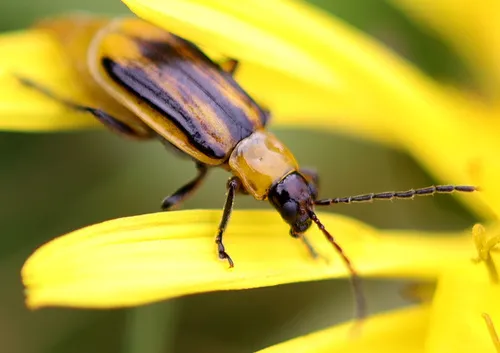
Western Corn Rootworm
Diabrotica virgifera
The Western corn rootworm, Diabrotica virgifera virgifera, is one of the most devastating corn rootworm species in North America, especially in the midwestern corn-growing areas such as Iowa. A related species, the Northern corn rootworm, D. barberi
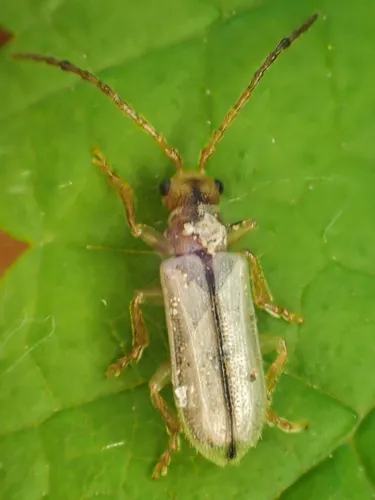
Western Fruit Beetle
Syneta albida
Syneta albida is a species of beetles from the family of leaf beetles, subfamily Synetinae.
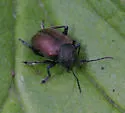
Western Grape Rootworm
Bromius obscurus
Can be a pest on grapes ( Vitis ). Practical importance probably low, because the species usually is rare to absent in regions where grapes are cultivated (true also in Eurasia)
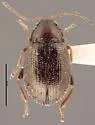
Western Potato Flea Beetle
Epitrix subcrinita
Identification: Body completely piceous with bronze luster; antebasal impression of pronotum highly reduced; pronotal punctures separated by twice their diameter, small; one row of setae between elytral striae; 11 striae on elytra. Det. A. Deczynski,
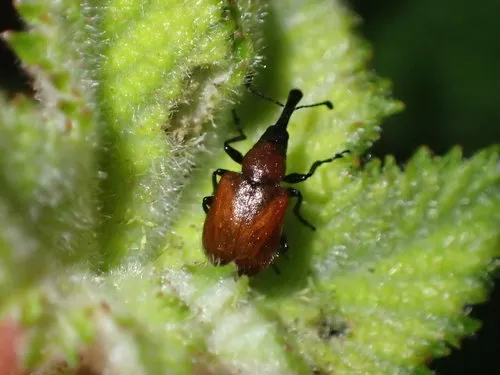
Western Rose Curculio
Merhynchites wickhami
Merhynchites wickhami, the western rose curculio, is a species of leaf rolling weevil in the beetle family Attelabidae. It is found in North America.
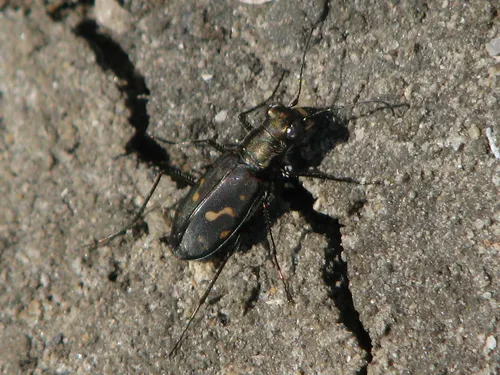
Wetsalts Tiger Beetle
Cicindelidia hemorrhagica
Identification: Dorsal color dark coppery brown to dark brownish-black; underside of abdomen red; elytral maculations creamy white, many individuals have broad and complete markings, some are intermediate, and some are completely unmarked; lateral ma
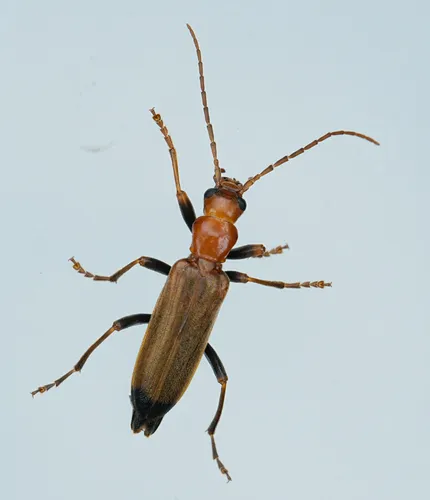
Wharf Borer
Nacerdes melanura
They fly to light, often to windows; thousands may suddenly appear in/around a building, disrupt business operations and be a nuisance. Larvae may infest pilings under wharves and under buildings near the water, boardwalks along the sea coast, wood f