
Family Click Beetles (Elateridae)
Elateridae is a family in the order Coleoptera. Browse 652 named species recorded in this family, or open an individual profile for its available identification and natural-history information.
Species in Elateridae (652)
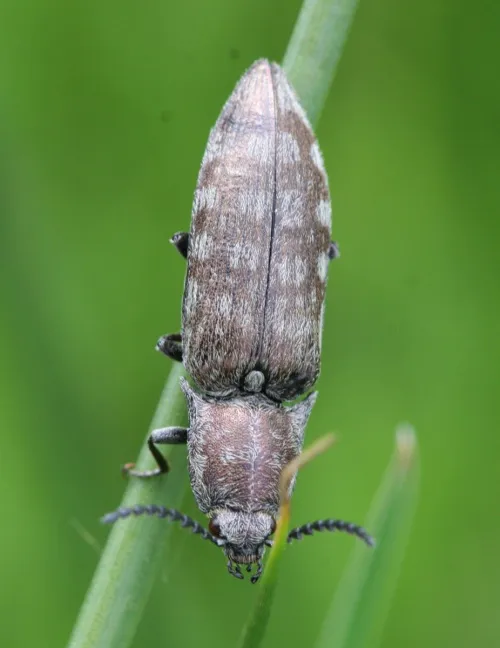
Marsh Click Beetle
Actenicerus sjaelandicus
Size 10 to 16mm. A large species, varying in shade from rather grey-brown to chestnut-brown. A fairly dense covering of lighter grey coloured hairs gives the pronotum and elytra a patterned appearance and strong ridges running down the length of the
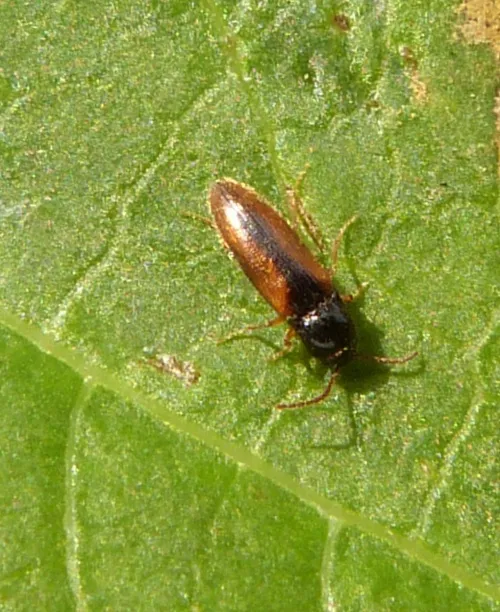
Adrastus pallens
Adrastus pallens
Length 4.5 to 5 mm. One of the smallest of the British Elaterids. The elytra, legs and antennae are orange-brown with a darker stripe down the centre of the elytra. The pronotum and head are black. The elytral striae are deep at the base but become s
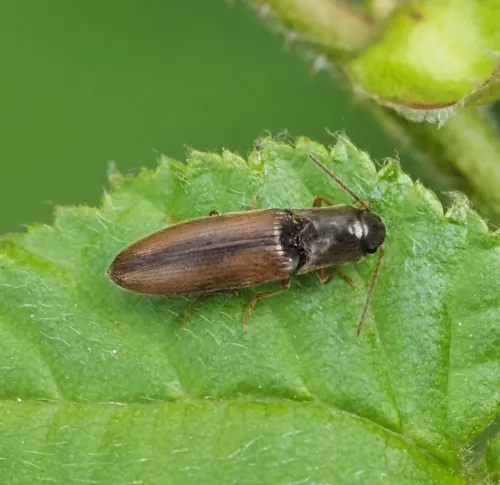
Agriotes acuminatus
Agriotes acuminatus
This is a brown click beetle, the head often appearing darker than the elytra. Ridges are visible running the length of the elytra. The legs and antennae are a light brown colour. Dalopius marginatus is very similar but is usually more reddish brown
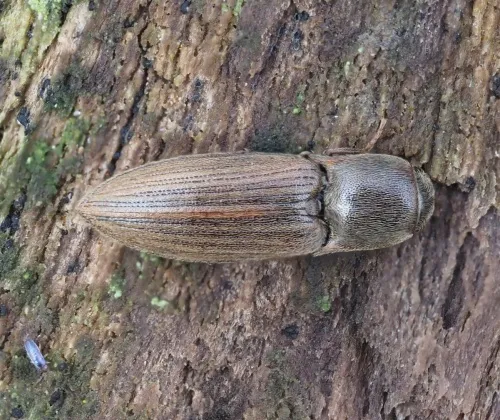
Agriotes lineatus
Agriotes lineatus
This 'click beetle' is relatively easy to identify due to the light and dark stripes along the length of its elytra. In grasses and other vegetation and amongst crops. The larvae, commonly called wireworms, live underground for up to four years where
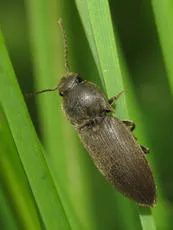
Wireworm Click Beetle
Agriotes obscurus
7 to 10 mm. This is a mid to dark brown coloured click beetle, with yellowish hairs on the elytra. The pronotum is rounded and distinctly contracted at the front. Agriotes lineatus is similar, but the stripes along the elytra have a dark and light ap
Agriotes pallidulus
Agriotes pallidulus
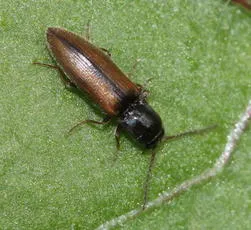
This 'click beetle' is about 3.5 to 5 mm in length. It has ribbed brown hairy elytra, often with a darker mid-line, plus a black head and thorax. Fairly widespread in England and Wales with fewer records from Scotland.
Agriotes sputator
Agriotes sputator
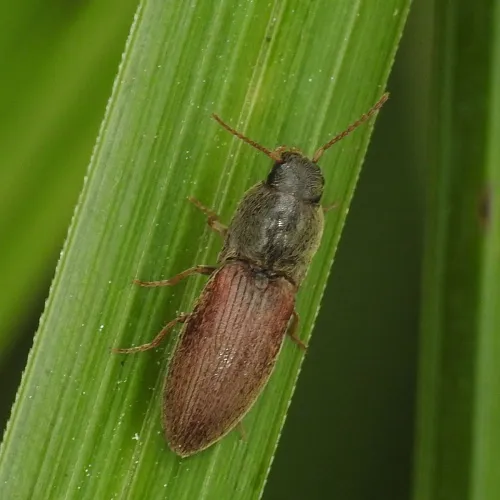
Size about 9mm - a mid brown species of click beetle. Note that A. lineatus may look similar, but the stripes along the elytra in that species have a two-tone dark and light appearance. Agriotes obscurus is another similar species, but the pronotum h
Agrypnus murinus
Agrypnus murinus
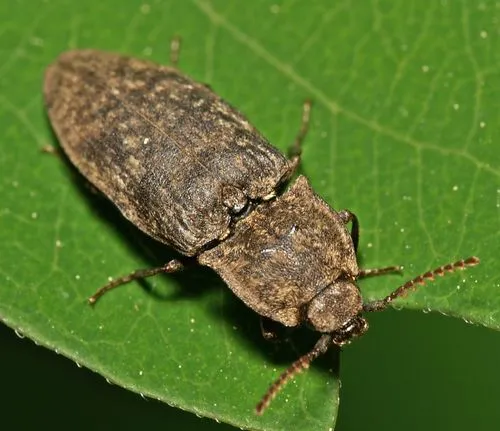
Length 10 to 17 mm. This species is distinctive due to the dense scale-like pubescence which almost covers the dorsal surface. Unless identified by a recognised expert, a photo is required. If the photo doesn't show the key ID features then in the co
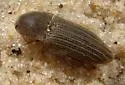
Agrypnus triplehornorum
Agrypnus triplehornorum
Collected on the surface of the sand after dark. None came to lights. (Knull 1973)
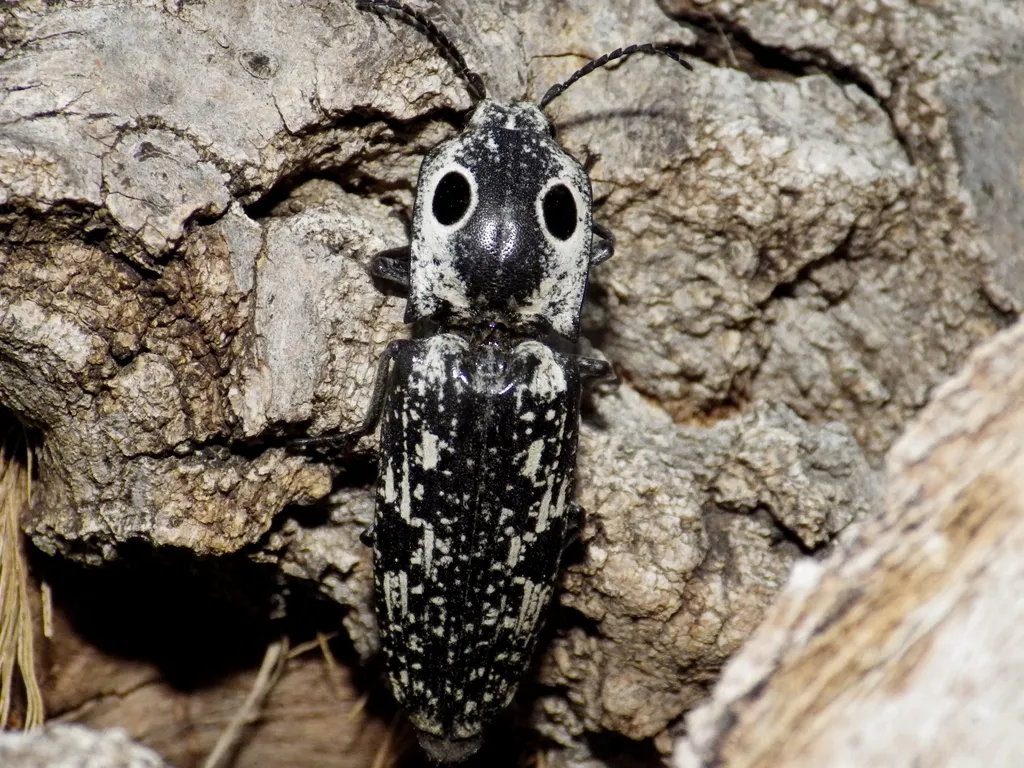
Texas Click Beetle
Alaus lusciosus
Identification: White markings on elytra are more clumped and patchy than those of A. oculatus , which has smaller, more evenly dispersed white spots. A. zunianus has very similar coloration but probably does not overlap in range. (E.G. Riley, pers.
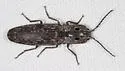
Blind Click Beetle
Alaus myops
Blind Click Beetle (Alaus myops) is a species in the family Elateridae, commonly known as click beetles, belonging to the order Coleoptera (Beetles). It is classified within the subfamily Agrypninae, tribe Hemirhipini, suborder Polyphaga, superfamily
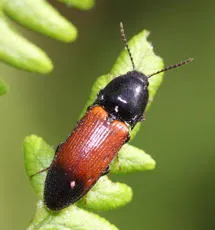
Ampedus balteatus
Ampedus balteatus
Approximately 1cm long. Ampedus balteatus is an attractive black and red click beetle - the predominantly red elytra turning black around two thirds down their length. Fairly wide ranging from broadleaved and mixed woodland to heath land and peat moo
Ampedus brevis
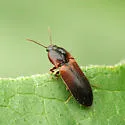
Ampedus brevis
Identification: Closely related to the widespread A. fusculus
Ampedus deletus
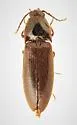
Ampedus deletus
Identification: Coloration somewhat variable, brownish to black (a form is also known with pale hind angles and very light coloration). Closely related and similar to A. nigrinus , separated by the pubescence coloration (dark black in nigrinus , brow
Ampedus fusculus
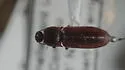
Ampedus fusculus
Identification: Lectotype • sutural vitta restricted to 3‒4 intervals, vs broadened over posterior ½‒⅔ in the similar western A. brevis
Ampedus impolitus
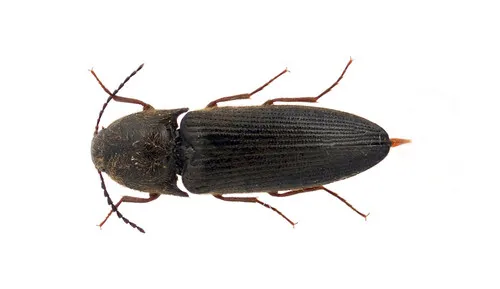
Ampedus impolitus
Ampedus impolitus (Ampedus impolitus) is a species in the family Elateridae, commonly known as click beetles, belonging to the order Coleoptera (Beetles). It is classified within the subfamily Elaterinae, tribe Ampedini, suborder Polyphaga, superfami
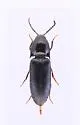
Ampedus laurentinus
Ampedus laurentinus
Identification: Amongst NE dark Ampedus: Dark pubescence, pronotal punctures umbilicate and not dense (separated by a diameter), ovipositor sub-rectangular
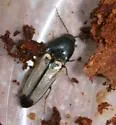
Ampedus linteus
Ampedus linteus
Identification: elytral suture & a patch at elytral apex black
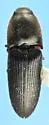
Ampedus molestus
Ampedus molestus
Identification: Subparallel pronotum and ovipositor valves subrectangular are diagnostic
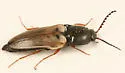
Ampedus nigricollis
Ampedus nigricollis
Identification: species has pale legs, compared to the dark legs of the similar Ampedus sellatus . Adults hibernate under bark.
Ampedus pedalis 0
Ampedus pedalis
Identification: habitus photo (specimen from TN id'd by B.A.Mathison)
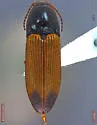
Ampedus quebecensis
Ampedus quebecensis
Identification: Pale form: Elytra red with apical dark spot cordiform, pronotal punctures extremely dense, specially on the sides. Pilosity dark/black Dark form: All black, separated from the other dark Ampedus by the piceous pubescence and the dense
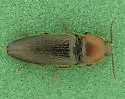
Ampedus rubricollis
Ampedus rubricollis
Ampedus rubricollis (Ampedus rubricollis) is a species in the family Elateridae, commonly known as click beetles, belonging to the order Coleoptera (Beetles). It is classified within the subfamily Elaterinae, tribe Ampedini, suborder Polyphaga, super
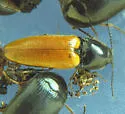
Ampedus sanguinipennis
Ampedus sanguinipennis
Identification: Coloration and shape apparently distinctive.
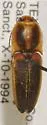
Anchastus augusti
Anchastus augusti
Identification: Distinctive First US records in 1987 and 1989 in the Sabal Palm Sanctuary, Brownsville, TX (Heffern & Brattain, 1991). Texas considered this a SGCN in 2012
Anchastus fumicollis
Anchastus fumicollis
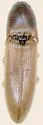
Identification: relatively easily recognized in the se.US by its size, color, long antennae, and subequal second and third antennomeres. Det. E. G. Riley, 2014 Type Locality: Royal Palm Park, Florida (for which there appears to be more than one in di
Aplotarsus incanus
Aplotarsus incanus
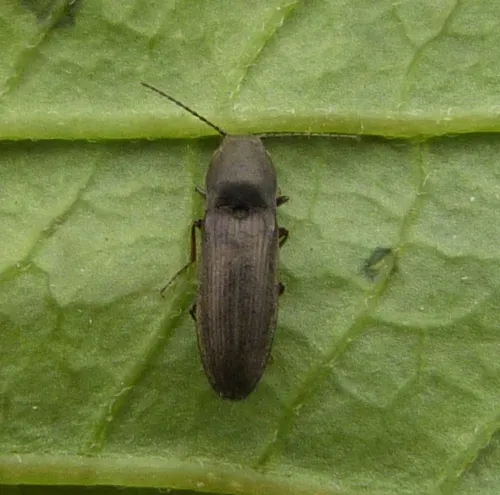
Length: 7 to 8.5 mm. Dull black and elongate with a fine pubescence. Legs are brown. The pronotum is very finely punctuated (denser in males). Elytral punctures larger than those on the pronotum and very dense - running into each other. The frons (be
Athous acanthus
Athous acanthus
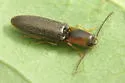
Athous acanthus (Athous acanthus) is a species in the family Elateridae, commonly known as click beetles, belonging to the order Coleoptera (Beetles). It is classified within the subfamily Dendrometrinae, tribe Dendrometrini, suborder Polyphaga, supe
Athous bicolor
Athous bicolor
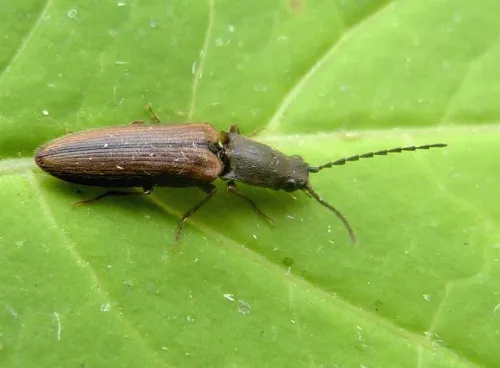
Size 8 to 10 mm. Quite an elongated species. The elytra are brown in colour with ridges and pits running down their length. The pronotum is slightly darker. The hairs are very similar in colour to the elytra. The legs and antennae are unicolourous wi
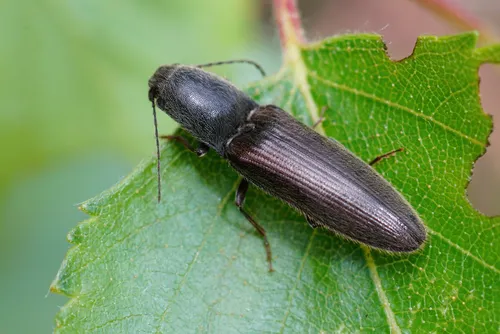
Athous haemorrhoidalis
Athous haemorrhoidalis
Approximately 15 mm long, this brown beetle has elytra covered in fine brown hairs. Found in hedgerows and meadows. The adults can be found on various types of vegetation. Like all click beetles, it can flick itself into the air when laid on its back
Cardiophorus brevis
Cardiophorus brevis
Specimens from Arizona previously identified as C. aptopoides are better attributable to C. brevis based on rexamimination of tarsal claw morphology [H. Douglas pers. comm. to B. Mathison 2018]
Cardiophorus panamapolis
Cardiophorus panamapolis
Identification: HOLOTYPE Type Locality: West Panama City Beach, Bay County, Florida
Cardiophorus robustus
Cardiophorus robustus
Had not been collected since 1965 until the BugGuide specimens (2012 and 2016)
Cardiophorus togatus
Cardiophorus togatus
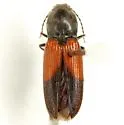
Identification: Horn (1871) noted a second spmn that "has the elytra entirely red with the apex only slightly darker ." Type series, two spmns, collected by Mr. Belfrage at Waco, Texas (Horn 1871)
Chalcolepidius lenzi
Chalcolepidius lenzi
Identification: antennae strongly serrate in male and serrate in female
Ctenicera cuprea
Ctenicera cuprea
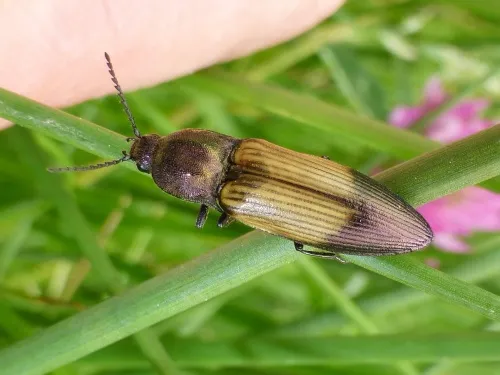
Length 11 to 16 mm. A large, very elongated and variable species. Colour combinations include dark yellow elytra with green tips and a green pronotum, wholly green or wholly purple. There is a conspicuous dipped line down the centre of the pronotum a
Ctenicera kendalli
Ctenicera kendalli
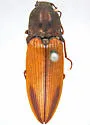
Larvae live in soil and are agricultural pests in recently cleared land
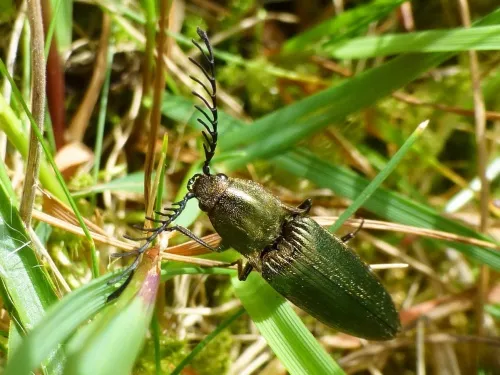
Ctenicera pectinicornis
Ctenicera pectinicornis
Length 14 to 17 mm. Large, unicolourous green metallic insect with very distinctive ridges running down the elytra and a sparse covering of hairs. A dipped line down the centre of the pronotum is present. Males have strongly toothed antennae that are
Dalopius cognatus-group
Dalopius cognatus-group
Identification: Brown's 1934 group of Dalopius based on: -phallobase of male genitalia as long as, or longer than, median lobe. -elytral apices truncated -color usually red-brown to dark-brown with pale humeral maculae. -distributed in Eastern North
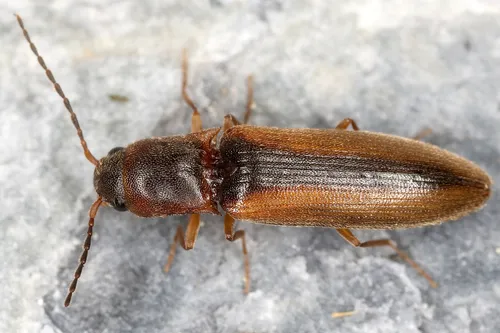
Dalopius marginatus
Dalopius marginatus
Size 6 to 8 mm. Elytra predominantly a dark orangey brown colour with a darker chestnut brown coloured stripe running down the centre, wider at the anterior and narrowing towards the posterior. Pits form rows down the length of the elytra. The pronot
Danosoma obtectum
Danosoma obtectum
Danosoma is neuter, so the correct combination is D. obtectum . uncommon
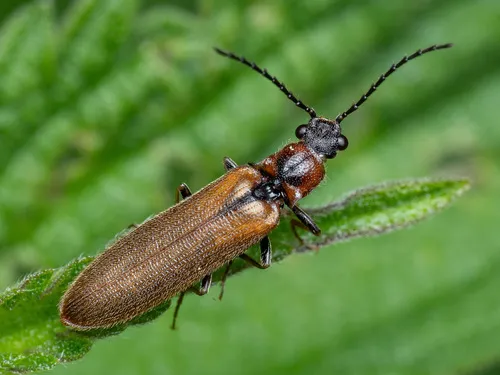
Denticollis linearis
Denticollis linearis
Length 9 to 13 mm. Although a variable species, the pronotum is always orangey red. The elytra can be various shades of brown and have pitted rows down their length. Various habitats from meadows to wooded areas. The larvae are found mainly under loo
Dicrepidius ramicornis
Dicrepidius ramicornis
Identification: male habitus photo (Casari & Biffi 2012) [paywall]
Dicrepidius serraticornis
Dicrepidius serraticornis
Identification: Males have serrate, rather than pectinate, antennae. They are superficially similar to members of the genus Dipropus but have an inverted V-shaped carina over the nasale.
Drapetes niger
Drapetes niger
Identification: first joint of antennae pale (Schaeffer, 1916) immediately recognized in our fauna by its elongate shape and long cinereous pubescence giving a grizzled appearance, usually elytra with pubescence forming a band just posterior of mid-l
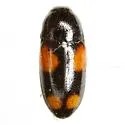
Drapetes quadripustulatus
Drapetes quadripustulatus
Identification: the only Neactic species with four elytral maculae, two on each elytron.
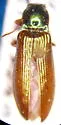
Hatch's Click Beetle
Eanus hatchi
Threatened with habitat loss; possibly extirpated at former Snohomish county collection localities (see fact sheet below).
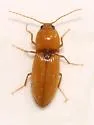
Esthesopus parcus
Esthesopus parcus
Identification: Det. B. Mathison, 2018 Type coll'ed by Horn at Camp Grant, AZ
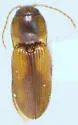
Esthesopus pusio
Esthesopus pusio
Identification: A smaller and more depressed species than any in our fauna.
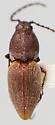
Floridelater americanus
Floridelater americanus
Identification: The posteriorly bilobed scutellum is unique among Elateridae examined. This species was described by Horn as Coptostethus americanus . At the time, Horn seemed hesitant for this generic placement but felt it the best choice at the tim
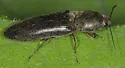
Gambrinus griseus
Gambrinus griseus
Gambrinus griseus (Gambrinus griseus) is a species in the family Elateridae, commonly known as click beetles, belonging to the order Coleoptera (Beetles). It is classified within the subfamily Dendrometrinae, tribe Dendrometrini, suborder Polyphaga,
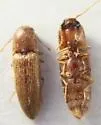
Glyphonyx ferruginosus
Glyphonyx ferruginosus
Type Locality: Huachuca Mountains, AZ (Schaeffer 1916)
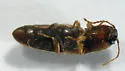
Glyphonyx inquinatus
Glyphonyx inquinatus
Identification: Supra-antennal carina meets clypeus at center, margins of prosternal process form a v-shape (meeting at apex), size usually > 4.5 mm, elytral suture usually dark, interval nine without groove widening at apex
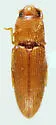
Glyphonyx knulli
Glyphonyx knulli
Identification: -frontal and nasale carinae joined at the middle -prosternal process margined to apex -size and color -length of elytra only slightly more than twice the width -lateral pronotal carina extending to almost, but not beyond, 3/4 length o
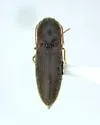
Glyphonyx kulashi
Glyphonyx kulashi
Identification: "Body color very dark brown (chocolate), legs rufous yellow, vestiture whitish." -Smith & Balsbaugh 1984
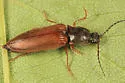
Hemicrepidius decoloratus
Hemicrepidius decoloratus
Identification: This species is most-similar to H. hemipodus but can usually be separated by having pale elytra. Melanic forms can be very difficult to separate from H. hemipodus without microscopic examination. In late 2020, this species was elevate
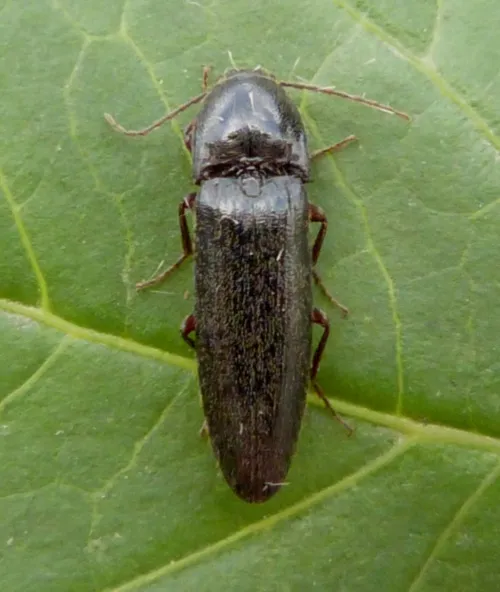
Hemicrepidius hirtus
Hemicrepidius hirtus
One of the larger British Click Beetles at 13 to 17mm long. The species is uniformly black but with a slight silvery pubescence due to a covering of fine hairs. The elytral stria are deep giving a ridged appearance. The pronotum is rounded and the le
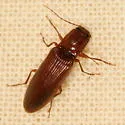
Hemicrepidius melanophthalmus
Hemicrepidius melanophthalmus
Identification: This species and H. bilobatus are the only two North American Hemicrepidius with ecarinate pronotal hind angles. In late 2020, this species was removed from synonomy with H. bilobatus
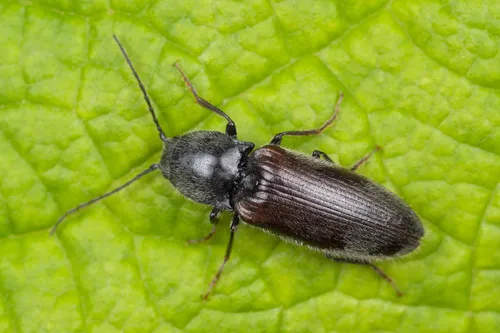
Hemicrepidius niger
Hemicrepidius niger
Identification: coloration vary from brown to black earliest record in our area: ON 2008
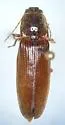
Hemicrepidius ruficornis
Hemicrepidius ruficornis
In late 2020, H. ruficornis was removed from synonomy with H. nemnonius
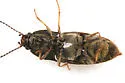
Abbreviated Wireworm
Hypnoidus abbreviatus
Identification: A diagnostic feature is the relatively pubescent scutellum Abbreviated wireworm is the ESA approved common name for this species.
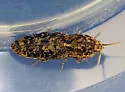
Marbled Click Beetle
Lacon marmoratus
Identification: Has yellowish scales that form blotches on the elytra. Pronotum with median groove. Pronotum and elytra with dense, coarse punctures.
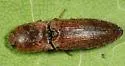
Lacon mexicanus
Lacon mexicanus
Identification: last key couplet: Scales on dorsum mixed black and golden ; elytral usually has a post median scaleless band Det. E. G. Riley, 2010
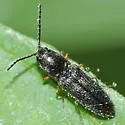
Limonius basilaris
Limonius basilaris
Identification: Black on top except for yellow or brown hind angles of pronotum, legs and first antenomere Det. M. A. Quinn, 2012
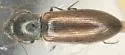
Liotrichus falsificus
Liotrichus falsificus
Identification: mczbase.mcz.harvard.edu/MediaSet.cfm?media_id=194635
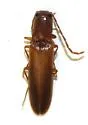
Megapenthes longicornis
Megapenthes longicornis
Type Locality: Huachuca Mtns, Arizona (Schaeffer 1916)
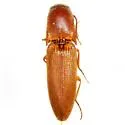
Megapenthes nigriceps
Megapenthes nigriceps
Identification: The specimen described is a male and closely related to rufilabris from which it differs in color, longer antennal joints, coarser punctation of prothorax, relatively longer hind tarsal joints and rather deeply emarginate hind coxal p
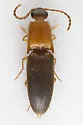
Megapenthes rufilabris
Megapenthes rufilabris
Megapenthes rufilabris (Megapenthes rufilabris) is a species in the family Elateridae, commonly known as click beetles, belonging to the order Coleoptera (Beetles). It is classified within the subfamily Elaterinae, suborder Polyphaga, superfamily Ela
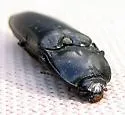
Melanactes piceus
Melanactes piceus
Identification: A large, "polished black" click beetle ( 3 ) . Blatchley ( 4 ) describes this species: (Note that this historical reference should not necessarily be relied on for keying, but the narrative description should be valid.)
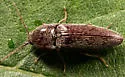
Melanotus americanus
Melanotus americanus
Identification: Small size, subequal antennomeres II and III (in male), rounded pronotum with sparse punctures usually support identification of this species externally. Male genitalia are also distinctive .
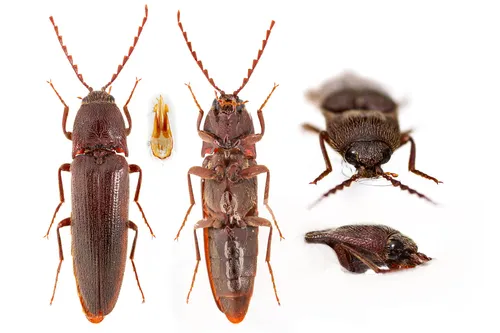
Melanotus castanipes
Melanotus castanipes
Length 13 to 19 mm It is unicolourous black, or with slightly browner head and is very elongated with tapering elytra. Longitudinal rows of pits are obvious, as are densely scattered pits on the pronotum. The legs and antennae are black and the anten
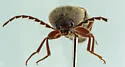
Melanotus clandestinus
Melanotus clandestinus
Identification: Small size; subequal antennomeres II and III; dense pronotal punctures; dense antennae setae.
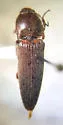
Melanotus communis
Melanotus communis
Identification: Only reliable way to identify this species is examination of male genitalia. Similar congeners are nearly identical externally. See also info. under Melanotus communis -compex .
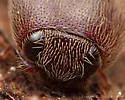
Melanotus communis Complex
Melanotus communis-complex
members of this complex usually cannot be reliably identified without examination of male genitalia, and include the following species : Some other species are similar but can often be ruled out based on external characters:
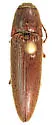
Melanotus corticinus
Melanotus corticinus
Identification: Large size (among members of the americanus -complex), subequal antennomeres II and III, and long antennae make this species readily-identified externally .
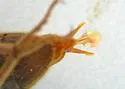
Melanotus decumanus
Melanotus decumanus
Identification: The large, jutting frons is the best external feature to separate this species from other members of the communis -complex. Males genitalia are also distinctive .
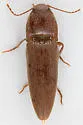
Melanotus indistinctus
Melanotus indistinctus
Identification: Male. - Same as communis , but average size smaller, a little darker in color, frontal margin little wider than black border, parantennal fovea small but distinct, and pronotal pimctures somewhat larger and denser. Genitalia with slen
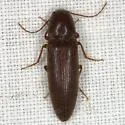
Melanotus lanceatus
Melanotus lanceatus
Identification: closely related to M. longulus ; the smaller pronotal punctures in lanceatus are the most noticeable difference
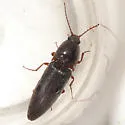
Melanotus pertinax
Melanotus pertinax
Identification: appendages are of a different color than the body; no other American Melanotus species has this coloration
Melanotus taenicollis 0
Melanotus taenicollis
Hume Douglas distinguished Ampedus rubricus from M. taenicollis : "This identification based on the lack of basal sublateral pronotal plicae (present in Melantotus), the fine red-brown vestiture (coarse and white in M. taenicollis ), and also the dar
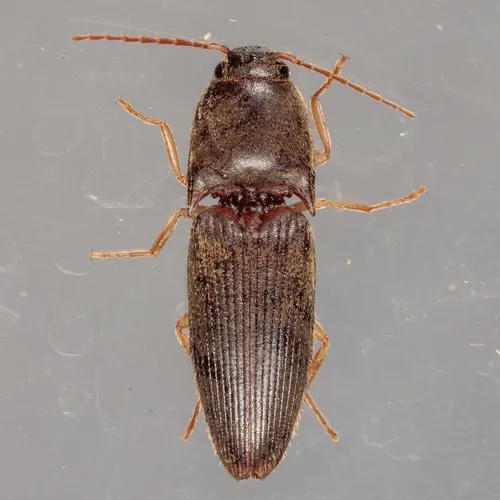
Pasture Wireworm
Monocrepidius exsul
Identification: pronotal angles bicarinate, elytral apices bidentate first record in our area: 1932
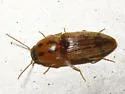
Monocrepidius pictus
Monocrepidius pictus
Identification: similar to the native C. bellus but has a small tubercle at pronotal base and pronotal maculae broken (producing a smily face pattern)
Monocrepidius scissus
Monocrepidius scissus
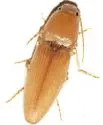
Lectotype Locality: Tybee Island, Chatham Co., Georgia
Monocrepidius similis
Monocrepidius similis
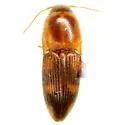
Original name Monocrepidius texanus Schaeffer 1909 turned out to be a junior homonym of M. texanus Candèze. Schaeffer corrected his junior homonym later that year and proposed the replacement name Monocrepidius similis . However, Monocrepidius simili
Green Click Beetle
Nitidolimonius resplendens
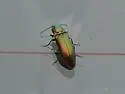
Relatively common, but usually encountered as single specimens
Octinodes gracilior
Octinodes gracilior
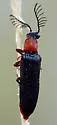
Identification: This graceful species because of its shining appearance, more or less cylindrical prothorax, with coarse yet well spaced punctures and contrasting coloration, stands well apart from our California species. note that the reddish pronot
Paradonus beckeri
Paradonus beckeri
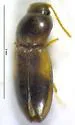
Identification: body usually with a humeral spot on each elytron, sometimes a faint apical spot, spots rarely completely absent
Paradonus obliquatulus
Paradonus obliquatulus
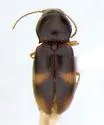
Identification: transverse yellow band on elytron distinctive among our spp.
Bipectinate Click Beetle
Pityobius anguinus
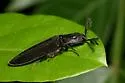
Fairly uncommon. Other than a few lines of text in American Beetles, the only other reference I found was a brief mention in Coleoptera or Beetles East of the Great Plains ( 3 )
Pristilophus pulcher
Pristilophus pulcher
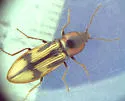
Identification: elytra dark yellowish with large black cross-shaped marking; black dash descending from humeral angle either separated from or merging with lateral arm of black cross; pronotum with middorsal black stripe, bordered laterally by dark o
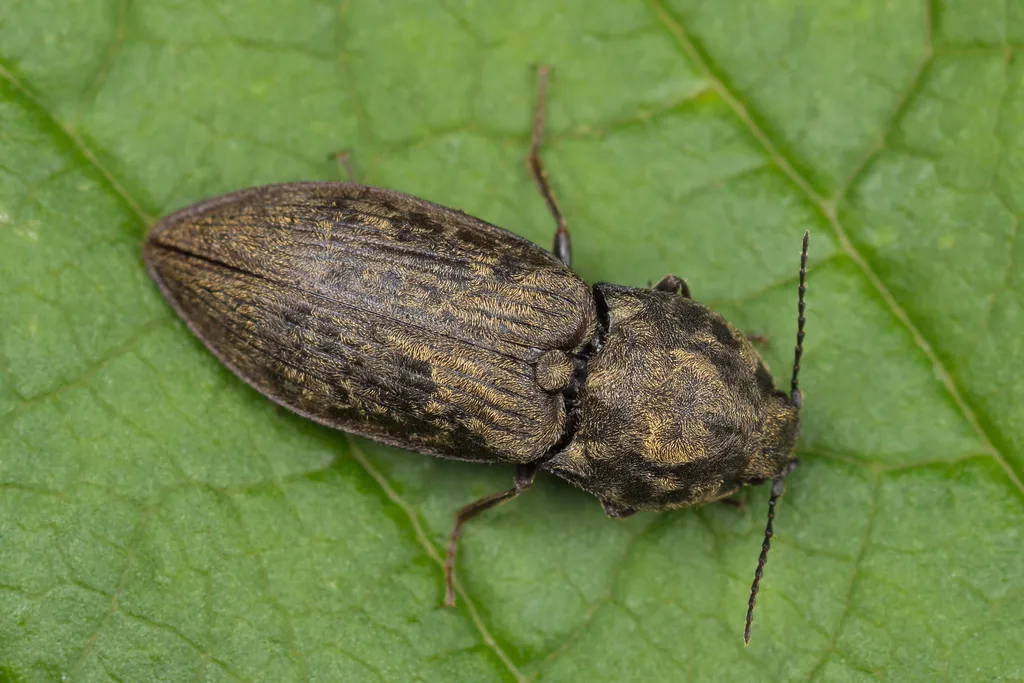
Prosternon tessellatum
Prosternon tessellatum
Length 9 to 11 mm. Rather rounded in appearance for a click beetle, uniformly dark in colour. Almost the whole of the surface area of the elytra covered in short golden brown hairs (in parts at right angle to striae, in parts parallel, giving the che
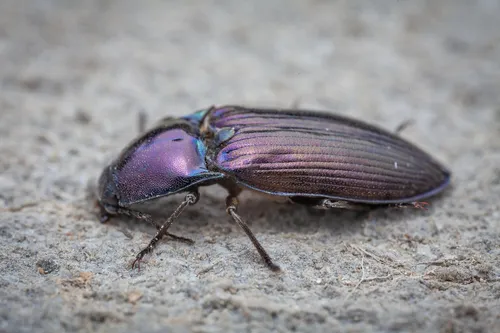
Selatosomus aeneus
Selatosomus aeneus
Length 11-17 mm. A large, metallic species with wide pronotum and elytra and no obvious covering of hairs. Colour ranges from green/gold to green/purple. Ridges are obvious down the length of the elytra. The legs are dark brown/black in colour and th
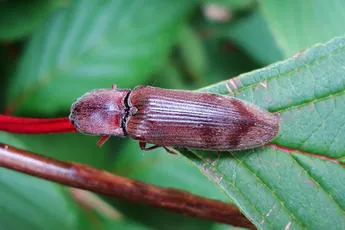
Stenagostus rhombeus
Stenagostus rhombeus
Adult beetles are up to 20 mm in length. It is quite an elongated species of click beetle that is predominantly orange/brown in colour over the head, pronotum and elytra. Approximately half way down the elytra there is usually a slightly darker cross
Zorochros cucullatus
Zorochros cucullatus
Identification: easily known by the form of the apical border of the thorax of which the middle forms a short lobe partly concealing the head from above. On each side of this lobe is a rather deep sinuation causing the front angles to be more acute a
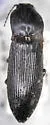
Acteniceromorphus crestonensis
Acteniceromorphus crestonensis
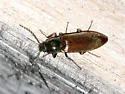
Acteniceromorphus sagitticollis
Acteniceromorphus sagitticollis
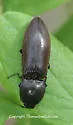
Acteniceromorphus spinosus
Acteniceromorphus spinosus
Acteniceromorphus stricklandi 0
Acteniceromorphus stricklandi
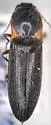
Acteniceromorphus umbricola
Acteniceromorphus umbricola
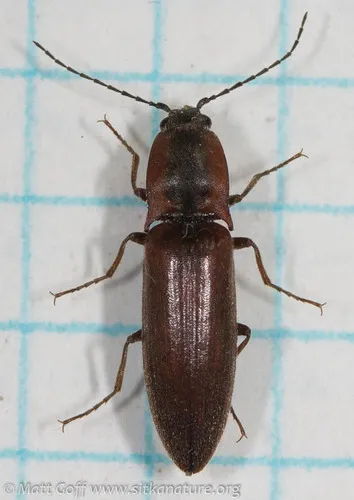
Acteniceromorphus volitans
Acteniceromorphus volitans