
Family Longhorn Beetles (Cerambycidae)
Cerambycidae is a family in the order Coleoptera. Browse 935 named species recorded in this family, or open an individual profile for its available identification and natural-history information.
Species in Cerambycidae (935)
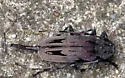
Lesser Pine Borer
Acanthocinus nodosus
Identification: pattern distinctive; antennae ~3x as long as body in males, ~2x in females; female pygidium modified into a tube for ovipositing ♂ ♀
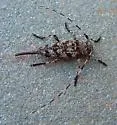
Acanthocinus obsoletus
Acanthocinus obsoletus
Identification: variable, but tarsi always entirely dark-haired comes to lights
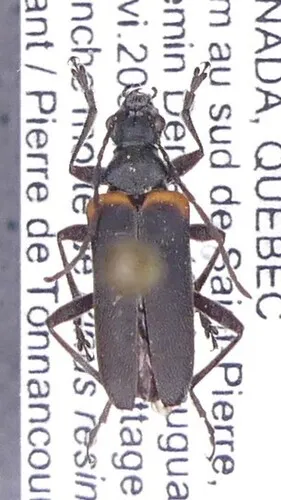
Acmaeops discoideus
Acmaeops discoideus
Acmaeops discoideus is a long-horned beetle in the flower longhorn subfamily, Lepturinae. It is found in the United States and Canada, and feeds on Virginia pine.
Acmaeopsoides rufula
Acmaeopsoides rufula
Identification: Similar to Acmaeops , but has the eyes notched, and only a weak basal swelling on the pronotum. Pronotum angled at middle, with appressed pubescence, and elytra uniformly reddish-brown
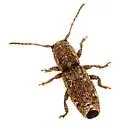
Adetaptera wickhami
Adetaptera wickhami
Type Locality: One specimen taken in Brownsville, Texas by Prof. Wickham, in June.
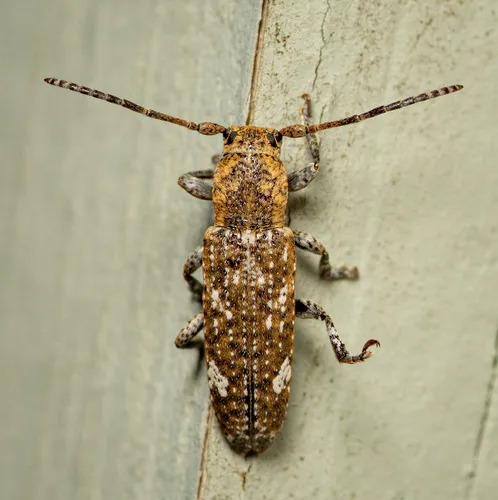
Adetus brousii
Adetus brousii
Adetus brousii (Adetus brousii) is a species in the family Cerambycidae, commonly known as longhorn beetles, belonging to the order Coleoptera (Beetles). It is classified within the subfamily Lamiinae, tribe Apomecynini, suborder Polyphaga, superfami
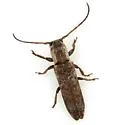
Adetus croton
Adetus croton
Type Locality: Texas: Hidalgo Co., Santa Ana NWR, 23.IV.2009, D. Heffern & B. Raber col. (TAMU). initially discovered in Texas by Edward Riley in 1987 while collecting Chrysomelidae on the shrub, Croton humilis L. (Euphorbiaceae), along Highway 4 nea
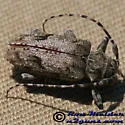
Aegomorphus modestus
Aegomorphus modestus
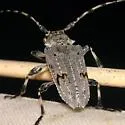
Identification: M-shaped elytral markings on a mottled background combined with strong lateral pronotal spines are distinctive fairly common; attracted to lights and bait traps
Aegomorphus morrisii
Aegomorphus morrisii
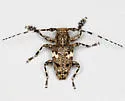
Aegomorphus morrisii (Aegomorphus morrisii) is a species in the family Cerambycidae, commonly known as longhorn beetles, belonging to the order Coleoptera (Beetles). It is classified within the subfamily Lamiinae, tribe Acanthoderini, suborder Polyph
Aegomorphus quadrigibbus
Aegomorphus quadrigibbus
Identification: Elytra with well-defined, undulating, antemedial white macula
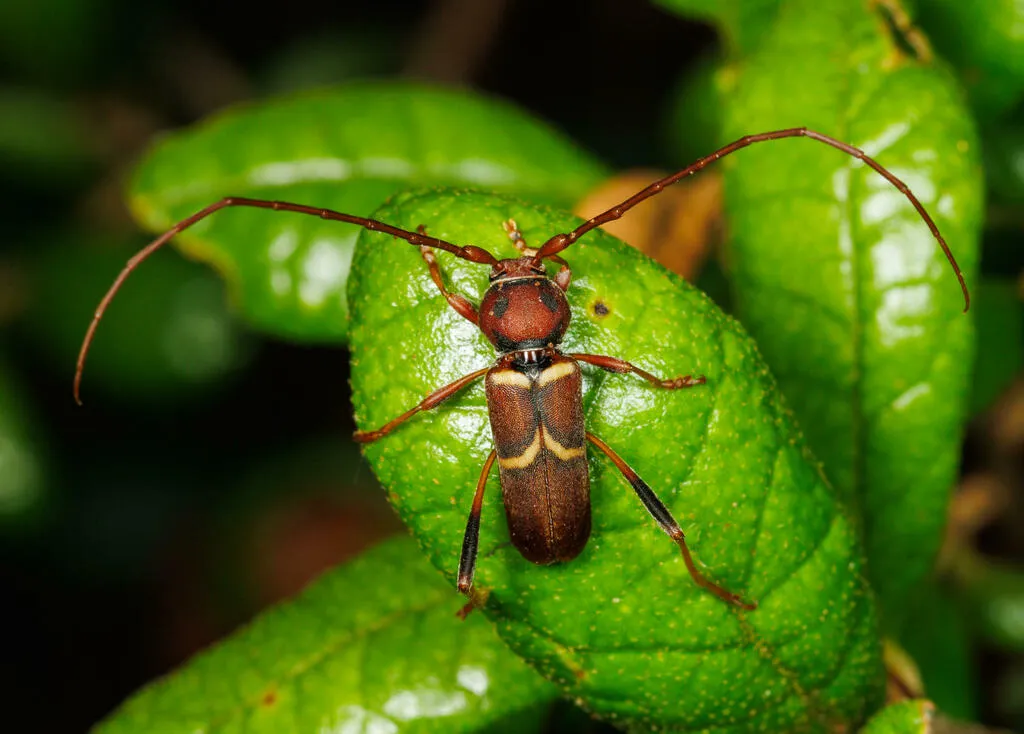
Horn's Aethecerinus Long-Horned Beetle
Aethecerinus hornii
Aethecerinus hornii is a species of beetle in the family Cerambycidae. It was described by Lacordaire in 1869. It is endemic to Florida scrubs in Highlands and Lee counties in Florida.
Agallissus lepturoides
Agallissus lepturoides
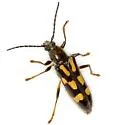
Identification: Unmistakable... LeConte (1873) was the first to report this species from Texas (with no further data). ( 3 ) Hovore et al. (1987) reported: "This exotic [looking] species has been listed from Texas several times, but we have been unab
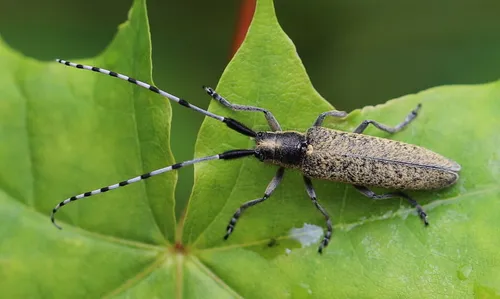
Golden-bloomed Grey Longhorn
Agapanthia villosoviridescens
A large and very distinctive longhorn beetle with a golden iridescent bloom on the elytra and thorax. The antennae are also very distinctive with dark and light bands. The elytra are somewhat bristly with hairs. Length up to 20mm. Mainly found in moi
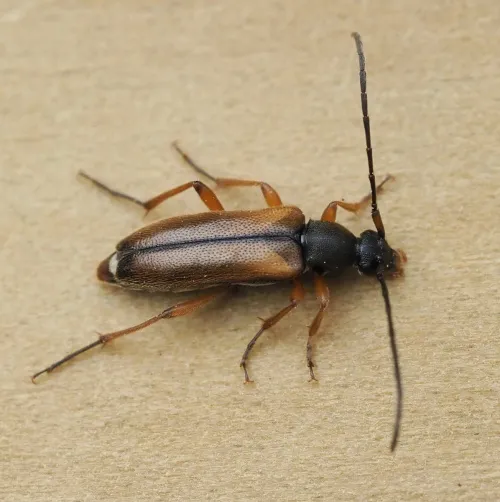
Alosterna tabacicolor
Alosterna tabacicolor
It can be recognised by its pale tan elytra divided by a darker brown mid-line. Feeds on flowers, particularly in well wooded areas. The larvae live in the bark of various trees but especially Oaks. Very common, particularly in southern Britain. No a
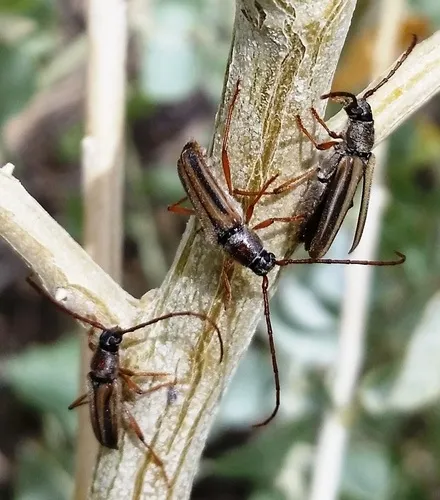
Amannus vittiger
Amannus vittiger
Amannus vittiger is a species of beetle in the family Cerambycidae. It was described by John Lawrence LeConte in 1858.
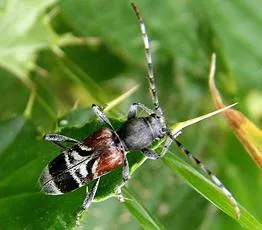
Anaglyptus mysticus
Anaglyptus mysticus
The length can be up to 13mm. This distinctive longhorn beetle has elytra with basal 1/3rd reddish/chestnut and the remaining 2/3rds black with 3 to 4 transverse pubescent bands. The thorax is grey/black. In the melanic variety hieroglyphicus the bas
Analeptura lineola
Analeptura lineola
Identification: Color pattern variable One of the most abundant summer day-flying longhorns in Great Smoky Mountains NP
Dimorphic Flower Longhorn Beetle
Anastrangalia laetifica
Identification: Male elytra mostly uniform dark, female elytra red with black spots ♂♀ • ♂, brown form • ♀♀
Ancylocera bicolor
Ancylocera bicolor
Identification: Males have much longer antennae ♂ ♀
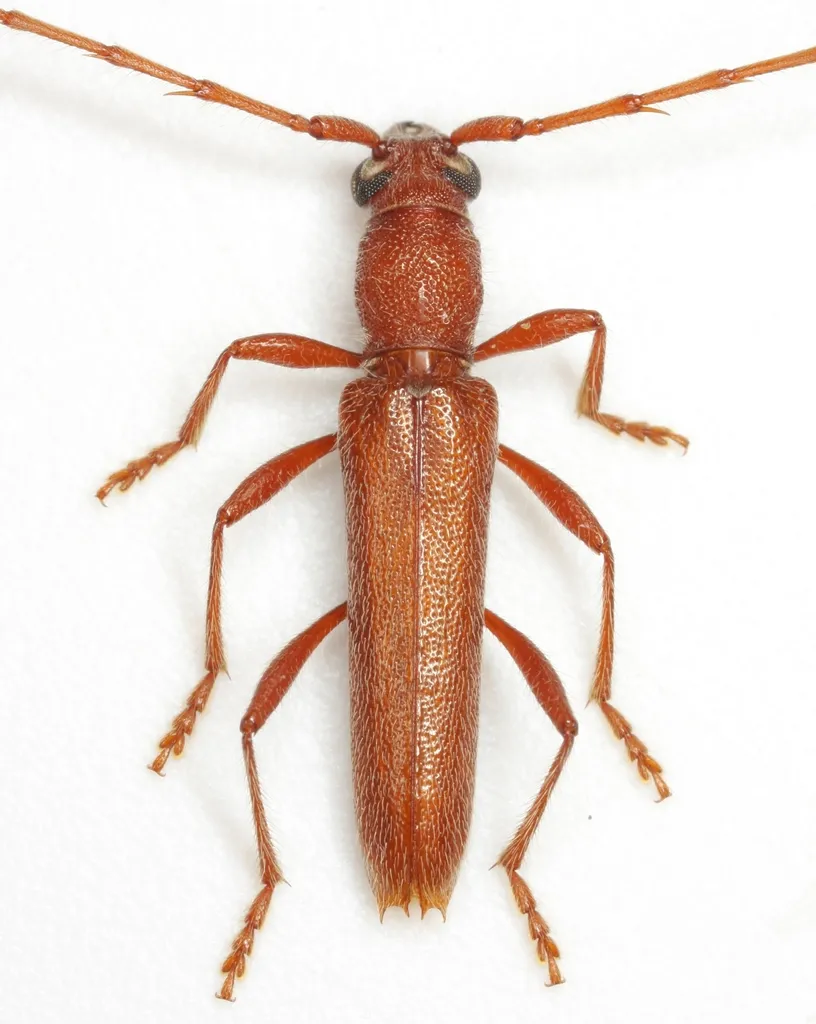
Aneflomorpha aculeata
Aneflomorpha aculeata
Aneflomorpha aculeata is a species of beetle in the family Cerambycidae. It was described by John Lawrence LeConte in 1873.
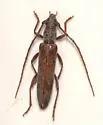
Aneflomorpha rectilinea
Aneflomorpha rectilinea
can be abundant at lights after the monsoon rains begin
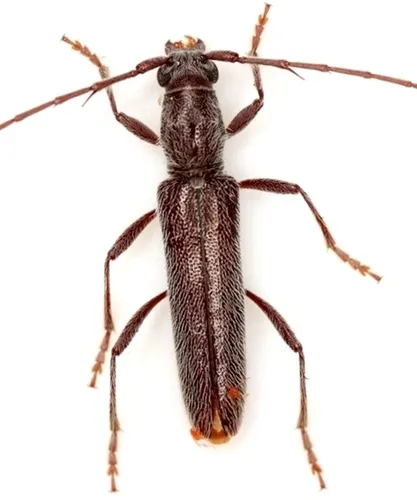
Aneflomorpha tenuis
Aneflomorpha tenuis
Aneflomorpha tenuis is a species of beetle in the family Cerambycidae. It was described by LeConte in 1854.
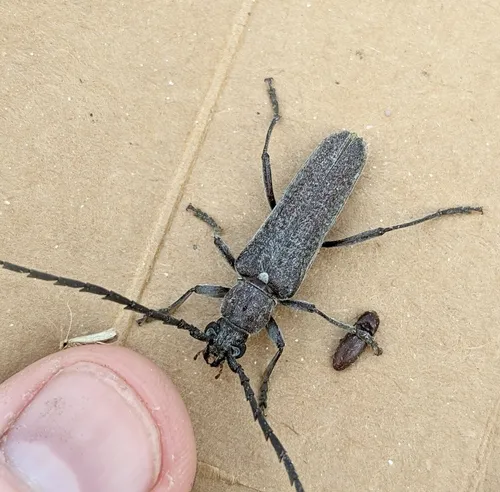
Aneflus obscurus
Aneflus obscurus
Aneflus obscurus is a species of beetle in the family Cerambycidae. It was described by John Lawrence LeConte in 1873.
Anelaphus asperus 0
Anelaphus asperus
no specimens outside of western Texas (Big Bend region) have been examined, and its occurrence west of Texas is doubtful. Type Locality: Holotype male and paratype labeled Panther Junction, 4000 ft, Chisos Mountains, Big Bend National Park, Texas, Ma
Anelaphus belkini 0
Anelaphus belkini
Identification: The other oak Anelaphus species described by Skiles, A. belkini , is not included in this complex since the structure of the elytral apex (rounded to a spinose suture), antenna (scape and third antennomere weakly sulcate), and pronotu
Anelaphus debilis
Anelaphus debilis
Identification: Elytral apices rounded to spinose suture. Elytra with off-white pubescent patches scattered throughout (Fig. 17b). Basal sutural region of elytra with ochre pubescence. commonly collected at lights, at fermenting molasses bait, and by
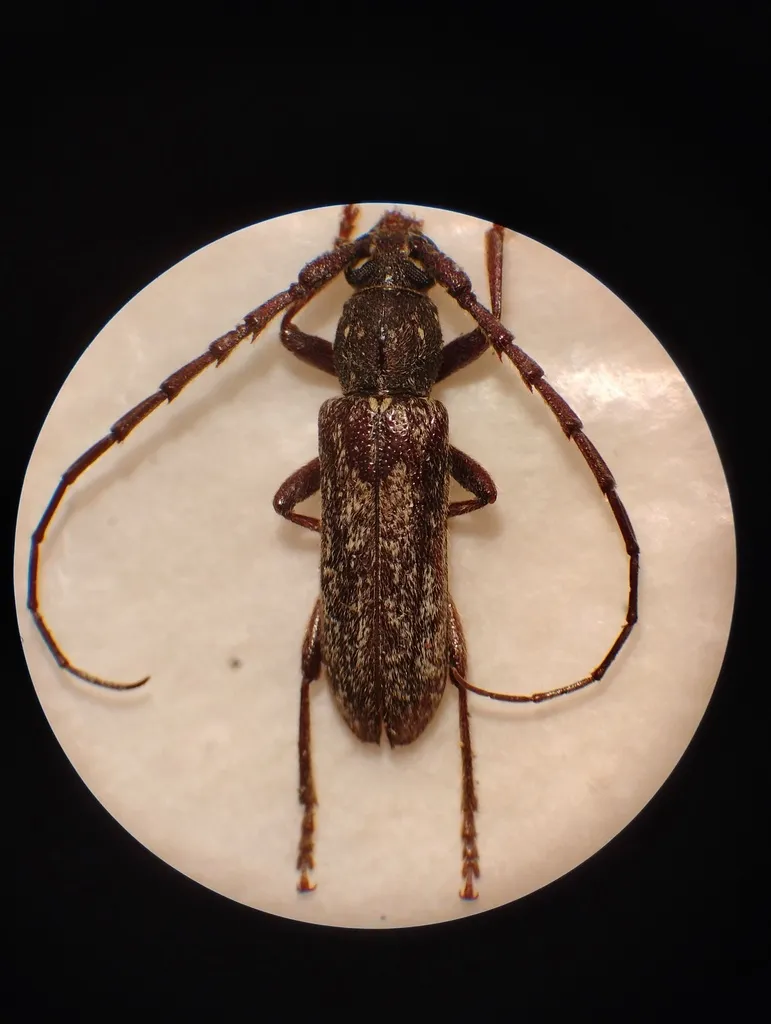
Anelaphus dentatus
Anelaphus dentatus
Anelaphus dentatus is a species of beetle in the family Cerambycidae. It was described by Chemsak in 1962 while he was doing scientific exploration.
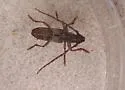
Anelaphus inermis
Anelaphus inermis
Identification: Pronotum with small, dense maculae of white or ochre pubescence on disk. Pronotal callus oval and less than one-third length of pronotum (Fig. 21a) (indistinct in some specimens). Type Locality: St. John's Bluff, Duval County, Florida
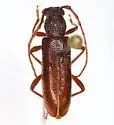
Anelaphus magnipunctatus
Anelaphus magnipunctatus
Identification: Det. (and discussion of diagnostic characters) S. Lingafelter, 2018
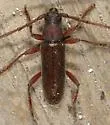
Anelaphus moestus
Anelaphus moestus
Anelaphus moestus (Anelaphus moestus) is a species in the family Cerambycidae, commonly known as longhorn beetles, belonging to the order Coleoptera (Beetles). It is classified within the subfamily Cerambycinae, tribe Elaphidiini, suborder Polyphaga,
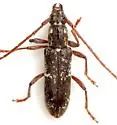
Anelaphus niveivestitus
Anelaphus niveivestitus
Identification: Elytral apex truncate or very weakly bidentate. Elytra with bright white appressed pubescent patches most concentrated at middle and apical region. (Fig. 17a). Basal sutural region of elytra without ochre pubescence. Type Locality: Es
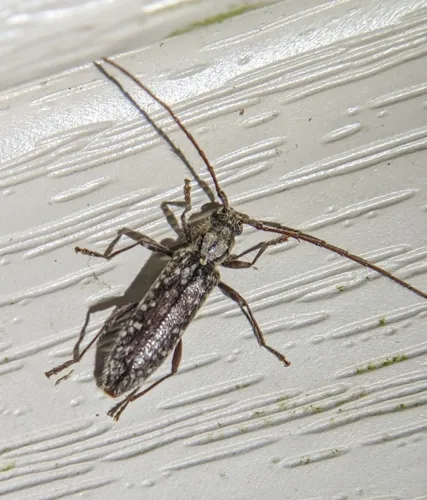
Anelaphus pumilus
Anelaphus pumilus
Anelaphus pumilus is a species of beetle in the family Cerambycidae. It was described by Newman in 1840.
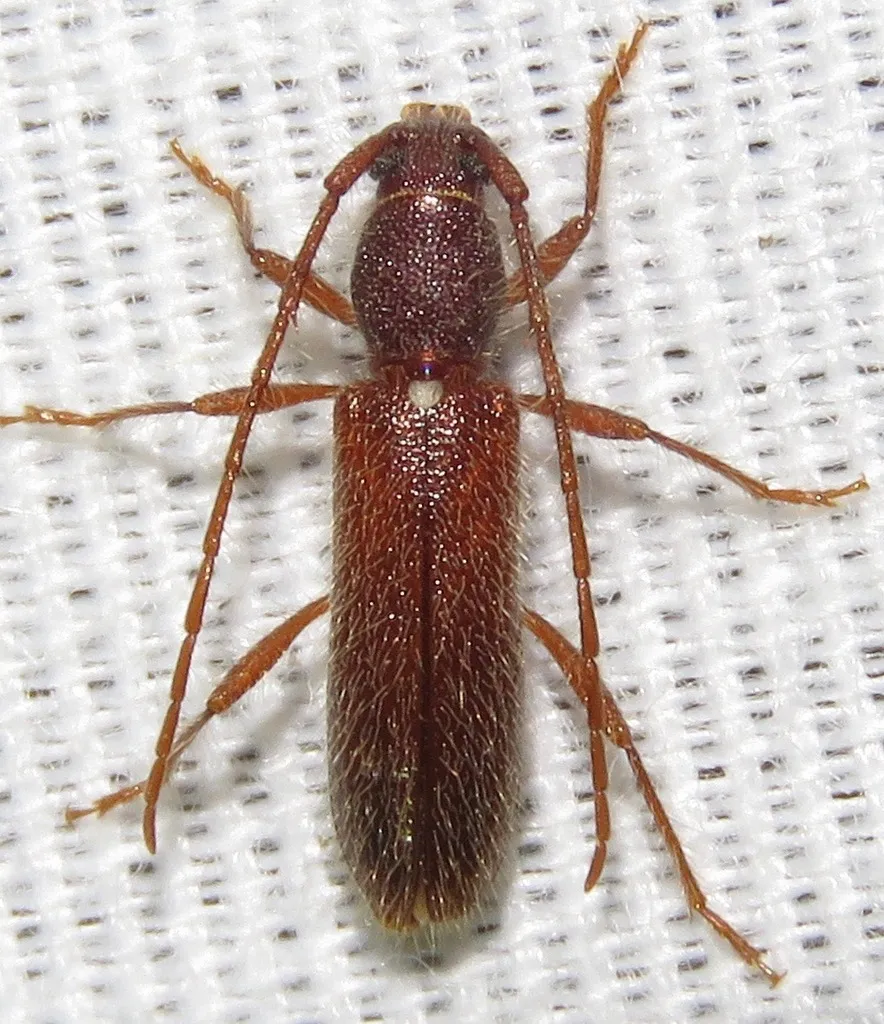
Anopliomorpha rinconia
Anopliomorpha rinconia
Identification: "The alveolate punctures on the pronotum, bright white scutellum pubescence, and relatively long third antennomere with pronounced spine are all characters of [ Anopliomorpha ] and not present in Gymnopsyra ." - Steven Lingafelter, 20
Anoplocurius altus
Anoplocurius altus
Holotypc and allotypc collected in Davis Mountains. TEXAS, July 2, 1940. Paratypes from the same locality ranging in dates from June 6 to July 6, D. J. and J. N. Knull collectors.
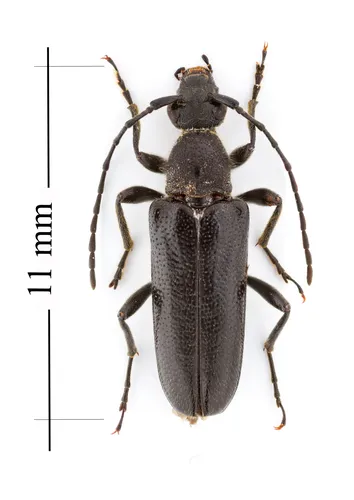
Anoplodera pubera
Anoplodera pubera
Anoplodera pubera (Anoplodera pubera) is a species in the family Cerambycidae, commonly known as longhorn beetles, belonging to the order Coleoptera (Beetles). It is classified within the subfamily Lepturinae, tribe Lepturini, suborder Polyphaga, sup
Asian Longhorned Beetle
Anoplophora glabripennis
Identification: black, irregulary marked with white splotches; long black and white striped antennae
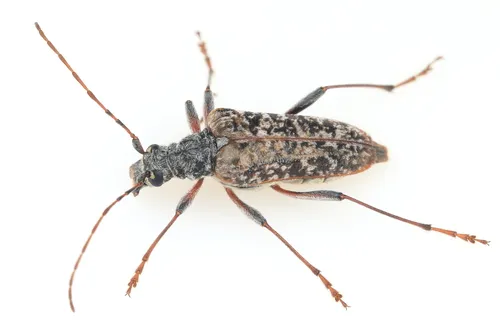
Mottled Longhorned Beetle
Anthophylax attenuatus
Identification: Head: Black, covered with gray-white pile. Middle line dark. Eyes black, indented (emarginate) around antenna bases. Not metallic like other Anthophylax. Antenna: Reach to about middle of elytra, male antenna shorter. Reddish. Thorax
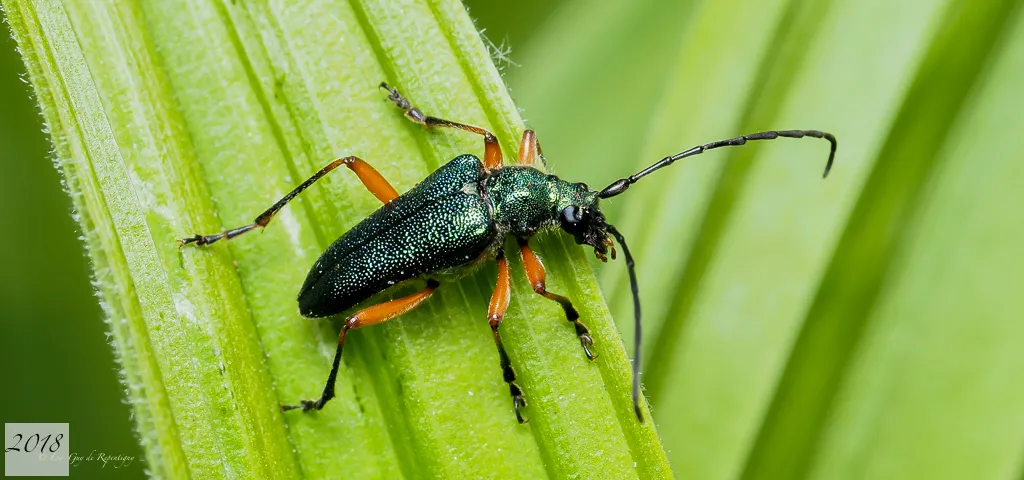
Red-footed Longhorn Beetle
Anthophylax cyaneus
Anthophylax cyaneus is the species of the Lepturinae subfamily in long-horned beetle family. This beetle is distributed in Canada, and United States.
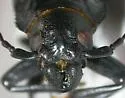
Live-oak Root Borer
Archodontes melanopus
Identification: A. m. melanopus resembles Mallodon dasystomus (see Yanega )
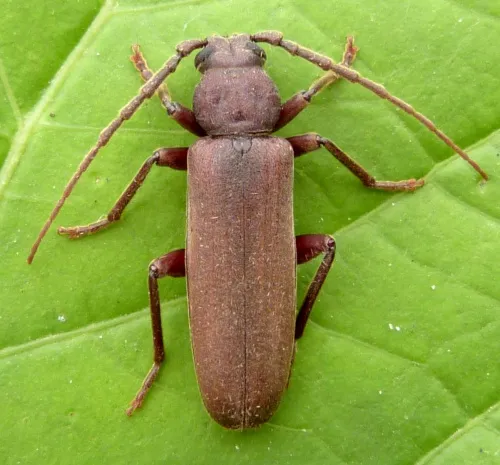
Arhopalus rusticus
Arhopalus rusticus
A large longhorn beetle reaching about 25 mm in length and occasionally bigger. It is a uniform mahogany brown in colour Very similar to Arhopalus ferus but separated by the third tarsal segment which is deeply divided in A. rusticus but only less th
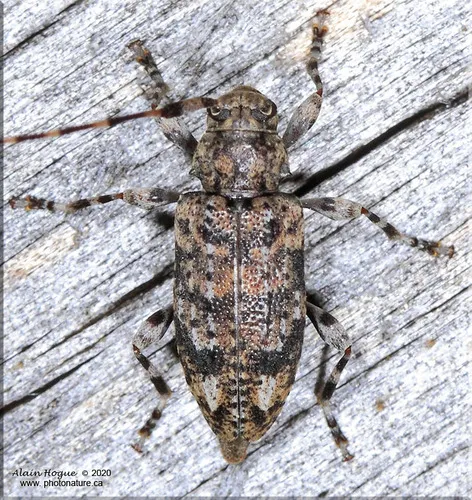
Variegated Longhorned Beetle
Astyleiopus variegatus
Astyleiopus is a genus of beetles in the family Cerambycidae. It is monotypic, being represented by the single species, Astyleiopus variegatus.
Astylidius parvus
Astylidius parvus
Identification: Best recognized by the rounded but prominent lateral pronotal tubercles and the strong dark ridges on the elytral base
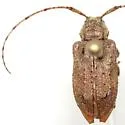
Astylopsis arcuata
Astylopsis arcuata
Identification: Black sides are diagnostic within the genus
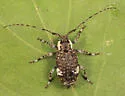
Astylopsis macula
Astylopsis macula
Identification: Elytra with large mottled gray/white postmedial transverse macula attracted to freshly cut maple and butternut trees; possible vector of the Butternut Canker Fungus, devastating butternut trees in Canada and ne. US ( Halik & Bergdahl
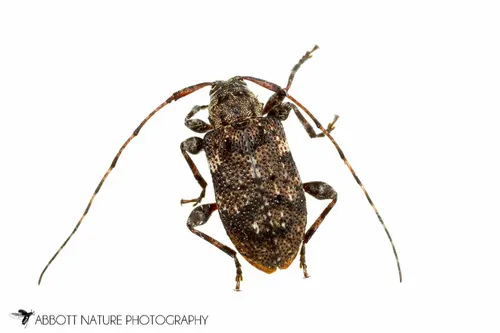
Six-speckled Long-horned Beetle
Astylopsis sexguttata
Astylopsis sexguttata is a species of longhorn beetles of the subfamily Lamiinae. It was described by Say in 1826.
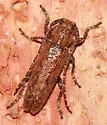
Ataxia brunnea
Ataxia brunnea
Identification: pubescence uniformly reddish-brown; elytral tips rounded very rare ; ~90% of the known specimens from Missouri (Dan Heffern, pers. comm. to MAQ, 2012)
Ataxia crypta
Ataxia crypta
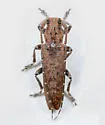
Identification: Distinguished from similar species by the obliquely truncate elytral apices. Also distinct 'cicatrix' (excavation) on the scape and a deep sulcus on the mesosternum. (Ted C. MacRae, 7.vi.2007) attracted to UV lights
Small Cedar Borer
Atimia confusa
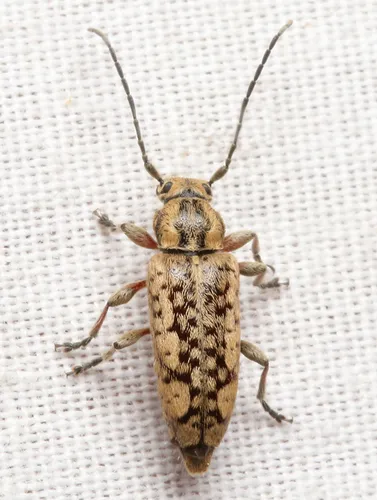
Small Cedar Borer (Atimia confusa) is a species in the family Cerambycidae, commonly known as longhorn beetles, belonging to the order Coleoptera (Beetles). It is classified within the subfamily Spondylidinae, tribe Atimiini, suborder Polyphaga, supe
Atrypanius haldemani
Atrypanius haldemani
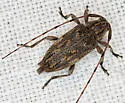
Identification: Elytral markings variable, elytral tips angled. Prothorax has distinctive shape and markings Det. E. G. Riley, 2010
Atylostagma politum formerly glabra
Atylostagma politum
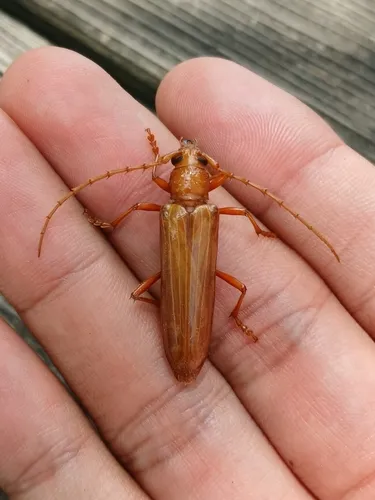
Atylostagma is a genus of beetles in the family Cerambycidae, containing a single species, Atylostagma politum.
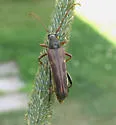
Bellamira scalaris
Bellamira scalaris
Identification: Large, with short head and long "neck" (pronotum). Elytra "bottle-shaped", with somewhat variable markings. Male has expanded tip of abdomen
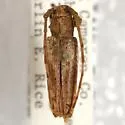
Bisaltes tibialis
Bisaltes tibialis
Identification: males have flamboyant tibia Type Locality: Brownsville, Cameron Co., TX (Schaeffer 1908) Texas considers this a SGCN ( 5 )
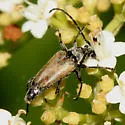
Brachyleptura circumdata
Brachyleptura circumdata
Identification: Smaller and paler than other congeners. Note strongly tapering pronotum and strong "neck" .
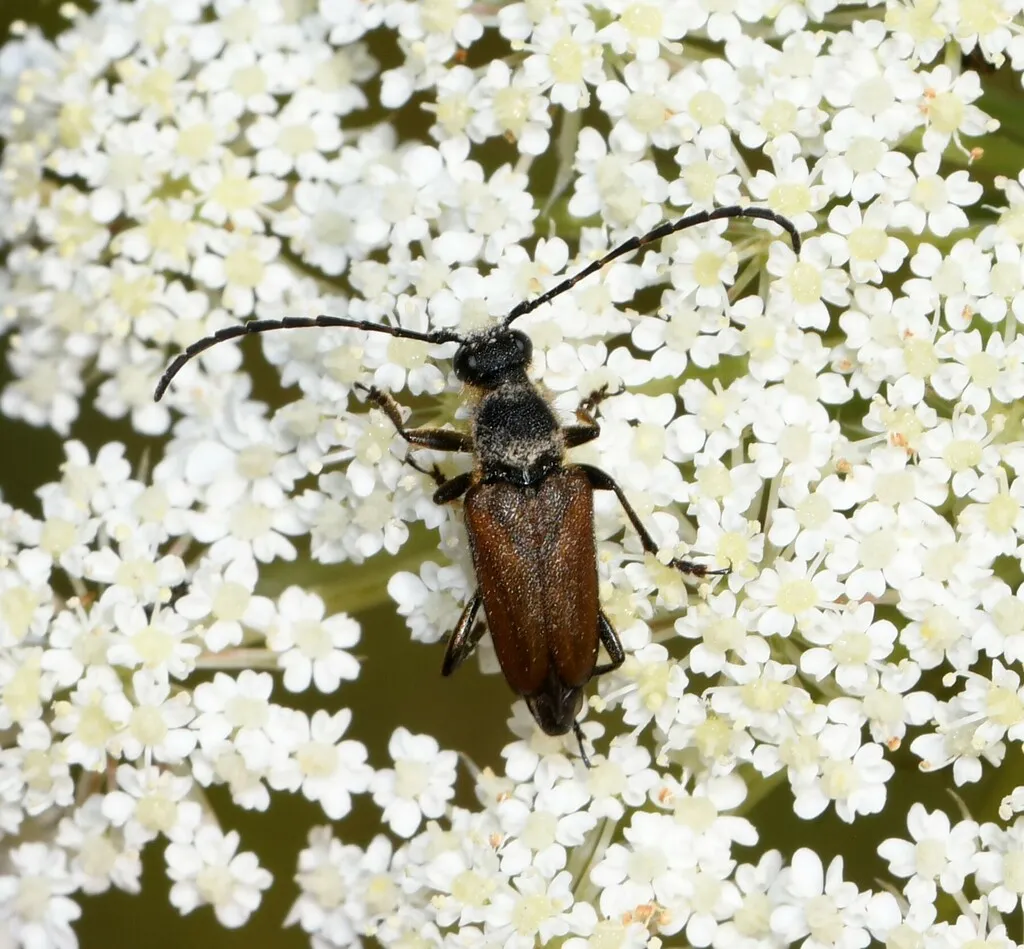
Brachyleptura dehiscens
Brachyleptura dehiscens
Brachyleptura dehiscens is a species of beetle in the family Cerambycidae. It was described by LeConte in 1859.
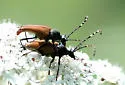
Brachyleptura rubrica
Brachyleptura rubrica
Identification: Pronotum sharply angled, almost square, at the front. Elytra orange. Antennae prominently banded.
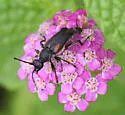
Brachyleptura vagans
Brachyleptura vagans
Identification: Amount of red on elytra variable but umbone black. Typocerus lugubris is similarly colored, sometimes with umbone red but all-black antennae (vs banded in B. vagans ). B. champlaini is very similar.
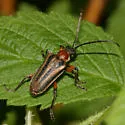
Brachysomida bivittata
Brachysomida bivittata
Identification: highly variable in punctation & color (all-orange to all-black)
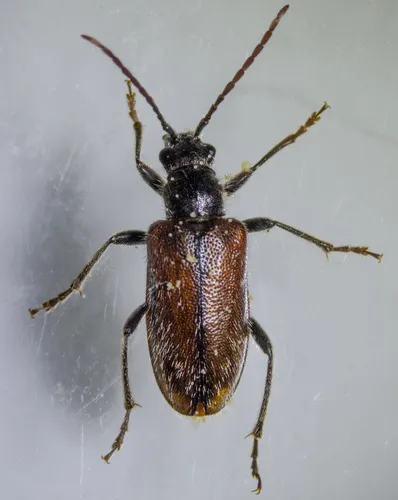
Brachysomida californica
Brachysomida californica
Brachysomida californica is the species of the Lepturinae subfamily in long-horned beetle family. It was described by John Lawrence LeConte in 1851 and is endemic to California, USA where it is found only in Santa Cruz Mountains.
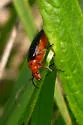
Brachysomida nigripennis
Brachysomida nigripennis
Identification: see comment at (...smooth, shining pronotum without pubescence at the base and along the margins... [no] dense punctation along the pronotal midline or distinct pubescence on the elytra)
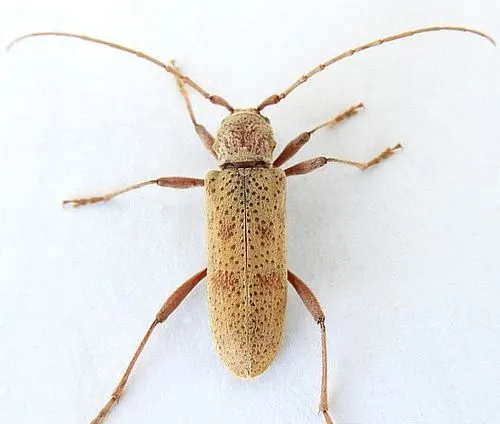
Brothylus gemmulatus
Brothylus gemmulatus
Brothylus gemmulatus is a species of beetle in the family Cerambycidae. It was described by LeConte in 1859.

Cacostola lineata
Cacostola lineata
Type Locality: Brownsville, Texas Texas considers this a "Species of Greatest Conservation Need" (SGCN) ( 4 )
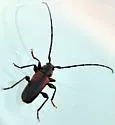
Japanese Cedar Longhorn Beetle
Callidiellum rufipenne
Identification: dorsal habitus earliest record in our area: BC 1927 (Hoebeke 1999)
Callidiellum villosulum
Callidiellum villosulum
Identification: Image - IPM Images.org The Brown Fir longhorned beetle has been found in wood trunks of artificial Christmas trees imported from China. Between 1999 and 2001, more than 20 interceptions of this species were recorded.
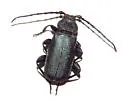
Blackhorned Pine Borer
Callidium antennatum
Usually found on fallen pine branches in the Sierra in spring
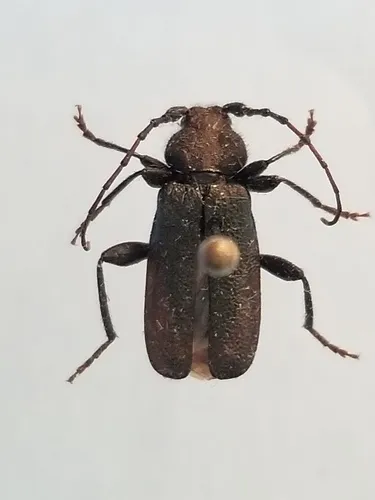
Callidium cicatricosum
Callidium cicatricosum
Callidium cicatricosum is a species of beetle, also referred to as the long-horned beetle, in the Cerambycidae family. It was described by Mannerheim in 1853.
Callidium pseudotsugae
Callidium pseudotsugae
Identification: "The all black color, lack of pronotal callosities, and Douglas Fir host all separate this species from the very similar C. antennatum " (from Dennis Haines' comment on this page ).
Black-horned Juniper Borer
Callidium texanum
Identification: Hard to ID to species from images (Steven Lingafelter, pers. comments to EG)
Callimoxys nigrinus
Callimoxys nigrinus
Identification: Very difficult to separate from C. ocularis
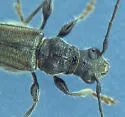
Callimoxys sanguinicollis
Callimoxys sanguinicollis
Callimoxys sanguinicollis (Callimoxys sanguinicollis) is a species in the family Cerambycidae, commonly known as longhorn beetles, belonging to the order Coleoptera (Beetles). It is classified within the subfamily Cerambycinae, tribe Stenopterini, su
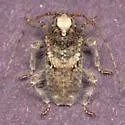
Callipogonius cornutus
Callipogonius cornutus
Identification: The most distinctive character that sets this species apart from all other Lamiinae found in the Lower Rio Grande Valley is the exceptionally long “flying” hairs that arise from most parts on the body. These hairs are especially consp
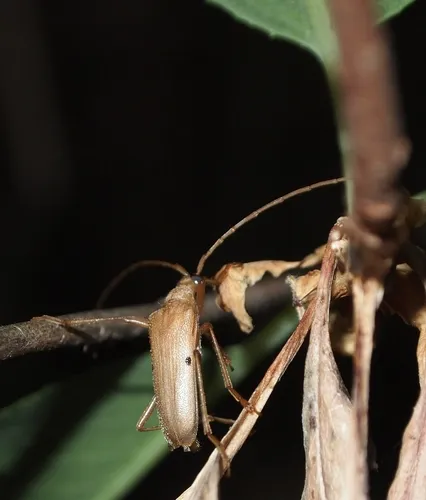
Centrodera autumnata
Centrodera autumnata
Centrodera autumnata is a species of flower longhorn in the family Cerambycidae. It is found in North America.
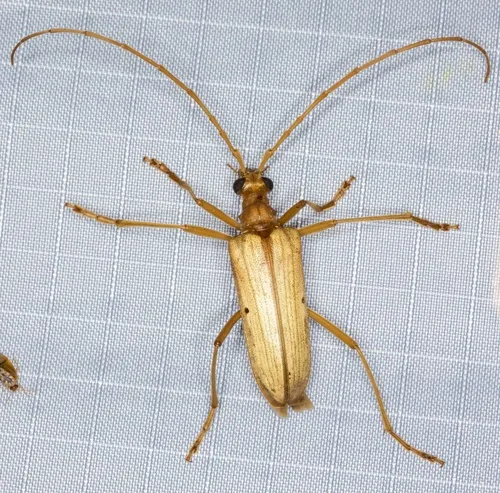
Yellow Douglas Fir Borer
Centrodera spurca
Centrodera spurca, the yellow Douglas fir borer, is a species of flower longhorn in the family of beetles known as Cerambycidae. It is found in North America.
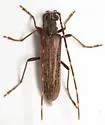
Centrodera sublineata
Centrodera sublineata
occasionally comes to UV lights Uncommon in eastern US, rare in Texas (D. Heffern, pers. comm. to MAQ, 2016)
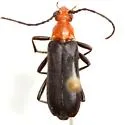
Charisalia americana
Charisalia americana
Identification: head and prothorax red, elytra black; prothorax with sharp projecting corners Rare
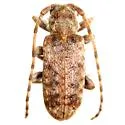
Charlesella viticola
Charlesella viticola
Identification: The pubescence of elytra is sometimes uniformly cinereous, intermixed with black spots; the region around the scutellum is always more or less blackish. Det. E. G. Riley, 2010 Type Locality: San Tomas [Sabal Palm Sanctuary], Brownsvil
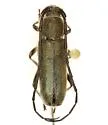
Chemsakiella ricei
Chemsakiella ricei
Identification: dark metallic greenish, appendages black; pubescence whitish, dense, subdepressed and erect. PARATYPE Type Series: White River Lake, Crosby Co., Texas, 19 September 1980, on Heterotheca (M. E. Rice). Sixteen paratypes (10 males, 6 fem
Chlorida festiva 0
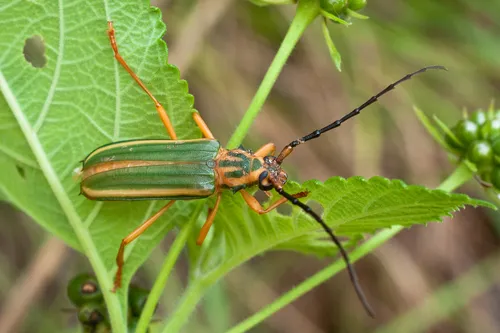
Chlorida festiva
Chlorida festiva is a species of beetle in the family Cerambycidae. It was described by Linnaeus in 1758. It is known from southeastern United States, Central America, South America, and the West Indies.
Wasp Beetle
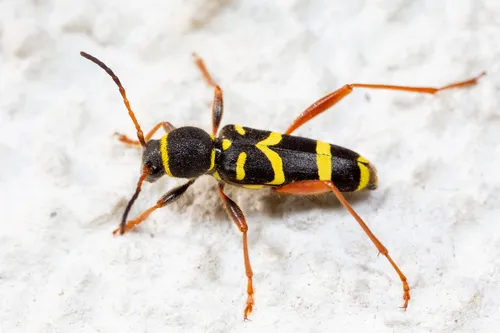
Clytus arietis
Though this beetle mimics a wasp, in both colouration and movement, this black and yellow beetle is totally harmless. On hedgerow vegetation and in well wooded areas. It breeds in the decaying wood of deciduous trees. It can often be found in clear v
Clytus marginicollis
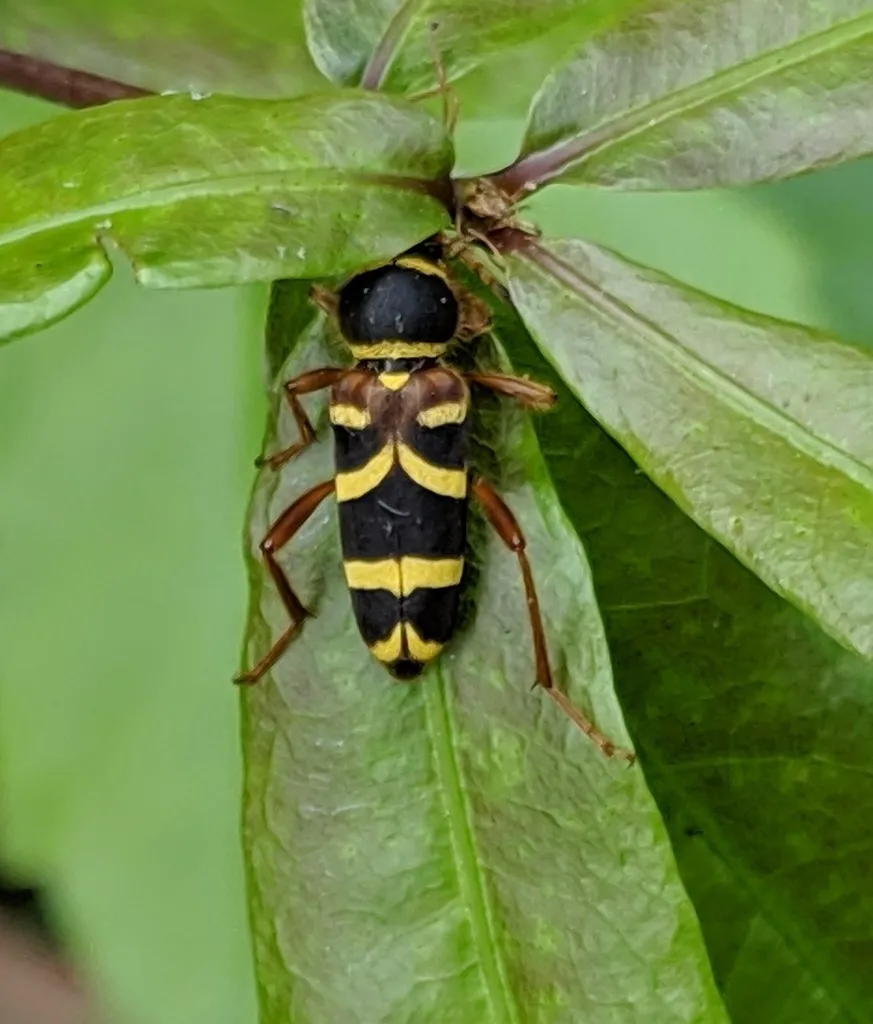
Clytus marginicollis
Clytus marginicollis is a species of beetle in the family Cerambycidae. It was described by Laporte and Gory in 1835.
Coenopoeus palmeri
Coenopoeus palmeri
Identification: The amount of pale pubescence on the elytra varies considerably. All black individuals are encountered in s. AZ and NM ( 3 ) Type Locality: Ariz ( 3 )
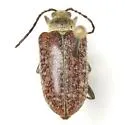
Comacmaeops brunnea
Comacmaeops brunnea
Identification: shows considerable variation as is frequent in this group. One paratype has head, pronotum, for most part, and elytra dark brown; coxae, trochanters and femora dark brown. It differs from other members of the genus in its robust form
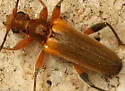
Cortodera cubitalis
Cortodera cubitalis
Identification: species page rather variable, described under 10 names, most of them Casey's
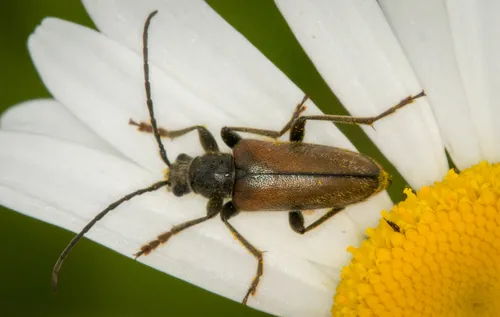
Cortodera militaris
Cortodera militaris
Cortodera militaris is a species of flower longhorn in the beetle family Cerambycidae. It is found in North America.
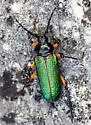
Crioprosopus rimosus
Crioprosopus rimosus
Adults rarely collected except from their pupal chambers (Vogt 1949)
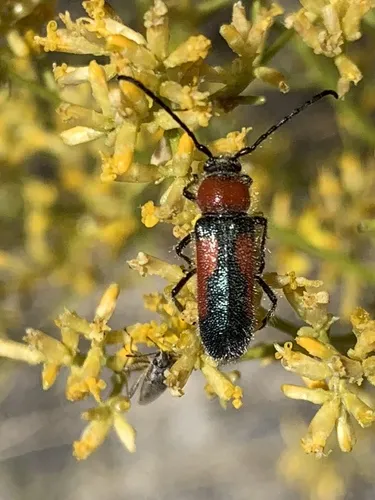
Orange-bracketed Longhorned Beetle
Crossidius discoideus
Associated with composites in the genera Gutierrezia & Haplopappus ; larvae bore in the root crown while adults are found on the flowers and foliage. --T.C. MacRae
Curius dentatus
Curius dentatus
Identification: Det. J. Ott, 2012 Type Locality: St. Johns Bluff, Florida
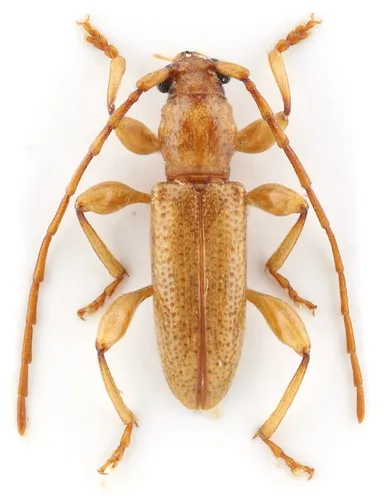
Curtomerus Longhorned Beetle
Curtomerus flavus
Curtomerus flavus is a species of beetle in the family Cerambycidae. It was described by Fabricius in 1775.
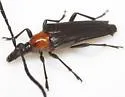
Cyphonotida rostrata
Cyphonotida rostrata
Identification: C. r. texana Giesbert & Hovore 1998 Det. E. G. Riley, 2009
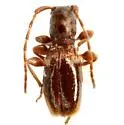
Cyrtinus beckeri
Cyrtinus beckeri
Type Locality: Pine Canyon, 5000 ft, Chisos Mountains, Big Bend National Park, Brewster Co., Texas. May 10, 1959. Acer grandidentatum ( 5 )
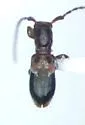
Cyrtinus pygmaeus
Cyrtinus pygmaeus
Identification: Base of elytron with acute dorsal tubercles ( 3 ) Det. E. R. Riley, 2003 Possibly our smallest longhorn species ( 5 )
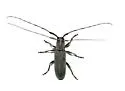
Dectes texanus
Dectes texanus
Identification: outer apex of femora dark reddish-brown to black, tarsi unicolorous, lower eye lobe usually subequal to genal area in D. sayi , outer apex of femora gray, tarsi basally pale, lower eye lobe usually shorter than genal area fairly commo
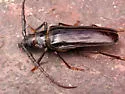
Palo Verde Root Borer
Derobrachus hovorei
Identification: see ; distinguished from true D. geminatus (formerly D. forreri ) by its more weakly striolate antennae. ―Ted MacRae
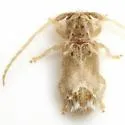
Desmiphora aegrota
Desmiphora aegrota
Identification: The small size, pale ground color, and fasciculate tufts or pencils of erect or sub-erect hairs in addition to the vestiture of long erect hairs are distinctive. ( 3 ) Texas considers this a SGCN ( 7 )
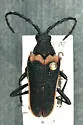
Desmocerus californicus
Desmocerus californicus
Identification: The forewings of the male are primarily red with dark green spots, whereas those of the female are dark metallic green with red margins. females of the subspecies are basically indistinguishable without DNA or locality data (per Phil
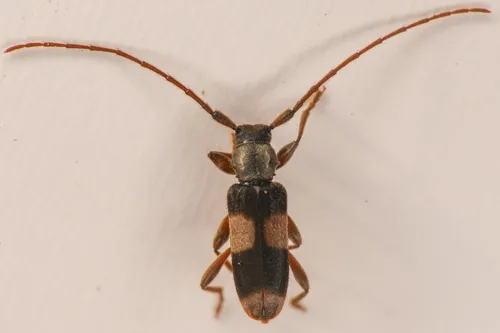
Dicentrus bluthneri
Dicentrus bluthneri
Dicentrus bluthneri is a species of beetle in the family Cerambycidae. It was described by LeConte in 1880.
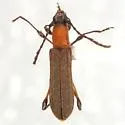
Dihammaphora dispar
Dihammaphora dispar
Aside from Schaeffer's record from Brownsville based on material in the Dietz collection, we know of no other TX specimens (Ottomar Dietz is known to have collected in the Brownsville area during 1901 --Horace Burke, pers. comm., 2009)
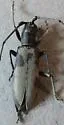
Dorcaschema cinereum
Dorcaschema cinereum
Identification: Antenna: Black, extremely long, twice as long as body; black. Thorax: Densely covered with grayish-brown pile. Hind margin wavy. Black line down middle. Wings: Densely covered with grayish-brown pile. May have a small black mark on ea
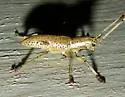
Mulberry Borer
Dorcaschema wildii
Identification: white lateral lines running from the head backwards, small scattered black spots
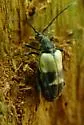
Dorcasina matthewsi
Dorcasina matthewsi
Identification: The species was described from pinned specimens so the color of the elytra is said to be testaceous, note that the living specimen is actually yellow. The females tend to have black antennae and legs, while the males are reddish brown
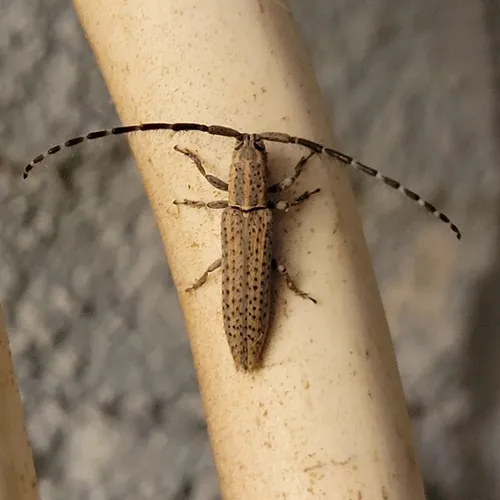
Dorcasta cinerea
Dorcasta cinerea
Dorcasta cinerea (Dorcasta cinerea) is a species in the family Cerambycidae, commonly known as longhorn beetles, belonging to the order Coleoptera (Beetles). It is classified within the subfamily Lamiinae, tribe Apomecynini, suborder Polyphaga, super