
Family Snout and Bark Beetles (Curculionidae)
Curculionidae is a family in the order Coleoptera. Browse 1,711 named species recorded in this family, or open an individual profile for its available identification and natural-history information.
Species in Curculionidae (1,711)
Acanthoscelidius griseus 0
Acanthoscelidius griseus
Identification: Distinguished from all others by the large rectangular tooth of the hind tibiae. Type Locality: Montana
Acanthoscelidius guttatus
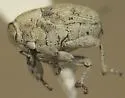
Acanthoscelidius guttatus
Identification: Male: Last ventral segment broadly impressed, middle and posterior tibiae unguiculate at the apex. Type series: Two spmns in Mr. Ulke's collection , probably coll'ed by Gideon Lincecum
Acanthoscelidius mendicus
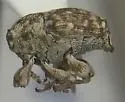
Acanthoscelidius mendicus
Identification: Recognizable by the predominant dark brown color of its scales, rather small size and the distinctly widened outer joints of the antennal funicle. Type series from: Georgia; Columbus, Texas; Florida.
Acanthoscelidius pusillus 0
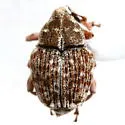
Acanthoscelidius pusillus
Identification: Resembles mendicus , but the prothorax is not constricted at the apex, the elytra more finely striate and without distinct spots on the fifth and ninth interspaces and the darker color of the sutural interspace. The occipital carina i
Ambrosiodmus devexulus
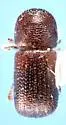
Ambrosiodmus devexulus
Identification: Similar to A. obliquus , but slightly smaller, punctures on elytra more prominent, and elytral declivity devoid of any granules.
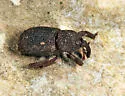
Anchonus suillus
Anchonus suillus
Identification: Rostral base not deeply incised, lacks apical elytral tubercules, elytra regularly tuberculate usually with single setae per tubercle. Unknown if native to Florida, introduced via natural means, or introduced by man.
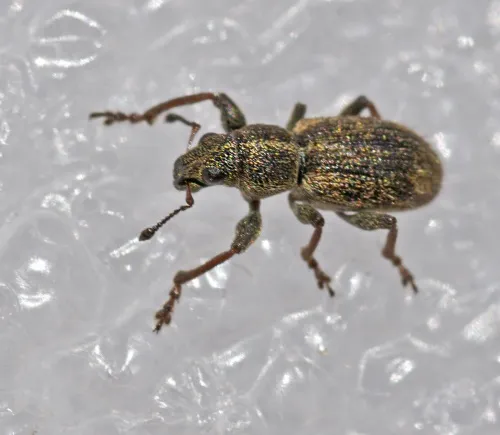
Andrion regensteinense
Andrion regensteinense
Length 5 mm. A small brown hairy weevil, usually with a pale stripe down the mid-line of both pronotum and elytra. Unless identified by a recognised expert, photographic evidence is required and the specimen should be examined with a microscope. In t
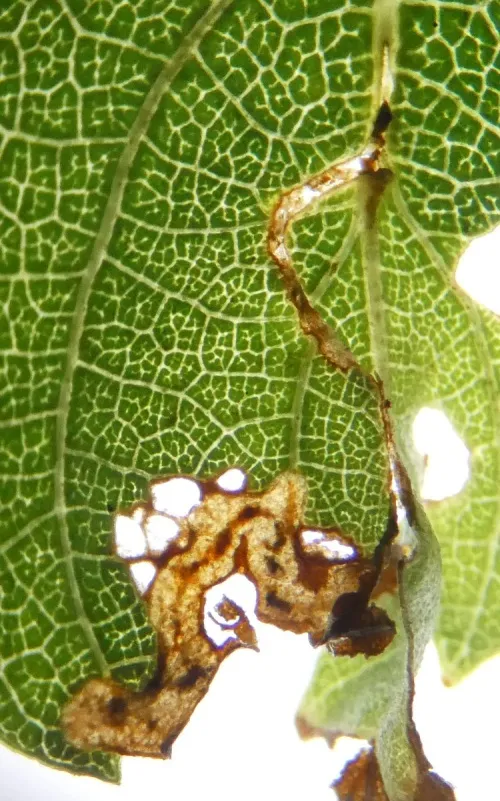
Anoplus plantaris
Anoplus plantaris
Anoplus plantaris is a small black weevil 1.7 to 2.2 mm. Pronotum lacking microsculpture, smooth and shiny between the punctures, elytral pubescence fine and pointed. Anoplus roboris is similar but is slightly larger 2.3 to 2.8 mm. The pronotum in A.
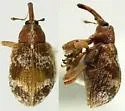
Anthonomopsis mixta
Anthonomopsis mixta
Identification: Det. Michael C. Thomas, 2009 Larvae cause infested fallen buds to "jump" (Horace Burke, pers. comm. to MAQ, 2012)
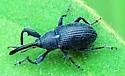
Anthonomus albopilosus
Anthonomus albopilosus
Identification: note dark coloration, uniform thick distribution of hairs, and a long, thin rostrum: front tibiae curved near base, first tarsal joint longer than second, femoral tooth large Det. R.S. Anderson, 2017
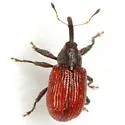
Anthonomus convictus
Anthonomus convictus
Type Locality: College Station, V-13-1971 D.B. Gates, Brazos Co., Texas
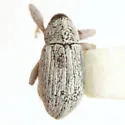
Anthonomus decipiens
Anthonomus decipiens
Identification: males (even if abraded) easily recognizable because of the distinctive shape of the metatibia (esp. the mucro) Pierce listed eleven combinations of color variations in a series of A. decipiens reared from the same host plant.
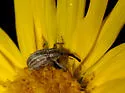
Anthonomus disjunctus
Anthonomus disjunctus
Identification: The outer interspaces of the elytra behind the middle, and the scutellum are also covered with pale scales. The teeth of the tarsal claws are more approximate than in any of the preceding species, and seem to be almost connate.
Anthonomus finitimus
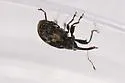
Anthonomus finitimus
Identification: elytral vestiture forms a conspicuous V-shaped pattern, as in A. nebulosus Det. R. S. Anderson, 2026 Type Locality: Texas, Brazos Co., Highway 30 at Navasota River, 18 April 1975, M. Holcomb and W. E. Clark. 42 paratypes
Anthonomus haematopus
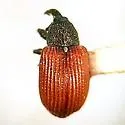
Anthonomus haematopus
Identification: the punctures of the prothorax are very coarse and crowded. The pubescence is hairy above, but coarser and almost scale-like beneath, the beak is punctured and striate; the thighs are all armed with a tooth, and the front tibiae are n
Anthonomus juniperinus
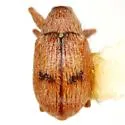
Anthonomus juniperinus
Identification: Distinguished from the other species in the group by the well-defined dark postmedian fascia on the elytra forming a V-shaped pattern
Anthonomus ligatus
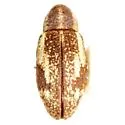
Anthonomus ligatus
Identification: distinguished by the slender body, the generally distinct mid-dorsal and posterolateral elytral maculae, the broadly curved metatibia and large, oblique metatibial mucro in males Type Locality: Arizona
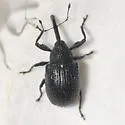
Potato Bud Weevil
Anthonomus nigrinus
Identification: Elongate-oval robust. Black, thinly clothed with fine whitish pubescence. Beak rather stout
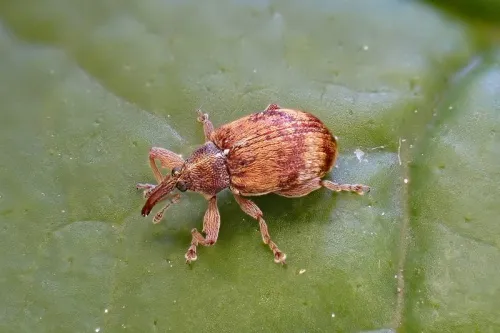
Anthonomus pedicularius
Anthonomus pedicularius
Measuring around 4 mm, this is a chestnut brown weevil with white markings on the elytra which may be quite faint. The larva develops inside hawthorn flower buds, causing galls; the buds become brown and do not open and the ovaries below the petals a
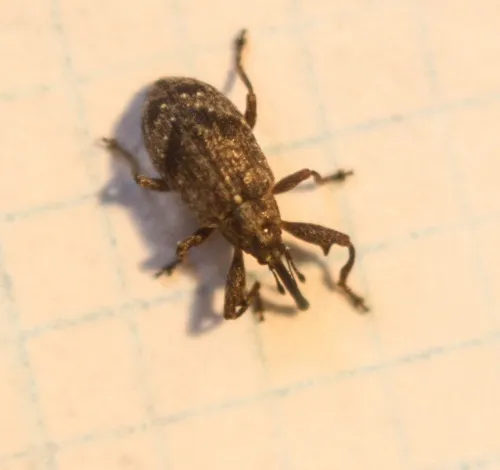
Apple Blossom Weevil
Anthonomus pomorum
Unless identified by a recognised expert, photographic evidence is required and the specimen should be examined with a microscope. In the comments box, state the key or ID method used. Note the beetle's size and describe the identifying characters. I
Anthonomus rileyi
Anthonomus rileyi
Identification: Rostrum nearly straight, slightly longer and more slender in female; with sparse elongate scales at extreme base PARATYPE
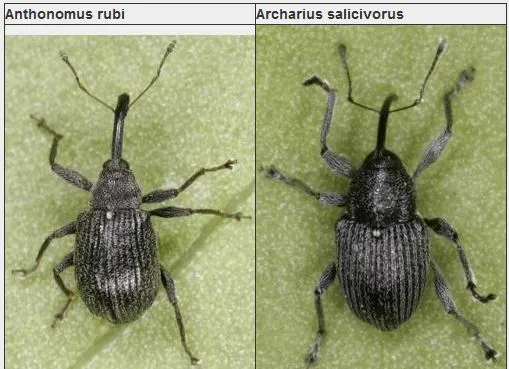
Strawberry Blossom Weevil
Anthonomus rubi
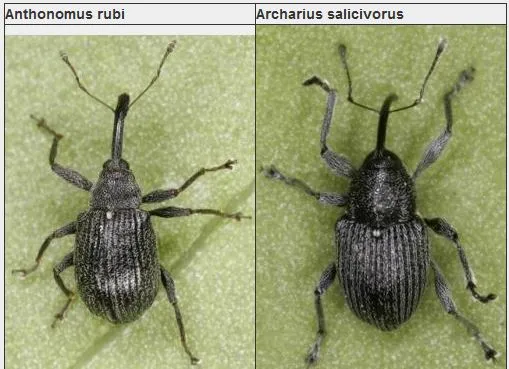
A small grey-black weevil around 2.5 to 3mm long with a tiny pale scutellum. Archarius salicivorus looks very similar but has a more rounded appearance when viewed from above. See ID Aids below. Your specimen should have these features: These small b
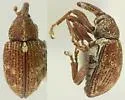
Anthonomus rutilus
Anthonomus rutilus
Anthonomus rutilus (Anthonomus rutilus) is a species in the family Curculionidae, commonly known as snout and bark beetles, belonging to the order Coleoptera (Beetles). It is classified within the subfamily Curculioninae, tribe Anthonomini, suborder
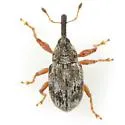
Anthonomus squamans
Anthonomus squamans
Identification: highly variable in size, color and markings; larger specimens tend to have distinct color patterns and a more dense scale covering, in smaller specimens the scales are usually unicolored and less dense Type Locality: Mexico, Vera Cruz
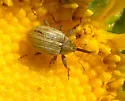
Anthonomus squamosus
Anthonomus squamosus
Associated with Grindelia (Asteraceae). ( 3 ) The doubtfully distinct A. ater from California is the only other known species of the group associated with Grindelia .
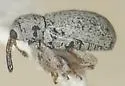
Anthonomus stolatus 0
Anthonomus stolatus
Identification: Holotype closely resembles A. tenuis which has male metatibia curved and rostrum smoother and more nearly completely glabrous
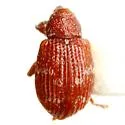
Anthonomus subfasciatus
Anthonomus subfasciatus
Identification: 6 jointed funiculus of the antennae Det. H. Burke, 2014 Type Locality: New York
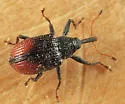
Anthonomus suturalis
Anthonomus suturalis
Identification: elytra with a reddish area of varying size on each elytron to completely unicolorous
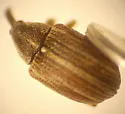
Anthonomus tectus
Anthonomus tectus
Identification: Lectotype widespread and highly variable; may be a complex of species. (Horace Burke, 2013 pers. comm. to MAQ)
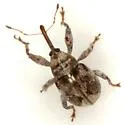
Anthonomus xanthoxyli
Anthonomus xanthoxyli
Identification: Det. E.G. Riley, 2010 Type Locality: San Diego, Texas
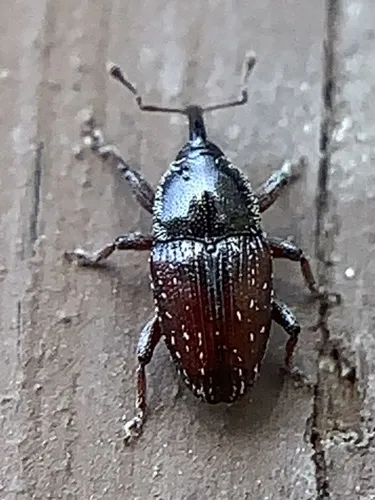
Apinocis blanditus
Apinocis blanditus
Identification: part of the Rootstock Weevil Complex [PDF] Per White and Carlton (2012), In Louisiana, rootstock weevils form a pest complex comprised of three species of curculionid beetles: Apinocis subnudus (Buchanan), A. deplanatus (Casey), and A
Apinocis subnudus
Apinocis subnudus
part of the Rootstock Weevil Complex Per White and Carlton (2012), In Louisiana, rootstock weevils form a pest complex comprised of three species of curculionid beetles: Apinocis subnudus (Buchanan), A. deplanatus (Casey), and A. blanditus (Casey). T
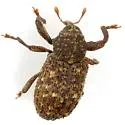
Apteromechus texanus
Apteromechus texanus
Type Locality: Brownsville, Cameron County, Texas Texas considers this a "Species of Greatest Conservation Need" (SGCN) ( 3 )
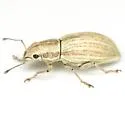
Aramigus pallidus (species complex)
Aramigus pallidus
Identification: Det. Charles W. O'Brien, 2012 a complex species with bisexual populations and parthenogenetic lineages (Lanteri & Díaz 1994)
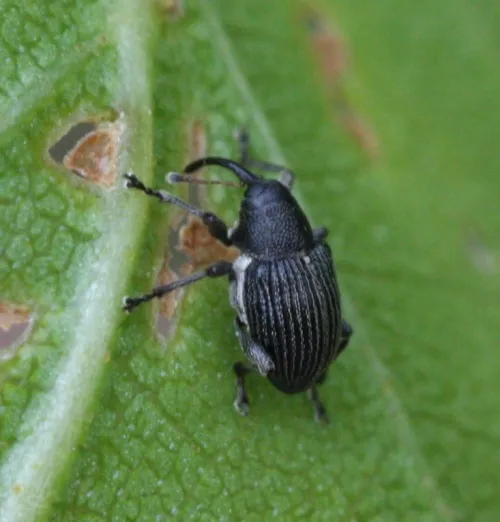
Archarius pyrrhoceras
Archarius pyrrhoceras
A black weevil with its pinky red antennae. Very similar to Archarius salicivorus but distinguished by its red antennae. Unless identified by a recognised expert, photographic evidence is required and the specimen should be examined with a microscope
Willow Gall Weevil
Archarius salicivorus
Length: head and body (not the curved snout) 2.5 mm. A black weevil with tapered body, long snout with antennae midway along, black rostrum and antennae. Also known as Curculio salicivorus . Anthonomus rubi (Strawberry Blossom Weevil) looks very simi
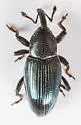
Aulacobaris lepidii
Aulacobaris lepidii
earliest NA record: w. IL 1977; found again in OH in 1979. --E.R. Hoebeke, pers.comm. to =v=
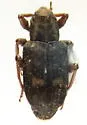
Bagous americanus
Bagous americanus
Often adults sit on the underwater edge of the leaves in the daytime. They can be collected by finding mined leaves and turnimg them gently to see the weevils. At night the adults come onto the top of the leaves to find mates and to replenish air sup
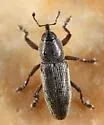
Barilepton undescribed
Barilepton undescribed
About this specimen : "I think it is undescribed. All specimens I have seen are from Mexico." Comment by Dr. J. Prena
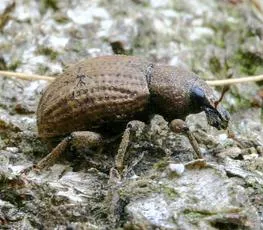
Barynotus moerens
Barynotus moerens
This large light brown weevil is one of the more distinctive. Unless identified by a recognised expert, good photos are required that show the key ID features. Also state the beetle's size in the comments box. Usually found in wooded areas containing
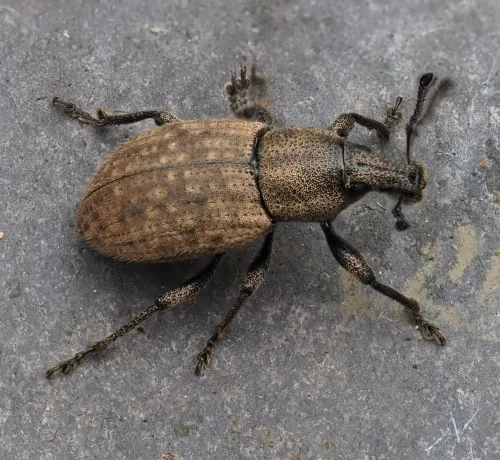
Barynotus obscurus
Barynotus obscurus
This is quite a large broad-nosed ground weevil (8 to 9.5 mm). The light brown elytra have a slight mottling of paler blotches and also have a sparse covering short of bristly hairs. Unless identified by a recognised expert, good photos are required
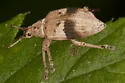
Brachystylus sayi
Brachystylus sayi
Identification: variable (can be even paler than first example and darker overall than the last example)
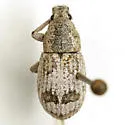
Bradyrhynchoides constrictus
Bradyrhynchoides constrictus
Described from 3 spmns coll. in April by E. A. Schwarz in San Diego, Texas (Pierce 1913)
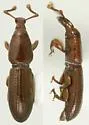
Caecossonus dentipes
Caecossonus dentipes
Caecossonus dentipes (Caecossonus dentipes) is a species in the family Curculionidae, commonly known as snout and bark beetles, belonging to the order Coleoptera (Beetles). It is classified within the subfamily Molytinae, tribe Lymantini, suborder Po
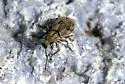
Imported Long-horned Weevil
Calomycterus setarius
Identification: see detailed description in may be very abundant on soybean crops and defoliate the seedlings ; when abundant, they crawl on humans, vehicles and in dwellings on walls, ceilings, furniture or even food on tables, and can cause complai
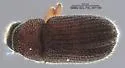
Carphobius caterinoi
Carphobius caterinoi
Identification: Distinguished from other Carphobius spp. by the presence of scale-like vestiture, and 2-3 small, acute spines on 1st and 3rd declivital interstriae.
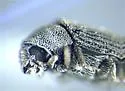
Carphoborus carri
Carphoborus carri
Identification: Frons flattened in both sexes, more deeply impressed above epistoma in male, surface shining, coarsely to finely, deeply punctured, vestiture long (female); pronotum closely, coarsely punctured; elytral interstriae coarsely, deeply pu
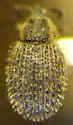
Cathormiocerus aristatus
Cathormiocerus aristatus
Identification: Suberect spatulate scale-like "setae" (lacking in the smilar Calyptillus ) that are longer and denser than in other " Trachyphloeus " found in our area Recently emerged specimens are clean and they get dirty and coated with a mix of s
Catolethrus longulus 0
Catolethrus longulus
Identification: The elytra usually have the sides broadly and indeterminately rufescent, but the entire body is sometimes almost wholly black, or ferruginous with a darker space along the suture. The peculiar ventral and femoral characters of the mal
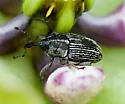
Centrinites strigicollis
Centrinites strigicollis
Type Locality: Hot Spring; French Broad River, Buncombe, North Carolina
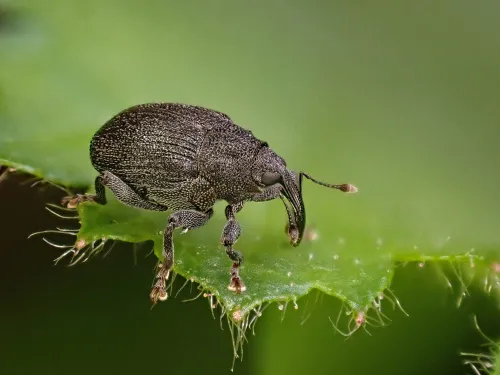
Ceutorhynchus alliariae
Ceutorhynchus alliariae
A small (2.6 to 3.4 mm) black or dark grey weevil. There are a number of similar species and detailed examination is required. Please provide a photograph and state the host plant. Detailed examination required to confirm species id. Associated with
Ceutorhynchus erysimi
Ceutorhynchus erysimi
Ceutorhynchus erysimi (Ceutorhynchus erysimi) is a species in the family Curculionidae, commonly known as snout and bark beetles, belonging to the order Coleoptera (Beetles). It is classified within the subfamily Ceutorhynchinae, tribe Ceutorhynchini
Ceutorhynchus inaffectatus
Ceutorhynchus inaffectatus
Identification: Rather "big", grey Ceutorhynchus , dorsal scales narrow (no ovate scales intermixed) in double rows on elytral intervals (diagnostic vs. C. rapae ). Pronotum well convex in both directions, cushion-shaped, without lateral tubercle lik
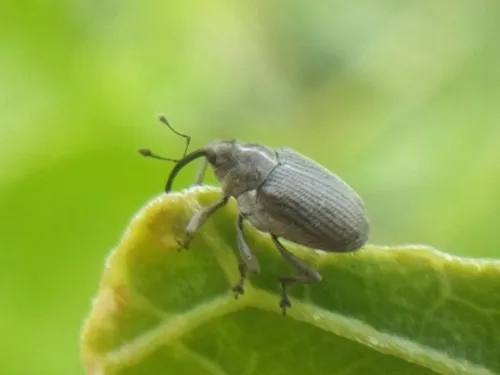
Cabbage Seed Weevil
Ceutorhynchus obstrictus
Adults have round grey bodies (2 to 4 mm in length) and grey legs covered with fine white scales. Ceutorhynchus obstrictus has a long curved proboscis with small bent antennae. When disturbed, it displays the interesting behaviour of folding its legs
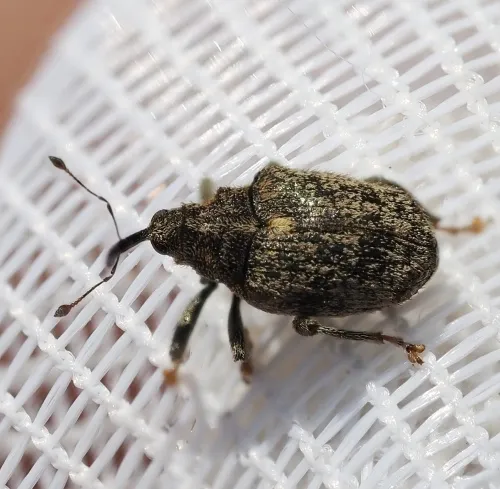
Cabbage Stem Weevil
Ceutorhynchus pallidactylus
This is a small (about 3 mm) dark weevil with scattered white or creamy scales, generally dense behind scutellum. Unless identified by a recognised expert, photographic evidence is required and the specimen should be examined with a microscope. In th
Cabbage Curculio
Ceutorhynchus rapae
attacks broccoli, cabbage, cauliflower, and turnip plants by mining the stalks and feeding on the leaves ( 5 )
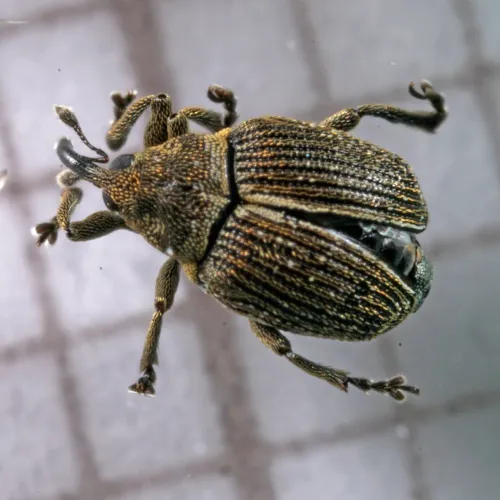
Ceutorhynchus typhae
Ceutorhynchus typhae
A small brown or blackish weevil. Many specimens appear to show a pale line running between the elytra. Unless identified by a recognised expert, photographic evidence is required and the specimen should be examined with a microscope. In the comments
Partridge-pea Weevil
Chalcodermus collaris
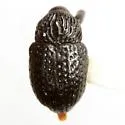
Identification: Thorax deeply longitudinally strigose; body brown elytra paler (Horn 1873)
Chalcodermus inaequicollis
Chalcodermus inaequicollis
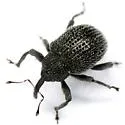
Identification: Det. E. G. Riley, 2009 Type Locality: GA
Chalcodermus martini
Chalcodermus martini
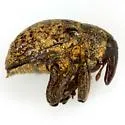
Identification: "This species, because of its conspicuous cinereous (ash-gray) vestiture, deep punctuation, and well-elevated intervals, stands apart from all of its fellows and thus should be easily recognized. It seems to resemble no Mexican specie
Chalcodermus semicostatus
Chalcodermus semicostatus
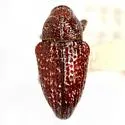
Type Locality: Brownsville, Texas (Esperanza Ranch) (Schaeffer 1904) Texas considers this a "Species of Greatest Conservation Need" (SGCN) ( 3 )
Mimosa Green-seed Weevil
Chalcodermus serripes
last collected in the Lower Rio Grande Valley in 1944. A fair number of specimens from the Brownsville area were collected around the turn of the century indicating that this species once common in that area. Texas considers this a SGCN
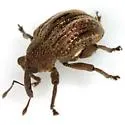
Chalcodermus vittatus
Chalcodermus vittatus
Identification: Det. E. G. Riley, 2009 Specimens of this species, which is described from Guatemala, were taken at Brownsville (San Tomas and Esperanza Ranch from May to July). (Schaeffer 1904)
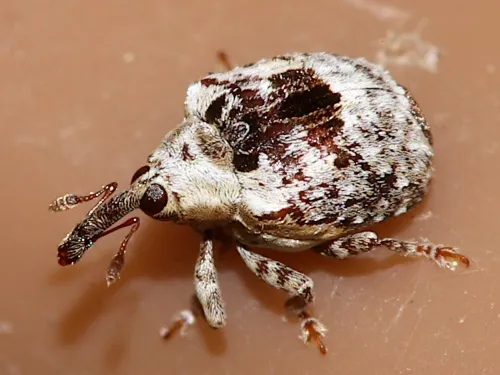
Cionus alauda
Cionus alauda
A small (3 mm) light coloured weevil with a distinctive dark brownish patch on the elytra behind the pronotum, and another near the tip. This species is relatively easy to identify and is unlikely to be confused with anything else. However a photo is
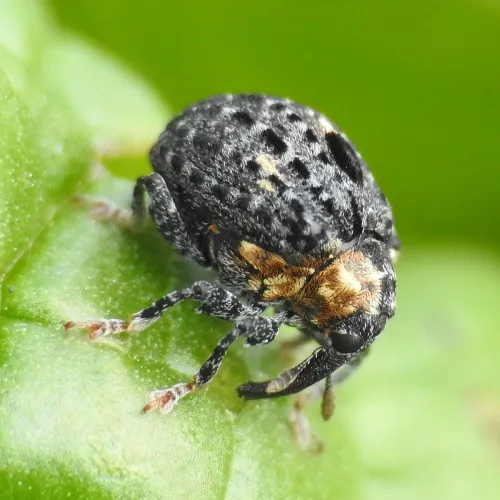
Cionus tuberculosus
Cionus tuberculosus
About 4 mm in length it is very dark, almost black with orange tarsi and orange-yellow scales at the side of the pronotum which are diagnostic.. Unless identified by a recognised expert, good photos are required that show the key ID features. Also st
Large Thistle Weevil
Cleonis pigra
Identification: Elytra with double V-pattern. Rostrum with three sulci. Freshly emerged specimens covered with yellow, dusty secretion. introduced into NA prior to 1919 larvae parasitized by Acaenitus dubitator (Ichneumonidae) ( Shaw & Wahl 1989 )
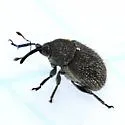
Cleopomiarus hispidulus
Cleopomiarus hispidulus
European origin was discussed because of mislabeled specimens [ Miarus hispidulus Reitter, 1907 - "Spain"]. There is a second nearctic species in Mexico, C. erebus Casey, 1910. ( 3 )
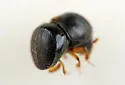
Camphor Shoot Borer
Cnestus mutilatus
Earliest record in our area: MS 1999 Recorded boring into and damaging plastic fuel reservoirs (Carlton & Bayless 2011) "Riding lawn mower gasoline tank damaged by camphor shoot borer."
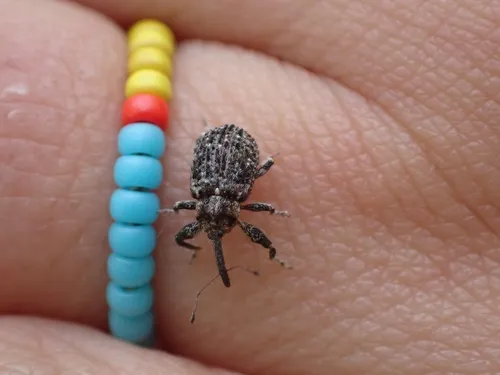
Coccotorus pruniphilus
Coccotorus pruniphilus
Identification: TYPE Type Locality: D'Hanis, Medina Co., Texas
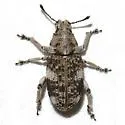
Colecerus dispar
Colecerus dispar
Identification: per LeConte's (1874) original description, the specimen from Arizona has the thorax at base as wide as the elytra, the hind angles being expanded, flattened and acute, with the side margin acute; the sides in front of the angles are s
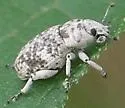
Colecerus marmoratus
Colecerus marmoratus
Identification: Form of dispar . Thorax broader than long, sides moderately arcuate (=curved), widest at middle. ( 3 ) pattern variable
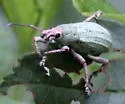
Golden-headed Weevil
Compsus auricephalus
Identification: habitus distinctive among N. Amer. weevils two recognized morphotypes: the typical green form, with pink to cupreous head and part of the legs and the uniformly white to pale brown form. ( 3 )
Coniatus splendidulus
Coniatus splendidulus
"A hyperine weevil which was under consideration for release as a biocontrol agent against tamarisk. However the release was not authorized due to conflict of interest between ranchers who want the tree controlled and the conservationists (in this ca
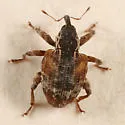
Cambium Curculio
Conotrachelus anaglypticus
Identification: diagonal orange shoulder marks seem to be a nice consistent feature: economic pest of peach
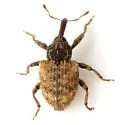
Conotrachelus cameronensis
Conotrachelus cameronensis
Type Locality: Holotype, female, Cameron Co., Texas V-20 in (ELS). Allotype same data in (ELS). Eleven paratypes: 1 Brownsville, Texas V-31-39 DJ & JNK., 1 Brownsville, Tex. V-25-34, JNK., 2 Brownsville, Tex. VI-8-34, JNK., 3 Brownsville, Tex. V-22-3
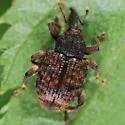
Conotrachelus carinifer
Conotrachelus carinifer
Identification: coarse pronotal punctures, fresh individuals show white shoulders
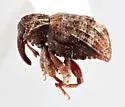
Conotrachelus carolinensis
Conotrachelus carolinensis
Identification: Det. Matt Bertone, 2022 common at lights in e.TX [=v=]
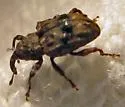
Conotrachelus corni
Conotrachelus corni
Identification: Looks a lot like nenuphar but are much smaller Relatively uncommon. Unless otherwise indicated, the information on this page has been provided by C.W. O'Brien here
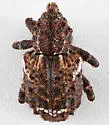
Conotrachelus coronatus
Conotrachelus coronatus
Identification: Det. E. G. Riley, 2008 Type Locality: Enterprise, Florida
Conotrachelus ecarinatus 0
Conotrachelus ecarinatus
Identification: photos of mounted specimens: [A] • [B] • [C] • [D]
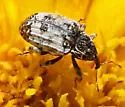
Conotrachelus leucophaeatus
Conotrachelus leucophaeatus
Type locality: Mexico most frequently observed at lights ( 5 )
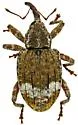
Conotrachelus neomexicanus
Conotrachelus neomexicanus
Identification: Holotype Pattern distinctive, body more elongate than usual (resembling Pissodes sp. )
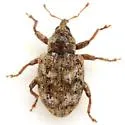
Conotrachelus recessus
Conotrachelus recessus
Type Locality: Atoka, Indian Territory, Atoka Co., Oklahoma
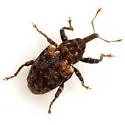
Conotrachelus rubescens
Conotrachelus rubescens
Identification: The small size and the coloration will make this species easily recognizable from any of our Conotrachelus . (Schaeffer 1904) Type Locality: Brownsville, Texas (Esperanza Ranch, San Tomas). The species is not a common one, only a smal
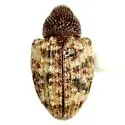
Conotrachelus texanus
Conotrachelus texanus
Type Locality: Esperanza Ranch, Brownsville, Cameron Co., TX (Schaeffer 1906)
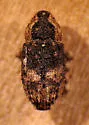
Cophes fallax
Cophes fallax
Cophes fallax (Cophes fallax) is a species in the family Curculionidae, commonly known as snout and bark beetles, belonging to the order Coleoptera (Beetles). It is classified within the subfamily Cryptorhynchinae, tribe Gasterocercini, suborder Poly
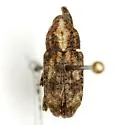
Cophes longiusculus
Cophes longiusculus
Identification: readily separated from all other species in the genus from the area under consideration, by the very elongate form and the bidentate anterior femora.
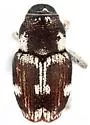
Copturomorpha rileyi
Copturomorpha rileyi
Identification: Allotype Texas considers this a SGCN ( 3 )
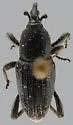
Banana Root Borer
Cosmopolites sordidus
one of the most serious insect pests of bananas; earliest record in our area: FL 1917[Cite:185010]
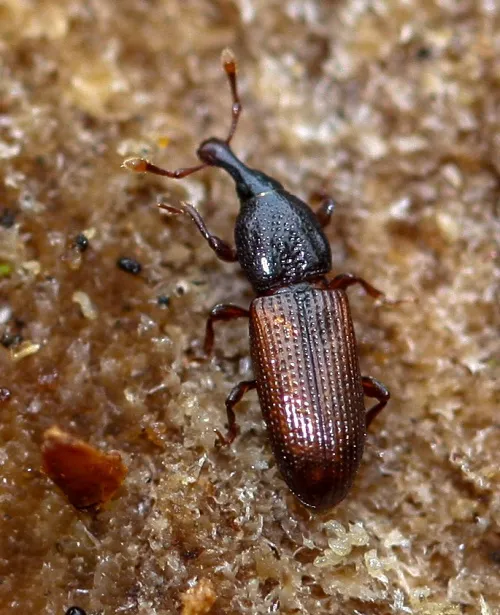
Cossonus linearis
Cossonus linearis
The weevil is 4 to 6 mm in length with a very flat and elongate body, dark brown punctate elytra and blackish pronotum. Its legs are dark red and the antennae are short and bent. Its pronotum is quite rectangular viewed from above and slightly narrow
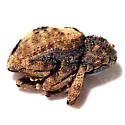
Cryptorhynchus fuscatus
Cryptorhynchus fuscatus
Identification: Pronotum with distinct tufts of black scales; male has pair of small scale-tufted tubercles on basal margin of ventrite 5 taken at lights (BG data & )
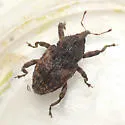
Cryptorhynchus tristis
Cryptorhynchus tristis
Identification: Pronotum with uniformly distributed erect or sub-erect scales, not arranged in concentrations or tufts; width almost as wide as elytra at base
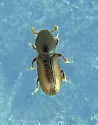
Crypturgus pusillus
Crypturgus pusillus
Identification: See remarks here: earliest record in our area: NY 1868
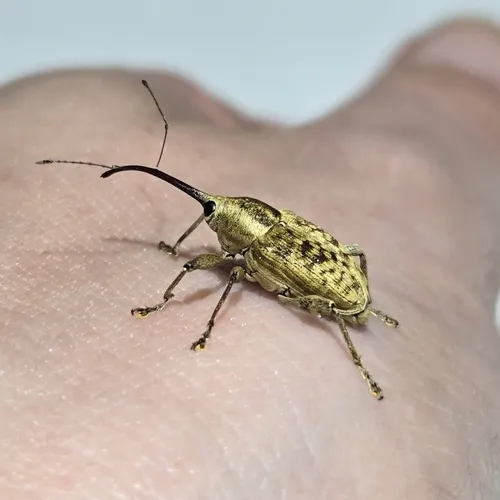
Greater Chestnut Weevil
Curculio caryatrypes
Identification: "The Greater Chestnut Weevil is Curculio caryatrypes and it is easily recognized as its the only Curculio with segment two of the antennal funicule (the part beyond the elbow) longer than segment 1. In Lesser Chestnut Weevil segment 1
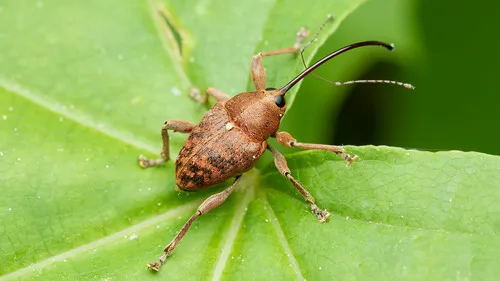
Acorn Weevil
Curculio glandium
Length 4 to 8 mm. The most striking feature of the acorn weevil is its elongated snout, known as a 'rostrum', which is longer in females than males. Adults have a brownish and patterned body. Weevils in this genus can be hard to tell apart. C. glandi
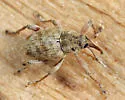
Curculio iowensis
Curculio iowensis
Identification: Rostrum in both sexes less than 1/2 length of body; rostrum continuous with frons; femoral teeth 'medium' sized. See
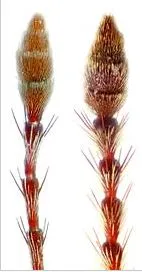
Curculio nucum
Curculio nucum
This weevil ranges from 6 to 8.5 mm. The female's snout is as long as the rest of the body, with a reddish end. The male snout is about 1/3 shorter. The body colour is usually light brown, similar to the colour of mature hazelnuts. Raised ridge of "r
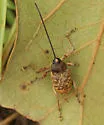
Curculio proboscideus
Curculio proboscideus
Identification: The distance between the apex of the rostrum and the antennal insertions is ~ 4 x the distance between the antennal insertions and the base of the rostrum. (sdjbrown comment on iNat)
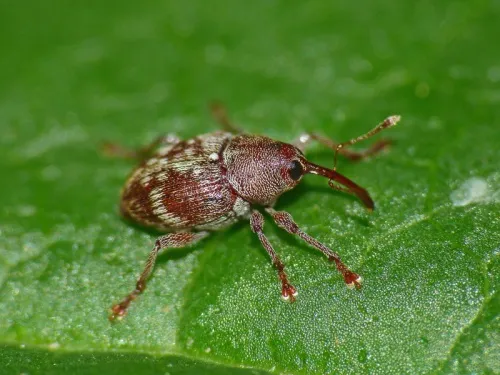
Curculio rubidus
Curculio rubidus
Unless identified by a recognised expert, photographic evidence is required and the specimen should be examined with a microscope. In the comments box, state the key or ID method used. Note the beetle's size and describe the identifying characters. I
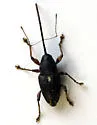
Small Chestnut Weevil
Curculio sayi
Identification: See Remarks. "The Greater Chestnut Weevil is Curculio caryatrypes and it is easily recognized as its the only Curculio with segment two of the antennal funicule (the part beyond the elbow) longer than segment 1. In Lesser Chestnut Wee