
Trichochrous texanus
This record describes Trichochrous texanus (species). Recorded family: Melyridae. Recorded order: Coleoptera.
Identification and Appearance
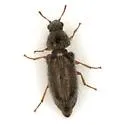
body black, legs rufous or testaceous, strong punctuation of the head and thorax; the antennae are shorter than the head and thorax, with the third joint slender, and the fourth not as wide as the fifth. uniformly olivaceous above highly polished with reddish legs the upper surface of the body covered with rather dense growth of short whitish hairs. Det. M. L. Gimmel, 2020
Classification
- Kingdom
- Animalia
- Phylum
- Arthropoda
- Class
- Insecta
- Order
- Coleoptera (Beetles)
- Suborder
- Polyphaga
- Superfamily
- Cleroidea
- Family
- Melyridae (Soft-winged Flower Beetles)
- Subfamily
- Dasytinae
- Tribe
- Listrini
- Genus
- Trichochrous
Imported taxonomy record. Source availability varies; see the source references and editorial policy below.
Habitat and Range
Geographic Range
NM-TX-KS
Diet and Behavior
Life History
In the category of species injuring the [ Opuntia ] blooms there is only one that is of importance. This is Trichochrous (Pristoscelis) texanus Le Conte. It has been collected at southwestern Texas and in New Mexico. At Albuquerque in the latter State on June 16, Mr. FC Pratt found it in such abundance that no blooms without indications of injury were noticed The great majority of the plants had been fed upon to such an extent that fruiting had ceased. As many as 153 beetles were found in a single bloom. No larvae could be found in the vicinity. It is possible that this species is not at all peculiar to cactus but is to be found in blooms of various kinds. There was a remarkable absence of flowers on all plants except the Opuntias growing at Albuquerque at the time to which reference has been made. This may account for the concentration of the insects in the blooms of the Opuntias and for the damage accomplished. No similar cases had been observed in the numerous observations that had been made in Texas. ( 3 )
Additional species information
Species notes from the sources
Etymology: Trichochrous texanus (LeConte)
About Primitive Winged Insects: the wider group
Order-level background for Coleoptera, the group containing Trichochrous texanus. Species-specific details appear above.
Group overview
Coleoptera is the largest order of insects with over 400,000 described species, representing ~25% of all known animal species and ~40% of all insects. In the U.S. alone, nearly 30,000 beetle species have been identified.
Ecological role of the group
Beetles are prominent decomposers, especially in forests, breaking down dead wood and recycling nutrients. As predators, they reduce populations of pest insects. Many species are also important pollinators of flowering plants.
Economic and practical significance of the group
Beetles have major economic significance: leaf beetles (Chrysomelidae) and weevils (Curculionoidea) are among the most destructive agricultural pests globally, costing billions annually, while predatory species like ladybugs provide natural pest control.
Recorded sources for this group: Britannica, Smithsonian, NCSU Entomology. Imported estimates may describe particular regions or reporting periods.
Photos of Trichochrous texanus (4)
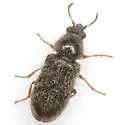
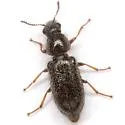
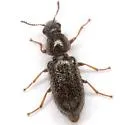
Photo credits: Contributed by Mike Quinn; Additional contributions by v belov
Frequently Asked Questions About Trichochrous texanus
What is Trichochrous texanus?
Trichochrous texanus is a species in the family Melyridae, within the order Coleoptera.
How big is Trichochrous texanus?
3-5 mm
How do you identify Trichochrous texanus?
body black, legs rufous or testaceous, strong punctuation of the head and thorax; the antennae are shorter than the head and thorax, with the third joint slender, and the fourth not as wide as the fifth. uniformly olivaceous above highly polished with reddish legs the upper surface of the body covered with rather dense growth of short whitish hairs. Det. M. L. Gimmel, 2020
Where is Trichochrous texanus found?
Range: NM-TX-KS
What is the life cycle of a Trichochrous texanus?
In the category of species injuring the [ Opuntia ] blooms there is only one that is of importance. This is Trichochrous (Pristoscelis) texanus Le Conte. It has been collected at southwestern Texas and in New Mexico. At Albuquerque in the latter State on June 16, Mr. FC Pratt found it in such abundance that no blooms without indications of injury were noticed The great majority of the plants had been fed upon to such an extent that fruiting had ceased. As many as 153 beetles were found in a single bloom. No larvae could be found in the vicinity. It is possible that this species is not at all peculiar to cactus but is to be found in blooms of various kinds. There was a remarkable absence of flowers on all plants except the Opuntias growing at Albuquerque at the time to which reference has been made. This may account for the concentration of the insects in the blooms of the Opuntias and for the damage accomplished. No similar cases had been observed in the numerous observations that had been made in Texas. ( 3 )