
Family Predaceous Diving Beetles (Dytiscidae)
Dytiscidae is a family in the order Coleoptera. Browse 392 named species recorded in this family, or open an individual profile for its available identification and natural-history information.
Species in Dytiscidae (392)
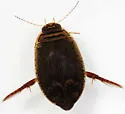
Acilius abbreviatus
Acilius abbreviatus
Identification: Similar to A. semisulcatus , differs in the appearance of the subapical white band, which is broadened laterally at the elytral suture (±complete arc in A. semisulcatus ). It is also the only Acilius reported from the far west. ―Tim L
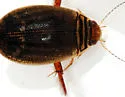
Acilius confusus
Acilius confusus
Identification: Head rufous with indistinct black M-shaped macula
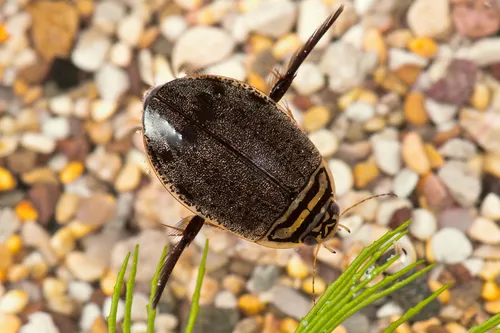
Acilius sulcatus
Acilius sulcatus
A large water beetle with considerable colour variation. Although it is a distinctively marked species, there are some very similar species and care is needed with identification. Length 15-18mm, broad oval shape. Pronotum pale with two transverse da
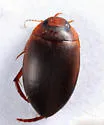
Agabetes acuductus
Agabetes acuductus
Identification: Elytra has dense, short longitudinal scratches (strioles). See Larson or Epler . Some adults may have non-functional flight muscles.
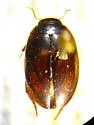
Agabus amnicola
Agabus amnicola
member of uliginosus species-group that also contains the nearctic A. margareti Larson and 5 palæarctic spp.
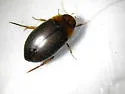
Agabus antennatus
Agabus antennatus
Identification: Males are most easily identified by the enlarged terminal antennal segments. Colour on both sexes identical- head and pronotum reddish to yellowish brown, elytra darker brown with pale lateral and basal margins. Ventral side of head r
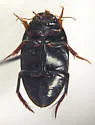
Agabus anthracinus
Agabus anthracinus
Identification: mostly black, with lighter (rufous to piceous) legs, frontal spots, palpi, and lateral & basal borders of elytra and pronotum. Antennae pale basally. Elytra sculpture rather coarse, resembling scales. Prosternal process convex to angu
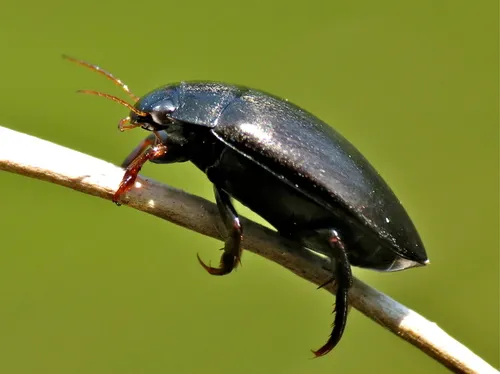
Agabus bipustulatus
Agabus bipustulatus
9.5-11.5mm. A very common black diving beetle with pale brown antennae and brown front legs. It has a smoothly rounded outline with elongate microsculpture within which is a mesh pattern. Favours still or stagnant water or sluggish bays in running wa
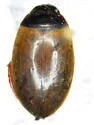
Agabus canadensis
Agabus canadensis
Identification: Shape broadly oval; Head and pronotum dark brown to almost black; elytron paler brown with basal and lateral margins yellow; A pair of reddish spots present on the frons; Sides of pronotum broadly red to reddish brown (width of the re
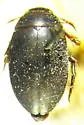
Agabus clavicornis
Agabus clavicornis
Identification: Sexually dimorphic- males with clubbed antennae.
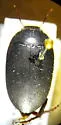
Agabus crassipes
Agabus crassipes
Identification: penultimate labial palpomere enlarged, triangular
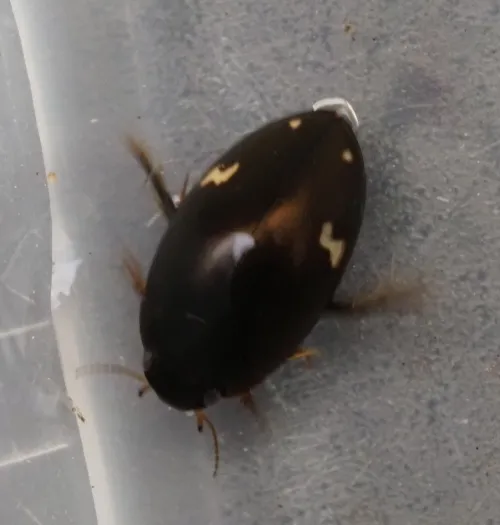
Agabus didymus
Agabus didymus
7.5 to 8.0 mm. Can be identified by its bronze colour and characteristic pale ‘N’ shaped elytral markings. Found in rivers, brooks, streams and canals. Widespread and frequent in the southern half of Britain, but less well recorded further north. No
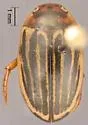
Disintegrated Diving Beetle
Agabus disintegratus
Identification: Holotype larvæ described in members of this group possess a stridulatory organ
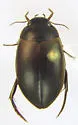
Agabus erytropterus
Agabus erytropterus
The original description by Thomas Say in 1825 ( Pdf here p.95 stipulate Colymbetes erytropterus . Fall's publication in 1922, A review of the North American species of Agabus, on page 21, mention this insect as Agabus erythropterus .
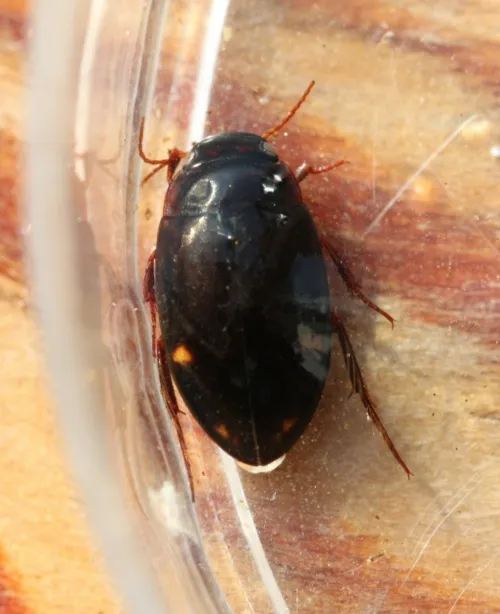
Agabus guttatus
Agabus guttatus
Length 8 or 9 mm. A dark brown/black diving beetle usually with pale spots on the elytra. Similar (but usually smaller) spots occur in other species. The elytra are covered in a fine mesh-like reticulated micro-sculpture. A row of fine punctures runs
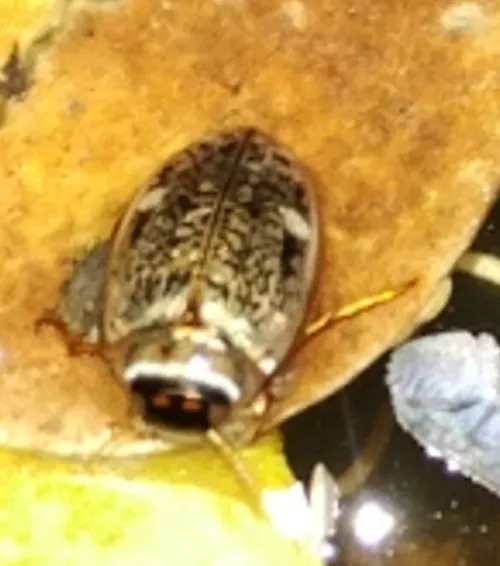
Agabus nebulosus
Agabus nebulosus
A brown, sometimes mottled, medium-sized (7.5 to 8.3 mm) water beetle which may be very similar to Agabus conspersus. Agabus nebulosus differs mainly in having two dark spots on the pronotum which are visible in the field. It is only safe to conclude
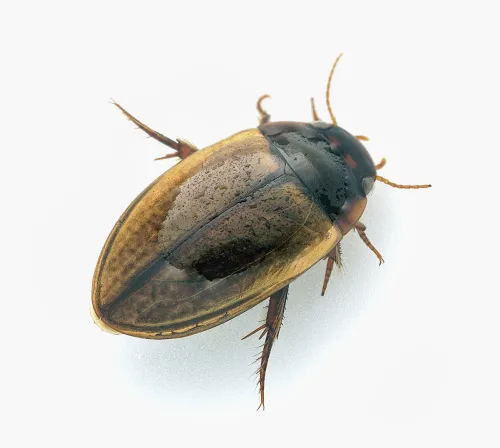
Agabus paludosus
Agabus paludosus
Length 6.5-8mm. Shiny brown elytra, dark head and pronotum. Photograph showing diagnostic features required. Widespread and fairly frequent in Britain. No additional images available for this species.
Agabus punctulatus
Agabus punctulatus
Identification: oval, small; rather shiny, dark reddish brown to almost black dorsally, often with a greenish sheen in life; lateral margins of pronotum and elytra paler; male protarsal claw with a subapical ventral tooth
Agabus sturmii
Agabus sturmii
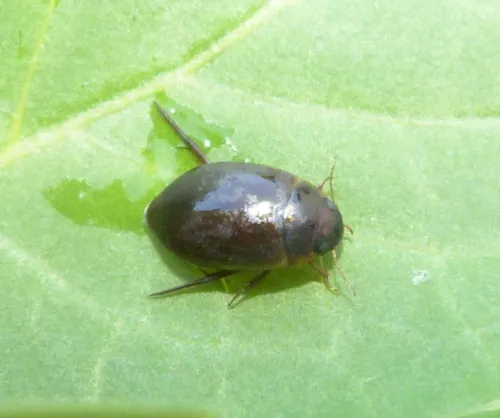
This predaceous diving beetle is similar to a number of others and specimens must be examined for a safe identification. No additional images available for this species.
Agabus taeniolatus
Agabus taeniolatus
Identification: Very similar to A. disintegratus , with overlapping range. Distinguished by entirely reddish venter
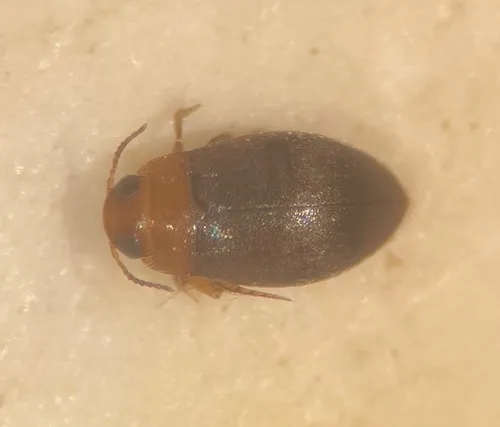
Bidessonotus inconspicuus
Bidessonotus inconspicuus
Identification: B. pulicarius ≤2.0 mm; B. longovalis : elytral plicae distinctly longer than pronotal plicae
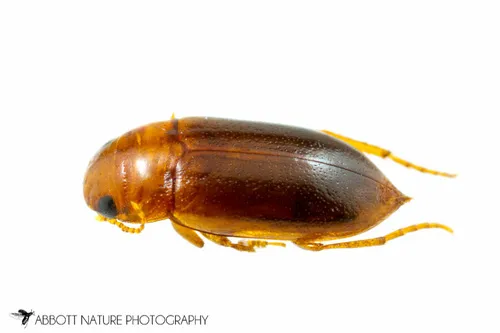
Celina angustata
Celina angustata
Identification: fine microsculpture on central portion of pronotum, with some punctures distinct Det. Tim R. Moyer, 2010
Celina grossula
Celina grossula
Identification: distinguished from the congeners in our area by large size (>6 mm), coarse pronotal punctation, and unmodified male mesotibia Type Locality: Louisiana not listed in
Celina hubbelli
Celina hubbelli
Identification: Adult: body elongate, reddish-yellow to reddish-brown with basal one-fourth of elytra and pronotum paler. Pronotum with punctures large laterally, fine but evident on disc. Elytra coarsely irregularly punctate, each puncture with shor
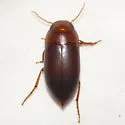
Celina imitatrix
Celina imitatrix
Identification: elytron with punctation coarse and irregular; pronotum dull with microsculpture meshes large and well impressed, disk with punctation fine and dense, laterally with larger punctures broadly distributed Type Locality: Gainesville, Alac
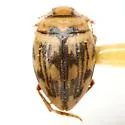
Clarkhydrus falli
Clarkhydrus falli
Identification: Robust, ovate; outline of pronotum and elytron continuous Type Locality: Tucson, Ariz.
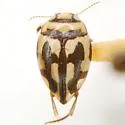
Clarkhydrus spectabilis
Clarkhydrus spectabilis
Clarkhydrus spectabilis (Clarkhydrus spectabilis) is a species in the family Dytiscidae, commonly known as predaceous diving beetles, belonging to the order Coleoptera (Beetles). It is classified within the subfamily Hydroporinae, tribe Hydroporini,
Colymbetes dahuricus
Colymbetes dahuricus
Identification: Ventral surface including legs entirely dark Color generally paler dorsally- pronotum rufous with a medial dark spot
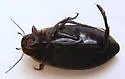
Colymbetes densus
Colymbetes densus
Identification: In this species, the frons is swollen (rather protruding) in front of the eyes (comments by Tim Loh here ).
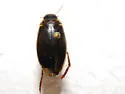
Colymbetes exaratus
Colymbetes exaratus
Identification: One of the members of the C. sculptilis species complex, which consists of 5-6 similar to identical species; species identification is only reliable from examination of male genitalia (length of adeagus)and in some cases subtle differ
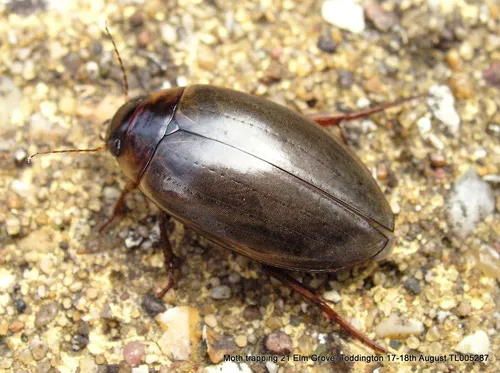
Colymbetes fuscus
Colymbetes fuscus
A large diving beetle (15-19 mm). Although this may look a dark species, the elytra are light straw brown and on close inspection have a network of black, transverse grooves. The beetle is darker brown underneath. The head and neck shield are also br
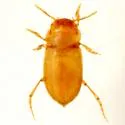
Comal Springs Diving Beetle
Comaldessus stygius
Identification: Diagnosis: Comaldessus stygius differs from all known North American bidessine species by the following combination of characters: Type Locality: TEXAS: Comal County, New Braunfels, Landa Park, Comal Spring 3, net near springhead, 10-
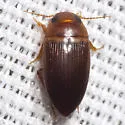
Copelatus caelatipennis
Copelatus caelatipennis
Identification: most specimens with base of elytron pale and contrasting with [slightly] darker color of pronotum and [much darker] remainder of elytron
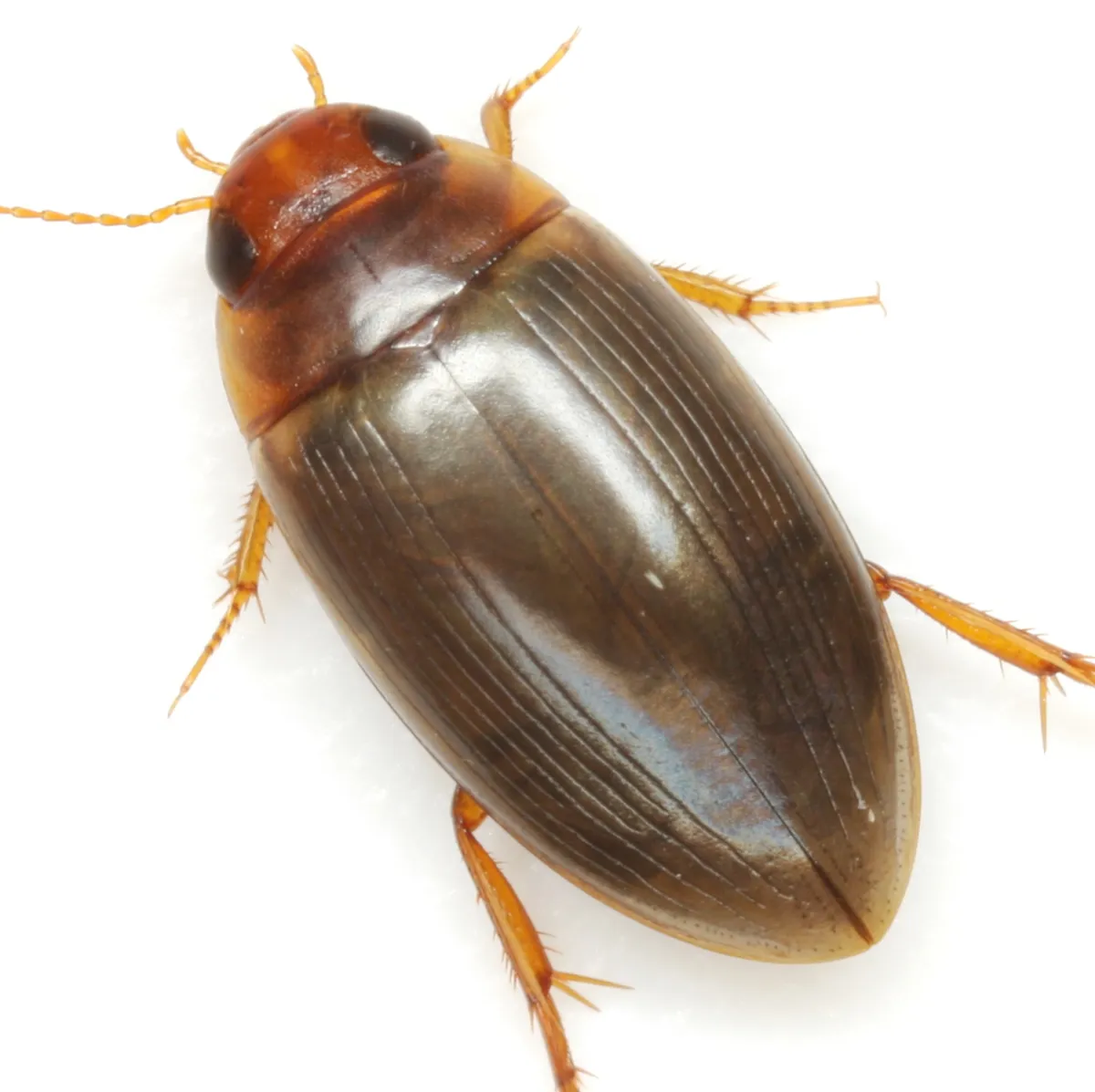
Chevrolat's Dytiscid
Copelatus chevrolati
Identification: Unique pattern of elytral striae Det. B. Mathison, 2010 Readily comes to lights
Copelatus debilis
Copelatus debilis
Identification: Elytron with 5 or 6 discal striae; elytral base distinctly paler than disc in most specimens
Copelatus distinctus
Copelatus distinctus
Identification: 10 discal striae and longitudinal strioles on lateral portion of pronotum; many striae are commonly reduced or absent, especially in males
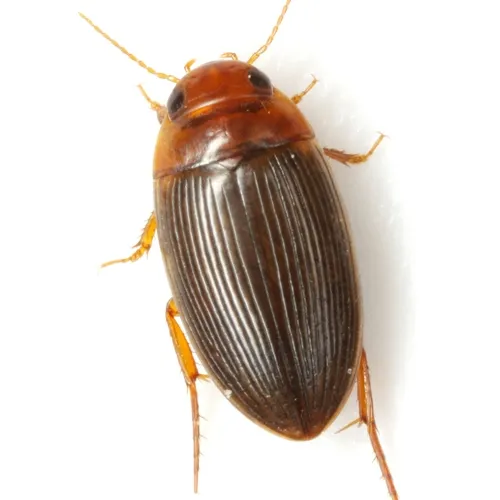
Copelatus glyphicus
Copelatus glyphicus
Identification: Adult: pale yellowish brown to reddish brown, ventral surface darker. Body with fine, moderately dense punctation dorsally. Pronotum with lateral bead complete. Each elytron with short sulcus near margin plus 10 complete sulci. Venter
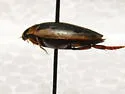
Coptotomus longulus
Coptotomus longulus
Identification: reliably distinguished by broad metasternal wing (narrowest width between mesocoxa and edge of metacoxal plate) of 0.35 mm or greater
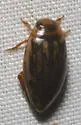
Coptotomus venustus
Coptotomus venustus
Identification: Labial and maxillary palpi notched apically; last abdominal sternite without a pair of medial parallel grooves; elytra without dense sculpture of irregular grooves
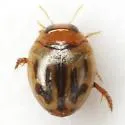
Desmopachria dispersa
Desmopachria dispersa
Identification: Body broadly ovate, somewhat depressed; elytra and pronotum rather deeply and densely punctate; metacoxal plates relatively coarsely and densely punctate;
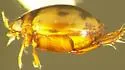
Desmopachria mexicana
Desmopachria mexicana
Identification: Elytron with lateral dark spots separate from combined discal and sutural markings; pronotum with discal punctation distinctly finer than that of elytra; metacoxal plate relatively coarsely but shallowly punctate
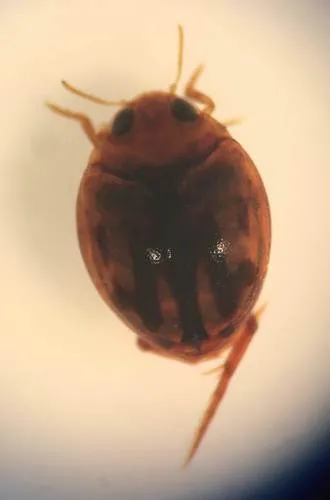
Desmopachria seminola
Desmopachria seminola
Identification: Body more narrowly ovate and more convex; elytra and pronotum more finely and less densely punctate; metacoxal plates more finely and more sparsely punctate
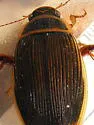
Boreal Water Beetle
Dytiscus alaskanus
Identification: Relatively small for the genus; metacoxal lobes acuminate; abdominal sterna yellow with expanded black markings; sulcate (ridged) females with ridges separated by yellow striae, ridges 7 & 10 and 8 & 9 fused apically
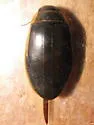
Dytiscus circumcinctus
Dytiscus circumcinctus
Identification: Large and elongate, sometimes with a greenish sheen; ventral surface mostly yellow without expanded black markings on abdominal sterna (margins of sterna narrowly black); metacoxal lobes acuminate (pointed); inner margins of the eyes
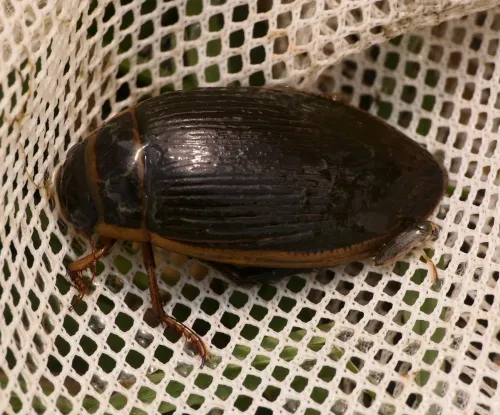
Dytiscus circumflexus
Dytiscus circumflexus
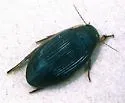
In this species the metacoxal plates are sharply pointed. It is 30 mm or more in length and the pronotum has narrow yellow borders front and back with the sides being only a little wider. Other distinguishing features are the underside of the beetle
Dytiscus cordieri
Dytiscus cordieri
Identification: Moderate size; pronotum and elytra broadly lined with yellow laterally; ventral surface mostly yellow with few dark markings; hind coxal lobes rounded .
Understriped Diving Beetle
Dytiscus fasciventris
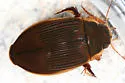
Identification: only the anterior and lateral margins of pronotum are bordered by a broad pale stripe (posterior margin not bordered); lateral margin of elytron bordered by broad pale stripe on basal half only remainder of dorsal surface brown, brown
Great Diving Beetle
Dytiscus marginalis
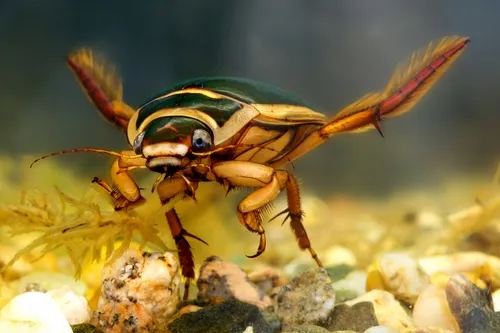
One of our largest beetles, this species has a dark, olive-brown, almond-shaped oval body, about three centimetres long. The pronotum is completely bordered by a yellow margin - one of the key features that enables this species to be recognised in th
Vertical Diving Beetle
Dytiscus verticalis
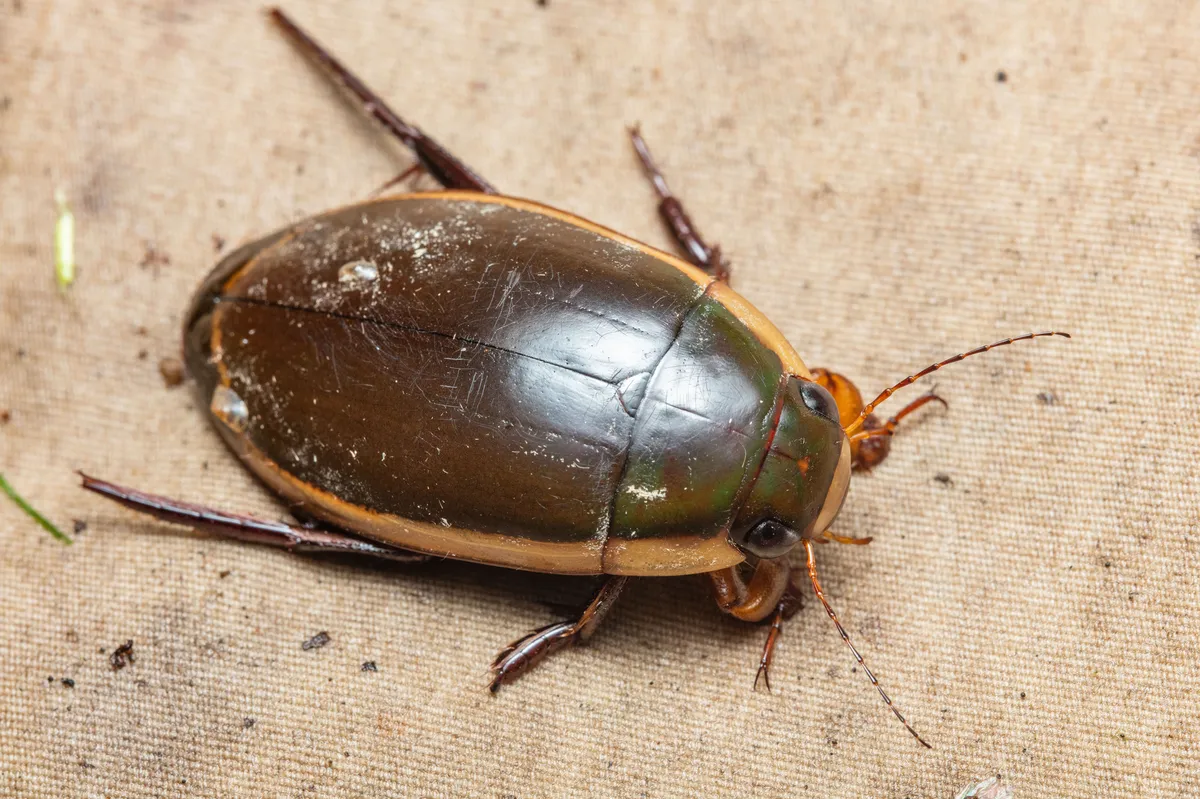
Identification: Adult: pronotum with yellow border on lateral margins only; yellow lateral margin of elytra continues as an oblique line across apex; two tibial spurs on hindleg are approximately equal in size North Carolina State U. has 7 specimens
Ereboporus naturaconservatus
Ereboporus naturaconservatus
three specimens collected in drift nets (300–500 µm) over two spring orifices of Caroline Springs, the headwaters of Independence Creek, Terrell County, Texas.
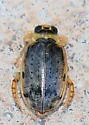
Eretes explicitus
Eretes explicitus
Type Locality: Balmorhea State Park, Texas, VII-7-1963, P.J. Spangler
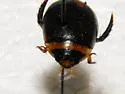
Graphoderus occidentalis
Graphoderus occidentalis
Identification: Diagnostic characters include: posterior black fascia of pronotum contiguous with hind margin and anterior black fascia of pronotum contiguous with anterior margin. The male mesotarsus is also not dilated (widened) in this species.
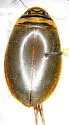
Graphoderus perplexus
Graphoderus perplexus
Identification: Unlike G. occidentalis , the posterior black fascia on the pronotum (the black band at the bottom part of the pronotum) does not reach the hind margin. The black band is contiguous (unseparated) with the hind margin in G. occidentalis
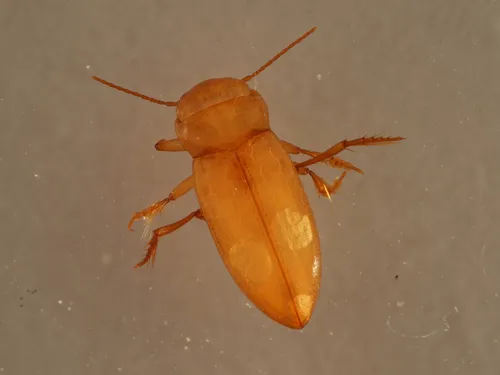
Haideoporus texanus
Haideoporus texanus
Type Locality: Artesian well at the Aquatic Station, Texas State University, San Marcos, Hays County, Texas. Texas considers this a "Species of Greatest Conservation Need" (SGCN) This is the 1st blind, depigmented, aquifer-adapted Dytiscidae describe
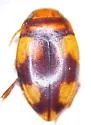
Hornectes quadrimaculatus
Hornectes quadrimaculatus
Identification: color pattern distinctive ▪ Syntype
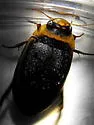
Hydaticus aruspex
Hydaticus aruspex
Identification: body and frons black, yellow-reddish spots on frons, elytra with sharply delimited yellow margins (Larson et al. 2001) ( H. piceus is brownish, with frons brown-rufous and no yellow lateral margins on the elytra)
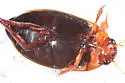
Hydaticus cinctipennis
Hydaticus cinctipennis
Identification: characterized by brown body, rufous to brownish frons, and sharp yellow margins on the elytra (in H. piceus paler margins fade away)
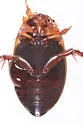
Hydaticus piceus
Hydaticus piceus
Identification: Very similar in terms of body and frons colouration to H. cinctipennis but lacks the sharply defined yellow margin on the elytron seen in the latter species.
Hydrocolus paugus
Hydrocolus paugus
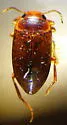
Hydrocolus paugus (Hydrocolus paugus) is a species in the family Dytiscidae, commonly known as predaceous diving beetles, belonging to the order Coleoptera (Beetles). It is classified within the subfamily Hydroporinae, tribe Hydroporini, suborder Ade
Hydrodytes dodgei
Hydrodytes dodgei
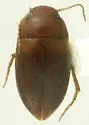
Identification: resembles a diminutive Copelatus , distinguished by smaller size and lack of elytral and sternal striae
Hydroporus angustatus
Hydroporus angustatus
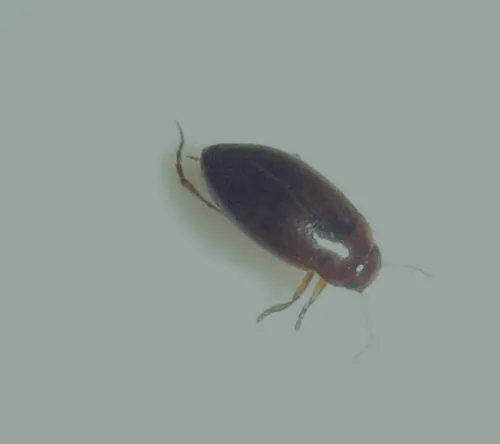
A small (approx 3 mm) mid to dark brown water beetle. No additional images available for this species.
Hydroporus discretus
Hydroporus discretus
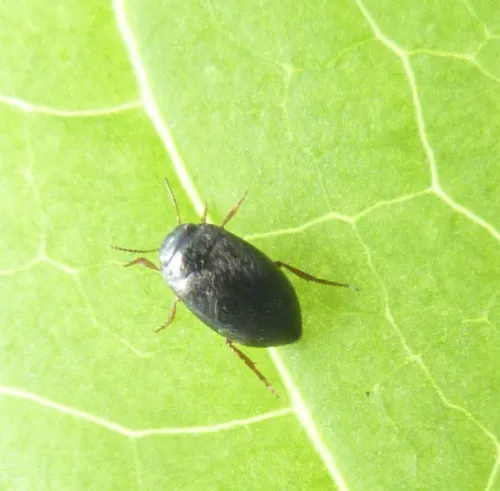
This is a small dark greeny black water beetle with orange brown legs and antennae. Widespread and fairly frequent in Britain. No additional images available for this species.
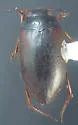
Hydroporus gossei
Hydroporus gossei
Identification: Similar to H. rectus, but more oval in shape, apexes of labial palps usually infuscated, and has coarser punctation.
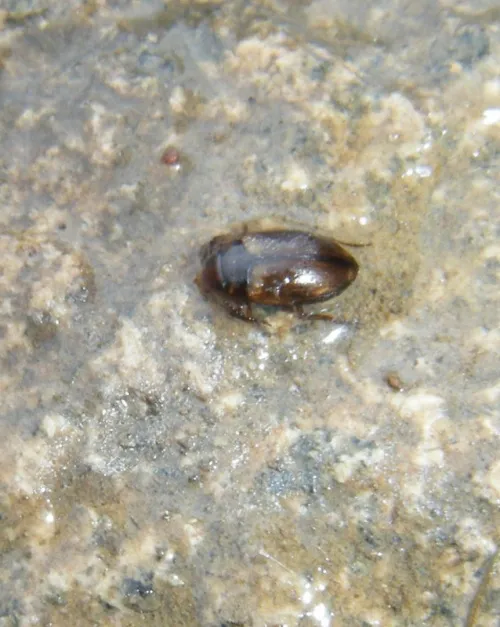
Hydroporus incognitus
Hydroporus incognitus
A small (3 to 3.5 mm) dark brownish water beetle with paler creamy orange coloured markings which vary from one specimen to another. In still water such as ponds and in slow moving water. No additional images available for this species.
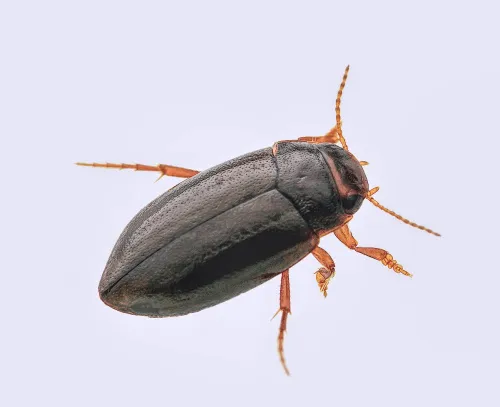
Hydroporus memnonius
Hydroporus memnonius
Length 3.8 to 4.3 mm. Sides more or less parallel. Colour may vary from rufous to almost black. Aedeagus with distinctive tongue-like process. Unless identified by a recognised expert, a photo is required and the specimen should be examined with a mi
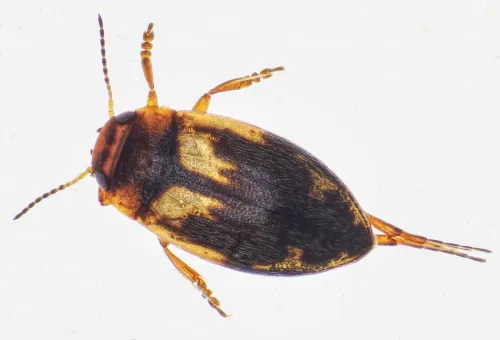
Hydroporus palustris
Hydroporus palustris
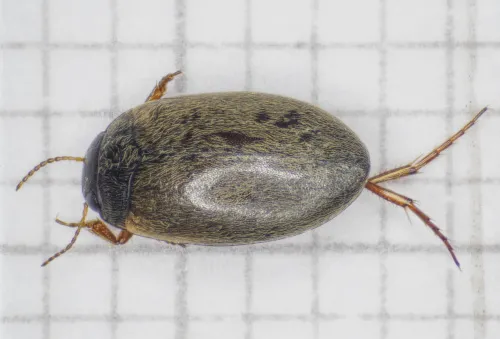
3.3 to 4.0 mm. Elongate oval; the elytral outline is smoothly curved from base to apex. Dark elytra with yellow patterning at the front and sides, though this can be variable. Head red at the front. Antennal segments darkened along the apical half. U
Hydroporus planus
Hydroporus planus
3.8 to 4.8 mm. Black head and pronotum with dark red/brown elytra. The front corners of the elytra are a paler grey. It is generally covered in long, pale hairs. Hydroporus species are generally very hard to separate but the size, black head, grey fr
Hydroporus rectus
Hydroporus rectus
Identification: See Larson et al. for a detailed description.
Hydroporus sinuatipes
Hydroporus sinuatipes
Identification: Relatively large species; protibia with ventral margin distinctly emarginate sub-basally, especially in the males • Holotype
Hydroporus tessellatus
Hydroporus tessellatus
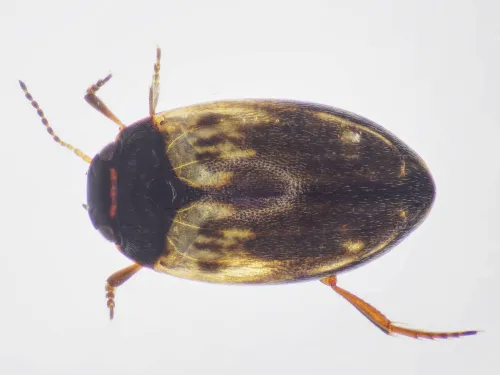
Length 3.4-3.8mm. Whole of head and pronotum black. Elytra streaked and mottled, aedeagus blunt. No additional images available for this species.
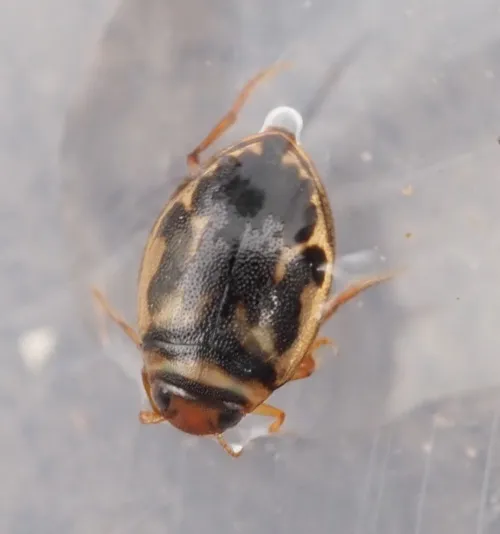
Hygrotus inaequalis
Hygrotus inaequalis
This is a small (3 mm) water beetle. The dark brown elytra are marked with paler yellowish buff. In the water of well vegetated ponds and ditches.
Hygrotus lutescens
Hygrotus lutescens
Identification: The only reliable character separating H. lutescens and H. sellatus is the sculpture of female abdominal sterna
Hygrotus marklini
Hygrotus marklini
Identification: A rather uniformly coloured Hygrotus- dorsally brown to piceous (Very dark reddish brown) in colour, ventrally mainly black; head dark with an isolated pale spot on the frons; pronotum pale yellow brown anteriorly, darkened posteriorl
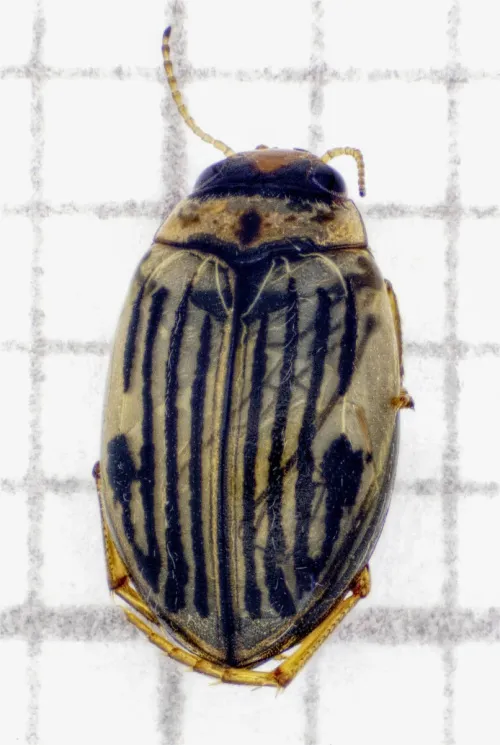
Hygrotus nigrolineatus
Hygrotus nigrolineatus
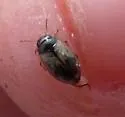
Length ~4mm. Distinctive body pattern of dark longitudinal lines. Pronotum predominantly pale yellow but typically with a dark patch or smudge in the middle. First recorded in the UK on 1983. Unless identified by a recognised expert, a photo is requi
Hygrotus sellatus
Hygrotus sellatus
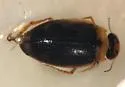
Identification: Species can be easily identified from the distinctive patterning of the elytra- there is distal brown blotch and a subhumeral spot on a pale background, the sutural margin is also dark; pronotum is dark, with paler anterolateral borde
Hygrotus wardii
Hygrotus wardii
The only species of Hygrotus with its primary distribution in Mexico
Hyphydrus ovatus
Hyphydrus ovatus
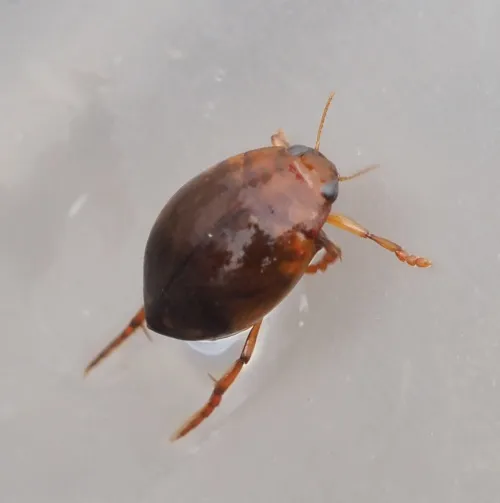
Length around 4.5 mm. The small oval/globular form and dark red to brown colouration are distinctive. Some have vague elytral patterning at the margins, especially in teneral specimens. Hyphydrus aubei is a similar size and shape but has a much more
Ilybiosoma bjorkmanae
Ilybiosoma bjorkmanae
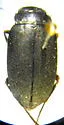
Identification: Color dark brown to black Pronotum constricted at the base, discontinuous in outline with the elytra.
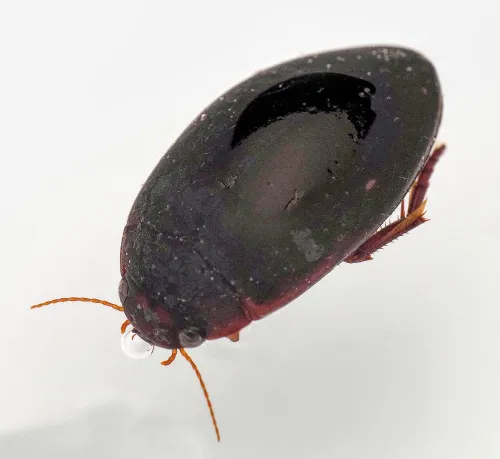
Ilybius ater
Ilybius ater
A fairly large smooth blackish water beetle. Always associated with aquatic environments, but flies well and can be attracted to light. The typical habitat is emergent vegetation in shallow water at the edge of ponds, lakes ditches etc. All year roun
Ilybius discors
Ilybius discors
Identification: lectotype Externally similar to I. austrodiscors Larson, a n.CA endemic
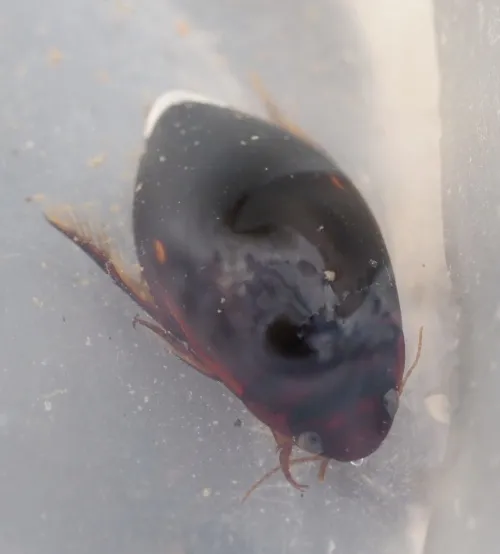
Ilybius fenestratus
Ilybius fenestratus
Length approx. 11 mm. This species has dark colouration and a broad-oval shape which is widest behind the middle. Unless identified by a recognised expert, a photo is required and the specimen should be examined with a microscope. In the comments box
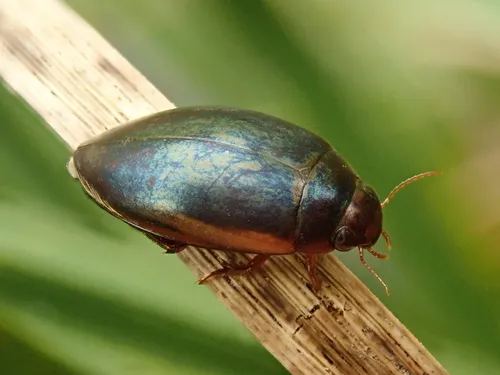
Ilybius fuliginosus
Ilybius fuliginosus
A 10 to 12 mm long dark brown bronze diving beetle with pale yellow stripes along the margins of the elytra. Permanent water which is vegetated, including rivers, canals, drainage ditches, ponds and lakes. It flies well and may be attracted to light.
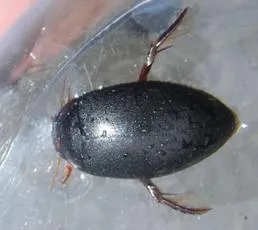
Ilybius subaeneus
Ilybius subaeneus
This family of water beetles is related to the ground beetles, but are much modified for life in water. Adults and larvae are fiercely carnivorous. Fairly frequent and widespread in much of Britain except the extreme north. No additional images avail
Ilybius wasastjernae
Ilybius wasastjernae
Ilybius wasastjernae (Ilybius wasastjernae) is a species in the family Dytiscidae, commonly known as predaceous diving beetles, belonging to the order Coleoptera (Beetles). It is classified within the subfamily Agabinae, tribe Agabini, suborder Adeph
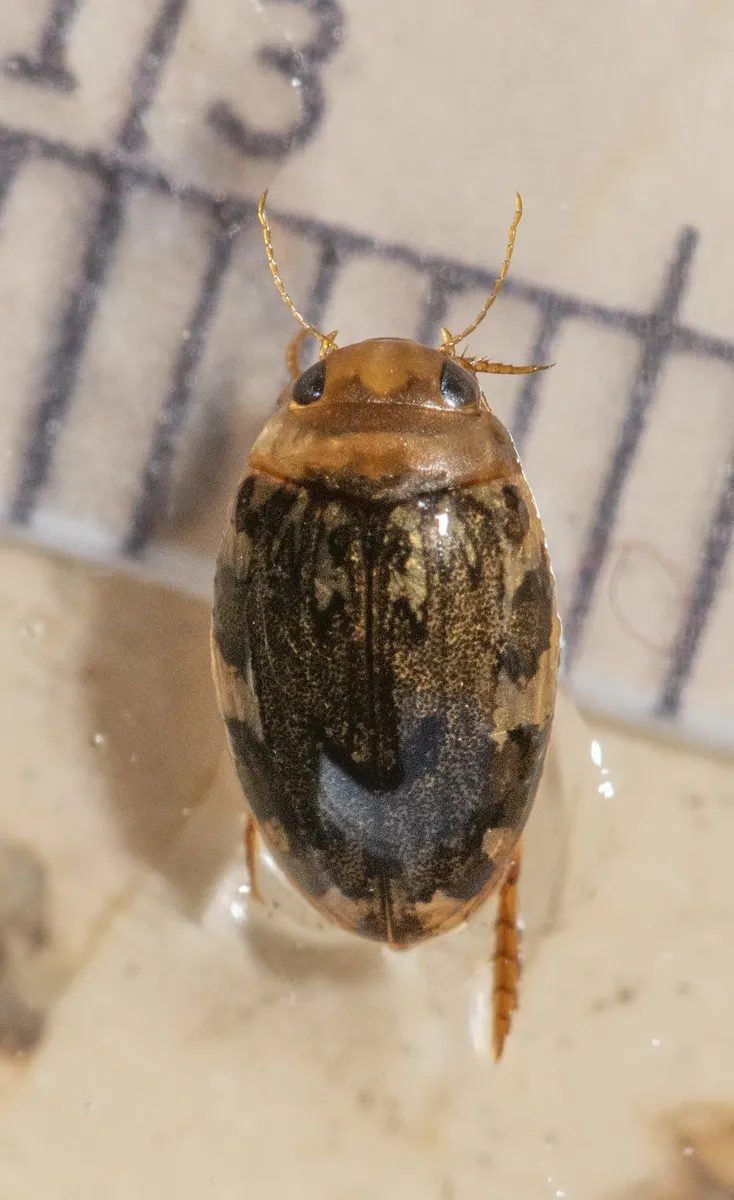
Laccophilus maculosus
Laccophilus maculosus
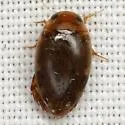
Identification: Relatively large compared to other members of the genus; overall brownish in colour with elytra irrorate (freckled); the density of freckling varied, with the greatest around pale spots located along lateral, basal, and sutural margin
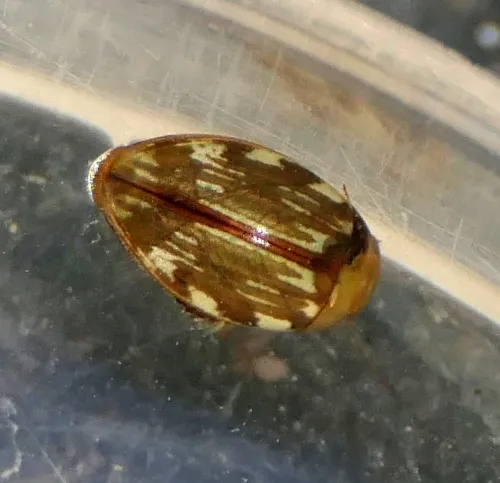
Laccophilus minutus
Laccophilus minutus
Length about 4.5 mm. A small green/brown diving beetle, the elytra can be dark but may have varied paler markings. Mainly found in ponds and pools but has occasionally been recorded from flowing water. Has been recorded in most months of the year. Wi
Laccophilus proximus
Laccophilus proximus
Identification: Elytral iorrations (freckling) more even in density without significant darkening around the pale sublateral spots. Most similar to L. maculosus but in maculosus , the pale spots are outlined/surrounded by denser, darker freckling; al
Laccornis conoideus
Laccornis conoideus
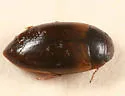
Identification: Antenna with outer antennomeres infuscate apically (show some degree of darkening); colour as described by Larson-reddish brown overall, head brown with reddish areas anteriorly, ventrally, pronotum dark brown with some red laterally,
Leconectes striatellus
Leconectes striatellus
Identification: Each elytron with at least a sutural stria and several discal striae; dorsum densely punctate, with punctures bearing yellowish to brown hairs/setae. Colouration from almost uniformly black to vittate.
Liodessus flavicollis
Liodessus flavicollis
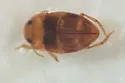
Identification: most distinct coloration of Liodessus with submedial and apical transverse pale fasciae
Liodessus obscurellus
Liodessus obscurellus
Identification: Reliably separated from L. affinis by aedeagus only comes in numbers to lights
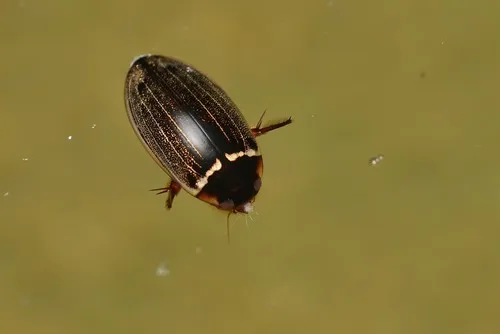
Meridiorhantus calidus
Meridiorhantus calidus
Identification: Pronotum dark medially with broad pale lateral margins; elytron variegated; ventral surface dark reddish brown ( 3 ) Adult's head dark brown to black, large eyes, front and top of head with brownish-yellow spot. Elytra with pale band
Nartus sinuatus
Nartus sinuatus
Identification: Black with dark rufous legs; posterior margin of pronotum arched just before hind angles ( 3 ) An uncommonly seen/collected species, most likely due to habitat inaccessibility.
Neobidessus youngi
Neobidessus youngi
Identification: The modified hind trochanters are distinctive. Otherwise, a lightly marked species similar to N. pulloides .
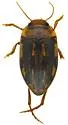
Neoporus arizonicus
Neoporus arizonicus
Identification: possibly same species as N. dimidiatus
Neoporus pratus
Neoporus pratus
Identification: iNaturalist Type Locality: Kansas, Douglas Co., Grant township, Scorpion Hill
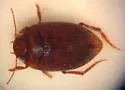
Neoporus uniformis
Neoporus uniformis
Identification: Similar to N. lobatus , and possibly a southern form of this species. "Lighter in color, more coarsely punctate, and more shining and smaller than typical N. lobatus ."
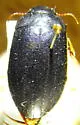
Neoscutopterus hornii
Neoscutopterus hornii
Identification: Antennae and palpi entirely pale, with little or no darkening; metasternal wing narrow
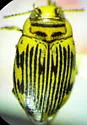
Oreodytes scitulus
Oreodytes scitulus
Identification: Epipleuron does not meet the humeral angle between pronotum and elytron (visible in the lateral view). Distinctive colour pattern on pronotum and elytra: with anterior and posterior black markings on the pronotum that are joined/conti
Psychopomporus felipi
Psychopomporus felipi
Species description based on two specimens and three large fragments of additional specimens collected from two springs that discharge into the western side of San Felipe Creek in Del Rio, Val Verde County, Texas, USA (29.37234°N, 100.88602°W). Texas