
Primitive Winged Insects
Order Coleoptera
The Primitive Winged Insects (Order Coleoptera) includes 15,720 species across 160 families and 3,716 genera in our directory.
About Primitive Winged Insects
Coleoptera is the largest order of insects with over 400,000 described species, representing ~25% of all known animal species and ~40% of all insects. In the U.S. alone, nearly 30,000 beetle species have been identified.
Economic Impact
Beetles have major economic significance: leaf beetles (Chrysomelidae) and weevils (Curculionoidea) are among the most destructive agricultural pests globally, costing billions annually, while predatory species like ladybugs provide natural pest control.
Ecological Role
Beetles are prominent decomposers, especially in forests, breaking down dead wood and recycling nutrients. As predators, they reduce populations of pest insects. Many species are also important pollinators of flowering plants.
Families in Coleoptera (160)
Species in Coleoptera (15,720)
Tachyura cockerelli 0
Tachyura cockerelli
Identification: syntype "Elongate, moderately convex, uniformly pale rufous in color. Prothorax slightly wider at base than at apex, the posterior transverse impression tripunctate. Elytra with three well-marked striae and more or less evident traces
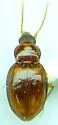
Tachyura ferruginea
Tachyura ferruginea
Identification: The reduced eye (with temple bulky posteriorly) which, along with the uniform pale color and inflated elytra, is unique among North American congeners. ‒Peter Messer
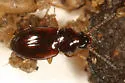
Tachyura granaria
Tachyura granaria
Identification: elytra shorter, plumper, more unicolorous and forehead shinier (no microscuplture) compared to similar species
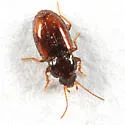
Tachyura incurva
Tachyura incurva
Identification: neotype • Among other subtle differences, head is usually blackish (brownish in most E. anceps )
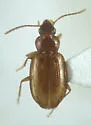
Tachyura lutea
Tachyura lutea
So far, the earliest known occurrence of this species in N. America is a male specimen collected at light in Chattanooga, TN on 29 June 2012. (det C.W. Harden 2024, Carnegie Museum of Natural History collection)
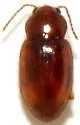
Tachyura nebulosa
Tachyura nebulosa
Identification: Looks like a larger version of T. anceps with the usual pale "clouds" at elytral shoulders and apices, distinguished by 3 large punctures at mid-base of pronotum. ―P.W. Messer, 8.ix.2009
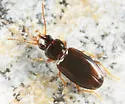
Tachyura parvula
Tachyura parvula
Identification: Distinguished from other congeners in our area by the complete 8th elytral stria. The five well impressed punctate striae on each dorsal elytron also helps. earliest record in our area: WA 1940
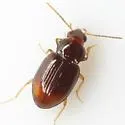
Tachyura rubricauda
Tachyura rubricauda
Identification: Similar to xanthopus, but with more elytral striae and with the pale elytral apex more abrupt and contrasting with the rest of the elytra.
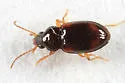
Tachyura vernicata
Tachyura vernicata
Identification: black, with 4 ±distinct pale spots on elytra
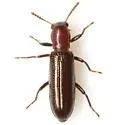
Talanus langurinus
Talanus langurinus
Talanus langurinus (Talanus langurinus) is a species in the family Tenebrionidae, commonly known as darkling beetles, belonging to the order Coleoptera (Beetles). It is classified within the subfamily Stenochiinae, tribe Talanini, suborder Polyphaga,
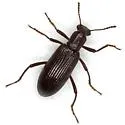
Talanus mecoscelis
Talanus mecoscelis
Type series coll. at Brownsville, Texas in 1934, 1937, and 1939 by D. J. and J. N. Knull. (Triplehorn 1968) Texas considers this a SGCN ( 5 )
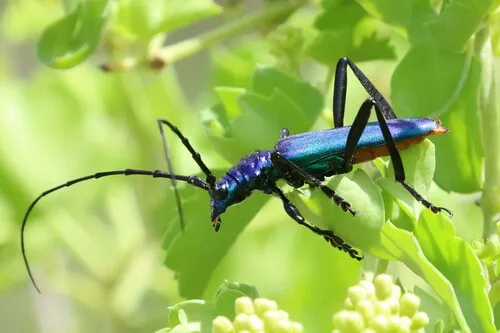
Tamaulipan Bumelia Borer
Plinthocoelium schwarzi
Identification: black femora Det. D. Heffern, 2009 Type Locality: McAllen, Hidalgo Co., Texas Described from four specimens, two females and two males, received from D. K. McMillan with the following note, "Collected May 22, 1909, on the blossoms of
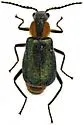
Tanaops coelestinus
Tanaops coelestinus
Identification: The color of the thorax is of no value in separating the closely allied T. mimus, T. coelestinus , and T. complex . These specimens all show a shining, denuded spot on each side of the prothorax, of variable size, near the posterior a
Tanaops longiceps
Tanaops longiceps
Identification: Type specimen Original description as reprinted in Fall
Tanaops testaceus
Tanaops testaceus
Identification: Oblong, parallel, uniform rufotestaceus in color, with the antennae, palpi, knees, tibiae and tarsi fuscous and the elytra gradually paler toward the apex. This species may easily be distinguished from all others of the genus Tanaops
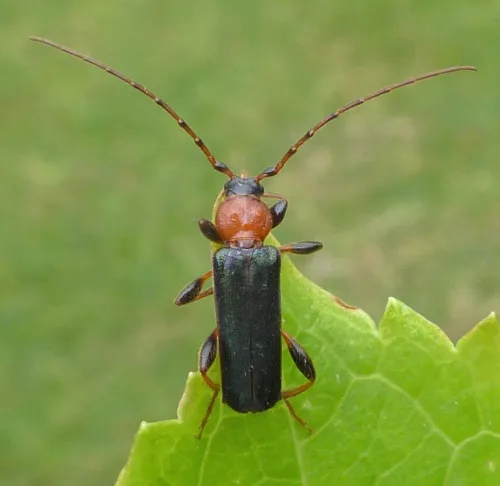
Tanbark Borer
Phymatodes testaceus
Length 8 to 13mm. Very variable in colour from golden brown, through reddish to a deep blue-black. A common form has the thorax reddish and the elytra deep blue. The adults are active nocturnally and will come to light but are rarely seen otherwise u
Tanysphyrus lemnae
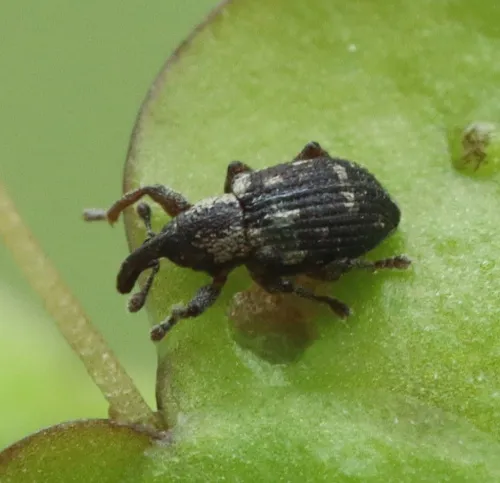
Tanysphyrus lemnae
1.2-1.9mm. This tiny weevil is closely associated with duckweeds ( Lemna sp. ). Generally dark with patches of pale scales on the thorax, abdomen and femora. The rostrum is a similar length to the pronotum. Key features are the tarsal segments: the t
Taphrocerus albodistinctus
Taphrocerus albodistinctus
Identification: Det. S. G. Wellso Type Locality: Lake City, FL
Taphrocerus chevrolati
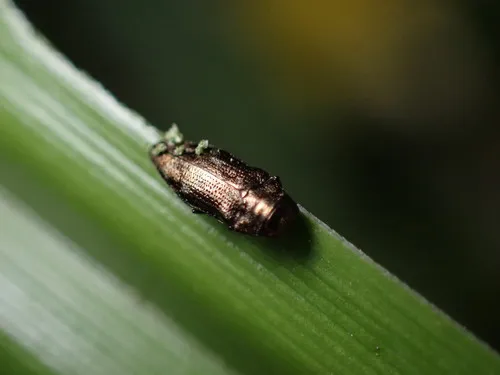
Taphrocerus chevrolati
Taphrocerus chevrolati is a species of metallic wood-boring beetle in the family Buprestidae. It is found in North America.
Taphrocerus howardi
Taphrocerus howardi
Identification: I suggest Taphrocerus howardi , based on the parallel-sided form, indistinct pattern of elytral pubescence, and rather coarse elytral punctation. Taph. nicolayi is very similar but usually slightly broadened at the humeri. Other sympa
Taphrocerus nicolayi
Taphrocerus nicolayi
Identification: Dets. T. C. MacRae infrequently collected
Taphrocerus schaefferi
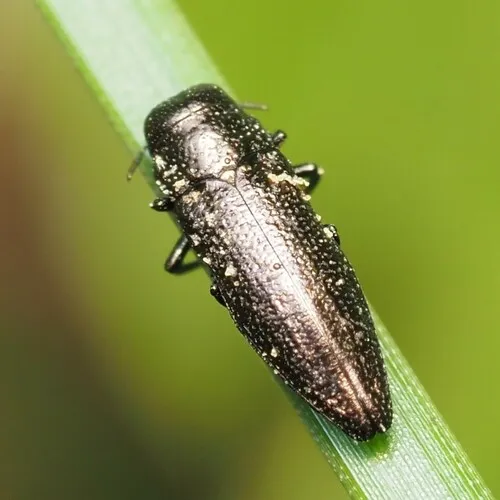
Taphrocerus schaefferi
Taphrocerus schaefferi is a species of metallic wood-boring beetle in the family Buprestidae. It is found in North America.
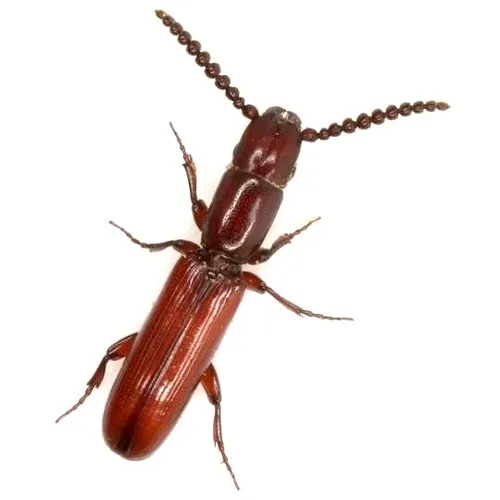
Taphroscelidia linearis
Taphroscelidia linearis
Identification: Det. E. G. Riley, 2009 comes to lights
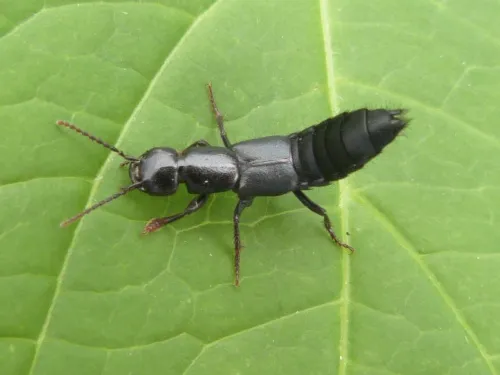
Tasgius ater
Tasgius ater
One of the larger black rove beetles. Detailed examination is needed for a safe id. Various habitats including gardens and post-industrial ground. Widespread and possibly increasing in Britain.
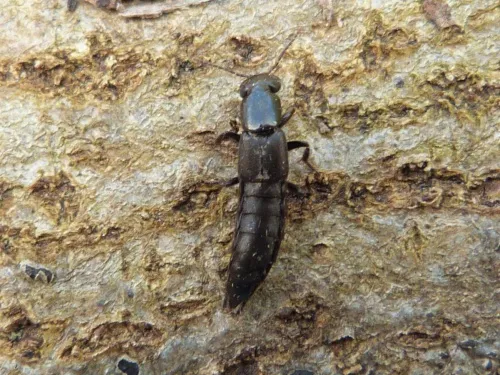
Tasgius globulifer
Tasgius globulifer
Length about 9 or 10 mm with black body and legs. Widespread and fairly frequent in Britain. No additional images available for this species.
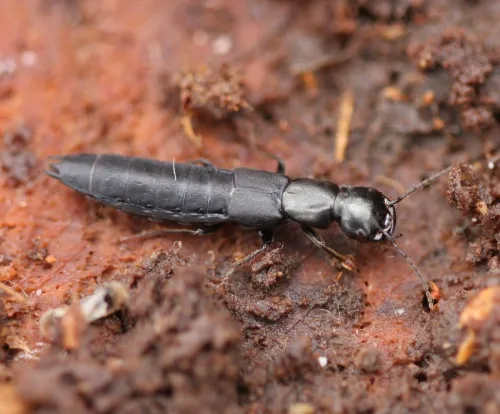
Tasgius melanarius
Tasgius melanarius
14-17mm. Black, sometimes with a bluish sheen to the pronotum. Legs black but with reddish tarsi. Antennae black but getting paler towards the apex. Head transverse and quadrangular. Terminal segment of labial palps large. Pronotum narrows towards th
Tasgius morsitans
Tasgius morsitans
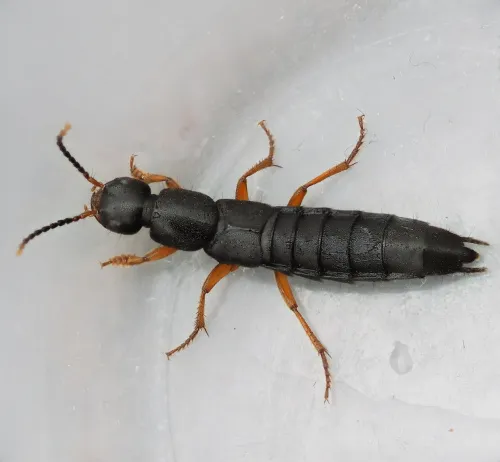
One of the larger rove beetles at 12 to 16 mm. It is all black except for red legs and the antennae basal segments + apical segment. It can be distinguished from all other similar species by the dense punctures on the pronotum that are all of even si
Tasgius winkleri
Tasgius winkleri
Identification: General characteristics like T. melanarius , punctures on forebody usually denser (variable to some extent). Pronotum widest at anteriour third [at anteriour 1/5 in T. melanarius ] Safe discrimination by male genitalia. Not in the boo
Tawny Longhorn Beetle
Paracorymbia fulva
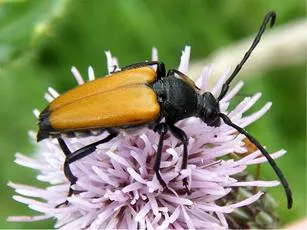
Paracorymbia fulva is a large longhorn beetle, 9-14 mm long. Its golden brown elytra (wing cases) are tipped with black. It also has black legs and antennae. It is usually found near to the coast in the southern half of England, from Norfolk round to
Tecnophilus pilatei
Tecnophilus pilatei
Identification: distinguished from more widespread T. c. croceicollis by the dark apices ("knees") of the femora, elytral striae much more coarsely punctate, and narrower, less cordate pronotum. (comment by P.W. Messer, 12 June, 2021) Type locality:
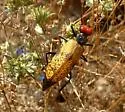
Tegrodera erosa
Tegrodera erosa
Identification: Separated geographically from T. aloga by Colorado Desert . The medial black stripe (across the middle of the elytra) that is present in the other two species of Tegrodera is much shorter (front-to-back) and less pronounced in T. eros
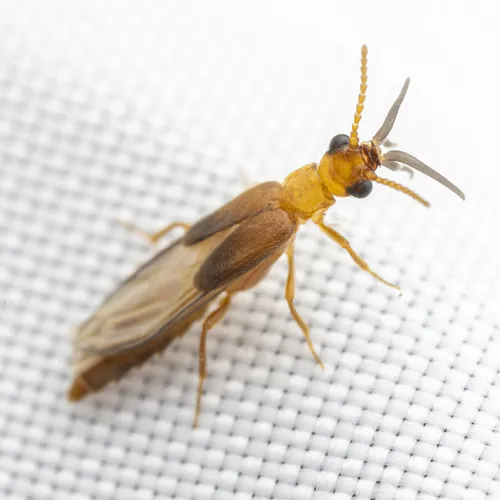
Telegeusis debilis
Telegeusis debilis
Identification: Elytra tapering, narrow, subacute and long, extending one-third their length beyond the hind coxae; head much longer than the pronotum. this spmn from the Chiricahuas Mtns seems to fit this sp's description - New US Record? Type Local
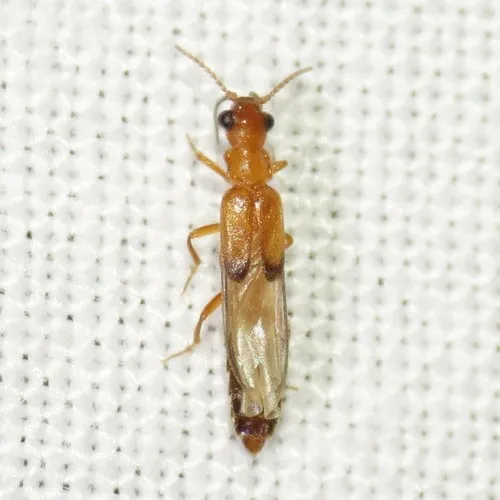
Telegeusis nubifer
Telegeusis nubifer
Identification: Elytra short, arcuately truncate, not passing apex of hind coxae; head but little longer than pronotum. Elytra reaching apex of hind coxae or about a third longer than their width across humeri, their apices infuscate. Types: from the
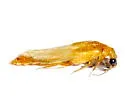
Telegeusis schwarzi
Telegeusis schwarzi
Identification: Entirely pale yellow except eyes and palpi, elytral apices and posterior margin of pronotum whitish; elytra only about one-seventh longer than their combined width across humeri, their apices reaching only to lateral base of hind coxa
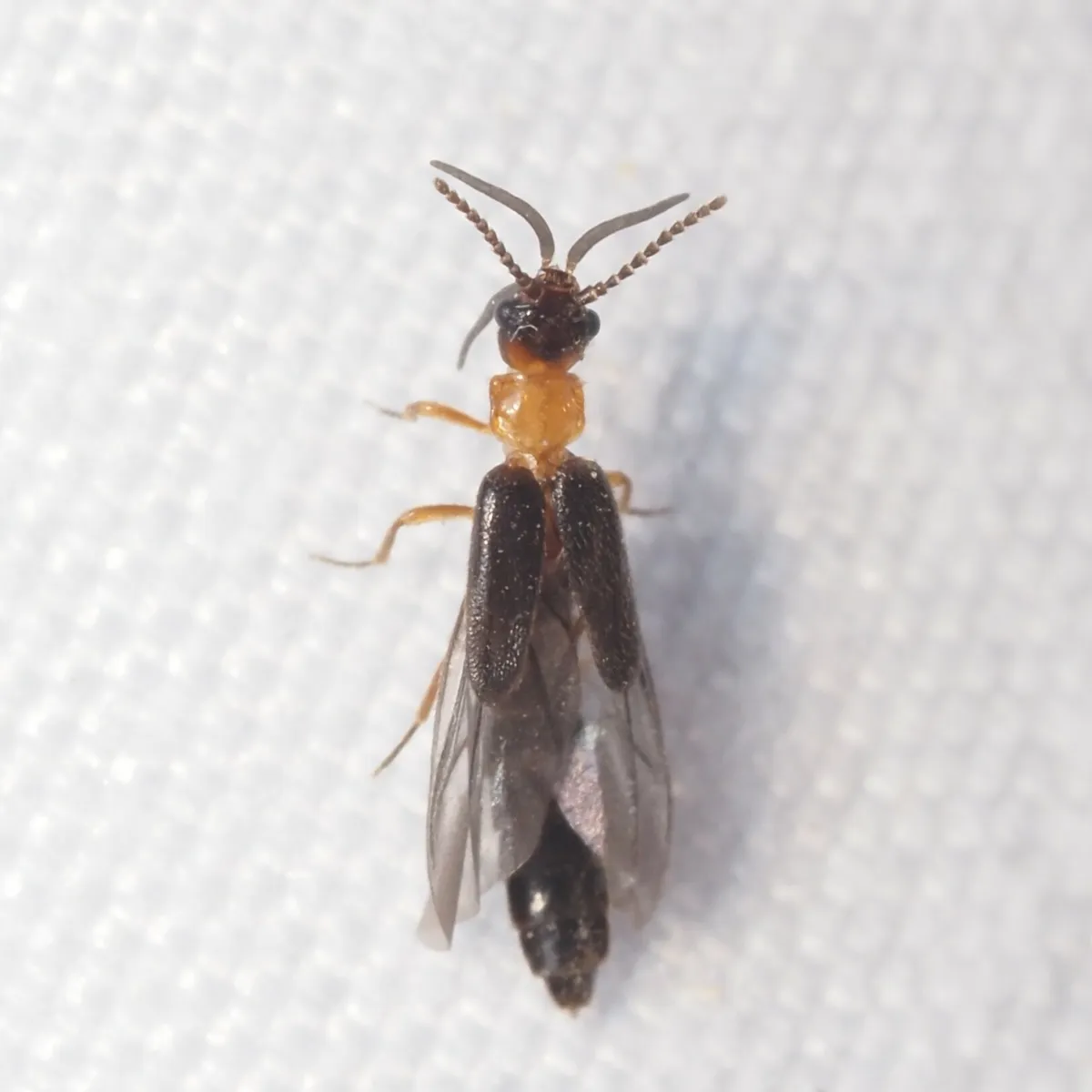
Telegeusis texensis
Telegeusis texensis
Identification: Telegeusis texensis may be distinguished from all other long-lipped beetles by the combination of concolorous black elytra and orange-yellow pronotum. (Fleenor and Taber 2001) Type Locality: Bastrop State Park, Bastrop Co., TX / 22 Ap
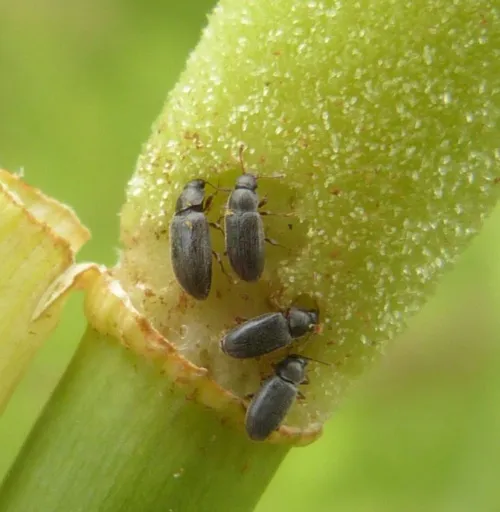
Telmatophilus typhae
Telmatophilus typhae
A small (1.5 to 2 mm) dark grey-black beetle. Unless identified by a recognised expert, a photo is required and the specimen should be examined with a microscope. In the comments box, state the key or ID method used and describe the size and identify
Temnocerus macrophthalmus
Temnocerus macrophthalmus
Identification: strongly convex eyes are diagnostic (C.W. O'Brien, 25.x.2009) Det. E. G. Riley, 2009 Type Locality: Brownsville, Cameron Co., TX ( 5 )
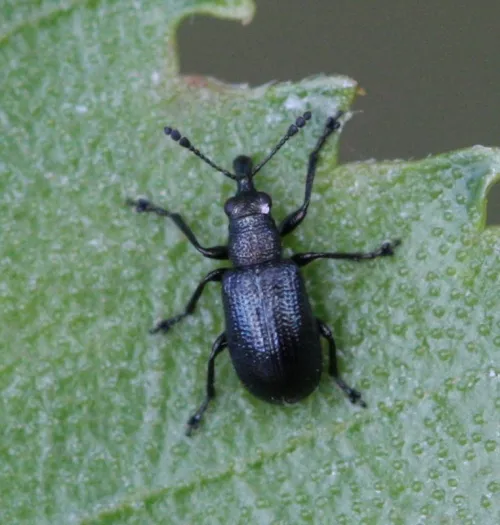
Temnocerus nanus
Temnocerus nanus
A very tiny blackish weevil with studded elytra. There are several very similar weevils which coupled to the small size makes it hard to be sure of the identify from a photo alone. However habitat information is helpful, and this species is nearly al
Temnocerus perplexus
Temnocerus perplexus
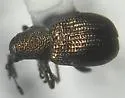
Temnocerus perplexus (Temnocerus perplexus) is a species in the family Attelabidae, commonly known as leaf rolling weevils, belonging to the order Coleoptera (Beetles). It is classified within the subfamily Rhynchitinae, tribe Rhynchitini, suborder P
Temnoscheila acuta
Temnoscheila acuta
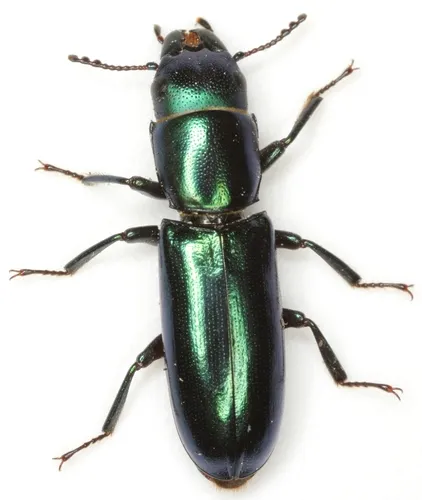
based on ample material, it seems that T. acuta is rarely blue or purple, while T. virescens often is. ‒M.C. Thomas, 13.iv.2009
Temnoscheila omolopha
Temnoscheila omolopha
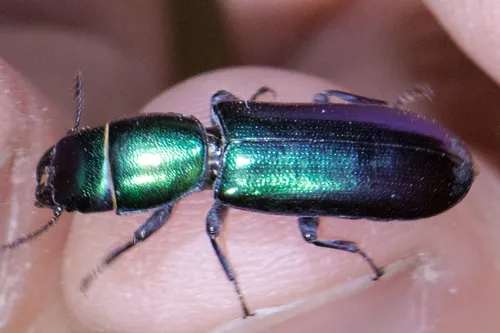
Identification: Note the strongly produced anterior pronotal angles, the shape of the pronotum, and the dull metallic luster.
Temnoscheila virescens
Temnoscheila virescens
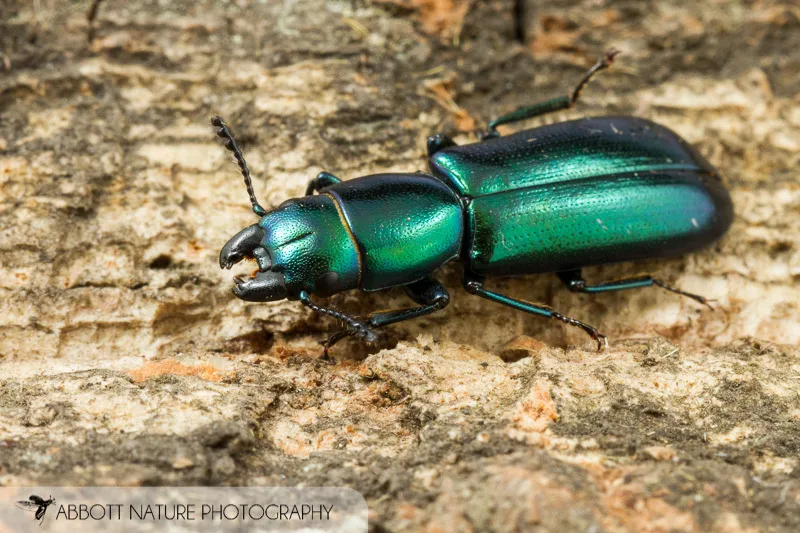
Identification: Compare fine punctation of head and rounded anterior angles of pronotum with T. acuta : it seems that T. acuta is rarely blue or purple, while T. virescens often is. ‒M.C. Thomas, 13.IV.2009
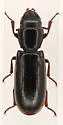
Temnoscheila yuccae
Temnoscheila yuccae
Identification: "Apart from the color it may be noticed that the eyes are more strongly granulated than in T. virescens . Differs from T. barbata by much more sparse punctuation of head and thorax and very weak punctures on the elytra" [Crotch]
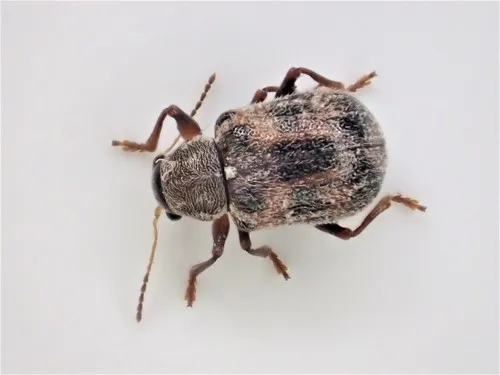
Ten-spotted Leaf Beetle
Xanthonia decemnotata
Identification: "sloppy" arrangement of the elytral setae (E. G. Riley, pers. comm. to MAQ, 2024) plus, no profemoral tooth
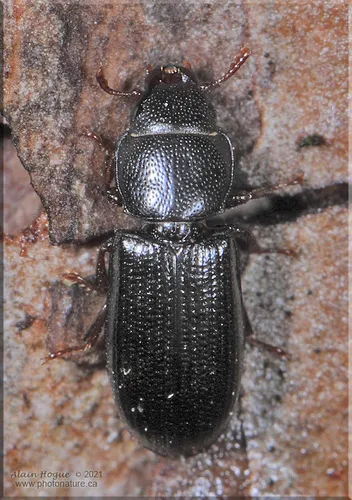
Tenebroides corticalis
Tenebroides corticalis
Identification: pronotal punctations coarse; laterodorsal profile and convexity of pronotum unique
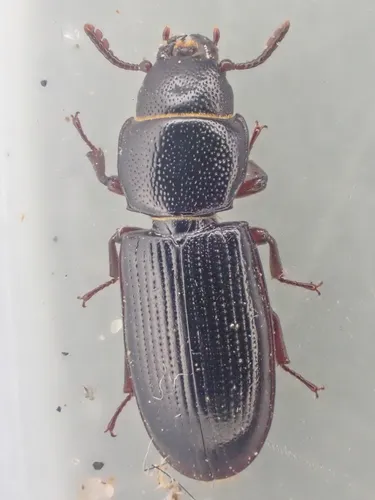
Tenebroides crassicornis
Tenebroides crassicornis
Identification: California, one specimen; Dr. Le Conte. Distinct from [ californica ] by its smaller size, more depressed form, and less deeply punctured head and thorax. Its color is light rufous, probably immature. The antennae in this species are
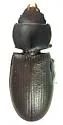
Tenebroides floridanus
Tenebroides floridanus
Identification: resembles in form T. laticollis but has a slightly longer prothorax, the basal marginal bead is generally entire and the male has only the first ventral segment densely punctured. Type Locality: Key West, FL
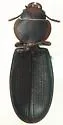
Tenebroides obtusus
Tenebroides obtusus
Identification: hind angles of pronotum scarcely evident, sides much rounded; width at base ~½ the width anteriorly; body flatter than in congeners • Type
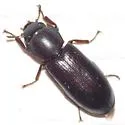
Tenebroides semicylindricus
Tenebroides semicylindricus
Identification: body the most cylindrical in the genus; crenulate pronotal sides are unique • Syntype
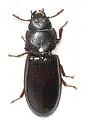
Tenebroides sonorensis
Tenebroides sonorensis
Identification: the only species west of the Great Plains that has a distinctly, broadly interrupted basal marginal pronotal bead
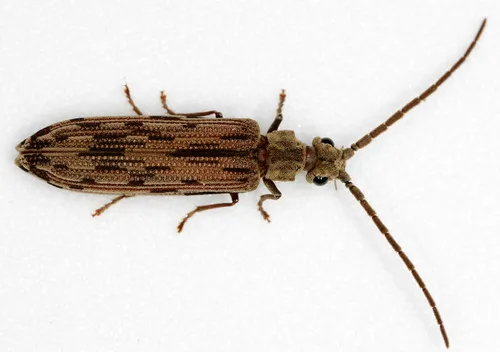
Tenomerga cinerea
Tenomerga cinerea
Identification: Det. tom murray, 2013 Comes to lights.
Teretrius obliquulus
Teretrius obliquulus
Identification: The longer mesosternum with 5-6 punctures along midline (vs. 2-3 in orbus) separates this species. Teretrius obliquulus also tends to be a bit larger and longer, also being a bit more finely punctate dorsally, but they are both in the
Teretrius orbus
Teretrius orbus
Identification: a strange species with body form more like a Teretriosoma . The impressed humeral striae are also diagnostic for this species, and are absent from most other Teretrius in the US. (per William B. Warner, 17 July, 2012) Type Locality: P
Tetartopeus tetricus
Tetartopeus tetricus
Type Locality: Austin County, Texas; not "Tex.: Austin; on the Colorado River above Columbus, Travis, Texas, United States" as reported: Note, the type series of this sp. was collected by Schwarz who collected in and around Austin County , Texas. Sch
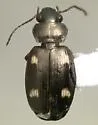
Tetragonoderus laevigatus
Tetragonoderus laevigatus
Identification: Det. Michael C. Thomas, 2008 earliest NA record: FL 2007
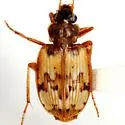
Tetragonoderus latipennis
Tetragonoderus latipennis
Type Locality: Texas; Mr. Belfrage . [Belfrage was living in Clifton , Bosque Co., TX when this sp. was described]
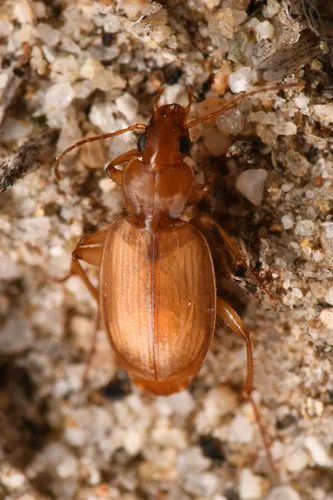
Tetragonoderus pallidus
Tetragonoderus pallidus
Tetragonoderus pallidus is a species of beetle in the family Carabidae. It was described by G.Horn in 1868.
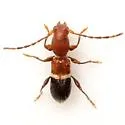
Tetranodus niveicollis
Tetranodus niveicollis
Identification: Antennomeres 3-6 inflated in ♂♂, simple in ♀♀ Schaeffer (1904) reported the species as common near Brownsville, TX, on Vachellia (=Acacia) farnesiana and (less frequently) on Ebenopsis ebano (= Acacia flexicaulis )
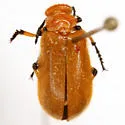
Tetraonyx femoralis 0
Tetraonyx femoralis
Identification: Front of head and all of tibiae black. Dorsal surface rather closely punctured.
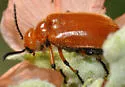
Tetraonyx fulva
Tetraonyx fulva
Identification: Front of head and part of tibiae pale. Dorsal surface only moderately densely punctured Det. E. G. Riley, 2004
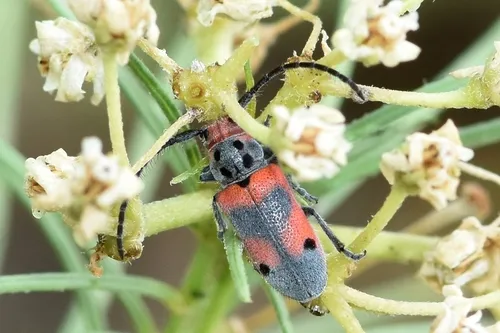
Tetraopes discoideus
Tetraopes discoideus
Tetraopes discoideus is a species of beetle in the family Cerambycidae. It was described by John Lawrence LeConte in 1847. It is known from Mexico and the United States.
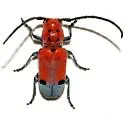
Tetraopes linsleyi
Tetraopes linsleyi
Identification: Det. J. A. Chemsak Obsolete link on patronym (http://museum.unl.edu/research/entomology/workers/GLinsley.htm) replaced with link to a Wikipedia article 8/3/2022.
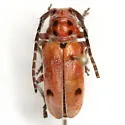
Tetraopes mandibularis
Tetraopes mandibularis
Identification: last antennal segment gradually tapering apically, antennal segments without fringes of very long hairs at apices, mandibles of male with very large, prominent dorsal tubercle extending for about half their lengths, elytra with sutura
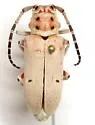
Tetraopes pilosus
Tetraopes pilosus
Identification: Very similar to T. annulatus but the integument including callus completely obscured by dense whitish/yellowish-gray pubescence T. annulatus
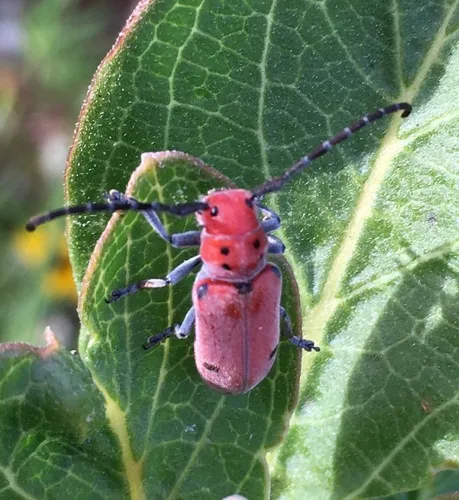
Tetraopes quinquemaculatus
Tetraopes quinquemaculatus
Identification: separated from most other spp. by lack of basal elytral spots; typically has slight dark markings at elytral tips uncommon , considered a "Species of Greatest Conservation Need" in Arkansas
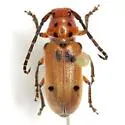
Tetraopes texanus
Tetraopes texanus
Identification: Very long setae at apex of most antennomeres, as long as adjacent antennomeres. Last antennomere abruptly flattened midway and slightly curved. edges of mid-pronotal callus generally not sharply defined Det. M. A. Quinn, 2016 this is
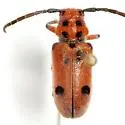
Tetraopes thermophilus
Tetraopes thermophilus
Identification: mid-pronotal callus with sharp, nearly parallel edges antennae without long setae, ant. tips not pointed Det. M. A. Quinn, 2017 Type Locality: Veracruz, Mexico
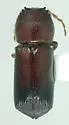
Tetrapriocera longicornis
Tetrapriocera longicornis
Tetrapriocera longicornis (Tetrapriocera longicornis) is a species in the family Bostrichidae, commonly known as horned powder-post beetles, belonging to the order Coleoptera (Beetles). It is classified within the subfamily Bostrichinae, tribe Xylope
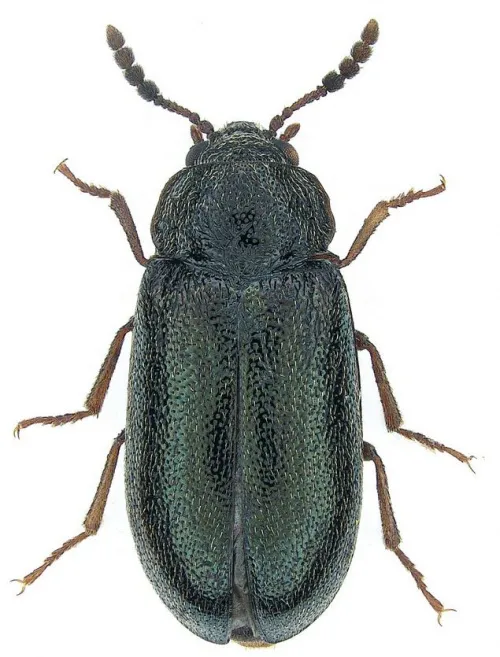
Tetratoma desmarestii
Tetratoma desmarestii
This is a rare species in our area and it may be necessary to retain the specimen until confirmed by our County Recorder. Sometimes found on old Oaks and associated fungi. A nocturnal fungus beetle which may be found throughout the year – this is a w
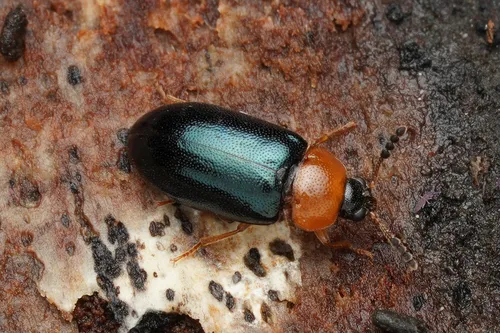
Tetratoma fungorum
Tetratoma fungorum
Length around 6mm. Antennal club of 4 segments, elytra with scattered punctures but without punctate striae. Although quite distinctively coloured this species is superficially similar to Triplax aenea, another common beetle of Bracket Fungus. Can be
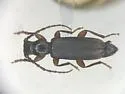
Tetropium sp. A
Tetropium undescribed
Page made to accomodate this distinct but still undescribed species. It represent the "sp. A" in Bousquet & al
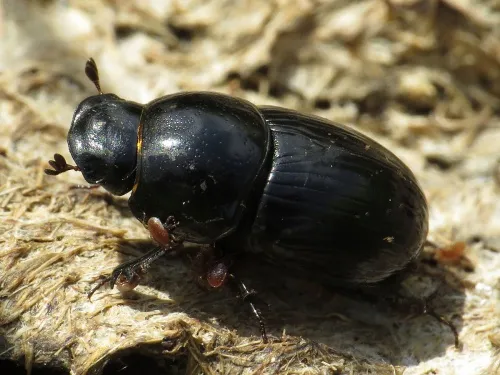
Teuchestes fossor
Teuchestes fossor
Up to 12 mm long and very broad and convex, this dung beetle is black but can have a bluish sheen in certain light. The scutellum is long and studded with small punctuations. In horse and cattle dung from March to October and among flood refuse throu
Texania fulleri
Texania fulleri
Identification: "differs abundantly in the form of the thorax." Det. Joshua P. Basham, 2013
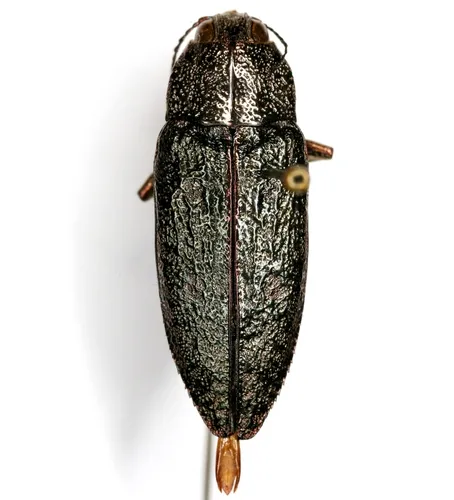
Texania langeri
Texania langeri
Texania langeri (Texania langeri) is a species in the family Buprestidae, commonly known as metallic wood-boring beetles, belonging to the order Coleoptera (Beetles). It is classified within the subfamily Chrysochroinae, tribe Chrysochroini, suborder
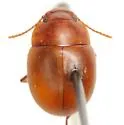
Texaponium triplehorni
Texaponium triplehorni
Texas considers this a "Species of Greatest Conservation Need" (SGCN)
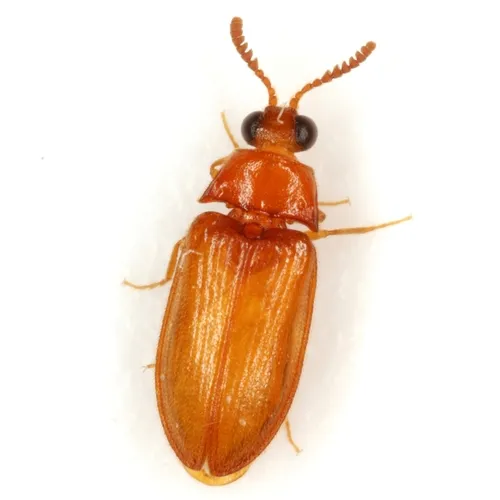
Texas Beetle
Brachypsectra fulva
poorly represented in collections, but Fleenor & Taber (1999) collected 50+ in light traps in Bastrop Co., TX
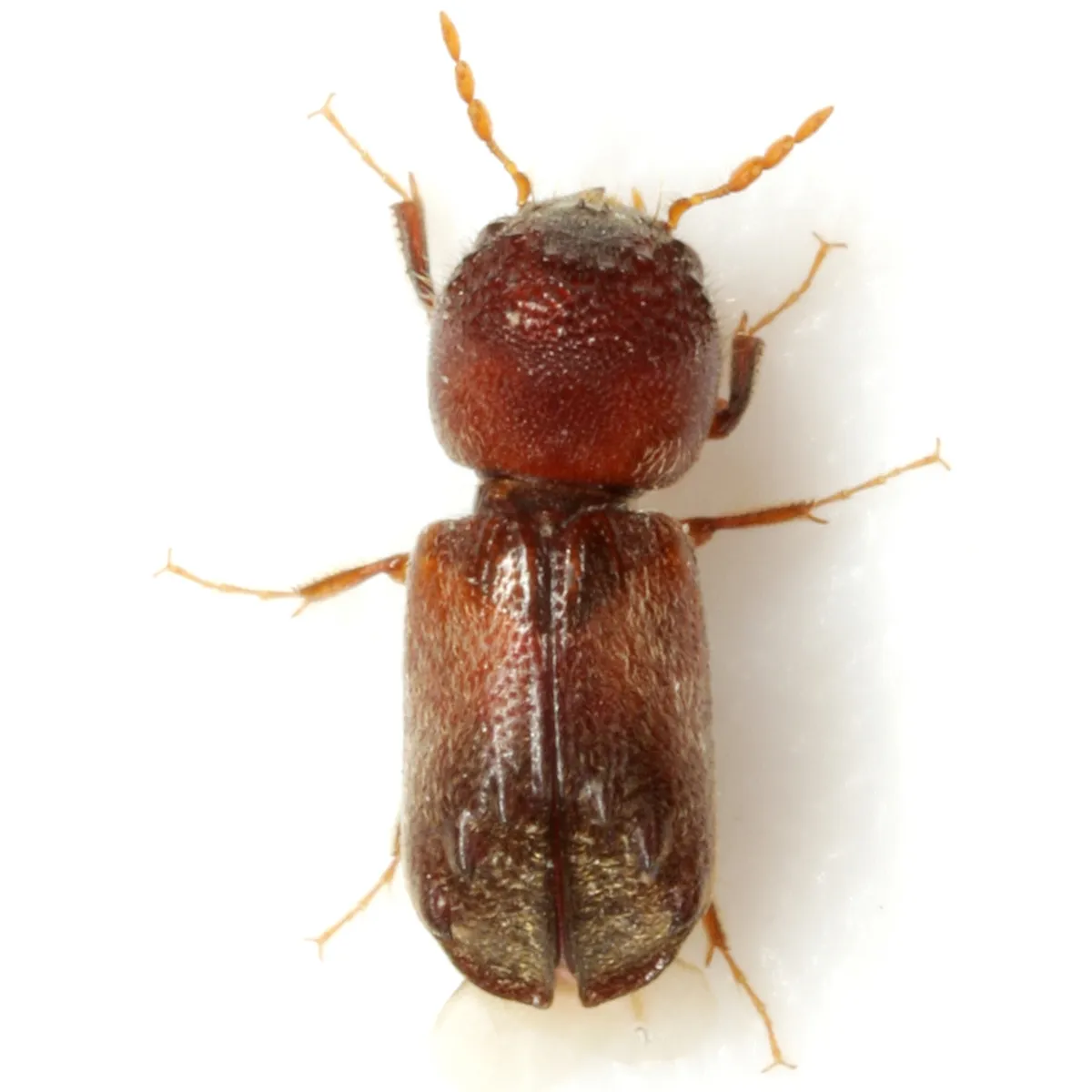
Texas Brown-shouldered Bostrichid
Xylobiops texanus
Identification: Forest Images - Dorsal elytra with distinct pubescence (except basally), the light and dark-brown areas not conspicuously separated , apical declivity of elytra sparsely, coarsely punctured; front of head usually with two median tuber
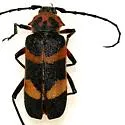
Texas Canyon Longhorn Beetle
Megapurpuricenus magnificus
Adult appear to emerge in response to summer "monsoon" rains. Adult daily activity largely restricted to 9 a.m. to 12 noon. Largest flights occur on warm sunny mornings following rain, decreasing each dry day but increasing again after additional rai
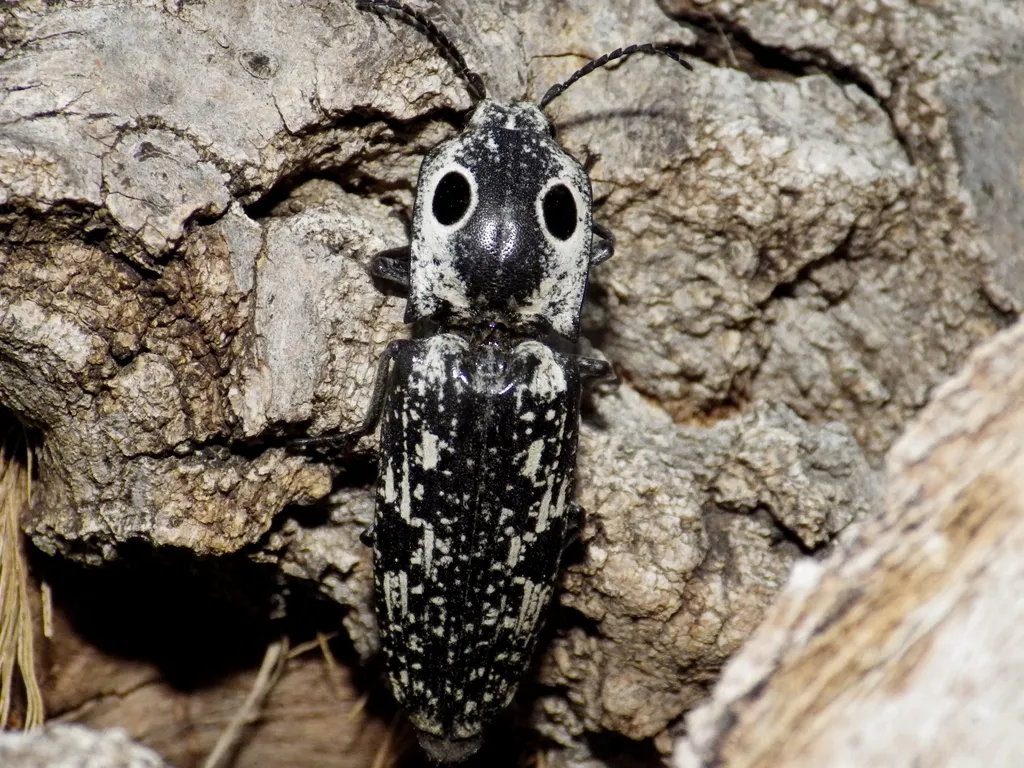
Texas Click Beetle
Alaus lusciosus
Identification: White markings on elytra are more clumped and patchy than those of A. oculatus , which has smaller, more evenly dispersed white spots. A. zunianus has very similar coloration but probably does not overlap in range. (E.G. Riley, pers.
Texas Ebony Bruchid
Merobruchus major
Type Locality: Esperanza Ranch, Brownsville, Cameron Co., Texas Both Merobruchus major and Stator beali are seed predators of Ebenopsis (=Pithecellobium) ebano ; however, S. beali also attacks other species of Ebenopsis whereas M. major is an obligat
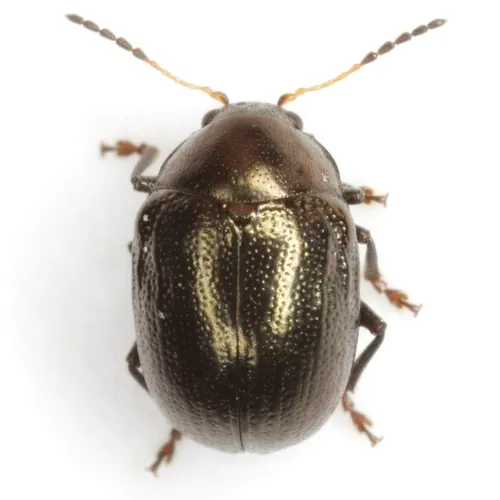
Texas Live Oak Leaf Beetle
Brachypnoea lecontei
Identification: body color metallic purple, green, indigo, or brown; legs can be pale or black; five terminal antennal segments dark, prominent and uniform, basal ant. segments generally pale, punctations coarse on elytral, fine on pronotum. Type col
Texas Potato Beetle
Leptinotarsa texana
Identification: Det. E. G. Riley, 2009 Type Locality: Esperaza Ranch, Brownsville, Cameron Co., Texas
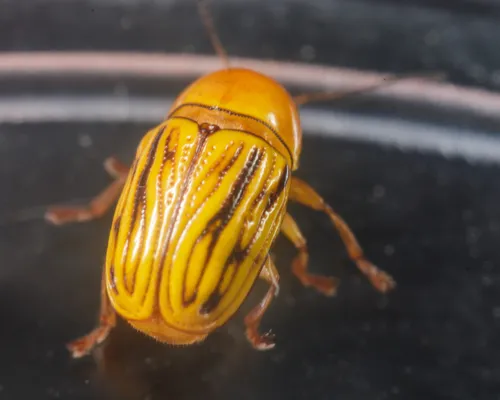
Texas Yellow Cryptocephalus
Cryptocephalus defectus
Cryptocephalus defectus is a species of case-bearing leaf beetle in the family Chrysomelidae. It is found in North America.
Thanasimus nubilus
Thanasimus nubilus
Identification: Humeral area of elytra above upper band and pronotum solid black; slightly larger in average than T. undatulus .
Thanasimus repandus
Thanasimus repandus
Identification: Holotype Closely resembles T. trifasciatus , but has black head and narrower, arcuate white apical band.
Thanasimus undatulus
Thanasimus undatulus
Identification: Similar to Thanasimus nubilus (which was until recently considered a subspecies of T. undatulus ), but with humeral area of elytra and usually the pronotum red, though it may be black in some northern individuals.
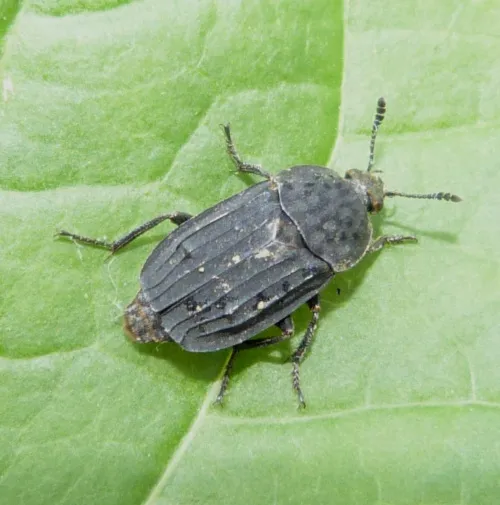
Thanatophilus sinuatus
Thanatophilus sinuatus
A greyish beetle measuring 10 to 14 mm. It has longitudinal ridges along the elytra and the pronotum has a rather mottled appearance. Thanatophilus sinuatus is a carrion feeder and may be encountered anywhere that carrion is present. Found on carrion
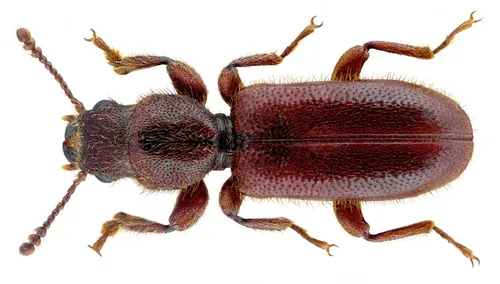
Thaneroclerus buquet
Thaneroclerus buquet
recorded from port shipments since the 20's (Weston Opitz, pers.comm. to =v= 13.iii.2014)
Thecesternus albidus 0
Thecesternus albidus
Identification: Humeral angles only slightly produced forward. Elytra at least two and a half times as long as prothorax, sides subparallel; humeral angles twice as long as in maculosus ; sete dark and white, erect. The markings of this species are d
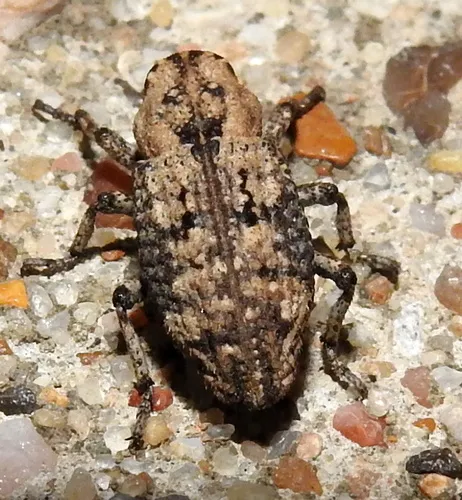
Thecesternus maculosus
Thecesternus maculosus
Identification: spmn dets. S.R. McCollum, 2011 Type Locality: Marfa, Texas
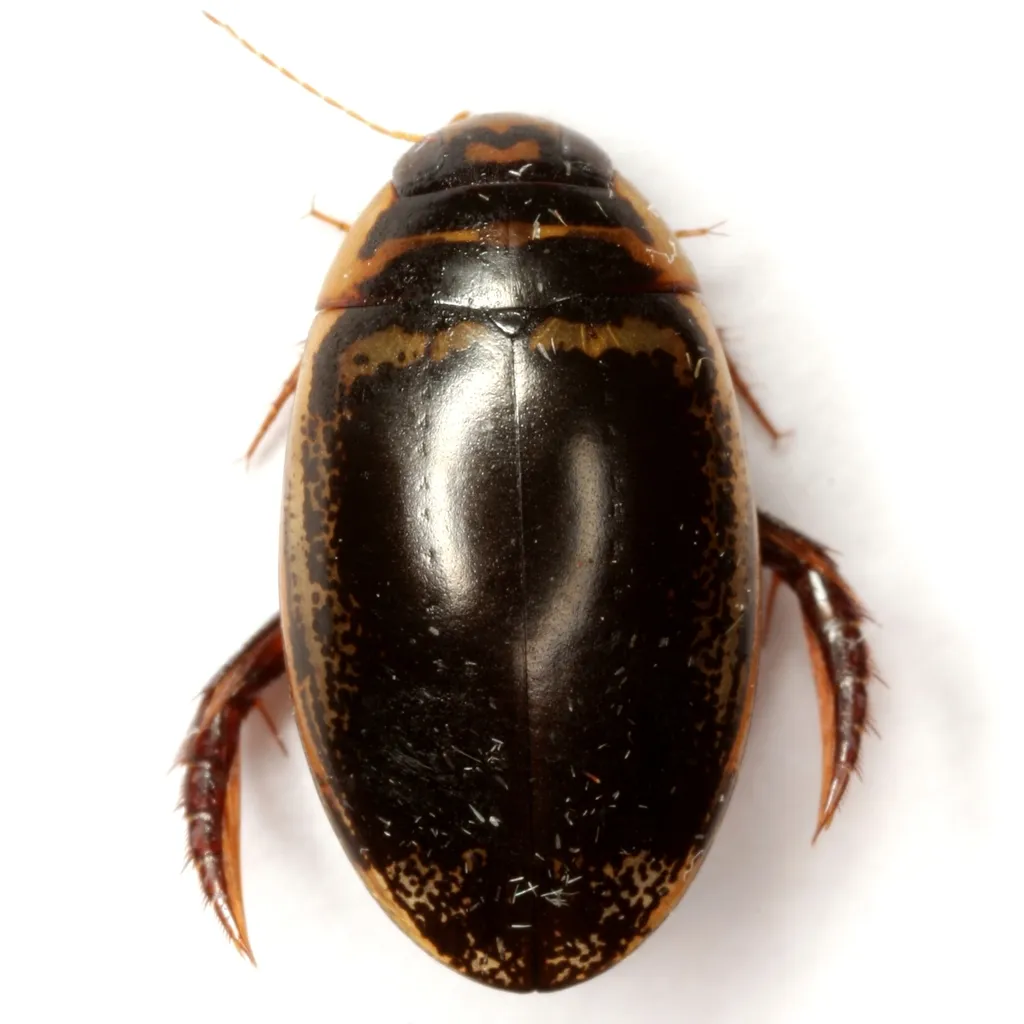
Thermonectus basillaris
Thermonectus basillaris
Identification: transverse line on the head, transverse narrow fascia of the thorax, and interrupted basal fascia of the elytra, yellowish. Det. M. A. Quinn, 2013 among the most commonly coll'ed beetles (at UV lights) at Laguna Atascosa NWR, Cameron
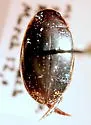
Thermonectus intermedius
Thermonectus intermedius
Identification: Similar to, and variously treated as, T. basillaris ; and preliminary molecular data suggest they are the same species. Currently, T. basillaris is distinguished by the lack of the subbasal yellow band on elytra and genital structure.
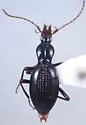
Thin Snail-eating Beetle
Scaphinotus tenuis
Scaphinotus tenuis is a species of ground beetle in the family Carabidae. It is found in North America.
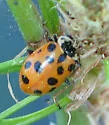
Thirteen-spotted Lady Beetle
Hippodamia tredecimpunctata
Identification: Gordon's Figures - This somewhat elongated lady beetle has 13 black spots on its elytra, although some may be fused together. The species Hippodamia tredecimpunctata is holarctic (throughout the northern hemisphere, including Europe a
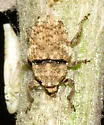
Thistle Crown Weevil
Trichosirocalus horridus
Identification: Body densely covered with brownish scales, which form no definite pattern. Additionally, dorsal surface with numerous stiff, erect setae . T. horridus was imported from Italy in 1970-1972 for testing and approved for field release in
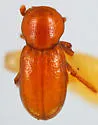
Thorictodes heydeni
Thorictodes heydeni
Identification: Eyes very small or absent; the antennal club consists of three fused segments; wingsless
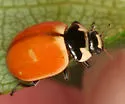
Three-banded Lady Beetle
Coccinella trifasciata
Identification: From Gordon's key to the species , the following features are seen on these beetles: 1) elytra suture reddish, not black or dark brown (excludes C. novemnotata and C. californica ) 2) "head pale except for black band across base (male
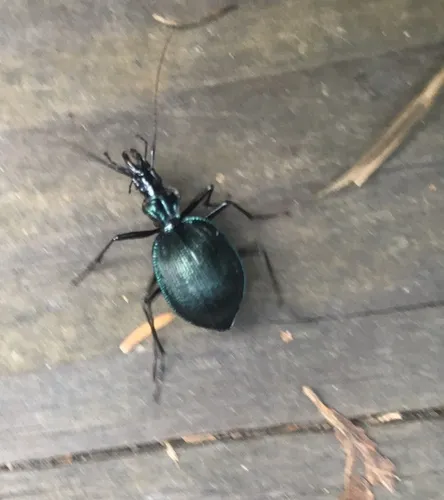
Three-ridged Snail-eating Beetle
Scaphinotus tricarinatus
Scaphinotus tricarinatus is a species of ground beetle in the family Carabidae. It is found in North America.
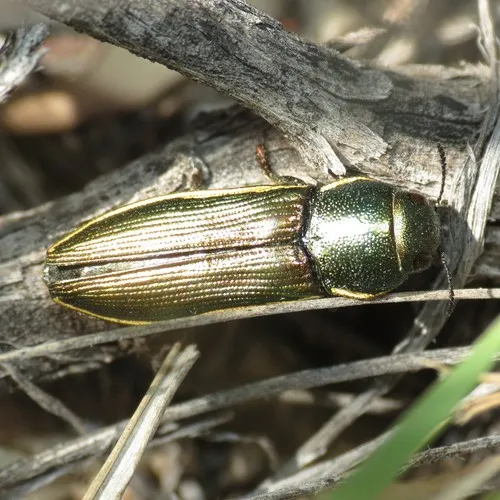
Thrincopyge ambiens
Thrincopyge ambiens
Thrincopyge ambiens is a species of metallic wood-boring beetle in the family Buprestidae. It is found in Central America and North America.
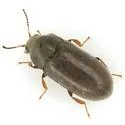
Throscinus schwarzii
Throscinus schwarzii
commonly collected at UV lights at Laguna Atascosa NWR, Rio Hondo, TX ( 3 )