
Family Primitive Weevils (Apionidae)
Apionidae is a family in the order Coleoptera. Browse 25 named species recorded in this family, or open an individual profile for its available identification and natural-history information.
Species in Apionidae (25)
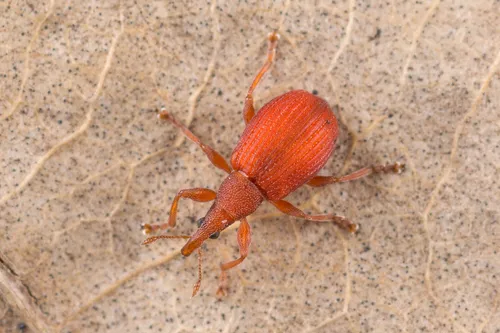
Apion frumentarium
Apion frumentarium
2.5 to 4.5mm. Distinguished from other red Apion species by the head structure; completely punctate, including the underside, between eyes and prothorax side margin, this punctuation being similar to that on pronotum. Head long, with temples subparal
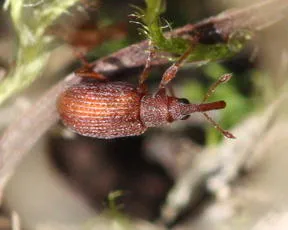
Apion haematodes
Apion haematodes
Very small (only 2 or 3 mm) and almost entirely orange coloured. Head and pronotum are punctured. Elytra strongly rounded, broadest behind middle, with deeply impressed striae with rows of indentations. Unless identified by a recognised expert, photo
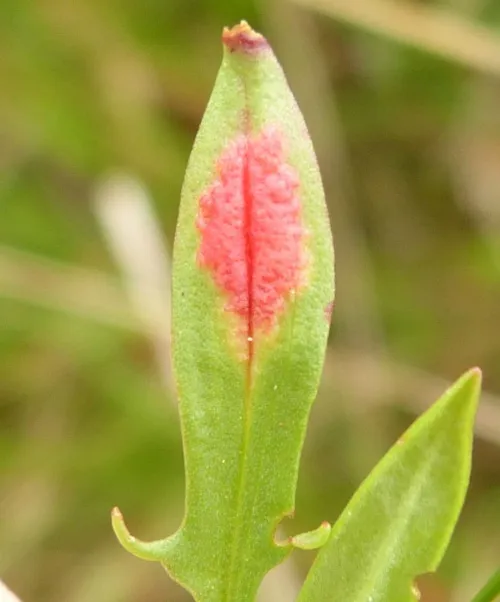
Apion rubens
Apion rubens
Apion rubens is a small (2 to 3 mm) reddish coloured weevil. The larvae mine the leaves of Sheep's Sorrel (Rumex acetosella ) causing galls to form as swellings along the mid rib or petiole. These are often reddish or sometimes yellow in colour. (see
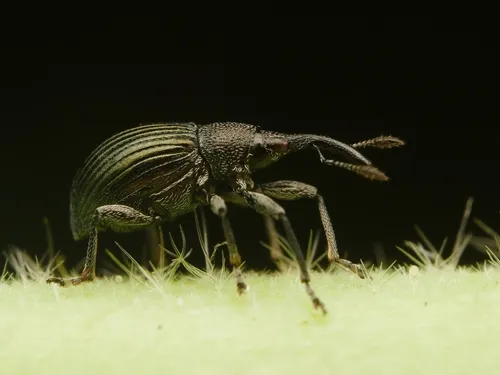
Aspidapion radiolus
Aspidapion radiolus
2.7 to 3 mm. Head and pronotum black with weak metallic elytra. The rostrum is around 1.25x longer than the pronotum. There is no deep longitudinal impression on the frons (as found in A. aenum ). The scutellum is a key character having a pair of rai
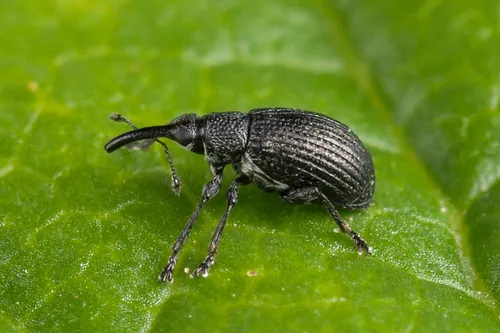
Betulapion simile
Betulapion simile
An extremely small, dark weevil, measuring only about 2 mm in length. Betulapion simile is one of several similarly coloured, small weevils which need detailed examination for species identification. Unless identified by a recognised expert, photogra
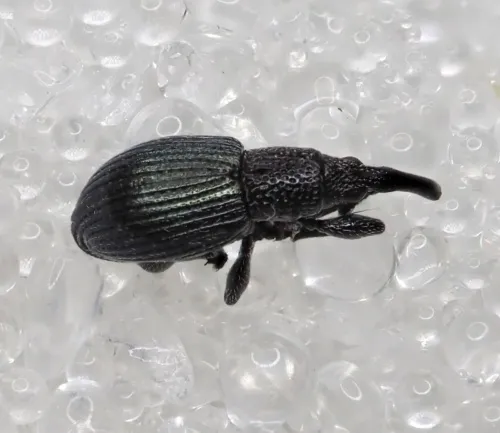
Ceratapion gibbirostre
Ceratapion gibbirostre
Size 2.2 to 3 mm. One of several similar small blackish weevils. There are other similar species which make correct identification to species level difficult and detailed examination is needed. Unless identified by a recognised expert, photographic e
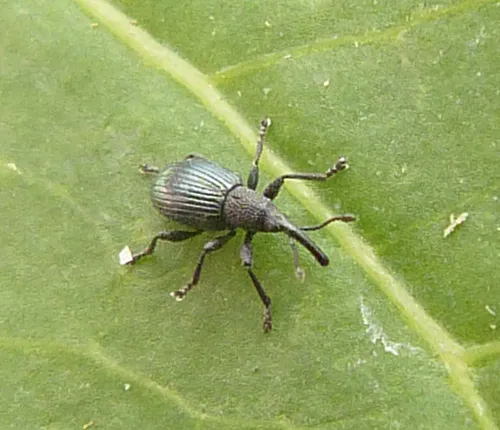
Ceratapion onopordi
Ceratapion onopordi
2.4-2.9mm. Generally black with weak metallic elytra. Legs are black. The scutellum is round. Amongst the Ceratapion weevils, this species is distinguished by the rugose sculpture on the frons (between the eyes). Unless identified by a recognised exp
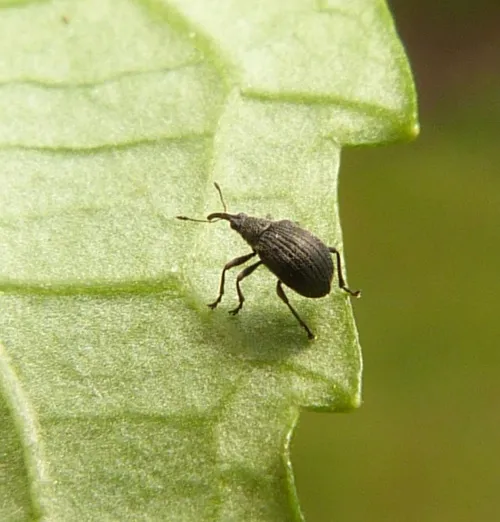
Eutrichapion ervi
Eutrichapion ervi
A small grey/black weevil length about 2.5 mm. Unless identified by a recognised expert, photographic evidence is required and the specimen should be examined with a microscope. In the comments box, state the key or ID method used. Note the beetle's
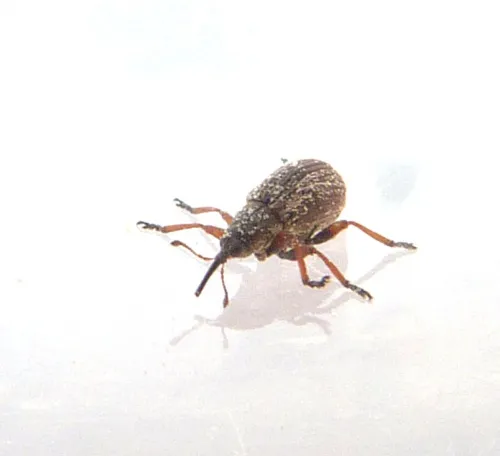
Exapion fuscirostre
Exapion fuscirostre
A small (2 to 3 mm) grey-brown weevil with a long snout and light brown legs. Unless identified by a recognised expert, photographic evidence is required and the specimen should be examined with a microscope. In the comments box, state the key or ID
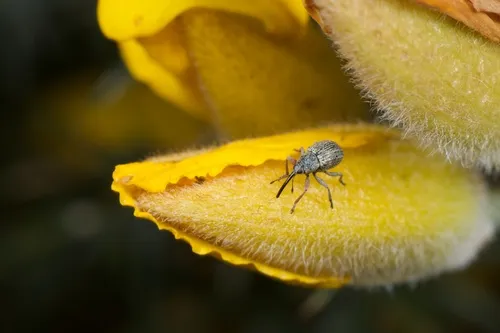
Gorse Weevil
Exapion ulicis
Length 2 to 3 mm. The adult weevil is covered in light grey scales which can appear in lines down the elytra. The female has a rostrum half as long as its body whereas the male's rostrum is only about as long as the pronotum, and shorter than the ant
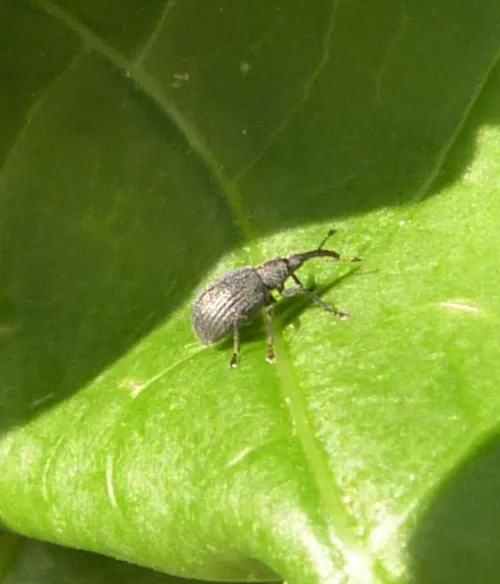
Ischnopterapion loti
Ischnopterapion loti
A small (2 to 2.5 mm) dark grey or blackish weevil. There are several similar species and detailed examination is required to reach a safe identification. Unless identified by a recognised expert, photographic evidence is required and the specimen sh
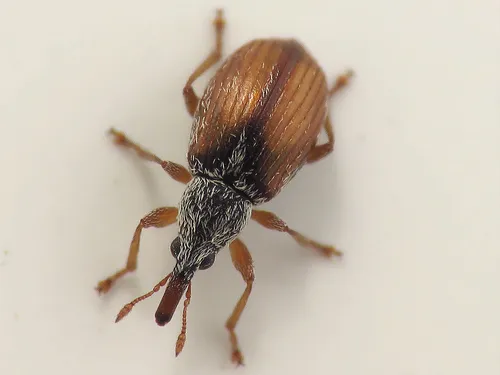
Malvapion malvae
Malvapion malvae
1.8 to 2.4 mm. The mostly orange elytra, yellow legs and dense pubescence gives this species a unique appearance. Head, thorax and base of elytra shining black with dense light yellow pubescence. Rostrum cylindrical, pubescent almost to apex in male,
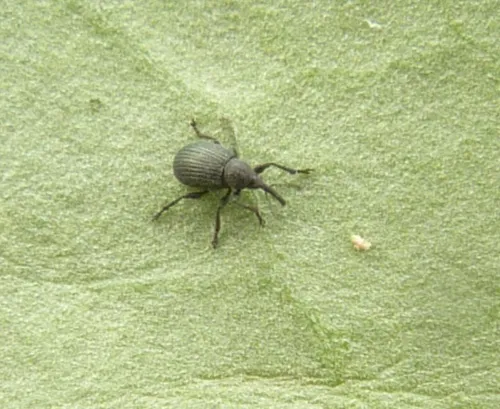
Omphalapion hookerorum
Omphalapion hookerorum
A small (1.6 to 2 mm) grey-black weevil with ribbed elytra. Unless identified by a recognised expert, photographic evidence is required and the specimen should be examined with a microscope. In the comments box, state the key or ID method used. Note
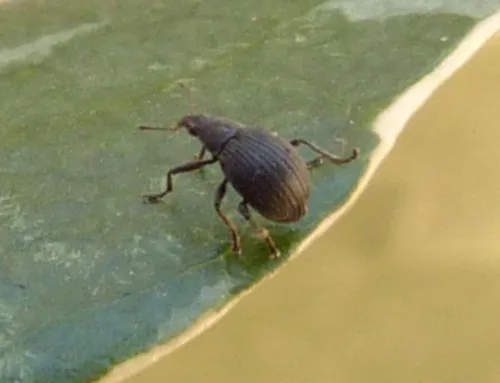
Oxystoma cerdo
Oxystoma cerdo
A small (2.4 to 3 mm) dark grey weevil with ribbed elytra. Unless identified by a recognised expert, photographic evidence is required and the specimen should be examined with a microscope. In the comments box, state the key or ID method used. Note t
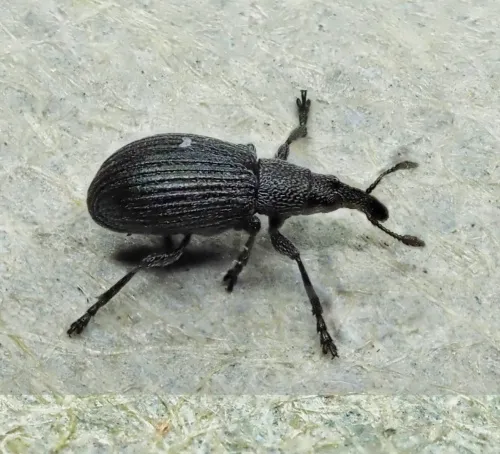
Perapion curtirostre
Perapion curtirostre
Size 2 to 2.5 mm. A very small and usually elongate, black weevil. The elytra, pronotum, head and femora have whitish hairs. The rostrum is generally parallel-sided and not tapered. Your specimen should have these features: Unless identified by a rec
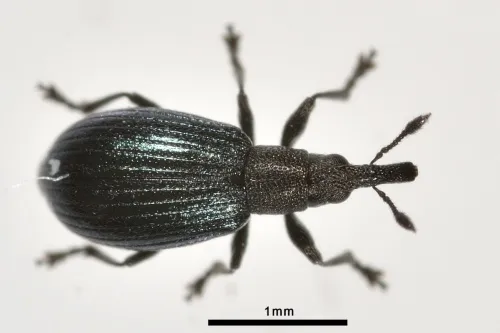
Perapion hydrolapathi
Perapion hydrolapathi
2.6-3.2mm. Elytra usually dull metallic blue, green or brassy, otherwise all black. Antennal segment 2 wider than segment 3 (feature of the genus). Pronotum quadrate and barrel-shaped. Finely pubescent. Rostrum about as long as the head. Metasternal
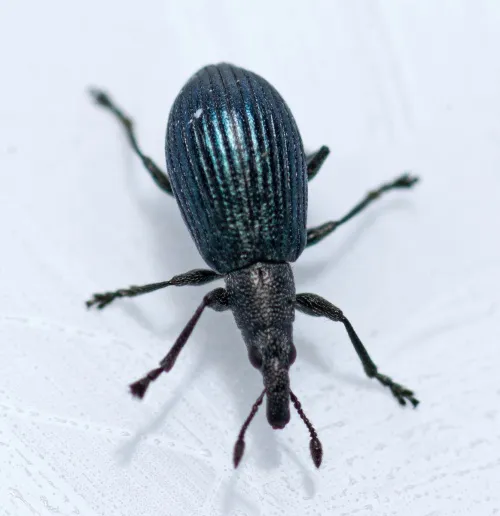
Perapion violaceum
Perapion violaceum
2.6-3.5mm. Dark blue metallic elytra but black otherwise. The genus is characterised by having the second antennal segment expanded so it is wider than the third segment. Perapion also have elytral intervals that are quite widely spaced, certainly wi
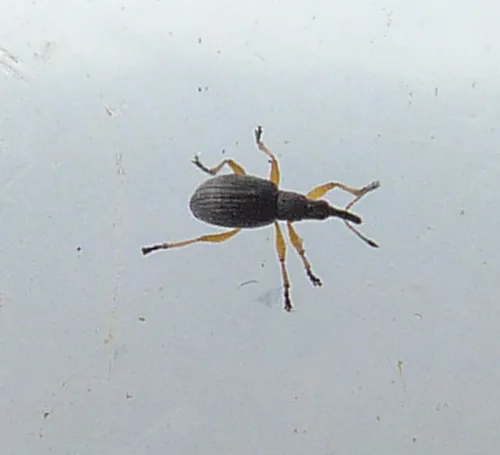
Clover Seed Weevil
Protapion apricans
Size 2.1 to 2.8 mm. A small black weevil with yellow femora and black mid + hind tibia. Most species in the genus have yellow legs, at least in part, so pay careful attention to identify all the characteristics noted in ID Checklist below. Other Prot
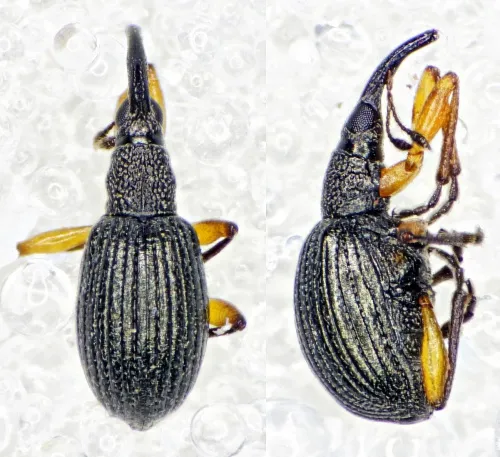
Protapion assimile
Protapion assimile
Length 2 to 3 mm. A small grey/black weevil. The legs have yellow femora but the tibiae are dark. Unless identified by a recognised expert, photographic evidence is required and the specimen should be examined with a microscope. In the comments box,
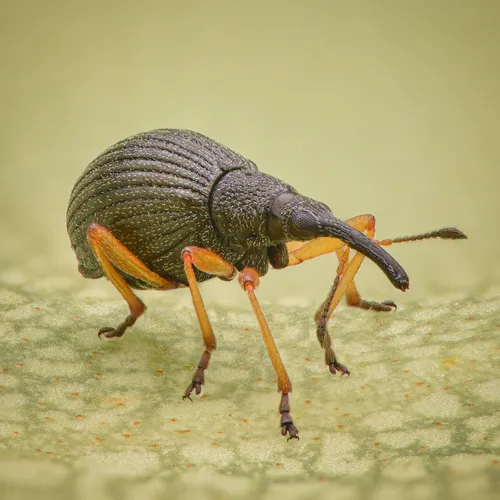
White Clover Seed Weevil
Protapion fulvipes
This is a very small (1.8 to 2.2 mm) weevil. It is shining dark grey to black, very convex and slender. Rostrum long and cylindrical with antennae inserted midway (male) or behind middle (female). The legs are mainly yellow except the tarsi (feet) wh
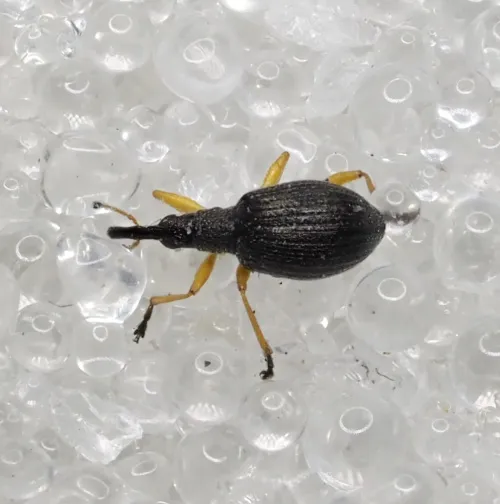
Protapion nigritarse
Protapion nigritarse
1.5-2mm. Shining black with yellow legs and black tarsi. Very hard to distinguish from P. fulvipes without microscopic examination of the antennae. In Protapion nigritarse the antennal club is slightly less rounded and the 8th segment (immediately be
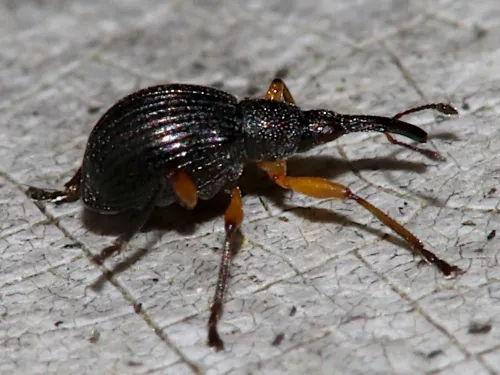
Protapion trifolii
Protapion trifolii
Body length, 1.7 to 2.1 mm, not including the head. Body, antennae, and tarsi are black. Fore coxae and trochanters are reddish or dark-reddish, distinctly darker than femora. Femora yellow-reddish. Mid and hind tibiae are black or dark-brown; fore t
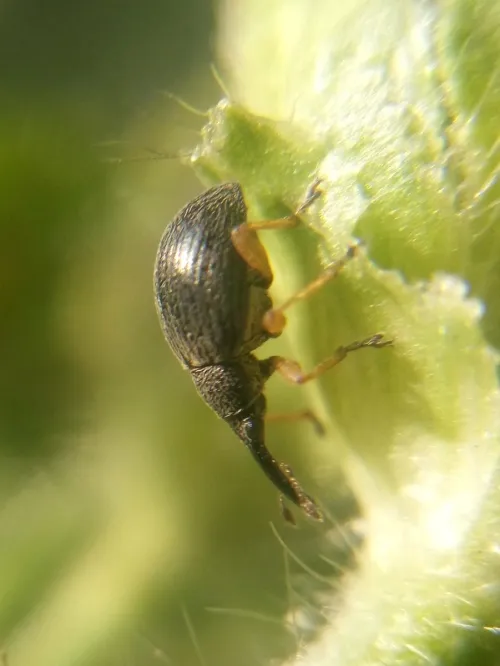
Pseudapion rufirostre
Pseudapion rufirostre
Size 2.1 to 2.8 mm. Body black with a distinct metallic green lustre antennae and legs are mostly pale orange-yellow. The rostrum is long and curved; in the female as long as the head and pronotum combined and entirely dark metallic, in the male as l
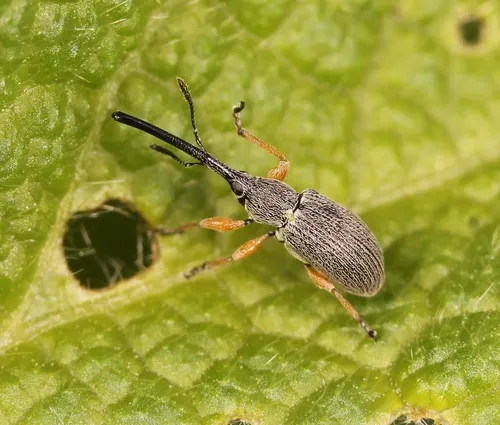
Rhopalapion longirostre
Rhopalapion longirostre
Length 2.5-3.75mm. Grey dark body with orangish-colored legs. Long, slender rostrum (snout), antennae are jointed and positioned halfway along the snout. Unless identified by a recognised expert, a photo is required. Prefers plants in the mallow fami
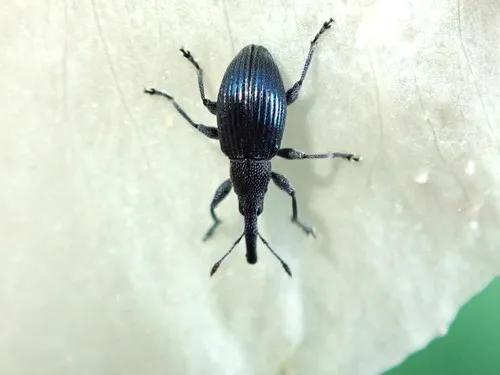
Aspidapion validum
Aspidapion validum