
Butterflies and Moths
Order Lepidoptera
The Butterflies and Moths (Order Lepidoptera) includes 11,813 species across 112 families and 2,787 genera in our directory.
About Butterflies and Moths
Lepidoptera includes approximately 180,000 described species of butterflies and moths. Moths outnumber butterflies roughly 10:1. The monarch butterfly's eastern population has declined by more than 80% since the mid-1990s, and the western population by over 95% since the 1980s. The IUCN lists the migratory monarch as Vulnerable.
Economic Impact
Lepidoptera are critical pollinators. In Europe, grassland butterfly species have declined by almost 50% since the early 1990s. In the UK, three-quarters of butterflies are in decline. In the U.S., five butterfly species have gone extinct since 1950, with 29 listed as endangered.
Ecological Role
Butterflies and moths are essential indicators of ecosystem health. As caterpillars, they are a primary food source for birds - a single nest of blue tit chicks requires ~10,000 caterpillars. Adult moths pollinate many night-blooming plants.
Families in Lepidoptera (112)
Species in Lepidoptera (11,813)
The Half-Yellow - Hodges#9085
Ponometia semiflava
Identification: Can be separated from the similar P. bicolorata by the yellow scales of the pronotum and head, which match with the yellow on the wing. Jan Metlevski via iNaturalist.com
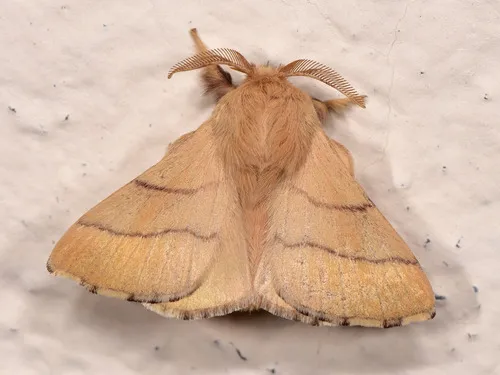
The Lackey
Malacosoma neustria
Wingspan 25-35 mm. The adults of this species are relatively dull in coloration, having a plain light brown wing crossed by a wide band of darker brown, but the caterpillars are much more colourful, with orange, white and blue stripes on a dark brown
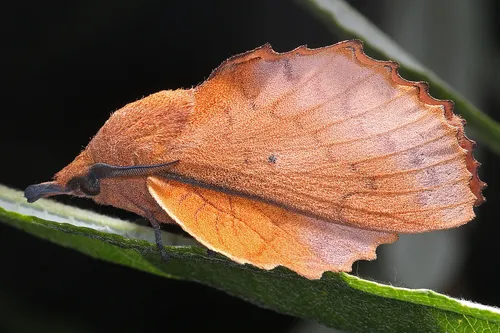
The Lappet
Gastropacha quercifolia
Gastropacha quercifolia, the lappet, is a moth of the family Lasiocampidae. It is found in Europe and Northern and Eastern Asia.
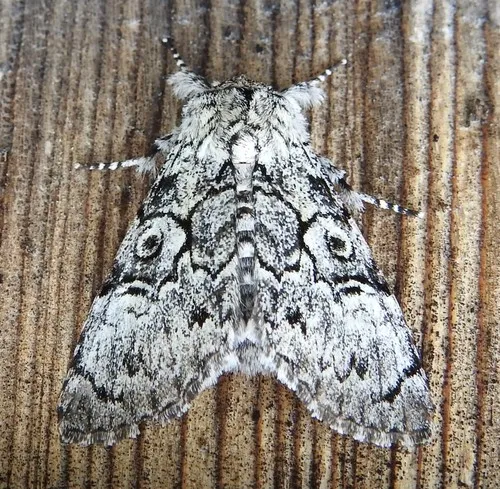
The Laugher - Hodges#9189
Charadra deridens
Identification: Adult: forewing pale gray, heavily shaded with darker gray; antemedial (AM) line black, sometimes clearly edged in white; postmedial (PM) line black, scalloped, and edged in white; AM and PM lines connected about halfway down the wing
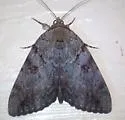
The Little Wife Underwing - Hodges#8774
Catocala muliercula
Identification: Forewing reddish-brown, hindwing banded black and yellowish-orange. Most lines on wings black ( 6 ) .
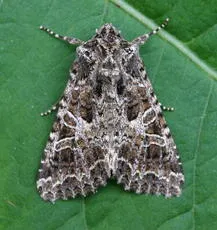
The Lychnis
Hadena bicruris
Wingspan 30-40 mm. Broad forewing which is dark greyish brown, with fine quite crisp straw white markings and a dark solid square or tooth like mark. The Campion is very similar but this species usually has a pink hue to the wings. Inhabiting woodlan
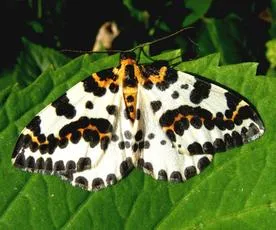
The Magpie
Abraxas grossulariata
Wingspan 35-40 mm. A very distinctive species, this was a favourite with early collectors, who used to breed it to obtain unusual coloured and patterned forms. The moths fly in July and August and are regularly attracted to light. The caterpillar, wh
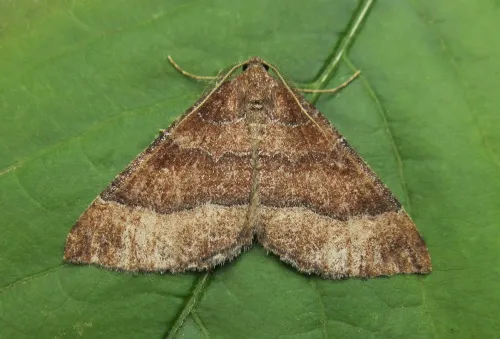
The Mallow
Larentia clavaria
Occupying a range of suburban habitats, waste ground and ditches or riverbanks. Adults are on the wing during September and October. As the English name suggests, the main larval foodplant is Mallow (Malva sylvestris), but the caterpillars will also
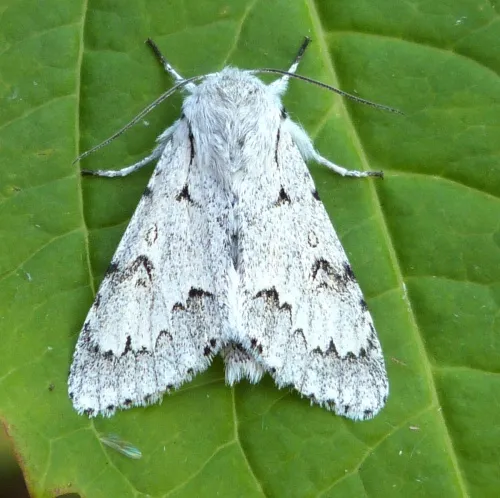
The Miller (Moth)
Acronicta leporina
Wingspan 35-45 mm. Another variable species, the whitest forms occurring in parts of Scotland and the darker ones in northern England and the Midlands, in industrial areas. Typically, the species is pale greyish, a form known as f. grisea . Woodlands
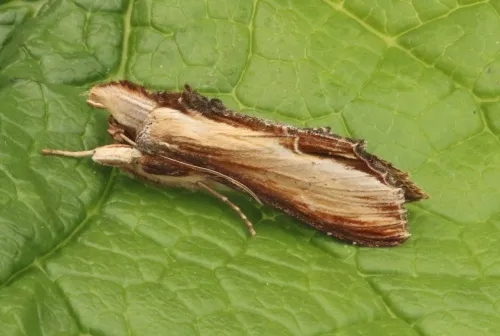
The Mullein
Cucullia verbasci
Wingspan 45-50 mm. Forewing buff with dark brown stripes along leading and trailing edges, the latter cut by a thin pale line. At rest this moth looks like a dead plant stalk. The species occupies a range of open habitats as well as gardens. The norm
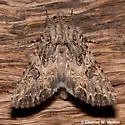
The Mutant - Hodges#10224
Anarta mutata
Identification: Adult: forewing brownish-gray with double AM and PM lines; orbicular spot oblong; dark shading in lower half of reniform spot; claviform spot cone-shaped (may be dark in some specimens, pale in others); subterminal line whitish, disti
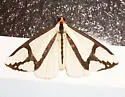
The Neighbor Moth - Hodges#8110
Haploa contigua
Identification: A brown line marks the leading edges of the cream to whitish-colored forewings and continues on to the anal angle. A third line extends from the bottom edge of the wing to intersect it. In addition, the inner borders of the forewings
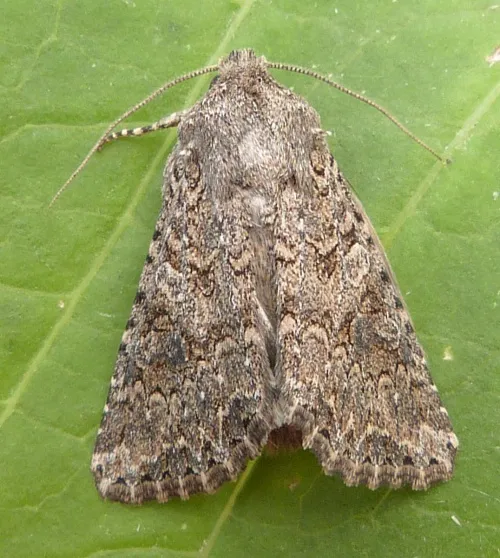
The Nutmeg
Anarta trifolii
Wingspan 30-35 mm. This moth has a finely variegated patterning of sandy and darker browns and greys. It also has quite a large kidney mark and the half near the trailing edge is always darker than the ground colour. It inhabits waste ground, agricul
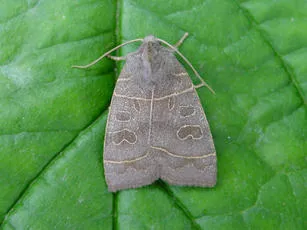
The Olive
Ipimorpha subtusa
Wingspan 27 to 30 mm. Pale olive brown forewing which is not hooked and which has very distinctive patterning. The species inhabits woodlands and marshy areas. The caterpillar spins together the leaves of its foodplants, which are Aspen and other pop
The Oplers' Longtail
Urbanus oplerorum
Type Locality: Texas, Hidalgo Co., Mission/Madero, 4-VI-2010 [USNM] Paratype: 1♀ Mexico: Tamaulipas, Gomez Farias, leg. Paul A. Opler and Evi M. Buckner-Opler 13-14-Oct-2003
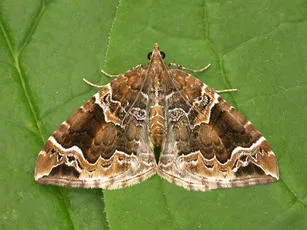
The Phoenix
Eulithis prunata
Wingspan 30-35 mm. With a wingspan of around 40mm, this is one of the larger members of the Larentiinae . Distinctively marked with rich deep browns. Sometimes rests with tail slightly raised. It is most often found in cultivated areas, gardens and t
The Pink-Streak - Hodges#10434
Dargida rubripennis
Identification: Forewing yellowish-white, streaked with dull pink above and below whitish streak along main (cubital) vein; outer margin of forewing and white hindwing shaded with dull pink. [adapted from description by Charles Covell] Rare northward
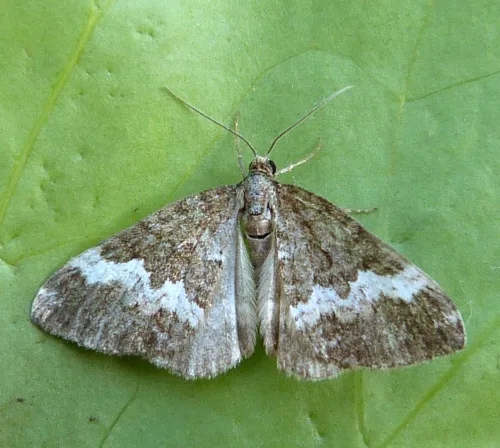
The Rivulet
Perizoma affinitata
Wingspan 24 to 30 mm. Similar to the Small Rivulet (Perizoma alchemillata) but noticeably larger. Occupying woodland margins, hedgerows and grassy embankments. The main flight period is between May and July, when it is often attracted to light. Red C
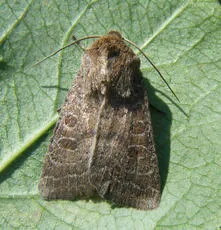
The Rustic
Hoplodrina blanda
Wingspan 31-35 mm. Very similar to The Uncertain, but is generally less yellowish brown and glossier in appearance. Flying from June to August, sometimes there is a second generation in the south in October. Common throughout much of England and Wale
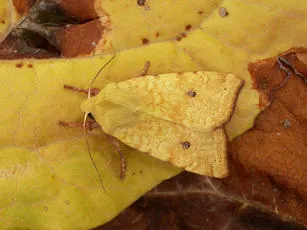
The Sallow
Cirrhia icteritia
Wingspan 27-35 mm. It is quite variable, with the relatively frequent ab. flavescens having the darker markings almost absent. Occupying damp woodland, heathland and marshy places. Like many of its congeners, it flies in the Autumn, in September and
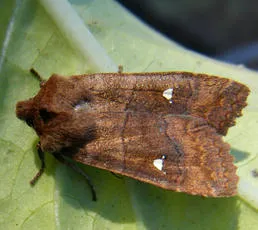
The Satellite
Eupsilia transversa
Wingspan 32-42 mm. There are a number of variations, but usually with reddish-brown ground colour and white or orange reniform stigmata. The small 'satellites' either side of the stigma can be obscure, especially in worn individuals. Broad-leaved woo
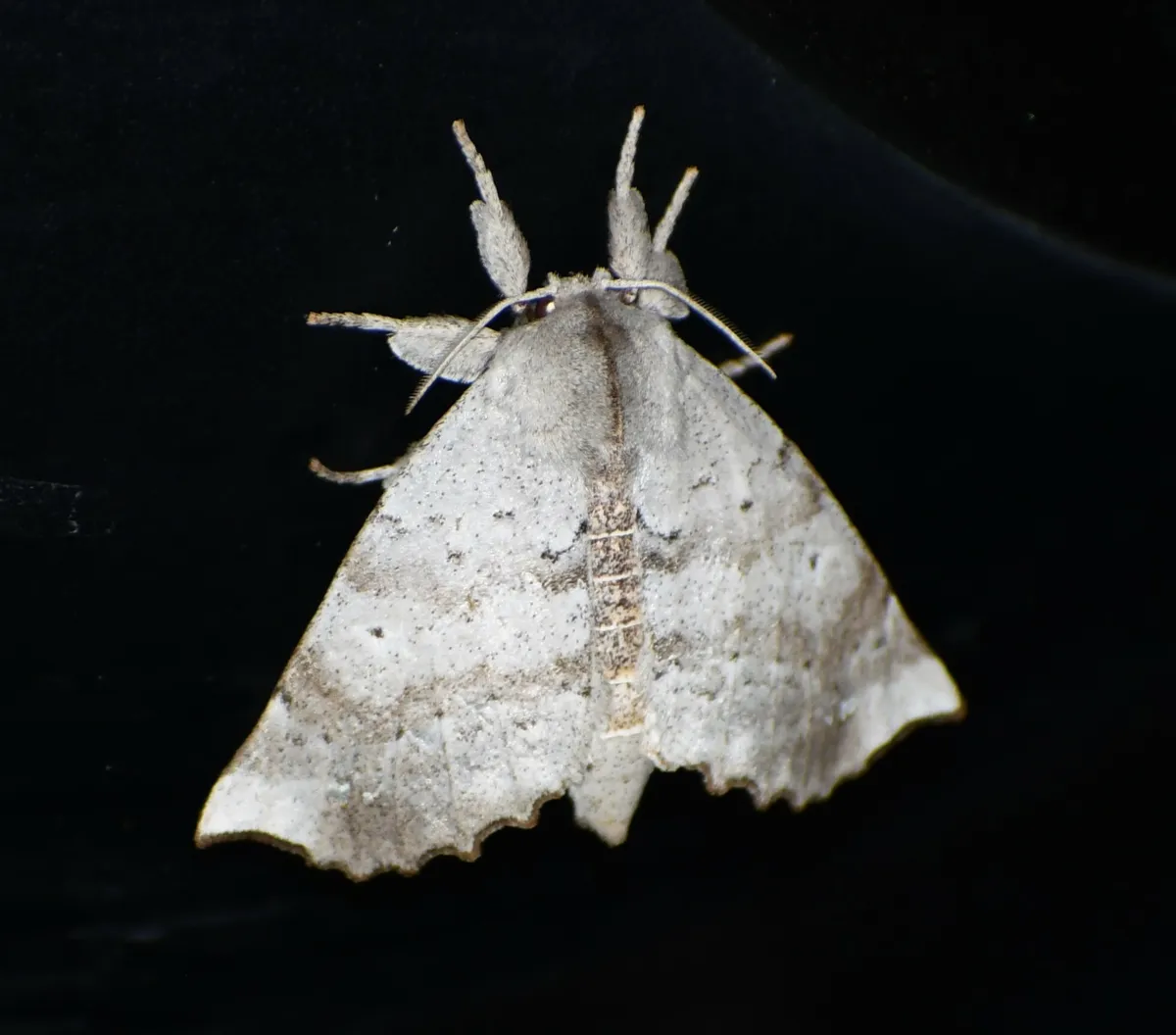
The Seraph - Hodges#7667
Olceclostera seraphica
Identification: Where the two species overlap in eastern Texas a view of the ventral of the hindwing is needed
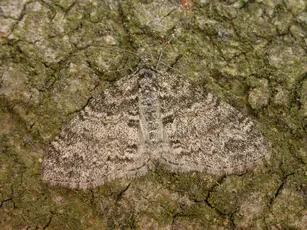
The Seraphim
Lobophora halterata
Wingspan 20 to 25 mm. Exhibits a reasonable range of variations. The adults fly in May and June, and are attracted to light. This species has a scattered distribution, occurring most commonly in southern Britain and parts of Scotland. In a recent sur
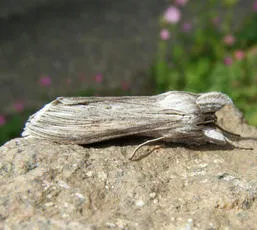
The Shark
Cucullia umbratica
Wingspan 42 to 52 mm. Similar to Chamomile Shark ( C. chamomillae ) but one distinguishing feature from that species is the fringe of the hindwing, which in the present species has two bands, one pale and one grey, whereas in C. chamomillae , there i
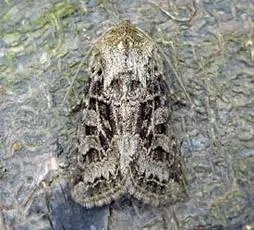
The Shears
Hada plebeja
Wingspan 30-35 mm. There is quite a variation in ground colour, generally the paler individuals occurring further south. It flies from May to July, with a partial second generation in the south. The larvae feed nocturnally on such low plants as Dande
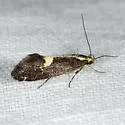
The Skunk - Hodges#1058
Polix coloradella
Identification: Adult - forewing black with white strip beginning on top of head and continuing along inner margin, bending 45 degrees near anal angle and extending almost half-way to apex. Head: Pale yellow to yellowish-white. Antenna: Grayish-brown
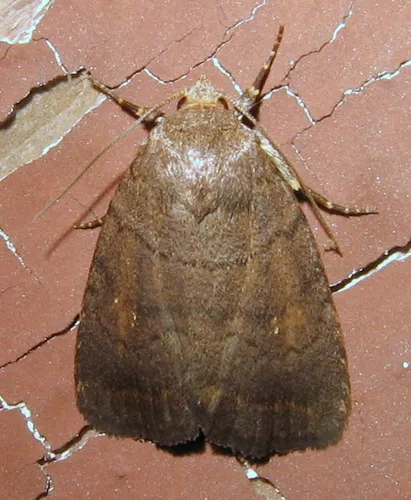
The Slowpoke - Hodges#9650
Athetis tarda
Identification: Adult - forewing dark grayish-brown; lines darker but usually inconspicuous; ST line wavy with pale tan to yellowish edging; spots inconspicuous, blackish; group of 4 pale dots around perimeter of reniform spot is diagnostic but not a
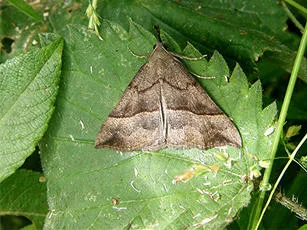
The Snout
Hypena proboscidalis
Wingspan 25-38 mm. Unmistakeable because of its long 'snout'. A wide range of habitats, including woodland, scrub, hedgerows, gardens, rough meadows and marshes. This moth can often be found in numbers around dusk, flying over patches of the foodplan
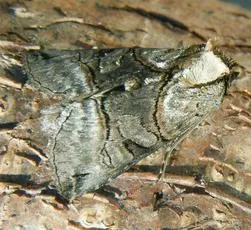
The Spectacle
Abrostola tripartita
Wingspan 27-30 mm. This moth derives its English name from the raised tufts of scales on the thorax, which resembles a pair of spectacles when viewed from the front. Gardens, heathland, rough grassland, fens, woodland edges and waste ground. It has o
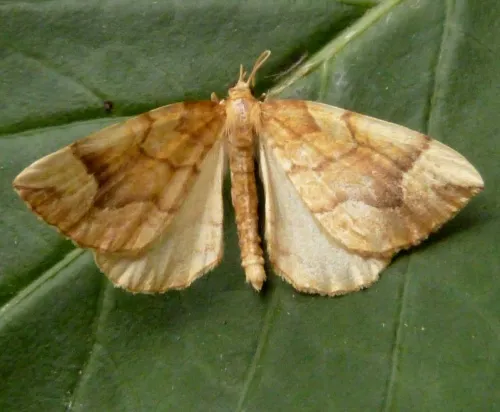
The Spinach
Eulithis mellinata
Wingspan 27-30 mm. The straw yellow wing bears a darker central band with one large tooth like projection on the outer edge. The wing fringes are chequered. Found in suburban areas as well as woodland and similar habitats. The adults fly from June to
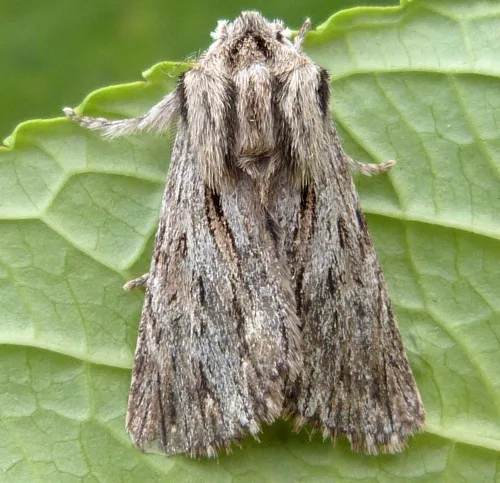
The Sprawler
Asteroscopus sphinx
Wingspan 39 to 49 mm.This moth has a very furry thorax, and its broad pale wings are streaked with darker colours. It is a late flying species, being on the wing from October to December. The English name 'Sprawler' comes from the larva's habit of th
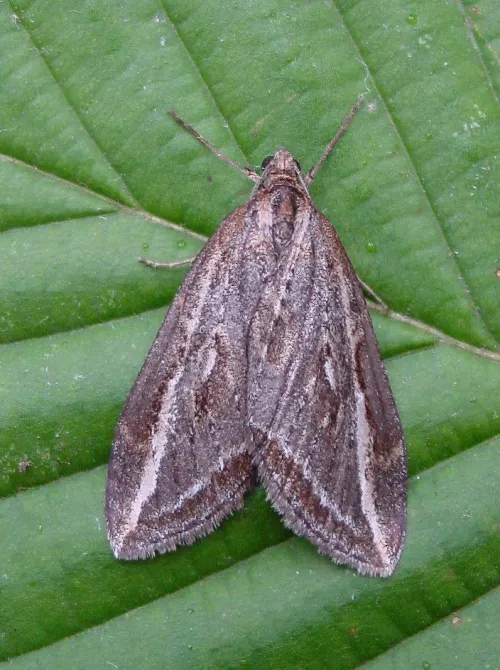
The Streak
Chesias legatella
Wingspan 30 to 35 mm. This species has a distinctive resting posture, with the long narrow wings held tent-like over the back. The caterpillars are very similar to the Broom-tip, but are found earlier in the year on Broom Areas where Broom (the larva
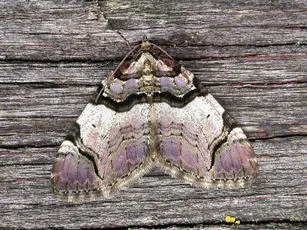
The Streamer
Anticlea derivata
Wingspan 30 to 34 mm. A pretty and distinctive moth with strong brown markings and wings showing a tint of dusky pink. Woodland edges, hedgerows and similar bushy places. Found quite early in the season, flying in April and May. The larvae feed on th
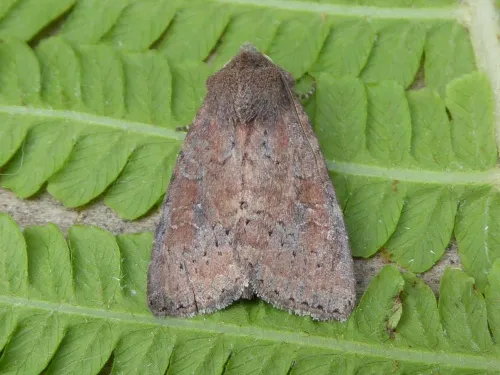
The Suspected
Parastichtis suspecta
Wingspan 29 to 34 mm. Quite variable, there are a number of forms ranging from quite plain to more variegated examples. The moths are on the wing in July and August. The larval foodplants are Birch and Willow. Generally distributed throughout mainlan
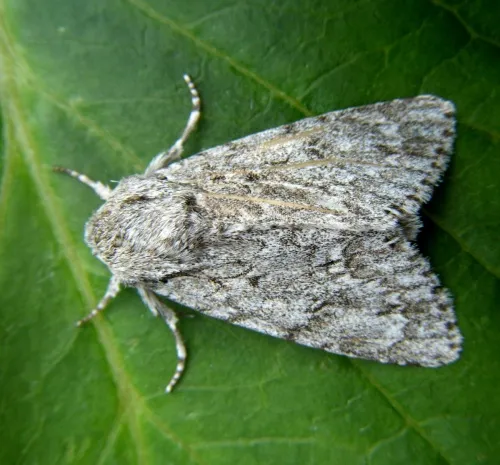
The Sycamore
Acronicta aceris
Wingspan 35-45 mm. Like several other Acronicta species, the ground colour varies from pale grey to dark sooty-grey. The brightly-coloured caterpillar is covered with yellow and orange hairs and has a row of black-edged white blotches along the back.
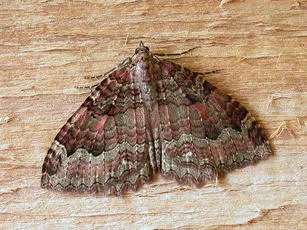
The Tissue
Triphosa dubitata
Wingspan 38 to 48 mm. This moth has a slightly glossy appearance to the upperside, and often has a purplish tinge. The preferred habitats are woodland, heathland, chalk and limestone areas, and open bushy places. The adults fly in August and Septembe
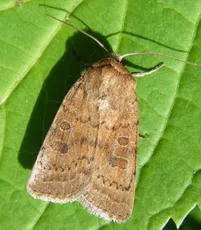
The Uncertain
Hoplodrina octogenaria
Wingspan 28-34 mm. Closely resembling The Rustic (H. blanda), there are a number of differences which contribute to the identification, but sometimes it may be necessary to refer to the genitalia for confirmation. In general, this species is more yel
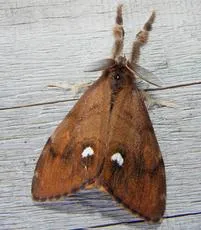
The Vapourer
Orgyia antiqua
Wingspan 25-30 mm. Males are chestnut brown with a white spot on each wing. The females are virtually wingless, an attribute normally associated with winter-emerging species. Urban gardens and parks, open woodland, fens, hedgerows, heathland and moor
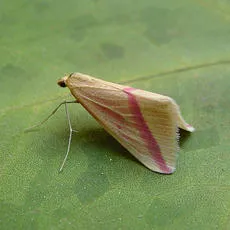
The Vestal
Rhodometra sacraria
Size 12 to 14 mm. It is a creamy winged species with pink bars forming an inverted 'V' and also pink edges to the wings. However the amount and intensity of the pink pigmentation is somewhat variable. Typically it rests with its wings in a tent-shape
The Vestal - Hodges#6678
Cabera variolaria
Identification: Adult: front of head and forelegs yellowish-brown to orange; wings may be pure white (but not shiny) or white with light gray speckling and very faint traces of yellowish to grayish-brown lines crossing the wings Larva: has a green fo
The White Edge - Hodges#9025
Oruza albocostaliata
Identification: Small body and broad forewing--resembles a geometer in form. Forewing has prominent white band on leading edge.
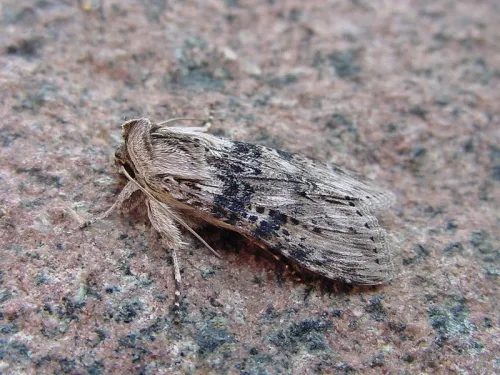
The Wormwood
Cucullia absinthii
Wingspan 32 to 40 mm. Like other members of the Cuculliinae , when at rest they have an accentuated posture with a forward-projecting tuft of hair on the thorax. Occupying waste ground, quarries, sea-cliffs and similar habitats. The larvae eat the fl
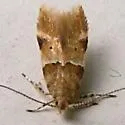
Theisoa constrictella - Hodges#1722
Theisoa constrictella
Identification: Adult: forewing slender, lance-shaped; basal third brown, edged in black distally; remainder of wing paler brown with yellowish AM line and blackish triangle half-way along costa, bordered distally by a yellowish wedge; black discal d
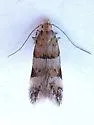
Theisoa multifasciella - Hodges#1723
Theisoa multifasciella
Identification: Head : Brownish yellow, becoming paler on the face around the mouth. Palpi externally brown, internal surface white. Antennae alternately brown and silvery white. Thorax : Upper surface brownish red. Wings : Basal area brownish red. T
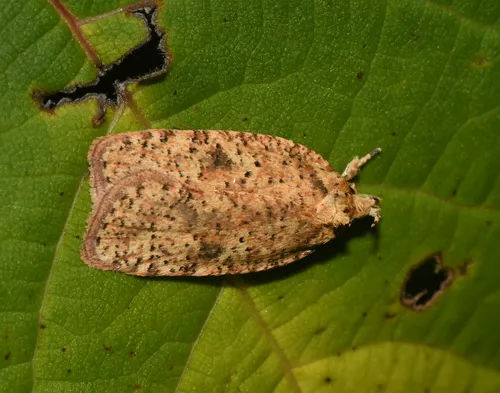
Thelma's Agonopterix Moth
Agonopterix thelmae
Thelma's agonopterix moth (Agonopterix thelmae) is a moth of the Depressariidae family. It is found in North America from New England to South Carolina, west to Kentucky and Illinois, north to Michigan and southern Ontario.
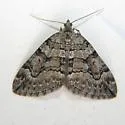
Thera latens - Hodges#7220
Thera latens
Identification: Barnes & McDunnough (1917) original description is available in the print references.
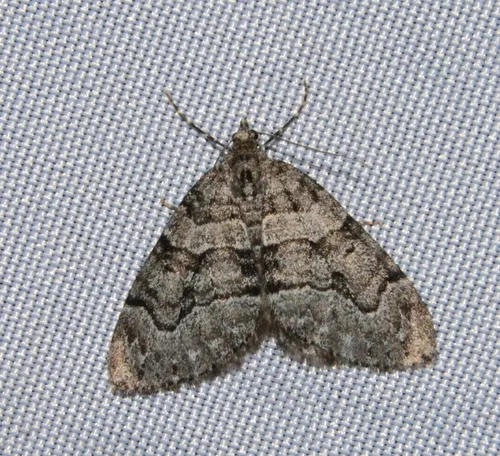
Thera otisi - Hodges#7219
Thera otisi
Identification: Dyar (1904) original description as Mesoleuca simulata otisi is available in the print references. Larva have yellowish green head, body is green with yellowish subdorsal stripe. Spiracular stripe is red and white, with the red on top
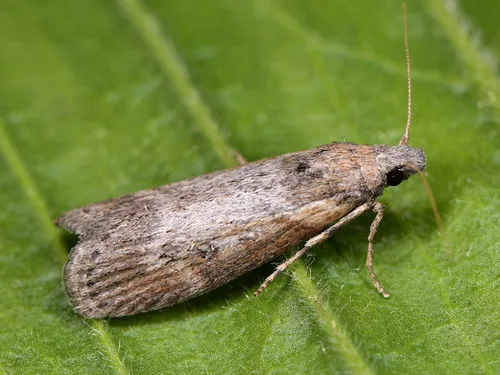
Theresian Moth
Lamoria anella
Lamoria anella is a species of snout moth described by Michael Denis and Ignaz Schiffermüller in 1775. It is found in most of Europe (except Ireland, Great Britain, Fennoscandia, Denmark, the Baltic region and Slovenia), the Canary Islands, as well a
Thick-tipped Greta - Hodges#4617.3
Greta morgane
First U.S. Record: World Birding Center Headquarters gardens, Bentsen-RGV State Park, Mission, Hidalgo Co., TX - December 8, 2004 (Randy Emmitt)
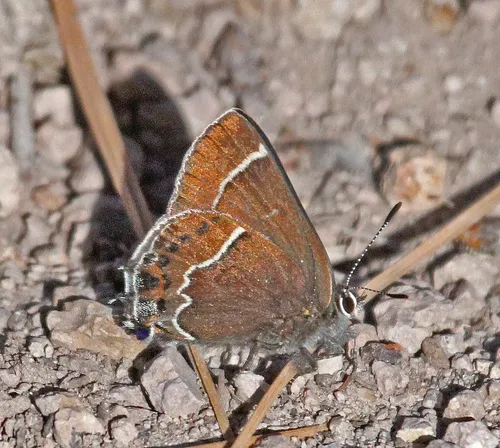
Thicket Hairstreak - Hodges#4310
Callophrys spinetorum
Identification: Adult: upperside distinctive steel-blue with wide dark margins; underside reddish-brown with prominent black-edged white line in middle of both wings; the line forms a W shape above the hindwing tail Larva: green with olive-colored st
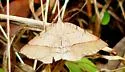
Thin-Lined Erastria - Hodges#6705
Erastria cruentaria
Identification: Spring form is marked with two black spots. - summer form
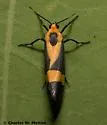
Thin-banded Lichen Moth - Hodges#8066
Cisthene tenuifascia
Identification: Identified by the combination of yellow/orange vertex, dark gray thoracic disk, narrow basal orange streaks which connect thinly or not at all to PM band, and a thin PM band which is sometimes irregular and sometimes broken into spots
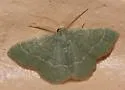
Thin-lined Chlorochlamys Moth - Hodges#7074
Chlorochlamys phyllinaria
Identification: Adult - male antenna bipectinate, tapering to a simple tip; female antenna slender and simple. Generally recognized by its small size, intense olive green color, sometimes tan or reddish brown (Prout's type specimen), and thin, sharp
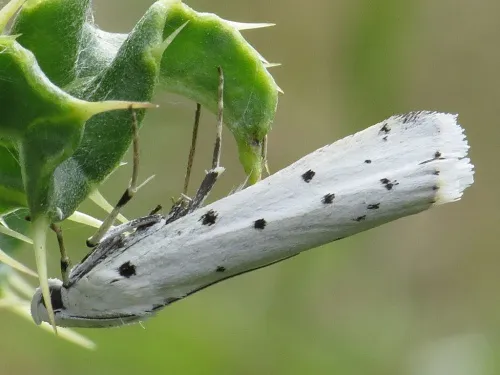
Thistle Ermine
Myelois circumvoluta
Wingspan 27-33 mm. This is a very distinctive moth, rather reminiscent of a larger version of the Yponomeutidae family. Found in habitats where the foodplants (Thistles) grow. Flying in June and July, the adults can be attracted to light. As the name
Tholera americana - Hodges#10523
Tholera americana
Identification: A distinctive species, mottled gray and black with all veins prominently highlighted with white, plus a subterminal line of white.
Thoreau's Flower Moth - Hodges#11141
Schinia thoreaui
Identification: Thorax: Light or dark brown, very heavily scaled or hairy. Wings: Base and lower area of wings dark brown. Center of wing more grayish or lighter brown; areas very faintly outlined with white. Both dark areas curved, base and lower cu
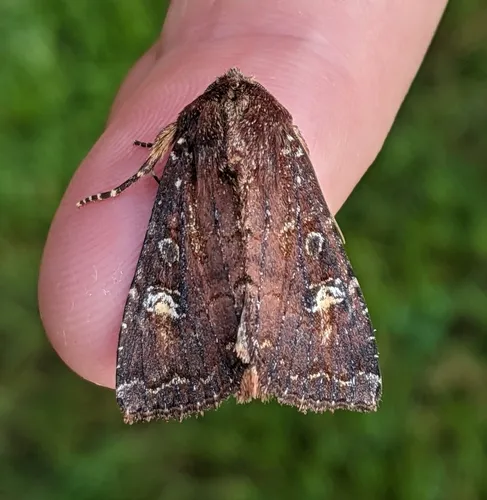
Thoughtful Apamea - Hodges#9367.1
Apamea cogitata
Identification: forewing reddish-brown, darker in subterminal area; reniform spot pale yellow or whitish with dark line running through it; orbicular spot oval, diagonal, with faint whitish outline; subterminal line thin, pale, jagged, indistinct; se
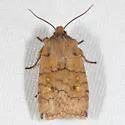
Three-Spotted Sallow - Hodges#9935
Eupsilia tristigmata
Identification: Resembles typical light form of Straight-toothed Sallow, but white or orange reniform spot usually has obvious black dot in inner half. AM is slightly wavy.
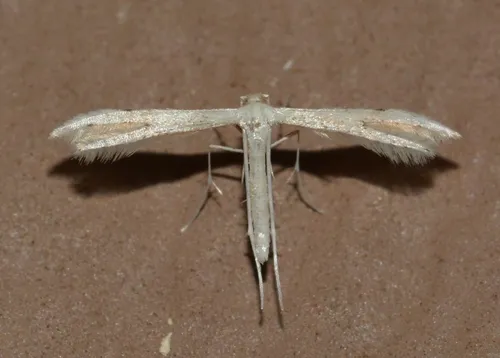
Three-dotted Plume Moth - Hodges#6155.1
Adaina simplicius
Identification: Adult : Head is pale yellowish, tinged with brownish, especially on the vertex. Thorax is pale straw-yellow. FW are very pale straw-yellow, the costa with a few brown scales, a small patch of similarly colored scales on the costa, bey
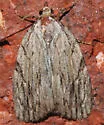
Three-lined Balsa - Hodges#9663
Balsa tristrigella
Identification: forewing light gray, shading to brownish in distal third; several thin black lines run longitudinally along wing, becoming thicker in distal half; Antemedial (AM) line short, distinct only near the costa; Postmedial (PM) line double,
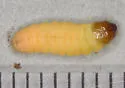
Three-lined Grapholita - Hodges#3443
Grapholita tristrigana
Three-lined Grapholita - Hodges#3443 (Grapholita tristrigana) is a species in the family Tortricidae, commonly known as tortricid moths, belonging to the order Lepidoptera (Butterflies and Moths). It is classified within the subfamily Olethreutinae,
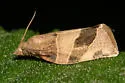
Three-lined Leafroller - Hodges#3594
Pandemis limitata
Identification: Adult - forewing varies from light to dark brown with prominent dark brown markings. The basal, median and upper postmedian lines are distinct and sharply defined with pale edging. The hindwing is white, often with the lower half grey
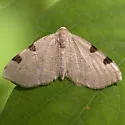
Three-spotted Fillip - Hodges#7647
Heterophleps triguttaria
Identification: Forewing whitish to pale yellowish-brown with three dark brown triangular spots evenly spaced along the costa.
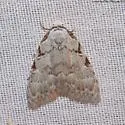
Three-spotted Nola - Hodges#8992
Nola triquetrana
Identification: Adult : FW gray with basal section of costa edged black. AM strongly kinked near costa, forming a V-shape. Mid-point of costa is marked with blackish triangle. Toothed PM and ST are faint. Can be abundant in the foothills of the Appal
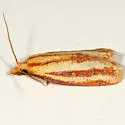
Three-streaked Sparganothis - Hodges#3699
Sparganothis tristriata
Identification: Adult - see original description in Print References.
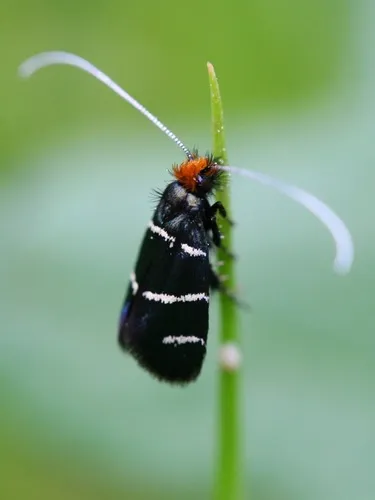
Three-striped Longhorn
Adela trigrapha
Adela trigrapha is a moth of the family Adelidae or fairy longhorn moths. It was described by Zeller in 1876. It is found in western North America, from Vancouver Island to California.
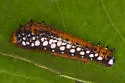
Three-tailed Swallowtail - Hodges#4180
Papilio pilumnus
Identification: Upperside of both fore- and hindwings yellow with black basal band. Wings bordered by a black band with submarginal yellow stripe. Hindwing has 3 tails and 2 blue spots above the shortest tail Kendall & McGuire discuss several s. TX r
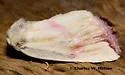
Thurberia Bollworm - Hodges#9817
Thurberiphaga diffusa
Adults attracted to light from 9pm to 12pm (Vorhies, 1926).
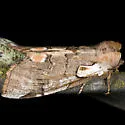
Thyatira lorata - Hodges#6239
Euthyatira lorata
page creation based on John Davis' identification of this image
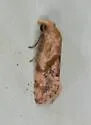
Thyraylia bana - Hodges#3843
Thyraylia bana
Identification: Adult - see original description in Print References. Genitalia: ♀ ♂ Pensoft 2018 #118:Lepidoptera of Canada and Alaska by Pohl, pg. 125. The name Thyraylia bana has been dropped.
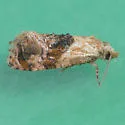
Thyraylia hollandana - Hodges#3847
Thyraylia hollandana
Identification: Specimen identified by DNA analysis (BOLD). ( 4 )
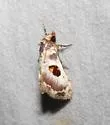
Thyridopyralis gallaerandialis - Hodges#5628
Thyridopyralis gallaerandialis
Identification: See original description in the print references below. Type locality: USA, Florida, Key West
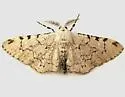
Thyrinteina arnobia - Hodges#6772
Thyrinteina arnobia
Identification: The species has a normal and melanic form, south of the United States. Research has concluded the Brazil population of Thyrinteina arnobia covers its eggs with compounds that are toxic to the parasitoid wasp Trichogramma maxacalii . T
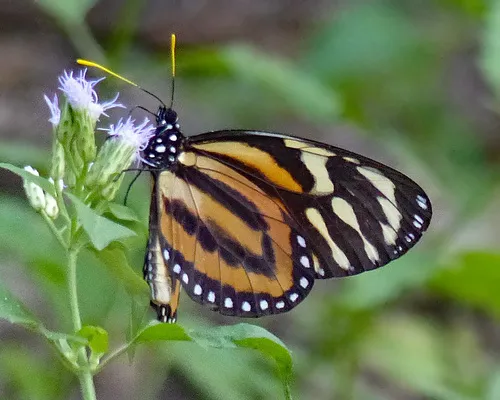
Tiger Mimic-Queen - Hodges#4617
Lycorea halia
The subspecies atergatis occasionally strays from Mexico into southern Texas.
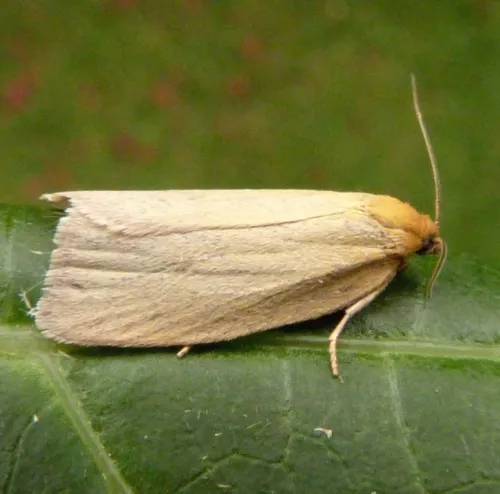
Timothy Tortrix
Zelotherses paleana
Wingspan 18-22 mm. A very plain looking moth, usually with a distinct yellowish suffusion around the head and the base of the forewings. It inhabits waste ground and dampish areas. The adults, which are on the wing from June to August, can be flushed
Tinacrucis noroesta - Hodges#3564.1
Tinacrucis noroesta
Identification: Adult - the largest tortricid in North America north of Mexico. Males with sinuate costa, rust, tan and yellow forewings with a pattern resembling a skeletonized dead leaf. Females less sinuate costa, nearly uniform milk chocolate bro
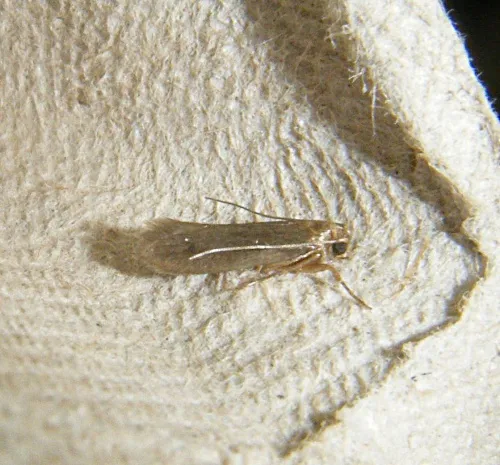
Tinea columbariella
Tinea columbariella
Any site suitable for providing a larval food source – may be near to habitation. Mainly recorded in June and July but possibly continually brooded. Larva feeds on feathers in bird nests and detritus, living within a silken case. Uncommon or rarely r
Tinea dubiella - Hodges#0397
Tinea dubiella
Identification: Specimen determined by DNA analysis (BOLD).
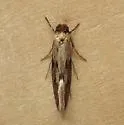
Tinea irrepta - Hodges#0399
Tinea irrepta
Identification: Head: Orange-yellow, long haired (scaled); some dark at sides. Palpi long, folded; yellowish on tip, dark on underside, scaled. Antenna: About 2/3 as long as wing. Base half dark, rest lighter, thinly ringed with brown. Thorax: Tan, s
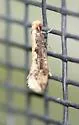
Tinea mandarinella - Hodges#0400
Tinea mandarinella
Identification: Similar to two species, both likely undescribed, which don't overlap with it in known range. T. mandarinella has not been recorded west of Houston. The species known from the southern Plains and Southwest is not close in DNA barcode t
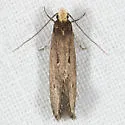
Tinea niveocapitella - Hodges#0402
Tinea niveocapitella
Identification: The original description is available online in the print references. BOLD:AAZ0461 [CA, BC] BOLD:ABX2540 [CA, WA] BOLD:AAH5633 [AZ (Huachucas)]
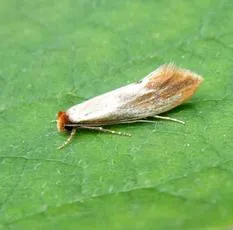
Tinea semifulvella
Tinea semifulvella
Wingspan 14 to 22 mm. Perhaps the most colourful of the British Tineidae , and one of the largest. With a striking orange head and a large orangey area on the wings, which are otherwise greyish white with a slight sheen. The adults fly nocturnally be
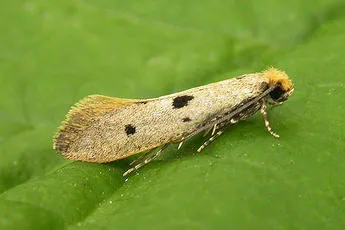
Tinea trinotella
Tinea trinotella
Wingspan 12-18 mm. This small greyish-buff moth has three dark spots on the forewing, which give rise to its scientific name. It also sports a yellowish or orange head-tuft, resulting in its diagnostic appearance. Flying at night and often visiting l
Tinea unidentified-two
Tinea unidentified-two
All online records from the Edwards Plateau. Provisional generic placement based on similarity to Tinea mandarinella , which ranges from easternmost Texas to Florida and Massachusetts, and another likely-undescribed species ranging from the Edwards P
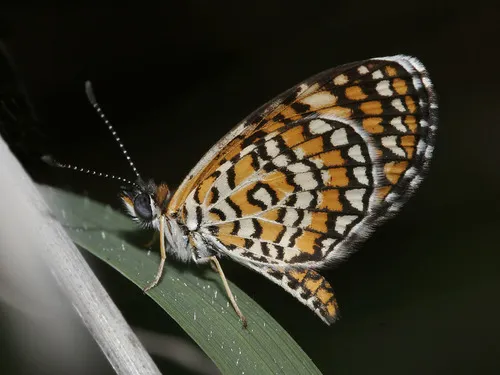
Tiny Checkerspot - Hodges#4511
Microtia dymas
Identification: Most like Microtia elada , differing in having no orange margin along the edge of the lower hind wing (or rarely a trace of orange in the black margin), and often with a pale to whitish spot near the middle of the front edge of the up
Tiquadra inscitella - Hodges#0427
Tiquadra inscitella
Identification: Wings with an brassy tinge beneath. Forewings with very minute black speckles, and with brown dots, which are most distinct along the borders. Hindwings paler than the forewings.
Tischeria ceanothi - Hodges#0167
Tischeria ceanothi
Identification: Specimen determined by DNA analysis (BOLD).
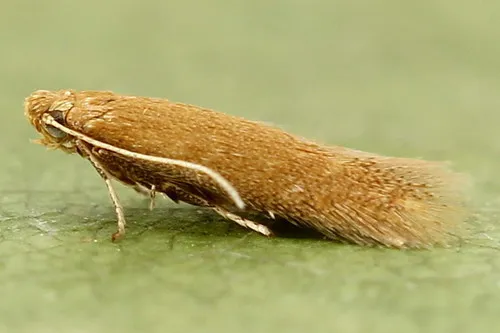
Tischeria dodonaea
Tischeria dodonaea
Wingspan about 7mm. Adult moth is fairly plain varying from yellowish-brown to a more chestnut brown. The larvae mine the leaves of Oak and Sweet Chestnut. The mine has a dark blotch with a series of dark concentric rings or semicircles. Adult may be
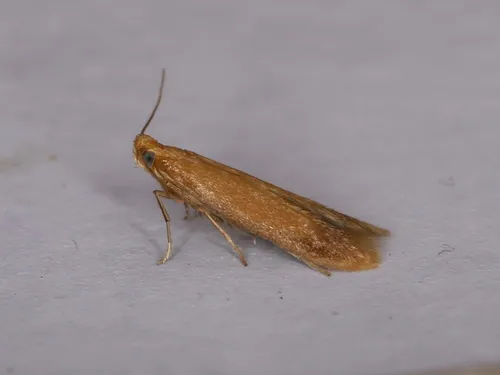
Tischeria ekebladella
Tischeria ekebladella
Wingspan 8 to11 mm. The adult moth is golden brown and has darker tips to the forewings. The larva mines the leaves of Oak and occasionally Sweet Chestnut. The mines are distinctive creamy white blotches on upper leaf-surface, wih a darker centre as
Tissue Moth - Hodges#7285
Triphosa haesitata
Identification: FW is variable red brown with darker and lighter wavy bands. HW margin is strongly toothed. Specimens identified by DNA analysis: Some individuals have extensive dark markings. (variations) Genitalia:
Titian Peale's Crambid - Hodges#4951
Perispasta caeculalis
Identification: Wings dark grayish-brown in both sexes; forewing outer margin indented and containing white fringe scales near apex. Male has white dash in middle of forewing; female does not. Hindwing brown with white fringe. Very worn moths with al
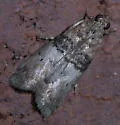
Tlascala Moth - Hodges#5808
Tlascala reductella
Identification: Adult: forewing banded with various colors in this order from base to tip: brownish, black, whitish, pale brownish-gray; two black discal spots in median area; subterminal line black, toothed, irregular; terminal line a series of blac
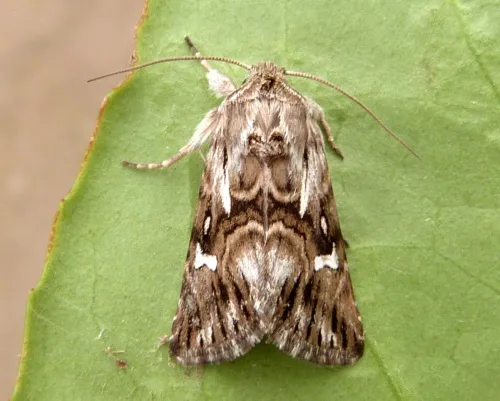
Toadflax Brocade
Calophasia lunula
It has two generations, sometimes overlapping, from May to August, and migrants sometimes appear away from the main stronghold in July and August. The larvae, which feed on Toadflax and related species (Linaria spp.), are very colourful, but well cam
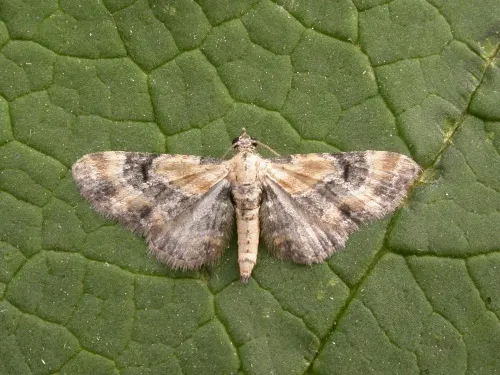
Toadflax Pug
Eupithecia linariata
Wingspan 11 to 16 mm. Although similar to the Foxglove Pug (Eupithecia pulchellata), this species is smaller, usually brighter-coloured Another useful feature for separating these two species is the innermost black band, which does not extend all of
Tolype austella - Hodges#7671
Tolype austella
Identification: Sinuous postmedial appears double and the lines drift apart at the inner margin. Bold subterminal band. Large dark patch on thorax (dorsal).
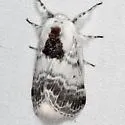
Tolype mayelisae - Hodges#7672
Tolype mayelisae
Identification: The only Tolype north of Mexico with black discal spot.
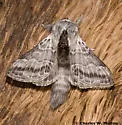
Tolype nigricaria - Hodges#7678
Tolype nigricaria
Identification: Distinguished from Tolype glenwoodii by distinct notch in the postmedial line of the forewing.
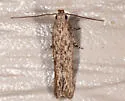
Tomato pinworm - Hodges#2047
Keiferia lycopersicella
Identification: This group is not distinguishable by wing maculation and is best determined by DNA or dissection. ( 3 ) - Specimen identified by DNA analysis (BOLD). ( 4 ) Introduced species (1920 or earlier) and considered an economic pest of tomato
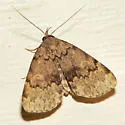
Toothed Idia - Hodges#8333
Idia denticulalis
Identification: Adult: forewing shaded with light yellowish-gray or yellowish-brown; AM, PM, and ST lines with sharp irregular teeth; reniform spot represented by a small and indistinct dark arc with pale outline (sometimes faint or absent); diffuse
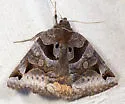
Toothed Somberwing - Hodges#8731
Euclidia cuspidea
Identification: Adult - forewing purplish-gray and brown with distinctive black PM triangle, basal and apical spots, and AM band; hindwing yellowish-brown with two blackish lines and basal shading. [description by Charles Covell] Larvae - slender and