
Butterflies and Moths
Order Lepidoptera
The Butterflies and Moths (Order Lepidoptera) includes 11,813 species across 112 families and 2,787 genera in our directory.
About Butterflies and Moths
Lepidoptera includes approximately 180,000 described species of butterflies and moths. Moths outnumber butterflies roughly 10:1. The monarch butterfly's eastern population has declined by more than 80% since the mid-1990s, and the western population by over 95% since the 1980s. The IUCN lists the migratory monarch as Vulnerable.
Economic Impact
Lepidoptera are critical pollinators. In Europe, grassland butterfly species have declined by almost 50% since the early 1990s. In the UK, three-quarters of butterflies are in decline. In the U.S., five butterfly species have gone extinct since 1950, with 29 listed as endangered.
Ecological Role
Butterflies and moths are essential indicators of ecosystem health. As caterpillars, they are a primary food source for birds - a single nest of blue tit chicks requires ~10,000 caterpillars. Adult moths pollinate many night-blooming plants.
Families in Lepidoptera (112)
Species in Lepidoptera (11,813)
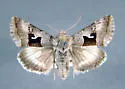
Syngrapha parilis - Hodges#8948
Syngrapha parilis
Identification: Specimen determined by DNA analysis (BOLD).
Syngrapha selecta - Hodges#8928
Syngrapha selecta
Identification: separated from other members of the genus by distinctive green stigma
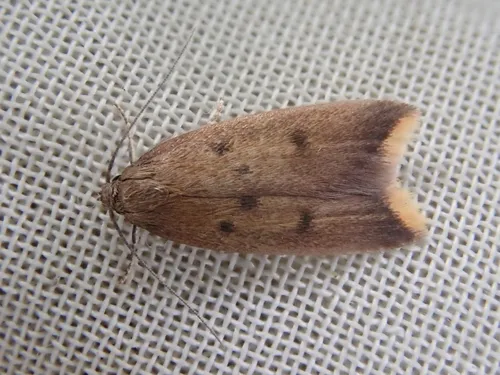
Tachystola acroxantha
Tachystola acroxantha
Wingspan 13 to 15 mm. The pinkish orange termen make this a fairly easy species to identify. The colourful adults can occur between May and September, when they are attracted to light. The larvae feed on withered leaves and leaf-litter. An adventive
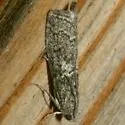
Tacoma feriella - Hodges#5901
Tacoma feriella
Identification: "Expands 20 mm. Palpi gray, white beneath ; head and thorax dark gray with a bluish shade; abdomen fuscous gray, interlined with light gray; fore wings dark gray with a bluish shade; lines whitish, the inner nearly at middle, angulate
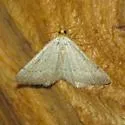
Taeniogramma mendicata - Hodges# 6424
Taeniogramma mendicata
Identification: Adapted from Entomologica Americana original description: Head and collar ochreous. Thorax in front narrowly reddish ochreous, otherwise thorax, abdomen and wings soiled white; forewings heavily powdered, outwardly some striated with
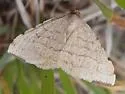
Taeniogramma octolineata - Hodges#6423
Taeniogramma octolineata
Identification: The forewing has four regularly spaced nearly parallel transverse lines. The fringe on the outer half has a dark patch. Moths of southeastern Arizona pinned specimen has a label with the spelling "octolieata".
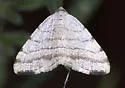
Taeniogramma quadrilinea - Hodges#6359
Taeniogramma quadrilinea
This species is very rare, known in Arizona from only three specimens. (Moths of Southeastern Arizona)
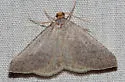
Taeniogramma tenebrosata - Hodges#6425
Taeniogramma tenebrosata
Identification: Ferguson has a detailed description.
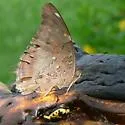
Tailed Cecropian - Hodges#4546
Historis acheronta
Kimball and Neck report vague historical records from south FL and south TX respectively. Most other US field guides either omit this sp., or list it as questionable. Veryl Board and John Hafernik collected a specimen on August 13, 1969 at Shafter, P
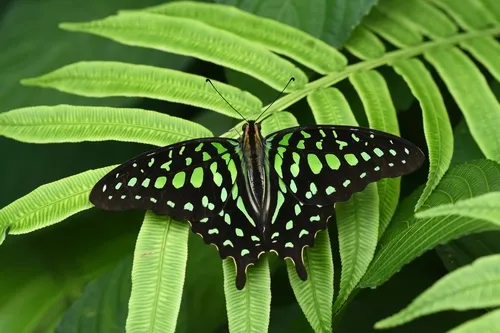
Tailed Jay
Graphium agamemnon
Graphium agamemnon, the tailed jay, is a predominantly green and black tropical butterfly that belongs to the swallowtail family. The butterfly is also called the green-spotted triangle, tailed green jay, or green triangle. It is a common, non-threat
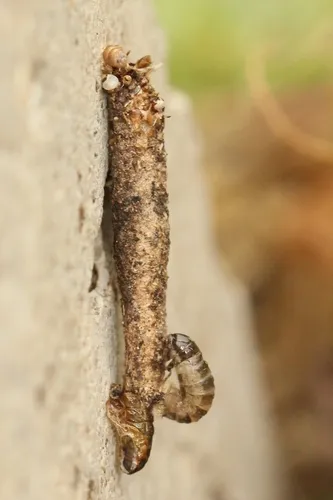
Taleporia tubulosa
Taleporia tubulosa
Wingspan 15 to 19 mm (male). The females are completely wingless, resembling small yellow grubs. The males are dull brownish affairs. Usually found by locating the case on trees or fences with a covering of lichen. Members of this family are sometime
Tallula atrifascialis - Hodges#5591
Tallula atrifascialis
T. watsoni is found in extreme coastal Georgia, much of Florida and the southern tip of Texas. The am. line is typically fairly straight whereas in atrifascialis it is angled outwardly below the cell giving the am. band a more constricted appearance.
Tallula fieldi - Hodges#5594
Tallula fieldi
Identification: The original description of Tallula fieldi Barnes & McDunnough, is available online in the print references below.
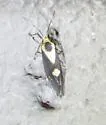
Tamaulipan Lichen Moth - Hodges#8059
Cisthene subrufa
Identification: Identified by range and a combination of characters ( 4 ) : -- Pale creamy yellow rather than orange color areas. -- Basal streaks stop well short of the PM band; margins of the basal streaks are convex, resulting in an elliptical pal
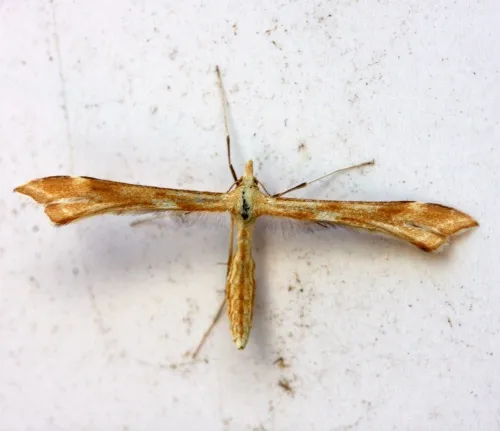
Tansy Plume
Gillmeria ochrodactyla
Wingspan 23 to 27 mm. Superficially similar to P. pallidactyla, this species has the hind leg banded brown and white below the middle spurs, and is often more distinctly marked on the forewing. Various habitats, especially where the larval foodplant
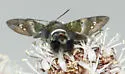
Tantalus Sphinx - Hodges#7847
Aellopos tantalus
The larval stages aren't well documented, with the first detailed information published in 1980 (see Internet references)
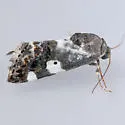
Tarache abdominalis - Hodges#9138
Tarache abdominalis
Identification: Along the inner margin of the forewing near the base there is a elongated oval gray patch. The lower half of the subterminal line is white There is a small white rectangular spot along the costa near the apex.
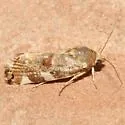
Tarache apela - Hodges#9133
Tarache apela
Identification: Sexually dimorphic. Forewing ground color of males is yellow-tan and females are white.
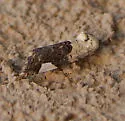
Tarache areloides - Hodges#9158
Tarache areloides
Identification: Per MPG here : "The Acontia areli group consists of six species, five of which are found in our check list area. They are similar in appearance, but differ in genitalia..." Bob Patterson notes on his tentative ID here : "... based on
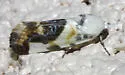
Tarache arida - Hodges#9150
Tarache arida
Identification: The original description as Acontia arida Smith, and the Hampson revised description as Tarache arida are both available online in the print references below.
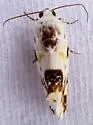
Tarache bella - Hodges#9147
Tarache bella
Identification: See "Noctuidae of North America" in Internet References below.
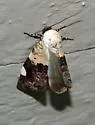
Tarache geminocula - Hodges#9159.2
Tarache geminocula
Identification: Dimorphic The forewing basal area nearly white in males and very pale yellowish in females. - Specimen identified by DNA analysis (BOLD) ( 4 )
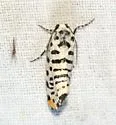
Tarache idella - Hodges#9120
Tarache idella
Identification: Adult: forewing white with black transverse streaks and spots, and deep yellow patch near apex; hindwing deep yellow; top of thorax white with large black spots; abdomen deep yellow; legs black and white.
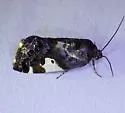
Tarache knowltoni - Hodges#9139
Tarache knowltoni
Identification: Geographically variable species. Females are similar to males but more heavily marked usually.
Tarache lagunae - Hodges#9140.1
Tarache lagunae
Tarache lagunae - Hodges#9140.1 (Tarache lagunae) is a species in the family Noctuidae, commonly known as owlet moths, belonging to the order Lepidoptera (Butterflies and Moths). It is classified within the subfamily Acontiinae, tribe Acontiini, supe
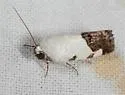
Tarache quadriplaga - Hodges#9142
Tarache quadriplaga
Tarache quadriplaga - Hodges#9142 (Tarache quadriplaga) is a species in the family Noctuidae, commonly known as owlet moths, belonging to the order Lepidoptera (Butterflies and Moths). It is classified within the subfamily Acontiinae, tribe Acontiini
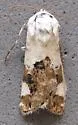
Tarache toddi - Hodges#9159.1
Tarache toddi
Identification: Ferris & Lafontaine stated "DFW basal area nearly white in both sexes; dark brown distal area nearly uniformly brown with only a few scales of different color; orbicular spot nearly obsolete; reniform spot less prominent than in A. ar
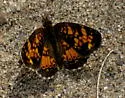
Tawny Crescent - Hodges#4482
Phyciodes batesii
Identification: Can be confused with other Phyciodes species , but distinguished by nearly mostly black antennal clubs lacking orange color [often with small white tip and/or grayish on part of underside, rarely with brownish tinge near tip]; under s
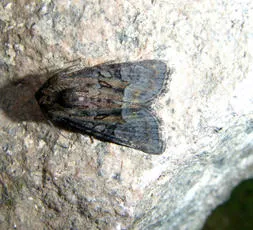
Tawny Marbled Minor
Oligia latruncula
Wingspan 24 to 27 mm. The Minors, or Oligia species are notoriously hard to separate from one another, and it is preferable to examine the genital structure to be certain. However, this species does often show a tawny or bronzy coloration. Like relat
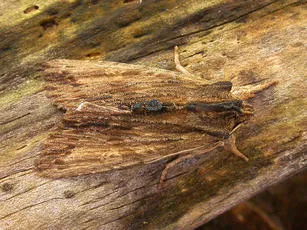
Tawny Pinion
Lithophane semibrunnea
Wingspan 40 to 44 mm. Mainly tawny brown generally paler and more straw coloured toward the leading edge of the wing, but with a blackish bar running parallel with the trailing edge. The preferred habitats are open woodland and marshy places. The spe
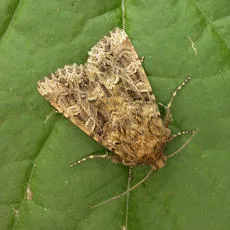
Tawny Shears
Hadena perplexa
Wingspan 27 to 36 mm. There is quite a range of variation in the ground colour and marking intensity, with paler specimens in the south-east and darker or duller ones in the north and west. Inhabiting dry grassy or stony habitats such as chalk downla
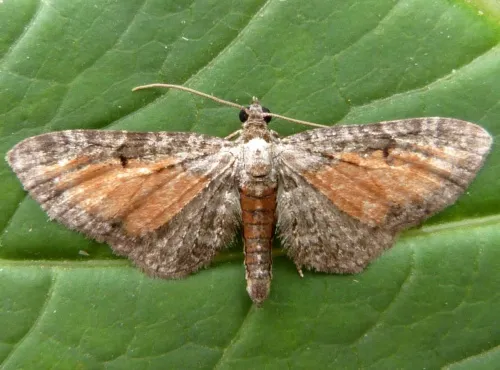
Tawny Speckled Pug
Eupithecia icterata
Wingspan 20 to 23 mm. One of our largest Eupithecia species. Typically the moth shows the fairly plain, two-tone reddish and brown appearance of the subspecies fulvata but in northern parts a more variegated race cognata occurs. July and August is th
Tawny Virbia - Hodges#8118
Virbia opella
Identification: Adult : A highly phenotypically variable species ranging from a dark charcoal form to a pinkish form. Nearly all have a brown discal spot in the hindwing, although the spot is obscured in the dark form, and paler forms may lack the di
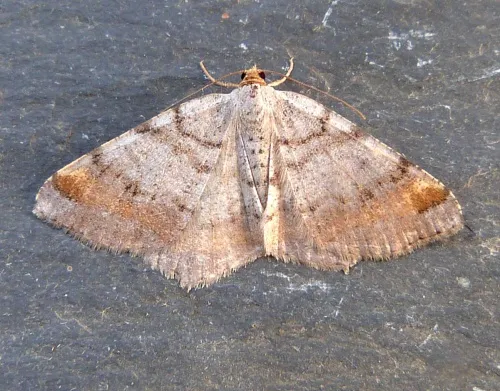
Tawny-barred Angle
Macaria liturata
Wingspan 22-27 mm. A dark melanic form nigrofulvata is quite common, especially in the north. A species of coniferous woodland and gardens. It flies usually in June and July, but in the south there is a second brood in August. Coniferous trees form t
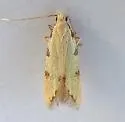
Taygete citrinella - Hodges#1843
Taygete citrinella
Identification: See original description in print references below.

Taygete decemmaculella - Hodges#1844
Taygete decemmaculella
Taygete decemmaculella is a moth in the Autostichidae family. It was described by Vactor Tousey Chambers in 1875. It is found in North America, where it has been recorded from Arizona, Colorado, Maine, Montana, New Mexico, Oklahoma, Utah and Wyoming.
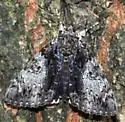
Tearful Underwing - Hodges#8794
Catocala lacrymosa
Identification: Pattern variable, but note white crescents on inner margin of forewing. Hindwing is black with white fringe, but black near anal angle. ( 8 )
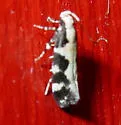
Teaweed Moth - Hodges#2209.1
Stegasta capitella
Identification: The head and thorax of the adult is white. The very similar Stegasta bosquella has only the front of the head white with the rest of the head and thorax dark brown/blackish.
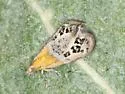
Tebenna gemmalis - Hodges#2644
Tebenna gemmalis
Identification: Adult: forewing dark yellow or orange in basal third, divided in two by dark longitudinal lines; remainder of wing dark gray, covered with whitish spots that give a dappled appearance; three black patches aligned longitudinally in dis
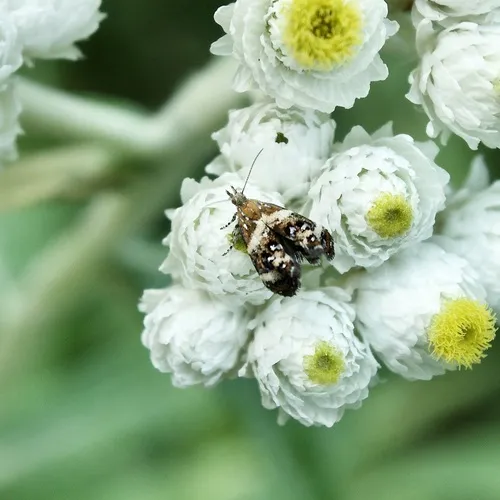
Tebenna onustana - Hodges#2648
Tebenna onustana
Tebenna onustana is a moth of the Choreutidae family. It is known from Ontario, Quebec and the north-eastern part of the United States.
Tegeticula intermedius - Hodges#0197.4
Tegeticula intermedius
This species is one of the three Yucca moth species in eastern North American north of Florida, flying with T. yuccasella and Prodoxus decipiens . All three species can be found together in the same Yucca plants. Like P. decipiens , females of this
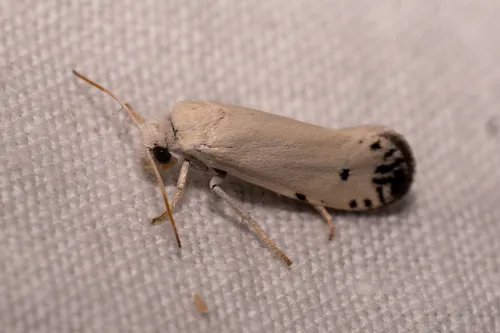
Tegeticula maculata - Hodges#0197
Tegeticula maculata
Identification: Segraves & Pellmyr (2001) illustrates the wing pattern variations. ( 3 )
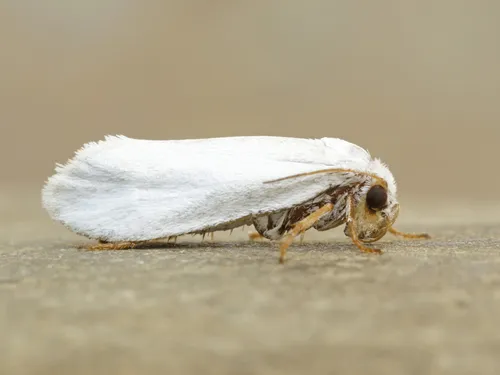
Tegeticula yuccasella - Hodges#0198
Tegeticula yuccasella
"Recently the species traditionally called T. yuccasella has been identified as being a complex of at least 13 species, many of which have very distinctive biology. Among them are two non-pollinating species of 'cheater yucca moths'. The reader shoul
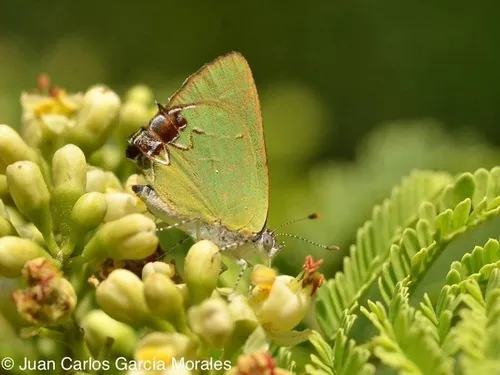
Telea Hairstreak - Hodges#4272
Chlorostrymon telea
Identification: Tiny size, smaller than even typically small Lycaenids such as Ministrymon clytie and Strymon istapa. Brilliant lime-green underwing color. Conspicuous brown spot on the hindwing near the "hairs". Type Locality: "Amazon" First US reco
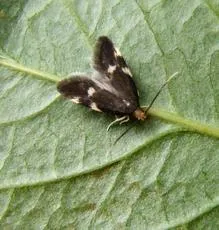
Telechrysis tripuncta
Telechrysis tripuncta
Wingspan about 12 mm. It has three pale, evenly-spaced spots on each dark forewing, white tipped antennae and an orangey-yellow head. Adult moths are on the wing in May and June, flying around twilight time. The feeding habits are relatively unknown,
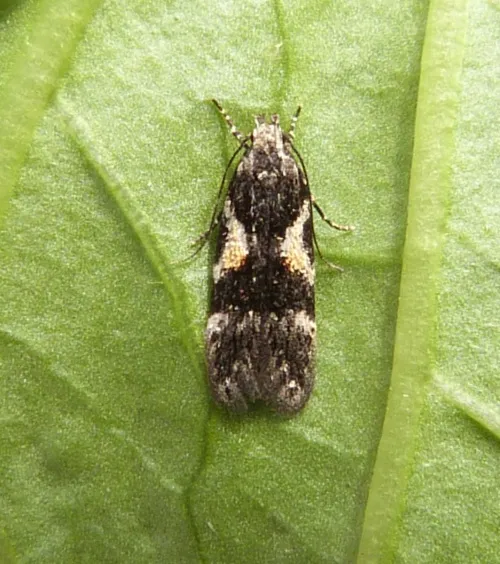
Teleiodes luculella
Teleiodes luculella
Wingspan about 11mm. A rather distinctive speis. It is dark grey or almost black with a large, semi circular pale costal blotch, often with an orangey tinge, and a pale bar across the wing at about two thirds. Oak woods and areas where oak is present
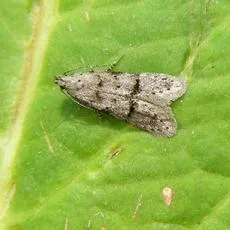
Teleiodes vulgella
Teleiodes vulgella
A fairly distinctive moth in the adult stage, this species has small blackish patches bordered by raised whitish scale-tufts, giving it a noticeably 'rough' appearance. Various habitats including gardens and well wooded areas. The adults fly at night
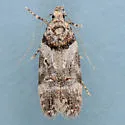
Teleiopsis baldiana - Hodges#1882
Teleiopsis baldiana
Rare in collections even though the species has a vary large range in California.
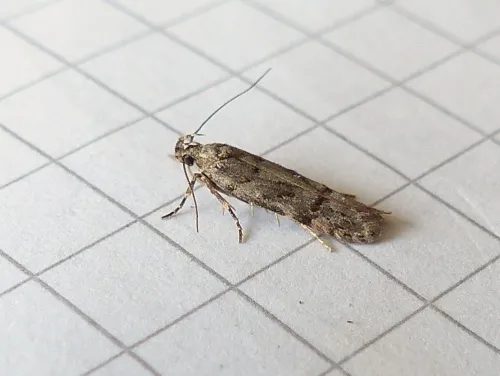
Teleiopsis diffinis
Teleiopsis diffinis
The species has two or more probable overlapping broods and can be found on the wing any time between May and October. Sheep's Sorrel (Rumex acetosa) is the larval foodplant, the larvae feeding amongst the roots or at the base of the stems in a silke
Telethusia ovalis - Hodges#5812
Telethusia ovalis
Identification: Original description is available online.
Telphusa perspicua - Hodges#1858.2
Telphusa perspicua
Identification: (Adapted loosely from Walsingham’s original 1897 description .) Long upturned palpi dark with some pale banding; top of head typically pale gray; fresh specimens have four to five dorsal scale tufts on the thorax and forewings, these
Telphusa sedulitella - Hodges#1859
Telphusa sedulitella
Identification: Slender moths that wrap their wings around the body with rows of upraised scales giving a roughened appearance. Forewing blackish with some rust tones. There are variations the have more whitish coloration on parts of the wings.
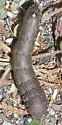
Terloo Sphinx - Hodges#7879
Proserpinus terlooii
Identification: Adult - uniform olive green with a darker median band. Hindwing is red with an olive green border. Adults are not strongly attracted to lights. They are most often found at flowers in early evening or at night. Use a flashlight at nig
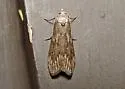
Terrenella Bee Moth - Hodges#5630
Aphomia terrenella
Identification: Forewing medium brownish-gray with indistinct blackish streak running from wing base to middle of disc; PM line deeply zigzagged with several sharp points (giving a "pointed feathers" appearance); veins in subterminal area dark, promi
Tesagrotis amia - Hodges#10978.2
Tesagrotis amia
Identification: Description available in MONA Fascicle 27-3 at link in citations below.
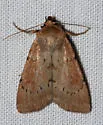
Tesagrotis atrifrons - Hodges#10977
Tesagrotis atrifrons
Identification: Description can be found in MONA Fascicle 27-3 at link in citations below.
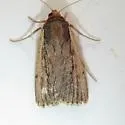
Tesagrotis corrodera - Hodges#10978.1
Tesagrotis corrodera
Identification: Pacific Northwest Moths has detailed description. Miller & Hammond (2003) describe the larvae and adult in PDF. ( 3 )
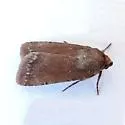
Tesagrotis piscipellis - Hodges#10978
Tesagrotis piscipellis
Identification: Description can be found in MONA Fascicle 27-3 at link in citations below. Genitalia:
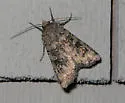
Tessellate Dart - Hodges#10805
Euxoa tessellata
Identification: Adult: forewing medium to dark grayish-brown, often with reddish or purplish tint; orbicular and reniform spots prominent, pale gray or yellowish; black triangular patch proximal to orbicular spot, and black rectangular patch between
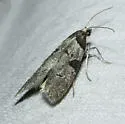
Tesuquea hawleyana - Hodges#2324
Tesuquea hawleyana
Identification: A very distinct moth, well-defined, dark patches at the forewing base and midcosta. .
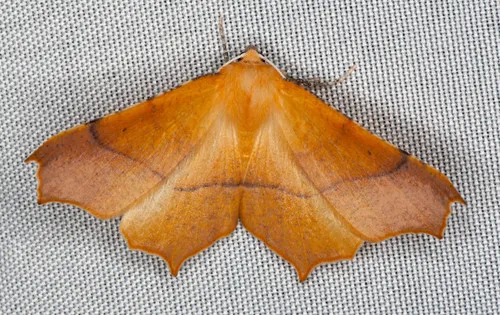
Tetracis australis - Hodges#6956.1
Tetracis australis
Currently (2022) the BOLD ( 4 ) specimens in this genus seem to be split, mixed up or duplicated with Synaxis and Tetracis . (see here and here ) It isn't clear why they are using both genera. See also - Specimens of Synaxis brunneilinearia (old nam
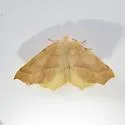
Tetracis barnesii - Hodges#6959
Tetracis barnesii
Identification: Sinuous postmedial line is smeared basally at the costal margin and is bordered along the length outwardly by a thin pale yellow-ochre line.
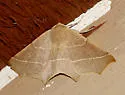
Tetracis cervinaria - Hodges#6956
Tetracis cervinaria
Identification: Specimens identified by DNA analysis:
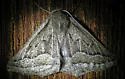
Tetracis formosa - Hodges#6958
Tetracis formosa
It is possible that the California arid region populations represent a sibling species of T. formosa
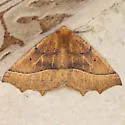
Tetracis hirsutaria - Hodges#6960
Tetracis hirsutaria
Identification: Ferris & Schmidt description available online in PDF. Sexually dimorphic.
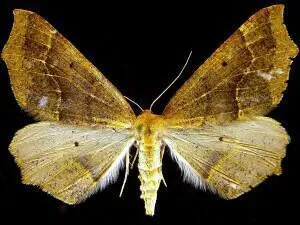
Tetracis montanaria - Hodges#6954.1
Tetracis montanaria
Identification: "Base color generally ochreous orange-brown. Forewing apex weakly falcate. AM and PM lines brown; PM line narrow, flattened “S-shape”, with very narrow pale outer edge, bending sharply basad at vein M3; median band slightly darker the
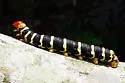
Tetrio Sphinx - Hodges#7830
Pseudosphinx tetrio
Identification: The larva of this hawkmoth has a long thread-like anal horn. It is very strikingly colored, the body being purplish black, girdled with yellow rings between the segments, and the head and anal claspers being bright red, of the color o
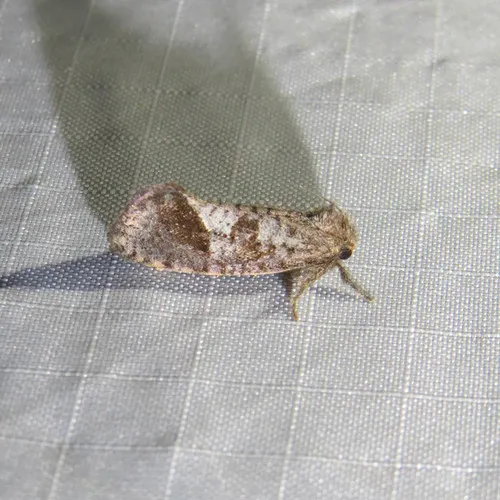
Texas Grass Tubeworm Moth
Acrolophus texanella
The Grass Tubeworm or Texas Grass Tubeworm Moth (Acrolophus texanella) is a moth of the Acrolophidae family. It is found from Maryland to Florida and to Texas.
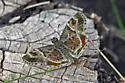
Texas Powdered-Skipper - Hodges#3937
Systasea pulverulenta
Identification: Adult: upperside of wings orangish-brown with darker greenish-brown areas; underside of wings dull green with whitish markings on hindwing; forewing upperside and underside has median line of white/clear cells forming a smooth curve a
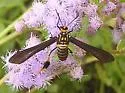
Texas Wasp Moth - Hodges#8287
Horama panthalon
Identification: Abdomen purplish/brown/black with many orange rings, hind legs black and orange with a large feathering on the tibiae (males *), antennae black with orange tips, thorax and head black with orange and white markings, wings brown. Some
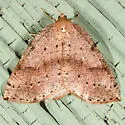
Thallophaga hyperborea - Hodges#6809
Thallophaga hyperborea
Identification: Adult: forewing light brown with dark speckling, pale veins, and diffuse dark median line which is slightly wavy and reaches costa; apex pointed but outer margin not obviously falcate; AM and PM lines with conspicuous black dots at ve
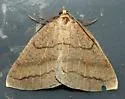
Thallophaga nigroseriata - Hodges#6810
Thallophaga nigroseriata
Identification: Specimen identified by DNA analysis (BOLD).
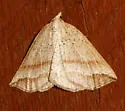
Thallophaga taylorata - Hodges#6808
Thallophaga taylorata
Identification: Adult: forewing light to medium brown or grayish-brown with dark speckling, pale veins, straight dark median line that fades before reaching costa, and pointed apex with slightly falcate outer margin; PM line with black dots at veins;
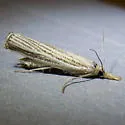
Thaumatopsis bolterellus - Hodges#5452
Thaumatopsis bolterellus
Identification: Adult: Head and thorax pale yellow. Forewings white with fuscous (brownish-gray) edged costa. Rows of dull stripes between the veins. Two oblique reddish-brown lines cross the wing, one near the outer margin and the other less than mi
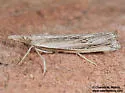
Thaumatopsis crenulatella - Hodges#5446
Thaumatopsis crenulatella
Identification: Males have crenulate antennae, heavily ciliated and without pectination; females have serrate antennae (Landry 2025).
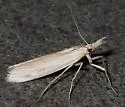
Thaumatopsis magnificus - Hodges#5440
Thaumatopsis magnificus
Identification: Adult: forewing long and slender with pointed apex, color dull yellow with thick white stripes running length of wing; main stripe begins near base in upper half of wing and splits into two in AM area, each branch splitting again in P
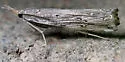
Thaumatopsis mayelisae - Hodges#5445.1
Thaumatopsis mayelisae
Identification: Males have have strongly pectinate antennae; females with shortly pectinate antennae (Landry 2025).
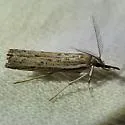
Thaumatopsis pectinifer - Hodges#5447
Thaumatopsis pectinifer
Identification: Description is online. Determined by Brian Scholtens . Considered a serious pest of corn.
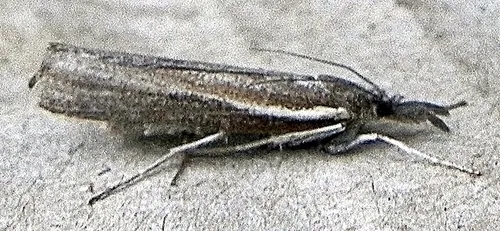
Thaumatopsis solutellus - Hodges#5449
Thaumatopsis solutellus
Thaumatopsis solutellus - Hodges#5449 (Thaumatopsis solutellus) is a species in the family Crambidae, commonly known as crambid snout moths, belonging to the order Lepidoptera (Butterflies and Moths). It is classified within the subfamily Crambinae,
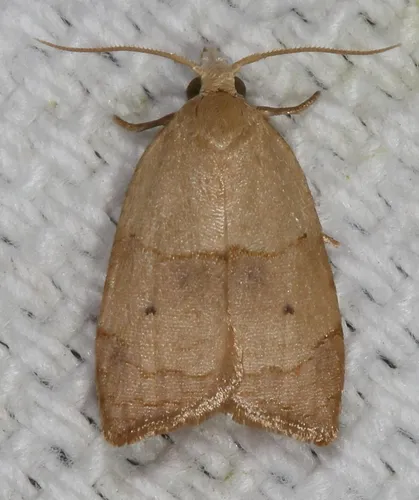
The Batman Moth - Hodges#3747
Coelostathma discopunctana
Identification: Males do not have a costal fold Genitalia:
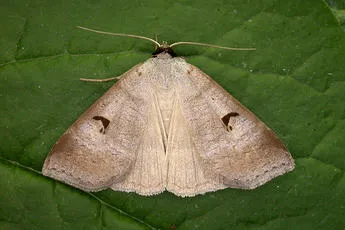
The Blackneck
Lygephila pastinum
Wingspan 37 to 42 mm. A very narrow looking species, the back of the head and shoulders are dark brown, looking almost black. The pale wing has very fine wavy lined pencilling and a dark brown kidney mark with one or two dots beside it. In Britain, t
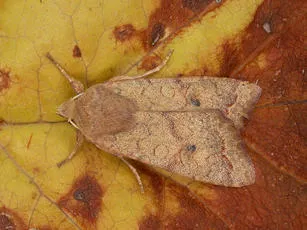
The Brick
Sunira circellaris
Wingspan 33-38 mm. One of several similar, orange-coloured species which emerge during the autumn period. It frequents mainly woodland and parkland. The larvae feed on the flowers and leaves of Wych Elm or Poplar when young, later feeding on the leav
The Bride - Hodges#8798
Catocala neogama
Identification: Adult - forewing grayish with well-defined AM and PM lines, having significant brown scaling in post-median area bordering distal edge of PM line and sometimes in AM area; reniform spot large and reddish-brown; subreniform spot round
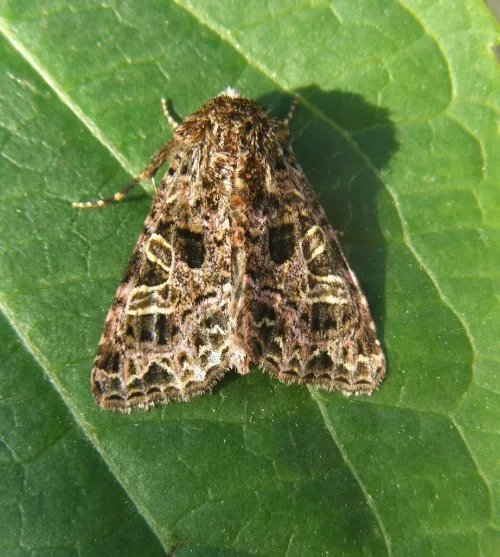
The Campion
Sideridis rivularis
Wing length 14-16 mm. Well marked and with a purplish hue in fresh specimens. The Campion closely resembles The Lychnis (H. bicruris), but tends to have the two forewing stigmata joined at the base. Fresh specimens usually also have a purplish suffus
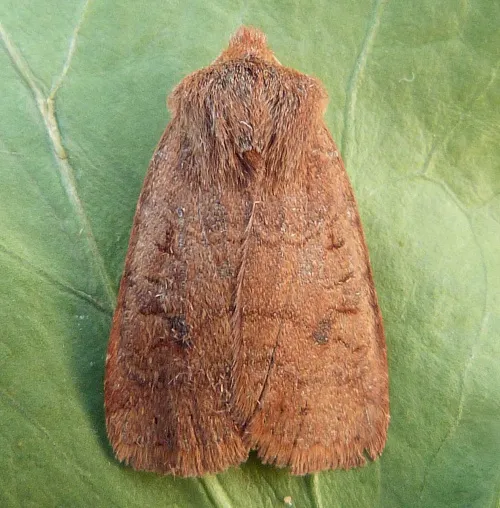
The Chestnut
Conistra vaccinii
Wingspan 28-36 mm. There are a number of variations, but all show a distinctive rounded wing shape. Broad-leaved woodland, scrub, hedgerows and gardens. Occurs in the winter, with moths appearing any time from September to May, especially in mild con
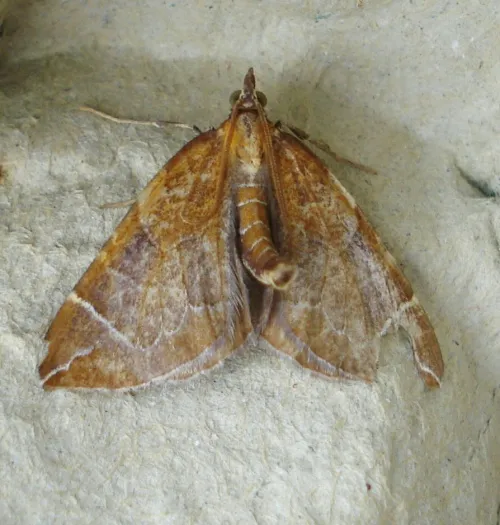
The Chevron
Eulithis testata
Wingspan 25 to 35 mm. Quite a variable species, this moth displays colour forms from yellowish through to fairly dark brown. It inhabits moorland habitats as well as sandy and woodland areas. The adults fly in July and August in a single generation.
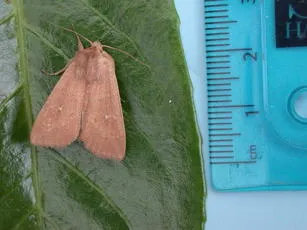
The Clay
Mythimna ferrago
Wingspan 35-40 mm. This moth often has a pinkish tinge to the forewings. The male has a distinctive black triangle or chevron on the underside of the abdomen. It occupies a range of habitats, though preferring more wooded areas The caterpillars feed
The Cobbler - Hodges#9699
Condica sutor
Identification: Adult - forewing brown, shiny, with vague broken pattern; PM line a double series of dark dots followed by a series of white dots; terminal line a series of white dots; reniform spot outline whitish, inconspicuous; lower end of renifo
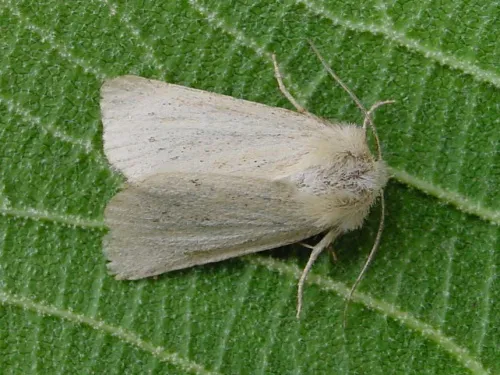
The Concolorous
Photedes extrema
Wingspan 26 to 28 mm. A pale buff coloured species - on some specimens a row of blackish dots on the forewing is conspicuous, on others almost absent. Areas where the larval foodplants are found. The adults fly in June and July and are attracted to l
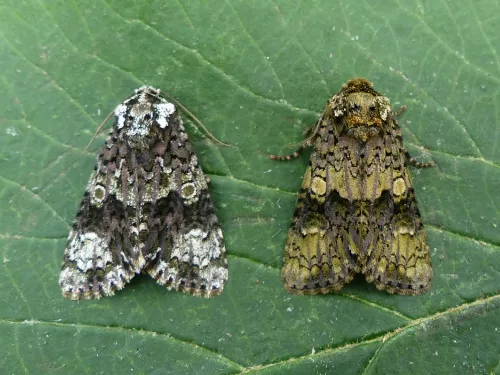
The Coronet
Craniophora ligustri
Wingspan 30 to 35 mm. When fresh, some individuals show an olive-green suffusion to the darker parts of the forewing. The habitat preferences are woodland, commons, downland and marshy places. The flight period is during June and July. The larval foo
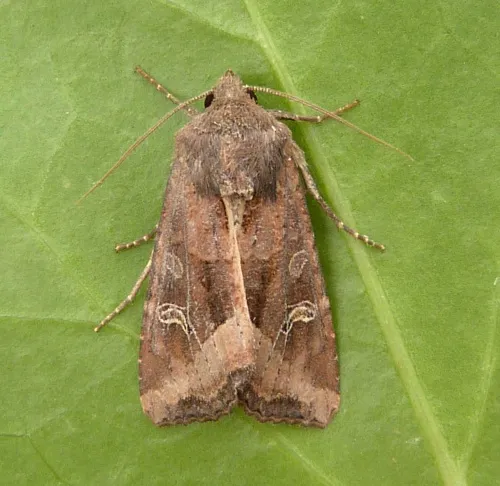
The Crescent
Helotropha leucostigma
Wingspan 37 to 44 mm. In addition to the typical form there is a well marked variation, ab. fibrosa, which is just as frequent, as well as several intermediate forms. A species of damp, marshy woodland and moorland. The eggs overwinter and hatch in s
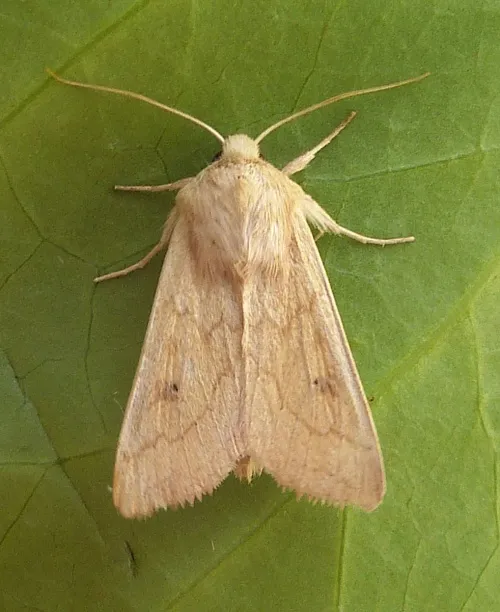
The Delicate
Mythimna vitellina
Wingspan 36 to 43 mm. The adults vary in colour from very pale yellow to almost orange. Usually seen between August and October, but also sometimes earlier in the season. It is considered that some of the earlier migrants during the year may breed in
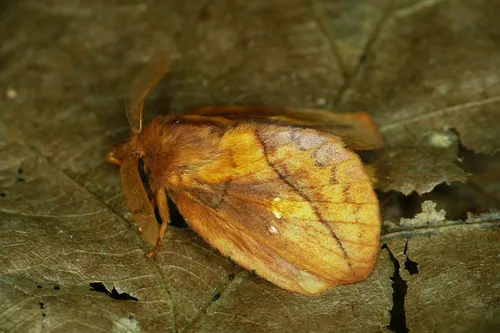
The Drinker
Euthrix potatoria
Wingspan 45-65 mm. The yellowish females are slightly larger than the orange-brown male but both sexes usually show the two distinctive white spots on the forewing. Most frequent in marshy places and riversides but also in drier grassy terrain. Flyin
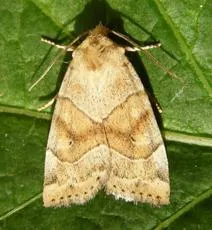
The Dun-bar
Cosmia trapezina
Wingspan 25-33 mm. A variable species, with the ground colour ranging from ochreous-yellow to dark brown, with a varyingly contrasting band on the forewing. However it is distinctly different from the other British Cosmia species, and not difficult t
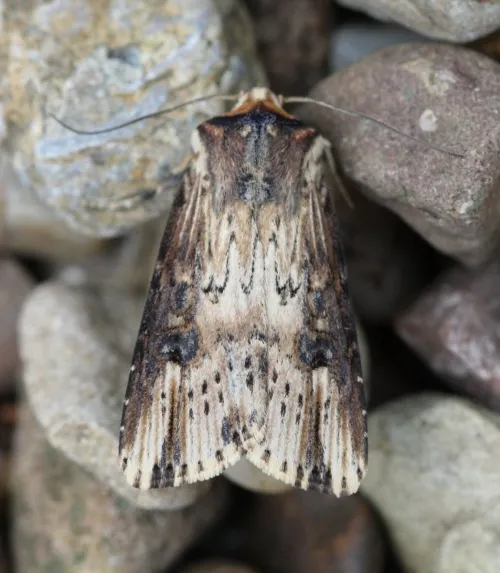
The Flame
Axylia putris
Wingspan 27-32 mm. The adults rest with the wings wrapped around the body and closely resemble a broken piece of twig. It inhabits woodland fringes, hedgerows and suburban habitats. Flies mainly in June and July, sometimes with a partial second gener
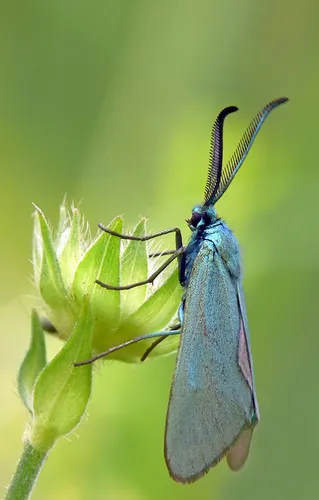
The Forester
Adscita statices
Wingspan 25 to 28 mm. This shiny emerald green coloured moth can be separated by its larger wingspan from the similar Cistus Forester ( Adscita geryon ), which only occurs in limestone districts where rock-rose grows. A good photograph is generally r
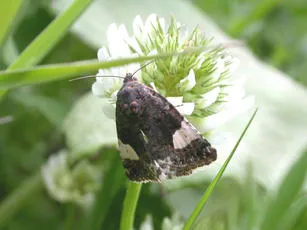
The Four-spotted
Tyta luctuosa
Wingspan 22 to 25 mm. Large white spots one extending two-thirds of the way along the leading edge of the brownish black forewing, and white band on the hindwing are diagnostic of this rather distinctive moth. It can be found in dry, sandy or chalky
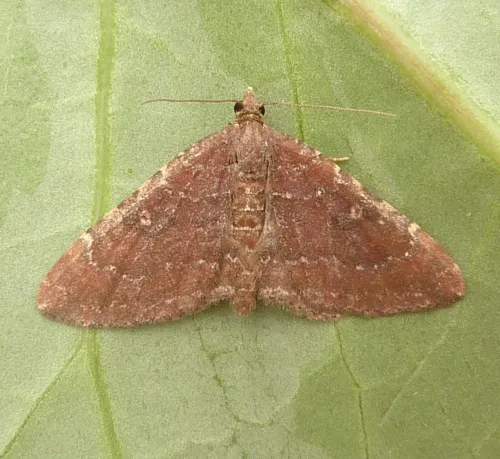
The Gem
Nycterosea obstipata
Wingspan 18 to 21 mm. The species is sexually dimorphic, the male being light brown with a darker central band, and the female slightly larger and darker, with a white spot on each forewing. A migrant that is most often seen at light. It usually appe
The German Cousin - Hodges#10266
Sideridis congermana
Identification: Yellow tinted FW tornus distinguishes this from similar species.
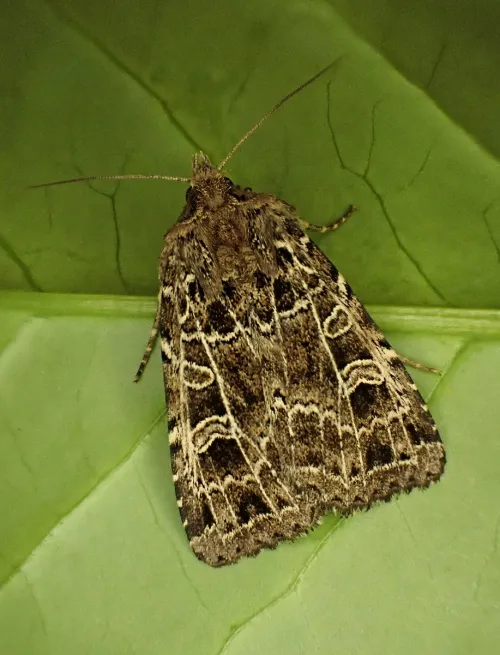
The Gothic
Naenia typica
Wingspan 33-40 mm. Quite similar in appearance to the Bordered Gothic ( Heliophobus reticulata ) and the Feathered Gothic ( Tholera decimalis ), this species can be identified by its broader wings and dark patch between the forewing stigmata. Due to