
Sharp-lined Yellow - Hodges#6912
Sicya macularia
This record describes Sicya macularia (species). Recorded family: Geometridae. Recorded order: Lepidoptera.
Identification and Appearance
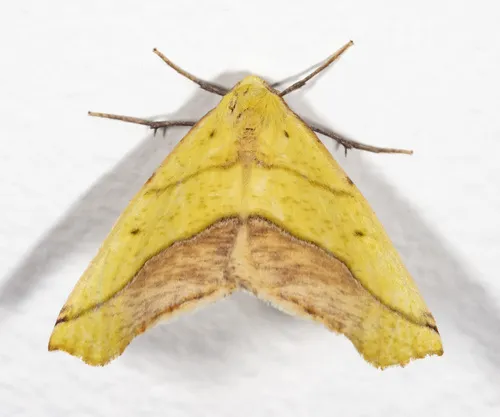
Adult: forewing yellow with distinctive broad pinkish border, although the intensity of the pink margin varies considerably; female slightly larger than male, with coarser dark speckling; hindwing with similar pattern but paler colors Specimens identified by DNA analysis: Larva: has two tongue-like lobes along its back, unlike any other looper; coloration and texture is bark-like, making it an excellent twig mimic [descriptions of adult and larva adapted from U. of Alberta site] the nocturnal adults resemble yellowed or wilted leaves
Classification
- Kingdom
- Animalia
- Phylum
- Arthropoda
- Class
- Insecta
- Order
- Lepidoptera (Butterflies and Moths)
- Superfamily
- Geometroidea
- Family
- Geometridae (Geometrid Moths)
- Subfamily
- Ennominae
- Tribe
- Ourapterygini
- Genus
- Sicya
Imported taxonomy record. Source availability varies; see the source references and editorial policy below.
Habitat and Range
Habitat
deciduous or mixedwood forests, woodlands, and shrubby areas
Geographic Range
coast to coast in Canada, including the arctic, and throughout United States except Florida and Texas
Seasonal Activity
adults fly from June to September
Diet and Behavior
Diet: larvae feed on deciduous shrubs and trees, including alder, blueberry, buckthorn, currant, false azalea, poplar, shrubby cinquefoil, spiraea, willow
Life History
overwinters as an egg, laid on twigs in old alder catkins (McGuffin 1987); pupation lasts for two or three weeks in a loose cocoon among foliage; the pupa is very glossy, reflecting the colors of its surroundings (Tatum 2003) Final instar larva; pupa; adult
About Butterflies and Moths: the wider group
Order-level background for Lepidoptera, the group containing Sicya macularia. Species-specific details appear above.
Group overview
Lepidoptera includes approximately 180,000 described species of butterflies and moths. Moths outnumber butterflies roughly 10:1. The monarch butterfly's eastern population has declined by more than 80% since the mid-1990s, and the western population by over 95% since the 1980s. The IUCN lists the migratory monarch as Vulnerable.
Ecological role of the group
Butterflies and moths are essential indicators of ecosystem health. As caterpillars, they are a primary food source for birds - a single nest of blue tit chicks requires ~10,000 caterpillars. Adult moths pollinate many night-blooming plants.
Economic and practical significance of the group
Lepidoptera are critical pollinators. In Europe, grassland butterfly species have declined by almost 50% since the early 1990s. In the UK, three-quarters of butterflies are in decline. In the U.S., five butterfly species have gone extinct since 1950, with 29 listed as endangered.
Recorded sources for this group: IUCN Red List, Xerces Society, USFWS, PNAS, WWF. Imported estimates may describe particular regions or reporting periods.
Photos of Sharp-lined Yellow - Hodges#6912 (2)
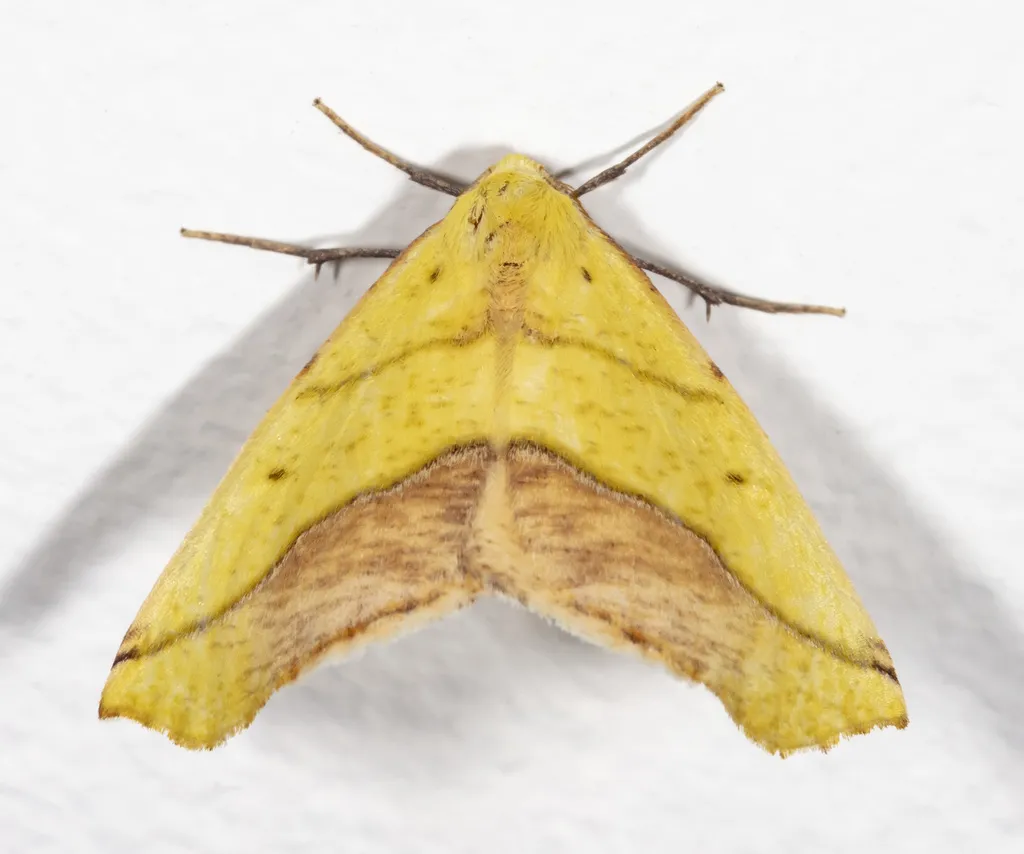
Photo credits: Contributed by Robin McLeod; Additional contributions by anitagould , Maury Heiman , marcie oconnor , Robert H. Biagi
Frequently Asked Questions About Sharp-lined Yellow - Hodges#6912
What is Sharp-lined Yellow - Hodges#6912?
Sharp-lined Yellow - Hodges#6912 (Sicya macularia) is a species in the family Geometridae, within the order Lepidoptera.
How big is Sharp-lined Yellow - Hodges#6912?
wingspan 29-36 mm, based on CBIF images
How do you identify Sharp-lined Yellow - Hodges#6912?
Adult: forewing yellow with distinctive broad pinkish border, although the intensity of the pink margin varies considerably; female slightly larger than male, with coarser dark speckling; hindwing with similar pattern but paler colors Specimens identified by DNA analysis: Larva: has two tongue-like lobes along its back, unlike any other looper; coloration and texture is bark-like, making it an excellent twig mimic [descriptions of adult and larva adapted from U. of Alberta site]
Where is Sharp-lined Yellow - Hodges#6912 found?
| Feature | Details |
|---|---|
| Habitat | deciduous or mixedwood forests, woodlands, and shrubby areas |
| Range | coast to coast in Canada, including the arctic, and throughout United States except Florida and Texas |
What does Sharp-lined Yellow - Hodges#6912 eat?
The diet of the Sharp-lined Yellow - Hodges#6912 includes larvae feed on deciduous shrubs and trees, including alder, blueberry, buckthorn, currant, false azalea, poplar, shrubby cinquefoil, spiraea, willow.
When is Sharp-lined Yellow - Hodges#6912 active?
Sharp-lined Yellow - Hodges#6912: seasonal activity - adults fly from June to September.
What is the life cycle of a Sharp-lined Yellow - Hodges#6912?
overwinters as an egg, laid on twigs in old alder catkins (McGuffin 1987); pupation lasts for two or three weeks in a loose cocoon among foliage; the pupa is very glossy, reflecting the colors of its surroundings (Tatum 2003) Final instar larva; pupa; adult