
Sharp-lined Tussock - Hodges#8293
Dasychira dorsipennata
This record describes Dasychira dorsipennata (species). Recorded family: Erebidae. Recorded order: Lepidoptera.
Identification and Appearance
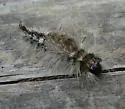
Barnes & McDunnough original description as Olene dorsipennata is available online. Adult: Paler than obliquata , with less of the brown shading in the basal and postmedial areas of the forewing, and a less dentate AM line. It is also usually paler and better-marked than vagans , with a less regular PM line. It is larger, paler, and grayer than plagiata . Adults apparently never have a black bar on the forewing. Larva: The last instar larva is distinctive for the region in which it occurs. Only those of the more southern tephra and kerrvillei may be confused. Head and integument of body very dark; prothoracic plate light brown; dorsal glands red; two long, black hair pencils anteriorly and three posteriorly; the usual rosette-like cluster of white plumed hair arising from brown subdorsal verrucae; hair otherwise gray, including dorsal tufts on abdominal segments 1-4, except for a few long, lateral black hairs very narrowly plumose or merely barbed, one or two arising from each subspiracular verruca. All other species on deciduous trees in the Northeast, occurring where they are likely to be sympatric with dorsipennata , lack the posterior dorsal hair pencil.
Classification
- Kingdom
- Animalia
- Phylum
- Arthropoda
- Class
- Insecta
- Order
- Lepidoptera (Butterflies and Moths)
- Superfamily
- Noctuoidea
- Family
- Erebidae
- Subfamily
- Lymantriinae
- Tribe
- Orgyiini
- Genus
- Dasychira
Imported taxonomy record. Source availability varies; see the source references and editorial policy below.
Habitat and Range
Geographic Range
Occurs from Nova Scotia, Maine, and southern Quebec west through Ontario, Wisconsin and Minnesota at least to Brandon, Manitoba, and McHenry County, North Dakota, and southward in the Appalachians to Balsam, Jackson County, North Carolina.
Seasonal Activity
Single brooded. Adults generally appear from late June to early August.
Diet and Behavior
Diet: Have been reared on oak, hazel, birch, elm, beech, and Amelanchier , but seems to prefer willow. Hosts Database
About Butterflies and Moths: the wider group
Order-level background for Lepidoptera, the group containing Dasychira dorsipennata. Species-specific details appear above.
Group overview
Lepidoptera includes approximately 180,000 described species of butterflies and moths. Moths outnumber butterflies roughly 10:1. The monarch butterfly's eastern population has declined by more than 80% since the mid-1990s, and the western population by over 95% since the 1980s. The IUCN lists the migratory monarch as Vulnerable.
Ecological role of the group
Butterflies and moths are essential indicators of ecosystem health. As caterpillars, they are a primary food source for birds - a single nest of blue tit chicks requires ~10,000 caterpillars. Adult moths pollinate many night-blooming plants.
Economic and practical significance of the group
Lepidoptera are critical pollinators. In Europe, grassland butterfly species have declined by almost 50% since the early 1990s. In the UK, three-quarters of butterflies are in decline. In the U.S., five butterfly species have gone extinct since 1950, with 29 listed as endangered.
Recorded sources for this group: IUCN Red List, Xerces Society, USFWS, PNAS, WWF. Imported estimates may describe particular regions or reporting periods.
Photos of Sharp-lined Tussock - Hodges#8293 (5)
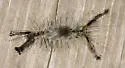
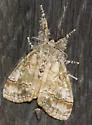
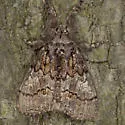
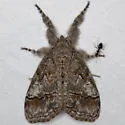
Photo credits: Contributed by tom murray; Additional contributions by Maury Heiman , Kyhl Austin , Steve Morris
Frequently Asked Questions About Sharp-lined Tussock - Hodges#8293
What is Sharp-lined Tussock - Hodges#8293?
Sharp-lined Tussock - Hodges#8293 (Dasychira dorsipennata) is a species in the family Erebidae, within the order Lepidoptera.
How do you identify Sharp-lined Tussock - Hodges#8293?
Barnes & McDunnough original description as Olene dorsipennata is available online. Adult: Paler than obliquata , with less of the brown shading in the basal and postmedial areas of the forewing, and a less dentate AM line. It is also usually paler and better-marked than vagans , with a less regular PM line. It is larger, paler, and grayer than plagiata . Adults apparently never have a black bar on the forewing. Larva: The last instar larva is distinctive for the region in which it occurs. Only those of the more southern tephra and kerrvillei may be confused. Head and integument of body very dark; prothoracic plate light brown; dorsal glands red; two long, black hair pencils anteriorly and three posteriorly; the usual rosette-like cluster of white plumed hair arising from brown subdorsal verrucae; hair otherwise gray, including dorsal tufts on abdominal segments 1-4, except for a few long, lateral black hairs very narrowly plumose or merely barbed, one or two arising from each subspiracular verruca. All other species on deciduous trees in the Northeast, occurring where they are likely to be sympatric with dorsipennata , lack the posterior dorsal hair pencil.
Where is Sharp-lined Tussock - Hodges#8293 found?
Range: Occurs from Nova Scotia, Maine, and southern Quebec west through Ontario, Wisconsin and Minnesota at least to Brandon, Manitoba, and McHenry County, North Dakota, and southward in the Appalachians to Balsam, Jackson County, North Carolina.
What does Sharp-lined Tussock - Hodges#8293 eat?
The diet of the Sharp-lined Tussock - Hodges#8293 includes Have been reared on oak, hazel, birch, elm, beech, and Amelanchier , but seems to prefer willow. Hosts Database.
When is Sharp-lined Tussock - Hodges#8293 active?
Sharp-lined Tussock - Hodges#8293: seasonal activity - Single brooded. Adults generally appear from late June to early August..