
Butterflies and Moths
Order Lepidoptera
The Butterflies and Moths (Order Lepidoptera) includes 11,813 species across 112 families and 2,787 genera in our directory.
About Butterflies and Moths
Lepidoptera includes approximately 180,000 described species of butterflies and moths. Moths outnumber butterflies roughly 10:1. The monarch butterfly's eastern population has declined by more than 80% since the mid-1990s, and the western population by over 95% since the 1980s. The IUCN lists the migratory monarch as Vulnerable.
Economic Impact
Lepidoptera are critical pollinators. In Europe, grassland butterfly species have declined by almost 50% since the early 1990s. In the UK, three-quarters of butterflies are in decline. In the U.S., five butterfly species have gone extinct since 1950, with 29 listed as endangered.
Ecological Role
Butterflies and moths are essential indicators of ecosystem health. As caterpillars, they are a primary food source for birds - a single nest of blue tit chicks requires ~10,000 caterpillars. Adult moths pollinate many night-blooming plants.
Families in Lepidoptera (112)
Species in Lepidoptera (11,813)
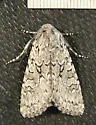
Psammopolia wyatti - Hodges#10365
Psammopolia wyatti
Identification: Forewing whitish with large discal spots sometimes with a small black basal dash. Hind wings are tinged with gray.
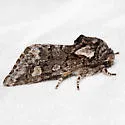
Psaphida thaxterianus - Hodges#10020
Psaphida thaxterianus
Psaphida thaxterianus is listed as a species of concern in several eastern states
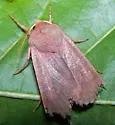
Psectraglaea carnosa - Hodges#9951
Psectraglaea carnosa
Identification: Larva - see Crumb in Print References. Species account and larval photo in Wagner, et al.. , Adult - see Grote in Print References. "An uncommon moth that is very rarely seen because of its habits. It is mainly restricted to scrub oak
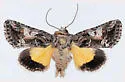
Pseudanarta crocea - Hodges#9605
Pseudanarta crocea
Identification: May be distinguished from other species of Pseudanarta by the somewhat lighter patch shaped like lower case Greek letter nu on the upper middle left forewing (and its mirror image on the right). See Smith's description
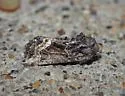
Pseudanarta flava - Hodges#9606
Pseudanarta flava
Identification: The original description as Hadena flava Grote is available online in the print references below.
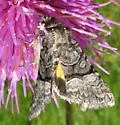
Pseudanarta flavidens - Hodges#9601
Pseudanarta flavidens
Identification: This Grote (1879) original description as Hadena (Pseudanarta) flavidens is online in the print references. "Allied to flava , but larger. Fore wings blackish fuscous with the median lines approximate, pale, narrow, even. T.p. line in
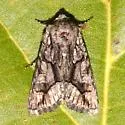
Pseudanarta singula - Hodges#9607
Pseudanarta singula
Identification: Detailed description at Pacific Northwest Moths Hampson (1906) description is available in the print references .
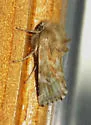
Pseudanthoecia tumida - Hodges#9617
Pseudanthoecia tumida
Identification: The original description as Lygranthmcia tumida Grote) is available in the print references listed below. Photo Identified by Chuck Harp.
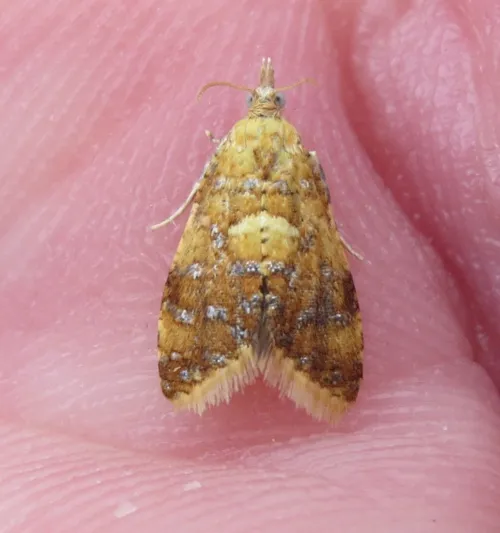
Pseudargyrotoza conwagana
Pseudargyrotoza conwagana
Wingspan 11-15 mm. With a wingspan of approximately 13 mm, it is one of the smaller Tortricidae . The conspicuous yellow blotch identifies this colourful moth when at rest. Wide range of habitats, including hedgerows and gardens. Flying during May to
Pseudexentera faracana - Hodges#3253
Pseudexentera faracana
Identification: The original description as Proteopteryx faracana Kearfott, is available online in Print References. A revised description by Miller, is available online in PDF. Determined by Jim Vargo.
Pseudexentera habrosana - Hodges#3256
Pseudexentera habrosana
Identification: Specimen determined by DNA analysis (BOLD). ( 3 )
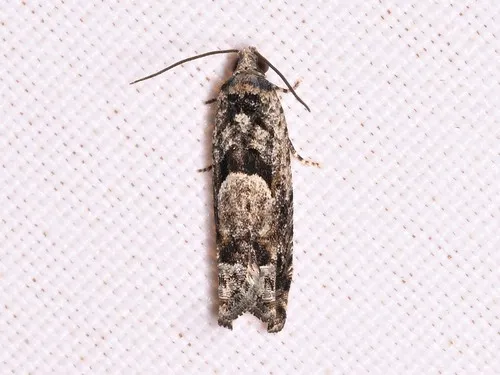
Pseudexentera hodsoni - Hodges#3257.1
Pseudexentera hodsoni
Identification: Mark Dreiling's photo # 341803 , BOLD MDOK-1109 , was formerly posted at MPG as Pseudexentera spoliana following the determination at BOLD. All specimens from north of Mexico in BOLD:AAA3121 form a branch representing hodsoni . The s
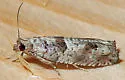
Pseudexentera kalmiana - Hodges#3255
Pseudexentera kalmiana
Identification: The original description of Pseudexentera kalmiana McDunnough, is available online in PDF. A revised description by Miller, is available online in PDF.
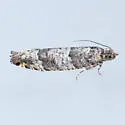
Pseudexentera maracana - Hodges#3254
Pseudexentera maracana
Identification: Kearfott original description as Proteopteryx maracana is available online in the print preferences. Miller revised description is available in PDF. Specimen identified by DNA analysis. (BOLD)
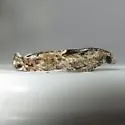
Pseudexentera nr. hodsoni - Hodges#3252.21
Pseudexentera nr-hodsoni
Identification: Pseudexentera nr. hodsoni is a cryptic species from Florida with DNA barcode placement near Pseudexentera hodsoni Miller, 1986.
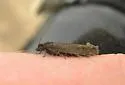
Pseudexentera oregonana - Hodges#3248
Pseudexentera oregonana
Identification: Adult- variable, uniformly dark gray to having weakly defined median and subterminal bands. ( 3 )
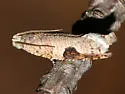
Pseudexentera virginiana - Hodges#3258
Pseudexentera virginiana
Identification: Adult - forewing light brownish-gray with dark speckling and large dark brown to black semicircular patch half-way along costa; basal area slightly darker than remainder of wing; hindwing gray with white fringe.
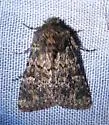
Pseudobryomima fallax - Hodges#9600
Pseudobryomima fallax
Identification: Hampson (1906) original description as Bryomima fallax is online in the print references.
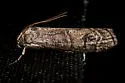
Pseudocabima arizonensis - Hodges#5994.2
Pseudocabima arizonensis
Identification: Male genitalia as for genus , female genitalia distinguished by signa (Heinrich, 1956)
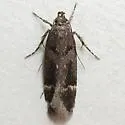
Pseudochelaria manzanitae - Hodges#1861
Pseudochelaria manzanitae
Identification: Specimen determined by DNA analysis (BOLD).
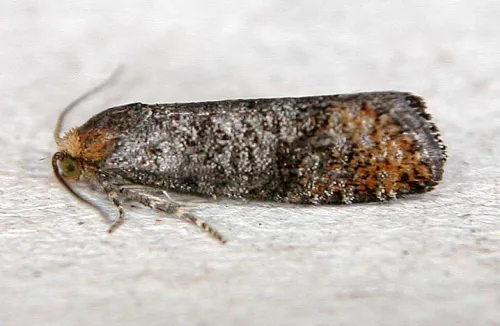
Pseudococcyx posticana
Pseudococcyx posticana
The colouration of this moth is a mix of silvery grey and chestnut brown. Pseudococcyx posticana is a pine loving species. On the wing during May and June. It becomes active towards evening, resting among the foliage by day. The larvae attack the sho
Pseudohadena vulnerea - Hodges#9577
Pseudohadena vulnerea
Identification: Grote (1883), Smith (1890), and Hampson (1909) descriptions available in the print references. Genus misspelled as Pseudohadana on the California species checklist. ( 4 )
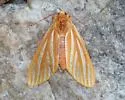
Pseudohemihyalea ambigua - Hodges#8218
Pseudohemihyalea ambigua
Pseudohemihyalea ambigua - Hodges#8218 (Pseudohemihyalea ambigua) is a species in the family Erebidae, belonging to the order Lepidoptera (Butterflies and Moths). It is classified within the subfamily Arctiinae, tribe Arctiini, superfamily Noctuoidea
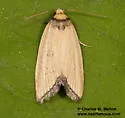
Pseudomarimatha flava - Hodges#9297.5
Pseudomarimatha flava
Identification: "Recognized by elongate, acutely-angled, yellow forewing with no trace of maculation except for gray and blackish-gray shading on forewing margin and fringe" .
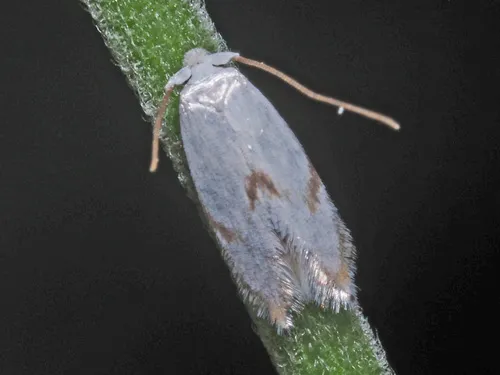
Pseudopostega crepusculella
Pseudopostega crepusculella
Photograph(s) showing all critical identification features is required, and/or a voucher specimen may be necessary – if possible, please check with the County Recorder before releasing the moth. Occupying damp areas such as fens, alder carrs and simi
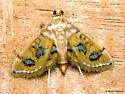
Pseudopyrausta marginalis - Hodges#4939.1
Pseudopyrausta marginalis
Identification: The original description of Pseudopyrausta marginalis Dyar, is available online in the print references below. In 2009 Alma Solis determined this specimen as the first U.S. record of Pseudopyrausta marginalis but an earlier Knudson &
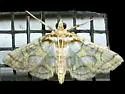
Pseudopyrausta santatalis - Hodges#4939
Pseudopyrausta santatalis
Identification: The original description as Blepharomastix santatalis Barnes & McDunnough, is available online in the print references below.
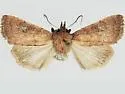
Pseudorthodes iole - Hodges#10605.1
Pseudorthodes iole
Identification: The original description by Schaus (1894) is available online in the print references below.
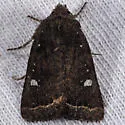
Pseudorthodes puerilis - Hodges#10583
Pseudorthodes puerilis
Identification: Original description as Mamestra puerilis . (64) *Forewing is orange brown with variable amount of white filling in the reniform spot. *Transverse lines are double *No orbicular and claviform spots visible. *Subterminal line is a pale
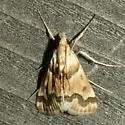
Pseudoschinia elautalis - Hodges#4828
Pseudoschinia elautalis
Identification: Grote (1871) original description as Eurycreon elautalis is online in the print references. Mann (1969) described the larva as white, with several narrow crimson transverse bands. ( 3 )
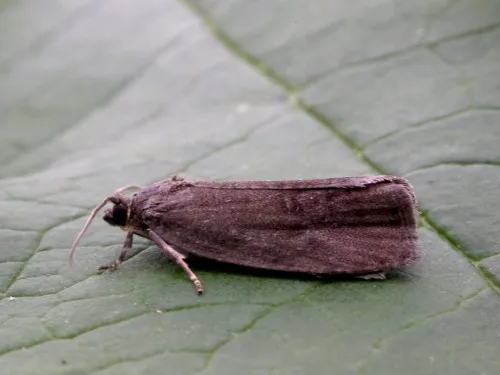
Pseudosciaphila branderiana
Pseudosciaphila branderiana
Wingspan 21 to 27 mm. One of the largest in its family, the typical form of this species is relatively plain in appearance. There is a 'banded' form, wahlhomiana however, which is quite common. The larvae feed on Aspen either rolling a leaf or spinni
Pseudosphex leovazquezae - Hodges#8276.2
Pseudosphex leovazquezae
Previous U.S. Records: TEXAS: Hidalgo Co., Santa Ana Refuge, November 13, 1971 (1 female) TEXAS: Hidalgo Co., Santa Ana Refuge, September 23, 1973 (1 male) - both specimens collected by A. & M. E. Blanchard and deposited in the USNM. Subsequent recor
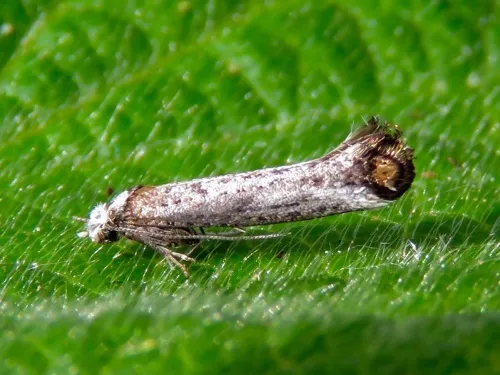
Pseudoswammerdamia combinella
Pseudoswammerdamia combinella
Wingspan 13 to 16 mm. One of the larger species in its group. The dark-bordered orange spot at the end of the forewing is diagnostic. Around Blackthorn, the larval foodplant. Flying in May and June, the adults are sometimes attracted to light. Blackt
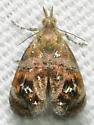
Pseudotebenna carduiella - Hodges#2649
Pseudotebenna carduiella
Identification: Often confused with Tebenna gnaphaliella , a similar species found throughout the range of P. carduiella . T. gnaphaliella is smaller (WS 7.4–10mm) than P. carduiella (WS 11.5–14mm). Genitalia:
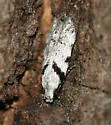
Pseudotelphusa basifasciella - Hodges#1868
Pseudotelphusa basifasciella
Identification: Adult: forewing slender, white with two black spots along costa and several smaller spots and speckling near outer margin; thick black oblique band in basal area angles backward from costa almost to inner margin; hindwing whitish basa
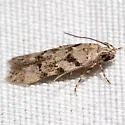
Pseudotelphusa quercinigracella - Hodges#1874
Pseudotelphusa quercinigracella
Identification: Specimen identified by DNA analysis (BOLD).
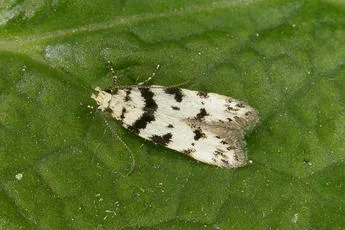
Pseudotelphusa scalella
Pseudotelphusa scalella
Wingspan 11 to 13 mm. A distinctive 'pied' appearance makes this moth one of the less difficult to identify. The moths fly in May and June and are attracted to light. The larval stages are yet to be fully described in this country although on the Con
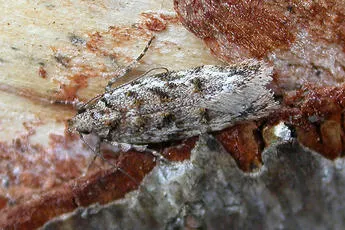
Psoricoptera gibbosella
Psoricoptera gibbosella
Wingspan 15 to17 mm. A shaggy looking moth with raised tufts and various colours of russet, brown and grey. The adult moths are on the wing from July to October, when they can be found resting on tree trunks. They are also attracted to light. The lar
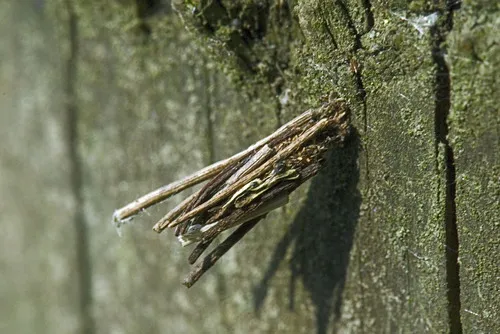
Psyche casta
Psyche casta
Wingspan 12-15 mm. The adult males are plain, dull brownish moths. The females are wingless and grub-like in appearance. Various habitats but look around tree trunks. Known as 'bagworms' or 'case-bearers', the larvae of the Psychidae construct cases
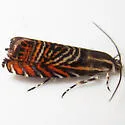
Psychedelic Jones Moth - Hodges#3751
Thaumatographa jonesi
Identification: The striking color pattern is the primary diagnostic character for this species, especially its infusion of red and orange. Related species are much duller. 1 Like other moths in subfamily Chlidanotinae, T. jonesi is a day-flyer. Biog
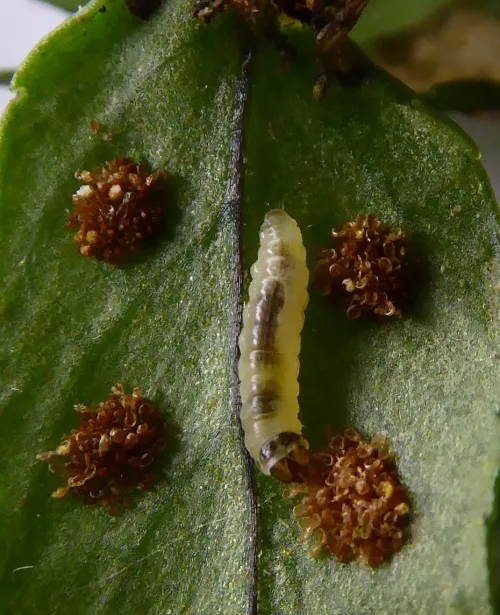
Psychoides filicivora
Psychoides filicivora
Wingspan 10 to 12 mm. The light patches on the dark wings of his moth form an approximate diamond shape when the wings are together. The larva mine the leaves of various ferns including Hart's-tongue Fern, Dryopteris spp. and Polypody, feeding on the
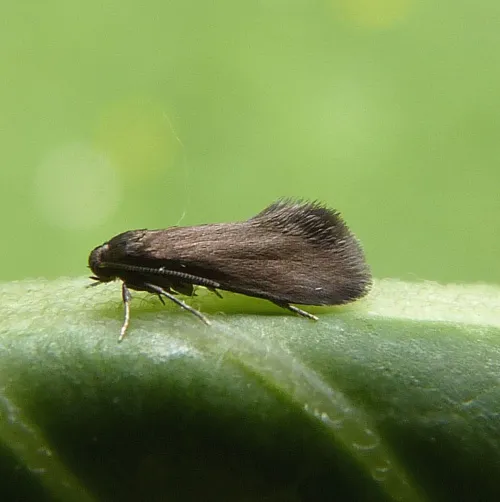
Psychoides verhuella
Psychoides verhuella
Wingspan 9 to 12 mm. The adult moth is dark blackish in colour and often has a violet reflection. It lacks the white tornal spot of P. filicivora . The larva mine the leaves of various ferns including Hart's-tongue Fern and Polypody, feeding on the u
Psychonoctua masoni - Hodges#2699.1
Psychonoctua masoni
Identification: extremely variable in size and maculations Blanchard & Knudson report 14 Texas spmns, with the earliest from 1961.
Pterospoda nigrescens - Hodges#6706
Pterospoda nigrescens
Identification: The original description as Selidosema nigrescens is available online in the print references below.
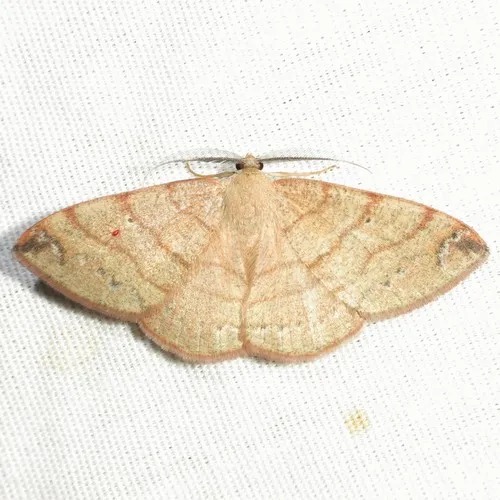
Pterospoda opuscularia - Hodges#6707
Pterospoda opuscularia
Identification: Adult - color highly variable, from tan to dark red.
Pterotaea lamiaria - Hodges#6553
Pterotaea lamiaria
Identification: The species can usually be recognized by the brownish wings with a brown shaded band along the postmedial and antemedial lines. The AM line is absent from the costa to the middle of the wing. The Rindge revised description is availabl
Ptichodis ovalis - Hodges#8753
Ptichodis ovalis
Identification: Grote (1883) and Hampson (1913) descriptions available in print references. Specimen identified by DNA analysis (BOLD). ( 4 )
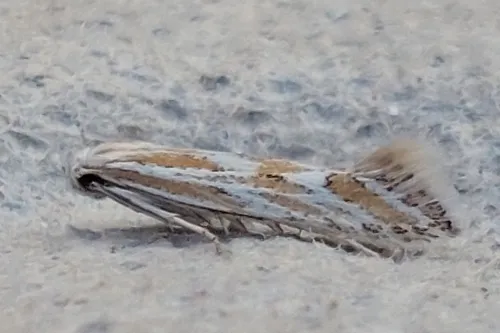
Ptocheuusa paupella
Ptocheuusa paupella
The wingspan is 10 to 12 mm. A small but rather attractive species, having a buff ground colour streaked whitish and with darker speckling. This is a very uncommon moth in VC55 and all records must be supported by a clear photograph or a specimen. It
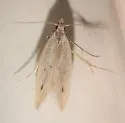
Ptycerata busckella - Hodges#2044
Ptycerata busckella
Identification: From the original description of Ptycerata , of which P. busckella is the type species: "Palpi with second joint with Yposolophus-like brush, rough above." Genitalia:
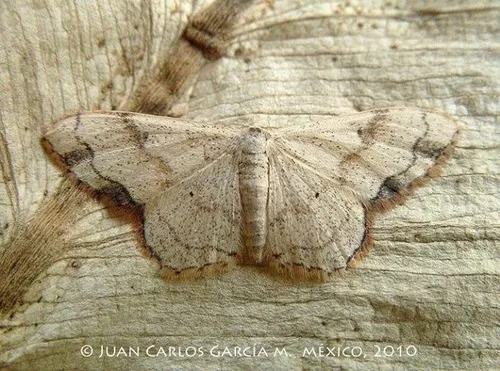
Ptychamalia dorneraria - Hodges#7131
Ptychamalia dorneraria
Identification: See original description in print references below.
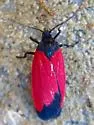
Ptychoglene phrada - Hodges#8080
Ptychoglene phrada
Identification: Adult - Forewing is red with black terminal/subterminal area. Along edge of black subterminal area, two small peaks point back basally. Also has very small amount of black in FW basal area. Hindwing is mostly black with red patch in b
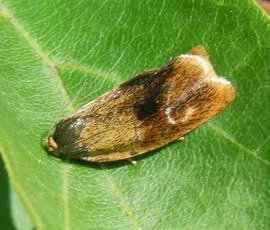
Ptycholoma lecheana
Ptycholoma lecheana
Wingspan 16-20 mm. Quite a distinctive species with a dark brownish ground colour, variously suffused with yellowish scales and patches of metallic silver. The larvae feed inside the rolled leaves of a variety of trees and shrubs. It is distributed t
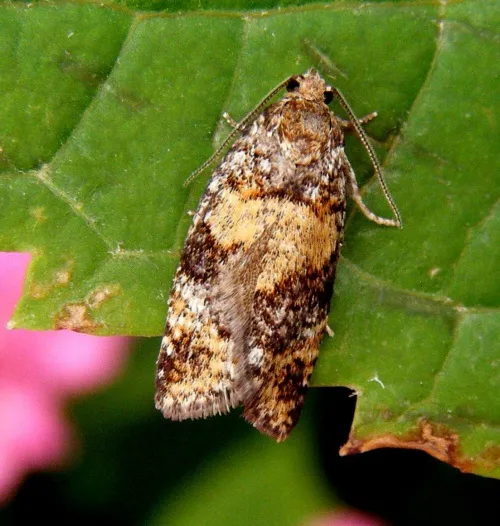
Ptycholomoides aeriferana
Ptycholomoides aeriferana
Wingspan 17 to 21 mm. This can be quite a beautiful species with rich red-browns and gold. Various habitats especially areas where the larval food plant is present. The moths fly in July and August, and are attracted to light. The food plant is Europ
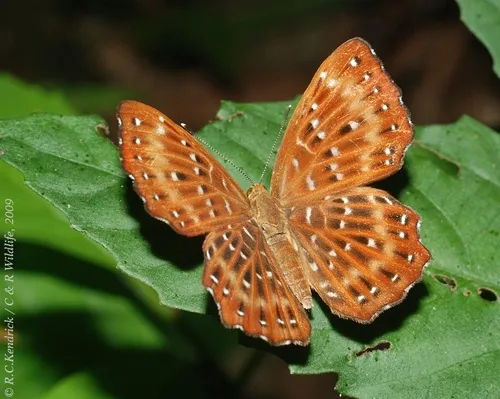
Punchinello
Zemeros flegyas
Zemeros flegyas, the Punchinello, is a small butterfly found in South Asia and Southeast Asia that belongs to the Riodinidae family.
Purius superpulverea - Hodges#8256.1
Purius superpulverea
First United States record from Yturria NWR, Hidalgo County, TX, on 8-III-99, in a light trap , by Ed Knudson.
Purple Arches - Hodges#10280
Polia purpurissata
Identification: forewing purplish-gray with brown shading, especially around narrow, strongly-curved reniform spot; lines blackish, double, variably distinct; blackish shading on inside of ST line, heaviest toward anal angle hindwing grayish-brown, d
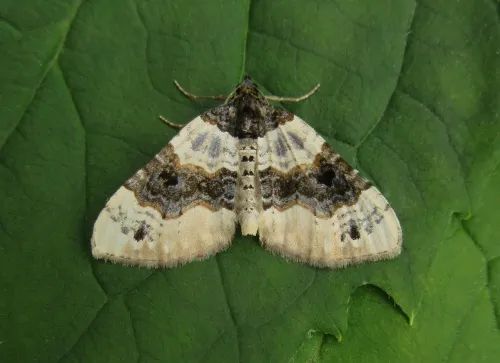
Purple Bar
Cosmorhoe ocellata
Wingspan 20 to 25 mm. This smallish member of the 'carpets' has a velvety look to the forewings. It flies from May to August, usually with two generations in the south, but a single brood further north. The larvae feed on various types of bedstraw. I
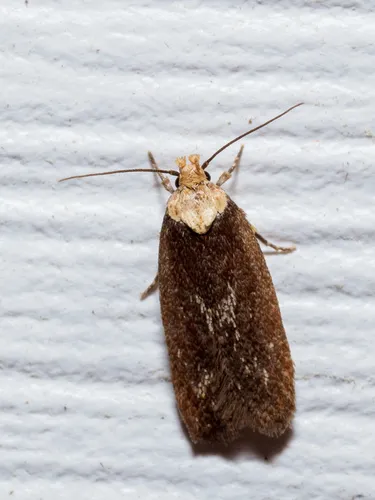
Purple Carrot-seed Moth
Depressaria depressana
Blunt’s flat-body or purple carrot-seed moth (Depressaria depressana) is a moth of the Depressariidae family. It is found in most of Europe. It is also found in the Near East, North Africa, the eastern part of the Palearctic ecozone and since 2009 in
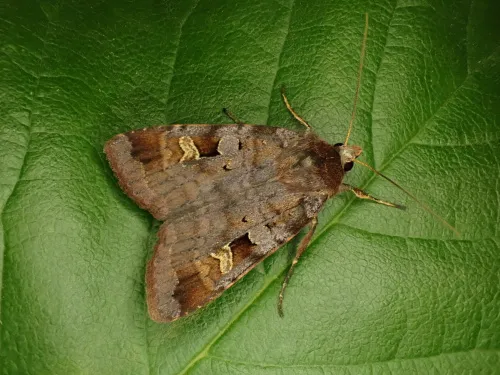
Purple Clay
Diarsia brunnea
Wingspan 35 to 38 mm. A fairly distinctive species with a broad, brownish forewing, often with a purple tinge, and a blackish patch between the two forewing stigmata. The larval foodplants are a wide range of herbaceous plants and shrubs. Quite commo
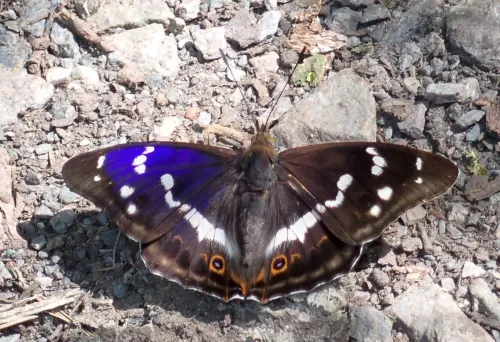
Purple Emperor
Apatura iris
Wingspan about 75 to 85 mm. The male butterfly is one of the most beautiful of all of the butterflies found in the British Isles. From certain angles it appears to have black wings intersected with white bands. However, when the wings are at a certai
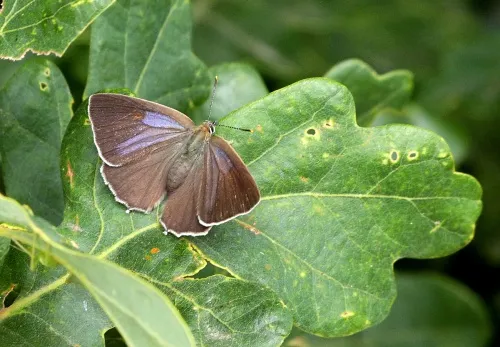
Purple Hairstreak
Favonius quercus
The Purple Hairstreak is our commonest Hairstreak but is not often noticed. Males have a purple upper wings whereas females have just a purple patch. The underwings are similar in both sexes, being lilac-brown crossed by a white 'hair-streak' and wit
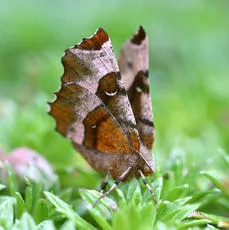
Purple Thorn
Selenia tetralunaria
Wingspan 30-38 mm. The silvery crescent on purplish brown forewing is larger than on Lunar Thorn and it has a dark central spot towards outer edge of hindwing upperside. The late summer moths are paler. Occupying woodland, heathland and other bushy a
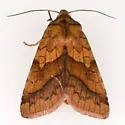
Purple-Lined Sallow - Hodges#11064
Pyrrhia exprimens
Identification: Adult: forewing has sharply bent median line, dark purple pm. line. Forewing brown/orange on basal side of median line, purple shading on terminal side of the median line. Hindwing has purple/black border. Larva: fourth instar body gr
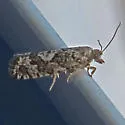
Purple-Striped Shootworm Moth - Hodges#3243
Zeiraphera unfortunana
Identification: Adult - wings have a color-contrasted checkered mosaic pattern, especially in females. Ground color of interfaciae white.
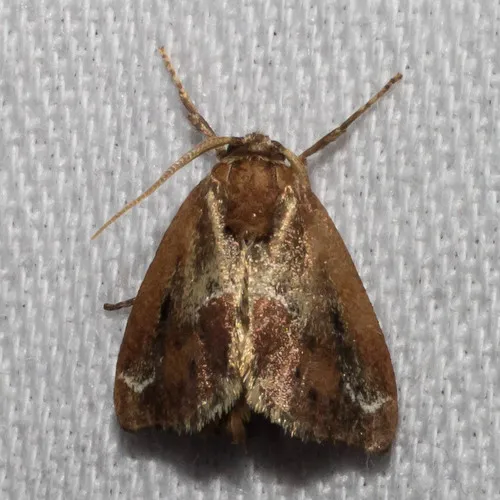
Purple-crested Slug Moth
Adoneta spinuloides
Adoneta spinuloides, the purple-crested slug moth, is a species of slug caterpillar moth in the family Limacodidae.
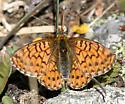
Purplish Fritillary - Hodges#4475
Boloria chariclea
Identification: Adult: upperside of wings orange with black spots, bars, and chevron-shaped markings, similar to many other Lesser Fritillaries. The hindwing underside of the two boreal forest subspecies ( grandis and rainieri ) is purplish or reddis
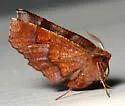
Purplish Metarranthis - Hodges#6828
Metarranthis homuraria
Identification: Forewing dark reddish or purplish, and hindwing outer margin more or less scalloped Genitalia: ♀ ♂
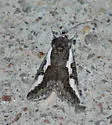
Purslane Moth - Hodges#9307
Euscirrhopterus gloveri
Identification: Caterpillars vary much in coloring and pattern, particularly in the amount of black. Commonly comes to lights in large numbers.
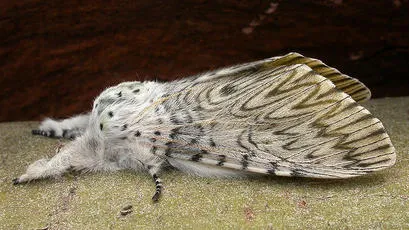
Puss Moth
Cerura vinula
Wingspan 45-70 mm. Named after the cat-like appearance of the adult moth, which is white, marked with darker greys. The adult flies from May to July and frequently comes to light. The striking caterpillar feeds on Aspen as well as Poplar and Willow.
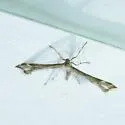
Pussytoes Plume Moth - Hodges#6106
Platyptilia tesseradactyla
Identification: See identification key for Platyptiliini . See the species accounts in Landry and Barnes & Lindsey .
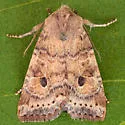
Puta Sallow - Hodges#9962
Anathix puta
Identification: FW is variably grayish brown to pale orange, typically with contrasting pale gray veins. Double AM & PM are filled with pale gray. Angled ML touches blackish spot in inner half of reniform spot. Midpoint of inconspicuous ST is accente
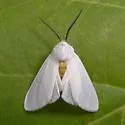
Pygarctia flavidorsalis - Hodges#8253.1
Pygarctia flavidorsalis
Identification: Adult - wings and thorax white; head, abdomen, and femora orange; tarsi black; antennae black, pectinate. I have found the head, abdomen and femora to be yellow. A. Hendrickson
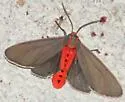
Pygarctia neomexicana - Hodges#8251
Pygarctia neomexicana
Identification: Det. Bob Patterson and Ed Knudson (Texas Lepidoptera Survey)
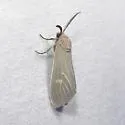
Pygarctia pterygostigma - Hodges#8250.1
Pygarctia pterygostigma
Identification: The gray head has narrow pink band in the nape. Forewing gray with a yellowish-white mark. Abdomen dorsal is crimson with a row of spots. Legs are gray; foreleg coxae has pink inner side. [adapted from the Dyar (1909) description]
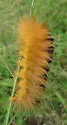
Pygarctia roseicapitis - Hodges#8253
Pygarctia roseicapitis
Avoid attack of Pentatomidae and Vespidae predators and Diptera parasitoids by dropping from the plants to the ground.
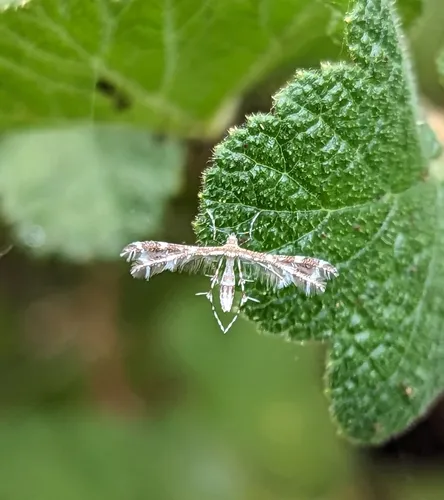
Pygmy Plume Moth - Hodges# 6101
Trichoptilus pygmaeus
Identification: See the identification key for Oxyptilini . See the species account in Barnes & Lindsey . See the differential diagnosis with Trichoptilus potentellus in Lange . Trichoptilus pygmaeus adults have: a forewing second lobe that is narrow
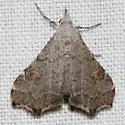
Pygmy Redectis - Hodges#8400
Redectis pygmaea
Identification: Adult: forewing grayish-brown with slightly lobed outer margin; AM line scalloped, and PM line toothed, but both lines may be faint or indistinct; darker shading just inside PM line at costa may partly obscure reniform spot, which con
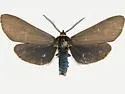
Pygoctenucha pyrrhoura - Hodges#8245
Pygoctenucha pyrrhoura
Identification: Adults description adapted from Hulst (1881). Forewing is smoky brown with slight metallic tinge, and lighter fringe. Thorax and abdomen are shiny metallic blue-black. Tip of abdomen is bright red. Forelegs have bright red along the
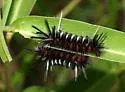
Pygoctenucha terminalis - Hodges#8244
Pygoctenucha terminalis
P. terminalis is likely congeneric with Euchaetes ( 4 ) and both genera need revision. ( 5 )
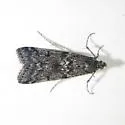
Pyla aequivoca - Hodges#5824
Pyla aequivoca
Identification: Original description online: (143) - Determined Chuck Harp.
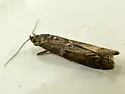
Pyla fusca - Hodges#5829
Pyla fusca
Identification: head and eyes very dark or black forewings long and slender, black with scattered pale speckling; two zigzag bands (sometimes indistinct) cross each wing, the inner edge of the basal band forms a whitish patch in the midline when the
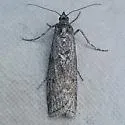
Pyla impostor - Hodges#5823
Pyla impostor
Identification: The original description is available in PDF or view online in the print references below.
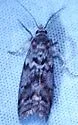
Pyla insinuatrix - Hodges#5826
Pyla insinuatrix
Identification: The most clearly marked species of all the gray Pyla with strong contrast between the pale and dark areas of the forewings.
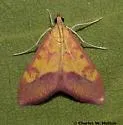
Pyrausta arizonicalis - Hodges#5066
Pyrausta arizonicalis
Identification: Specimen identified by DNA analysis (BOLD). ( 4 )
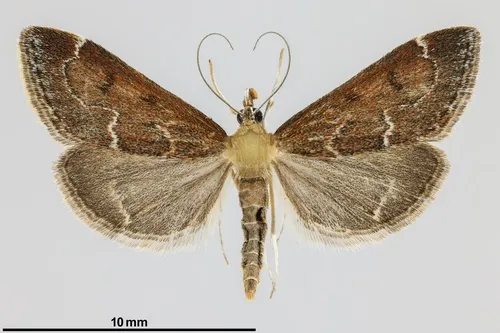
Pyrausta atropurpuralis - Hodges#5031
Pyrausta atropurpuralis
Identification: Forewings of an obscure reddish brown with a purple cast. At first sight appearing immaculate, but the exterior line can be made out by its being followed by scattered yellowish scales; it is similarly shaped to that of vinulenta (= s
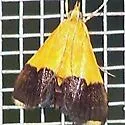
Pyrausta augustalis - Hodges#5041
Pyrausta augustalis
Identification: Adult: forewing orange in basal two-thirds, and dark reddish in distal third; dividing line between these colors is almost straight; no AM line. page creation based on Bob Patterson's identification of this image
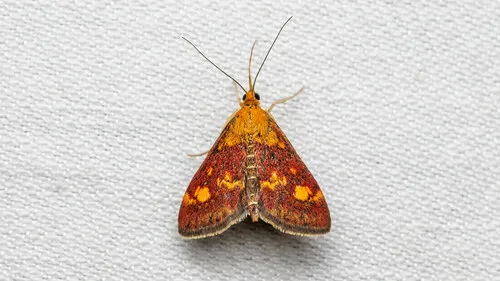
Pyrausta aurata
Pyrausta aurata
Wingspan 15-18 mm. The only consistent postmedian mark is a round golden blotch near the costa but there is usually a small golden mark between it and the costa. In fresh specimens there is sometimes a thin indistinct wavy golden postmedian line betw
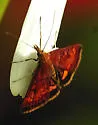
Pyrausta californicalis - Hodges#5052
Pyrausta californicalis
Identification: See print references below. Type locality: USA, California
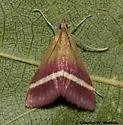
Pyrausta corinthalis - Hodges#5028
Pyrausta corinthalis
Identification: The Barnes & McDunnough original description is available online in the print references. Basal half of forewing olive brown, outer half rose-pink with an oblique white subterminal band parallel to outer margin.
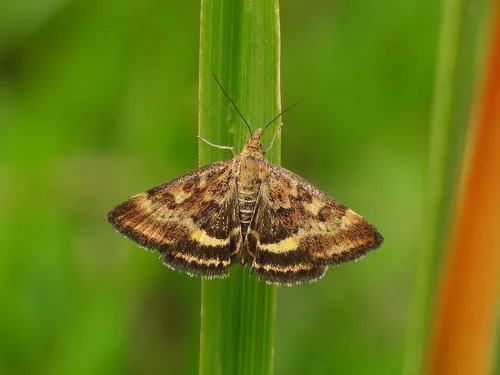
Pyrausta despicata
Pyrausta despicata
Wingspan 14 to19 mm. The plainest-looking of our native Pyrausta species. This moth occupies suitably chalky and limestone habitats. It is double-brooded, with flight periods in May and June, and later in July and August. The larvae feed on Ribwort P
Pyrausta flavibrunnea - Hodges#5046
Pyrausta flavibrunnea
Identification: Hampson (1913) original description is available online in the print references .
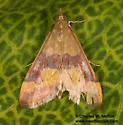
Pyrausta flavofascialis - Hodges#5048
Pyrausta flavofascialis
Identification: Grote (1882) original description as Botis flavofascialis is available online in the print references.
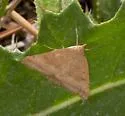
Pyrausta fodinalis - Hodges#5074
Pyrausta fodinalis
Pyrausta fodinalis - Hodges#5074 (Pyrausta fodinalis) is a species in the family Crambidae, commonly known as crambid snout moths, belonging to the order Lepidoptera (Butterflies and Moths). It is classified within the subfamily Pyraustinae, tribe Py
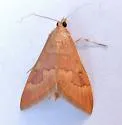
Pyrausta klotsi - Hodges#5047
Pyrausta klotsi
Identification: "Somewhat like Pyrausta signatalis in general maculation, but larger, apex of forewing more acute and termen more oblique; forewing brown, sometimes with a pinkish tinge, but never bright pink. Hindwing brownish, not contrastingly dar
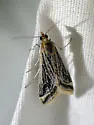
Pyrausta linealis - Hodges#5024
Pyrausta linealis
Identification: Head, thorax, and palpi on the outside, light chestnut brown. Palpi, white beneath, and a white line over each eye, which extends forward and around the frontal projection. Forewings, dark brown, chestnut brown on the basal part of th
Pyrausta morenalis - Hodges#5030
Pyrausta morenalis
Identification: Forewing rather narrow, dark reddish brown, slightly bronzy; lines very faint, pale, the inner obliterate, angled in the cell, oblique below; discal marks darker, very obscure, the reniform lunate; outer line slightly excurved on the
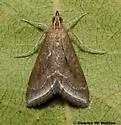
Pyrausta napaealis - Hodges#5023
Pyrausta napaealis
Identification: Specimen identified by DNA analysis (BOLD).
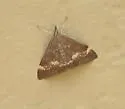
Pyrausta nicalis - Hodges#5032
Pyrausta nicalis
Identification: Adult: forewing grayish-brown tinged with red or purple; PM line whitish, wavy, thin in middle and thick at both ends; AM line and two dark discal spots usually inconspicuous or indistinct; hindwing brownish-gray with white partial PM
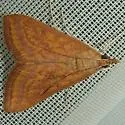
Pyrausta obtusanalis - Hodges#5072
Pyrausta obtusanalis
Identification: Primaries dark chrome-yellow, shaded with brown, with a brown line crossing the middle of the wing from the costal to the inner margin, and a rather wide pinkish-brown submarginal line extending from the apex to the anal angle, the fr
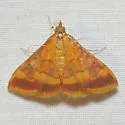
Pyrausta onythesalis - Hodges#5042
Pyrausta onythesalis
page creation based on John Fisher's identification of this image from Oklahoma; John emailed the ID to Robin and Mark