
Comstock's Sallow - Hodges#10008
Feralia comstocki
This record describes Feralia comstocki (species). Recorded family: Noctuidae. Recorded order: Lepidoptera.
Identification and Appearance
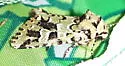
Adult: described by Covell as having bright green FW, sometimes fading to yellowish; lines scalloped, broken, black, edged with white; note three squarish black blotches around reniform spot. HW cream; gray discal spot, partial median line, and broken shade in ST area; some green along black terminal line. Larva: head pale green, unmarked or marked with dark brown at sides of frons; body bright or dark green with white middorsal and subdorsal stripes; prominent bicolored spiracular stripe (white and yellow on bottom, red on top); in eastern larvae, subdorsal and spiracular stripes interrupted or constricted where segments meet; subspiracular row of white or yellowish spots above abdominal prolegs An early spring moth of the north woods. Himmelman calls this species black and tennis-ball green.
Classification
- Kingdom
- Animalia
- Phylum
- Arthropoda
- Class
- Insecta
- Order
- Lepidoptera (Butterflies and Moths)
- Superfamily
- Noctuoidea
- Family
- Noctuidae (Owlet Moths)
- Subfamily
- Amphipyrinae
- Tribe
- Psaphidini
- Genus
- Feralia
Imported taxonomy record. Source availability varies; see the source references and editorial policy below.
Habitat and Range
Habitat
coniferous and mixed forests
Geographic Range
southern Canada and northern United States: Newfoundland to North Carolina, west to Oregon, north to British Columbia
Seasonal Activity
adults fly from April or May to June larvae present June to August or September, at which time pupation occurs
Diet and Behavior
Diet: in the east, larvae feed on foliage of Balsam Fir, Eastern Hemlock, spruce ( Picea spp.), and possibly other conifers in the west, principal host is Douglas-fir; other hosts include Western Hemlock, Subalpine Fir, Engelmann Spruce, White Spruce
Life History
one generation per year; overwinters as a pupa in soil or debris
Additional species information
Species notes from the sources
Etymology: Named for John Henry Comstock, (born 1849), entomologist and one of the founders of the Nature Study Movement of the early 20th century. His wife, Anna Botsford Comstock, was an equally prominent member of that movement, and perhaps more famous today than John.
About Butterflies and Moths: the wider group
Order-level background for Lepidoptera, the group containing Feralia comstocki. Species-specific details appear above.
Group overview
Lepidoptera includes approximately 180,000 described species of butterflies and moths. Moths outnumber butterflies roughly 10:1. The monarch butterfly's eastern population has declined by more than 80% since the mid-1990s, and the western population by over 95% since the 1980s. The IUCN lists the migratory monarch as Vulnerable.
Ecological role of the group
Butterflies and moths are essential indicators of ecosystem health. As caterpillars, they are a primary food source for birds - a single nest of blue tit chicks requires ~10,000 caterpillars. Adult moths pollinate many night-blooming plants.
Economic and practical significance of the group
Lepidoptera are critical pollinators. In Europe, grassland butterfly species have declined by almost 50% since the early 1990s. In the UK, three-quarters of butterflies are in decline. In the U.S., five butterfly species have gone extinct since 1950, with 29 listed as endangered.
Recorded sources for this group: IUCN Red List, Xerces Society, USFWS, PNAS, WWF. Imported estimates may describe particular regions or reporting periods.
Photos of Comstock's Sallow - Hodges#10008 (5)
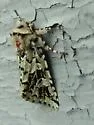
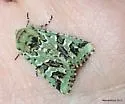
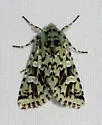
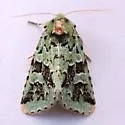
Photo credits: Contributed by Cotinis; Additional contributions by Robin McLeod , Tony-2 , Robert Lord Zimlich , Fyn Kynd
Frequently Asked Questions About Comstock's Sallow - Hodges#10008
What is Comstock's Sallow - Hodges#10008?
Comstock's Sallow - Hodges#10008 (Feralia comstocki) is a species in the family Noctuidae, within the order Lepidoptera.
How big is Comstock's Sallow - Hodges#10008?
wingspan 33-39 mm larva length to 35 mm
How do you identify Comstock's Sallow - Hodges#10008?
Adult: described by Covell as having bright green FW, sometimes fading to yellowish; lines scalloped, broken, black, edged with white; note three squarish black blotches around reniform spot. HW cream; gray discal spot, partial median line, and broken shade in ST area; some green along black terminal line. Larva: head pale green, unmarked or marked with dark brown at sides of frons; body bright or dark green with white middorsal and subdorsal stripes; prominent bicolored spiracular stripe (white and yellow on bottom, red on top); in eastern larvae, subdorsal and spiracular stripes interrupted or constricted where segments meet; subspiracular row of white or yellowish spots above abdominal prolegs
Where is Comstock's Sallow - Hodges#10008 found?
| Feature | Details |
|---|---|
| Habitat | coniferous and mixed forests |
| Range | southern Canada and northern United States: Newfoundland to North Carolina, west to Oregon, north to British Columbia |
What does Comstock's Sallow - Hodges#10008 eat?
The diet of the Comstock's Sallow - Hodges#10008 includes in the east, larvae feed on foliage of Balsam Fir, Eastern Hemlock, spruce ( Picea spp.), and possibly other conifers in the west, principal host is Douglas-fir; other hosts include Western Hemlock, Subalpine Fir, Engelmann Spruce, White Spruce.
When is Comstock's Sallow - Hodges#10008 active?
Comstock's Sallow - Hodges#10008: seasonal activity - adults fly from April or May to June larvae present June to August or September, at which time pupation occurs.
What is the life cycle of a Comstock's Sallow - Hodges#10008?
one generation per year; overwinters as a pupa in soil or debris