
True Bugs, Cicadas, Hoppers, Aphids and Allies
Order Hemiptera
The True Bugs, Cicadas, Hoppers, Aphids and Allies (Order Hemiptera) includes 7,349 species across 120 families and 1,727 genera in our directory.
About True Bugs, Cicadas, Hoppers, Aphids and Allies
Hemiptera (true bugs) includes over 80,000 described species across cicadas, aphids, leafhoppers, shield bugs, and bed bugs. Aphids alone cost global agriculture an estimated $2.5 billion annually in crop losses.
Economic Impact
The brown marmorated stink bug (Halyomorpha halys) caused $37 million in apple crop losses in a single year in the U.S. Mid-Atlantic region. Bed bug infestations in the U.S. increased by 500% between 2001-2010, costing the hotel industry hundreds of millions annually.
Ecological Role
Many Hemiptera are essential food sources for birds and predatory insects. Cicadas provide massive nutrient pulses during emergence events - a single Brood X emergence can involve trillions of individuals across 15 states.
Families in Hemiptera (120)
Species in Hemiptera (7,349)
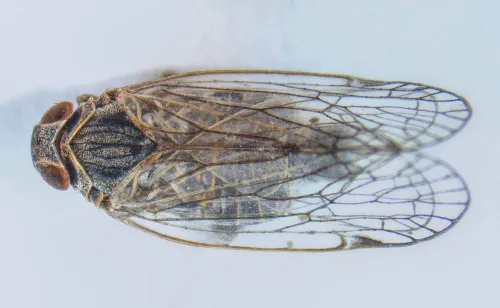
Reptalus quinquecostatus
Reptalus quinquecostatus
This genus is readily separated from other Cixiids by the five keels on the scutellum (three in Cixius/Tachycixius). The vertex is much broader than it is long. Genital examination is required to distinguish between this and other species in the genu
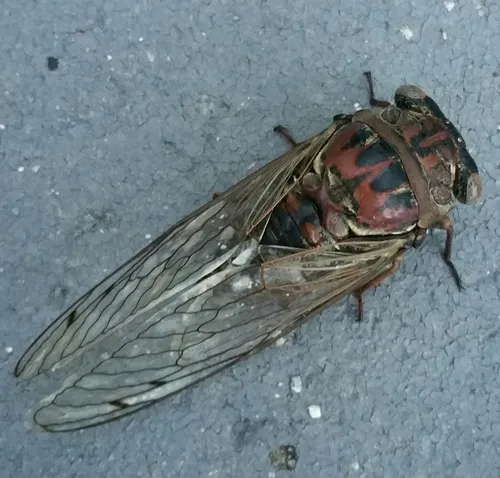
Resonant Cicada
Megatibicen resonans
Replaced by Neotibicen resh in western Gulf States (Louisiana & Texas) Replaced by T. auletes in the north and in hardwood dominated habitats across the southeast incl. the Piedmont & Cumberland Plateaus (known only from localities east of the Miss.
Reuteria bifurcata
Reuteria bifurcata
Identification: no large green dorsal blotches, membrane veins pale
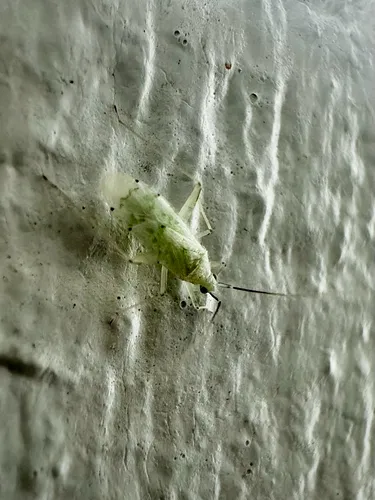
Reuteria fuscicornis
Reuteria fuscicornis
Identification: A2 with a broad fuscous to black area occupying basal half to three-fourths of segment
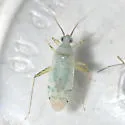
Reuteria querci
Reuteria querci
Identification: Broad fuscous area at the base of A2 Type Locality: Minn.
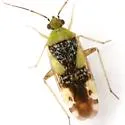
Reuteroscopus basicornis
Reuteroscopus basicornis
Identification: "Distinguished from other species by the black first antennal segment, segment II dusky, black only on base and apex."
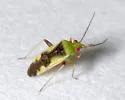
Reuteroscopus femoralis
Reuteroscopus femoralis
Identification: Hind femora with at least a patch of reddish coloration near the apex, sometimes more extensively reddened. also most individuals have prominent red eyes (MAQ, pers. obs.) Det. Jason Botz, 2021 mostly recorded at UV lights
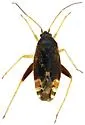
Reuteroscopus nicholi
Reuteroscopus nicholi
Identification: "Uniformly dark brown to black in colour with a reddish tinge to the cuneus. The abdomen and hind femora are also dark brown." Pale A2 Type Locality: AZ
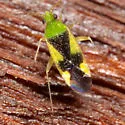
Reuteroscopus ornatus
Reuteroscopus ornatus
Identification: See also Fig. 90, pg 258 of Henry & Froeschner Type Locality: Texas ( Belfarge )
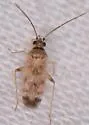
Reuteroscopus tinctipennis
Reuteroscopus tinctipennis
Identification: "Distinguished by the long rostrum, testaceous color with black calli, roseate red on cuneus and more or less on basal half of corium."
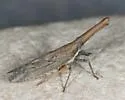
Rhabdocephala brunnea
Rhabdocephala brunnea
Rhabdocephala is one of the insects that forms a link between the traditional Fulgoridae (large insects with reticulate hind wings) and "Dictyopharidae". The nymph is obviously similar to those of Dictyopharinae such as Rhynchomitra and Scolops, but
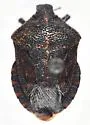
Rhacognathus americanus
Rhacognathus americanus
Species is likely extirpated from much of its former range, and possibly extinct. S. Paiero searched extensively for records of this species but was unable to confirm any records more recent than 1966.
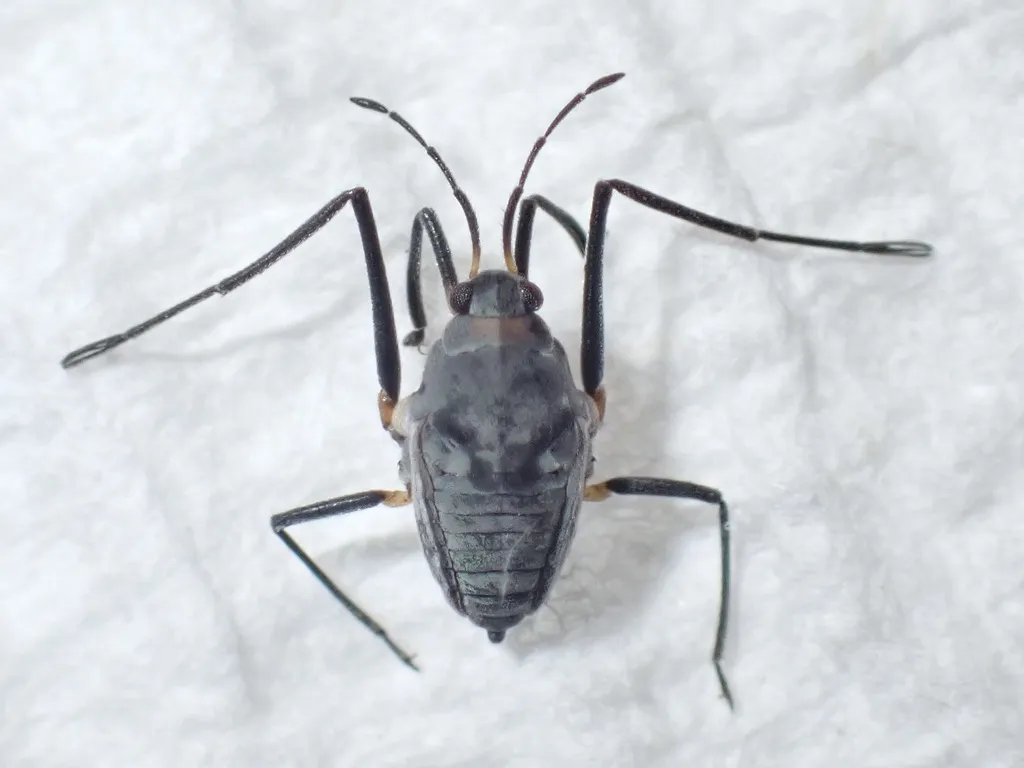
Rhagovelia plumbea
Rhagovelia plumbea
Identification: Hind tarsi 2-segmented (basal segment very small); eyes with long setae; marine coastal/estuarine species
Rheumatobates palosi
Rheumatobates palosi
Rheumatobates palosi (Rheumatobates palosi) is a species in the family Gerridae, commonly known as water striders, belonging to the order Hemiptera (True Bugs, Cicadas, Hoppers, Aphids and Allies). It is classified within the subfamily Trepobatinae,
Rheumatobates rileyi
Rheumatobates rileyi
Rheumatobates rileyi (Rheumatobates rileyi) is a species in the family Gerridae, commonly known as water striders, belonging to the order Hemiptera (True Bugs, Cicadas, Hoppers, Aphids and Allies). It is classified within the subfamily Trepobatinae,
Rhiginia cinctiventris
Rhiginia cinctiventris
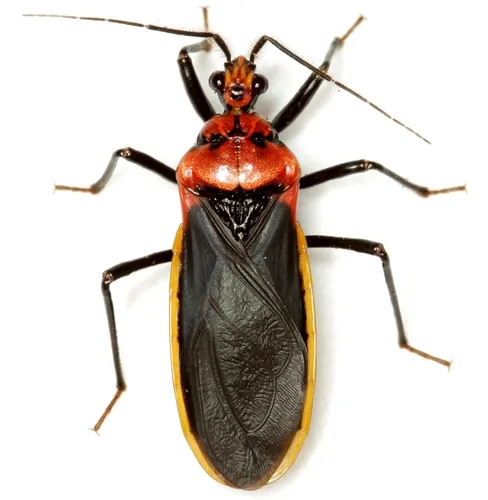
Identification: The concolorous black legs, the lack of a black trapezoidal pronotal spot and the large size will separate this species from R. cruciata . There seems to be geographic variation in the color pattern and size of this species. Western
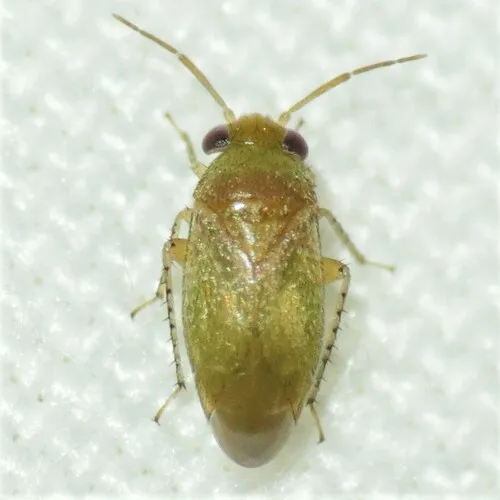
Rhinacloa callicrates
Rhinacloa callicrates
Identification: head and body pale brownish yellow; hemelytra straw yellow, mostly translucent, embolium and cuneus opaque; membrane uniformly pale fuscous, veins yellowish. Legs pale yellow, hind femora with scattered black spots on ventral surface;
Rhinacloa manleyi
Rhinacloa manleyi
Identification: Recognized by the orangish coloration, the long, slender black second antennal segment, the dorsum devoid of scalelike setae, and the structure of the male genitalia. Dorsum without flattened sericeous setae, highly polished and shini
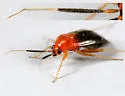
Rhinocapsus rubricans
Rhinocapsus rubricans
Identification: Clypeus partly red, jugum and lorum red; A2 uniformly reddish brown or black; femora without spots.
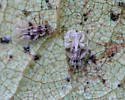
Rhododendron Lace Bug
Stephanitis rhododendri
often a pest on cultivated plants growing in open sunny places ; common along the East Coast
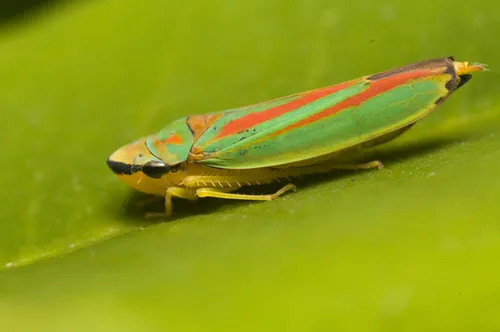
Rhododendron Leafhopper
Graphocephala fennahi
A large (8-10mm) and very distinctive leafhopper associated with Rhododendron. The forewings are green with red streaks and dark apical margins, the head and undersides are mainly yellow and there is a black band between the eyes around the edge of t
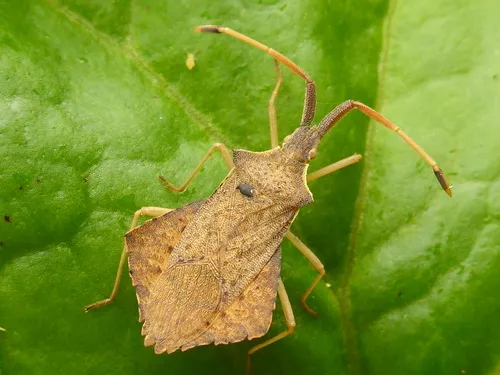
Rhombic Leatherbug
Syromastus rhombeus
Length 9.5-10.5mm. A distinctive squashbug with a broad and distinctly diamond-shaped abdomen. Other Coreidae, especially Dock Bug, Coreus marginatus . Records should be accompanied by good photographs. https://www.britishbugs.org.uk/heteroptera/Core
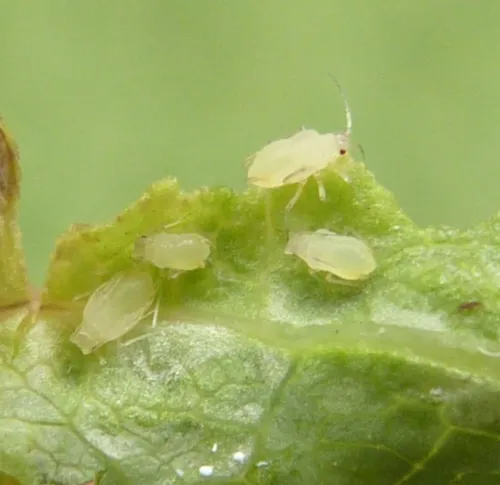
Rhopalomyzus lonicerae
Rhopalomyzus lonicerae
This is a small, pale creamy aphid, the body length of the adult aptera of Rhopalomyzus lonicerae is 2.0 to 2.6 mm. (see 'Further info' link). Please provide good photographs showing the aphids, plus host plant and galls if present. The primary host
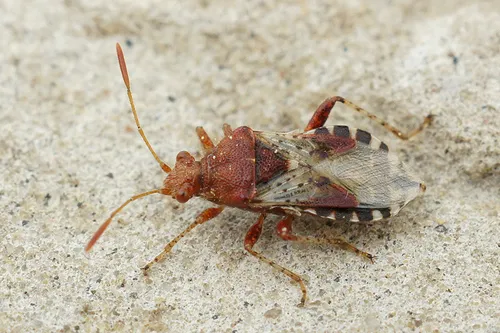
Rhopalus subrufus
Rhopalus subrufus
Length 7 to 7.5 mm. This genus comprises four species in the UK; all are rather hairy bugs with largely membranous forewings, which are usually reddish in colour. R. subrufus can be distinguished by the alternate dark and light bands on the connexivu
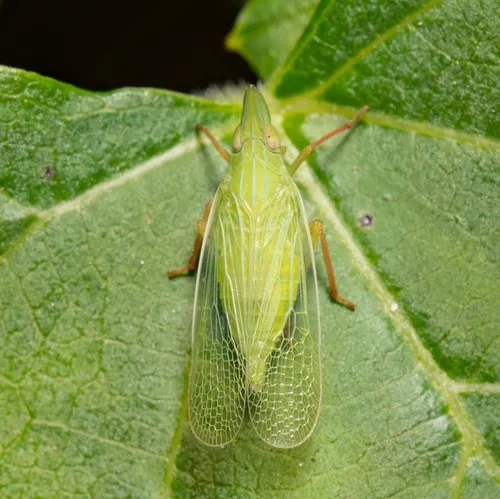
Rhynchomitra recurva
Rhynchomitra recurva
Identification: Head broader, less tapered than in R. microrhina
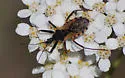
Rhynocoris ventralis
Rhynocoris ventralis
Identification: For separation from Apiomerus , see the genus page . R. ventralis is easily separated from R. leucospilus by range (latter a Palearctic species known in NA only from Sitka, Alaska) and by the red or testaceous coloration of the hemely
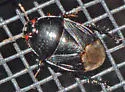
Rhytidoporus indentatus
Rhytidoporus indentatus
Identification: Good illustrations of head and pleura in Froeschner our only representative of the nominate subgenus that contains 3 more spp.
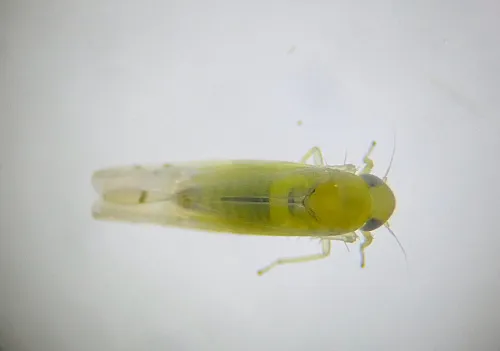
Ribautiana cruciata
Ribautiana cruciata
A small leafhopper associated with Elm. Pale yellowish-green foreparts, greyish tint and dark spots on veins in the apical part of the forewing. There are no dark spots at the tip of the vertex ('nose'). Dissection of males to examine internal genita
Ribautiana sciotoensis
Ribautiana sciotoensis
Identification: "Resembling T. luculla Medler externally and near T. piscator McA. in type of inner male genitalia which are very complex. Chalky white with yellowish tinge on head and pronotum, a darkened scutellum, darker in median basal area, and
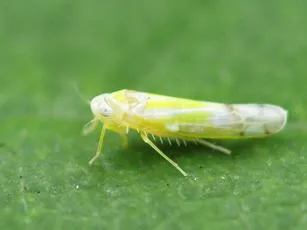
Ribautiana tenerrima sensu lato
Ribautiana tenerrima sensu lato
Length 3 to 3.5 mm. A yellow leafhopper with oblique white lines along the length of the forewing. The forewing apex has greyish marking and spots. Markings can be quite faint; to confirm identification, dssection of male genitalia may be needed. Oth
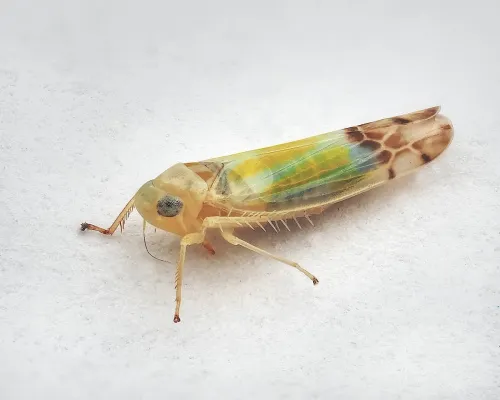
Ribautiana tenerrima sensu stricto
Ribautiana tenerrima sensu stricto
Length 3 to 3.5 mm. A yellow leafhopper with oblique white lines along the length of the forewing. The forewing apex has greyish marking and spots. Markings can be quite faint; to confirm identification, dissection of male genitalia is needed. If thi
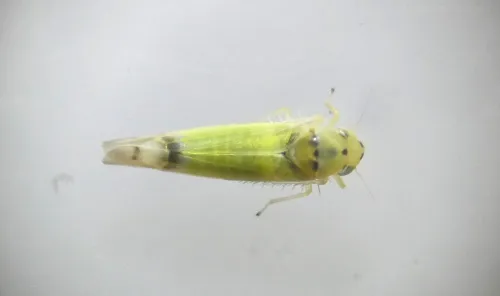
Ribautiana ulmi
Ribautiana ulmi
Length 3.5 to 4 mm. A yellow leafhopper associated with elm; with grey markings/spots at forewing apex. Two black spots on the vertex, and one on the midline at the front of the pronotum. Ribautiana debilis can have similar markings on vertex and pro
Rice Stink Bug
Oebalus pugnax
Identification: Prominent spines, projecting forward, are distinctive in adult. Early instars are mostly pinkish with transverse black spots on abdomen; later instars have pale body with pink and black spots.
Riley's 13-year Cicada
Magicicada tredecim
Identification: A large 13-year periodical cicada, morphologically similar to the 17-year species M. septendecim. Identification notes (magicicada.org): Link to video/audio showing the distinctive eery sound of this species in chorus:
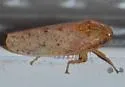
Ringspot Leafhopper
Prairiana insularis
Identification: "Crown more than twice as wide between eyes at base as median length, depressed just behind anterior margin. Generally pale brown with dark spots." - DeLong & Freytag, 1976 Males are more heavily marked with brown to black spots than
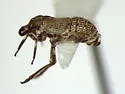
Robertson's Flightless Planthopper
Fitchiella robertsonii
considered for conservation in several Midwestern states ( IL , WI , Bess 2005 ) What once was lost, now is found: ecology of an elusive ball-nosed planthopper, Fitchiella robertsonii (Hemiptera: Caliscelidae), from tallgrass prairie - Marlin Rice an
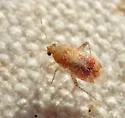
Roburocoris exiguus
Roburocoris exiguus
Identification: Smaller than the other two species in the genus. Apical area of corium suffused with red, in addition to the reddish or brownish spots.
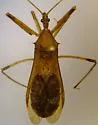
Rocconota annulicornis
Rocconota annulicornis
Identification: Stout, elongate-oval, reddish to yellowish, covered with fine yellowish hairs; four prominent spines on pronotum; antennomere 1 has two broad brown bands, with only a short acute spine behind each antennal base. Profemora incrassate.
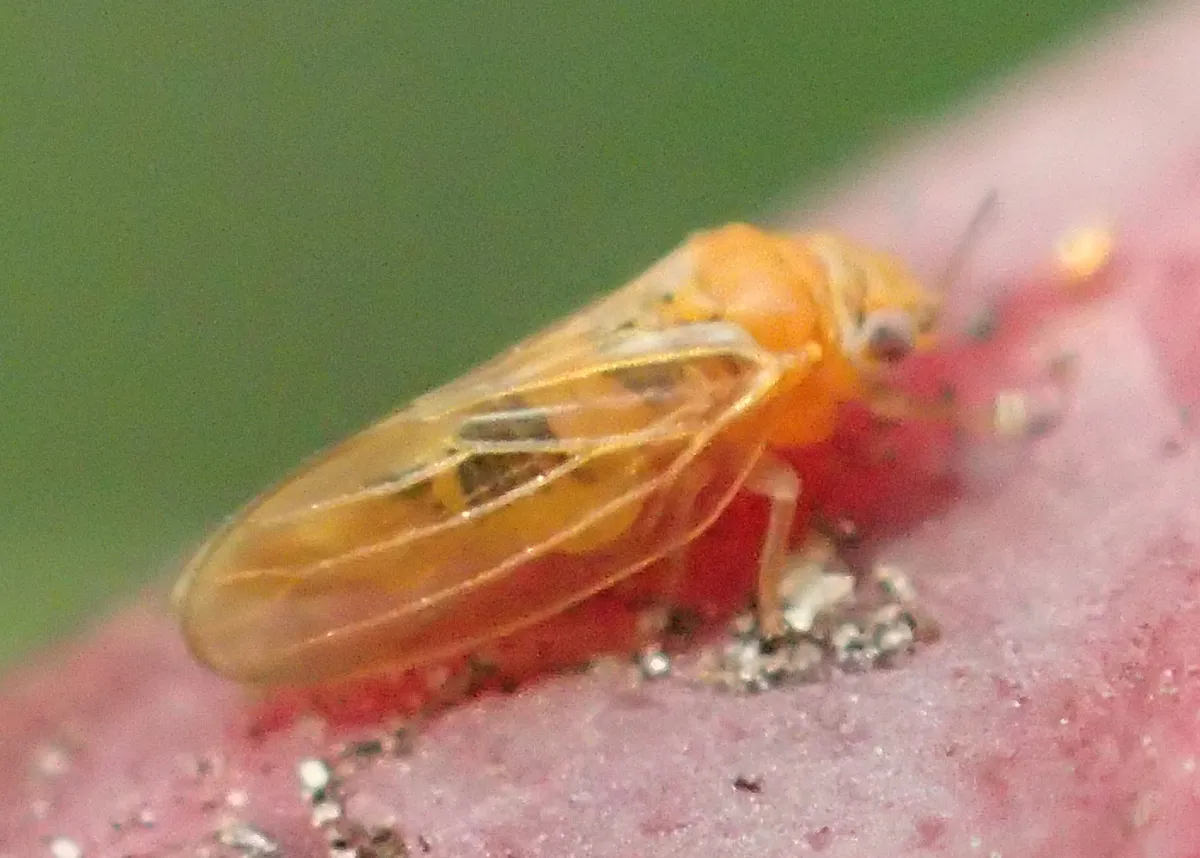
Rose Gum Psyllid
Ctenarytaina spatulata
Identification: Veins Rs, M, and Cu1a straight, more or less parallel to each other; head and pronotum yellowish. First recorded from California in 1991. While common, it is not considered to be as injurious to its hosts as other Eucalyptus psyllids
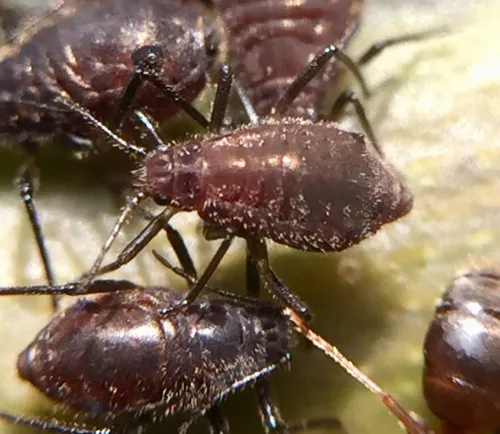
Rose Stem Aphid
Maculolachnus submacula
2.7-3.8mm. A brown aphid, covered in short hairs and with very short siphuncules. Alates have a dark spot on the wing. It usually feeds on the lower stems or roots of roses, including garden varieties, but can occasionally be found on other species i
Rossmoneura carbonata
Rossmoneura carbonata
Identification: "darker than the similar R. tecta " - Andy Hamilton
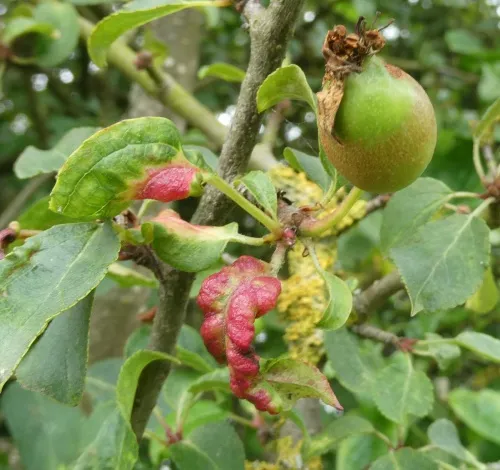
Rosy Leaf-curling Aphid agg.
Dysaphis devecta agg.
The Dysaphis devecta species group includes three species of aphid: D. devecta , D. anthrisci and D. chaerophylli . All members of the D. devecta group roll the edges of apple leaves and turn them red to produce a characteristic gall. Please provide
Royal Palm Bug 0
Xylastodoris luteolus
Royal Palm Bug 0 (Xylastodoris luteolus) is a species in the family Thaumastocoridae, belonging to the order Hemiptera (True Bugs, Cicadas, Hoppers, Aphids and Allies). It is classified within the suborder Heteroptera, superfamily Miroidea. This spec
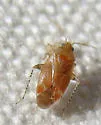
Rubeospineus bicorniger
Rubeospineus bicorniger
Identification: "Distinguished from R. truncatus and R. yosemite [by characters of the vesica and] also by the more contrasting reddish-orange and whitish color pattern, with the posterior pronotal lobe [and scutellum] usually largely whitish."
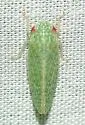
Rugosana manua
Rugosana manua
Identification: "A broad-headed species, resembling ampliata in form and appearance but smaller and with distinct genitalia. Vertex broadly rounded, more than twice as wide between eyes at base as median length. Pale green mottled with white and oran
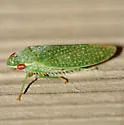
Rugosana querci
Rugosana querci
Identification: "Resembling rugosa in form and general appearance but with distinct genitalia. Vertex produced and rather broadly rounded, almost twice as wide between eyes as median length. Pale yellow with traces of longitudinal orange bands on ver
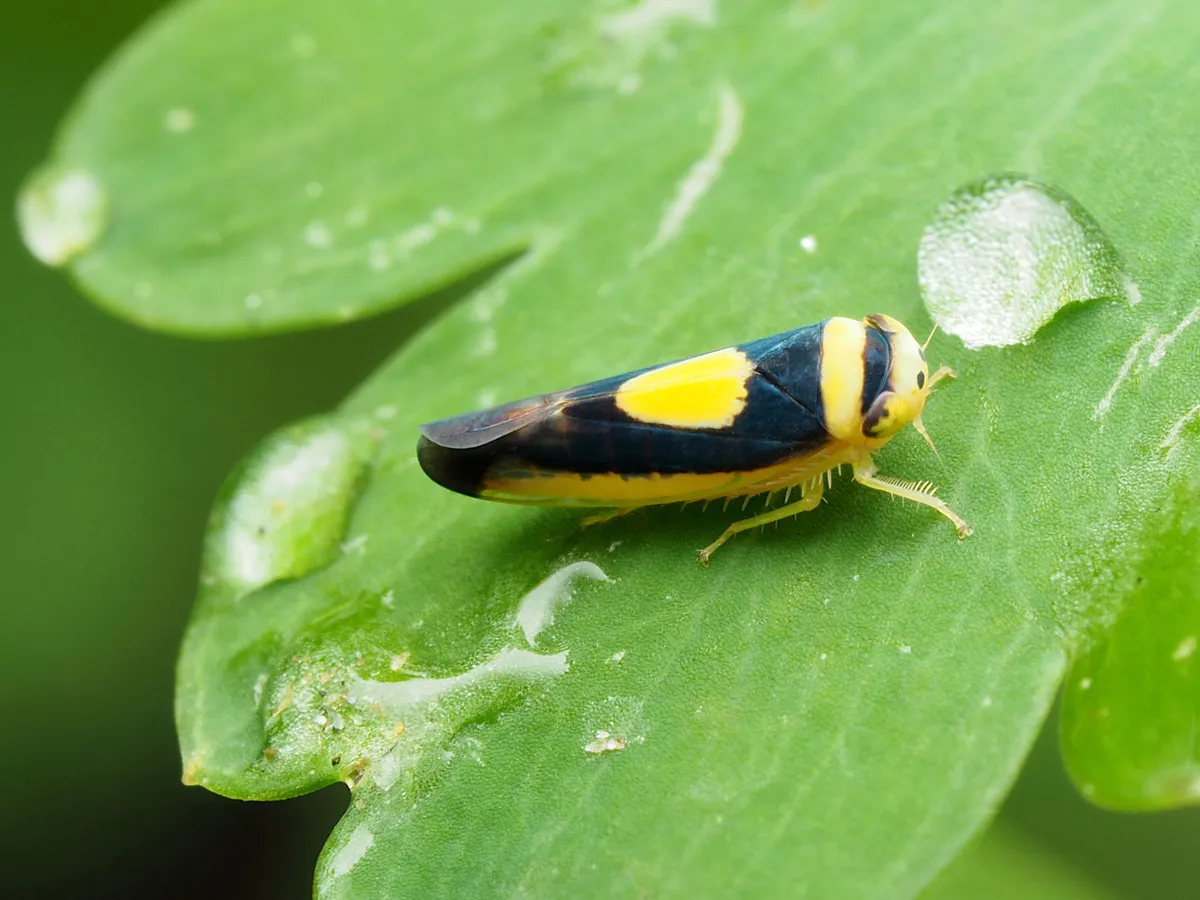
Saddleback Leafhopper
Colladonus clitellarius
Identification: Identifications of non-vouchered photographs should be treated as tentative: "[ Colladonus furculatus ] is so similar to clitellarius that dissection of the genitalia is necessary to separate the two species. From clitellarius , to wh
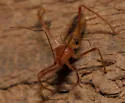
Saica elkinsi
Saica elkinsi
Identification: may be separated from similar saicine species as follows:
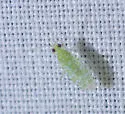
Saileria bella
Saileria bella
Identification: Per Jason Botz, "The quadrate (squarish) green spots on the hemelytra separate this from the two other US species."
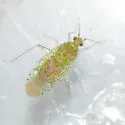
Saileria irrorata
Saileria irrorata
Identification: can be distinguished from all other species of Saileria by the black setae on the 1st antennal segment, the longer 2nd antennal segment and rostrum, and the black spines on the middle and hind tibiae. Type Locality: Indiana
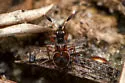
Saldoida cornuta
Saldoida cornuta
Identification: "Paired tubercles of pronotum black; apex of scutellum scarcely swollen." - Drake & Chapman, 1958 Brachypterous and macropterous individuals known.
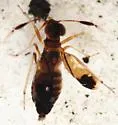
Saldoida slossonae
Saldoida slossonae
Identification: pronotal tubercles yellowish-reddish brown to dark brown; scutellum swollen posteriorly
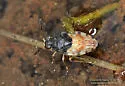
Saldula ablusa
Saldula ablusa
Identification: Difficult to distinguish from S. pallipes . The orange-brown color apex of corium and the occasional light stripe on the lateral margin of the pronotum are diagnostic.
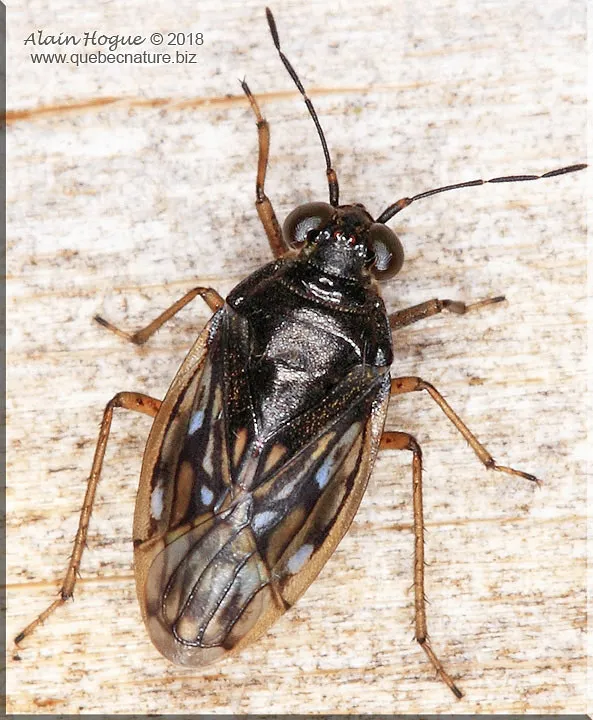
Saldula opacula
Saldula opacula
Identification: Holarctic; in NA, NF-NT-AK , n. US; in the west, south to CA-CO
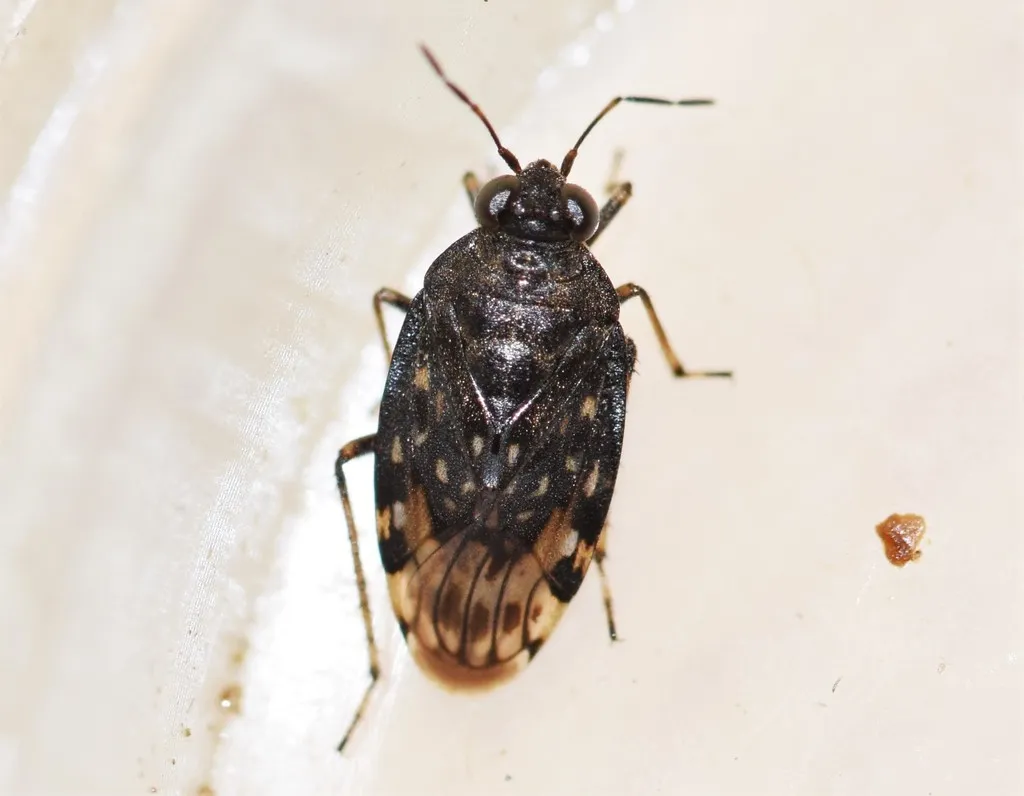
Saldula pallipes
Saldula pallipes
Identification: varies greatly in size and color and tends to grade into many allied species
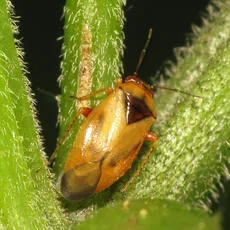
Salicarus roseri
Salicarus roseri
A very variable species found on willows, ranging from yellowish to orange to dark-brown, often with a darker marking on the corium creating a U shape. Tibial spines arise from small black spots, and the femora are usually reddish. The antennae are s
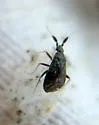
Salien Plant Bug
Criocoris saliens
Identification: Distinguished by scalelike hairs on femora and fusiform [tapering at both ends] A2 in male Type Locality: Texas ( Belfarge )
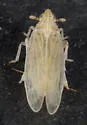
Saltmarsh Delphacid Planthopper
Prokelisia dolus
The face is striped, narrowed at the tip, and shorter than in P. marginata . This is a very common species, especially on the Atlantic coast. [comment by Andy Hamilton] "The commonest species in northern coastlines, on Spartina alterniflora in the ti
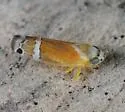
Sanctanus orbiculatus
Sanctanus orbiculatus
Identification: color pattern very distinctive --Andy Hamilton
Sand Bug
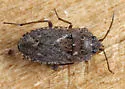
Emblethis vicarius
Identification: color variable: coarse dark punctures strongly contrasting with pale yellowish or gray ground color, the mix of yellow and blackish spots on a pale background gives an overall medium brown appearance; tips of hemelytra clear or unspot
Saratoga Spittlebug
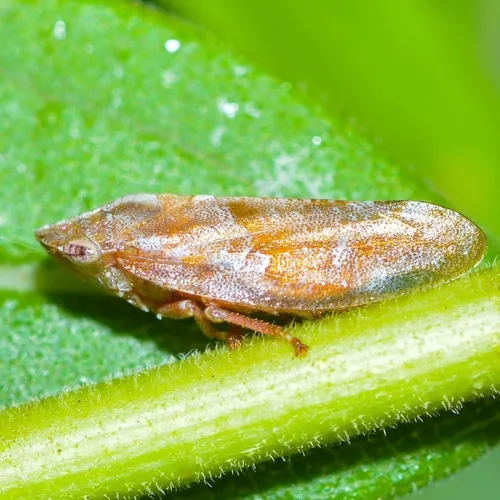
Aphrophora saratogensis
Identification: nymph Det. Kyle Kittelberger, 2022 Plantation grown trees are often more vulnerable than naturally grown ones.
Saucer Bug
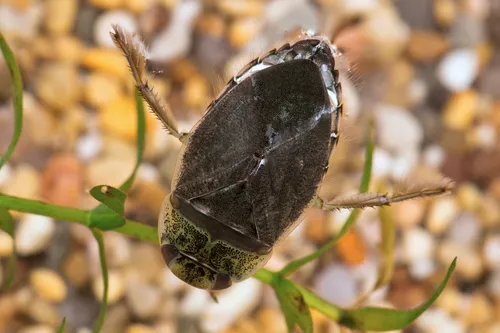
Ilyocoris cimicoides
Size: 15 mm. The Saucer Bug has a flat, oval shaped body with a dark back and silvery underside created by the air bubble held there while underwater. It also has a distinctive pair of horn like front legs. Spends much of its time hiding in dense veg
Savius jurgiosus
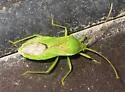
Savius jurgiosus
Identification: Adult: live individuals all green except for dull yellowish-brown antennae and tarsi, and dark gray membranous portion of forewing; preserved specimens fade to pale green or dull yellow - late stage nymph - earlier stage nymph Type Lo
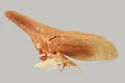
Scalmophorus minutus
Scalmophorus minutus
Identification: "Resembling reticulatus but smaller, narrower with the horn bluntly rounding instead of pointed. Uniform pale cinnamon brown. Face and metapodium in the same plane, the metapodium gradually and regularly narrowing to the slightly foMa
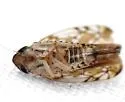
Scaphoideus cinerosus
Scaphoideus cinerosus
Identification: Note pale forewing and head markings and grayish coloration. Very similar to members of the informal crassus group, but with sparser markings. One of the most variable species in the genus, according to Barnett . Usually ashy-gray/gra
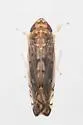
Scaphoideus major
Scaphoideus major
"I suspect there is some variation in genitalia and merus and densus may both be synonyms of major." - J. Kits pers. comm. S. Hendrix
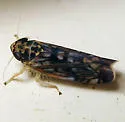
Scaphoideus nigrellus
Scaphoideus nigrellus
"Scaphoideus is a genus that needs a lot of work. I am confident that what [is being called] S. nigrellus is distinct from S. titanus, although I’m not entirely sure nigrellus is the right name for it. We have barcodes which are clearly distinct from
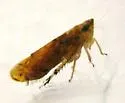
Scaphoideus ochraceus
Scaphoideus ochraceus
Identification: "The palest of our species. Only S. intricatus has as pale a head and thorax, but in that species there are no head markings." --Dr Hamilton's comments at
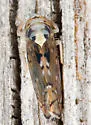
Scaphoideus pullus
Scaphoideus pullus
Identification: "The contrasting color of the dorsum is characteristic." --K.G.A. Hamilton
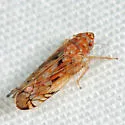
Scaphoideus veterator
Scaphoideus veterator
Identification: Generally has a more produced head than the similar S. carinatus
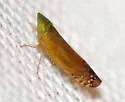
Scaphytopius angustatus
Scaphytopius angustatus
Identification: Ochreous-yellow with the markings ochreous-brown, the veins in the costal and apical regions of the forewings dark brown, and with rounded whitish areas in the cells and costal region
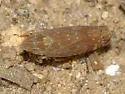
Scaphytopius cinnamoneus
Scaphytopius cinnamoneus
Identification: Vertex and thorax light ochreous with the markings brown. Forewings pale ochreous-yellow, irrorated with dark brown and with rounded, whitish areas in the cells and costal region. This species is normally less heavily dark-marked than
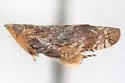
Scaphytopius diabolus
Scaphytopius diabolus
Identification: HOLOTYPE Type: Described from one male and four females taken on Mt. Diablo, [Contra Costa Co.], California, July 14, 1916.
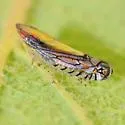
Scaphytopius elegans
Scaphytopius elegans
Identification: The broad, yellow vitta on dorsum readily separates this species from any other in the genus. Det. Kyle Kittelberger, 2015
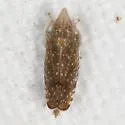
Scaphytopius latus
Scaphytopius latus
Identification: Yellowish-ochreous with the markings darker ochreous, brown, or fuscous; forewings with the veins of the costal region dark brown and with rounded, whitish areas in the cells and costal region. There is much variation, from dull ochrc
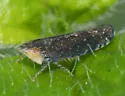
Scaphytopius loricatus
Scaphytopius loricatus
Identification: Allied to nasutus but sometimes smaller and showing strong indications of the frontal irrorations found in fuscifrons . Face in typical examples entirely pale yellow. Vertex shorter than in nasutus but longer than in frontalis ; its m
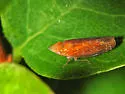
Scaphytopius oregonensis
Scaphytopius oregonensis
Identification: Almost wholly brown, the ochreous ground color visible only as small areas at and near the apex of the vertex and at the sides of the scutellum; forewing with the veins of the costal and apical regions dark brown, with rounded, whitis
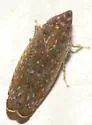
Scaphytopius verecundus
Scaphytopius verecundus
Identification: Allied to irroratus and obscurus but with a longer vertex than in either.
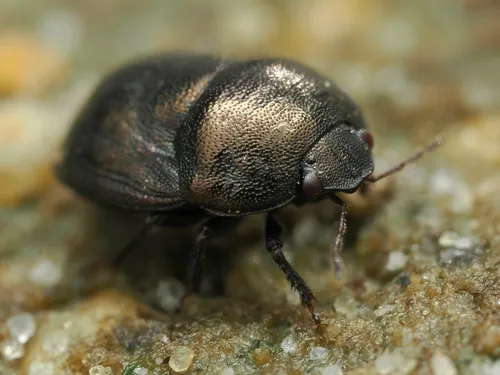
Scarab Shieldbug
Thyreocoris scarabaeoides
Length 3 to 4 mm. A small metallic black or bronze shieldbug with a very large scutellum which covers most of the abdomen. Associated with violets growing on dry sandy or chalky soils in sunny situations (including coastal dunes), where it can be fou
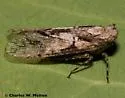
Scaralina aethrinsula
Scaralina aethrinsula
Identification: "note the unpatterned dorsal thorax (so not marmorata) and the dark "V" where the wings join (so not cristata)" - Doug Yanega
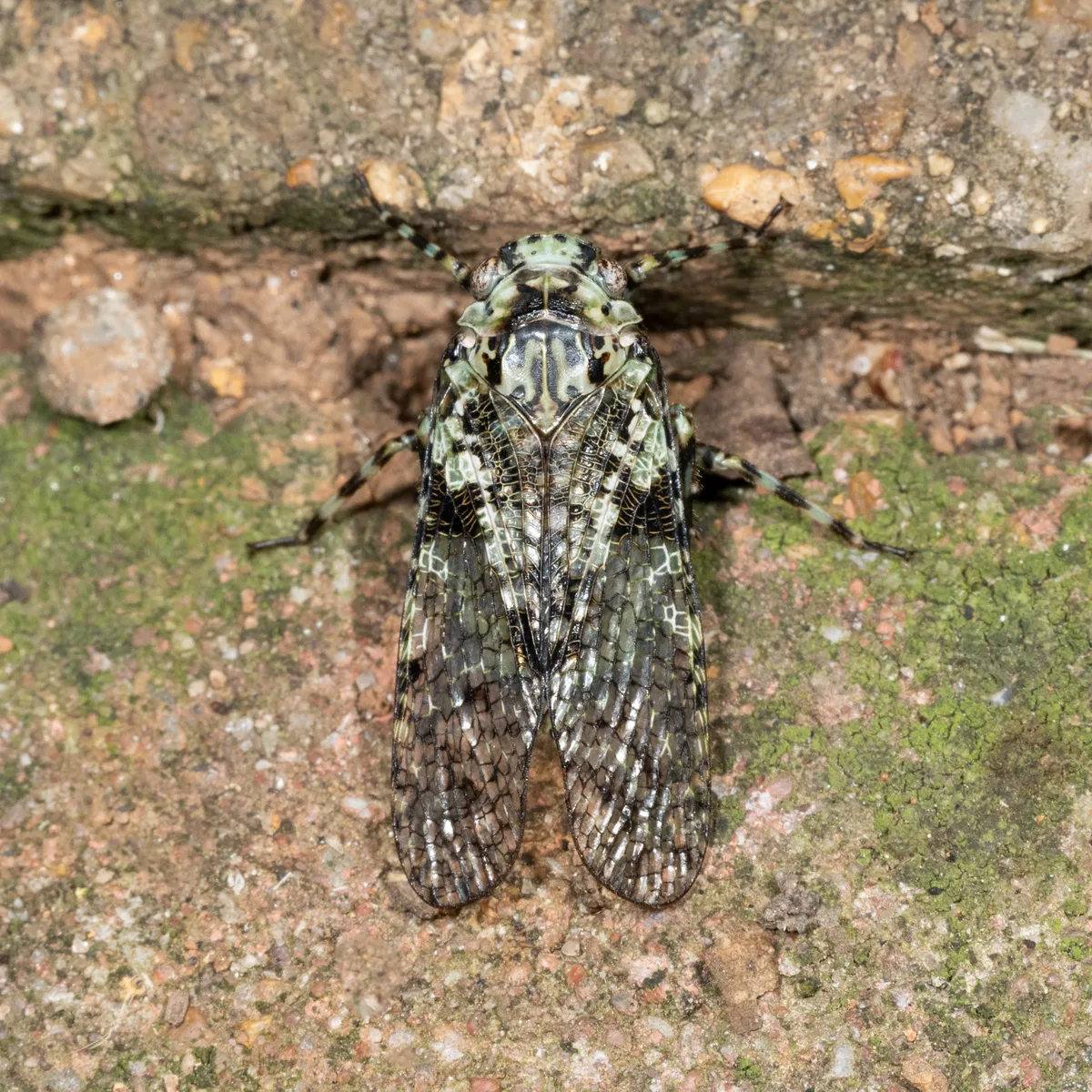
Scaralina marmorata
Scaralina marmorata
Was described by the Marquis Massimiliano Spinola (1839, Ann. Soc. Ent. Fr. 8: 271-274) in his castle in Italy as Calyptoproctus marmoratus from North America. Metcalf didn't find any specimens he thought fit the description, so didn't illustrate it
Scaralina metcalfi
Scaralina metcalfi
This page was previously for Alphina glauca , which is a synonym of Scaralina marmorata . Scaralina metcalfi replaces this page based off of comments in Yanega et al. 2024-"[...]although [Z.P. Metcalf] might not have included specimens of [ Scaralina
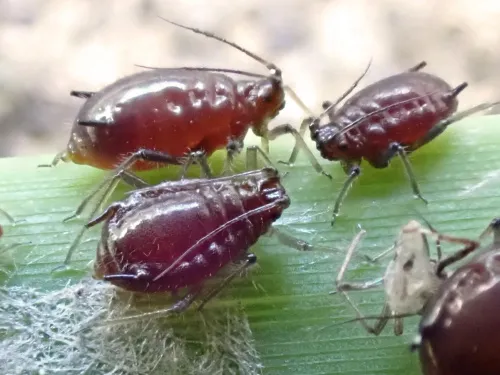
Schizaphis scirpi
Schizaphis scirpi
Apterae of Schizaphis scirpi are shiny dark bronze-brown to reddish brown or blackish with a body length of 1.5 to 2.8 mm. Fur further details see the 'Further Information' link below. Please provide good close up images and state the host plant. Wet
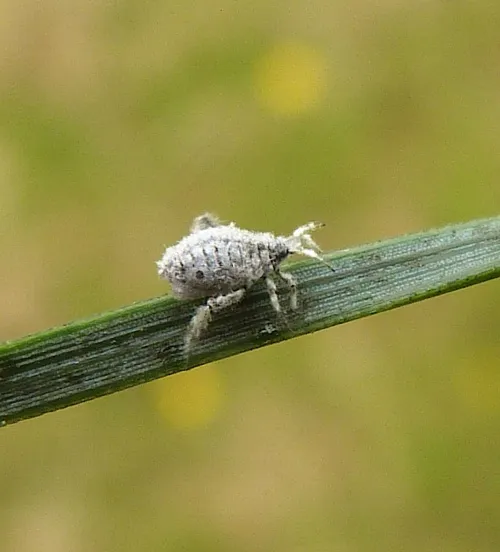
Schizolachnus pineti
Schizolachnus pineti
The apterae are dark greyish-green covered in wax meal giving a light bluish-grey appearance. The last rostral segment is very short and stumpy with a short tip. The body length is 1.2 to 2.5 mm. They are found on numerous species of Pines (Pinus spp
Sciocoris longifrons
Sciocoris longifrons
Type Locality: 2 males coll'ed by J. D. Mitchell on 18 Nov 1907, Victoria, Texas. Other paratypes per Barber: C.V. Riley reported(*) 4 from "Tex" (2 males, 2 females); Belfrage coll'ed one from "Tex" [possibly around Gatesville, TX]; and one from Aus
Scolopocerus secundarius
Scolopocerus secundarius
Identification: the only species in which all the antennomeres are equally stout -Dan Swanson, 7.xi.2008
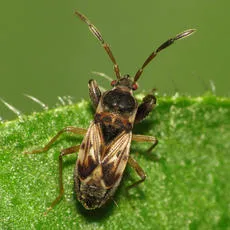
Scolopostethus affinis
Scolopostethus affinis
Length 3.5-4.5 mm. A difficult genus including some common species; all have one large and several small spines on the underside of the front femur. The sides of the pronotum have a large pale spot just behind the middle. The critical features in S.
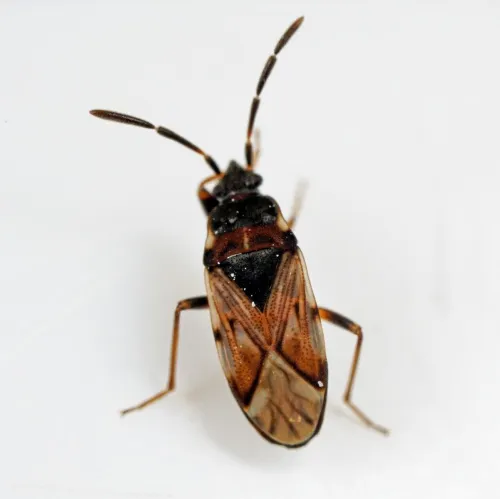
Scolopostethus decoratus
Scolopostethus decoratus
Length 3.5 to 4 mm. A difficult genus including some common species; all have one large and several small spines on the underside of the front femur. The sides of the pronotum have a large and obvious pale spot just behind the middle. Scolopostethus
Scolopostethus diffidens
Scolopostethus diffidens
Identification: clavus has more than 3 regular rows of punctures, the terminal two segments and apical part of the second antennal segment are black, and the membrane is fuscous with a distinct round white spot. In macropterous specimens, the veins a
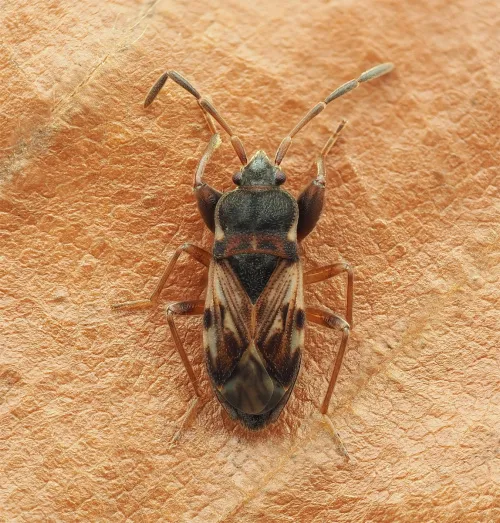
Scolopostethus grandis
Scolopostethus grandis
A difficult genus including some common species; all have one large and several small spines on the front femur. The sides of the pronotum are keeled and have a large and obvious pale spot just behind the middle. Underside characters are important in
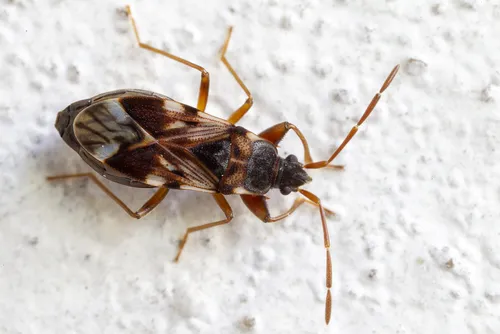
Scolopostethus pictus
Scolopostethus pictus
Length 4 to 5 mm. Scolopostethus pictus is one of the largest species in the genus and the antennae are entirely pale or only slightly and gradually darkened towards the tip. Adults are usually macropterous and often have a rather brightly marked app
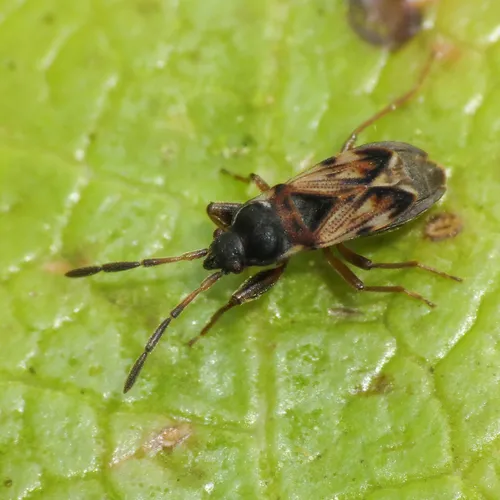
Scolopostethus thomsoni
Scolopostethus thomsoni
Length 3.5-4 mm. All members of this group have one large and several small spines on the underside of the front femur. The sides of the pronotum have a large and obvious pale spot just behind the middle. S. thomsoni is almost always short winged, wi
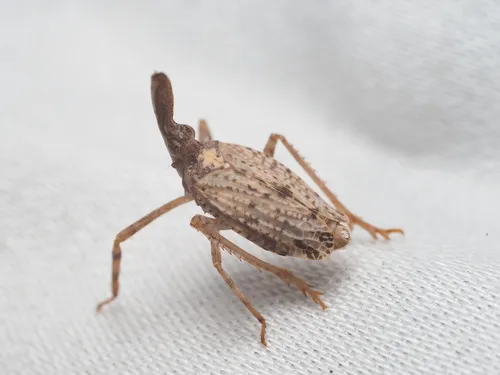
Scolops abnormis
Scolops abnormis
Identification: curiously angled and swollen head process is characteristic (Dr Hamilton, 3.vii.2007)
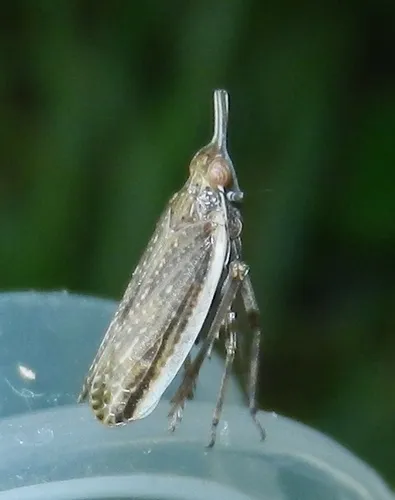
Scolops angustatus
Scolops angustatus
Identification: wing margin is pale, and the venation is simpler than in most other northern species (comment by Dr. Hamilton)
Scolops pallidus
Scolops pallidus
Identification: one of the few species in CA with foliaceous front legs; S. californicus is similar, but probably just another variety of this variable species. (K.G.A. Hamilton's comments here & here )
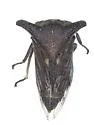
Selenacentrus wallacei
Selenacentrus wallacei
Identification: http://treehoppers.insectmuseum.org/public/public_content/show/25526
Sericophanes ocellatus 0
Sericophanes ocellatus
Identification: Knight (New and Noteworthy Forms of North American Miridae (Hemip.), 1917) says of the types: "Length to tip of membrane, 2.6 mm.; length of pronotum .43 mm., width at base .71 mm., apex .37 mm.; head, width across the eyes .6o mm., w
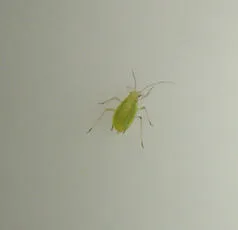
Shallot Aphid
Myzus ascalonicus
The adult wingless form is 1.1 to 2.2 mm long and shiny pale green to dirty yellow. Its appendages are all pale except for the ends of the antennae and the 'ankles/feet' which are all quite black. The two tubes (siphunculi) at the rear end are pale,
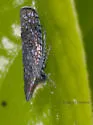
Sharp-nosed Leafhopper
Scaphytopius acutus
Identification: This is the common brown, pointed-headed leafhopper with a contrastingly yellow face (ventrally). Vector of Soybean bud proliferation and Western X-disease phytoplasma ( 3 )
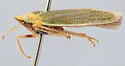
Sharpheaded Sharpshooter
Draeculacephala zeae
Identification: Differentiated from D. robinsoni on the basis of the form of the male 2S apodemes: "Apodemes 2S produced most strongly mesad on lower halves" vs. robinsoni : "Apodemes 2S produced most strongly mesad near apex or with both lobes subeq