
Family Triozidae
Triozidae is a family in the order Hemiptera. Browse 51 named species recorded in this family, or open an individual profile for its available identification and natural-history information.
Species in Triozidae (51)
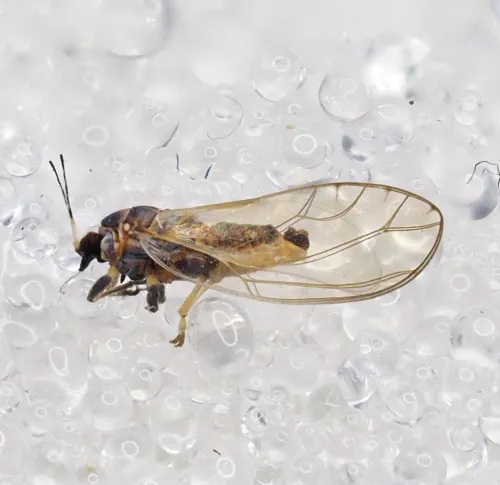
Bactericera albiventris
Bactericera albiventris
3.5-4mm. As with other species in the Triozidae family, it has pointed forewings and with and the three main veins joining together. Adults have a characteristic reddish colour that darkens as it matures and the underside of the abdomen is pale. Very
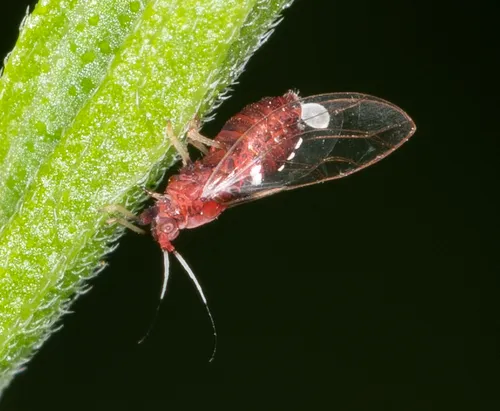
Bactericera antennata
Bactericera antennata
Identification: Head emarginate anteriorly, antennae very long when compared to other Triozidae, segments 1-2 red, 3-5 white, 6-10 black. Fore femurs slightly enlarged; genae slightly swollen ventrally. Males generally black with green abdomen; femal
Bactericera athenae
Bactericera athenae
Identification: Head, pronotum, prescutum, male genitalia black; rest of body yellow. Antennae black except segments 4,5 and tip of 3 white. Head cleft, concave, eyes projecting forward; wings angular, three times as long as broad, marginal cells sma
Bactericera californica
Bactericera californica
Identification: General color orange to brown with black head; veins R+M+Cu, R, and anal margin basally heavily embrowned:
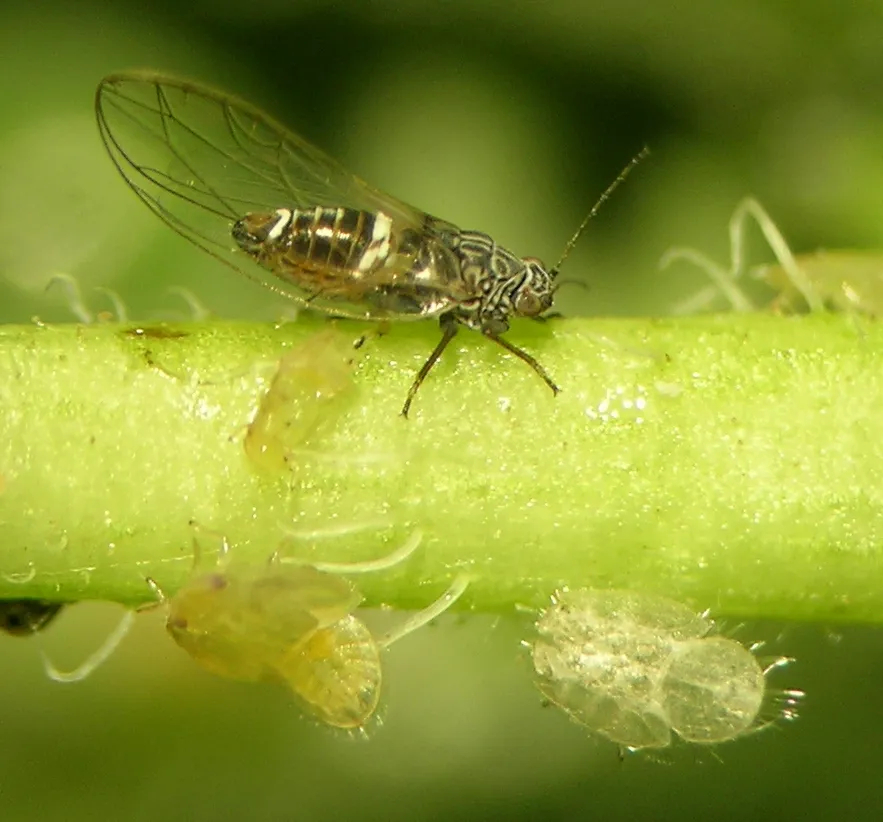
Potato Psyllid
Bactericera cockerelli
Known to cause a disease-like symptom in tomato and potato called psyllid yellows. It is not a disease per se but rather a response in the plant to the insect's "saliva" that causes the plants to be stunted, yellowed and unproductive. If the psyllid
Bactericera lobata
Bactericera lobata
Identification: Wings with distinct maculae; general body color yellow, with tip of each antenna segment dark; head and thorax pubescent
Bactericera maculipennis
Bactericera maculipennis
Identification: Wings maculate, angulate, with enlarged cubital cell. Maculae as follows: a narrow mark extending along margin from apex to cubital cell; another including most of cubital cell and more or less continuous across the furcation of R; an
Bactericera minuta
Bactericera minuta
Identification: Color extremely variable; usually orange with various degree of black on head and thorax; abdomen usually green but occasionally dark orange. Wings typically immaculate, but var. arizonae with distinct dark marginal band on forewing.
Bactericera salicivora
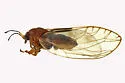
Bactericera salicivora
Identification: General color variable, from orange to red to dark reddish-brown; head and genal cones usually reddish but sometimes dark brown to black; abdomen darker dorsally and pale ventrally; antennae 1.5x width of head, pale basally and black
Persimmon Psyllid
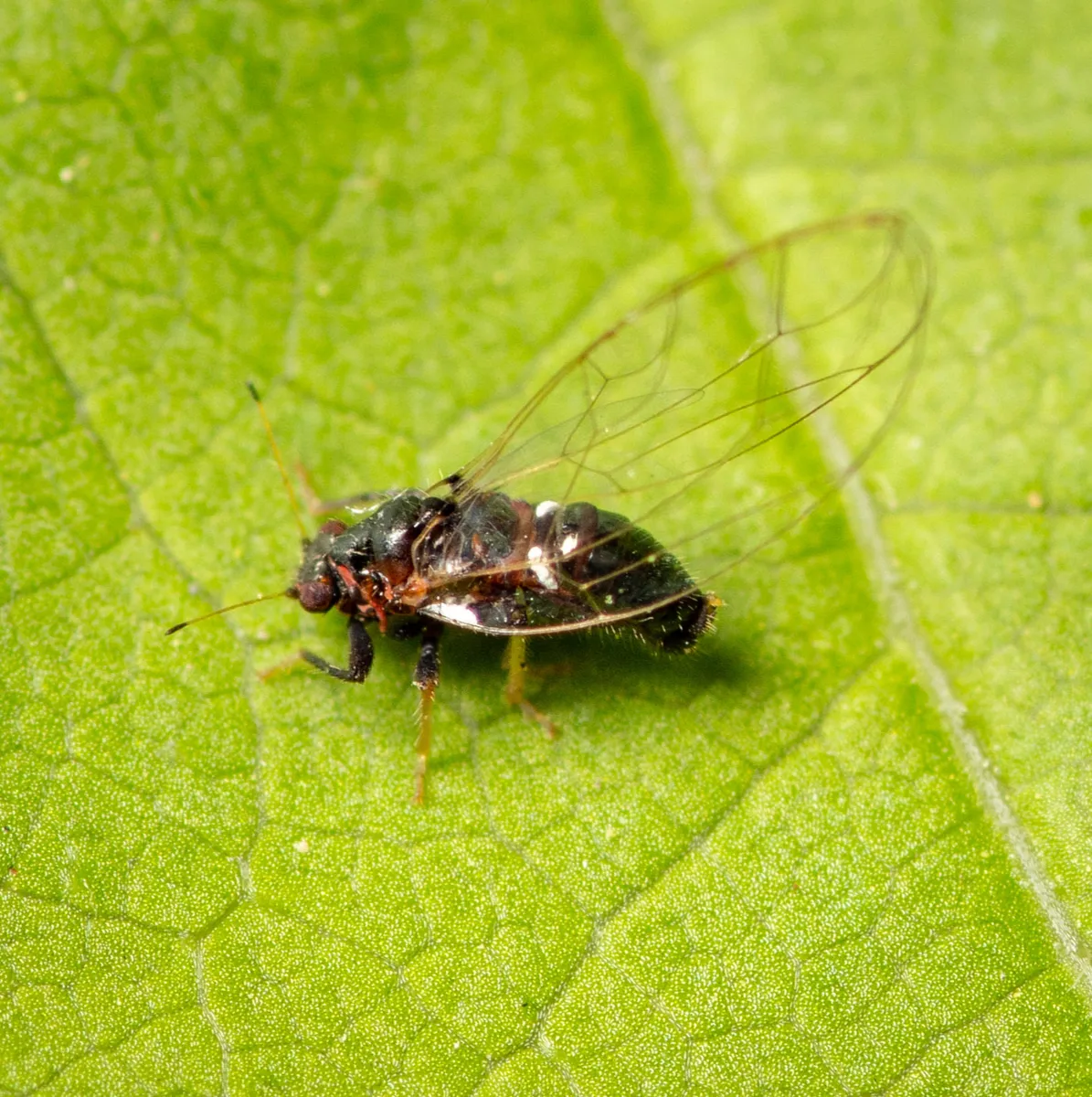
Baeoalitriozus diospyri
Identification: Body shiny black, pubescent; forewings very long, angulate, with unusually large medial cell
Calinda fumipennis
Calinda fumipennis
Identification: Entire body ochreous, with pale yellowish wings
Calinda longicaudata
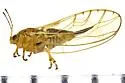
Calinda longicaudata
Identification: Female genitalia very long, with proctiger and subgenital plate more or less evenly tapering to apex
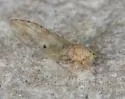
Calinda longistylus
Calinda longistylus
Identification: Forewing with brown shading along veins
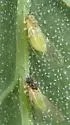
Heterotrioza chenopodii
Heterotrioza chenopodii
Identification: The only Triozid recorded from our area that utilizes Chenopodiaceae as a host. Adults extremely variable in color, with younger individuals yellowish with brown markings and green abdomen; older individuals with uniformly dark brown
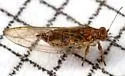
Kuwayama medicaginis
Kuwayama medicaginis
Identification: Genae swollen ventrally into globose lobes, clypeus large and easily visible in anterior view. Male forceps bicuspidate, anal valve large, broad basally, terminating at narrow apical epiphysis; female genital segment moderately long,
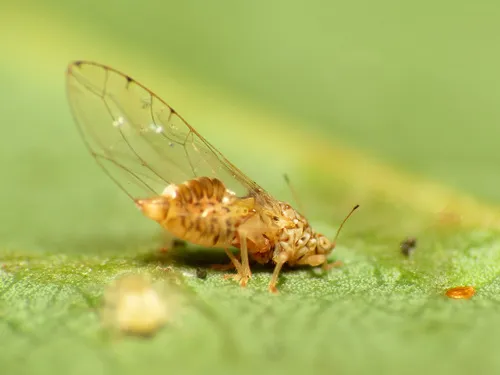
Bay Sucker
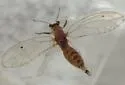
Lauritrioza alacris
Identification: Long, sharply pointed wings. The three main veins in the forewing arising from a common point, usually pointed forewings with radular spinules.
Neotriozella pyrifolii
Neotriozella pyrifolii
Identification: Genal processes slender, vertical, as long or longer than vertex, closely appressed; head large, about as broad as thorax, antennae about twice as long as width of head; forewings long, about 3x as long as wide, medial cell longer tha
Blackberry Psyllid
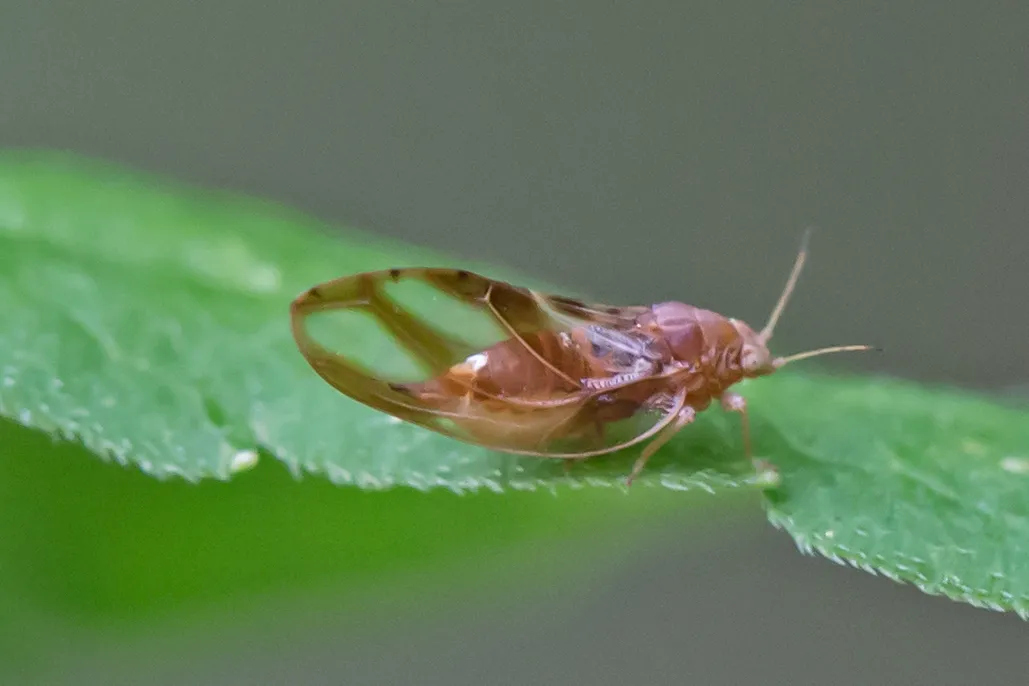
Phylloplecta tripunctata
Identification: Forewing broad and angulate with brown vittae along veins; marginal cells very small
Jumping Plant Louse
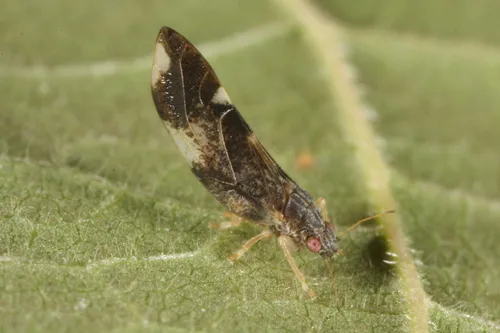
Trichochermes walkeri
The Jumping Plant Louse, Trichochermes walkeri , causes the leaf margin to curl and a gall to be formed on the leaves of Buckthorn. The gall is more likely to be seen than the adult plant louse. Not scarce but rather local and limited by the range of
Bay Sucker
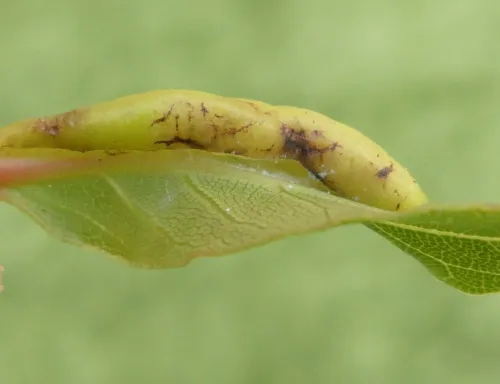
Trioza alacris
Adult length 3.5 to 4 mm. Lauritrioza alacris has long, sharply pointed wings, the outermost vein is short and curved, and only the last two antennal segments are dark. Its colouring varies dramatically with age, the dorsal surfaces darkening to blac
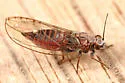
Trioza aylmeriae
Trioza aylmeriae
Identification: Caudal lobe of male proctiger very elongate, with prominent tuft of setae at apex
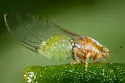
Trioza bakeri
Trioza bakeri
Identification: Antennae short, no longer than width of head; vertex and notum with short pubescence; wings angulate, with vein Rs very long and sinuate; female genitalia with both valves equal in length. Color brown to yellow on head and thorax; abd
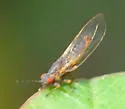
Ficus Leaf-Rolling Psyllid
Trioza brevigenae
Other species, including thrips, mealybugs, and spiders may also induce leaf-rolling on the same plants, though in these cases the leaf is not as tightly rolled. Additionally, nymphs of a second species of psyllid have been discovered in association
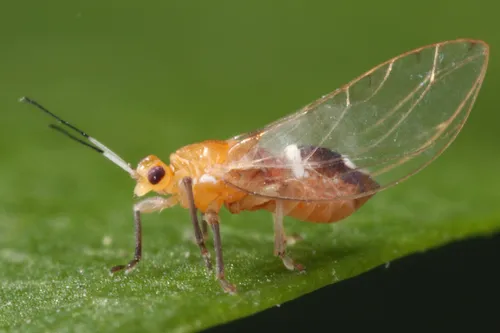
Trioza centranthi
Trioza centranthi
Adult length 2.5 to 3.0 mm. Whilst the adults can be very difficult to identify without detailed examination, the reddish larval leaf roll galls on Valerian are quite distinctive. Wherever Valerian, the larval foodplant occurs. Nymphs form distinctiv
Red Bay Psyllid
Trioza magnoliae
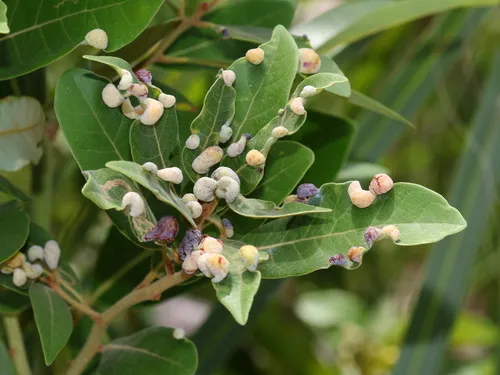
Identification: Adults: forewings large, angular, with large cubital cell and vein Rs long; pronotum relatively long, prescutum longer than wide. General color green to brown with brown stripes on thoracic dorsum
Trioza obtusa
Trioza obtusa
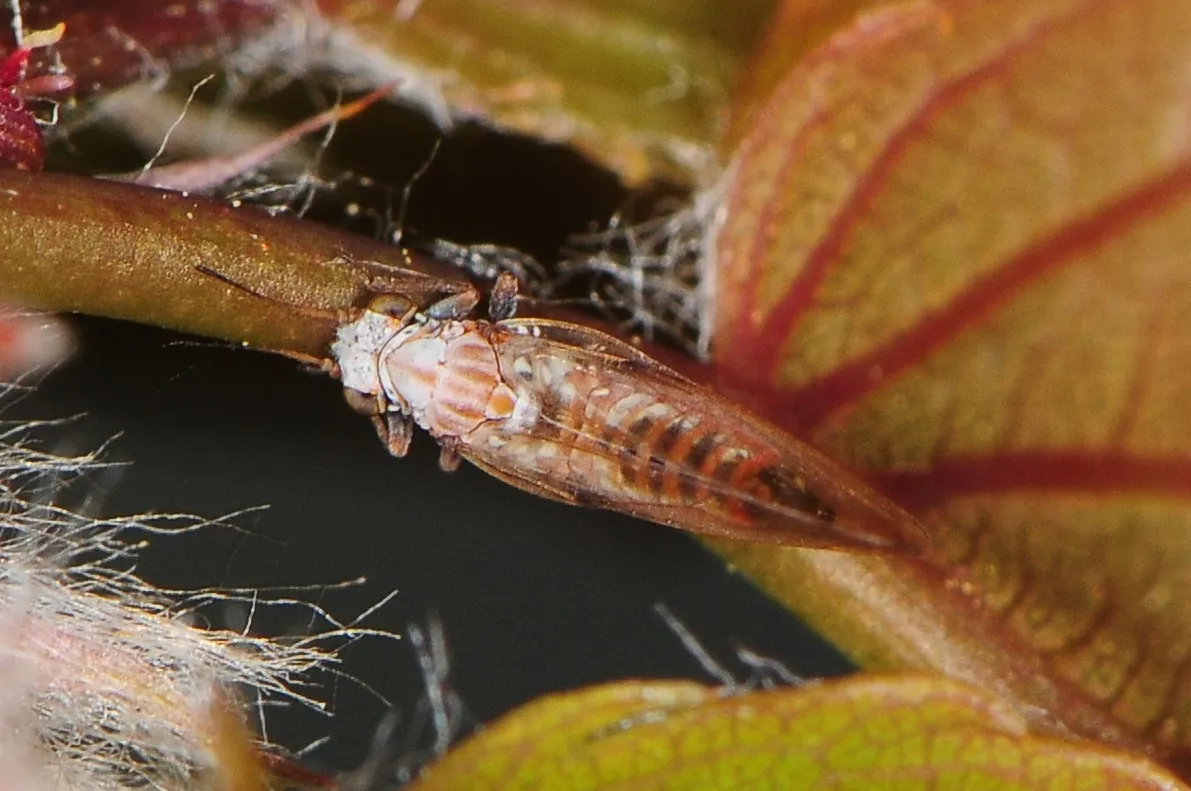
Identification: Body reddish-brown, often with a white waxy bloom on the head and thorax; wings smokey brown; head relatively large and robust
Trioza phoradendri
Trioza phoradendri
One of two North American mistletoe psyllids. The other, Freysuila phoradendri , belongs to a different family and the two are unlikely to be confused.
Trioza quadripunctata
Trioza quadripunctata
Identification: Edge of forewing with 4 black maculae; body color green-white in summer, dark brownish in winter; antennae long, twice the width of the head; apical half of antennae and tarsi black; thorax wider than width of head.
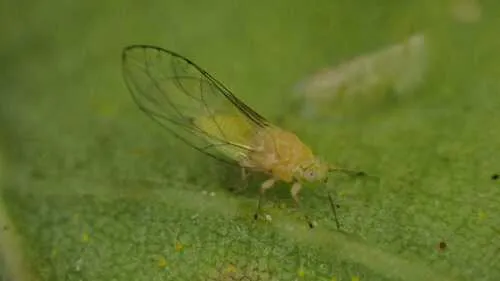
Trioza remota
Trioza remota
The larvae of Trioza remota cause galls to form on the leaves of English Oak and Sessile Oak. These take the form of a raised pimple on the upper surface of the leaf about 1 to 2 mm across, often several to a leaf. On the underside of the leaf there
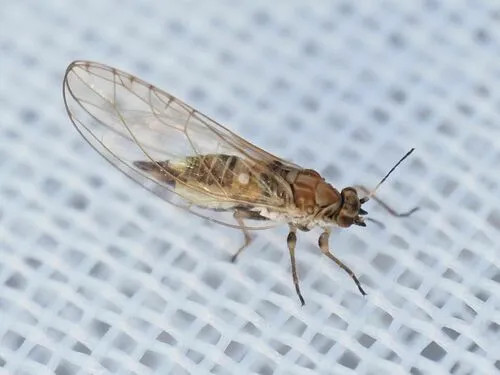
Trioza urticae
Trioza urticae
Length 3 to 3.5 mm. This psyllid bug or jumping plant louse is a reasonably distinctive species in a large and difficult genus. Distinguishing features include the relatively rounded (for Trioza) forewings with long outer vein, which together with it
Bactericera arbolensis
Bactericera arbolensis
Bactericera dorsalis
Bactericera dorsalis
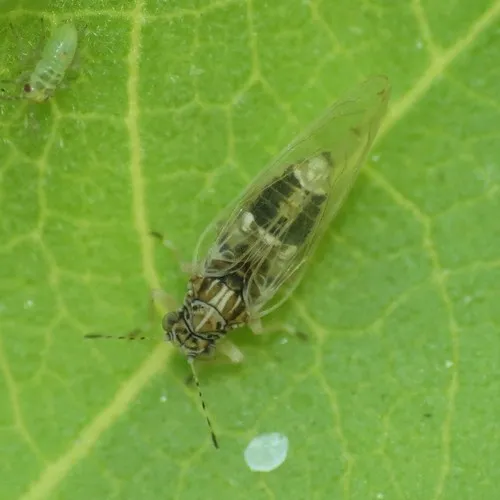
Bactericera lavaterae
Bactericera lavaterae
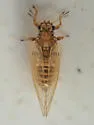
Bactericera shepherdiae
Bactericera shepherdiae
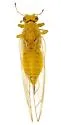
Calinda collaris
Calinda collaris
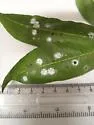
False-mastic Psylla
Ceropsylla sideroxyli
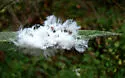
Hemitrioza sonchi
Hemitrioza sonchi
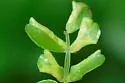
Leuronota fagarae
Leuronota fagarae
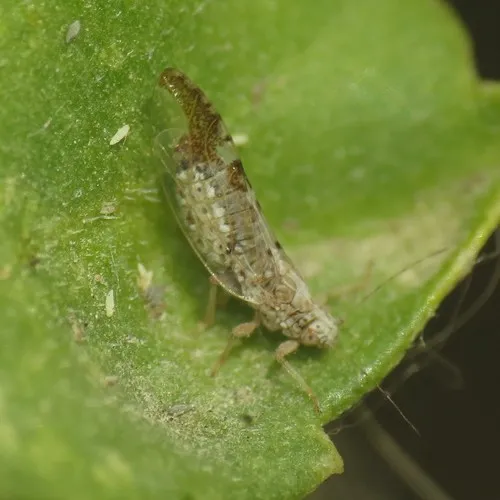
Leuronota maculata
Leuronota maculata
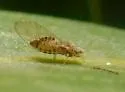
Leuronota maritima
Leuronota maritima
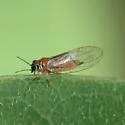
Metatrioza neotriozella
Metatrioza neotriozella
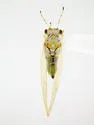
Neotriozella hirsuta
Neotriozella hirsuta
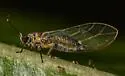
Neotriozella laticeps
Neotriozella laticeps
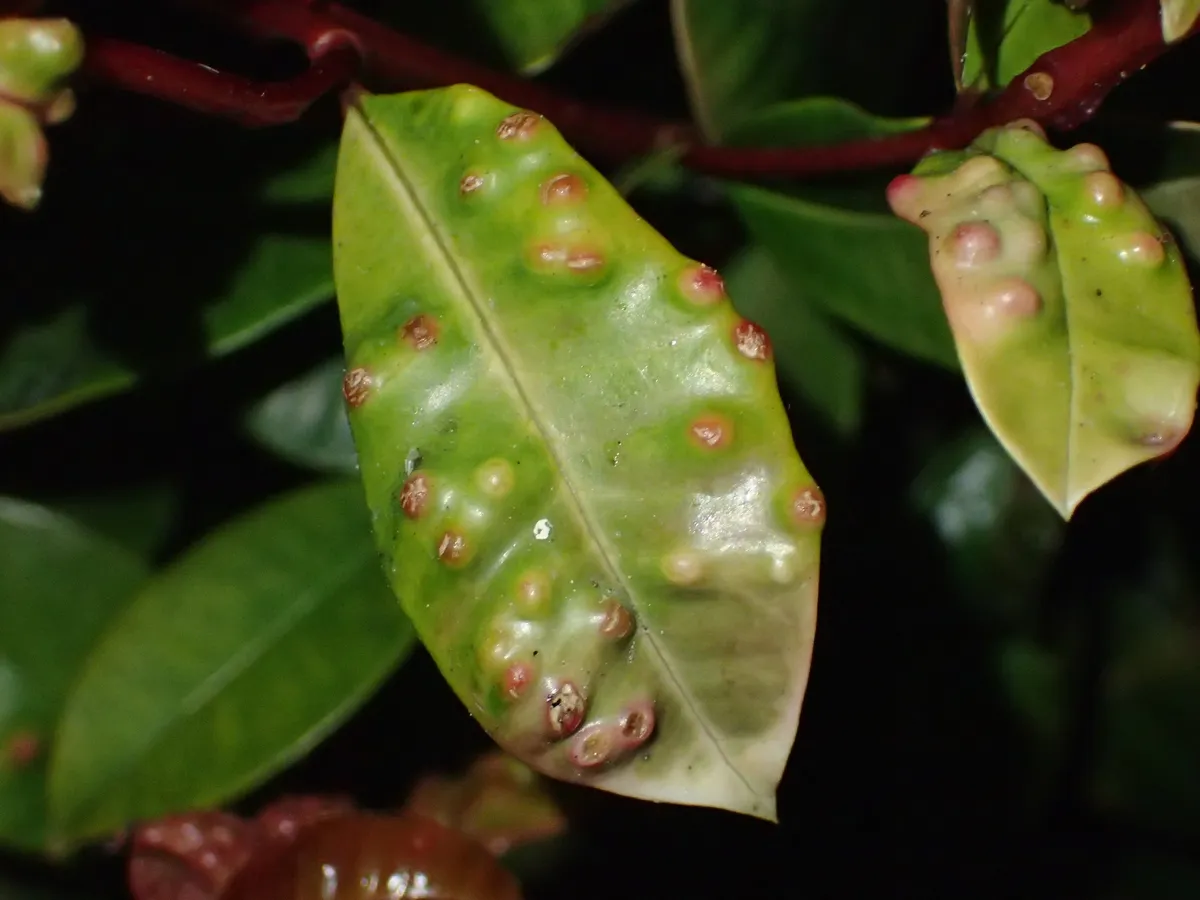
Eugenia Psyllid
Trioza adventicia
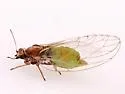
Trioza albifrons
Trioza albifrons
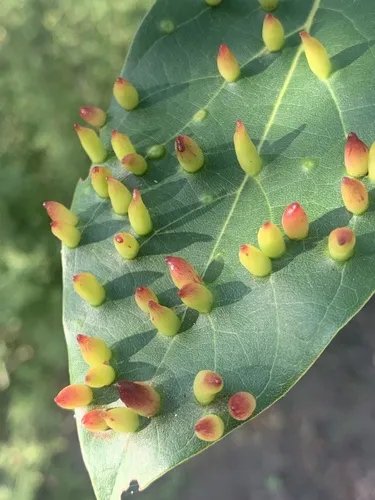
Trioza anceps
Trioza anceps
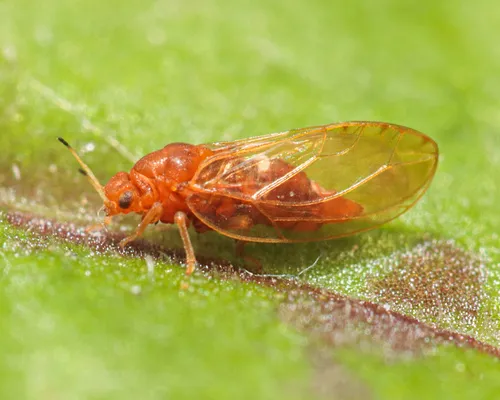
Trioza flavipennis
Trioza flavipennis
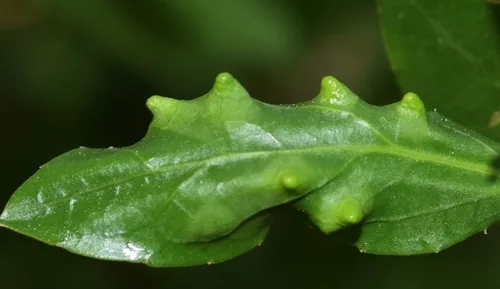
Trioza kiefferi
Trioza kiefferi
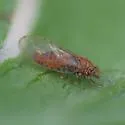
Trioza mexicana
Trioza mexicana
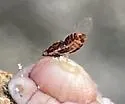
Trioza myresae
Trioza myresae
Trioza sinuosa
Trioza sinuosa