
Scolopostethus grandis
This record describes Scolopostethus grandis (species). Recorded family: Lygaeidae. Recorded order: Hemiptera.
Identification and Appearance
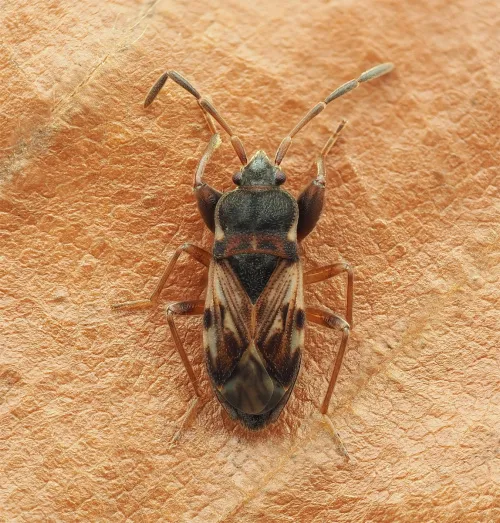
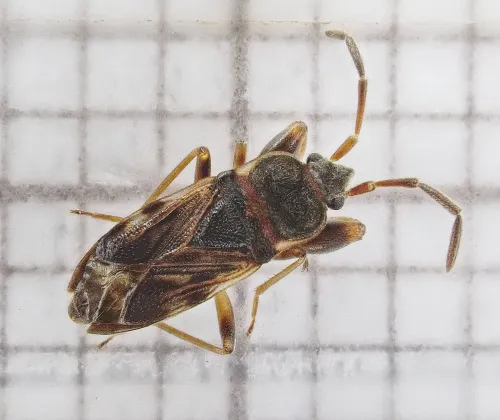
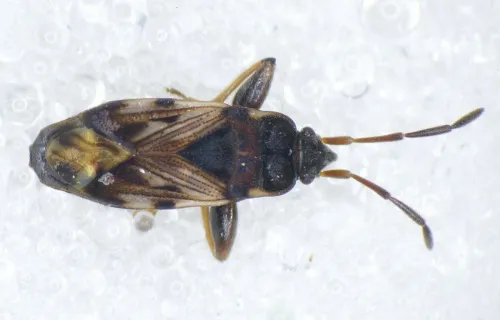
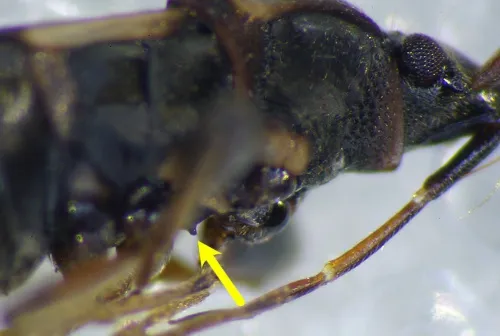
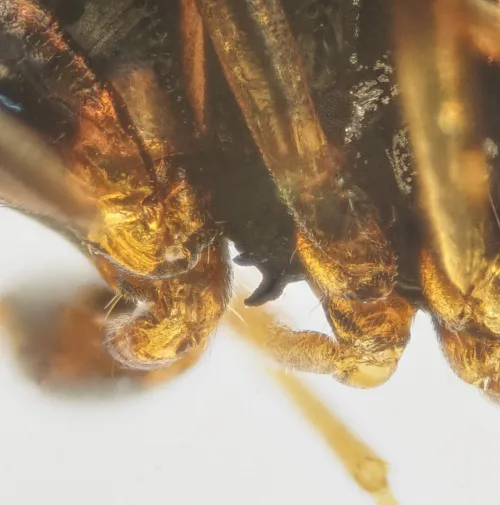
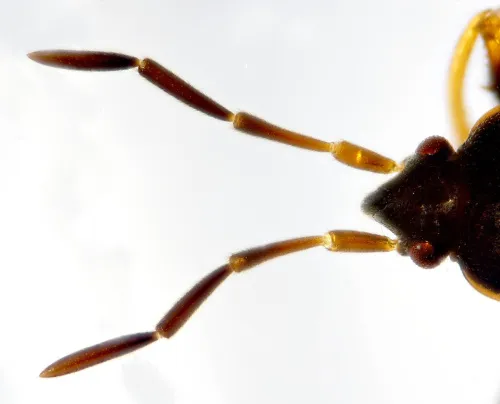
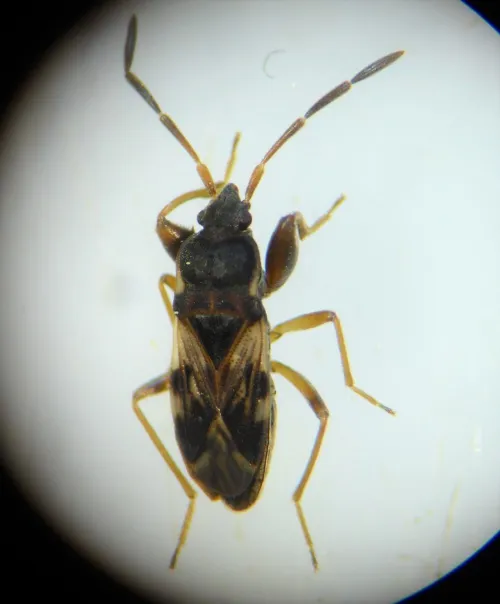
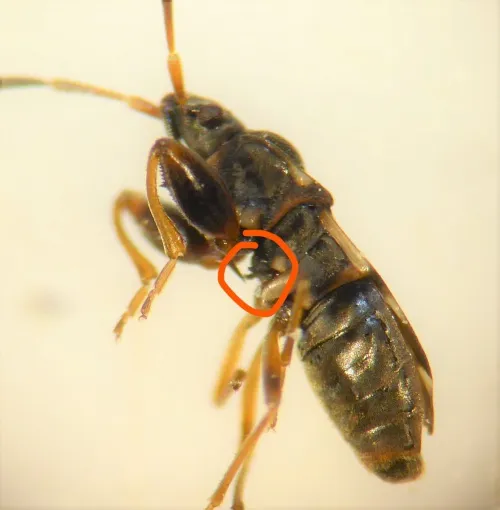
A difficult genus including some common species; all have one large and several small spines on the front femur. The sides of the pronotum are keeled and have a large and obvious pale spot just behind the middle. Underside characters are important in most species and specimens should be collected for reliable identification. Scolopostethus grandis has a length of 3.9 to 4.6 mm, the 1st antennal segment is pale and the 2nd partly darkened. The mesosternum (the area of the abdominal underside in front of the middle legs) bears a pair of obvious curved tubercles in males and a pair of smaller inconspicuous tubercles in females. These are usually very difficult to see in live specimens or photographs. Adults may be brachypterous or macropterous. Compare: S. affinis, S. thomsoni, S. puberulus . Detailed examination of the specimen is needed to identify the species (a photograph alone is not normally sufficient because key features are too small or hidden). Unless identified by a recognised expert, a photo is required and the specimen should be examined in detail. In the comments box, state the key or ID method used and describe the size and identifying characters. Found in leaf litter in various habitats.
Classification
Habitat and Range
Habitat
Found in leaf litter in various habitats.
Seasonal Activity
Adult: All year
Additional species information
Recorded status
Common and widespread in England.
About True Bugs, Cicadas, Hoppers, Aphids and Allies: the wider group
Order-level background for Hemiptera, the group containing Scolopostethus grandis. Species-specific details appear above.
Group overview
Hemiptera (true bugs) includes over 80,000 described species across cicadas, aphids, leafhoppers, shield bugs, and bed bugs. Aphids alone cost global agriculture an estimated $2.5 billion annually in crop losses.
Ecological role of the group
Many Hemiptera are essential food sources for birds and predatory insects. Cicadas provide massive nutrient pulses during emergence events - a single Brood X emergence can involve trillions of individuals across 15 states.
Economic and practical significance of the group
The brown marmorated stink bug (Halyomorpha halys) caused $37 million in apple crop losses in a single year in the U.S. Mid-Atlantic region. Bed bug infestations in the U.S. increased by 500% between 2001-2010, costing the hotel industry hundreds of millions annually.
Recorded sources for this group: USDA, EPA, University research. Imported estimates may describe particular regions or reporting periods.
Photos of Scolopostethus grandis (8)
Frequently Asked Questions About Scolopostethus grandis
What is Scolopostethus grandis?
Scolopostethus grandis is a species in the family Lygaeidae, within the order Hemiptera.
How big is Scolopostethus grandis?
of 3.9 to 4.6 mm, the 1st antennal segment is pale and the 2nd partly darkened. The mesosternum (the area of the abdominal underside in front of the middle legs) bears a pair of obvious curved tubercles in males and a pair of smaller inconspicuous tubercles in females. These are usually very difficult to see in live specimens or photographs. Adults may be brachypterous or macropterous.
Where is Scolopostethus grandis found?
Habitat: Found in leaf litter in various habitats.
When is Scolopostethus grandis active?
Scolopostethus grandis: seasonal activity - Adult: All year.