
Family Aphids (Aphididae)
Aphididae is a family in the order Hemiptera. Browse 390 named species recorded in this family, or open an individual profile for its available identification and natural-history information.
Species in Aphididae (390)
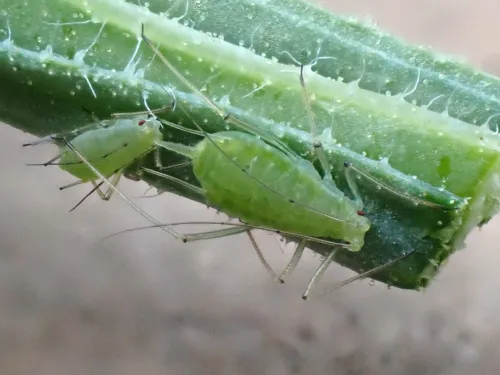
Acyrthosiphon pisum
Acyrthosiphon pisum
The body length of Acyrthosiphon pisum apterae ranges from 2.2 to 5.0 mm long. They are pale green or pink with red eyes. Their antennae are 1.0 to 1.6 times as long as the body. The antennal segments, tibiae and siphunculi have dark apices. The siph
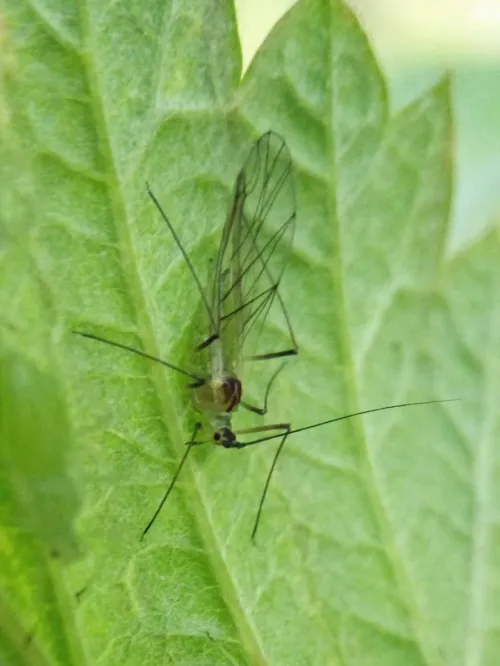
Large Raspberry Aphid
Amphorophora idaei
The body length of Amphorophora idaei apterae is 2.7 to 4.1 mm. The apterae are usually greenish white or pale yellow. The alate Amphorophora idaei) is of similar size but has a brown head and thorax, and has the distal half of the siphunculi darkene
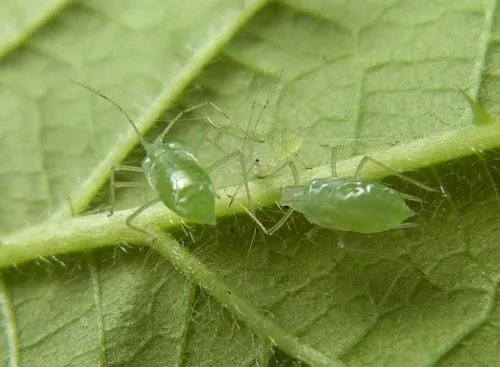
Amphorophora rubi
Amphorophora rubi
The body length of Amphorophora rubi apterae is 2.2 to 4.7 mm. A. rubi apterae are pale green or yellowish green with pale, slightly swollen siphunculi, . For additional information see the ‘Further info:’ link below. Amphorophora idaei is similar, b
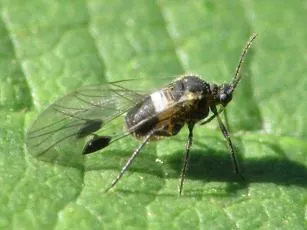
Anoecia corni
Anoecia corni
A black and white coloured species with a dark stigma in the wing. It is parthenogenetic on the roots of grasses for much of the year and then produces sexual morphs which feed, mate and produce winter eggs on Dogwood. https://influentialpoints.com/G
Aphis armata
Aphis armata
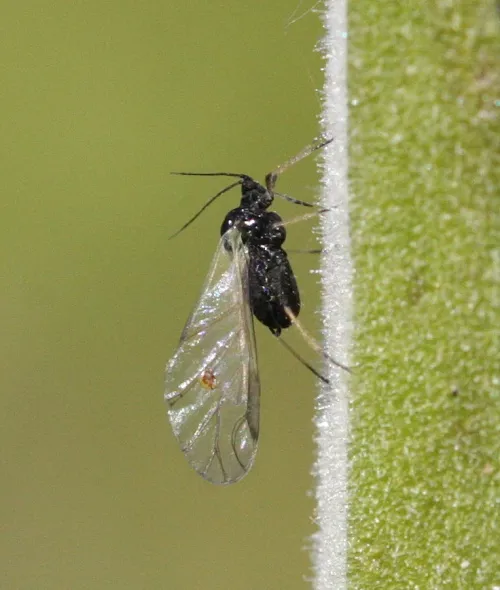
The apterae of Aphis armata are black. Immatures often have discrete wax spots, but apterae rarely have such spots. The middle abdominal tergites in apterae are usually without dark sclerotic bands. The only reliable characteristic to differentiate t
California Lilac Aphid
Aphis ceanothi
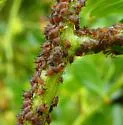
Identification: Apterae are dull reddish or amber-brown; dorsal abdomen with large black presiphuncular sclerites, often linked by a transverse sclerite on abdominal tergite 6.
Aphis cornifoliae
Aphis cornifoliae
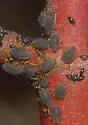
Identification: Apterae dark brown to dull greenish-black. On upper and undersides of leaves of Cornus spp., males are apterous (Palmer 1952).
Cowpea Aphid
Aphis craccivora
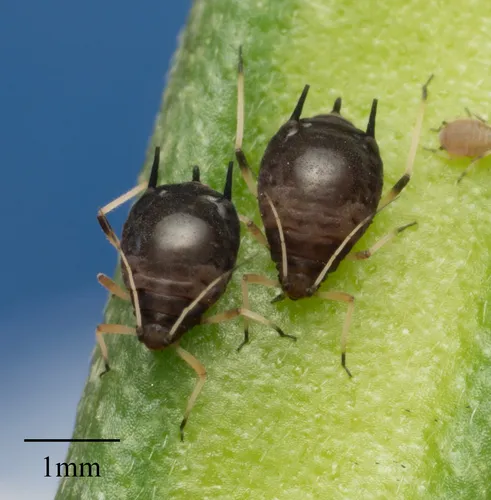
Identification: Adults shiny black, immatures lightly dusted with wax and light brownish. Det. Andrew Jensen, 2009 Young colonies concentrate on the growing points of plants and are usually attended by ants. Can be a serious pest of many crops and or
Aphis cytisorum
Aphis cytisorum
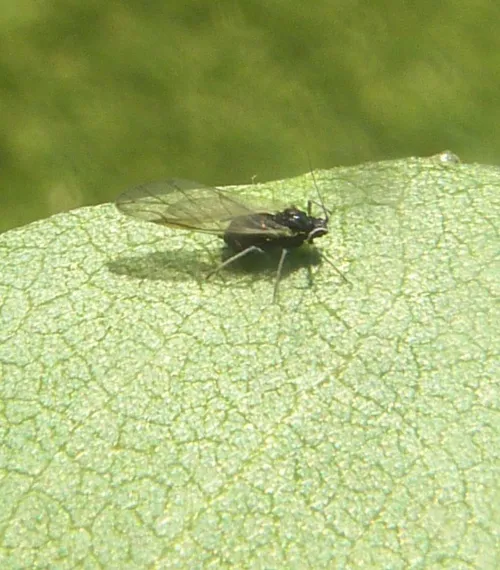
Aphis cytisorum is a very dark green aphid which may appear greyish because of the strong wax secretion. The adult aptera has a dark sclerotized dorsal abdominal shield, which is often rather fragmented and variable in size. The dark sclerotic areas
Aphis epilobii
Aphis epilobii
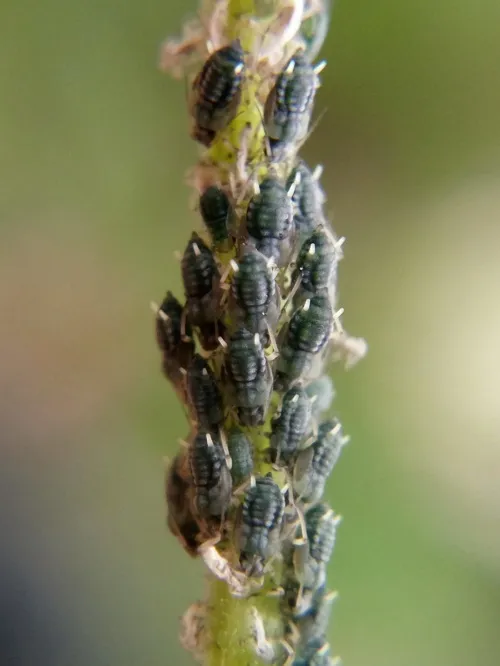
Adult apterae of Aphis epilobii are dark blackish-green to reddish-brown, but often appear dark-grey to pinkish-brown because of a rather uniform powdering of wax. The alate has marginal postsiphuncular and small marginal sclerites, but no dorsal cro
Spindle Aphid
Aphis euonymi
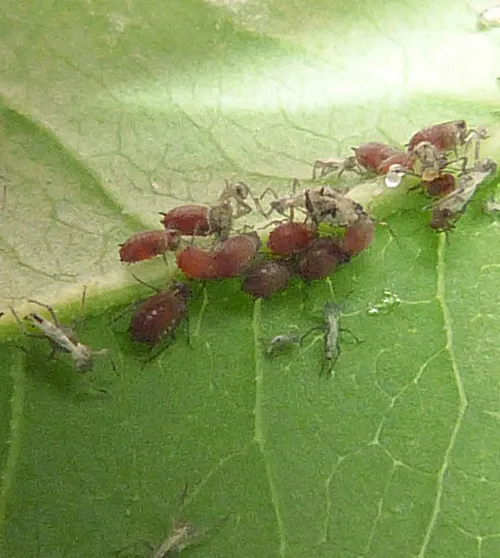
A reddish to chocolate brown aphid, often with transverse bars of wax dust on anterior abdominal tergites. The body length of apterae is 1.7 to 2.9 mm. The spindle aphid does not host alternate. It feeds on spindle (Euonymus europaeus). Probably fair
Black Bean Aphid
Aphis fabae
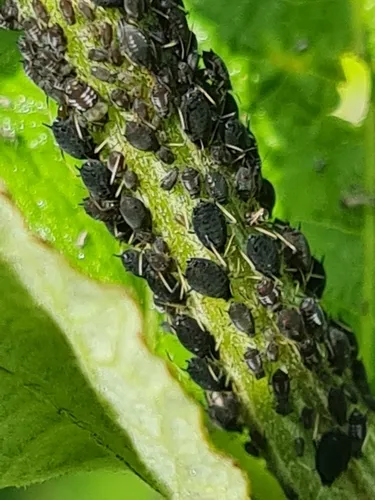
The black bean aphid is more commonly known as 'Black fly'. Adult aphids are up to 2mm long and elliptical in shape. They are black in colour, although they can also appear dark green or purple. Colonies can usually be found on the undersides of leav
Small Willow Aphid
Aphis farinosa
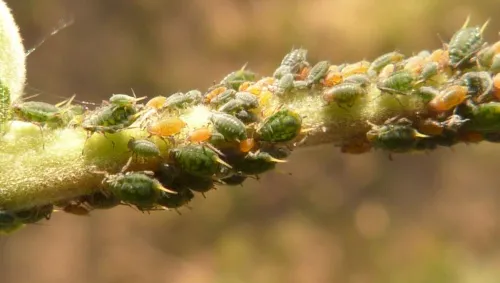
Aphis farinosa apterae are quite small and are green mottled with yellow-orange. The siphunculi are pale with a slightly dusky tip and the cauda is distinctly darker. The body length of Aphis farinosa apterae is 1.6 to 2.5 mm. Their oviparae are dull
Red-and-black cherry aphid
Aphis feminea
Identification: Adult apterae are red with black head, prothorax and mesothorax, antennae, and legs.
Soybean Aphid
Aphis glycines
Major pest of soybean. Fields close to buckthorn plants (the overwintering plant) tend to suffer worse infestations. Some natural enemies are ladybeetles, lacewings, pirate bugs, predatory flies, and entomopathogenic (insect disease-causing) fungi
Aphis gossypii
Aphis gossypii
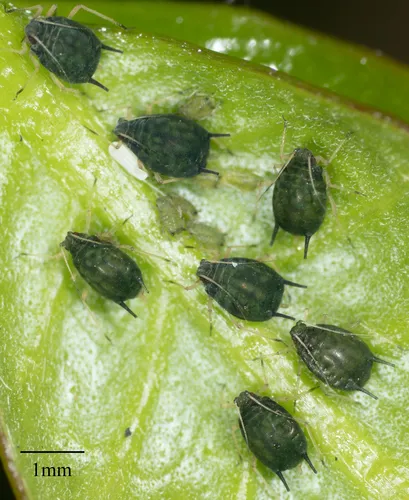
The body length of adult Aphis gossypii apterae ranges from 0.9 to 1.8 mm. Wingless females of Aphis gossypii are usually blackish green or dark green mottled with lighter. In hot conditions or when crowded they are smaller, and these dwarf forms are
Aphis grossulariae
Aphis grossulariae
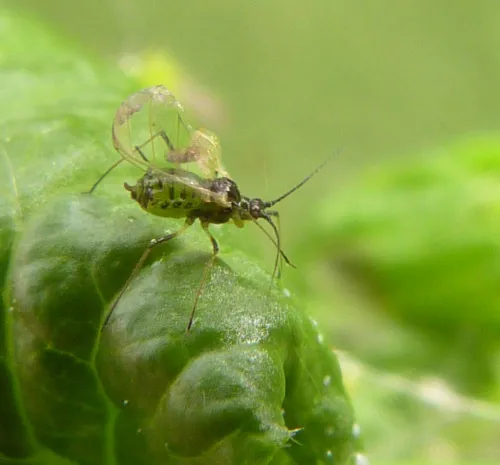
Dense colonies of Aphis grossulariae at the growing tips of Gooseberry cause severe deformation and clumping of young leaves. The adult aptera is dull green to dark green and is slightly to moderately wax powdered. The antennae are shorter than the b
Ivy Aphid
Aphis hederae
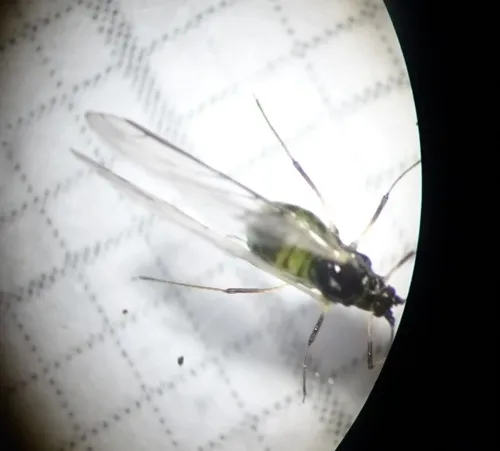
The apterae of Aphis hederae are dark greenish. The antennae are mostly pale, only darkened from the middle of segment 5 to the apex. The alate has strong transverse dark bands on most tergites. (see link below for further information) Please provide
Aphis ilicis
Aphis ilicis
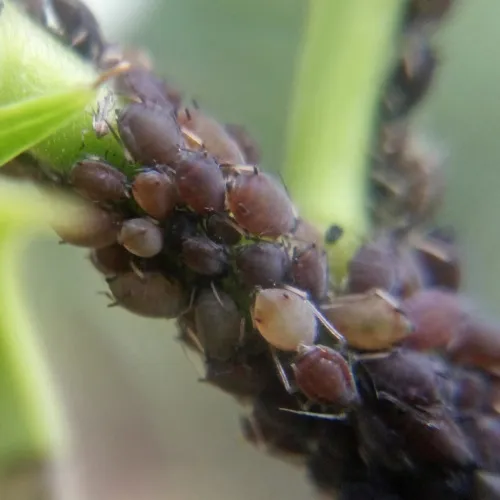
Aphis ilicis apterae are dark olive-brown, reddish-brown or greyish-brown. For a more detailed description of this species please use the ‘Further info:’ link below. Please add good quality images to support your record, and also state the host plant
Grapevine Aphid
Aphis illinoisensis
Identification: Hind legs are mostly black, small section at the base of the hind femora may be lighter. Siphunculi are somewhat long compared to other Aphis spp., black, and curve outward slightly. Antennae and cauda are dark or black. Body is gener
Aphis jacobaeae
Aphis jacobaeae
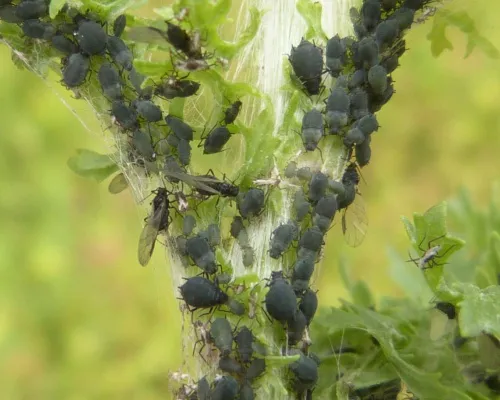
The body length of Aphis jacobaeae apterae is 1.8 to 2.2 mm. Immatures and adults are greeny-black - all segments of the antennae are dark. The legs are dark except for the extreme bases of their femora. Aphis fabae which also occurs on Ragwort has p
Iris Aphid
Aphis newtoni
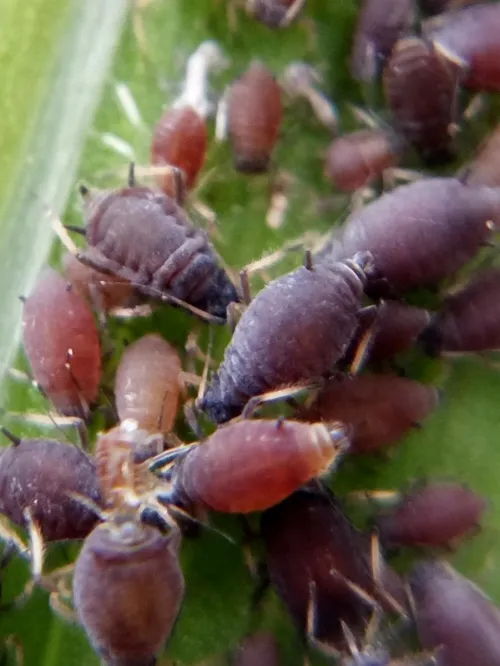
The body length of the Aphis newtoni aptera is around 2 mm and they vary from reddish brown to almost black. Please supply images to support your record and, where possible, gain expert confirmation of species identification before submitting the rec
Apple Aphid
Aphis pomi
Identification: Apterae bright apple-green with black siphunculi and dark cauda, in dense colonies on young growth of several genera of woody Rosaceae (Pomoidea); ant-attended, and causing slight leaf-curl
Small American Raspberry Aphid
Aphis rubicola
Identification: Apterae are pale yellowish green, with pale appendages.
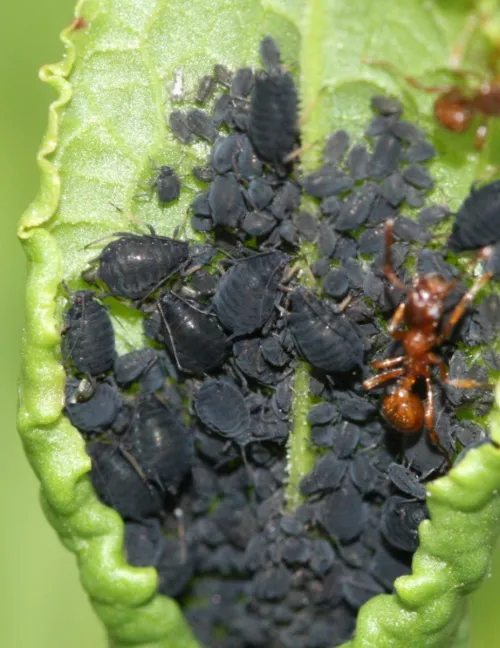
Dock Aphid
Aphis rumicis
The wingless form has a length of 2 to 2.7 mm and is black to very dark greenish-brown. The winged form is also mainly black in colour. It is similar to another Dock feeder Aphis fabae but that species does not cause the leaf edges of Dock to curl. F
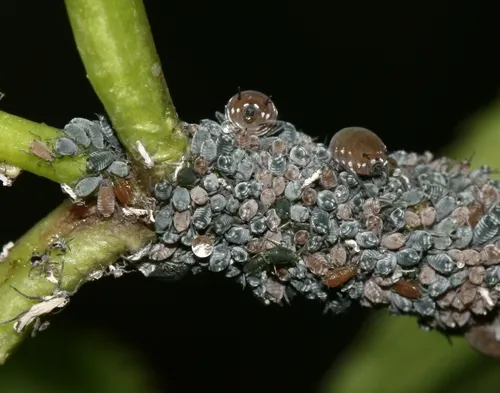
Elder Aphid
Aphis sambuci
A variable species, but the usual form is dark grey marked with white. Usually found on Elder but has used a number of other plants. Large colonies often form on the stems of Elder. Thought to be widespread and fairly frequent in Britain, but it is l
Spirea Aphid
Aphis spiraecola
important pest on species of citrus, but also attacks many other crops incl. crucifers (Brassicaceae); potato, peppers, and tobacco (Solanaceae); apple, Spiraea , and Prunus (Rosaceae), and a variety of ornamentals. Implicated in transmission of 17 p
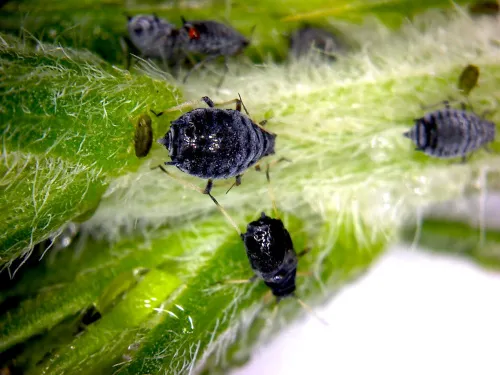
Aphis ulicis
Aphis ulicis
Adult apterae of Aphis ulicis are dark blackish green, with the abdominal dorsum shiny black, but usually covered with greyish wax powdering. The legs and antennae are largely pale. See 'Further Information' link below for more detail. Please provide
Aphis ulmariae
Aphis ulmariae
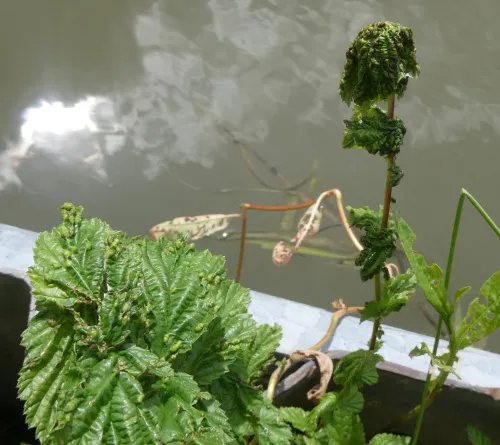
Aphis ulmariae live in the curled terminal leaves of Meadowsweet and other Filipendula species. Adult apterae are generally described as mottled dark green in life but some are yellow mottled with green, similar to the colour variation shown by its c
Aphis urticata
Aphis urticata
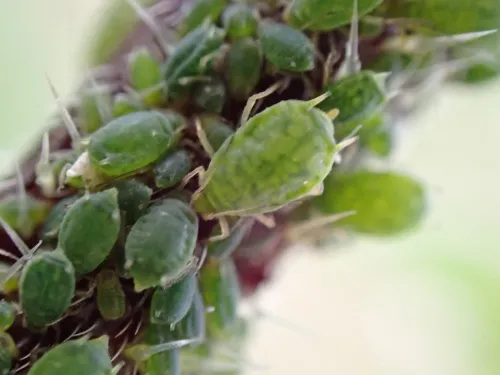
Early generations of the dark green nettle aphid are dark bluish-green often mottled with a lighter green they have pale tapering siphunculi and a pale cauda - the adult apterae are 1.7 to 2.2 mm. (see the 'Further Information' link below for more de
Aphis viburni
Aphis viburni
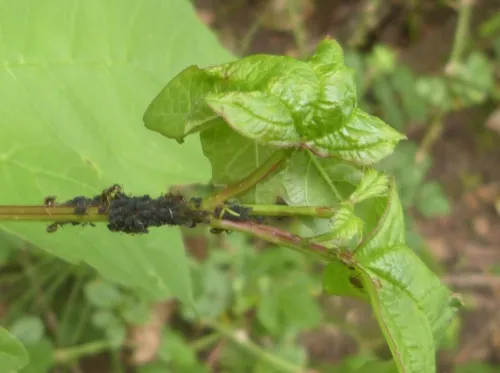
Apterae of Aphis viburni are slate-coloured, brownish green or dark brown, sometimes with paired pleural wax spots on the abdomen. Of all the 'black aphid' group, A. viburni is probably the most variable in colour. Aphis viburni can most readily be d
American Viburnum Aphid
Aphis viburniphila
Caveat: images here may turn out to be a different species
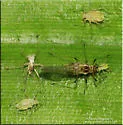
Foxglove Aphid
Aulacorthum solani
Non native, a Palearctic species first reported in 1879. A major pest.
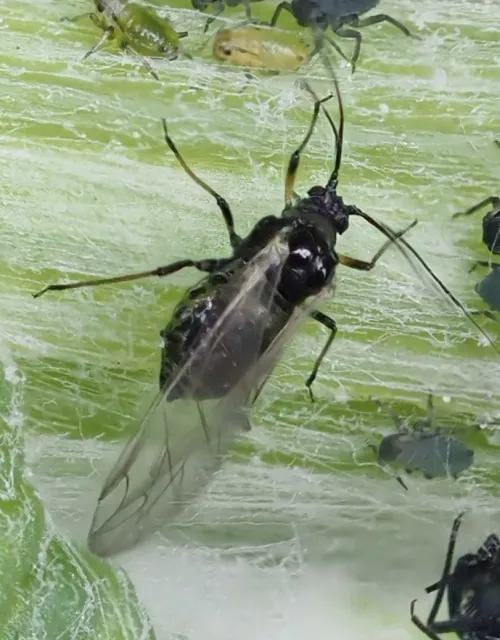
Brachycaudus cardui
Brachycaudus cardui
Brachycaudus cardui apterae are brownish-yellow, pale green or brown, with separate cross bars on thoracic segments, a large shining black spot situated dorsally on the abdomen and 2 or 3 black stripes at the tip. The immatures are yellowish or reddi
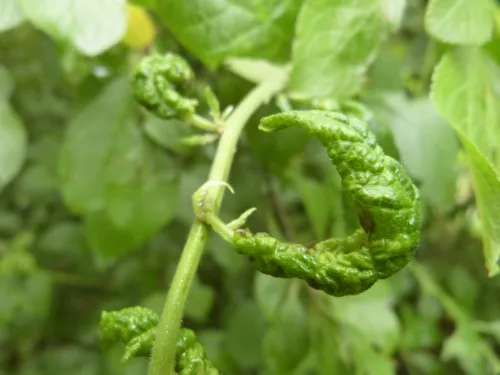
Brachycaudus helichrysi
Brachycaudus helichrysi
Brachycaudus helichrysi aphids causes distortion of leaves of various Prunus species (primary host) causing the leaves to become rolled up tightly in spring. These are not true galls, and other aphids may cause similar leaf distortions. Aphids 2 mm,
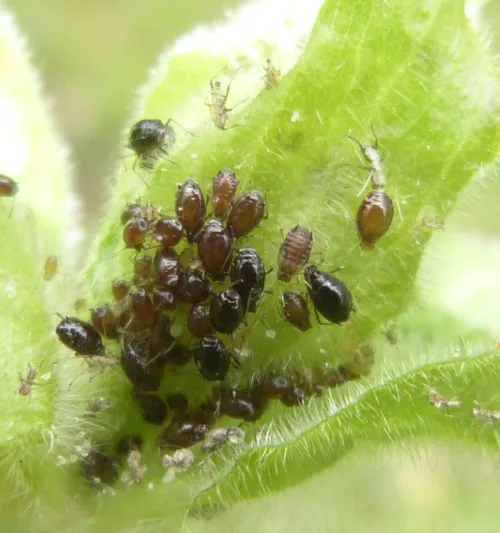
Campion Aphid Group-Brachycaudus lychnidis species group
Brachycaudus lychnidis species group - (B. klugkisti, B. lychnicola and B. lychnidis sensu stricto)
Please provide close up image (s) of the aphids and a photo showing whether they were found at the top or bottom of the plant. Most often found on the upper parts of Red Campion plants, but also uses White Campion. All year, but especially late sprin
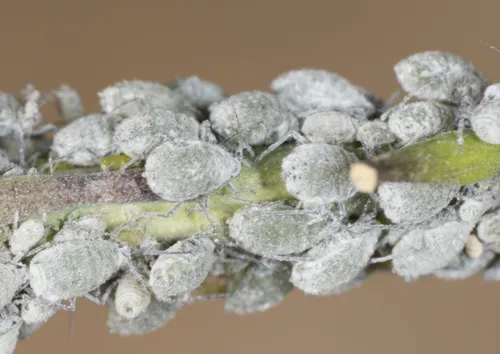
Mealy Cabbage Aphid
Brevicoryne brassicae
Brevicoryne brassicae apterae are green and wax-powdered. The head, tips of the antennae and the legs are dark. The body length of apterae is 1.9 to 2.7 mm. Spends its entire life cycle on Brassicas such as Cabbage and Oil-seed Rape. Most readily see
Common Birch Aphid
Calaphis betulaecolens
Identification: Viviparae all alate, bright lemon yellow without dorsal markings, with blackish antennae and tibiae and dark wing veins.
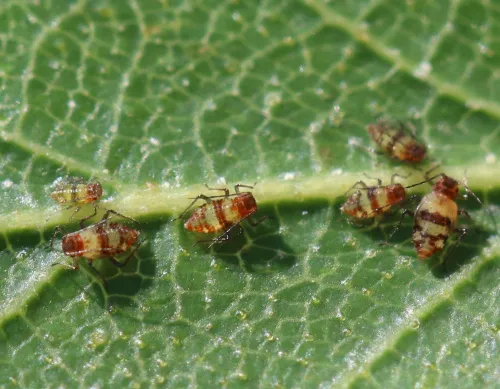
Callipterinella tuberculata
Callipterinella tuberculata
Callipterinella tuberculata apterae are usually yellowish with a brown head, a reddish-brown dorsal band over the front of the abdomen and a dark quadratic patch on abdominal tergites 4-6. However, the dark markings are very variable. The body length
Sumac-grass Aphid
Carolinaia rhois
Identification: Apterae yellow-brown with black clavate siphunculi. On undersides of leaves of Rhus glabra and Rh. typhina (= hirta ). Alatae have a brownish yellow or greenish yellow abdomen with dusky dorsal markings. Monoecious holocyclic on Rhus
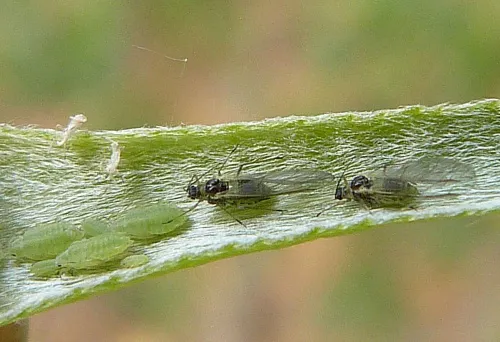
Willow-carrot Aphid
Cavariella aegopodii
The body length of Cavariella aegopodii apterae is 1.5 to 2.8 mm, they are greenish or reddish. The alate of Cavariella aegopodii has a central black patch on the abdominal dorsum, and a dark cauda and siphunculi. Unless identified by a recognised ex
Spotted Willow‒Angelica Aphid
Cavariella konoi
Identification: Apterae in spring colonies on Salix are green or yellowish-green, often with two darker green longitudinal stripes
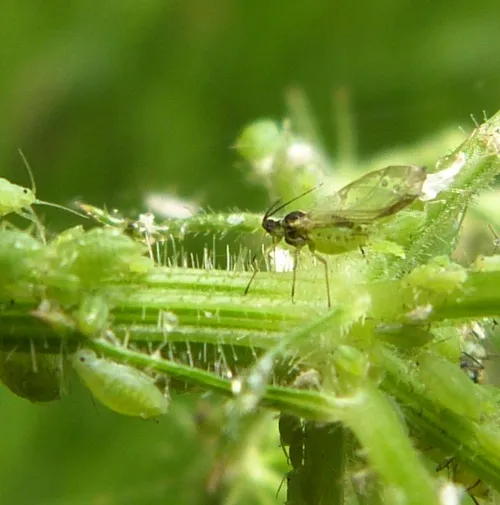
Cavariella theobaldi
Cavariella theobaldi
The body length of Cavariella theobaldi apterae is 1.8 to 2.8 mm. For further details please follow the ‘Further info:’ link below Unless identified by a recognised expert, a photo is required. If the photo doesn't show the key ID features, then in t
Fringed Orchid Aphid
Cerataphis orchidearum
Non native, from the Orient or the tropics. It is common in green houses.
Chaitophorus pallipes
Chaitophorus pallipes
Identification: Apterae yellow with broad black pleural stripes, and femora usually pale, at least on fore and middle legs. Alatae have black dorsal abdominal cross-bands. First instars are yellow. Ant-attended.
Chaitophorus populeti
Chaitophorus populeti
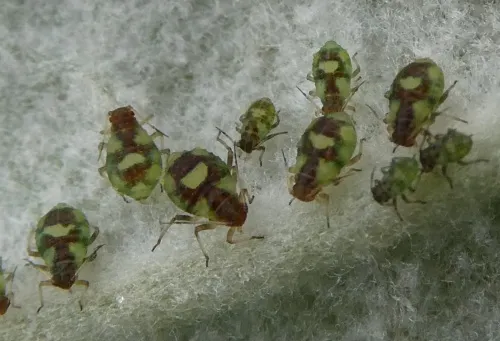
The body length of Chaitophorus populeti is 1.5 to 2.9 mm. The nymphs of this species are distinctively patterned, the adult apterae are black and more difficult unless recorded in association with nymphs. For more information please follow the ‘Furt
Chaitophorus salijaponicus subsp. niger
Chaitophorus salijaponicus subsp. niger
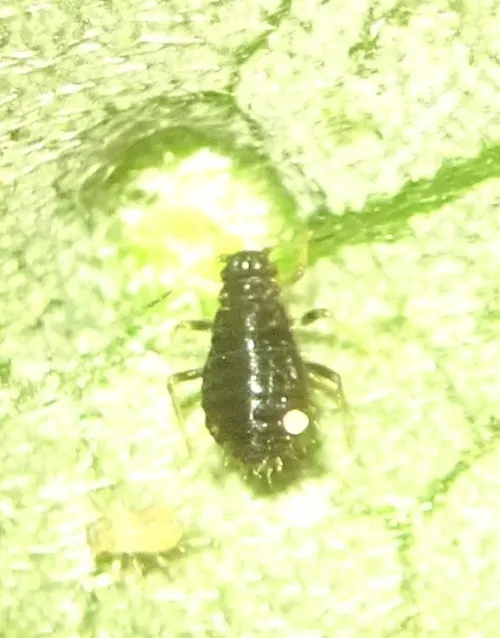
Adult apterae of Chaitophorus salijaponicus subsp. niger are usually uniformly blackish-brown. For a more detailed description of this species please use the ‘Further info:’ link below. Please add good quality images to support your record, and also
Chaitophorus tremulae
Chaitophorus tremulae
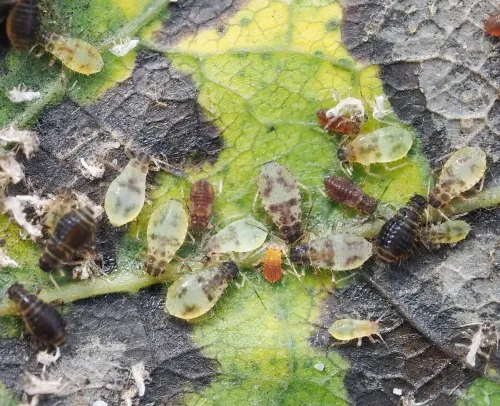
The apterae of the aphid Chaitophorus tremulae are elongate oval with the dorsum solidly blackish sclerotic, rather densely sculptured with denticular spinules (=small toothlike spines), and very often with a paler line along the mid-dorsum. More inf
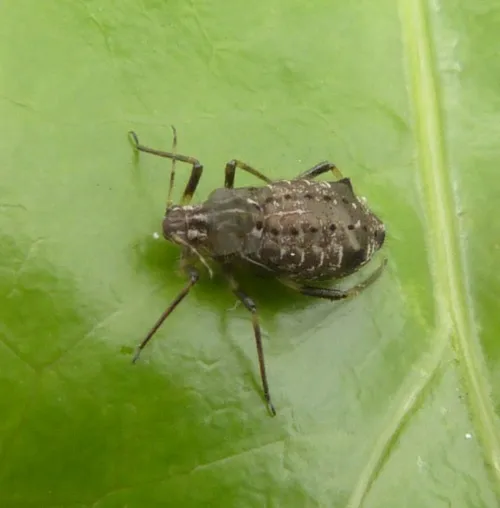
Cinara confinis
Cinara confinis
Apterae of Cinara confinis are greenish-black or dark brown, with a double row of blackish slightly shining speckles and small flecks of fine wax in transverse rows. Cinara confinis alatae are grey-green also with small flecks of fine wax in transver
Green Spruce Aphid
Cinara fornacula
Identification: Apterae are pale, translucent green, or sometimes pale brown, with slight pruinosity On small branches and current year's growth of Picea spp., living at the needle bases, not attended by ants
Black Larch Aphid
Cinara laricifex
Identification: Apterae are dark brown to bronze, without wax Sometimes confused with the European C. laricis (Hartig)
Spruce Shoot Giant-aphid
Cinara pilicornis
Identification: Apterae are either orange-brown or greyish-green Introduced from the Palearctic, 1912
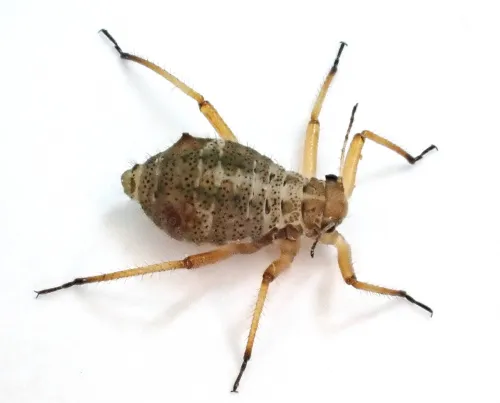
Cinara pinea
Cinara pinea
Apterae of Cinara pinea are shiny orange-brown early in the year and grey or dark brown later on. The body is finely spotted with black and dusted with wax especially along the dorsal midline and laterally. The spots are black scleroite plates at the
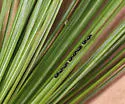
White Pine Aphid
Cinara strobi
Identification: Adults are longlegged, and spider-like in appearance. The body is shiny dark brown with a white stripe down the middle of the back. White powdery spots on the sides are often present. Heavy infestations of aphids may kill young trees
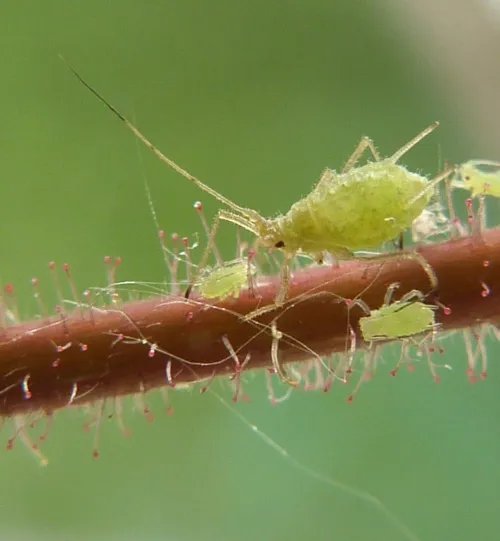
Corylobium avellanae
Corylobium avellanae
Corylobium avellanae apterae are usually yellowish-green but in one form the aphid is mottled with red. For additional information see ‘Further info’ link below. Unless identified by a recognised expert, a photo is required. If the photo doesn't show
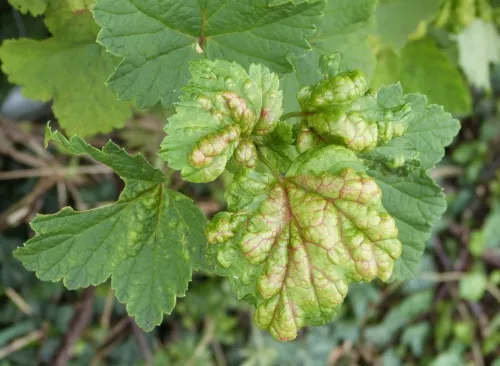
Red Currant Aphid
Cryptomyzus ribis
The aphid Cryptomyzus ribis causes galls on the leaves of Currant species ( Ribes ). The galls take the form of raised thickened patches on the upper surface of leaves, these may be yellowish or red, the leaf often curls downwards. Hairy depressions
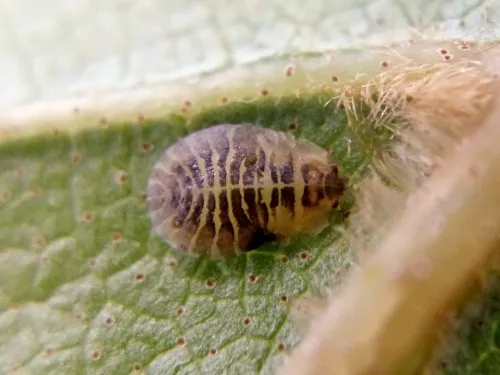
Italian Alder Aphid
Crypturaphis grassii
Crypturaphis grassi is a monophagous species of aphid feeding solely on Italian Alder (Alnus cordata). When Italian Alder (Alnus cordata) is in leaf. Native to southern Italy and Corsica and first recorded in the UK in 1998 its true status is not yet
Broom Hedgehog Aphid
Ctenocallis setosa
Identification: numerous long finger-like protuberances on dorsum
Common Sycamore Aphid
Drepanosiphum plantanoidis
By nitrogen tracking, they enter a reproductive diapause in summer, avoiding period of low nitrogen availability.
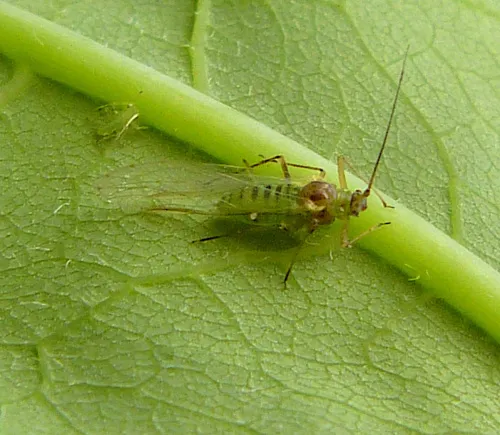
Drepanosiphum platanoidis
Drepanosiphum platanoidis
In this species all adult forms are winged, and range in size from 3.2 to 4.3 mm long. They have red eyes, a brown thorax, and a pale green abdomen. The upper surface of the abdomen has up to 5 or 6 variably developed dark cross-bars. Early in the ye
Wild Service Aphid
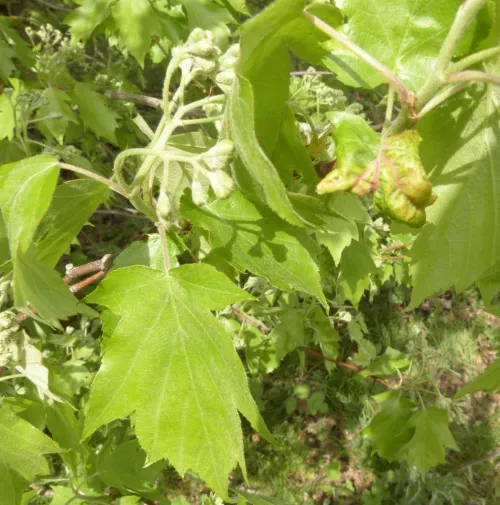
Dysaphis aucupariae
Apterae of the aphid Dysaphis aucupariae cause pseudogalls on the leaves of Wild Service-tree (Sorbus torminalis) The pseudogall is initially pale yellow green, but soon becomes tinged with red. Its form is somewhat variable, either curled from the l
Rosy Leaf-curling Aphid agg.
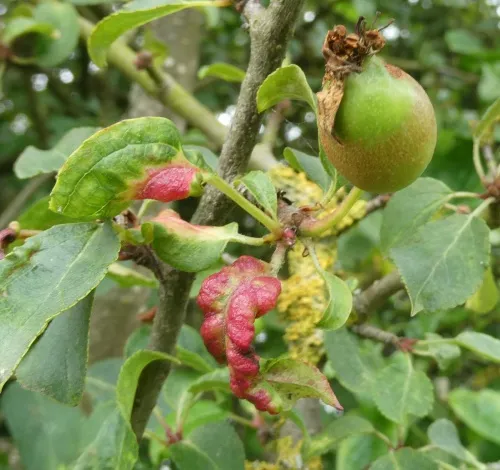
Dysaphis devecta agg.
The Dysaphis devecta species group includes three species of aphid: D. devecta , D. anthrisci and D. chaerophylli . All members of the D. devecta group roll the edges of apple leaves and turn them red to produce a characteristic gall. Please provide
Hawthorn-Buttercup Aphid
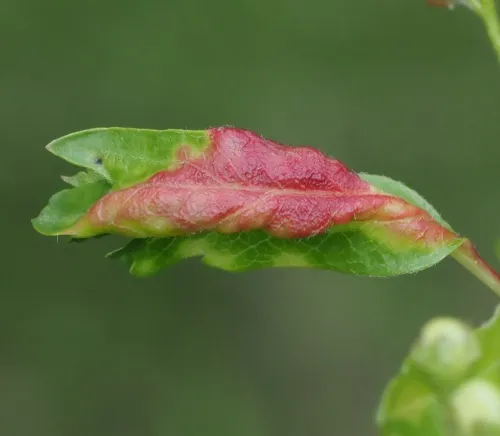
Dysaphis ranunculi
The aphid Dysaphis ranunculi causes a gall on the leaves of Hawthorns. These yellowish galls cause the leaf to turn down like an upturned boat, and contain deep grey waxy aphids. The galls may be flushed rosy pink. It alternates its host between Hawt
Dysaphis tulipae
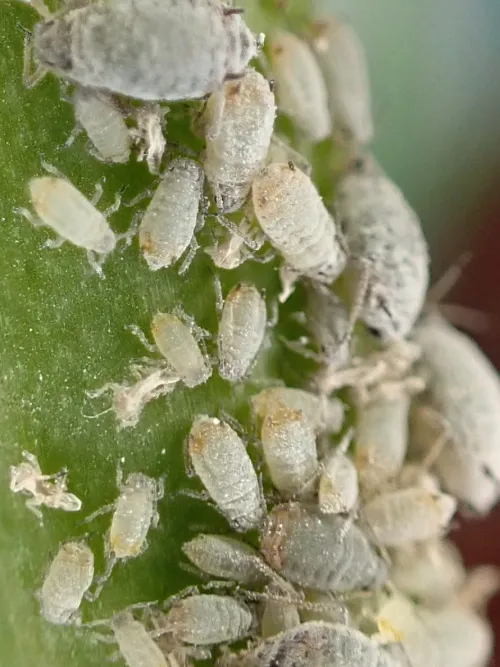
Dysaphis tulipae
Adult apterae of Dysaphis tulipae are pale greenish yellow, but may appear whitish because of an overlay of white powder. There is often a reddish suffusion around the siphunculi which is more prominent in immatures. The body length of the Dysaphis t
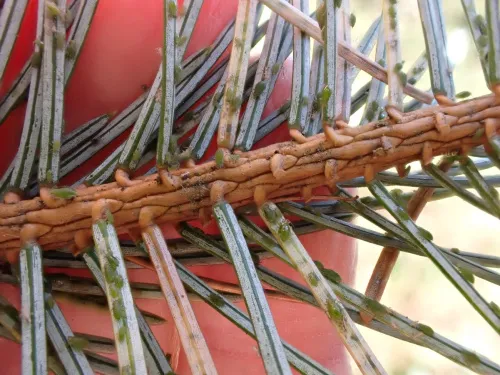
Elatobium abietinum
Elatobium abietinum
A pale to dark green aphid found on spruce ( Picea ) or silver fir ( Abies ) needles, usually Sitka Spruce ( Picea sitchensis ). See Infuential Points (link below) for a description. It sometimes causes defoliation and can be a serious pest of Sitka
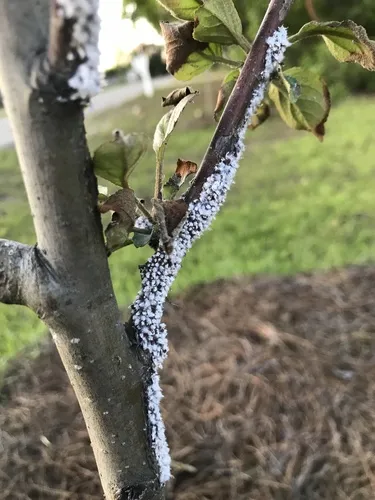
Woolly Apple Aphid
Eriosoma lanigerum
Identification: Reddish-purplish with characteristic bluish-white woolly masses of wax on its body This aphid transmits perennial canker. It is more of a problem when pesticides have destroyed its natural enemies. The larvae of Heringia calcarata (Sy
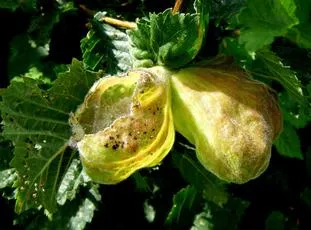
Eriosoma lanuginosum
Eriosoma lanuginosum
Eriosoma lanuginosum is an aphid which causes the formation of a leaf gall on Elm which takes the form of a bladder looking like a pale green egg or pear which may be 6 or even 8 cm long and nearly as wide. The gall is more often seen than the adult
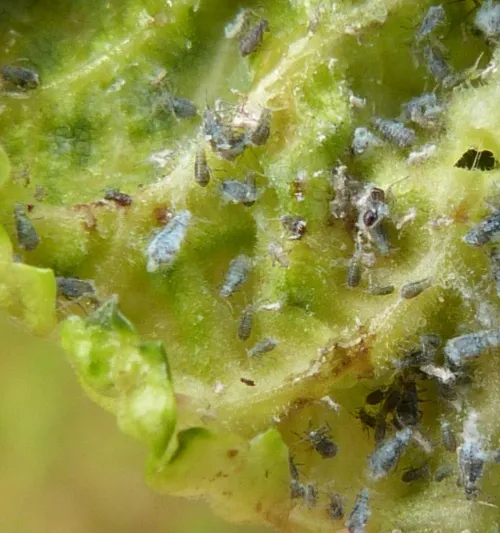
European Elm Leafcurl Aphid
Eriosoma ulmi
Eriosoma ulmi is a greyish waxy aphid that causes a leaf roll gall to form on the leaves of Elm. One half of the Elm leaf blade crinkles and rolls in to form a tubular pouch. The gall is seen more often than the aphid. Other Eriosoma species can caus
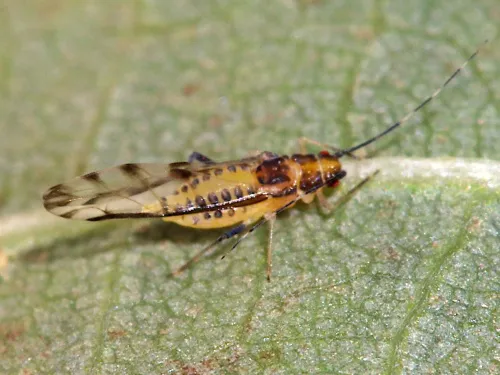
Lime Aphid
Eucallipterus tiliae
All adult viviparae of Eucallipterus tiliae are alates (winged) The body is pale yellow with black markings, including lateral stripes on head and prothorax and two rows of black dorsal abdominal spots. The forewing has a dark front edge and dark spo
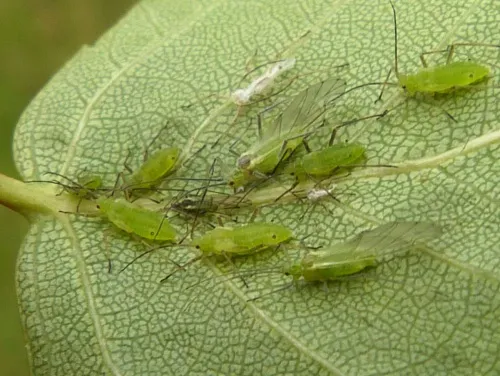
Euceraphis betulae
Euceraphis betulae
E. betulae is mainly green in colour but the body of the adult aphids is dusted with a pale bluish wax, which may also form a furry coating on the antennae and legs. A very similar species, Euceraphis punctipennis, is found on Downy Birch and detaile
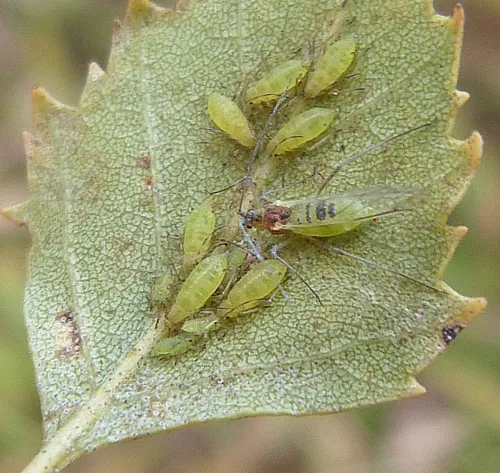
Downy Birch Aphid
Euceraphis punctipennis
One of the larger aphids and has a pale green body, lightly dusted with bluish wax particles, membranous wings and long legs. Euceraphis betulae is found on Silver Birch. Found living on downy birch trees (Betula pubescens) where they feed and multip
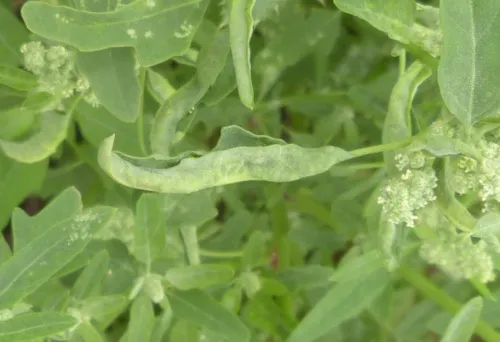
Hayhurstia atriplicis
Hayhurstia atriplicis
The aphid Hayhurstia atriplicis galls the leaves of Fat-hen and Orache, rolling the leaves or bracteoles upwards along the midrib, often several leaves affected. Wherever the host plants occur – often on waste ground or disturbed soil. The galls may
Hoplochaitophorus quercicola
Hoplochaitophorus quercicola
Identification: Apterae are greenish with dark dorsal markings. Spinelike dorsal setae and the association with oak are distinctive. It occurs on both sides of leaves along the veins.
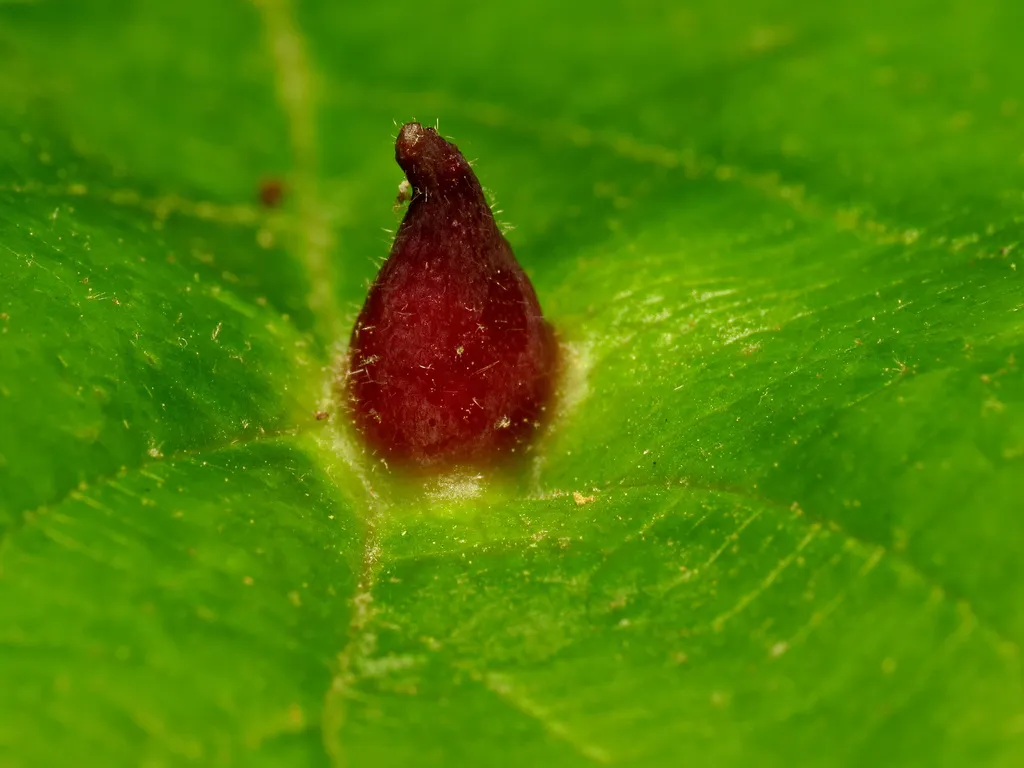
Witch Hazel Cone Gall Aphid
Hormaphis hamamelidis
At lower altitudes they have a secondary host: river birch ( Betula nigra ) but at higher ones they have fewer generations and only one host, witchhazel. They may be two separate species.
Coriander aphid
Hyadaphis coriandri
Introduced from Asia probably Central Asia. Now worldwide.The 2 other members of this genus in the US are also introduced.
Fenel Aphid
Hyadaphis foeniculi
Identification: Mostly grayish green with dark antennae, legs, cornicles, and cauda (tail-like structure). It may be coated by dusty white wax. Winged forms have green abdomen spotted with darker green and with dark patch around the base of each corn
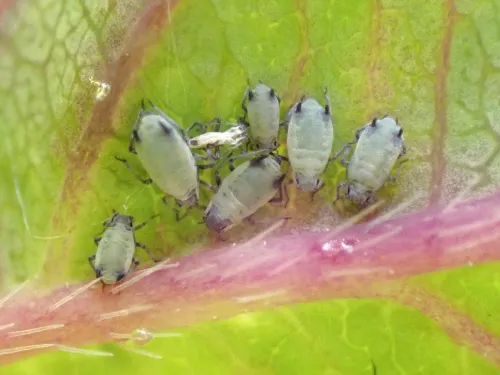
Hyadaphis passerinii
Hyadaphis passerinii
Hyadaphis passerinii apterae are elongate and greyish green with a waxy bloom. The antennae and legs are black as are the siphunculi and cauda. The apterae body length is 1.3 to 2.3 mm. For more detail follow the ' Further Information' link below. Th
Honeysuckle Aphid
Hyadaphis tataricae
Identification: Pale green to cream causes stunting of leaves and stems
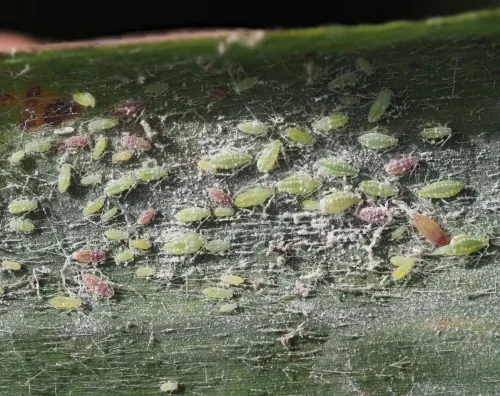
Hyalopterus pruni
Hyalopterus pruni
The Hyalopterus pruni aptera is a small to medium sized aphid, with an elongate shape. It is usually pale green with a fine darker green mottling, covered with wax meal, but on the summer host (reeds) there are dusky red as well as green forms. Aphid
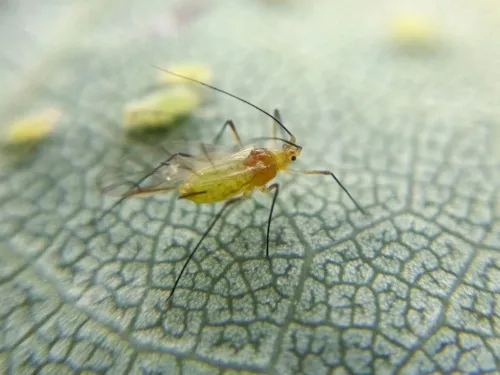
Illinoia liriodendri
Illinoia liriodendri
The body length of an adult Illinoia liriodendri aptera is 1.7 to 2.5 mm. I. liriodendri apterae are spindle shaped and pale green, lightly dusted with wax. There are also yellowish and pink-red forms. For a more detailed description of this species
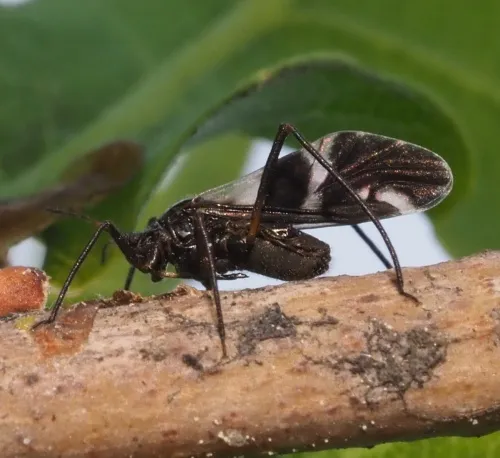
Lachnus roboris
Lachnus roboris
Lachnus roboris apterae are shining blackish brown. The body length of an adult L. roboris aptera is 2.5 to 5.5 mm. L. roboris alates have the forewing membrane pigmented except for four clear patches (hence the common name ‘Variegated’ Oak Aphid). G
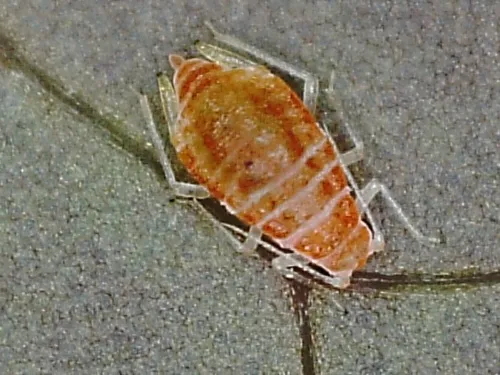
Liosomaphis berberidis
Liosomaphis berberidis
The alate Liosomaphis berberidis has the head, thorax, antennae and tips of legs darker than in the apterous viviparous female. Some tergites may have pale marginal and dorsal sclerites, sometimes fused into cross bands. L. berberidis apterae are gre
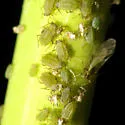
Turnip Aphid
Lipaphis pseudobrassicae
This species is often confused with Lipaphis erysimi . As far as we know, L. erysimi only occurs in northern Europe, whereas L. pseudobrassicae is widely distributed. The two species are extremely similar, but L. pseudobrassicae has relatively longer
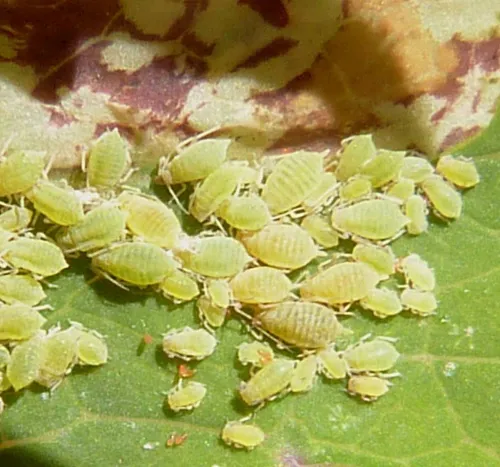
Longicaudus trirhodus
Longicaudus trirhodus
Apterae of Longicaudus trirhodus on their primary host (Rose) are pale yellowish-green and lightly wax-dusted, with slightly darker green transverse bands across the abdomen. Apterae on the secondary hosts (Columbine) are more yellow-green. The third
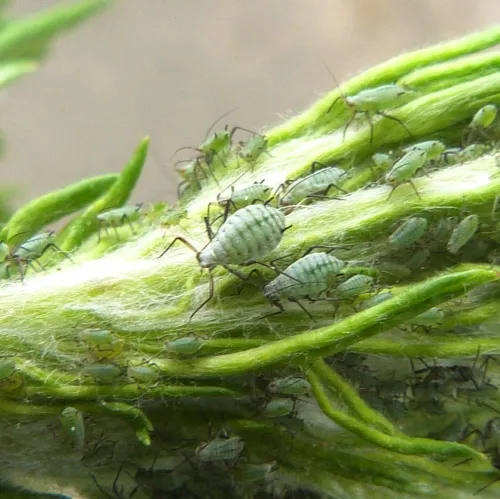
Mugwort Aphid
Macrosiphoniella artemisiae
Macrosiphoniella artemisiae apterae are greyish-green and wax powdered. The antennae and legs are mostly black, except for the base of antennal segment III and the basal part of the front femur which are brown. The siphunculi and cauda are entirely b
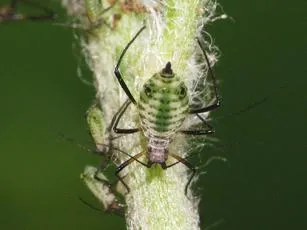
Macrosiphoniella millefolii
Macrosiphoniella millefolii
The Apterae of Macrosiphoniella millefolii are of moderate size, green and wax powdered except for a spinal stripe on the abdomen and presiphuncular spots Good photographs required, please state the host species when submitting records. Macrosiphonie
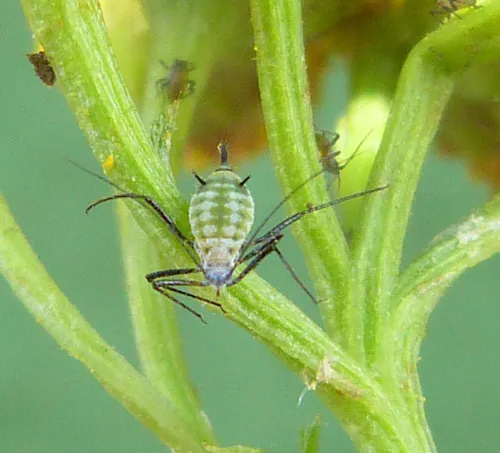
Macrosiphoniella tanacetaria
Macrosiphoniella tanacetaria
Macrosiphoniella tanacetaria apterae are large wax powdered green or pinkish-brown aphids. For a more detailed description of this species please use the ‘Further info:’ link below. Please add good quality images to support your record, and also stat
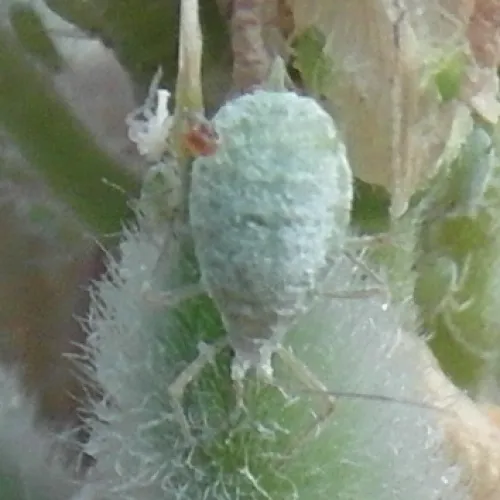
Lupin Aphid
Macrosiphum albifrons
It has a bluish-green body covered with a white wax. Its large size (3.5 to 4.5 mm) makes it easily distinguishable from other aphid species. Lives, as itscommon name suggests, on lupin. Probably fairly frequent and widespread, but little recorded in
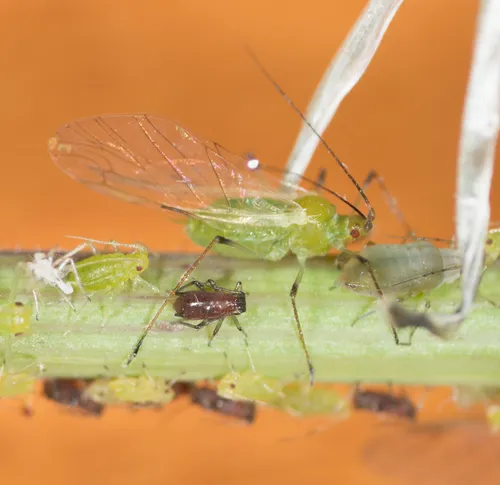
Potato Aphid
Macrosiphum euphorbiae
The adult wingless form is large 1.7 to 3.6mm and an elongated pear shape. It ranges from light green, yellowish green to pinkish red. It often has a darker stripe down the centre of its back, especially in immature nymphs. This species has noticeabl
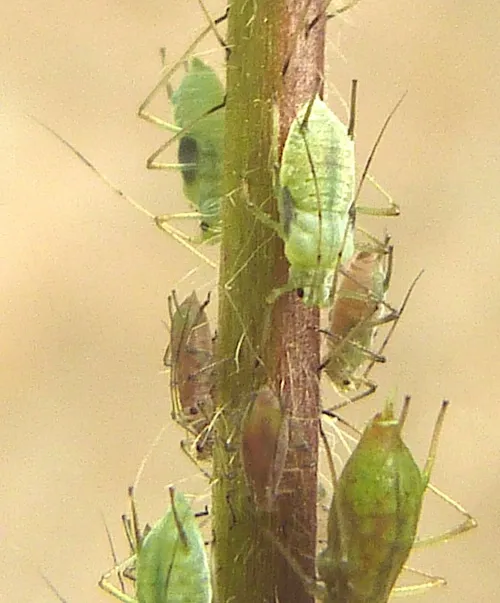
Herb Bennet Aphid
Macrosiphum gei
Macrosiphum gei apterae are spindle-shaped, usually mid-green to bluish green or wine red. Unless identified by a recognised expert, a photo is required and the specimen should be examined with a microscope. In the comments box, state the key or ID m
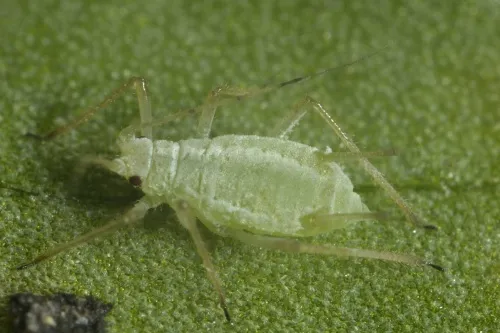
Hellebore Aphid
Macrosiphum hellebori
A largely pale green aphid around 3 mm long with black bands above the 'knees' and dark 'feet'. Infests the flowers and foliage of hellebores. A sap feeding aphid and one of the most important pests of hellebores. Widespread in Britain and fairly fre
Rose Stem Aphid
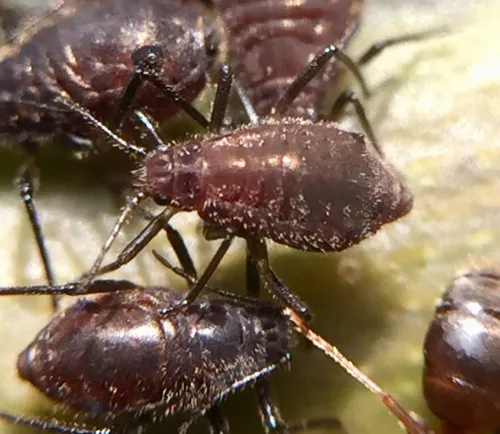
Maculolachnus submacula
2.7-3.8mm. A brown aphid, covered in short hairs and with very short siphuncules. Alates have a dark spot on the wing. It usually feeds on the lower stems or roots of roses, including garden varieties, but can occasionally be found on other species i
Vetch Aphid
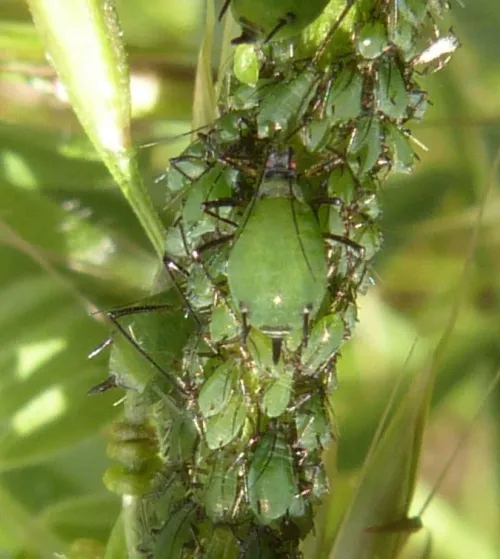
Megoura viciae
Aphids can rarely be described as handsome creatures, but Megoura viciae is perhaps as close as it gets! A large shiny green globular bodied aphid with black head, legs and antennae. It also has startling red eyes. The leaves at the tip of the shoot
Megourella tribulis
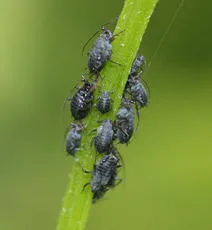
Megourella tribulis
This small aphid is mainly black with a blue-grey bloom on part of its body Found on vetch, possibly on other plants too. We have been unable to find very much information relating to this species, but it seems to be associated with vetch. https://in
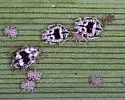
Giant Reed Aphid
Melanaphis donacis
Identification: Purplish brown, coated by whitish waxy secretions. Six segmented antennae. tended by ants
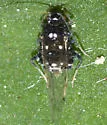
Black Pecan Aphid
Melanocallis caryaefoliae
Identification: only black aphid that attacks pecan foliage. The adult may be various shades of green or black. Nymphs tend to be lighter in color than the adults, especially in spring when the first through fourth instars have little dark pigment. A
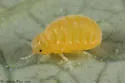
Melaphis asafitchi
Melaphis asafitchi
Identification: From InfluentialPoints , "It is possible to distinguish between two of the species in the Melaphis rhois species group ( Melaphis rhois and Melaphis asafitchi ) when they are on the primary host. For Melaphis rhois the length of the a
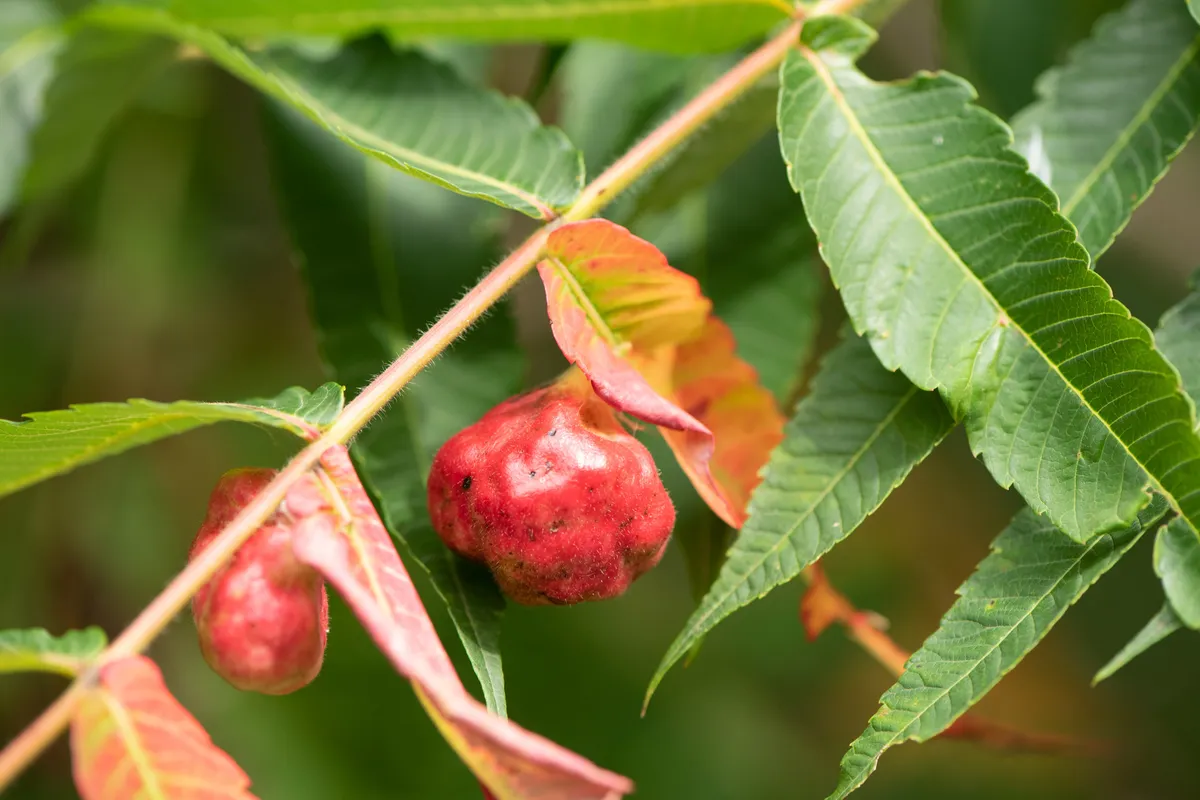
Sumac Gall Aphid
Melaphis rhois
Identification: From InfluentialPoints , "It is possible to distinguish between two of the species in the Melaphis rhois species group ( Melaphis rhois and Melaphis asafitchi ) when they are on the primary host. For Melaphis rhois the length of the a
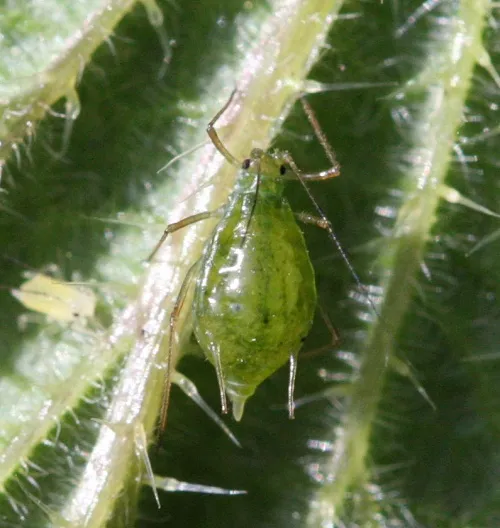
Nettle Aphid
Microlophium carnosum
A very variable species with winged and unwinged forms that may be various colours, often green or pink. The winged females are able to reproduce by parthenogenesis (asexually), giving birth to pregnant offspring. This phenomenon is known as telescop
Monaphis antennata
Monaphis antennata
Identification: All viviparae alate. Very large ventrally flattened, highly cryptic green aphids with relatively short legs and very long, conspicuously blackish antennae, and an elongate dark pterostigma. Males alate, smaller than viviparae and red