
Family Stink Bugs (Pentatomidae)
Pentatomidae is a family in the order Hemiptera. Browse 217 named species recorded in this family, or open an individual profile for its available identification and natural-history information.
Guides
Species in Pentatomidae (217)
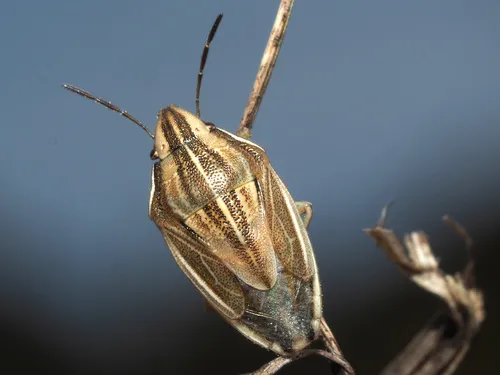
Bishop's Mitre Shieldbug
Aelia acuminata
Length 8 to 9 mm. A large and distinctive striped shieldbug with an obviously pointed head and ridged pronotum. Adult: All year, with new adults found from August onwards. There is one generation per year, adults mating and laying eggs in spring and
African Cluster Bug
Agonoscelis puberula
Identification: - nymph earliest record in our area: AZ 1990
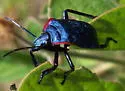
Giant Strong-nosed Stink Bug
Alcaeorrhynchus grandis
Identification: Large, flat, speckled brown, with a short stabbing beak; can be distinguished from Podisus by larger size (>15 mm; Podisus adults reach only 14 mm) and by the double-pointed humeral spines. Instars III‒V are blue-black with red keels
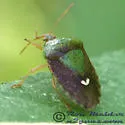
Ascra bifida
Ascra bifida
Ascra bifida (Ascra bifida) is a species in the family Pentatomidae, commonly known as stink bugs, belonging to the order Hemiptera (True Bugs, Cicadas, Hoppers, Aphids and Allies). It is classified within the subfamily Edessinae, suborder Heteropter
Bagrada Bug
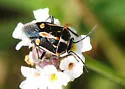
Bagrada hilaris
Identification: distinctive among NA Pentatomidae Det. Salvador Vitanza, 2017 May aggregate on non-hosts in the fall when bug populations are high and food is scarce. Avoiding cruciferous and other hosts at risk should be a serious consideration for
Banasa packardii
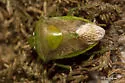
Banasa packardii
Banasa packardii (Banasa packardii) is a species in the family Pentatomidae, commonly known as stink bugs, belonging to the order Hemiptera (True Bugs, Cicadas, Hoppers, Aphids and Allies). It is classified within the subfamily Pentatominae, tribe Pe
Banasa sordida
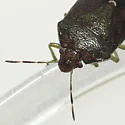
Banasa sordida
Identification: body dark (not always black), with 4 rows of dark blotches on abdomen
Banasa subcarnea
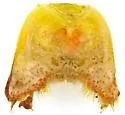
Banasa subcarnea
Identification: Apex of head blunter than in B. calva Common in the mountains of the southwest
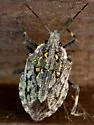
Brochymena myops
Brochymena myops
Identification: The anterolateral pronotal margin is strongly contrastingly pale ivory. The humeri are triangular. This is the largest species in the genus (19-20 mm). It has a pair of large, elliptical, ivory to reddish-yellow ocellar callouses on t
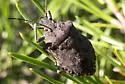
Brochymena punctata
Brochymena punctata
Identification: Head roundly truncate anterior to subapical teeth, unlike in other congeners in ne US rather uncommon
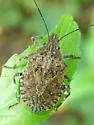
Four-humped Stink Bug
Brochymena quadripustulata
Identification: juga exceed tylus , usually meet/overlap in front of it (may be very difficult to distinguish from B. sulcata )
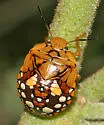
Chinavia marginata
Chinavia marginata
Identification: = Almost identical to C. hilaris yet much less common, though may locally predominate. C. marginatum has a yellow border around most of its body, especially on the face, but C. hilaris may have a yellow border, too. In C. hilare , the
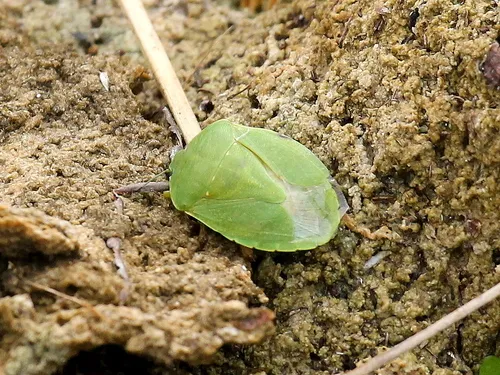
Chinavia pensylvanica
Chinavia pensylvanica
Identification: smaller and more ovoid than C. hilaris anterolateral pronotal margin is curved in C. pensylvanica and straight in C. hilaris , per Andrew Meeds in an iNat comment here uncommon
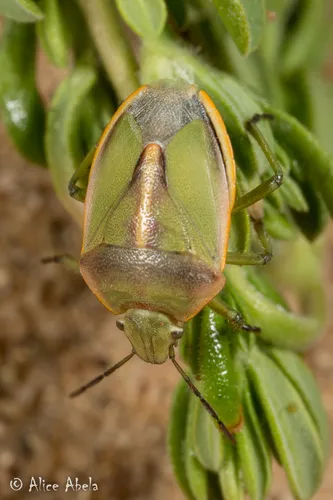
Chlorochroa belfragii
Chlorochroa belfragii
Chlorochroa belfragii (Chlorochroa belfragii) is a species in the family Pentatomidae, commonly known as stink bugs, belonging to the order Hemiptera (True Bugs, Cicadas, Hoppers, Aphids and Allies). It is classified within the subfamily Pentatominae
Dismal Swamp Stink Bug
Chlorochroa dismalia
Identification: connexivium bicolorous: yellow outside, black inside
Chlorochroa faceta
Chlorochroa faceta
Identification: looks nearly identical to C. lineata (CA‒UT); unlike C. belfragii , lacks black distal markings on embolium
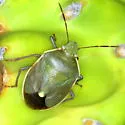
Chlorochroa opuntiae
Chlorochroa opuntiae
Identification: Rostrum exceptionally long (ventral shots may prove critical). Southern specimens tend to be green and smaller; northern ones, purplish-black and larger Found on cholla cactus along with Narnia sp. (Coreidae)
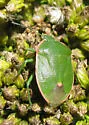
Chlorochroa persimilis
Chlorochroa persimilis
Chlorochroa persimilis (Chlorochroa persimilis) is a species in the family Pentatomidae, commonly known as stink bugs, belonging to the order Hemiptera (True Bugs, Cicadas, Hoppers, Aphids and Allies). It is classified within the subfamily Pentatomin
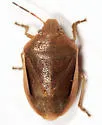
Chlorochroa saucia
Chlorochroa saucia
Identification: pronotum with anterolateral margins carinate (ridged) but not reflexed
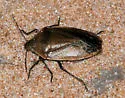
Chlorochroa senilis
Chlorochroa senilis
Identification: can be separated from other Chlorochroa (Rhytidolomia) spp. by large size, pale margins, and very elongate body pronotum with anterolateral margins carinate (ridged) and narrowly but sharply reflexed
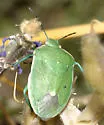
Uhler's Stink Bug
Chlorochroa uhleri
Identification: unlike other congeners, C. sayi and uhleri both have a narrow embolium. In uhleri it widens slightly apically whereas in sayi the embolar suture parallels the hemelytral margin. Also, sayi has a purple membrane, vs clear in uhleri . (
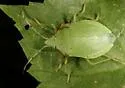
Chlorocoris distinctus
Chlorocoris distinctus
the only representative of the nominate subgenus in our fauna (the subgenus is primarily S. American and contains a total of 13 spp.)
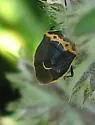
Cosmopepla conspicillaris
Cosmopepla conspicillaris
Identification: contrasting creamy white tip of the scutellum is the most obvious difference from C. uhleri (in which the apex is concolorous with the disc of the scutellum) [D.B. Thomas, pers.comm.] Often found on plants in the genus Stachys of the
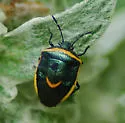
Cosmopepla decorata
Cosmopepla decorata
Identification: The yellow markings on the prothorax, scutellum, and hemelytra can vary from pale yellow to bright orange-red. Type Locality: Mexico
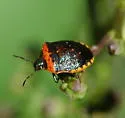
Cosmopepla uhleri
Cosmopepla uhleri
Identification: scutellum uniformly dark (no pale margin around the tip)
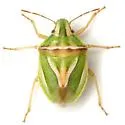
Cyptocephala elegans
Cyptocephala elegans
Identification: distinguished from all congeners by its striking green and white markings and much elongated head. The head of T. brevis is much broader. (Malloch 1919) Type Locality: "male, Loma, Texas, July 7, 1908." Allotype Locality: "Lake Lomalt
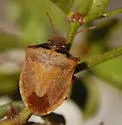
Creosote Stink Bug
Dendrocoris contaminatus
Identification: Yellowish to brick red, pronotal cicatrices contrastingly dark brown (characteristic), connexivum unicolorous Dets. Salvador Vitanza the most common pentatomid on Larrea
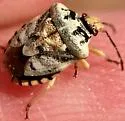
Dendrocoris neomexicanus
Dendrocoris neomexicanus
Identification: similar to D. contaminatus (that is restricted to creosote bush)
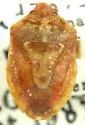
Dendrocoris parapini
Dendrocoris parapini
Identification: The elongate head with dark punctations along the margin is diagnostic. Det. J. E. Eger, 1984 two short series from the Davis Mtns in the TAMUIC and three county records from NM
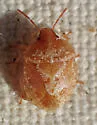
Dendrocoris pini
Dendrocoris pini
Identification: lack of dark punctations on the dorsum and pleura are diagnostic
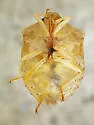
Dendrocoris reticulatus
Dendrocoris reticulatus
Identification: reticulate venation is unique in the genus easily collected in numbers by beating live oak in se. AZ and adjacent NM (D.B. Thomas, pers. comm. to =v=)
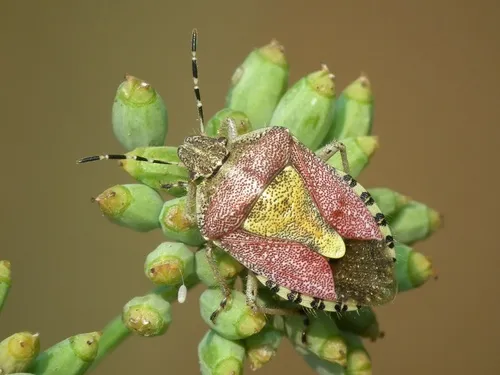
Hairy Shieldbug
Dolycoris baccarum
Length 11-12 mm. A large and distinctive purple-brown and greenish shieldbug which is covered with long hairs (c.f. Brown Marmorated Stink Bug, Halyomorpha halys , which is smooth). The antennae have three white bands (c.f. two in Halyomorpha halys )
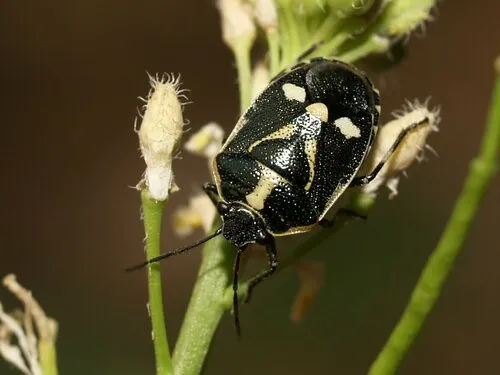
Brassica Shieldbug
Eurydema oleracea
Length 6 to 7 mm. Dramatically coloured, the dark metallic green/blue-black ground colour is overlain with red, yellow, creamy white or orange markings. Larvae may be found May-July on a range of Brassicas including Garlic Mustard and Horse-radish. T
Euschistus biformis
Euschistus biformis
Identification: dark membrane diagnostic variable in coloration, shape of humeri, and the length of juga relative to tylus (lobes being equally long or juga plainly surpassing tylus)
Euschistus crassus
Euschistus crassus
Euschistus crassus (Euschistus crassus) is a species in the family Pentatomidae, commonly known as stink bugs, belonging to the order Hemiptera (True Bugs, Cicadas, Hoppers, Aphids and Allies). It is classified within the subfamily Pentatominae, trib
Euschistus crenator
Euschistus crenator
Identification: Dorsum brown with antennae yellow but with dark spotting on first antennomere and femora. Humeri obtuse to acute, but if acute they tend to be retrorse. Can only be separated from E. quadrator by male genitalia. Both co-occur in TX (w
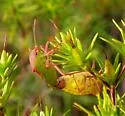
Euschistus ictericus
Euschistus ictericus
Identification: ridge across pronotum is distinctive
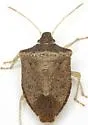
Euschistus obscurus
Euschistus obscurus
Identification: The most noticeable feature is the light "worn" bar between humeri. Humeri usually rounded but may be slightly pointed. Underside either green or yellow; in a mating pair there is always one yellow and one green. Det. M. A. Quinn, 201
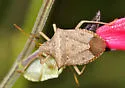
Euschistus quadrator
Euschistus quadrator
not found in FL until 1992, has spread throughout the state since and supplanted other stink bugs in cotton, soybean, citrus, and other crops; pest of many fruit, vegetable and nut crops in se US
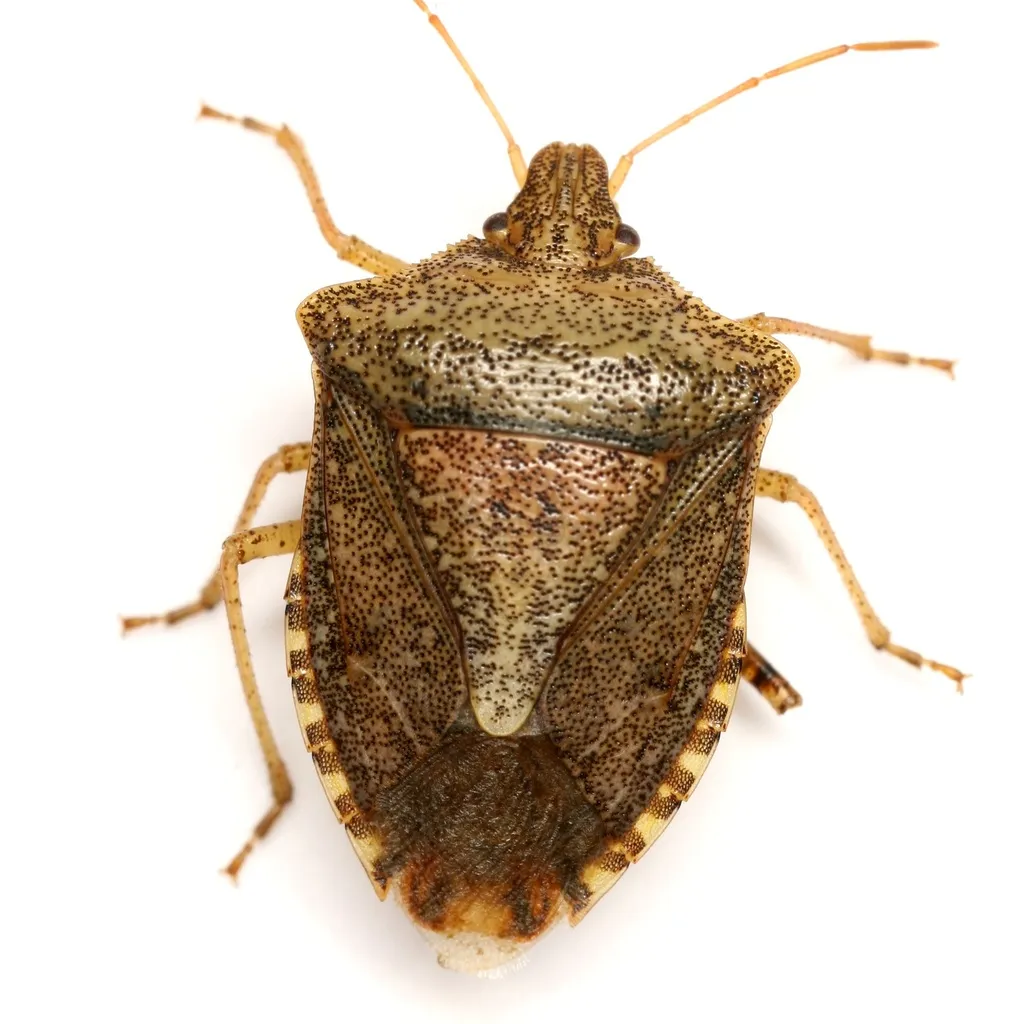
Brown Stink Bug
Euschistus servus
the most economically important species of the genus in our area; may damage soybean, corn, cotton, alfalfa, sorghum, fruit, pecan, and tobacco ( 4 )
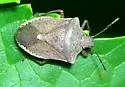
One-spotted Stink Bug
Euschistus variolarius
Identification: The only reliable way to separate variolarius from servus is a ventral view. E. variolarius males have one big spot on the pygophore; servus , none. females have no dark spot at anterior corner on the edge of each abdominal segment (p
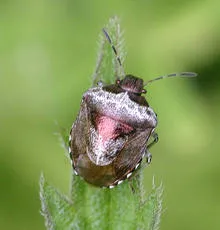
Woundwort Shieldbug
Eysarcoris venustissimus
Length 5-7 mm. The Woundwort Shieldbug is a small greenish-grey species. The head and the front of both the pronotum and scutellum are copper coloured, while the connexivum is marked with black and white. Adult: All year - new adults may be found fro
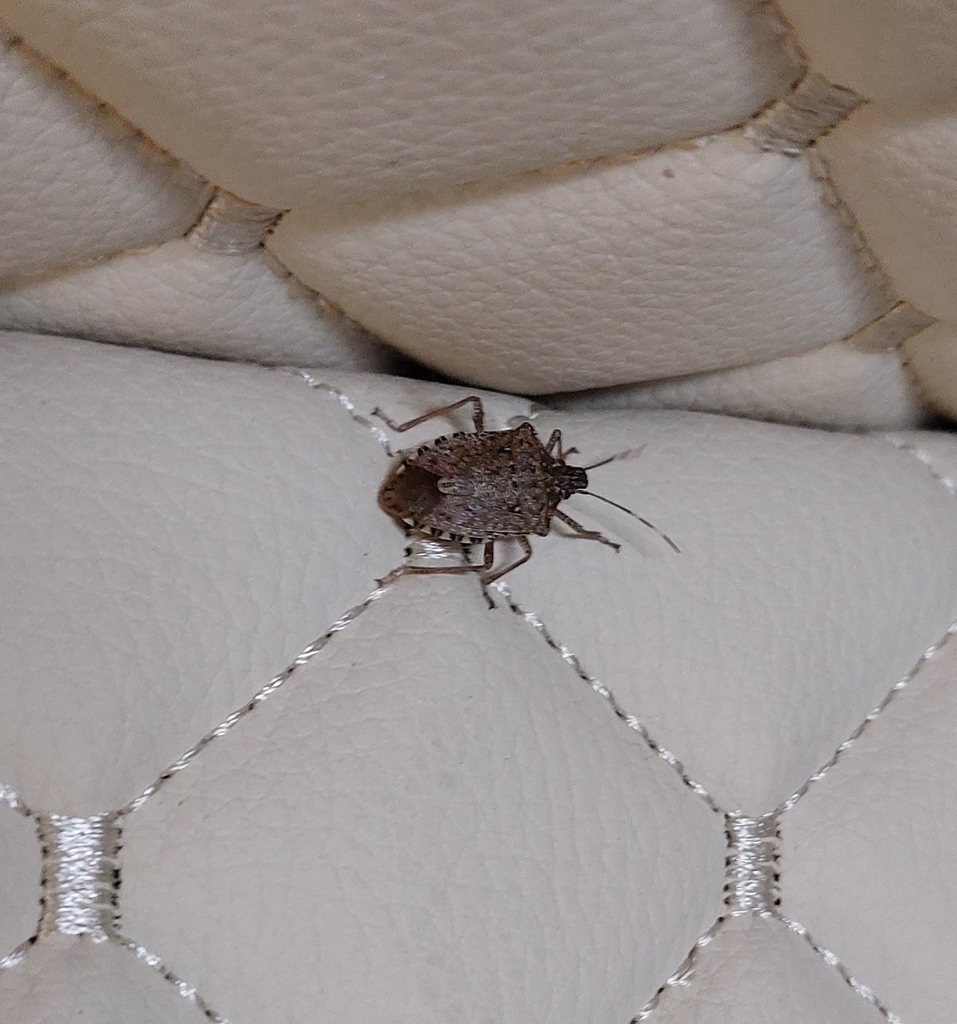
Brown Marmorated Stink Bug
Halyomorpha halys
no rights reservedA large bug (12 to 17 mm long). Similar to the Hairy Shieldbug but distinguished by having white spots at the top of the scutellum and two white bands on the antennae (Hairy Shieldbug has 3). It also has protruding 'shoulders' on the pronotum. Superf
Holcostethus abbreviatus
Holcostethus abbreviatus
Identification: connexivum with alternating dark/pale pattern ; tylus distinctly enclosed by juga
Holcostethus fulvipes 0
Holcostethus fulvipes
Identification: the alternated connexiva, zigzag bands on the abdominal venter, and the gap between jugal apices are diagnostic
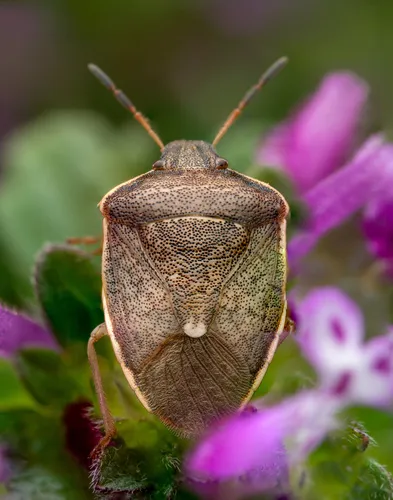
Holcostethus limbolarius
Holcostethus limbolarius
Identification: compact oval body, dark brown dappled with black; small short head; humeral angles rounded; large triangular scutellum w/ pale apical tip; pronotum and elytra with thin cream-colored margin (emphasis added) - BWM dark apical ant. segm
Holcostethus macdonaldi
Holcostethus macdonaldi
Identification: abdominal venter dark brown with a few pale markings , connexivium yellow
Loxa flavicollis
Loxa flavicollis
Identification: Antennae variable, usually uniformly lighter than disk of head, occasionally tinged with red or slightly darker than disk of head, basal two segments sometimes possessing fine dark brown to piceus line on inferior surface. Humeri mode
Loxa viridis
Loxa viridis
Identification: Antennae highly variable in color, from almost entirely pale to dark, mostly possessing some red coloration and at least one fine brown to piceus line on two basal segments; apical three segments commonly darker at apex than at base (
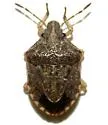
Mcphersonarcys aequalis
Mcphersonarcys aequalis
Identification: Clypeus distinctly elevated above mandibular plates Det. M. A. Quinn, 2017
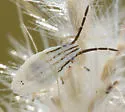
Mecidea major
Mecidea major
Identification: spiracles often darkened ; male antennomere II longer than III
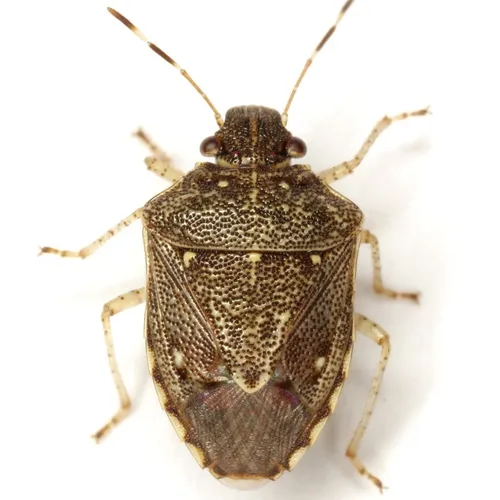
Mormidea cubrosa
Mormidea cubrosa
Mormidea cubrosa (Mormidea cubrosa) is a species in the family Pentatomidae, commonly known as stink bugs, belonging to the order Hemiptera (True Bugs, Cicadas, Hoppers, Aphids and Allies). It is classified within the subfamily Pentatominae, tribe Ca
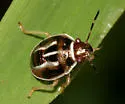
Mormidea lugens
Mormidea lugens
Identification: A small stinkbug, recognized by the bronzy coloration and white boundary around the scutellum Andrew Meeds reared this 5th instar to this adult Parasitized by the tachinid Cylindromyia lobata and used as nest provisions by the wasps B
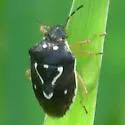
Mormidea pama
Mormidea pama
Identification: Mormidea pama , unlike M. pictiventris , always has that little white spot or ingression at the middle of the white anterolateral pronotal margin. (D.B.Thomas, pers.comm. to MAQ, 2019) Det. M. A. Quinn, 2019 Type Locality: La Lima Hon
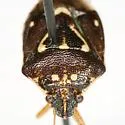
Mormidea pictiventris
Mormidea pictiventris
Identification: Differing from M. pama as follows: pale narrow border margin along anterolateral margin of pronotum usually even, not intruding between anterior and humeral angles. Narrow band along margin of connexiva entirely pale, not formed by pa
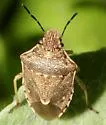
Moromorpha tetra
Moromorpha tetra
Identification: Small flat spine on each side of pronotum arising at posterior angle and projecting over the corium see
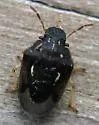
Neottiglossa cavifrons
Neottiglossa cavifrons
Identification: The most distinctive species in the genus; head with broadly rounded apex and distinctly concave surface covered with inward-curved hair is diagnostic
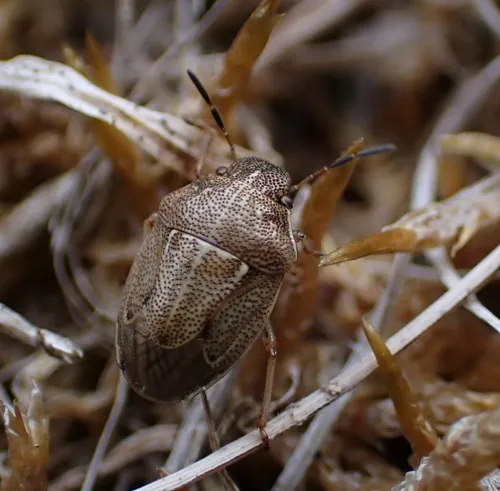
Small Grass Shieldbug
Neottiglossa pusilla
Length 4 to 4.5 mm. This small shieldbug is pale brown, with paler margins to the pronotum and abdomen, and a pale central stripe running down the pronotum and scutellum. The short head is rather flattened at the front.; the new generation of adults
Odmalea schaefferi
Odmalea schaefferi
Identification: spmns should have distinct black spots on the scutellum at the apex of the frenum, and usually black spots on the basal angles of the scutellum. (D. Rider, pers. comm.) pale impunctate area on the forewing (D.B. Thomas, pers. comm.) T
Oebalus insularis
Oebalus insularis
Identification: O. insularis vs O. ypsilongriseus : " O. ypsilongriseus has a second segment that is shorter than and hardly articulated on the third. O. insularis has a normal length second segment which is nearly as long as the third and generally
Rice Stink Bug
Oebalus pugnax
Identification: Prominent spines, projecting forward, are distinctive in adult. Early instars are mostly pinkish with transverse black spots on abdomen; later instars have pale body with pink and black spots.
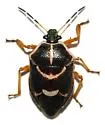
Oplomus dichrous
Oplomus dichrous
Identification: chevron-shaped prosternum characteristic; in identifying Asopines it helps to be color blind (actually there are some consistent patterns in some of the species) (D.B. Thomas, pers. comm.) our only representative of the subg. Polypoec
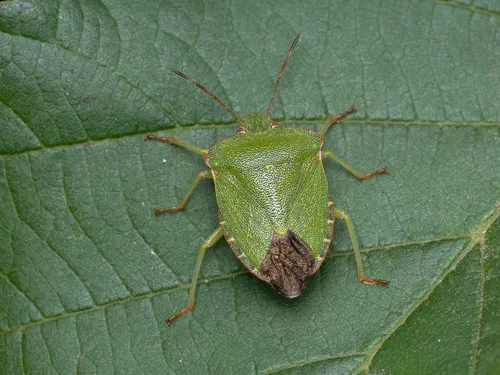
Common Green Shieldbug
Palomena prasina
Length 12-13.5 mm. A large shieldbug with a dark wing membrane and reddish antennae (4th and 5th segments). Adults are bright green in the spring and summer but finely punctured with dark marks. They become a darker bronze-brown prior to winter hiber
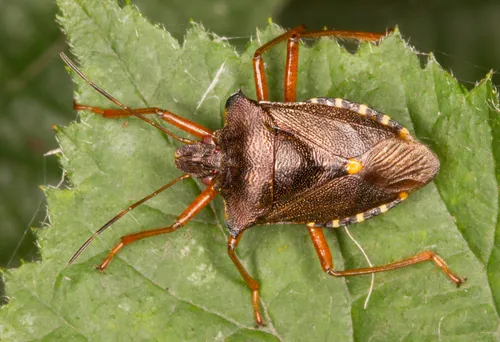
Red-legged Shieldbug
Pentatoma rufipes
Length 11-14 mm. A large brown shieldbug which has orange legs and slightly hooked projections at the front of the pronotum. The pale spot at the tip of the scutellum varies from orange to cream. Well wooded areas, orchards and gardens. Adults may be
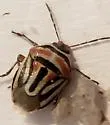
Perillus lunatus
Perillus lunatus
Identification: Marked with a narrow, black, lunate band on the pale-colored pronotum
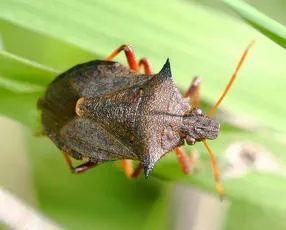
Spiked Shieldbug
Picromerus bidens
Length 12-13.5 mm. A large and distinctive predatory shieldbug, which has unmistakeable thorn-like projections on the front of the pronotum. Often found in flower-rich woodland edge habitats and also frequent on heathland. This species usually overwi
Red-banded Stink Bug
Piezodorus guildinii
greatly expanded its range in recent years, by 2009 becoming the number one pest of soybeans across several southern states from AL to TX ( Zhao & Jones 2012 ); the most important soybean pest in Brazil
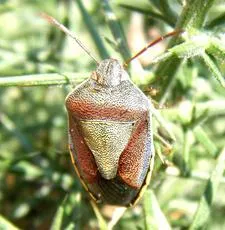
Gorse Shieldbug
Piezodorus lituratus
Length 10-13 mm. A large shieldbug with two adult colour forms which are related to sexual maturity. Those emerging and mating in the spring are predominantly green, whereas the new generation appearing in the late summer have purple-red markings on
Podisus serieventris
Podisus serieventris
Identification: Strongly maculate femora and typically with a row of spots on the abdominal venter.
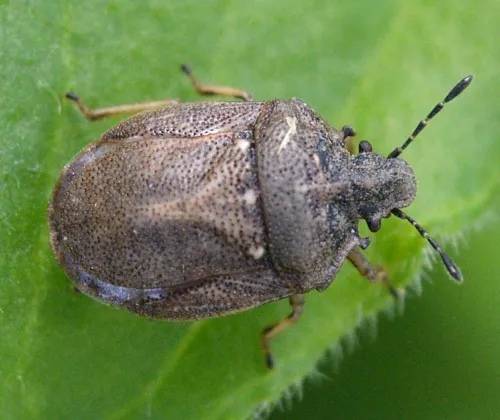
Turtle Shieldbug
Podops inuncta
Length 5 to 6 mm. A fairly small shieldbug with two unmistakeable features; a long tongue-like scutellum which reaches the rear of the abdomen and two small projections on the pronotum at each side of the head. Found in dry and damp habitats, it is s
Prionosoma podopioides
Prionosoma podopioides
Identification: A hairy medium-sized bug with prominent marginal tooth on rear outside corner of each abdominal segment, short labium (segmented sheath covering stylets--the beak-like mouthpart) not reaching the middle coxae, and broad teeth on front
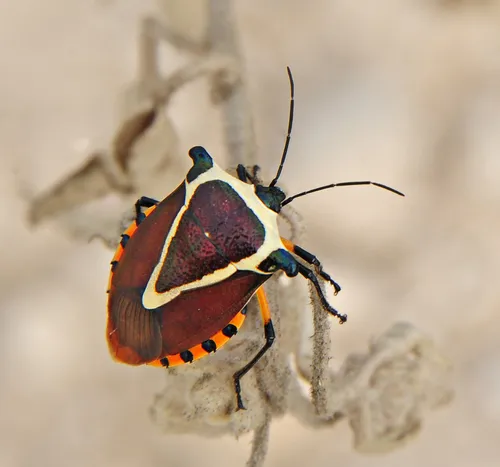
Ramosiana insignis
Ramosiana insignis
Given that Schoepfia schreberi apparently doesn't occur in s. TX, are there any potential alternate hosts? In the continental US, the genus Schoepfia is only found in Florida Apparently, the only other member of the Olax Family (Olacaceae) present in
Rhacognathus americanus
Rhacognathus americanus
Species is likely extirpated from much of its former range, and possibly extinct. S. Paiero searched extensively for records of this species but was unable to confirm any records more recent than 1966.
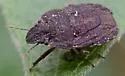
Sciocoris longifrons
Sciocoris longifrons
Type Locality: 2 males coll'ed by J. D. Mitchell on 18 Nov 1907, Victoria, Texas. Other paratypes per Barber: C.V. Riley reported(*) 4 from "Tex" (2 males, 2 females); Belfrage coll'ed one from "Tex" [possibly around Gatesville, TX]; and one from Aus
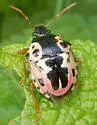
Anchor Stink Bug
Stiretrus anchorago
Identification: markings/color highly variable • distinguishable from other predatory pentatomids by the large scutellum almost reaching the tip of abdomen; profemora with strong tooth Nymphs
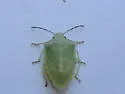
Thyanta calceata
Thyanta calceata
Identification: overwintering forms often brown: black anterolateral pronotal margins distinguish it from the similar T. custator accerra but not sufficient to distinguish T. calceata from T. custator custator . Where their ranges overlap, across the
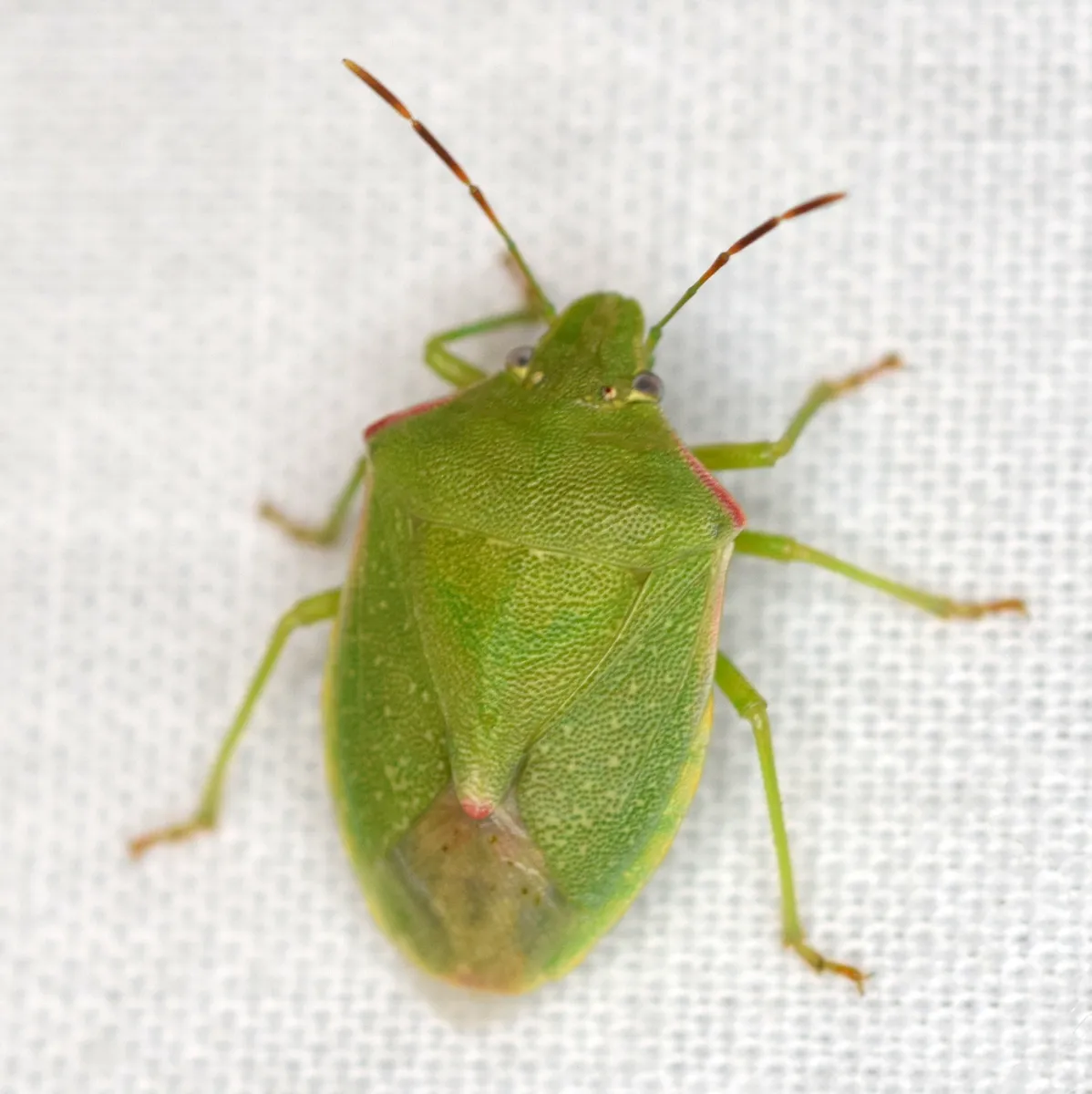
Red-shouldered Stink Bug
Thyanta custator
Identification: highly variable overwintering forms are often, but not always, brown, e.g.: T. custator accerra is the wide-ranging subspecies, while T. custator custator is restricted to the Atlantic coastal plains and can easily be dinstinguised fr
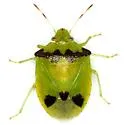
Thyanta maculata
Thyanta maculata
Identification: General color green to brown; often with varying amounts of reddish on pronotum between humeral angles, often forming two oblong spots, one on each side of middle. Apices of scutellum and coria occasionally rubiginous. originally dist
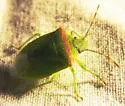
Thyanta pallidovirens
Thyanta pallidovirens
Identification: No row of spots on the underside (left T. pallidovirens , right: T. custator accerra ), although row of spots may be absent in southwestern T. custator accerra "spinosa" form , making this less useful in areas like southern California
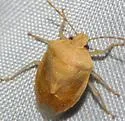
Thyanta planifrons
Thyanta planifrons
Identification: Distal widening of the ostiolar canal (narrower in middle), vertex of head relatively flat
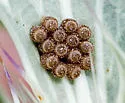
Trichopepla semivittata
Trichopepla semivittata
Identification: variable, often with a tinge of pink, an unusual color for a Nearctic pentatomid "They rarely occur alone and sometimes can be pretty numerous. The stripes and amount of light or dark brown can vary quite a bit, and I've even seen ind
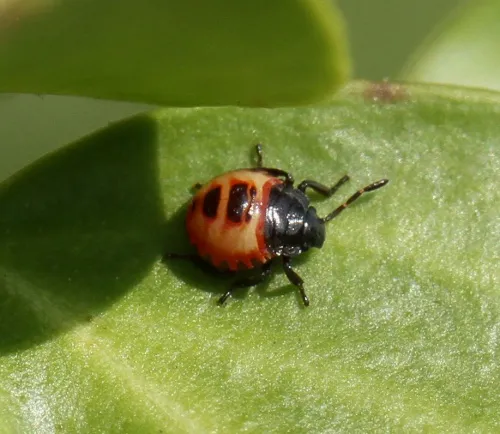
Bronze Shieldbug
Troilus luridus
Length 10-12 mm. A large predatory shieldbug which has an orange band on the penultimate antennal segment. The legs are brown and the scutellum lacks an orange tip, further distinguishing this species from the Forest Bug. In addition, the frontal pro
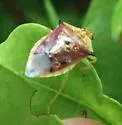
Tyrannocoris jole
Tyrannocoris jole
Identification: Pale with contrastingly dark humeral angles and straight, smooth anterolateral pronotal margins Apparently has been detected in FL since 1985 in limited numbers (pers. comm w/S. Halbert to AM) but apparently becoming more established
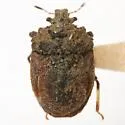
Weda tumidifrons
Weda tumidifrons
Holotype: Male, Plano, Texas, July 1907, E.S. Tucker, U.S.N.M. type no. 61517. Paratypes: Texas: male, Esperanza Ranch, Brownsville, C. Schaeffer; male and female, College Station, April 8, 1928, H.G. Johnston; and May 20, 1928, J.C. Gaines; female,
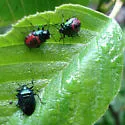
Zicrona americana
Zicrona americana
Zicrona americana (Zicrona americana) is a species in the family Pentatomidae, commonly known as stink bugs, belonging to the order Hemiptera (True Bugs, Cicadas, Hoppers, Aphids and Allies). It is classified within the subfamily Asopinae, suborder H
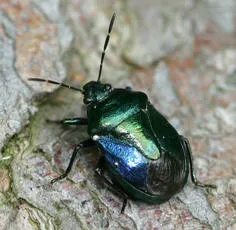
Blue Shieldbug
Zicrona caerulea
Length 5-7 mm. A medium-sized dark shieldbug with a deep blue-green metallic sheen and a dark wing membrane. The nymphs can resemble early instars of Troilus luridus but the legs of Zicrona caerulea are all dark rather than mottled and the head and p
Aelia americana
Aelia americana
Amaurochrous brevitylus
Amaurochrous brevitylus
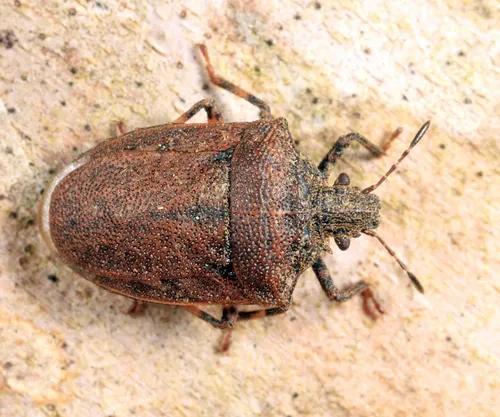
Amaurochrous cinctipes
Amaurochrous cinctipes
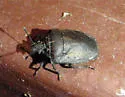
Amaurochrous dubius
Amaurochrous dubius
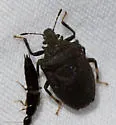
Amaurochrous magnus
Amaurochrous magnus
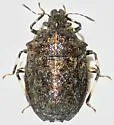
Amaurochrous ovalis
Amaurochrous ovalis
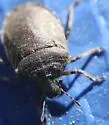
Amaurochrous vanduzeei
Amaurochrous vanduzeei
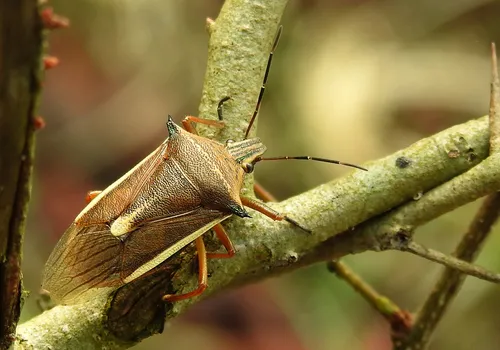
Andrallus spinidens
Andrallus spinidens
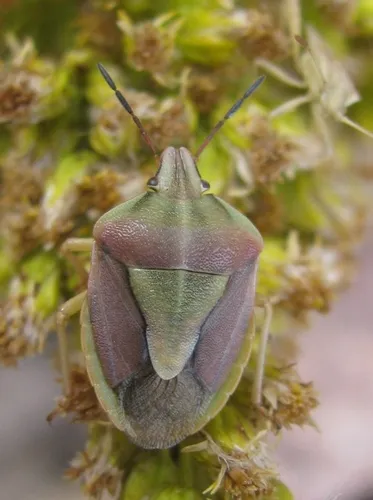
Antheminia eurynota
Antheminia eurynota
Antheminia sulcata
Antheminia sulcata
Apateticus lineolatus
Apateticus lineolatus
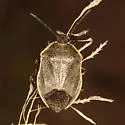
Apateticus marginiventris
Apateticus marginiventris
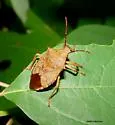
Apoecilus bracteatus
Apoecilus bracteatus
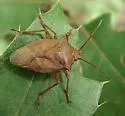
Apoecilus cynicus
Apoecilus cynicus