
Scaralina marmorata
This record describes Scaralina marmorata (species). Recorded family: Fulgoridae. Recorded order: Hemiptera.
Identification and Appearance
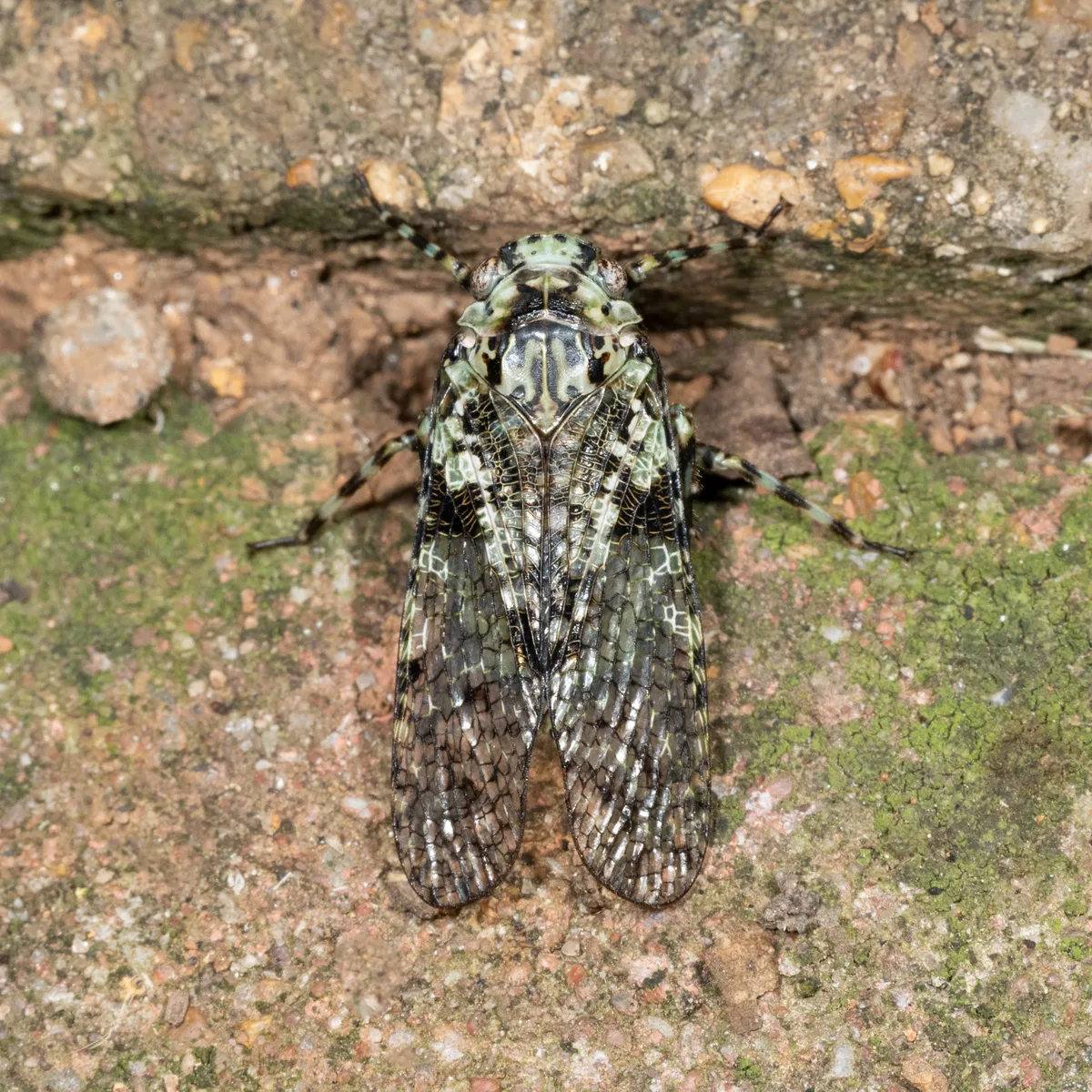
| Feature | Description |
|---|---|
| Additional details | Was described by the Marquis Massimiliano Spinola (1839, Ann. Soc. Ent. Fr. 8: 271-274) in his castle in Italy as Calyptoproctus marmoratus from North America. Metcalf didn't find any specimens he thought fit the description, so didn't illustrate it in his 1923 paper on the Fulgoridae of the e. US. However, Metcalf named a fulgorid species Crepusia glauca based on a specimen from TX and paratypes from Nogales, AZ (someone looked for the TX type recently and couldn't find it anywhere); later, Metcalf changed that name to Alphina glauca . (pers. comm. by Dr. O'Brien and Dr. Hamilton). Alphina glauca was rendered a synonym of Spinola's C. marmoratus in Yanega et al. 2024. Original guide page here gave length as approximately 1 inch (25 mm), an overestimate, even including extended wings. Figure 16 of Yanega et al. includes a scale, showing the body length of a female to be ~12 mm, perhaps 16-18 mm including folded wings. |
| Wingspan | Wingspan given in one image here is 1.25 inches (32 mm). |
| Body | Body length on that image looks to be about 13 mm. Another image gives length (with wings?) as 21 mm. Metcalf, describing the (synonymous) Crepusia glauca , says Length, apex of head to apex of abdomen 10.4 mm.; to tip of wing 13.1 mm.; wing expanse 35.4 mm ( BHL link ). |
Wikipedia reference for Scaralina marmorata: https://en.wikipedia.org/wiki/Scaralina_marmorata.
Classification
- Kingdom
- Animalia
- Phylum
- Arthropoda
- Class
- Insecta
- Order
- Hemiptera (True Bugs, Cicadas, Hoppers, Aphids and Allies)
- Suborder
- Auchenorrhyncha
- Superfamily
- Fulgoroidea
- Family
- Fulgoridae (Fulgorid Planthoppers)
- Subfamily
- Poiocerinae
- Tribe
- Poiocerini
- Genus
- Scaralina
Imported taxonomy record. Source availability varies; see the source references and editorial policy below.
Habitat and Range
Habitat
Deciduous forests
Geographic Range
se. US (VA-FL to e.OK-c.TX)
Diet and Behavior
Diet: Possibly associated with water oaks It was on Quercus nigra where I saw what appeared to be a cluster of nymphs for this species (B. Reynolds, per. obs.)
About True Bugs, Cicadas, Hoppers, Aphids and Allies: the wider group
Order-level background for Hemiptera, the group containing Scaralina marmorata. Species-specific details appear above.
Group overview
Hemiptera (true bugs) includes over 80,000 described species across cicadas, aphids, leafhoppers, shield bugs, and bed bugs. Aphids alone cost global agriculture an estimated $2.5 billion annually in crop losses.
Ecological role of the group
Many Hemiptera are essential food sources for birds and predatory insects. Cicadas provide massive nutrient pulses during emergence events - a single Brood X emergence can involve trillions of individuals across 15 states.
Economic and practical significance of the group
The brown marmorated stink bug (Halyomorpha halys) caused $37 million in apple crop losses in a single year in the U.S. Mid-Atlantic region. Bed bug infestations in the U.S. increased by 500% between 2001-2010, costing the hotel industry hundreds of millions annually.
Recorded sources for this group: USDA, EPA, University research. Imported estimates may describe particular regions or reporting periods.
Photos of Scaralina marmorata (3)
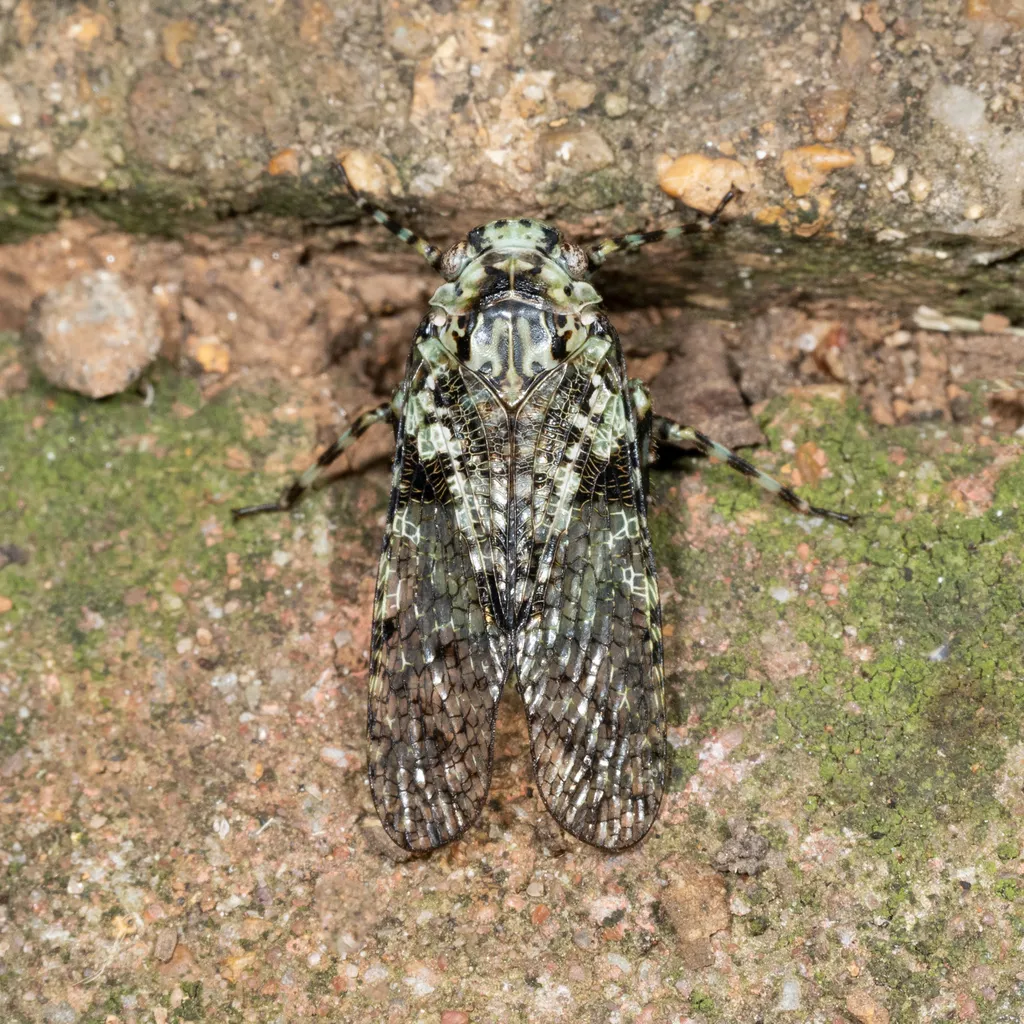
Photo credits: Contributed by Bill Reynolds; Additional contributions by cotinis , Mike Quinn , v belov , antarctica
Frequently Asked Questions About Scaralina marmorata
What is Scaralina marmorata?
Scaralina marmorata is a species in the family Fulgoridae, within the order Hemiptera.
How big is Scaralina marmorata?
body length ~12 mm; see Remarks
Where is Scaralina marmorata found?
| Feature | Details |
|---|---|
| Habitat | Deciduous forests |
| Range | se. US (VA-FL to e.OK-c.TX) |
What does Scaralina marmorata eat?
The diet of the Scaralina marmorata includes Possibly associated with water oaks It was on Quercus nigra where I saw what appeared to be a cluster of nymphs for this species (B. Reynolds, per. obs.).