
Family Psyllidae
Psyllidae is a family in the order Hemiptera. Browse 83 named species recorded in this family, or open an individual profile for its available identification and natural-history information.
Species in Psyllidae (83)
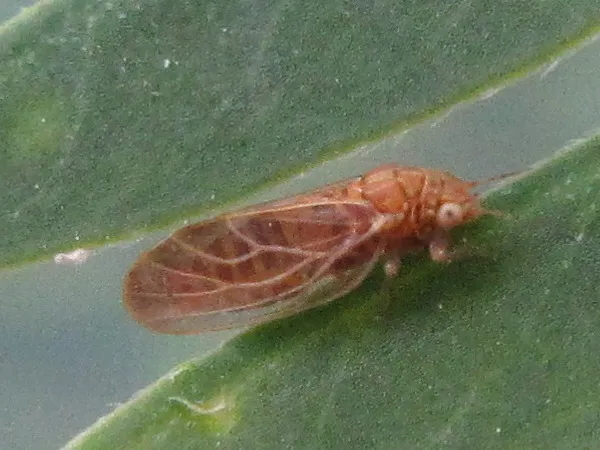
Acizzia jamatonica
Acizzia jamatonica
Identification: General color yellowish-green in young specimens to dark red in mature individuals. Genal cones large, divergent, shorter than vertex; antennae 1.5 times as long as width of head. Pterostigma broad, long (Wheeler & Hoebeke 2009); cubi
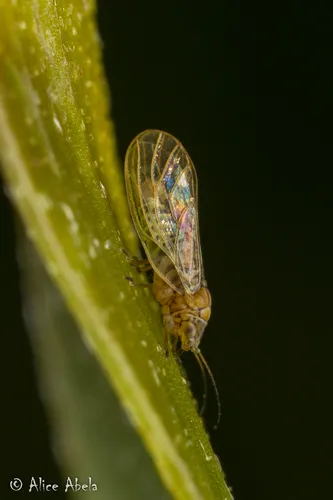
Acacia Psyllid
Acizzia uncatoides
Identification: Wings mottled; male claspers pyriform, curved posteriorly ( photo )
Amorphicola amorphae
Amorphicola amorphae
Identification: Antennae length equal to width of head; genal processes produced in dorsal view
Aphalaroida pithecolobia
Aphalaroida pithecolobia
Identification: Forewings covered in glandular hairs. Costal break present, costal margin gently convex, vein Rs straight at apex, cell Cu1a long, larger than cell m1+2. Color, including forewing pattern, variable (Hodkinson 2001)

Aphalaroida prosopis
Aphalaroida prosopis
Identification: Setae on head, thorax, and forewings; forewings conspicuously patterned, with costal break present. Male paramere with separate subapical tooth
Arytaina genistae
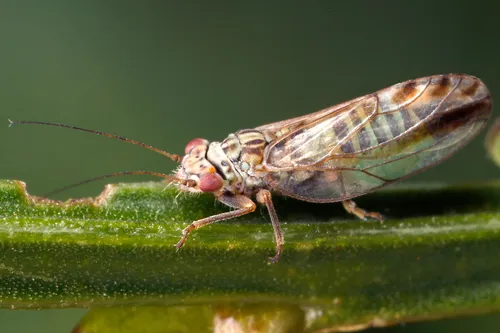
Arytaina genistae
This psyllid has no genal cones, and is associated with Broom. The colour of the body is variable from green to brown, but the wings have diagnostic dark streaks. Arytainilla spartiophila is also associated with broom, but the wings do not have dark
Baeopelma foersteri
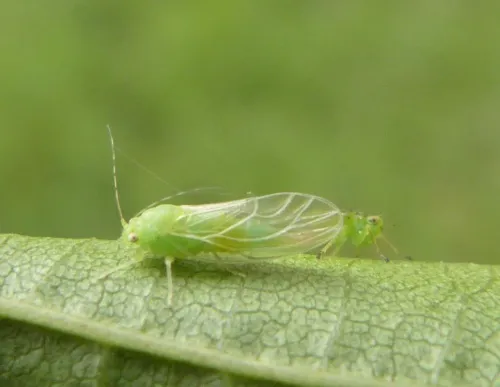
Baeopelma foersteri
A large green psyllid associated with Alder, length c.4 mm. It has short roudned genal cones and the females have very long orange-brown terminalia. The forewings are yellowish, and have pale veins. Psylla alni is also associated with Alder but is la
Cacopsylla annulata
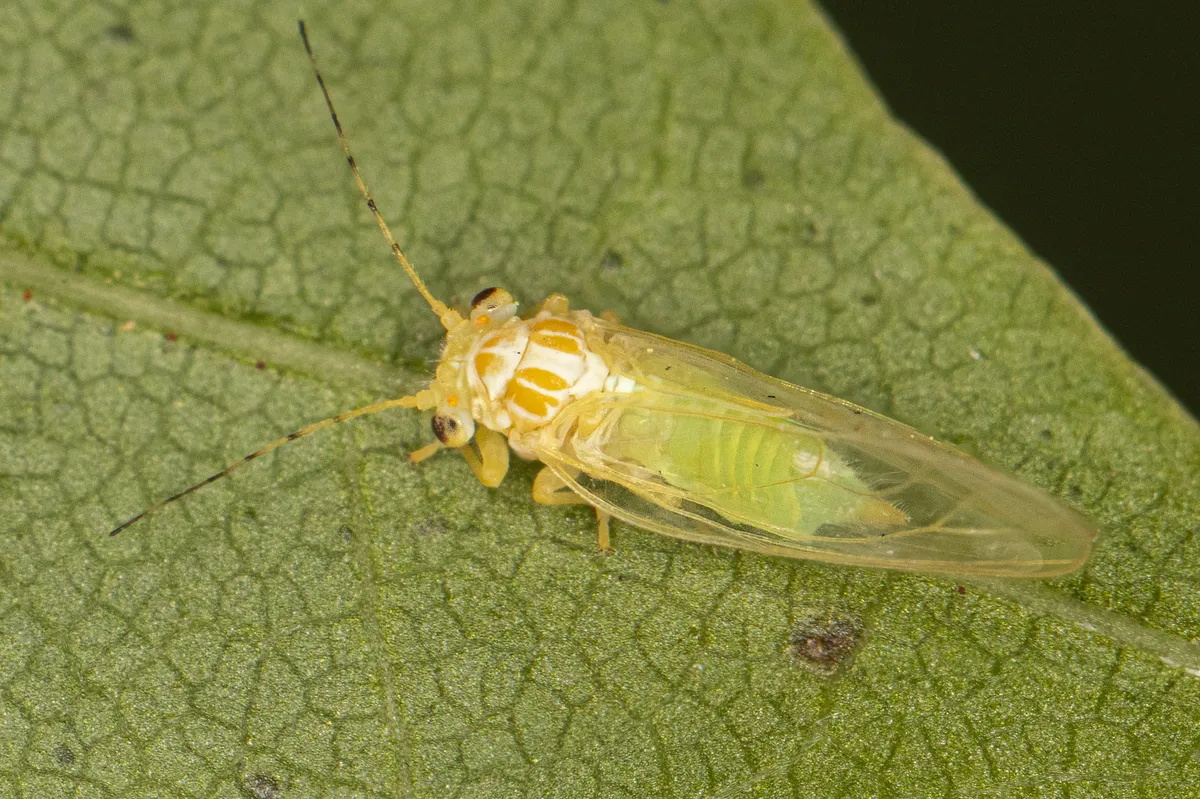
Cacopsylla annulata
Identification: Typically pale yellow in color with green abdomen; head unusually wide, with eyes on prominent stalklike areas of head which separate slightly the eyes from the posterior ocelli; antennae yellow with black rings apically on each segme
Cacopsylla curta
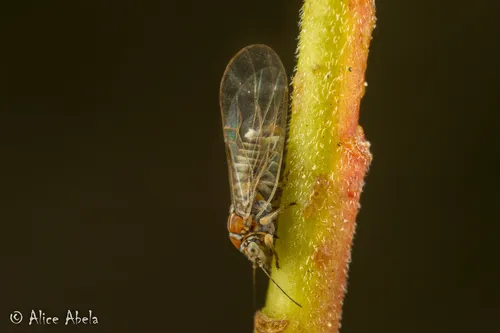
Cacopsylla curta
Identification: Wings membrane conspicuously and thickly set with minute setae ; antennae about 1.5x as long as width of head, genal cones divergent from base; female genitalia long, dorsal valve straight to blunt apex, ventral valve much shorter In
Fatsia Psyllid
Cacopsylla fatsiae
Identification: Wings with dark spot on tip of clavus; pterostigma large. Antennae as long as about twice the width of the head, genal cones as long as vertex. Associated with Fatsia japonica
Apple Psyllid
Cacopsylla mali
Young adults are yellow-green, becoming reddish in autumn.
Boxelder Psyllid
Cacopsylla negundinis
Identification: Close to P. annulata , but antennae unicolorous except for black tips
Pear Psylla
Cacopsylla pyricola
earliest record in our area: CT 1832; the only one of several European pear psyllids to have been introduced into North America
Cacopsylla quadrilineata
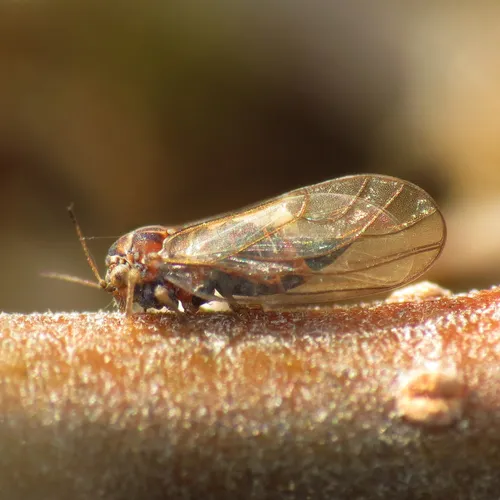
Cacopsylla quadrilineata
Identification: Reddish to reddish-brown in color, with four light longitudinal stripes on the scutum. Wings whitish, thickly set with minute setae forming indefinite radular areas on the apical margin; pterostigma large, infuscated. Antennae very sh
Currant Psyllid
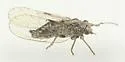
Cacopsylla ribesiae
Identification: Dark spot on clavus, pterostigma small
Cacopsylla sinuata
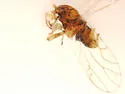
Cacopsylla sinuata
Identification: Male paramere in lateral view with conspicuous posterior lobe in basal two thirds ; refer to illustration from Tuthill, 1943
Pittosporum Psyllid
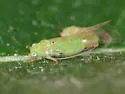
Cacopsylla tobirae
Identification: The dark spot on the postnotum appears to be consistent and the most noticeable character especially in lighter-colored adults, but refer to Miyatake for full description First detected in North America in 2007 in nursery shipments of
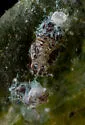
Ceanothia bicolor
Ceanothia bicolor
Identification: Males are uniformly dark except basal 2/3 of antennae, tibiae, and tarsi pale; wings dark opaque, with basal area and claval suture translucent. Females are blue-green to flavotestaceous, with forewings pale amber to fumate, opaque to
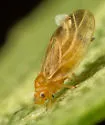
Ceanothia boharti
Ceanothia boharti
Identification: Wings with variable dark maculation. Females more lightly-colored than males, terminalia long, acuminate.
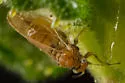
Ceanothia ceanothi
Ceanothia ceanothi
Identification: General color yellow to brown; genal cones very small, broadly rounded; eyes and clypeus large; cubital cell just slightly larger than medial cell, pterostigma prominent; female genitalia acuminate, dorsal valve excavate, ventral valv
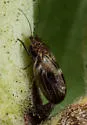
Ceanothia essigi
Ceanothia essigi
Identification: General color dark; forewings subcoriaceous, dark except proximal hyaline area, with large medial cell and very small pterostigma; posterior tibiae white; genal processes large, conical, contiguous basally; discal foveae inconspicuous
Ceanothia mitella
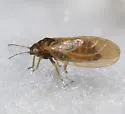
Ceanothia mitella
Identification: General color from yellow to dark brown in mature individuals, wings transparent. Female terminalia rather short, blunt; genal processes short, broadly rounded, less than half as long as vertex; antennae about 1.2x as long as width of
Chamaepsylla hartigi
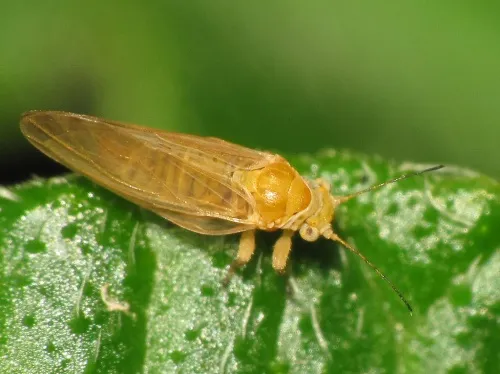
Chamaepsylla hartigi
A yellow-orange psyllid, sometimes with paler head, pronotum and genal cones. The wings are tinted yellow. The female have very long terminalia and can be identifed, with care; identification of males requires examination of genitalia Good quality ph
Asian Citrus Psyllid
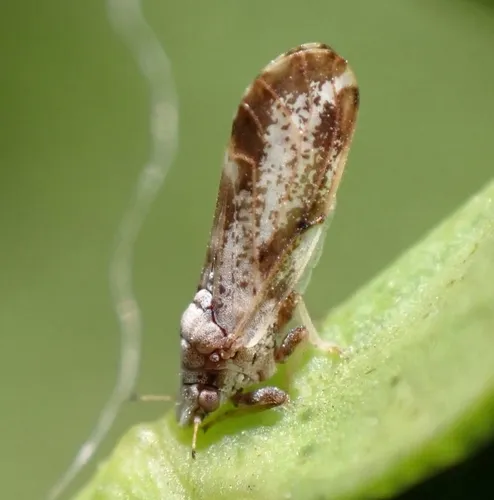
Diaphorina citri
Identification: Nymphs ; wingpads massive; white waxy excretions of the nymphs on new leaves are indicative Earliest record in our area: FL 1998. Damages citrus plants by feeding on sap; a vector of citrus greening disease (Huanglongbing). The Euloph
Euglyptoneura fuscipennis
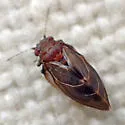
Euglyptoneura fuscipennis
Identification: General color brown to black, including forewings; male forceps each produced as two divergent lobes, female genital segment short, half as long as rest of abdomen
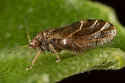
Euglyptoneura minuta
Euglyptoneura minuta
Identification: Forewings clear brown; male proctiger large, triangular, forceps slender; female genital segment very large, longer than rest of abdomen, dorsal valve longer than ventral
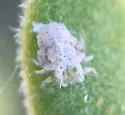
Freysuila phorodendri
Freysuila phorodendri
One of two mistletoe psyllids in North America, the other being Trioza phoradendri . That species belongs to a different family and the two are unlikely to be confused.
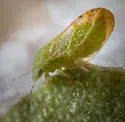
Nyctiphalerus rugipennis
Nyctiphalerus rugipennis
Identification: General color usually green, with body and legs often covered in irregular white spots; forewings coarsely rugose
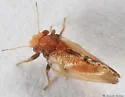
Nyctiphalerus vermiculosus
Nyctiphalerus vermiculosus
Identification: General color ranging from green to yellow to red, wings semihyaline, fumate apically, apical margin alternating black and white, sometimes with black spot at apex of clavus; forewings sometimes covered in a white waxy bloom.
Pexopsylla cercocarpi
Pexopsylla cercocarpi
Identification: Adults are light green with distal part of each antenna segment dark; antennae very long, about 3 times as long as width of head; genae short and rounded, produced vertically below antennae. Nymphs are conspicuously pubescent, with se
Tipu Psyllid
Platycorypha nigrivirga
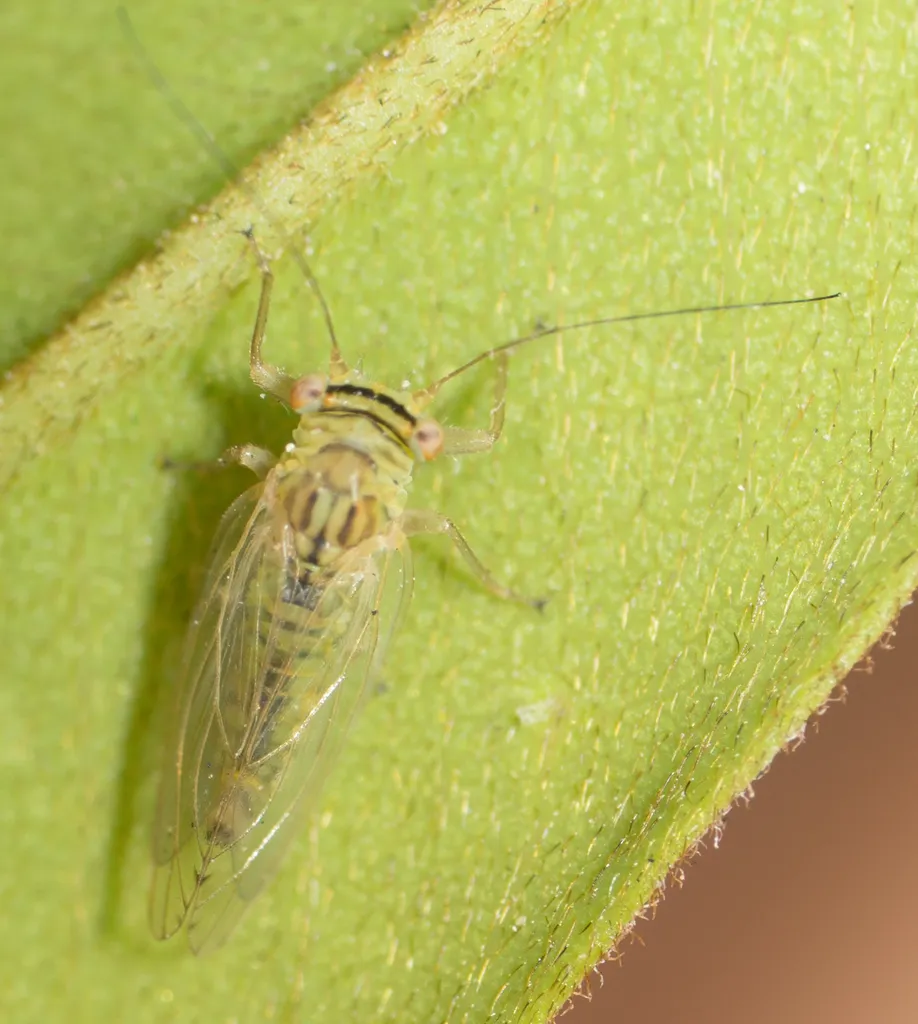
Identification: adult color pattern, including dark transverse stripe between the eyes, unique among NA psyllids first detected in our area in San Diego Co. in 2008
Psylla alni
Psylla alni sensu lato
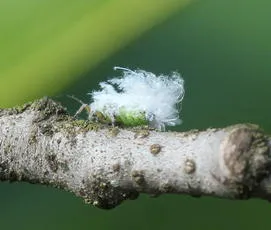
A very large psyllid, 5 - 6 mm, associated with Alder. The adults are green, but may become red-brown later in the year. The wings are clear, wth dark veins. The nymphs are covered in a white waxy secretion. Baopelma foersteri is also associated with
Psylla buxi
Psylla buxi
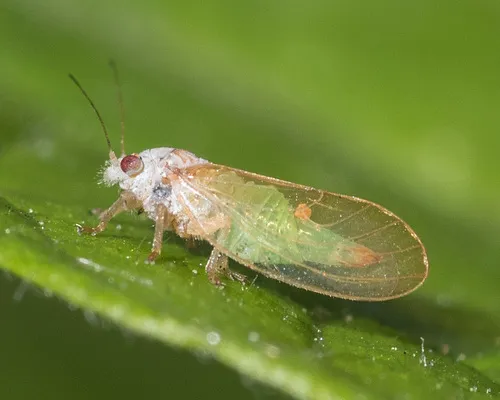
The psyllid causes galls to form on the shoot tips of Box. The galls take the form of pale, cabbage like clusters, the bunched leaves being strongly concave and slightly thickened. During the summer they conceal numerous tiny pale green nymphs covere
Psylla carpinicola
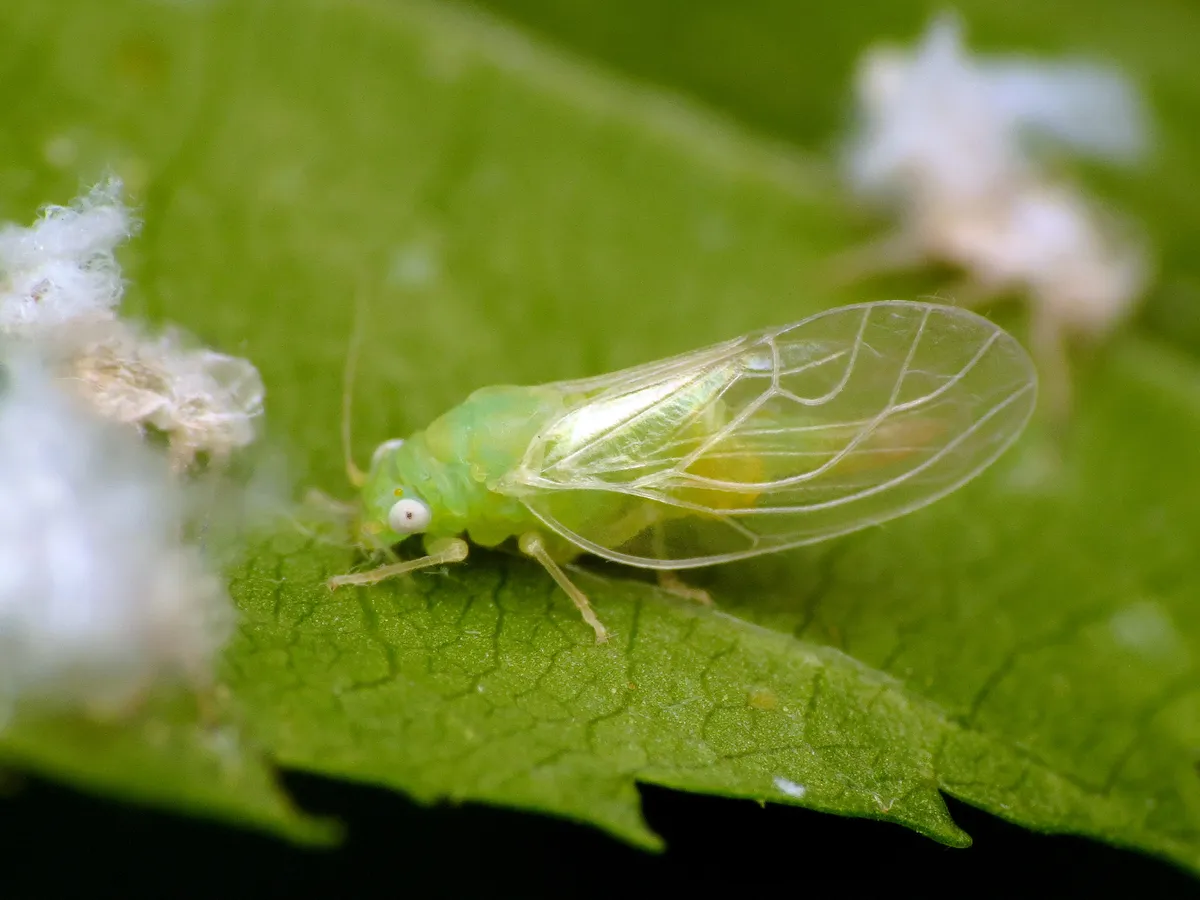
Psylla carpinicola
Identification: Color variable from light green to reddish brown in mature individuals; wings clear to slightly yellowish fumate, veins sometimes green. Antennae twice as long as width of head; female genitalia very long, longer than rest of abdomen,
Cottony Alder Psyllid
Psylla floccosa
Identification: General color typically green to greenish-yellow; antennae usually 3 times as long as width of head; pterostigma absent or diminutive
Cacopsylla striata
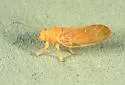
Psylla striata
Identification: General color yellowish, including wings; abdomen sometimes green, genitalia dark yellowish-brown; eyes grey. Antennae twice as long as width of head; female genitalia very long, stout, blunt, dorsal valve much longer than ventral
Psyllopsis fraxini agg.
Psyllopsis fraxini agg.
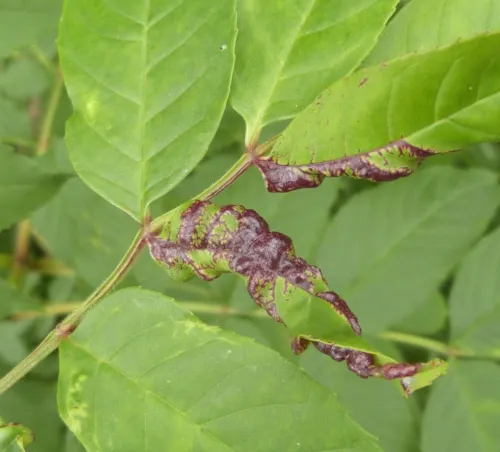
These species of jumping plant louse cause galls to form on the leaves of Ash. The adult has wings with strong black markings. The gall is on the leaf edge, causing it to swell and roll. It starts green but gradually becomes reddish or purplish, ofte
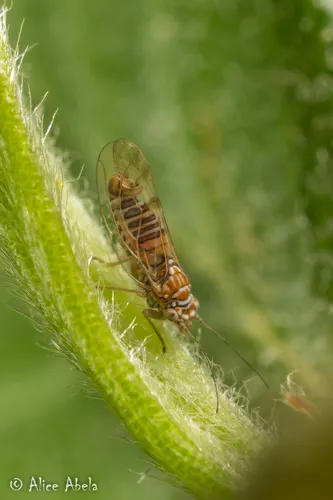
Purshivora brevistigmata
Purshivora brevistigmata
Identification: Reddish in color with white markings as follows: on margins of vertex, basal half of genal processes, posterior margins of pronotum and prescutum, six longitudinal stripes on scutum, margins of scutellum, margins of abdominal sclerite
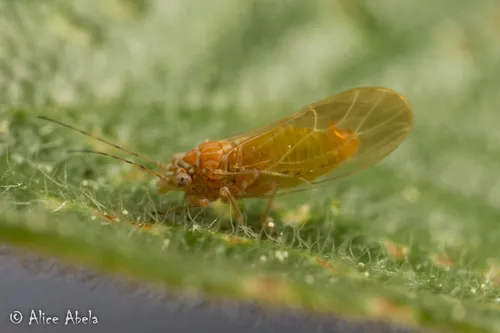
Purshivora insignita
Purshivora insignita
Identification: Similar to Cacopsylla brevistigmata in form and mature coloration, but differs in having much longer genal processes, almost as long as vertex
Purshivora media 0
Purshivora media
Identification: General color orange with white markings; genal cones short, about 1/3 as long as length of vertex
Purshivora nigranervosa
Purshivora nigranervosa
Identification: Wings with veins heavily darkened Given that the genae are short and non-conical and that the metatibial spurs apparently number >5, C. nigranervosa 's placement in the genus Cacopsylla seems to be in error. Jensen compares the specie
Purshivora pubescens
Purshivora pubescens
Identification: Head and thorax with prominent white pubescence
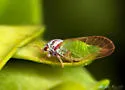
Boxwood Psyllid
Spanioneura buxi
Identification: see comment here by Chris Mallory. Nymphs occur on young terminal leaves, causing them to curl ( 4 )
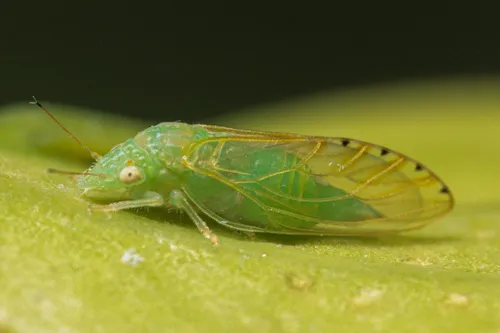
Spanioneura fonscolombii
Spanioneura fonscolombii
A greenish/yellowish psyllid associated with Box, Buxus sempervirens , 3mm long. Long pointed forewings with 4 dark spots at the apices of the cells. There is a dark tip to the orange antennae. Psylla buxi is also associated with Box, but lacks the 4
Acizzia acaciaebaileyanae
Acizzia acaciaebaileyanae
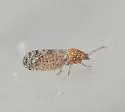
Acizzia hakeae
Acizzia hakeae
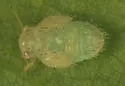
Amorphicola pallida
Amorphicola pallida
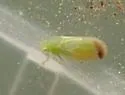
Aphalaroida californica
Aphalaroida californica
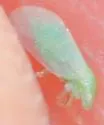
Aphalaroida inermis
Aphalaroida inermis
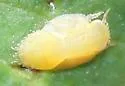
Aphalaroida masonici
Aphalaroida masonici
Aphalaroida spinifera
Aphalaroida spinifera
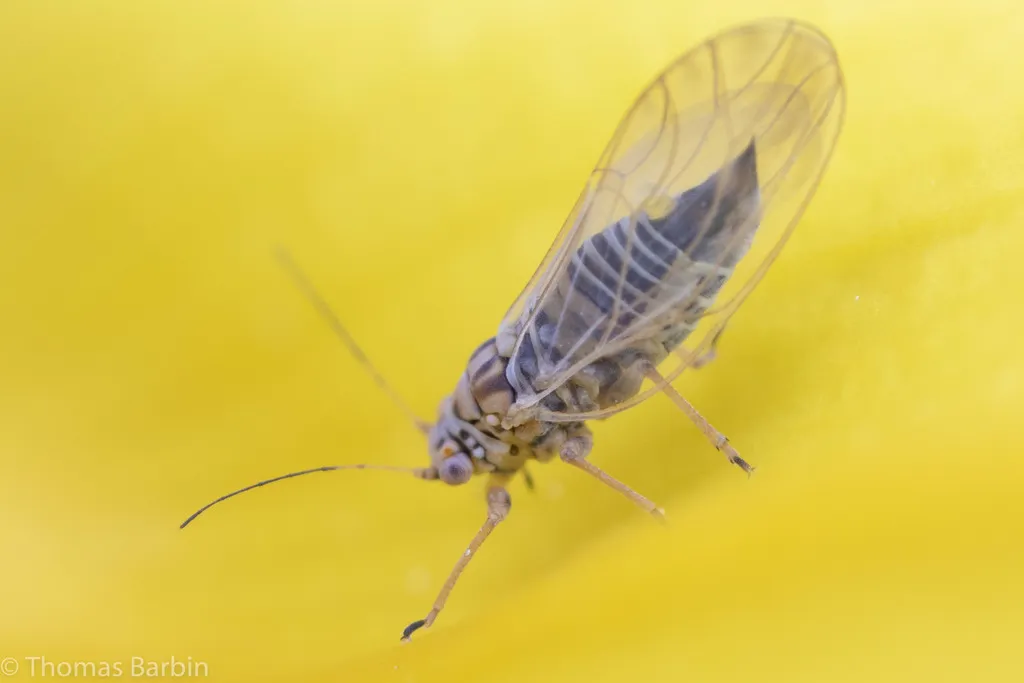
Arytainilla spartiophila
Arytainilla spartiophila
Cacopsylla alba
Cacopsylla alba
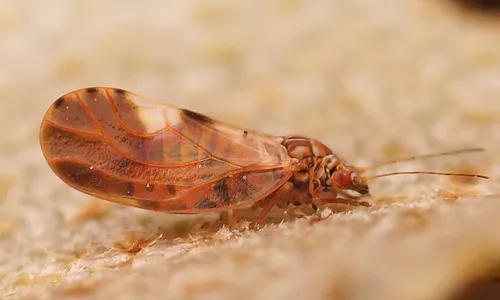
Oleaster psyllid
Cacopsylla fulguralis

Cacopsylla magnicauda
Cacopsylla magnicauda
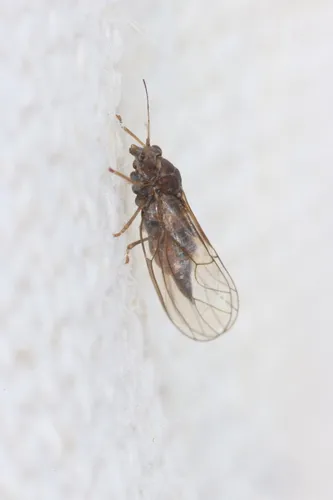
Cacopsylla melanoneura
Cacopsylla melanoneura
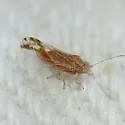
Cacopsylla nana
Cacopsylla nana
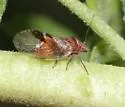
Cacopsylla notapennis
Cacopsylla notapennis
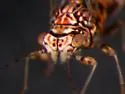
Cacopsylla pararibesiae
Cacopsylla pararibesiae
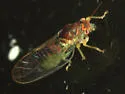
Cacopsylla peregrina
Cacopsylla peregrina
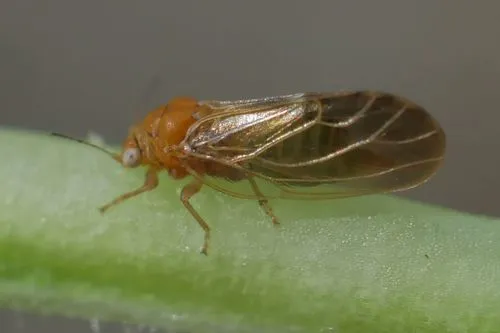
Cacopsylla pruni
Cacopsylla pruni
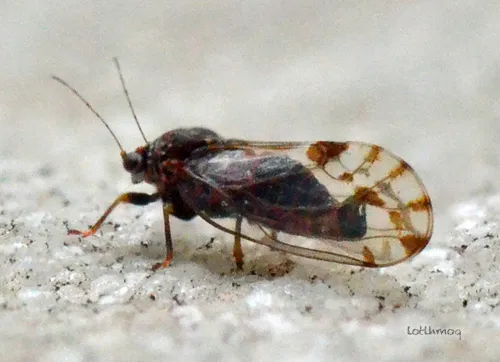
Cacopsylla pulchella
Cacopsylla pulchella
Cacopsylla rara
Cacopsylla rara
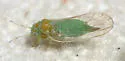
Cacopsylla tenuata
Cacopsylla tenuata
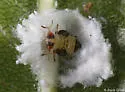
Euglyptoneura robusta
Euglyptoneura robusta
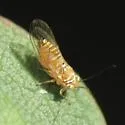
Freysuila dugesii
Freysuila dugesii
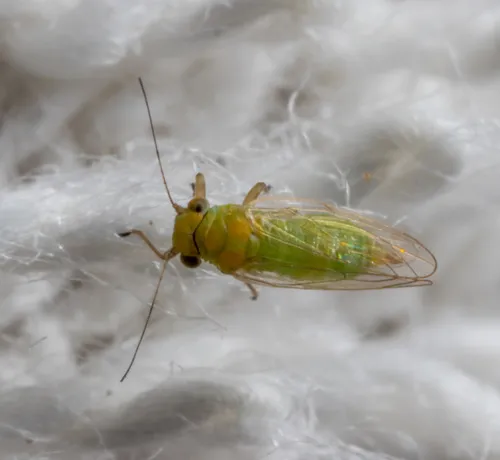
Leucaena Psyllid
Heteropsylla cubana
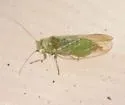
Heteropsylla flexuosa
Heteropsylla flexuosa
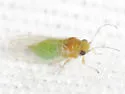
Heteropsylla huasachae
Heteropsylla huasachae
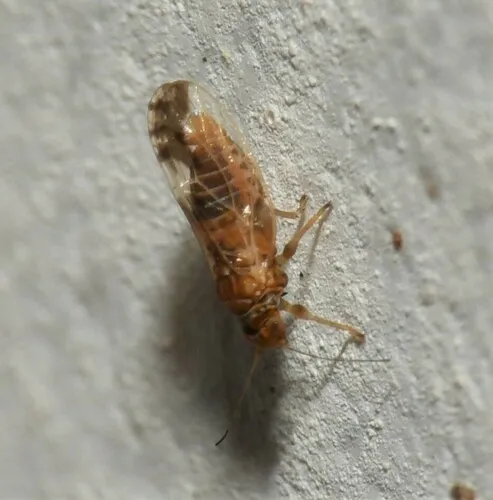
Heteropsylla intermedia
Heteropsylla intermedia
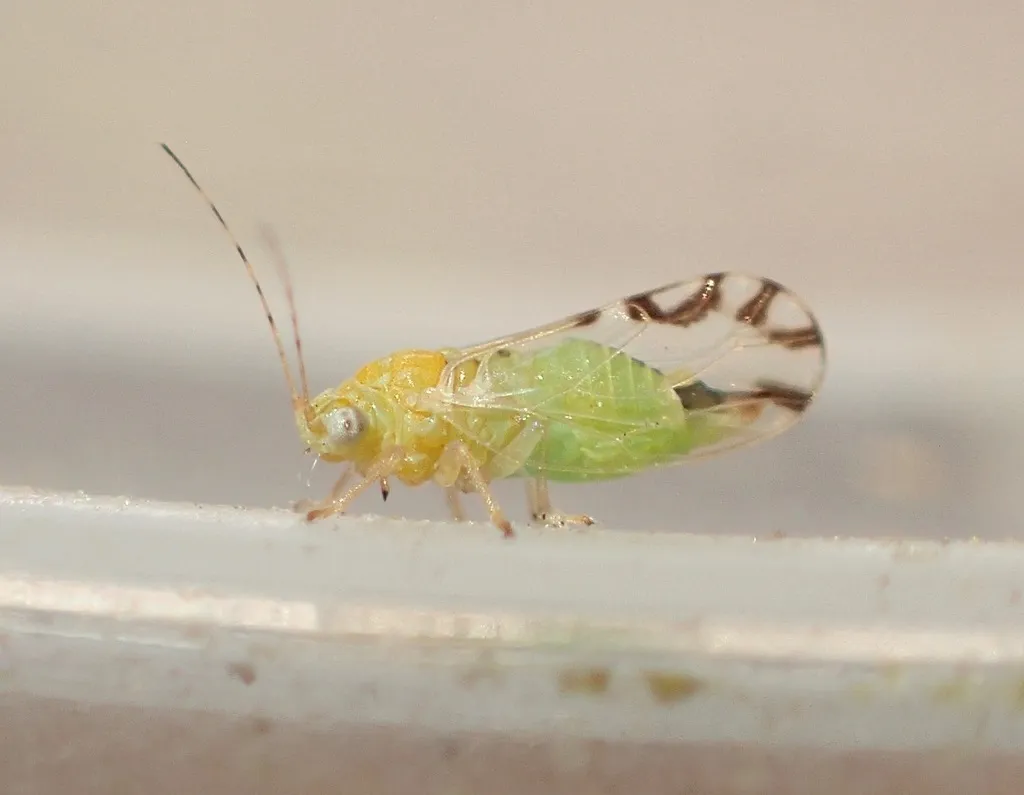
Mesquite Psyllid
Heteropsylla texana
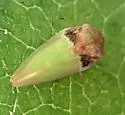
Katacephala grandiceps
Katacephala grandiceps
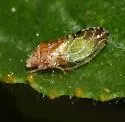
Nyctiphalerus jugovenosus
Nyctiphalerus jugovenosus
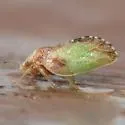
Nyctiphalerus propinquus
Nyctiphalerus propinquus
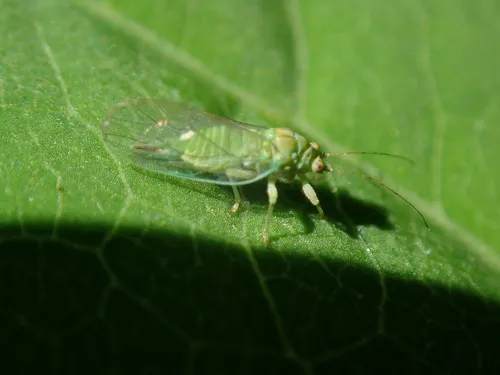
Alder Sucker
Psylla alni
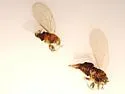
Dwarf Birch Psyllid
Psylla betulaenanae
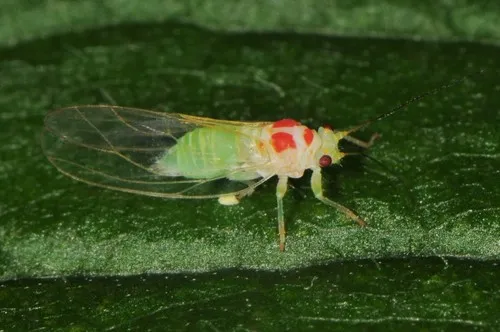
Psylla sanguinea
Psylla sanguinea
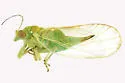
Psylla viridescens
Psylla viridescens
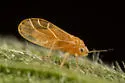
Purshivora aculeata
Purshivora aculeata
Purshivora chelifera
Purshivora chelifera
common in the Great Basin area (Dr Gill's comment)
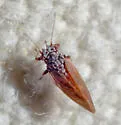
Purshivora coryli
Purshivora coryli
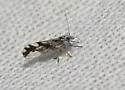
Purshivora maculata
Purshivora maculata
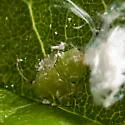
Psylla sanguinea
Spanioneura sanguinea