
Family Cicadas (Cicadidae)
Cicadidae is a family in the order Hemiptera. Browse 160 named species recorded in this family, or open an individual profile for its available identification and natural-history information.
Species in Cicadidae (160)
Cacama californica
Cacama californica
Identification: Similar by most accounts to C. variegata Described as a "mottled species". TL - Los Angeles Co., California For additional info: Refer to pages 68-79 for details on the Genus Cacama and spp. occurring in the USA (for carbonaria see pp
Cacama carbonaria
Cacama carbonaria
Identification: Similar by most accounts to C. valvata. Described as a "dark species". TL - Mexico City, Mexico (?) For additional info: Refer to pages 68-79 for details on the Genus Cacama and spp. occurring in the USA (for carbonaria see pp. 70, 76
Cacama collinaplaga
Cacama collinaplaga
Refer to the following similar species: Cacama variegata Davis 1919 Cacama valvata (Uhler 1888) Cacama moorei sp. n. Sanborn & M. Heath It has been mentioned and noted by some cicada specialists, that C. collinaplaga is morphologically, as well as ge
Cacama dissimilis
Cacama dissimilis
Identification: Similar by most accounts to C. valvata. Described as a "dark species" with the basal area of the forewings slightly ochreous and opaque; anal membranes of all 4 wings orangish with the posterior margins being grey; 1st and 2nd transve
Cacama furcata
Cacama furcata
Identification: C. furcarta appears to be easily confused with valvata, with which it may be sympatric across parts of the valvata range (??) C. furcata: TL - "lower Calif." (=Mex??) Differentiating furcata from valvata/dissimilis furcata (Baja Calif
Cacama longirostris
Cacama longirostris
Identification: similar to C. maura Cacama longirostris (Distant, ?) TL. "Mexico" / Range?
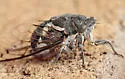
Moore's Cactus Dodger
Cacama moorei
Identification: Male opercula primarily orange, reaching to sternite IV, ventral surface orange, rostrum reaching to middle of posterior coxae, found in the Sonoran Desert (Fig. 3). . . . . . . . . . . . . . . . . . . . . . . . . . . . . . . . . . .
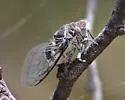
Common Cactus Dodger
Cacama valvata
Identification: A common and widespread species TL - ? Similar by most accounts to C. moorei with which it may be sympatric across parts of Arizona. Similar to several other species incl. C. dissimilis (MEXICO) & C. furcata (MEXICO) Described as a "d
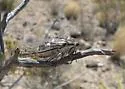
Variegated Cactus Dodger
Cacama variegata
Identification: NOTE: "reddish-brown coloration to the pronotum and posterior edging distinctly reddish-brown " TL - "San Benito, Texas" Refer to pages 68-79 for details on th Cacama spp. in the USA (variegata p. 73) Common and alert!
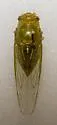
Chlorocanta viridis
Chlorocanta viridis
Identification: A green insect, almost unicolorous, with the membranes or flaps at the base of the wings yellowish. The venation of the wings is green, except the costal margin, which is yellowish to the end of the radial cell. The basal cell is near
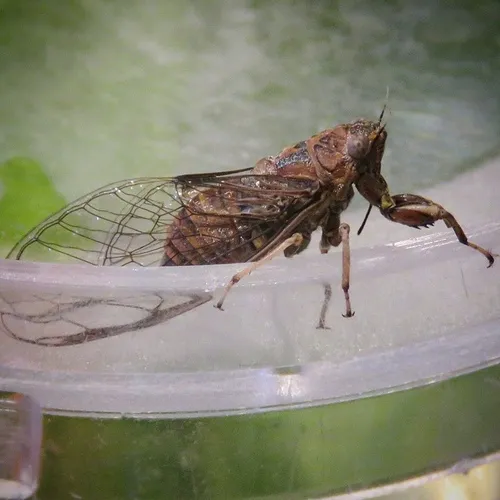
Cicadettana calliope
Cicadettana calliope
Identification: Small, and "narrower across the head" than other small cicadas Compare with Pacarina & Beameria . Color & Pattern: The coloration and degree of pattern may not be diagnostic to species! Populations currently classified as "C. calliope
Cicadettana camerona
Cicadettana camerona
Identification: Song is a fast train of sharp, resonant pulses. Type Locality: Brownsville, Cameron Co., Texas
Cicadettana kansa
Cicadettana kansa
Identification: C. kansa is characteristically a pale green coloration and distinguished from the similar C. calliope by having only 4 or 5 apical cells in the hind wing; there are typically 6 in C. calliope .
Cornuplura nigroalbata
Cornuplura nigroalbata
C. nigroalbata For additional IMAGE, please refer to the link below (C. nigroalbata specimen is exhibited at the header for this site)
apache-cinctifera-semicincta (Unsorted)
Diceroprocta apache-cinctifera-semicincta
Identification: Basic characters usu. include: Eyes: VARIABLE - Described as tan to reddish (rust-colored) Body: Usually dark, often with some reddish-brown coloration visible Pronotal Collar: VARIABLE (may be described as "bisected" with the anterio
The Florida Keys' Scrub Cicada
Diceroprocta biconica
Diceroprocta biconica , The Florida Keys' Scrub Cicada Members of this species complex can be found in Cuba and s. Florida. There are two population groupings on the island of Cuba and a third population group native to the Florida Keys (and extreme
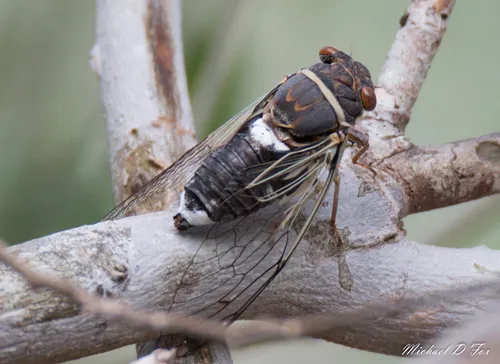
Diceroprocta cinctifera
Diceroprocta cinctifera
Identification: broad white band across tip of abdomen is distinctive Basic characters usu. include: Eyes: Described as tan to reddish (rust-colored) Body: Usually dark, often with some reddish-brown coloration visible Pronotal Collar: VARIABLE (may
Diceroprocta marevagans
Diceroprocta marevagans
Identification: Basic characters usu. include: Eyes: Described as tan to reddish (rust-colored) Body: Usually dark with reddish-brown coloration & pattern visible Pronotal Collar: VARIABLE (may be described as "bisected" with the anterior region bein
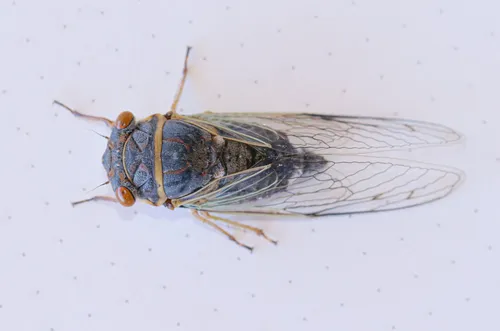
Diceroprocta semicincta
Diceroprocta semicincta
Identification: Basic characters include: Eyes: Described as tan to greyish (rarely if ever rust-colored) Body: VARIABLE - Usually dark, dorasl brown coloration may be visible Pronotal Collar: Hind margin of pronotum or collar with anterior portion b
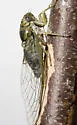
Green Winged Cicada
Diceroprocta vitripennis
Identification: See comments under images. Id. tips D. vitripennis, like many other members of its Genus, lacks the "smoky Z " towards the ends of the forewings typical of many other cicadas (as is typical of most Tibicen species). (The "smoky Z " =
Hadoa bifida
Hadoa bifida
Identification: Described as "similar in appearance to dealbatus but much smnaller". This cicada is said to be very pruinose and to possess a well defined broken pruinose stripe running along the dorsum of the abdomen. Refer to: The Southwestern Natu
Hadoa chisosensis
Hadoa chisosensis
Identification: "Tibicen chisosensis" - if not synonymous with duryi - may be similar in appearance to and sympatric with "Tibicen duryi" ... (??) Tibicen chisosensis info & image
Hadoa inaudita
Hadoa inaudita
Unlike similar species, inauditus calls from an "upside down" (head down) position Song is a continuous, even, high pitched whine and often compared to that of T. canicularis . Similar song in the following species: Tibicen longioperculus Davis 1926
Hadoa longiopercula
Hadoa longiopercula
Song is a continuous, even, high pitched whine and often compared to that of T. canicularis . Similar song in the following species: Tibicen longioperculus Davis 1926 Tibicen inauditus Davis 1917 Tibicen texanus (syn. tigrina Davis 1927)
Hadoa neomexicensis
Hadoa neomexicensis
Identification: Tibicen neomexicensis , a recently described species was separated from Tibicen chiricahua Davis 1923 Very similar to T. chiricahua. Slight physical and call differences. Tibicen chiricahua Davis 1923 ZooKeys 337 (2013) : 49-71 Morpho
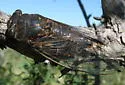
Hadoa parallela
Hadoa parallela
Identification: NOTE - Tibicen parallelus: little if any frosted grey pruinosity black pronotum & pronotal collar slight orange patterning in the mesonotum narrower wing margin than seen in chiricahua dark eyes ("Charcoal to Blackish in color") The c
Hadoa simplex
Hadoa simplex
Refer to: Tibicen simplex The Southwestern Naturalist 56:363-368. 2011 doi: 10.1894/F09-JC-44.1 A relatively small member of the Genus Tibicen and more closely related to members within the western complex of smaller species. Described as similar to
Hewlettia nigriviridis
Hewlettia nigriviridis
Identification: Green and black pattern is distinctive. Sings for brief periods, falling silent for several minutes after. Unusually docile for an Okanagana, often difficult to disturb. Recently moved from Okanagana .
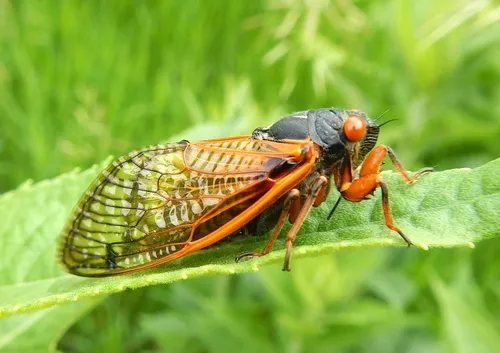
Cassin's 17-year Cicada
Magicicada cassinii
Fisher seems to have been active in Philadelphia, and was a colleague of John Cassin, both active in the Academy of Natural Sciences. Perhaps the same person as "J. Coleman Fisher"?
Neotredecim Periodical Cicada
Magicicada neotredecim
Identification: Can only be identified by call in a certain range.
Cassin's 13-year Cicada
Magicicada tredecassini
Identification: Some characters (Magicicada.org): Link to video/audio showing the distinctive buzzy sound of this species in chorus:
Riley's 13-year Cicada
Magicicada tredecim
Identification: A large 13-year periodical cicada, morphologically similar to the 17-year species M. septendecim. Identification notes (magicicada.org): Link to video/audio showing the distinctive eery sound of this species in chorus:
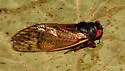
The Little 13-year Cicada
Magicicada tredecula
Identification: Intermediate in markings between Magicicada tredecim and Magicicada tredecassini . Song distinctive--a series of accelerated pulses (magicicada.org). This can, perhaps, be confused with courtship calls of the other species.
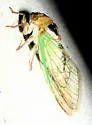
Grand Western Flood Plain Cicada
Megatibicen cultriformis
Appears to be most closely related to T. pronotalis & T. dealbatus
Plains Cicada
Megatibicen dealbatus
Tibicen dealbatus largely replaces T. pronotalis as one travels west into the "Plains". Both T. dealbatus and T. pronotalis are riparian species often associated with tree thickets and permanent/quasi-permanent water sheds. Not only are they similar
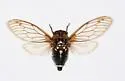
Bush Cicada
Megatibicen dorsatus
A beautiful species that now exists in scattered isolates across much of its former range. Although listed as "secure" (i.e. "not threatened/endangered"), many populations, particularly those isolated in more developed areas, should be monitored and
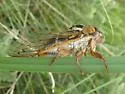
dorsatus or tremulus
Megatibicen dorsatus-tremulus
Both T. dorsatus & T. tremulus are very similar in appearance and can be sympatric across parts of their ranges. Since they are so similar physically and overlap in range, some images may be difficult if not impossible to distinguish. For those ima
Fall Southeastern Dusk-singing Cicada
Megatibicen figuratus
Identification: T. figuratus is one of our largest eastern species and appears most closely related to members of the "auletes species group". Tibicen resonans (Walker 1850), "Southern Resonant/Great Southern Pine Barrens Cicada" Tibicen auletes (Ger
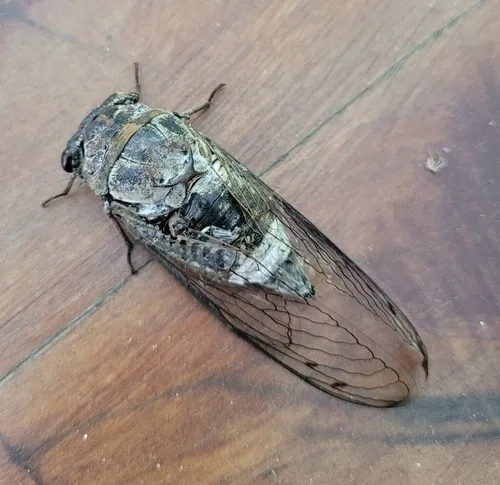
Northern Dusk Singing Cicada
Megatibicen grossus
Cicada auletes Germar was recently (Sanborn, 2023) found to be a synonym of Tettigonia grossa Fabricius. Since T. grossa is the older name, it takes priority. Replaced by Megatibicen resh in western Gulf States (Louisiana & Texas) Replaced by M. reso
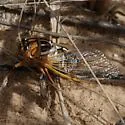
Megatibicen harenosus
Megatibicen harenosus
Identification: Similar to tremulus & dorsatus ‒ dealbatus
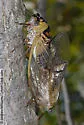
Walker's Cicada
Megatibicen pronotalis
1) Songs of pronotalis and dealbatus are identical. 2) Appears to cross with dealbatus - with which it may be conspecific (?). 3) Both pronotalis and dealbatus will call well after sunset (during the day upto ~10:00pm or later), an unusual behavior f
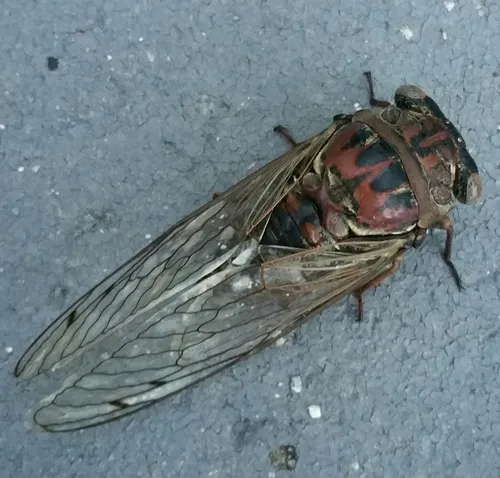
Resonant Cicada
Megatibicen resonans
Replaced by Neotibicen resh in western Gulf States (Louisiana & Texas) Replaced by T. auletes in the north and in hardwood dominated habitats across the southeast incl. the Piedmont & Cumberland Plateaus (known only from localities east of the Miss.
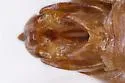
Western Bush Cicada
Megatibicen tremulus
Identification: This species can be separated from its close relative Tibicen dorsatus by using both morphological and behavioral characteristics. Morphologically, the sub-costa is the same color as the costa in T. tremulus . The tymbal covers are bl
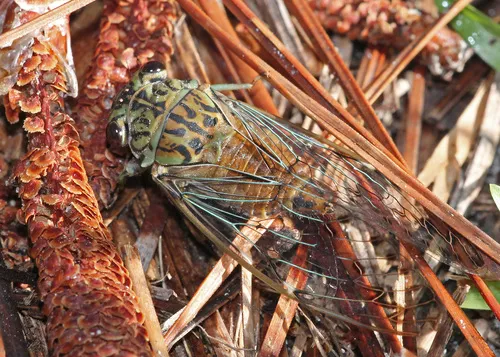
Hieroglyphic Cicada
Neocicada hieroglyphica
Identification: Quoting from Cicadas of Florida : Partial to oaks; first species to be heard in spring; song starts with a sequence of progressively softer whiney bursts and ends with an even whine. Found in small colonies. Starts calling in morning
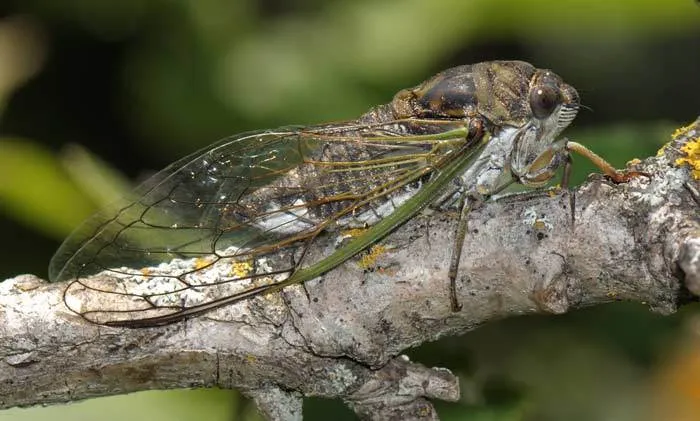
Dog-day Cicada
Neotibicen canicularis
other species sometimes called "dog day cicada" include Tibicen pruinosa and Tibicen chloromera ; the term is also used generally to refer to any cicada that sings during late summer Due to morphological and song variations, it is suspected that cani
Coastal Scissor(s) Grinder
Neotibicen latifasciatus
Guide based on comments on images and e-mails by Bill Reynolds . ---------------------------------------------------------------- NOTE: Species seems abundant in the webs of Nephila clavipes , an important predator of this and other cicadas.
Neotibicen similaris
Neotibicen similaris
Identification: Tibicen similaris - General description 1) Legs: brownish - occasionally with light green at the joints and dark brown along the terminal ends of the tibia/tarsi 2) Pruinosity: pruinose venter (not heavily pruinose - similar to that s
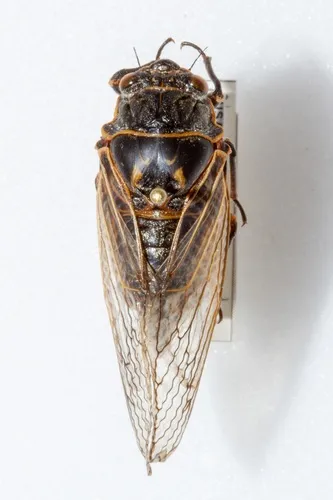
Okanagana annulata
Okanagana annulata
Identification: Broad red borders to tergites, moderate fuscation of marginal cells, pointed front. Diagnosis tends to be very detailed. Of the fratercula group, it's one of the easier to ID. Song: Peak frequency 10.2kHz +/- 0.4 Syllable Rate 79.6 +/
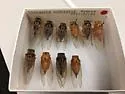
Okanagana arboraria
Okanagana arboraria
Identification: One of the more variable species of Okanagana. There are two main color forms; a rare red form and the more typical dark form with a strong degree of gradation. In the dark form the mesonotum is black with variably extensive red marki
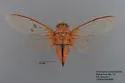
Okanagana arctostaphylae
Okanagana arctostaphylae
Identification: Unmistakable. Separated from O. opacipennis by the black line down the abdomen. One of the most poorly known Okanagana . There are three widely separated localities for the species and it hasn't been seen since it was described. O. op
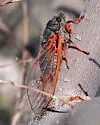
Okanagana aurora
Okanagana aurora
Identification: Bright red basal venation and costae are unmistable and unique. Okanagana magnifica has strongly thickened marginal cells and is larger, without the red basal venation but does look superficially similar.
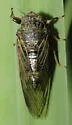
Okanagana balli
Okanagana balli
Identification: Allopatric, with no confusing species. Gerry Bunker, a well versed cicada specialist, provided the following commentary and information. Okanagana balli is the only Okanagana species known to exist at the James Woodworth Prairie & is
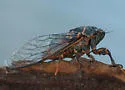
Mountain Cicada
Okanagana bella
Identification: Identification usually requires exposed views of the uncus; both dorsal and lateral, and multiple other views. Generally best identified by a specimen except where there aren't any similar species. Without a recording of the song this
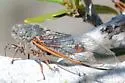
Okanagana cruentifera
Okanagana cruentifera
Identification: Generally best separated from tristis rubrobasalis by the shape of the uncus, more pronounced front, and generally different aspect. Abdomen usually has extensive black. The black border to the base of the pronotum quickly separates i
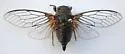
Okanagana ferrugomaculata
Okanagana ferrugomaculata
Identification: Similar to O. tristis but pronotum pale on hind margin, head narrow with pronounced front, and two patches of rufous on either side of the pronotum. Underside largely pale. Female's last abdominal sternite with a single deep V-shaped
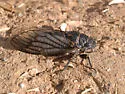
Okanagana fumipennis
Okanagana fumipennis
Identification: Identified by the opaque, whitish wings. Song: Syllable Rate (beats/second) 57.6 +/- 2.8 Peak Freq (kHz) 8.4 +/- 0.7 Distinctive among Okanagana.
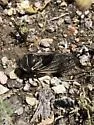
Okanagana gibbera
Okanagana gibbera
Identification: Fairly distinct among Okanagana with one exception. Wings have yellow venation except at the marginal cells which are thick, black, and fuscous. A relatively large species. Front prominent. Very similar to O. luteobasalis, but the ven
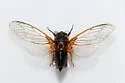
Okanagana luteobasalis
Okanagana luteobasalis
Identification: Very similar to the smaller fratercula and was once lumped in with it. Identification requires an entire suite of features and close measurements to separate the two. Okanagana gibbera is also similar but considerably larger. Type loc
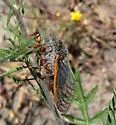
Okanagana magnifica
Okanagana magnifica
Identification: Identified by yellow costa extending past the node, black dorsum and pronotum. Wings with apical cells thickened. A protoperiodical cicada that is dependent on a cumulative precipitation schedule. A very similar species, Okanagana spe
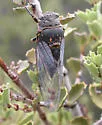
Okanagana mariposa
Okanagana mariposa
Identification: Male genitalia distinctively squared off at apex. A protoperiodical cicada that is dependent on a cumulative precipitation schedule.
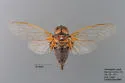
Okanagana napa
Okanagana napa
Identification: Similar to O. lurida Another poorly known species.
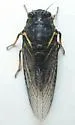
Okanagana nigrodorsata
Okanagana nigrodorsata
Identification: Completely black dorsum, pronotum, and head with a bright yellow membrane visible with wings folded are distinctive. Larger than superficially similar ornata.
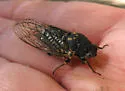
Okanagana noveboracensis
Okanagana noveboracensis
Identification: Similar to Okanagana rimosa, but separated by the dull dorsum and lack of red borders to abdominal tergites. Okanagana canadensis (Provancher, 1889) was recently sunk into this species in Cole et al. 2023. This is the common northern
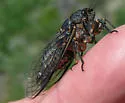
Okanagana occidentalis
Okanagana occidentalis
Okanagana lurida Davis, 1919 recently synonymized with Okanagana occidentalis (Walker, 1866) in Cole et al. 2023.
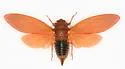
Okanagana opacipennis
Okanagana opacipennis
Identification: Opaque brown wings and black abdomen distinctive. This is a specialist of manzanita Arctostaphylos spp. . Usually local to small areas.
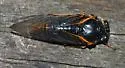
Okanagana ornata
Okanagana ornata
Identification: Resembles O. nigrodorsata but is easily differentiated by the yellow-orange border on the last abdominal tergites. The border of the anal cell is more orange than yellow. It is also much smaller. Song is distinctive within its communi
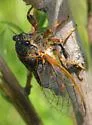
Okanagana rimosa
Okanagana rimosa
Identification: Potentially can be confused with bella in western part of range, but in the east it is distinctive. Shiny dorsum and red-bordered abdominal tergites distinctive in that part of the range.
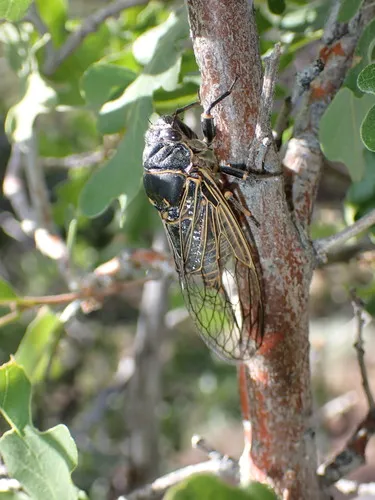
Okanagana schaefferi
Okanagana schaefferi
Identification: Okanagana schaefferi is the big brother to O. fratercula, and thankfully much more distinctive. Both share fuscous marginal cells and very prominent fronts. On schaefferi the tergites are strongly bordered with red (moreso than in fra
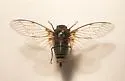
Okanagana tanneri
Okanagana tanneri
Identification: Head with strongly produced front. Areas of pronotum lateral to midline broadly marked with yellow/brown. Posterior margin of pronotum yellow. Mesonotum with two large yellow markings and two smaller forming semicircle anterior to cru
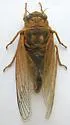
Okanagana vandykei
Okanagana vandykei
Identification: Unmistakable in range. Superficially similar to synodica, but vandykei is easily twice the size and they are allopatric. Two large marks on the dorsum and orange pronotum immediately identify this species.
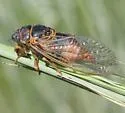
Okanagana wymorei
Okanagana wymorei
Identification: Small Okanagana with fairly short-wings, abundant orange markings. Drops from perch when approached, rarely flying. Song a continuous whine, often pulsing. Lower-pitched than O. vanduzeei . Allopatric from other congeners
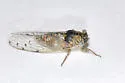
Little Mesquite Cicada
Pacarina puella
Identification: Tiny cicada with a BIG head (Andy Hamilton, 26 August, 2010)
Little Juniper Cicada
Pacarina shoemakeri
The pronotum in this species usually exhibits a centralized "hourglass-shaped" dark region in the pronotum. Wings may be less heavily infuscated/patterned than seen in P. puella (?).
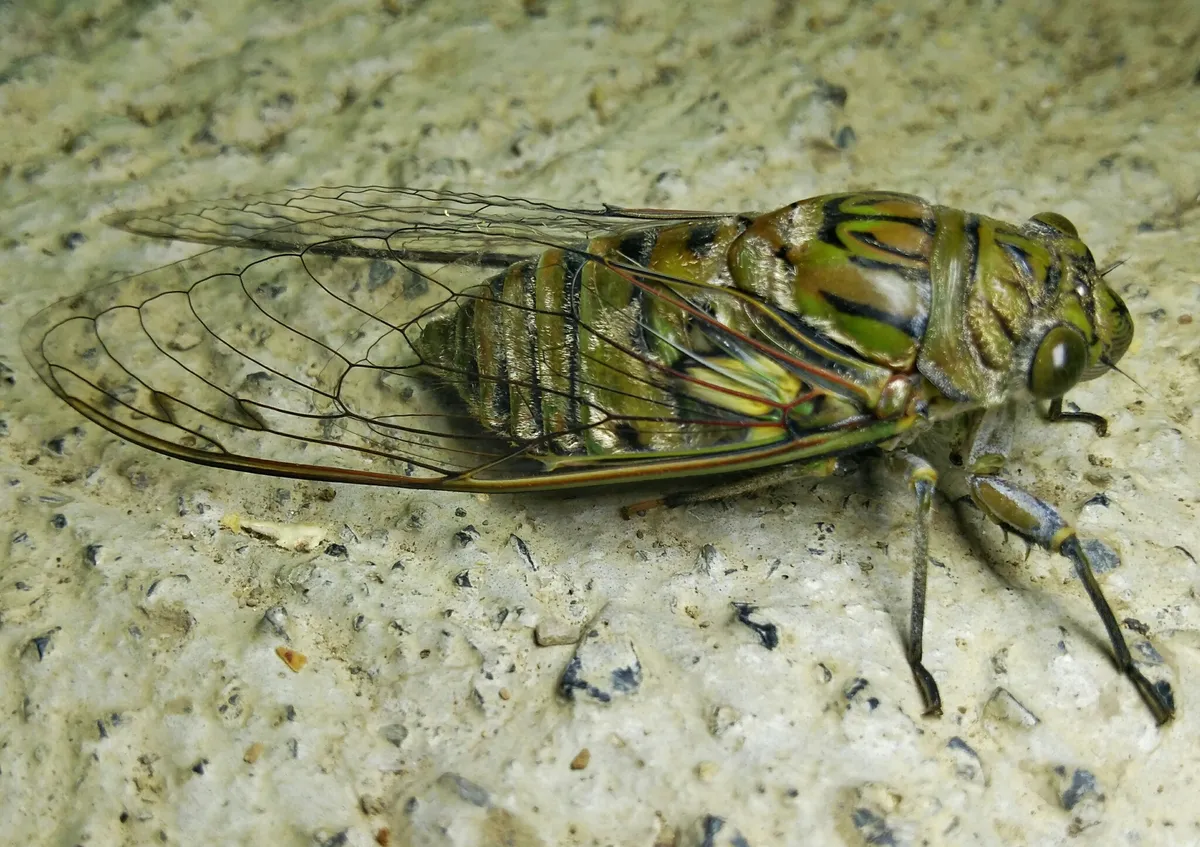
Giant Cicada
Quesada gigas
SONG - Loudest insect in the Western Hemisphere! At the height of the season in s. TX, sings all day (and occasionally through the night). In c. TX, sings primarily at dusk (between 8:37 and 9:04), and less often at dawn (between 6:15 and 6:25). (MAQ
Tibicinoides boweni
Tibicinoides boweni
Identification: The simiple(r) differential diagnosis between this species and the allopatric O. simulata and the sympatric O. utahensis is as follows: O. boweni has lateral pronotal margins subparallel giving it a quadrate appearance and has a long
Tibicinoides hesperia
Tibicinoides hesperia
Identification: Identification often hinges on very obvious fuscation at base of both wings and Mid-Western range. Recently moved from Okanagana to Tibicinoides in Cole et al. 2023. Song Syllable Rate (Beats/Second) 188.6 +/- 5.4 Peak Freq. 9.9 +/- 0
Tibicinoides pallidula
Tibicinoides pallidula
Identification: Completely pale aspect can be approached by certain color forms of vanduzeei and by Clidophleps beameri. In hand distinctive. Song distinctive when recorded. Recently moved from Okanagana in Cole et al. 2023.
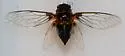
Tibicinoides simulata
Tibicinoides simulata
Identification: Large size is nearly diagnostic. The head is subequal to the width of the apical border of the pronotum. Outer margin of wing is relatively straight. Recently moved from Okanagana in Cole et al. 2023.
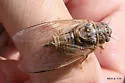
Tibicinoides striatipes
Tibicinoides striatipes
Identification: Identified by the hook on the uncus from most Okanagana. The projection of the head is extensive, separating it from utahensis, and the lack of infuscation in the wings separates it from hesperia as do a few other technical details. R
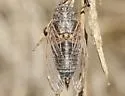
Tibicinoides uncinata
Tibicinoides uncinata
Identification: Small cicada with wings only slightly extending past abdomen tip. Marginal cells equal in length, and only 2/3 or less the length of the ulnar cells. Size is tiny: wingspan is about 45mm. Recently transferred from Okanagana in Cole et
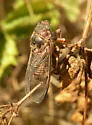
Tibicinoides vanduzeei
Tibicinoides vanduzeei
Identification: Almost impossible to identify in the field. Good photographs or specimens are generally required. The song is distinctive, but must be analyzed mathematically to determine the characteristics. Recently transferred from Okanagana in Co
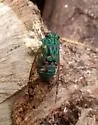
Zammara smaragdula
Zammara smaragdula
A tropical species that has a single record from Florida, undoubtedly emerged from the soil of an imported plant.
Beameria venosa
Beameria venosa
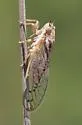
Beameria wheeleri
Beameria wheeleri
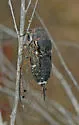
Cacama crepitans
Cacama crepitans
Cacama maura
Cacama maura
Cacama pygmaea
Cacama pygmaea
Cicadettana texana
Cicadettana texana
Clidophleps beameri
Clidophleps beameri
Clidophleps distanti
Clidophleps distanti
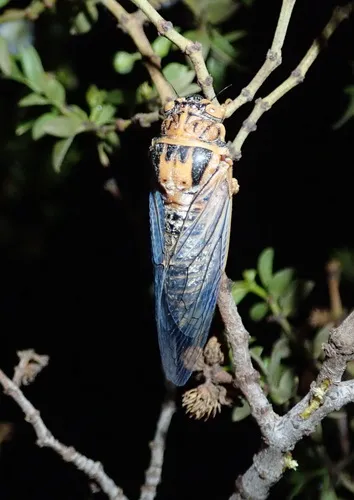
Clidophleps vagans
Clidophleps vagans
Citrus Cicada
Diceroprocta apache
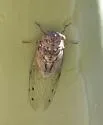
Diceroprocta arizona
Diceroprocta arizona
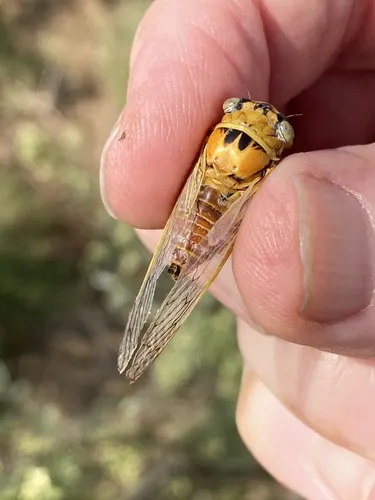
Diceroprocta aurantiaca
Diceroprocta aurantiaca
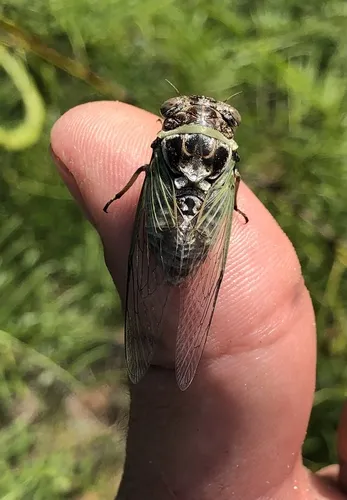
Diceroprocta averyi
Diceroprocta averyi
Diceroprocta azteca
Diceroprocta azteca
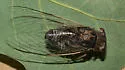
Diceroprocta bequaerti
Diceroprocta bequaerti
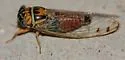
Diceroprocta delicata
Diceroprocta delicata
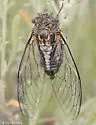
Diceroprocta eugraphica
Diceroprocta eugraphica
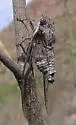
Diceroprocta knighti
Diceroprocta knighti