
Resonant Cicada
Megatibicen resonans
This record describes Megatibicen resonans (species). Recorded family: Cicadidae. Recorded order: Hemiptera.
Identification and Appearance
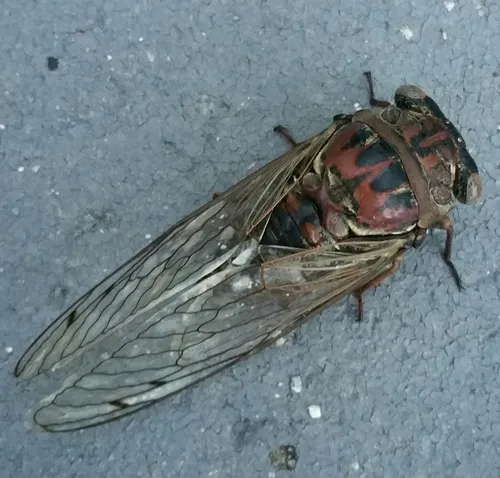
Replaced by Neotibicen resh in western Gulf States (Louisiana & Texas) Replaced by T. auletes in the north and in hardwood dominated habitats across the southeast incl. the Piedmont & Cumberland Plateaus (known only from localities east of the Miss. Riv.) The calls of Neotibicen resh, Tibicen resonans and N. auletes are very similar and frequently confused with one another. -------------------------------------------------------------- This cicada is our second largest eastern species and most closely related to T. auletes (our largest). It frequents lowland pine forests where it largely replaces T. auletes in such habitats. There may be some geographic variability; specimens collected in coastal areas and in peninsular Florida tend to be lighter & more colorful. Much of the central and south Florida material reviewed can be characterized as follows: They often possess reddish-tan dorsal markings on the abdomen (much as seen in winnemanna) and seem to have slightly longer wings by proportion, appearing slightly more gracile than specimens collected elsewhere. *c. & s. Florida specimens usually possess light brown markings running along the dorsum of the abdomen, a trait not yet observed in specimens from GA, AL, SC or NC (per. observ.) Regarding geographic coloration and morphologies, larger samples may be needed to further support these observations. _________________________________________________________________________________________________________________ Frequently confused and closely related - T. auletes , T. resh & T. resonans . T. auletes is our LARGEST EASTERN Tibicen SPECIES. T. resh T. resonans
Classification
- Kingdom
- Animalia
- Phylum
- Arthropoda
- Class
- Insecta
- Order
- Hemiptera (True Bugs, Cicadas, Hoppers, Aphids and Allies)
- Suborder
- Auchenorrhyncha
- Superfamily
- Cicadoidea
- Family
- Cicadidae (Cicadas)
- Subfamily
- Cicadinae
- Tribe
- Tacuini
- Genus
- Megatibicen
Imported taxonomy record. Source availability varies; see the source references and editorial policy below.
Habitat and Range
Habitat
Pine flatwoods and Pine barrens of the coastal plain & low hill country (Usu. associated with "Long-leaf" pines and sandy soils)
Geographic Range
Southeast Coastal Plain and Fall-line Hills FL, AL, GA, SC, & NC (Specimens observed) LA (Louisiana - I have seen several specimens taken at lights in a couple of the FL Parishes of se. Louisiana) MS (Mississippi - no specimens reviewed recently but this species does occur across the southern third or so of the state - Miss. records on page 148 ) VA - Virginia (unconfirmed reports from se. coastal areas - possible ???)
Seasonal Activity
Late summer. July-September (North Carolina). July-November (Gulf States & northern Florida).
Diet and Behavior
Diet: Seems to prefer pines Populations in south central Florida, where auletes is absent, are often associated with pines and oaks.
Life History
eggs usually laid in dead twigs, wood or bark (occasionally eggs may be laid in living stems and twigs) eggs hatch and nymphs burrow into the soil nymphs feed on the sap in roots for several years (prefer pines, Pinus spp.) Final instar nymphs emerge and develop into winged adults (emergence for this species usu. occurs at night - into early morning)
About True Bugs, Cicadas, Hoppers, Aphids and Allies: the wider group
Order-level background for Hemiptera, the group containing Megatibicen resonans. Species-specific details appear above.
Group overview
Hemiptera (true bugs) includes over 80,000 described species across cicadas, aphids, leafhoppers, shield bugs, and bed bugs. Aphids alone cost global agriculture an estimated $2.5 billion annually in crop losses.
Ecological role of the group
Many Hemiptera are essential food sources for birds and predatory insects. Cicadas provide massive nutrient pulses during emergence events - a single Brood X emergence can involve trillions of individuals across 15 states.
Economic and practical significance of the group
The brown marmorated stink bug (Halyomorpha halys) caused $37 million in apple crop losses in a single year in the U.S. Mid-Atlantic region. Bed bug infestations in the U.S. increased by 500% between 2001-2010, costing the hotel industry hundreds of millions annually.
Recorded sources for this group: USDA, EPA, University research. Imported estimates may describe particular regions or reporting periods.
Photos of Resonant Cicada (2)
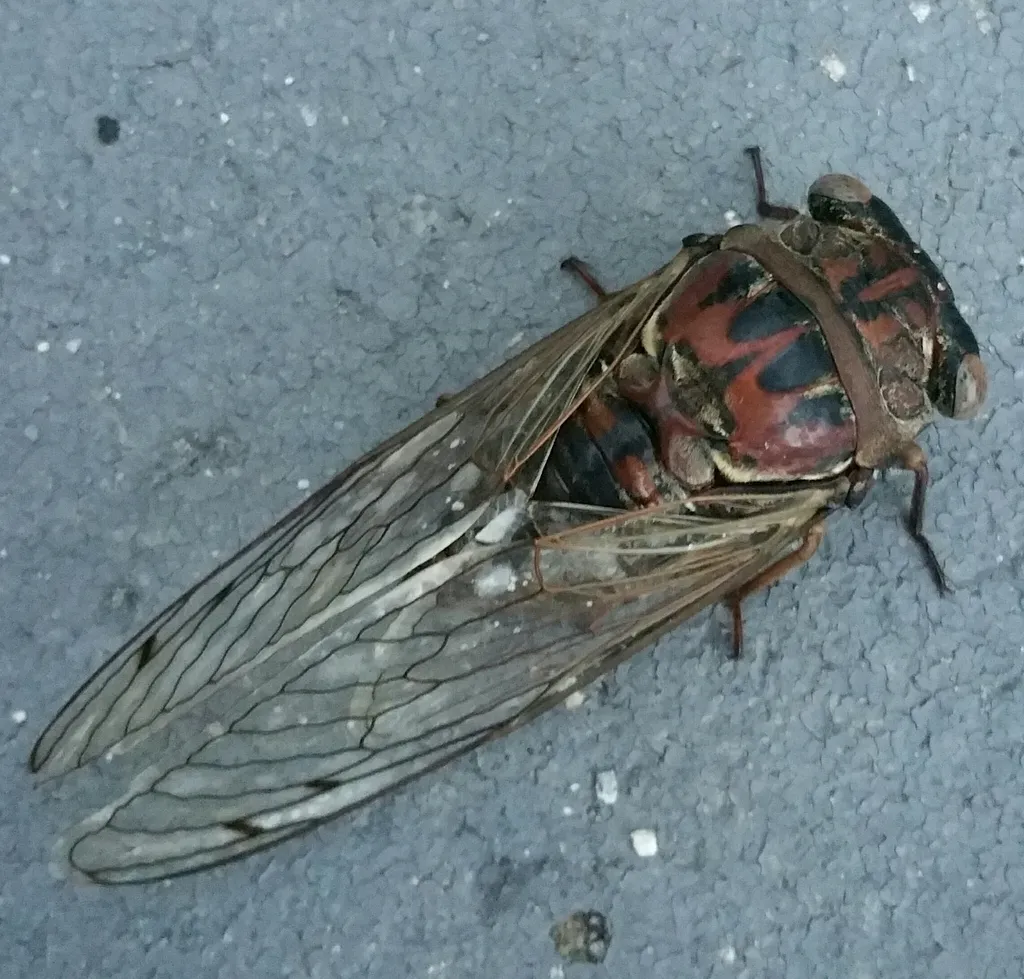
Photo credits: Contributed by john and jane balaban; Additional contributions by David Ferguson , Bill Reynolds , antarctica
Frequently Asked Questions About Resonant Cicada
What is Resonant Cicada?
Resonant Cicada (Megatibicen resonans) is a species in the family Cicadidae, within the order Hemiptera.
Where is Resonant Cicada found?
| Feature | Details |
|---|---|
| Habitat | Pine flatwoods and Pine barrens of the coastal plain & low hill country (Usu. associated with Long-leaf pines and sandy soils) |
| Range | Southeast Coastal Plain and Fall-line Hills FL, AL, GA, SC, & NC (Specimens observed) LA (Louisiana - I have seen several specimens taken at lights in a couple of the FL Parishes of se. Louisiana) MS (Mississippi - no specimens reviewed recently but this species does occur across the southern third or so of the state - Miss. records on page 148 ) VA - Virginia (unconfirmed reports from se. coastal areas - possible ???) |
What does Resonant Cicada eat?
The diet of the Resonant Cicada includes Seems to prefer pines Populations in south central Florida, where auletes is absent, are often associated with pines and oaks..
When is Resonant Cicada active?
Resonant Cicada: seasonal activity - Late summer. July-September (North Carolina). July-November (Gulf States & northern Florida)..
What is the life cycle of a Resonant Cicada?
eggs usually laid in dead twigs, wood or bark (occasionally eggs may be laid in living stems and twigs) eggs hatch and nymphs burrow into the soil nymphs feed on the sap in roots for several years (prefer pines, Pinus spp.) Final instar nymphs emerge and develop into winged adults (emergence for this species usu. occurs at night - into early morning)