
True Bugs, Cicadas, Hoppers, Aphids and Allies
Order Hemiptera
The True Bugs, Cicadas, Hoppers, Aphids and Allies (Order Hemiptera) includes 7,349 species across 120 families and 1,727 genera in our directory.
About True Bugs, Cicadas, Hoppers, Aphids and Allies
Hemiptera (true bugs) includes over 80,000 described species across cicadas, aphids, leafhoppers, shield bugs, and bed bugs. Aphids alone cost global agriculture an estimated $2.5 billion annually in crop losses.
Economic Impact
The brown marmorated stink bug (Halyomorpha halys) caused $37 million in apple crop losses in a single year in the U.S. Mid-Atlantic region. Bed bug infestations in the U.S. increased by 500% between 2001-2010, costing the hotel industry hundreds of millions annually.
Ecological Role
Many Hemiptera are essential food sources for birds and predatory insects. Cicadas provide massive nutrient pulses during emergence events - a single Brood X emergence can involve trillions of individuals across 15 states.
Families in Hemiptera (120)
Species in Hemiptera (7,349)
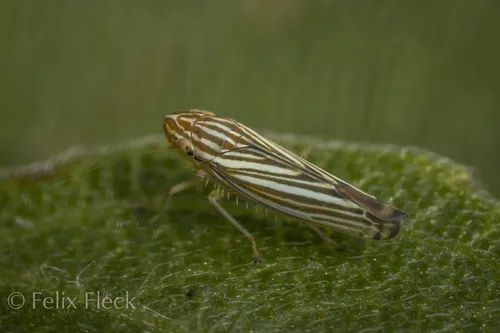
Sibovia compta
Sibovia compta
Identification: For images of specimens of this species, see: http://naturalhistory.museumwales.ac.uk/sharpshooters/browserecord.php?-recid=40 . It seems that we have representations of all 3 color forms represented on that site. potential vector of
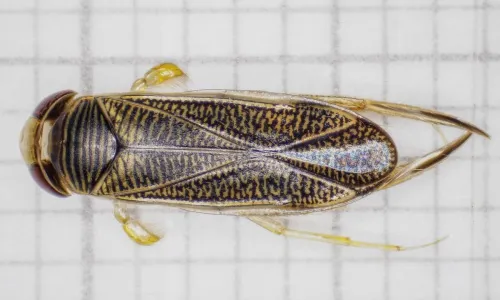
Sigara distincta
Sigara distincta
8-9mm. One of several very similar Corixidae species of water boatmen. Detailed examination is necessary for identification of species. Unless identified by a recognised expert, a photo is required and the specimen should be examined with a microscop
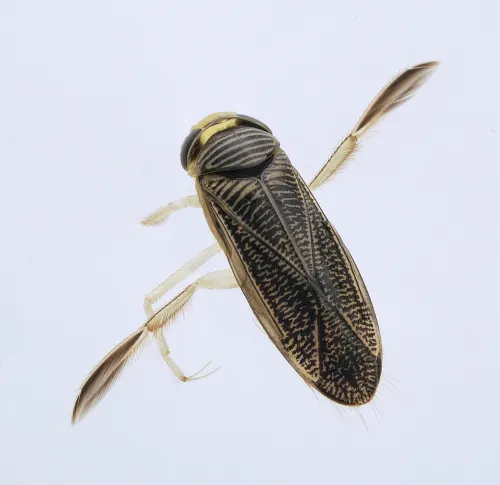
Sigara dorsalis
Sigara dorsalis
7.3mm, 6 pales lines on the pronotum. The lines on the hemielytra are more broken with yellow yellow patches at the top. Hesperocorixa linnaei is a similar size and also has 6 pale lines on pronotum - to distinguish check xiphus or male pala. Usually
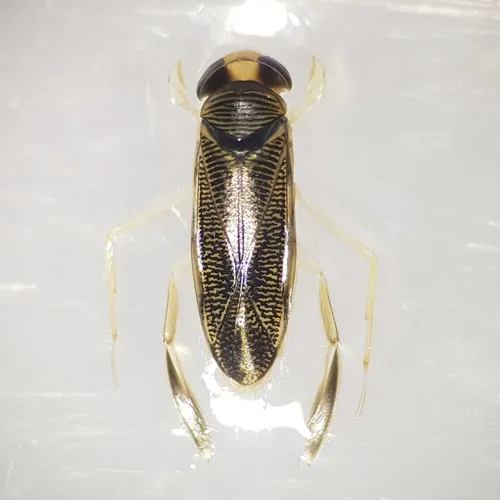
Sigara falleni
Sigara falleni
One of the larger Sigara species (length 7 to 8 mm) with 7 or more pale lines on the pronotum. This is one of several very similar small water bugs. Detailed examination is needed to identify the species. Good quality photographs of dorsal and ventra
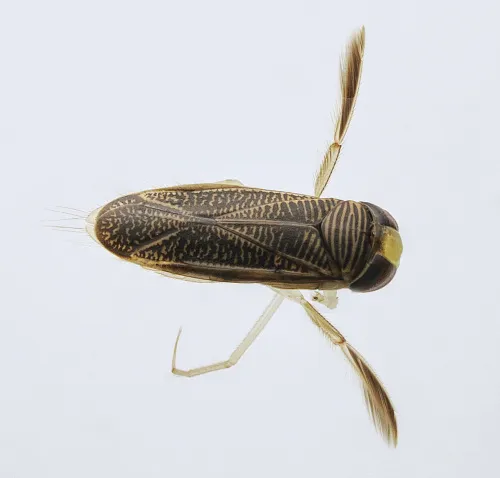
Sigara fossarum
Sigara fossarum
Length = 6.1mm. 5-6 pale transverse lines on the thorax. There is a dark patch near inner angle of the corium and in middle of clavus. Male palae have base and upper margin relatively square and the pegs form a diagonal line to reach the upper margin
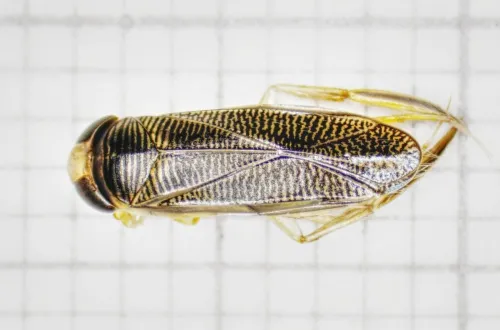
Sigara iactans
Sigara iactans
Very similar to Sigara falleni , can only be distinguished by male pala. Sparsely vegetated ponds with little organic matter. First recorded in the UK in Norfolk in 2005 but seems to be rapidly spreading west.
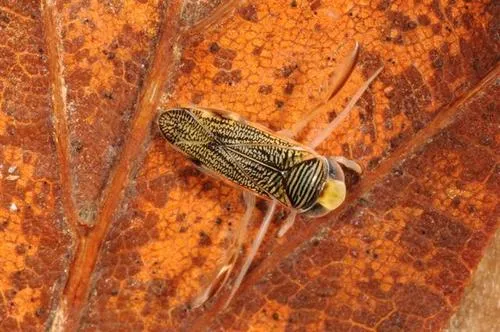
Sigara lateralis
Sigara lateralis
5-6.5mm, the only species of the genus to have an entirely dark posterior claw. This is one of several very similar small water bugs. It has a pattern resembling a gold coloured wave effect on the elytra. Detailed examination is needed to identify th
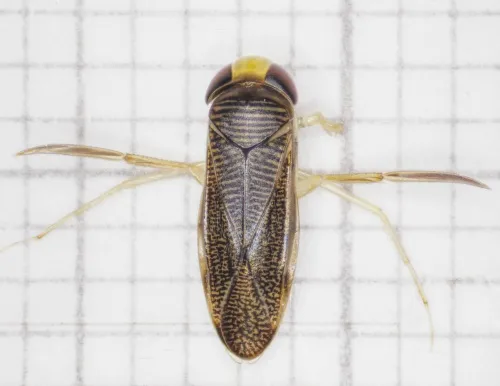
Sigara limitata
Sigara limitata
Length = 5.8mm. Lateral angle of pronotum symmetrically rounded. Hair fringe on tarsus light brown. Male facial depression deep, reaching top of ‘face’, upper margin strongly rounded, ends at a transverse keel level with the bottom of the eyes. Male
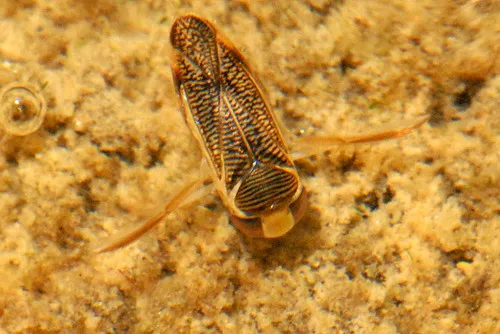
Sigara nigrolineata
Sigara nigrolineata
A smaller species, length 5–6.5mm, with 7-9 pale lines on the pronotum, a pala with a single row of pegs and a more or less triangular xiphus. The male of S. nigrolineata has a facial depression below a transverse keel (or ridge) that is level with t
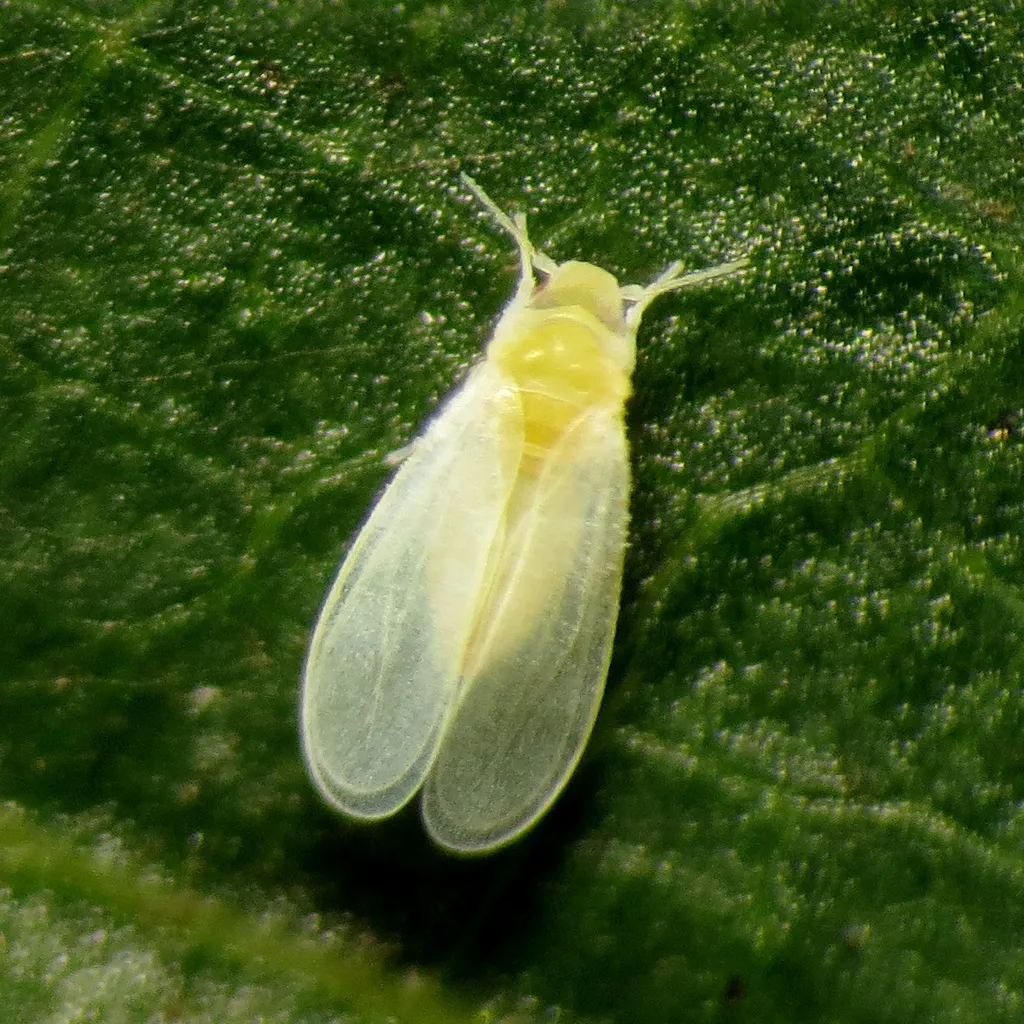
Silverleaf Whitefly
Bemisia argentifolii
Worldwide distribution. Possibly its origin is India; first found in the United States in the late 1880's. Considered a pest.
Sinea complexa
Sinea complexa
Identification: The only Sinea of the Southwest with spines on both lobes of pronotum and fore femur strongly swollen distally. S. incognita from the Midwest will also match this description and is most easily separated by range. S. integra from Mexi
Sinea coronata
Sinea coronata
Identification: The most distinctive feature is the shape of the abdomen, abruptly widening in the S4-6 range
Sinea integra
Sinea integra
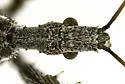
Identification: One of three species with distinct spines on both the anterior and posterior pronotal lobe. Of these three, it is the most slender, particularly in the profemora.
Siphoninus phillyreae
Siphoninus phillyreae
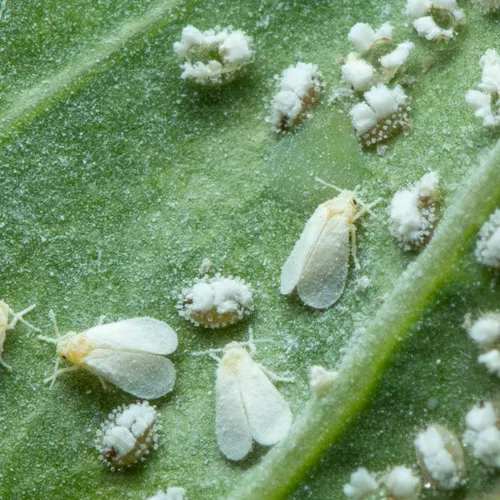
Adults are pale yellowy-white in colour. Puparia are about 1 mm, oval, yellowish white, often medially with an elongated dark spot; dorsally a number of tubular filaments, each with a clear drop of honeydew at its tip and can be found on the undersid
Sirthenea carinata
Sirthenea carinata
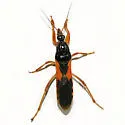
Identification: Oblong, black with orange "saddle"; legs are solid red or orange
Sirthenea stria
Sirthenea stria
Identification: Oblong, black with orange "saddle"; legs are pale with contrasting dark sections on the femora and tibiae.
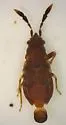
Sisamnes claviger
Sisamnes claviger
Identification: Antennae distinctly clavate, second segment evidently shorter than third; fore tibia of the male unarmed. scarce, usually brachypterous
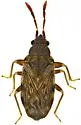
Sisamnes contractus
Sisamnes contractus
Identification: Antennae not so distinctly clavate, second segment of antenna longer than third; fore tibia of male armed with a preapical tooth. Det. Salvador Vitanza, 2022 Type Locality: Guatemala
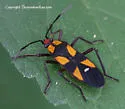
Six-spotted Milkweed Bug
Oncopeltus sexmaculatus
Identification: O. cayensis (so. FL) lack white membranal spot
Sixeonotus albicornis 0
Sixeonotus albicornis
Identification: 1) Cuneus and embolium black; and 2) Antennae and legs wholly milky-white, tarsal claws alone darker.
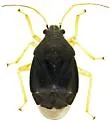
Sixeonotus dextratus
Sixeonotus dextratus
Identification: "Suggestive of insignis Reut. in the pale legs and antennae, but distinguished by the remarkable development of the male genitalia; left clasper very small while the right clasper is very thick and large, covered above by a large flap
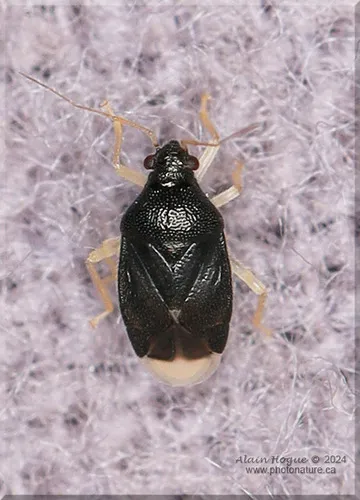
Sixeonotus insignis
Sixeonotus insignis
Identification: Antennae entirely pale; legs entirely pale with brownish areas on hind femora; membrane with basal half black Head, scutellum and under surface shining black with a tinge of bronze Sixeonotus albicornis should probably be treated as a
Sixeonotus tenebrosus
Sixeonotus tenebrosus
Identification: Femora wholly black; hemelytra with coarse, distinct brownish hairs; basal half or more of scutellum concealed
Slaterobius chisos 0
Slaterobius chisos
Identification: Several of the paratypes differ strikingly in color, but we have been unable to find reliable structural differences. The female from Lost Mine Peak, one female from the Chisos Mts. Basin, and the male from NE of Sanderson are almost
Slaterobius insignis
Slaterobius insignis
Identification: resembles large active ants and moves in an ant-like fashion
Slaterocoris atritibialis
Slaterocoris atritibialis
Identification: Distinguished from stygicus by its more arcuate hemelytra, black tibiae and the structure of the male genital claspers.
Slaterocoris pallipes
Slaterocoris pallipes
Identification: Differs from stygicus Say in the pale legs and the long finger-like spines at apex of the male right genital clasper.
Small American Raspberry Aphid
Aphis rubicola
Identification: Apterae are pale yellowish green, with pale appendages.
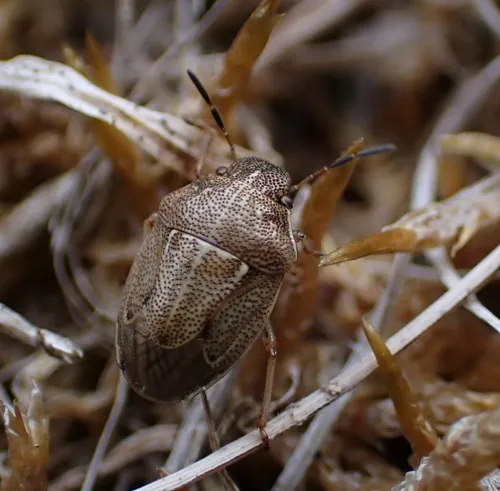
Small Grass Shieldbug
Neottiglossa pusilla
Length 4 to 4.5 mm. This small shieldbug is pale brown, with paler margins to the pronotum and abdomen, and a pale central stripe running down the pronotum and scutellum. The short head is rather flattened at the front.; the new generation of adults
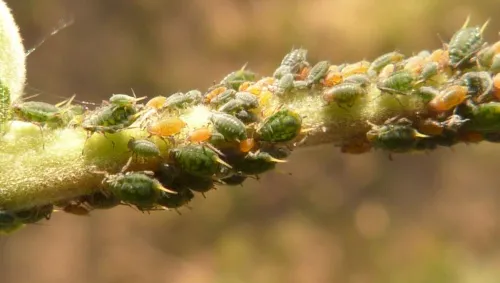
Small Willow Aphid
Aphis farinosa
Aphis farinosa apterae are quite small and are green mottled with yellow-orange. The siphunculi are pale with a slightly dusky tip and the cauda is distinctly darker. The body length of Aphis farinosa apterae is 1.6 to 2.5 mm. Their oviparae are dull
Smoketree Sharpshooter
Homalodisca liturata
Identification: The dull red patch on the wing distinguishes this sp. from H. vitripennis , as does the pattern of white stripes or lines on the head (vs speckles/spots in vitripennis )
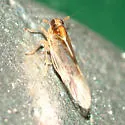
Sogatella kolophon
Sogatella kolophon
"Nobody knows where S. kolophon came from; but the probabilities are palaeotropics. I am treating it as pantropical until further evidence emerges." --K.G.A. Hamilton, pers. comm. to =v= 10.ii.2012
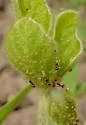
Soybean Aphid
Aphis glycines
Major pest of soybean. Fields close to buckthorn plants (the overwintering plant) tend to suffer worse infestations. Some natural enemies are ladybeetles, lacewings, pirate bugs, predatory flies, and entomopathogenic (insect disease-causing) fungi
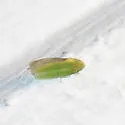
Spangbergiella vulnerata
Spangbergiella vulnerata
Identification: head strongly flattened, with sharp edge; oblique red lines on head are distinctive
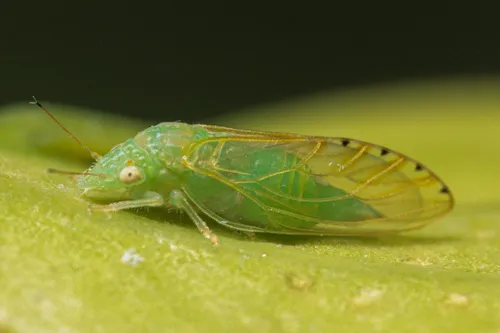
Spanioneura fonscolombii
Spanioneura fonscolombii
A greenish/yellowish psyllid associated with Box, Buxus sempervirens , 3mm long. Long pointed forewings with 4 dark spots at the apices of the cells. There is a dark tip to the orange antennae. Psylla buxi is also associated with Box, but lacks the 4
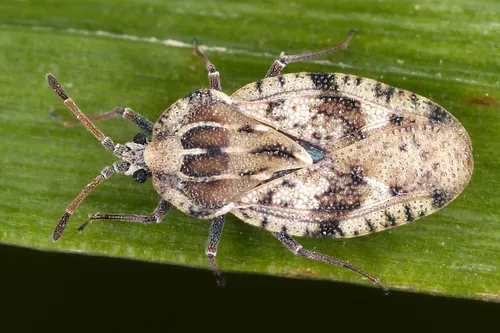
Spear Thistle Lacebug
Tingis cardui
Length 3-4 mm. Tingis species are grey-brown lacebugs which are covered in white powdery deposits made of wax. The 4th antennal segment is clearly broader than 3rd and there are three frontal processes (small projections arising from the front of the
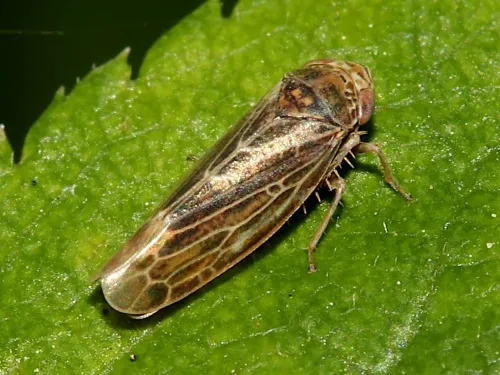
Speudotettix subfusculus
Speudotettix subfusculus
Length 5 to 6 mm. Brown forewings with paler veins, two dark lines at the tip of the vertex with an orange-brown transevese band behind. Good qulaity photographs, taken from side, top and face, and c l early showing vertex and pronotum . Common. (ref
Sphragisticus nebulosus
Sphragisticus nebulosus
Slater (1974) considers S. nebulosus a Holarctic element in the Northeast fauna; in the same list he clearly indicates other species as "introduced". I don't know why he and Dick might have thought otherwise a few years later ( 3 ) . Slater also stat
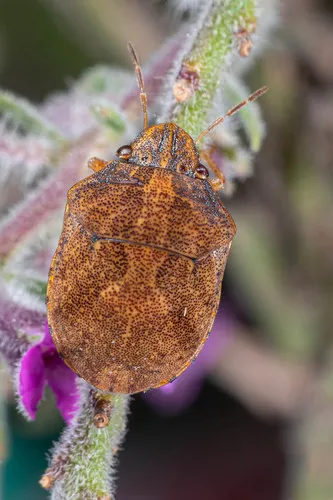
Sphyrocoris obliquus
Sphyrocoris obliquus
one of the most common scutellerids in FL; common throughout much of its range
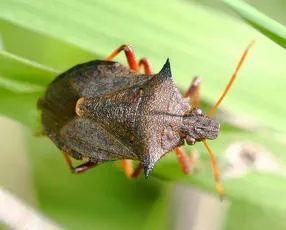
Spiked Shieldbug
Picromerus bidens
Length 12-13.5 mm. A large and distinctive predatory shieldbug, which has unmistakeable thorn-like projections on the front of the pronotum. Often found in flower-rich woodland edge habitats and also frequent on heathland. This species usually overwi
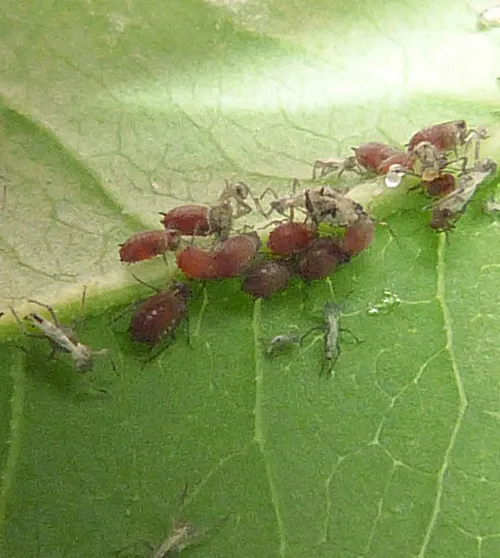
Spindle Aphid
Aphis euonymi
A reddish to chocolate brown aphid, often with transverse bars of wax dust on anterior abdominal tergites. The body length of apterae is 1.7 to 2.9 mm. The spindle aphid does not host alternate. It feeds on spindle (Euonymus europaeus). Probably fair
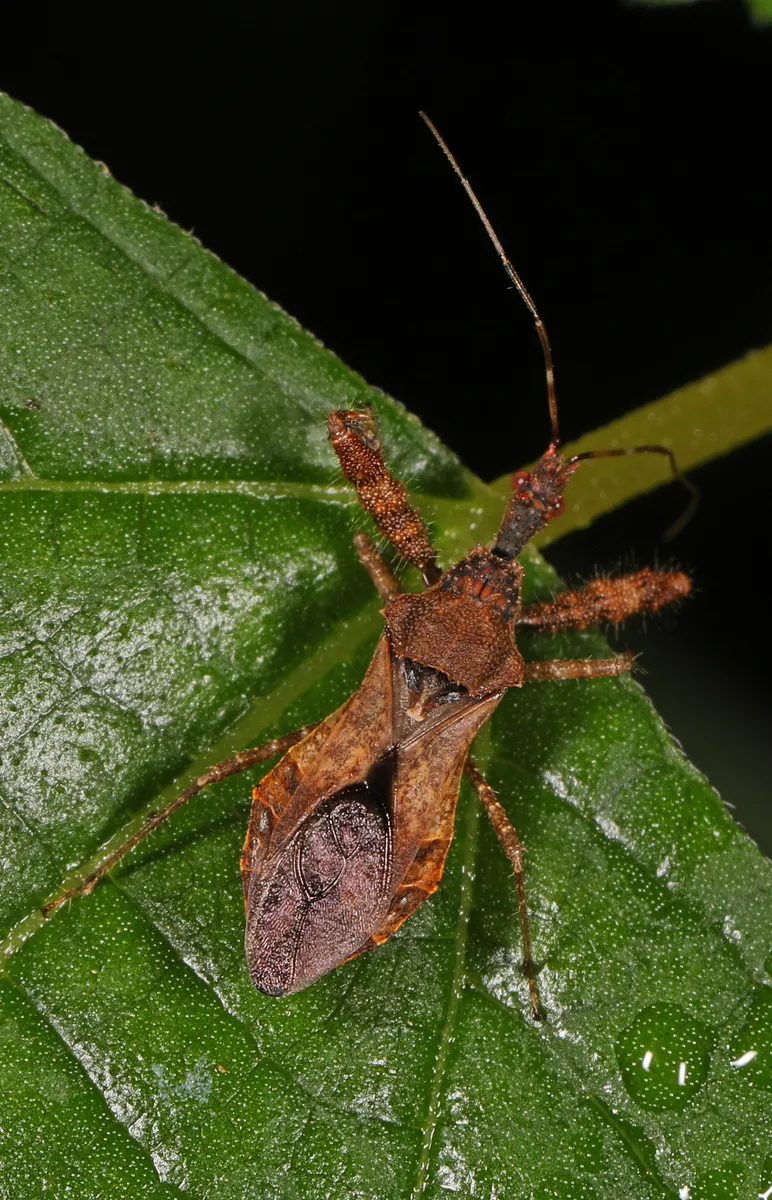
Spiny Assassin Bug
Sinea spinipes
Identification: Adult similar to adult S. diadema , but anterior pronotal lobe with blunt tubercles only (no spines) : Also, this character applies to keying adults only--nymphs cannot be keyed to species, in general. Important note: adult Sinea diad
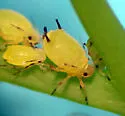
Spirea Aphid
Aphis spiraecola
important pest on species of citrus, but also attacks many other crops incl. crucifers (Brassicaceae); potato, peppers, and tobacco (Solanaceae); apple, Spiraea , and Prunus (Rosaceae), and a variety of ornamentals. Implicated in transmission of 17 p
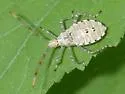
Spot-sided Coreid
Hypselonotus punctiventris
Identification: "As implied by the lack of names in synonymy, there is little conspicuous variation. The pronotum tends to have the 6 longitudinal vittae less developed in most specimens from Texas and northeastern Mexico than elsewhere. In all speci
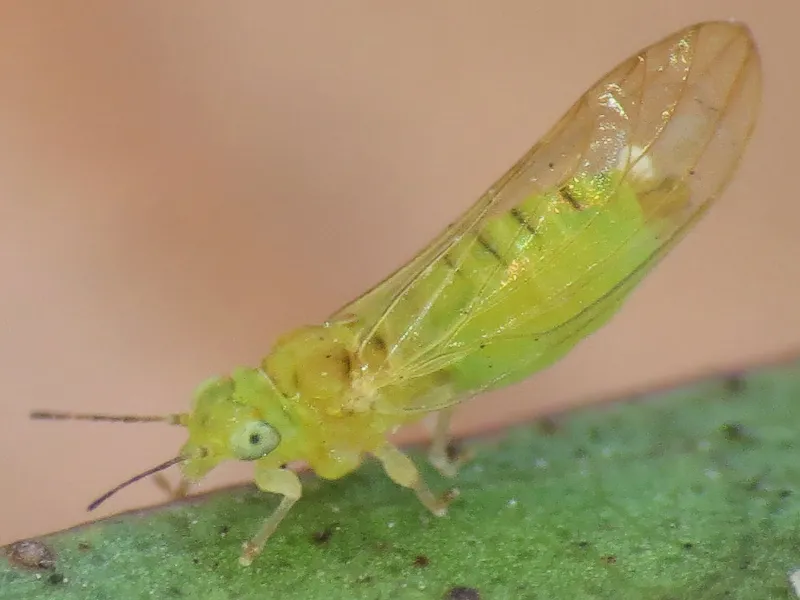
Spotted Gum Lerp Psyllid
Eucalyptolyma maideni
The nymph lives under the lerp, a protective shell of gelatinous honeydew. --Dennis Haines, 28.ii.2009
Spotted Willow‒Angelica Aphid
Cavariella konoi
Identification: Apterae in spring colonies on Salix are green or yellowish-green, often with two darker green longitudinal stripes
Spruce Shoot Giant-aphid
Cinara pilicornis
Identification: Apterae are either orange-brown or greyish-green Introduced from the Palearctic, 1912
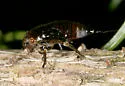
Spruce Spittlebug
Aphrophora parallella
The fungus, Entomorphora aphrophora and high temperatures during the nymph stage can cause heavy mortality. Reducing oviposition sites by opening up closed stands and pruning dead and dying limbs controls this insect.
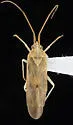
Squamocoris arizonae
Squamocoris arizonae
Identification: "Recognized by pale brownish yellow general coloration without dark markings, lateral margins of pronotal disk carinate, vestiture of dorsum with dark brown and silvery white scalelike setae, and structure of the male genitalia. Hemel
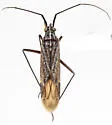
Squamocoris pallidinervus
Squamocoris pallidinervus
Identification: See description in Stonedahl & Schuh, 1986.
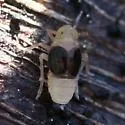
St. Augustine Grass Planthopper
Syndelphax pseudoseminigra
Identification: Syndelphax - University of Delaware In March 2005, a large infestation of the delphacid planthopper, Liburnia pseudoseminigra (Muir & Gifford), was found infesting St. Augustinegrass, Stenotaphrum secundatum , in a commercial sod farm
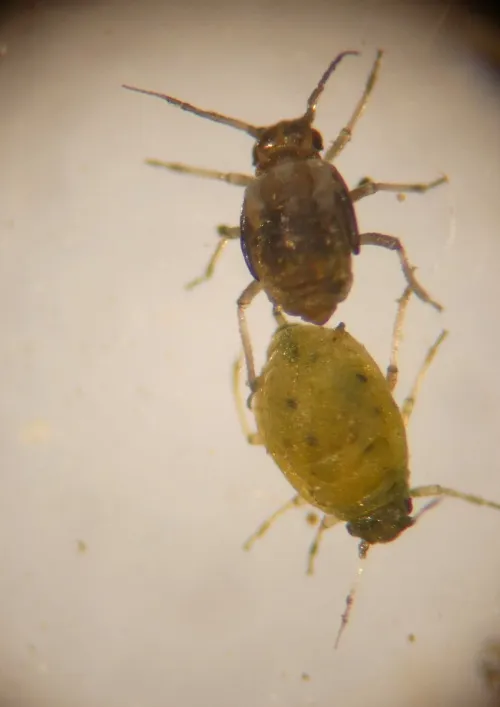
Staegeriella necopinata
Staegeriella necopinata
Adult apterae of Staegeriella necopinata are yellowish-green or greyish-green aphids powdered ventrally with grey wax. Unless identified by a recognised expert, a photo is required. If the photo doesn't show the key ID features then in the comments b
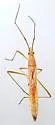
Stenocoris furcifera
Stenocoris furcifera
Identification: Separated from S. (O.) filiformis by the presence of a red midlongitudinal ventral line as well as characteristics of the genitalia (Ahmad 1965).
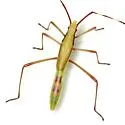
Stenocoris tipuloides
Stenocoris tipuloides
Identification: "may be distinguished from the other species from neighboring territory by the rufescent tips of the femora and the produced, entire sixth ventral segment of the female. The body and legs are more elongate than those of any other Core
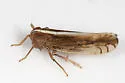
Stenocranus lautus
Stenocranus lautus
Identification: Distinguished from other species with the same color pattern by the hind tarsus, that is as long as the hind tibia (up to its joint with the tarsus). [comment by Andy Hamilton]
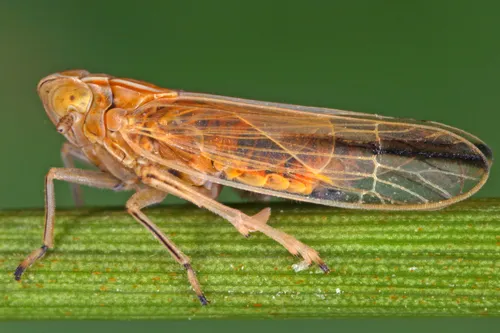
Stenocranus major
Stenocranus major
Length 5.5 to 6.5 mm. A large slender planthopper associated with Reed Canary-grass Phalaris arundinacea . Light brown with paler, orange-edged longitudinal stripe down centre of head, pronotum and scutellum. The forewing has a darker longitudinal ba
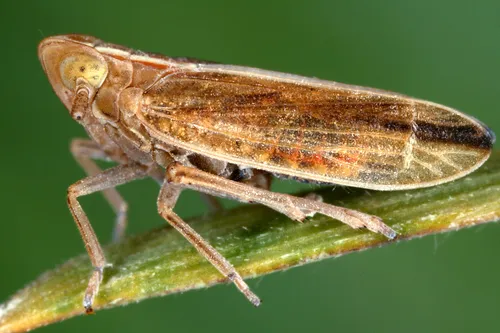
Stenocranus minutus
Stenocranus minutus
Length 5 to 6 mm. A large slender planthopper associated with Light brown with paler, orange-edged longitudinal stripe down centre of head, pronotum and scutellum. The forewing has a darker longitudinal band, which varies in intensity and extent. The
Stenocranus unipunctatus
Stenocranus unipunctatus
Identification: the streak on the wing tips emanating from a dark spot is distinctive --Andy Hamilton
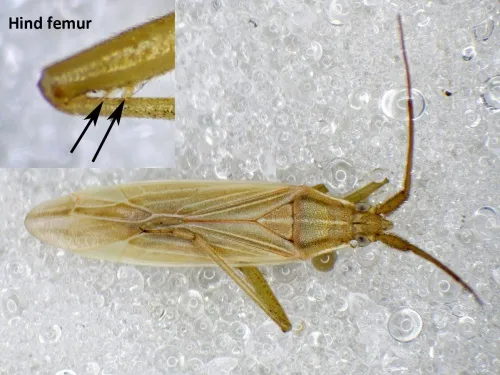
Stenodema calcarata
Stenodema calcarata
Length 7-8 mm. Stenodema species are elongate grass bugs with a longitudinal furrow between the eyes. The genus is best distinguished by the coarsely and densely pitted pronotum, although the two spurs on the hind femora of Stenodema calcarata make t
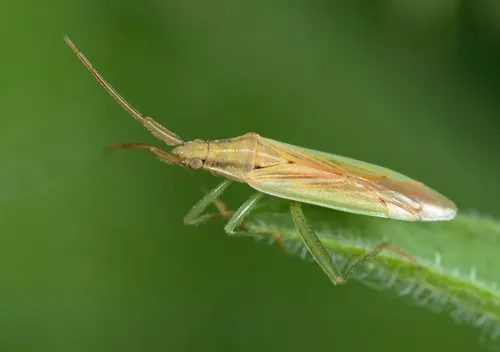
Stenodema laevigata
Stenodema laevigata
Length 8-9 mm. Stenodema species are elongate grass bugs with a longitudinal furrow between the eyes. The genus is best distinguished by the coarsely and densely pitted pronotum, Stenodema laevigata is very similar to Stenodema calcarata and Stenodem
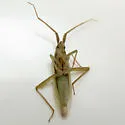
Stenodema pilosa
Stenodema pilosa
Identification: the three spines on the hind femur separate it from other congeners
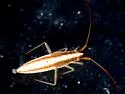
Stenodema pilosipes
Stenodema pilosipes
Identification: Hairy hind tibiae. Kelton described it was olive-green. But, it seems it does not match with the photos.
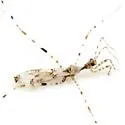
Stenolemus schwarzii
Stenolemus schwarzii
Identification: Abdomen without submedian spines on venter; posterior discal cell bisected longitudinally by a distinct vein: basal and apical bands on hind femur brownish, the middle one deep black and very conspicuous (ephasis added) middle ring of
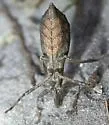
Stenopoda spinulosa
Stenopoda spinulosa
Identification: Very large, straw-colored/grayish. Note these features : "...lurks about the branches and twigs of trees, watching for caterpillars and other insects upon which to leap and transfix with the curved acute rostrum, and while holding one
Stethaulax marmorata
Stethaulax marmorata
Identification: easily confused with Symphylus caribbeanus but head is rather rounded, less pointy; external features distinguishing the two are discussed in ; however, the easiest way to tell the two apart offhand seems to be the profile view, with
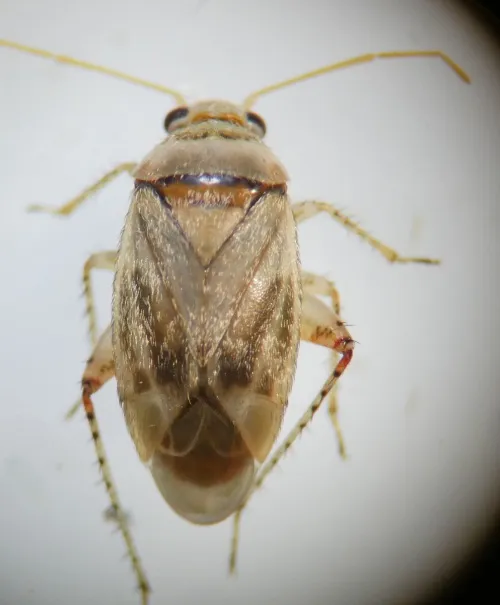
Sthenarus rotermundi
Sthenarus rotermundi
Length about 4 mm. This small whitish or grey-brown bug is well camouflaged on the leaves of grey and white poplar, the host-plants. The upper surface is covered in long pale hairs and the antennae are yellowish. The cuneus is usually at least partly
Stictocephala albescens
Stictocephala albescens
Identification: similar to C. diceros , but more slender, the dark band across the crest (in side view) extends to its tip, and the horns are recurved. Nymph is brown; C. diceros nymphs have longer processes on the body that recurve at the tips. [Bas
Stictocephala alta
Stictocephala alta
Identification: Habitus identical to Stictocephala bisonia . A highly ambiguous species. Described from a female specimen of unknown provenance; it matches the habitus of Stictocephala bisonia Kopp & Yonke, 1977 and was considered a senior synonym of
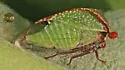
Stictocephala basalis
Stictocephala basalis
Identification: The usual color form is greenish on top, black below, but often the rest of the body is very dark also. The dark legs and underside, and brown patches on the sides of the pronotum, are distinctive. (Unusually dark specimens of C. palm
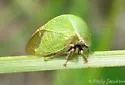
Stictocephala lutea
Stictocephala lutea
Identification: The common eastern 'hornless' species with dark legs (per Andy Hamilton)
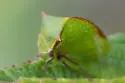
Stictocephala stimulea
Stictocephala stimulea
Identification: The broad brown margins on the crest are distinctive. --Andy Hamilton, 2.viii.2007
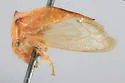
Stictocephala taurina
Stictocephala taurina
Identification: Prominent pale spots on the crest, horns narrower and front less broad than C. alta --Dr Hamilton
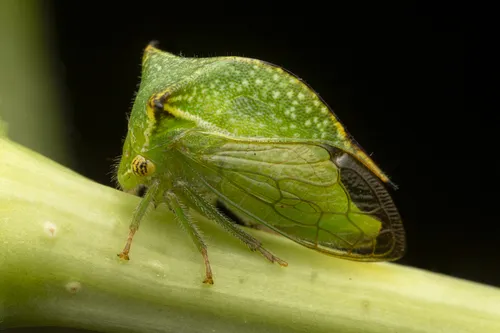
Stictocephala terminalis
Stictocephala terminalis
Images placed here are tentative ID's. This species was described from a female specimen from North America and is poorly known. The specimens here match the type specimen well and do not match any other described ceresine. Given the presence of unde
Stictolobus arcuatus
Stictolobus arcuatus
Identification: Holotype: Type Locality: Beeville, Bee County, Texas, May 30, 1910, coll'ed by W. D. Pierce
Stictopelta arizona
Stictopelta arizona
The subjective synonymy of this name with Stictopelta varians Fowler is clearly erroneous, so is not followed here.
Stictopelta pulchella
Stictopelta pulchella
Very similar to the Mexican species Stictopelta zonifera (Butler, 1878); it is unclear how to separate the two species, if they really are different.
Stictopleurus abutilon
Stictopleurus abutilon
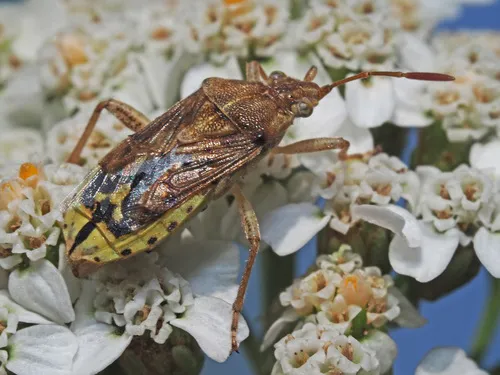
Length 7 to 8 mm. Two Stictopleurus species have recently become established in the UK which had previously been considered extinct. The genus is characterised by the banded connexivum and the spatulate tip to the scutellum. The two species are very
Stictopleurus knighti 0
Stictopleurus knighti
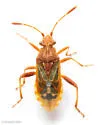
Identification: "Size and form of S. punctiventris (Dallas), the color generally more roseate" ; however, "Uhler note que S. punctiventris , tout comme d'ailleurs Arhyssus lateralis , deviennent parfois d'une couleur rouge qui transforme complètement
Stictopleurus punctatonervosus
Stictopleurus punctatonervosus
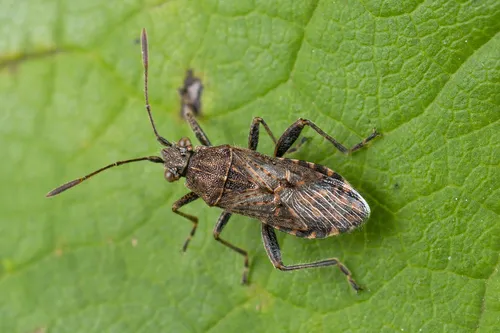
Length 7 to 8 mm. The genus is characterised by the banded connexivum and the spatulate tip to the scutellum. There are two very similar species which are best separated with reference to the fine detail of the pronotum. In Stictopleurus punctatonerv
Stilbometopius auroreus
Stilbometopius auroreus
Identification: Dorsal margin of frons slightly convex; costal border cream colored, other cells in forewing with black dots Type Locality: Texas; collected by G. W. Belfrage. (probably near present day Ft. Hood/Ft. Cavazos)
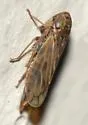
Stirellus bicolor
Stirellus bicolor
Identification: Distinguished from other greyish leafhoppers by very narrow head, with eyes separated by only their own width. Two color forms; one occurs in cooler temperatures, the other in hot summers. The bright colors are brought out by longer d
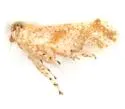
Stobaera tricarinata
Stobaera tricarinata
Identification: wings long, triangular, widest beyond midpoint, mostly clear except for some translucent brown patches; wing veins white with many black dots, giving stippled appearance; legs white to pale brown with several prominent black bands; wi
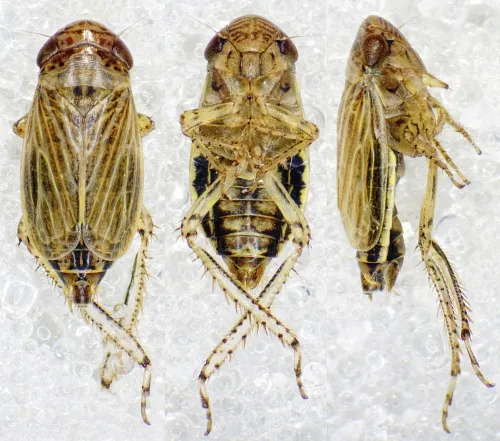
Streptanus aemulans
Streptanus aemulans
Length 4.5 - 6mm. A very variable brown species with paler wing veins. It is usually short-winged and often has dark longitudinal stripes on the abdomen beyond the wing-tips - but this is not always present. Dissection of male to examine internal gen
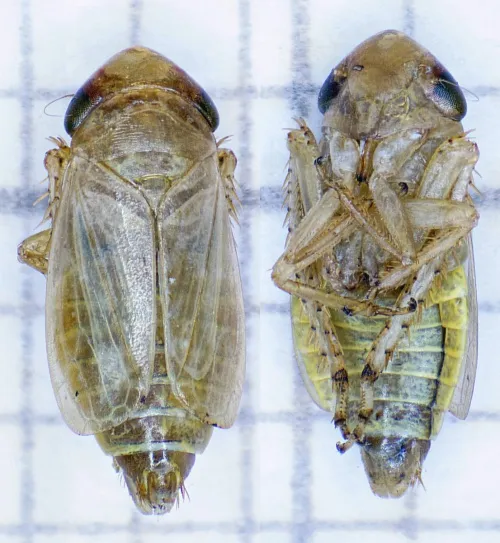
Streptanus sordidus
Streptanus sordidus
Length 4.5 to 6 mm. A very variable brown species with paler wing veins; often with dark mottling in wing cells. Dissection of male to examine internal genitalia - the aedeagus - is needed to confirm identification. other Streptanus, and other Deltoc
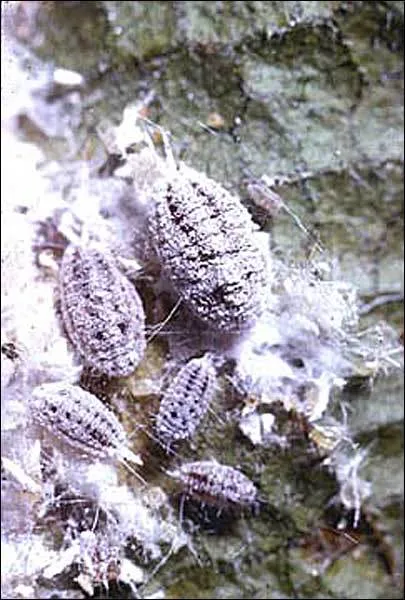
Striped Mealybug
Ferrisia virgata
Identification: "The striped mealybug is easy to recognize with the two dark stripes running lengthwise along the dorsum, lacking lateral wax filaments and having crystalline rods arising from the body. This mealybug is very common in Florida on a wi
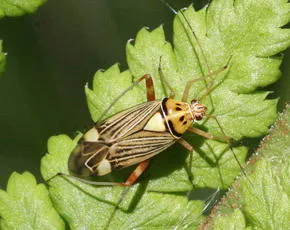
Striped Oak Bug
Rhabdomiris striatellus
Length 7 to 8 mm. This is a very striking bug. The females are usually paler then males. Miris striatus is larger and more elongate, with a completely yellow/orange cuneus and an entirely dark head. Overwintered eggs hatch in April, the larvae feedin
Stroggylocephalus mixtus
Stroggylocephalus mixtus
Identification: Ocelli slightly above the margin of the crown.
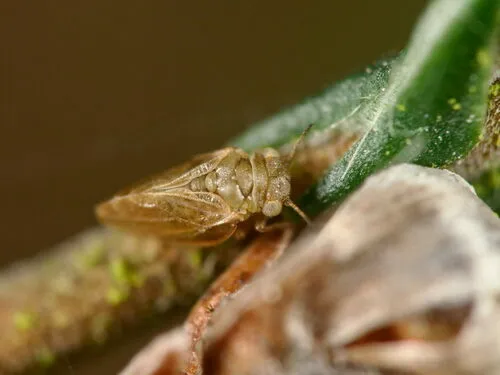
Strophingia ericae
Strophingia ericae
A very small greenish or brown psyllid associated with heather, Calluna vulgaris . Wing venation is reduced, and there are no genal cones. The forewings are mottled, rounded and oval, and have a leathery appearance, Strophingia cinereae is similar, b
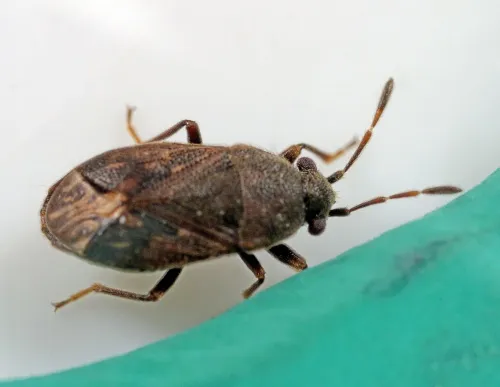
Stygnocoris fuligineus
Stygnocoris fuligineus
Length 2.5 to 3.5 mm. Stygnocoris species are small ground bugs in which the pronotum and forewings are covered in fine hairs. The pronotum is punctured throughout, and the front femora lack spines. Stygnocoris fuligineus and the closely related Styg
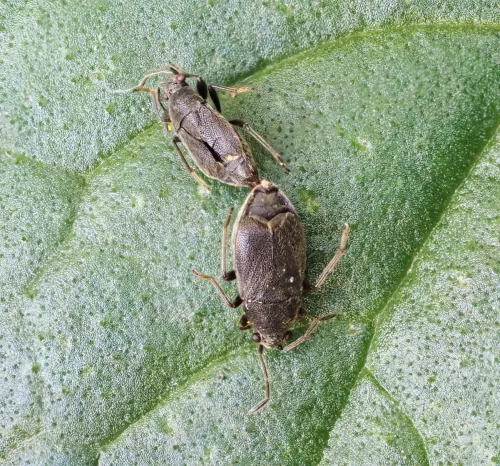
Stygnocoris rusticus
Stygnocoris rusticus
Length 3-4mm. Dark pronotum, dorsal surface dull with a short pubescence. Usually brachypterous although fully-winged individuals do occur. Unless identified by a recognised expert, a photo is required and the specimen should be examined with a micro
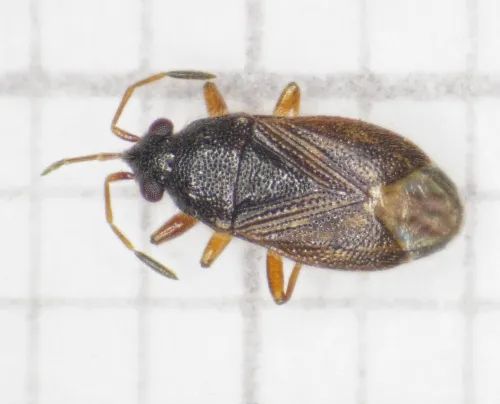
Stygnocoris sabulosus
Stygnocoris sabulosus
Length 2.5-3.0 mm. Stygnocoris species are small ground bugs in which the pronotum and forewings are covered in fine hairs. The pronotum is punctured throughout, and the front femora lack spines. S. sabulosus and the closely related S. fuligineus are

Sugarberry Psyllid
Tetragonocephala flava
Identification: Body yellow to brown, with six black spots on scutum. Medial cell on forewing very long, much longer than cubital cell; pterostigma absent
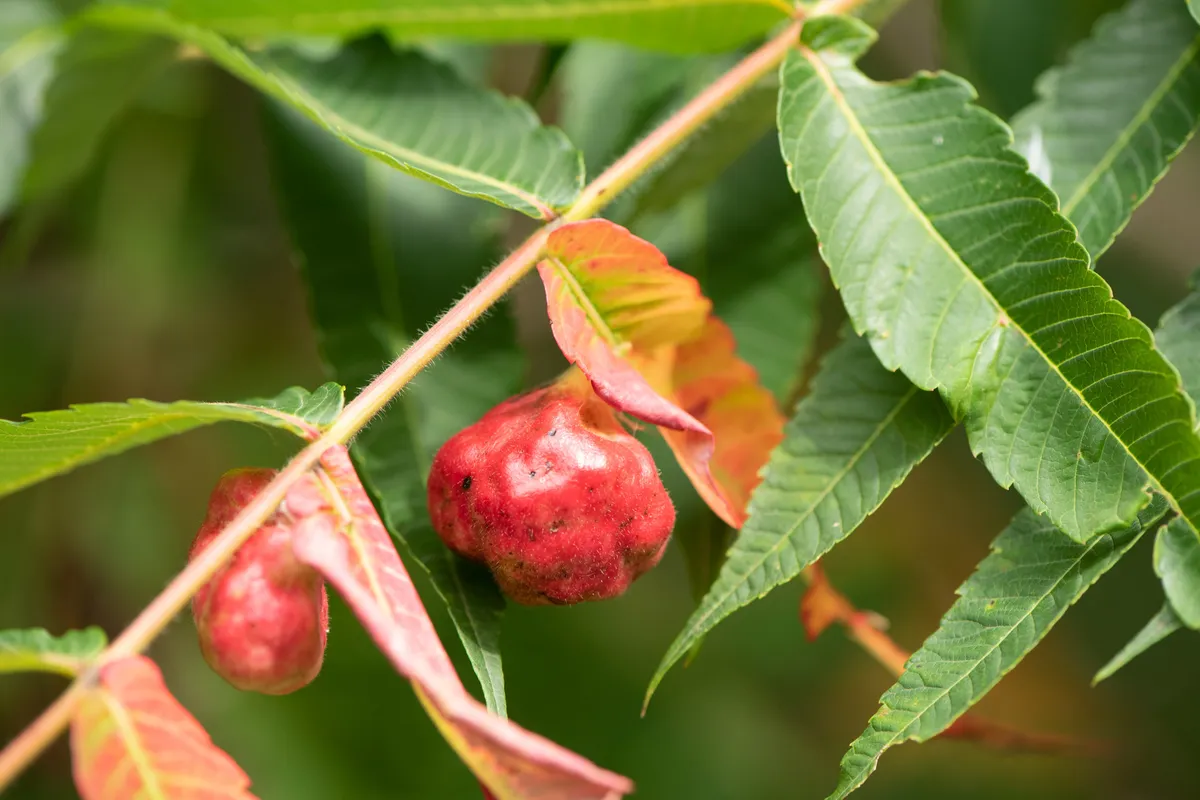
Sumac Gall Aphid
Melaphis rhois
Identification: From InfluentialPoints , "It is possible to distinguish between two of the species in the Melaphis rhois species group ( Melaphis rhois and Melaphis asafitchi ) when they are on the primary host. For Melaphis rhois the length of the a
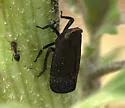
Sumac Speckled Lanternfly
Poblicia fuliginosa
These are nearly impossible to capture by hand netting, they are rocket propelled. (V.A. Brou, Jr., pers. comm. to MAQ, 2012)
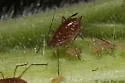
Sumac-grass Aphid
Carolinaia rhois
Identification: Apterae yellow-brown with black clavate siphunculi. On undersides of leaves of Rhus glabra and Rh. typhina (= hirta ). Alatae have a brownish yellow or greenish yellow abdomen with dusky dorsal markings. Monoecious holocyclic on Rhus
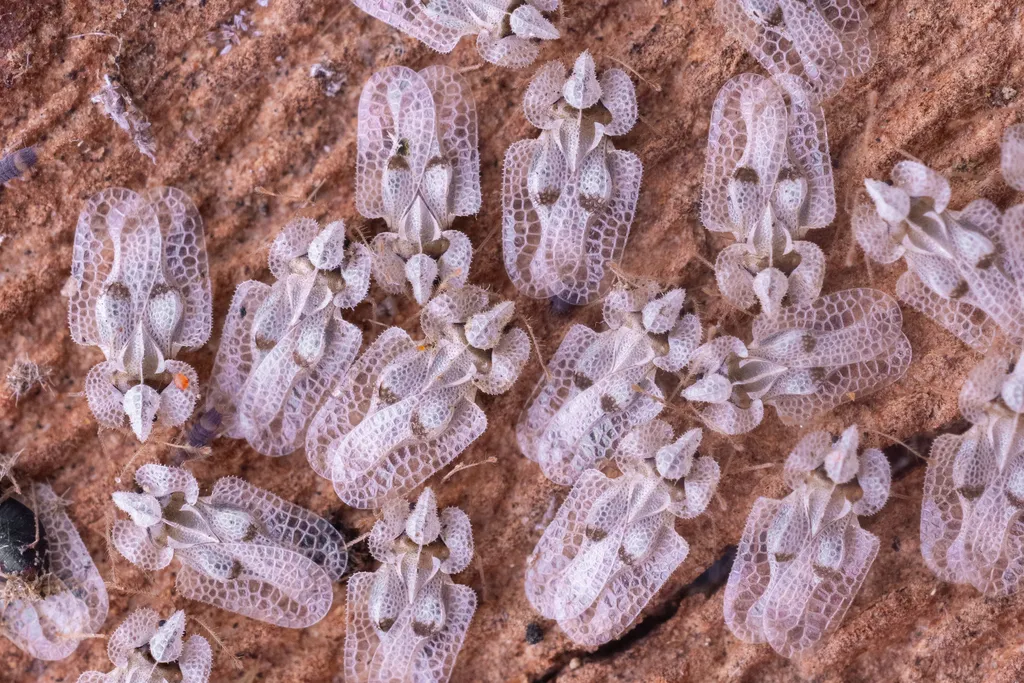
Sycamore Lace Bug
Corythucha ciliata
Identification: The only tingid on sycamore in e.NA ( C. confraterna in the west)
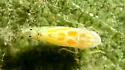
Sycamore leafhopper
Alconeura quadrimaculata
Identification: four bright orange-red spots on clavum
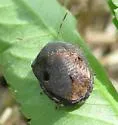
Symphylus caribbeanus
Symphylus caribbeanus
Identification: like most members of its subfamily, highly variable: easily confused with Stethaulax marmorata but head is more pointy; external features distinguishing the two are discussed in Wheeler ; however, the easiest way to tell the two apart
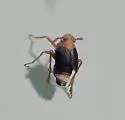
Syndelphax alexanderi
Syndelphax alexanderi
Syndelphax alexanderi (Syndelphax alexanderi) is a species in the family Delphacidae, commonly known as delphacid planthoppers, belonging to the order Hemiptera (True Bugs, Cicadas, Hoppers, Aphids and Allies). It is classified within the subfamily D
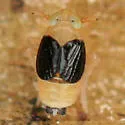
Syndelphax fulvidorsum
Syndelphax fulvidorsum
Identification: Syndelphax - University of Delaware