
Family Typical Treehoppers (Membracidae)
Membracidae is a family in the order Hemiptera. Browse 281 named species recorded in this family, or open an individual profile for its available identification and natural-history information.
Species in Membracidae (281)
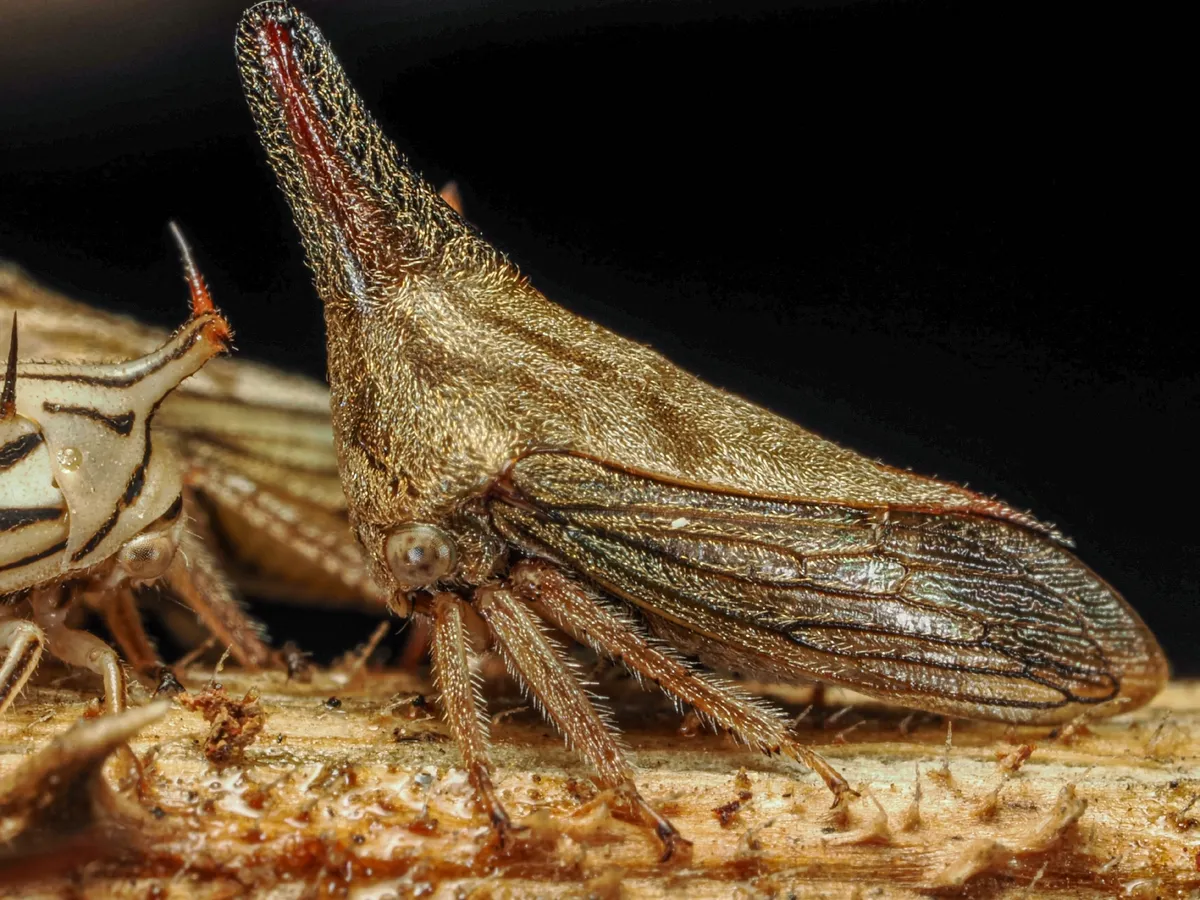
Lantana Treehopper
Aconophora compressa
Introduced in Australia since 1995 to control Lantana. (Introduced in South Africa?)
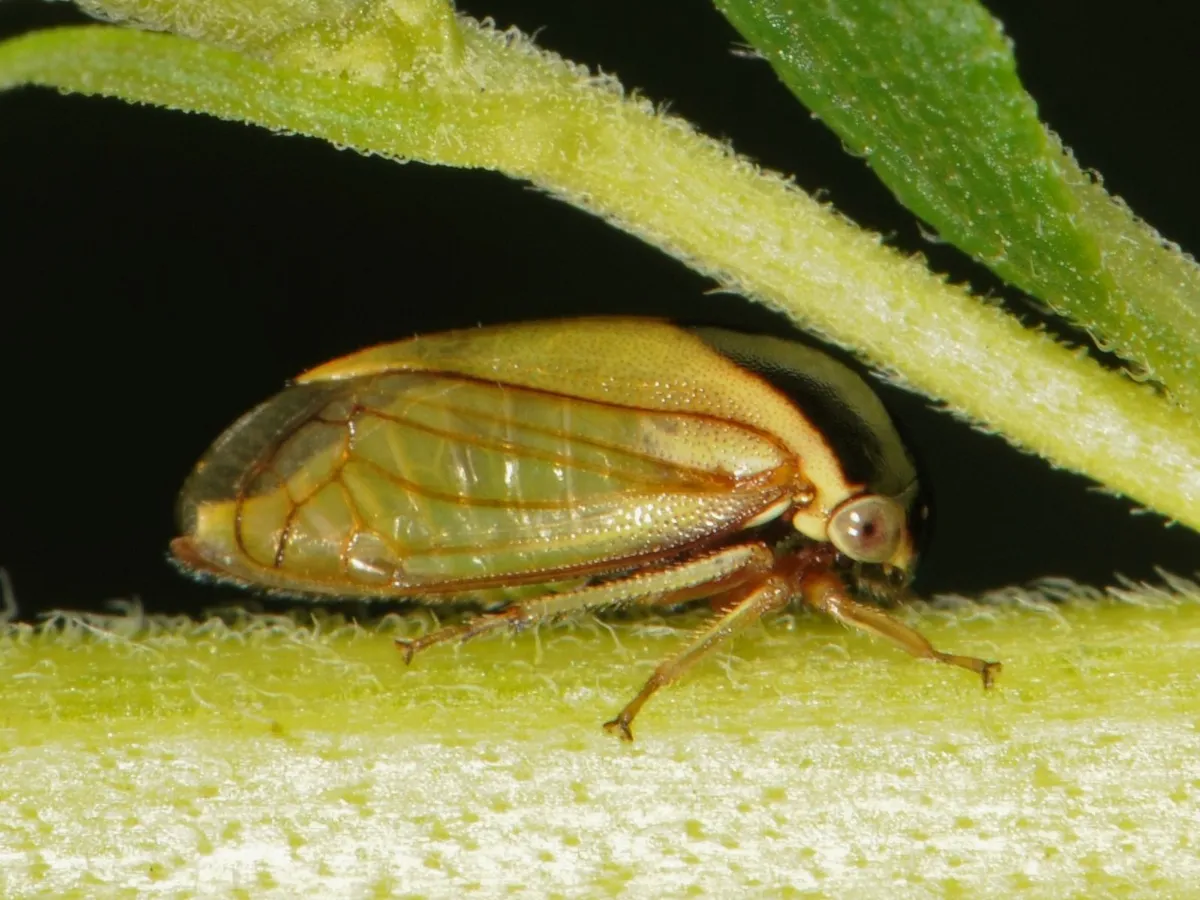
Acutalis tartarea
Acutalis tartarea
Acutalis tartarea (Acutalis tartarea) is a species in the family Membracidae, commonly known as typical treehoppers, belonging to the order Hemiptera (True Bugs, Cicadas, Hoppers, Aphids and Allies). It is classified within the subfamily Smiliinae, t
Amastris lycioda
Amastris lycioda
Identification: The degree of sexual dimorphism in this species, although slight, is exceptional for the genus. Its small size, green color, and long oval outline will at once distinguish it. HOLOTYPE Holotype, allotype, and five paratypes July 24, 1
Amastris templa
Amastris templa
Identification: Resembling lycioda in form but slightly smaller, rounder, with a broader pronotum. Straw color (green in life). Holotype, allotype, and ten paratypes taken by the author at St. George, Utah, May 17, 1913.
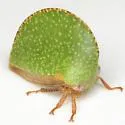
Archasia auriculata
Archasia auriculata
Identification: The green crest edged with brown spots is distinctive. --K.G.A. Hamilton
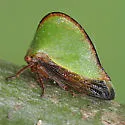
Archasia belfragei
Archasia belfragei
Identification: According to Dr. Andy Hamilton, the high-arched crest rises vertically from the head, and the brown fringe is distinctive.
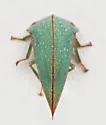
Archasia pallida
Archasia pallida
Identification: Crest lower than the others in the genus (twice as long as high) and there are more black spots above the eye. The pale, striped legs also seem to be distinctive. --K.G.A. Hamilton, 2010
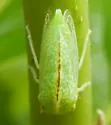
Atymna helena
Atymna helena
Identification: Resembles the male of A. querci but has the front of the crest pale. ‒K.G.A. Hamilton, 17.vi.2008
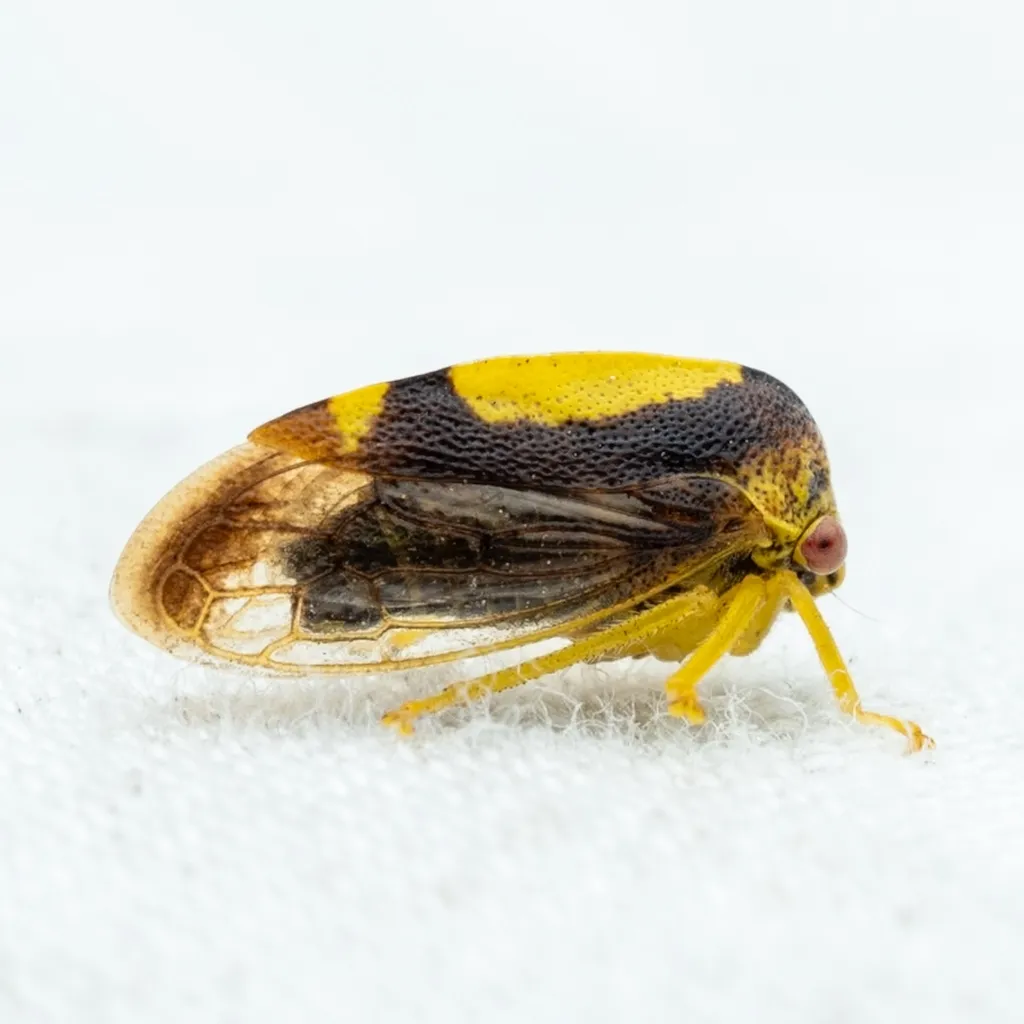
Atymna querci
Atymna querci
Identification: The male is black with yellow spots, and the female is all green.
Carynota stupida
Carynota stupida
Identification: dark grayish with whitish spots and low rounded crest page creation based on Andy Hamilton's identification of this image
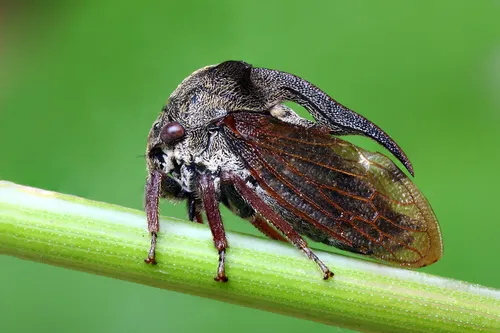
Centrotus cornutus
Centrotus cornutus
Length about 10 mm. One of only two UK treehoppers. It has horn-like projections on the pronotum The other UK treehopper, Gargara genistae, is associated with broom and is smaller than C. cornutus and lacks the 'horns' on the pronotum. Good photograp
Cyrtolobus acuminatus
Cyrtolobus acuminatus
" C. acuminatus has a relatively high crest for that genus, but it doesn't have the inflated characteristics of Xantholobus muticus . I have collected C. acuminatus primarily in the midwest - mostly in Missouri and southern Ohio." - M.J. Rothschild
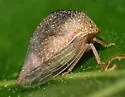
Cyrtolobus arcuatus
Cyrtolobus arcuatus
Identification: This is one of the few that lacks a band across the front of the crest in the female; males are similar to those of C. fulginosus . Members of this genus do not exceed 7 mm in length. … Andy Hamilton, 26 September, 2008
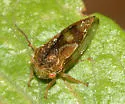
Cyrtolobus fenestratus
Cyrtolobus fenestratus
Identification: The pronotum extends to the wing tips, but is not as strongly arched as in C. fuliginosus . -Andy Hamilton
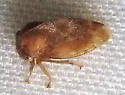
Cyrtolobus fuscipennis
Cyrtolobus fuscipennis
Identification: A highly variable species. The brown wings are generally characteristic.
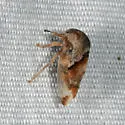
Cyrtolobus griseus
Cyrtolobus griseus
Identification: "the crest is highest in the front, and marked with a v-shaped dark area" -- comment by Andy Hamilton
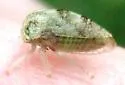
Cyrtolobus maculifrontis
Cyrtolobus maculifrontis
An incredibly variable species; perhaps the most variable in the genus. Certainly worthy of closer study.
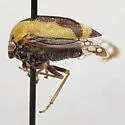
Cyrtolobus maxinei
Cyrtolobus maxinei
Identification: MALE: FEMALE: In life, the coloration of the species is described as green as opposed to the yellow seen in dried specimens. The male and female of this species have not been associated with absolute certainty beyond the fact that the
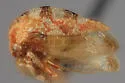
Cyrtolobus oblongatus
Cyrtolobus oblongatus
Cyrtolobus arizonae , C. frigidus , and C. oblongatus are three western species that are superficially nearly identical. It is unclear if there are any good ways to separate them from one another.
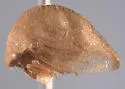
Cyrtolobus ovatus
Cyrtolobus ovatus
Likely two different entities under this name, a northern and southern, according to Mark Rothschild
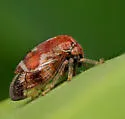
Cyrtolobus pallidifrontis
Cyrtolobus pallidifrontis
It was previously incorrectly noted that this is the only Cyrtolobus with a dark band across the middle of the wings. A few other species exhibit this character including the similar C. gramatanus and the dark band most often only applies to the fema
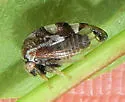
Cyrtolobus parvulus
Cyrtolobus parvulus
Identification: the way the markings on the front of the crest get broken up into mottled light and dark is characteristic ─A.K.G. Hamilton, 20.v.2010
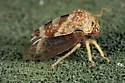
Cyrtolobus pictus
Cyrtolobus pictus
This species is very similar to Cyrtolobus maculifrontis and females may be difficult to differentiate between the two species.
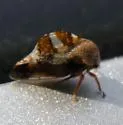
Cyrtolobus tuberosus
Cyrtolobus tuberosus
Identification: the largest and most humpbacked member of the genus; the way the crest is notched just before the tip, and its crossbanding are distinctive
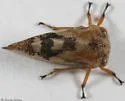
Cyrtolobus vanduzii
Cyrtolobus vanduzii
Currently understood to be a highly variable species, but that may eventually change
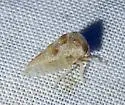
Cyrtolobus woodruffi
Cyrtolobus woodruffi
Identification: Crest is rather wedge-shaped, making it a morphologically unique member of the AZ fauna as currently defined. Sexually dimorphic, as all other members of the genus. Female holotype : , Male paratype : Individual variation of males Ind
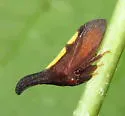
undescribed species that feeds on silverbell
Enchenopa on-halesia
this species is apparently in the process of being described, unlike most other members of the E. binotata complex The known undescribed species is on Halesia carolina , but there are recent records of an Enchenopa on Halesia tetraptera . Whether or
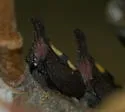
undescribed species that feeds on nannyberry
Enchenopa on-viburnum-lentago
There are many Viburnum species which Enchenopa have been seen feeding on; it is unclear if there are multiple undescribed species involved at the present.
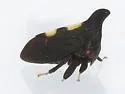
possible undescribed species that feeds on smooth withe-rod
Enchenopa on-viburnum-nudum
Based on nymphal morphology, it is likely that this species is the same as the one on V. prunifolium . This, however, has yet to be tested.
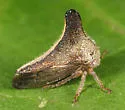
Glossonotus turriculatus
Glossonotus turriculatus
Identification: The "horn" is high and slender, as long as the pronotum behind the "horn".
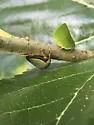
Hebetica sylviae
Hebetica sylviae
Given the South American distributon of the genus, the non-native host plant (+ occurance of native Morus species in South America), and community science observational records expanding from its initial point of discovery, this species is likely int
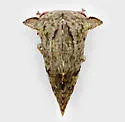
Heliria cornutula
Heliria cornutula
Identification: extremely similar to H. gibberata ; host info may be critical HOLOTYPE Flatbush; Long Island, Kings County, New York September 29, 1913 For some time, the species H. mexicana has been confused with H. cornutula . It is unlikely that t
Heliria gibberata
Heliria gibberata
Identification: Very similar to H. cornutula , host record often necessary for determination. TYPE
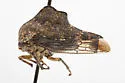
Heliria molaris
Heliria molaris
"My current thinking is that many specimens named molaris are misidentified and are either T. dubiosa or Heliria fitchi ." - M. Wallace pers. comm. to S. Hendrix [3/9/21] Holotype male from the British Museum, provided my Matt Wallace:
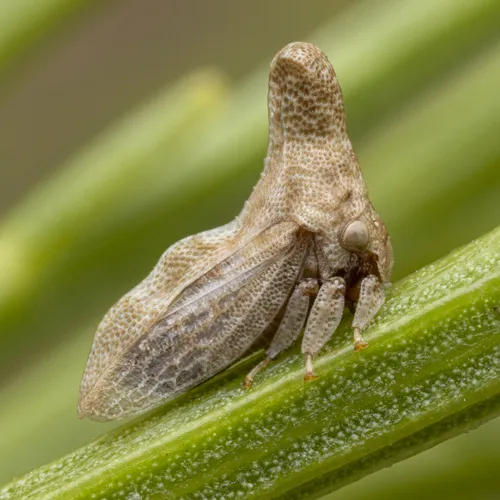
Hypsoprora nogolata
Hypsoprora nogolata
Identification: "A small straw-colored species with brown mottling. The pronotum long slender and strongly bisinuate, the dorsal process short, nearly upright, much inflated. As seen from the front the dorsal process is slightly more constricted abov
Hypsoprora simplex
Hypsoprora simplex
Identification: "Allied to anatima [sic] Fowl., but with the dorsal horn simple and the posterior process bisinuate. Head as long as wide including eyes, apex truncate, sides sinuate below the eye. Dorsal process suberect, a little compressed lateral
Microcentrus cf-caryae
Microcentrus cf-caryae
These hickory-associated forms roughly match Microcentrus caryae , but females are horned as opposed to unhorned. One of the defining characteristics of M. caryae is the absence of horns in both sexes.
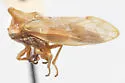
Microcentrus nicholi
Microcentrus nicholi
Identification: "Much smaller and more fragile than lynx , with small slender superhumerals in the female and only low carinae in the males. Color yellowish testaceous. Face short, sharply retreating on a line below the eyes, thus appearing still sho
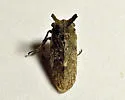
Microcentrus perditus
Microcentrus perditus
Identification: back with earlike processes; dark brown ( 4 ) uncommon
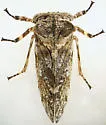
Microcentrus solussidus
Microcentrus solussidus
Identification: " Microcentrus solussidus is morphologically most similar to M. lunatus n.sp. Microcentrus solussidus differs from the morphologically similar M. perditus and M. lynx in having the forewing crossvein r-m2 basad of the fork of vein M,
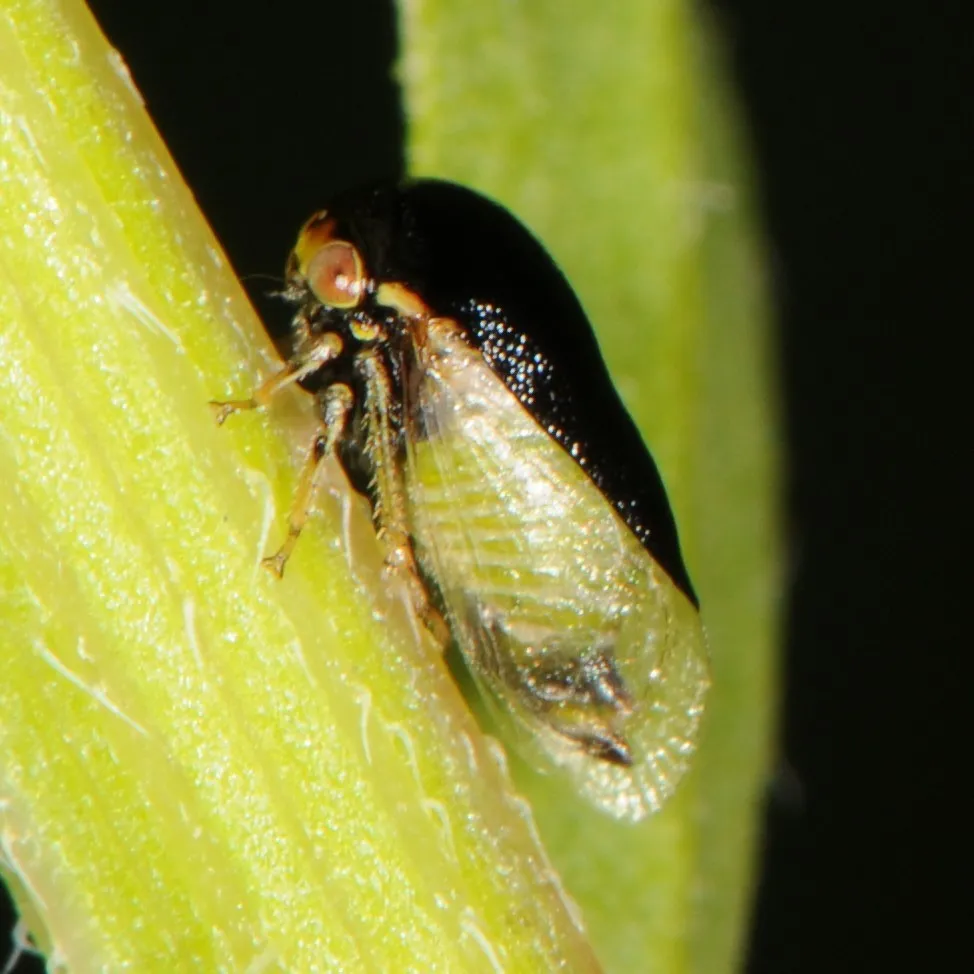
Honeylocust Treehopper
Micrutalis calva
common in FL very long series of Micrutalis spmns in the TAMUIC , but only Micrutalis calva are determined to sp. for Texas...
Micrutalis parva
Micrutalis parva
very long series of Micrutalis spmns in the TAMUIC ( 3 ) , but only Micrutalis calva are determined to sp. for Texas...
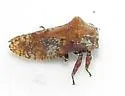
Multareis cornutus
Multareis cornutus
A highly variable species. Males lack pronotal "horns" while females bear or lack them. This species is separated from Centrodontus atlas by the color pattern of the forewings and the presence of "preocular tubercles", rounded projections on the head
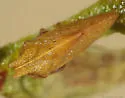
Multareoides bifurcatus
Multareoides bifurcatus
Identification: This species has the longest, sharpest "horns" on the crest. … Andy Hamilton, 25 September, 2008
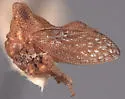
Multareoides digitatus
Multareoides digitatus
Identification: Pronotal "horns" more broadly separated and rounded at apex compared to M. bifurcatus .
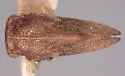
Multareoides planifrons
Multareoides planifrons
Identification: Lacks the "horns" on the pronotum found in the other two species in the genus.
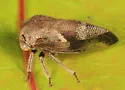
Ophiderma griseum
Ophiderma griseum
"This species is close to flaviguttula Godg., belonging to the group with banded elytra, but differs conspicuously in its more robust structure, greater average length, more slender and sharper pronotal apex, and in particular in the blue-gray shades
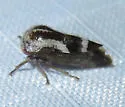
Ophiderma pubescens
Ophiderma pubescens
Identification: Males are similar to those of Ophiderma griseum , but the humeral arches are often less well-defined and the forewings lack a median maculation.
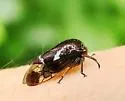
Ophiderma salamandra
Ophiderma salamandra
Identification: "Larger and not as hairy as O. pubescens" [Andy Hamilton]
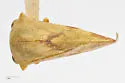
Palonica nogalana
Palonica nogalana
Identification: "Similar to viridia but smaller, narrower with a higher and more foliaceous crest, green with a dusky line on the back of the crest. Pronotum long low acute; crest nearly equilaterally triangular, much higher and more angular than in
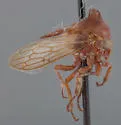
Platycentrus brevicornis
Platycentrus brevicornis
While not reported from the U.S. in the literature, there are several database records of this species from Arizona.
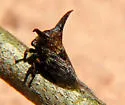
Platycentrus near acuticornis
Platycentrus nr-acuticornis
Similar structure to Platycentrus acuticornis (which is reported from CA+AZ but described from Mexico), but may be a new species based on its very different coloration and subtle structural differences.
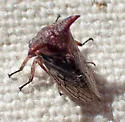
Platycentrus taurinus
Platycentrus taurinus
Identification: "Shorter and stouter than acuticornis with much shorter horns. Resembling obtusicornis , but with horns more slender and tapering. Head broader and less arcuated at base than in obtusicornis , metapodium convex, coarsely punctured, ru
Platycotis cf-acutangula
Platycotis cf-acutangula
Platycotis acutangula is a Mexican species which closely resembles Platycotis vittata. There are records from California, but they need to be confirmed-for now, a number of morphologically similar CA specimens will be held under this page, which look
Platycotis maritima
Platycotis maritima
Identification: Hornless; heavily marked black midline on the crest
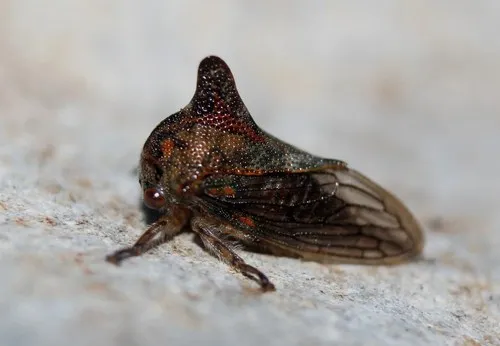
Platycotis tuberculata
Platycotis tuberculata
The U.S. records of this species may be erroneous, or its identity may be confused. Stu McKamey says: "Buckton 1902 lists Talapa, California as the location. I can find no record of that place in CA, but I did find it in Mexico. So the species might
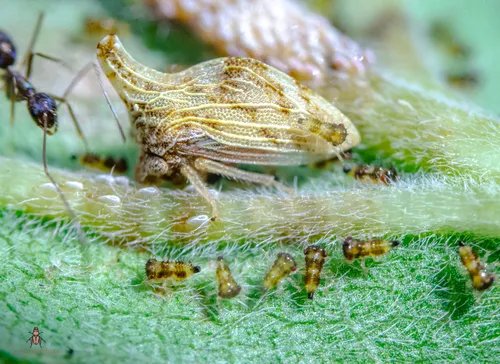
Publilia erecta
Publilia erecta
Identification: "Pronotum with erect horn straight or nearly straight above head, apex of horn rounded or almost a right angle in front, almost a right angle in back; mid-dorsal depression behind horn followed by slight convexity and abrupt straight
Scalmophorus minutus
Scalmophorus minutus
Identification: "Resembling reticulatus but smaller, narrower with the horn bluntly rounding instead of pointed. Uniform pale cinnamon brown. Face and metapodium in the same plane, the metapodium gradually and regularly narrowing to the slightly foMa
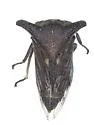
Selenacentrus wallacei
Selenacentrus wallacei
Identification: http://treehoppers.insectmuseum.org/public/public_content/show/25526
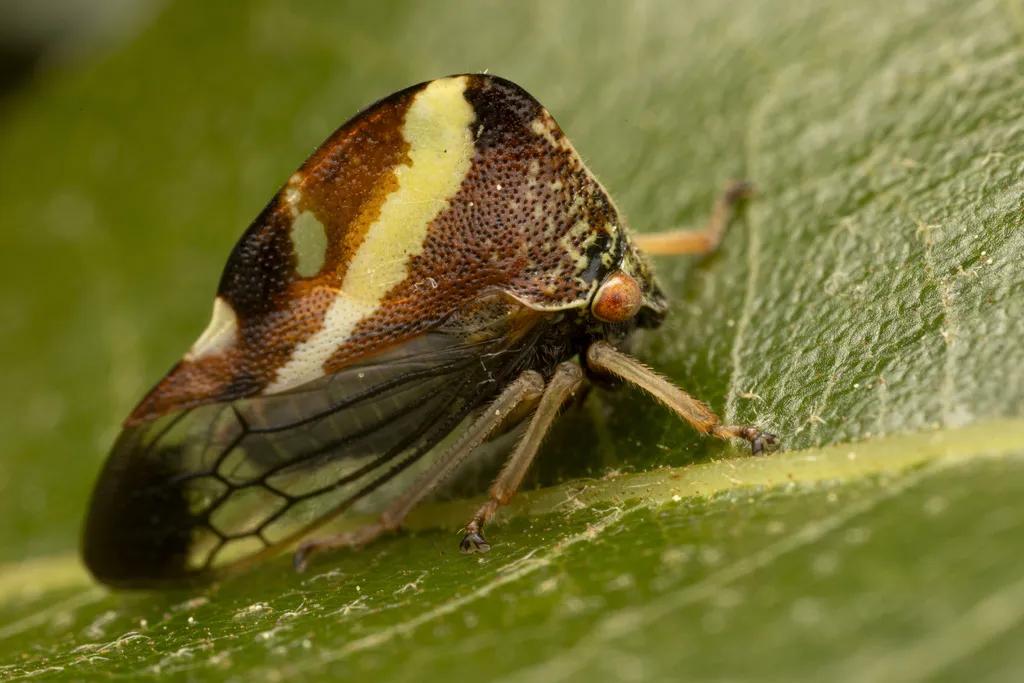
Camel Treehopper
Smilia camelus
Camel Treehopper (Smilia camelus) is a species in the family Membracidae, commonly known as typical treehoppers, belonging to the order Hemiptera (True Bugs, Cicadas, Hoppers, Aphids and Allies). It is classified within the subfamily Smiliinae, tribe
Stictocephala albescens
Stictocephala albescens
Identification: similar to C. diceros , but more slender, the dark band across the crest (in side view) extends to its tip, and the horns are recurved. Nymph is brown; C. diceros nymphs have longer processes on the body that recurve at the tips. [Bas
Stictocephala alta
Stictocephala alta
Identification: Habitus identical to Stictocephala bisonia . A highly ambiguous species. Described from a female specimen of unknown provenance; it matches the habitus of Stictocephala bisonia Kopp & Yonke, 1977 and was considered a senior synonym of
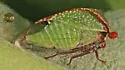
Stictocephala basalis
Stictocephala basalis
Identification: The usual color form is greenish on top, black below, but often the rest of the body is very dark also. The dark legs and underside, and brown patches on the sides of the pronotum, are distinctive. (Unusually dark specimens of C. palm
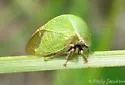
Stictocephala lutea
Stictocephala lutea
Identification: The common eastern 'hornless' species with dark legs (per Andy Hamilton)
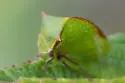
Stictocephala stimulea
Stictocephala stimulea
Identification: The broad brown margins on the crest are distinctive. --Andy Hamilton, 2.viii.2007
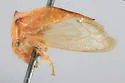
Stictocephala taurina
Stictocephala taurina
Identification: Prominent pale spots on the crest, horns narrower and front less broad than C. alta --Dr Hamilton
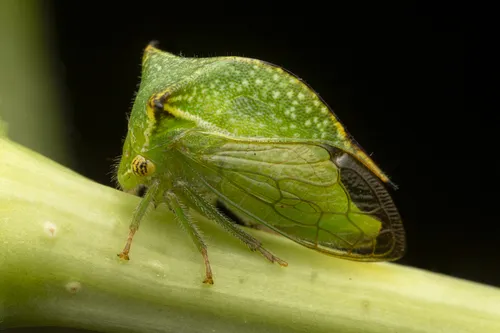
Stictocephala terminalis
Stictocephala terminalis
Images placed here are tentative ID's. This species was described from a female specimen from North America and is poorly known. The specimens here match the type specimen well and do not match any other described ceresine. Given the presence of unde
Stictolobus arcuatus
Stictolobus arcuatus
Identification: Holotype: Type Locality: Beeville, Bee County, Texas, May 30, 1910, coll'ed by W. D. Pierce
Stictopelta arizona
Stictopelta arizona
The subjective synonymy of this name with Stictopelta varians Fowler is clearly erroneous, so is not followed here.
Stictopelta pulchella
Stictopelta pulchella
Very similar to the Mexican species Stictopelta zonifera (Butler, 1878); it is unclear how to separate the two species, if they really are different.
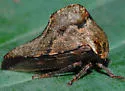
Virginia Creeper Treehopper
Telamona ampelopsidis
Identification: variable in coloration, often sexually dimorphic. shape of crest also somewhat variable. see mating pair of two color forms here: variant with almost sinuate crest a la Heliria : typical form:
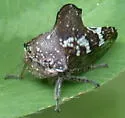
Telamona concava
Telamona concava
Identification: the exact shape of the crest varies soemwhat, but its leading edge is always vertical and the top is high and rounded, with a posterior "step". (Dr Andy Hamilton)
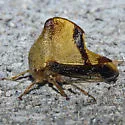
Telamona excelsa
Telamona excelsa
Identification: The striking colors of both sexes distinctive: ♀♀ brilliant grass-green, ♂♂ yellow with brown fascia (Funkhouser 1917) One of the most active among congeners; flies well (Funkhouser 1917)
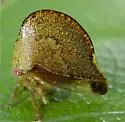
Telamona extrema
Telamona extrema
There is a form in the gulf states (which may intergrade with the typical form) that has the pronotum more strongly arched with a distinctive arched marking. This form bears strong resemblance to Archasia .
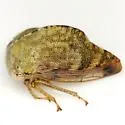
Telamona reclivata
Telamona reclivata
Identification: Similar to T. subfalcata ( =salvini ), but without the sharp angle on the hind margin of the crest. Females have a longer crest. ―K.G.A. Hamilton, 17.v.2011 female syntype:
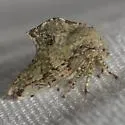
Telamona subfalcata
Telamona subfalcata
Identification: The broad crest ending in a sharp angle is distinctive. [ Dr. Hamilton's comment ]
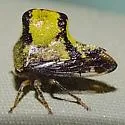
Telamona tristis
Telamona tristis
Identification: easily recognized by its square-shaped crest ‒K.G.A. Hamilton
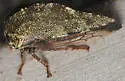
Telamona westcotti
Telamona westcotti
Identification: ...the very wide pronotal angles over the wing bases (characteristic of the genus) that stick out far beyond the eyes. --K.G.A. Hamilton, 24.VIII.2008
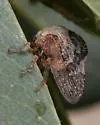
Telamonanthe pulchella "brevis"
Telamonanthe brevis
Currently considered a jr. syn. of Telamonanthe pulchella . This species has historically been referred to as Telamonanthe rileyi online. (S. Hendrix, 2025-v-2)
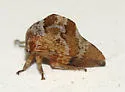
Telamonanthe pulchella
Telamonanthe pulchella
Identification: Differentiated from T. rileyi (which is mostly distributed throughout California) by the shape of the anterodorsal margin of the crest, which is acute and roughly straight (as opposed to broadly rounded/inclined).
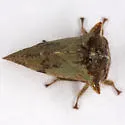
Telamonanthe rileyi
Telamonanthe rileyi
Identification: Differentiated from T. pulchella (which is mostly distributed farther east, from Colorado to Arizona) by the shape of the anterodorsal margin of the crest, which is broadly rounded and inclined (as opposed acute and roughly straight)
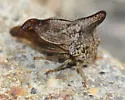
Locust Treehopper
Thelia bimaculata
Identification: Males sport a bright yellow band along the lower lateral margins of the pronotum Often protected by ants. Damage to the host is practically non-existent. Aphelopus theliae , a wasp in the Dryinidae family, is a parasite on this membra
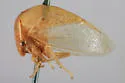
Tortistilus curvatus
Tortistilus curvatus
Identification: Holotype Type Locality: Carns, Keya Paha County, Nebraska
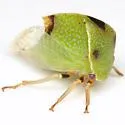
Tortistilus inermis
Tortistilus inermis
Identification: no horns, high crest with a sharp yellow edge, dark legs and darker femora
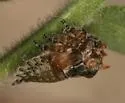
Tylocentrus quadricornis
Tylocentrus quadricornis
Identification: "Near Tylocentrus reticulatus VanDuzee but differing principally in the shape of the head and clypeus, the shape of the posterior process and in having four distinct pronotal horns in the female." - Funkhouser, 1919
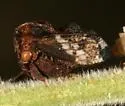
Tylopelta gibbera
Tylopelta gibbera
rare in FL At least one cryptic species in the U.S. which is separated by COI, but morphologically indistinct.
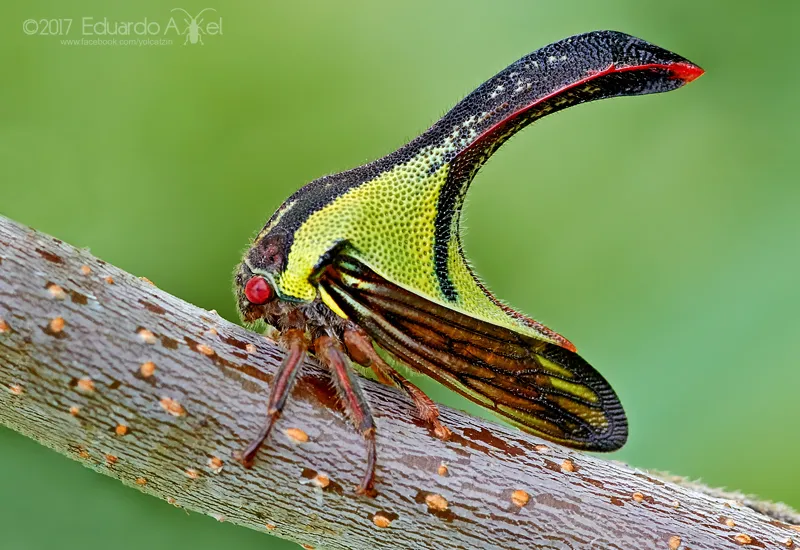
Thorn Treehopper
Umbonia crassicornis
Identification: variable in size, color and structure of male pronotal horn; young nymphs have three horns nymphs: U. crassicornis has been the subject of studies on parental care and communication
Black Locust Treehopper
Vanduzea arquata
Identification: Brown, wedge-shaped treehopper with no crest, white arc-shaped mark on side, aggregates on Black Locust. An interesting little critter, to be looked for on Black Locust. I've coined the common name based on the host plant association.
Vanduzea nolina
Vanduzea nolina
Identification: Adapted from description: "Slightly larger than typical [ V. ] laeta , with a broader and slightly more arched profile to pronotum. The pronotum is less pubescent, the apical cell is even broader and shorter. Color bright green in lif
Vanduzea segmentata
Vanduzea segmentata
Has seemingly spread east from sw US (see: [cite:2469147] ) over time, as have some of its weedy western plant associates such as cowpen daisy and common sunflower.
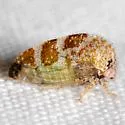
Xantholobus arenatus
Xantholobus arenatus
Identification: HOLOTYPE Type series of 8 adult spmns plus nymphs coll’ed by E. D. Ball on May 5, 1934 in “Leverton”, Texas.
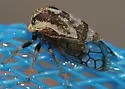
Xantholobus intermedius
Xantholobus intermedius
Most certainly not a true Xantholobus . It is more closely related to certain Cyrtolobus species.
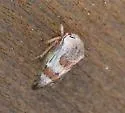
Xantholobus nigrocinctus
Xantholobus nigrocinctus
Identification: Dets. Solomon Hendrix, 2023 Described from one female taken by Van Duzee near Manitou, Colorado August 2d 1900.
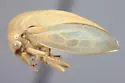
Anisostylus fulgidus
Anisostylus fulgidus
Anisostylus gillettei
Anisostylus gillettei
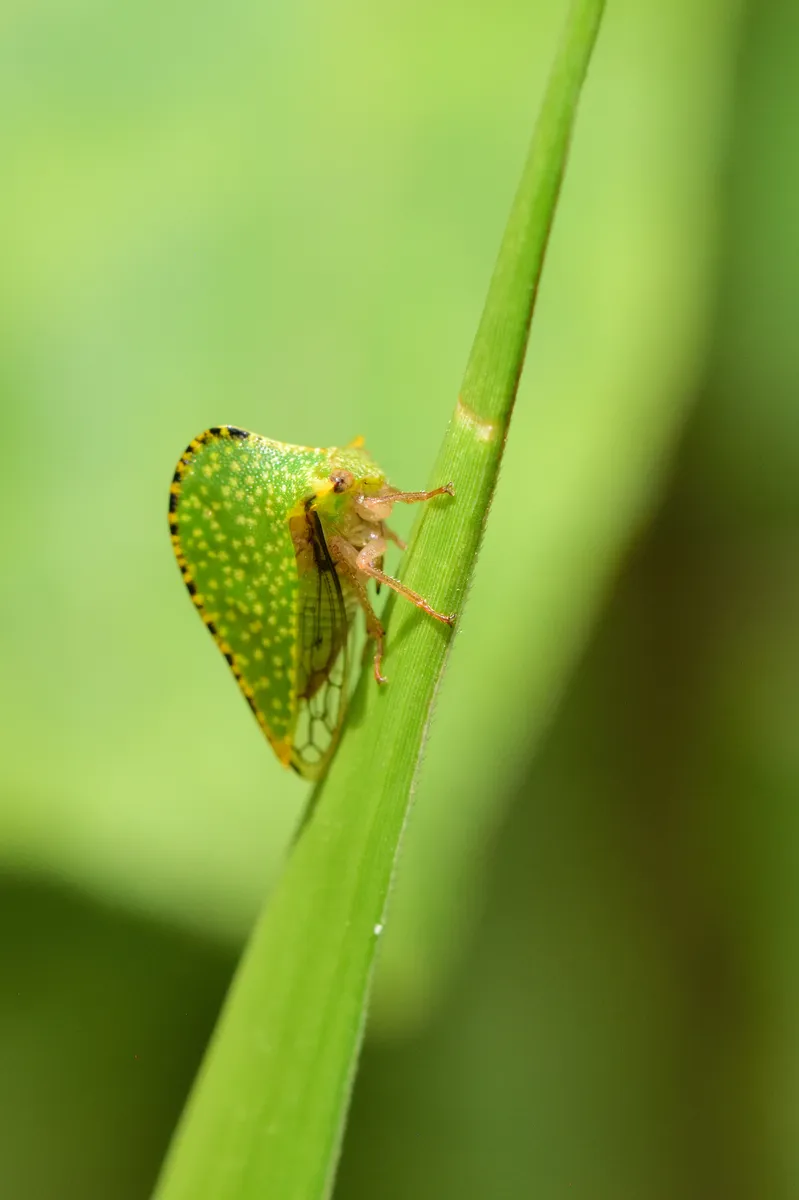
Anisostylus stylatus
Anisostylus stylatus
Solanaceous Treehopper
Antianthe expansa
Ashmeadea carinata
Ashmeadea carinata
Atymna castaneae
Atymna castaneae
Atymna inornata
Atymna inornata