
Family Typical Leafhoppers (Cicadellidae)
Cicadellidae is a family in the order Hemiptera. Browse 1,971 named species recorded in this family, or open an individual profile for its available identification and natural-history information.
Species in Cicadellidae (1,971)
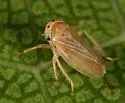
Aceratagallia cristula
Aceratagallia cristula
This is only one of two yellowish to pale orange species of this genus in Texas; the other ( C. coma ) is rare, and lives in drier areas rather than along the Mississippi drainage basin. --Andy Hamilton
Clover Leafhopper
Aceratagallia sanguinolenta
Identification: Very short rounded wings distinguish it from other eastern spp. (there are western spp. with the same characteristic, however). (Dr Hamilton)
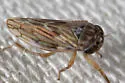
Aceratagallia uhleri
Aceratagallia uhleri
Identification: This migratory leafhopper has longer wings than other members of the genus --K.G.A. Hamilton here
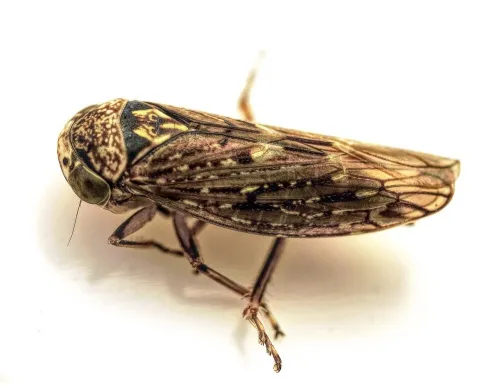
Acericerus heydenii
Acericerus heydenii
This species is larger and darker than Acericerus vittifrons and A. ribauti and is associated with Sycamore ( Acer pseudoplatanus ). The forewings are marbled brown and grey, with a light spot on the clavus. Females may not be identifiable, but the m
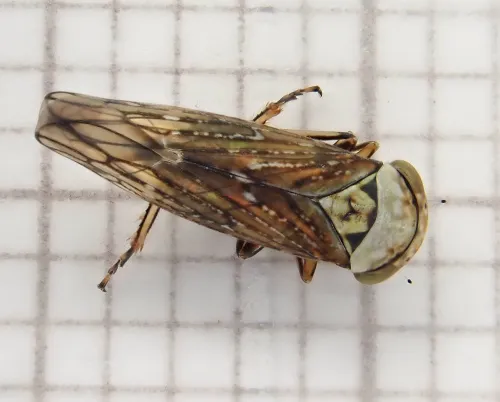
Acericerus ribauti
Acericerus ribauti
Length 5-6mm, and associated with Acer spp. esepcially Sycamore and Field Maple. Forewings marbled greyish/reddish brown, with a hyaline apical part and a light spot on the clavus. Extremely similar to the closely-related Acericerus vittifrons - fema
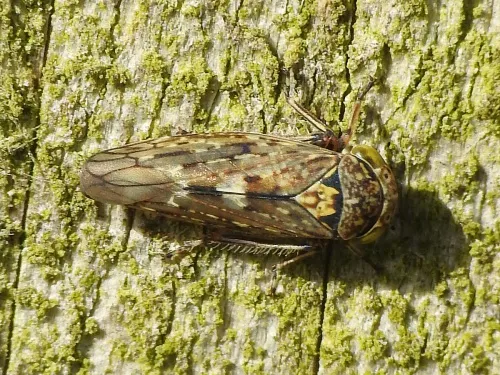
Acericerus vittifrons
Acericerus vittifrons
Acericerus vittifrons is associated with Acer spp. especially A campestre (Field Maple). The forewings are marbled light grey and brownish, with a light spot on the clavus. Males have a broad solid dark bar down the face; this extends above the ocell
Angulate Leafhopper
Acinopterus angulatus
Identification: wingtips very pointed, hind legs reddish --Dr. Hamilton Det. A. Hamilton, 2008
Acinopterus pulchellus
Acinopterus pulchellus
Identification: The pointed wings with dark-edged veins are distinctive --K.G.A. Hamilton, 25.ix.2008
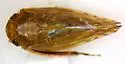
Acinopterus angulatus "spatiosus"
Acinopterus spatiosus
Identification: Currently considered a jr. syn. of Acinopterus angulatus . This species has a pregenital sternite in females that differs from that of angulatus though.
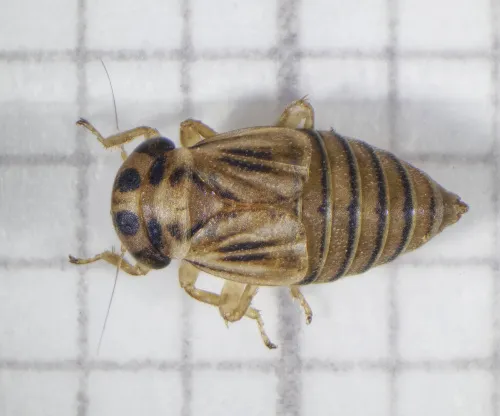
Agallia brachyptera
Agallia brachyptera
Length 2.5-3.5mm. The most distinctive species in this genus. Very short wings with dark streaks, abdomen with transverse bands. In dry sparsely vegetated habitats but also from fens and marshes. A scarce and local leafhopper largely confined mostly
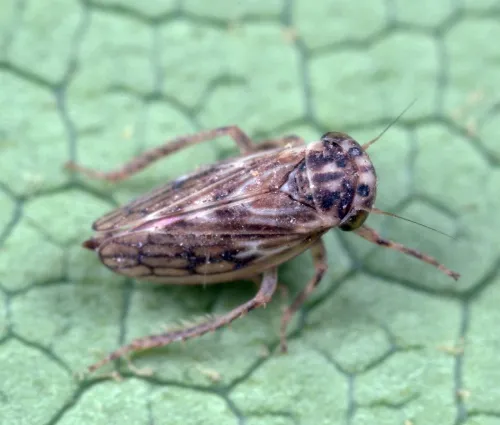
Agallia consobrina
Agallia consobrina
Length 3.5 to 4 mm. Simililar in marking to others in this subfamily, but with a shagreened pronotum (a bobbly texture), rather than transverse striations or wrinkles. The black triangles at the base of the scutellum are separated from the sides. Goo
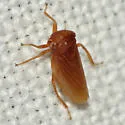
Agallia deleta
Agallia deleta
Identification: Female last ventral segment with posterior margin slightly concave with a very minute tooth at middle. Male valve rather long and broad, plates as broad as valve at base, gradually tapering to rather blunt apices. ( Delong & Davidson
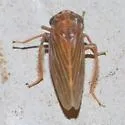
Agallia nielsoni
Agallia nielsoni
Identification: superficially resembles Agallia quadripunctata , but lacks the spots on the pronotum (or at least only exhibits them very faintly). this species was incorrectly referred to as Agallia lingula for many years due to decades of published
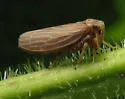
Four-spotted Clover Leafhopper
Agallia quadripunctata
Identification: Stouter than constricta and with four spots: two on the head and two dark on the thorax. "Narrow wings trumps 4 spots!" -- Dr. Hamilton usually parthenogenetic, with a few males found only in spring -- Dr. Hamilton
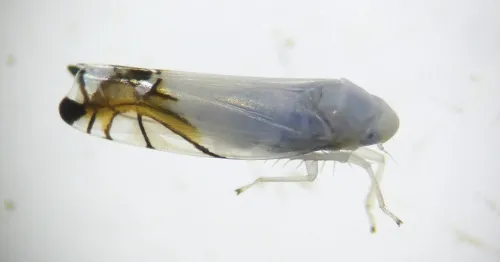
Aguriahana stellulata
Aguriahana stellulata
Length about 4 mm. A distinctively marked leafhopper, white with brown marks at forewing apex. A variety of deciduous trees, including Lime, Cherry and Plum Local (ref: UK Auchenorrhyncha checklist 2021 ); scattered across England and S Wales https:/
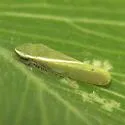
Alconeura fulminea
Alconeura fulminea
Identification: Description from Lawson 1930: "Vertex, pronotum and scutellum rich golden brown. Vertex with narrow brown submarginal line and broad white marginal band which extends backward across eyes, sides of pronotum, and along length of claval
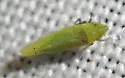
Alconeura necopinata
Alconeura necopinata
Identification: From Griffith 1938: "Largely green. Vertex greenish-yellow, with white line on anterior margin joining eyes, and with mesal white line often extending to scutellum; pronotum mostly green, frequently with greenish-yellow margins; scute
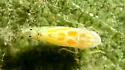
Sycamore leafhopper
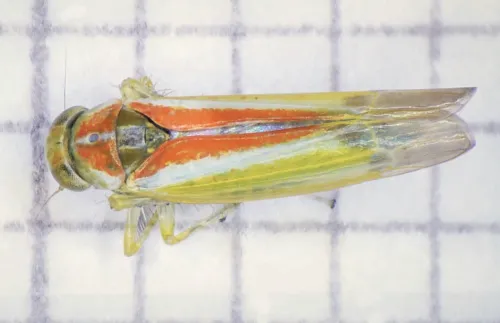
Alconeura quadrimaculata
Identification: four bright orange-red spots on clavum
Alebra albostriella
Alebra albostriella
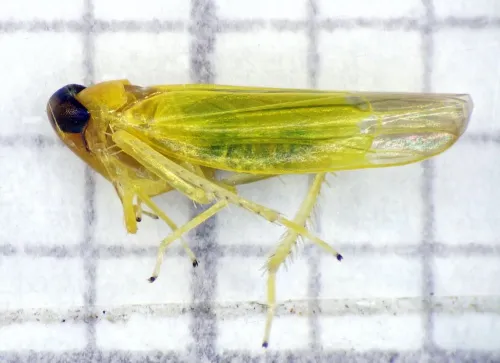
3.2mm - 4.5mm (females are larger than males); associated with English oak Quercus robur . The Alebra genus is distinguished from all other Typholocybinae by the forewing appendix - a narrow zone at the forewing apex which is not crossed by any veins
Alebra coryli
Alebra coryli
Length 3.5 to 4.0 mm, associated with hazel. The Alebra genus is distinguished from all other Typholocybinae by the forewing appendix - a narrow zone at the forewing apex which is not crossed by any veins. Individuals vary in colour and intensity of
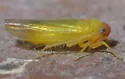
Alebra rubrafrons
Alebra rubrafrons
Identification: Det. Ken Childs, 2022 Type Locality: Tenn.
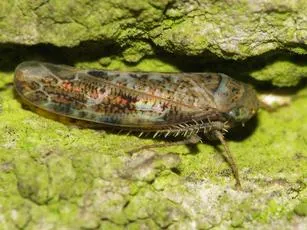
Allygus mixtus
Allygus mixtus
Length: 5.5 to 7 mm. A large species with numerous white cross-veins and black mottling on the forewings, and several dark dots (not lines) on the vertex A. modestus has distinct dark lines on the vertex This species can be identified from good quali
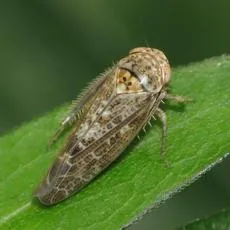
Allygus modestus
Allygus modestus
Length: 5.5 to 7 mm. A large species with numerous white cross-veins and black mottling on the forewings, and several dark dots and a pair of narrow diagonal lines on the vertex. Base colour brownish or greenish, variable in intensity. A mixtus lacks
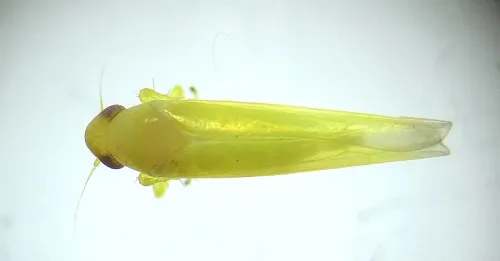
Alnetoidea alneti
Alnetoidea alneti
A small yellow leafhopper, with a slightly darker scutellum and faint darker shading of the cells at the end of the forewings, associated with a wide variety of trees. There are many similar small yellow leafhoppers We recommend that identification i
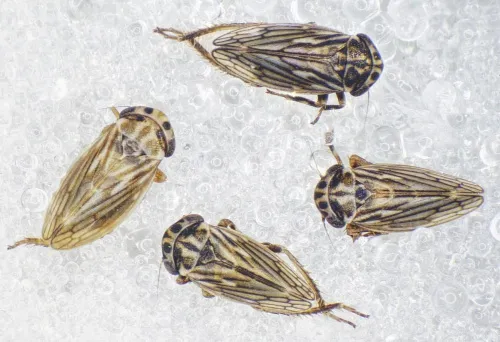
Anaceratagallia ribauti
Anaceratagallia ribauti
3mm in length. A small, rounded hopper, similar in markings to others in this subfamily. The pronotum has transverse striations or wrinkles. The black triangles at the base of the scutellum reach the sides. Examination of internal male genitalia is n
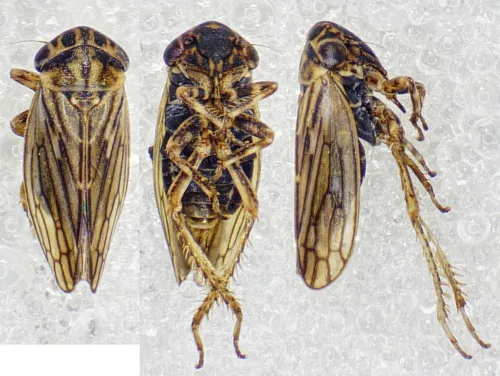
Anaceratagallia venosa
Anaceratagallia venosa
3mm in length. A small, rounded hopper, similar in markings to others in this subfamily. The pronotum has transverse striations or wrinkles. Examination of internal male genitalia is needed to separate this species from others in the genus. Confirmat
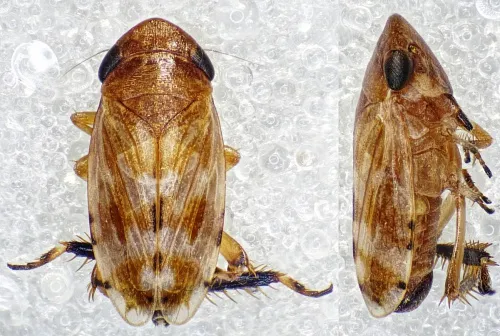
Anoscopus albifrons
Anoscopus albifrons
3 to 5mm. A small, rounded leafhopper, very variable in markings. Males usually have pale tranverse bars across darker forewings. Females are larger with pale brown to dark brown mottled forewings, and may be impossible to identify. Examination of th
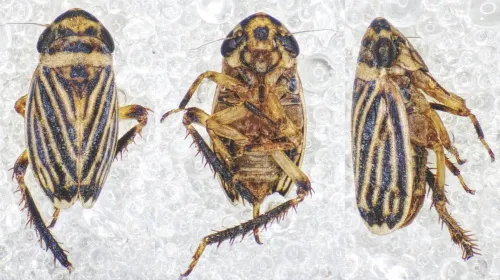
Anoscopus flavostriatus
Anoscopus flavostriatus
Length 3.3 to 3.6 mm. Males have forewings with a distinctive pattern of black longitudinal streaks between pale veins. Females have plainer markings and may be impossible to identify. Good quality photographs of males showing dorasal pattern require
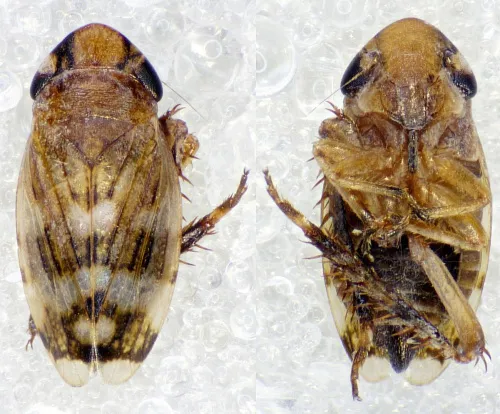
Anoscopus serratulae
Anoscopus serratulae
Males 3 to 4 mm (females to 4.5 mm). A small, rounded leafhopper. Males have pale brownish front parts and forewings with a pattern of darker bars and spots across the forewings. Females may be impossible to identify Photographs of males. Dissection
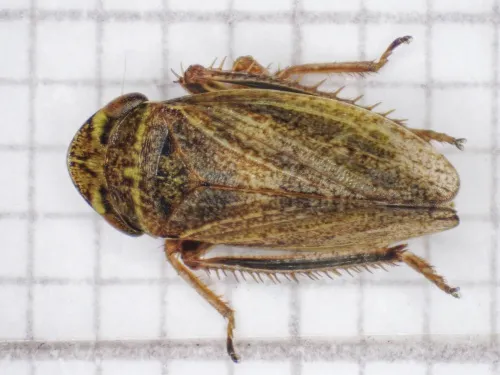
Aphrodes makarovi
Aphrodes makarovi
Length 5.5 (males) to 7.5 mm. (females). A large leafhopper with a sharply pointed vertex with a median keel. Very variable; base colour of forewings brownish with light diagonal stripes along pale wing veins. Careful examination and measurement of t
Arboridia parvula
Arboridia parvula
Length 2.5 - 3.1mm. Two prominent spots on the vertex and four small marks at the front of the pronotum. The forewings have dark streaks along the two long cells closest to the midline, and the lower part of the face is blackish. Very similiar to A r
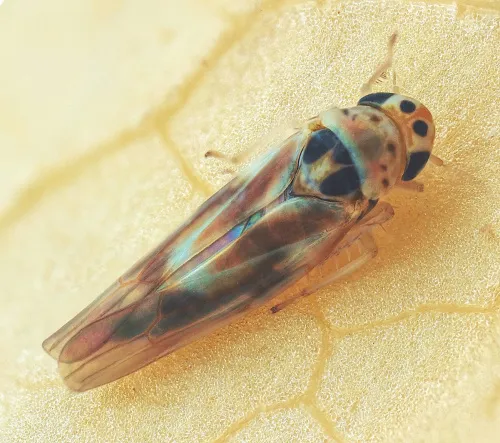
Arboridia ribauti
Arboridia ribauti
Length 3 to 3.5 mm, associated mainly with oak. Two prominent spots on the vertex and four small marks at the front of the pronotum. The forewings have dark streaks along the two long cells closest to the midline, and the lower part of the face is bl
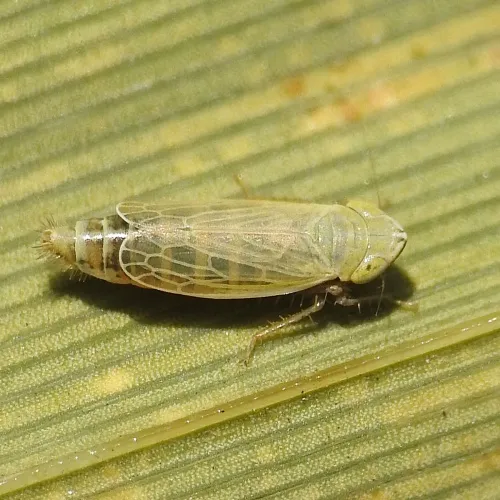
Arthaldeus pascuellus
Arthaldeus pascuellus
Length 3 to 4 mm. A small greenish leafhopper. There are two short dark streaks at the tip of the vertex, and the frons (face) does not have a central longitudinal pale streak. Arthaldeus striifrons and A arenarius both have a pale longitudinal strea
Atanus perspicillatus
Atanus perspicillatus
specimens from the northeast differ slightly from the illustrations. "The first specimens collected in New Hampshire were identified by Andy Hamilton as Atanus ?perspicillatus. The issue is that the genitalia are closest to the figure of perspicillat
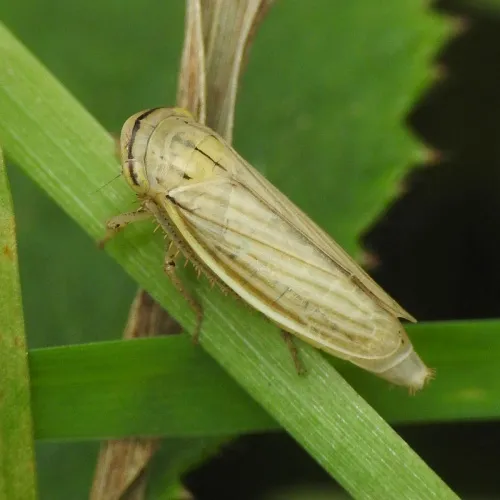
Athysanus argentarius
Athysanus argentarius
Length 6.5 to 8 mm. A large pale leafhopper with a distinctve dark line across the front of the vertex, connecting the eyes. Good photos in the field or from a specimen, showing vertex Common. Historically considered scarce and confined to coastal ar
Attenuipyga platyrhyncha
Attenuipyga platyrhyncha
Identification: Head is broad, front convex transversely; elytra more than half the length of abdomen in both sexes. Females will have the last 3 segments of the abdomen visible; male elytra will usually reach the tip of the abdomen.
Attenuipyga vanduzei
Attenuipyga vanduzei
Identification: Hamilton's paper provides keys for Dorycephalini and Hecalini. A. vanduzeei is differentiated by its tan underside; tip of ovipositor sometimes blackened. Characteristic of A. vanduzeei[i/] is the 3 black head spots (one median, 2 nex
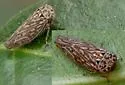
Balcanocerus chisosus
Balcanocerus chisosus
Identification: "Resembling dolosus in general appearance but paler in color. Vertex almost transverse and parallel margined. Male antennae with small elongate oval discs. Color pale brown, face unmarked, a pair of large round black spots on vertex.
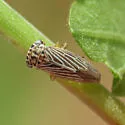
Balcanocerus dolosus
Balcanocerus dolosus
Identification: "Form and general appearance of crataegi , slightly broader and darker. Face and pronotum irregularly immaculate with brown. Head as broad as in crataegi , much broader than in the other deep-headed species. Vertex not as much curved
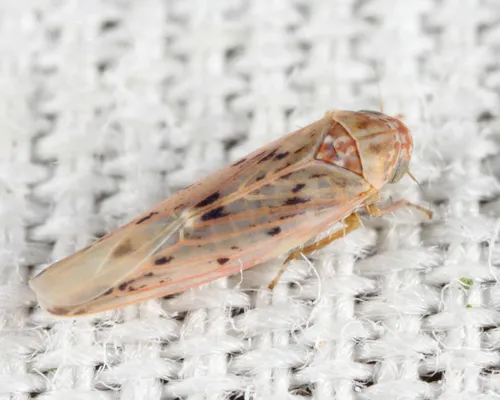
Balclutha impicta
Balclutha impicta
Identification: Sometimes this species has spotted wings, and sometimes not. The very short head, which is also much narrower than the thorax, is distinctive for this species in eastern North America. In the west there is a look-alike, B. manitou .
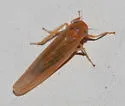
Balclutha neglecta
Balclutha neglecta
Identification: Has a wider head than most of the species in North America per Andy Hamilton.
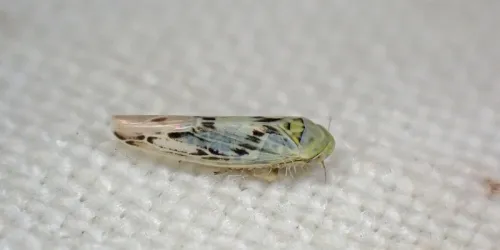
Balclutha punctata
Balclutha punctata
Length 4 mm. A very variable species, sometimes heavily spotted or with dark streaks in a characteristic pattern, but also may be faintly spotted or unmarked. Colour varies from whitish or pale green, to yellowish, pinkish or pale orange. The pattern
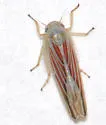
Red-streaked Leafhopper
Balclutha rubrostriata
Identification: The darkness of the red is variable: Earliest US record per Zahniser et al. (2011) is a specimen in the INHS Insect Collection with the following label data: Texas: Kleberg Co. Kingsville 4.VI.1971 col. J.E. Gillaspy at light First kn
Eastern Gamagrass Leafhopper
Baldulus tripsaci
Known only from Maryland and Florida, likely widespread throughout eastern U.S. Reported from Florida rather recently.
Bandara inflata
Bandara inflata
Identification: a more orange species than the others - Andy Hamilton, 18 November, 2008
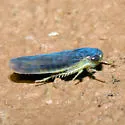
Chlorotettix fuscus
Chlorotettix fuscus
Identification: "This species is very similar to C. melanotus, but frequently has a broken transverse band on the vertex that C. melanotus seemingly does not have. Additionally, while the pregenital sternites are very similar between fuscus and melan
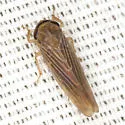
Chlorotettix necopinus
Chlorotettix necopinus
Identification: head markings are distinctive (comm. Andy Hamilton, 2011) Det. Solomon Hendrix, 2021
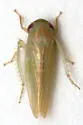
Chlorotettix scutellatus
Chlorotettix scutellatus
Identification: Dull straw color with a dusky transverse band on the vertex; 2 blackish marks on each side of scutellum that extend forward and under the pronotum, showing through (DeLong 1919)
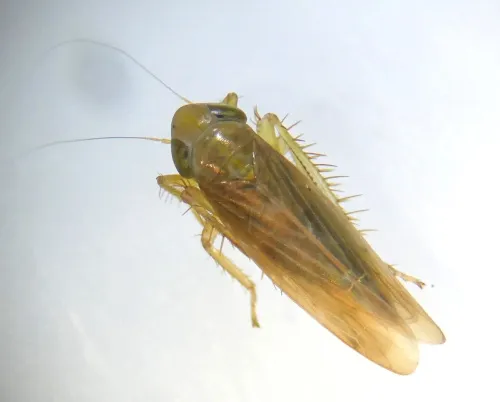
Cicadula frontalis
Cicadula frontalis
4.5 - 6.2 mm. This brownish-yellow leafhopper has very long antennae, with dark patches at their base. There are either no spots on the vertex, or very small ones at the front edge. The wings are fairly clear with pale venation. Can only be identifie
Cicadula persimilis
Cicadula persimilis
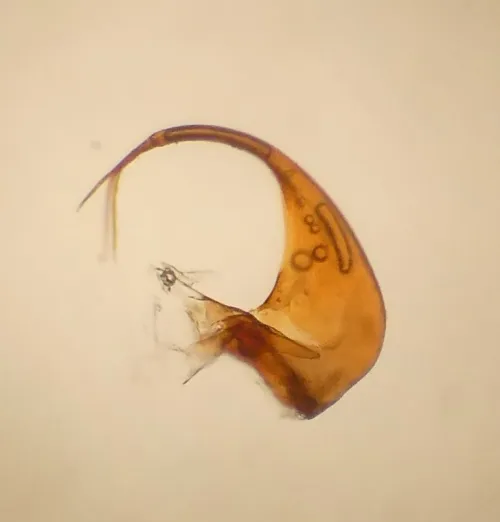
Length 4 to 5 mm. Cicadula persimilis is a yellow-green leafhopper with four large black spots on the vertex, near the eyes. Dissection of males is required for definite identification. Dissection of males is required for definite identification. Wid
Cicadula quadrinotata
Cicadula quadrinotata
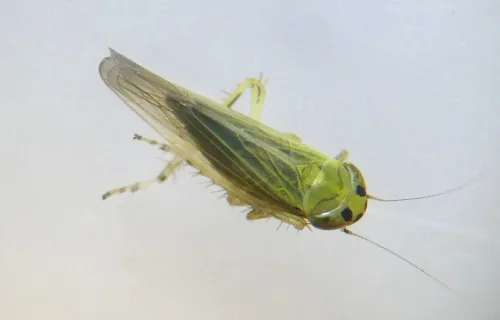
Length 4 to 5 mm. Cicadula quadrinotata is a yellow-green leafhopper with black spots on the vertex and rather long antennae. Dissection of males is required for definite identification. Females cannot be distinguished from similar species. Males can
Cicadula saliens
Cicadula saliens
Identification: "this is the taxon [that Beirne & Young (1953)] treated as melanogaster. It has a pointed head and the female S7 is also distinctive" (J. Kits, pers. comments to K. Kittelberger)
Cicadula straminea
Cicadula straminea
Identification: A slender, pale yellow species with 4 black dots along the margin of the head. - Andy Hamilton
Ciminius taosus
Ciminius taosus
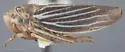
Identification: The veins of the female specimens at hand are white, the males dark.
Cochlorhinus opertus
Cochlorhinus opertus
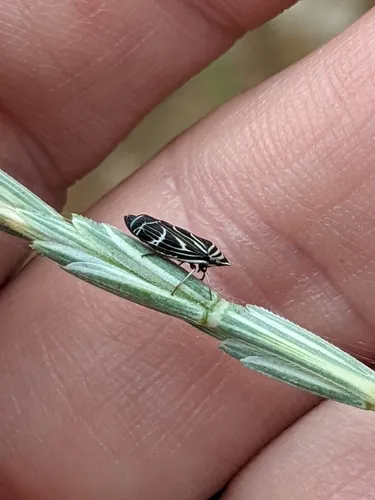
Identification: From "Studies on insects of the Redwood Empire I: New Phytophagous Hemiptera from the Coast Range mountains", self-published by Bliven 1955 (Eureka, CA): "Runs to couplet 4 in Beamer's key where it differs from unispinosus in the long
Cochlorhinus pluto
Cochlorhinus pluto
Identification: According to the key in Beamer 1940 , the other species of Cochlorhinus with "only a white dash on cross-veins, remainder of dorsum black" is C. stygicus, which has "vertex about a right angle" rather than the "vertex acute, longer th
Cochlorhinus stygicus
Cochlorhinus stygicus
Identification: Per the key in Beamer 1940 , similar to C. pluto in having "only a white dash on the cross-veins, remainder of dorsum black", but differs from that species in having the "vertex about a right angle".
Cochlorhinus unispinosus
Cochlorhinus unispinosus
Identification: "Externally C. unispinosus is very close to C. pasadenus and C. ziczac and still closer to the new species C. bidentatus . This latter species, however, has the aedeagus of C. unispinosus and the pygofer with the two spines of C. plut
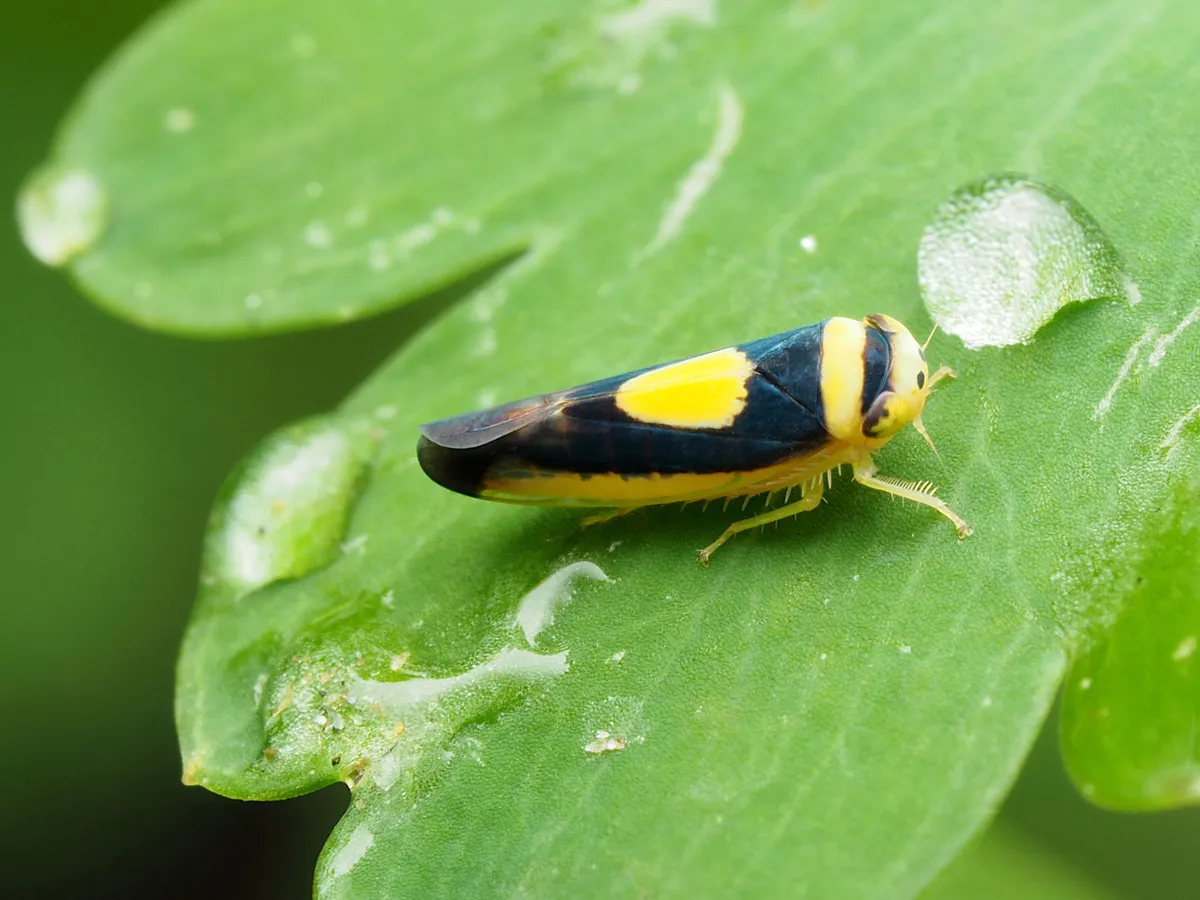
Saddleback Leafhopper
Colladonus clitellarius
Identification: Identifications of non-vouchered photographs should be treated as tentative: "[ Colladonus furculatus ] is so similar to clitellarius that dissection of the genitalia is necessary to separate the two species. From clitellarius , to wh
Colladonus furculatus
Colladonus furculatus
Identification: Identifications of non-vouchered photographs should be treated as tentative: "[ Colladonus furculatus ] is so similar to clitellarius that dissection of the genitalia is necessary to separate the two species. From clitellarius , to wh
Colladonus mendicus
Colladonus mendicus
Identification: "the color pattern, particularly the pale veins, are distinctive" [as per a comment by Andy Hamilton on this post ]
Colladonus okanaganus
Colladonus okanaganus
Identification: http://dmitriev.speciesfile.org/taxahelp.asp?hc=139769&key=Erythroneura&lng=En
Conosanus obsoletus
Conosanus obsoletus
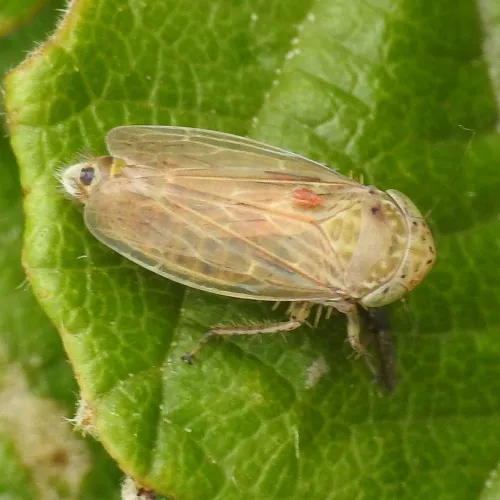
Length: 5 to 6 mm. A large leafhopper, light brownish in colour with darker markings in the forewing cells. The vertex normally has four dark marks in a V-shape pointing toward the tip. Dissection of the male will confirm identification; females have
Cuerna alpina
Cuerna alpina
Identification: tentative det: Kyle Kittelberger, 2020
Lateral-lined Sharpshooter
Cuerna costalis
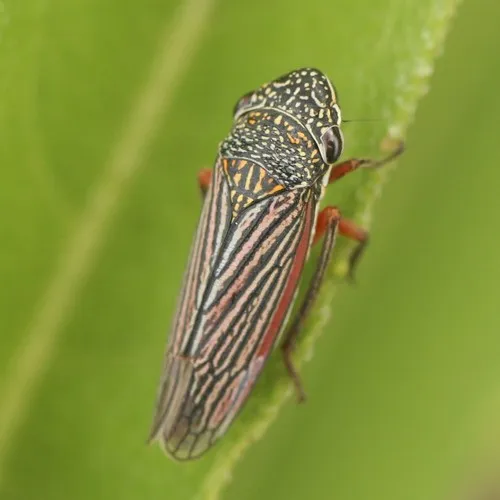
Identification: Black and red with longitudinal stripes on forewing; a conspicuous white stripe runs from the eye along the side of the abdomen; tip of abdomen with red spot. The only species in the genus with red on legs , per Andy Hamilton . Dets.
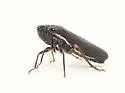
Cuerna fenestella
Cuerna fenestella
Identification: Forewing color does not consistently distinguish this species from C. sayi. Distinctive characters are the short, curved macrosetae on the female metatibiae and the shape of the male aedeagus.
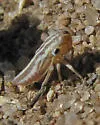
Occidental Sharpshooter
Cuerna occidentalis
Identification: naturalhistory.museumwales.ac.uk/sharpshooters/browserecord.php?-recid=437 This species is externally identical to C. unica (except for female eighth sternites), but is more southern in distribution: southern California and Baja.
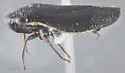
Cuerna sayi
Cuerna sayi
Identification: Forewing color does not consistently distinguish this species from C. fenestella. Distinctive characters are the long, curved macrosetae on the female metatibiae and the shape of the male aedeagus.
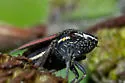
Cuerna striata
Cuerna striata
This is a complex of many closely-related and variable species with their limits poorly defined. The most recent revision collapsed the complex back into one species until further study can be used to determine the limits of the species. " C. striata
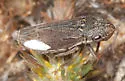
Cuerna unica
Cuerna unica
This species is externally identical to C. occidentalis (except for female eighth sternites), but is more northern in distribution: central California to Washington.
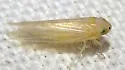
Corn Leafhopper
Dalbulus maidis
Identification: Dets. Kyle Kittelberger Considered invasive in this country. (Capinera, 2002)
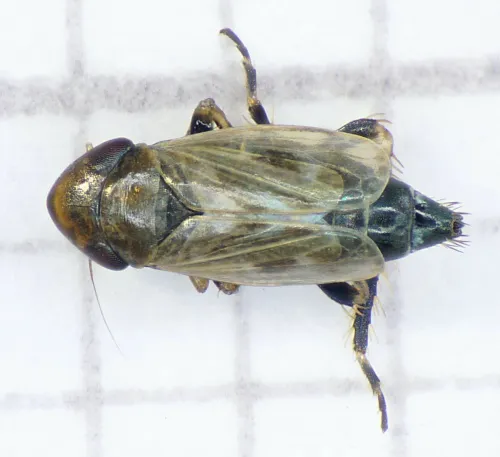
Deltocephalus pulicaris
Deltocephalus pulicaris
Length 2.5 to 3.5 mm. A small dark leafhopper with brownish wings and vertex. The vertex usually has a number of small dark spots. Good photographs from a specimen required. Common (ref.: UK Auchenorrhyncha checklist 2021 ) https://www.britishbugs.or
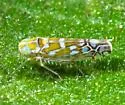
Wild Olive Leafhopper
Diceratalebra interrogata
Identification: This small species with its extensive pale green markings seems quite distinct in character from any previously described member of this genus. Male holotype, female allotype, 36 paratypes, Starr County, TEXAS, June 2, 1939, D. J. and
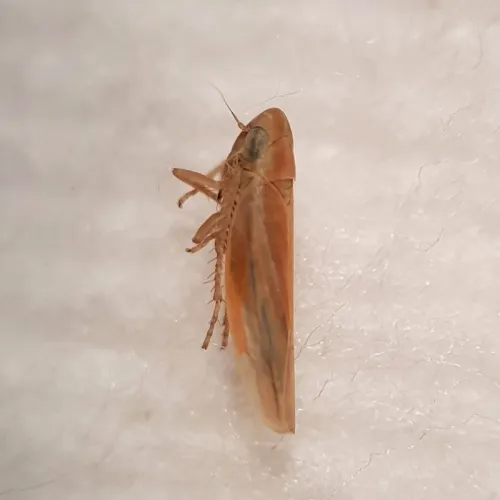
Dikraneura variata
Dikraneura variata
Length 3 mm. The eye shape is significantly longer than high and a line joining the rear points of the eyes would meet around half-way across the pronotum. There is a slightly swollen base to the final (long) antennal segment. Usually greenish, with
Blackberry Leafhopper
Dikrella californica
used as intermediary host to Anagnus epos , a parasitic wasp used to control the Western grape leafhopper, Erythroneura elegantula [ Ferro in ]
Dixianus utahnus
Dixianus utahnus
Described from three specimens from "Chads." Utah. (Ball, 1909)
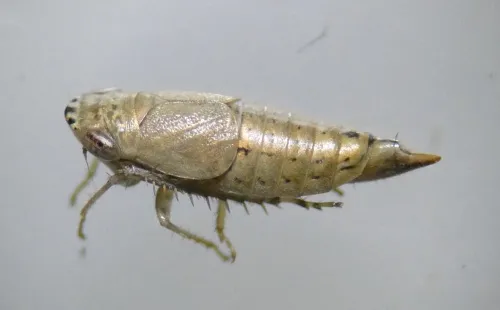
Doratura stylata
Doratura stylata
Length 3 to 4.5 mm. A distinctive leafhopper with short wings that have greenish metallic highlights. There are three large black spots at the tip of the vertex. Females have long projecting gonoplacs (part of the ovipositor). The nymph is brownish w
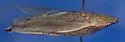
Kansas Prairie Leafhopper
Dorydiella kansana
Identification: Flattened head no longer that it is wide. Pointed wing tips and eyes set far apart.
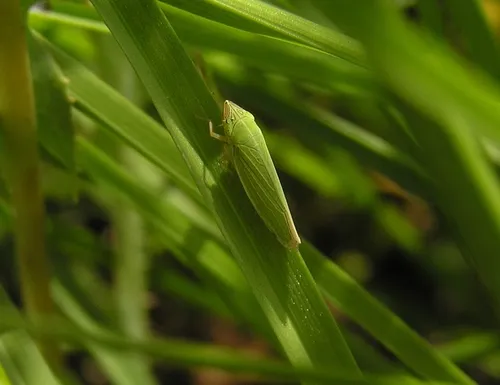
Draeculacephala angulifera
Draeculacephala angulifera
Identification: Males of this species are boldly-marked, sporting a crossbow-shaped marking on the head. The wing venation is a pale blue and the underside is completely yellow. There are notably two dark spots in front of the antennal segments of bo
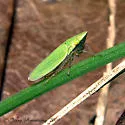
Draeculacephala balli
Draeculacephala balli
Identification: A very distinct species with two black triangles on the head (postocellar maculae) and two black triangles at the anterior of the scutellum. This species sometimes has a dark dash on the vertex and the dot in the centre of the crown c
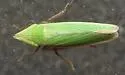
Draeculacephala bradleyi
Draeculacephala bradleyi
Identification: A green white-veined species with an underside much darker than any other Draeculacephala in the Eastern U.S. Some males can have paler faces, so clear views from different angles are important. The anterior pronotum of bradleyi is of
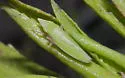
False Grass Sharpshooter
Draeculacephala californica
Identification: A relatively nondescript green species with a very pointed head and white wing venation. Its range overlaps with the somewhat similar D. minerva , but this species is often has a longer/slenderer head and has a paler underside. Both c
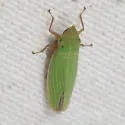
Draeculacephala constricta
Draeculacephala constricta
Identification: A generally unmarked green species with white wing venation. Males of this species most often has a yellow/tan underside and face unlike other common members of the genus (besides D. mollipes , which has blue venation). This species i
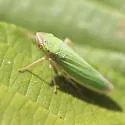
Draeculacephala crassicornis
Draeculacephala crassicornis
Identification: A green species with pale blue venation. Morphologically quite similar to D. angulifera and D. noveboracensis , there are two dark spots in front of the antennal segments and two very close dark spots on the vertex. Importantly, howev
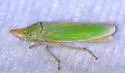
Draeculacephala floridana
Draeculacephala floridana
Identification: A very distinct species, it is the only member of this genus with the entire head inflated and nose upturned. Unlike any other Draeculacephala , the markings on the head are speckled. The face is pale green to yellow with black or fus
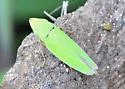
Grass Sharpshooter
Draeculacephala minerva
Identification: This species is generally unmarked green with a somewhat short head and generally green wing venation. This species overlaps in range with D. californica which has nearly identical male genitalia but a longer head. This species can of
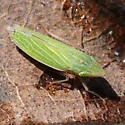
Tenderfoot Leafhopper
Draeculacephala mollipes
Identification: One of the smaller members of the genus, this species is morphologically somewhat similar to the more common Draeculacephala robinsoni dorsally and therefor it is important that clear photos are taken of the underside and a length is
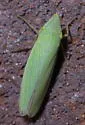
Draeculacephala navicula
Draeculacephala navicula
Identification: A *nearly* always unmarked yellow-green species, it's morphologically somewhat similar to Draeculacephala antica and D. bradleyi . Unlike D. antica , males have a pale tan face and underside, lacking mesosternal maculae. Both males an
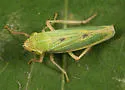
Black-ledged Sharpshooter
Draeculacephala noveboracensis
Identification: This species is green to yellow-green with blue wing venation and a blunter head than most members of the genus. This species is very similar to D. angulifera and D. crassicornis , but has subtle features that usually allow differenti
Draeculacephala pagoda
Draeculacephala pagoda
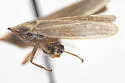
Identification: A green species with white wing venation and markings on the head and scutellum. Males have a mostly dark underside and pale face with dark muscle scars. There is a dark spot on the vertex of the crown and the markings on the head are
Draeculacephala paludosa
Draeculacephala paludosa
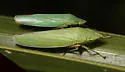
Identification: This species has very dark dorsal markings which superficially resemble the southern D. inscripta . Most notably, this species has a somewhat inflated face, two dark spots on the scutellum, and very dark markings on the anterior prono
Draeculacephala portola
Draeculacephala portola
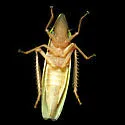
Identification: This green species is mostly unmarked dorsally. It has an inflated face, an uncommon trait in the genus shared only in the U.S. by D. paludosa and the very different D. floridana . This species has white to blue wing venation with dar
Draeculacephala producta
Draeculacephala producta
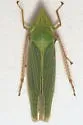
Identification: A usually unmistakable species-at least outside of the Cuban range-this species is easily recognised by blue wing venation/pronotal lines and a greatly produced head (as if stretched out from the tip). Also differentiating it from the
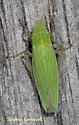
Draeculacephala robinsoni
Draeculacephala robinsoni
Identification: A green species with (almost always) blue venation, usually having a dark face. The abdominal sterna are described as being pale/yellow, but there is a high degree of variation among individuals (some can be very dark brown with yello
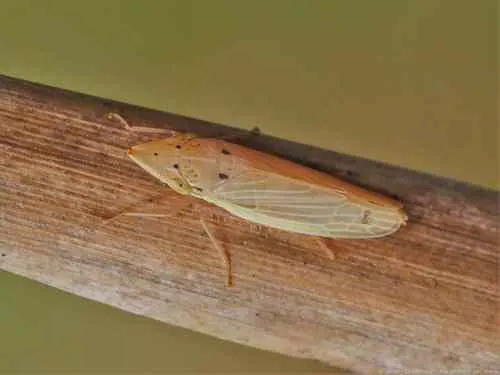
Draeculacephala septemguttata
Draeculacephala septemguttata
Identification: A tan species with distinctive markings. There are two triangular spots on the scutellum, a spot on each lateral margin of the pronotum, two spots on the head behind the ocelli, and a single bold spot in the centre of the crown. In so
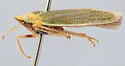
Sharpheaded Sharpshooter
Draeculacephala zeae
Identification: Differentiated from D. robinsoni on the basis of the form of the male 2S apodemes: "Apodemes 2S produced most strongly mesad on lower halves" vs. robinsoni : "Apodemes 2S produced most strongly mesad near apex or with both lobes subeq
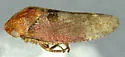
Dragonana dracontea
Dragonana dracontea
Identification: "Vertex broadly rather roundedly produced, more than twice as broad as long. Vertex pale, heavily marked with reddish punctate spots. Pronotum yellow to tawny, the anterior margin often appearing reddish. Scutellum pale, basal angles
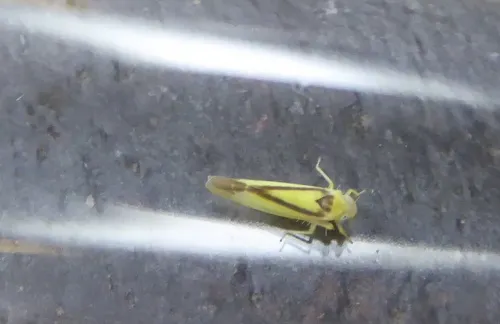
Edwardsiana geometrica
Edwardsiana geometrica
Length around 4 mm. Yellow or whitish background colour, with a distinctive dark stripe diagonally across the forewing, along the boundary between clavus and corium. Common (ref: UK Auchenorrhyncha checklist 2021 ) https://www.britishbugs.org.uk/homo
Prune Leafhopper
Edwardsiana prunicola
earliest NA record: NY 1900 (prob. died out in the east); earliest w. NA record: ID/WA 1930
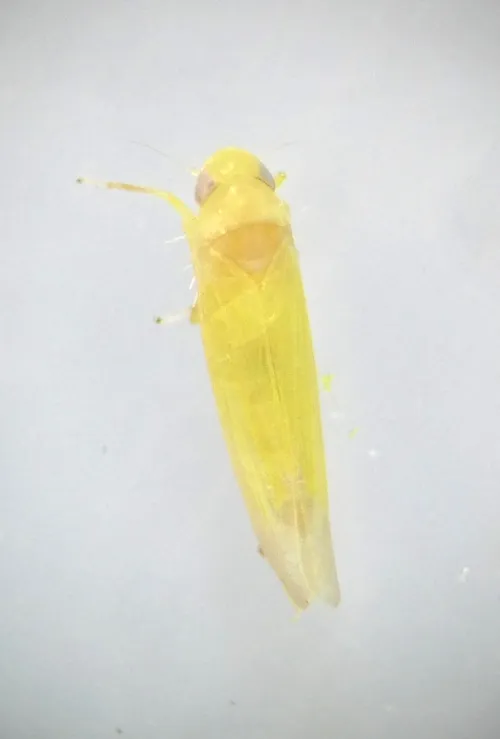
Edwardsiana rosae
Edwardsiana rosae
Length 3-4mm. Pale or yellowish but variable in colour without strong markings. Perhaps the most difficult of all leafhopper genera, with 21 UK species, of which only two are easily identified; the other 19 cannot be identified based on external feat