
Family Seed Bugs (Lygaeidae)
Lygaeidae is a family in the order Hemiptera. Browse 98 named species recorded in this family, or open an individual profile for its available identification and natural-history information.
Species in Lygaeidae (98)
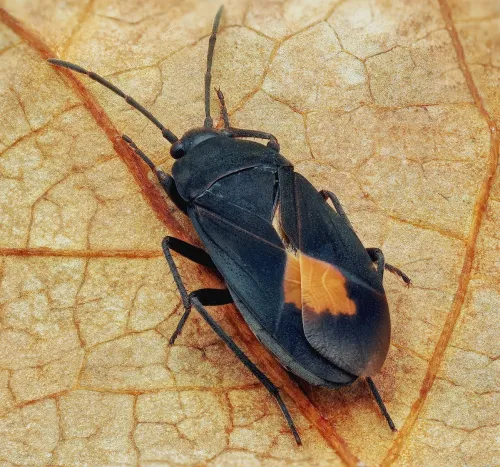
Aphanus rolandri
Aphanus rolandri
Length 6 to 8 mm. A large and very distinctive black ground bug with a dark red or orange spot at the base of the wing membrane. Associated with fumitory and related plants such as yellow corydalis. Dry, well-drained habitats. NS(Na) - Nationally Sca
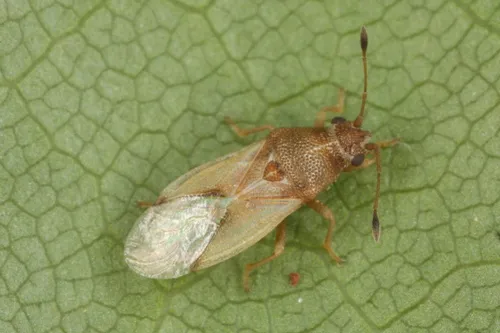
Cymus claviculus
Cymus claviculus
A small bug - length 2.5 to 3.5 mm, with a narrow shape. Cymus species have a distinctively punctured head, pronotum, scutellum and forewings. Cymus claviculus has a narrow band without punctures just next to the suture between the clavus and corium.
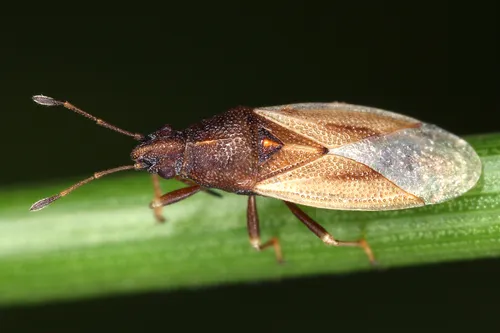
Cymus glandicolor
Cymus glandicolor
Length 4 to 5 mm. Cymus species have a narrow shape and densely punctured head, pronotum, scutellum and forewings. Cymus glandicolor is slightly larger than the two other common species , and has a pale keel on the scutellum and a dark streak on each
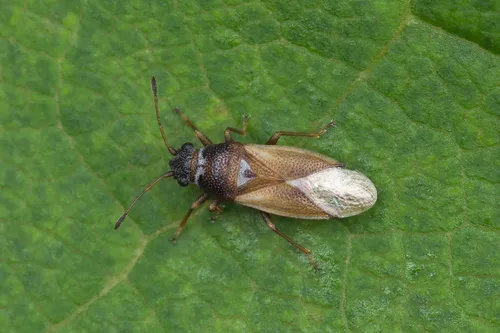
Cymus melanocephalus
Cymus melanocephalus
Length 3 to 4 mm. Cymus species have a distinctively punctured head, pronotum, scutellum and forewings. Cymus melanocephalus does not have a pale keel on the scutellum, and the forewings are entirely punctured. Although it often has a dark head, pale
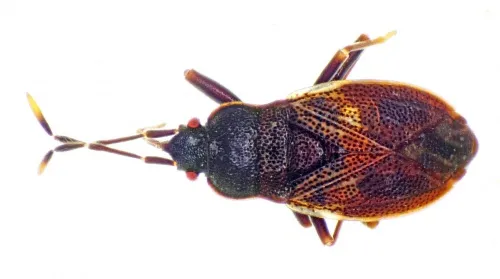
Drymus brunneus
Drymus brunneus
Length 4-5 mm. This genus has a distinctively-shaped pronotum and the front femur has one larger tooth and several small ones. Within the genus, it can be distinguished by the great width of the forewings across the middle of the abdomen, the brownis
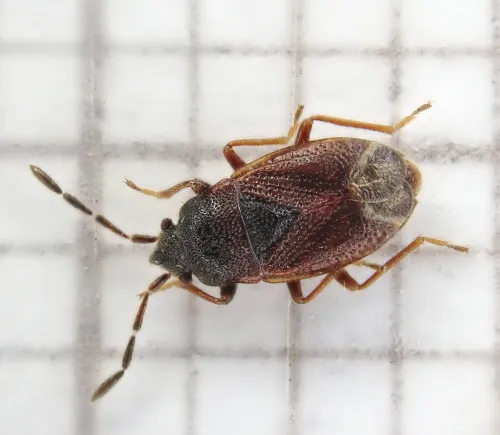
Drymus pumilio
Drymus pumilio
Drymus pumilio is a particularly small, dull brown species, length 2.5-3mm. Small tooth on front femur; tibiae with hairs shorter than width of tibia; pronotum black anteriorly, brown posteriorly; forewings usually at least as long as the abdomen. Ot
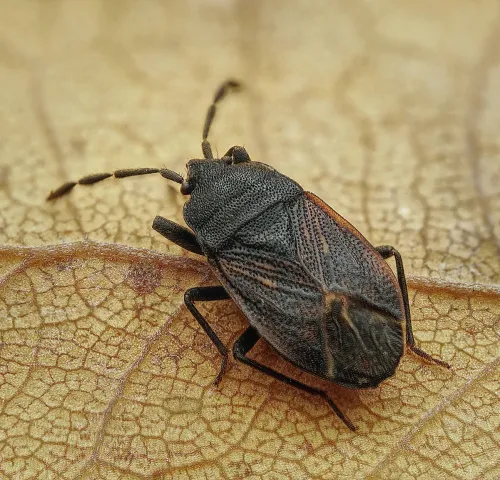
Drymus ryei
Drymus ryei
Length 4 to 5 mm. Drymus is one of several lygaeid genera in which the front femur has one larger tooth and several small ones; it is rather a difficult genus to identify. In D. sylvaticus and D. ryei the tibiae lack long erect hairs and the scutellu
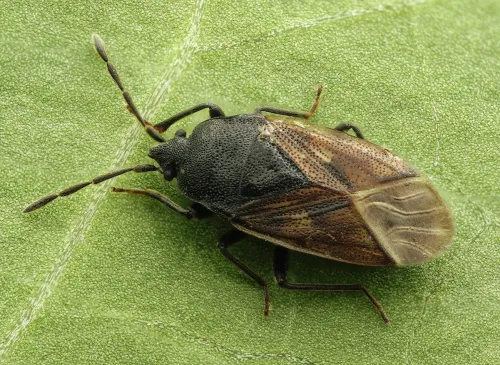
Drymus sylvaticus
Drymus sylvaticus
Length 4 to 5 mm. This genus has a distinctively-shaped pronotum and the front femur has one large tooth and several small ones. Drymus sylvaticus has reddish-brown forewing and entirely black scutellum and pronotum. The legs lack long hairs. There a
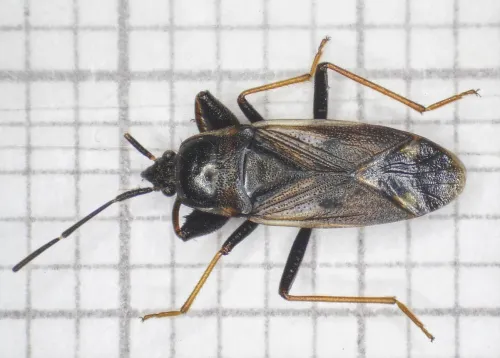
Eremocoris fenestratus
Eremocoris fenestratus
A large (6 - 7.7mm) ground bug with reddish-brown forewings and a pair of semi-circular white spots on the membrane. Eremocoris fenestratus has one large and several smaller spines on the front femora. The stout hairs on the hind tibiae are roughly e
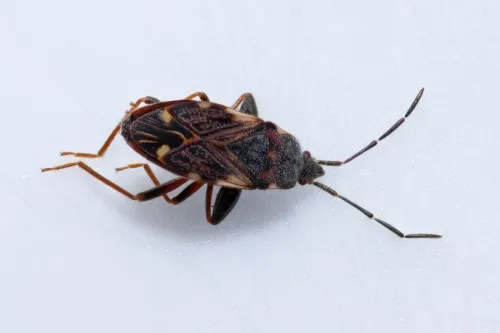
Eremocoris podagricus
Eremocoris podagricus
A medium to large bug, with reddish-brown forewings and a pair of semicircular white spots on the membrane, adjacent to the cuneus. E. podagricus has two large and several smaller spines on the front femora, and the hind tibia have long hairs roughly
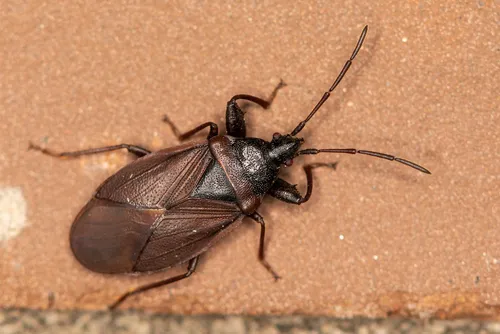
Pine Cone Bug
Gastrodes grossipes
A medium to large red-brown bug with a broad, flattened body, associated with Scots Pine. The head, front of the pronotum and scutellum are dark. The rear margin of the pronotum is pale, but side margins are only pale in the rear part. Gastrodes abie
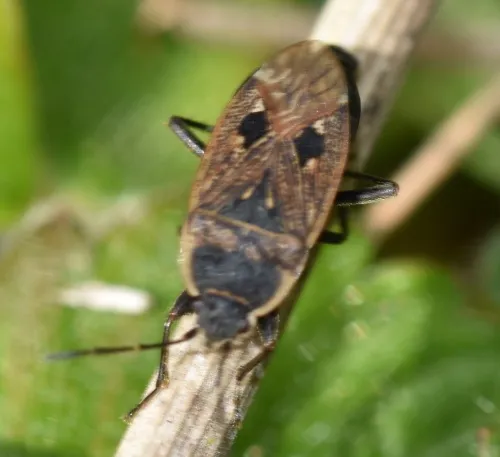
Graptopeltus lynceus
Graptopeltus lynceus
A large ground bug (6 to 7 mm) with a distinctive appearance, mainly associated with Viper's Bugloss. The pronotum has pale margins and there are two pale lines on the scutellum in a V-shape, and a dark spot of the forewings with a smaller pale spot
Hadrosomus teapensis 0
Hadrosomus teapensis
Identification: Head predominandy yellow or ocher, black anterior mark ±restricted to tylus
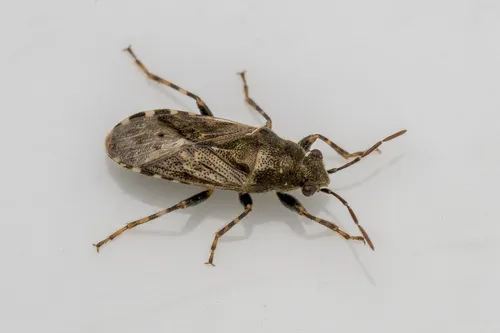
Nettle Groundbug
Heterogaster urticae
A medium to large groundbug, associated with nettles, with a distinctive pale and dark banded connexivum and tibias. The head and pronotum have long erect hairs. Large groups may occasionally be seen on nettles. Within the Lygaeidae, the banded conne
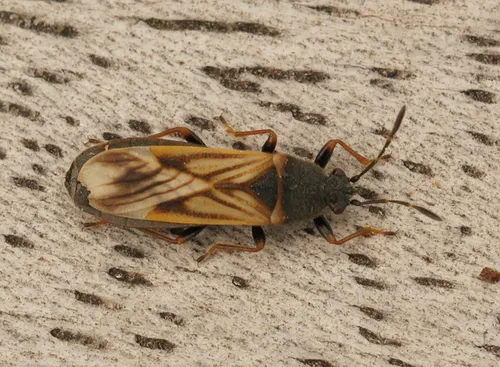
European Chinchbug
Ischnodemus sabuleti
A medium-sized bug wth an elongated body, associated with wetlands, marsh and damp grassland. It can occur in a brachypterous form, with very short wings, or in a macropterous form with wings that nearly reach the end of the abdomen; occasionallly in
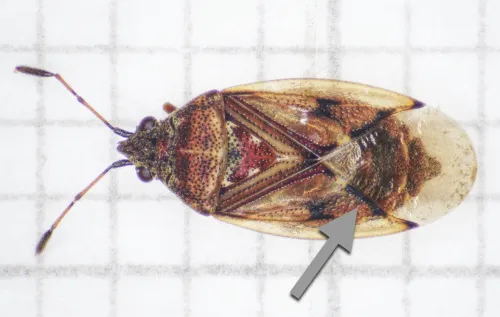
Kleidocerys privignus
Kleidocerys privignus
Very similar to Kleidocerys resedae but feeds on Alder ( Alnus ) and has different pigmentation with a partly darkened clavus and uninterrupted dark streak on the hind margin of the corium. Records of Kleidocerys privignus will be accepted only for s
Lygaeus analis
Lygaeus analis
three specimens in the USNM collection that were intercepted at Hidalgo, Progreso, and Pharr, Texas from Mexico. (T. Henry, pers. comm. to V. Belov, 2019)
Lygaeus truculentus
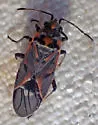
Lygaeus truculentus
Identification: The only species in our area with apical ¾ of wing membrane whitish-gray
False Milkweed Bug
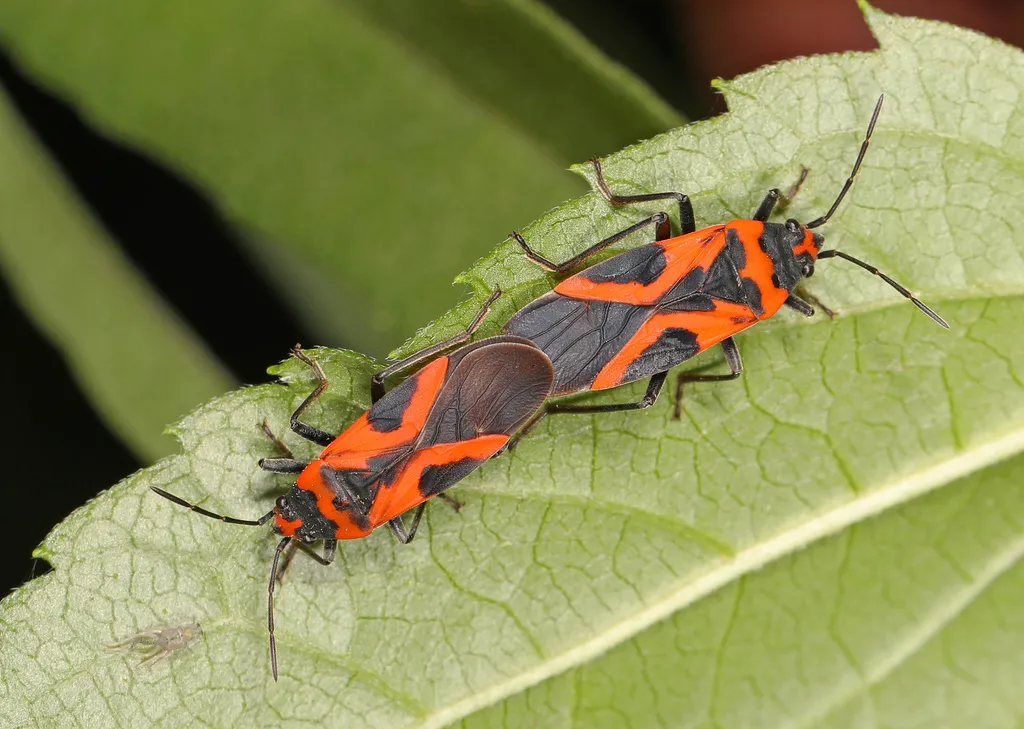
Lygaeus turcicus
Identification: We're moving all these images to a new page based on the image from Ojibway cited below and the records from the North Carolina State University. Unfortunately we also found online images of the same creature listed as kalmii and imag
Megalonotus antennatus
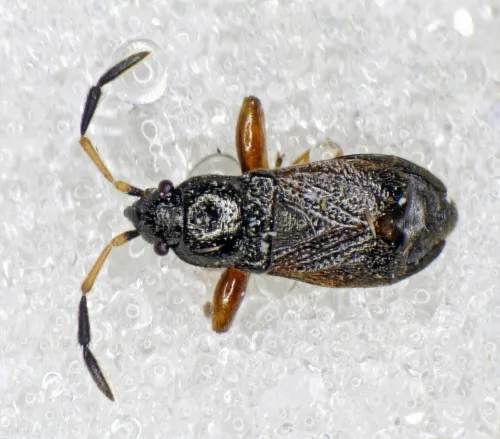
Megalonotus antennatus
A medium-sized bug (4 to 5mm) with a dark pubescent and coarsely punctate pronotum. The fromt femora have one large tooth and several smaller ones. The legs and 2nd antennal segment are entirely pale brown. It is usually brachypterous, with short win
Megalonotus emarginatus
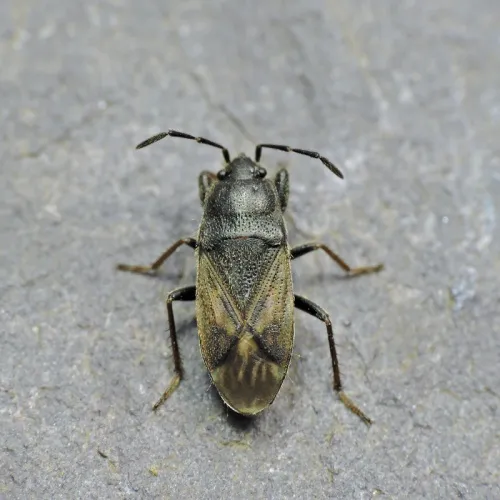
Megalonotus emarginatus
A medium-sized ground-bug (4.5 to 5.5 mm) with a dark, pubescent and coarsely punctate pronotum. Size, colouration, shape and wing developement are variable, but it has femora that are partly darkened, antennae that are partly pale, and prominent hin
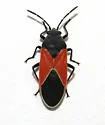
Melanopleurus belfragei
Melanopleurus belfragei
I have seen specimens labeled " Melanopleurus bicolor H.-S." (described from Brazil) that look just like M. belfragei . (Merrill Sweet, pers. comm.)
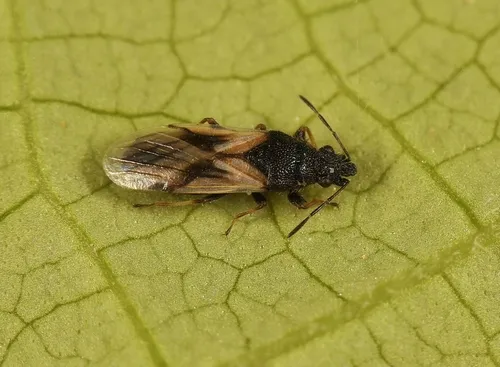
Metopoplax ditomoides
Metopoplax ditomoides
A small slender ground bug (3.5 - 4mm) with a dark and densely punctured pronotum and scutellum, and contrasting pale forewings. The pronotum is covered with short whitish hairs. Metapoplax fuscinerv i s has a bicoloured pronotum that is cream or pal
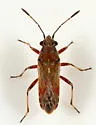
Neortholomus scolopax
Neortholomus scolopax
Identification: Neortholotnus scolopax can be difficult to recognize because of its variability in color and size. Although generally larger than N. jamaicensis , in the southern parts of its range, N. scolopax is about the same size. It can be separ
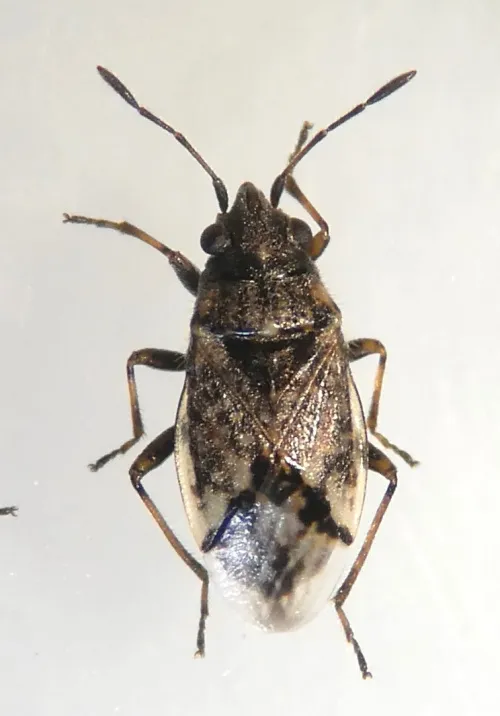
Nysius huttoni
Nysius huttoni
Length 2.5 to 4 mm. The adults often have a broad or squat outline and they have long erect hairs covering the pronotum and forewings. Long erect hairs on pronotum and forewings We recommend that a specimen is examined and photographed. The diagnosti
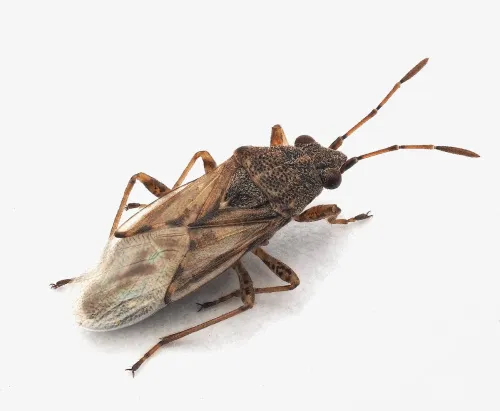
Nysius senecionis
Nysius senecionis
Length 4 to 5 mm. Nysius senecionis has the 2nd antennal segment pale with a dark ring at the base and the wing membrane is usually clear and unmarked. It is separated from the very similar N. graminicola by the shorter 1st segment of the hind tarsus
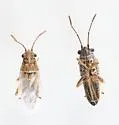
Nysius tenellus 0
Nysius tenellus
Identification: last couplet: Pronotum, viewed laterally, distinctly depressed before cicatrices; contracted basal part of costal margin devoid of fine hairs; membrane clear; basal part between apex of commissure and apices of coria distinctly shorte
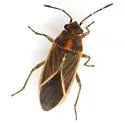
Ochrimnus carnosulus
Ochrimnus carnosulus
Identification: "color on the costa invades the nervures" Det. Michael Pirrello, 2021 Type Locality: San Diego, Calif.
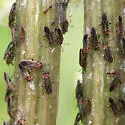
Ochrimnus (Phaeochrimnus) mimulus
Ochrimnus mimulus
Identification: Dorsum of head yellow on either side of midline in front of eyes; femora brown with base and apex pale yellow Det. Iustin Cret, 2019 our only representative of the subgenus Phaeochrimnus (9 spp., se. US to Brazil)
Ochrimnus (Ochrimnus) tripligatus
Ochrimnus tripligatus
Identification: a rather dark sp. with membrane uniformly black, lacking pale margins member of the nominate subgenus (2 spp. in our area, 8 total; FL, the Caribbean, Mesoamerica)
Ochrostomus pulchellus
Ochrostomus pulchellus
Identification: habitus photos First US record from Key Largo, FL
Oncopeltus aulicus
Oncopeltus aulicus
Identification: membrane with a white mark just basad of center
Oncopeltus guttaloides
Oncopeltus guttaloides
Identification: a more slender shape, and the red femorae, variable Type Locality: Mexico
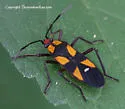
Six-spotted Milkweed Bug
Oncopeltus sexmaculatus
Identification: O. cayensis (so. FL) lack white membranal spot
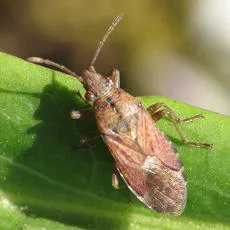
Orsillus depressus
Orsillus depressus
Length 6mm+. This bug has a browny orange appearance with pale marks on the scutellum, and is usually associated with Cypresses. The rostrum is very long, and the head is elongated in front of the eyes. Good quality photographs taken in the field or
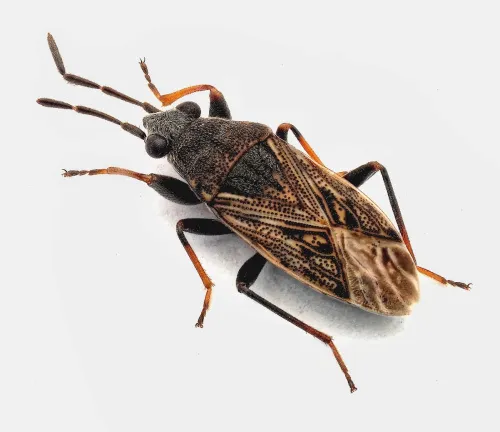
Peritrechus geniculatus
Peritrechus geniculatus
Length 5 to 6 mm. A difficult genus, with one or two small spines on the front femora. The 3rd antennal segment of Peritrechus geniculatus i s as thick as, or thicker than, the 1st segment. The front edge of the pronotum is dark. Other Peritrechus. P
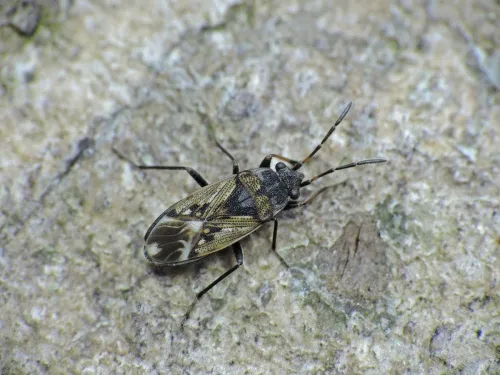
Peritrechus lundii
Peritrechus lundii
Peritrechus lundii is often associated with Stork's-bll, Erodium cicutarium . The front part of the pronotum has pale lateral keels. Antennae are black apart from the paler basal part of the 2nd segment. The wing membrane has a pale apical spot. Ther
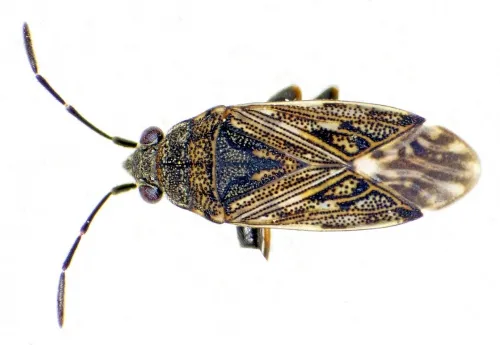
Peritrechus nubilus
Peritrechus nubilus
Length 5 to 6 mm. The 3rd antennal segment is thinner than the 1st. There is usually a pale spot at the base of the membrane, and there is a usually a narrow brown band at the front edge of the pronotum. Hind tibiae are largely dark, but may have a p
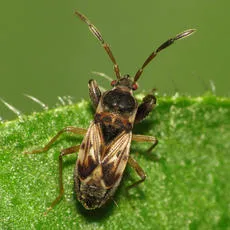
Scolopostethus affinis
Scolopostethus affinis
Length 3.5-4.5 mm. A difficult genus including some common species; all have one large and several small spines on the underside of the front femur. The sides of the pronotum have a large pale spot just behind the middle. The critical features in S.
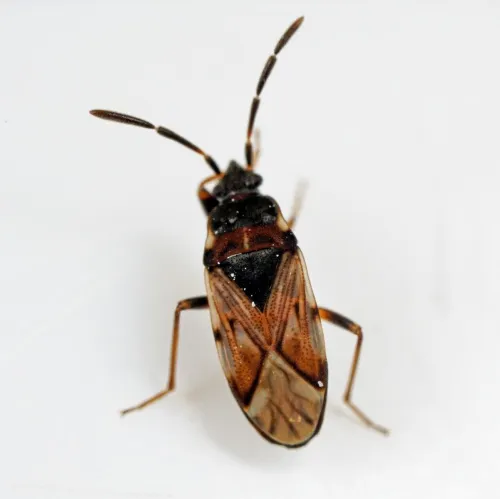
Scolopostethus decoratus
Scolopostethus decoratus
Length 3.5 to 4 mm. A difficult genus including some common species; all have one large and several small spines on the underside of the front femur. The sides of the pronotum have a large and obvious pale spot just behind the middle. Scolopostethus
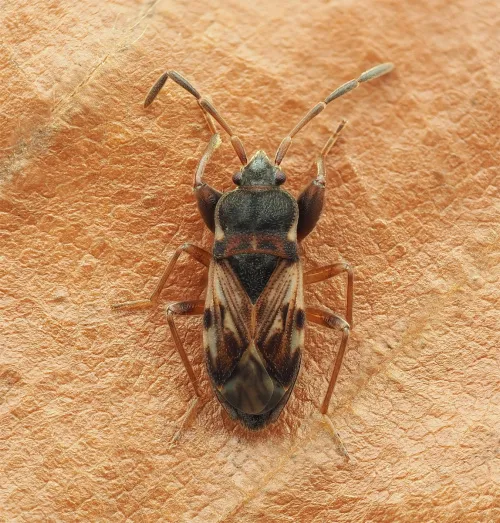
Scolopostethus grandis
Scolopostethus grandis
A difficult genus including some common species; all have one large and several small spines on the front femur. The sides of the pronotum are keeled and have a large and obvious pale spot just behind the middle. Underside characters are important in
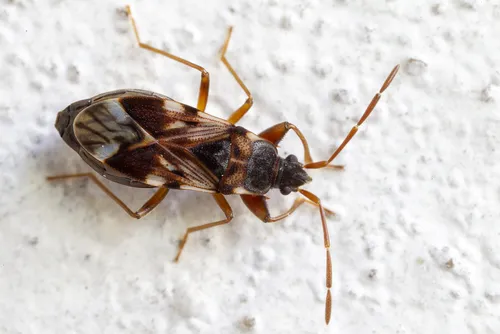
Scolopostethus pictus
Scolopostethus pictus
Length 4 to 5 mm. Scolopostethus pictus is one of the largest species in the genus and the antennae are entirely pale or only slightly and gradually darkened towards the tip. Adults are usually macropterous and often have a rather brightly marked app
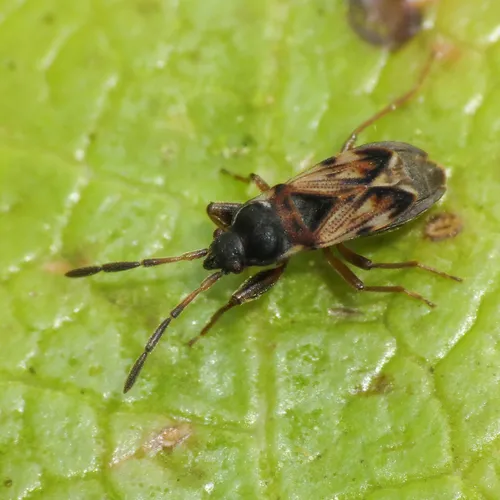
Scolopostethus thomsoni
Scolopostethus thomsoni
Length 3.5-4 mm. All members of this group have one large and several small spines on the underside of the front femur. The sides of the pronotum have a large and obvious pale spot just behind the middle. S. thomsoni is almost always short winged, wi
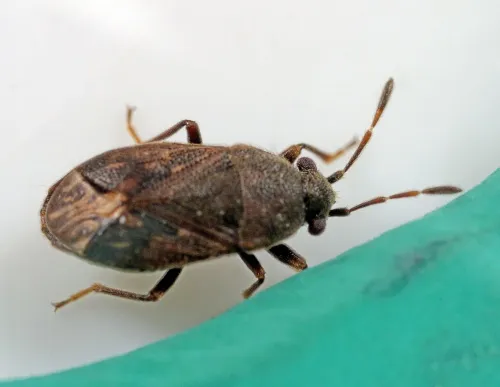
Stygnocoris fuligineus
Stygnocoris fuligineus
Length 2.5 to 3.5 mm. Stygnocoris species are small ground bugs in which the pronotum and forewings are covered in fine hairs. The pronotum is punctured throughout, and the front femora lack spines. Stygnocoris fuligineus and the closely related Styg
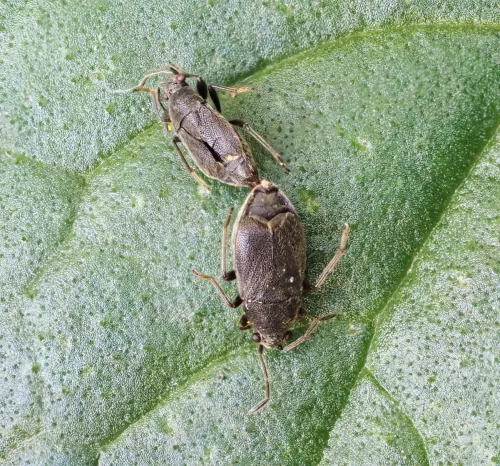
Stygnocoris rusticus
Stygnocoris rusticus
Length 3-4mm. Dark pronotum, dorsal surface dull with a short pubescence. Usually brachypterous although fully-winged individuals do occur. Unless identified by a recognised expert, a photo is required and the specimen should be examined with a micro
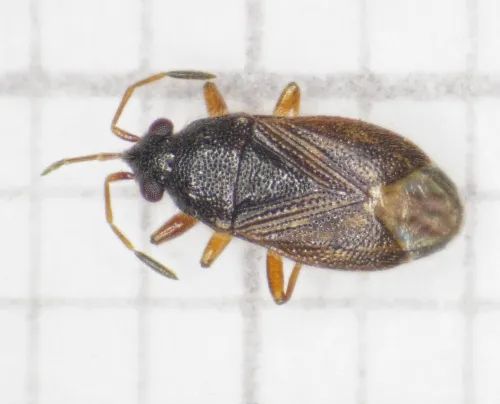
Stygnocoris sabulosus
Stygnocoris sabulosus
Length 2.5-3.0 mm. Stygnocoris species are small ground bugs in which the pronotum and forewings are covered in fine hairs. The pronotum is punctured throughout, and the front femora lack spines. S. sabulosus and the closely related S. fuligineus are
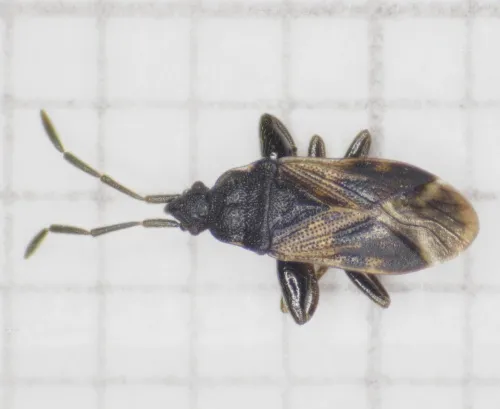
Taphropeltus contractus
Taphropeltus contractus
Length 3 to 4 mm. This species has very enlarged front femora. The rarer Taphropeltus hamulatus is very similar but is smaller, darker and has shorter and proportionately wider antennae. Detailed examination of the specimen is needed to identify the
Xyonysius adjunctor
Xyonysius adjunctor
Identification: scan-bugs.org - photos from Texas Tech Univ. Det. P.D. Ashlock, 1972 Type Locality: Texas
Anochrostomus formosus
Anochrostomus formosus
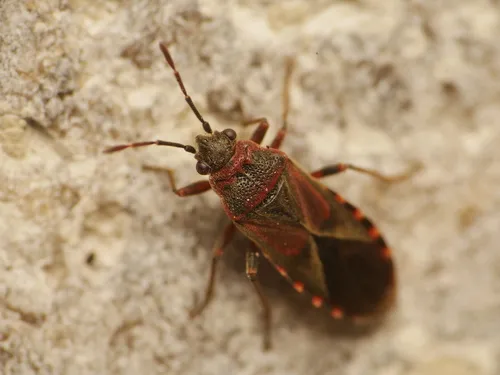
Elm Seed Bug
Arocatus melanocephalus
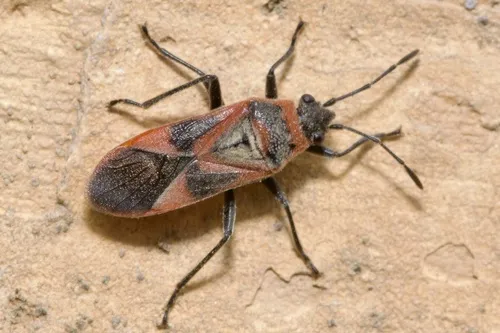
Arocatus roeselii
Arocatus roeselii
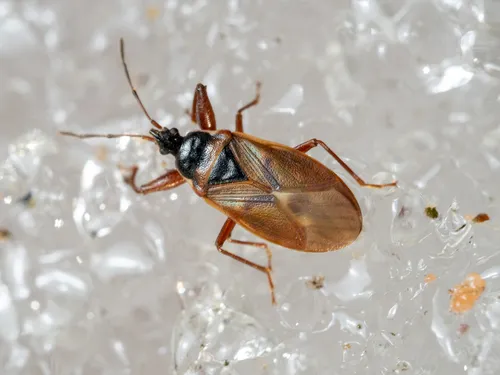
Spruce Cone Bug
Gastrodes abietum
Kleidocerys franciscanus
Kleidocerys franciscanus
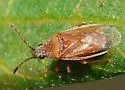
Kleidocerys modestus
Kleidocerys modestus
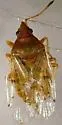
Kleidocerys ovalis
Kleidocerys ovalis
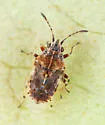
Kleidocerys virescens
Kleidocerys virescens
Lygaeospilus fusconervosus
Lygaeospilus fusconervosus
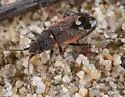
Lygaeospilus near-pusio
Lygaeospilus near-pusio
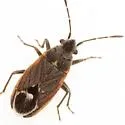
Lygaeospilus tripunctatus
Lygaeospilus tripunctatus
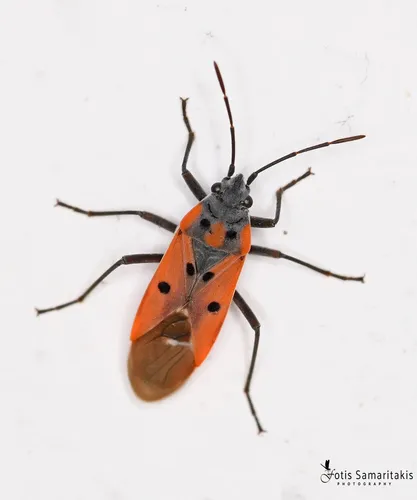
Cretan Seed Bug
Lygaeus creticus
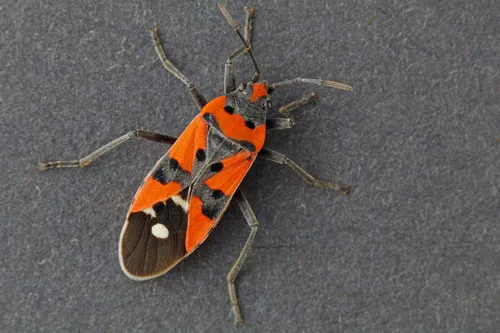
Black-and-Red Bug
Lygaeus equestris
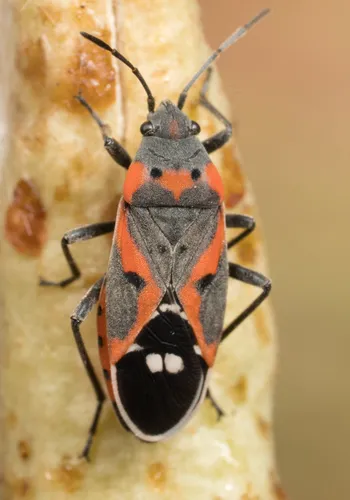
Small Milkweed Bug
Lygaeus kalmii
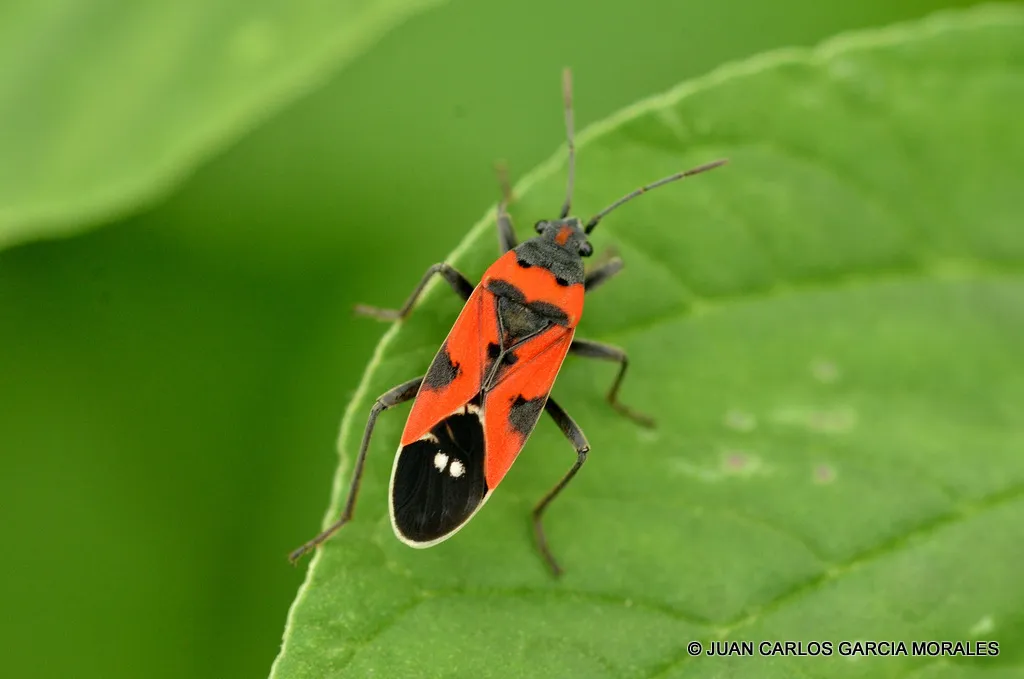
Lygaeus reclivatus
Lygaeus reclivatus
Melacoryphus admirabilis
Melacoryphus admirabilis
Melacoryphus circumlitus
Melacoryphus circumlitus
Melacoryphus facetus
Melacoryphus facetus
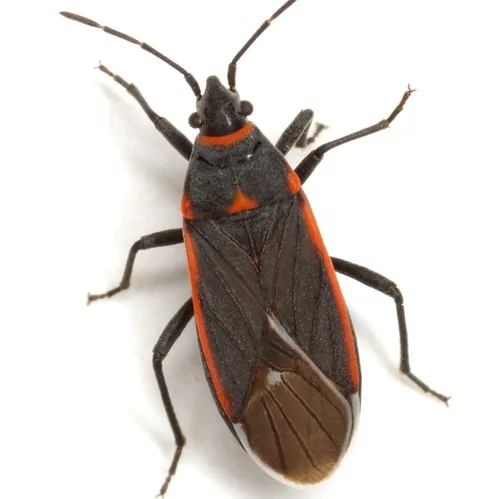
Seed Bug
Melacoryphus lateralis
Melacoryphus nigrinervis
Melacoryphus nigrinervis
Melacoryphus rubicollis
Melacoryphus rubicollis
Melacoryphus rubrolimbatus
Melacoryphus rubrolimbatus
Melanopleurus bicolor 0
Melanopleurus bicolor
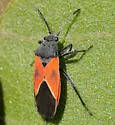
Melanopleurus fuscosus
Melanopleurus fuscosus
Melanopleurus nubilus 0
Melanopleurus nubilus
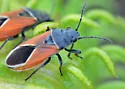
Melanopleurus pyrrhopterus
Melanopleurus pyrrhopterus
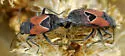
Melanopleurus tenor
Melanopleurus tenor
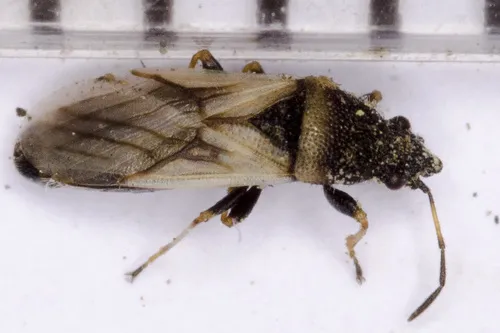
Metopoplax fuscinervis
Metopoplax fuscinervis
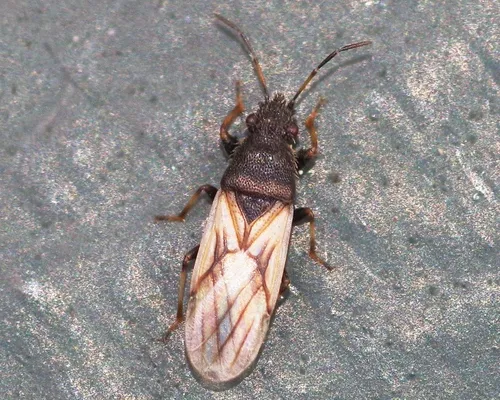
Metopoplax origani
Metopoplax origani
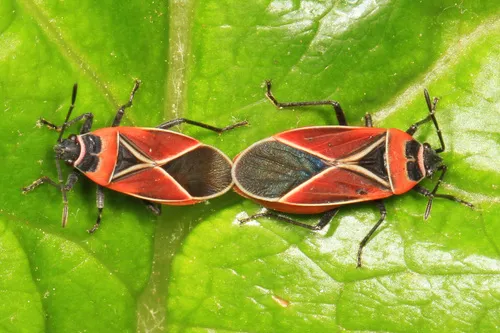
Whitecrossed Seed Bug
Neacoryphus bicrucis
Neortholomus arphnoides
Neortholomus arphnoides
Neortholomus jamaicensis
Neortholomus jamaicensis
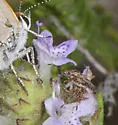
Neortholomus koreshanus
Neortholomus koreshanus
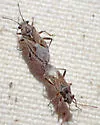
Neortholomus nevadensis
Neortholomus nevadensis
Nysius angustatus 0
Nysius angustatus
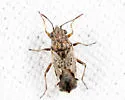
Nysius ericae
Nysius ericae
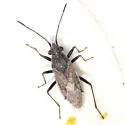
Nysius fuscovittatus
Nysius fuscovittatus
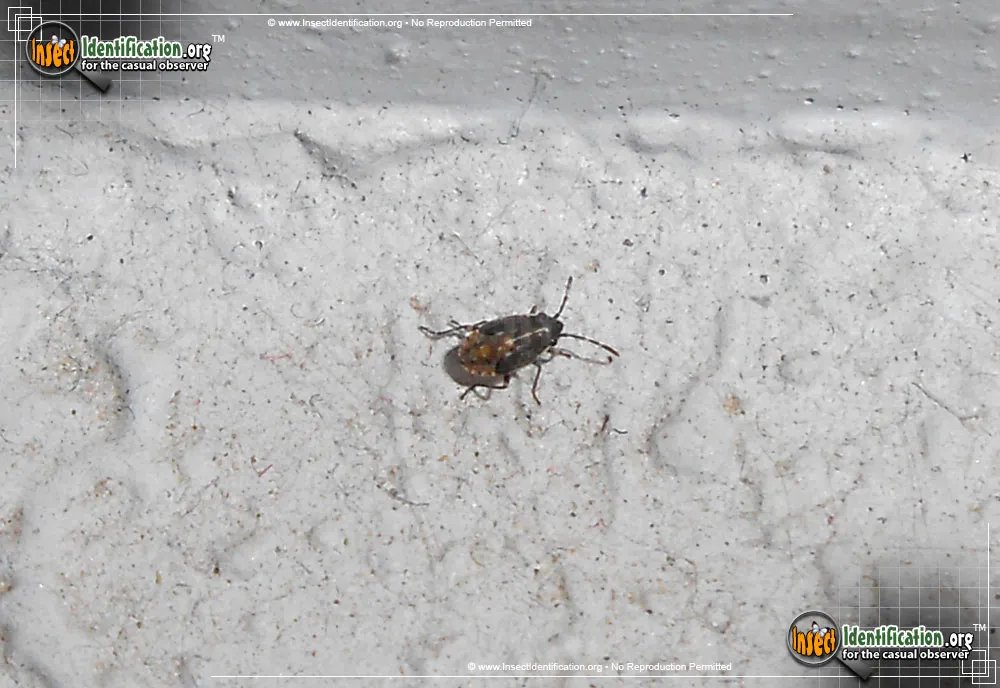
False Chinch Bug
Nysius raphanus
Ochrimnus barberi
Ochrimnus barberi
Ochrimnus foederatus
Ochrimnus foederatus
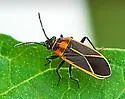
Ochrimnus lineoloides
Ochrimnus lineoloides
Ochrostomus uhleri
Ochrostomus uhleri
Oncopeltus cayensis
Oncopeltus cayensis
Oncopeltus cingulifer
Oncopeltus cingulifer
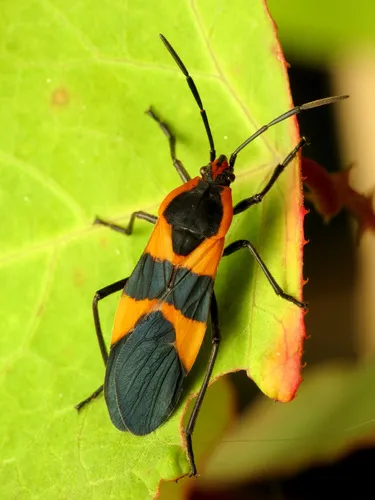
Large Milkweed Bug
Oncopeltus fasciatus
Oncopeltus sandarachatus
Oncopeltus sandarachatus
Oncopeltus sanguineolentus
Oncopeltus sanguineolentus
Orsillacis producta
Orsillacis producta
Xyonysius basalis
Xyonysius basalis
California False Chinch Bug
Xyonysius californicus