
Family Leaf-footed Bugs (Coreidae)
Coreidae is a family in the order Hemiptera. Browse 100 named species recorded in this family, or open an individual profile for its available identification and natural-history information.
Species in Coreidae (100)
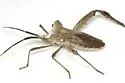
Acanthocephala alata
Acanthocephala alata
Identification: Per WonGun Kim, the large dark spot in the center of the pronotum and the dark first to third antennal segments distinguish it from A. declivis
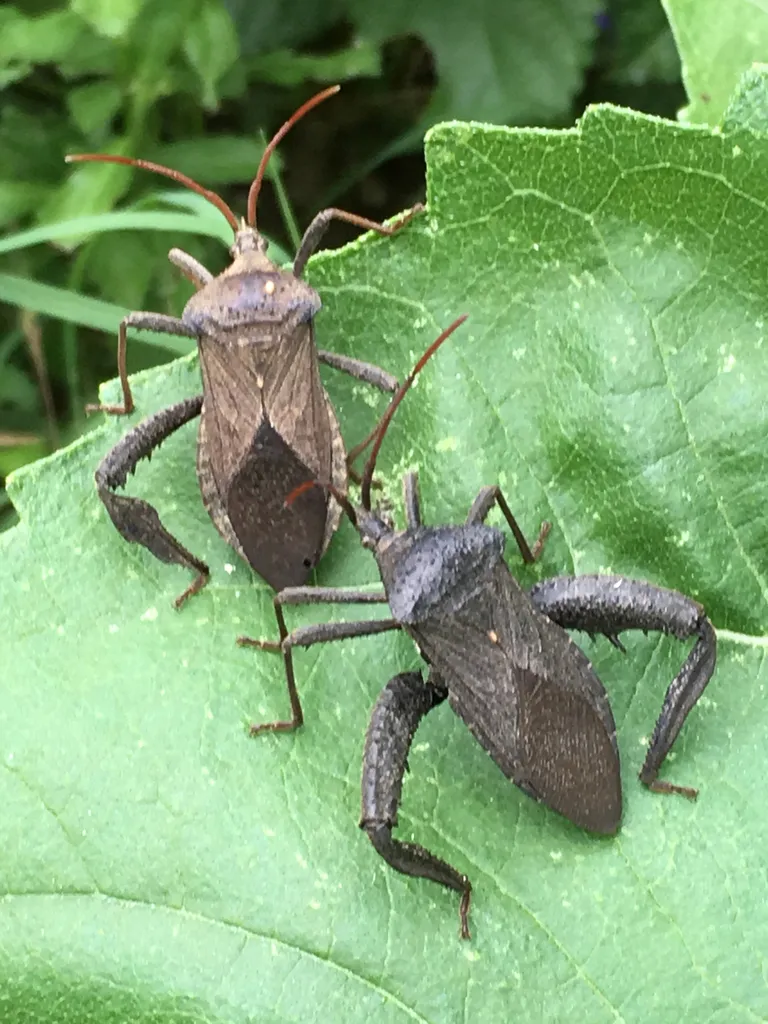
Acanthocephala femorata
Acanthocephala femorata
Identification: Antennae uniformly colored, dull reddish or orangish; flange on hind tibia gently tapering distally; male hind femur greatly swollen and bearing a large spike; female hind femur slender and bearing several small spikes.
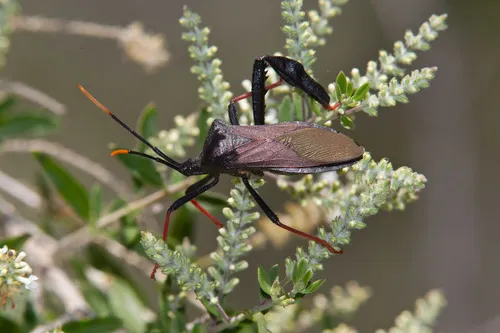
Giant Agave Bug
Acanthocephala thomasi
Identification: Apical segment of antennae bright orange, remaining segments dark; metatibial flange parallel-sided and extending the length of tibia; humeral angles relatively small (greatly expanded in A. declivis ); this combination of 3 character
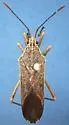
Anasa andresii
Anasa andresii
Identification: antennomere 4 yellowish or orange, at least distally , pale legs, pale medial line through head to scutellum, narrow pronotum w pale edgings Type Locality: Cuba
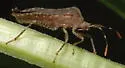
Anasa armigera
Anasa armigera
Identification: Similar to A. tristis , but spines of head very prominent; head without pale line; basal segment of antennae with large black dots ; nymphs white until the 5th instar. Sometimes a pest on cultivated cucumbers ; much less economically
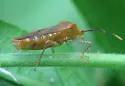
Anasa repetita
Anasa repetita
Identification: Yellow head, reddish yellow fourth antennal segment, black spot at the tip of the scutellum, scattered spots on the membrane. (Comment by WonGun Kim) scarce species
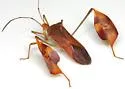
Flag-footed Bug
Anisoscelis affinis
Identification: Hind tibia expansion huge, as wide and almost as long as the bug's body Comes to lights (C. Bordelon, pers. comm., 2009 to MAQ). Sp. not listed in Henry and Froeschner (1988) ( 4 ) Note, George B. Vogt (1920-1990) was an entomologist
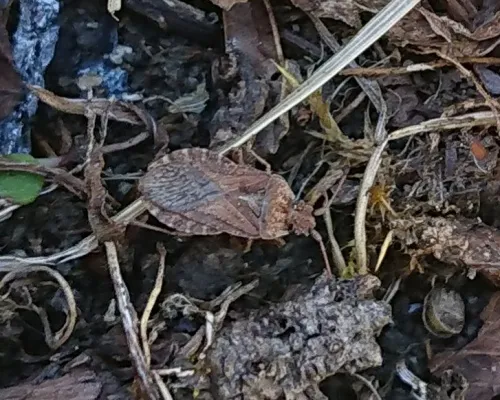
Cryptic Leatherbug
Bathysolen nubilus
Length 5.5 to 7 mm. This squashbug is characterised by a short and broad pronotum which lacks spines and has pale sides. The scutellum has a pale tip and the 1st antennal segment is rather broad, wider than the 4th. Unless identified by a recognised
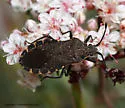
Catorhintha apicalis
Catorhintha apicalis
prior to 16.x.2012, all BG images of this sp. were misidentified as Anasa andresii ; IDs corrected by T.J. Henry
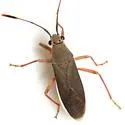
Catorhintha divergens
Catorhintha divergens
Identification: Drawing Type locality: Paradise Key, Dade County, Florida
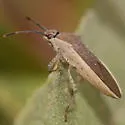
Catorhintha texana
Catorhintha texana
Identification: Relatively narrow body; continuously yellow connexivia; antennal tubercle unarmed (no spine or obtuse angle on the outer side). Antennae black except for (usually) a distinct pale yellow band at the apex of the 3rd antennomere; legs d
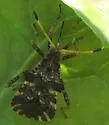
Centrocoris variegatus
Centrocoris variegatus
Identification: photos of ref. specimens earliest NA record: CA 2009
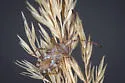
Centrocoris volxemi
Centrocoris volxemi
Identification: distinguished from C. variegatus by smaller size ( C. variegatus ♂ 10.9‒11.8 mm, ♀ 11.5‒12.8 mm), anterolateral margin of the pronotum entire (with series of small spines in C. variegatus ), posterolateral margin of the pronotum entir
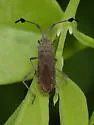
Chariesterus albiventris
Chariesterus albiventris
Identification: diagnostic features include the presence of scattered erect setae on the head, scutellum, pronotum, and hemelytra. Such setae give a coarse, hairy, almost scabrous appearance to the specimens, a trait that is not evident in close rela
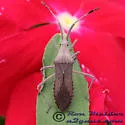
Euphorbia Bug
Chariesterus antennator
Euphorbia Bug (Chariesterus antennator) is a species in the family Coreidae, commonly known as leaf-footed bugs, belonging to the order Hemiptera (True Bugs, Cicadas, Hoppers, Aphids and Allies). It is classified within the subfamily Coreinae, tribe
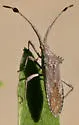
Chariesterus balli
Chariesterus balli
Identification: flaring, multispinose humeri are diagnostic
Chariesterus cuspidatus
Chariesterus cuspidatus
Identification: A slender and rather delicate species, light castaneous (chestnut colored) above and somewhat paler below. abdominal venter is spotted, the anterolateral margins of the pronotum are edentulous (lacking teeth), the auricle of the metas
Chelinidea canyona
Chelinidea canyona
Identification: See discussion and link to C. canyona holotype image here
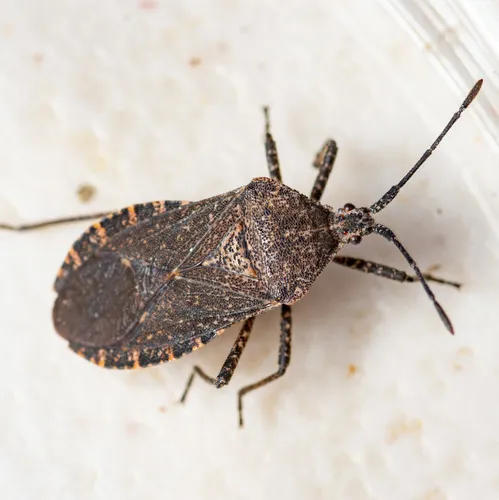
Cimolus obscurus
Cimolus obscurus
Identification: wider than Anasa tristis , head not bisected by a pale line
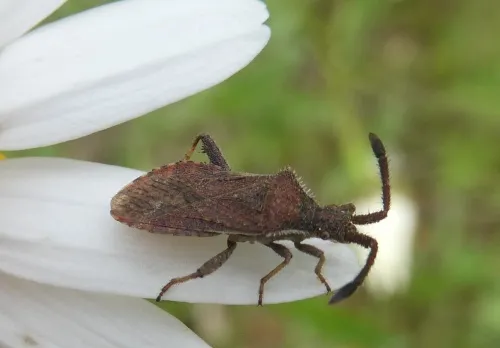
Denticulate Leatherbug
Coriomeris denticulatus
Length 7 to 9 mm. A reddish-brown squashbug which is distinctly bristly, particularly on the pronotum, legs and antennae. The lateral margins of the pronotum are covered in white spines, each ending in a dark tip. Associated with dry, open habitats o
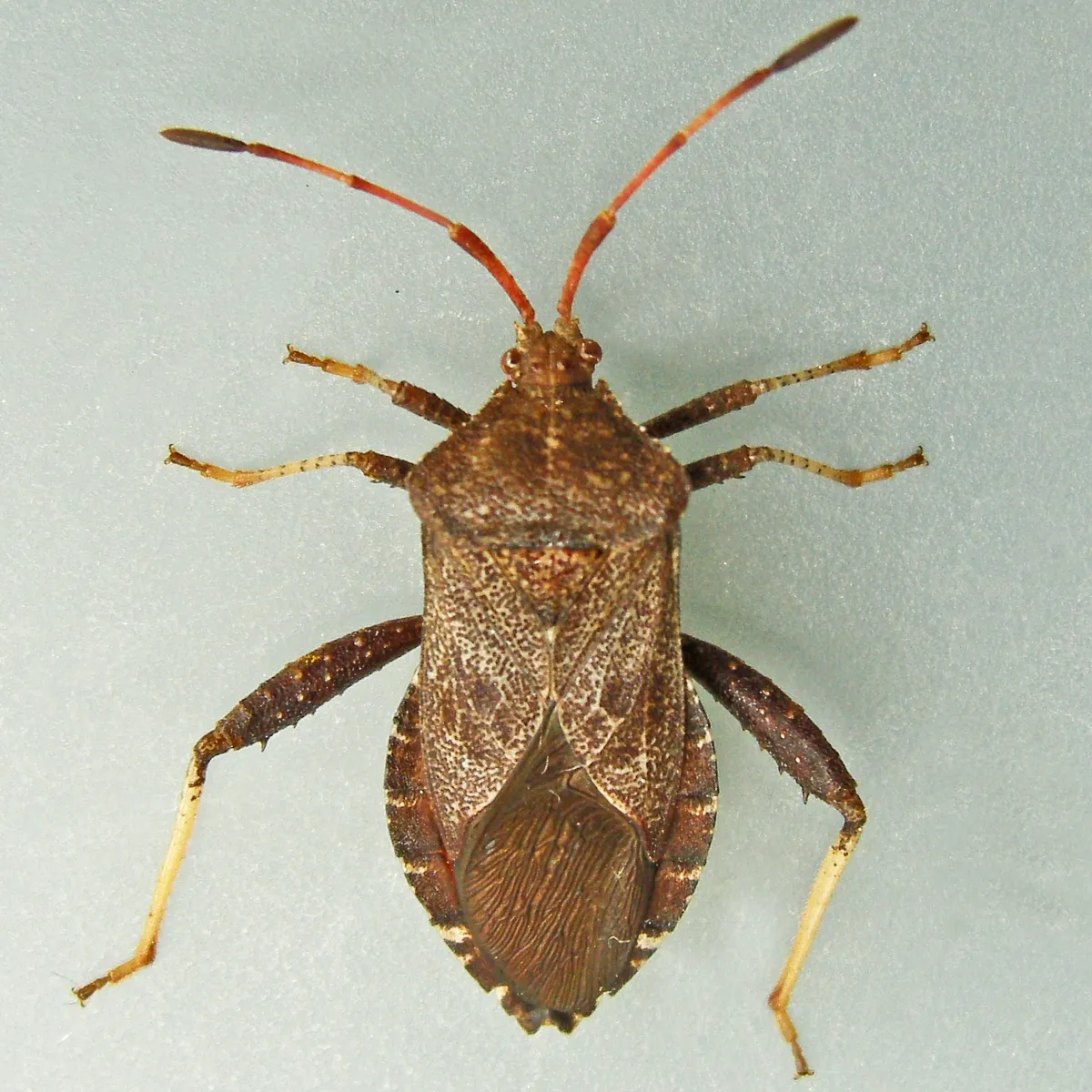
Helmeted Squash Bug
Euthochtha galeator
Identification: All five nymphal instars are characterized by spines, mottling, and a dilated 3rd antennal segment; the only e. US coreid whose nymphs have the 3rd antennal segment (only) dilated. Males have a white- or cream-colored spur or flap on
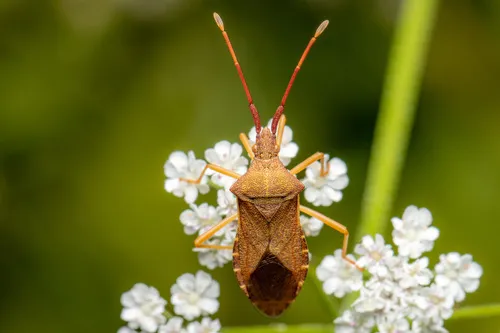
Box Bug
Gonocerus acuteangulatus
Length 11 to 14 mm. A relatively large reddish-brown squashbug, distinguished from the commoner Coreus marginatus by the narrower abdomen and more pointed lateral extremities of the pronotum. Nymphs have a green abdomen which can become dull red late
Spot-sided Coreid
Hypselonotus punctiventris
Identification: "As implied by the lack of names in synonymy, there is little conspicuous variation. The pronotum tends to have the 6 longitudinal vittae less developed in most specimens from Texas and northeastern Mexico than elsewhere. In all speci
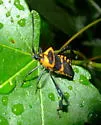
Leptoglossus ashmeadi
Leptoglossus ashmeadi
Identification: has an unusually broad, orange crossbar (wider than in L. phyllopus ) and prominent orange-yellow margins on the pronotum; antennae black
Leptoglossus brevirostris
Leptoglossus brevirostris
Identification: Reduced irregular yellow-white cross-stripe is mostly confined to veins; otherwise similar to L. phyllopus (which is also larger) Type Locality: Texas
Leaf-footed Pine Seed Bug
Leptoglossus corculus
Identification: Outer hind tibial dilation distinctly longer than inner tibial dilation one of the most destructive insects attacking pine seeds in se.US • may invade homes
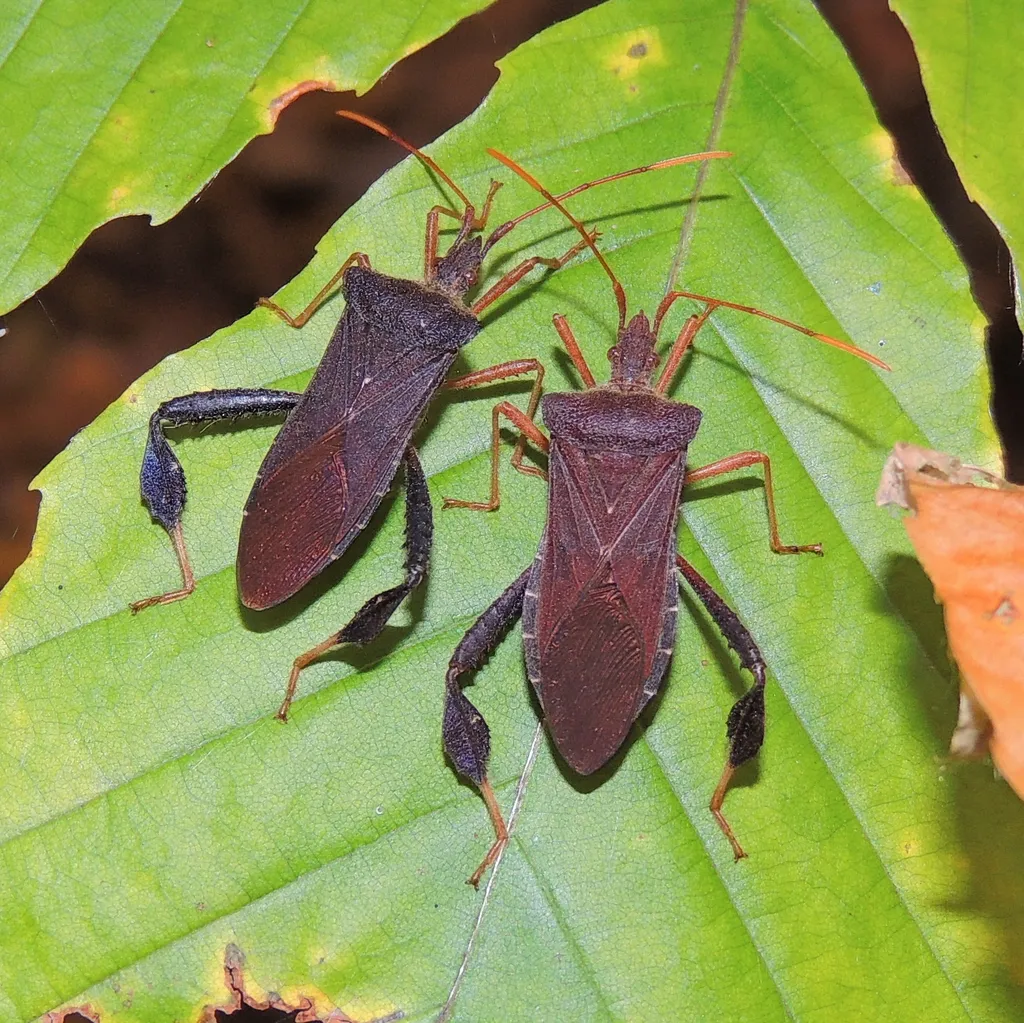
Leptoglossus fulvicornis
Leptoglossus fulvicornis
Identification: Hemielytra lacking a transverse fascia. Humeral area of pronotum strongly expanded and flared outward and upward, bearing coarse obtuse teeth anterior and posterior to humeral angles. Head nearly uniformly brown, lacking alternating d
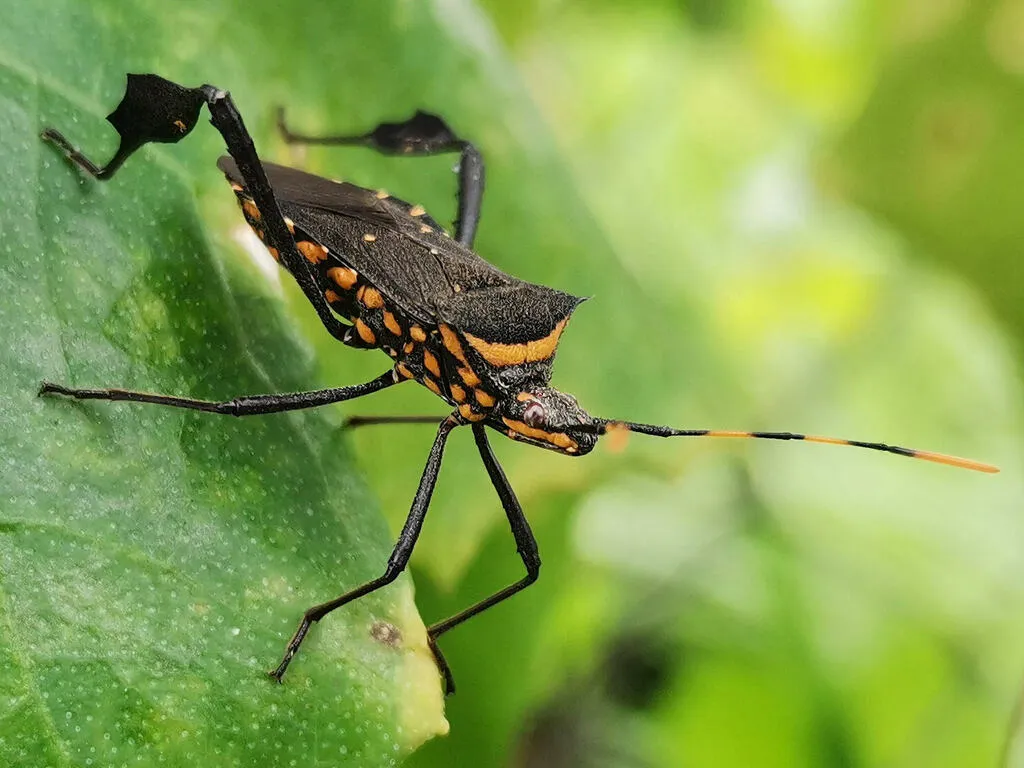
Passionvine Bug
Leptoglossus gonagra
Identification: Pronotum with narrow transverse arched yellow to red stripe extending to sharply spined humeral angles; abdominal venter with seven longitudinal yellow stripes; antennae black with yellow bands on last three segments. minor pest of ci
Merocoris typhaeus
Merocoris typhaeus
Identification: Differentiation of the three North American species in this genus is, perhaps, problematic. The description below is modified from Blatchley , and should be taken with a grain of salt, as that is an older reference. See guide page for
Mozena arizonensis
Mozena arizonensis
Identification: large (to massive!) hind femora, very prominent pronotal corners, pale antennae w darker tips
Mozena cf-pallisteri
Mozena cf-pallisteri
Identification: An all-dark Mozena that appears to represent a species as of yet unverified from the US, either M. pallisteri or possibly ventralis .
Mozena lunata
Mozena lunata
Identification: adults have pale terminal antennal tips : immatures variable in color, but basal half of penultimate antennal segment is pale:
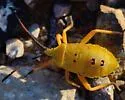
Mozena obtusa
Mozena obtusa
Identification: adults w dark antennal tips immatures have all black ant. and lack prominent pronotal corners of lunata (see below) on Prosopis glandulosa blooms and leaves, P. laevigata considerably reduces seed production, destroys tender growth, r
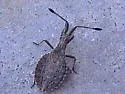
Nisoscolopocerus apiculatus
Nisoscolopocerus apiculatus
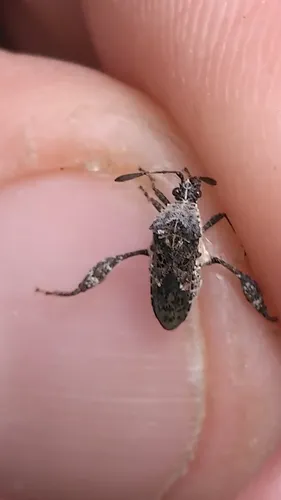
Identification: body mottled gray, pear-shaped (abdomen expanded, head and thorax narrow); wings short in adult, barely covering anterior portion of abdomen; antennae apparently 3-segmented, bent laterally almost 90 degrees after first segment; termi
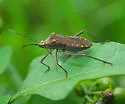
Phthiacnemia picta
Phthiacnemia picta
Identification: lacks expanded rear tibia of most other Anisoscelini, orange pronotal pattern variable, legs piceous, the front and middle tibia often with a pale ring at apical third, adult dorsal abdomen vivid-steel blue.
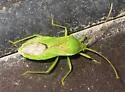
Savius jurgiosus
Savius jurgiosus
Identification: Adult: live individuals all green except for dull yellowish-brown antennae and tarsi, and dark gray membranous portion of forewing; preserved specimens fade to pale green or dull yellow - late stage nymph - earlier stage nymph Type Lo
Scolopocerus secundarius
Scolopocerus secundarius
Identification: the only species in which all the antennomeres are equally stout -Dan Swanson, 7.xi.2008
Giant Sweetpotato Bug
Spartocera batatas
Identification: Humeral angles of the pronotum rounded, lateral margins not expanded. Newborn nymphs are red but soon become very dark brown except for the head, the lateral angles of the pronotum and the expanded lateral edges of the abdomen, which
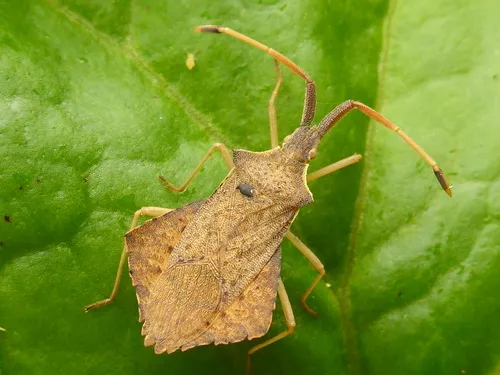
Rhombic Leatherbug
Syromastus rhombeus
Length 9.5-10.5mm. A distinctive squashbug with a broad and distinctly diamond-shaped abdomen. Other Coreidae, especially Dock Bug, Coreus marginatus . Records should be accompanied by good photographs. https://www.britishbugs.org.uk/heteroptera/Core
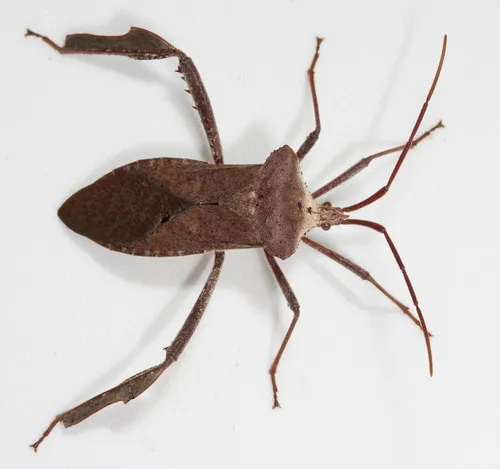
Acanthocephala declivis
Acanthocephala declivis
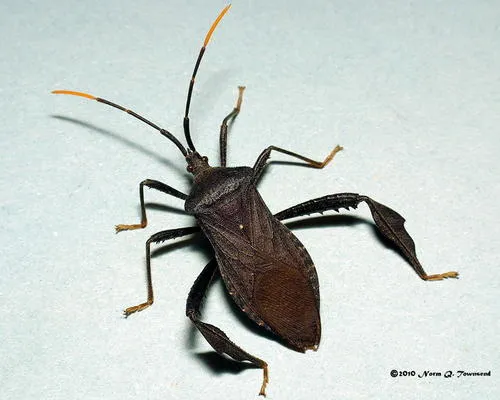
Leaf-footed Bug -A. terminalis
Acanthocephala terminalis
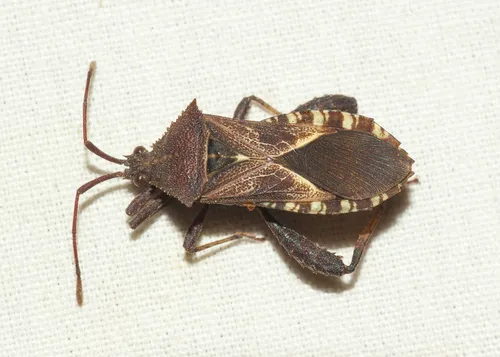
Acanthocerus lobatus
Acanthocerus lobatus
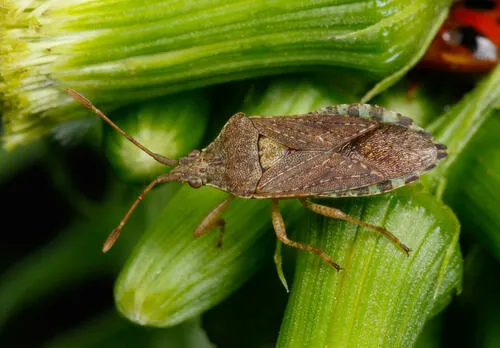
Althos obscurator
Althos obscurator
Anasa maculipes
Anasa maculipes
Anasa scorbutica
Anasa scorbutica
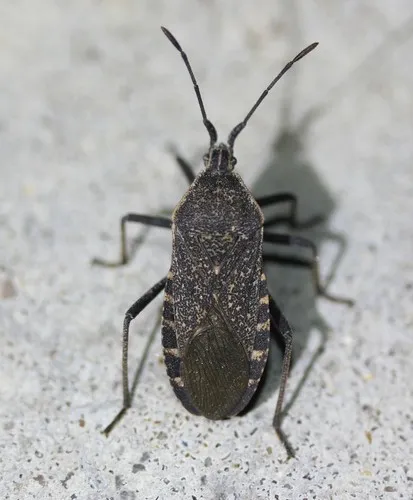
Squash Bug
Anasa tristis
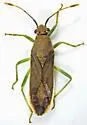
Catorhintha flava
Catorhintha flava
Catorhintha guttula
Catorhintha guttula
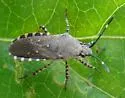
Catorhintha mendica
Catorhintha mendica
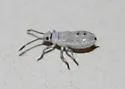
Catorhintha selector
Catorhintha selector
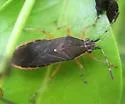
Catorhintha viridipes
Catorhintha viridipes
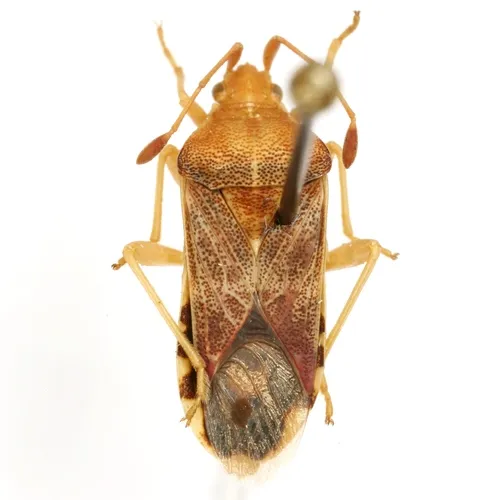
Cebrenistella robusta
Cebrenistella robusta
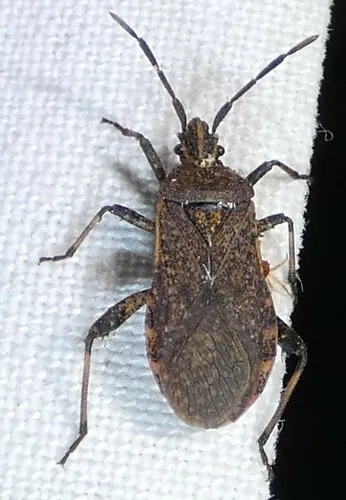
Ceraleptus americanus
Ceraleptus americanus
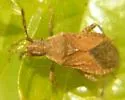
Ceraleptus pacificus
Ceraleptus pacificus
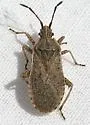
Ceraleptus probolus
Ceraleptus probolus
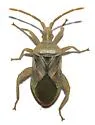
Chelinidea hunteri
Chelinidea hunteri
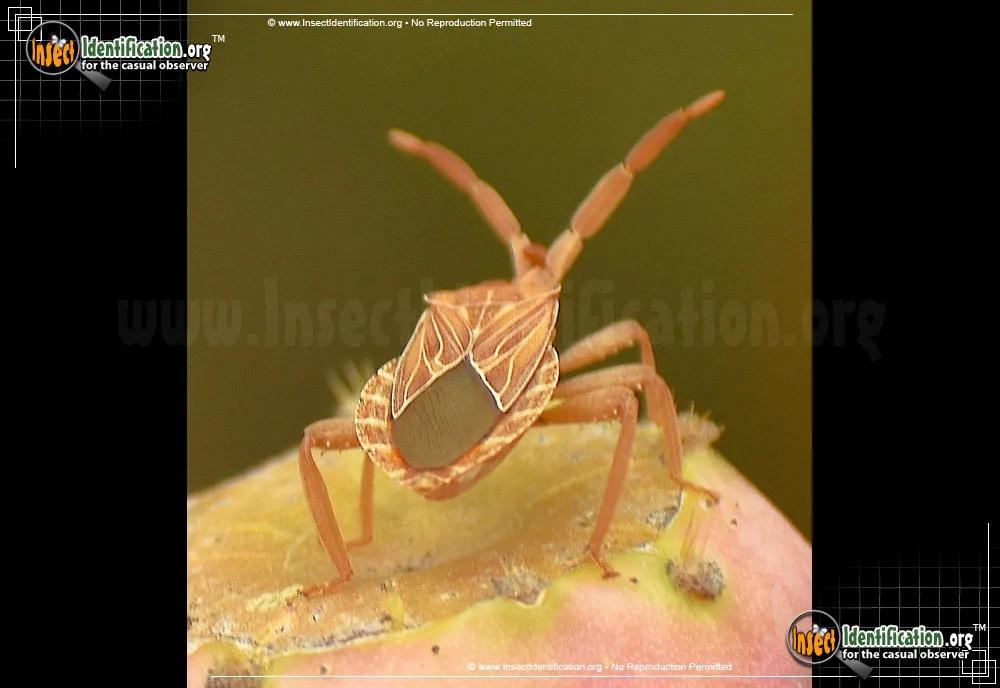
Leaf-footed Bug -C. tabulata
Chelinidea tabulata
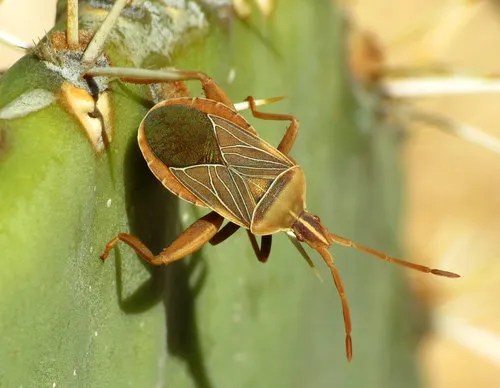
Cactus Coreid
Chelinidea vittiger
Chondrocera laticornis
Chondrocera laticornis
Coriomeris humilis
Coriomeris humilis
Dalmatomammurius heissi
Dalmatomammurius heissi
Eubule spartocerana
Eubule spartocerana
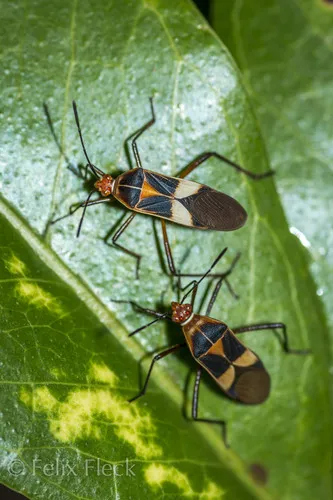
Hypselonotus interruptus
Hypselonotus interruptus
Hypselonotus lineatus
Hypselonotus lineatus
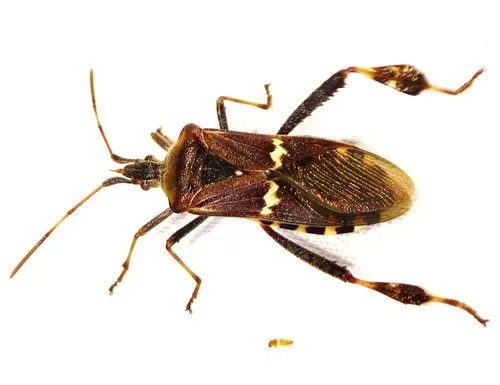
Western Leaf-footed Bug
Leptoglossus clypealis
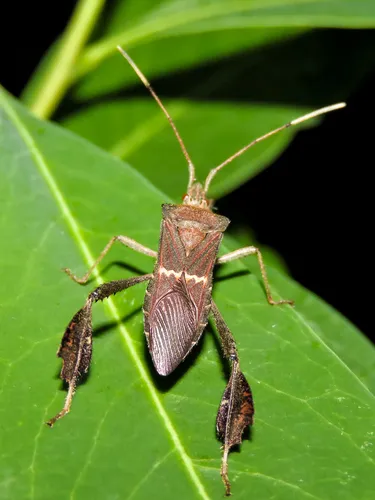
Leptoglossus concolor
Leptoglossus concolor
Leptoglossus jacquelinae
Leptoglossus jacquelinae
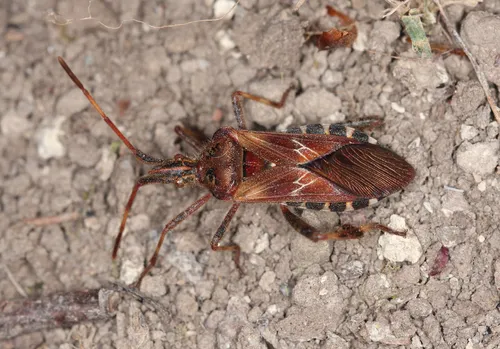
Western Conifer Seed Bug
Leptoglossus occidentalis
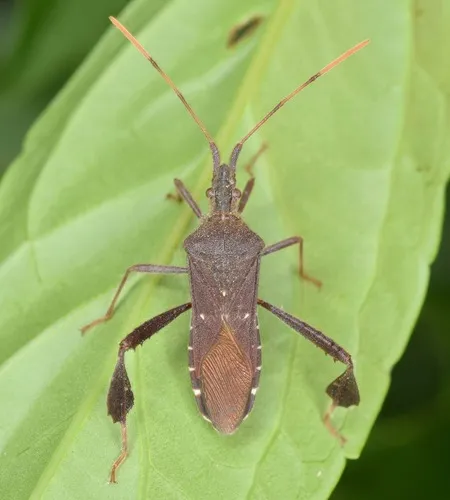
Leaf-footed Bug -L. oppositus
Leptoglossus oppositus
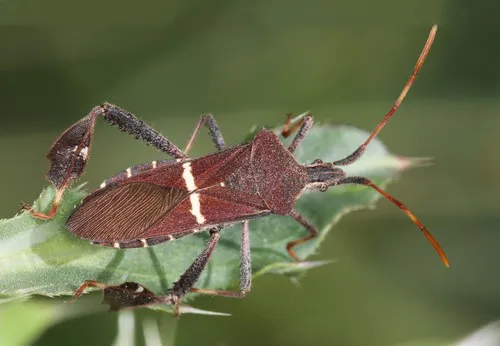
Eastern Leaf-footed Bug
Leptoglossus phyllopus
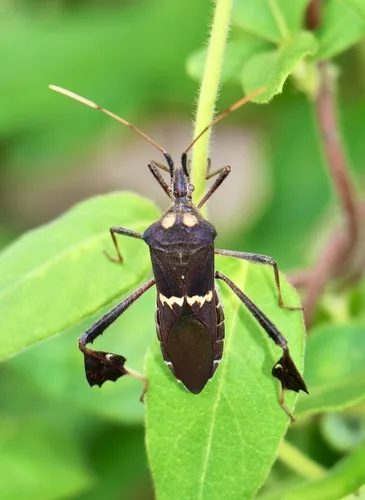
Leaf-footed Bug -L. zonatus
Leptoglossus zonatus
Madura perfida
Madura perfida
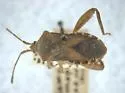
Mamurius mopsus
Mamurius mopsus
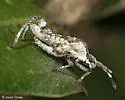
Merocoris curtatus
Merocoris curtatus
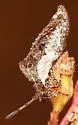
Merocoris distinctus
Merocoris distinctus
Mozena brunnicornis 0
Mozena brunnicornis
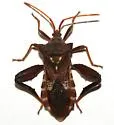
Mozena buenoi
Mozena buenoi
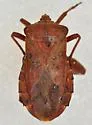
Mozena obesa
Mozena obesa
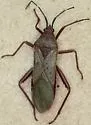
Namacus annulicornis
Namacus annulicornis
Narnia femorata
Narnia femorata
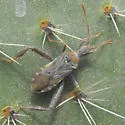
Narnia inornata
Narnia inornata
Narnia snowi
Narnia snowi
Narnia wilsoni
Narnia wilsoni
Nisoscolopocerus schuhi
Nisoscolopocerus schuhi
Piezogaster auriculatus 0
Piezogaster auriculatus
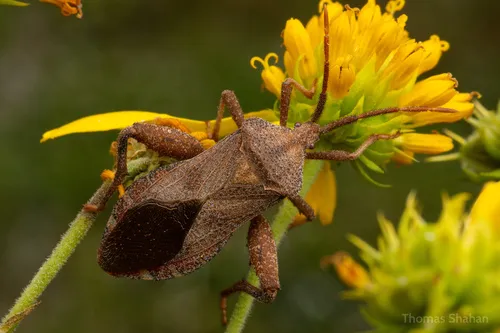
Piezogaster calcarator
Piezogaster calcarator
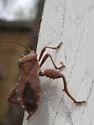
Piezogaster indecorus
Piezogaster indecorus
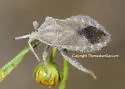
Piezogaster spurcus
Piezogaster spurcus
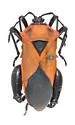
Sagotylus confluens
Sagotylus confluens
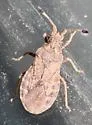
Scolopocerus granulosus
Scolopocerus granulosus
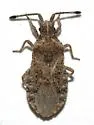
Scolopocerus uhleri
Scolopocerus uhleri
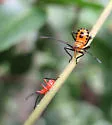
Giant Milkweed Bug
Sephina gundlachii
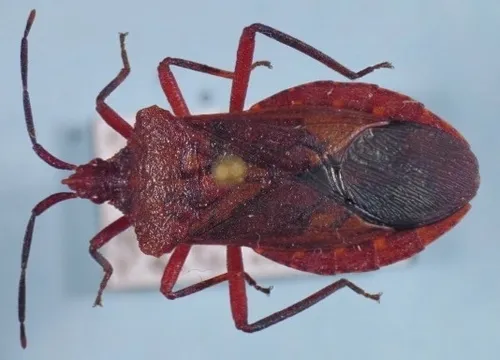
Sethenira ferruginea
Sethenira ferruginea
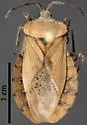
Spartocera diffusa
Spartocera diffusa
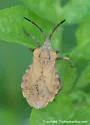
Spartocera fusca
Spartocera fusca
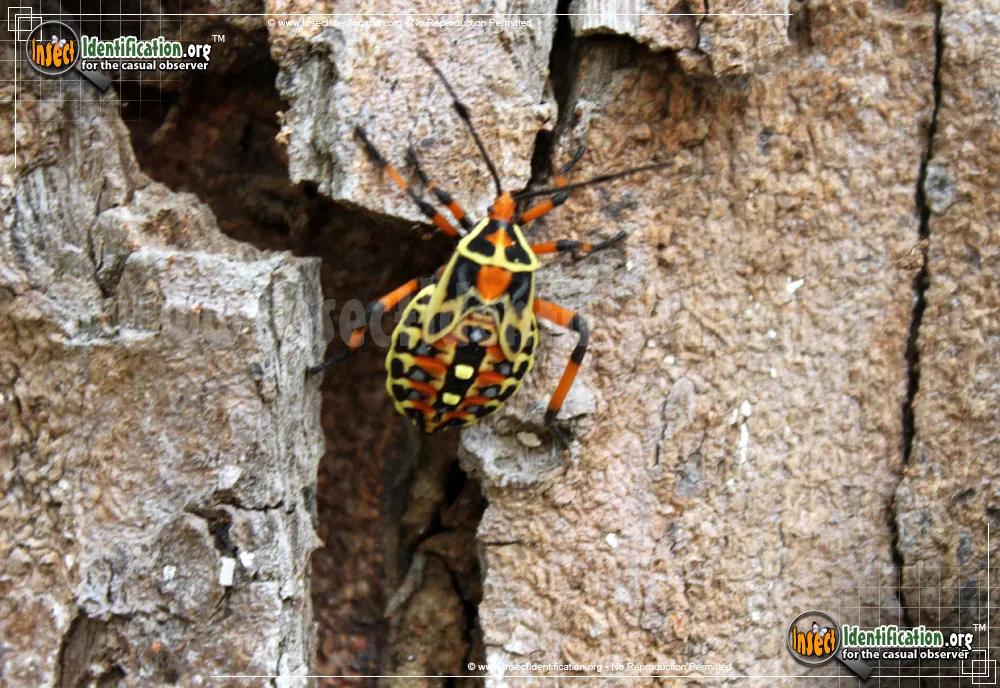
Mesquite Bug
Thasus acutangulus
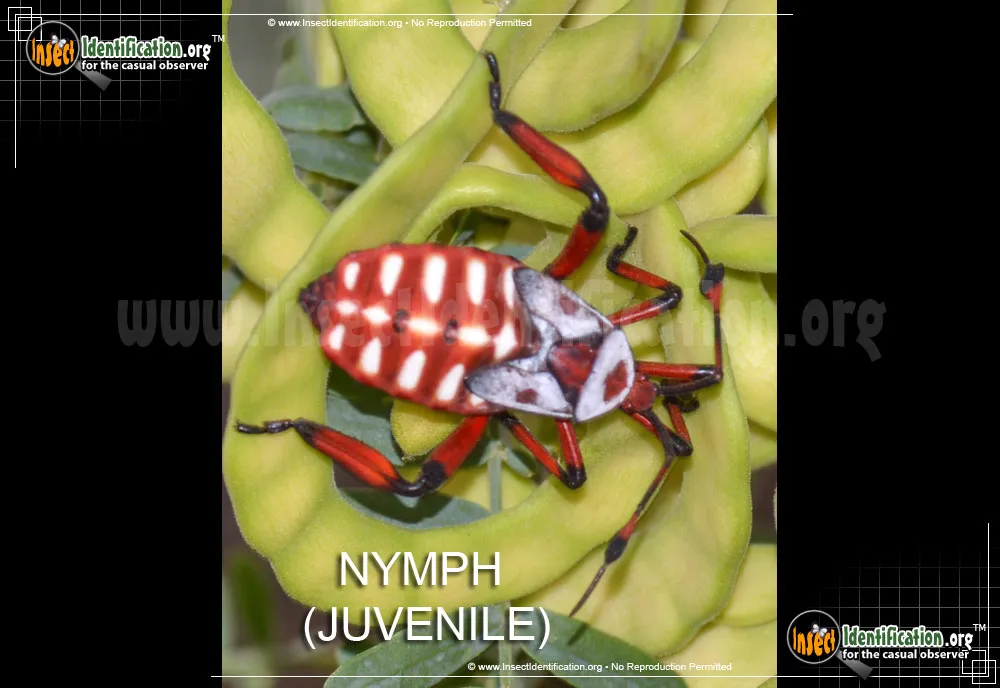
Giant Mesquite Bug
Thasus neocalifornicus
Vazquezitocoris repletus
Vazquezitocoris repletus
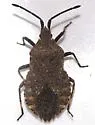
Villasitocoris inconspicuus
Villasitocoris inconspicuus
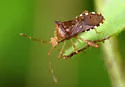
Zicca taeniola
Zicca taeniola