
Primitive Winged Insects
Order Coleoptera
The Primitive Winged Insects (Order Coleoptera) includes 15,720 species across 160 families and 3,716 genera in our directory.
About Primitive Winged Insects
Coleoptera is the largest order of insects with over 400,000 described species, representing ~25% of all known animal species and ~40% of all insects. In the U.S. alone, nearly 30,000 beetle species have been identified.
Economic Impact
Beetles have major economic significance: leaf beetles (Chrysomelidae) and weevils (Curculionoidea) are among the most destructive agricultural pests globally, costing billions annually, while predatory species like ladybugs provide natural pest control.
Ecological Role
Beetles are prominent decomposers, especially in forests, breaking down dead wood and recycling nutrients. As predators, they reduce populations of pest insects. Many species are also important pollinators of flowering plants.
Families in Coleoptera (160)
Species in Coleoptera (15,720)
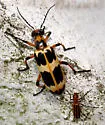
Pyrota deceptiva
Pyrota deceptiva
Identification: Medium orange; elytra usually paler than head and pronotum, varying to orange or orange-yellow, never ivory or cream colored. Head almost invariably with occiput black, usually with a pair of black spots between eyes, often with black
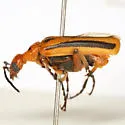
Pyrota discoidea
Pyrota discoidea
Identification: pale head, legs and scutellum Det. E. G. Riley, 2004 Type Locality: Platte River
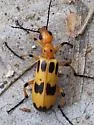
Pyrota fasciata
Pyrota fasciata
Identification: background color of Pyrota fasciata is [nearly] uniform vs. two toned in Pyrota punctata Det. E.G. Riley, 2004 coll'ed at lights
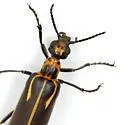
Pyrota insulata
Pyrota insulata
Identification: Black elytra with narrow yellow, gold, or orange margins (outer and inner), an apical spot, and a thin longitudinal basal stripe. Legs and abdomen black; head and thorax mostly black with some yellow areas. Amount of black vs. brighte
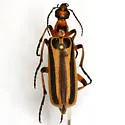
Pyrota invita
Pyrota invita
Identification: dark head, legs and scutellum Det. E. G. Riley, 2004 Type Locality: near San Antonio, Texas
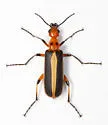
Pyrota limbalis 0
Pyrota limbalis
Identification: Elytra black, with the entire limb [edge] yellow. (LeConte, 1866) Lectotype Locality: Norfolk, Virginia
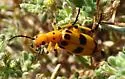
Pyrota mylabrina
Pyrota mylabrina
The species does not appear to be as common as some of its relatives, although its poor representation in collections is perhaps accounted for in some part by the adults being active early in the year and the fact that the species ranges only a short
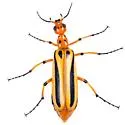
Pyrota nigrovittata
Pyrota nigrovittata
Identification: lateral pronotal black spots, plus a pair of interocular black spots In 1957 Selander described Pyrota bicurvata . In 1963 he synonymized bicurvata with nigrovittata . For US records of nigrovittata one has to refer to the 1957 descri
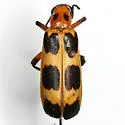
Pyrota perversa
Pyrota perversa
Identification: Metatibial spurs robust, slightly obliquely truncate, concave, the inner one oval... ALLOTYPE hind leg final couplet in Selander: Head oval, at least as wide across eyes as at tempora, which are very broadly rounded; head coarsely pun
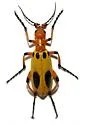
Pyrota plagiata
Pyrota plagiata
Identification: Postmedian elytral fascia quadrate, not much longer than broad. Elytra very shiny, with the intervals between the very feeble costulae very flat. --- Pyrota postica LeConte Postmedian elytra fascia elongate-oval. Elytra subopaque, wit
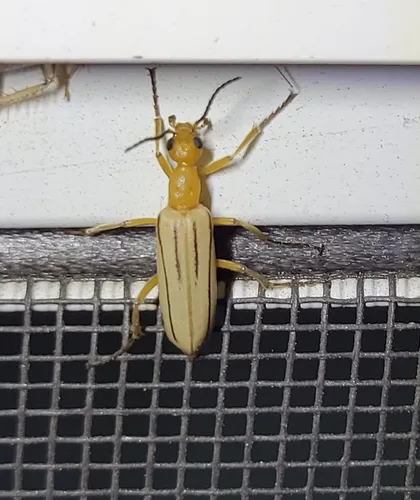
Pyrota riherdi
Pyrota riherdi
" Pyrota riherdi Dillon, small range is southernmost TX, was pretty uncommon in collections until about 20 years ago when I was able a couple of times to find them, think I was with Robert Turnbow once, and caught some feeding on a plant one day, but
Pyrota tenuicostatis
Pyrota tenuicostatis
our only representative of the Tenuicostatis Group (4 spp., TX to Venezuela) "...we saw literally clouds of these beetles flying through the air and aggregating on trees... there were 10,000 or more individuals in an area of a couple of acres [in so.
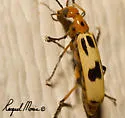
Pyrota terrestris
Pyrota terrestris
Identification: very distinctive species, easily recognized by its color pattern , very shiny and smooth elytra, the form of its hind tibial spurs, and other characters. only one spmn on GBIF, which was part of the original type series from Durango,
Pyrota victoria 0
Pyrota victoria
Identification: yellow, shining, entirely immaculate except a pair of rounded, black spots at middle of pronotal disk. Type Locality: Victoria, Texas, September 19, 1909 on Croton , (J. D. Mitchell)
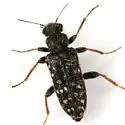
Qadrius quietus
Qadrius quietus
Identification: some females have orange tibiae, males never. (D.S. Chandler, pers. obs, 2020)
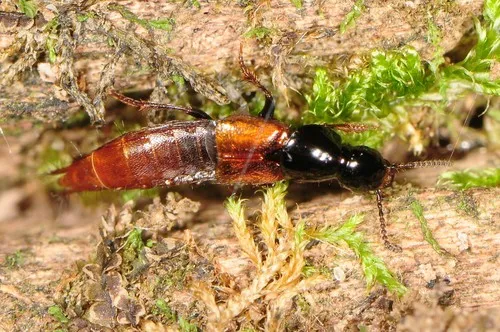
Quedius alesi
Quedius alesi
Previously identified as Q. erythrogaster in literature. That species as currently defined only occurs in western N. America
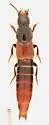
Quedius bicoloris
Quedius bicoloris
Identification: Very similar to the eastern Quedius alesi (referred as Quedius erythrogaster in , see for recent updates) but differs by the single pronotal ponctuation in the dorsal row, the non-uniform elytral ponctuation (2 distinct sizes) and the
Quedius cruentus
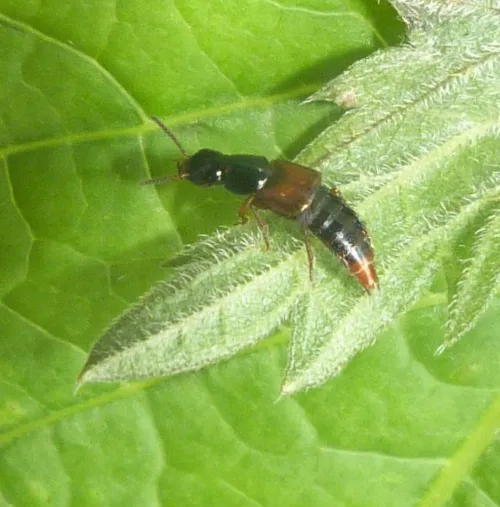
Quedius cruentus
Length 9 mm. The wing cases and the tip of the abdomen are orange-brown, everything else being black. Under bark, and in situations associated with rotting wood, or compost. Widespread in England and Wales, less well recorded elsewhere in Britain. No
Quedius curtipennis
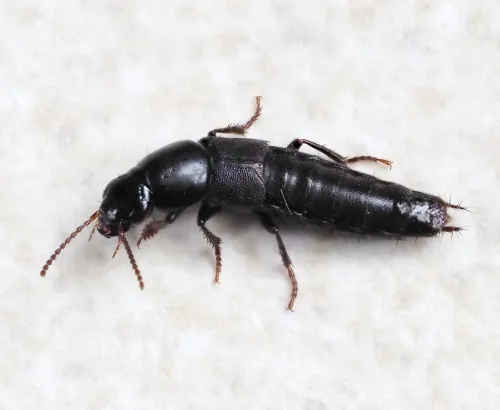
Quedius curtipennis
11 to 13mm. It is a black with red/brown antennae and tarsi. Detailed examination is necessary for identification. It is similar to several other species, especially the less common Quedius fuliginosus . In this species the meta sternum lacks the lon
Quedius divergens
Quedius divergens
"divergens is the correct name over uteanus because of first revisor action [by Smetana, 1971] (and both names refer to the western population, so the synonymy is correct). 'curtipennis' is the only (but unavailable) name for the eastern subspecies (
Quedius erythrogaster
Quedius erythrogaster
Previous records of this species from other parts of North America referred to undescribed species
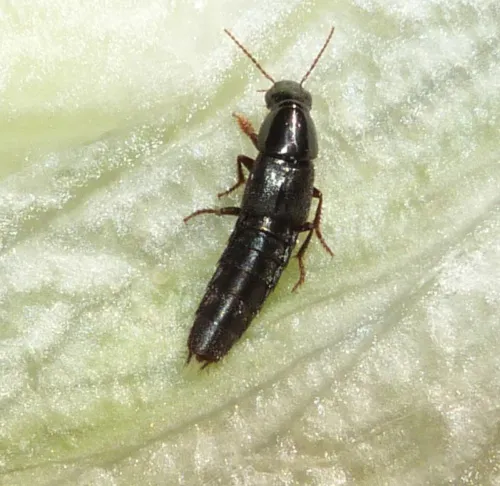
Quedius levicollis
Quedius levicollis
A dark, blackish rove beetle length about 11 to 16 mm. A species of extensive habitats on damp but well drained soils. Found in the roots of grass, dead leaves etc. Widespread and fairly frequent in Britain. No additional images available for this
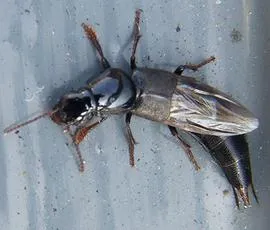
Quedius mesomelinus
Quedius mesomelinus
This is quite a large fairly plain dark brown or almost black rove beetle, sometimes paler when found in caves. Found in a variety of locations including mammal burrows, tree cavities, and caves as well as in various outbuildings and compost heaps. L
Quedius molochinus
Quedius molochinus
Identification: Pale base of the three antennomeres. Genitalia should be examined for confident discrimination
Quedius pellax
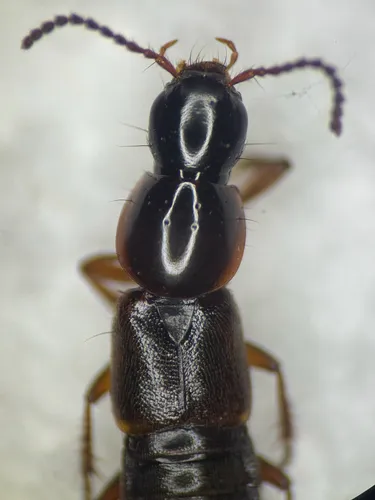
Quedius pellax
Identification: Extremely similar in external characters to Q. limbifer and distinguishable only by the shape of the male genitalia. Apical margin of 6th sternite with small shallow triangular emargination (as in limbifer ). Median lobe narrower and
Quedius peregrinus
Quedius peregrinus
Identification: The head shape has a very long space after the eyes that is nearly straight. That and the orange-ish pronotum which can be darker on specimens, but seems to really stand out on live individuals.
Quedius seriatus
Quedius seriatus
Identification: "This is a very peculiar species within the subgenus Raphirus due to the punctation of the elytra which is of the same type as in several species of the subgenus Distichalius . It cannot be confused with any other species of the subge
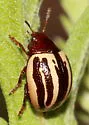
Ragweed Leaf Beetle
Calligrapha suturalis
Identification: Easily distinguished from C. bidenticola by the form of the tarsal claws or color of the epipleuron. C. bidenticola is slightly more elongate than C. suturalis but otherwise very similar. Do not try to separate the two based on whethe
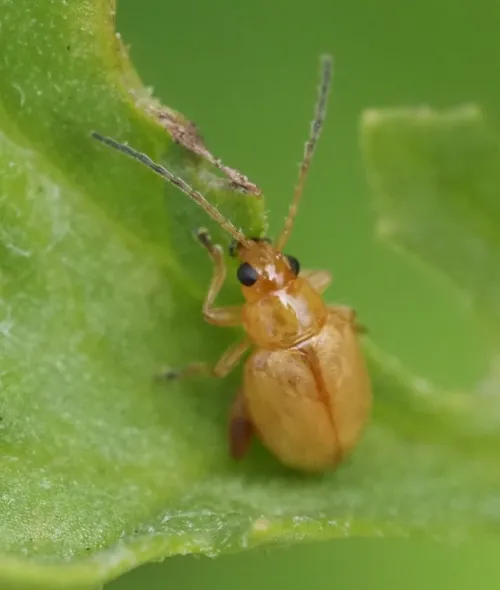
Ragwort Flea Beetle
Longitarsus jacobaeae
This beetle is light golden brown in colour and between 2 and 4 mm long. It has enlarged femurs typical of flea beetles. Feeds on the leaves of Ragwort, particularly Common Ragwort ( Senecio jacobaea ). All year round peaking June to September. Wides
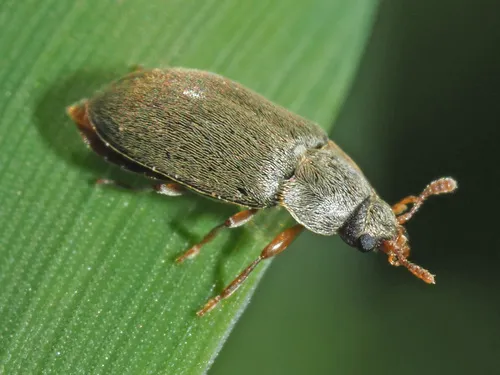
Raspberry Beetle
Byturus tomentosus
Length: 3.2 to 4 mm. This small beetle has a chestnut-red or golden appearance, with legs and antennae all of similar colour. Byturus tomentosus and B. ochraceus are very similar but can be distinguished by careful viewing. B. tomentosus is slightly
Raspberry Cane Borer
Oberea perspicillata
Identification: Markings variable, usually mostly black, pronotum orange with two black spots and black band at the base, which is sometimes reduced to a spot.
Red Clover Seed Weevil
Tychius stephensi
Red Clover Seed Weevil (Tychius stephensi) is a species in the family Curculionidae, commonly known as snout and bark beetles, belonging to the order Coleoptera (Beetles). It is classified within the subfamily Curculioninae, tribe Tychiini, suborder
Red Palm Weevil
Rhynchophorus vulneratus
first NA detection: Laguna Beach, CA 2010 (identified as R. ferrugineus )
Red-edged Saperda
Saperda lateralis
Identification: elytra dark gray to blackish with deep surface punctures and orangish-red stripes along lateral and (usually) medial margins; most specimens have no oblique reddish bands on elytra, but some may have 1-3 bands mimic of Lycid beetles
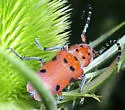
Red-femured Milkweed Borer
Tetraopes femoratus
Identification: edges of mid-pronotal callus sharply defined ; the most variable member of the genus
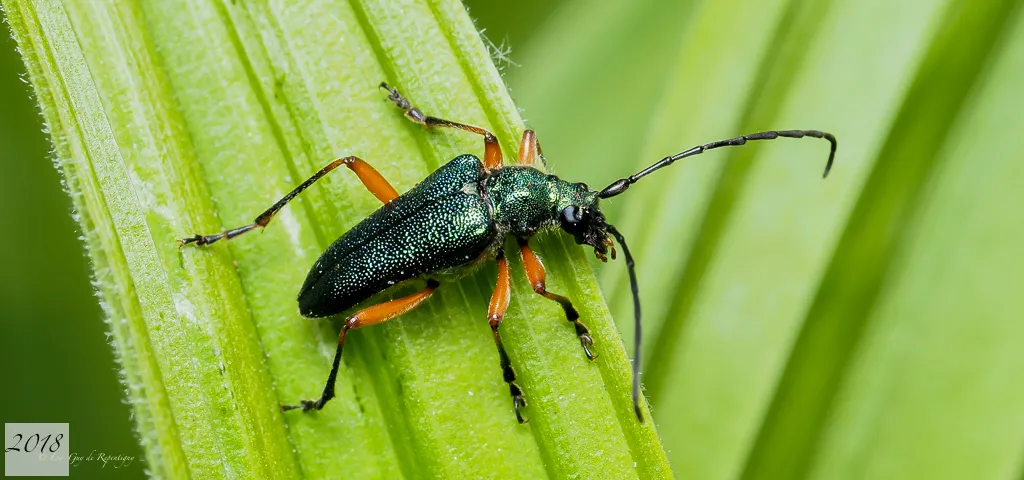
Red-footed Longhorn Beetle
Anthophylax cyaneus
Anthophylax cyaneus is the species of the Lepturinae subfamily in long-horned beetle family. This beetle is distributed in Canada, and United States.
Red-headed Systena
Systena frontalis
Identification: in S. hudsonias antennomeres 3‒6 are pale brown Det. M. A. Quinn, 2021
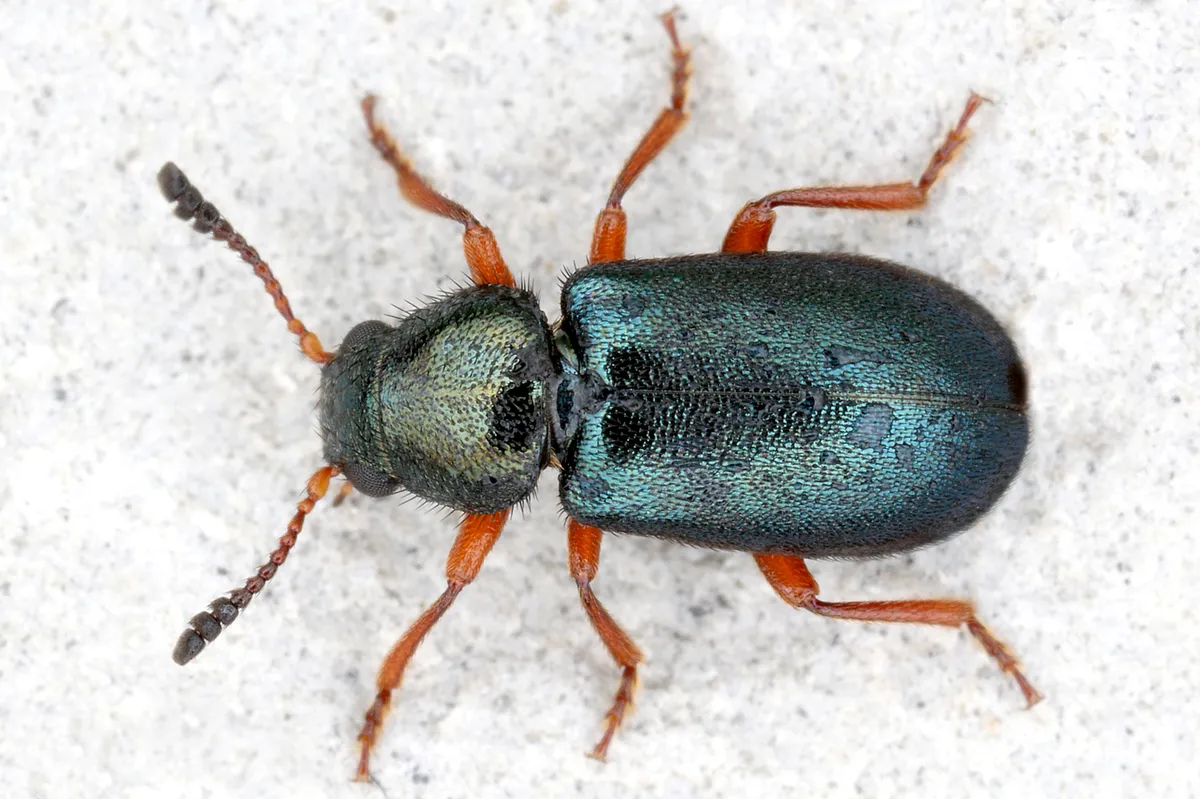
Red-legged Ham Beetle
Necrobia rufipes
Identification: Adult: head, thorax, elytra shiny metallic bluish-green or blackish; underside of abdomen dark blue; legs bright reddish-brown or orange; antennae mainly reddish-brown but with dark brown or black club at tip; sides of thorax and elyt
Red-lined Carrion Beetle
Necrodes surinamensis
Identification: Distinctive, large eyes, dark body with prominent raised elytral ridges, variable red-orange, sometimes yellow, markings on elytra, though these sometimes absent. Sometimes has red tinge to body. Males have distinctive leg morphology:
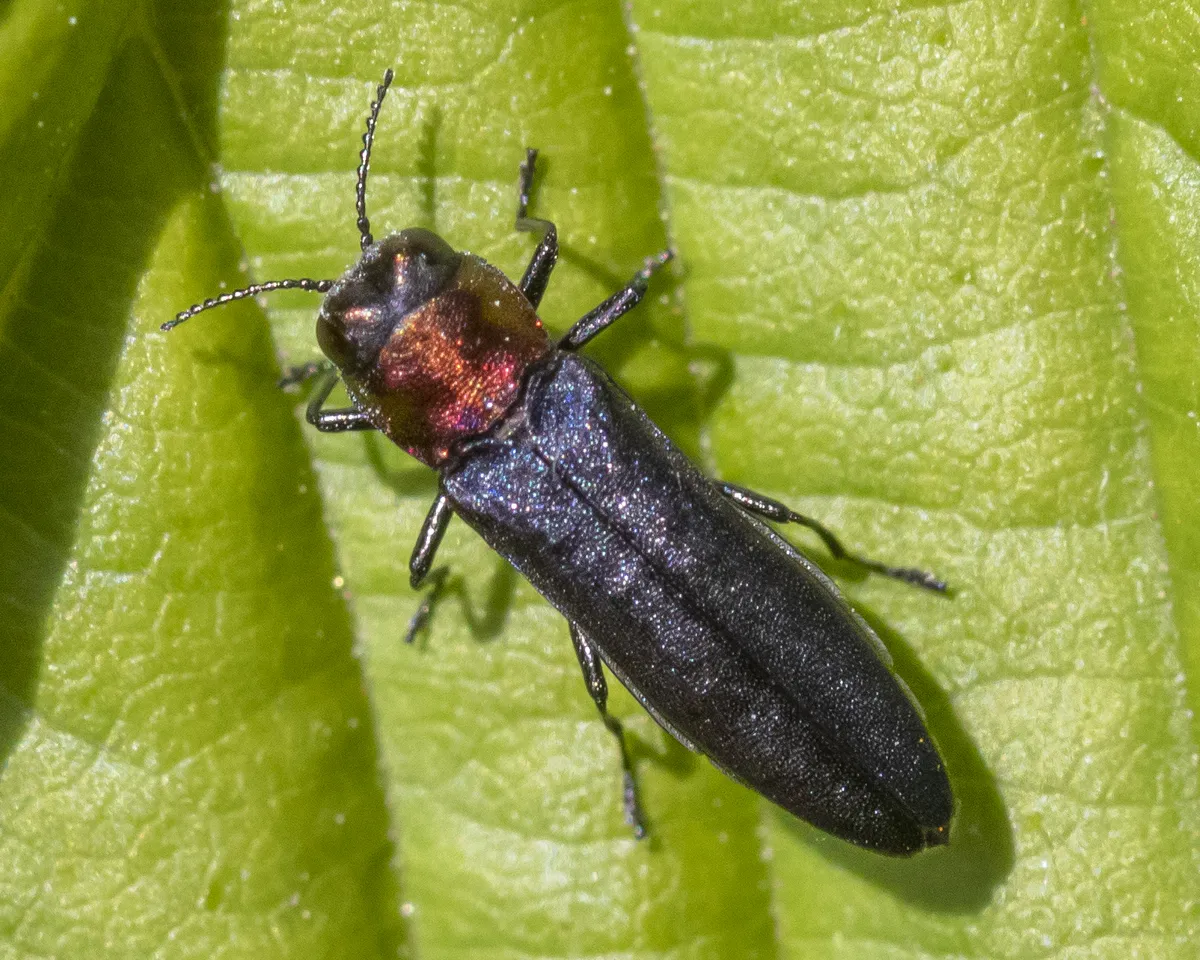
Red-necked Cane Borer
Agrilus ruficollis
Identification: Differentiated from similar-colored nearctic spp. by the following combination: Broad, deep concavity of the front of the head, distinctive projecting carina from the pygidium and nearly touching tarsal claws.
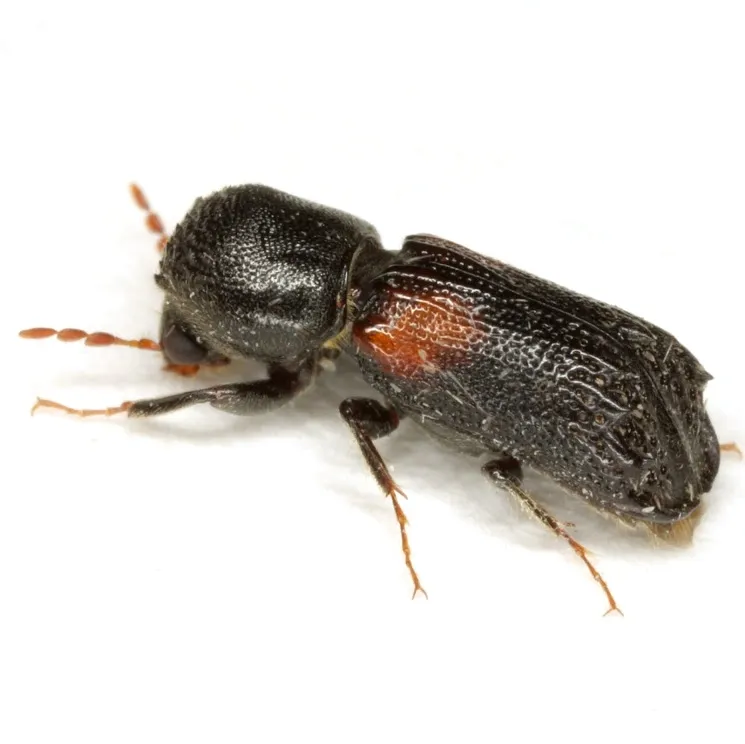
Red-shouldered Bostrichid
Xylobiops basilaris
Identification: Forest Images - Dorsal elytra without distinct pubescence, and the yellow and black or brown areas conspicuously separated; inner two pairs of tubercles along anterior margins of apical declivity of elytra acute or spinose at apices a
Red-shouldered Pine Borer
Stictoleptura canadensis
The normal colouration of S. c. canadensis is with banded antennae (male and female). Rarely the antennae are all black.… --Chris Majka, 31.i.2013
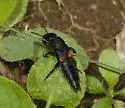
Red-spotted Rove Beetle
Platydracus fossator
Identification: Black overall with red spots on the tips of the elytra
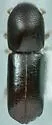
Redbay Ambrosia Beetle
Xyleborus glabratus
Identification: Males are flightless earliest record in our area: GA 2002
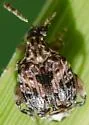
Redbud Bruchid
Gibbobruchus mimus
Identification: Male pygidium almost totally pubescent, female pygidium with cordate, glabrous swelling Dets. M. A. Quinn
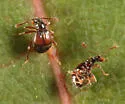
Reichenbachia facilis
Reichenbachia facilis
Identification: Blackish with reddish elytra and pale reddish-yellow legs. Head longer than wide, without punctures between prominent eyes, and with three deep pits of similar size arranged in equilateral triangle, narrower than head. Antennae longer
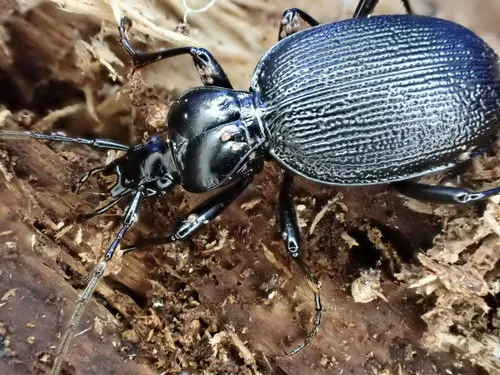
Relic Snail-eating Beetle
Scaphinotus relictus
Scaphinotus relictus, rilictual snail-eating beetle, is a species of beetle of the Carabidae family. This species is found in North America (Alberta, British Columbia, California, Idaho, Montana, Washington), where it inhabits deciduous, mixed and co
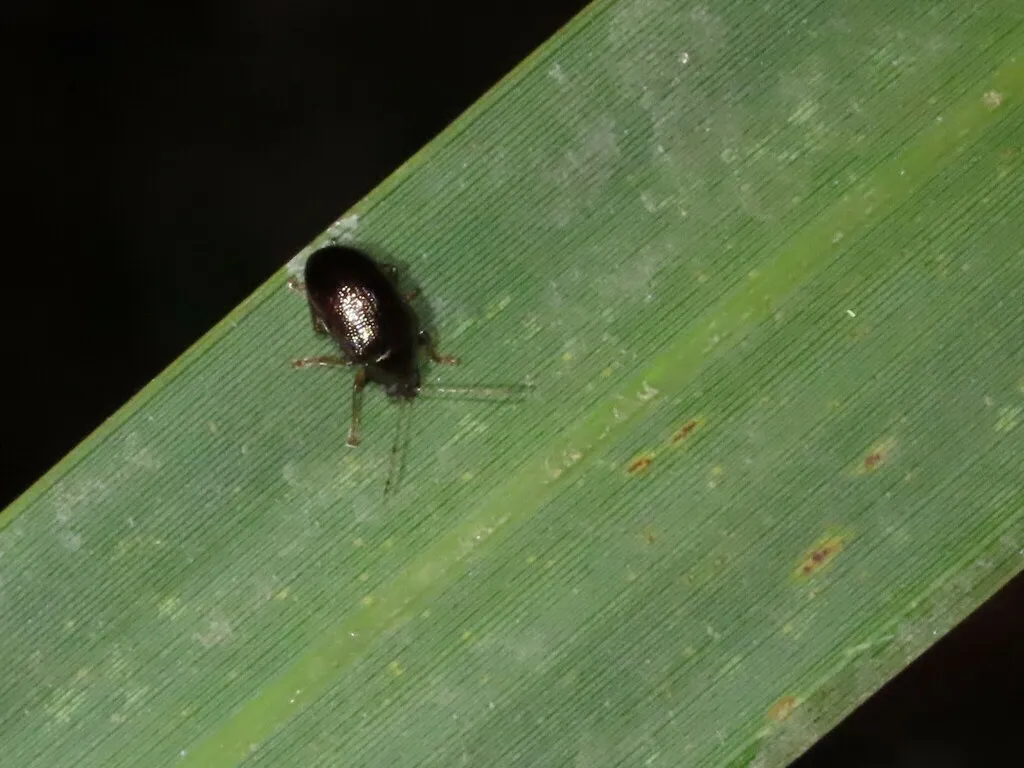
Rhabdopterus picipes
Rhabdopterus picipes
Rhabdopterus picipes, the cranberry rootworm, is a species of leaf beetle. It is found in North America.
Rhabdopterus weisei
Rhabdopterus weisei
Identification: Det. E. G. Riley, 2009 Type Locality: Brownsville, Cameron Co., TX (Schaeffer 1919)
Rhadine babcocki
Rhadine babcocki
Identification: Eyed member of the subterranea group. (Barr 1974) [Actually I don't see Rhadine babocki listed with the "subterranea group" in Barr's 1974 article so this species could belong to another species group. Also, the posted image does not
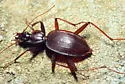
Rhadine caudata
Rhadine caudata
Identification: Holotype designated a Species of Greatest Conservation Need in VA
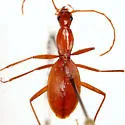
Rhadine howdeni
Rhadine howdeni
Type Locality: Wilson's Cave [=Adam Wilson's Cave], 20 miles southwest of Hunt, Kerr County, Texas.
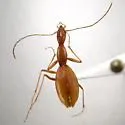
Rhadine infernalis
Rhadine infernalis
Texas Parks & Wildlife considers this to be a "Species of Greatest Conservation Need" (SGCN)
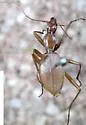
Rhadine ozarkensis
Rhadine ozarkensis
has the Species of Greatest Conservation Need status in AR
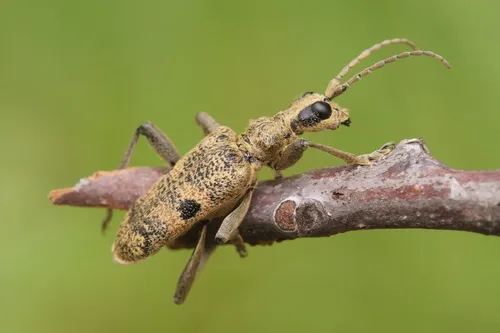
Rhagium mordax
Rhagium mordax
This is a yellow beetle with brown and black mottling and two eye-like spots on its wing-cases. For a 'long-horn' beetle, it has relatively short antennae. The adult favours open-structured flowers, particularly Hawthorn and umbellifers where it feed
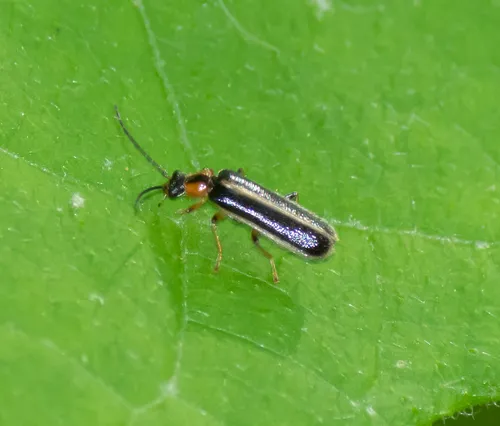
Rhagonycha cruralis
Rhagonycha cruralis
Rhagonycha cruralis is a species of soldier beetle in the family Cantharidae. It is found in North America.
Rhagonycha excavata
Rhagonycha excavata
Identification: Slender, pronotum yellowish. Elytra blackish to yellowish. Blatchley , an older work, gives a description:
Rhagonycha imbecillis
Rhagonycha imbecillis
Identification: Cantharidae of e. Canada and ne. US
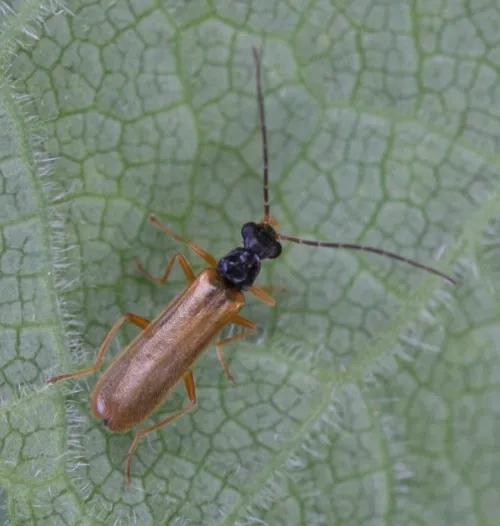
Rhagonycha lignosa
Rhagonycha lignosa
At 6 or 7 mm this is a small, slim beetle with entirely dark forebody and scutellum, pale golden; strongly granulate elytra and pale gold coloured legs. Mostly arboreal, and likely to be found in woodland borders, parkland and wasteland, but it may a
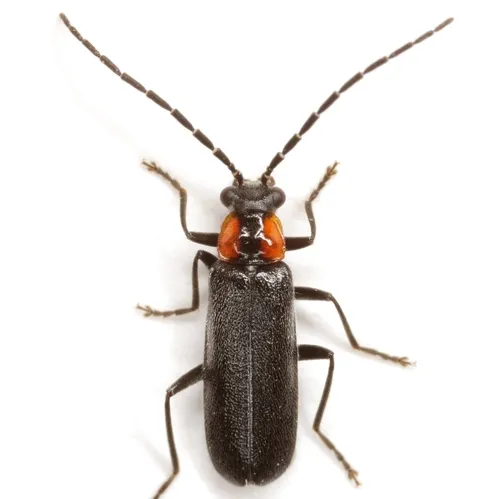
Rhagonycha lineola
Rhagonycha lineola
Rhagonycha lineola (Rhagonycha lineola) is a species in the family Cantharidae, commonly known as soldier beetles, belonging to the order Coleoptera (Beetles). It is classified within the subfamily Cantharinae, tribe Cantharini, suborder Polyphaga, s
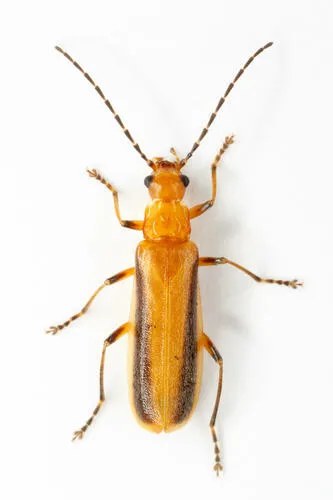
Rhagonycha longula
Rhagonycha longula
Rhagonycha longula is a species of soldier beetle in the family Cantharidae. It is found in North America.
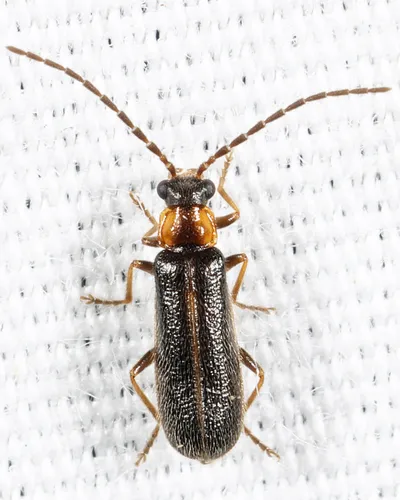
Rhagonycha nanula
Rhagonycha nanula
Rhagonycha nanula is a species of soldier beetle in the family Cantharidae. It is found in North America.
Rhagonycha nigriventris
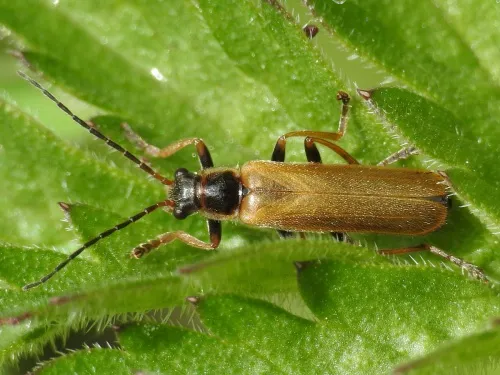
Rhagonycha nigriventris
Adults are small, 5 to 6 mm, but very distinctively coloured and so with a little practice should easily be identified in the field. Head black. Pronotum pale brown or reddish brown with a variable but characteristic dark central marking which does n
Rhagonycha oriflava
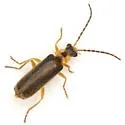
Rhagonycha oriflava
Identification: pronotum golden yellow with black central stripe; elytra dark brown to black with narrow golden yellow lateral and sutural margins variations: legs sometimes entirely black, elytra sutural margins sometimes dark Type Locality: New Ham
Rhagonycha scitula
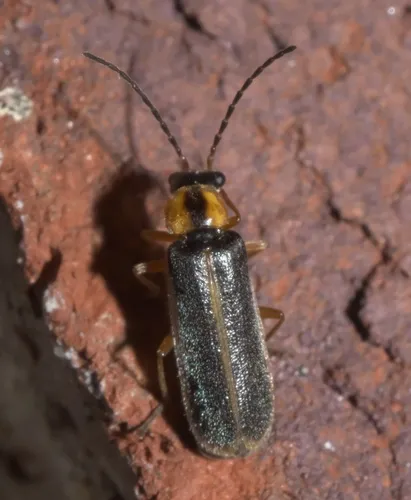
Rhagonycha scitula
Rhagonycha scitula is a species of soldier beetle in the family Cantharidae. It is found in North America.
Rhagonycha testacea
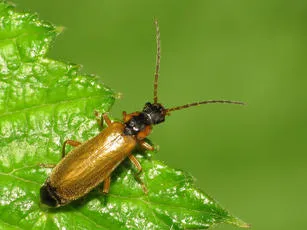
Rhagonycha testacea
Length around 4-6 mm. Has a light golden elytra and a well-defined darker mark on the yellow-orange pronotum. The legs are entirely yellow. Preferring damper locations including wet woodland and marsh areas, but also found in gardens. Common and wide
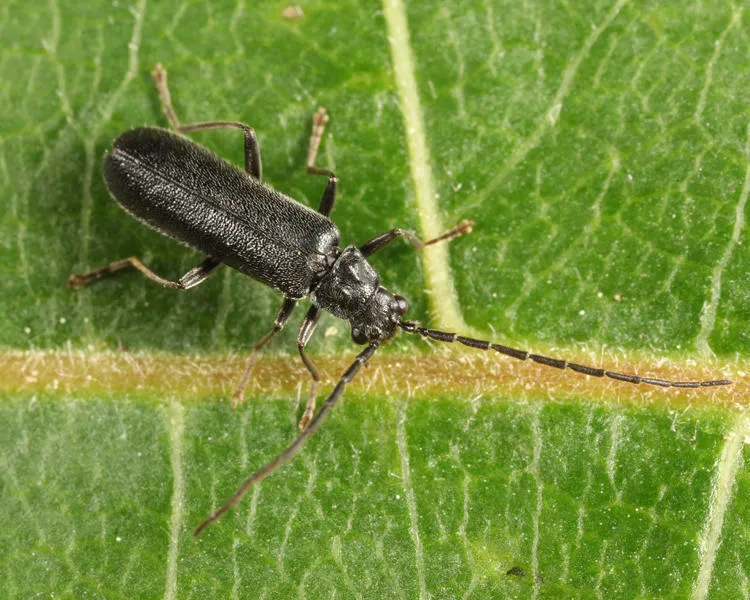
Rhagonycha umbrina
Rhagonycha umbrina
Identification: Quoting the original description: "The broad subtruncate ungual tooth, totally black color and alutaceous pronotum with obtuse lateral margin will easily identify this species."
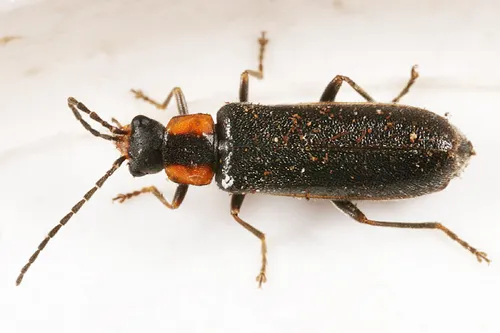
Rhagonycha walshi
Rhagonycha walshi
Rhagonycha walshi is a species of soldier beetle in the family Cantharidae. It is found in North America.
Rhantus binotatus
Rhantus binotatus
Identification: Pronotum with 2 medial spots, part of lateral elytron margin dark brown to glossy black (from abdominal sternum 1 onward); black on head not extending anteriorly around front of eye.
Rhantus consimilis
Rhantus consimilis
Identification: Head pale anteriorly, posterior margin solid black, no frontal spots, pronotum with few or no black maculations, venter reddish yellow, no black markings
Rhantus gutticollis
Rhantus gutticollis
Identification: Detail from this image : "Diagnostic characters include the pair of medial pronotal spots and the black colouration of the head narrowly encircling around the eyes (in the similar R. binotatus , the black colouration does not encircle
Rhantus suturalis
Rhantus suturalis
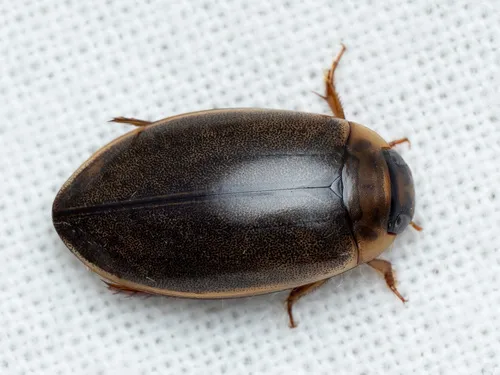
Length 10.5 to 12.5 mm. With a closer look at Rhantus suturalis the dense black punctuation of the elytra is visible; this punctuation on a golden yellow base gives the dark brown impression when seen from a normal distance. The beetle has a light ye
Rhantus wallisi
Rhantus wallisi
Identification: Pronotum with dark markings along both front and hind margins, markings on the hind margin at most narrowly extended to posterolateral pronotal angles; no central spots/markings on the disc
Rhinoceros Beetle
Sinodendron cylindricum
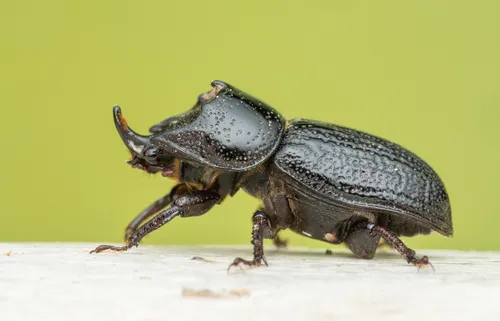
Length approx 15 to 18 mm. Rhinoceros beetles get their name from the pointed projection on the front of the head of the males which gives them a rhinoceros-like appearance. The female rhinoceros beetle just has a small bump. The shiny body of the rh
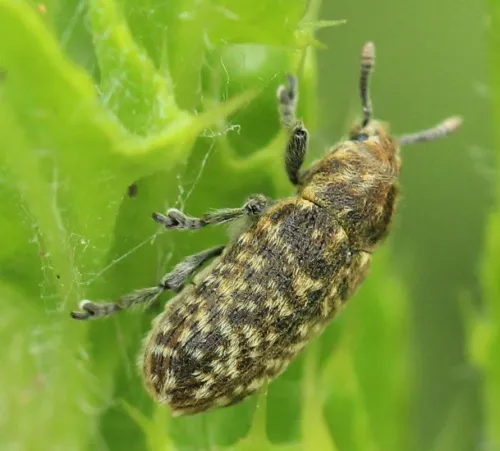
Rhinocyllus conicus
Rhinocyllus conicus
Length: 4 to 7 mm. A black weevil with a tessellated pattern of pale pubescence on the elytra. The rostrum is very short. Unless identified by a recognised expert, good photos are required that show the key ID features. Also state the beetle's size i
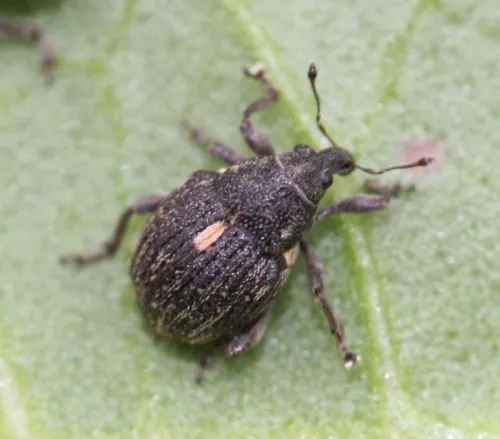
Rhinoncus pericarpius
Rhinoncus pericarpius
2.5-3.6mm. This is a small greyish weevil with a cream coloured blotch at the centre join of the elytra. The rostrum is relatively short and broad. The underside is covered in pale rounded scales. Legs are red-brown. Unless identified by a recognised
Rhinoplatia mortivallicola
Rhinoplatia mortivallicola
Identification: Bluish black beetle with reddish-orange head produced in a long, distinct snout. Antennae filiform, and eleven-segmented. Thorax, antennae, tarsi, and anterior coxae also colored reddish-orange. Middle and hind coxae, all femora and t
Rhinusa neta
Rhinusa neta
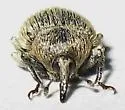
Accidentally introduced into North America in the early 1900s (1937), probably with ornamental toadflax. Regarded as possible biocontrol of toadflax. Has not been released for this purpose yet. However "frequently seen in the field, few collections a
Rhinusa tetra
Rhinusa tetra
Identification: more stout than other NA spp.; posterior margin of pronotum more than twice as wide as anterior margin released to combat common mullein before 1916 ( 5 )
Rhipidandrus paradoxus
Rhipidandrus paradoxus
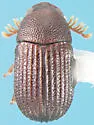
Rhipidandrus paradoxus (Rhipidandrus paradoxus) is a species in the family Tenebrionidae, commonly known as darkling beetles, belonging to the order Coleoptera (Beetles). It is classified within the subfamily Tenebrioninae, tribe Bolitophagini, subor
Rhizophagus (Anomophagus) brunneus
Rhizophagus brunneus
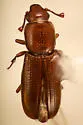
Identification: subgenus: Antennal club like terminally cut off member of the holarctic subg. Anomophagus (3 spp. in NA, 5 spp. total)
Rhizophagus (Eurhizophagus) grouvellei
Rhizophagus grouvellei
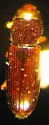
Identification: extra punctures in basal part of 2nd / 3rd interval our only representative of the subgenus Eurhizophagus Méquignon 1909 that contains ~3 more spp. in the w. Palaearctic
Rhizophagus dispar
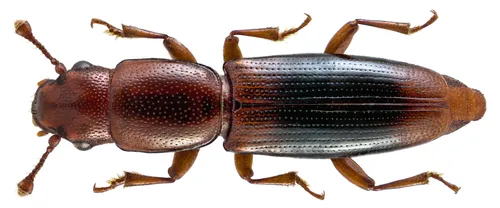
Rhizophagus dispar
This beetle has a red shiny appearance with a broad dark band across the elytra. It feeds on fungi and decaying matter, the adult is also a predator of fly larvae. Once mainly a northern species, it is now being regularly recorded further south, and
Rhopalapion longirostre
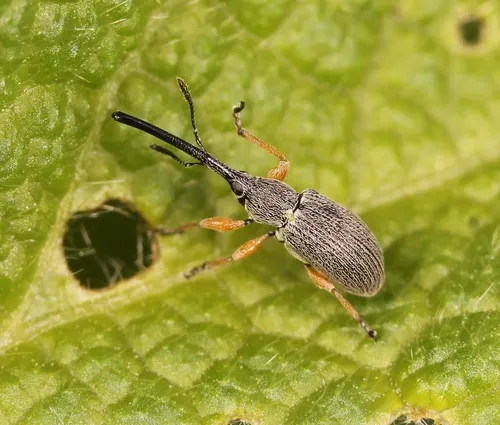
Rhopalapion longirostre
Length 2.5-3.75mm. Grey dark body with orangish-colored legs. Long, slender rostrum (snout), antennae are jointed and positioned halfway along the snout. Unless identified by a recognised expert, a photo is required. Prefers plants in the mallow fami
Rhopalophora angustata
Rhopalophora angustata
Type Locality: Esperanza Ranch, Brownsville, Cameron Co., Texas
Rhopalophora bicolorella
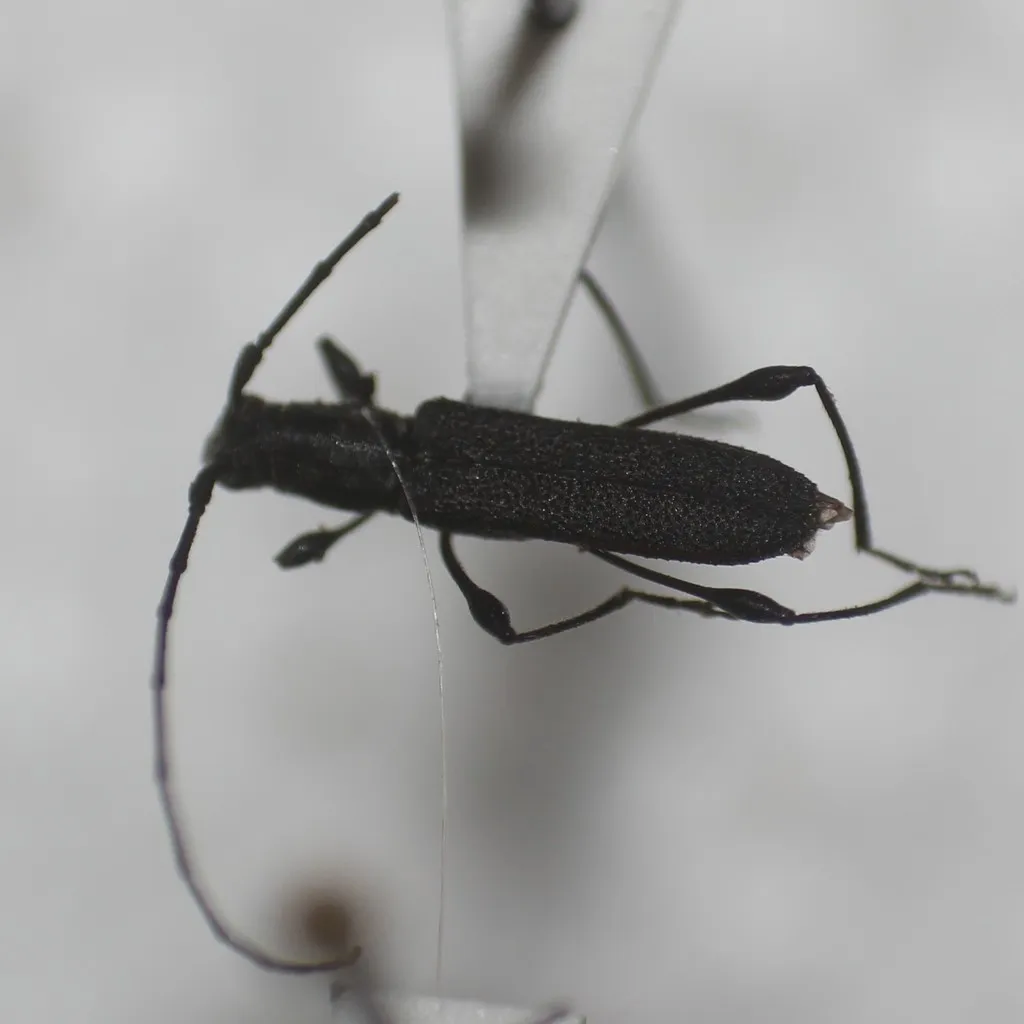
Rhopalophora bicolorella
Identification: Resembling Rhopalophora longipes Say in size; color varying from entirely fuscous to red pronotum, some of the dark forms have slight traces of lighter areas on bases of elytra. Type Locality: Palmerlee, Cochise Co., Arizona, July 15
Rhopalophora longipes
Rhopalophora longipes
Identification: Weak lateral pubescent stripes Det. M. A. Quinn, 2012 common eastern sp.
Rhopalophora meeskei
Rhopalophora meeskei
Identification: Det. M. A. Quinn, 2013 Type Locality: Las Vegas, San Miguel Co., New Mexico
Rhubarb Weevil
Lixus concavus
Identification: deep depression at the pronotal/elytral base
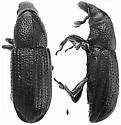
Rhyncolus minor
Rhyncolus minor
Rhyncolus minor (Rhyncolus minor) is a species in the family Curculionidae, commonly known as snout and bark beetles, belonging to the order Coleoptera (Beetles). It is classified within the subfamily Cossoninae, tribe Rhyncolini, suborder Polyphaga,
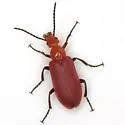
Rhyphonemognatha rufa
Rhyphonemognatha rufa
Identification: Similar to Nemognatha , but has galae unmodified. Bright red with appendages black. Pronotum shiny, sparsely punctate. Elytra densely punctate and pubescent. Type Locality: Texas
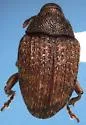
Rhyssomatus medialis
Rhyssomatus medialis
A not rare, but not common southeastern AZ species, of which I have one also from NM and from CA. (per Charles W. O'Brien, 2012)
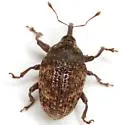
Rhyssomatus sculpturatus
Rhyssomatus sculpturatus
Identification: Very like Rhyssomatus sculpticollis [ occurs as close as nw.Mex. ], but more closely pubescent, the pubescence on the elytra often fasciculate; the elytra themselves a little more widened anteriorly (their general shape subcordate), w
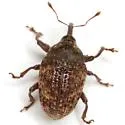
Rhyssomatus texanus
Rhyssomatus texanus
Type Locality: McLennon Co., Texas VII-25 in (ELS). Allotype: Cameron Co., Texas V-30 in (ELS). Fourteen paratypes: 1 Cameron Co., Texas V-30, 1 Brownsville, Tex. V-25-39, DJ & JNK., in (ELS); 1 Brownsville, Tex. V-25-39-, DJ & JNK., 1 Brownsville, T
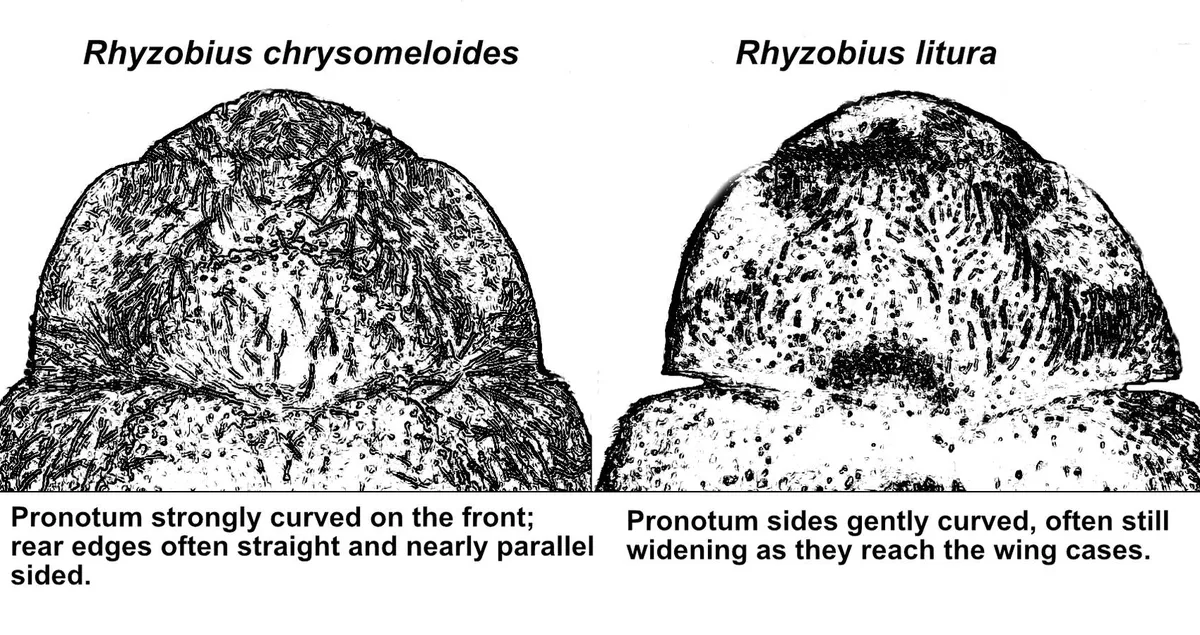
Rhyzobius chrysomeloides
Rhyzobius chrysomeloides
2.3 to 3.5 mm. A hairy species typically with dark marking that forms a shield shape with two vertical lines reaching near the top corner, an anchor shape in the lower centre and a pair of tooth shaped marks. Detailed examination is needed to separat
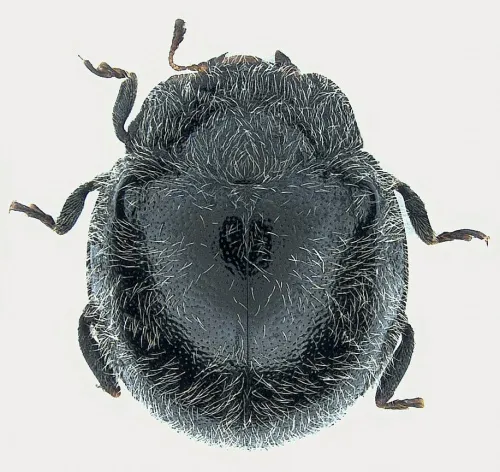
Rhyzobius forestieri
Rhyzobius forestieri
Fairly small, about 3.2 mm long and 2.3 mm wide (slightly smaller than a 22 Spot Ladybird). The head, prothorax and elytra are very dark brown to black, and covered in short pale hairs which can give it a rather silvery appearance. It is strongly dom
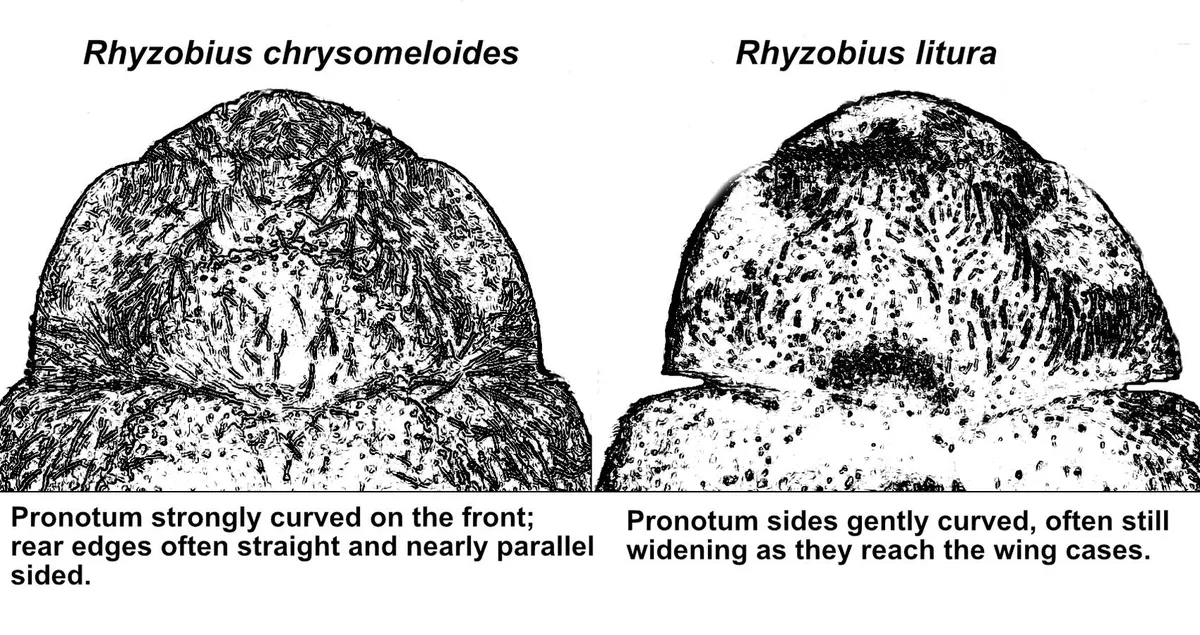
Rhyzobius litura
Rhyzobius litura
This ladybird is not often seen or even recognised as a ladybird. Some specimens lack dark markings. Often has a dark U-shape marking on the rear wing cases with one vertical line extending half way up each wing case. Variable dark patch at the top o
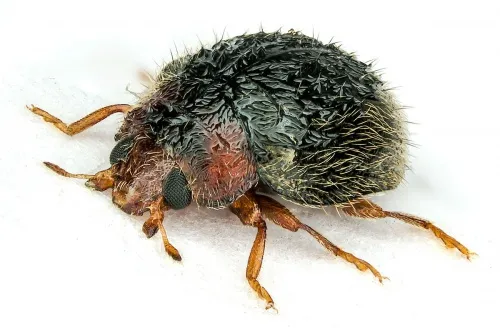
Rhyzobius lophanthae
Rhyzobius lophanthae
Rhyzobius lophanthae is a small ladybird with a length between 1.7 and 2.8 mm. The head and prothorax are dull orange or reddish-brown, as are the legs and underside. The elytra (wing cases) are dark with a metallic bronze sheen. The entire dorsal su
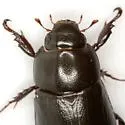
Rice Beetle
Dyscinetus morator
Identification: Brownish with a greenish tinge above. Front tarsi and claw in male thickened, as in Cyclocephala Det. E. G. Riley, 2009 does little, if any, damage to crops
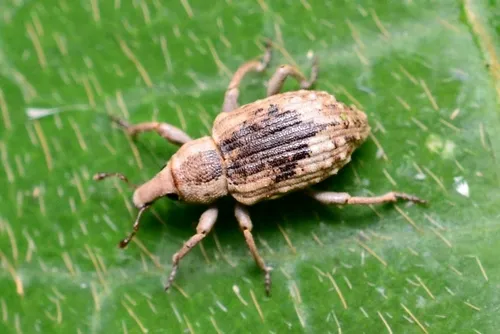
Rice Water Weevil
Lissorhoptrus oryzophilus
Lissorhoptrus oryzophilus is an insect belonging to the order coleoptera. It is native to North America, mostly in the southeastern part of the country, but has been established in California for over 50 years. A separate species of rice water weevil