
Rhyzobius lophanthae
This record describes Rhyzobius lophanthae (species). Recorded family: Coccinellidae. Recorded order: Coleoptera.
Identification and Appearance
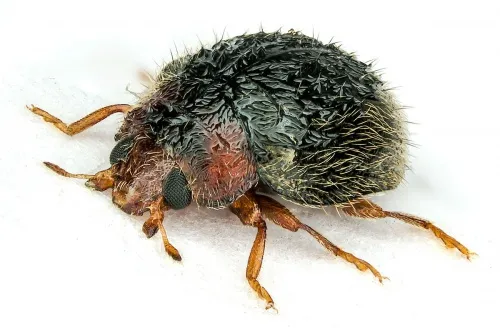
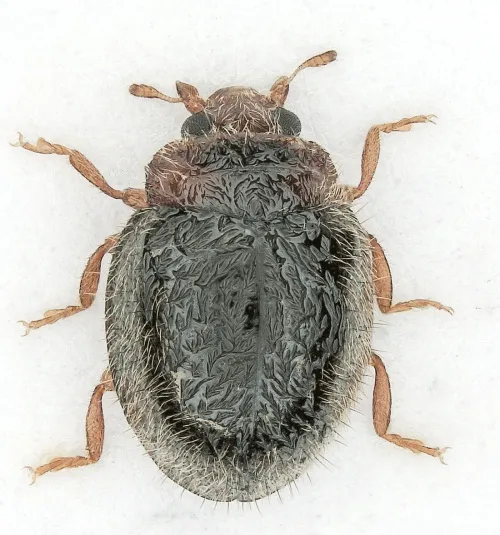
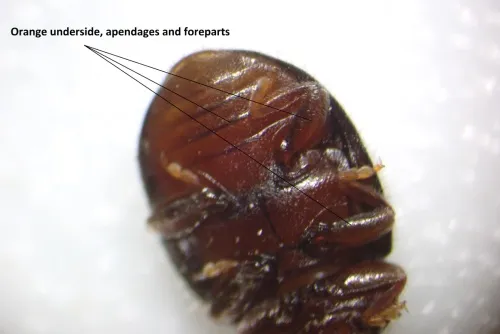
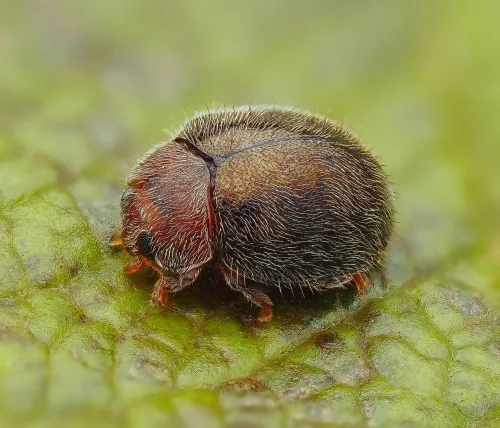
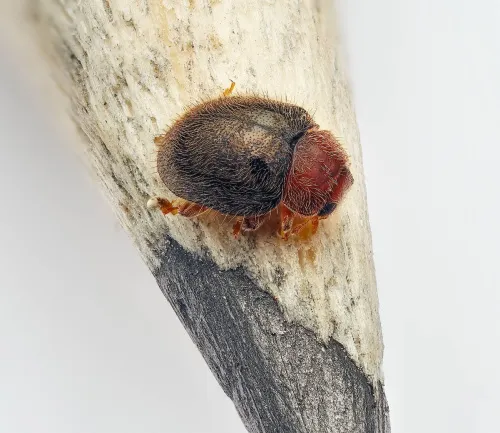
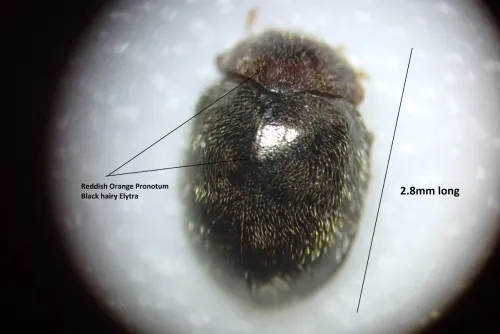
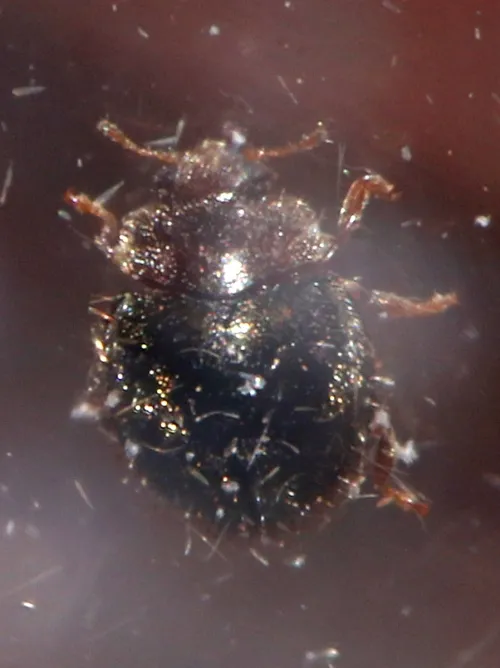
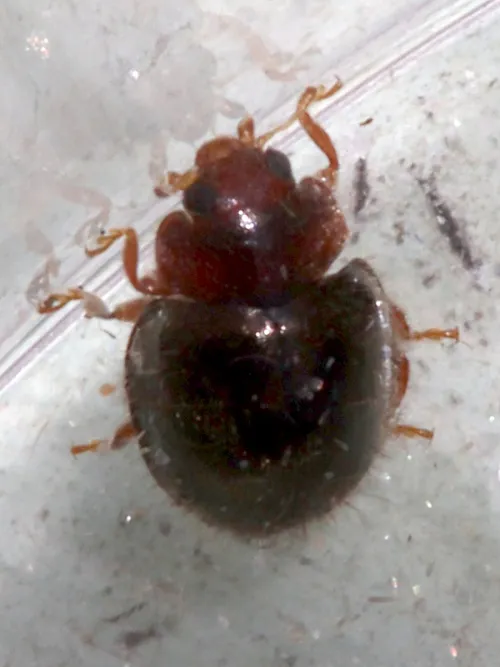
Rhyzobius lophanthae is a small ladybird with a length between 1.7 and 2.8 mm. The head and prothorax are dull orange or reddish-brown, as are the legs and underside. The elytra (wing cases) are dark with a metallic bronze sheen. The entire dorsal surface is covered densely with short, pale hairs interspersed with longer, darker bristles, a trait that gives it the common name, Bristly Ladybird. Unless identified by a recognised expert, good photos are required that show the key ID features. Also state the size in the comments box. R. lophanthae tends to be concentrated in anthropogenic habitats. Records are primarily associated with parks, domestic gardens, and botanical gardens, especially where cypress trees are present. Overwinters in evergreens (Ivy, Holly, etc) and conifers. Larvae and adults feed on scale insects. The high temperature requirement for reproduction restricts this species to a maximum of one, or potentially two, generations per year (univoltine or partially bivoltine) in ambient UK conditions. Consequently, the establishment success of R. lophanthae in the UK is less determined by the cold tolerance of overwintering adults and more fundamentally limited by the restricted temporal window available for reproduction. Rhyzobius lophanthae is a species native to Australia which was first recorded in the UK (London) in 2008. Widely intoduced workwide as horticultural biocontrol for scale insects.
Classification
- Kingdom
- Animalia
- Phylum
- Arthropoda
- Class
- Insecta
- Order
- Coleoptera (Beetles)
- Suborder
- Polyphaga
- Superfamily
- Coccinelloidea
- Family
- Coccinellidae (Lady Beetles)
- Subfamily
- Coccidulinae
- Tribe
- Coccidulini
- Genus
- Rhyzobius
Imported taxonomy record. Source availability varies; see the source references and editorial policy below.
Habitat and Range
Habitat
R. lophanthae
Seasonal Activity
All year.
Diet and Behavior
Life History
Larvae and adults feed on scale insects. The high temperature requirement for reproduction restricts this species to a maximum of one, or potentially two, generations per year (univoltine or partially bivoltine) in ambient UK conditions. Consequently, the establishment success of
Additional species information
Recorded status
Rhyzobius lophanthae is a species native to Australia which was first recorded in the UK (London) in 2008. Widely intoduced workwide as horticultural biocontrol for scale insects.
About Primitive Winged Insects: the wider group
Order-level background for Coleoptera, the group containing Rhyzobius lophanthae. Species-specific details appear above.
Group overview
Coleoptera is the largest order of insects with over 400,000 described species, representing ~25% of all known animal species and ~40% of all insects. In the U.S. alone, nearly 30,000 beetle species have been identified.
Ecological role of the group
Beetles are prominent decomposers, especially in forests, breaking down dead wood and recycling nutrients. As predators, they reduce populations of pest insects. Many species are also important pollinators of flowering plants.
Economic and practical significance of the group
Beetles have major economic significance: leaf beetles (Chrysomelidae) and weevils (Curculionoidea) are among the most destructive agricultural pests globally, costing billions annually, while predatory species like ladybugs provide natural pest control.
Recorded sources for this group: Britannica, Smithsonian, NCSU Entomology. Imported estimates may describe particular regions or reporting periods.
Photos of Rhyzobius lophanthae (9)
Frequently Asked Questions About Rhyzobius lophanthae
What is Rhyzobius lophanthae?
Rhyzobius lophanthae is a species in the family Coccinellidae, within the order Coleoptera.
How big is Rhyzobius lophanthae?
between 1.7 and 2.8 mm. The head and prothorax are dull orange or reddish-brown, as are the legs and underside. The elytra (wing cases) are dark with a metallic bronze sheen. The entire dorsal surface is covered densely with short, pale hairs interspersed with longer, darker bristles, a trait that gives it the common name, Bristly Ladybird.
Where is Rhyzobius lophanthae found?
Habitat: R. lophanthae
When is Rhyzobius lophanthae active?
Rhyzobius lophanthae: seasonal activity - All year..
What is the life cycle of a Rhyzobius lophanthae?
Larvae and adults feed on scale insects. The high temperature requirement for reproduction restricts this species to a maximum of one, or potentially two, generations per year (univoltine or partially bivoltine) in ambient UK conditions. Consequently, the establishment success of