
Red-lined Carrion Beetle
Necrodes surinamensis
This record describes Necrodes surinamensis (species). Recorded family: Staphylinidae. Recorded order: Coleoptera.
Identification and Appearance
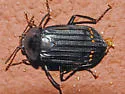
Distinctive, large eyes, dark body with prominent raised elytral ridges, variable red-orange, sometimes yellow, markings on elytra, though these sometimes absent. Sometimes has red tinge to body. Males have distinctive leg morphology: expanded hind femora with a large tooth on each, and expanded foretarsi. Also, abdomen of male appears to jut out from under abdomen much more than female, at least based on this individual: The black body with orange markings resembles the pattern of the related Sexton Beetles, Nicrophorus . Perhaps this is a mimicry complex.
Classification
- Kingdom
- Animalia
- Phylum
- Arthropoda
- Class
- Insecta
- Order
- Coleoptera (Beetles)
- Suborder
- Polyphaga
- Superfamily
- Staphylinoidea
- Family
- Staphylinidae (Rove Beetles)
- Subfamily
- Silphinae
- Tribe
- Silphini
- Genus
- Necrodes
Imported taxonomy record. Source availability varies; see the source references and editorial policy below.
Habitat and Range
Habitat
General, but may prefer deciduous forests
Geographic Range
e. NA to BC - Map
Seasonal Activity
All year, but most common in temperate areas April-November. May-July, September (North Carolina).
Diet and Behavior
Diet: Adults consume fly larvae (maggots), and perhaps some carrion.
Life History
Rather nocturnal and is found at lights, unlike related genera. Adults locate carrion and mate on or near carcass. They feed on fly larvae there. Eggs are laid on soil near carcass. Larvae feed on fly larvae and carrion, pupate in soil. Adults overwinter in under litter(?) or in other protected areas. See Ratcliffe for details. This species is supposed to be attracted especially, to dead birds. ( Insects of Northeastern Iowa ) Has chemical defenses, and smells foul, like all carrion beetles and their larvae.
About Primitive Winged Insects: the wider group
Order-level background for Coleoptera, the group containing Necrodes surinamensis. Species-specific details appear above.
Group overview
Coleoptera is the largest order of insects with over 400,000 described species, representing ~25% of all known animal species and ~40% of all insects. In the U.S. alone, nearly 30,000 beetle species have been identified.
Ecological role of the group
Beetles are prominent decomposers, especially in forests, breaking down dead wood and recycling nutrients. As predators, they reduce populations of pest insects. Many species are also important pollinators of flowering plants.
Economic and practical significance of the group
Beetles have major economic significance: leaf beetles (Chrysomelidae) and weevils (Curculionoidea) are among the most destructive agricultural pests globally, costing billions annually, while predatory species like ladybugs provide natural pest control.
Recorded sources for this group: Britannica, Smithsonian, NCSU Entomology. Imported estimates may describe particular regions or reporting periods.
Photos of Red-lined Carrion Beetle (5)
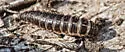
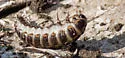
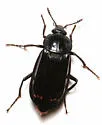
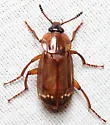
Photo credits: Contributed by Cotinis; Additional contributions by Mike Quinn
Frequently Asked Questions About Red-lined Carrion Beetle
What is Red-lined Carrion Beetle?
Red-lined Carrion Beetle (Necrodes surinamensis) is a species in the family Staphylinidae, within the order Coleoptera.
How big is Red-lined Carrion Beetle?
12-25 mm
How do you identify Red-lined Carrion Beetle?
Distinctive, large eyes, dark body with prominent raised elytral ridges, variable red-orange, sometimes yellow, markings on elytra, though these sometimes absent. Sometimes has red tinge to body. Males have distinctive leg morphology: expanded hind femora with a large tooth on each, and expanded foretarsi. Also, abdomen of male appears to jut out from under abdomen much more than female, at least based on this individual: The black body with orange markings resembles the pattern of the related Sexton Beetles, Nicrophorus . Perhaps this is a mimicry complex.
Where is Red-lined Carrion Beetle found?
| Feature | Details |
|---|---|
| Habitat | General, but may prefer deciduous forests |
| Range | e. NA to BC - Map |
What does Red-lined Carrion Beetle eat?
The diet of the Red-lined Carrion Beetle includes Adults consume fly larvae (maggots), and perhaps some carrion..
When is Red-lined Carrion Beetle active?
Red-lined Carrion Beetle: seasonal activity - All year, but most common in temperate areas April-November. May-July, September (North Carolina)..
What is the life cycle of a Red-lined Carrion Beetle?
Rather nocturnal and is found at lights, unlike related genera. Adults locate carrion and mate on or near carcass. They feed on fly larvae there. Eggs are laid on soil near carcass. Larvae feed on fly larvae and carrion, pupate in soil. Adults overwinter in under litter(?) or in other protected areas. See Ratcliffe for details. This species is supposed to be attracted especially, to dead birds. ( Insects of Northeastern Iowa ) Has chemical defenses, and smells foul, like all carrion beetles and their larvae.