
Rhagonycha nigriventris
This record describes Rhagonycha nigriventris (species). Recorded family: Cantharidae. Recorded order: Coleoptera.
Identification and Appearance
| Feature | Description |
|---|---|
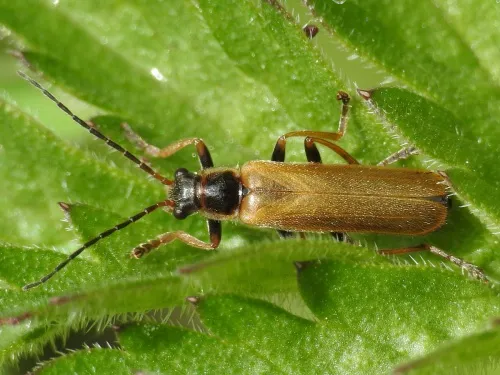
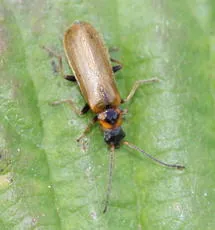
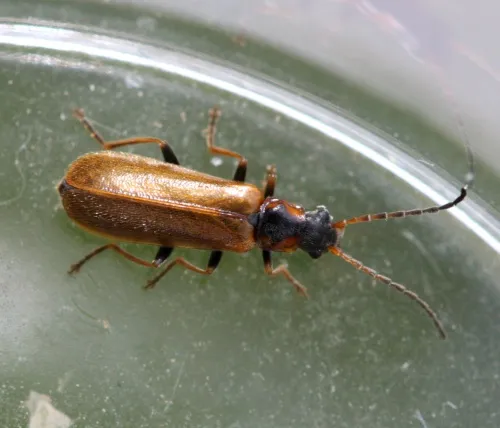
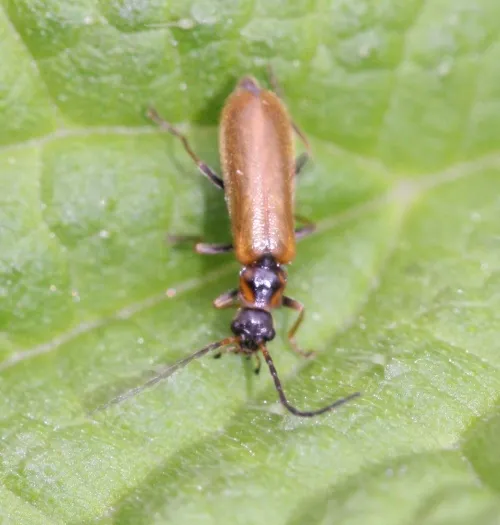
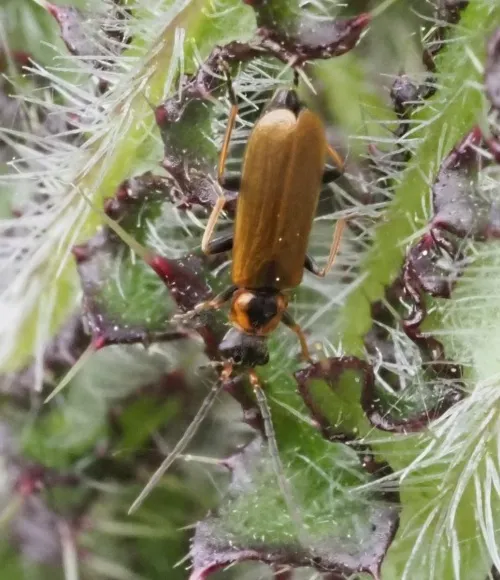
| Additional details | Adults are small, 5 to 6 mm, but very distinctively coloured and so with a little practice should easily be identified in the field. |
| Head | Head black. |
| Pronotum | Pronotum pale brown or reddish brown with a variable but characteristic dark central marking which does not extend to the anterior or posterior margins. Scutellum black. |
| Elytra | Elytra with rounded shoulders. Front femora darkened at least in the basal third, middle and hind femora dark except for the apex, tibiae entirely pale, at most only obscurely darkened, tarsi mostly dark grey or black. Tarsi 5-segmented, the third expanded but not bilobed, claws split longitudinally. Rhagonycha testacea is similar in size and colour but has all yellow legs. Cantharis decipiens is slightly larger (6-8mm) with the black mark on the pronotum shaped like a butternut squash and having a rounded base. Found in open dry grassland and scrub, they often occur on disturbed land and may be common in parkland and gardens. Adults occur from early May until early July. It is generally common throughout the UK north to Orkney and the Western Scottish islands. |
Classification
- Kingdom
- Animalia
- Phylum
- Arthropoda
- Class
- Insecta
- Order
- Coleoptera
- Family
- Cantharidae
- Genus
- Rhagonycha
Imported taxonomy record. Source availability varies; see the source references and editorial policy below.
Habitat and Range
Habitat
Found in open dry grassland and scrub, they often occur on disturbed land and may be common in parkland and gardens.
Seasonal Activity
Adults occur from early May until early July.
Additional species information
Recorded status
It is generally common throughout the UK north to Orkney and the Western Scottish islands.
About Primitive Winged Insects: the wider group
Order-level background for Coleoptera, the group containing Rhagonycha nigriventris. Species-specific details appear above.
Group overview
Coleoptera is the largest order of insects with over 400,000 described species, representing ~25% of all known animal species and ~40% of all insects. In the U.S. alone, nearly 30,000 beetle species have been identified.
Ecological role of the group
Beetles are prominent decomposers, especially in forests, breaking down dead wood and recycling nutrients. As predators, they reduce populations of pest insects. Many species are also important pollinators of flowering plants.
Economic and practical significance of the group
Beetles have major economic significance: leaf beetles (Chrysomelidae) and weevils (Curculionoidea) are among the most destructive agricultural pests globally, costing billions annually, while predatory species like ladybugs provide natural pest control.
Recorded sources for this group: Britannica, Smithsonian, NCSU Entomology. Imported estimates may describe particular regions or reporting periods.
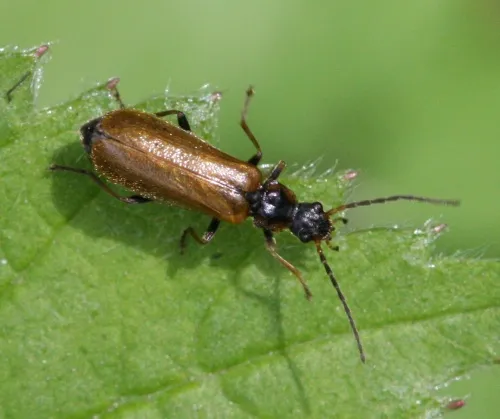
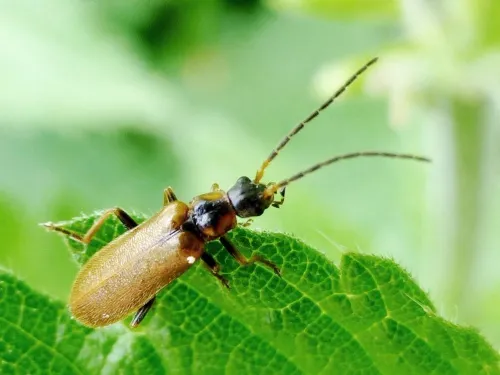
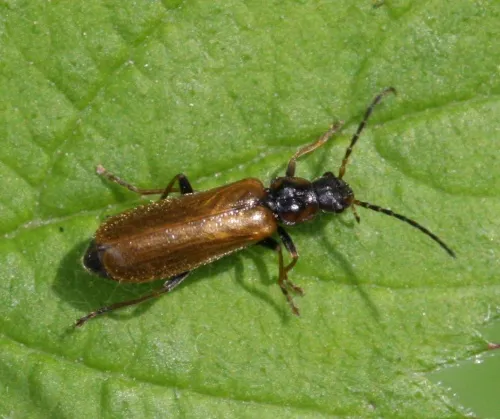
Photos of Rhagonycha nigriventris (10)
Frequently Asked Questions About Rhagonycha nigriventris
What is Rhagonycha nigriventris?
Rhagonycha nigriventris is a species in the family Cantharidae, within the order Coleoptera.
How big is Rhagonycha nigriventris?
and colour but has all yellow legs.
Where is Rhagonycha nigriventris found?
Habitat: Found in open dry grassland and scrub, they often occur on disturbed land and may be common in parkland and gardens.
When is Rhagonycha nigriventris active?
Rhagonycha nigriventris: seasonal activity - Adults occur from early May until early July..