
Primitive Winged Insects
Order Coleoptera
The Primitive Winged Insects (Order Coleoptera) includes 15,720 species across 160 families and 3,716 genera in our directory.
About Primitive Winged Insects
Coleoptera is the largest order of insects with over 400,000 described species, representing ~25% of all known animal species and ~40% of all insects. In the U.S. alone, nearly 30,000 beetle species have been identified.
Economic Impact
Beetles have major economic significance: leaf beetles (Chrysomelidae) and weevils (Curculionoidea) are among the most destructive agricultural pests globally, costing billions annually, while predatory species like ladybugs provide natural pest control.
Ecological Role
Beetles are prominent decomposers, especially in forests, breaking down dead wood and recycling nutrients. As predators, they reduce populations of pest insects. Many species are also important pollinators of flowering plants.
Families in Coleoptera (160)
Species in Coleoptera (15,720)
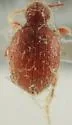
Pseudeurostus hilleri
Pseudeurostus hilleri
Identification: ¹ earliest record in our area: QC 1936 ( 3 )
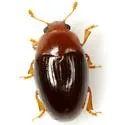
Pseudischyrus extricatus
Pseudischyrus extricatus
Identification: Rather broadly ovate, shining, clear yellowish-red, elytra dark brown , but also: Det. P. E. Skelley, 2010
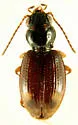
Pseudocautum Bembidion Beetle
Bembidion pseudocautum
Bembidion pseudocautum is a species of ground beetle in the family Carabidae. It is found in North America.
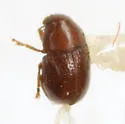
Pseudochoragus nitens
Pseudochoragus nitens
Valentine (1991) examined 63 spmns, 3 from Mass. and 60 coll'ed by Karl Stephan from Latimer Co., Okla.
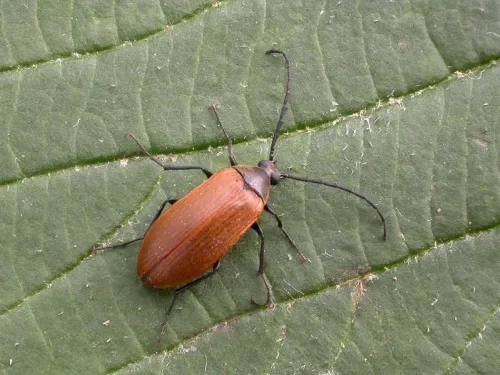
Pseudocistela ceramboides
Pseudocistela ceramboides
Length 9 to13mm this distinctively shaped beetle has yellow-brown elytra, but is otherwise mainly black. Usually in well wooded areas where adults may be found on blossoms or decaying wood. This is a southern English species, with an occasional recor
Pseudocneorhinus obesus
Pseudocneorhinus obesus
Identification: Similar to P. bifasciatus , but elytra with longer spiky erect scales (in P. bifasciatus , scales are hair-like, not flattened, inconspicous and distinctly shorter than interval width). In P. obesus , the elytra are widest behind midd
Pseudodibolia opima
Pseudodibolia opima
Identification: Destinctive serate outer margin on hind tibia: Type Locality: North Carolona
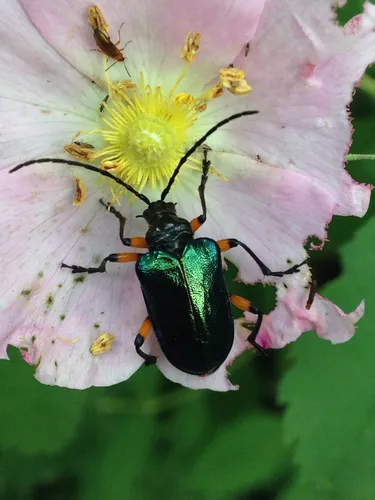
Pseudogaurotina cressoni
Pseudogaurotina cressoni
Pseudogaurotina cressoni is a species of the Lepturinae subfamily in the long-horned beetle family. This beetle is distributed in Canada, and the United States.
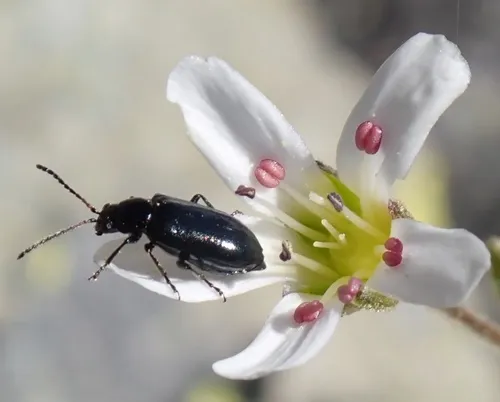
Pseudoluperus longulus
Pseudoluperus longulus
Pseudoluperus is a genus of leaf beetles in the family Chrysomelidae. It is monotypic, being represented by the single species, Pseudoluperus longulus, which is found in North America.
Pseudopityophthorus minutissimus
Pseudopityophthorus minutissimus
Identification: Differs from other Pseudopityophthorus by the reticulate frons and prontoal disk and the uniform, short elytral setae
Pseudorthygia nigritarsis
Pseudorthygia nigritarsis
Identification: of the original six spmns collected, "one of which is of a blood-red colour." Type Locality: Amula, Guerrero, 6000 ft, Mexico
Pseudostrangalia cruentata
Pseudostrangalia cruentata
Identification: distinctive elytra with red margins and pointed tips, bilobed base (Linsley & Chemsak 1976) Det. D. J. Heffern 1993. Type Locality: Pennsylvania ( 3 ) Attracted to lights ( 6 )
Pseudothysanoes turnbowi
Pseudothysanoes turnbowi
Identification: color very dark brown, etc. Type Locality: Bentsen-Rio Grande State Park, Hidalgo Co., TX
Pseudotolida arida
Pseudotolida arida
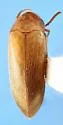
Identification: very similar to P. lutea , except with 3 ridges on first tarsal (2 in P. lutea ); slightly larger
Pseudovadonia livida
Pseudovadonia livida
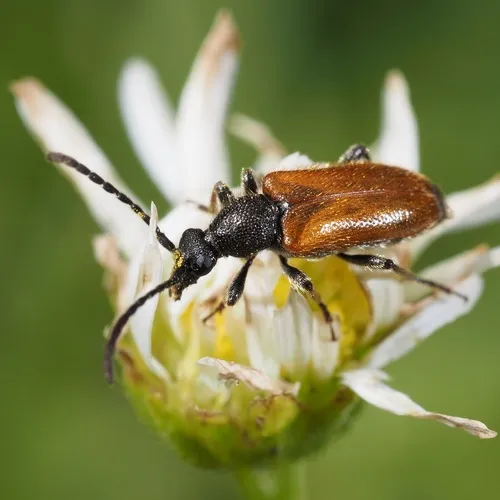
Might be mistaken for Alosterna , especially as they may occur together in the field, but Pseudovadonia livida is broader and has extensively dark legs. Good close up photographs required please. Frequents open and sunny situations such as meadows an
Pseudozonitis dianae
Pseudozonitis dianae
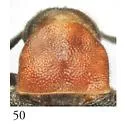
Identification: distinguished by its relatively small eyes, uniformly colored elytra and uniformly dark legs, pronotal dimensions, mandibular structure and color, and male genitalia. Elytral color and presence of a black macula on the pronotum vary i
Pseudozonitis florida
Pseudozonitis florida
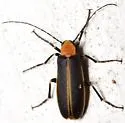
Types - Holotype ♀. USA. Florida: Port Saint Lucie (St Lucie Co.); v-22-2009; Lindgren Funnel Trap, ‘w/Manuka oil & etoh’; B. Saunders, collr.
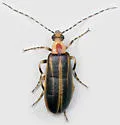
Pseudozonitis longicornis
Pseudozonitis longicornis
Identification: characterized by its vittate elytra, reddish macula on the pronotum (Fig. 41), and large eyes ( 3 ) mostly collected at lights, no plant records ( 3 )
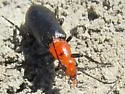
Pseudozonitis maculicollis
Pseudozonitis maculicollis
Identification: colouration: Head and pronotum orange, elytra dark; a pair of spots on anteriour half of pronotum, and a small frontal macula dark, the latter sometimes missing.
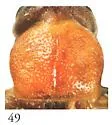
Pseudozonitis martini
Pseudozonitis martini
Identification: non-bulged, relatively small eyes, uniformly colored elytra, transverse pronotum, uniformly dark mandibles and light-colored body setation separate P. martini from congeners. It is closest to P. dianae , with which it has been confuse
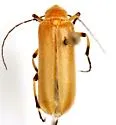
Pseudozonitis pallida
Pseudozonitis pallida
Identification: The generally pallid coloration, large size and extension of the moderately curved mandibles beyond the labrum (Fig. 23) characterize this species. ( 5 ) The elytra of P. pallida are weakly vittate in some individuals. This vittation
Pseudozonitis roseomaculatis
Pseudozonitis roseomaculatis
Identification: distinguished by the large reddish subtrapezoidal macula on the pronotum (Fig. 51) and the relatively small eyes (Fig. 18) which do not reach the inner margin of the maxillae on the underside of the head. In addition, the femora usual
Pseudozonitis schaefferi
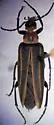
Pseudozonitis schaefferi
Identification: pronotal markings and small eyes distinguish it from all congeners
Pseudozonitis stroudi
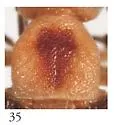
Pseudozonitis stroudi
Identification: distinguished by its pronotal features which include the usual presence of a median red elongate pronotal macula, and relatively uneven discal surface with coarse, partially confluent punctures which are of similar size laterally and
Pseudozonitis vaurieae
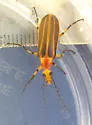
Pseudozonitis vaurieae
Identification: enlarged eyes coupled with the cruciform maculation (Figs 37, 38) distinguishes Form A of P. vaurieae from congeners. See below for further separation from Form B. mostly at lights, no plant associations
Pseudozonitis vigilans
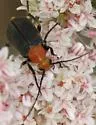
Pseudozonitis vigilans
Identification: Elytral color pattern is the most obvious feature which varies. Figs. 2. P. vigilans (pallid form); 3. P. vigilans (vittate form)
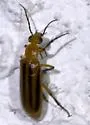
Pseudozonitis vittipennis
Pseudozonitis vittipennis
Identification: not likely to be confused with any other species. It is the only species with shiny rugulose and obsolescently punctate elytra (Fig. 58). In all other species the elytra are distinctly, densely punctate (Fig 57). The uniformly yellow-
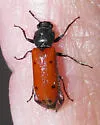
Psoa quadrisignata
Psoa quadrisignata
Identification: comes in a huge variety of colors (red, yellow, light brown, black) and patterns on the elytra (Joyce Gross, 3.xii.2006)
Psychopomporus felipi
Psychopomporus felipi
Species description based on two specimens and three large fragments of additional specimens collected from two springs that discharge into the western side of San Felipe Creek in Del Rio, Val Verde County, Texas, USA (29.37234°N, 100.88602°W). Texas
Psylliodes chalcomera 0
Psylliodes chalcomera
Psylliodes chalcomera 0 (Psylliodes chalcomera) is a species in the family Chrysomelidae, commonly known as leaf beetles, belonging to the order Coleoptera (Beetles). It is classified within the subfamily Galerucinae, tribe Alticini, suborder Polypha
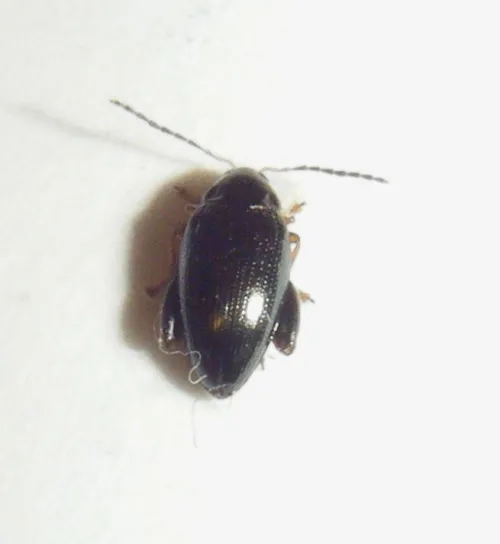
Psylliodes napi
Psylliodes napi
A small beetle (2.5 to 3.3 mm) it is dark blue, sometimes greenish, and very occasionally bronze. Associated with plants of the Brassicaceae family, the adults are found on the leaves, but the larvae are leaf- and stem-miners. Overwinters as an adult
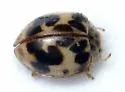
Psyllobora borealis
Psyllobora borealis
Identification: Gordon's figures - "The robust form and elytral color pattern will separate P. borealis from P. vigintimaculata which it most nearly resembles." Type locality: Coeur d'Alene, Idaho
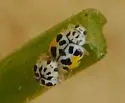
Psyllobora nana
Psyllobora nana
Identification: Color pattern as described for P. vigintimaculata except elytral spots less coalescent, one spot on suture at apical 1/3 united with mate on opposite elytron, subapical spot near suture free, large (see Gordon's figures) Type locality
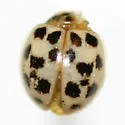
Psyllobora parvinotata
Psyllobora parvinotata
Identification: Gordon's figures White to light brown with brown or black spots Small spots, usually not joined together Sometimes has no spots on pronotum - other Psyllobora species always have spots on pronotum
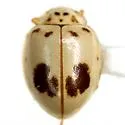
Psyllobora plagiata
Psyllobora plagiata
Identification: Gordon's figures Some of the spots near suture or side margin may be absent or very faint but the large postmedian patch is always present. (Schaeffer 1908) Type locality: Huachucha Mts., Arizona
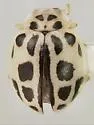
Psyllobora schwarzi
Psyllobora schwarzi
first collected in Florida at Fort Lauderdale, Broward County, February 2012. Since then, it has been collected at three other localities in Miami-Dade County (Key Biscayne, Miami, and North Miami). Collections were in August and October 2012. It app
Psyrassa brevicornis
Psyrassa brevicornis
Identification: Det. D. Heffern, 2010 Type Locality: Brownsville, Cameron Co., Texas
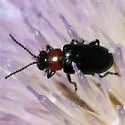
Pteleon brevicornis
Pteleon brevicornis
Identification: generally orange, but can vary to all black with stout body and short stout ant.; often on flwrs of globemallow Dets. E. G. Riley, 2016
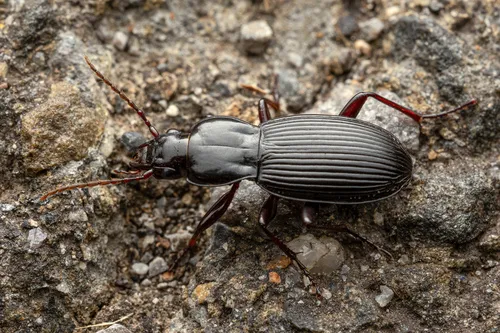
Pterostichus adoxus
Pterostichus adoxus
Pterostichus adoxus is a species of woodland ground beetle in the family Carabidae. It is found in North America. Larvae are predators....
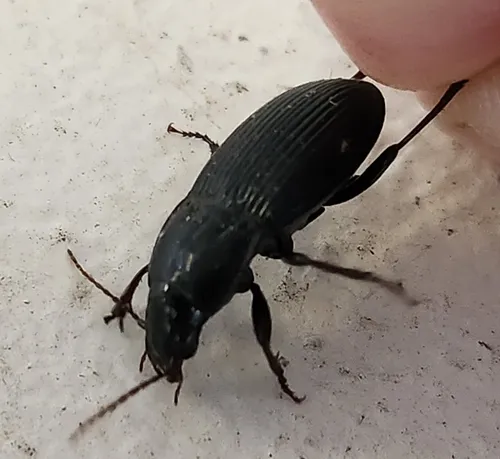
Pterostichus atratus
Pterostichus atratus
Pterostichus atratus is a species of woodland ground beetle in the family Carabidae. It is found in North America.
Pterostichus brevicornis
Pterostichus brevicornis
Two subspecies, one in our area- Pterostichus b. brevicornis Fossil records of the species are known from Greenland and Ontario.
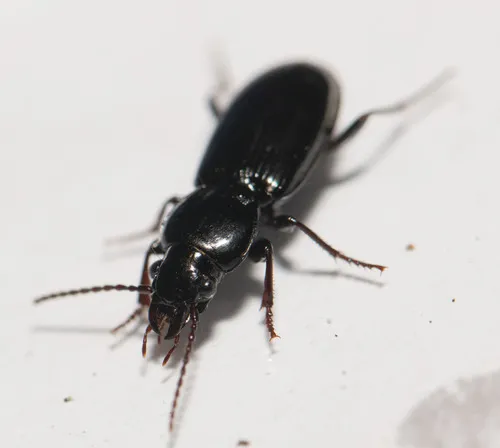
Pterostichus caudicalis
Pterostichus caudicalis
Identification: Helpful traits are the non-iridescent elytra and a strong constriction at base of pronotum ending in sharp rectangular angles.
Pterostichus commutabilis
Pterostichus commutabilis
Identification: A smaller Pterostichus with broad roundish pronotum and iridescent elytra
Pterostichus congestus
Pterostichus congestus
Identification: Elytra dull, without punctures, with markedly convex intervals; pronotum elongated, strongly sinuate, basally without bead
Pterostichus coracinus
Pterostichus coracinus
Requires close examination to separate from very similar P. novus
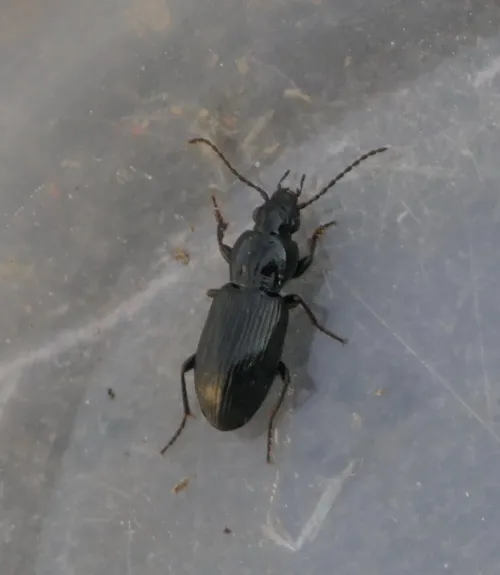
Pterostichus diligens
Pterostichus diligens
Pterostichus diligens is a 5 to 7 mm long, black ground beetle. There are three other small species that make identification very difficult. Unless identified by a recognised expert, a photo is required and the specimen should be examined in detail.
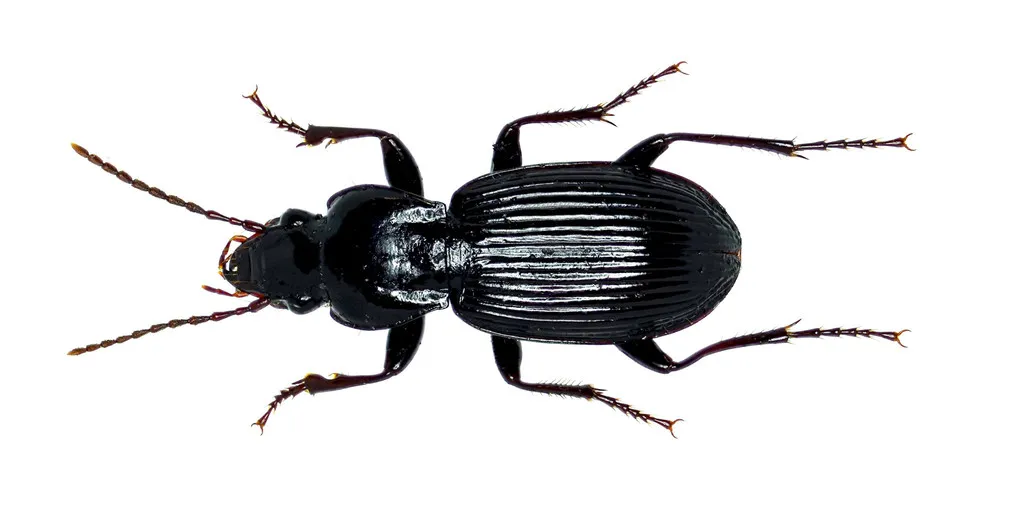
Pterostichus lachrymosus
Pterostichus lachrymosus
Pterostichus lachrymosus is a species of woodland ground beetle in the family Carabidae. It is found in North America.
Pterostichus luctuosus
Pterostichus luctuosus
Identification: Helpful traits are the iridescent elytra and a relatively mild constriction at base of pronotum ending in sharp angles. Separated from sibling species P. tenuis by shape of mentum tooth.
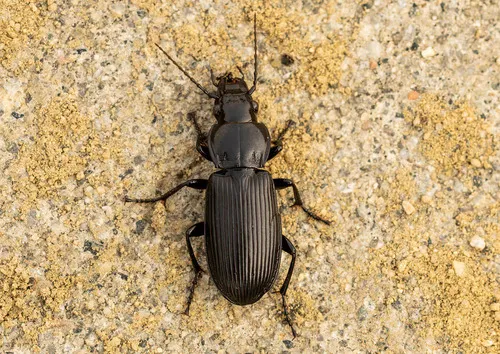
Pterostichus melanarius
Pterostichus melanarius
13-17 mm with body, legs and antennae all black. The pronotum is fairly short and wide when compared to Pterostichus niger and is evenly rounded with a small tooth at the sharp rear angles. Deep elytral striae with convex intervals; Claw-bearing tars
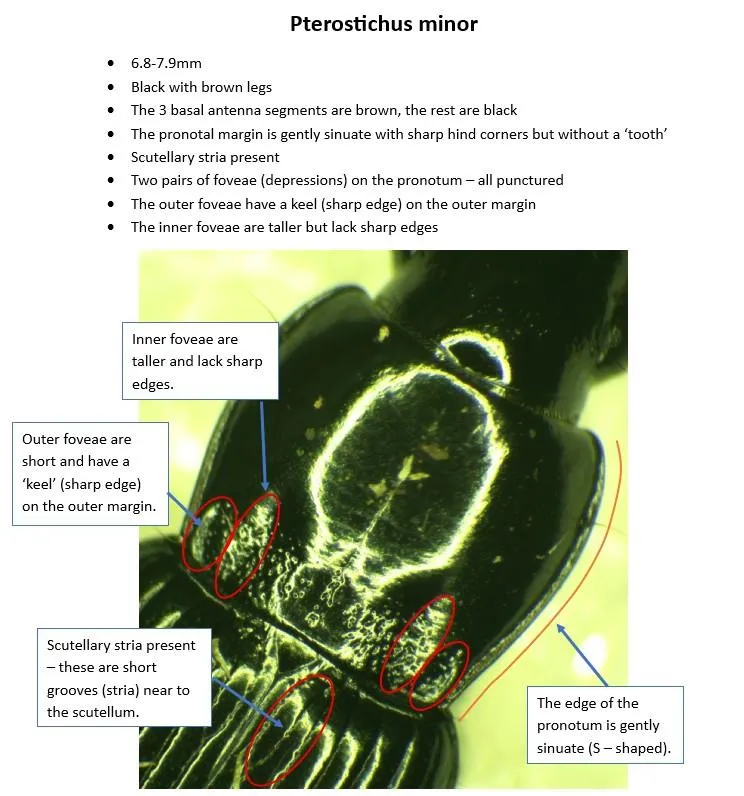
Pterostichus minor
Pterostichus minor
7-8mm, generally black but with brown legs. Antennae black except for the first three segments which are pale brown. The pronotum edge is sinuate and there are two pairs of basal foveae on the pronotum - the outer one having a keeled outer edge. See
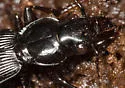
Pterostichus moestus
Pterostichus moestus
Identification: Diagnostic clues: terminal tarsomeres glabrous beneath; pronotal depression extends well to laterobasal side; pronotal sides sinuate; elytron widest near apex and with 4 dorsal setae; range noted below.
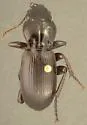
Pterostichus morionides
Pterostichus morionides
Pterostichus morionides is a species of woodland ground beetle in the family Carabidae. It is found in North America.
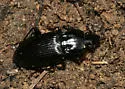
Pterostichus mutus
Pterostichus mutus
Identification: Three tiny punctures along elytron interval #3, a smooth convexity (not sharp ridge) between pronotal basal depression and sharp (not rounded) hind angles.
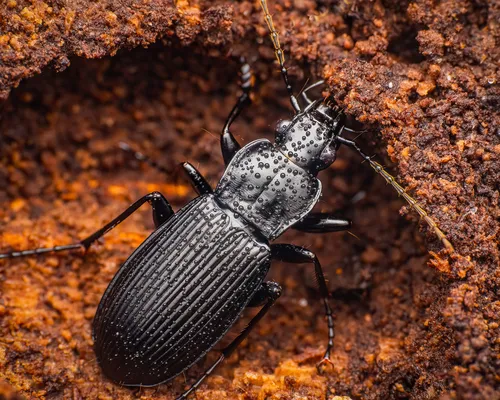
Pterostichus niger
Pterostichus niger
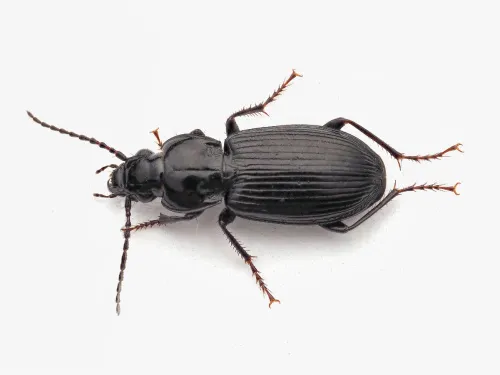
This large (15-21mm) ground beetle is all black apart from red claws and spines on its legs. The pronotum is rather long and fairly narrow by comparison with Pterostichus melanarius and also has sinuate sides. Pterostichus melanarius is a similar siz
Pterostichus nigrita
Pterostichus nigrita
A medium-sized (9-12mm) black ground beetle. The typical form is uniformly black but there is a form with reddish femora (var. rufifemoratus ). P. nigrita cannot be separated from P. rhaeticus without examining the genitalia. P. nigrita has a rounded
Pterostichus parasimilis
Pterostichus parasimilis
Pterostichus parasimilis is a species of woodland ground beetle in the family Carabidae. It is found in Europe and Northern Asia (excluding China) and North America.
Pterostichus pinguedineus
Pterostichus pinguedineus
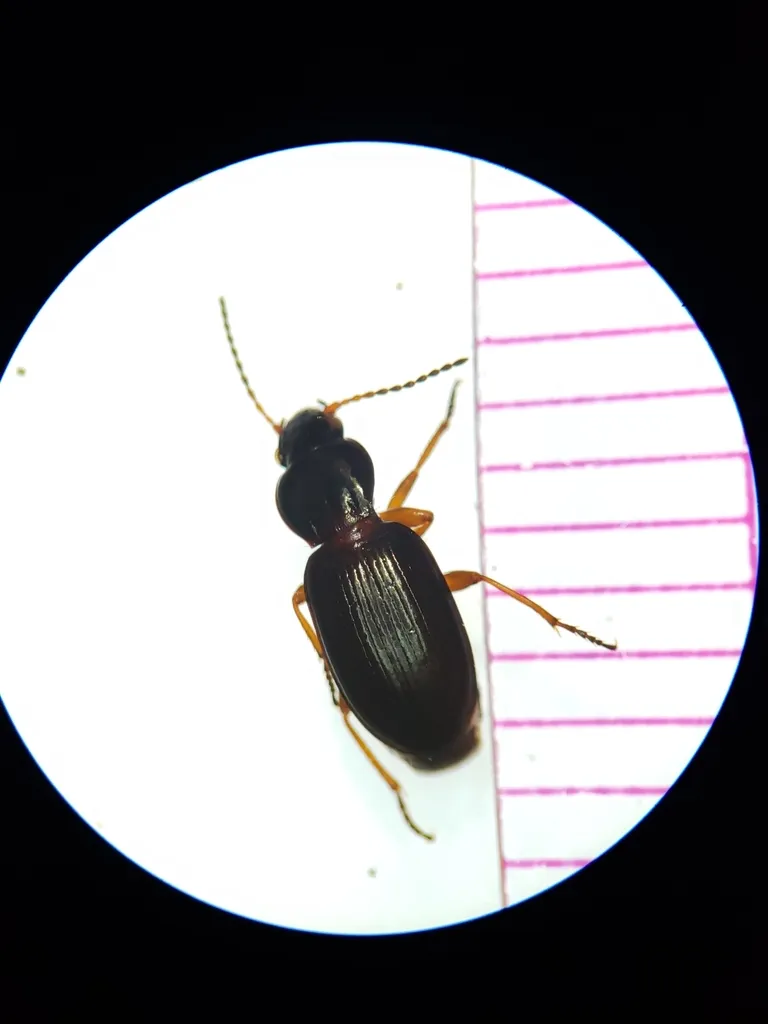
Pterostichus pinguedineus is a species of woodland ground beetle in the family Carabidae. It is found in Europe and Northern Asia (excluding China) and North America.
Pterostichus punctiventris
Pterostichus punctiventris
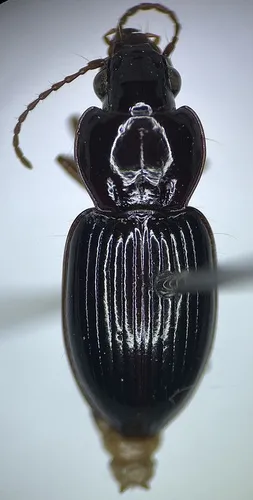
Pterostichus punctiventris is a species of woodland ground beetle in the family Carabidae. It is found in North America.
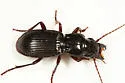
Pterostichus rostratus
Pterostichus rostratus
Identification: Important features are the long mandibles and absence of dorsal punctures on elytra
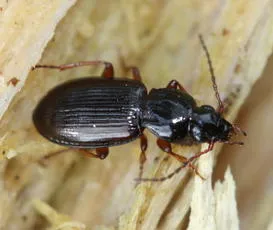
Pterostichus strenuus
Pterostichus strenuus
Length 5 to 7 mm. All black body but with red-brown legs. It has a sinuate pronotum with sharp hind angles. Common in almost every habitat, usually living amongst plant litter but also under stones. Common in gardens and on arable land.
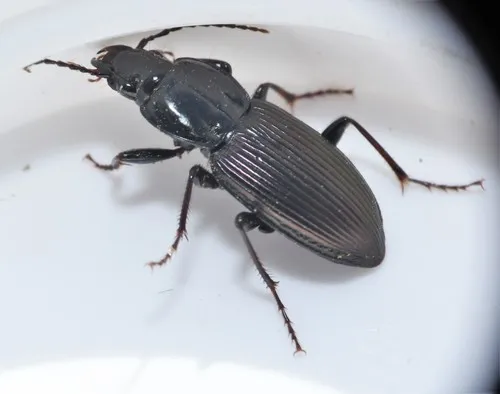
Pterostichus trinarius
Pterostichus trinarius
Pterostichus trinarius is a species of woodland ground beetle in the family Carabidae. It is found in North America.
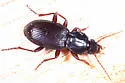
Pterostichus tristis
Pterostichus tristis
Identification: Helpful clues are: no setigerous punctures on dorsal elytra AND hind angle of pronotum sharp (vs duller in closely related P. adoxus).
Pterostichus vernalis
Pterostichus vernalis
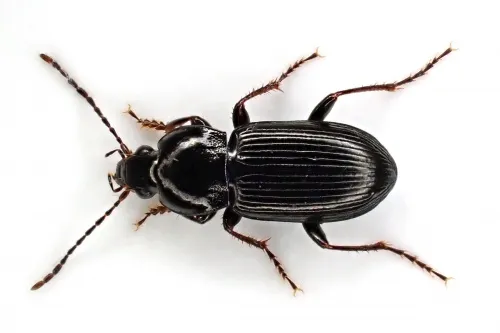
Length 6 to 8 mm. A black beetle with legs and antennae dark brown to black but with the basal segment of the antennae paler. It has a very rounded pronotum with toothed hind angles. The tarsi have a central furrow above. Various habitats, under logs
Ptilinus lobatus
Ptilinus lobatus
Identification: Females can't be separated from P. pruinosus without associated males
Ptilinus ruficornis
Ptilinus ruficornis
Ptilinus ruficornis (Ptilinus ruficornis) is a species in the family Ptinidae, commonly known as death-watch and spider beetles, belonging to the order Coleoptera (Beetles). It is classified within the subfamily Ptilininae, suborder Polyphaga, superf
Ptilodactyla carinata
Ptilodactyla carinata
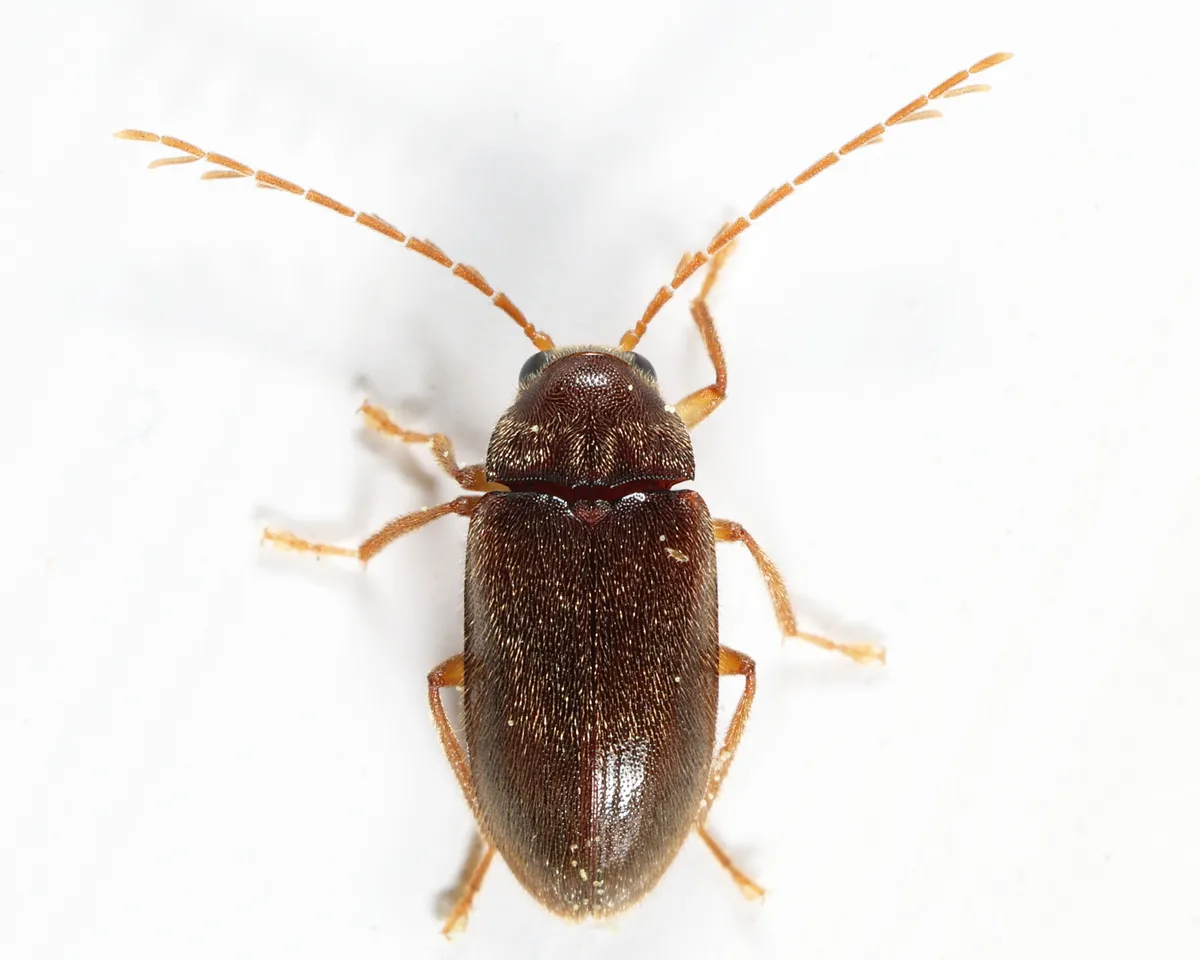
Identification: Male genitalia very long with the apex symmetrical and boat-shaped.
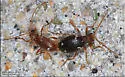
Ptinus bicinctus
Ptinus bicinctus
earliest records in our area: QC ~1860–1871 , ?NS 1915
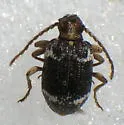
Ptinus bimaculatus
Ptinus bimaculatus
Identification: Body relatively stout, with shoulders prominent. Color dark, with shoulders and apical part of elytra brown sometimes. Each elytron with two transverse bands of white hairs, the anterior one undulate (diagnostic). Det. E. G. Riley, 20
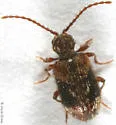
Ptinus fallax
Ptinus fallax
Identification: a member of P. quadrimaculatus species group, with 11 very similar species in our area; identification requires specimen examination
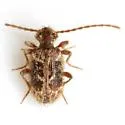
Ptinus hystrix
Ptinus hystrix
Identification: Separated from similar members of the P. interruptus group by elytral hairs being in part longer than distance between two elytral puncture series, the latter being coarsely punctured, not narrower than intervals.
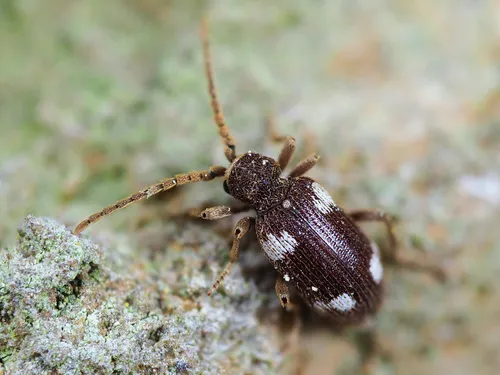
Ptinus sexpunctatus
Ptinus sexpunctatus
One of the spider beetles, so-called because of their long legs and roundish bodies, although in this particular species the body is less rounded than in some other members of the genus. It is very small (3 or 4 mm) with brown pitted elytra marked wi
Ptinus tumidus
Ptinus tumidus
Type Specimen collected by H.S. Barber at Los Borregos, Brownsville, Texas, 24.V.1904. (Fall 1905) Texas considers this to be a "Species of Greatest Conservation Need" (SGCN) ( 5 )
Ptinus variegatus
Ptinus variegatus
Identification: Elytra with two wavy white bands, the anterior one usually extending to shoulder and along side margin. Pronotum with projecting latero-dorsal humps and rather short pubescence, pale, denser and scaly in middle. Not conspicuously dimo
Ptomaphagus cavernicola
Ptomaphagus cavernicola
This is a fully-eyed and functionally-winged species known (w/ one SC exception) only from caves in a largely disrupted but crescentric dist. from Mex. to IA to FL. (Peck 1973) The lack of significant variation in the cave pop. may suggest that the d
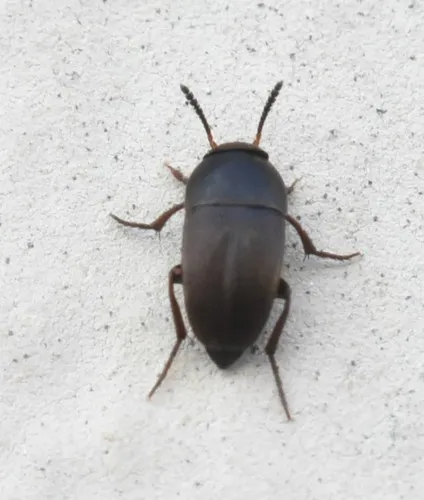
Ptomaphagus subvillosus
Ptomaphagus subvillosus
Length 2.2 to 3.7 mm. The pronotum and elytra have transverse microscopic sculpture plus flat hairs. The antennal club is all dark. The first four segments of the front tarsi are broadened: weakly in females but clearly so in males with the 4th segme
Ptomaphagus ulkei
Ptomaphagus ulkei
Identification: Very close to P. brevior and P. consobrinus . Dissection generally needed to confirm identification.
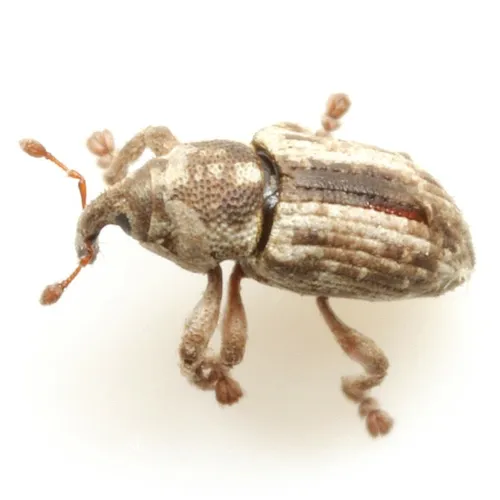
Punctate Water Weevil
Notiodes punctatus
Notiodes punctatus is a species of marsh weevil in the family Erirhinidae, although it is often treated as a member of the family Brachyceridae. It is found in North America.
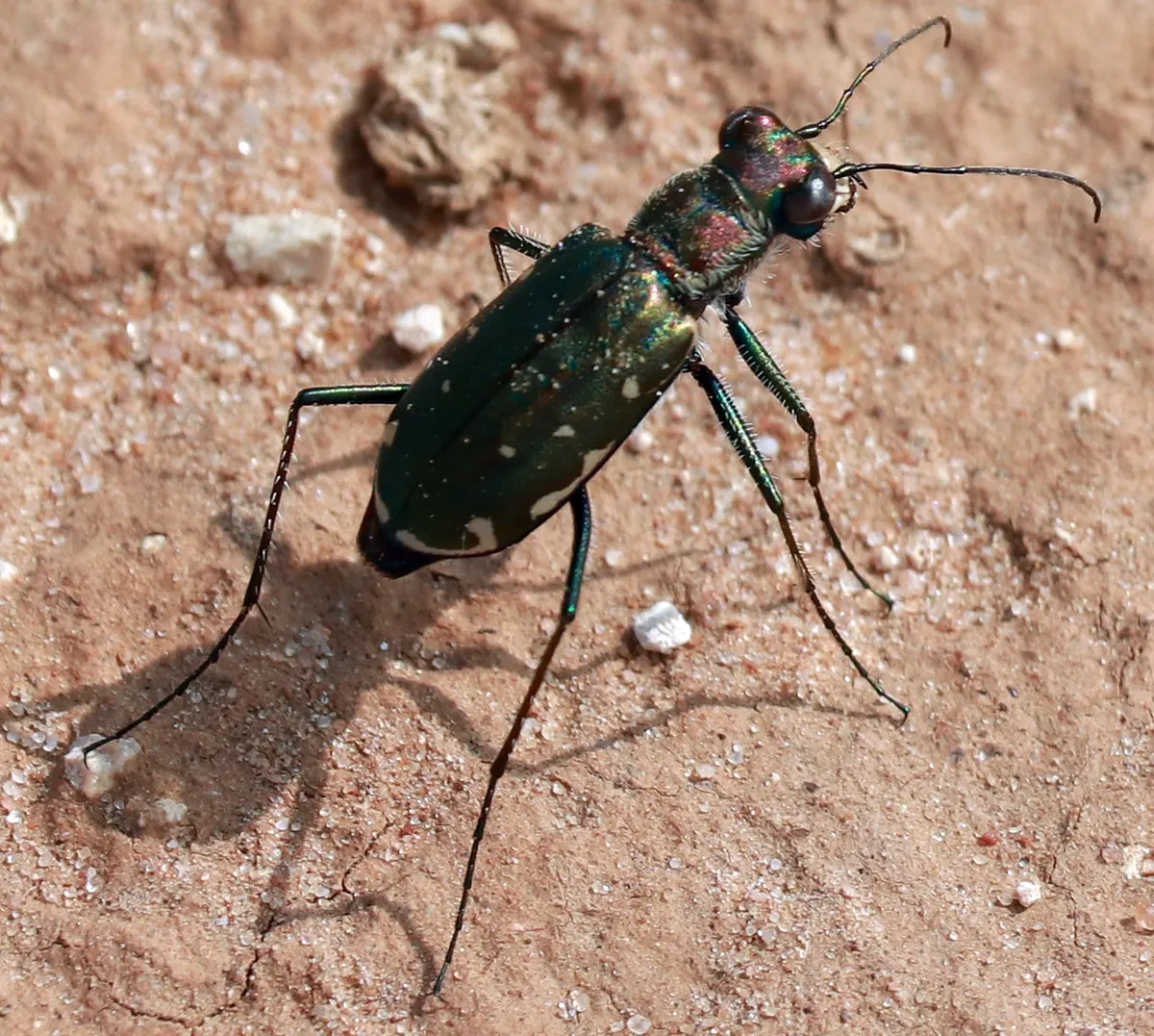
Punctured Tiger Beetle
Cicindelidia punctulata
Identification: slender, dark brownish-gray (in the east), with or without thin white markings; longitudinal row of pits on each elytron: in the southwest may be completely green, and have reduced maculae or none:
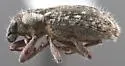
Puncturevine Seed Weevil
Microlarinus rhinocylloides
introduced to control Puncturevine; first released in the US in 1961 (NV & CA, later in other states)
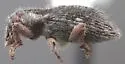
Puncturevine Stem Weevil
Microlarinus lypriformis
Identification: more parallel-sided than M. rhinocylloides introduced into the US as biocontrol agent in 1961 (CA, AZ)
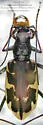
Puritan Tiger Beetle
Ellipsoptera puritana
Identification: “Above greenish bronze with maculations connected along the elytral edge by a broad white line. The inner end of the middle band is usually eroded or ragged. Below it is copper colored. Closely related and similar to C. macra, most in
Purpuricenus opacus
Purpuricenus opacus
Identification: distinguished from other N. Amer. Purpuricenus by its brunneus to dull-orange elytra with at most the apical one-third black Rare in dry years ; a large series collected in fermenting bait traps placed in a dry oak/juniper/pine woodla
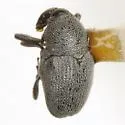
Pycnobaris squamotecta 0
Pycnobaris squamotecta
Identification: Easily distinguishable from pruinosa by the dense vestiture of broad recumbent scales. Type Locality: Texas, a single specimen.
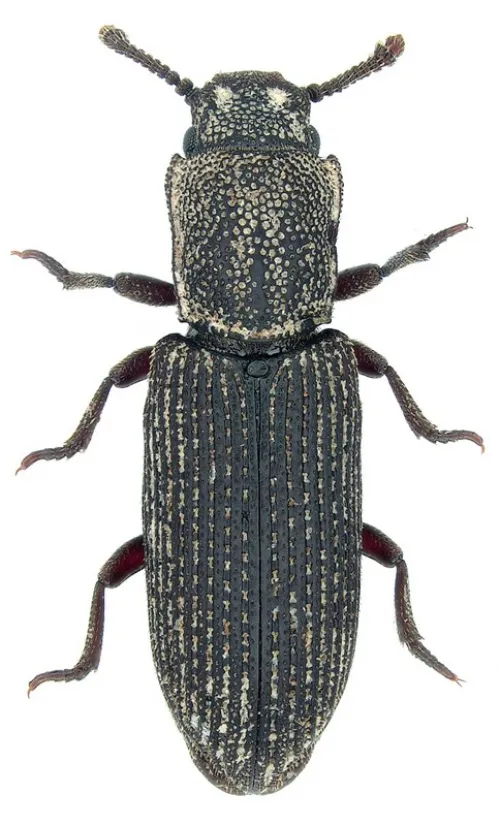
Pycnomerus fuliginosus
Pycnomerus fuliginosus
A small (about 4 mm) dark grey or blackish, distinctively shaped bark beetle. Antennae with a weak 2 segmented club and all other segments transverse. Good quality images are required and specimen should be retained if possible until the record has b
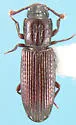
Pycnomerus sulcicollis
Pycnomerus sulcicollis
Identification: The two thoracic grooves do not attain either apex or base, and the dorsal line between them is convex and elevated. Det. J. Gruber, 2008 Type Locality: Georgia, under pine bark.
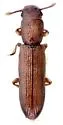
Pycnomerus thrinax
Pycnomerus thrinax
Identification: Pronotum without trace of longitudinal wrinkles, punctures round; elytra laterally expanded above hind portion of metasternum Paratype
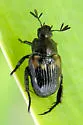
Pygmy Chafer
Strigoderma pygmaea
Identification: Pronotum black, elytra various from all black to all yellow; shiny.
Pygmy Dromo Tiger Beetle 0
Dromochorus minimus
Identification: Elytra dark ash-grey, sometimes with frosty blue reflections. can be separated from all other species, by the presence of a frosted or ashy grey to beige dorsum, sometimes with blue reflections, in conjunction with labial palpi that a
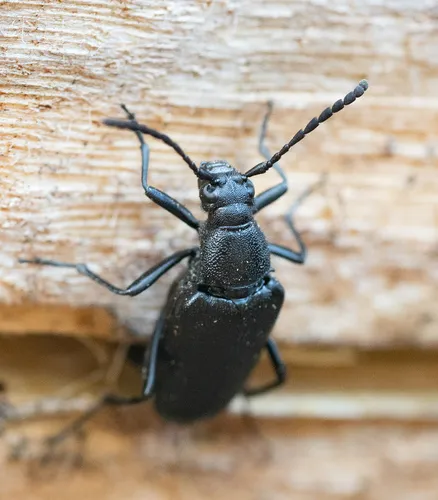
Pygoleptura brevicornis
Pygoleptura brevicornis
Pygoleptura brevicornis is a species of flower longhorns in the family Cerambycidae. It is found in North America.
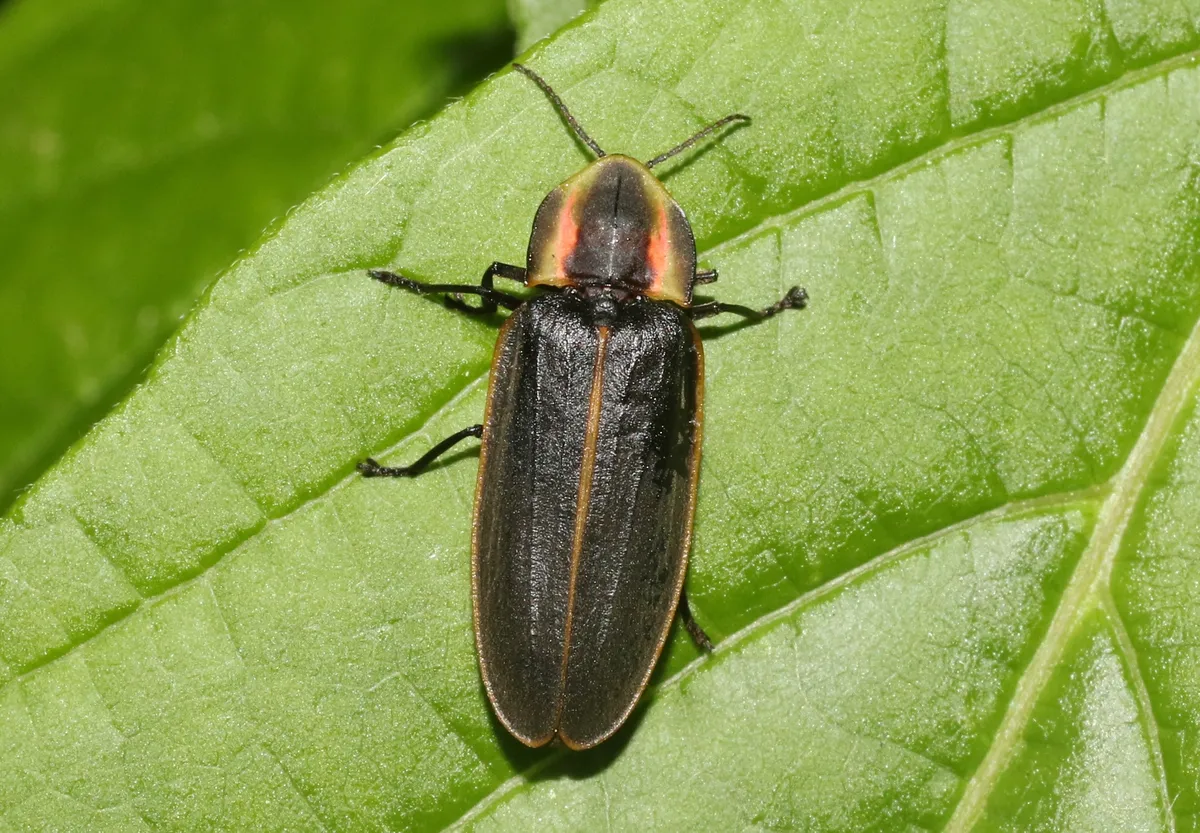
Pyractomena borealis
Pyractomena borealis
Identification: distinguished by the large size, dark color, narrow (sometimes obliterated) pale lateral border of the elytron, and dusky epipleuron.
Pyractomena ecostata
Pyractomena ecostata
Identification: The following combination of characters is unique for this species: nearly glabrous dorsal surface, short subcylindric antennae (three-quarters length of pronotum), truncate apex of pronotum, pale costae of elytron (Green 1957)
Pyractomena linearis
Pyractomena linearis
Identification: Body narrowly elongate, glabrous. Color pale overall, median stripe brown, pale lateral border of elytron narrow.
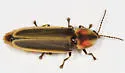
Pyractomena lucifera
Pyractomena lucifera
Identification: This narrowly elongate species is readily identified by the uniform golden pubescence of the pronotum. Also, the black margins of the pronotum do not reach the posterolateral angles.
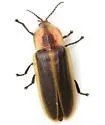
Pyractomena punctiventris
Pyractomena punctiventris
Identification: Det. B. Pfeiffer, 2016 Type series: "Texas; three males; Austin, Mrs. V. O. King; Bosque Co., G. W. Belfrage" (LeConte, 1878)
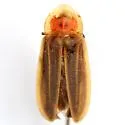
Pyractomena vexillaria
Pyractomena vexillaria
two spmns in the C.A. Triplehorn Insect Collection ( 4 ) examined by Green that were collected by D. J. & J. N. Knull in Val Verde Co., Texas in 1947 & 1948. Type Locality: Veracruz, Mex.
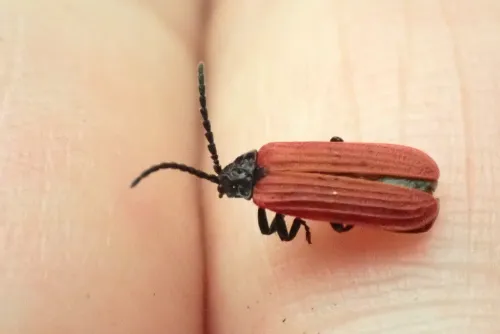
Pyropterus nigroruber
Pyropterus nigroruber
7.5 to 10 mm it is entirely black but with distinctive red elytra. The antennae in this species are not pale tipped . Platycis minutus is similar but has pale tipped antennae. Unless identified by a recognised expert, a photo is required. If the phot
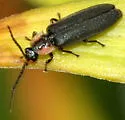
Pyropyga minuta
Pyropyga minuta
Identification: pronotum pale with median vitta subparallel-sided, usually somewhat expanded near base extreme genitalic variability suggests a species complex
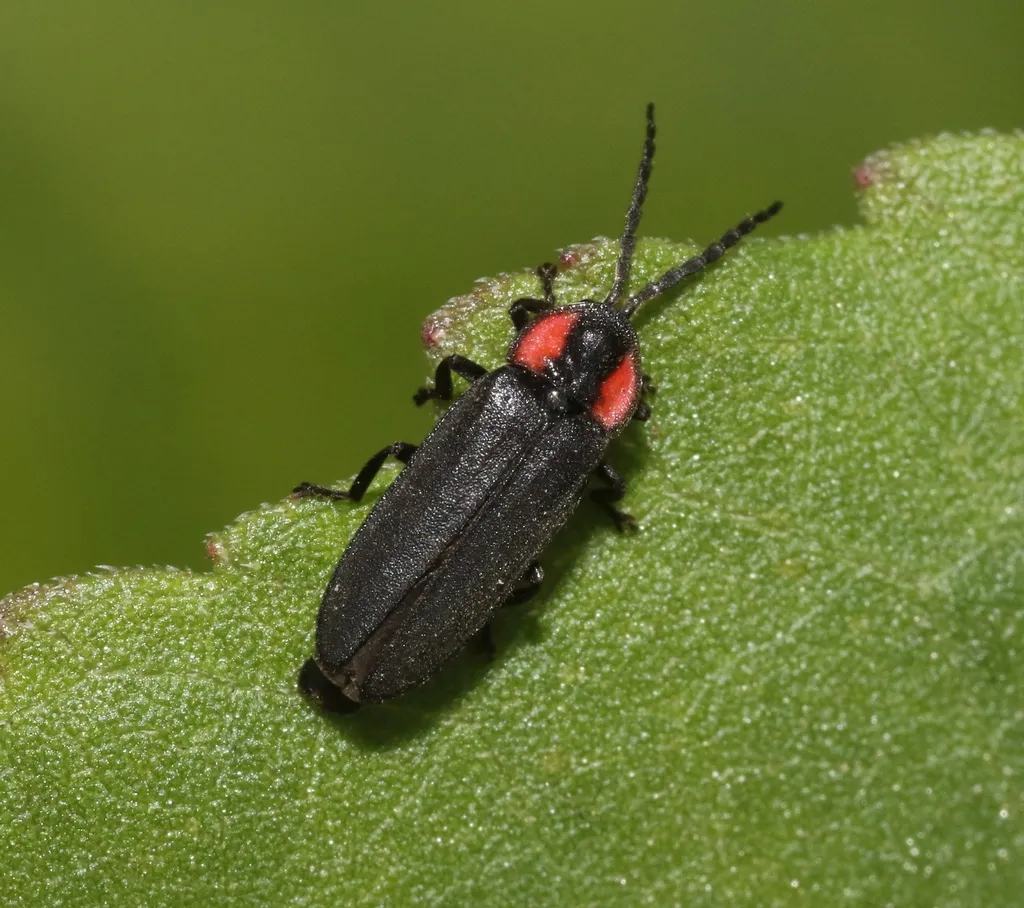
Pyropyga nigricans
Pyropyga nigricans
Identification: dark pronotal border varies to narrow and paler or indistinct, especially in specimens from Arizona. Complete elimination of the dark border is rare, but has been noted in a series from Corpus Christi, Texas. rather uncommon east of t
Pyrota akhurstiana
Pyrota akhurstiana
Identification: Shiny, brick red and black, the elytra black, each completely margined with brick red (last couplet)
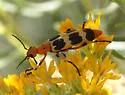
Pyrota concinna
Pyrota concinna
Identification: The basal black elytral band tends to be longer and more frequently divided into elongate spots