
Primitive Winged Insects
Order Coleoptera
The Primitive Winged Insects (Order Coleoptera) includes 15,720 species across 160 families and 3,716 genera in our directory.
About Primitive Winged Insects
Coleoptera is the largest order of insects with over 400,000 described species, representing ~25% of all known animal species and ~40% of all insects. In the U.S. alone, nearly 30,000 beetle species have been identified.
Economic Impact
Beetles have major economic significance: leaf beetles (Chrysomelidae) and weevils (Curculionoidea) are among the most destructive agricultural pests globally, costing billions annually, while predatory species like ladybugs provide natural pest control.
Ecological Role
Beetles are prominent decomposers, especially in forests, breaking down dead wood and recycling nutrients. As predators, they reduce populations of pest insects. Many species are also important pollinators of flowering plants.
Families in Coleoptera (160)
Species in Coleoptera (15,720)
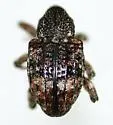
Pheloconus infector
Pheloconus infector
Pheloconus infector (Pheloconus infector) is a species in the family Curculionidae, commonly known as snout and bark beetles, belonging to the order Coleoptera (Beetles). It is classified within the subfamily Molytinae, tribe Conotrachelini, suborder
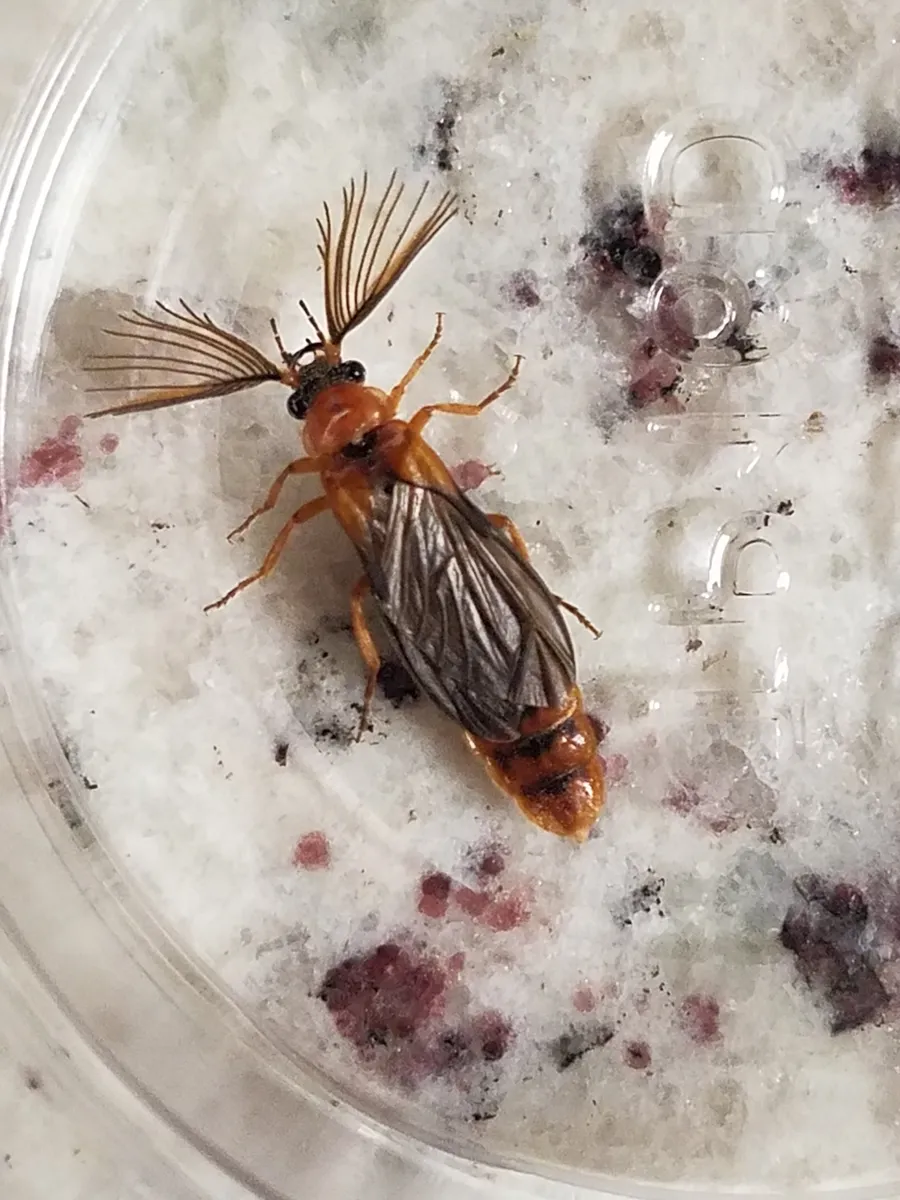
Phengodes fusciceps
Phengodes fusciceps
Identification: Can be recognized by the short antennae
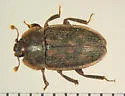
Phenolia grossa
Phenolia grossa
Phenolia grossa (Phenolia grossa) is a species in the family Nitidulidae, commonly known as sap-feeding beetles, belonging to the order Coleoptera (Beetles). It is classified within the subfamily Nitidulinae, tribe Nitidulini, suborder Polyphaga, sup
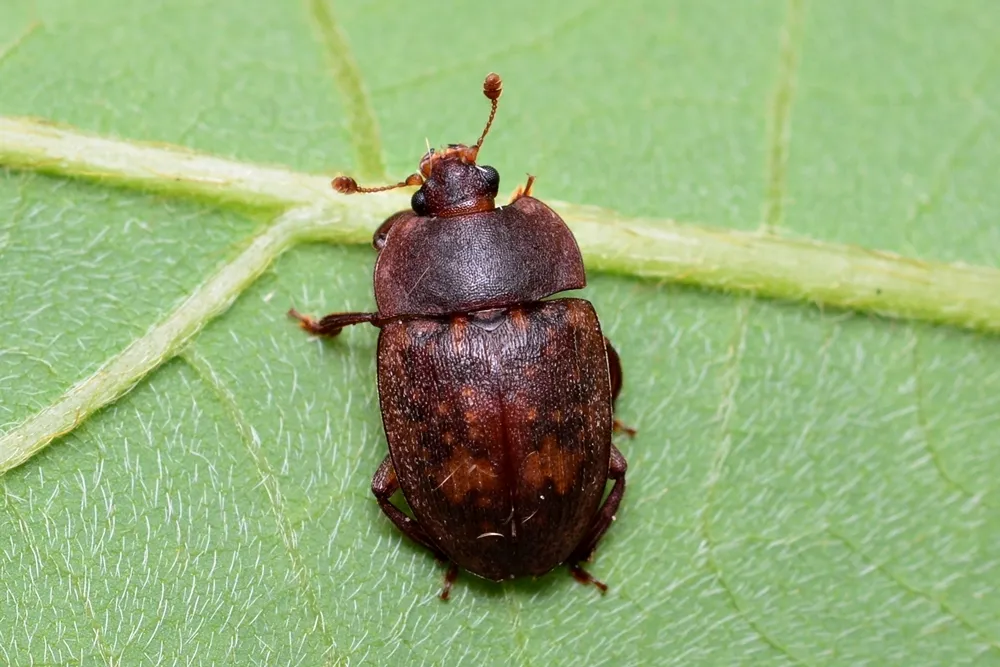
Phenolia picta
Phenolia picta
Identification: dorsal habitus photo first US record : New Orleans, LA 2024
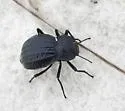
Philolithus aeger
Philolithus aeger
Identification: Body black and shining. Punctures on the pronotum small and sparse (coarser & denser in Ph. sordidus ). The discal costae (ridges) are somewhat flattened, and the medial costae is nearly absent, or indistinct (clearly raised in sordid
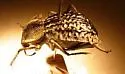
Philolithus sordidus
Philolithus sordidus
Identification: Elytral ridges clearly elevated (more flattened in aegra ); pronotum with very coarse, and closely spaced punctures (smaller, and more widely distributed in aegra )
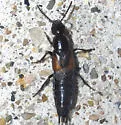
Philonthus aurulentus
Philonthus aurulentus
Identification: Pronotum with quite dense, almost regular punctation; elytra can be black, or red with scutellar region dark to variable extent. the very similar P. lecontei Horn, 1884 even more western (BC - CA + Rockies)
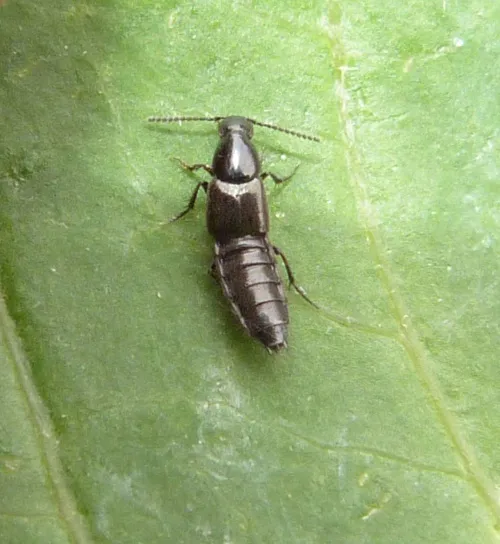
Philonthus carbonarius
Philonthus carbonarius
7-8mm. Black but with a green metallic sheen on the elytra. The legs and palps are dark brown. This looks like a smaller version of P. cognatus but lacks the bicolour (brown+yellow)of the first antennal segment. Unless identified by a recognised expe
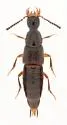
Philonthus chujoi
Philonthus chujoi
Identification: Very similar to the adventive Philonthus debilis , most easily separated with male genitalia
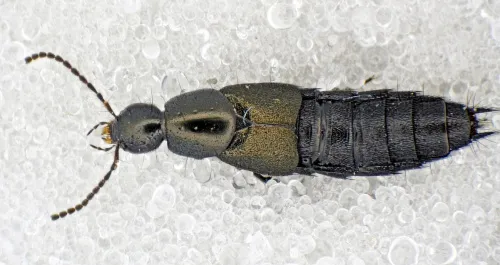
Philonthus cognatus
Philonthus cognatus
Adults are 8 to 11 mm long. They are black in colour with a green metallic sheen on the elytra which are are profusely pitted. A distinctive feature of this species is that the underside of the first antennal segment is yellow, contrasting with the b
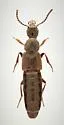
Philonthus concinnus
Philonthus concinnus
Identification: Species page earliest record in e.NA: QC 1906
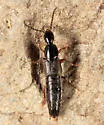
Philonthus couleensis
Philonthus couleensis
Often found by sifting litter, moss, dead vegetation or other debris. Also taken by treading and in clumps of grasses and Carex .
Philonthus cruentatus
Philonthus cruentatus
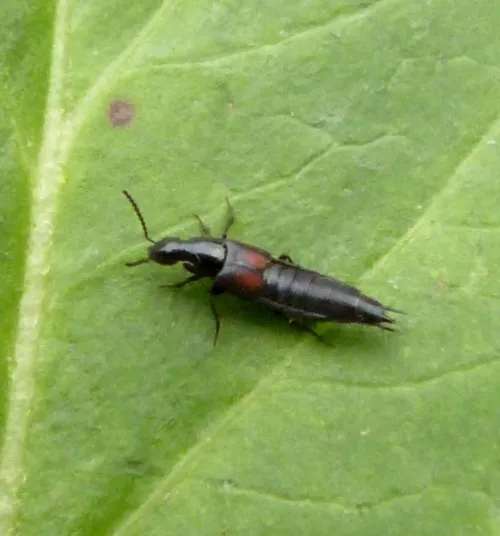
A blackish species but usually with prominent red spots on the wing cases. There are similar species and care is needed with identification. A species of extensive habitats on damp soils, but it also turns up in patch habitats, especially dung and ca
Philonthus debilis
Philonthus debilis
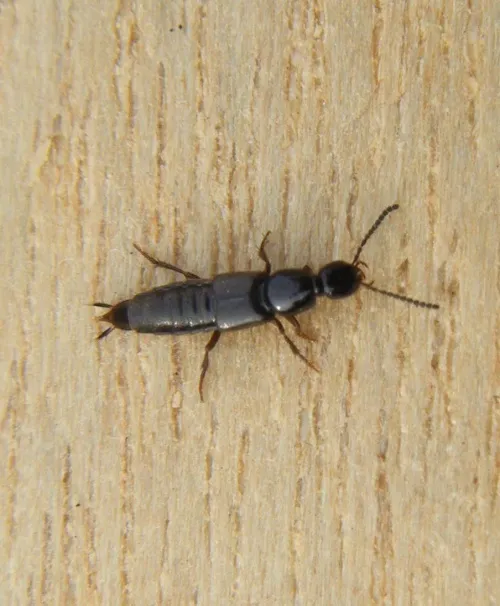
A small (about 5 mm) dark rove beetle with short dark brown wing cases. Under logs and stones and in leaf litter and debris. Widespread but infrequent in England and Wales, little recorded in Scotland. No additional images available for this species.
Philonthus gentilis
Philonthus gentilis
Identification: distinctive: legs & antennal base orange, elytra blue • Type specimens
Philonthus jurgans
Philonthus jurgans
Philonthus jurgans (Philonthus jurgans) is a species in the family Staphylinidae, commonly known as rove beetles, belonging to the order Coleoptera (Beetles). It is classified within the subfamily Staphylininae, tribe Staphylinini, suborder Polyphaga
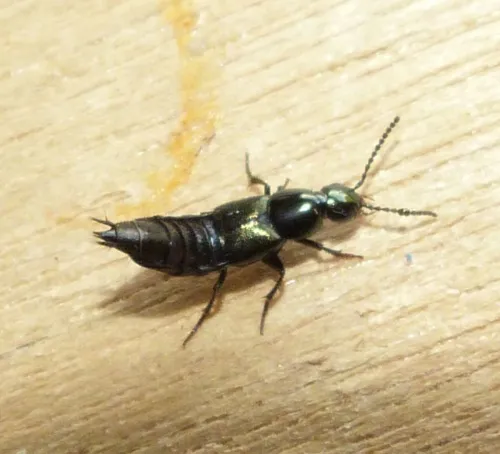
Philonthus laminatus
Philonthus laminatus
This rove beetle has a very shiny, metallic greeny bronze appearance. It can be found in all months of the year but most commonly between May and September. It is an active predator of small insects. Fairly frequent and widespread across England and
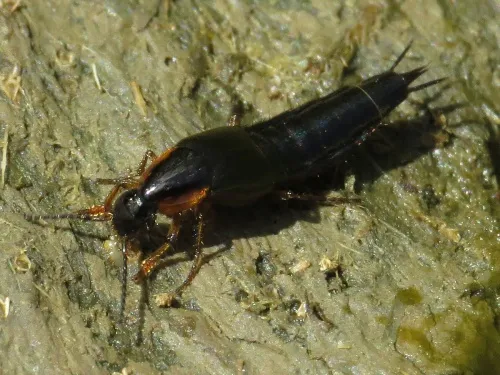
Philonthus marginatus
Philonthus marginatus
7 to 9.5mm. The reddish-yellow lateral margins to the pronotum make this beetle easy to identify. The remainder of the pronotum, head, and abdomen are shining black. The elytra are blackish with long overlapping hairs and the legs usually yellowish t
Philonthus nudus
Philonthus nudus
Identification: purely black, including elytra; the latter strongly but not densely punctured; some discal pronotal punctures in common groove, like in several Cafius . Head wider in males
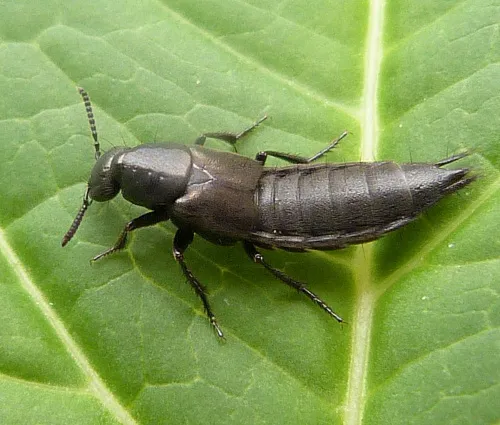
Philonthus politus
Philonthus politus
A large dark rove beetle with rather bronzy elytra. A patch habitat species most frequently found in carrion. Rather localised in Britain. Most records seem to come from central England and from Wales. No additional images available for this species.
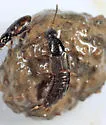
Philonthus quadricollis
Philonthus quadricollis
Common species. Philonthus gavius Smetana, 1995 is very similar, but has a more southern distribution.
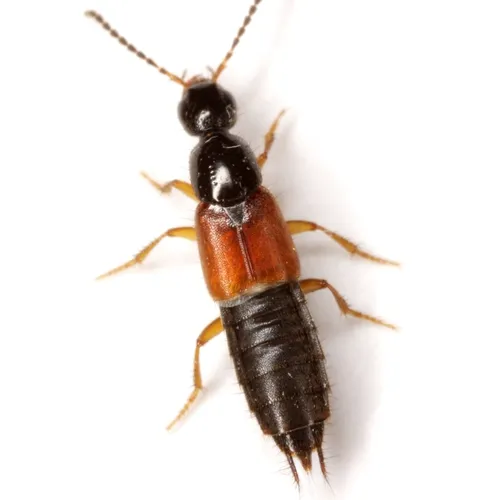
Philonthus rufulus
Philonthus rufulus
Identification: Like in P. alumnus , in males both 6th and 5th(visible) ventral segments of abdomen with excision (on 6th only is usual condition) Should be the common at lights - Adam Brunke, 2010 comment
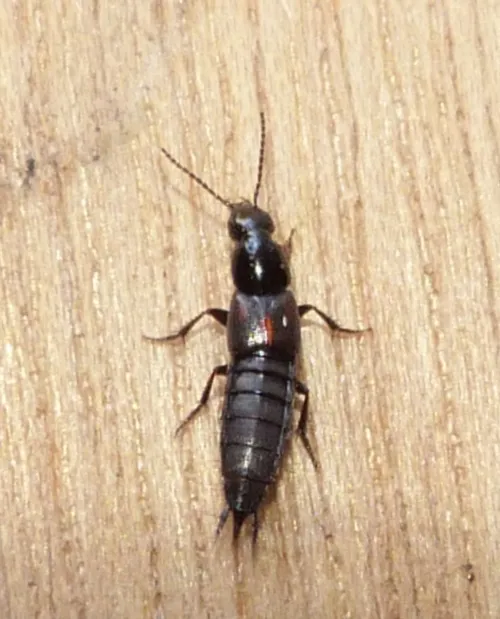
Philonthus sanguinolentus
Philonthus sanguinolentus
A fairly large, dark rove beetle which has a series of five punctures on the pronotum. A patch habitat species frequently found in dung, but also in more extensive habitats on damp but well drained soils. Widespread and fairly frequent in England and
Philonthus sericans
Philonthus sericans
Identification: Six punctures in each of the dorsal rows on the pronotum.
Philonthus splendens
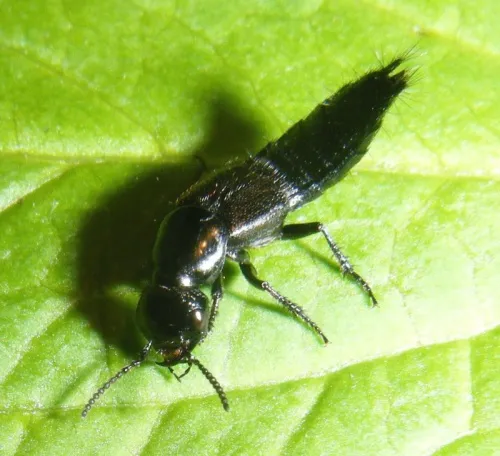
Philonthus splendens
Length up to 16 mm. A rather large dark brown species. Widespread and fairly frequent in Britain.
Philonthus tenuicornis
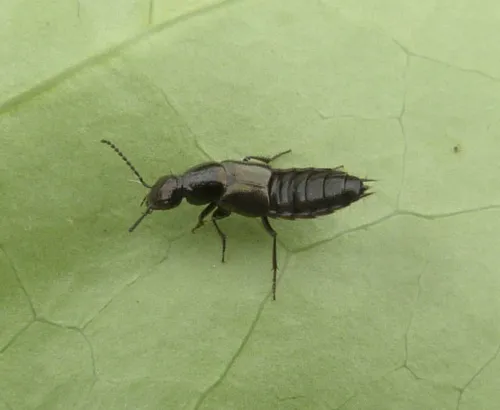
Philonthus tenuicornis
A medium sized (9 or 10 mm) dark brown or blackish rove beetle. Unless identified by a recognised expert, a photo is required and the specimen should be examined with a microscope. In the comments box, state the key or ID method used and describe the
Philonthus varians
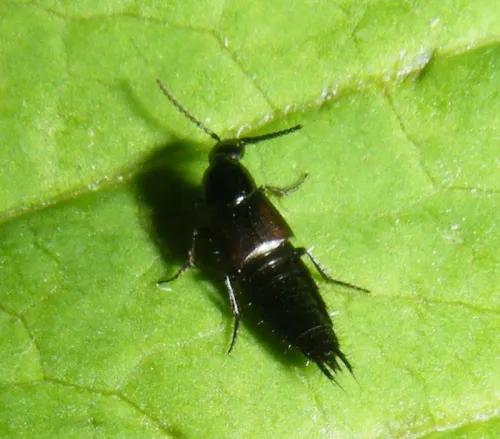
Philonthus varians
Length about 6 mm. The brownish elytra often show some degree of red marking or spots. Associated with decaying matter and dung. Widespread and fairly frequent in Britain.
Philonthus vulgatus
Philonthus vulgatus
Identification: Aedeagus distinctive, pronotum densely but irregularly punctate laterally (punctures usually with space between punctures wider than puncture diameter), head rounded with hind angles lacking, body pubescence black, dorsum not noticeab
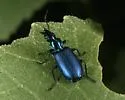
Philophuga caerulea
Philophuga caerulea
Identification: Head and pronotum with metallic blue or blue-green lustre, similar in color to elytra and not contrasting; elytral striae deeply impressed; intervals convex, finely to moderately coarsely punctate Lectotype
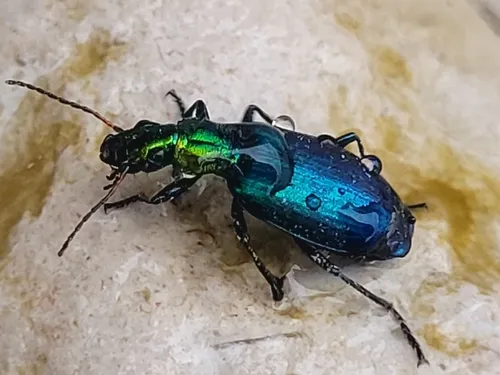
Philophuga viridicollis
Philophuga viridicollis
Identification: Head and pronotum with metallic green lustre, contrasting with blue elytra, or elytra also green; elytral striae shallowly impressed; intervals flat, finely punctate "Metatarsomere 4 is triangular and emarginate apically, not deeply b
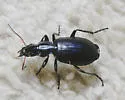
Philophuga viridis
Philophuga viridis
Identification: Pronotum and head concolorous, black with a metallic blue or green sheen; hind angle of pronotum with or without a setiferous puncture This is the most varied species of Philophuga , containing four well defined subspecies.

Philothermus glabriculus
Philothermus glabriculus
the most common eastern cerylonid; may occur with Cerylon unicolor , which is easily distinguished by the much narrower body and 1-segmented club
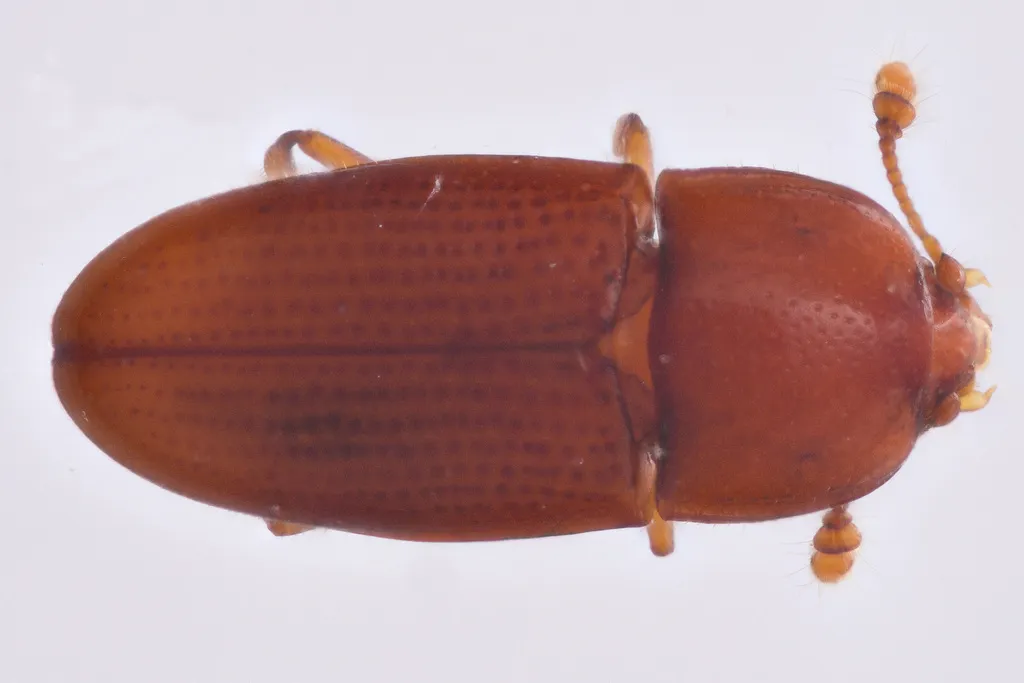
Philothermus stephani
Philothermus stephani
Identification: readily distinguished from nearctic congeners by reduced, depigmented eyes, elongate body (especially pronotum), and large size
Phloeocharis subtilissima 0
Phloeocharis subtilissima
Identification: see ; habitus: Fig.12 [p.243] dorsal habitus earliest NA record: NS 2001
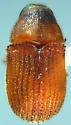
Phloeosinus dentatus
Phloeosinus dentatus
In North Carolina, working with the fungus Fomes angosus they can kill trees of all sizes. Working alone, they do not. ( 4 )
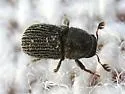
Phloeotribus dentifrons
Phloeotribus dentifrons
The fall generation of adults spend their winter in burrows in the bark; others may emerge and bore into the bark to hibernate. ( 3 ) Adults overwintering in the burrows tend to destroy the gallery patterns during the prolonged feeding period. ( 3 )
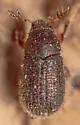
Phloeotribus pruni
Phloeotribus pruni
Identification: Very similar to P. liminaris , and may be conspecific .
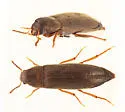
Phloiotrya concolor
Phloiotrya concolor
Identification: differs from Ph. fusca by antennomeres nearly as wide as long
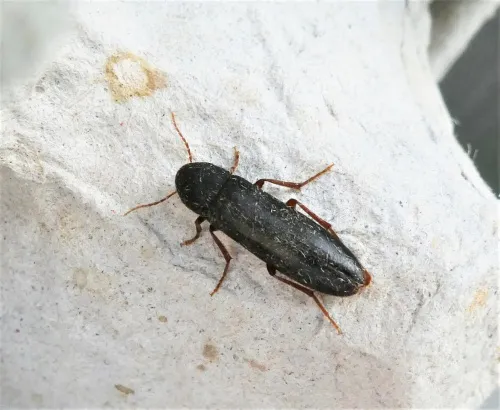
Phloiotrya vaudoueri
Phloiotrya vaudoueri
Males are slightly smaller than females, which reach a length of around 10 or 12 mm. Elongate and rather parallel-sided, the species is entirely dark brown or blackish but often with the elytra a little lighter than the forebody. Legs and antennae pa
Phoenicobiella schwarzii
Phoenicobiella schwarzii
Identification: The male antennae can be quite long, extending to nearly twice the body length. The antennae of the female are much shorter extending from 1/2 to 3/4 the body length. Texas considers this sp. a SGCN Type Locality: Brownsville, Cameron
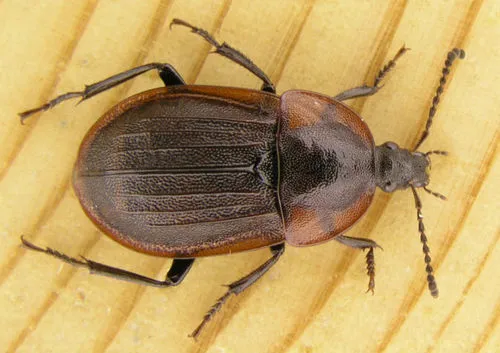
Phosphuga atrata
Phosphuga atrata
first detected in NA in 2021, in an urban park in Vancouver, BC by Cole Grueber, and in a forested area in Lévis, QC by Ludovic Leclerc; fairly abundant at both locations, but not yet found elsewhere in NA. All Quebec specimens are of the black morph
Photinus ardens
Photinus ardens
Identification: Pronotum with broader median dark vitta, its lateral margins somewhat irregular; pale area each side discolored by nubilous brownish or piceous spots, sometimes completely obscured. Form more elongate
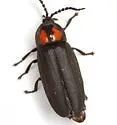
Photinus bivulnerus
Photinus bivulnerus
Identification: pronotal structure distinct, and minute light organs in the second-to-last abdominal segment visible just aft the elytra (comment by J. Cicero)
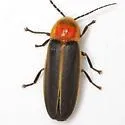
Photinus concisus
Photinus concisus
Identification: Pronotum without central dark spot. Elytra black; sutural bead yellow; lateral explanate margin yellow, becoming fuscous and black apically. Det. M. A. Quinn, 2016 Type Locality: 1 mi. NE Kerrville on RR 16, Kerr Co., Texas.
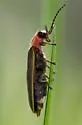
Photinus consimilis
Photinus consimilis
Identification: Form similar to P. pyralis , less elongate. Pronotum with well defined median dark vitta attaining base, slightly broader in front; each side fulvous. Scutellum and mesonotal areas dark piceous. (abbreviated description) ( 4 ) Type Lo
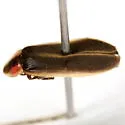
Photinus cookii
Photinus cookii
Identification: diurnal sp. lacking lanterns, thus the small eyes, see Green's description PARATYPE non-luminous , seems to be a very rare sp. Type Locality: Crailhope, Green Co., KY: holotype, 14 paratypes, 19 females, VII-1 to 18-1946, Carl Cook (C
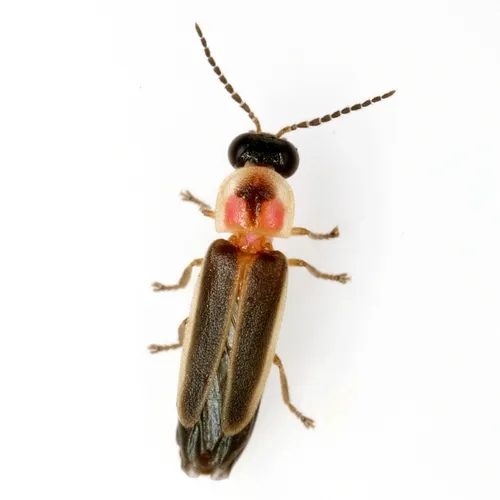
Photinus dimissus
Photinus dimissus
Identification: prothoracic spot elongate, wider in front [ephasis added]; apex and sides dusky, strongly punctured; scutel dusky; male with light organs as usual, fifth ventral and following segments entirely luminous; female light organs entirely w
Photinus granulatus 0
Photinus granulatus
Identification: This species has the rather short antennae and large eyes of dimissus and collustrans , with which it must be associated. The granulate pronotum is a unique character in our species; each granule bears a fine puncture at its summit. T
Photinus immaculatus
Photinus immaculatus
Identification: Pronotum without median dark spot, scutellum and mesonotal areas pale fulvous. Form as in P. marginellus . Pronotum without median dark spot, Scutellum and mesonotal areas fulvous. Elytra dark piceous brown, sutural bead distinctly fl
Photinus indictus
Photinus indictus
Identification: MALE, Form similar to P. consanguineus . Pronotum with median dark vitta attaining base and sometimes nearly apex, one-third to two-fifths as wide as convex disk, slightly narrowing posteriorly, sometimes abruptly expanding near base.
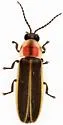
Photinus knulli
Photinus knulli
Identification: differs from other members of the P. consanguineus group by male genitalia the only lekking firefly known in North America (Cicero 1983)
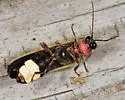
Photinus obscurellus
Photinus obscurellus
Identification: Very much resembles P. ardens , but differs essentially in having the base of the thorax emarginate. (LeConte, 1851) described from one spmn coll'ed in the "Missouri Territory."
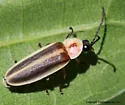
Photinus punctulatus
Photinus punctulatus
Identification: one of the most easily recognized of the Nearctic fauna. The pale pygidium, contrasting sharply with the preceding dark piceons tergites, is duplicated only in the narrowly elongate P. lineellus , occurring in the extreme Southeast. T
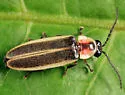
Photinus sabulosus
Photinus sabulosus
courtship flash patterns: males: quick flash every 4 seconds female response, quick flash a half second after the male's flash ( 3 )
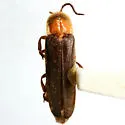
Photinus stellaris
Photinus stellaris
Identification: Elytra entirely black (i.e. lacking pale margins). Pronotum entirely rufous, or rarely somewhat dusky anteriorly Form elongate, as in P. collustrans seems more elongated than other spp. with pale pronota... Described from a series of
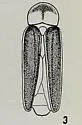
Photinus tanytoxus
Photinus tanytoxus
Identification: 3- Composite drawing ; pronotum showing dark coloration extending posteriorly along midline as found in some individuals of tanytoxus n. sp. and collustrans LeConte; [emphasis added] left elytron with sutural bead as in tanytoxus , ri
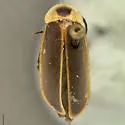
Photinus tenuicinctus
Photinus tenuicinctus
Identification: unique in having the lateral pale border of the elytra confined to the outer edge of the explanate margin. pronotal vitta varies from one-third to three-fifths as wide as the convex disk, and is usually broad at the basal extremity, s
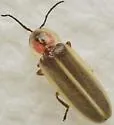
Photinus texanus
Photinus texanus
Identification: Pronotum with median dark vitta attaining base but not apex [but see type], widest in front, narrowest just before base at middle nearly one-third as wide as convex surface; anterior coarsely punctate area dusky medially. Scutellum an
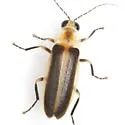
Photuris billbrowni
Photuris billbrowni
Identification: Flash Pattern: weak 1 sec double flash The FP is a pair of short flashes emitted so rapidly that they appear to be a hitched single flash; this FP is emitted at variable intervals averaging 1.0 to 1.8 second at temperatures near 28°/8
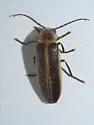
Photuris divisa
Photuris divisa
Identification: the most atypical or unusual of the North American Photuris pronotal disc with a large dark spot on both sides, third joint of the antennae is longer than the 2d. Det. Joe Cicero, 2022 Type Locality: Missouri Territory
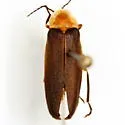
Photuris falli
Photuris falli
Identification: Pronotum entirely pale yellow ( brunnipennis group) Elytra entirely black. Labial margin triangulate. Metasternum concolorous with yellow head and thoracic sternites above and below. Fifth ventral sternite with pale posterior margin,
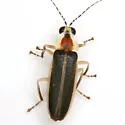
Photuris hebes
Photuris hebes
Identification: small size (about 11 mm. long) and have relatively long antennae, and pale (sometimes slightly infuscate) labrum, but exhibit considerable variation in the extent of the elytral vitta, which usually passes the middle, although it is s
Photuris katrinae
Photuris katrinae
Identification: large size, tawny color, and feeble vittagram, or its complete absence, should make identification certain Type Locality: Lost Maples State Park, Bandera County, Texas, collected 8 July 1992.
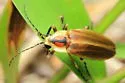
Photuris salina
Photuris salina
Identification: See Photuris hebes . Small size (9-12 mm long), shorter antennae than in hebes , and labrum is practically black (pale to slightly infuscated in hebes ) and feebly tridentate. Pronotal vitta hourglass-shaped. Elytra variable, light to
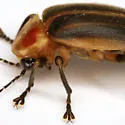
Photuris versicolor
Photuris versicolor
Identification: The useful characters of the original description are: large size; black antennae with the articles a little pale at base; black elytra with margin, suture, and a short vitta yellow; black legs with knees yellow. (but note that Barber
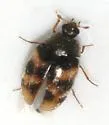
Phradonoma nobile
Phradonoma nobile
Identification: adult habitus first record in NA: AZ 2009
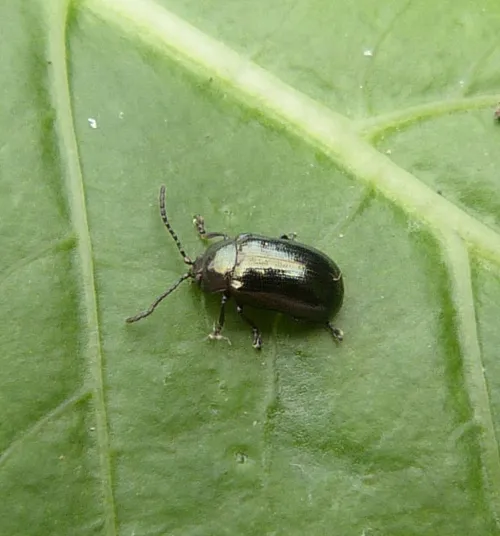
Phratora laticollis
Phratora laticollis
A small beetle (4 or 5 mm) which may have a blue or green sheen. Widespread, but sometimes local in Britain.
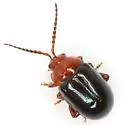
Phydanis bicolor
Phydanis bicolor
Identification: Males have distinctive antennae Det. E. G. Riley, 2009 sp. remains very rare in collections (E.G. Riley, pers. comm. to MAQ, 2017)
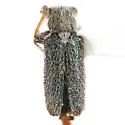
Phyllobaenus caeruleipennis
Phyllobaenus caeruleipennis
Identification: "While often distinctly metallic blue to green (Fig. 2), duller forms (Fig. 1) may be confused with the more robust-bodied P. pubescens (LeConte). The elytral form of P. caeruleipennis is similar to that of P. pallipennis (Say) and P.
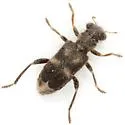
Phyllobaenus discoideus
Phyllobaenus discoideus
Type Locality: Colorado uncommonly encountered per GBIF data
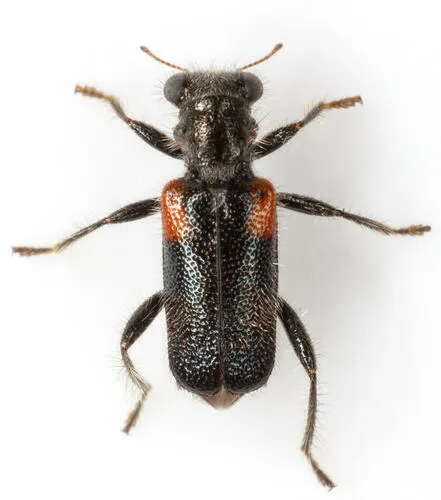
Phyllobaenus humeralis
Phyllobaenus humeralis
Phyllobaenus humeralis (Phyllobaenus humeralis) is a species in the family Cleridae, commonly known as checkered beetles, belonging to the order Coleoptera (Beetles). It is classified within the subfamily Hydnocerinae, suborder Polyphaga, superfamily
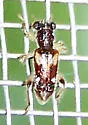
Phyllobaenus obscurus
Phyllobaenus obscurus
Identification: Det. John Leavengood, 2012 Type locality: San Gerónimo, Guatemala
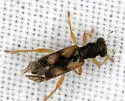
Phyllobaenus pallipennis
Phyllobaenus pallipennis
Identification: Recognized by its orangish antennae, mouthparts and legs, dark colored body, pronotum and head, and two yellowish markings on each elytron
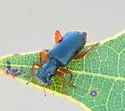
Phyllobaenus rufipes
Phyllobaenus rufipes
Identification: somewhat metallic blue-green with orangish legs, antennae and mouthparts
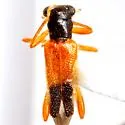
Phyllobaenus schusteri
Phyllobaenus schusteri
Identification: Holotype record from Brownsville, TX (Schaeffer 1908) is in error. (J.Leavengood, pers.comm. to MAQ, 2015)
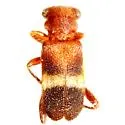
Phyllobaenus tricolor
Phyllobaenus tricolor
Type Locality: Esperanza Ranch, Brownsville, Cameron Co., TX
Phyllobius argentatus
Phyllobius argentatus
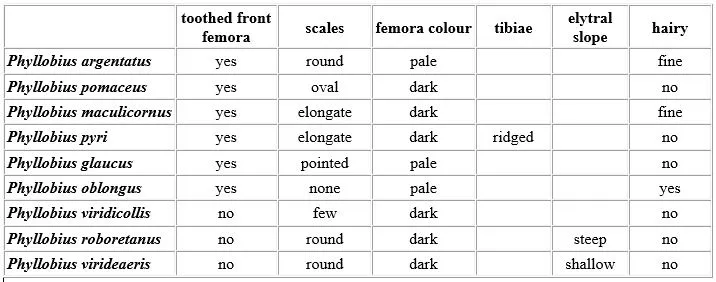
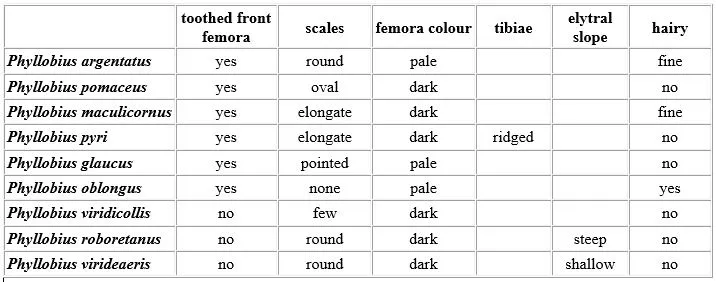
This is another of the green Phyllobius weevils, the most common of which is Phyllobius pomaceus . Phyllobius argentatus is a smaller species (Size around 4 to 6mm), and usually a brighter golden green colour. Under a lens it has round scales and is
Phyllobius glaucus
Phyllobius glaucus
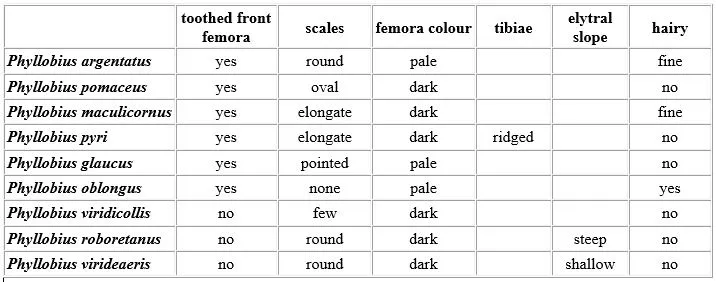
7.5 to 10 mm. A large weevil, similar to P. pomaceus but the femora are pale and its scales are pointed. Phyllobius is a genus of broad-nosed weevils that are commonly found on low herbage and in trees during spring and summer. Most are covered in me
Phyllobius roboretanus
Phyllobius roboretanus
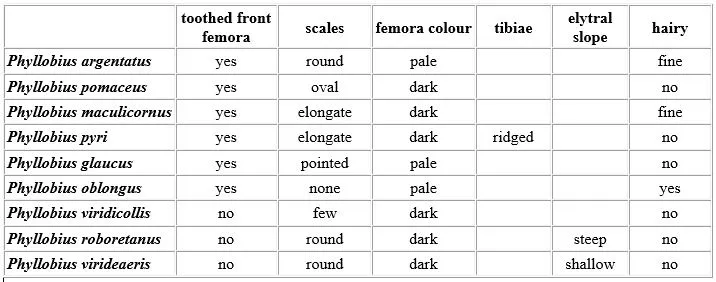
A smallish green weevil about 5 mm in length, sometimes called the Small Green Nettle Weevil. Most Phyllobius weevils have a prominent tooth on the underside of the femora, but this is not the case with Phyllobius roboretanus . It also has a very ste
Phyllobius virideaeris
Phyllobius virideaeris
Length 4 or 5 mm. A bright metallic green or bluish nettle weevil. Phyllobius virideaeris lacks the femur teeth found on the majority of UK Phyllobius species. It can be distinguished from the similar P. roboretanus by the gently sloping rear end and
Phyllobrotica antennata
Phyllobrotica antennata
Identification: Last key couplet: Antennae of male with basal segment [scape] strongly inflated, apical three segments yellow Syntype - female, so lacking the male diagnostic ant. charaters Syntype Locality: Chestoa, Unicoi County, Tennessee
Phyllobrotica costipennis
Phyllobrotica costipennis
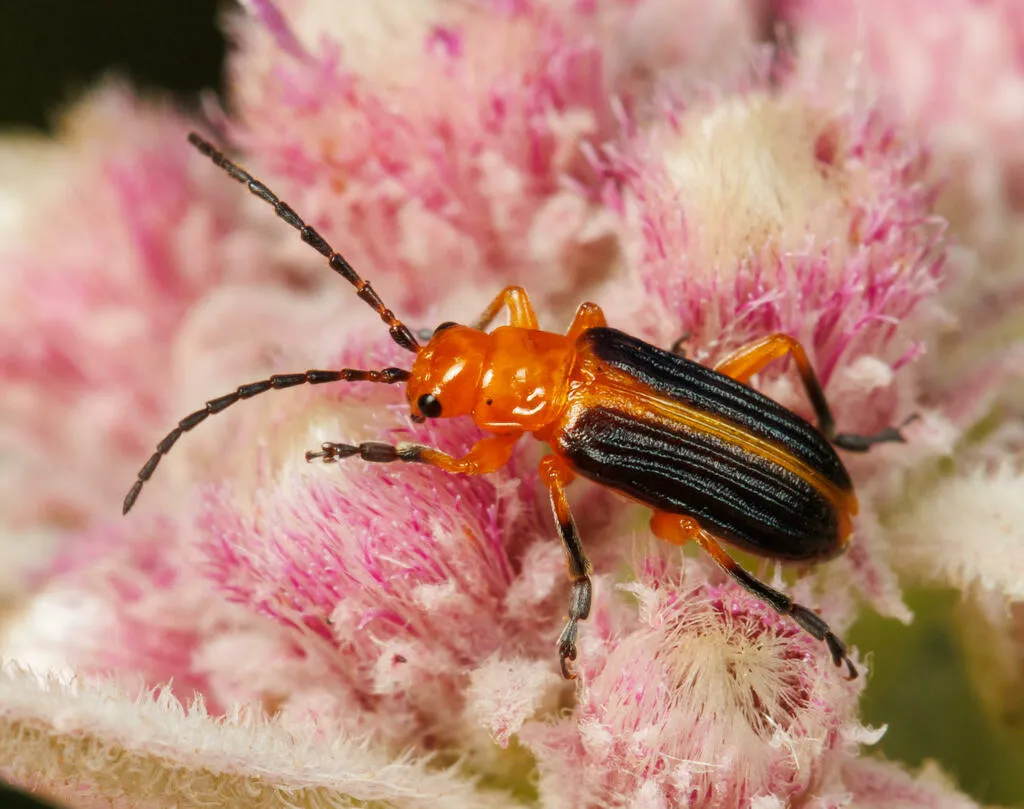
Phyllobrotica costipennis is a species of skeletonizing leaf beetle in the family Chrysomelidae. It is found in North America.
Phyllobrotica leechi
Phyllobrotica leechi
Identification: dark except in front of eyes; antennae yellow, legs usually black at base
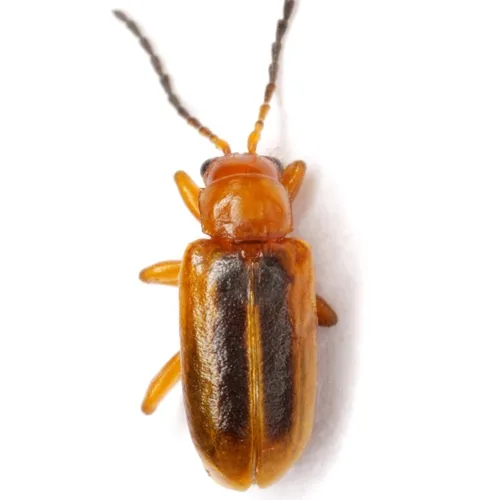
Phyllobrotica lengi
Phyllobrotica lengi
Identification: see MacRae Type Locality: Perry Co., Indiana Known from Missouri by just four specimens collected in the late 1800s until Rev. James Sullivan collected a small series on S. parvula in east-central Missouri in 1988. (MacRae 2019) Karl
Phyllobrotica physostegiae
Phyllobrotica physostegiae
Identification: - male/female Dets. E. G. Riley, 2009 Type Locality: Missouri, Dade County, Niawathe Prairie, 10 mi. N. Lockwood, June 12, 1978 (E. G. Riley) on Physostegia angustifolia . In addition to the holotype, 89 specimens have been examined (
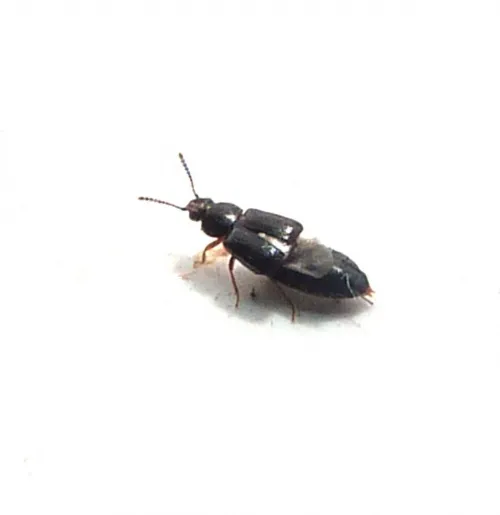
Phyllodrepa floralis
Phyllodrepa floralis
A very small, dark, almost blackish rove beetle. Probably develops in compost, litter etc.. Widespread and fairly frequent in Britain. No additional images available for this species.
Phyllophaga aemula
Phyllophaga aemula
Identification: Variation primarily in body color (from light to dark or reddish brown) Type Locality: northern Georgia
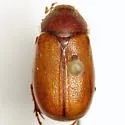
Phyllophaga apicata
Phyllophaga apicata
Identification: Det. E. G. Riley, 1996 Type Locality: College Station, Brazos Co., Texas
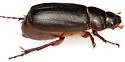
Phyllophaga bilobatata
Phyllophaga bilobatata
Identification: The subgenus Phytalus includes species that have the tooth of the tarsal claws not much removed from the apex. In other subgenera the tooth on the claws are quite distinct from the apex, often near the middle of the claw.
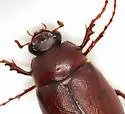
Phyllophaga crassissima
Phyllophaga crassissima
abundant and destructive to crops in some locations
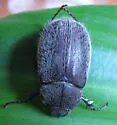
Phyllophaga crenulata
Phyllophaga crenulata
Identification: Typically quite hairy. Size, color, and vestiture variable. Antennae 10-segmented. Larvae may damage sod, field crops, and coniferous nurseries ( 3 )
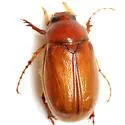
Phyllophaga crinita
Phyllophaga crinita
Identification: Pronotum noticeably hairy, antennae 10-segmented, pale antennal club much longer than rest of antenna. Det. E. G. Riley, 2009
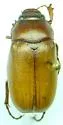
Phyllophaga ephilida
Phyllophaga ephilida
Identification: Best diagnosed by examination of genitalia. Some external characters include antennae 10-segmented, glabrous dorsum, and a barely sinuate clypeus. Similar in general appearance to P. clypeata , except clypeata has a 9-segmented antenn
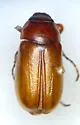
Phyllophaga forbesi
Phyllophaga forbesi
Identification: Antennae 10 segmented. Essentially identical to P. ephilida externally.
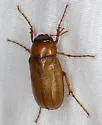
Phyllophaga gracilis
Phyllophaga gracilis
Identification: Elongate, cylindrical, pale rufotestaceous, thorax somewhat darker. head fuscous or piceous. Head broad, eyes large, especially in the male. Clypeus short, deeply emarginate, margin not wielely reflexed. Claws feebly curved. the tooth
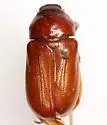
Phyllophaga hamata
Phyllophaga hamata
Reinhard (1939, 1950) reported this species from Bexar, Menard, Sutton and Tom Green counties. To these records Riley & Wolfe added Bandera, Bell, Kerr and Val Verde counties.
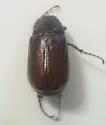
Phyllophaga hirticula
Phyllophaga hirticula
Identification: Long setae in rows on the elytra (occasionally worn), 10-segmented antennae
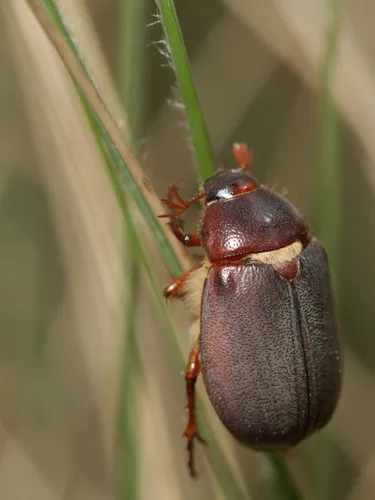
Phyllophaga impar
Phyllophaga impar
Identification: Quoting Davis (1920): Body oblong, slightly broadest behind, reddish brown or darker, the surface sometimes shining but usually more or less pruinose, and in one specimen the surface has a dull smoky appearance.... Clypeus feebly emar
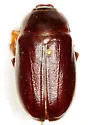
Phyllophaga karlsioei
Phyllophaga karlsioei
Identification: Phyllophaga karlsioei (Linell) Det. E. G. Riley, 1998 Types: Two examples, male and female, collected at electric light in Hot Springs, Arkansas, by Doctor W. J. Karlsioe, and kindly presented to the National Museum. (Linell 1898)
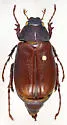
Phyllophaga knochii
Phyllophaga knochii
Identification: The large size and densely rugose punctation of the pronotum narrows this species to a small group of species in the East. Identification can be confirmed by examination of the genitalia for both males and females.