
Photinus dimissus
This record describes Photinus dimissus (species). Recorded family: Lampyridae. Recorded order: Coleoptera.
Identification and Appearance
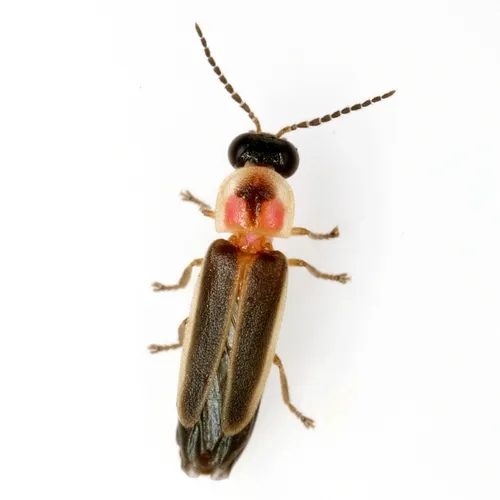
prothoracic spot elongate, wider in front [ephasis added]; apex and sides dusky, strongly punctured; scutel dusky; male with light organs as usual, fifth ventral and following segments entirely luminous; female light organs entirely wanting also, significantly, the elytra don't cover the tip of the abdomen, they taper apically and are darker at the tips (MAQ) Dets. B.F. Pfeiffer, 2025 Flashing 0.5 sec intervals, 2 flashes per sec in flash train, pausing and then flashing again 10-15 times. Type Locality: Texas
Classification
- Kingdom
- Animalia
- Phylum
- Arthropoda
- Class
- Insecta
- Order
- Coleoptera (Beetles)
- Suborder
- Polyphaga
- Superfamily
- Elateroidea
- Family
- Lampyridae (Fireflies)
- Subfamily
- Lampyrinae
- Tribe
- Lucidotini
- Genus
- Photinus
Imported taxonomy record. Source availability varies; see the source references and editorial policy below.
Habitat and Range
Habitat
meadows, pastures, and fields ( 3 )
Geographic Range
s. OK to s. TX - Map , mostly west of I-35, sp. doesn't reach southmost TX
Diet and Behavior
Life History
Male flashing activity began between 17 and 26 minutes after sunset and ended except for a few stragglers by 2 hours after sunset. Males fly within two meters of the ground, usually just above the tips of vegetation in straight or meandering flight. The male flash pattern is a single flash about 0.2 seconds in duration at temperatures near 70°. Flash pattern interval is about one second in duration (67-68°, range 0.7-1.7, x = 1.0, n = 22). Males fly 5-10 cm. during the flash and c 20-100 cm. between flashes. Their light-trails are variable in form: straight, curved, or hooked, and with rises or dips. Females were found on the ground. They responded to flashes of males and the flashlight with single-pulsed flashes at short delays. The flashes of one recorded female averaged 0.38 seconds in duration and were emitted at an average delay time of 0.17 seconds at 76° (Figures 1 and 2). This is the shortest delay yet recorded for any firefly (Lloyd, 1966a, b). Male approaches to captive and free females were observed. Several exchanges of signals were usually required for a complete approach. Females didn’t answer every male flash (although the morpheme is the single flash) and sometimes would fail to answer as many as six consecutive flashes. Male flash intervals during the approaches were more variable than those in advertising males. ( 3 )
Additional species information
Species notes from the sources
Etymology: Photinus dimissus LeConte 1881
About Primitive Winged Insects: the wider group
Order-level background for Coleoptera, the group containing Photinus dimissus. Species-specific details appear above.
Group overview
Coleoptera is the largest order of insects with over 400,000 described species, representing ~25% of all known animal species and ~40% of all insects. In the U.S. alone, nearly 30,000 beetle species have been identified.
Ecological role of the group
Beetles are prominent decomposers, especially in forests, breaking down dead wood and recycling nutrients. As predators, they reduce populations of pest insects. Many species are also important pollinators of flowering plants.
Economic and practical significance of the group
Beetles have major economic significance: leaf beetles (Chrysomelidae) and weevils (Curculionoidea) are among the most destructive agricultural pests globally, costing billions annually, while predatory species like ladybugs provide natural pest control.
Recorded sources for this group: Britannica, Smithsonian, NCSU Entomology. Imported estimates may describe particular regions or reporting periods.
Photos of Photinus dimissus (2)
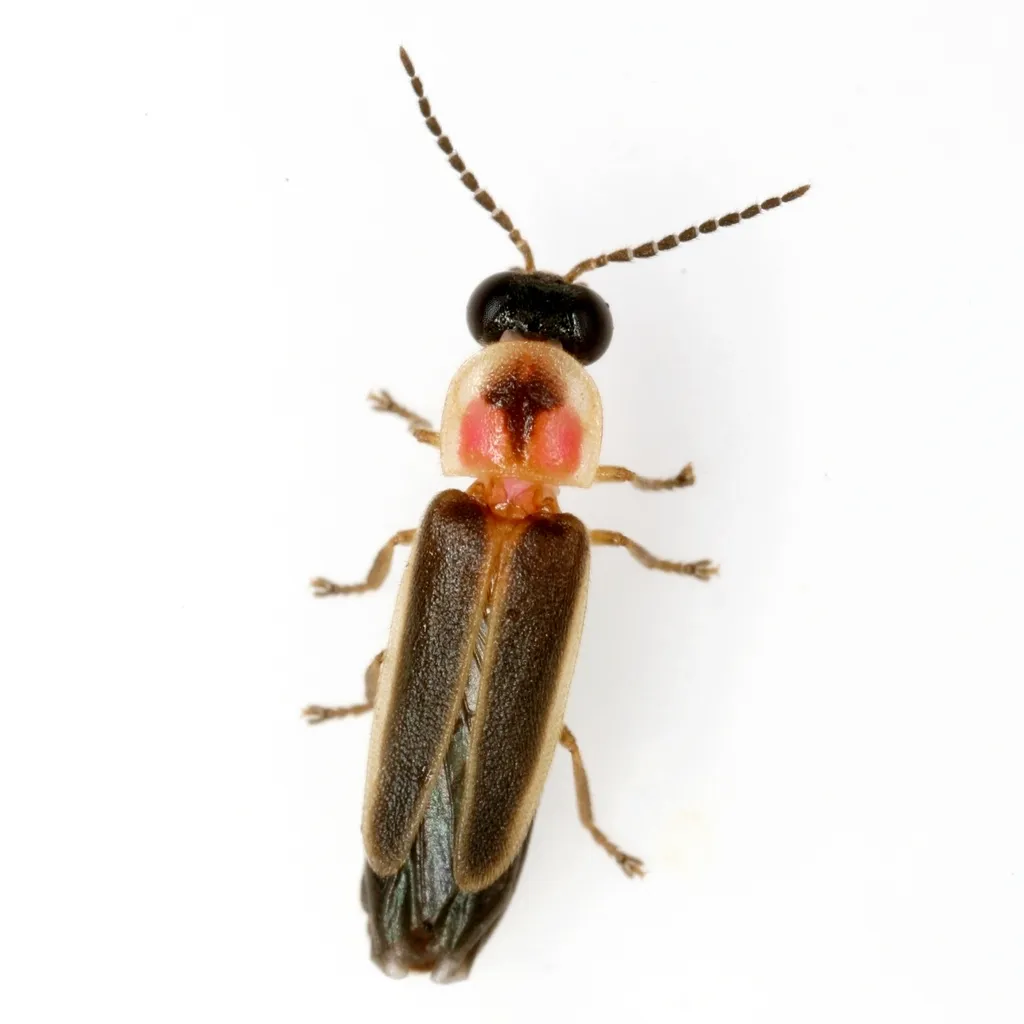
Photo credits: Contributed by Mike Quinn
Frequently Asked Questions About Photinus dimissus
What is Photinus dimissus?
Photinus dimissus is a species in the family Lampyridae, within the order Coleoptera.
How big is Photinus dimissus?
5-7 mm
How do you identify Photinus dimissus?
prothoracic spot elongate, wider in front [ephasis added]; apex and sides dusky, strongly punctured; scutel dusky; male with light organs as usual, fifth ventral and following segments entirely luminous; female light organs entirely wanting also, significantly, the elytra don't cover the tip of the abdomen, they taper apically and are darker at the tips (MAQ) Dets. B.F. Pfeiffer, 2025 Flashing 0.5 sec intervals, 2 flashes per sec in flash train, pausing and then flashing again 10-15 times.
Where is Photinus dimissus found?
| Feature | Details |
|---|---|
| Habitat | meadows, pastures, and fields ( 3 ) |
| Range | s. OK to s. TX - Map , mostly west of I-35, sp. doesn't reach southmost TX |
What is the life cycle of a Photinus dimissus?
Male flashing activity began between 17 and 26 minutes after sunset and ended except for a few stragglers by 2 hours after sunset. Males fly within two meters of the ground, usually just above the tips of vegetation in straight or meandering flight. The male flash pattern is a single flash about 0.2 seconds in duration at temperatures near 70°. Flash pattern interval is about one second in duration (67-68°, range 0.7-1.7, x = 1.0, n = 22). Males fly 5-10 cm. during the flash and c 20-100 cm. between flashes. Their light-trails are variable in form: straight, curved, or hooked, and with rises or dips. Females were found on the ground. They responded to flashes of males and the flashlight with single-pulsed flashes at short delays. The flashes of one recorded female averaged 0.38 seconds in duration and were emitted at an average delay time of 0.17 seconds at 76° (Figures 1 and 2). This is the shortest delay yet recorded for any firefly (Lloyd, 1966a, b). Male approaches to captive and free females were observed. Several exchanges of signals were usually required for a complete approach. Females didn’t answer every male flash (although the morpheme is the single flash) and sometimes would fail to answer as many as six consecutive flashes. Male flash intervals during the approaches were more variable than those in advertising males. ( 3 )