
Primitive Winged Insects
Order Coleoptera
The Primitive Winged Insects (Order Coleoptera) includes 15,720 species across 160 families and 3,716 genera in our directory.
About Primitive Winged Insects
Coleoptera is the largest order of insects with over 400,000 described species, representing ~25% of all known animal species and ~40% of all insects. In the U.S. alone, nearly 30,000 beetle species have been identified.
Economic Impact
Beetles have major economic significance: leaf beetles (Chrysomelidae) and weevils (Curculionoidea) are among the most destructive agricultural pests globally, costing billions annually, while predatory species like ladybugs provide natural pest control.
Ecological Role
Beetles are prominent decomposers, especially in forests, breaking down dead wood and recycling nutrients. As predators, they reduce populations of pest insects. Many species are also important pollinators of flowering plants.
Families in Coleoptera (160)
Species in Coleoptera (15,720)
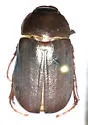
Phyllophaga latifrons
Phyllophaga latifrons
Identification: elytral surface in the darker specimens decidedly pruinose. Abdomen always pale. Clypeus entire, concave, the margin rather widely reflexed. Not a common species (outside of FL??)
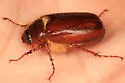
Phyllophaga longispina
Phyllophaga longispina
Identification: Usually light brown overall color and has 9 antennal segments. A hairy species, especially on the pronotum. Elytral hairs more or less in rows.
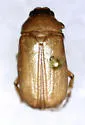
Phyllophaga longitarsa
Phyllophaga longitarsa
Identification: pale, elongated, distinctive clypeus strongly attracted to lights
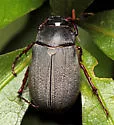
Phyllophaga micans
Phyllophaga micans
Identification: elytral surface with a pruinose coating , but this feature is shared with several other spp. such as Phyllophaga latifrons (LeConte). Clypeus concave and feebly emarginate, the border moderately reflexed Det. Blaine Mathison, 2011 com
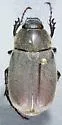
Phyllophaga parvidens
Phyllophaga parvidens
Phyllophaga parvidens (Phyllophaga parvidens) is a species in the family Scarabaeidae, commonly known as scarab beetles, belonging to the order Coleoptera (Beetles). It is classified within the subfamily Melolonthinae, tribe Rhizotrogini, suborder Po
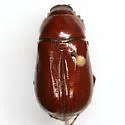
Phyllophaga psiloptera
Phyllophaga psiloptera
Type Locality: Chisos Mountains, Blue creek, elevation 6,000 ft. Brewster Co., Texas. Howden also recorded it from the Chisos Mountains. Riley & Wolfe collected this species in the Davis Mountains at elevations ranging from 4,900 to 6,180 feet.
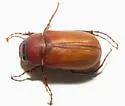
Phyllophaga quercus
Phyllophaga quercus
Identification: Glabrous with surface pruinose. Elytra noticeably paler than head and pronotum. Antennae 9-segmented. Clypeus distinctly emarginate. , Male genitalia:
Phyllophaga renodis
Phyllophaga renodis
"Provisional Texas endernic. This species is likely to occur in northeastern Mexico. The type locality is Fowlerton (LaSalle County) (Reinhard, 1939). We have collected and/or seen specimens from Atascosa, LaSalle, McMullen and Webb counties."
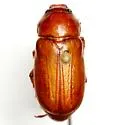
Phyllophaga riviera
Phyllophaga riviera
Texas endemic. The type locality is Riviera (Kleberg County) (Reinhard, 1950). Riley & Wolfe collected this species in Brooks, Kenedy and Kleberg counties. The female remains unknown. The species description was based on 37 male specimens and the fou
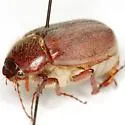
Phyllophaga rubiginosa
Phyllophaga rubiginosa
Phy. rubiginosa ranks second among the night-flying Phyllophaga of Riley county , [Kansas] comprising 15 per cent of the total collections. (emphasis added) (Knaus (1897), in reporting this species from Douglas county and Manhattan, speaks of it as b
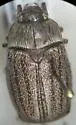
Phyllophaga squamipilosa
Phyllophaga squamipilosa
Identification: note elongated (hair-like) scales on pronotum Det. Glenn A. Salsbury, 2015 described from Texas without further locality (Saylor, 1936), and no additional details regarding its distribution have appeared until Riley & Wolfe who examin
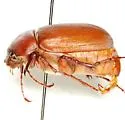
Phyllophaga submucida
Phyllophaga submucida
Identification: One of the few Phyllophaga that can be reasonably ID'ed from images. This species has a distinctive reddish pronotum and lighter brownish elytra with a waxy bloom, and is exceptionally common in TX. - mjpaulsen Dets. Brad Barnd (from
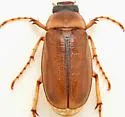
Phyllophaga tusa
Phyllophaga tusa
Texas endemic. The type locality is "nr. San Antonio," (probably Bexar county) (Horn, 1887). Reinhard (1939, 1950) listed it from Dimmit county. To these records Riley and Wolfe added Live Oak and San Patricio counties.
Phyllophaga vetula
Phyllophaga vetula
Identification: Det. M. Brummermann, 2013 Type Locality: New Mexico
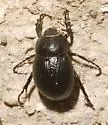
Phyllophaga zavalana
Phyllophaga zavalana
Identification: pronotum densely and coarsely punctate except immediately behind flattened middle area and usually one or more smaller impunctate areas nearer lateral margin (Reinhard, 1946) Det. V. Belov, 2025 Type Locality: Zavala County, Texas, Oc
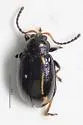
Phyllotreta denticornis
Phyllotreta denticornis
Identification: Elytra with only a narrow stripe, or, most commonly, two elongate spots each, or completely black. Dorsally coarsely punctate. Male: antennal segments 4+5 strongly dilated; 6th with a spine on underside; Female: antennal segment 5 lon
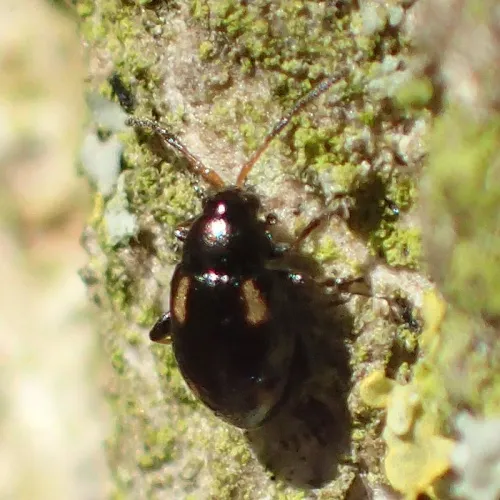
Phyllotreta exclamationis
Phyllotreta exclamationis
Length 1.5-1.8mm. This tiny beetle is mostly black apart from two triangular yellowish spots on each elytra, occasionally connected into a band. The elytral shape is broadly elliptical and convex. Legs usually black with reddish tibia and tarsi. The
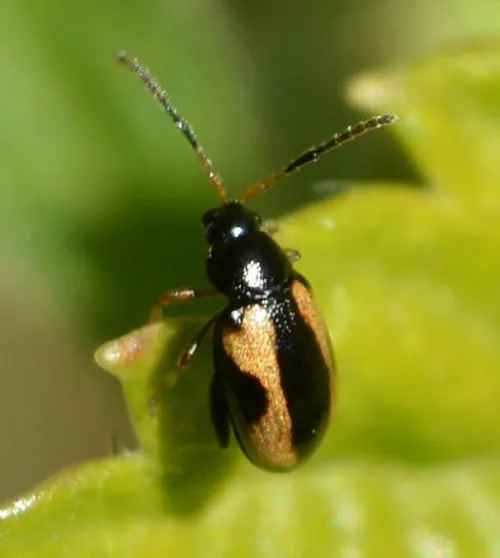
Phyllotreta ochripes
Phyllotreta ochripes
This 3mm long flea beetle is black and brown with pale legs. Only the hind femur is black otherwise the legs are all straw yellow. The 5th antennal segment is elongated. Found on a range of brassicas, but especially on garlic mustard. Widespread and
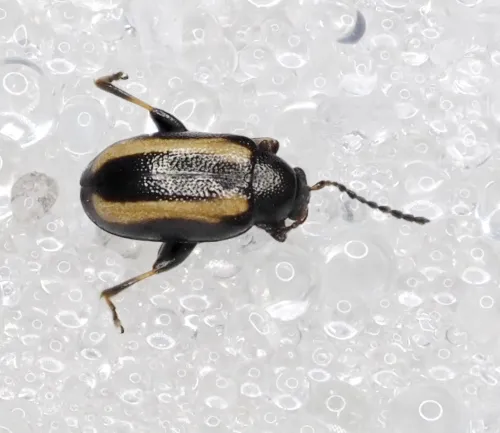
Phyllotreta vittula
Phyllotreta vittula
Approximately 2mm. The elytra are black with longitudinal straw coloured or orangey-yellow stripes. Detailed examination of the specimen is needed to identify the species (a photograph alone is not normally sufficient because key features are too sma
Phymatodes amoenus
Phymatodes amoenus
Identification: note red head and enlarged red femora to separate from most other Phymatodes spp. ( 3 ) pale abdomen below separates this sp. from Phymatodes lengi Joutel (Rare) can be locally common ( 6 )
Phymatodes blandus
Phymatodes blandus
Phymatodes blandus is a species of longhorn beetle in the family Cerambycidae. It is found in the United States.
Phymatodes huetheri
Phymatodes huetheri
Identification: Similar to P. fulgidus but differs by the punctures on pronotum and sides of prothorax distinctly denser and metatarsomere I about as long as II-III together
Phymatodes lengi
Phymatodes lengi
Identification: Note: Dark Abdomen Det. T. H. Atkinson, 2012 rare
Phymatodes nigrescens
Phymatodes nigrescens
Identification: " Phymatodes nigrescens is in fact distinct from these dark forms of P. vulneratus as well. It can be separated from both bicolored and unicolored forms of P. vulneratus by the coarsely punctate apical one-half of the elytra; the over
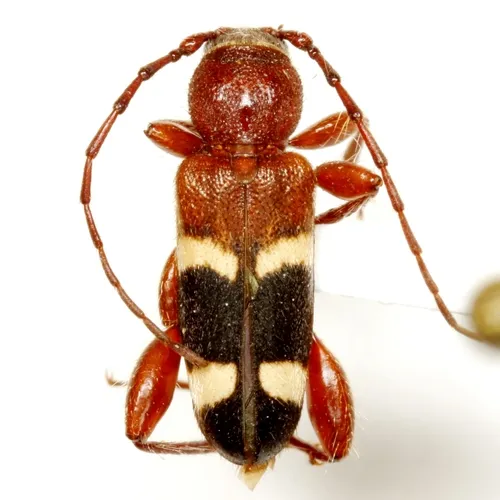
Phymatodes varius
Phymatodes varius
Phymatodes varius is a species of beetle in the family Cerambycidae.
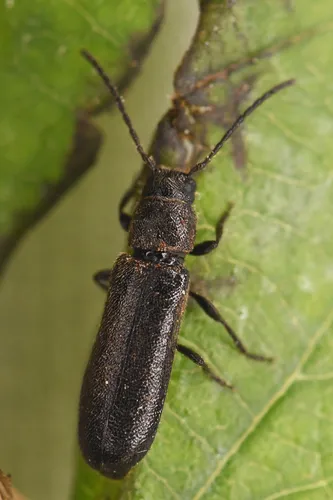
Phymatodes vilitatis
Phymatodes vilitatis
Phymatodes vilitatis is a species of longhorn beetle in the family Cerambycidae. It is found in the United States.
Physea hirta
Physea hirta
Identification: Physea hirta has a uniform covering of short setae in addition to longer tactile setae, while Physea latipes lacks the short setae, having only the long tactile ones. Type locality: "Mexico ... a few miles south of our boundary" (orig
Physocnemum violaceipenne
Physocnemum violaceipenne
P. violaceipenne is usually 11-13 mm in size and is associated with "white" oaks, but perhaps other oaks. I have a nice series from NJ, and single specimens from Oklahoma, Arkansas and Missouri. Larvae feed in dead branches. (D. Heffern, pers. comm.
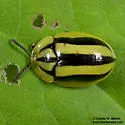
Physonota disjuncta
Physonota disjuncta
Identification: Habitus photos not recorded for the US in Riley
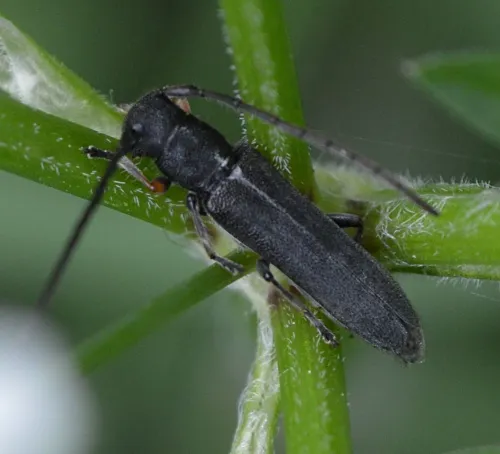
Phytoecia cylindrica
Phytoecia cylindrica
Length 6 to10 mm. Completely dark leaden grey to black but for the front legs which are almost entirely orange or yellow. Elytra with dense recumbent fine grey pubescence. Adults are active in hot sunshine on or around umbellifers. Although they are
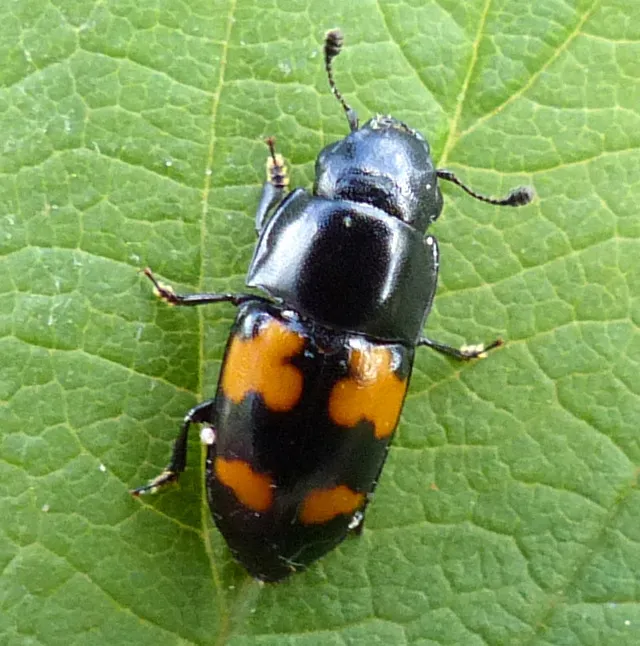
Picnic Beetle
Glischrochilus fasciatus
Identification: Black and shiny with two transverse yellowish/orangish bands, sometimes reduced; venter dark (reddish-brown in G. quadrisignatus ) pest of crops (corn, raspberries, strawberries, tomatoes); transmits oak wilt fungi; nuisance at picnic
Pidonia (Ceratopidonia) quadrata
Pidonia quadrata
Identification: P. gnathoides is similar but with the pronotum and elytra more distinctly punctate. -T.C. MacRae, 18.i.2008
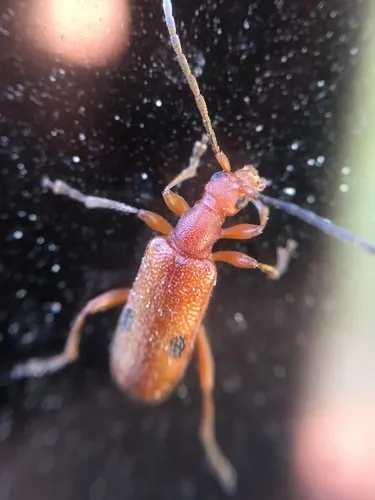
Pidonia (Thesalia) gnathoides
Pidonia gnathoides
Pidonia gnathoides is a species of beetle in the family Cerambycidae. It was described by John Lawrence LeConte in 1873.
Pidonia aurata
Pidonia aurata
Pidonia aurata (Pidonia aurata) is a species in the family Cerambycidae, commonly known as longhorn beetles, belonging to the order Coleoptera (Beetles). It is classified within the subfamily Lepturinae, tribe Pidoniini, suborder Polyphaga, superfami
Pidonia densicollis
Pidonia densicollis
Identification: the bulbous, dark pronotum, elytra dull with stripes, and pubescence eliminate the other possibilities (the pubescence is crucial) --Doug Yanega, pers.comm. to =v= 1.vi.2011
Pidonia vibex OR nitidicollis
Pidonia vibex
Identification: In the male, the deep concavity of the last ventrite and impressed penultimate ventrite separate vibex from ruficollis , which has the last ventrite shallowly concave and the penultimate not impressed. Additionally, ruficollis does no
Piesocorynus lateralis
Piesocorynus lateralis
Identification: yellow pubescence of the elytra is concentrated on the sides Det. V. Belov, 2018 Type locality: Panama, Volcan de Chiriqui (Champion); paratypes from Guatemala and Mexico.
Piesocorynus mixtus
Piesocorynus mixtus
Identification: Antennae very slender; prothorax without impressions or elevations; pubescence mottled yellow brown and black Det. E. G. Riley, 2011
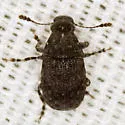
Piesocorynus moestus
Piesocorynus moestus
Identification: Antennae very slender; prothorax without impressions or elevations; pubescence nearly black Det. Tim Moyer, 2023
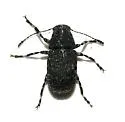
Piesocorynus tesselatus
Piesocorynus tesselatus
Identification: Frons and rostrum with derm equally dark; male mid legs not modified; male sternite 2 without a tubercle Type Locality: Huachuca Mts., Arizona, collected by Mr. Gustav Beyer
Piezocera monochroa
Piezocera monochroa
Identification: Det. E. G. Riley, 2009 Type coll'ed by Townsend at Brownsville, Cameron Co., Texas
Pill Beetle
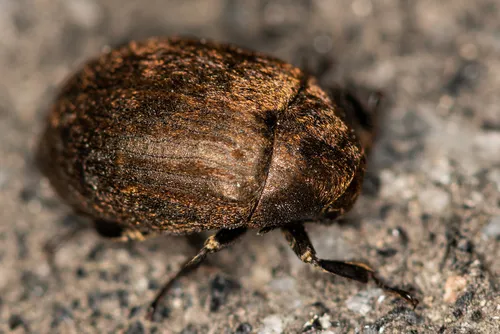
Byrrhus pilula
This is an all brown pill beetle with inconspicuous rows of dark and light brown markings on the elytra. The name Pill Beetle stems from the ability to retract all appendages into grooves underneath the body, feigning death in this manner and resembl
Pilostenaspis lateralis
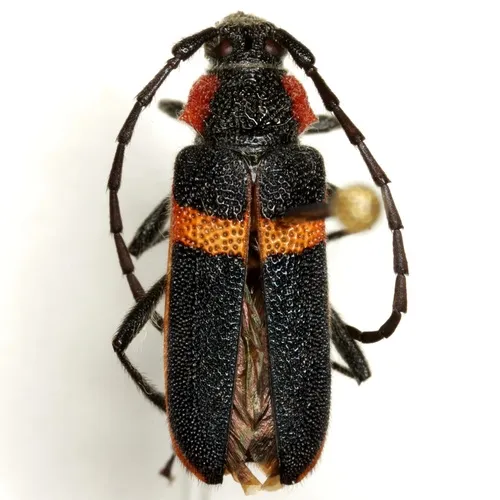
Pilostenaspis lateralis
over 30 spmns of this normally rare beetle were collected at the US Hwy 385 Rest Stop, 28 mi S Fort Stockton, Glass Mtns, Pecos Co., Texas, over 20 were collected at this site in mid March
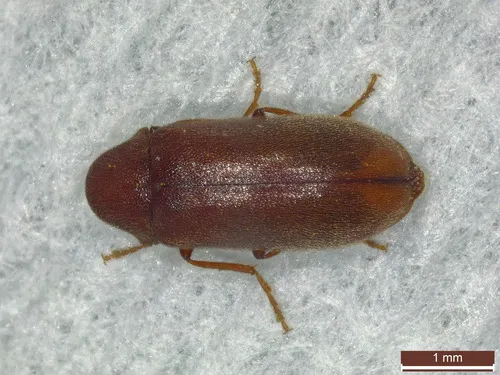
Pine Bark Anobiid
Ernobius mollis
Pine Bark Anobiid (Ernobius mollis) is a species in the family Ptinidae, commonly known as death-watch and spider beetles, belonging to the order Coleoptera (Beetles). It is classified within the subfamily Ernobiinae, tribe Ernobiini, suborder Polyph
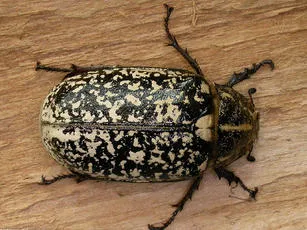
Pine Chafer
Polyphylla fullo
With a body length of up to 3.8 cm this is a large beetle. The black, brown, or reddish brown elytra have a characteristic marble design of white or pale lemony-yellow spots. The female is slightly larger than the male, but lacks the enormous scent d
Pine Lady Beetle
Brumus quadripustulatus
Identification: Gordon's figures - dark brown to black with two pale (yellow to red) spots on each elytron: the front one is comma-shaped (sometimes rectangular), the rear one oval/round ; recently emerged adults are orange or reddish without spots I
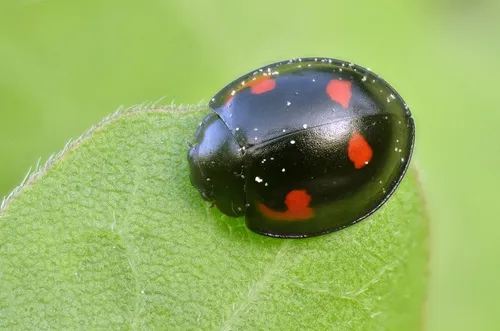
Pine Ladybird
Exochomus quadripustulatus
This is a small ladybird (3 to 4 mm), with red comma-like front spots on the black elytra and a flange around the base of each elytron. The Kidneyspot Ladybird is similar but only has 2 red spots. Unless identified by a recognised expert, good photos
Pitch Lady Beetle
Blaisdelliana sexualis
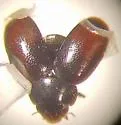
Identification: Dorsal surface black to brown (Fig. 292 h); antenna, mouthparts, femoral apices and remainder of leg yellow; male with clypeus and frons yellow (in California specimens narrow lateral border of pronotum yellow). Gordon's figure 292, a
Pitch-eating Weevil
Pachylobius picivorus
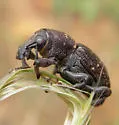
Identification: Similar to Hylobius but tibiae with dilated outer apical angles
Pityoborus comatus
Pityoborus comatus
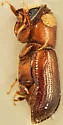
Pityoborus comatus (Pityoborus comatus) is a species in the family Curculionidae, commonly known as snout and bark beetles, belonging to the order Coleoptera (Beetles). It is classified within the subfamily Scolytinae, tribe Corthylini, suborder Poly
Placonotus falinorum
Placonotus falinorum
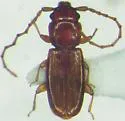
closest to the Central American P. maya Thomas; the two differ primarily in details of the male genitalia
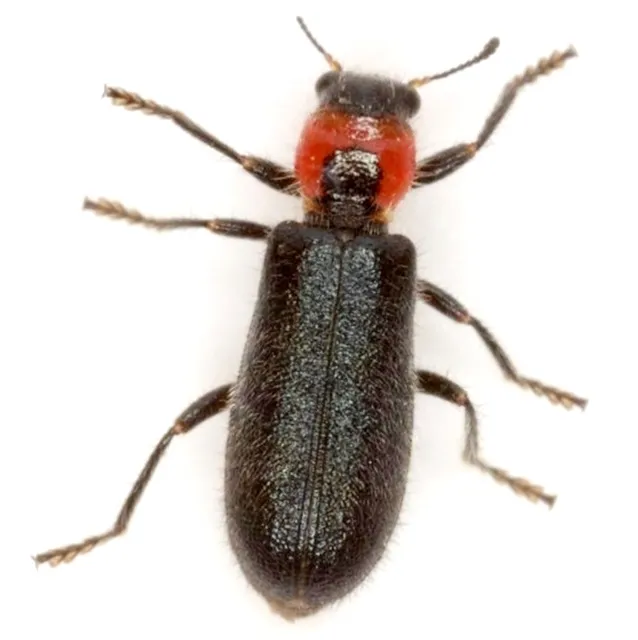
Placopterus thoracicus
Placopterus thoracicus
Identification: variable amount of black on prothorax Det. E. G. Riley, 2009
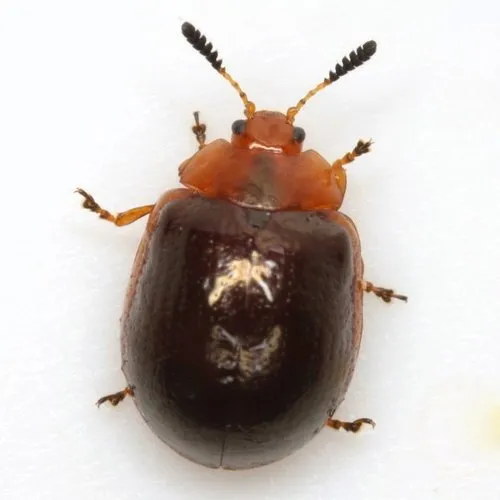
Plagiodera thymaloides
Plagiodera thymaloides
Identification: Det. E. G. Riley, 2009 Texas considers this a SGCN ( 5 )
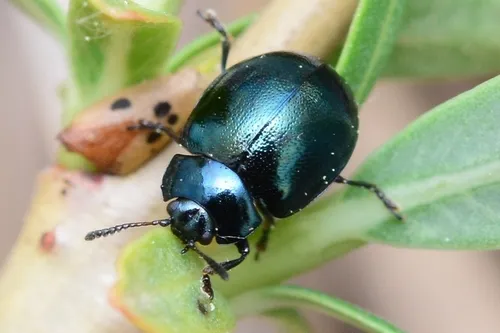
Plagiodera versicolora
Plagiodera versicolora
2.5-4.5mm. A very rounded leaf-beetle. Upperside is metallic green or blue, though occasionally purple. The underside, femora and tibiae are black, as are the tips of the antennae. The elytral punctures are generally in a confused pattern but with so
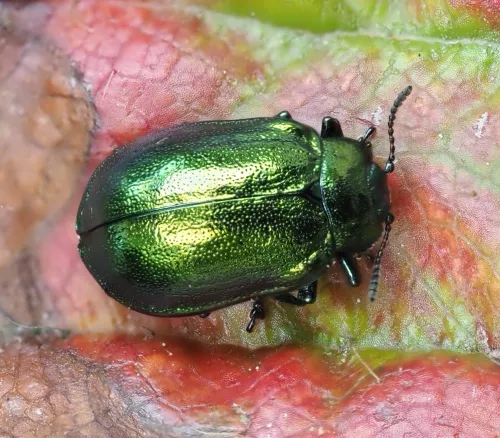
Plagiosterna aenea
Plagiosterna aenea
6.5 to 8 mm. Usually metallic or iridescent green, occasionally blue or brassy. Very similar to some other Chrysomelidae species, particularly Chrysolina herbacea . Good quality close up photographs required. Detailed examination of the specimen may
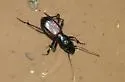
Plateau Giant Tiger Beetle
Amblycheila picolominii
Plateau Giant Tiger Beetle (Amblycheila picolominii) is a species in the family Carabidae, commonly known as ground beetles, belonging to the order Coleoptera (Beetles). It is classified within the subfamily Cicindelinae, tribe Amblycheilini, suborde
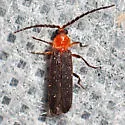
Plateros arizonensis
Plateros arizonensis
Identification: fulvous tip of abdomen Det. Joe Cicero, 2023
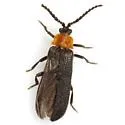
Plateros coccinicollis
Plateros coccinicollis
Identification: Male: Pronotum pale rosy red with usually a subquadrate black spot in median third Female: Pronotal spot tending to divide both longitudinally and transversely, sometimes entirely absent
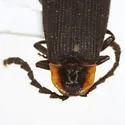
Plateros lictor
Plateros lictor
This is our commonest and most widely distributed species. (Green 1953)
Plateros modestus
Plateros modestus
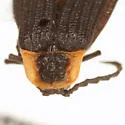
Identification: As a rule modestus may be easily recognized in both sexes by its large size, broad form, and prominent discal costate of the elytra. (Green 1953)
Plateumaris aurifera
Plateumaris aurifera
Identification: syntype The bright goldish green color, pale appendages, and finely but distinctly pubescent pronotum are distinctive in the genus
Plateumaris flavipes
Plateumaris flavipes
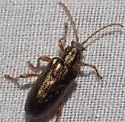
Identification: Generally easily recognized by the combination of completely testaceous appendages, moderate to absent metafemoral tooth of most specimens, pronotum with dense punctation, often rugulose to broadly indistinctly alutaceous to shagreene
Plateumaris fulvipes
Plateumaris fulvipes
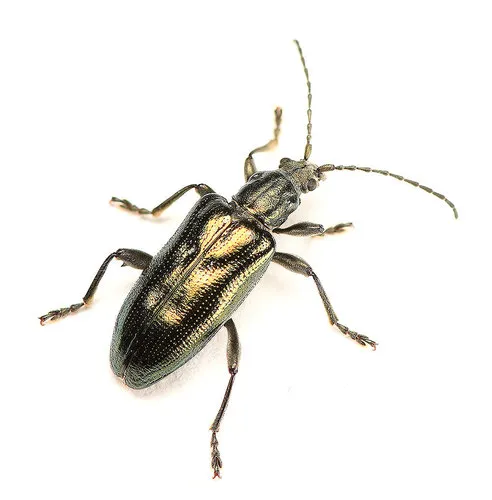
Identification: Recognized by the broad metafemoral tooth, emarginate male pygidium, notched female pygidium (larger than flavipes), most specimens with more or less quadrate pronotum and densely punctate and punctulate disc, elytra densely punctulat
Plateumaris metallica
Plateumaris metallica
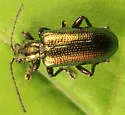
Identification: Pronotum either side of midline swollen and more or less shiny, less punctate, and with anterolateral calli shiny but more or less obsolete and poorly defined. Legs, except apex of femora, reddish, antennomeres of most specimens rufou
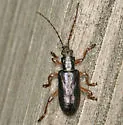
Plateumaris neomexicana
Plateumaris neomexicana
Identification: metafemoral spine reduced ‒Tim Loh 2013
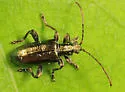
Plateumaris nitida
Plateumaris nitida
Identification: metafemoral tooth is relatively small and acute and not set off the posteroventral edge of the femur. - comment: Tim Loh 2011 Correction : this species is most reliably ID'd by the shiny convex area of the pronotum that is either side
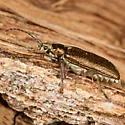
Plateumaris pusilla
Plateumaris pusilla
Identification: metafemur with prominent spine and apical dark metallic band ‒Tim Loh 2013
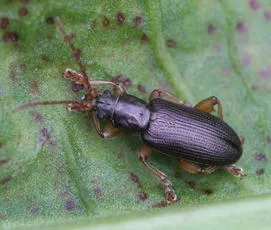
Plateumaris rustica
Plateumaris rustica
This plain looking brown 'Reed Beetle' is around 9mm. As with other species in the genus it has swollen femora with the hind one displaying a projecting spine. Found in damp habitats and at water margins Associated with plants of the Sedge family (Ca
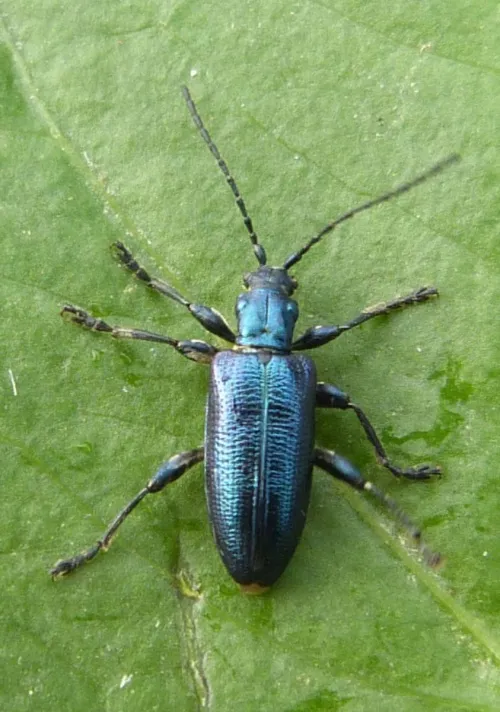
Plateumaris sericea
Plateumaris sericea
Length 9 to 12 mm. Plateumaris sericea shows amazing colour variation, ranging from blackish-blue to red with heavily pitted elytra. Plateumaris discolor is similar, but mainly found around acid waters. Around ponds where the larval foodplants are pr
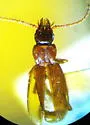
Platidiolus vandykei
Platidiolus vandykei
Identification: Color rufous, head darker; eyes small, genae long, 3rd elytral interval with 3 punctures (Lindroth 1961)
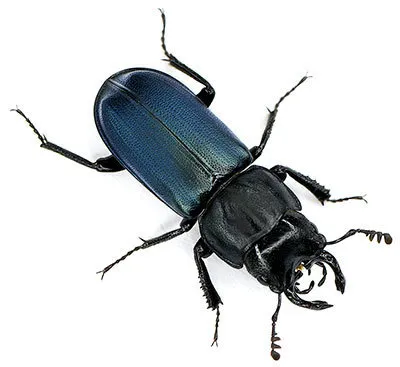
Platycerus oregonensis
Platycerus oregonensis
Identification: According to Benesh 1946: Non-dentate mandible Longitudinal pronotal depression Head and pronotum black Sides sinuate at basal angles (obtuse) Head widest behind eyes Anterior margin of pronotum sinuate As well as some further marks,
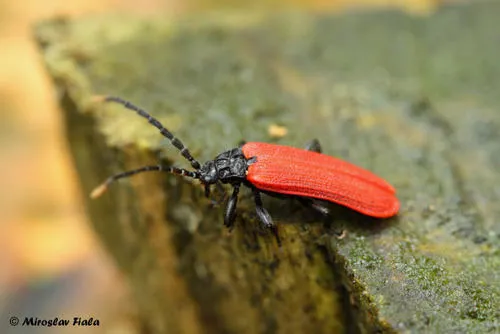
Platycis minutus
Platycis minutus
Length 5 to 8 mm. The elytra are red or orangey-red with strongly raised longitudinal lines. The head, pronotum and legs are all black but the antennae have pale tips in this species. Similar to Pyropterus nigroruber, but that species does not have p
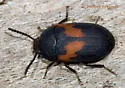
Platydema elliptica
Platydema elliptica
Identification: coloration distinctive (black with red elytral band)
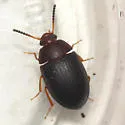
Platydema erythrocera
Platydema erythrocera
Identification: our only sp. with horns (on males) and dull integument
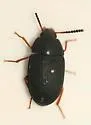
Platydema nigrata
Platydema nigrata
Identification: antennomeres 1‒4 & 11 light reddish brown, the rest much darker ( P. erythrocera may have this scheme, too)
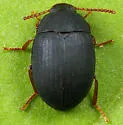
Platydema ruficornis
Platydema ruficornis
Identification: opaque; dorsum black to piceous, unmarked; appendages & venter ferrugineous comes to lights; very common
Platydema sexnotata
Platydema sexnotata
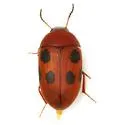
Identification: P. sexmaculatum Chevrolat is similar (and possibly conspecific) (Champion 1884) 2 specimens coll'ed by Brian Raber at the Sabal Palm Sanctuary , Brownsville, TX 7.viii.2010 • one spmn from Tamaulipas, MEX. in TAMUIC ( 3 ) • Warren Ste
Platydema teleops
Platydema teleops
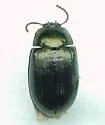
Platydema teleops (Platydema teleops) is a species in the family Tenebrionidae, commonly known as darkling beetles, belonging to the order Coleoptera (Beetles). It is classified within the subfamily Diaperinae, tribe Diaperini, suborder Polyphaga, su
Platyderus depressus
Platyderus depressus
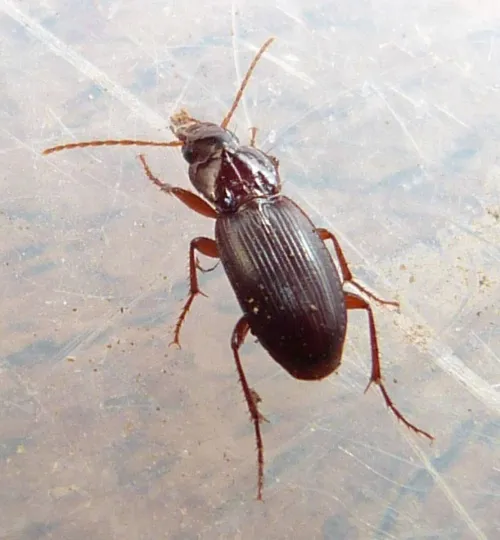
Length 5.5 to 8 mm. A narrow and elongate ground beetle, it is dorsally flat and varies in colour from a very dark red/brown to light red brown. Mainly from coastal regions and other dry or sandy areas. Occurs throughout England south of a line betwe
Platydracus femoratus
Platydracus femoratus
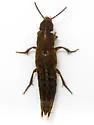
Identification: The large eyes (~2x the length of the temple) are diagnostic
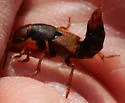
Platydracus immaculatus
Platydracus immaculatus
Platydracus immaculatus (Platydracus immaculatus) is a species in the family Staphylinidae, commonly known as rove beetles, belonging to the order Coleoptera (Beetles). It is classified within the subfamily Staphylininae, tribe Staphylinini, suborder
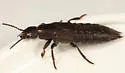
Platydracus praelongus
Platydracus praelongus
Identification: pronotum with an uneven punctation and wide (at least as wide as five punctures) impunctate line; head & pronotum are dull metallic ; head small (Black individuals do occur, but mostly in se. US)
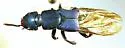
Platydracus rutilicauda
Platydracus rutilicauda
Identification: distinctive: metallic blue, abdomen black with apical ⅓ orange; habitus stout with triangular head (like, e.g., in P. fossator ); the similarly coloured Dinothenarus saphyrinus has orange legs
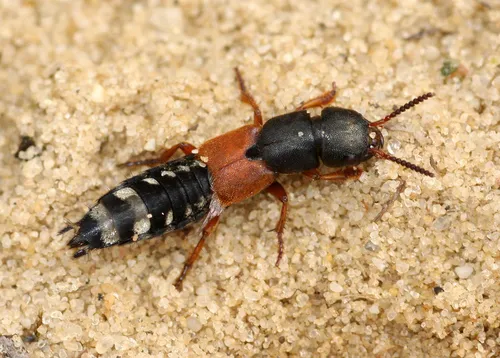
Platydracus stercorarius
Platydracus stercorarius
An impressive and colourful Rove Beetle, P stercorarius is also quite a large species reaching 2 cm or more in length. The legs and elytra are rust red, whilst the head, thorax and abdomen are mainly black. The head is very square at the back and the
Platydracus viridanus
Platydracus viridanus
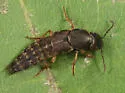
Identification: The combination of the small eyes (no longer than the temple), bronze metallic dorsal reflection, evenly punctate pronotum, elytra without spots, an elytral epipleuron with a pale ventral margin, and the distinctive pattern of abdomin
Platynus angustatus
Platynus angustatus
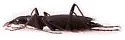
Platynus angustatus (Platynus angustatus) is a species in the family Carabidae, commonly known as ground beetles, belonging to the order Coleoptera (Beetles). It is classified within the subfamily Harpalinae, tribe Platynini, suborder Adephaga. This
Platynus brunneomarginatus
Platynus brunneomarginatus
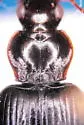
Identification: A western sp. with pronotal base smooth (non-punctate) and bordered by sharp rectangular hind angles
Platynus cincticollis
Platynus cincticollis
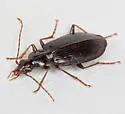
Identification: Differs most noticeably from P. tenuicollis by having two red spots on the head and a proportionately broader pronotum - Curt Harden via ID of the following. See Attracted to lights ( 3 )
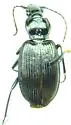
Platynus decentis
Platynus decentis
Identification: Larger size compared to similar genus Agonum, convex elytral intervals, sharp pronotal hind angles, dark legs.
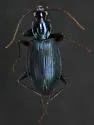
Platynus falli
Platynus falli
"Whitehead (1973: 196) stated that adults of this form are possibly conspecific with those of P. segregatus (Bates), a species known from the states of Michoacán, Colima, Morelos, Guerrero, and Oaxaca."
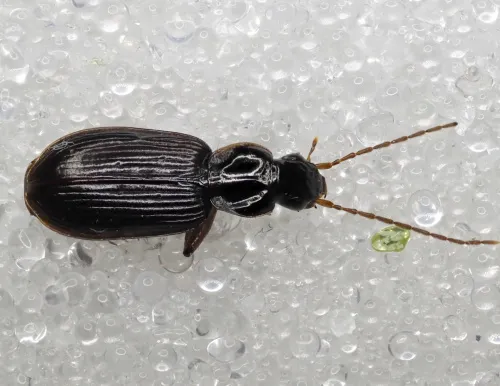
Platynus livens
Platynus livens
7-10mm. Dark (black or dark brown) but often with two dull red spots between the eyes. Antennae and legs are brown. Along with Agonum species it has a toothed mentum (the plate beneath the head). It has a transverse groove at the rear of the head. Si
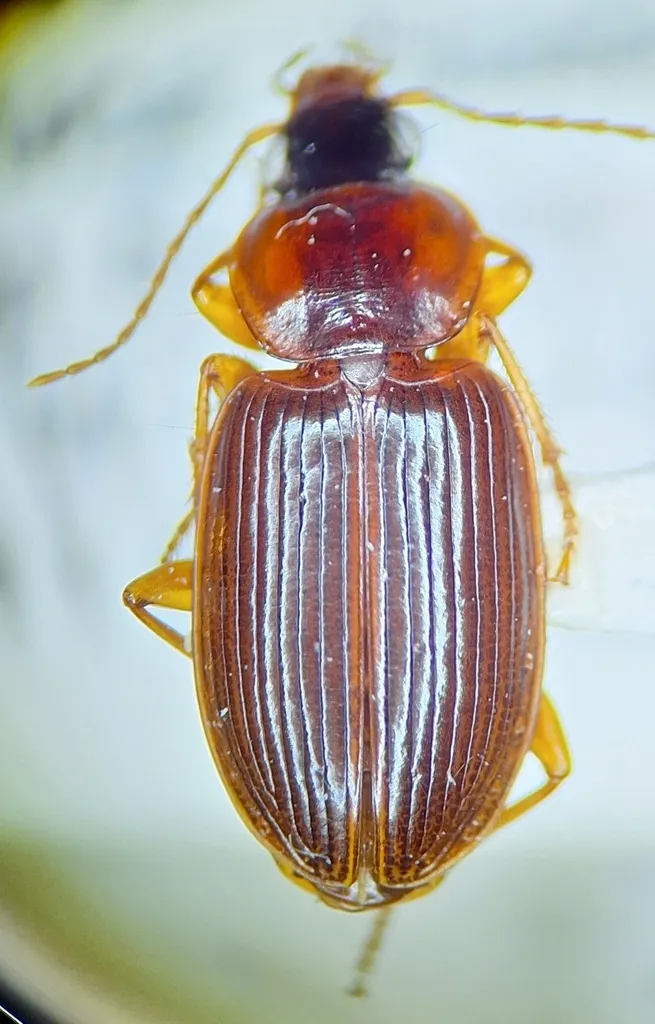
Platynus ovatulus
Platynus ovatulus
Platynus ovatulus is a species of ground beetle in the family Carabidae. It is found in North America.
Platynus prognathus
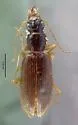
Platynus prognathus
Van Dyke wrote that the specimen came from "St. Simon Island, Okefinokee[sic] Swamp", but St. Simon Island is not in Okefenokee Swamp .
Platynus tenuicollis
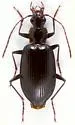
Platynus tenuicollis
one of the few Platynus spp. that come to lights ( 3 )
Platynus trifoveolatus
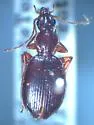
Platynus trifoveolatus
Identification: easily distinguished from other Platynus spp. by its short body and oviform elytra with obsolete humeri
Platyomus flexicaulis
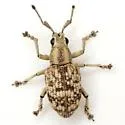
Platyomus flexicaulis
Type Locality: Esperanza Ranch, Brownsville, Texas, from branches of Acacia flexicaulis . (Schaeffer 1905) Texas considers this a "Species of Greatest Conservation Need" (SGCN) ( 4 )
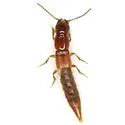
Platyprosopus mexicanus
Platyprosopus mexicanus
Platyprosopus mexicanus (Platyprosopus mexicanus) is a species in the family Staphylinidae, commonly known as rove beetles, belonging to the order Coleoptera (Beetles). It is classified within the subfamily Platyprosopinae, tribe Platyprosopini, subo
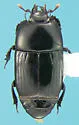
Platysoma aurelianum
Platysoma aurelianum
rare in collections Type Locality: New Orleans, Louisiana
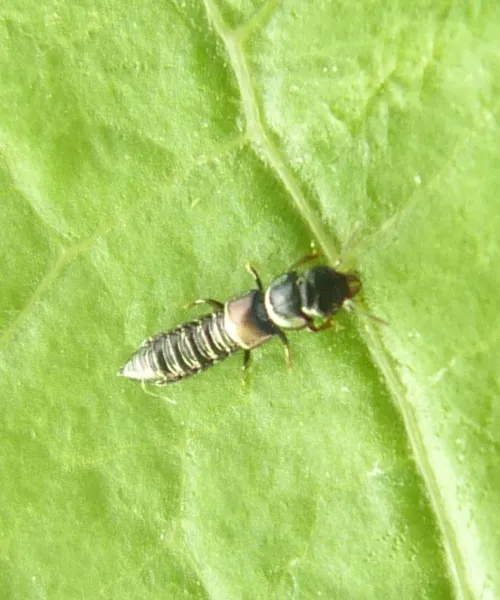
Platystethus arenarius
Platystethus arenarius
A small (4 or 5 mm) rove beetle with short, brown wing cases. The usual host is herbivore dung and the beetle is likely to be found wherever this occurs, irrespective of situation. They have also been found in association with other decomposing mater
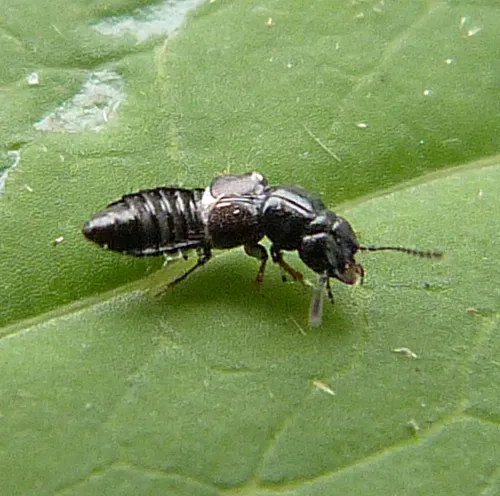
Platystethus cornutus
Platystethus cornutus
Length 2.5 to 4.5 mm. A small black rove beetle with short dark brown elytra. Widespread and fairly frequent in England and Wales. No additional images available for this species.