
Phyllophaga impar
This record describes Phyllophaga impar (species). Recorded family: Scarabaeidae. Recorded order: Coleoptera.
Identification and Appearance
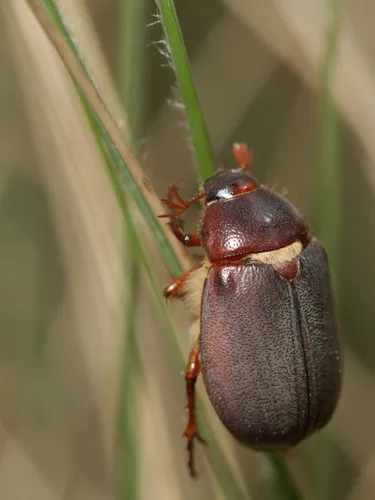
| Feature | Description |
|---|---|
| Additional details | Quoting Davis (1920): Body oblong, slightly broadest behind, reddish brown or darker, the surface sometimes shining but usually more or less pruinose, and in one specimen the surface has a dull smoky appearance.... Clypeus feebly emarginate, moderately reflexed, shining, with punctures varying from comparatively sparse to moderately closely placed, front similarly punctate. |
| Thorax | Thorax narrow at front, being little more than half the greatest width, width at middle very little if any less than basal width, punctures moderately sparse. |
| Elytra | Elytra more coarsely and apparently more closely punctate than thorax, costae, excepting the sutural, indistinct or absent. Scutellum smooth or with a few very indistinct punctures. Pygidium with a moderate number of fine punctures. Metasternum only moderately hairy. Claws strongly arcuate and with a moderately large median tooth. Length, 13 mm. Male. - Antenna 10-segmented, the club as long as the stem. |
| Abdomen | Abdomen almost imperceptibly flattened on median ventrum, the penultimate segment without characteristic sculpture. Inner spur on hind tibia short, being less than half the length of the outer spur, which is long and slender. The genitalia are remarkable because of the dissimilarity of the claspers. The right clasper is slender and gives an impression of having been aborted; the left clasper is strongly arcuate. The illustrations (PI. XLIV, Fig. 24-27) show the characteristics of the genitalia (see link in references). Female. - The female is unknown. Genitalia of male: Author is John June Davis (1885-1965)--see American Entomologists, pp. 441-443 ( 3 ) ; Gordh and Headrick, p. 262 ( 4 ) ; Purdue University . |
Classification
- Kingdom
- Animalia
- Phylum
- Arthropoda
- Class
- Insecta
- Order
- Coleoptera (Beetles)
- Suborder
- Polyphaga
- Superfamily
- Scarabaeoidea
- Family
- Scarabaeidae (Scarab Beetles)
- Subfamily
- Melolonthinae
- Tribe
- Rhizotrogini
- Genus
- Phyllophaga (May Beetles)
Imported taxonomy record. Source availability varies; see the source references and editorial policy below.
Habitat and Range
Habitat
One record to date (11 April 2021) is from Sandhills habitat with Longleaf Pine.
Geographic Range
known from NC, SC (Davis, 1920)
Seasonal Activity
March-April
Additional species information
Species notes from the sources
Etymology: Latin impar , unequal , no doubt referring to the asymmetry in the claspers--see below.
About Primitive Winged Insects: the wider group
Order-level background for Coleoptera, the group containing Phyllophaga impar. Species-specific details appear above.
Group overview
Coleoptera is the largest order of insects with over 400,000 described species, representing ~25% of all known animal species and ~40% of all insects. In the U.S. alone, nearly 30,000 beetle species have been identified.
Ecological role of the group
Beetles are prominent decomposers, especially in forests, breaking down dead wood and recycling nutrients. As predators, they reduce populations of pest insects. Many species are also important pollinators of flowering plants.
Economic and practical significance of the group
Beetles have major economic significance: leaf beetles (Chrysomelidae) and weevils (Curculionoidea) are among the most destructive agricultural pests globally, costing billions annually, while predatory species like ladybugs provide natural pest control.
Recorded sources for this group: Britannica, Smithsonian, NCSU Entomology. Imported estimates may describe particular regions or reporting periods.
Photos of Phyllophaga impar (2)
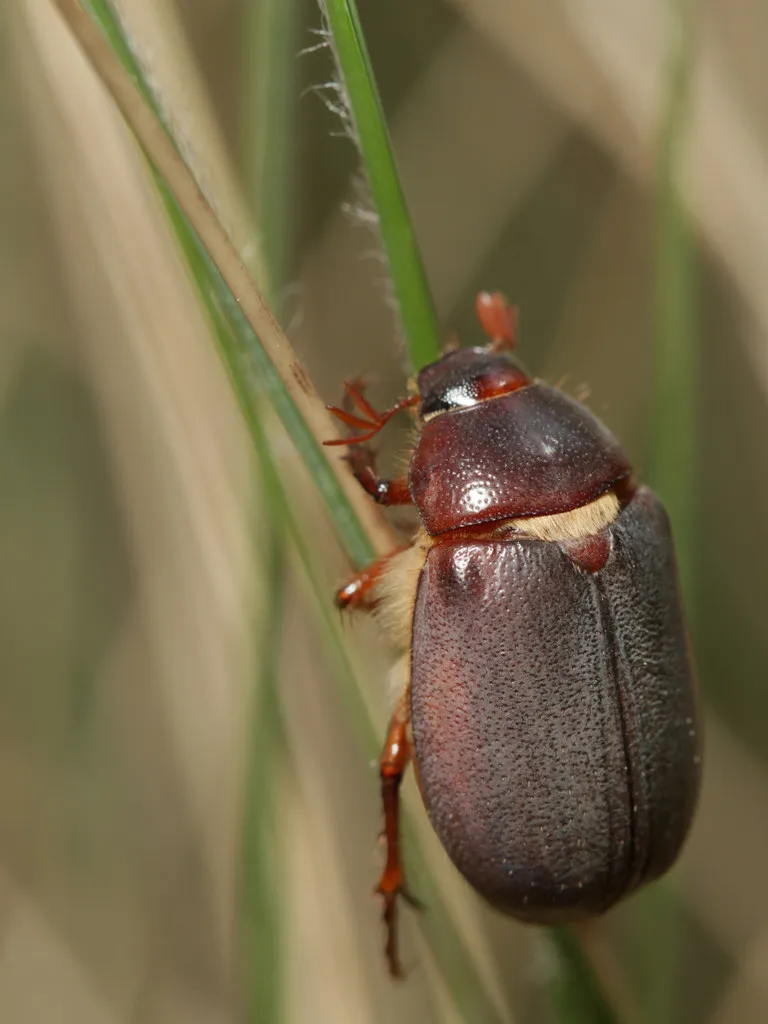
Photo credits: Contributed by MJ Paulsen; Additional contributions by cotinis
Frequently Asked Questions About Phyllophaga impar
What is Phyllophaga impar?
Phyllophaga impar is a species in the family Scarabaeidae, within the order Coleoptera.
How big is Phyllophaga impar?
13 mm (male; Davis, 1920; )
How do you identify Phyllophaga impar?
| Feature | Description |
|---|---|
| Additional details | Quoting Davis (1920): Body oblong, slightly broadest behind, reddish brown or darker, the surface sometimes shining but usually more or less pruinose, and in one specimen the surface has a dull smoky appearance.... Clypeus feebly emarginate, moderately reflexed, shining, with punctures varying from comparatively sparse to moderately closely placed, front similarly punctate. |
| Thorax | Thorax narrow at front, being little more than half the greatest width, width at middle very little if any less than basal width, punctures moderately sparse. |
| Elytra | Elytra more coarsely and apparently more closely punctate than thorax, costae, excepting the sutural, indistinct or absent. Scutellum smooth or with a few very indistinct punctures. Pygidium with a moderate number of fine punctures. Metasternum only moderately hairy. Claws strongly arcuate and with a moderately large median tooth. Length, 13 mm. Male. - Antenna 10-segmented, the club as long as the stem. |
| Abdomen | Abdomen almost imperceptibly flattened on median ventrum, the penultimate segment without characteristic sculpture. Inner spur on hind tibia short, being less than half the length of the outer spur, which is long and slender. The genitalia are remarkable because of the dissimilarity of the claspers. The right clasper is slender and gives an impression of having been aborted; the left clasper is strongly arcuate. The illustrations (PI. XLIV, Fig. 24-27) show the characteristics of the genitalia (see link in references). Female. - The female is unknown. Genitalia of male: |
Where is Phyllophaga impar found?
| Feature | Details |
|---|---|
| Habitat | One record to date (11 April 2021) is from Sandhills habitat with Longleaf Pine. |
| Range | known from NC, SC (Davis, 1920) |
When is Phyllophaga impar active?
Phyllophaga impar: seasonal activity - March-April.