
Butterflies and Moths
Order Lepidoptera
The Butterflies and Moths (Order Lepidoptera) includes 11,813 species across 112 families and 2,787 genera in our directory.
About Butterflies and Moths
Lepidoptera includes approximately 180,000 described species of butterflies and moths. Moths outnumber butterflies roughly 10:1. The monarch butterfly's eastern population has declined by more than 80% since the mid-1990s, and the western population by over 95% since the 1980s. The IUCN lists the migratory monarch as Vulnerable.
Economic Impact
Lepidoptera are critical pollinators. In Europe, grassland butterfly species have declined by almost 50% since the early 1990s. In the UK, three-quarters of butterflies are in decline. In the U.S., five butterfly species have gone extinct since 1950, with 29 listed as endangered.
Ecological Role
Butterflies and moths are essential indicators of ecosystem health. As caterpillars, they are a primary food source for birds - a single nest of blue tit chicks requires ~10,000 caterpillars. Adult moths pollinate many night-blooming plants.
Families in Lepidoptera (112)
Species in Lepidoptera (11,813)
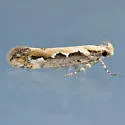
Ornativalva erubescens - Hodges#1928.1
Ornativalva erubescens
Identification: Forewing pattern distinct in our area. Can be extremely abundant at times. A single bucket trap in Willcox, Arizona yielded an estimated 10,000+ specimens of this species (Kyhl Austin).
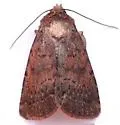
Orthodes adiastola - Hodges#10588
Orthodes adiastola
Identification: Adult : Dull brown ground color, with some black scaling ● FW dark brown, with area between AM and PM lighter than basal 1/3 and terminal 1/3 ● AM somewhat irregular, crenulate, dentate inwardly ● Median shade vague ● PM outwardly cur
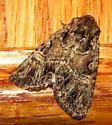
Orthodes noverca - Hodges#10282
Orthodes noverca
Identification: The orbicular spot is only half lined with black, and this is a key to distinguish Orthodes noverca from the two other similar species.
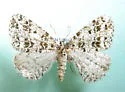
Orthofidonia exornata - Hodges#6429
Orthofidonia exornata
Identification: Genitalia: ♀ ♂ Rare in collections.
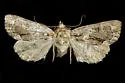
Orthomoia bloomfieldi - Hodges#9433.1
Orthomoia bloomfieldi
Identification: Mustelin original description is in PDF. Specimen determined by DNA analysis (BOLD).
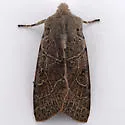
Orthosia behrensiana - Hodges#10485
Orthosia behrensiana
Identification: Specimens identified by DNA analysis:
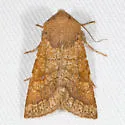
Orthosia ferrigera - Hodges#10482
Orthosia ferrigera
Orthosia ferrigera - Hodges#10482 (Orthosia ferrigera) is a species in the family Noctuidae, commonly known as owlet moths, belonging to the order Lepidoptera (Butterflies and Moths). It is classified within the subfamily Noctuinae, tribe Orthosiini,
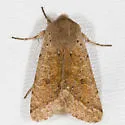
Orthosia pacifica - Hodges#10494
Orthosia pacifica
Identification: The original description as Taeniocampa pacifica Harvey, and a revised description as Monima pacifica by Hampson 1905 are both available online in the print references below. Specimen identified by DNA analysis (BOLD). ( 3 )
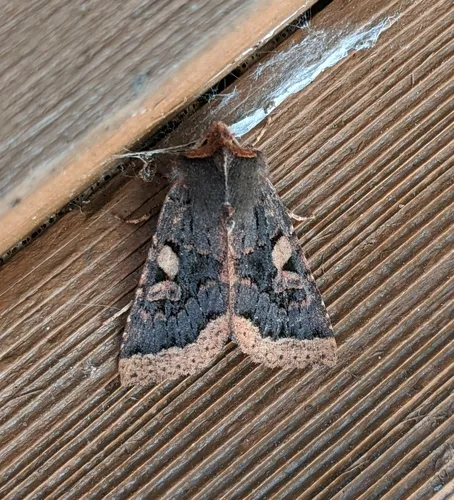
Orthosia praeses - Hodges#10480
Orthosia praeses
Identification: FW color is variable, most commonly dark reddish brown or blackish brown and less often mottled and speckled light red-brown. Most color forms have a lighter terminal area that is often ochres-tan or orange-brown, but the terminal are
Orthosia segregata - Hodges#10493
Orthosia segregata
Identification: Gray forewing with large discal spots and a black median bar.
Orthosia terminata - Hodges#10484
Orthosia terminata
Identification: The original and revised description can be found online in the print references. rarely collected. ( 3 )
Orthosia transparens - Hodges#10479
Orthosia transparens
Identification: Adult: forewing uniformly light to dark reddish-brown, rectangular, with sharply-pointed apex; outer margin straight or slightly falcate; reniform spot dark grayish, barely darker than ground color; PM line a gently curving series of
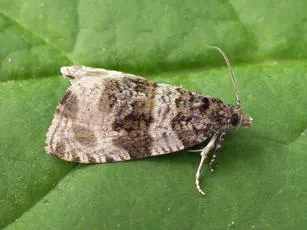
Orthotaenia undulana
Orthotaenia undulana
The moths emerge between May and July, occasionally later, and can be disturbed from the foliage, or attracted to light at night. It is a polyphagous species and the larvae are known to feed on a wide range of trees and plants. The species is distrib
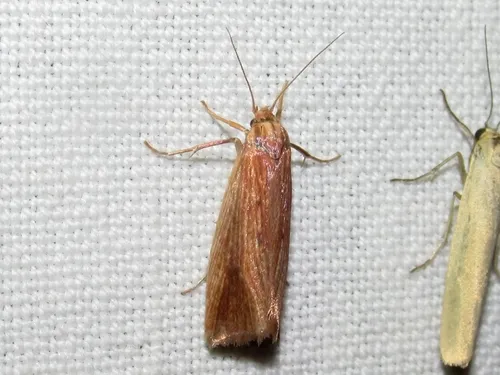
Orthotelia sparganella
Orthotelia sparganella
Wingspan 20 to 28 mm. A fairly distinctive species, with a rather tent like body shape and with an ochreous or brownish wing colour that usually has noticeably paler venation and a faint row of darker dots near the dorsal edge of the wing. The larvae
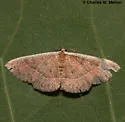
Oruza albocostata - Hodges#9026
Oruza albocostata
Identification: Specimen identified by DNA analysis:
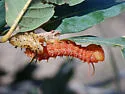
Oslar's Oakworm Moth - Hodges#7722
Anisota oslari
Identification: Larva - last instars are brick red. See photos at Moths of Southeastern Arizona in Internet References. Has been successfully crossed with A. senatoria in the lab. See Peigler & Williams in Print References.
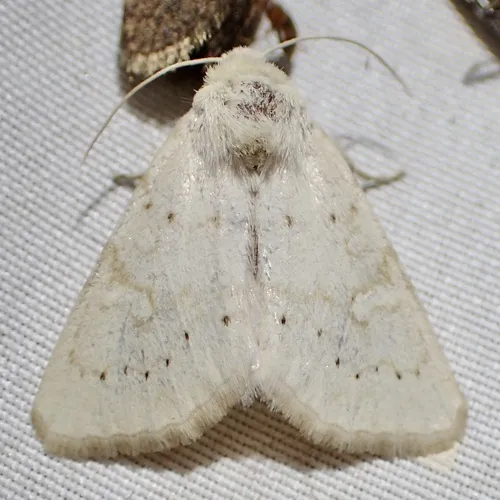
Oslaria pura - Hodges#9792
Oslaria pura
Identification: "The nocloine prothoracic tarsal segments, the triangular frontal process, the comb of enlarged spines on the prothoracic tarsal segments, and the off-white and obscure maculation of the forewing will identify this species. The forewi
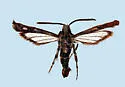
Osminia donahueorum - Hodges#2545.1
Osminia donahueorum
Identification: Adult - see Duckworth & Eichlin in Print References. These tiny and uncommon clearwing moths sit on a small legumes ( Coursetia caribaea ) found under the live oaks on the side hills of Madera Canyon in early August (William H. Taft).
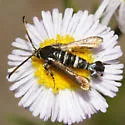
Osminia ruficornis - Hodges#2545
Osminia ruficornis
Identification: Adult - see Duckworth & Eichlin in Print References. Responds well to the sex attractant E,Z 2,13- octadecadien-1-ol alcohol. ( 4 )
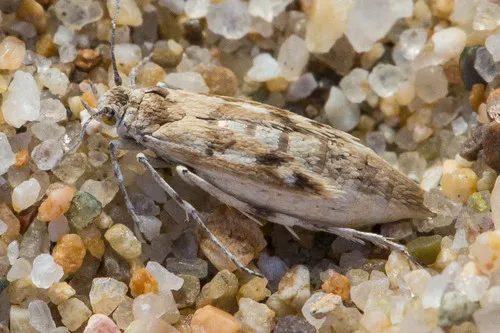
Oso Flaco Flightless Moth
Areniscythris brachypteris
Areniscythris brachypteris, the Oso Flaco flightless moth or sand-dune grasshopper moth, is a moth of the Scythrididae family. It was described by Jerry A. Powell in 1976. It is found in the coastal sand dunes of California.
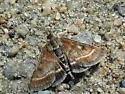
Ostrinia marginalis - Hodges#4948
Ostrinia marginalis
Identification: Ferruginous. Body beneath and legs silvery white. Palpi porrect, smooth, broad, white beneath, nearly as long as the breadth of the head; third joint acute, minute. Abdomen cinereous. Legs smooth, slender. Wings rather broad, with a c
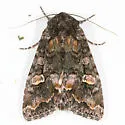
Otter Spiramater - Hodges#10301
Spiramater lutra
Identification: Adult: forewing dark brown or blackish with pale (often pinkish) reniform spot, anal patch, and basal patch Larva: early instars green, later instars brown with a line of black dots down the back The genus Spiramater is misspelled "Sp
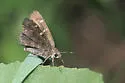
Outis Skipper - Hodges#3923
Cogia outis
considered by Oklahoma to be a "Species of Greatest Conservation Need" (SGCN)
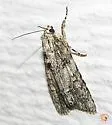
Ovate Dagger - Hodges#9243
Acronicta ovata
Identification: Adult: forewing mottled gray and yellowish-brown; black basal dash and AM line merge to form a Y or T toward base; sharp anal dash present hindwing grayish-brown
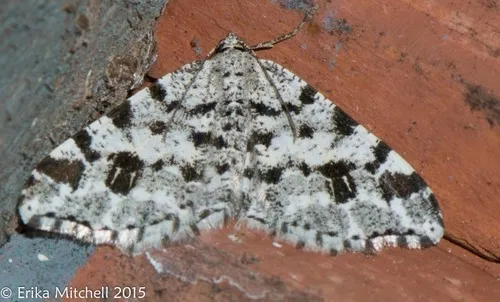
Owen's Larch Granite - Hodges#6351
Macaria oweni
Identification: Adult: forewing white, heavily speckled with grey; four heavy black blotches along costa. AM and PM lines bold, black, jagged; median line usually broken into several dark spots. The white ground colour gives this species a very contr
Owl Moth - Hodges#8647
Thysania zenobia
Identification: Males are more boldly marked. Dorsal Ventral
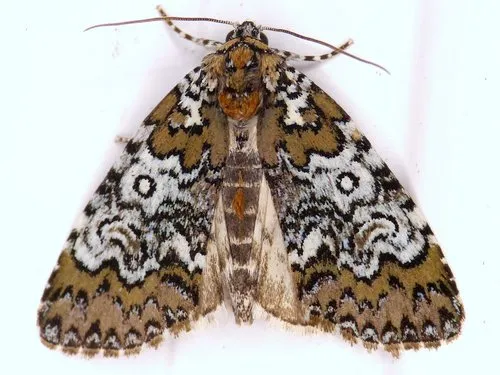
Owl-eyed Bird Dropping Moth - Hodges#9061
Cerma cora
Identification: forewing basal and subterminal areas olive green with wavy black lines; median area white with wavy/jagged black lines and prominent white orbicular spot (in moths at rest, the two orbicular spots and jagged lines between them give th
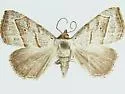
Oxycilla mitographa - Hodges#8408
Oxycilla mitographa
Identification: The two transverse lines are distinctive.
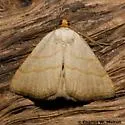
Oxycilla tripla - Hodges#8405
Oxycilla tripla
Identification: The original description is available online in the print references below. (Grote) Some caterpillar notes in PDF. ( 5 )
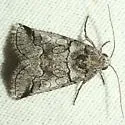
Oxycnemis advena - Hodges#10039
Oxycnemis advena
Oxycnemis advena - Hodges#10039 (Oxycnemis advena) is a species in the family Noctuidae, commonly known as owlet moths, belonging to the order Lepidoptera (Butterflies and Moths). It is classified within the subfamily Amphipyrinae, tribe Psaphidini,
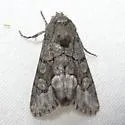
Oxycnemis grandimacula - Hodges#10048
Poolea grandimacula
Identification: See info by Robert Poole in See also and Internet References below. Lafontaine & Schmidt (2011) ( 3 ) formerly synonymized Oxycnemis erratica with C. grandimacula , "... following Robert Poole ( Noctuidae of North America ) – http://w
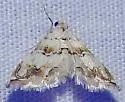
Oxyelophila callista - Hodges#4788
Oxyelophila callista
Identification: Original description is online as Argyractis callista in Forbes 1922, p. 102 . Forewing strongly falcate ; much of forewing white; PM line makes a deep graceful outward loop off of costa, then recurves to inner margin. Abdomen has bl
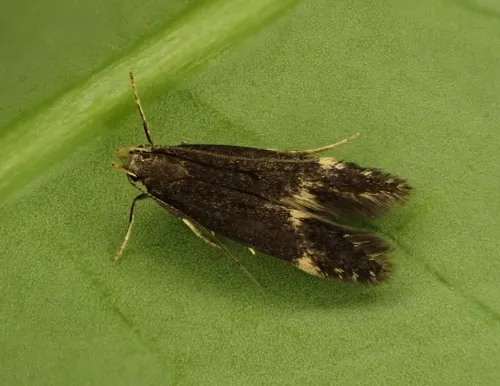
Oxypteryx atrella
Oxypteryx atrella
This species inhabits woodland and dry grassy areas. The nocturnal adults fly in July and August. The larvae feed internally in the stems and shoots of St. John's-wort (Hypericum spp.) and pupate in a case usually made from part of a leaf. Distribute
Ozarba nebula - Hodges#9033
Ozarba nebula
Identification: Specimen identified by DNA analysis:
Ozarba propera - Hodges#9031
Ozarba propera
Identification: Specimen identified by DNA analysis (BOLD). ( 3 )
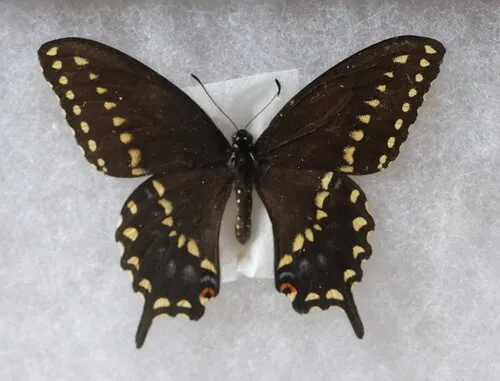
Ozark Swallowtail - Hodges#4160
Papilio joanae
Identification: Closely similar to Papilio polyxenes and difficult to distinguish from that species. The tegulae of the prothorax (little "hairy" flaps above the base of the front wings) are often almost entirely yellow in this species and rarely so
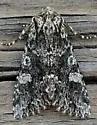
Pachypolia atricornis - Hodges#9992
Pachypolia atricornis
Identification: Grote and Hampson descriptions in the print references listed below. Uncommon to rare throughout the range. Greham & Parker collected adult females at bait. Westcott reported Pachypolia atricornis collected by "sugaring".
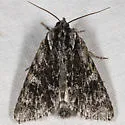
Pacific Dagger - Hodges#9268
Acronicta perdita
Identification: Adults: Forewings gray heavily suffused with black. Hind wings of males are white and are gray in females. Specimen identified by DNA analysis: Larvae: Larva has orange scoli or tubercles covered with short hair tufts or spines. The c
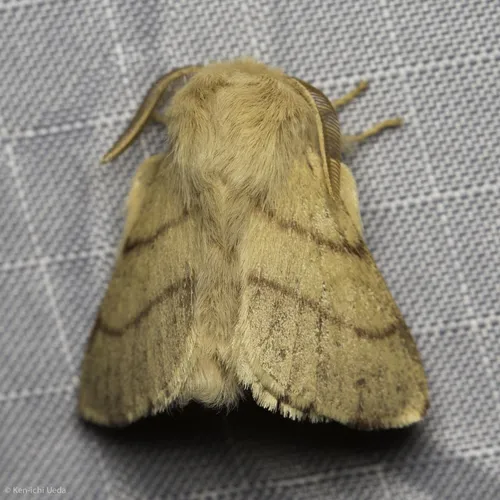
Pacific Tent Caterpillar
Malacosoma constricta
Malacosoma constricta, also known as the Pacific tent caterpillar, is a species of moth endemic to North America. Malacosoma constricta is known from California, Oregon, and Washington and is reported only on oaks. In California, subspecies M. constr
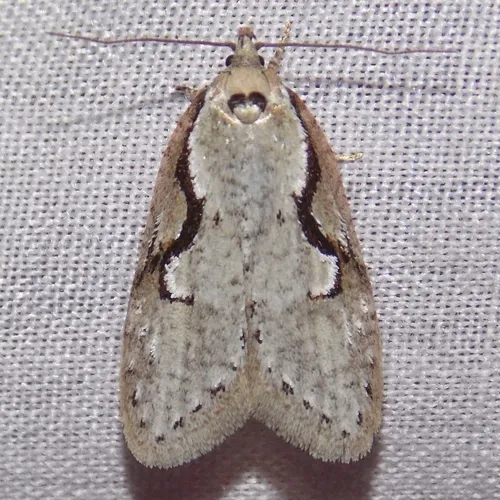
Packard's Concealer Moth
Semioscopis packardella
Packard's concealer moth or Packard's flatbody moth (Semioscopis packardella) is a species of moth of the Depressariidae family. It was described by James Brackenridge Clemens in 1863. It is found in North America in central Alberta, southern Quebec,
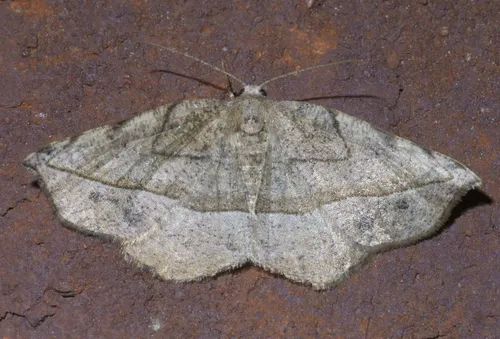
Packard's Eusarca - Hodges#6936
Eusarca packardaria
Identification: Adult: forewing light yellowish-brown with dark AM and PM lines, pointed apex, and falcate outer margin; AM line V-shaped; PM line straight except for sharp inward jog near costa; median line represented only by dark diagonal dash at
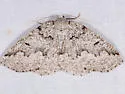
Packard's Girdle - Hodges#7007
Enypia packardata
Identification: Adult: light brownish-gray with dark speckling; discal spot a short black streak; AM and PM lines black, prominent; PM line angles diagonally from inner margin toward apex, meeting costa in apical area, and its outline is a highly irr
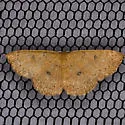
Packard's Wave - Hodges#7136
Cyclophora packardi
Identification: Wings yellowish to orangish-brown, not mottled; discal spots hollow or filled with white; AM and PM lines made of bold gray dots, distinct and uniformly separated; solid gray median line sometimes present. [adapted from description by
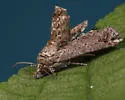
Paectes fuscescens - Hodges#8963.2
Paectes fuscescens
Identification: "Fawn-color, with blackish speckles. Palpi pale testaceous beneath. Antennae brown. Thorax in front, pectus and legs mostly whitish. Forewings indistinctly mottled with brown, and with three slender black bands; the first band more re
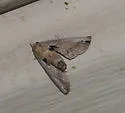
Paectes nana - Hodges#8967
Paectes nana
Identification: Adult - two distinct forms, see Pogue.
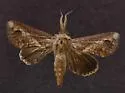
Paectes nubifera - Hodges#8965
Paectes nubifera
Identification: The original description is available online in the print references below. Female has yellowish-white patch above the antemedial line.
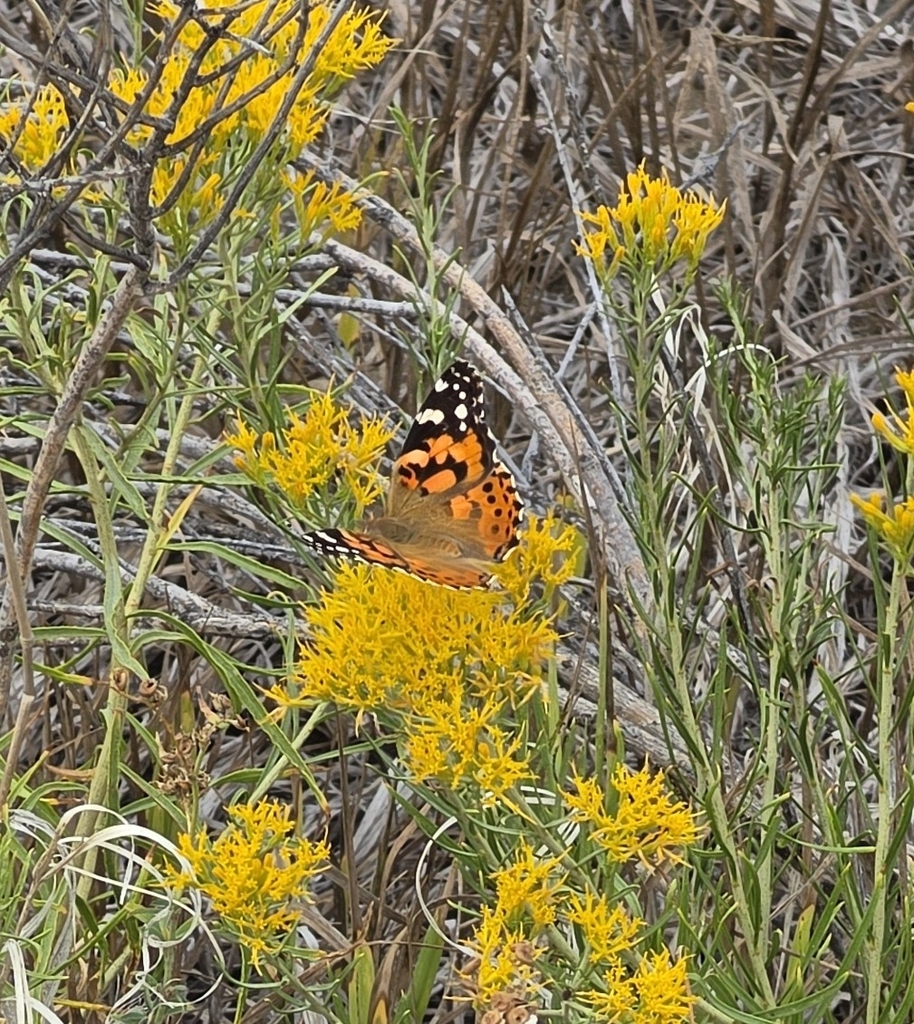
Painted Lady
Vanessa cardui
no rights reservedA newly emerged adult is flushed with a beautiful salmon-pink and is a most-beautiful insect. This colouring, however, fades rapidly with the passage of time. The species has slightly pointed wing tips and the white marks on the black tips of the for
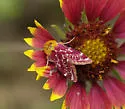
Painted Schinia - Hodges#11106
Schinia volupia
Often seen resting on the flower heads of the host plant and other species of Asteraceae. Attracted to lights.
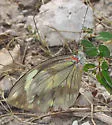
Painted White - Hodges#4189.3
Pieriballia viardi
First U.S. Record: Bentsen-RGV State Park, Mission, Hidalgo Co., Texas - 2005 (Bordelon & Knudson 2006)
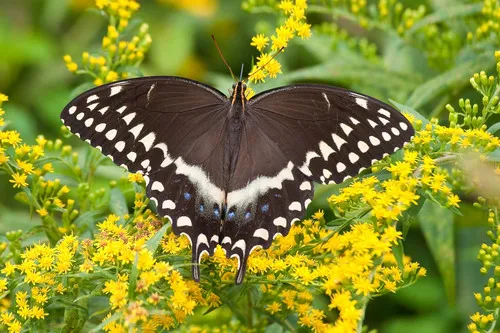
Palamedes Swallowtail
Papilio palamedes
Papilio palamedes, the Palamedes swallowtail or laurel swallowtail, is a North American butterfly in the family Papilionidae.
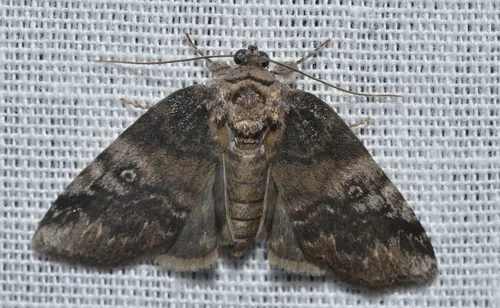
Pale Baileya - Hodges#8972
Baileya levitans
Identification: Adult: forewing light gray with grayish-white median area, small basal patch, and least distinct apical patch of any Baileya species; reniform spot with black outline and center forming an eyespot; AM and PM lines double; PM line with
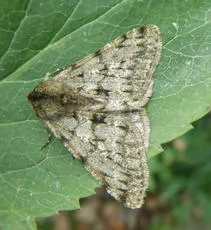
Pale Brindled Beauty
Phigalia pilosaria
Wingspan 35 to 40 mm. The females of this species are completely wingless (apterous), a feature which is often found in moths which emerge in the winter months. The species shows marked melanism, the black form f. monacharia being commoner than the t
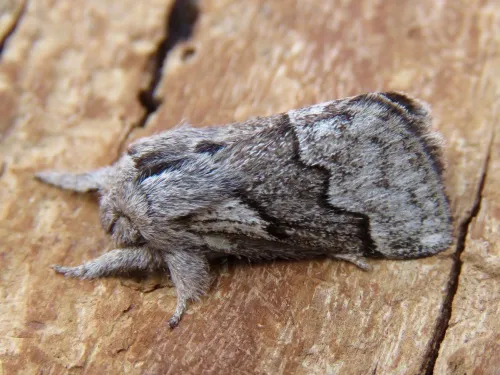
Pale Eggar
Trichiura crataegi
Wingspan 25 to 30 mm. A grey moth with angular black lined markings. It is quite variable across its range, the more northern forms tending to be darker. Its preferred habitats are heathland and the edges of woodland. The larvae feed on a range of pl
Pale Glyph - Hodges#9048
Protodeltote albidula
Identification: Specimens identified by DNA analysis: common and widespread species is easily flushed during daylight and is also attracted to lights
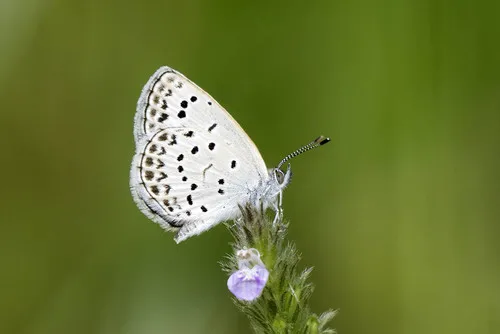
Pale Grass Blue
Pseudozizeeria maha
Pseudozizeeria maha, the pale grass blue, is a small butterfly found in Asia that belongs to the lycaenids or blues family.
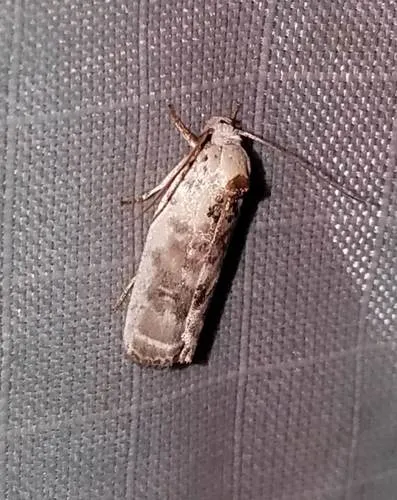
Pale Gray Bird-dropping Moth
Antaeotricha leucillana
Antaeotricha leucillana, the pale gray bird-dropping moth, is a moth in the Depressariidae family. It was described by Philipp Christoph Zeller in 1854. It is found in North America, where it has been recorded from New Hampshire, Massachusetts, New Y
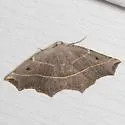
Pale Metanema - Hodges#6819
Metanema inatomaria
Identification: The sexes are very similar in size. Male have bipectinate antennae. Specimen identified by DNA analysis:
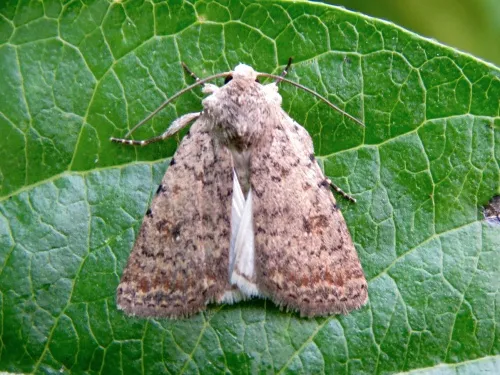
Pale Mottled Willow
Caradrina clavipalpis
Wingspan 26-35 mm. This moth shows a distinct mottling to the forewing, with several dark dots along the leading edge, and very white hind wings. It flies mainly between July and September, but can be found earlier or later in the year. The caterpill
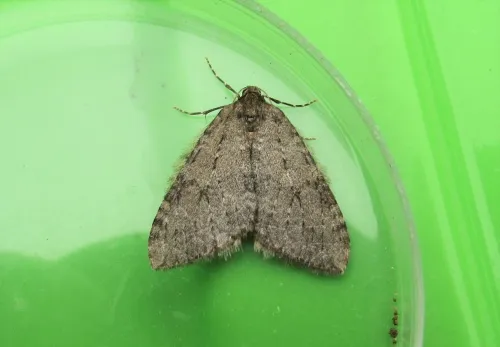
Pale November Moth
Epirrita christyi
Wingspan about 40 mm. Difficult to separate in the field from its close congeners, E. dilutata and E. autumnata so gen det is required. Tends to favour more wooded habitats than the other two species. The moths fly from September till November. Wides
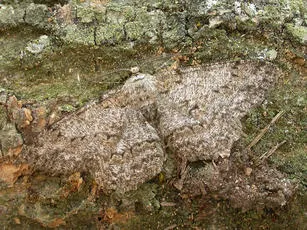
Pale Oak Beauty
Hypomecis punctinalis
Wingspan 46 to 55 mm. Although rather variable in ground colour, this species can be confused with Great Oak Beauty. One of the separating features is that the latter species has a pale spot on a dark background on the tip of the forewing underside.
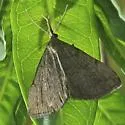
Pale Phalaenostola - Hodges#8362
Phalaenostola metonalis
Identification: labial palps very long (as long as head and thorax combined) and flattened laterally; male antennae broadly bipectinate, with each lateral branch 1 mm long; forewing light grayish-brown or yellowish-brown, often darker in median area
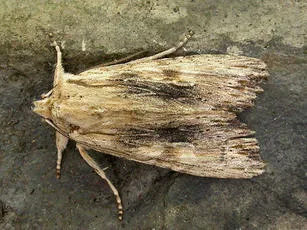
Pale Pinion
Lithophane socia
Wingspan 38 to 42 mm. Similar to the Tawny Pinion, with the same thoracic and abdominal crests, but these lack the blue-green iridescence. The moths are on the wing in October and November, and reappear after hibernation in early spring, when breedin
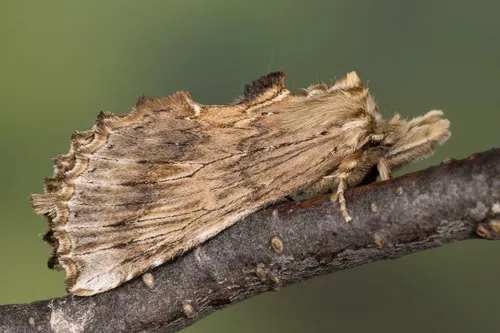
Pale Prominent
Pterostoma palpina
Wingspan 35-55 mm. A distinctive moth when at rest, though well camouflaged, it has long labial palps and tufts on the tail segment, creating an elongated appearance. It flies in May and June and, in the south, again in August. The larval food plants
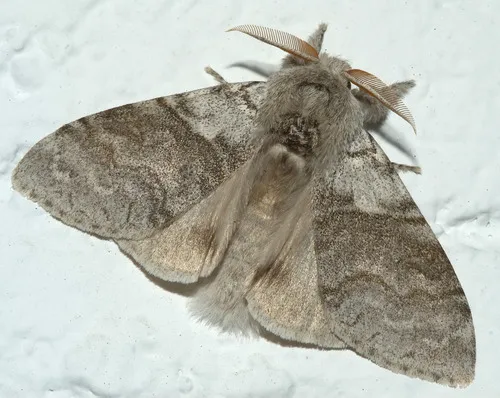
Pale Tussock
Calliteara pudibunda
Wingspan 40-60 mm. Both the adults and larvae are quite hairy. Gardens, hedgerows, parks, woodland and scrub. The moths fly in May and June and are attracted to light. The larva is similar to that of the Dark Tussock ( Dicallomera fascelina ), but is
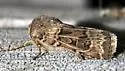
Pale Western Cutworm - Hodges#10645
Agrotis orthogonia
Identification: Adult : FW pale putty to light gray-brown ground color • AM irregular with a long lateral loop at the inner margin • Claviform spot is small to medium sized, black and often filled with darker gray • Orbicular and reniform spots are b
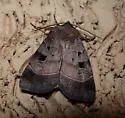
Pale-banded Dart - Hodges#10955
Agnorisma badinodis
Identification: Specimen identified by DNA analysis: Genitalia: ♂
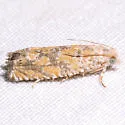
Pale-faced Pelochrista - Hodges#3153
Pelochrista pallidipalpana
Identification: Adult - see original description in Print References.
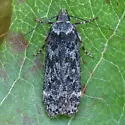
Pale-headed Aspen Leafroller Moth - Hodges#2243
Anacampsis niveopulvella
Identification: Chambers (1875) original description as Gelechia niveopulvella available in the print refernces .
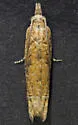
Pale-headed Eucosma - Hodges#2927
Eucosma ochrocephala
Identification: Adult - forewing light brownish-yellow with diffuse brown oval ring forming a large indistinct patch in median area; short brown diagonal streaks along costa, especially noticeable near apex; two dark longitudinal dashes usually visib
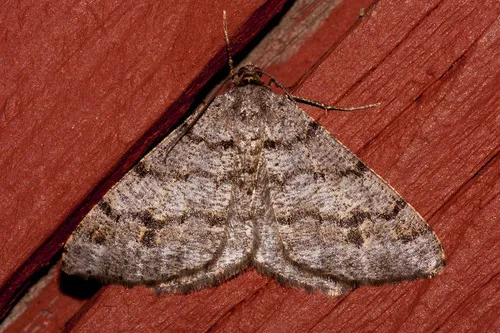
Pale-marked Angle - Hodges#6344
Macaria signaria
Identification: Adult: head pale with thin dark collar; forewing pale brownish-gray with large dark blotch (composed of 4 separate pieces in well-marked individuals) near middle of PM line; AM, median, and PM lines scalloped or wavy, dark, and usuall
Pale-rayed skipper - Hodges#3991
Nastra perigenes
Identification: Godman (1900) states "easily identified from its allies by the longitudinal whitish streaks on the secondaries beneath." Godman (1900) original description as Mastor perigenes is available online at the link in the print references.
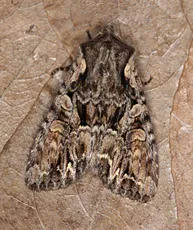
Pale-shouldered Brocade
Lacanobia thalassina
Wingspan 35-38 mm. There is some colour variation, but the species generally shows the 'pale shoulder' that gives rise to its English name. Flying in June and July, sometimes a partial second brood occurs in the south. The nocturnal larvae feed on a
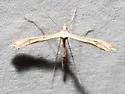
Pale-streaked Plume Moth - Hodges#6145
Stenoptilia pallistriga
Identification: See the identification key for Platyptiliini . See the species accounts in Matthews & Hunt , Gielis , and Barnes & Lindsey .
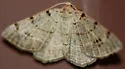
Pale-veined Isturgia Moth - Hodges#6419
Isturgia dislocaria
Identification: forewing light brown with 3 dark brown squarish spots evenly spaced along the costa; wing veins pale yellowish or white, providing contrast even against the wing's light ground color; brown speckling concentrated mostly along the cost
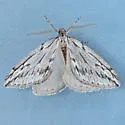
Paleacrita longiciliata - Hodges#6664
Paleacrita longiciliata
Paleacrita longiciliata - Hodges#6664 (Paleacrita longiciliata) is a species in the family Geometridae, commonly known as geometrid moths, belonging to the order Lepidoptera (Butterflies and Moths). It is classified within the subfamily Ennominae, tr
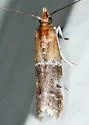
Paler Moodna Moth - Hodges#6005.1
Moodna pallidostrinella
Paler Moodna Moth - Hodges#6005.1 (Moodna pallidostrinella) is a species in the family Pyralidae, commonly known as pyralid moths, belonging to the order Lepidoptera (Butterflies and Moths). It is classified within the subfamily Phycitinae, tribe Phy
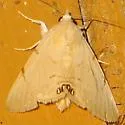
Palm Flower Moth - Hodges#8558
Litoprosopus coachella
Identification: Adult: forewing tan or pale gray with two dark diagonal marks along costa; hindwing has two black-rimmed white spots near anal angle. Larva: body pink, smooth; head brown. Larvae may sometimes enter homes and use bits of carpet or rug
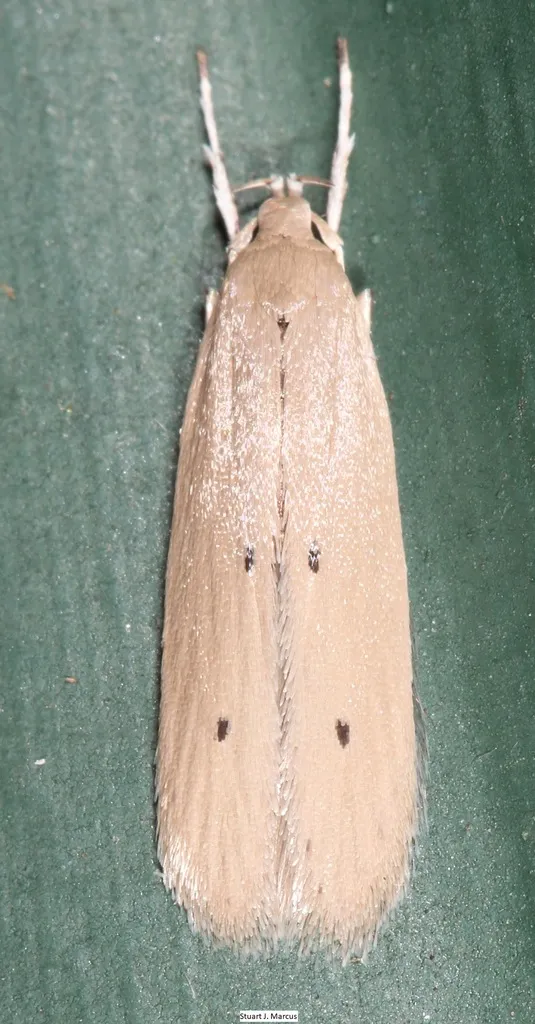
Palm Leaf Skeletonizer - Hodges#1422
Homaledra sabalella
The chalcid wasp Horismenus ignotus is likely the primary pasasite of the larva. ( 76 )
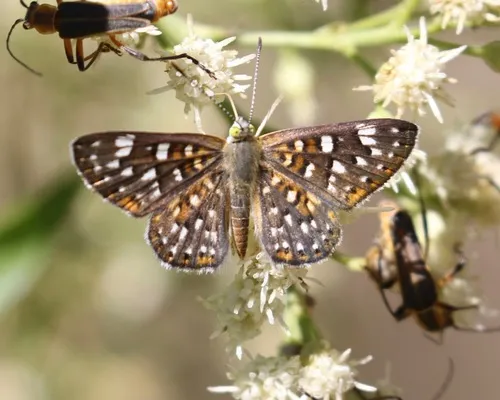
Palmer's Metalmark
Apodemia palmerii
Apodemia palmeri, the Palmer's metalmark or gray metalmark, is a species of metalmark butterfly, Riodinidae. It is found in North America from western Texas, New Mexico, Arizona, southern Utah, southern Nevada and southern California south to central
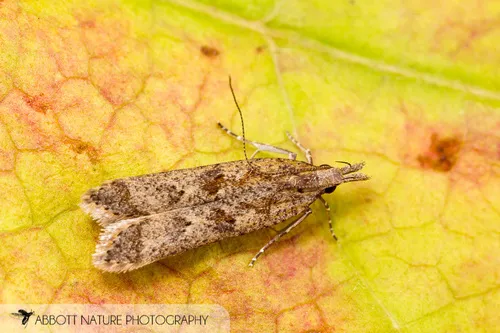
Palmerworm Moth
Dichomeris ligulella
The palmerworm (Dichomeris ligulella) is a moth of the family Gelechiidae. It is found in eastern North America.
Palmetto Borer Moth - Hodges#8556
Litoprosopus futilis
Identification: Adult: forewing brown to orangish with broken double AM and PM lines, not contrasting much against ground color of wing; hindwing brown with large white-edged black spot near anal angle; the spot has two white linear dashes inside it;
Palmetto Skipper - Hodges#4070
Euphyes arpa
Identification: One of the larger grass skippers, with angular wings. Dorsal, male has a dark orange head and mantle, and a thin black stigma on the FW. Female has a band of creamy spots on the FW, HW mostly brown. Ventral, strikingly unmarked bright
Palmia praecedens - Hodges#2587
Palmia praecedens
Identification: Adult - the lemon yellow abdomen is a key characteristic.
Palpita arsaltealis - Hodges#5222
Palpita arsaltealis
Identification: Adult: forewing light grayish-brown with heavy dark speckling; irregular dark patches in median and basal areas; hindwing similar but lacks large dark patches page creation based on Brian Scholtens' identification of images here and h
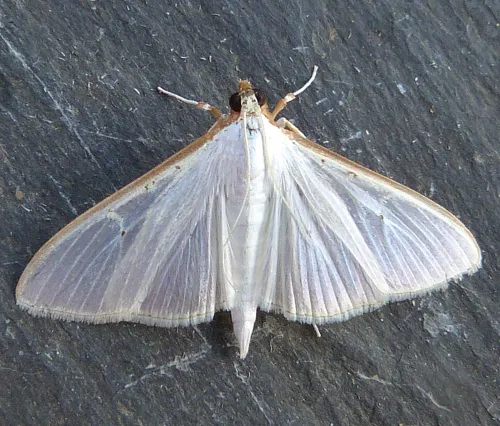
Palpita vitrealis
Palpita vitrealis
Wingspan 27 to 31 mm. The wings are translucent with a slight sheen and an orange or brown leading edge. As an immigrant to Britain it is often found near to the coast. Autumn is the most likely period to encounter this species. Abroad, the species f
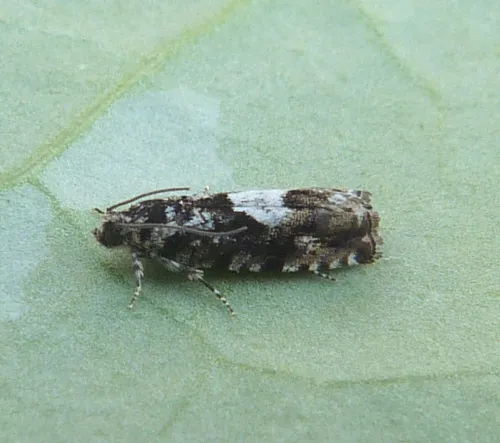
Pammene argyrana
Pammene argyrana
Gen det may be required, or good photographs of the moth and the hindwing. A relatively early spring species, the moth is at large during April and May. The larva lives in a gall, often that of another hymenopterous insect, feeding internally. Locall
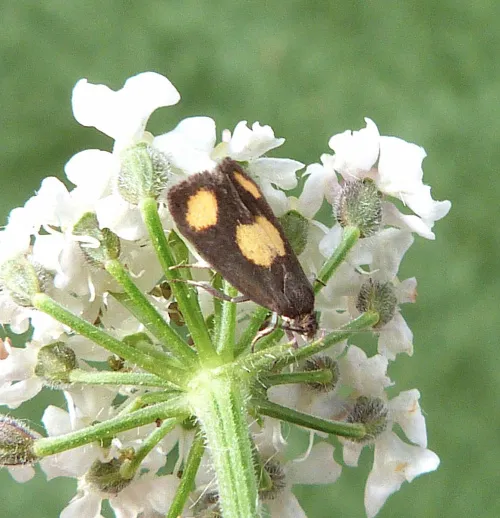
Pammene aurana
Pammene aurana
Wingspan 9-13 mm. A very distinctive species, having two orange blotches on a chocolate brown forewing. Hedgerows, rough ground and woodland edges, favouring Hogweed. Flying in June and July, the moths can be found in the afternoons on the flowers of
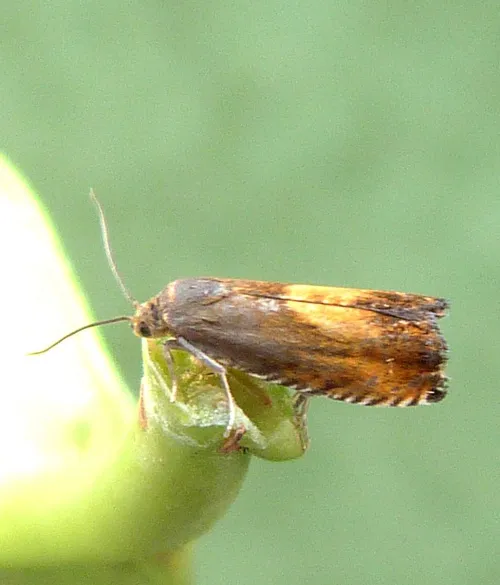
Pammene aurita
Pammene aurita
The adult moths are on the wing in July and August, from late afternoon onwards, and are most often encountered at light. The larvae feed inside the seeds of sycamore (Acer pseudoplatanus), and their presence is sometimes betrayed by small exit holes
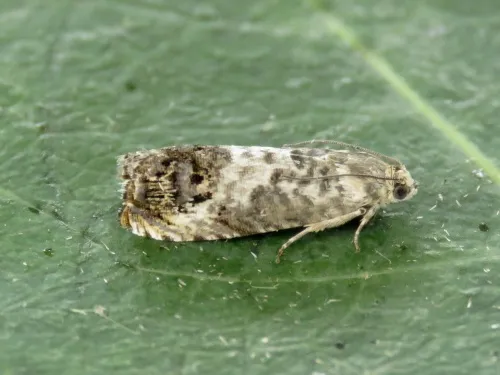
Pammene fasciana
Pammene fasciana
Wingspan 13-17 mm. An attractive species which, when fresh, shows a series of bluish metallic and tawny markings with a rosy flush to the whitish ground colour. Various habitats, particularly well wooded areas containing Oak or Sweet Chestnut. The mo
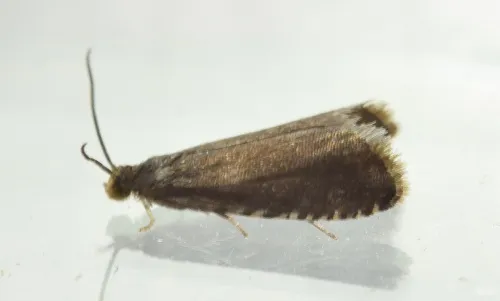
Pammene germmana
Pammene germmana
Wingspan about 12 mm. This species, despite its dull appearance, is relatively easy to recognise. It has a dark brown quite plain appearance, with a series of creamy-coloured strigulae along the costa, interspersed with occasional bluish-metallic str
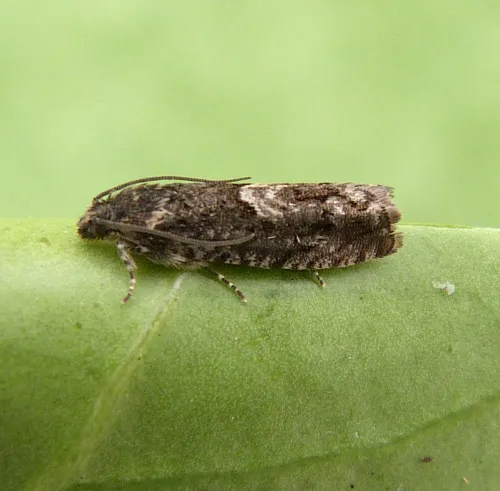
Pammene giganteana
Pammene giganteana
Wingspan about 15 mm. This species is distinctive for its rather long and narrow forewings, with a horseshoe-shaped whitish blotch on the dorsum. The hindwings are whitish with a dark border. Unless identified by a recognised expert, a photo is requi
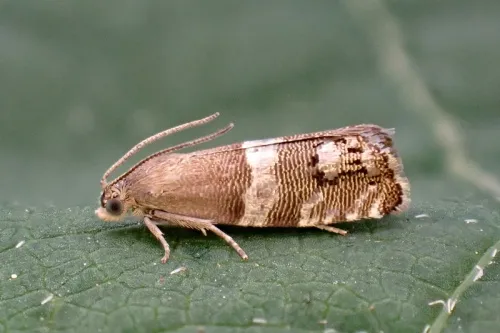
Pammene juniperana
Pammene juniperana
Wingspan about 8 mm. A very small Tortrix which may initially appear a rather plain brown, but actually has a very distinctive banding pattern with highly reflective scales which under magnification show this to be a very attractive moth. In view of
Pammene regiana
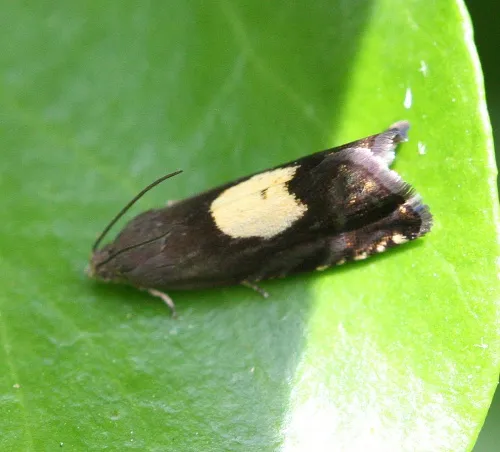
Pammene regiana
Wingspan 13 to 16 mm. A rich dark brown moth with a large yellow dorsal blotch. On the wing from May to July. The adults fly from late afternoon into the night, and can be attracted to light. The larvae feed inside the seeds of Sycamore, and pupate i
Pammene suspectana
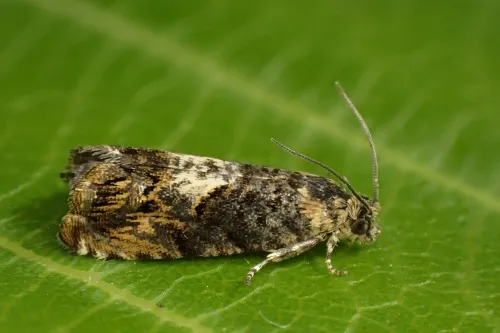
Pammene suspectana
Very similar to several other of the Pammene genus, gen det is required to confirm identification. Areas with Ash trees – the larval foodplant. May and June. It may be attracted the FUN Pheromone lure. Until very recently there were very few records
Pammene trauniana
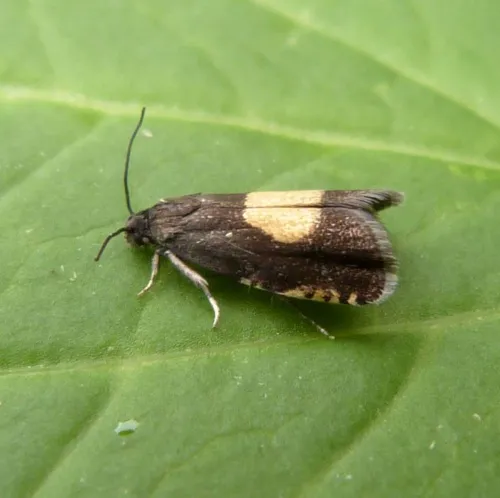
Pammene trauniana
Wingspan 10 to 13 mm. Similar to Pammene regiana, but the medio-dorsal blotch of the forewing is pale yellow and subquadrate, its outer edge nearly straight to dorsum near the tornus, and the costal strigulae interspersed with thick wedges of pale ye
Panama Grass Tubeworm Moth
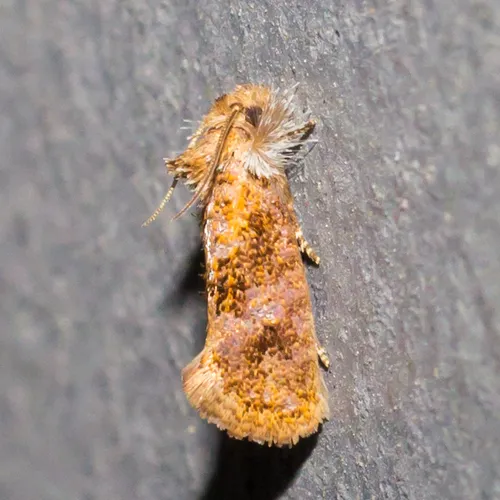
Acrolophus panamae
Acrolophus panamae, the Panama grass tubeworm moth, is a moth of the Acrolophidae family. It was described by August Busck in 1914. It is found in North America, including Alabama, Delaware, Florida, Georgia, Maryland, Mississippi, New Jersey, North
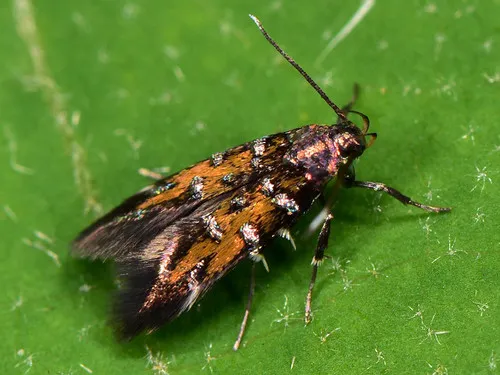
Pancalia leuwenhoekella
Pancalia leuwenhoekella
Wingspan 10 to 12mm. This moth is very difficult to differentiate from its close relative Pancalia schwarzella , with forewing differences relating to the angulation of the lines and antennae colour and size. In leuwenhoekella , the antennae in both
Pandemis Leafroller Moth - Hodges#3596
Pandemis pyrusana
Identification: Adult - see original description in Print References.
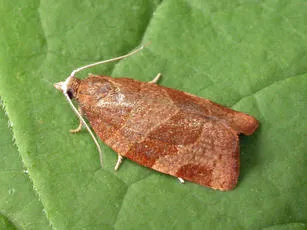
Pandemis cinnamomeana
Pandemis cinnamomeana
Wingspan 18 to 24 mm. It can resemble Dark Fruit-tree Tortrix but there are subtle differences. Males in particular have a whitish forehead. Adults can be found on the wing from Late June through July. The larvae feed on the leaves of a range of deci
Pandora Moth - Hodges#7724
Coloradia pandora
Identification: Adult: forewing speckled gray with black zigzag PM and ST lines that sometimes touch; reniform spot represented by a black discal dot; AM line black, jagged, but does not touch reniform spot; hindwing white with diffuse dark median li