
Orthosia praeses - Hodges#10480
Orthosia praeses
This record describes Orthosia praeses (species). Recorded family: Noctuidae. Recorded order: Lepidoptera.
Identification and Appearance
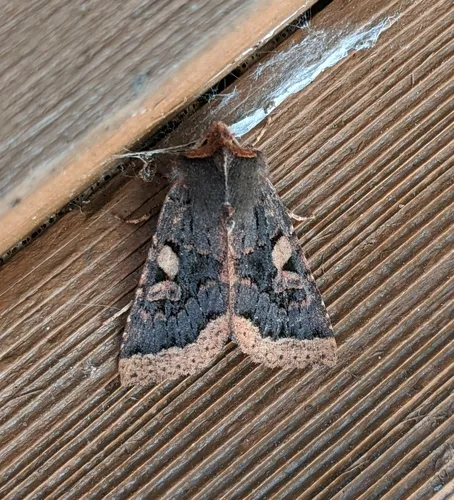
FW color is variable, most commonly dark reddish brown or blackish brown and less often mottled and speckled light red-brown. Most color forms have a lighter terminal area that is often ochres-tan or orange-brown, but the terminal area can be the same shade as the rest of the wing. The subterminal line is pale yellowish to light red-brown and is usually prominent. It is often preceded by darker red-brown or black. The other transverse lines are usually absent or inconspicuous, even at the costa, although the scalloped PM is visible in some specimens. The orbicular spot is diamond-shaped or oval and is fused to the weakly indented reniform spot. These spots can be prominent due to lighter yellowish to light red-brown filling, or can be practically invisible if filled with the ground color. Some specimens have the cell outside the spots filled with jet black which accentuates the filling of the spots. Specimens identified by DNA analysis:
Classification
- Kingdom
- Animalia
- Phylum
- Arthropoda
- Class
- Insecta
- Order
- Lepidoptera (Butterflies and Moths)
- Superfamily
- Noctuoidea
- Family
- Noctuidae (Owlet Moths)
- Subfamily
- Noctuinae
- Tribe
- Orthosiini
- Genus
- Orthosia
Imported taxonomy record. Source availability varies; see the source references and editorial policy below.
Habitat and Range
Habitat
This species is narrowly endemic to the West Coast in moist to dry forest habitats.
Geographic Range
Range of this species extends south through western California to the border with Mexico. It is found most commonly along the Pacific Coast but also occurs on the west slope of the Sierra Nevada.
Seasonal Activity
Like most other members of the tribe Orthosiini, flies in the spring. It is one of the earliest moths to emerge each year. The records from our area extend from early February to mid-April. This species is nocturnal and comes to lights.
About Butterflies and Moths: the wider group
Order-level background for Lepidoptera, the group containing Orthosia praeses. Species-specific details appear above.
Group overview
Lepidoptera includes approximately 180,000 described species of butterflies and moths. Moths outnumber butterflies roughly 10:1. The monarch butterfly's eastern population has declined by more than 80% since the mid-1990s, and the western population by over 95% since the 1980s. The IUCN lists the migratory monarch as Vulnerable.
Ecological role of the group
Butterflies and moths are essential indicators of ecosystem health. As caterpillars, they are a primary food source for birds - a single nest of blue tit chicks requires ~10,000 caterpillars. Adult moths pollinate many night-blooming plants.
Economic and practical significance of the group
Lepidoptera are critical pollinators. In Europe, grassland butterfly species have declined by almost 50% since the early 1990s. In the UK, three-quarters of butterflies are in decline. In the U.S., five butterfly species have gone extinct since 1950, with 29 listed as endangered.
Recorded sources for this group: IUCN Red List, Xerces Society, USFWS, PNAS, WWF. Imported estimates may describe particular regions or reporting periods.
Photos of Orthosia praeses - Hodges#10480 (2)
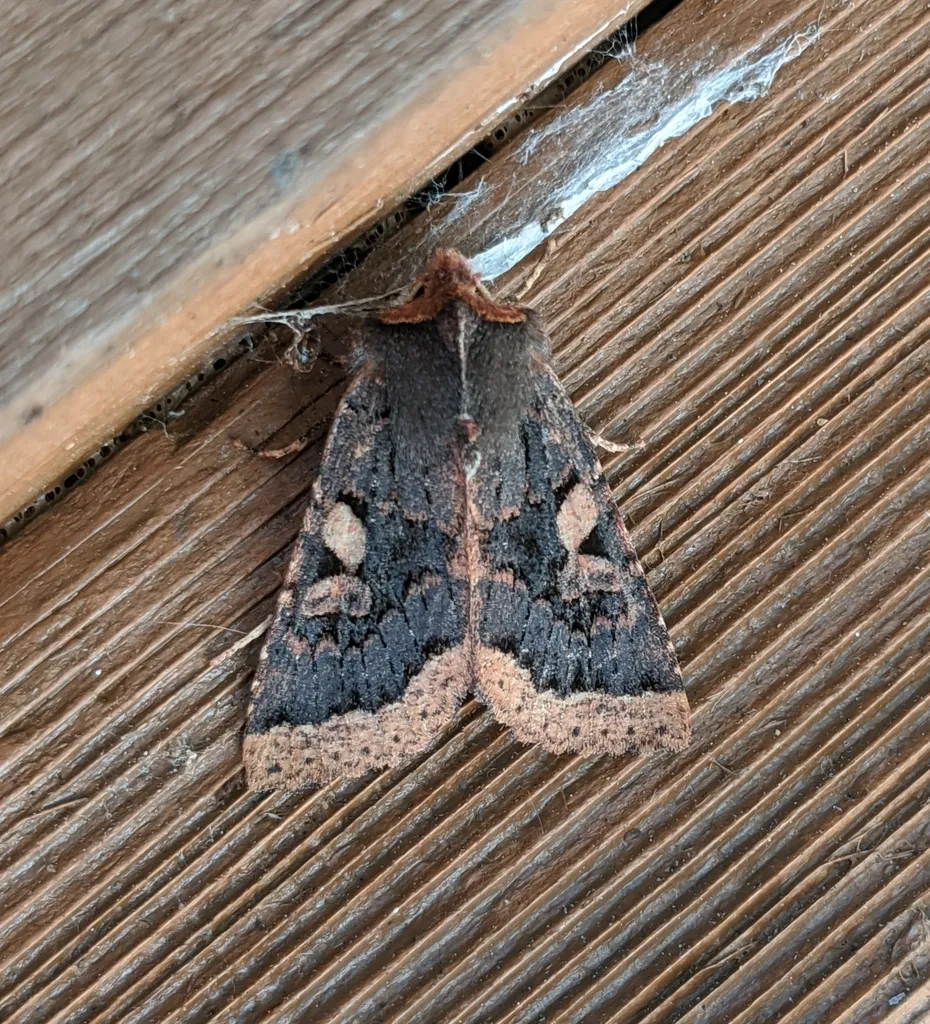
Photo credits: Contributed by Jeff Hollenbeck; Additional contributions by Robin McLeod , Robert Lord Zimlich , Randy Hardy , Robert H. Biagi
Frequently Asked Questions About Orthosia praeses - Hodges#10480
What is Orthosia praeses - Hodges#10480?
Orthosia praeses - Hodges#10480 (Orthosia praeses) is a species in the family Noctuidae, within the order Lepidoptera.
How big is Orthosia praeses - Hodges#10480?
FW length 16-18 mm
How do you identify Orthosia praeses - Hodges#10480?
FW color is variable, most commonly dark reddish brown or blackish brown and less often mottled and speckled light red-brown. Most color forms have a lighter terminal area that is often ochres-tan or orange-brown, but the terminal area can be the same shade as the rest of the wing. The subterminal line is pale yellowish to light red-brown and is usually prominent. It is often preceded by darker red-brown or black. The other transverse lines are usually absent or inconspicuous, even at the costa, although the scalloped PM is visible in some specimens. The orbicular spot is diamond-shaped or oval and is fused to the weakly indented reniform spot. These spots can be prominent due to lighter yellowish to light red-brown filling, or can be practically invisible if filled with the ground color. Some specimens have the cell outside the spots filled with jet black which accentuates the filling of the spots. Specimens identified by DNA analysis:
Where is Orthosia praeses - Hodges#10480 found?
| Feature | Details |
|---|---|
| Habitat | This species is narrowly endemic to the West Coast in moist to dry forest habitats. |
| Range | Range of this species extends south through western California to the border with Mexico. It is found most commonly along the Pacific Coast but also occurs on the west slope of the Sierra Nevada. |
When is Orthosia praeses - Hodges#10480 active?
Orthosia praeses - Hodges#10480: seasonal activity - Like most other members of the tribe Orthosiini, flies in the spring. It is one of the earliest moths to emerge each year. The records from our area extend from early February to mid-April. This species is nocturnal and comes to lights..