
Actebia balanitis - Hodges#10923
Actebia balanitis
This record describes Actebia balanitis (species). Recorded family: Noctuidae. Recorded order: Lepidoptera.
Identification and Appearance
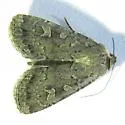
Basal, antemedian and postmedian lines complete, marked in black and scalloped outward at each vein. Orbicular and reniform spots finely outlined with dark scales and filled with slightly paler ones; the reniform usually has the lower half filled with darker scales. The hindwings are dirty white, suffused with sooty-brown toward the outer margin, and the veins are lined with dark scales .
Classification
- Kingdom
- Animalia
- Phylum
- Arthropoda
- Class
- Insecta
- Order
- Lepidoptera (Butterflies and Moths)
- Superfamily
- Noctuoidea
- Family
- Noctuidae (Owlet Moths)
- Subfamily
- Noctuinae
- Tribe
- Noctuini
- Genus
- Actebia
Imported taxonomy record. Source availability varies; see the source references and editorial policy below.
Habitat and Range
Habitat
"This species is widely distributed on the dry short-grass prairies of the northern Great Plains at low elevations, and on montane grasslands at higher elevations throughout the Rocky Mountain region" .
Geographic Range
"Northeast AK and western Yukon east to east central SK and north central SD, south to northern CO and west to central WA and the dry interior of BC (Lafontaine, 2004 fig. 26 )" .
Seasonal Activity
"Pacific Northwest records are from late June to mid September" .
Diet and Behavior
Diet: "No information is presently available regarding larval foodplants of this species, but it probably feeds on various herbaceous vegetation based upon related species" .
About Butterflies and Moths: the wider group
Order-level background for Lepidoptera, the group containing Actebia balanitis. Species-specific details appear above.
Group overview
Lepidoptera includes approximately 180,000 described species of butterflies and moths. Moths outnumber butterflies roughly 10:1. The monarch butterfly's eastern population has declined by more than 80% since the mid-1990s, and the western population by over 95% since the 1980s. The IUCN lists the migratory monarch as Vulnerable.
Ecological role of the group
Butterflies and moths are essential indicators of ecosystem health. As caterpillars, they are a primary food source for birds - a single nest of blue tit chicks requires ~10,000 caterpillars. Adult moths pollinate many night-blooming plants.
Economic and practical significance of the group
Lepidoptera are critical pollinators. In Europe, grassland butterfly species have declined by almost 50% since the early 1990s. In the UK, three-quarters of butterflies are in decline. In the U.S., five butterfly species have gone extinct since 1950, with 29 listed as endangered.
Recorded sources for this group: IUCN Red List, Xerces Society, USFWS, PNAS, WWF. Imported estimates may describe particular regions or reporting periods.
Photos of Actebia balanitis - Hodges#10923 (3)
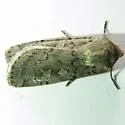
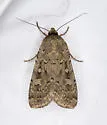
Photo credits: Contributed by Kyhl Austin
Frequently Asked Questions About Actebia balanitis - Hodges#10923
What is Actebia balanitis - Hodges#10923?
Actebia balanitis - Hodges#10923 (Actebia balanitis) is a species in the family Noctuidae, within the order Lepidoptera.
How big is Actebia balanitis - Hodges#10923?
Forewing length: 16-19 mm. , wingspan: 36-40 mm .
How do you identify Actebia balanitis - Hodges#10923?
Basal, antemedian and postmedian lines complete, marked in black and scalloped outward at each vein. Orbicular and reniform spots finely outlined with dark scales and filled with slightly paler ones; the reniform usually has the lower half filled with darker scales. The hindwings are dirty white, suffused with sooty-brown toward the outer margin, and the veins are lined with dark scales .
Where is Actebia balanitis - Hodges#10923 found?
| Feature | Details |
|---|---|
| Habitat | This species is widely distributed on the dry short-grass prairies of the northern Great Plains at low elevations, and on montane grasslands at higher elevations throughout the Rocky Mountain region . |
| Range | Northeast AK and western Yukon east to east central SK and north central SD, south to northern CO and west to central WA and the dry interior of BC (Lafontaine, 2004 fig. 26 ) . |
What does Actebia balanitis - Hodges#10923 eat?
The diet of the Actebia balanitis - Hodges#10923 includes No information is presently available regarding larval foodplants of this species, but it probably feeds on various herbaceous vegetation based upon related species ..
When is Actebia balanitis - Hodges#10923 active?
Actebia balanitis - Hodges#10923: seasonal activity - Pacific Northwest records are from late June to mid September ..