
Butterflies and Moths
Order Lepidoptera
The Butterflies and Moths (Order Lepidoptera) includes 11,813 species across 112 families and 2,787 genera in our directory.
About Butterflies and Moths
Lepidoptera includes approximately 180,000 described species of butterflies and moths. Moths outnumber butterflies roughly 10:1. The monarch butterfly's eastern population has declined by more than 80% since the mid-1990s, and the western population by over 95% since the 1980s. The IUCN lists the migratory monarch as Vulnerable.
Economic Impact
Lepidoptera are critical pollinators. In Europe, grassland butterfly species have declined by almost 50% since the early 1990s. In the UK, three-quarters of butterflies are in decline. In the U.S., five butterfly species have gone extinct since 1950, with 29 listed as endangered.
Ecological Role
Butterflies and moths are essential indicators of ecosystem health. As caterpillars, they are a primary food source for birds - a single nest of blue tit chicks requires ~10,000 caterpillars. Adult moths pollinate many night-blooming plants.
Families in Lepidoptera (112)
Species in Lepidoptera (11,813)
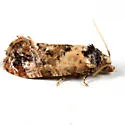
Hoffman's Cochylid - Hodges#3776
Cochylichroa hoffmanana
Identification: See Kearfott, 1907 Print References for original description. Genitalia: ♀ ♂
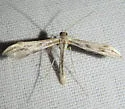
Hogue's Plume Moth - Hodges#6178.1
Hellinsia hoguei
It is uncertain if the population in Arizona represents true Hellinsia hoguei or a cryptic species near hoguei .
Holcocera concolor - Hodges#1225.1
Holcocera concolor
Identification: See Adamski & Maier, 2003 in Print References below. This page should be deleted.
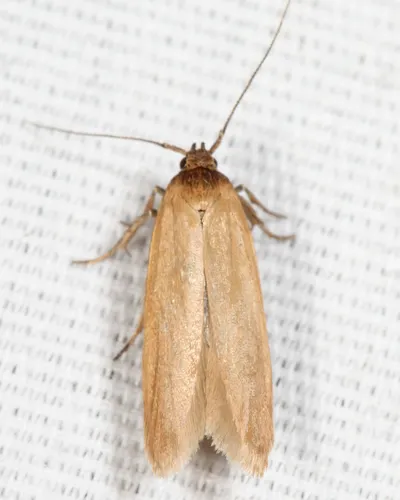
Holcocera immaculella - Hodges#1221
Holcocera immaculella
Holcocera immaculella is a moth in the Blastobasidae family. It is found in North America, including Ontario, Quebec, Alabama, Arizona, British Columbia, Florida, Maine, Manitoba, Massachusetts, Minnesota, New Brunswick, New York and Tennessee.
Holcocera villella - Hodges#1206.1
Holcocera villella
Identification: See Busck 1900 in Print References.
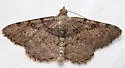
Hollow-spotted Angle - Hodges#6405
Digrammia gnophosaria
Identification: Specimen identified by DNA analysis:
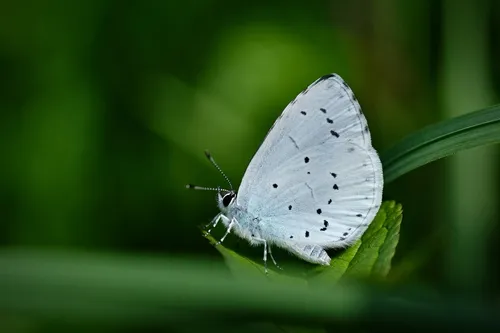
Holly Blue
Celastrina argiolus
The adults are most easy to identify when at rest, since their pale undersides are distinctive among the blues found in the British Isles, with the possible exception of the Small Blue, which is much scarcer (and, as its name implies, much smaller).
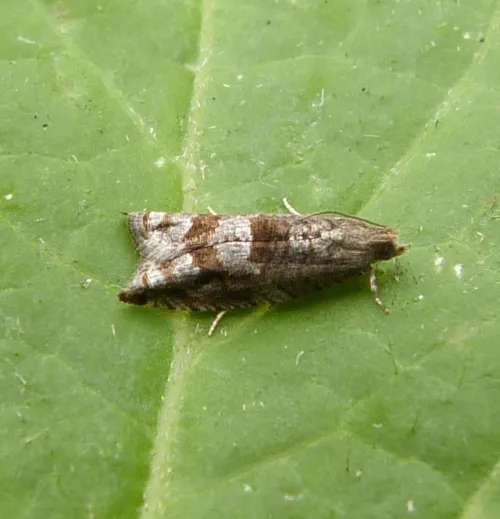
Holly Tortrix
Rhopobota naevana
Wingspan 12-16mm. The shape is quite distinctive. Occupies a wide variety of habitats but often near to Holly. The adults are quite variable and fly between July and September, frequently coming to light. The larval foodplants include Holly and Bilbe
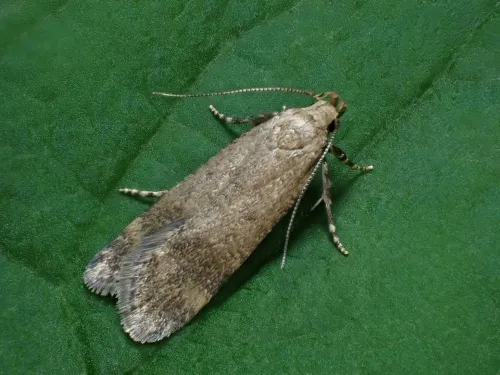
Hollyhock Seed Moth
Pexicopia malvella
A rare species. The specimen should be retained and the County Recorder informed. The moth is on the wing from early June to mid-August. The larvae feed inside the seeds of Marsh Mallow ( Althaea officinalis ) and Hollyhock ( Althaea rosea ) overwint
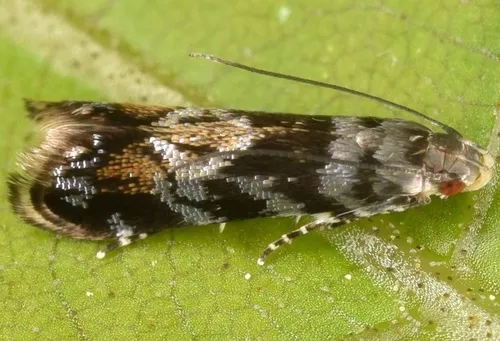
Holophysis emblemella - Hodges#2255
Holophysis emblemella
Identification: Adult - forewing brown-black, with steel-blue markings: a basal band, and antemedial band from costa across cell, a very irregular, narrower medial band, partly fused with the discal dot and forked toward inner margin, a costal spot f
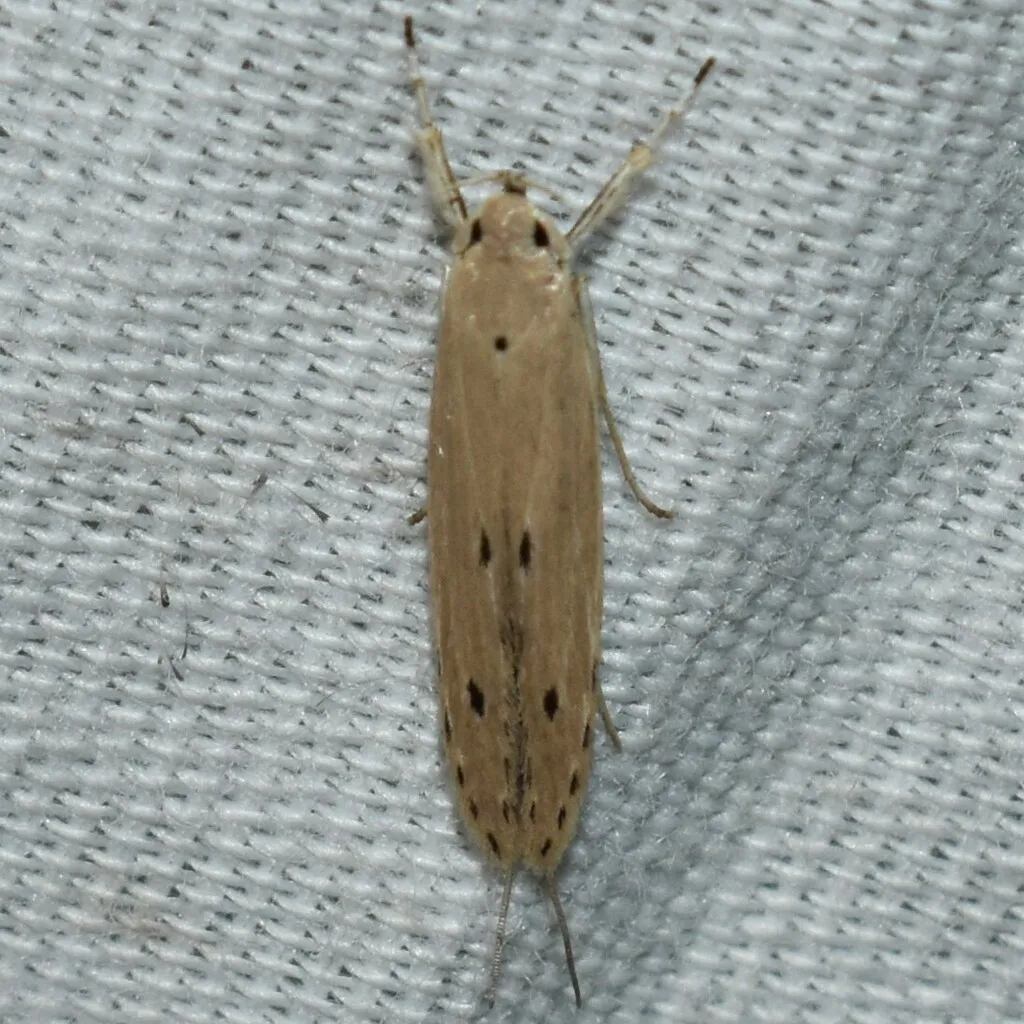
Homaledra knudsoni - Hodges#1422.1
Homaledra knudsoni
"... we have not one but two undescribed species in Florida that are serious pests of palms, in addition to H. sabalella ... Homaledra sp. 2 has white forewing veins, especially the radials. It doesn’t have scattered black scales, but the terminal sp
Homoeosoma albescentella - Hodges#5941
Homoeosoma albescentella
Identification: Description can be found in MONA Fascicle 15-4 at link in citations below.
Homoeosoma deceptorium - Hodges#5944
Homoeosoma deceptorium
Homoeosoma eremophasma has an identical COI barcode to H. deceptorium .
Homoeosoma illuviella - Hodges#5939
Homoeosoma illuviella
Identification: The revised description by Heinrich (1956), is available online in the print references below.
Homoeosoma impressalis - Hodges#5942
Homoeosoma impressalis
Identification: Hulst original description and the Heinrich revised description are both available online in the print references.
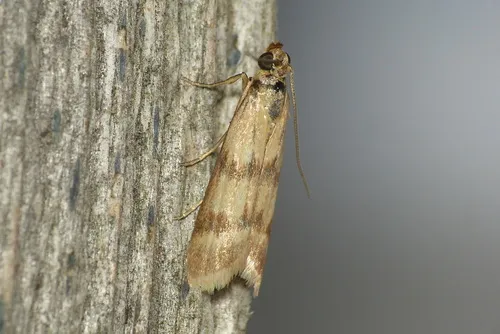
Homoeosoma sinuella
Homoeosoma sinuella
Wingspan 18-23 mm. Fairly distinctive with its yellowish ground colour and darker banding, it is one of the easier species to identify in its group. This species lives in open habitat on dry soils on old dunes, limestone and chalk grassland, waste gr
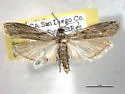
Homoeosoma striatellum - Hodges#5937
Homoeosoma striatellum
Identification: Dyar original description online or in PDF. Specimen determined by DNA analysis (BOLD).
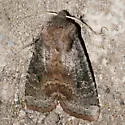
Homoglaea carbonaria - Hodges#9883
Homoglaea carbonaria
Identification: The original description as Lithophane carbonaria Harvey, is available to read online or in PDF. Specimens identified by DNA analysis:
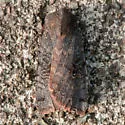
Homoglaea dives - Hodges#9882
Homoglaea dives
Identification: Specimens identified by DNA analysis:
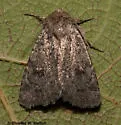
Homorthodes dubia - Hodges#10536
Homorthodes dubia
Identification: Specimens identified by DNA analysis:
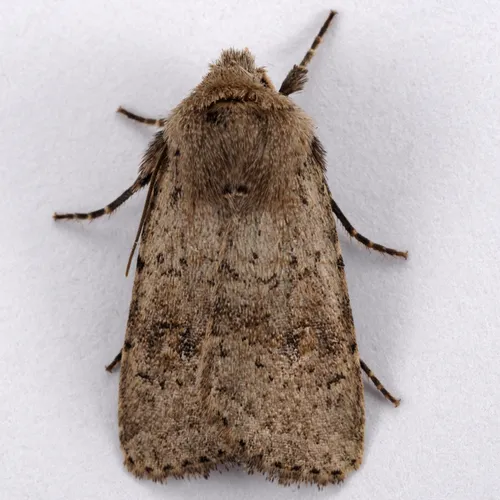
Homorthodes fractura - Hodges#10534
Homorthodes fractura
Identification: Specimens identified by DNA analysis: Subspecies:
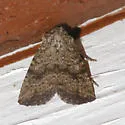
Homorthodes hanhami - Hodges#10539
Homorthodes hanhami
Identification: This species can usually be recognized by its small size, brown color, dark median band and lines across the distal wing, and the dark lower reniform with adjacent white spots. ( 3 )
Homorthodes mania - Hodges#10537
Homorthodes mania
Identification: Original description by Strecker is available at link in citations below. Of note is that the forewings are described as "ochreous fawn" in color. Also, the ST line is bordered on basal side by two dark sagittate spots between veins 4
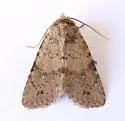
Homorthodes rubritincta - Hodges#10538
Homorthodes rubritincta
Identification: Described by McDunnough as having the same maculation as Homorthodes mania but with forewings "deep pinkish over a light ochreous ground" . The original description of mania is available from a link on that species page.
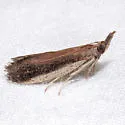
Homosassa ella - Hodges#6068
Homosassa ella
Identification: Homosassa ella is the only member of the genus missing the forewing vein M2.
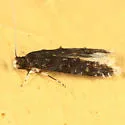
Homosetia bifasciella - Hodges#0287
Homosetia bifasciella
Identification: Head: Face front white, top of head dark brown, long haired (scaled). Palpi folded, yellowish-white, with long brown scales on underside. Antenna: Grayish-yellow, ringed (annulated) with brown. Segment 1 entirely dark brown. Thorax: D
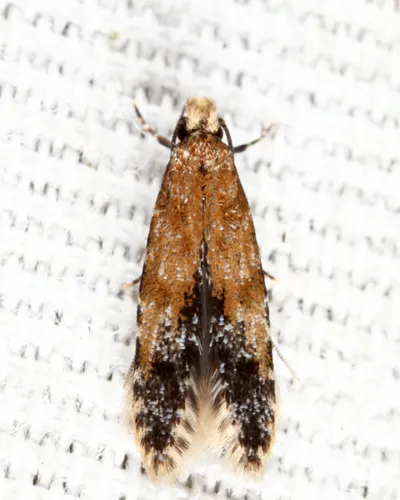
Homosetia costisignella - Hodges#0289
Homosetia costisignella
Homosetia costisignella - Hodges#0289 (Homosetia costisignella) is a species in the family Tineidae, commonly known as clothes moths, belonging to the order Lepidoptera (Butterflies and Moths). It is classified within the subfamily Tineinae, superfam
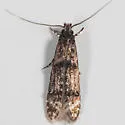
Homosetia fasciella - Hodges#0291
Homosetia fasciella
Identification: Determined by Terry Harrison. Genitalia: ♀ ♂
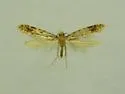
Homosetia marginimaculella - Hodges#0293
Homosetia marginimaculella
Identification: Chambers original description as Tinea marginimaculella is available online in the print references. Common at lights in coastal California.
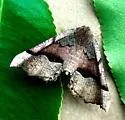
Honest Pero - Hodges#6753
Pero honestaria
Identification: Adult - forewing (FW) area between antemedian and postmedian (PM) lines dark purplish-gray, forming a broad wavy band across the wing; remainder of FW medium gray, the subterminal area being lighter than the basal area; outer edges of
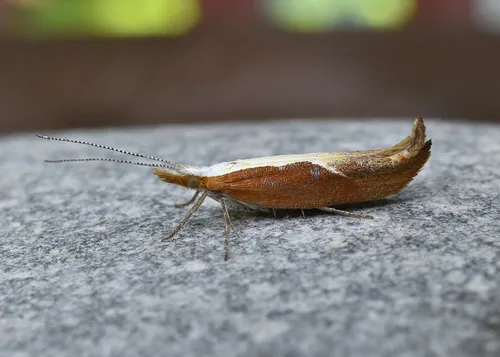
Honeysuckle Moth
Ypsolopha dentella
Wingspan 18 to 23 mm. The upturned wingtips are typical of several other moths in this genus, but are more marked in this species. Around Honeysuckle, the larval foodplant. This small but distinctive moth flies in July and August and is attracted to
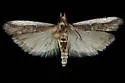
Honora dotella - Hodges#5922
Honora dotella
Identification: Dyar original description and the Heinrich descriptions are online in the print references. Powell & Opler described the basal area of the forewing as rust red. Specimen determined by DNA analysis (BOLD).
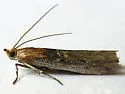
Honora mellinella - Hodges#5919
Honora mellinella
Identification: Adult : FW blackish-fuscous. Head and thorax faded ocherous. Interior line white, not continued to costa. Yellow shade-spot below, near inner margin. Two separate, very small, dark, distal dots. Exterior line near the margin, even, n
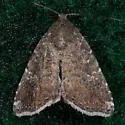
Hook-tipped Amyna Moth - Hodges#9069
Amyna bullula
Identification: Adult: forewing brown with lighter yellowish shading in lower half, falcate outer margin, small pale patch near apex, and white or pale yellow fringe; hindwing brownish-gray with dark PM line and slightly wavy outer margin
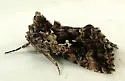
Hooked Silver Y - Hodges#8939
Syngrapha alias
Identification: Syngrapha abstrusa , alias , cryptica and rectangula cannot be reliably separated using DNA barcoding, PLoS ONE 12: e0178548; Supplementary Table S8 . Examiantion of genitalia is usually required. "... In general, abstrusa is a little
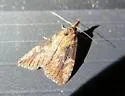
Hop Vine Moth - Hodges#8461
Hypena humuli
Identification: Adult: forewing appearance variable but usually with this pattern - dark brown to blackish in upper half except for pale brown patch along distal half of costa, and lighter brown in lower half (along inner margin); dark streak runs fr
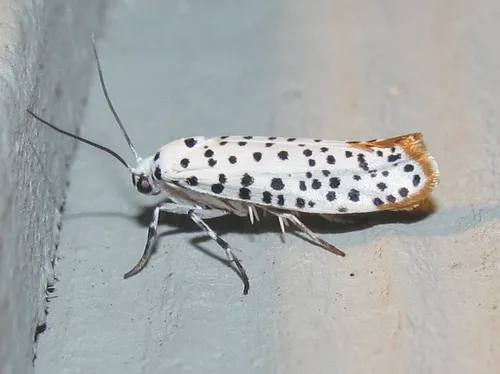
Hop-tree Borer Moth - Hodges#2416
Prays atomocella
Identification: With the forewing having the black spots rather large (compared to those of Yponomeuta ) and the apical fringe rust colored (versus white in Yponomeuta ), this moth is diagnosed as Prays atomocella . -- Terry Harrison, 24 May 2009 The
Hops Angleshade - Hodges#9558.1
Niphonyx segregata
East Asian in origin and is thought to have been introduced into the New York City area in the late 1990s
Hops Azure - Hodges#4363.3
Celastrina humulus
The taxon is based largely on larval host plant difference.
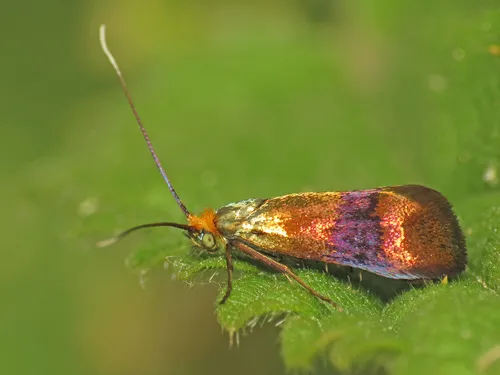
Horehound Longhorn
Nemophora fasciella
Nemophora fasciella is a moth of the Adelidae family. It is found in most of Europe, except Ireland, Fennoscandia, most of the Baltic region, Croatia, Slovenia, Switzerland and Portugal.
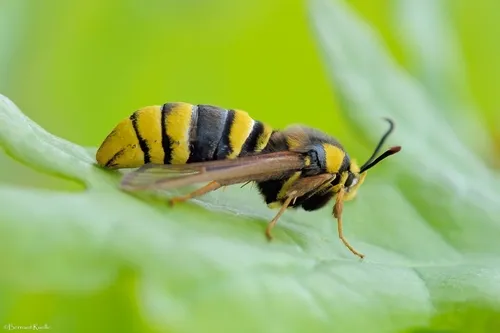
Hornet Moth
Sesia apiformis
Wingspan 33 to 48 mm. Rather similar to the Lunar Hornet Moth, this species can easily be distinguished by the yellow head and tegulae. A good photograph is generally required to support your record and state whether pheromone lure used. The moths em
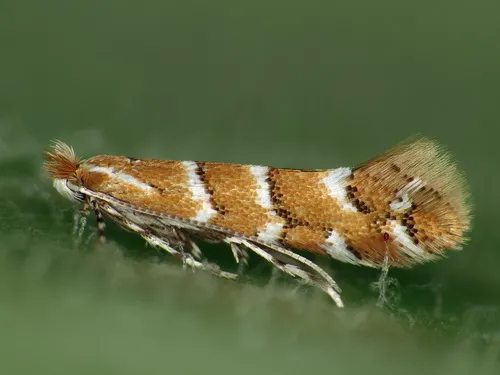
Horse-chestnut Leaf-miner
Cameraria ohridella
Wingspan around 8 mm. The adult moths resemble other Gracillariidae , although are quite distinctively dark reddish-brown with a noticeable white frons. The larva mines the leaves of Horse-chestnut and occasionally Sycamore and other species. It appe
Hourglass Plume Moth - Hodges#6103
Michaelophorus indentatus
Identification: See the identification key for Platyptiliini . See the species accounts in Matthews et al. and Gielis . "The species is characterized by the weakly marked grey-brown forewings; the third lobe of the hindwing which has a row of promine
Howarth's White - Hodges#4199.1
Ganyra howarthi
In the US, most widely known from the area of Quitobaquito Springs; widespread in neighbouring Mexico.
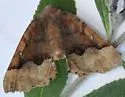
Hubner's Pero - Hodges#6748
Pero ancetaria
Identification: Inner third of forewing (FW) medium brown, middle third darker reddish-brown with variable purplish tint, outer third pale yellowish-brown; postmedian (PM) line with deep sinus midway across wing; small patches of brown speckling or s
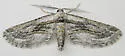
Hulstina aridata - Hodges#6543
Hulstina aridata
Identification: Detailed description is available in Rindge in link under citations below. From the key to species in Rindge, PM line represented by venular dots as it approaches the costal margin. Genitalia: ♀ ♂
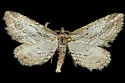
Hulstina exhumata - Hodges#6546
Hulstina exhumata
Identification: Specimen determined by DNA analysis (BOLD).
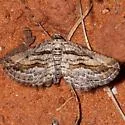
Hulstina formosata - Hodges#6540
Hulstina formosata
Identification: Detailed description and range map provided in Rindge at link in citations below. From the key to species in Rindge, the PM line does not reach the costal margin and forewing median area usually gray or grayish brown.
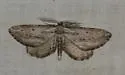
Hulstina grossbecki - Hodges#6545
Hulstina grossbecki
Identification: Rindge original description in PDF.
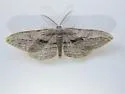
Hulstina imitatrix - Hodges#6541
Hulstina imitatrix
Identification: Detailed description can be found in Rindge at link in the citations below. From the key to species in Rindge, the PM line does not reach the costal margin, the forewing median area pale brown, and found from eastern California and Ne
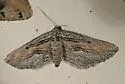
Hulstina tanycraeros - Hodges#6542
Hulstina tanycraeros
Identification: Detailed description can be found in Rindge at the link in citations below. From the key to species in Rindge, the PM line does not reach the costal margin, forewing median area pale brown, and found from southern California and south
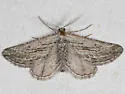
Hulstina xera - Hodges#6544
Hulstina xera
Identification: Detailed description is available in Rindge in link under citations below. From the key to species in Rindge, PM line represented by venular dots as it approaches the costal margin.
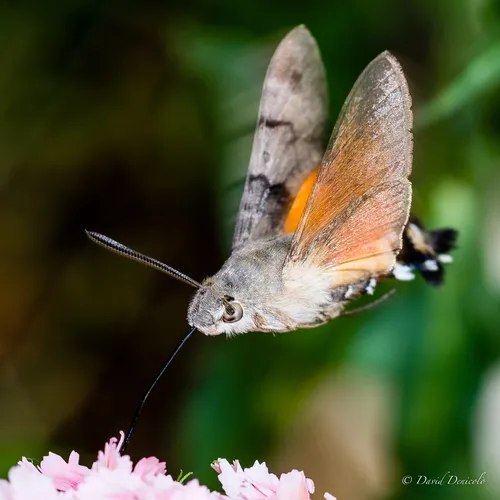
Humming-bird Hawk-moth
Macroglossum stellatarum
Wingspan 40-50 mm. It flies in the sunshine and hovers in front of flowers, sipping the nectar with its long proboscis, very much like the Hummingbird which gives it its name. Gardens, parks and other areas where its food plants occur. June to August
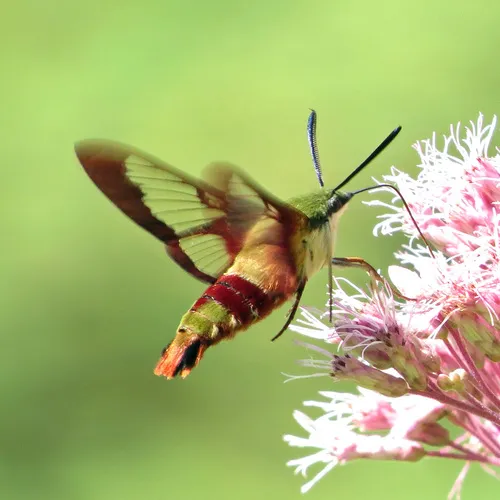
Hummingbird Clearwing
Hemaris thysbe
Hemaris thysbe, commonly known as the hummingbird clearwing, is a moth of the Sphingidae (hawkmoth) family. Coloration varies between individuals, but typically the moth is olive green and burgundy on its back, and white or yellow and burgundy on the
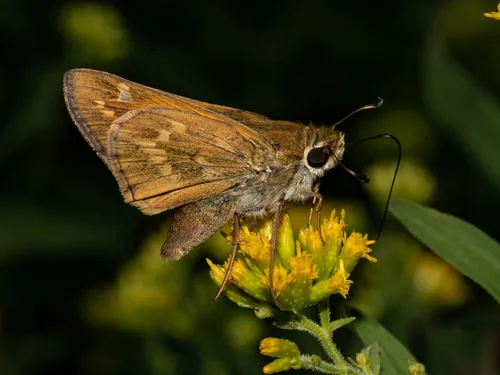
Huron Skipper
Atalopedes huron
Atalopedes huron is a small grass skipper butterfly. Formerly treated as a subspecies of Atalopedes campestris, it was upgraded to full species status by Zhang et al. in 2022.
Hyaloscotes fumosa - Hodges#0448
Hyaloscotes fumosa
Identification: Males have foreleg tibia with an epiphysis. (apical spur) See Here:
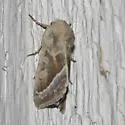
Hydraecia medialis - Hodges#9511
Hydraecia medialis
Identification: The original description of Hydraecia medialis Smith, is available at the link in the print references below.
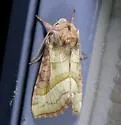
Hydraecia stramentosa - Hodges#9516
Hydraecia stramentosa
Forbes (1954) reported that the moth was "not common."
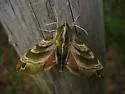
Hydrangea Sphinx - Hodges#7884
Darapsa versicolor
Identification: Forewing greenish brown, curved white patches. See Internet refernces.
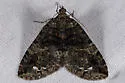
Hydriomena albifasciata - Hodges#7261
Hydriomena albifasciata
Identification: Highly variable. - Specimens identified by DNA analysis (BOLD).
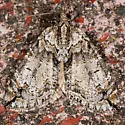
Hydriomena edenata - Hodges#7232
Hydriomena edenata
Identification: H. edenata is one of the commonest species of early spring, varying not only in size but also in maculation and coloration. Genitalia: ♂ A main characteristics is found in the forks of the uncus; these are separated by a deep, but rat
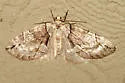
Hydriomena exculpata - Hodges#7223
Hydriomena exculpata
Identification: Hindwing is brownish with a dark discal spot and angled postmedial line. Photo from Libby & Rick Avis of a specimen identified by DNA
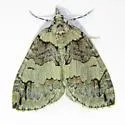
Hydriomena macdunnoughi - Hodges#7255
Hydriomena macdunnoughi
Identification: Swett (1918) original description is available online in the print references. ID confirmed by Chuck Harp.
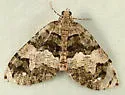
Hydriomena marinata - Hodges#7231
Hydriomena marinata
Identification: Specimens identified by DNA analysis:
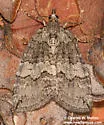
Hydriomena peratica - Hodges#7274
Hydriomena peratica
Identification: Confirmed by dissection, Jim Vargo 2022
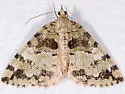
Hydriomena speciosata - Hodges#7263
Hydriomena speciosata
Identification: Specimens identified by DNA analysis:
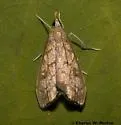
Hydropionea fenestralis - Hodges#5125
Hydropionea fenestralis
Identification: Hindwing is glossy white with a rust colored line along the base of the fringe. Specimen identified by DNA analysis (BOLD).
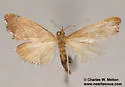
Hydropionea oblectalis - Hodges#5124
Hydropionea oblectalis
Identification: Det. James Hayden of the McGuire Center for Lepidoptera in Florida
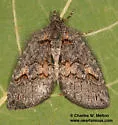
Hymenodria mediodentata - Hodges#7278
Hymenodria mediodentata
Identification: See references below. "Very few specimens of this species are known" .
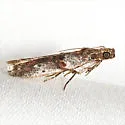
Hypargyria slossonella - Hodges#5711
Hypargyria slossonella
Identification: The original description as Salebria slossonella Hulst, is available online. (link in the print preferences below). - Determined by Brian Scholtens. Genitalia:
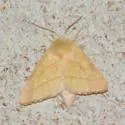
Hyparpax aurostriata - Hodges#8025
Hyparpax aurostriata
Identification: Graef (1888) original description is available online in the print references below.
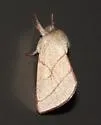
Hyparpax perophoroides - Hodges#8026
Hyparpax perophoroides
Identification: The original description as Cosmia perophoroides Strecker, is available online in the print references below.
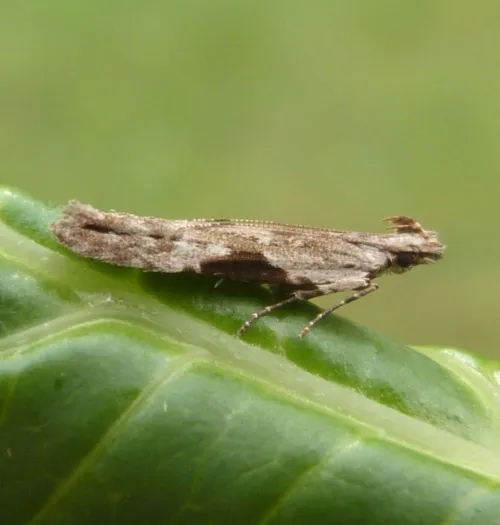
Hypatima rhomboidella
Hypatima rhomboidella
Wingspan 18 mm. The scientific name of this distinctive moth is derived from the rhomboid-shaped brownish blotch on the forewing. At rest, the wings are closely folded at the tip, giving a tapered appearance. Well wooded areas containing the larval f
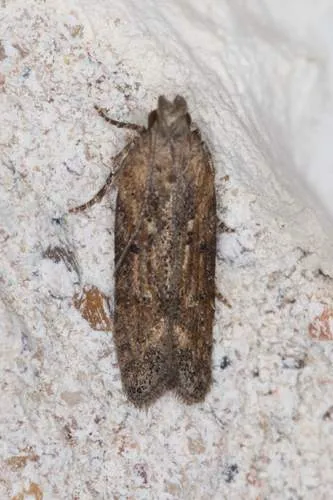
Hypatima zesticopa - Hodges#2258
Hypatima zesticopa
Identification: 12/30/2020 Comments by Ann Hendrickson: The TRUE Hypatima zesticopa is represented by the barcoded and is quite dark in color and has no light spots. It's caterpillar is also quite dark. Only one specimen has been verified from Texa
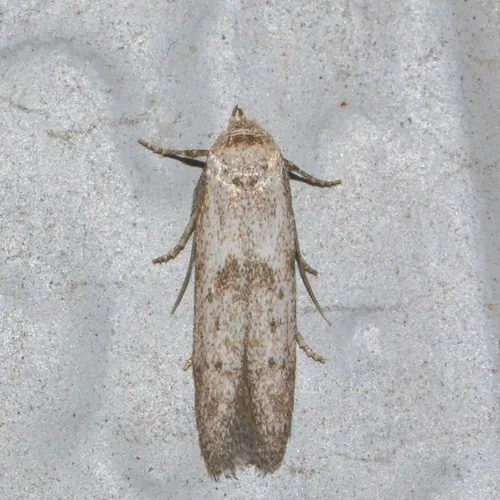
Hypatopa punctiferella - Hodges#1208
Hypatopa punctiferella
Hypatopa punctiferella is a moth in the family Blastobasidae. It is found in the United States, including Maryland, Pennsylvania, Kentucky, Texas and California, Florida and Ohio.
Hypatopa titanella - Hodges#1156
Hypatopa titanella
BOLD:AAB7100 includes the Nearctic titanella and the European binotella , which is separated from the Canadian specimens by ~1% sequence divergence.
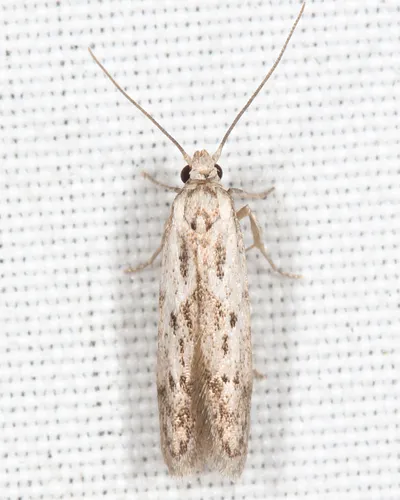
Hypatopa vestaliella - Hodges#1218
Hypatopa vestaliella
Hypatopa vestaliella is a moth in the family Blastobasidae. It is found in the United States, including Maryland, Massachusetts, Pennsylvania and Maine.
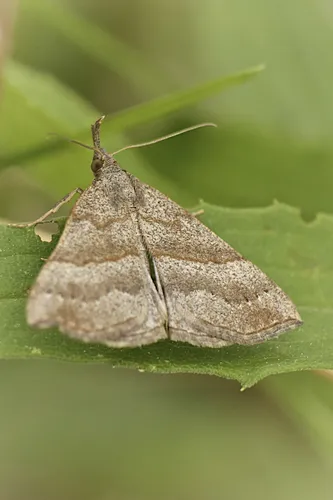
Hypena atomaria - Hodges#8450
Hypena atomaria
Identification: forewing light brownish-gray with brown speckling; AM line brown, angled like a skewed W, may be faint; PM line brown, almost straight, bordered proximally by band of dark shading; ST line a diffuse dark band, outer half straight and
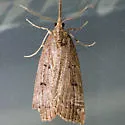
Hypena californica - Hodges#8462
Hypena californica
Identification: Adult: forewing slender, variably light to dark grayish-brown; light individuals have blackish streak extending through and beyond reniform and orbicular spots; dark individuals show less overall contrast but have more prominent AM an
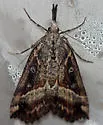
Hypena modestoides - Hodges#8464
Hypena modestoides
Identification: Hypena modestoides has a pale band beyond the postmedian line. The postmedian line is more oblique than in H. californica and has a large tooth projecting towards the wing base near the inner margin. The forewing has a slight falcate
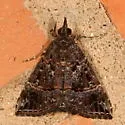
Hypena tenebrosa - Hodges#8458
Hypena tenebrosa
Identification: Determined by Charles Bordelon & Ed Knudson (Texas Lepidoptera Survey).
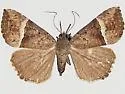
Hypena umbralis - Hodges#8453
Hypena umbralis
Identification: Head, thorax and forewing are dark chocolate brown. Abdomen and hindwings are smoky black. Forewing has a blueish powdering between median area and postmedian line, but without any contrast. Antemedian line is somewhat richer browb, b
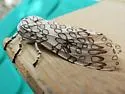
Hypercompe caudata - Hodges#8147
Hypercompe caudata
Identification: Hampson (1901) revised description as Ecpantheria caudata Walker, is available in the print references.
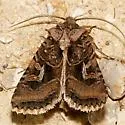
Hyperepia jugifera - Hodges#10576
Hyperepia jugifera
Identification: Fairly distinctive. See references below for full descriptions.
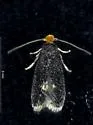
Hypericum Pygmy - Hodges#0060.2
Fomoria septembrella
Identification: Genitalia: ♀ ♂ Introduced with its host plant, Saint John's-wort.
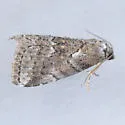
Hyperstrotia villificans - Hodges#9038
Hyperstrotia villificans
Identification: Genitalia: Based on range it appears that: 9035 Hyperstrotia nana is shown at BOLD in BIN BOLD:ACE6422 9038 Hyperstrotia villificans is shown at BOLD in BIN BOLD:ACE3004
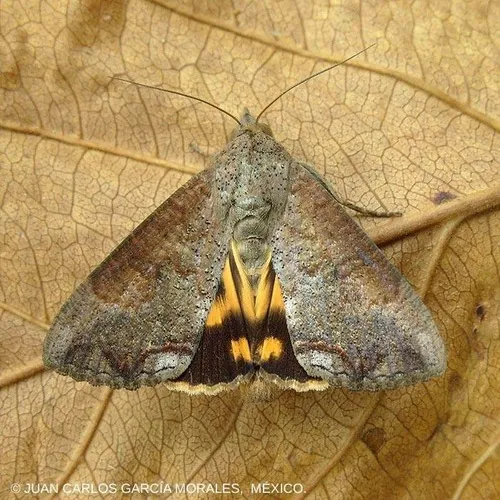
Hypocala Moth - Hodges#8642
Hypocala andremona
Identification: Adult: forewing brown to gray with diffuse speckling; reniform spot either dark gray or barely noticeable; ST line composed of two joined arcs, touching outer margin at the point where they join; small pale patch may be present in ter
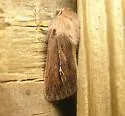
Hypocoena basistriga - Hodges#9439
Hypocoena basistriga
Identification: "The combination of small size, robust build, red-brown color and contrasting white cubital vein will usually identify this moth." -- U. Alberta (link below)
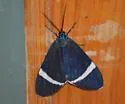
Hypocrita celina - Hodges#8038.1
Hypocrita celina
Synonymy of Hypocrita escuintla with H. celina proposed by Becker (2013) and Vincent & Laquerre (2013). Noted by Lafontaine & Schmidt (2015).
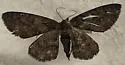
Hypomecis buchholzaria - Hodges#6438
Hypomecis buchholzaria
Uncommon throughout the range. Listed as endangered by the Massachusetts Division of Fisheries & Wildlife. PDF
Hypomecis gnopharia - Hodges#6440
Hypomecis gnopharia
Identification: Hypomecis gnopharia is difficult to distinguish from H. umbrosaria by photos. The antennae of the male Hypomecis gnopharia have 41-47 segments. H. umbrosaria males have 42-49 segments.
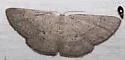
Hypomecis luridula - Hodges#6437
Hypomecis luridula
Identification: Hulst original description is online in PDF. Rindge PDF describes the adults including genitalia. Fresh specimens have are a violaceous gray color which will distinguish from other members of the genus. Specimen confirmed by James Ada
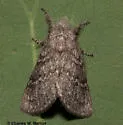
Hypopacha grisea - Hodges#7669
Hypopacha grisea
Identification: Adult - Neumoegen's original description available in Print References.
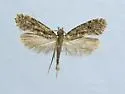
Hypoplesia dietziella - Hodges#0321
Hypoplesia dietziella
Identification: The original description is available online in the print references below.
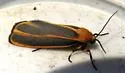
Hypoprepia cadaverosa - Hodges#8091
Hypoprepia cadaverosa
Identification: The original description is available online in the print references below.
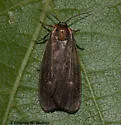
Hypoprepia inculta - Hodges#8092
Hypoprepia inculta
Identification: Adult - grey-black forewing with a pale longitudinal streak on the central vein ending before the spot, pale pink hindwing, abdomen tipped in dull orange (Edwards, 1882).
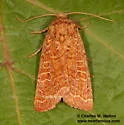
Hypotrix alamosa - Hodges#10599
Hypotrix alamosa
Identification: " Hypotrix alamosa occurs in two forms. In the darker, more common form the forewing is reddish brown with the maculation sharply defined by dark-red lines. The medial area is similar in color to the remainder of the forewing and the
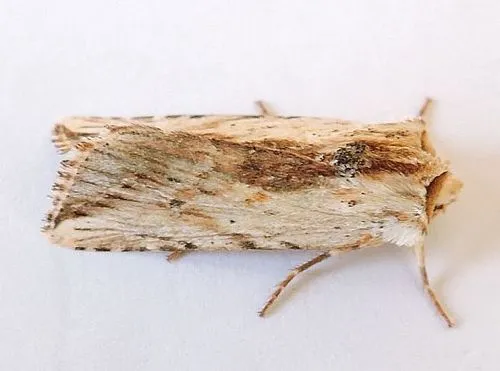
Hypotrix diplogramma - Hodges#10615
Hypotrix diplogramma
Identification: " Hypotrix diplogramma is unmistakable in appearance. The subterminal line is a diffuse series of dark streaks, so the gray shading of the terminal area, so well defined in Hypotrix ferricola , bleeds into the subterminal area in H. d
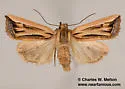
Hypotrix ferricola - Hodges#10614
Hypotrix ferricola
Identification: "Within [the] United States the boldly streaked orange and blackish-gray forewing pattern of Hypotrix ferricola is unmistakable" .
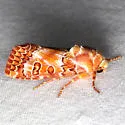
Hypotrix hueco - Hodges#10600
Hypotrix hueco
Identification: " Hypotrix hueco is superficially similar to H. alamosa , but averages larger, the medial area is pale with whitish shading that contrasts with the darker color of the basal and subterminal areas, and the postmedial line is well remov