
Hooked Silver Y - Hodges#8939
Syngrapha alias
This record describes Syngrapha alias (species). Recorded family: Noctuidae. Recorded order: Lepidoptera.
Identification and Appearance
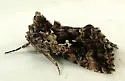
Syngrapha abstrusa , alias , cryptica and rectangula cannot be reliably separated using DNA barcoding, PLoS ONE 12: e0178548; Supplementary Table S8 . Examiantion of genitalia is usually required. ... In general, abstrusa is a little smaller than alias , the central silver spots usually are separated, the pattern seems more reticulated than in alias and the pale areas have a slight violet tint, whereas alias averages larger, the silver spots usually are fused, and often there is a brownish patch in the medial area just beyond and below the silver patch. The male genitalia are different and the differences can often be seen without dissection if the two valves are a little protruding, or separated slightly, so you can brush away the scales and look between the valves. The long clasper almost reached the dorsal margin of the valve, whereas in alias it is hard to find because if your brushing the tails because it's so small. Also the end of the valve is more foot-shaped with a tiny neck so it often breaks when you brush the tails, unlike in abstrusa . - C. Schmidt & D. Lafonataine (pers. comm., 03/5/2018). see Remarks under Syngrapha for separating alias from similar species, based on genitalia. ♀ ♂
Classification
- Kingdom
- Animalia
- Phylum
- Arthropoda
- Class
- Insecta
- Order
- Lepidoptera (Butterflies and Moths)
- Superfamily
- Noctuoidea
- Family
- Noctuidae (Owlet Moths)
- Subfamily
- Plusiinae
- Tribe
- Plusiini
- Genus
- Syngrapha
Imported taxonomy record. Source availability varies; see the source references and editorial policy below.
Habitat and Range
Habitat
Coniferous and mixedwood forest (E.H. Strickland Museum).
Geographic Range
Newfoundland to Alaska; south to New York, Wisconsin, and California; Rocky Mountains south to Arizona (Eichlin & Cunningham, 1978). ( 4 )
Seasonal Activity
Adults fly July through August (E.H. Strickland Museum).
Diet and Behavior
Diet: Larvae feed on a variety of conifers but most often associated with white spruce ( Picea glauca ) and balsam fir ( Abies balsamifera ) (E.H. Strickland Museum).
Life History
Overwinter as larva (E.H. Strickland Museum).
About Butterflies and Moths: the wider group
Order-level background for Lepidoptera, the group containing Syngrapha alias. Species-specific details appear above.
Group overview
Lepidoptera includes approximately 180,000 described species of butterflies and moths. Moths outnumber butterflies roughly 10:1. The monarch butterfly's eastern population has declined by more than 80% since the mid-1990s, and the western population by over 95% since the 1980s. The IUCN lists the migratory monarch as Vulnerable.
Ecological role of the group
Butterflies and moths are essential indicators of ecosystem health. As caterpillars, they are a primary food source for birds - a single nest of blue tit chicks requires ~10,000 caterpillars. Adult moths pollinate many night-blooming plants.
Economic and practical significance of the group
Lepidoptera are critical pollinators. In Europe, grassland butterfly species have declined by almost 50% since the early 1990s. In the UK, three-quarters of butterflies are in decline. In the U.S., five butterfly species have gone extinct since 1950, with 29 listed as endangered.
Recorded sources for this group: IUCN Red List, Xerces Society, USFWS, PNAS, WWF. Imported estimates may describe particular regions or reporting periods.
Photos of Hooked Silver Y - Hodges#8939 (5)
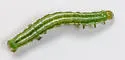
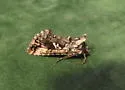
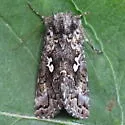
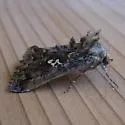
Photo credits: Contributed by John Davis; Additional contributions by Steve Nanz , Tony-2 , Randy Hardy , Robert H. Biagi , Steve Morris
Frequently Asked Questions About Hooked Silver Y - Hodges#8939
What is Hooked Silver Y - Hodges#8939?
Hooked Silver Y - Hodges#8939 (Syngrapha alias) is a species in the family Noctuidae, within the order Lepidoptera.
How big is Hooked Silver Y - Hodges#8939?
forewing length 14-16 mm (Pogue, 2005)
How do you identify Hooked Silver Y - Hodges#8939?
Syngrapha abstrusa , alias , cryptica and rectangula cannot be reliably separated using DNA barcoding, PLoS ONE 12: e0178548; Supplementary Table S8 . Examiantion of genitalia is usually required. ... In general, abstrusa is a little smaller than alias , the central silver spots usually are separated, the pattern seems more reticulated than in alias and the pale areas have a slight violet tint, whereas alias averages larger, the silver spots usually are fused, and often there is a brownish patch in the medial area just beyond and below the silver patch. The male genitalia are different and the differences can often be seen without dissection if the two valves are a little protruding, or separated slightly, so you can brush away the scales and look between the valves. The long clasper almost reached the dorsal margin of the valve, whereas in alias it is hard to find because if your brushing the tails because it's so small. Also the end of the valve is more foot-shaped with a tiny neck so it often breaks when you brush the tails, unlike in abstrusa . - C. Schmidt & D. Lafonataine (pers. comm., 03/5/2018). see Remarks under Syngrapha for separating alias from similar species, based on genitalia. ♀ ♂
Where is Hooked Silver Y - Hodges#8939 found?
| Feature | Details |
|---|---|
| Habitat | Coniferous and mixedwood forest (E.H. Strickland Museum). |
| Range | Newfoundland to Alaska; south to New York, Wisconsin, and California; Rocky Mountains south to Arizona (Eichlin & Cunningham, 1978). ( 4 ) |
What does Hooked Silver Y - Hodges#8939 eat?
The diet of the Hooked Silver Y - Hodges#8939 includes Larvae feed on a variety of conifers but most often associated with white spruce ( Picea glauca ) and balsam fir ( Abies balsamifera ) (E.H. Strickland Museum)..
When is Hooked Silver Y - Hodges#8939 active?
Hooked Silver Y - Hodges#8939: seasonal activity - Adults fly July through August (E.H. Strickland Museum)..
What is the life cycle of a Hooked Silver Y - Hodges#8939?
Overwinter as larva (E.H. Strickland Museum).