
Hubner's Pero - Hodges#6748
Pero ancetaria
This record describes Pero ancetaria (species). Recorded family: Geometridae. Recorded order: Lepidoptera.
Identification and Appearance
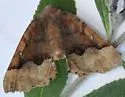
Inner third of forewing (FW) medium brown, middle third darker reddish-brown with variable purplish tint, outer third pale yellowish-brown; postmedian (PM) line with deep sinus midway across wing; small patches of brown speckling or scaling at anal angle and along costa near apex; outer edges of both wings slightly wavy or irregular but not conspicuously scalloped. As the PM line approaches the inner margin of the FW, it juts out distally twice - once large (bounding the deep sinus) and then a second time much smaller. A black spot near the distal edge of the FW (roughly centered along that edge) can be present or absent. ♂ The former Pero hubneraria was designated a synonym of Pero ancetaria by Malcolm Scoble et al in 1999. The Hodges Number of P. ancetaria is 6754 - formerly assigned to P. hubneraria ( McGill University, PDF doc ). P. ancetaria was described by Hubner in 1806, so retaining the common name of Hubner's Pero seems appropriate. Description based in part on comments by J.D. Roberts on photos here and here .
Classification
- Kingdom
- Animalia
- Phylum
- Arthropoda
- Class
- Insecta
- Order
- Lepidoptera (Butterflies and Moths)
- Superfamily
- Geometroidea
- Family
- Geometridae (Geometrid Moths)
- Subfamily
- Ennominae
- Tribe
- Azelinini
- Genus
- Pero
Imported taxonomy record. Source availability varies; see the source references and editorial policy below.
Habitat and Range
Geographic Range
Eastern United States plus Ontario and Quebec.
Seasonal Activity
Adults fly from March to September in the south; May/June and again in August/September.
Diet and Behavior
Diet: Larvae feed on alder, Buffaloberry ( Shepherdia canadensis ), Black Cherry ( Prunus serotina ), willow.
Life History
Two generations per year.
About Butterflies and Moths: the wider group
Order-level background for Lepidoptera, the group containing Pero ancetaria. Species-specific details appear above.
Group overview
Lepidoptera includes approximately 180,000 described species of butterflies and moths. Moths outnumber butterflies roughly 10:1. The monarch butterfly's eastern population has declined by more than 80% since the mid-1990s, and the western population by over 95% since the 1980s. The IUCN lists the migratory monarch as Vulnerable.
Ecological role of the group
Butterflies and moths are essential indicators of ecosystem health. As caterpillars, they are a primary food source for birds - a single nest of blue tit chicks requires ~10,000 caterpillars. Adult moths pollinate many night-blooming plants.
Economic and practical significance of the group
Lepidoptera are critical pollinators. In Europe, grassland butterfly species have declined by almost 50% since the early 1990s. In the UK, three-quarters of butterflies are in decline. In the U.S., five butterfly species have gone extinct since 1950, with 29 listed as endangered.
Recorded sources for this group: IUCN Red List, Xerces Society, USFWS, PNAS, WWF. Imported estimates may describe particular regions or reporting periods.
Photos of Hubner's Pero - Hodges#6748 (5)
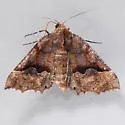
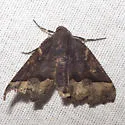
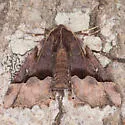
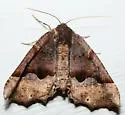
Photo credits: Contributed by Robin McLeod; Additional contributions by Bob Patterson , Tony-2 , anitagould , Maury Heiman , marcie oconnor , Randy Hardy , Robert H. Biagi
Frequently Asked Questions About Hubner's Pero - Hodges#6748
What is Hubner's Pero - Hodges#6748?
Hubner's Pero - Hodges#6748 (Pero ancetaria) is a species in the family Geometridae, within the order Lepidoptera.
How big is Hubner's Pero - Hodges#6748?
Wingspan 31-37 mm.
How do you identify Hubner's Pero - Hodges#6748?
Inner third of forewing (FW) medium brown, middle third darker reddish-brown with variable purplish tint, outer third pale yellowish-brown; postmedian (PM) line with deep sinus midway across wing; small patches of brown speckling or scaling at anal angle and along costa near apex; outer edges of both wings slightly wavy or irregular but not conspicuously scalloped. As the PM line approaches the inner margin of the FW, it juts out distally twice - once large (bounding the deep sinus) and then a second time much smaller. A black spot near the distal edge of the FW (roughly centered along that edge) can be present or absent. ♂
Where is Hubner's Pero - Hodges#6748 found?
Range: Eastern United States plus Ontario and Quebec.
What does Hubner's Pero - Hodges#6748 eat?
The diet of the Hubner's Pero - Hodges#6748 includes Larvae feed on alder, Buffaloberry ( Shepherdia canadensis ), Black Cherry ( Prunus serotina ), willow..
When is Hubner's Pero - Hodges#6748 active?
Hubner's Pero - Hodges#6748: seasonal activity - Adults fly from March to September in the south; May/June and again in August/September..
What is the life cycle of a Hubner's Pero - Hodges#6748?
Two generations per year.